La Niña, which means “little girl” in Spanish, is a climate phenomenon characterized by the cooling of sea surface temperatures in the central and eastern equatorial Pacific Ocean. La Niña and its opposite, El Niño, as well as a neutral phase, are part of a larger climate pattern known as the El Niño-Southern Oscillation. The tropical Pacific can be in either one of those three states.
According to scientists, El Niño years tend to bring cold, wet winters to California and the southern U.S. but warm, dry conditions to the Pacific Northwest and the Ohio Valley. La Niña tends to bring the opposite: dry conditions for the whole southern half of the country but colder, wetter weather for the Pacific Northwest.
La Niña is an oceanic and atmospheric phenomenon that is the colder counterpart of El Niño, as part of the broader El Niño–Southern Oscillation climate pattern.
How does La Niña affect Texas weather?
La Niña has a notable impact on Texas weather, primarily influencing temperature and precipitation patterns. Here’s how La Niña typically affects Texas, according to NOAA:
Temperature: La Niña often brings warmer-than-average temperatures to Texas during the winter months. The warmer conditions are a result of the jet stream shifting northward, reducing the frequency of cold air masses moving into the region. Summers during La Niña years can also be hotter than normal, with higher heatwaves and increasing demand for water and energy.
Precipitation: La Niña is usually associated with drier-than-normal conditions across Texas, particularly in the fall and winter months. The northward shift of the jet stream tends to divert storm systems away from the state, reducing the overall rainfall. The reduced precipitation can lead to an increased risk of drought. Texas may experience significant water shortages, affecting agriculture and water supply and increasing the likelihood of wildfires.
Severe weather: Due to warmer temperatures during La Niña winters, the likelihood of severe weather, such as snow and ice storms, is generally lower. However, La Niña can increase severe weather events like tornadoes in Texas due to enhanced instability and favorable atmospheric conditions.
Hurricane season: La Niña can contribute to a more active Atlantic hurricane season. This means Texas might face a higher risk of hurricanes and tropical storms making landfall, bringing heavy rainfall and potential flooding. The NOAA predicts between 17 and 25 named storms this season, with 4 to 7 becoming major hurricanes classified as category 3, 4, or 5.
Former President Donald Trump speaks at a rally at Crotona Park in the Bronx on Thursday, May 23, 2024. (Hiroko Masuike/The New York Times)
NEW YORK — When his criminal trial finishes for the day, Donald Trump typically returns to the marble-and-gold triplex atop Trump Tower, the high rise he built in the early 1980s and used to establish a public image as a master builder.
It is the silver lining for Trump, as he spends his first sustained period of time in Manhattan since he moved to Washington in 2017. He passes the days in a dingy courtroom downtown, where he faces 34 felonies, listening to people from his old life describe him as a depraved liar who sullied the White House. At the end of it all, he could be sent to prison.
But in the evenings, people who have spoken to him say, he has been enjoying being back in the penthouse apartment that he moved into four decades ago. He still considers it home — and a permanent reminder of the easiest period of his life.
That period was the greed-is-good era in which Trump sold himself nationally as a titan of industry, despite a relatively small, and local, real estate portfolio. He had just built a glittering tower on Fifth Avenue, infuriating elites and demanding a tax break from the city. And it is the era he alludes to constantly, referring to 1980s cultural touchstones, including the news show “60 Minutes,” Time magazine and celebrities like boxer Mike Tyson.
It is also the last time Trump’s preferred public image was intact, and it soon came crashing down. The decade ended with a monthslong tabloid war in which people around the city chose sides between him and his first wife, Ivana. At the same time, the image-obsessed Trump was the subject of one investigative story after another, making clear he had far less money than it had seemed, had relied on his father for help and had managed his empire into something close to ruin.
It was in the ’80s that he was in a public dance over whether he wanted to be accepted by elites or throw stones at them, marked most visibly by his decision to smash art deco friezes that had been atop the building he razed to construct Trump Tower.
Yet despite the claims that the city’s power brokers all sneered at him, Trump was humored, indulged and even accepted by some of them. The ’80s were a time when, his path having been helped by his father’s connections in the corrupt Brooklyn political machine, he was developing relationships with publishing titans such as S.I. Newhouse and hanging out in the stadium box held for George Steinbrenner, the New York Yankees owner.
Trump had begun a budding and durable association with one of the city’s power brokers, Manhattan District Attorney Robert Morgenthau, a man whose proximity gave Trump a sense of comfort, according to former Trump Organization employees, and who Trump has said would never have stood for the charges against him.
“It’s absolutely true — that was his golden time, no question,” said Andrew Stein, who was the City Council president in the 1980s and still supports Trump after having briefly suggested he should bypass his third presidential campaign.
Even being president — moving to a city and a world where the rules and laws were foreign and uninteresting to him, and where the establishment rejected him before he arrived — rarely seemed to delight Trump the way that holding court at the 21 Club in midtown Manhattan did.
The trial has highlighted the parts of Trump’s makeup that became clear in the decade that followed, in the 1990s, the ones less immediately apparent after the fame afforded him by his ghostwritten 1987 book, “The Art of the Deal.” The courtroom days have repeatedly touched on his penchant for payback, his love of fixers to defend him, his obsession with being seen as a playboy, his business practices at what is essentially a mom-and-pop company.
But they have also underscored the reality that a man who spent years building an artifice about himself in the press and on TV managed to capture the presidency, when suddenly the question of what parts of him were real or fake was obscured by the power of the Oval Office, a giant government infrastructure and tens of millions of people who had cast ballots for him.
The era that shaped Trump was perhaps best encapsulated by author Tom Wolfe in “The Bonfire of the Vanities,” in which a wealthy investment banker strikes a young Black man in a hit-and-run in the Bronx amid widespread racial tensions, and is ultimately tried in the borough’s beaten-down criminal courthouse as the tabloids devour the story.
It was a building not unlike the one in which Trump has sat most days each week for six weeks, the fluorescent lighting beaming down on the decrepit benches and the letters reading “In God We Trust” over Justice Juan M. Merchan’s head.
Some days, Trump has eviscerated his lawyers and complained privately that he has no Roy Cohn, his original fixer and mentor and lawyer. Like Trump, Cohn was born into outer-borough privilege and then alternately reviled and accepted by powerful people. Cohn, a closeted gay man who tried to purge the federal government of gay people, died in 1986; he had AIDS but told people it was liver cancer.
Cohn, whose connections included President Ronald Reagan, Rupert Murdoch and mobsters, had introduced the Queens-bred Trump to a new world and had taught him to always deny wrongdoing, to attack his attackers and to seek lawyers willing to do anything. But at the start of the ’80s, as he was gaining respectability himself, Trump already seemed ready to put some distance between himself and Cohn.
“All I can tell you is he’s been vicious to others in his protection of me,” Trump told journalist Marie Brenner a few years before Cohn’s death. “He’s a genius. He’s a lousy lawyer, but he’s a genius.”
Trump essentially dropped Cohn, who had been indicted repeatedly, when he fell ill. It was later that Trump lionized Cohn, despite his own criticism of his mentor, as the ideal that his other lawyers, including the new ones he dealt with in Washington, should strive to live up to.
Trump never spent much time back at Trump Tower while he was president. Most weekends, he traveled to Mar-a-Lago, in Palm Beach, Florida, or to Bedminster, New Jersey. He said he was avoiding Manhattan because his motorcade would snarl traffic. But Manhattan had rejected him at the ballot box. Residents had even laughed in his face as he went to vote on Election Day in 2016; one told him, “You’re gonna lose!”
And so in September 2019, after consulting his tax lawyers, Trump rejected Manhattan right back, switching his residence to Florida. By the time he left office, 14 days after an attack on the Capitol by a pro-Trump mob, he was close to done trying to appease anyone but himself.
This month, the former president and presumptive Republican nominee has sought to troll the city he left, to show he can still dominate a place that, in the post-pandemic period, has continued to feel off-kilter.
On Thursday evening, he held a rally of thousands of people not in Manhattan but in the Bronx. The event was in a heavily Black and Latino neighborhood, in a borough where Trump went to college at Fordham University for two years, and where Cohn’s former law partner was once a Democratic Party leader. Trump had suggested to donors at a Manhattan fundraiser days earlier that he might get hurt in the neighborhood, although he seemed quite pleased once he was there.
He denounced transgender girls and women competing in women’s sports, to cheers. He attacked immigrants who entered the U.S. illegally, whose growing use of city services has been a flashpoint.
But the theme of his stories was the past. He talked about building Trump Tower, declaring, “Wherever I go, I know that if I could build a skyscraper in Manhattan, I could do anything.”
He lingered for several minutes describing how he rebuilt the defunct Wollman Rink in Central Park in 1986, a relatively small job that he nonetheless milked for intense media coverage. He detailed the copper pipes that had been stolen and the concrete wasted, and then he said he had found a way to turn the rink into something different.
“The biggest cost was demolition,” Trump said of his work. “Taking it down and then starting all over.”
Schools that never needed AC are now overheating. Fixes will cost billions.
Anna Phillips and Veronica Penney – May 24, 2024
Nearly 40 percent of schools in the United States were built before the 1970s, when temperatures were cooler and fewer buildings needed air conditioning.
That has changed. In recent decades, heat has crept northward, increasing the number of school days with temperatures above 80 degrees Fahrenheit.
Large parts of the country, where temperatures were previously cooler, now experience at least one month of school days with temperatures above 80 degrees Fahrenheit. Many schools still don’t have air conditioning.
America’s aging school buildings are on a collision course with a rapidly warming climate.
Last fall, school officials were forced to send students home across the Northeast and the Mid-Atlantic – just as many were returning from summer break – because of extreme heat and schools lacking air conditioning. In Baltimore and Detroit, high heat led to early dismissals, the same as it had four months earlier when summer temperatures struck in May.
In Philadelphia last year, administrators moved the first day of school from late August to after Labor Day, in part to avoid a repeat of heat-related school closures in previous years. But the weather didn’t cooperate. They ended up closing more than 70 schools three hours earlier than usual for the entire week.
Hot weather is not a new concern for school districts. But as the burning of fossil fuels heats the planet, it’s delivering longer-lasting, more dangerous heat waves, and higher average temperatures. Across much of the northern United States, where many schools were built without air conditioning, districts are now forced to confront the academic and health risks posed by poorly cooled schools. Fixing the problem often requires residents to pass multimillion dollar school repair bonds, which can be hard to do. Climatic change is arriving faster than most can adapt.
“We have had situations where it’s been 88 degrees outside but the real feel in the classrooms is well over 90 degrees because of the humidity,” said Shari Obrenski, president of the Cleveland Teachers Union. Although most of the district’s schools have air conditioning, 11 switched to virtual instruction during a period of high heat in 2022. “It’s miserable,” she said, “students throwing up, not being able to keep their heads up, just horrible conditions.”
Because of the highly localized nature of U.S. public schools, data on school air conditioning is scarce and researchers rely on surveys to gather information.
In 2021, when the environmental advocacy group Center for Climate Integrity set out to examine air conditioning, its researchers collected information on more than 150 schools and school districts across the country. They found that in places where temperatures historically hit 80 degrees Fahrenheit at least 32 days during the academic year, the vast majority of schools already had air conditioning.
Using this as their threshold for when AC is needed, they modeled what it would cost to keep schools cool in the near future under a moderate warming scenario. Their answer: more than 13,700 public schools in the United States that did not need air conditioning in 1970 need it today. Some have already installed it, some are working on it now and some can only dream of having enough money. The estimated cost of this huge investment exceeds $40 billion.
Paul Chinowsky, a professor emeritus of engineering at the University of Colorado at Boulder who led the analysis, said it showed two distinct trends in America: Northern school districts experiencing hotter school year temperatures that are overheating classrooms and forcing closures, especially in old buildings without enough electrical capacity to run air conditioners. And Southern districts with aging cooling systems outmatched by abnormally hot weather.
A generation ago, few would have imagined that school districts from Denver to Boston would need to spend millions of dollars on cooling. Today, the reality is different.
Aging schools, built for a different climate
The scene at Dunbar Elementary was so distressing that, six years later, it is still fresh in Jerry Jordan’s mind.
In late August 2018, a punishing heat wave gripped Philadelphia just as public school students were returning from summer break. Jordan, the president of the local teachers union, was holding a news conference at Dunbar to demand the state help pay to air-condition schools. Before the event, he walked through the building to get a feel for what its students and staff were experiencing.
“I ran into one teacher as she was walking her first-grade class down to computer science – she was wearing a dress and the back of the dress was literally soaked right through. It was sticking to her,” Jordan said. A little boy got out of line and lay down on the concrete floor. He stayed put, even when the teacher urged him to rejoin the class. “But it’s cool here,” Jordan remembers him pleading.
Today, roughly 30 percent of Philadelphia public schools don’t have fully air-conditioned classrooms, according to district officials. In interviews, teachers said many more buildings don’t have cooling in gyms, cafeterias and libraries. The district has made progress since that 2018 heat wave, thanks in large part to millions of dollars in federal pandemic aid and a $200,000 donation from Philadelphia Eagles quarterback Jalen Hurts. But it still has many buildings with only enough power to support window AC units in every other classroom, or on certain floors. Some units are broken or barely functional. At one school, parents said the units are window dressing – they can’t be switched on for fear of using more electricity than the building can safely handle.
The district’s goal is to have all classrooms air-conditioned by 2027, but its pandemic money is about to run out and state funding remains uncertain. “The aspirational is absolutely dependent on funding,” said Superintendent Tony Watlington Sr.
In interviews, teachers said that classroom temperatures have climbed into the high 80s to low 90s in the early fall, past the point when studies have shown heat can impede learning.
“94 degrees F in my classroom today,” teacher Trey Smith wrote on X, formerly Twitter, on a day in late August, posting a photo of a thermometer in his third-floor un-air-conditioned classroom at Marian Anderson Neighborhood Academy. Smith said that, for years, he has had to endure high temperatures with only fans and a portable AC unit that trips the circuit breaker.
“I’m angry,” he said. “Not at the district and not at my administration, it’s just that as a state we’ve underfunded our schools. That’s the crime.”
As hotter-than-normal temperatures become more common in the late spring and early fall, they pose a risk to students’ academic success. Researchers have linked heat exposure to reduced learning, in addition to a range of well-known health effects such as dizziness, headaches and worsening asthma symptoms. Teachers aren’t immune either – especially in places that aren’t used to hot weather.
“On those really really hot days, our attendance is low because kids don’t want to boil in a classroom and asthmatic kids are being kept home by their parents,” said Olney High School teacher Sarah Apt, who also has asthma. “Those are days I have used my inhaler and kind of take it slower.”
Climate change is expanding the swath of the country facing these problems.
At the same time, as school shootings become more frequent, district leaders are under pressure to turn their buildings into fortresses to stop an attacker.
“We’ve got schools that want to button up for security reasons, but that’s making them hotter, stuffier and requiring more mechanical air conditioning,” said Chinowsky. “You’ve got two different goals working against each other.”
Well-off school districts often address this problem by putting a bond before voters, asking them to support higher taxes to pay for cooling. But despite its improving poverty rate, Philadelphia is still the poorest big city in the nation. And a quirk in state law bars the school district from raising its own revenue, leaving it few options but to ask the city and state for money. That hasn’t worked out so well – last year, a state court found that Pennsylvania’s funding formula leaves some schools so underfunded that it violates students’ constitutional right to an education.
Parents and teachers have become increasingly vocal in demanding healthier conditions following scandals over asbestos and lead contamination in schools. The teachers union now employs a director of environmental science and commissioned an app that allows teachers to report extreme temperature problems, as well as leaks and pest infestations.
Yet some families don’t know their children attend schools without air conditioning.
Sherice Workman was among them. When she chose Paul Robeson High School in West Philadelphia for her youngest son, Juelz, she was unaware how hot it was inside until he began bringing deodorant to school to mask his constant sweating. He came home with stories of students sleeping through class to deal with the heat. She and some of the school’s staff delivered a petition to district leaders two years ago.
“When it is 80 degrees outside, it is 90 to 100 in the classrooms. When it is 90 degrees outside, it is 100 to 105 degrees in the classrooms,” the petition read. “This extreme heat in our building has caused our children to pass out and miss classes due to dehydration-related headaches.”
The district installed window air conditioners at Robeson the next year, an experience that Workman said taught her the value of speaking out. When it comes to air conditioning in neighboring suburbs’ schools, she said, “It’s just something they have. Our fight isn’t their fight.
Hotter school days and no cheap fixes
Fall in Colorado’s Front Range can be glorious – with blue skies and aspens changing color in the Rockies. But it is also the time of year when Colorado has experienced its greatest warming, with temperatures rising by 3.1 degrees Fahrenheit from 1980-2022, according to a state report.
That’s when kids are in class. In the northern Colorado city of Fort Collins, classroom temperatures in some buildings reach upward of 90 degrees when the school year starts in mid-August, said middle school social studies teacher Jacque Kinnick, and the heat is lasting longer in the season.
“I used to need sweaters,” in October said Kinnick. “Now, I wear short sleeves.”
Kinnick said one of her colleagues compared the test scores of students in her morning and afternoon classes and found that the children performed worse later in the day, when the heat was highest.
“It’s like you can actually see kids just wilting,” she said. “They’re sweating, they’re laying their heads on the desk.”
University of Pennsylvania economist R. Jisung Park has studied the effect of rising temperatures on students. He found that, even when other factors are controlled for, students who are exposed to days in the 80s and 90s perform worse on standardized tests. His research also suggests that, in the United States, heat has a greater effect on Black and Latino students, who are less likely to have air conditioning at school or home.
The effect may not be noticeable at first – a one-degree hotter school year is linked to learning loss of about one percent – but the damage accumulates and the impact is likely underestimated. A federal analysis published last year noted that while these losses only account for students’ exposure to hot days during high school, newer research suggests heat experienced by elementary and middle school students also impedes learning.
Some of the coldest parts of the country will eventually have to face overheating schools, too. The federal study found that at the 2 degrees Celsius threshold, the states with the highest projected learning losses per student, because of low AC coverage in schools, will be Maine, Michigan, New Hampshire, Vermont and Wyoming.
Heat also affects students’ well-being. It increases ozone pollution in cities, extends the pollen season, worsens asthma symptoms and can exacerbate a host of other medical conditions, forcing students to leave their classes in search of relief. Children become dehydrated easily and turn woozy and irritable. After sitting in a hot classroom all day, they may struggle to play sports or participate in after-school activities.
Schools along the Front Range have historically counted on the region’s overnight low temperatures to cool off their buildings. But as climate change causes nights to warm faster than days, such methods are proving ineffective.
Jeff Connell, chief operations officer of the Poudre School District, which is centered in Fort Collins and includes surrounding towns, said the district recorded temperatures between 85 and 90.5 degrees in an elementary school classroom last fall. Poudre’s leaders have discussed postponing the start of school, but with extreme daily highs becoming more common, “it’s harder to know with certainty that if we move the calendar, we’ll avoid the hot days,” said Connell.
Fort Collins exemplifies two trends that confront public education as climate change intensifies. Heat is one problem – in part because urban schools are often ringed by heat-reflecting asphalt parking lots and playgrounds.
Demographics are another. Since funding is tied to enrollment, some school districts face budget crises as their student populations shrink – yet they need more money for air conditioning projects to keep their schools habitable.
Fort Collins’ affordability and easy access to the mountains has long-fueled the city’s growth. But the increasing number of high heat days has put a strain on teachers and students as enrollment is beginning to decline, prompting the school district to consider closing schools. Poudre has a $700 million deferred maintenance backlog. Last year, an assessment of how much it would cost to fully air-condition 36 school buildings came in at more than $200 million – money the district does not have.
The city is hardly an outlier.
In 2020, the Government Accountability Office found that an estimated 41 percent of school districts surveyed needed to replace or update their HVAC systems in at least half of their schools. But the report also found that roughly 40 percent of districts rely on state money for large-scale facilities improvements and don’t have the capacity to issue bonds or raise property taxes.
Persuading school board members and voters to fund air conditioning in schools can be a tough sell. This is an acute problem in Southern school districts where cooling was installed decades ago, but is now breaking down from near-constant use, Chinowsky said.
“The people making these decisions have a tendency to say, ‘We dealt with it when we were in school,’ Or, ‘It’s only hot for a couple of days,’” Chinowsky said. “And the fact is that’s not really the truth anymore.”
Often, the states aren’t coming to districts’ aid. Neither is the federal government. Advocates for more school funding said the Federal Emergency Management Agency, which rebuilds schools once they’re destroyed, is the biggest source of government money.
Decades of planning help keep classrooms cool
Some communities have more latitude to address the problem.
In Denver, about an hour south of Fort Collins, school officials have slowly been preparing their buildings for a hotter world. It began a decade ago with simple measures such as blinds and nighttime cooling. But as the years progressed and nights didn’t cool off like they once did, officials decided they were going to have to install air conditioning. The district began prioritizing retrofits based on factors such as student poverty levels and disabilities, the age and condition of the buildings and indoor temperatures.
Denver residents have approved multiple bond measures to pay for the upgrades and they may be asked to vote on one again soon. The district expects that 30 schools still won’t be fully air-conditioned by the end of the year. Fixing them will cost an estimated $290 million.
“The voters have been pretty receptive,” said Trena Marsal, chief operating officer of Denver Public Schools. “We’ve heard from our teachers, from our community members and our parents that the classrooms are hot.”
Among the districts where voters have agreed to support facilities bonds, some have used the money to not only air-condition their classrooms, but to also electrify their heating and cooling systems with air source or geothermal heat pumps. In St. Paul, Minn., the school district has finished installing a geothermal system at one of its high schools, where heat is pumped out of the building during the summer, transferred to water and stored deep underground in pipes. That heated water is pumped back into the buildings in winter to warm them.
Some of these systems can qualify for major federal subsidies. Yet to the chagrin of environmentalists, large school districts in cities such as New York City, Boston and Philadelphia are buying thousands of window units, which gobble up electricity and break down easily.
“They’re a maintenance nightmare. They’re an operating cost nightmare,” said Sara Ross, co-founder of the group UndauntedK12, which advocates for green building improvements in schools. “The decision to use window units is only going to worsen these districts’ challenges in terms of their emissions because they’re using much more energy.”
The picture in selected areas
Philadelphia: 3.7°F warmer since 1970
197,115 students enrolled
67 out of 218 schools are not fully air-conditioned.
By 2025, students will experience 22 more days with temperatures above 80°F. In 1970, 28 days were above 80°F. In 2025, it is predicted that 50 days will be above 80°F.
Fort Collins, Colo.: 3.4°F warmer since 1970
29,914 students enrolled
36 out of 49 schools are not fully air-conditioned.
By 2025, students will experience 17 more days with temperatures above 80°F. In 1970, 25 days were above 80°F. In 2025, it is predicted that 42 days will be above 80°F.
Denver: 1.3°F warmer since 1970
89,235 students enrolled
37 out of 207 schools are not fully air-conditioned.
By 2025, students will experience 18 more days with temperatures above 80°F. In 1970, 32 days were above 80°F. In 2025, it is predicted that 50 days will be above 80°F.
About this story
Sources: Resilient Analytics and the Center for Climate Integrity (hot school days); NOAA Regional Climate Centers via the Applied Climate Information System (temperature trends); Denver Public Schools.
The Post used data from Resilient Analytics and the Center for Climate Integrity that estimates the increase in hot school days by 2025 using downscaled climate projections for North America from CMIP5. The gridded data has a resolution of 3.7 miles. To calculate the increase in hot days by 2025, researchers used the middle-of-the-road RCP 4.5 scenario.
There are some U.S. counties where varying terrain affects county-level temperature projections. Monroe County, Fla. – just west of Miami-Dade – includes mainland, coasts and islands. The varied terrain creates microclimates that make county-level averages cooler than neighboring counties, even if mainland areas of the county remain very hot.
School years days were defined separately for each state using the 2018-2019 school year calendar for the state’s largest school district. Charter schools are not included in the analysis.
To determine the increase in average temperature for each school district, The Post used station temperature records from NOAA Regional Climate Centers via the Applied Climate Information System. Maximum temperature records for 1970-2023 were analyzed using a linear regression to determine the average rate of warming over the time period. Days with missing temperature measurements were excluded.
Extreme heat hits Texas and Florida early in the season
Denise Chow – May 22, 2024
Jason Fochtman
Scorching heat and humidity have descended over parts of Texas, the Gulf Coast and South Florida this week — a bout of early-season extreme heat that has experts bracing for what’s to come.
A full month before the official start of summer, Miami is already in the midst of its hottest May on record, according to experts.
The city’s heat index — a measure of what conditions feel like when humidity and air temperatures are combined — hit 112 degrees Fahrenheit over the weekend, smashing the previous daily record by 11 degrees, according to Brian McNoldy, a senior research associate at the University of Miami. The weekend heat index also beat Miami’s monthly record by 5 degrees, he wrote in a post on X.
Last summer was the hottest on record for Miami — and the entire planet. Forecasters say the coming season could match or surpass the temperatures seen in 2023.
Miami’s recent 112-degree heat index reading was recorded both Saturday and Sunday, marking only the second time in the city’s recorded history that there have been back-to-back days of heat index values at or above that level, according to McNoldy. The other instance was Aug. 8 and 9, 2023.
“But it’s only mid-May!” he wrote. “To anyone who was hoping 2023 was a freak anomaly: nope.”
Miami has already expanded the time period it considers to be the official heat season to span from May 1 to Oct. 31 annually — a response to earlier onsets of high heat and humidity.
Meanwhile, a heat advisory is in effect across much of south Texas. Temperatures up to 113 degrees can be expected in some places, particularly along the Rio Grande, according to the National Weather Service.
The agency said heat index values between 110 degrees and 120 degrees are expected this week, with still more dangerous heat lingering into the weekend.
“As a result, major to extreme risks of heat-related impacts are expected across South Texas,” the weather service said in its advisory. “Be sure to stay cool, drink plenty of water, and take frequent breaks if you are spending time outside!”
High heat and humidity, including heat indexes around 100 degrees, are also expected in Houston in the coming days. The city is still reeling from last week’s deadly storms, with tens of thousands of residents still without power.
Studies have shown that climate change is making early-season heat more likely, in addition to fueling more frequent, intense and longer-lasting heat waves.
Before Iran’s attack on Israel prompted them to change plans, last week was supposed to be “appliance week” for Republicans in the House of Representatives. The House GOP had scheduled a review of a slate of bills with names like the Hands Off Our Home Appliances Act, the Liberty in Laundry Act and the Refrigerator Freedom Act.
Each of these bills is a response to new energy efficiency standards from the Biden administration that, when they go into effect a few years from now, will require a whole range of household appliances to use less energy and water. Over the past year or so, the Department of Energy has released new standards for products including dishwashers, air conditioners, water heaters, home furnaces, washing machines, refrigerators and even lightbulbs.
There’s nothing unique about President Biden requiring appliances to be more efficient. It’s been common practice for presidents of both parties since the first standards went into effect in the late 1980s. Over the years, these rules have helped drastically cut the amount of energy the typical household appliance uses. The average refrigerator sold today, for example, consumes 75% less energy than its equivalent in 1973 despite having significantly more storage space.
In previous decades, most of these changes were met with little pushback, but there’s been a groundswell of opposition to government-mandated efficiency standards within the Republican Party over the past few years. A big reason for that is former President Donald Trump, who regularly complained about energy-efficient lightbulbs and low-flow toilets during his time in office. Trump’s administration rolled back rules for some products and only consented to updating the standards on others when ordered to do so by a federal court.
Many Republicans now accuse Biden of waging a “war on appliances,” and efficiency standards have become part of a larger cultural battle. The dishwasher claims echo the uproar that emerged in 2022 when Republicans falsely claimed the president intended to ban gas stoves.
Why there’s debate
Supporters say strong energy efficiency rules are a win-win for consumers and the environment. Beyond the benefits to the climate achieved by reducing the use of fossil fuels and water that home appliances consume, the program will have helped American households save trillions of dollars on their energy bills by the end of the decade, according to estimates from the DOE.
But critics of Biden’s new standards argue that while the rules may have been necessary to phase out inefficient machines of the past, they do more harm than good because they limit consumer choice. These critics say the free market already gives manufacturers a strong incentive to make efficient products. Others add that at a certain point, the standards backfire because they lead to products that simply don’t work well.
Many liberals say the debate over Biden’s efficiency plans is just a political controversy manufactured by Republicans in an attempt to make the president appear like a “big government” tyrant.
What’s next
At the moment, it’s unclear if the House GOP has any plans to reschedule its “appliance week.”
Most of the Biden administration’s new efficiency standards won’t go into effect until 2027 or 2028, but it’s possible that Trump may attempt to intervene to block them if he regains the presidency.
Perspectives
We can’t confront the challenge of climate change without curbing emissions everywhere we can
“Efficiency now is all about the opportunism. It’s also more critical than ever to meeting climate change goals. As more buildings and cars switch from fossil fuels to electric power, efficiency will be equally important to make sure the grid is actually meeting the strain from rising demand.” — Rebecca Leber, Vox
The government should just let people buy whatever they want
“What today’s environmentalists fail to realize is that people will change their purchasing behavior as it becomes easier and cheaper to do so, that the products they seek to impose will, in many cases, inevitably become part of the marketplace if they’re good enough. In the meantime, they’ve made our kitchens and cooking worse, with no real effect beyond annoyance and cost increases.” — Liz Wolfe, Reason
Efficiency rules have made our appliances better, not worse
“Making appliances more energy efficient does not affect their durability and quality. All of that … rests on the hands of the manufacturer and their designers.” — Shanika Whitehurst, associate director for product sustainability, research and testing at Consumer Reports, to NPR
The standards lead to worse products that cost more
“Americans have learned the hard way that stricter efficiency rules on already efficient appliances translate into higher costs, inconvenience, and ultimately waste.” — Editorial, Wall Street Journal
When energy-efficient products don’t get the job done, people end up being more wasteful
“Regulations that cap dishwashers at 3.1 gallons of water (who came up with that figure?) result in dishes that get less clean, which means a second run or washing dishes by hand. Low-flow toilets might use less water per flush, but are they actually saving water if you must flush two or three times to do the job? Rule-making bureaucrats rarely consider such questions — and we mustn’t ask them.” — Jon Miltimore, Washington Examiner
Strong rules ensure consumers make the right choices
“Part of the reason we have regulation is that consumers can’t research every product they buy. People normally count on regulators to decide these issues for them.” — Andrew Koppelman, Northwestern University law professor, to the Nation
Republicans are inventing a controversy for political gain
“This might all sound like a commonsense win-win: changes that save people money, reduce emissions, and are well within the bounds of long-established federal statute. Republicans beg to differ, of course. To hear the right tell it, new appliance efficiency regulations are the equivalent of federal agents barging, guns blazing, into the homes of hardworking Americans to burgle their laundry rooms.” — Kate Aronoff, New Republic
It’s the hottest May ever in Miami. Heat index ‘completely off the charts’
Ashley Miznazi – May 21, 2024
It’s already the hottest May in Miami, ever — at least judging by the heat index, a “feels like” measure that combines temperature and humidity.
Last weekend’s record temps jacked up the average heat index into a record for May, according to Brian McNoldy, a senior research associate at the University of Miami’s Rosenstiel School of Marine, Atmospheric and Earth Science.
“The type of heat and humidity we had this weekend would’ve been exceptional even in another three months,” said McNoldy. “These temperatures in May are completely off the charts.”
McNoldy created an online chart that updates daily with the cumulative amount of time the heat index spent above various heat index thresholds. The reading in 2024 already rivals or tops nearly all end-of-summer 108°+ and 110°+ marks.
Brian McNoldy: Aside from crazy-2023, the heat index has ALREADY spent more time above the 108°F threshold (and tied for the most at 110°+) in #Miami than in *any other entire year*. And it’s not even June yet
Usually, the hottest time of the year is the first and second weeks of August but this weekend temperatures peaked at 112 degrees heat index— that’s a stunning six degrees hotter than any previous May heat index recorded.
Early-season heat events have some of the highest rates of heat illness and heat-related deaths because people are not prepared for it. Nearly 1,200 people die from heat every year, according to NOAA, and record-breaking heat waves fueled by climate change add to that threat.
Margaret Pianelli, a tourist from New York, visits the Hollywood Beach Broadwalk as temperatures soar into the 90s on Tuesday, May 14, 2024, in Hollywood, Fla.
Climate change makes things like these record highs more likely. But over the weekend McNoldy said there was also the “perfect combination” of a high pressure ridge (where air sinks and warms), fewer clouds and moist air coming in from the southwest.
Other records were broken over the weekend too. Sunday’s nighttime temperatures averaged (the average of the high and low temperature) to 89 degrees. That is a tie for the third-highest daily nighttime average temperature ever recorded in Miami, and that’s never happened as soon as May.
As of Monday, there had also been four new high daily average temperature records and record-high humidity levels in the past five days.
The National Weather Service is predicting that the record-breaking heat will ease in the coming week, thanks in part to the increasing relief of rain. But it also signals the potential for another scorching summer ahead. Summer 2023 was the hottest on record in Miami.
“What this looks like for June, July, August? Who knows,” McNoldy said. “But it’s not off to a promising start.”
Ashley Miznazi is a climate change reporter for the Miami Herald funded by the Lynn and Louis Wolfson II Family Foundation in partnership with Journalism Funding Partners.
Cities look for new ways to keep people safe — and alive — as extreme summer heat looms
Denise Chow – May 16, 2024
More than five weeks remain before summer’s official start, but preparations for extreme heat have been underway for many months in parts of the country hit hard by last year’s sweltering conditions.
“We prepare for heat year-round in Phoenix,” Mayor Kate Gallego said. “It’s something that we know is coming, so we have to think about it even on the coldest day of the year.”
The 2023 heat waves revealed how challenging it can be to cope with extreme temperatures for weeks on end, even in places where residents are accustomed to warm weather. And the months ahead are expected to be just as hot — if not hotter.
The National Oceanic and Atmospheric Administration said Thursday that based on global temperatures so far, 2024 will rank among the five warmest years in recorded history and has a 61% chance of being the hottest on record.
That has prompted cities across the South and the Southwest to re-evaluate how best to keep people safe — and alive — this summer. Some have launched new initiatives aimed at increasing shade in public spaces, strengthening health care systems to deal with victims of heat waves and doing outreach with outdoor workers, homeless populations and other vulnerable communities.
Gallego said Phoenix has been creating “cool corridors” by planting trees and resurfacing the pavement with more reflective coatings to reduce urban heat. A primary focus right now is mitigating high overnight temperatures, which plagued the city last summer.
“We were getting low temperatures that were setting records for how hot they were,” she said. “That’s really pushing us to focus on how we design the city — what materials we use and how we protect open spaces, which tend to dissipate heat at night.”
extreme heat help water hot weather (Matt York / AP file)
In Florida’s Miami-Dade County, chief heat officer Jane Gilbert said a key priority is channeling resources to protect residents who are most vulnerable to temperature spikes.
“It’s people who can’t stay cool at home affordably, it’s people who have to work outside, it’s the elderly, it’s people who have to take a bus on a route where they might have to wait at an unsheltered stop for over an hour in that heat,” she said.
To that end, the county’s Transportation Department installed 150 new bus shelters last year and is expected to add 150 more this year, according to Gilbert. With a $10 million grant from the Inflation Reduction Act, the office is also planting trees along roads maintained by the county and the state to increase shade.
Gilbert’s team has focused on raising awareness among renters and homeowners about affordable ways to cool their spaces. Her office also tries to educate employers about the importance of protecting their workers and holds training programs for health care practitioners, homeless outreach workers and summer camp providers.
Nationally, heat kills more people than any other extreme weather event; it’s often referred to as a “silent killer” because heat’s impact on the human body is not always obvious.
“When a hurricane hits or a wildfire comes through, there’s no doubt about what just happened, but heat is more difficult because, for the most part, we don’t have those same context clues in our environment until it gets so extreme,” said Ashley Ward, director of the Heat Policy Innovation Hub at Duke University’s Nicholas Institute for Energy, Environment & Sustainability.
Ward and her colleagues specialize in “heat governance,” helping local and state governments prepare for extreme heat events. The work includes finding ways to mitigate heat and develop emergency responses for major heat waves.
In North Carolina, for example, Ward and her colleagues have helped counties craft heat action plans to identify their most vulnerable populations.
She said government officials should treat onslaughts of high heat and humidity similar to hurricanes, tornadoes and other disasters.
“People in emergency management and public health have a lot of structures in place already for all kinds of other extreme weather events, but not so much for heat,” Ward said.
Last summer was a wake-up call, she added.
“That was our category 5 heat event,” Ward said. “The extreme nature of what we saw last summer was enough to focus attention on this topic.”
Climate change is increasing the frequency, duration and intensity of heat waves around the world, studies show. Last year was the planet’s hottest on record, and the warming trend continues. April was the 11th consecutive month with record-breaking global temperatures, according to the European Union’s Copernicus Climate Change Service.
In much of the U.S., temperatures over the next three months are expected to be above average, according to NOAA.
Ward said that it’s heartening to see cities take extreme heat seriously but emphasized that major challenges lie ahead. For one, preparing early for extreme heat requires funding, which is a major challenge, especially for rural communities.
Even trickier will be addressing the underlying social issues that get magnified during heat waves, such as homelessness, rising energy costs and economic inequality.
Ward is optimistic, though, that last summer’s experience has catalyzed some local governments to act.
“What I hope we see going forward is more emphasis on what we can do to reduce those exposures to begin with,” she said, “so that we’re not constantly in response mode.”
Four minors found working at Alabama poultry plant run by firm found responsible for teen’s death
Laura Strickler – May 18, 2024
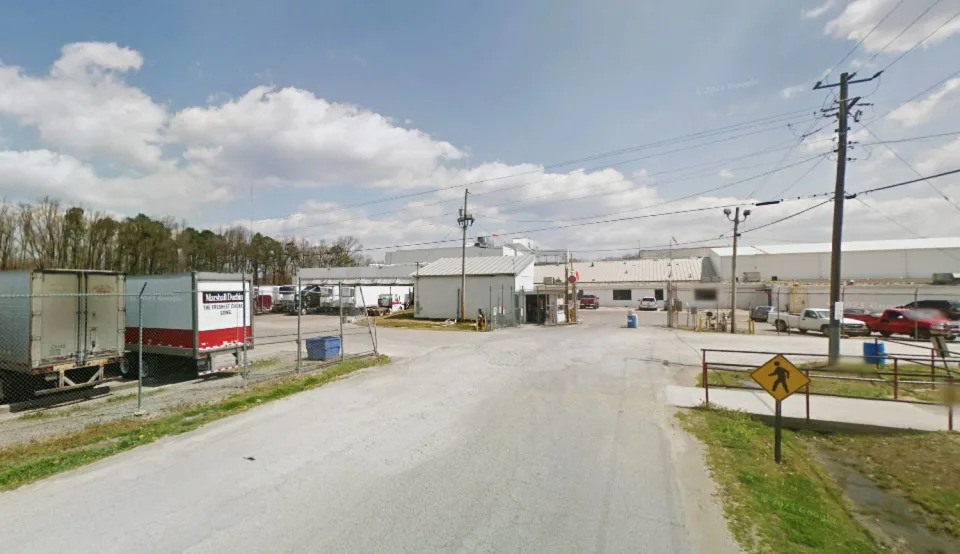
Four minors as young as 16 were allegedly discovered working overnight at an Alabama slaughterhouse owned by the same firm that was found directly responsible for the death of a 16-year-old Mississippi worker last summer, the U.S. Labor Department said in federal court filings.
The company, Mar-Jac Poultry, has denied that it knowingly hired minors for its Jasper, Alabama, facility, saying the workers had verified IDs that gave ages older than 17, and has also argued that some of the workers were performing jobs that are not prohibited by federal regulations.
The Labor Department is seeking a temporary restraining order against Mar-Jac as part of the ongoing legal dispute. Agency officials declined to comment, citing their investigation.
The Labor Department has said that most slaughterhouse work is too dangerous for minors and is prohibited by federal regulations. Under the Biden administration, the department has taken action against companies for employing minors to clean, use or work near dangerous machinery. A chicken trade group to which Mar-Jac belongs says it has “zero tolerance” for employing minors, and a major meat industry trade group also stated recently that no minors should be working in slaughterhouses.
Mar-Jac’s attorney Larry Stine said the company has a policy of not hiring anyone under the age of 18. Federal law, however, does not categorically prohibit minors from working in slaughterhouses, listing a few narrow exceptions. Stine told NBC News that to defend against child labor allegations, he argued in court filings that the specific jobs were allowed under the law.
Mar-Jac Poultry in Jasper, Ala. (Google Maps)
Stine wrote in a brief that the job performed by two of the workers in the “rehang department,” which involves lifting and hanging chilled and eviscerated chicken carcasses, is not prohibited by federal regulations. He also wrote that the workers were not using power machinery, and that a job where one of the workers used a knife to cut wings from carcasses on a conveyor belt is also not prohibited.
The company said the workers were verified through the government’s E-Verify system and that once the Labor Department identified them as minors the workers were immediately fired. Stine said the alleged minors in Alabama were hired directly by Mar-Jac and not a third-party staffing company.
The Jasper plant was cited in December for a “serious violation” of worker safety by a different part of the Labor Department, the Occupational Safety and Health Administration.
In November, according to OSHA, an employee “reached into [a] machine using an unguarded approach attempting to rectify the hanging placement of a chicken and was injured.”
According to the agency’s online enforcement database, Mar-Jac formally settled with OSHA on the injury citation earlier this week.
Court documents show the Labor Department’s child labor investigation into the Alabama facility began with a complaint in March of this year. In May, 20 Labor investigators went into the plant without prior notice in the early-morning hours and verified that at least four of the workers at the plant were minors, according to the department’s court filings.
The Jasper facility processes more than 1.6 million chickens per week, according to the company’s website.
In affidavits, Labor Department investigators said there were 18-year-old workers present who told investigators they were hired by Mar-Jac when they were 15.
At least some of the minors working at the plant were Guatemalan and attended a local high school, Labor investigators said. They said the minors started their shifts at 11 p.m. and worked from Sunday through Thursday.
Death in Mississippi
In January, OSHA found Mar-Jac to be directly responsible for the death of 16-year-old Duvan Perez at its Hattiesburg, Mississippi, facility. Perez’s body was sucked into a machine that he was cleaning on the night shift and he died instantly. Perez’s family has filed a wrongful death lawsuit against Mar-Jac.https:
The company has contested OSHA’s conclusions, according to the agency’s enforcement database.
In a previous email about the incident, Stine said, “Mar-Jac thoroughly investigated the accident and has not found any errors committed by its safety or human resources employees. It has learned many lessons from the accident and has taken aggressive steps to prevent the occurrence of another accident or hiring underage workers.”
The NBC News documentary “Slaughterhouse Children” revealed that at least nine times in the past three years, American citizens have complained to the Hattiesburg Police Department and sometimes to Mar-Jac that their identities were stolen and being used by Mar-Jac workers, according to police reports obtained via public information requests.
The company maintained that it was duped by workers using false identities who were hired by an outside staffing firm.
Perez used the identity of a 32-year-old man to get his job at Mar-Jac in Mississippi, the company previously told NBC News. The company has also said Perez was a contract worker and that Mar-Jac relied on a staffing company to fill positions at the Hattiesburg facility and verify work eligibility.
As part of the company’s response to Perez’s death, Mar-Jac said it was applying additional scrutiny to any IDs presented for employment. Company representatives said they were also hanging up signs saying children could not be employed and the third-party hiring firm was required to provide a photo of applicants to Mar-Jac in addition to their photo ID.
Some of the steps Mar-Jac said it was taking in Mississippi are the same as those recommended in a new “best practices” document for meat processing companies released a few weeks ago by the nation’s largest meat industry trade group, the Meat Institute, which represents companies that sell beef, pork, lamb and poultry products.
The group’s best practices were published after a year of aggressive federal investigations and high-profile media coverage showing that the hiring of children to work in slaughterhouses was widespread across the industry.
But the trade group also said categorically that minors should not be working in slaughterhouses. In a press release accompanying the new best practices document, Meat Institute President and CEO Julie Anna Potts wrote, “The members of the Meat Institute are universally aligned that meat and poultry production facilities are no place for children.”
Stine noted that Mar-Jac is not a member of the Meat Institute. Mar-Jac does belong to trade groups representing the poultry industry, including the National Chicken Council, which says it represents companies that provide about 95 percent of chicken meat products to U.S. consumers.
In a statement, Tom Super, a spokesperson for the National Chicken Council, said, “The poultry industry has zero tolerance for the hiring of minors. Our members have recently come together to form a Task Force to Prevent Child Labor, to treat this issue as non-competitive and to foster collaboration through the sharing of best practices that aid in the prevention of minors from gaining employment.”
“Unfortunately, in most of these cases, minors are hired even when using all of the required government screening programs and the applicants appear to be of legal age. These challenges are not unique to the poultry industry but are systemic issues affecting many other sectors in the United States, as well.”
Asked about Mar-Jac’s assertion that minors are not barred from some jobs, however, Super said, “Some jobs are lawful, some aren’t. We oppose all unlawful hiring.”
Chiefs Kicker Goes Wide Right In Blasting Joe Biden On Abortion In Graduation Speech
Ron Dicker – May 14, 2024
Kansas City Chiefs kicker Harrison Butker launched a right-wing screed at President Joe Biden during Saturday’s commencement at Benedictine College (Kan.). (Watch the video below.)
Butker targeted Biden’s support of abortion rights and railed at “degenerate cultural values,” “dangerous gender ideologies,” and the “tyranny of diversity, equity, and inclusion” on a platform he said was given to him by God.
The guest speaker, whose game-tying field goal extended the recent Super Bowl to overtime, where the Chiefs eventually beat the San Francisco 49ers, tried to score points with his conservative audience at the liberal arts Catholic school.
“Our own nation is led by a man who publicly and proudly proclaims his Catholic faith, but at the same time is delusional enough to make the sign of the cross during a pro-abortion rally,” he said, referring to Biden’s gesture last month that seconded a Democratic official’s criticism of Florida’s six-week abortion ban.
“He has been so vocal in his support for the murder of innocent babies that I’m sure to many people it appears that you can be both Catholic and pro-choice,” Butker continued.
Butker had already gone further afield, appearing to criticize Dr. Anthony Fauci’s COVID-19 response while voicing other conservative objections.
“Bad policies and poor leadership have negatively impacted major life issues,” he said. “Things like abortion, IVF, surrogacy, euthanasia, as well as a growing support for degenerate cultural values and media, all stem from the pervasiveness of disorder.”
HuffPost reached out to the Chiefs for comment on Butker’s remarks.
Fast-forward to 1:20 for many of Butker’s remarks aimed at Biden and culture-war points of contention:https://www.youtube.com/embed/-JS7RIKSaCc?rel=0
Chiefs kicker Harrison Butker bashes Pride Month, tells women to stay in the kitchen
Doug Farrar – May 13, 2024
There are some times when maybe, just maybe, one should actually stick to sports.
Kansas City Chiefs kicker Harrison Butker has been tremendously successful in his chosen profession over the last few years; the 1027 seventh-round pick out of Georgia Tech has helped his team win three Super Bowls, and in the 2023 season, he made 94.3% of his field goals in the regular season (a career high), and he went 11-fot-11 in the postseason.
Butker’s legacy of tolerance is a bit more complicated.
Butker recently delivered the commencement address at Benedictine College, a liberal arts institution in Atchison, Kansas. This is the same college that once forced out gay basketball player Jallen Messersmith to remove a rainbow flag from his dorm room window.
It would seem that Butker felt right at home.https://www.youtube.com/embed/-JS7RIKSaCc?version=3&rel=1&showsearch=0&showinfo=1&iv_load_policy=1&fs=1&hl=en-US&autohide=2&wmode=transparent
After delivering some incendiary comments about Covid and President Biden, Butker got around to what he perceives as a woman’s ultimate and rightful place: the kitchen.
“I think it is you, the women, who have had the most diabolic lies told to you. Some of you may go on to lead successful careers in the world but I would venture to guess that the majority of you are most excited about your marriage and the children you will bring into this world.
“I can tell you that my beautiful wife Isabelle would be the first to say her life truly started when she started living her vocation as a wife and as a mother. I’m on this stage today, able to be the man that I am, because I have a wife who leans into her vocation.
“I’m beyond blessed with the many talents God has given me, but it cannot be overstated that all my success is made possible because a girl I met in band class back in middle school would convert to the faith, become my wife, and embrace one of the most important titles of all. Homemaker.”
Then, Butker got to what he termed the dangers of the “church of nice.”
“The world around us says that we should keep our beliefs to ourselves whenever they go against the tyranny of diversity, equity and inclusion,” Butker said. “We fear speaking truth, because now, unfortunately, truth is in the minority.”
Then, on to Pride Month, which takes place in June.
“Not the deadly sins sort of Pride that has an entire month dedicated to it, “but the true God-centered pride that is cooperating with the holy ghost to glorify him.”
Butker has every right to say whatever he wants at such an address, but he also deserves the flak he’s going to get over it. Most likely, he’ll take it as one for the team in the fight against, as he put it,