How a Patriotic Painting Became the Internet’s Soap Box

“Freedom of Speech,” the World War II-era painting by Norman Rockwell, has taken on a new life online.

By Charles W. McFarlane – July 3, 2024

A painting of a man in a blue plaid shirt and brown jacket standing up mid-speech while men around him, seated and wearing suits, look up toward him.
“Freedom of Speech,” completed in 1943, is among a series of works by the American painter and illustrator Norman Rockwell that depicted the “four freedoms” promoted in a Franklin D. Roosevelt speech.Credit…Norman Rockwell Museum Collections; SEPS: Curtis Publishing, Indianapolis

So you have an opinion you want to share online — something you need to get off your chest. Maybe it’s about the current political climate. Maybe you want to have the final word on whether or not people should wear their shoes in the house.

If you know you have a spicy take on your hands, you might look to the American painter and illustrator Norman Rockwell to help you share it. Across social media, his work “Freedom of Speech” appears alongside all manner of strong opinions, from the highly serious to the absurd to the esoteric, enshrining itself into the lingua franca of the internet decades after its creator’s death.

The oil painting, which shows a man dressed in work wear standing and poised to speak amid a crowd of men in suits, is part of a series by Rockwell inspired by Franklin D. Roosevelt’s 1941 State of the Union address arguing for U.S. involvement in World War II. In his remarks, the president outlined four universal freedoms that Americans should fight to guarantee for all: freedom of speech, freedom of worship, freedom from want and freedom from fear.

According to the internet encyclopedia Know Your Meme, the painting began showing up in posts on X, then Twitter, in 2020. It wasn’t until two years later, though, that it started spreading widely, first with a post by a user who shared the image with an opinion on shrimp-fried rice (“a shrimp did not fry that rice!”).

Since then, the image has been used to take a stance on divisive personal essays, weigh in on Taylor Swift albums, proselytize the merits of hard-shell tacos and decry the state of professional football.

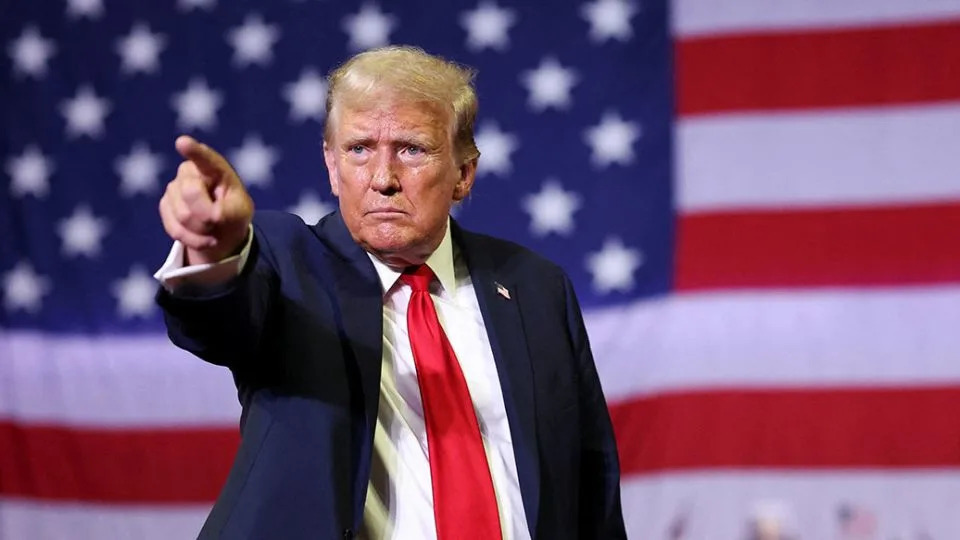
On the day former President Donald J. Trump was found guilty of 34 felony counts in a New York court, Mary Katharine Ham, a Fox News contributor, posted a picture of the painting with the comment, “jailing your political opponents is bad, actually” — to which the frequent anti-Trump poster Armand Domalewski replied with the same image and the comment, “nobody being above the law is good, actually.”

That the painting has become a hit online isn’t as unlikely as it may seem. Joshua Citarella, an artist in New York who researches online political subcultures, said the artwork had a natural affinity with the social media platform where it has spread.

A stated goal of X is to “give anyone the ability to speak to the crowd and to give a platform to any opinion,” Mr. Citarella said. (Elon Musk and previous chief executives of the platform have called it the “town square” of the internet.) “If one had to illustrate Twitter in an image, it would be very well encapsulated in this very painting,” he added.

But the viral life of “Freedom of Speech” long predates X debates. Stephanie Haboush Plunkett, the deputy director and chief curator of the Norman Rockwell Museum in Stockbridge, Mass., home to the “Four Freedom” paintings, said Rockwell’s oeuvre was intended to distill and quickly spread a mass message.

“Many Americans did not register what the meaning of those freedoms truly were” and found Roosevelt’s speech abstract, Ms. Plunkett said. What Rockwell wanted to do, she continued, “was to try to envision them in a way that a large populace could understand.”

“The Four Freedoms” and Rockwell’s interpretations of them were everywhere in American life in the 1940s. They appeared on covers of The Saturday Evening Post, where Rockwell regularly published his work. The government put them on postage stamps, displayed them in an exhibition as part of its nationwide war-bond drive and printed them on posters that helped raise $133 million for the war effort.

More recently, the paintings were used as inspiration for “Imagining Freedom,” a virtual exhibition at the Rockwell museum that includes many contemporary interpretations of his work, including a piece by the artist Maurice (Pops) Peterson, who in 2015 reimagined “Freedom From Fear” for the Black Lives Matter era.

“We’ve done a fair amount of work in terms of how his imagery has been appropriated, parodied or memed,” said Rich Bradway, the digital innovation officer at the museum.

Mr. Citarella said he had noticed that the “Freedom of Speech” painting was a little bit more popular online “with people who are on the left,” as part of a small but growing trend of memes related to Roosevelt and the New Deal.

The longing for a return to an imagined golden age of liberalism comes as there is a push from some on the right to return to the racial and gender hierarchies of midcentury America. On the left, there seems to be a small effort to “reclaim some of that imagery,” Mr. Citarella said.

“There’s a real push and pull with the semiotic use of this particular image,” he said of “Freedom of Speech.”

But the painting’s effort at universality still seems to resonate with those who share it online.

“Even if you are not a middle-aged white man speaking, people use him to represent themselves,” said Kathryn Winn, the author and editor of the Substack newsletter Memeforum. “There is a neutrality to him in that he’s not making an expression or saying anything beyond ‘This is my opinion.’”

For much of his career, and long after his death, Rockwell was considered “an enemy of modern art,” a “lowly calendar artist” and “a cornball and a square,” according to Deborah Solomon, who published a biography of Rockwell in 2013. But in recent years, Rockwell’s work has fetched tens of millions at auction houses — far exceeding expectations for American paintings — and has been looked on more kindly by some critics.

That Rockwell has been entered into the internet’s canon, too, is “a great way to maintain his presence in the public consciousness,” Ms. Plunkett said. Even if “Freedom of Speech” is largely wielded with irony online, something of its original meaning seems to shine through.

People from “all sides of the political spectrum” may use the painting to express, say, their views on pineapple as a pizza topping, Ms. Winn said. “The meme shows that we value freedom of speech, even at its most stupid, and that’s what Twitter is for.”

The Trump Decision Reveals Deep Rot in the System

By Laurence H. Tribe – July 1, 2024

Laurence H. Tribe is a professor emeritus at Harvard Law School. Mr. Tribe taught constitutional law at Harvard for 50 years.

In front of the Supreme Court Building, a person holding up a sign reading, “Delay, delay, delay.”
Credit…Damon Winter/The New York Times

On Monday the Supreme Court dispensed with the rule of law by effectively depriving the American people of crucial information we should have had before the November election.

The question before the justices in Trump v. United States: Was Donald Trump immune from prosecution for the crimes the special counsel Jack Smith accused him of committing while president? The answer should have been obvious: No, presidents cannot commit crimes aimed at obstructing the peaceful transfer of power without facing consequences. Indeed, to my knowledge, no court has ever held that a president could be criminally immune under any circumstances.

Instead of delivering that judgment many months ago and allowing the trial to proceed, the justices have given Mr. Trump the gift of delay piled upon delay. By taking nearly 10 weeks to deliberate before returning the case to the district court — and by sending it back not even for immediate trial but for preliminary determinations that could trigger yet another round of appeals — they have extinguished any realistic hope of getting a verdict in the Jan. 6 case before November. American voters will enter ballot booths to choose between Donald Trump and President Biden without knowing whether Mr. Trump is guilty of the crimes with which a grand jury of his fellow citizens charged him.

This decision may seem like a reflection of a rogue conservative majority that can, in time, be changed. But it is a sign of a much deeper problem — one that, when the time is ripe, will require constitutional reforms to solve and perhaps even a new branch of government.

Although the opinion features a high-minded disclaimer that the court is not granting Mr. Trump or any future president complete immunity, the practical effect of this decision is presumptive immunity for all future presidents and complete immunity by delay for Mr. Trump.

This prospect was not lost on Mr. Trump. He repeatedly obtained delays to avoid trial, turning the legal machinery of the court system against itself to buy what he needed most: time — time to distract, delay and spin his own version of the story as he sought to find a way to make these devastating charges disappear. If he becomes president again, he could have his new attorney general fire Mr. Smith and deep-six the entire prosecution.

Regardless of whether you think Mr. Trump would have been acquitted or convicted in a trial, immunity by running out the clock is justice delayed and thus justice denied.

So how did our legal system get tripped up by his persistent delay strategy? And why does it have such perilous ramifications for the rule of law?

The Constitution’s framers erected a structure they hoped would ensure, as far as humanly possible, that no person, including a president, would be above the law. But they also designed the prosecutorial arm of government — which now includes the attorney general and the special counsels — to be dependent on the president. As centuries passed, this has created serious problems.

Special counsels now lack even the autonomy of independent prosecutors past because the dissent of Justice Antonin Scalia in a 1988 case called Morrison v. Olson announced what is now the accepted judicial view: that the executive branch should have sole appointment and discretionary retention power. As a result, Mr. Smith is less equipped to cope with extreme corruption at the top than his predecessors.

The attorney general, for his part, serves at the president’s pleasure. That probably explains why Merrick Garland waited about 20 months to appoint a special counsel in this case. The New York Times and other outlets have reported that in the early days of his presidency, Mr. Biden adamantly opposed bringing charges against his predecessor, most likely worried that they would backfire politically. An attorney general unconstrained by the political pressures of presidential politics might well have brought charges earlier, ensuring that we had answers before Election Day.

All this is generally accepted. But this case has exposed an even more insidious problem caused by the structural relationship between any president and the Justice Department. During the oral arguments, Michael Dreeben, the able Justice Department advocate, had to acknowledge that, because the attorney general serves at the president’s pleasure, any president can effectively secure the equivalent of immunity for whatever crimes he might choose to commit. All a chief executive must do is pick an attorney general who would give him a formal opinion stating that whatever he planned to do would be legal — up to and including a coup reversing his own election loss. That advice of counsel would, under settled principles of due process, give the president an ironclad defense every bit as good as judicially conferred immunity.

Should Mr. Trump return to the Oval Office, he could act with even greater impunity than he did in his first term, either by immunizing himself with an attorney general’s opinion (which would give him license to commit whatever crimes he chose to commit) or by using the Justice Department to engage in politically motivated prosecutions.

The American people can still vote this November to reject what would be a devastating blow to the survival of government by and for the people. But whatever one believes about the likely outcome, we can and should also begin talk of amending the Constitution to repair these structural flaws. Whether Trumpism implodes later rather than sooner, we must remember that over the course of our history, we have made progress toward a “more perfect Union” only by imagining a better future and struggling to embody it in our fundamental law. Sometimes we’ve amended the Constitution after a national upheaval as convulsive as the Civil War. At other times, however, less traumatic events affecting the presidency, in particular, have prompted constitutional reform.

To repair the profound and growing problem of presidential unaccountability, we must dare to design a separate branch of government, outside the existing three, charged with investigating and prosecuting violations of federal criminal laws.

The process of amending the Constitution is long and cumbersome and could take years. Although it requires no involvement by the president, it can happen only after our constitutional republic puts Trumpism behind it. But a decisive victory over the MAGA movement, either now or in the years ahead, could provide the political energy needed to make structural change possible, persuading a future supermajority in Congress to advance an amendment to repair the dangers embedded in our constitutional structure before it is too late.

Precedent exists for a prosecutorial arm separate from the presidency. In other nations and more than 40 states, the chief executive has no power to remove the head of the government’s prosecutorial authority. In a majority of those states, voters elect attorneys general who are independent of the governor. That would be one route for selecting an independent federal prosecutor to head the fourth branch. Another would retain appointment of the chief federal prosecutor by the president but ensure that official’s independence by preventing removal without good cause.

To be sure, there are risks. There’s no perfect system of government that individuals with insatiable thirst for dominance cannot corrupt or subvert. In the one I envision, an individual motivated less by justice than by greed for power could come to wield the immense authority of the federal prosecutor. What would prevent that person from going rogue? Courts? Congress? The people? The answer is all of the above.

By creating a fourth branch less powerful than the presidency and subject to checks and balances — both from the judiciary, with its power of judicial review, and from the legislature, with its power of the purse — we can fortify our system from the kinds of abuse we have sadly witnessed in our times and are likely to see repeated and amplified because of Monday’s anti-democratic decision.

More on Donald Trump’s plans for a second term:

Michelle Goldberg: ‘Lock Her Up’ Was Not Just a Slogan – June 3, 2024

Jacob Heilbrunn: The Real Danger if Trump Is Re-elected – May 21, 2024

Caroline Fredrickson: What Worries Me Most About a Trump Presidency – April 10, 2024

Washington Post: Justice Department to pursue Trump prosecutions past the election, even if he wins

CNN

Washington Post: Justice Department to pursue Trump prosecutions past the election, even if he wins

Piper Hudspeth Blackburn and Hannah Rabinowitz – July 2, 2024

Justice Department officials will continue to pursue the federal criminal cases against Donald Trump past Election Day, even if he wins, The Washington Post reported Tuesday.

The plan is due to a view that DOJ rules against charging or prosecuting a sitting president would not kick in until Inauguration Day in January, people familiar with the discussions told The Post.

The Washington Post’s reporting comes a day after the Supreme Court ruled that Trump may claim immunity from criminal prosecution for some of the actions he took at the end of his presidency.

The court’s decision is likely to further delay a trial on the federal election subversion charges brought by special counsel Jack Smith, leaving Trump poised to avoid pre-election trials in the most significant criminal prosecutions he faces after being found guilty in his hush money trial in May. (His sentencing in that trial has been postponed until September in the wake of the court’s ruling.)

Officials who were not part of the special counsel’s deliberations told CNN they believed the long-standing DOJ policy against criminally charging a sitting president does not extend to a president-elect.

The department policy applies to a “sitting president,” the officials told CNN – so even if Trump were to win reelection in November, he could still stand trial before he was inaugurated in January 2025.

A spokesperson for Smith’s office declined to comment to The Post.

Trump also faces dozens of federal charges related to the alleged mishandling of classified documents. The judge who oversees that case, also brought by Smith, indefinitely postponed the trial in May, citing significant issues around classified evidence that would need to be worked out before the case goes to a jury.

The Supreme Court Made a ‘Monumentally Awful’ Decision

The New York Times – Opinion

The Supreme Court Made a ‘Monumentally Awful’ Decision

Presidential immunity never existed in America. Until now.

By Jesse Wegman – Produced by Derek Arthur 

On Monday morning the Supreme Court ruled that Donald Trump and future presidents of the United States have immunity for official acts. “The entire idea of the American system of government and the Constitution was that the rule of law was king, the rule of law applies to everyone equally, including the president of the United States,” Jesse Wegman, a member of the editorial board, says. “The court blew all of that up.”

In this audio essay, Jesse explains what the ruling means for Trump and for the presidency in decades to come.

(A full transcript of this audio essay will be available within 24 hours of publication in the audio player above.)

A photo illustration of the Supreme Court Building, shaded blue.
Credit…Illustration by The New York Times; photograph by Walter Bibikow

This episode of “The Opinions” was produced by Derek Arthur. It was edited by Alison Bruzek and Kaari Pitkin. Mixing by Pat McCusker. Original music by Carole Sabouraud and Pat McCusker. Fact-checking by Michelle Harris and Kate Sinclair. Audience strategy by Kristina Samulewski. Our executive producer is Annie-Rose Strasser.

Jesse Wegman is a member of The Times editorial board, where he writes about the Supreme Court, law and politics.

More from Jesse Wegman:

The Editorial Board: The Supreme Court Gives a Free Pass to Trump and Future Presidents – July 1, 2024

Jesse Wegman: Trump’s Immunity Case Was Settled More Than 200 Years Ago – April 26, 2024

Jesse Wegman: The Supreme Court Gives a Hand to Hundreds of Jan. 6 Rioters – June 28, 2024

Transcript:

This transcript was created using speech recognition software. While it has been reviewed by human transcribers, it may contain errors. Please review the episode audio before quoting from this transcript and email transcripts@nytimes.com with any questions.Jesse Wegman

I’m Jesse Wegman. I’m a member of “The Times” editorial board, where I write about law and politics.

So on the last day of its term, the Court ruled — I think shocking many of us — that presidents are basically above the law, much to the shock of those of us who thought they weren’t. They have, essentially, absolute immunity for most of their official acts, regardless of how egregiously they violate the law in carrying them out. And they may even have immunity for some acts that are on the edge of officialness. So it’s a decision that flies in the face of more than 200 years of American history, the text of the Constitution, and, I think, everybody’s settled understanding of presidents’ liability for criminal activity.

In the immediate term, what this means is that Donald Trump will almost certainly not face prosecution for inciting a violent insurrection at the Capitol on January 6, 2021 to try to overturn an election that he had lost fair and square. I think the concern that the dissenters brought up was that this is not just Donald Trump but presidents going forward who will now feel, essentially, free to do whatever they want, knowing that it is going to be extraordinarily hard to hold them to account after their presidencies.

When this case first got to the court system, I think a lot of people laughed it off. It was Donald Trump bringing up yet another one of his off-the-wall, absurd legal arguments. In this case, he was saying everything that happened on January 6 and around January 6 I’m immune from prosecution for because I was the president, and I was doing my job as the president.

Just to be clear, there has never been any criminal immunity for any president in American history. This was, I thought, broadly understood. Everyone understood this. Richard Nixon understood it back in the Watergate era.

That’s why he accepted a pardon because he knew that, without the pardon, he could be criminally prosecuted. It’s why Donald Trump’s lawyers, during the second impeachment of Trump in early 2021, said, even if you vote to acquit him, don’t worry. You can still go after him in a court of law. That was the general understanding.

The court blew all of that up with its decision on Monday. And I don’t think we can overstate what a monumental, and monumentally awful, decision this was.

Look, the justices in the majority, which was written by Chief Justice John Roberts, who styles himself as an institutionalist — and I would say this opinion is about as anti-institutional as you can get — they argued that to expose presidents to criminal prosecution would interfere with their ability to do their job with the kind of energy and boldness that we require of presidents.

This is just laughable. First of all, no president in history before Donald Trump was brought up on criminal charges. The reason for that isn’t that presidents were tiptoeing around, terrified about being brought up on criminal charges. The reason is that presidents understood their role, and they didn’t break the law the way that Donald Trump did.

For a court that loves to talk about the importance of the text of the Constitution and the history and the tradition of this country, this is about as untethered from any of those things as you could imagine. If you could characterize this court in any way, it is a court that is entirely outcome-driven.

It has no principles. It does not rule on the grounds of any principle other than what it wants to do in a given case. And what it wants to do in a given case is, suspiciously, often correlated quite closely with the interests of the conservative movement and the Republican Party.

Justice Sonia Sotomayor, who wrote one of the two dissents from Monday’s ruling, she called it “atextual, ahistorical, and utterly indefensible.” And Sotomayor says in her dissent, “The court effectively creates a law-free zone around the president, upsetting the status quo that has existed since the founding.”

That’s what’s so shocking about this decision, right? The American Revolution was fought specifically to get out from under the power of a king who was unaccountable, a king who literally existed above the law.

The other way to think about the stakes of this ruling and of the impact it’s going to have is on Donald Trump himself. Look at what he did in his first term. Look at how much he disregarded the courts, Congress, all of the institutions of American government, when they didn’t go his way. He delegitimized them all.

So now think about Trump basically being unleashed by a Supreme Court that has said, it is going to be almost impossible to hold you criminally to account for anything that you’ve done. This is a man who does not see the law or the rule of law as something he respects or will follow. So now consider what it will be like if and when he retakes office and knows that nothing he does is going to come back to haunt him.

He will basically be immune in every sense for his actions. It is going to be very hard to say that almost anything a president does is not done in his official capacity. And I think, because of that, you’re going to see presidents feeling emboldened to take all kinds of steps that we didn’t think that they could ever take before.

Justice’s dissent: ‘The president is now a king above the law’

BBC

Justice’s dissent: ‘The president is now a king above the law’

By Mike Wendling, BBC News – July 1, 2024

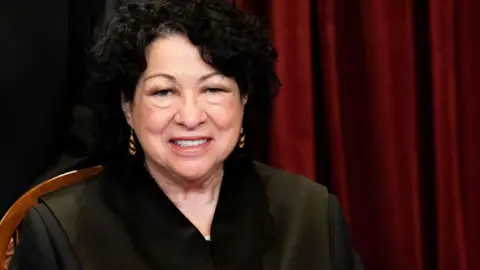
Getty Images Sonia Sotomayor

Three justices have issued a blistering dissent to the US Supreme Court opinion granting Donald Trump partial immunity from prosecution, warning that it will allow presidential power to be used “for evil ends”.

The 6-3 historic decision effectively strips out key parts of an indictment against the former president for allegedly conspiring to overturn his 2020 election defeat.

Six conservative-leaning justices signed the majority opinion, but the three liberals dissented, expressing “fear for our democracy”.

President Joe Biden similarly warned of a “dangerous precedent”, while one legal expert said this was not simply a case of “fear-mongering”.

Leading the liberals, Justice Sonia Sotomayor outlined hypothetical situations where the concept of immunity could apply.

“Orders the Navy’s Seal Team 6 to assassinate a political rival?” she wrote. “Immune.”

“Organizes a military coup to hold onto power? Immune. Takes a bribe in exchange for a pardon? Immune. Immune, immune, immune.”

“Even if these nightmare scenarios never play out, and I pray they never do, the damage has been done,” Justice Sotomayor wrote. “In every use of official power, the President is now a king above the law.”

Justice Sotomayor was joined in her dissent by the court’s two other liberal justices, Ketanji Brown Jackson and Elena Kagan.

Justice Jackson wrote in a separate dissent that the majority’s ruling “breaks new and dangerous ground” by “discarding” the nation’s long-held principle that no-one is above the law.

“That core principle has long prevented our Nation from devolving into despotism,” she said.

Justice Sotomayor argued that the majority had invented a notion of absolute immunity for a president performing “official acts”, even though it has at times been assumed that presidents could be prosecuted for things they did while in office.

She was visibly emotional as she spent more than 20 minutes reading out parts of her opinion on Monday.

She cited Richard Nixon getting pardoned by the president who succeeded him, Gerald Ford, for using his official powers to obstruct an investigation into the Watergate burglary – the scandal that eventually led to Mr Nixon’s resignation.

Those involved in the case were under the presumption that Mr Nixon did not have immunity and could be prosecuted after leaving office, Justice Sotomayor wrote.

Her opinion went much further back in history as well. She quoted US Founding Father Alexander Hamilton, who wrote that former presidents would be “liable to prosecution and punishment in the ordinary course of law”.

But the majority opinion, written by Chief Justice John Roberts, argued that the dissenters “strike a tone of chilling doom that is wholly disproportionate to what the Court actually does today”.

He wrote that the liberal justices were “fear mongering on the basis of extreme hypotheticals” and dismissed their legal reasoning as weak.

Normally, court dissents include the word “respectfully” but Ms Sotomayor signed off hers by writing: “With fear for our democracy, I dissent.”

And Ms Sotomayor’s dissent was echoed by President Biden’s campaign manager, Quentin Fulks, in a call with reporters.

“Immune, immune, immune. They just handed Donald Trump keys to a dictatorship,” Mr Fulks said.

Legal experts indicated that the scenarios laid out by the justices, as stark as they might seem, are open to further interpretation, particularly by lower courts.

Jeffrey Cohen, an associate professor at Boston College Law School, told the BBC that the opinion lacks clarity as to what counts as an official act.

“There’s language in there that suggests that official acts could bleed into unofficial acts really easily and render things presumptively immune,” he said. “It’s a problem that the court has left us all with this sinking feeling that they’re presuming almost everything is immune.”

Leah Litman, a law professor at the University of Michigan, said that on significant government procedure cases such as this one, the Supreme Court has usually come to a unanimous verdict, but failed to do so this time.

The decision, she said, “strongly places the thumb on the scale in favour of immunity.”

“I don’t think the dissent is being fear-mongering. At the minimum, it is unclear how a prosecution could proceed on several of the theories laid out in the majority opinion.”

Julie Novkov, the dean of Rockefeller College of Public Affairs and Policy at the University at Albany, said she was surprised at the broad definition of official acts.

But she noted that the decision raises complicated factual questions.

“I could imagine scenarios were we would have to get into this really careful analysis,” she added.

With reporting by Bernd Debusmann Jr at the Supreme Court and Rachel Looker in Washington

Kagan, liberal Supreme Court justices issue scathing dissent in Chevron ruling

The Hill

Kagan, liberal Supreme Court justices issue scathing dissent in Chevron ruling

Rachel Frazin – June 28, 2024

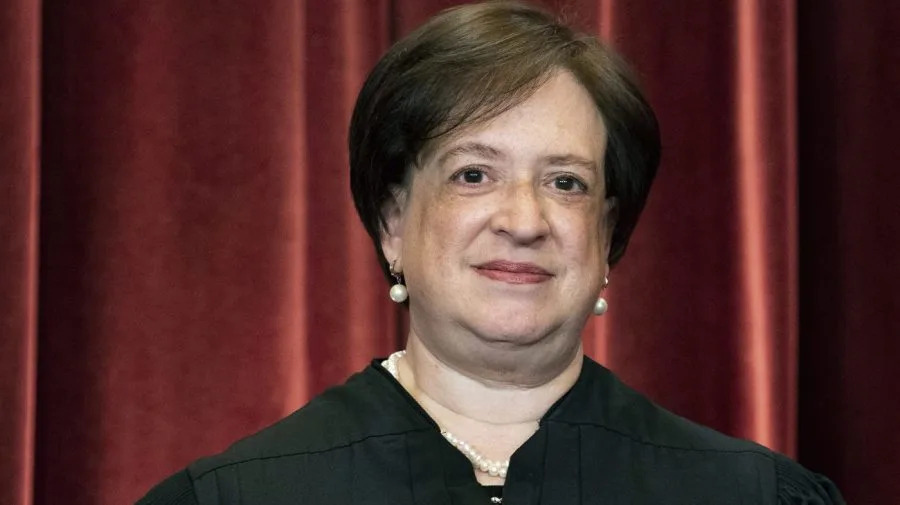
Supreme Court Justice Elena Kagan offered a scathing dissent Friday as her conservative colleagues transferred the power of federal agencies to the courts in a major decision overturning the Chevron deference.

In overruling that doctrine, Kagan argued that “the majority turns itself into the country’s administrative czar.”

Joined by fellow liberal Justices Sonia Sotomayor and Ketanji Brown Jackson, she wrote that the majority replaced a rule of “judicial humility” with one of “judicial hubris.”

“In one fell swoop, the majority today gives itself exclusive power over every open issue—no matter how expertise-driven or policy-laden—involving the meaning of regulatory law,” Kagan wrote.

She added that the decision puts the courts at the center of a wide variety of policy issues, ranging from climate change to artificial intelligence.

“The Court has substituted its own judgment on workplace health for that of the Occupational Safety and Health Administration; its own judgment on climate change for that of the Environmental Protection Agency; and its own judgment on student loans for that of the Department of Education,” Kagan wrote.

The 6-3 decision by the court upended a 40-year administrative law precedent in which federal agencies were given leeway to interpret ambiguous laws through rulemaking.

Now, judges will substitute their own best interpretation of the law, instead of deferring to the agencies — effectively making it easier to overturn regulations that govern wide-ranging aspects of American life.

“Chevron is overruled,” Chief Justice John Roberts wrote in his decision, which was joined by his five conservative colleagues.

Roberts argued that “courts must exercise their independent judgment in deciding whether an agency has acted within its statutory authority.”

Biden Cannot Go On Like This

By Frank Bruni – June 28, 2024

President Biden onstage at the debate on Thursday, June 27.
Credit…Damon Winter/The New York Times

Mr. Bruni is a contributing Opinion writer who was on the staff of The Times for more than 25 years.

I’m not sure I’d ever watched Donald Trump lie so incessantly, extravagantly and unabashedly, and that’s saying something. On Thursday night he lied about the attack on the Capitol on Jan. 6, 2021. He lied about the violence in Charlottesville, Va., in 2017. He lied about his relationship with the military, about his concern for the environment — about pretty much any and every subject that came up. He lied with a smile. He lied with a shrug. He lied with a sneer.

That should have been the main, maybe even the only, story of the debate, and it should have made him easy, pitiable prey for his opponent. But President Biden failed to take advantage of it. He seemed — there’s no getting around this — incapable of doing so. And that’s its own big story, one that will only grow over the hours and days ahead.

Biden, 81, came into his face-off with Trump knowing that many voters were concerned about his age and had doubts about his sharpness. His aides knew that, too. And he and they spent much of the past week devoted to preparation, preparation, preparation, pausing occasionally to assure nervous Democrats that Biden had this thing under control.

But from the moment the debate began, he seemed unsteady. Off. His expression was often frozen. His voice was often flat. He garbled words. He corrected himself midsentence, over and over again. He’d clearly memorized key talking points — key phrases — but he repeatedly used them without providing adequate context, swerved from one to another without any transition, halted sentences before they reached their destination, started sentences without giving them any bearings.

Ten minutes in, I had a knot in my stomach. Twenty minutes in, the knot was so tight, it hurt. “We finally beat Medicare,” he said early on, and I had no idea what he was talking about.

He got somewhat clearer as the night wore on. He found more animation. But the damage was done, and it may be significant. I shudder to type that, but there’s no sense in pretending. That’s perhaps what too many of his advisers have been doing up until now — ignoring or wishing away the obvious.

Then again, maybe Biden just had an uncharacteristically bad night. It’s possible. And even if this is now the diminished truth of him, it’s still preferable to the Big Lie of Trump, whose own sentences can be (and on Thursday frequently were) inscrutable, whose behavior is reliably unscrupulous and whose second administration would be stocked with corrupt, vengeful lackeys and would sully our democracy in ways from which we might never recover. As I’ve written before about the signs that Biden is past his peak, the presidency is more than the president: It’s the crew that the president assembles, the culture that the president creates. Biden at his least focused would establish a better crew and culture than Trump at his most.

But can Biden beat Trump? That question predated the debate and will be asked with even more urgency and panic in its aftermath. As will this one: Is it really too late for another Democrat to take Biden’s place? With stakes this high, mustn’t that be discussed one more time before the convention?

Again, I feel a bit sick saying that, because I believe that Biden is a decent man who, as president, has done a better than decent job. In both of those respects, he outpaces Trump by many miles, and if Republican politicians and voters had any decency of their own, they would have sidelined Trump long ago. (They had their chance. He was impeached twice, after all.)

But I’m not weighing in on Biden’s record. I’m evaluating his prospects. And I’m acknowledging that performances as shaky as the one he delivered on Thursday may hurt him badly with the small group of uncommitted voters who will decide what is almost guaranteed to be a very close election. Anyone and everyone who correctly understands the stakes of a Trump victory must grapple with that — and fast.

The best measure of Biden’s ineffectiveness on Thursday night was the dormant Vesuvius of Trump. He never even came close to erupting. Just as many people tuned in to the debate to see how much command Biden could muster and how much confidence he could project, many were curious about Trump’s degree of control. Would he rant, rave and remind voters of how dangerously erratic and fundamentally unpresidential he is?

He didn’t, at least not to the extent that he might have. Sure, he was pouty, petty and promiscuous with superlatives: Everything about him was the very best ever, while everything about Biden was the very worst. It was wholly unnuanced and utterly absurd. But he didn’t interrupt Biden. Didn’t shout. Didn’t scale the pinnacles of nastiness and mockery that he did in past debates.

And the reason was obvious in his bemused, pleased expression as Biden staggered through more than a few of his remarks. Trump realized that Biden was sabotaging himself. Trump reveled in that, at one point expressing puzzlement over some assertion that Biden had just made. “I really don’t know what he said at the end of that sentence,” Trump scoffed. “I don’t think he knows what he said, either.”

The astounding part was that Trump didn’t revel even more. The heartbreaking part was how Biden bungled what were clearly intended to be devastating lines. He connected the death of his son Beau, who did duty in Iraq as a major in the Delaware National Guard, to derogatory comments that Trump reportedly made about Americans who’d served in the military.

“My son was not a loser, not a sucker,” Biden proclaimed, but words that should have been immeasurably poignant just sort of hung there. “You’re the sucker,” Biden added. “You’re the loser.” I cringed. That’s Trump talk, not Biden talk, and its delivery was disjointed, unsettling, odd.

For most of the mere 90 minutes of the debate, Biden seemed to be grasping for something he couldn’t reach. I fear that’s a metaphor. I’m sure it’s a warning.

Frank Bruni is a professor of journalism and public policy at Duke University, the author of the book “The Age of Grievance” and a contributing Opinion writer.

Team Trump Has a Ukraine Plan—and It’s a Total Nightmare

The New Republic – Opinion

Team Trump Has a Ukraine Plan—and It’s a Total Nightmare

Ellie Quinlan Houghtaling – June 25, 2024

Donald Trump’s advisers have revealed their new plan for resolving the war between Russia and Ukraine—and it involves Ukraine’s immediate submission.

The plan effectively promises an increase in U.S. weapons aid to Ukraine so long as it shows up for peace talks with Russia, reported Reuters. And while that deal may not sound so bad, the writing between the lines isn’t so simple. Trump’s advisers envision that the peace talks—which Trump would facilitate should he win the November election—would also quietly include Ukraine ceding part of its territory that is currently occupied by Russian forces.

The concept was drawn up by retired Lieutenant General Keith Kellogg and Fred Fleitz, both former chiefs of staff on Trump’s National Security Council. Trump did not immediately sign on to “every word” of the plan, but Fleitz told Reuters that they were “pleased to get the feedback we did.”

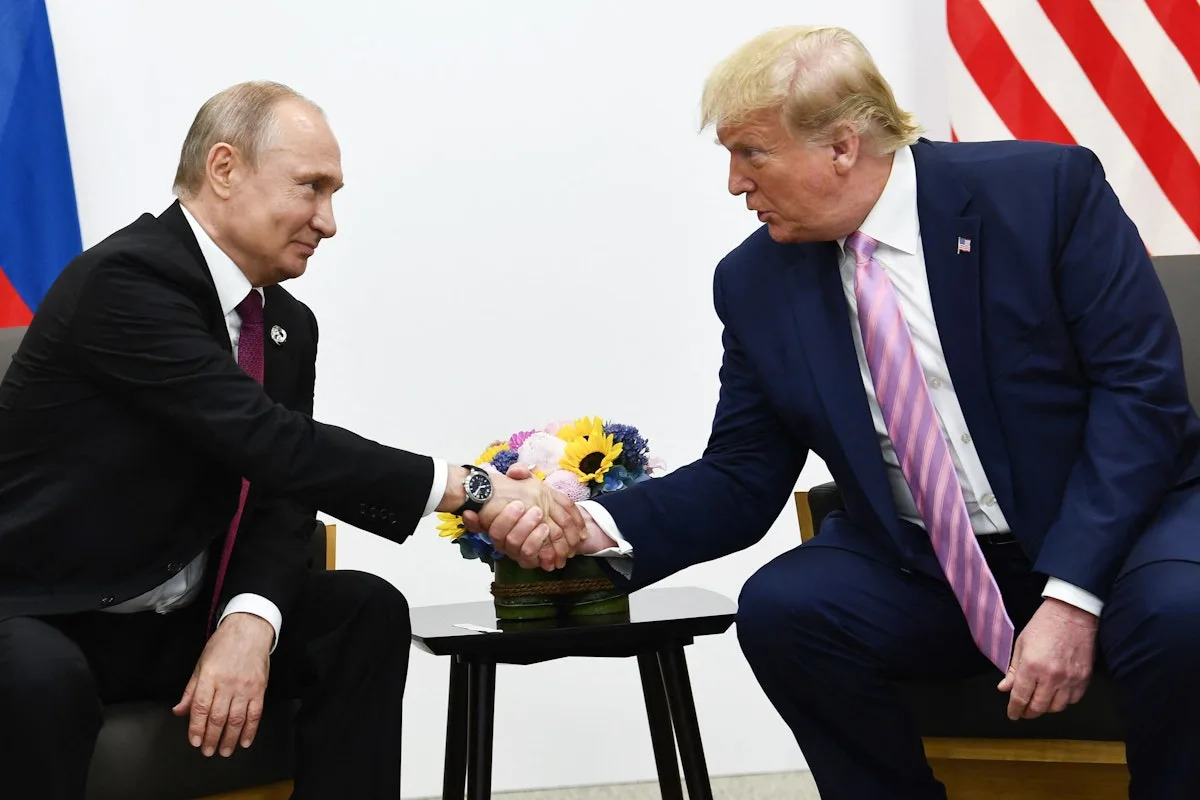
The Kremlin told Reuters that Russian President Vladimir Putin is open to peace talks, but that any proposal by a possible future Trump administration would have to reflect the “reality on the ground.”

When pressed on the details of the plan, Fleitz explained that Ukraine would not formally need to relinquish its land to Russian forces. He did concede, however, that Ukraine was unlikely to regain control of all of its territory in the near future.

Ukrainian presidential adviser Mykhailo Podolyak said that ending the war on the borders of its current front lines—where Russia has gained a foothold in the southeast portion of Ukraine—would be “strange,” pointing to the fact that Russia had violated international law by invading it in the first place.

“Ukraine has an absolutely clear understanding and it is spelled out in the peace formula proposed by President [Volodymyr] Zelenskiy, it is clearly stated there—peace can only be fair and peace can only be based on international law,” Podolyak told Reuters.

The plan’s promise to send more military aid to Ukraine only if it admits defeat and ends the war seems a bit counterintuitive—and disingenuous, considering that Trump and his advisers have done practically everything within their power to undermine sending more military aid to the embattled nation since the beginning of the year. And the plan’s obvious benefit to Russia also raises further concerns over Trump’s notoriously cushy—and sometimes subservient—relationship with Putin.

Why Republicans Are Talking About Biden’s ‘Dictatorship’

Jamelle Bouie – June 25, 2024

The dome of the Capitol at night, shrouded in clouds.
Credit…Will Matsuda for The New York Times

The United States under President Biden is a “dictatorship,” according to Doug Burgum, governor of North Dakota.

“Under Joe Biden,“ Burgum told Fox News, “we’re actually living under a dictatorship today where he’s, you know, bypassing Congress on immigration policy; he’s bypassing Congress on protecting our border; he’s bypassing Congress on student loan forgiveness; he’s defying the Supreme Court.”

Asked on Sunday to defend his claim, Burgum, who is apparently on the short list of potential running mates for Donald Trump, stood his ground, telling CNN that Biden is “bypassing the other two branches of government to push an ideological view of — whether it’s on economics or whether it’s on climate extremism — he’s doing that without using the other branches.”

It is an odd sort of dictatorship in which the head of state is bound by the rule of law as well as by the authority of other constitutional actors, one in which the dictator’s critics can organize to defeat him in an election without intimidation, penalty or threat of legal sanction — and in which he will leave office if he loses. If nothing else, it is hard to imagine a world in which Biden is both a dictator and someone who would allow Burgum, a regime opponent, to speak freely on national television as he works to defeat Biden at the ballot box.

In fairness to the North Dakota governor, he was trying to make a point about a perceived double standard, in which Trump and not Biden is blasted as an authoritarian for his use of executive orders. But even this is misleading, because the issue with Trump is not the use of executive orders per se. Instead, it is his demonstrated contempt for democratic accountability — he does not accept the right of an electorate to remove him from office — his desire to use the instruments of state to inflict punishment and suffering on his political enemies and his efforts to transform the office of the presidency and the broader executive branch into instruments of his personalist rule.

(That said, there is a conversation for another day about the overreliance on executive orders by presidents of both parties as a symptom of congressional weakness and a product of long-running structural transformations in the nature of the presidency, tied specifically to the growth and pre-eminence of the national security state.)

Governor Burgum is obviously wrong about the idea that Biden is a dictator. But he is not the only Trump ally to speak in such dire terms about the United States. As Politico’s Ian Ward noted, Senator J.D. Vance of Ohio — another Republican hoping to stand with Trump as his second — believes that “the United States is on the verge of going up in smoke” and that “electing Trump represents the only hope that Americans have for getting off the path to literal civilization collapse.”

And Russ Vought, former budget chief in the Trump administration and one of the architects of the former president’s second-term agenda, believes that Americans are living in a “post-constitutional” moment that justifies the radical use of executive power to quash protesters with the military, the gutting of the federal civil service in favor of a spoils system for Trump loyalists and the seizing of the power of the purse from Congress. He urges his comrades in arms to “cast ourselves as dissidents of the current regime and to put on our shoulders the full weight of envisioning, articulating, and defending what a Radical Constitutionalism requires in the late hour that our country finds itself in, and then to do it.”

Just as Americans are not living under a Biden dictatorship — in which the watchful eye of Dark Brandon prowls the nation in search of malarkey — the United States is also not on the verge of collapse. Our economy is the envy of the world, we remain the pre-eminent military power, and for all of its serious problems of representation and inclusion, our political system is still capable of handling at least a few of the major issues that face the nation. It does not downplay the challenges we confront to say that we have the capacity and the resources to meet them head on. That, if anything, makes it all the more frustrating that we have not yet secured decent housing, health care, child care and education for everyone in this country. None of these things are beyond our material ability to accomplish — far from it.

Of course, even mentioning the reality of conditions in the United States is a bit beside the point, because the breathless catastrophizing by Trump and his allies is not an expression of ignorance as much as it is a statement of intent. Rhetorically, the MAGA political project of personalist rule in support of social hierarchy, unrestrained capital and the destruction of public goods depends on the conceit that the nation exists in a state of exception that demands extraordinary — and extreme — measures to resolve.

The cultivation of this notion of a state of exception, of a sense of emergency, is the overriding aim of MAGA political messaging. The targets change — in 2020 it was leftists and protesters, this year it is migrants and refugees again, as it was in 2016 — but the goal is always the same: to designate an enemy, to label that enemy an urgent threat to society and to try to win power on a promise to destroy that enemy by any means necessary.

Embedded in this maneuver is a radical claim of sovereignty. The so-called enemy is whoever Trump says it is, and once designated, the entire political system must bend to his will on the notion that he, alone, can fix it.

Sovereign power of the sort that Trump and his allies gesture toward does not exist in the American system as traditionally understood, and there is no provision in our Constitution by which the executive can set aside the rule of law to deal with threats and emergencies. But the point of this rhetoric of exception is to set the conditions for doing just that — for creating an actual state of exception in American politics.

Put another way, if we are on the verge of civilizational collapse, if we are in a post-constitutional moment, if we are already in a dictatorship, then anything is permitted in defense of the old order. And if democracy should stand in the way of recovery and restoration, then democracy should, perhaps, be set aside.

During the Civil War, President Abraham Lincoln did not present himself as a bulwark of liberty who could resolve the crisis alone. He tried, as much as possible, to embody and act on his deep belief in the rule of law. For example, after taking unilateral steps to confront the rebellion and defend the Union at the outset of the conflict, he went to Congress to ask for its blessing and support. In his message, issued on July 4, 1861, Lincoln did not make demands or assert extraordinary powers.

Instead, the political scientist Nomi Claire Lazar wrote, Lincoln invited “Congress to share the burden of both reflection and action, to consider and judge the reasons he has given.” What guided his deliberations, she continued, is “precisely a commitment to the rule of law as a collective and collaborative project. What is the best we can do, given the constraints and imperatives, he asks, and how can we do our best together?”

If there is anything to know about either Trump or his closest allies, it is that they do not share this commitment to collaboration or deliberation or public reason. They know only force and dominance. And they want everything to be a crisis, not for an opportunity to affirm democracy, but for a chance to undermine it.

More on the rise of “post-constitutionalism”

David French: MAGA Turns Against the Constitution – June 6, 2024

Peter Wehner: Christian Doomsayers Have Lost It – Dec. 6, 2019

Jamelle Bouie became a New York Times Opinion columnist in 2019. Before that he was the chief political correspondent for Slate magazine. He is based in Charlottesville, Va., and Washington.

Things to know about dangerous rip currents and how swimmers caught in one can escape

Associated Press

Things to know about dangerous rip currents and how swimmers caught in one can escape

Curt Anderson – June 24, 2024

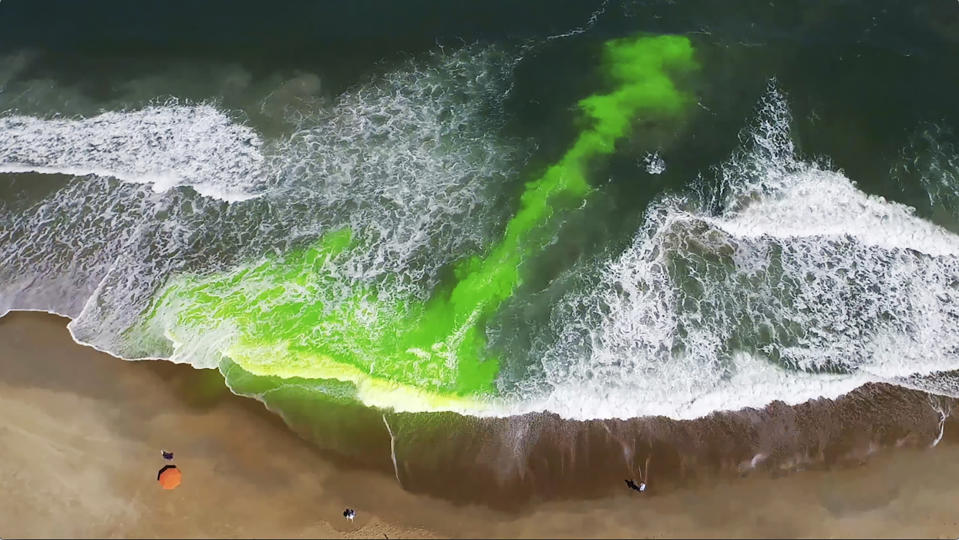
This image provided by NOAA, pictures a harmless green dye used to show a rip current. Rip currents are powerful, narrow channels of fast-moving water that are prevalent along the East, Gulf, and West coasts of the U.S., as well as along the shores of the Great Lakes. About 100 people drown from rip currents along U.S. beaches each year, according to the U.S. Lifesaving Association. (NOAA via AP)
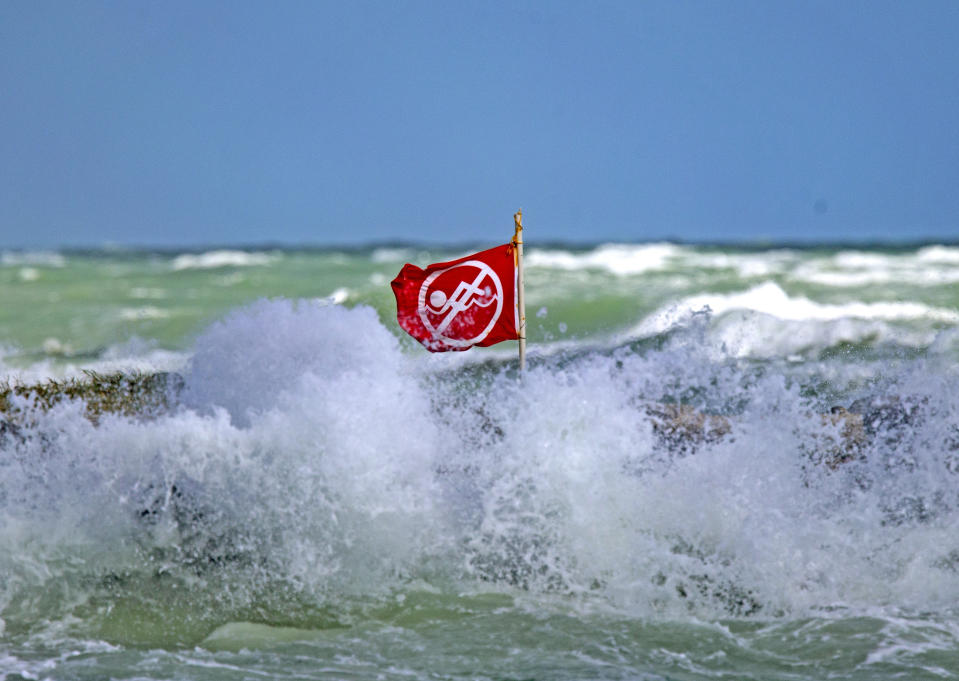
A no swimming flag is visible as waves crash against the rocks at Haulover Beach Park, November 18, 2020, in Miami Beach, Florida. About 100 people drown from rip currents along U.S. beaches each year, according to the U.S. Lifesaving Association, and more than 80 percent of beach rescues annually involve rip currents. (David Santiago/Miami Herald via AP, File)
Beachgoers walk past warning flags and signs, Jan. 13, 2020, in Pompano Beach, Fla. About 100 people drown from rip currents along U.S. beaches each year, according to the U.S. Lifesaving Association, and more than 80 percent of beach rescues annually involve rip currents. (Joe Cavaretta/South Florida Sun-Sentinel via AP, File)

ST. PETERSBURG, Fla. (AP) — Stinging jellyfish, rays with their whip-like tails and sharks on the hunt are some ocean hazards that might typically worry beachgoers. But rip currents are the greatest danger and account for the most beach rescues every year.

Six people drowned in rip currents over a recent two-day period in Florida, including a couple vacationing on Hutchinson Island from Pennsylvania with their six children and three young men on a Panhandle holiday from Alabama, officials say.

About 100 people drown from rip currents along U.S. beaches each year, according to the United States Lifesaving Association. And more than 80 percent of beach rescues annually involve rip currents.

The National Weather Service lists 16 known deaths so far in 2024 from rip currents in U.S. waters, including the Florida fatalities as well as eight deaths in Puerto Rico and two in Texas.

Here are some things to know about rip currents:

What is a rip current?

Rip currents are narrow columns of water flowing rapidly away from the beach, like a swift stream within the ocean. They don’t pull swimmers under water, but can carry them out a fair distance from shore.

Low spots along the beach, or areas near jetties or piers, are often where rip currents form. They can be connected to stormy weather but also sometimes occur during sunny days. They can be hard to detect because the surface water often appears calm.

The current can flow as swiftly as eight feet per second (3.2 meters per second), faster than even a strong swimmer can overcome, according to the National Oceanic and Atmospheric Administration.

“If you’re caught in one and you try to swim straight in, you’re not going to be able to,” said Daniel Barnickel of Palm Beach County Ocean Rescue.

How can someone escape a rip current?

The most frequent advice from beach rescue teams and weather forecasters is to not panic and look for a chance to swim parallel to the shore until the swimmer is out of the rip current’s grip. It will eventually dissipate but might leave the swimmer out in deeper water.

It’s nearly impossible to fight the current directly. Many swimmers who get in trouble tire themselves out trying to get back to the beach, lifeguards say. If possible, it’s best to swim near a lifeguard station.

“Most of our rip current rescues happen outside the guarded areas because we’re not there to prevent it from happening,” Barnickel said.

What warning systems exist for rip currents?

Flags with different colors are used to warn beachgoers of various hazards.

Three flags warn of surf and rip current conditions. Red means a high hazard, yellow means a moderate threat and green means low danger. There’s also purple for dangerous sea life, like jellyfish, and double red when a beach is closed for any reason.

The National Weather Service posts rip current risks on its websites around the coasts and has developed a computer model that can predict when conditions are favorable for their formation up to six days in advance for the U.S. East and Gulf Coasts, Puerto Rico, Hawaii and Guam.

“Before this, forecasters were manually predicting rip currents on a large section of the ocean twice a day and only a day or two into the future. The earlier prediction has potential to substantially increase awareness and reduce drownings,” said Gregory Dusek, a NOAA scientist who developed the model, in a post on the agency’s website.

High risk warnings were posted for most Florida beaches last week, when the drownings occurred.

Should someone attempt a rip current rescue?

It can be dangerous to try to rescue someone caught in a rip current, officials say. Often the people trying to perform the rescue can get into trouble themselves.

It’s best to find a lifeguard, if there is one, or call 911 if a struggling swimmer is spotted. People on shore can also try to tell the person to swim parallel to shore.

“Never swim alone. And always make sure that there’s an adult. And make sure that you don’t overestimate your abilities. Know your limits,” Barnickel said.

Associated Press video journalist Cody Jackson in Palm Beach contributed to this story.