5 ways Kamala Harris is attacking Trump

Yahoo! News

5 ways Kamala Harris is attacking Trump

Andrew Romano, Reporter – August 1, 2024

Vice President Kamala Harris
Vice President Kamala Harris boards Air Force Two in Westfield, Mass., on July 27. (Stephanie Scarbrough/AP)

Ever since Vice President Kamala Harris took the baton last Sunday from her boss, President Biden, and instantly became the Democratic Party’s new de facto presidential nominee, she has enjoyed one of the most significant “honeymoons” in recent U.S. campaign history.

As a result, the latest polls show Harris closing the gap with Donald Trump in key swing states; pulling even nationally; and surpassing him in terms of favorability and enthusiasm.

Yet all honeymoons come to an end. If Harris hopes to win in November, she will have to differentiate herself from Biden — and convince a decisive number of voters to reject four more years of Trump.

In an attempt to do just that, Harris and her allies have been testing out five main lines of attack: that Trump is “weird”; that he is old; that he is scared to debate; that he is a felon; and that his “Project 2025” agenda is extreme.

Harris has been so committed to these themes that even when Trump questioned her race Wednesday — falsely claiming that she suddenly “made a turn” and “became a Black person” after “only promoting [her] Indian heritage” — she refused to get sucked into a culture war.

“The American people deserve better,” is all Harris said in response.

Meanwhile, Harris’s relentlessly on-message campaign used “Trump’s tirade” as an opportunity to ding his “harmful Project 2025 agenda” and challenge him to “actually show up for the debate on September 10.”

More on the strategic contrasts Harris is trying to draw:

Trump is ‘weird’

When Biden was running, he constantly called Trump a “threat to democracy.”

Harris hasn’t left that line of attack entirely behind. “Do we want to live in a country of freedom, compassion and rule of law, or a country of chaos, fear and hate?” the vice president asked at a recent rally.

But for the most part, Harris and her allies have pivoted to a different anti-Trump message — one that comes across as a lot less alarmist and a lot more … dismissive.

“Some of what [Trump] and his running mate [JD Vance] are saying, it is just plain weird,” Harris said Saturday at her first fundraiser. “I mean that’s the box you put that in, right?”

The new term caught on after Democratic Gov. Tim Walz of Minnesota — who has been using it for months — called Trump, Vance and their policies “weird” a few times last week.

“Listen to the guy,” Walz told CNN, referring to Trump. “He’s talking about Hannibal Lecter, and shocking sharks, and just whatever crazy thing pops into his mind. And I thought we just give him way too much credit.”

Now other Harris surrogates are using it too, especially in reference to some of Vance’s recent remarks — and Walz has reportedly become one of Harris’s VP finalists.

So far, the “weird” attack has frustrated Republicans, “leading them to further amplify it through off-balance responses,” David Karpf, a strategic communication professor at George Washington University, told the Associated Press.

It “makes voters feel like Trump is out of touch,” added Brian Ott, a professor of communications at Missouri State University, in an interview with Newsweek. And “it’s hard to claim that it is in any way out of bounds politically, which makes any response to it seem like an overreaction and, well, weird.”

Trump is old

The first time the Harris campaign officially referred to Trump as “weird” was in a press release put out just days after the vice president announced her candidacy. But there was another, more familiar adjective alongside it.

“Trump is old and quite weird,” the statement said. “After watching Fox News this morning, we have only one question, is Donald Trump OK?”

As everyone knows, Biden is the oldest president in U.S. history; at 81, he was also on track to become the oldest presidential nominee in U.S. history until he ended his campaign last Sunday.

Now Trump, 78, has taken his place.

And so Harris, 59, has turned the tables and started describing the former president as someone who is “focused on the past” — while she, in contrast, is “focused on the future.”

For its part, the Harris campaign has been less euphemistic about the nearly two-decade age gap between the two candidates.

“Tonight, Donald Trump couldn’t pronounce words … went on and on and on, and generally sounded like someone you wouldn’t want to sit near at a restaurant, let alone be president of the United States,” Harris spokesperson James Singer said after a recent Trump speech. “America can do better than [Trump’s] bitter, bizarre and backward-looking delusions.”

Trump is scared to debate

On Sept. 10, Trump and Biden were scheduled to debate for the second time this year. But after the president withdrew from the race — and Harris emerged as the new, de facto Democratic nominee — Trump started to backtrack.

“I haven’t agreed to anything,” Trump said on a press call last week. “I agreed to a debate with Joe Biden.” Around the same time, the former president suggested that ABC News should no longer host, calling the outlet “fake news.”

Harris immediately snapped back. “What happened to ‘any time, any place’?” she said in a post on X.

Since then, Trump has said “The answer is yes, I’ll probably end up debating” — while adding that he “can also make a case for not doing it.”

In response, Harris has seized on Trump’s waffling as evidence that “the momentum in this race is shifting” and that “Trump is feeling it,” as she put it Tuesday during a rally in Atlanta — effectively weaponizing the whole situation to question Trump’s confidence.

“Well, Donald,” Harris said in Atlanta, addressing Trump directly. “I do hope you’ll reconsider. Meet me on the debate stage … because as the saying goes, if you’ve got something to say, say it to my face.”

Trump is a felon

Harris debuted as a 2024 presidential candidate last Monday with an appearance at campaign headquarters in Wilmington, Del. She spoke for about 20 minutes — but one passage in particular got the lion’s share of attention.

“As many of you know, before I was elected as vice president, before I was elected as United States senator, I was the elected attorney general, as I’ve mentioned, of California,” Harris said. “And before that, I was a courtroom prosecutor.”

“In those roles, I took on perpetrators of all kinds,” the candidate continued, as laughing, applauding staffers began to realize what was coming next. “Predators who abused womenFraudsters who ripped off consumersCheaters who broke the rules for their own gain. So hear me when I say: I know Donald Trump’s type.”

Since then, Harris has used the same lines in every stump speech she’s delivered.

Biden, of course, would mention Trump’s civil and criminal cases on the campaign trail. But Harris’s résumé lends itself to a novel “prosecutor vs. felon” dynamic — one she could further emphasize by picking any of the former state attorneys general on her vice presidential shortlist when she reveals her running mate next week.

Trump’s Project 2025 agenda is extreme

For months, the Democratic Party has sought to tie Trump to Project 2025, a voluminous blueprint for a second Trump term that was created by the Heritage Foundation (a right-wing think tank) with input from at least 140 people who worked for Trump during his first term.

The reason is obvious. Democrats believe Project 2025 policies — deporting millions of immigrants, eliminating the Department of Education, installing loyalists throughout the federal bureaucracy, reversing federal approval of the abortion pill mifepristone — will be unpopular with the public.

Trump, meanwhile, seems to have come to the same conclusion. After Heritage Foundation president Kevin Roberts recently said America was “in the process of the second American Revolution, which will remain bloodless if the left allows it to be,” Trump took to his Truth Social network to distance himself.

“I know nothing about Project 2025,” the former president claimed. “I disagree with some of the things they’re saying and some of the things they’re saying are absolutely ridiculous and abysmal.”

Earlier this week, the group announced that it was winding down its policy operations and letting go of its director amid pressure from the Trump campaign.

But Harris — who has called Project 2025 a “plan to return America to a dark past” — is not moving on.

“This is his agenda, written by his allies, for Donald Trump to inflict on our country,” Harris spokesperson Julie Chavez Rodriguez said Tuesday. “Hiding the 920-page blueprint from the American people doesn’t make it less real — in fact, it should make voters more concerned about what else Trump and his allies are hiding.”

Trump splits with GOP lawmakers on national security, raising alarm

The Hill

Trump splits with GOP lawmakers on national security, raising alarm

Alexander Bolton – August 1, 2024

National security-minded Republican lawmakers are alarmed by what they see as a growing split between themselves and former President Trump on key issues, including the war in Ukraine, preserving the NATO alliance and protecting Taiwan from Chinese aggression.

Trump’s actions over the past three weeks have stirred confusion and concern among Republican senators who voted earlier this year to approve tens of billions of dollars to contain Russia’s invasion of Ukraine and to deter China from attacking Taiwan, an important U.S. ally and trading partner.

Defense-minded GOP senators viewed Trump’s invitation to Hungarian Prime Minister Viktor Orbán to visit him at his Mar-a-Lago resort in Florida after the NATO summit in Washington as a worrisome development, given Orbán’s close ties to Russian President Vladimir Putin and his efforts to undermine NATO’s support for the defense of Ukraine.

GOP senators who support U.S. involvement in the war in Ukraine were dismayed when Trump selected Sen. JD Vance (R-Ohio), who led the opposition to the Ukrainian assistance package, as his running mate.

And Senate Republicans are feeling uneasy about Trump’s assertion that Taiwan should pay more for its defense and refusal to commit to defending the island.

One Republican senator, who requested anonymity, said “it’s a big question” whether Trump will support the war in Ukraine or would come to Taiwan’s defense if attacked by China.

“I don’t think he desires to be in conflict or to pay for conflicts around the world,” the senator observed.

“There’s no question where JD Vance is,” the lawmaker said of Trump’s selection of the Ohio senator as his running mate.

And the senator called Trump’s meeting with Orbán at Mar-a-Lago “concerning.”

“I can’t tell you why he’s doing it,” the lawmaker remarked.

‘Turned the corner’

Senate Republican Leader Mitch McConnell (Ky.) argued earlier this year that the Republican Party has “turned the corner on the isolationist movement” within its ranks when a majority of GOP senators voted for a $95 billion foreign aid package, which included $61 billion for Ukraine.

But that’s now in doubt after Trump picked Vance to join him on the GOP ticket.

Opponents of continued funding for the war in Ukraine cheered the selection and touted it as a sign Trump would change course if elected in November.

“JD is probably one of the most outspoken individuals about continuing to fuel the flames of that bloody stalemate. I happen to agree with him. I think President Trump does as well,” said Sen. Ron Johnson (R-Wis.), who opposes sending more funding to Ukraine.

Johnson said Vance’s selection as Trump’s running mate “kind of confirms the position of, hopefully, the next administration.”

“The president said he’d end that thing in 24 hours,” Johnson said, referring to Trump’s comments on the war.

Vance told The Hill in April that the $61 billion approved for Ukraine would be the last major assistance package of its kind to get through Congress.

“If Ukraine thinks that it’s getting another $60 billion supplemental out of the United States Congress, there’s no way,” Vance said.

McConnell told reporters he will support the GOP ticket with Vance on it but insisted he’s going to keep arguing for the importance of stopping Russia’s invasion.

“I support the ticket. I also support Ukraine, and I’m going to be arguing, no matter who gets elected president” for deterring Russian aggression, McConnell said. “It’s not just Ukraine, we’ve got worldwide organized authoritarian regimes talking to each other — China, North Korea, Russia, Iran and Iran’s proxies.

“This is a serious challenge,” he warned. “This is the single largest problem facing the democratic world, no matter who wins the election. And that’s what I’m going to be working on the next couple years.”

McConnell didn’t explicitly criticize Trump for meeting with Orbán in Florida but made it clear he views the Hungarian strongman as NATO’s “weakest” member and someone who has undermined U.S. security interests in Europe.

“He’s the one member of NATO who’s essentially turned his country over to the Chinese and the Russians. [He’s] been looking for ways to undermine NATO’s efforts to defeat the Russians in Ukraine. So Viktor Orbán, I think, has now made Hungary the most recent problem in NATO,” McConnell said.

McConnell also spoke out about the need to stand with Taiwan and other Far East allies when asked about Trump’s reluctance to commit to defending the island nation, which is a major source of semiconductors for U.S. industry.

“We don’t know yet who’s going to be the new administration. But it’s pretty clear that our allies in Asia, and now you can add the Philippines to the group, are all concerned about Chinese aggression. They are watching what happens to Russia in Ukraine carefully,” he said.

“This is the clearest example of the democratic world needing to stand up to these authoritarians,” he said. “Reagan had it right. There’s one thing that works. Peace you get through strength.”

Blame for Carlson

Other Republican senators are balking at Trump’s pick of Vance as his running mate and outreach to Orbán.

A second GOP senator who requested anonymity voiced hope that former Secretary of State Mike Pompeo, who served under Trump, would serve as Defense secretary in a new Trump administration and convince him to stay the course in supporting Ukraine.

The lawmaker blamed the influence of conservative media personality Tucker Carlson in pushing Trump toward Vance and Orbán.

“Not the way I would do it,” the senator said.

A third Republican senator said McConnell and other GOP colleagues aren’t happy with how Trump’s recent moves telegraph how he might run foreign policy out of the White House if he’s elected in November.

“I think Trump goes in and tries to negotiate a deal [to end the war in Ukraine] where they cede certain territory to Putin knowing that Putin can’t walk away a loser. Putin’s only graceful exit from this is Zelensky and company ceding some territory, the Russian-speaking parks of Ukraine,” the senator said, predicting that Trump will lean on Ukrainian President Volodymyr Zelensky.

“My guess is that doesn’t sit well with McConnell, at all. But Trump and McConnell have had a pretty rocky relationship,” the source said.

Sen. Thom Tillis (R-N.C.), an outspoken advocate for supporting the war in Ukraine and a McConnell ally, told reporters Wednesday he thinks Trump is open to continued U.S. support for Ukraine.

“If you take a look at the fact that we passed a $60 billion-plus supplemental package [for Ukraine], the House passed it, I’ve got to believe there was some tacit support from Trump … or he could have blocked it,” Tillis said. “It’s on us to convince President Trump why it’s in our best national interest to support Ukraine.”

But other GOP senators are skeptical that Trump will support sending tens of billions of dollars in additional military aid to Ukraine if he returns to the White House.

“His instinct is always toward nonintervention, caution. I don’t know that there’s well-formed philosophy about this is. It’s just his gut. He kind of does this by gut, and his gut is nonintervention,” said a fifth GOP senator who requested anonymity.

Experts say nuclear energy bill is proof of bipartisan consensus

The Hill

Experts say nuclear energy bill is proof of bipartisan consensus

Zack Budryk – August 1, 2024

The recent passage of major legislation to boost the deployment of nuclear reactors is evidence of a bipartisan consensus on nuclear power as an opportunity to keep pace with China on renewable energy, experts said Thursday at a panel discussion with The Hill.

The ADVANCE Act, which President Biden signed into law in July, passed the Senate 88-2. It directs the Nuclear Regulatory Commission to explore methods of quickening the licensing process for new nuclear technology, as well as streamlining the Energy Department’s technology export process.

The bipartisan vote on the legislation indicates “members of both parties are looking to build on decades of innovation and … create this new opportunity to build new gigawatt-scale clean energy facilities in the United States,” said Lesley Jantarasami, managing director of energy programs at the Bipartisan Policy Center

Jantarasami made the remarks at “The Nuclear Frontier: Securing America’s Energy Future,” which was hosted by The Hill and sponsored by The Nuclear Company. The discussion was moderated by Rafael Bernal, a staff writer at The Hill. Bob Cusack, The Hill’s editor in chief, moderated a separate conversation during the event.

“There’s a lot going on today in recognition of the fact that we are moving toward modernizing our economy, towards building a new energy economy that needs to be centered around clean energy and that nuclear is a foundational piece of that portfolio,” Jantarasami said.

Jantarasami added that widespread interest exists within industry and utilities in deploying new nuclear technology, but the process has been stymied by anxiety about the pressure of being “first out of the gate.”

Panelists also emphasized that there is not a binary choice between a more efficient licensing and approval process and cutting corners on safety. Former Deputy Energy Secretary Mark W. Menezes, president and CEO of the U.S. Energy Association, pointed to reforms at the Food and Drug Administration that reduced the approval timeline as an example of how a balance could be struck.

“This is not about cutting corners [or] creating a process that isn’t diligent,” Jantarasami added, saying there have been “misconceptions around speeding up a process and not doing as much due diligence—we can do both those things.”

Maria Korsnick, CEO at the Nuclear Energy Institute, added that it “isn’t the conversation we had in the 70s and 80s anymore,” when incidents like the Chernobyl disaster and the Three-Mile Island accident led to widespread fears around nuclear power.

Spain, France, Germany: Heatwaves sweep across Europe with devastating consequences

Euro News

Spain, France, Germany: Heatwaves sweep across Europe with devastating consequences

Angela Symons – August 1, 2024

Spain, France, Germany: Heatwaves sweep across Europe with devastating consequences

There’s no end in sight for Europe’s searingly hot summer, as heatwave warnings have been issued from Spain to Germany.

In Paris, too, Olympians have been forced to compete in searing heat – extremes that would have been “virtually impossible” without human-caused climate change, according to climatologist group World Weather Attribution (WWA).

Droughts and wildfires have broken out across the Mediterranean as a result of the hot weather, which looks set to continue throughout August and beyond in some parts.

Extreme heat currently claims more than 175,000 lives annually in Europe, with numbers set to soar, according to a report released by the World Health Organization (WHO) today.

Spain: Temperatures could surpass 43C

Yellow, orange and extreme red heatwave warnings have been issued by Spain’s Meteorological Agency (AEMET) as temperatures threaten to reach 43C in the southeast.

Sweltering highs are forecast across the country’s east coast, south and centre for the majority of August, reaching peak intensity on Thursday – with one in nine of AEMET’s weather stations reaching 40C or higher.

Baza in Grenada and northwest Murcia will be the hardest hit.

The temperature in Barcelona broke records on Tuesday, racing 40C – the hottest day the Catalan capital has seen in at least 110 years, when records began.

According to AEMET, temperatures are likely to be higher than normal until October across much of Spain.

Italy: Rome under maximum heat warning

Helicopters and fire engines tackled a large fire in north-west Rome on Wednesday as a heatwave gripped the Italian capital.

The city has been placed under a maximum heat warning, with temperatures in the high 30s expected on Thursday and Friday.

Florence, Bologna, Milan and Turin are among the other cities also under a red weather warning.

While the blaze on Monte Mario is now under control, Rome and the surrounding areas remain on high alert for wildfires.

The south of the country is facing persistent drought, with farmers in Sicily forced to slaughter or sell off livestock due to severe water shortages.

Germany: Heat warning issued as temperatures creep over 35C

It’s not only southern Europe facing the heat: German Weather Service DWD has issued a warning as parts of the country face 35C-plus temperatures.

Wednesday was expected to be the hottest day of the year – particularly southwest Germany, which will today be hit with thunderstorms and heavy rain as the warm air moves north.

Campaign groups have warned that the country is ill prepared for heatwaves, with Frankfurt’s Senckenberg Society for Nature Research urging the development of early warning systems as the threat of wildfires ramps up.

Environmental non-profit Deutsche Umwelthilfe, meanwhile, released a ‘heat check’ revealing that less than half of the 190 German cities analysed are adequately protecting their citizens against hot weather.

They say more unsealed surfaces and green spaces are needed in cities like Frankfurt and Stuttgart to make them liveable.

France: Extreme heat hits Paris Olympics

Temperatures in Paris reached 35C this week as the city continues to host the Olympic Games.

WWA has warned the high temperatures could impact athletes’ performance and lead to an increase in heat related illness.

Southeastern France is also facing extreme weather, with temperatures of up to 40C expected until at least 4 August. Orange heatwave warnings have been issued by weather service Météo-France in Corsica, Provence-Alpes-Cote d’Azur, Auvergne-Rhone-Alpes and the Occitanie region.

“Extreme heat events like July 2024 in the Mediterranean are no longer rare events,” says WWA. “Similar heatwaves affecting Greece, Italy, Spain, Portugal and Morocco are now expected to occur on average about once every 10 years in today’s climate.”

Mediterranean heatwave ‘virtually impossible’ without climate change: scientists

AFP

Mediterranean heatwave ‘virtually impossible’ without climate change: scientists

AFP – July 31, 2024

Scientists from the World Weather Attribution group say the heatwave that hit countries around the Mediterranean in July would have been up to 3.3 degrees Celsius cooler in a world without climate change (FADEL SENNA)

The punishing heat experienced around the Mediterranean in July would have been “virtually impossible” in a world without global warming, a group of climate scientists said Wednesday.

A deadly heatwave brought temperatures well above 40 degrees Celsius (104 Fahrenheit) to southern Europe and North Africa, where such extreme summer spells are becoming more frequent.

Scorching heat claimed more than 20 lives in a single day in Morocco, fanned wildfires in Greece and the Balkans, and strained athletes competing across France in the Summer Olympic Games.

World Weather Attribution, a network of scientists who have pioneered peer-reviewed methods for assessing the possible role of climate change in specific extreme events, said this case was clear.

“The extreme temperatures reached in July would have been virtually impossible if humans had not warmed the planet by burning fossil fuels,” according to the WWA report by five researchers.

The analysis looked at the average July temperature and focused on a region that included Morocco, Portugal, Spain, France, Italy and Greece.

Scientists used this and other climate data to assess how the heat in July compared to similar periods in a world before humanity began rapidly burning oil, coal and gas.

They concluded the heat recorded in Europe was up to 3.3C hotter because of climate change.

Beyond the Mediterranean, intense heat reached Paris this week where athletes competing in the Olympic Games withered as temperatures hit the mid-30s this week.

“Extremely hot July months are no longer rare events,” said Friederike Otto, a climate scientist at Imperial College London, a co-author of the study.

“In today’s climate… Julys with extreme heat can be expected about once a decade,” she said.

Scientists have long established that climate change is driving extreme weather and making heatwaves longer, hotter and more frequent.

This latest episode came in a month when global temperatures soared to their highest levels on record, with the four hottest days ever observed by scientists etched into the history books in July.

The past 13 months have been the warmest such period on record, exceeding a 1.5C limit that scientists say must be kept intact over the long term to avoid catastrophic climate change.

As Republicans Attack Harris on Immigration, Here’s What Her Record Shows

The New York Times

As Republicans Attack Harris on Immigration, Here’s What Her Record Shows

Zolan Kanno-Youngs and Jazmine Ulloa – July 31, 2024

Robert Rivas, speaker of the California Assembly, in Hollister, Calif., on July 25, 2024, who is backing Vice President Kamala HarrisÕs presidential campaign even though in 2021 he helped draft a statement that opposed her comments on immigration.(Nic Coury/The New York Times)

WASHINGTON — As they seek effective attack lines against Vice President Kamala Harris, Republicans are focusing on her role in the Biden administration’s border and immigration policies, seeking to blame her for the surge of migrants into the United States over the past several years.

A review of her involvement in the issue shows a more nuanced record.

President Joe Biden did not assign her the job title of “border czar” or the responsibility of overseeing the enforcement policies at the U.S.-Mexico border, as the Trump campaign suggested Tuesday in its first ad against her. But she did have a prominent role in trying to ensure that a record surge of global migration did not become worse.

After the number of migrants crossing the southern border hit record levels at times during the administration’s first three years, crossings have now dropped to their lowest levels since Biden and Harris took office.

Her early efforts at handling her role and the administration’s policies were widely panned, even by some Democrats, as clumsy and counterproductive, especially in displaying defensiveness over why she had not visited the border. Some of her allies felt she had been handed a no-win portfolio.

Early in the administration, Harris was given a role that came to be defined as a combination of chief fundraiser and conduit between business leaders and the economies of Guatemala, Honduras and El Salvador. Her attempt to convince companies across the world to invest in Central America and create jobs for would-be migrants had some success, according to immigration experts and current and former government officials.

But those successes only underlined the scale of the gulf in economic opportunity between the United States and Central America, and how policies to narrow that gulf could take years or even generations to show results.

Rather than develop ways to turn away or detain migrants at the U.S.-Mexico border, Harris’ work included encouraging a Japan-based auto parts plant, Yazaki, to build a $10 million plant in a western Guatemalan region that sees high rates of migration and pushing a Swiss-based coffee company to increase procurement by more than $100 million in a region rich with coffee beans.

She convened leaders from dozens of companies, helping to raise more than $5 billion in private and public funds.

“Not a huge amount, but it ain’t chicken feed and that links to jobs,” said Mark Schneider, who worked with Latin American and Caribbean nations as a senior official at the U.S. Agency for International Development during the Clinton administration.

Jonathan Fantini-Porter, the chief executive of the Partnership for Central America, the public-private partnership Harris helped lead, said the money had led to 30,000 jobs, with another 60,000 on the way as factories are constructed.

She also pushed Central American governments to work with the United States to create a program where refugees could apply for protection within the region.

Still, some of Harris’ critics said her focus on the “Northern Triangle” countries of Guatemala, Honduras and El Salvador was a mistake.

Most migrants crossing the U.S.-Mexico border during the Obama and Trump administrations did come from those countries. But as migration from that region stabilized during the Biden administration, it exploded from countries such as Haiti, Venezuela and Cuba.

The Northern Triangle countries accounted for roughly 500,700 of the 2.5 million crossings at the southwest border in the fiscal year of 2023, a 36% drop from the 2021 fiscal year, according to the Wilson Center.

“They didn’t care to do a good diagnosis of the issue, and they have just focused on a very small part of the topic,” said Guadalupe Correa-Cabrera, a political science professor at George Mason University who has studied Latin American relations and their impact on migration. Correa-Cabrera said Harris had “failed completely” in her mission by following an outdated approach to tackling the root causes of migration.

Biden had a similar portfolio to Harris’ when he was vice president. He was in charge of addressing the economic problems in Central America by rallying hundreds of millions of dollars of aid for a region where the United States has a complicated legacy.

After helping fuel violent civil wars in the 1980s, the United States retreated before seeing peace reforms through, a move that partly set the stage for the corrupt politicians and criminal groups who would exploit the countries’ lack of economic opportunities, overwhelm regional police forces and eventually spur hundreds of thousands of migrants — many of them unaccompanied minors — to make the dangerous trek north.

But U.S. foreign aid initiatives have not always worked to deter migration. Over the years, some investments have been mismanaged and prioritized training programs over actual jobs that would keep would-be migrants in their home countries. Former President Donald Trump froze the foreign aid programs in 2019.

When Biden gave Harris the assignment to look into the root causes of migration, some of her allies worried she was being set up to fail. During her first trip to Guatemala City in 2021, she faced outrage from progressives and immigration advocates when she delivered a blunt message to migrants: “Do not come.”

Republicans criticized her when she brushed aside questions about why she had not yet visited the border.

“I’ve never been to Europe,” Harris said during an NBC News interview with Lester Holt. “I don’t understand the point you’re making.”

Her staffers aggressively sought to distance the vice president from the rising number of crossings at the border — a top concern for voters of both parties.

Rep. Henry Cuellar, D-Texas, who worked with Biden when he had the assignment as vice president, said her task was inherently connected to the record numbers of crossings at the border, even though he agreed she was not a “border czar” in charge of enforcement.

“I think she was supposed to be looking at the diplomatic root issues,” said Cuellar, who signed a resolution proposed by House Republicans criticizing Harris’ work on migration. “But again, you can’t talk about what happens in Central America without coming to the border itself. The focus is the border.”

“I think she did try to distance herself from that,” Cuellar added.

Ricardo Zúñiga, who served as State Department’s special envoy for Honduras, Guatemala and El Salvador, said Harris was essential in bringing together Latin American and American business leaders to drive investment in Central America.

Less than a week into her role, Zúñiga recalled, Harris sat with members of the national security team and economists from the Treasury Department. After a round of introductions, she quickly got into probing the personalities of the Latin American leaders with whom she would be interacting.

Zúñiga said he later watched her put the information she had collected into practice. In Mexico City, she connected with Mexican President Andrés Manuel López Obrador by expressing interest in the artwork at his presidential palace.

In Guatemala, she took a much more direct approach to President Alejandro Giammattei. She warned him last year about attempts to disrupt the handover of power of the newly elected president, Bernardo Arévalo, while also pushing him to help form programs that migrants could use to apply for refuge in the United States closer to their home countries.

“She was curious and asked many questions,” Zúñiga said. “She very quickly realized that we weren’t going to solve 500 years of problematic history in a single term.”

On Tuesday, Harris tried to hit back against Trump’s attacks. During a campaign rally in Georgia, she highlighted his effort to tank legislation that had bipartisan support that would have curbed illegal immigration. “Donald Trump,” she said, “has been talking a big game about securing our border. But he does not walk the walk.”

Cancer rates in millennials, Gen X-ers have risen starkly in recent years, study finds. Experts have 1 prime suspect.

Yahoo! Life

Cancer rates in millennials, Gen X-ers have risen starkly in recent years, study finds. Experts have 1 prime suspect.

Natalie Rahhal, Health and Wellness Writer – July 31, 2024

Rates of 17 cancers have been rising among each generation since the baby boomers, new research suggests. (Getty Images)
Rates of 17 cancers have been rising among each generation since the baby boomers, with more young people being diagnosed below age 50 than in the past, new research suggests. (Getty Images)

Experts are sounding the alarm as rates of 17 types of cancer in millennials and Gen X-ers have risen dramatically in recent years, a new study shows. For certain cancers, people born in 1990 face two-to-three times the risks that those born in 1955 did, according to the research published in the journal Lancet Public Health. The findings echo the recent worrying rise in young people developing colorectal cancer, but add more forms of the disease to the list of concerns.

It’s too soon to say what is driving the increase in what experts call “early onset” cancers, but they warn that it’s not just due to better screening; people are dying of these diseases at rates and ages not seen in their parents’ generations.

Here’s what to know about the generational risk of cancer and what you can do to reduce yours.

What did the new study find?

Researchers with the American Cancer Society (ACS) assessed rates of 34 different cancers among those born between 1920 and 1990, based on how many were diagnosed with or died of the disease from 2000 to 2019.

On average, the rates of 17 types of cancer, including pancreatic, breast and gastric cancer, have risen with each new generation since 1920, the study found. Previous ACS research had shown that rates of 11 cancers, including pancreatic, colorectal, kidney, uterine and testicular cancer, had been increasing among young adults. The new study added eight more types of cancer to that list:

  • Gastric cardia cancer (a cancer of the stomach lining)
  • Cancer of the small intestine
  • Estrogen receptor-positive breast cancer
  • Ovarian cancer
  • Liver and bile duct cancer
  • Non-HPV-associated oral and pharynx cancer (only in women)
  • Anal cancer (only in men)
  • Kaposi sarcoma (a cancer of the blood vessel lining and lymph nodes, only in men)

Rates doubled or even tripled for some of these cancers, including kidney, pancreatic and small intestine cancers, in people of either gender. For women, liver cancer incidence has increased two- to threefold since the 1920s. Even cancers that seemed to be in decline for baby boomers and other older generations — including some breast cancers and testicular cancer — are now a greater risk again to millennials and Gen X-ers, the study found.

More young people are dying of some of these cancers as well; mortality from colorectal, gallbladder, testicular and uterine cancers has increased over the generations, as has the fatality rate of liver cancer, but only for women. “That really stood out because the concurrent increase in mortality [and diagnoses] suggests that what we see is not just an artifact due to potentially more frequent screening and diagnosis,” lead study author and senior principal scientist of surveillance and health equity science with ACS, Hyuna Sung, tells Yahoo Life. “Instead, it indicates a genuine increase in risk, with the increases in incidence sufficient to outpace improvements” in diagnostics and treatment.

Why is this happening?

While the new study doesn’t answer why this is happening, Sung and other experts have a prime suspect in their sights: obesity. Ten out of 17 of the cancers that are becoming more common over the generations have been linked to obesity, the study authors noted.

Research to suss out exactly how obesity might contribute to or cause cancer is ongoing, but there are some leading theories, Timothy Rebbeck, professor of cancer prevention at the Dana-Farber Cancer Institute, tells Yahoo Life. “When someone is obese, a lot of things change in the body, including chronic inflammation that leads to years and years worth of damage to cells and tissues in the body, which can lead to cancer,” he explains.

According to the MD Anderson Cancer Center, it may not be a person’s body mass index (BMI) directly; rather changes to insulin sensitivity and an increase in certain hormones might fuel out-of-control cell growth and, in turn, lead to cancer.

Coinciding rises in obesity and cancer rates, especially among young adults, suggest that the problem may begin in childhood or perhaps even before people are born, says Rebbeck. “That process of damage to your cells is starting earlier and earlier, so if there’s a 20-year lag from this obesity exposure and it starts at age 10, it’s in your 30s or 40s when cancer risk arises,” he hypothesizes. The timelines also suggest there may be other early life environmental exposures, including factors like antibiotic use or diet that may alter your gut bacteria, which may influence a person’s cancer risk.

What you can do to reduce your risks

While the findings are alarming, experts say not to worry too much. Here’s why: “Cancers diagnosed before age 50 are still relatively rare,” Rebbeck says. Only about 350 out of every 100,000 cases of cancer diagnosed each year are found in people between ages 45 and 49, according to the National Cancer Institute. “It’s not something that people need to start panicking about … but we want people to be informed and start doing things that might have an impact,” says Rebbeck.

That just means making straightforward changes to live the healthiest lifestyle you can and reduce your cancer risks, experts say, by doing your best to maintain a healthy body weight, exercising regularly, eating a balanced diet low in ultra-processed foods and red meat and high in plants and fish like salmon, drinking minimally and not smoking. “None of these things are easy, but they are the things we can recommend,” Rebbeck says.

It’s also important to know your family history and see a health care provider if you notice any changes that could be early warning signs of cancer. For young people, there are “unique symptoms” of some cancers, such as colorectal cancers, including “fatigue, rectal bleeding, abdominal pain, altered bowel habits, or unexplained weight loss, which are really considered red flags for early onset cancer,” says Sung.

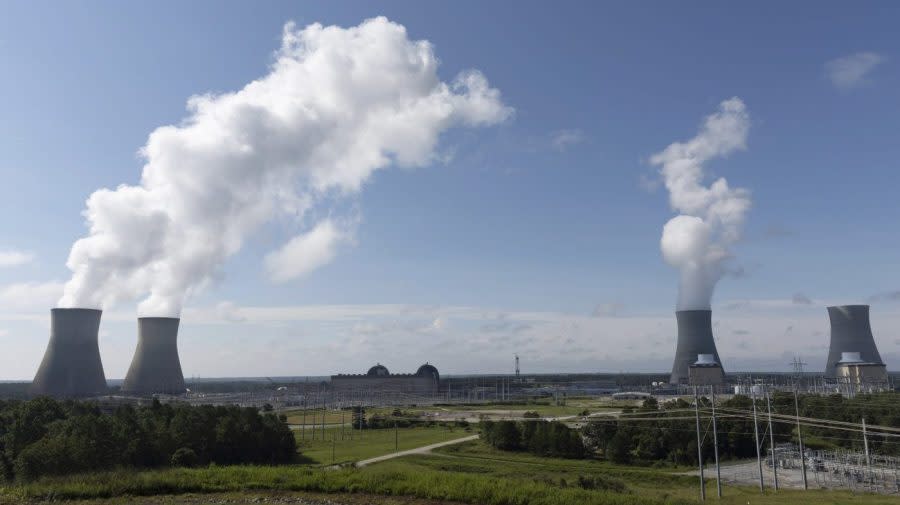
China reveals nuclear energy breakthrough with world’s first ‘meltdown-proof’ plant — here’s how it could change the future of nuclear power

The Cool Down

China reveals nuclear energy breakthrough with world’s first ‘meltdown-proof’ plant — here’s how it could change the future of nuclear power

Jeremiah Budin – July 30, 2024

Researchers in China have developed the world’s first meltdown-proof nuclear power plant, The Independent reported.

Nuclear power is one clean alternative to dirty energy sources such as gas, oil, and coal — all of which produce massive amounts of planet-overheating air pollution. However, the development of more nuclear power plants has been hampered by public fear of catastrophic nuclear-plant meltdowns such as the widely known meltdowns at Chernobyl and Fukushima.

While disasters like these are rare, they are still a real concern, which makes China’s new meltdown-proof plant potentially exciting for the future of clean energy.

The researchers from Tsinghua University used several new methods to create the plant, which relies on a “pebble-bed reactor” to virtually eliminate the possibility of a meltdown. The reactor is cooled by helium instead of water and uses highly heat-resistant billiard-ball-sized graphite spheres filled with tiny uranium fuel particles in place of large fuel rods.

While the pebble-bed design cannot be retroactively applied to new nuclear power plants, it could serve as a blueprint for future plants, the scientists explained.

While wind and solar tend to garner more headlines as clean energy sources that can replace dirty energy, nuclear power also has an important role to play. One of the main challenges of replacing dirty energy lies in generating enough clean energy to meet demand, so diversifying and relying on a wider variety of sources makes a lot of sense.

In Wyoming, another nuclear power plant is being built on the site of a retired coal plant — that one also bills itself as being virtually meltdown-proof, by using liquid sodium as a coolant instead of water.

In addition, researchers have discovered a way to make nuclear power plants safer by getting water to boil off and evaporate at a lower temperature. Although nuclear power is already safer than many people believe, these discoveries and inventions are making it safer than ever for future generations.

New research suggests major change in China’s air pollution may have kick-started bizarre effects: ‘It will give us surprises’

The Cool Down

New research suggests major change in China’s air pollution may have kick-started bizarre effects: ‘It will give us surprises’

Leo Collis – July 30, 2024

In the global battle against harmful air pollution, China is both a leader in production and reduction.

According to the 2023 Global Carbon Budget, shared by Our World in Data, the country was responsible for annual carbon dioxide pollution of over nine billion tons from coal in 2022. The next highest polluter, India, was responsible for two billion.

However, government controls on dirty fuel industries have resulted in a 70% reduction in aerosol emissions over the last 10 years, as Yale Environment 360 detailed.

It’s a slightly confusing state of affairs. What’s more confusing, though, is how that aerosol reduction has impacted ocean warming.

What’s happening?

According to analysis published by PNAS and shared by Yale Environment 360, improvements made in reducing air pollution by China have led to warming effects in the Pacific Ocean.

The decline in smog particles has offered less shading protection from the sun’s rays, which has increased the rate of ocean warming and set off a chain reaction of atmospheric events.

Watch now: Climate expert explains why there’s ‘no question’ human activity causes global temperature changes

As Yale Environment 360 detailed, aerosols can deter around a third of the warming that’s caused by greenhouse gases — which are different from aerosols as they trap heat rather than shade it.

Why is ocean warming concerning?

Since 2013, the Pacific Ocean has been witnessing a warming event known as “The Blob,” which periodically increases water temperatures between California and Alaska by as much as seven degrees Fahrenheit.

This has led to toxic algal blooms, reductions of fish stocks, sea lion displacement, and the forcing of whales into shipping lanes in the hunt for food, among other issues, according to Yale Environment 360.

The analysis suggests that the aerosol reduction in China is at least partly responsible for “The Blob.” Despite these negative effects, cutting the production of aerosol is still an important factor in curbing overall air pollution.

“Aerosol reductions will perturb the climate system in ways we have not experienced before,” atmospheric scientist at Texas A&M University Yangyang Xu, who was not involved in the study, told Yale Environment 360. “It will give us surprises.”

What can be done about rising ocean temperatures?

As Fred Pearce of Yale Environment 360 noted: “To be clear, nobody — but nobody — suggests that we should stop the cleanup of aerosols. The death toll would just be too great.”

The World Health Organization says that outdoor air pollution was responsible for 4.2 million premature deaths worldwide in 2019, and aerosols are a key contributor to that statistic.

With that in mind, Michael Diamond from Florida State University, an expert on aerosols and climate, has suggested that reducing methane immediately would mitigate against the warming created in the absence of aerosols.

According to NASA, around 60% of the world’s methane pollution is caused by human activities. Agriculture, landfills, and burning dirty energy are among the leading producers of this harmful gas, which is 28 times more potent in terms of planet-warming potential than carbon dioxide.

So, cutting our consumption of meat and dairy, keeping as many items from heading to landfills as possible, and ramping up the production of electricity from renewable sources are essential to keep methane levels down. If we can do that, we can offset the unusual heating effects that cleaning up aerosols is having on our oceans without compromising human health.

Wisconsin Republicans ask voters to take away governor’s power to spend federal money

Associated Press

Wisconsin Republicans ask voters to take away governor’s power to spend federal money

Scott Bauer – July 28, 2024

Wisconsin Gov. Tony Evers speaks before President Joe Biden at a campaign rally at Sherman Middle School in Madison, Wis., Friday, July 5, 2024. (AP Photo/Morry Gash)

Wisconsin Republicans are asking voters to take away the governor’s power to unilaterally spend federal money, a reaction to the billions of dollars that flowed into the state during the COVID-19 pandemic.

Democratic Gov. Tony Evers was free to spend most of that money as he pleased, directing most of it toward small businesses and economic development, angering Republicans who argued the Legislature should have oversight.

That’s what would happen under a pair of related constitutional amendments up for voter approval in the Aug. 13 primary election. The changes would apply to Evers and all future governors and cover any federal money to the state that comes without specific spending requirements, often in response to disasters or other emergencies.

Democrats and other opponents are mobilizing against the amendments, calling them a legislative power grab that would hamstring governors’ ability to quickly respond to a future natural disaster, economic crisis or health emergency.

If the amendments pass, Wisconsin’s government “will become even more dysfunctional,” said Julie Keown-Bomar, executive director of Wisconsin Farmers Union.

“Wisconsinites are so weary of riding the partisan crazy train, but it is crucial that we show up at the polls and vote ‘no’ on these changes as they will only make us go further off the rails,” she said in a statement.

But Republicans and other backers say it’s a necessary check on the governor’s current power, which they say is too broad.

The changes increase “accountability, efficiency, and transparency,” Republican state Sen. Howard Marklein, a co-sponsor of the initiative, said at a legislative hearing.

The two questions, which were proposed as a single amendment and then separated on the ballot, passed the GOP-controlled Legislature twice as required by law. Voter approval is needed before they would be added to the state constitution. The governor has no veto power over constitutional amendments.

Early, in-person absentee voting for the Aug. 13 election begins Tuesday across the state and goes through Aug. 11. Locations and times for early voting vary.

Wisconsin Republicans have increasingly turned to voters to approve constitutional amendments as a way to get around Evers’ vetoes. Midway through his second term, Evers has vetoed more bills than any governor in Wisconsin history.

In April, voters approved amendments to bar the use of private money to run elections and reaffirm that only election officials can work the polls. In November, an amendment on the ballot seeks to clarify that only U.S. citizens can vote in local elections.

Republicans put this question on the August primary ballot, the first time a constitutional amendment has been placed in that election where turnout is much lower than in November.

The effort to curb the governor’s spending power also comes amid ongoing fights between Republicans and Evers over the extent of legislative authority. Evers in July won a case in the Wisconsin Supreme Court that challenged the power the GOP-controlled Legislature’s budget committee had over conservation program spending.

Wisconsin governors were given the power to decide how to spend federal money by the Legislature in 1931, during the Great Depression, according to a report from the Legislative Reference Bureau.

“Times have changed and the influx of federal dollars calls for a different approach,” Republican Rep. Robert Wittke, who sponsored the amendment, said at a public hearing.

It was a power that was questioned during the Great Recession in 2008, another time when the state received a large influx of federal aid.

But calls for change intensified during the COVID-19 pandemic when the federal government handed Wisconsin $5.7 billion in aid between March 2020 and June 2022 in federal coronavirus relief. Only $1.1 billion came with restrictions on how it could be spent.

Most of the money was used for small business and local government recovery grants, buying emergency health supplies and paying health care providers to offset the costs of the pandemic.

Republicans pushed for more oversight, but Evers vetoed a GOP bill in 2021 that would have required the governor to submit a plan to the Legislature’s budget committee for approval.

Republican increased the pressure for change following the release of a nonpartisan audit in 2022 that found Evers wasn’t transparent about how he decided where to direct the money.

One amendment specifies the Legislature can’t delegate its power to decide how money is spent. The second prohibits the governor from spending federal money without legislative approval.

If approved, the Legislature could pass rules governing how federal money would be handled. That would give them the ability to change the rules based on who is serving as governor or the purpose of the federal money.

For example, the Legislature could allow governors to spend disaster relief money with no approval, but require that other money go before lawmakers first.

Opposing the measures are voting rights groups, the Wisconsin Democratic Party and a host of other liberal organizations, including those who fought to overturn Republican-drawn legislative maps, the League of Women Voters of Wisconsin and Wisconsin Faith Voices for Justice.

Wisconsin Manufacturers and Commerce, the state’s largest business lobbying group, and the Badger Institute, a conservative think tank, were the only groups that registered in support in the Legislature.