Stung by climate change: drought-weakened bee colonies shrink U.S. honey crop, threaten almonds

Stung by climate change: drought-weakened bee colonies shrink U.S. honey crop, threaten almonds


GACKLE, North Dakota (Reuters) – There was barely a buzz in the air as John Miller pried the lid off of a crate, one of several “bee boxes” stacked in eight neat piles beside a cattle grazing pasture outside Gackle, North Dakota.


“Nothing,” Miller said as he lifted a plastic hive frame from the box, squirming with only a few dozen bees. “Normally this would be dripping, full of honey. But not this year.”

A scorching drought is slashing honey production in North Dakota, the top producing state of the sweet syrup, and a shortage of bees needed to pollinate fruits and flowers puts West Coast cash crops like almonds, plums and apples at risk, according to more than a dozen interviews with farmers, bee experts, economists and farm industry groups.

Miller and other Midwestern apiarists haul their drought-weakened insects by truck to California almond farms in the winter to pollinate orchards in the top global producer of the nuts increasingly in demand for milk substitutes. Then they move on to other fruits.

The drought’s impact therefore will be felt far beyond North Dakota, where withered alfalfa fields and parched pastures usually teeming with sweet clover and gumweed are providing bees little nectar this summer.

The dearth of strong bee colonies and the resulting higher costs to lease them for pollination services will add to the challenges of West Coast growers already dealing with drought and, in California, soaring water costs. It could also add to soaring costs consumers are facing at grocery stores.

Scientists have linked weather extremes from severe heat to floods and droughts to climate change. Such weather events are rippling through the food chain, raising food costs and heaping economic pain on small-scale farmer — and devastating bee colonies.

The 2.7 million managed honey bee colonies in the United States, one in five of them in North Dakota, are crucial to pollinating scores of crops, including cherries and peaches as well as almonds and apples. Income from pollination services totaled $254 million in 2020, according to U.S. government data.

Many beekeepers produce honey during summer in the northern Midwest and Plains, where bees forage on pastures and rangelands, harvesting what honey the bees do not consume or stow away to nourish their young.

North and South Dakota, Montana and Minnesota accounted for 46% of all U.S. honey production last year, according to the U.S. Department of Agriculture (USDA).

Apiarists truck the bee hives to milder climates like California during the fall and winter, generating crucial income by leasing colonies to fruit and nut farms to pollinate crops.

Poor summer weather on the prairies has left colonies weakened, with fewer bees. A smaller amount of nectar also forces beekeepers to help feed their colonies with less nutritious sugar solution or corn syrup, an added expense for producers already hurt by a smaller honey harvest.

“What happens in North Dakota in August has a direct impact on what happens in California in February,” Miller said. “Weak colonies that lack sufficient stores of honey going into winter will not be in good shape for the upcoming almond bloom.”

Miller expects less than 30 pounds of harvestable honey per colony from his roughly 16,000 hives this summer, down from around 50 pounds in recent years and the least in his 52 years of records, as North Dakota suffers its worst drought since 1988, according to climatologists.

Beekeeper Dwight Gunter also expects less than half of his normal honey harvest this summer. Honey prices have increased about 15% to 20% so far this year as supplies tighten. Gunter’s farm near Towner, North Dakota, is in the driest part of the state, with his entire county under “exceptional” drought.

“Last fall, it was dry as a bone and we never got any rain in this area. No winter snow either,” he said. “The pollen flow this year has been considerably less.”

The drought is expected to weaken bee colonies across the region, said Joan Gunter, Dwight’s wife and the president of the American Beekeeping Federation.

“This is really going to affect bee health. We’re used to having good nutrition for the bees and they’re probably not going to get that this year,” she said.

Iowa-based cooperative Sioux Honey, which produces 20% to 25% of U.S. honey under the Sue Bee brand, estimates the drought could drag domestic production down 25% to as much as 40% this year. Some 75% of the cooperative’s honey comes from Montana, the Dakotas and Minnesota.

President and Chief Executive Mark Mammen worries that the drought will be a “double-edged sword” for his more than 200 producers as honey revenue drops and as weaker colonies may earn less from pollination services.

“Without pollination revenue, it would be very tough for beekeepers to survive these days.”

HIGHER POLLINATION COSTS

California’s drought-hit almond growers, who account for around 80% of global production, may be in for a shock come September or October as they negotiate pollination contracts for the upcoming season, said agricultural economist Brittney Goodrich, at the University of California at Davis.

Almond growers required about 2.5 million colonies last year to pollinate acres that have more than doubled in the last 15 years as demand for almond milk and health foods has grown. That represented around 88% of all managed U.S. hives, Goodrich said, adding that supplies of strong hives will remain tight this year.

“This certainly has the potential to impact almond yields,” she said.

Pollination services are among the largest input costs for almond farms, and those costs are set to rise at least 5% to 10% for the upcoming season, said Denise Qualls, pollination broker and founder of brokerage The Pollination Connection.

“I’m definitely concerned about there being enough bees for pollination,” Qualls said. “If growers want good, quality hives, they’re going to have to pay for them.”

Almond farmer Ben King has already seen his pollination cost rise from $210 per hive to $230 as demand for strong colonies has outpaced supply and beekeepers pass along their higher costs.

The drought, meanwhile, is tightening bee supplies further. King’s beekeeper will only guarantee him 675 hives for the upcoming season, down from the 700 he normally would rent for his groves near Arbuckle, California.

“Overall, you’re going to have less pollination because you’re going to have less hive strength,” he said. “Everybody is scrambling this year because of drought.”

(Reporting by Karl Plume in Gackle, North Dakota; Editing by Caroline Stauffer and Nick Zieminski)

Mega-clouds of traveling smoke are harming people’s health thousands of miles away from wildfires

Mega-clouds of traveling smoke are harming people’s health thousands of miles away from wildfires

wildfire colorado smoke
A resident watches from his porch as the Cameron Peak Fire, the largest wildfire in Colorado’s history, burns outside Estes Park, Colorado, October 16, 2020. Jim Urquart/Reuters 

For the second year in a row, enormous wildfires are creating clouds of smoke big enough to generate their own weather, blanket entire continents, and turn faraway skies orange or grey.

Smoke is billowing from blazes in the western US, Canada, Greece, Turkey, Italy, Spain, Algeria, and Siberia – so much, in fact, that astronauts on the space station can see it. The wildfires in California and Oregon have darkened skies and led to air-quality warnings in New York City and Boston, as they did last summer. The Siberian fires, meanwhile, have sent clouds of smoke and ash to the North Pole, nearly 2,000 miles away, then down to Canada and Greenland.

smoke plumes dixie fire as seen from space
The Dixie fire’s thick smoke plume, as seen from the International Space Station on August 4, 2021. NASA/JSC


Each time a big fire burns, its smoke can rise high in the atmosphere, where winds can catch it and carry it for thousands of miles until it hits a weather system that pushes it back towards the ground. That’s when it poses a health risk. Many people see wildfires as a local problem – a danger to people in Greece or California, say, but not for them personally. That’s incorrect, according to environmental epidemiologist Jesse Berman.

“Every one of these wildfire events is an opportunity for that smoke to travel long distances and affect not only the people nearby, but also those very far away,” Berman told Insider. “People who live in areas that have relatively good air quality are going to be all of a sudden subjected to levels of pollution that are many times higher than what’s normally seen, and at levels that are very harmful to health.”

These mega-clouds of world-traveling smoke may become a regular, annual occurrence, according to Berman – “if not multiple times every single year,” he said.

Climate change is expected to lead to more frequent, larger, more intense wildfires in the coming decades. A new report from the UN’s Intergovernmental Panel on Climate Change warns that “fire weather” will probably increase through 2050 in North America, Central America, parts of South America, the Mediterranean, southern Africa, north Asia, Australia, and New Zealand. That means more days where conditions are warm, dry, and windy enough to trigger and sustain wildfires.

man in baseball cap looks across harbor at statue of liberty through orange haze of wildfire smoke
Wildfire smoke shrouds the Statue of Liberty, as seen from Brooklyn, New York, July 21, 2021. Brendan McDermid/Reuters


The amount of fuel available to burn in those places – dry vegetation – is also likely to increase as rising temperatures cause the air to absorb more moisture and bring about more droughts.

“When these events cover hundreds or thousands of miles, everybody is at risk,” Berman said. “It doesn’t matter where you’re living. You can be affected by these events the same as anyone else.”

Particles in wildfire smoke can strain your lungs, heart, and immune system
bootleg fire oregon clouds
Smoke from the Bootleg Fire rises behind the town of Bonanza, Oregon, July 15, 2021. Bootleg Fire Incident Command via AP


Wherever it goes, wildfire smoke fills the air with microscopic particles from the material that has burned and the resulting chemical reactions.

Known as PM2.5, these particles measure no more than 2.5 micrometers across (that’s about 30 times smaller than a human hair), allowing them to penetrate deep into your lungs and enter your bloodstream. When you inhale these particles – as millions of people have in the last year – they can damage the lining of your lungs and cause inflammation.

The Centers for Disease Control and Prevention warns that smoke can “make you more prone to lung infections” including COVID-19, since any breach in the lungs’ lining offers more opportunities for a virus to infiltrate.

satellite image shows smoke spreading from many points across green land
Satellite imagery shows smoke spreading over the Republic of Sakha (Yakutia) in eastern Russia on August 8, 2021. NASA Earth Observatory/Joshua Stevens 


Indeed, a recent study linked about 19,000 cases of COVID-19 on the West Coast to wildfire smoke last summer. The paper, published last week, found a correlation between high levels of PM2.5 pollution and spikes in coronavirus cases in counties across California, Oregon, and Washington.

Experts suspected as much. Previous research had already shown that wildfire smoke leaves people more vulnerable to disease. In the short term, smoke can irritate the eyes and lungs and cause wheezing, coughs, or difficulty breathing, even in healthy people. Longer-term studies have connected PM2.5 pollution to an increased risk of heart attack, stroke, heart failure, and premature death. PM2.5 particles can also impair the immune system, possibly by disabling immune cells in the lungs.

Wildfire smoke can have the most severe effects on people who are already highly vulnerable to COVID-19: the elderly, children (many of whom are unvaccinated against the coronavirus), and people with asthma or chronic lung disease.

It rained for the first time at the summit of Greenland’s ice sheet

It rained for the first time at the summit of Greenland’s ice sheet


Rain fell for several hours at the highest point on the Greenland ice sheet last week — the first rainfall event in recorded history at a location that rarely creeps above freezing temperatures.

Scientists confirmed Wednesday that rain was observed Saturday at Summit Station, a research facility that sits atop the Greenland ice sheet and is operated year-round by the National Science Foundation. It was the first report of rain at the normally frigid summit, and it marks only the third time in less than a decade that above-freezing temperatures were recorded at the Arctic research station, according to the National Snow and Ice Data Center.

The rare rainfall caused significant melting at the summit and along the ice sheet’s southeastern coast over the weekend and occurred just weeks after the region experienced a separate extensive melting event in late July. The recent warm spell adds to concerns that climate change is rapidly melting ice in the Arctic, which accelerates sea-level rise around the world.

Above-freezing temperatures were recorded at Summit Station, which sits at an elevation of 10,551 feet above sea level, beginning Saturday at 5 a.m. local time. The National Snow and Ice Data Center estimated that over the course of three days 7 billion tons of rain fell over the ice sheet.

“Warm conditions and the late-season timing of the three-day melt event coupled with the rainfall led to both high melting and high runoff volumes to the ocean,” National Snow and Ice Data Center researchers said in a statement.

The rain and warmer-than-usual temperatures were caused by a region of low air pressure that settled over Baffin Island and a ridge of high pressure over southeast Greenland that pushed warm air and moisture up from the south.

The melting peaked Saturday, affecting 337,000 square miles of ice, according to the National Snow and Ice Data Center. By Monday, the area of melted ice had returned to “moderate levels,” the researchers said.

Greenland’s sprawling 656,000-square-mile ice sheet expands and contracts as part of natural yearly variations, but global warming is causing glacial ice to melt at a rapid pace. Some climate models suggest that without aggressive climate interventions, the Arctic Ocean could be ice-free in the summers by 2050.

The consequences of that would be catastrophic. If Greenland’s ice sheet were to completely melt, scientists have said global sea levels could rise more than 20 feet, affecting coastal communities around the world and submerging low-lying cities such as Shanghai, Amsterdam and New York.

Last week, the United Nations Intergovernmental Panel on Climate Change released a blistering report on the state of climate change, saying climate change is intensifying, occurring at an accelerated pace and is already affecting every region of the planet. The assessment also found that some changes that are already playing out, such as warming oceans and rising sea levels, are “irreversible for centuries to millennia.”

Biden EPA Bans Chemical Pesticide Linked to Psychological Health Disorders in Children

New American Journal

Biden EPA Bans Chemical Pesticide Linked to Psychological Health Disorders in Children

By Glynn Wilson                        August 19, 2021


Pesticide - Biden EPA Bans Chemical Pesticide Linked to Psychological Health Disorders in Children

WASHINGTON, D.C. — Millions of children just in the United States have been diagnosed with some form of attention deficit disorder and/or hyperactivity disorder by psychiatrists and psychologists, and are often treated with pharmaceutical medication or behavioral therapy.

But what if these problems are not genetic or cultural psychological issues, but caused by chemicals children are exposed too in industrial society?

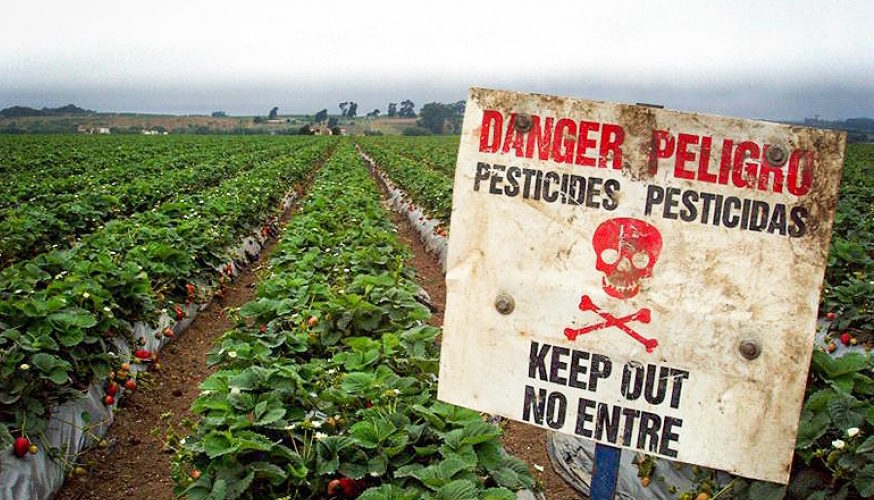
Farmers have been spraying chlorpyrifos on food crops such as strawberries, apples, citrus fruits, broccoli and corn since 1965. But studies now show this pesticide is inked to neurological damage in children, including reduced IQ, loss of working memory, and attention deficit disorders.

While the Trump administration fought to keep it in use, the Biden administration just announced it would be banned in food from now on after a court ruling forced the Environmental Protection Agency to provide proof of the chemical’s safety or regulate it out of existence.

This week the EPA issued a final ruling saying chlorpyrifos can no longer be used on the food that makes its way onto American dinner plates, a regulatory action intended to protect children and farmworkers, according to a press release from the agency.

In a statement announcing the decision, EPA Administrator Michael Regan called it “an overdue step to protect public health from the potentially dangerous consequences of this pesticide.”

“After the delays and denials of the prior administration, EPA will follow the science and put health and safety first,” Regan said.

Health, environment and labor organizations have been waging a campaign to revoke the use of chlorpyrifos for years. The EPA was considering a ban under the Obama administration, but under Trump, the agency concluded there wasn’t enough evidence showing the harmful effects of the chemicals on humans and kept it on the market.

That decision set off a series of legal challenges. Back in April, a federal appeals court ruled the decision was up to the EPA to produce indisputable proof that the pesticide is safe for children. If the agency failed to comply by Aug. 20, the judge said, then the food growers would be barred from using it.

In addition to use on farms, chlorpyrifos is one of several common household chemicals employed to try keeping ants, roaches, termites and mosquitos out of homes.

“It took far too long, but children will no longer be eating food tainted with a pesticide that causes intellectual learning disabilities,” said Patti Goldman, an attorney for Earthjustice, which represents health, environment and labor organizations behind the lawsuit. “Chlorpyrifos will finally be out of our fruits and vegetables.”

The Natural Resources Defense Council similarly cheered the EPA’s move, but cautions that the pesticide can still be used on other things, including cattle ear tags. The group wants a ban on other organophosphate pesticides, which are in the same chemical family as chlorpyrifos.

The new rule will take effect in six months.

In studies cited by the Centers for Disease Control and Prevention, children exposed to high chlorpyrifos are significantly more likely to experience Psychomotor Development Index and Mental Development Index delays, attention problems, attention-deficit/hyperactivity disorder problems, and pervasive developmental disorder problems.

The estimated number of children diagnosed with ADHD, according to a national 2016 parent survey, is 6.1 million, or 9.4 percent of all children in the U.S. This number includes 388,000 children between the ages of 2–5 years, another 2.4 million between the ages of 6 and 11, and 3.3 million from 12–17. Boys are more likely to be diagnosed with ADHD than girls (12.9% compared to 5.6%).

Many children with ADHD are also often diagnosed with other mental, emotional, or behavioral disorders.

About 5 in 10 children with ADHD had a behavior or conduct problem, according to surveys. About 3 in 10 children with ADHD suffered from anxiety. These same children often suffer as well from depression, autism spectrum disorder, and Tourette syndrome.

About 3 out of 4 children in the U.S. diagnosed with ADHD receive some form of treatment, 62 percent taking ADHD medication. Another 47 percent receive behavioral treatment

This has a major impact on the health care field. In studies from 2008–2011, children between the ages of 2 and 5 covered by Medicaid were twice as likely to receive clinical care for ADHD compared with similar-aged children covered by commercial employer-sponsored insurance. About 3 in 4 of these who had clinical care for ADHD recorded they received ADHD medication in their healthcare claims from 2008–2014. Fewer than half received any form of psychological services.

According to breaking news coverage of EPA’s announcement by The New York Times, chlorpyrifos is one of the most widely used pesticides commonly applied to corn, soybeans, apples, broccoli, asparagus and other produce.

The EPA decision follows an order in April by the Ninth Circuit Court of Appeals that directed the agency to halt the agricultural use of the chemical unless it could demonstrate its safety. Labor and environmental advocacy groups estimate that the decision will eliminate more than 90 percent of chlorpyrifos use in the country.

In an unusual move, the new chlorpyrifos policy will not be put in place via the standard regulatory process, under which the EPA first publishes a draft rule, then takes public comment before publishing a final rule. Rather, in compliance with the court order, which noted that the science linking chlorpyrifos to brain damage is over a decade old, the rule will be published in final form, without a draft or public comment period.

“The announcement is the latest in a series of moves by the Biden administration to re-create, strengthen or reinstate more than 100 environmental regulations,” gutted by the Trump administration, according to the Times.

The pesticide has been linked in studies to lower birth weights, reduced IQs and other developmental problems in children. Studies traced some of those health effects to prenatal exposure to the pesticide.

“Pesticides like chlorpyrifos haunt farm workers, especially parents and pregnant women,” said Elizabeth Strater, director of strategic campaigns for United Farm Workers of America, one of the groups on the petition. “They don’t hug their kids until they change clothes, they wash their laundry separately. When they miscarry, or when their children have birth defects or learning disabilities, they wonder if their work exposures harmed their children.”

Several states — including California, Hawaii, New York and Maryland — have banned or restricted the use of chlorpyrifos, and the attorneys general of those states, as well as those of Washington, Vermont and Massachusetts, joined the petition.

The Obama administration began the process of revoking all uses of the pesticide in 2015 but, in 2020, the Trump administration ignored the recommendations of EPA scientists and kept chlorpyrifos on the market.

“It is very unusual,” Michal Freedhoff, the EPA assistant administrator for chemical safety and pollution prevention, said of the court’s directive. “It speaks to the impatience and the frustration that the courts and environmental groups and farmworkers have with the agency.”

“The court basically said, ‘Enough is enough,’” Ms. Freedhoff said. “Either tell us that it’s safe, and show your work, and if you can’t, then revoke all tolerances.”

The decision is expected to lead to criticism by the chemical industry and farm lobby, which worked closely with the Trump administration ahead of its decision to keep chlorpyrifos in use.

“The availability of pesticides, like chlorpyrifos, is relied upon by farmers to control a variety of insect pests and by public health officials who work to control deadly and debilitating pests like mosquitoes,” said Chris Novak, the chief executive of CropLife America, an agricultural chemical company, at the time of Trump’s decision.

Pesticide products that include chlorpyrifos include the brands Hatchet, manufactured by Dow AgroSciences; Eraser, manufactured by Integrated Agribusiness Professionals; and Govern, manufactured by Tenkoz.

Chlorpyrifos will still be permitted for nonfood uses such as treating golf courses, turf, utility poles and fence posts as well as in cockroach bait and ant treatments.

In a withering attack on the Trump EPA, Judge Jed S. Rakoff of the Ninth Circuit wrote on behalf of the court that, rather than ban the pesticide or impose restrictions, the agency “sought to evade, through one delaying tactic after another, its plain statutory duties.”

According to additional coverage in The Washington Post, the regulation to curtail use of the potent insect-killing chemical on food overturns a 2017 decision by then-EPA Administrator Scott Pruitt to keep the pesticide on the market despite a recommendation by the agency’s scientists to restrict it, given its potential risks.

“For a half-century, chlorpyrifos has proved effective in keeping all sorts of pests off soybeans, almond trees, cauliflower and other crops. Farmers often deploy it when no other pesticide can do the job,” the newspaper reports. “But for the past decade, environmental, labor and public-health groups have clamored for phasing out the pesticide, which can lead to headaches or blurred vision when inhaled or ingested. Some studies of families in apartment buildings found that exposure during pregnancy led to memory loss and other cognitive issues in children.”

Claudia Angulo, a farmworker who came from Mexico to work the citrus and broccoli fields in California’s San Joaquin Valley, was pregnant when she was exposed to chlorpyrifos. She blames the pesticide for her son Isaac’s developmental delays, after the chemical showed up in tests on his hair.

“It’s affecting a lot of families. We’re all being affected, either with allergies or some with disabilities,” said Angulo, who is now part of a class-action lawsuit. “As a mother, I’m still struggling and won’t stop until this pesticide is not harming kids.”

In one study, Impact of prenatal chlorpyrifos exposure on neurodevelopment in the first 3 years of life among inner-city children, scientists concluded:

“Results: Highly exposed children (chlorpyrifos levels of >6.17 pg/g plasma) scored, on average, 6.5 points lower on the Bayley Psychomotor Development Index and 3.3 points lower on the Bayley Mental Development Index at 3 years of age compared with those with lower levels of exposure. Children exposed to higher, compared with lower, chlorpyrifos levels were also significantly more likely to experience Psychomotor Development Index and Mental Development Index delays, attention problems, attention-deficit/hyperactivity disorder problems, and pervasive developmental disorder problems at 3 years of age.”

In addition to being banned in California, Hawaii, New York, Maryland, and Oregon, Canada and the European Union are already phasing out the insecticide on farms.

But federal regulators previously struck deals with chemical manufacturing companies to limit the use of chlorpyrifos for killing termites and several pests in homes, treating golf courses, and for growing cotton. The EPA will make a decision on whether to continue to allow for those and other nonfood uses by the end of next year.

According to the agency, the U.S. has a safe and abundant food supply, and children and others should continue to eat a variety of foods, as recommended by the federal government and nutritional experts. Washing and scrubbing fresh fruits and vegetables will help remove traces of bacteria, chemicals and dirt from the surface. Very small amounts of pesticides that may remain in or on fruits, vegetables, grains, and other foods decrease considerably as crops are harvested, transported, exposed to light, washed, prepared and cooked.

In obituary for a vaccinated man, daughters share anger — and a plea

In obituary for a vaccinated man, daughters share anger — and a plea


Danielle Allen sifted through the files on her dad’s computer. She’d already gone through his eyeglasses, his printed-out jokes, his binder of Garfield clippings. She’d held the T-shirts he’d worn since they were kids. Her sister Nicole Allen-Gentile had packed up his scooter, which he’d used to visit a nature preserve during the long pandemic days. They knew he didn’t want a service. But in the packet titled “Stuff to Do Upon the Death of Clark Allen,” it became clear that an obituary mattered very much.

He left a draft. It began, Clark R. Allen of Delray Beach, Florida, passed away on ____ __, _____ at the age of __.

He’d moved last summer into assisted living, so his daughters changed the city to Lantana. They filled in July 22, 2021, and the age of 84.

The rest of their dad’s draft obituary outlined the proper nouns of his life: the jobs and boards and schools. What about the guy who kept a spreadsheet of every family pet’s birthday? They needed to say something, too, about the way he died. What they had witnessed in Florida.

Nicole emailed Danielle a furious start.

Clark died of Covid. <insert info about being vaccinated but an unvaxed person killing him>

At the Carlisle


Photo of The Carlisle Palm Beach - Lantana, FL, United States. Entrance

Clark Allen had taken the virus seriously. Nicole mailed him gloves and masks. He stayed close to home and paged through the New York Times and the Palm Beach Post. His damaged lungs from decades with chronic obstructive pulmonary disease had heightened COVID-19′s threat.

His expansive oceanside life as a Florida retiree — where the warmth let him umpire youth baseball year-round — shriveled into the confines of his apartment.

Clark began sitting around, cooking less. He let go of his careful bookkeeping. The plan had always been to move him up north, into assisted living near Nicole — eventually. But now, with his blessing, his family found a place along the familiar coast.

On the walls at the Carlisle Palm Beach, apartment 432, he hung framed photos of his seven kids and their weddings and travels. On the fridge, he tacked newspaper clippings, like highlights from Danielle’s ice hockey games. When the place wasn’t locked down, he found a bridge group and scooted across the street for Butterfingers to stock the freezer.

He wore a mask, he told his two youngest daughters, except in the dining room. He knew he was vulnerable, and he desperately wanted to see his grandkids again. In Oregon, 33-year-old Danielle, a massage therapist, scrolled the news and worried. In Connecticut, Nicole, now 38, and a public librarian, did the same — until Clark got the Pfizer vaccine this winter. Then worry coexisted with a huge dose of relief.

He emailed and called near-weekly as he always had, reluctant to talk about himself per usual, instead wanting family updates, happy to hear of his children’s vaccinations. If he ever went quiet, they knew his bad lungs were acting up.

In early July, he confessed to Danielle that he was having a hard week. And on July 8, Nicole got a call. Clark was in the hospital.

Sports and squirrels

Clark was born in Trenton, New Jersey in 1937, the son of Carroll and Edna Allen.

Danielle and Nicole left in the reference to his high school, where he had captained track and field. They kept his editorship of the Springfield College paper and yearbook, and the mention of the school radio station.

They kept the Marine Corps Platoon Leaders course and the EMT training and the stint covering sports for the Washington Post. As for his work, they trimmed until they wrote of “his life-long career in advertising and marketing for consumer packaged goods.”

He had been proud of his life. He’d provided. But Danielle and Nicole wanted to weave in a few things that had brought their dad joy.

Where he mentioned his “second career” as referee, his daughters wrote, Clark loved all things sports.

Where he mentioned his work clerking for Palm Beach County elections, they remembered his unfailing reminders of their civic duties. They wrote, Clark firmly believed in everyone’s right to vote and in the democratic process.

They thought of the way he had sent them photos of every creature to grace his porch. The lizards, he named Iggy, squirrels he called Homer or Gus, depending on their color.

Nicole wrote, It cannot go unmentioned how much Clark enjoyed animals.

Fighting for his life

At JFK Medical Center, Clark struggled for breath. A nurse told Danielle that Clark had tested positive for COVID-19 — their first breakthrough patient, the nurse said.

Nicole quickly called the Carlisle but didn’t hear back, so she emailed. “He is vaccinated, but I know the current data says you can still get and possibly transmit the disease. Please let me know if I should be alerting anyone else at the facility,” she wrote.

A staffer replied: “It could be a result of the vaccine itself. I hope he’s ok and I will let our wellness director and executive director know.”

Stunned, Nicole replied with a link to CDC evidence. “Vaccines cannot cause a positive test,” she wrote. “The facility should consider that the virus may be circulating among its staff and residents.”

The Carlisle employee said she was taking the situation “very seriously.”

A spokeswoman for the Carlisle’s ownership group, Senior Living, did not respond to questions from the Tampa Bay Times, like the vaccination rate of its staff. A statement instead mentioned the group’s “enhanced efforts” to fight the virus. “The health of and communication to our residents and team members are our greatest priority,” the spokeswoman said in an email.

At first, it seemed, even doctors were surprised that Clark had tested positive. JFK staff wondered if his pulmonary disease was to blame. Because Clark was vaccinated, a nurse said, he should recover. A few days later, the hospital released him.

“I really wish the hospital would keep him a bit longer,” Nicole wrote to her siblings.

Within 12 hours, Clark was back in the emergency room and fitted with a BiPap mask that pumped oxygen into his lungs. Nicole and Danielle booked flights, though their dad said he worried about Florida’s caseload.

At an Airbnb, Danielle and Nicole called the hospital. They couldn’t advocate for their dad in person, but they left voicemails for his doctor. Once, for something to do, they brought cookies for the nurses. A front desk worker, confused about where to send the treats, told them that the hospital had just expanded from one COVID unit to two.

Clark texted sometimes.

Haven’t seen M.D. since shortly after return.

On Remdesivir, just finished CT scan. I’m exhausted but breathing easier.

Trump’s sending gallon of Clorox.

Hungry. Can’t have food. Nothing since Monday morning pancake.

Eventually, his texts grew sparse.

One day, they caught their dad on FaceTime while they were going through his things at the Carlisle. He had the BiPap mask on. He waved. His daughters began to cry, and he cried, too. They told him they loved him. They watched him grow agitated, until a nurse ended the call.

Should they go there?

How much of his political life to include, they weren’t sure. In New Jersey, he had led the state’s Young Republicans, which he’d noted in his draft. He’d sat on national party boards. He mailed Danielle — decidedly not a Republican — repurposed GOP Christmas cards that thanked him for donations to President Bush.

In recent years, he’d begun to feel betrayed. President Trump did not speak to his values. And in conversations with his daughters, he lamented his party’s pandemic response. “Our great Governor, Trump’s buddy, just stammers when asked questions,” Clark wrote in an email as Florida prepared to roll out vaccines. “He has no clue.”

His daughters debated writing about his change of heart. In his files, Danielle found plenty of strongly worded emails to Republican politicians, as well as the occasional vacuum company, that suggested he was not shy about his views. He had even switched to No Party Affiliation.

But they didn’t want to further politicize the vaccine.

They let it go unsaid.

In the end

As the Florida days stretched out, Nicole and Danielle called siblings and called nurses.

They stopped talking about long-term care.

At the Carlisle, where they tended to his apartment, two residents came up to Danielle. Both knew Clark, but neither knew he’d tested positive for the virus nearly a week earlier.

Among staff and residents, masks appeared rare.

Danielle and Nicole had eaten up all of the headlines, like this from the AARP: Only 2 in 5 Florida Nursing Home Workers Vaccinated Against COVID-19.

They’d read emails from their dad about where he lived, describing his quest for pandemic-related information only to find absent nurses, scarce memos and a blank TV channel. A typical subject line: It would be funny if it were not so sad.

They’d heard the announcement that vaccinated people could also spread the disease, but they don’t believe that’s what happened in this case.

Was it a dining room server? A nurse?

The vaccine had given Clark a chance, but because of his health, it hadn’t caused a strong enough immune response, hospital nurses told them. And his lungs were too weak for a ventilator.

The ICU doctor said to think about hospice. The nurses told them of bad nights, of Clark ripping off IVs and his breathing machine. More than one nurse was near tears. The pulmonologist said it was time. Nurses said it was time. But then Nicole heard that Clark had sat up and drank ginger ale. She had to make the decision without being able to hold his hand.

Clark suffered, delirious, another night, while his daughters were caught in the mix of paperwork and permissions. Finally, on July 20, hospice took him in.

Nicole stood separated from him by a window. As he slept, she video called her siblings one by one, so they could say goodbye.

Choosing the right words

The obituary was something to do. The death certificate was slow to arrive from Florida, anyway, and while the family was making cremation plans, the funeral home director came down with the virus. Nicole emailed Danielle an early draft. Do not read if you are having a hard time, she wrote.

To Danielle, the first attempt read as too angry. She was angry. She’d just had to drop off her father’s glasses in a Walmart donation bin. She’d been crying in her car between massage clients, who couldn’t stop talking about the virus. And all of the stories emphasizing that vaccinated people rarely die of COVID-19 — which she knew was true — felt painful, like they erased her dad.

She knew he hadn’t had to die like this.

In early August, she received another draft from Nicole. Clark’s family urges everyone to get vaccinated to protect those who are still vulnerable.

Nicole proposed asking people to consider a donation to one of their dad’s favorite nonprofits, the American Society for the Prevention of Cruelty to Animals.

Danielle emailed back an addition to thank the nurses, like the one who had played Patsy Cline in his hospital room.

Her dad had believed in the common good. She and Nicole had heard him tell stories of the sacrifices his family had made during the Great Depression and World War II. He’d wanted to donate his body to science, but COVID victims are not accepted. Instead, his children will split his ashes into seven.

Danielle rewrote the intro.

He was infected by someone who chose not to get vaccinated and his death was preventable.

It had pained him to see people acting without concern for their neighbors. Danielle and Nicole had agreed: If one person got vaccinated after reading his obituary, they knew he would be proud.

Danielle wrote, It is the wish of his family that everyone get vaccinated in order to prevent further death, sickness and heartbreak.

She took out heartbreak, then put it back in.

• • •

To read Clark Allen’s obituary in full, visit the Palm Beach Post.

Arizona ‘bracing for impact’ of Trump-driven election report

Arizona ‘bracing for impact’ of Trump-driven election report

The controversial Arizona 2020 election review is almost over, but top officials in the state’s largest county and secretary of state’s office aren’t waiting for the conclusions, launching a pair of preemptive strikes against a report that could land as soon as next week.

Secretary of State Katie Hobbs, a Democrat, released a prebuttal laying out all of her office’s criticisms of the so-called election “audit.” She detailed the pre- and post-election testing election equipment underwent in Maricopa County and called the state Senate-led effort “secretive and disorganized” that routinely discarded best practices of an actual audit.

“All credible audits are characterized by controls, access, and transparency that allow for the processes and procedures to be replicated, if necessary,” Hobbs’ office wrote. “As this report has described, the review conducted by the Senate’s contractors has consistently lacked all three of these factors.”

And Stephen Richer, the Republican county recorder in Maricopa County, on Thursday issued a lengthy report of his own, in the form of an open letter to state Republicans, challenging the credentials of the reviewers and defending his own Republican bona fides.

“I will keep fighting for conservatism, and there are many things I would do for the Republican candidate for President, but I won’t lie about the election, and I will not unjustifiably turn my back on the employees of the Board of Supervisors, Recorder’s Office, and Elections Department — my colleagues and friends,” he wrote.

Since late April, contractors hired by the Republican-controlled state Senate have been reviewing all the ballots cast in Maricopa County, which President Joe Biden won en route to flipping the state, along with examining election equipment.

The process was initially supposed to take 60 days, but has stretched on well past that. Julie Fischer, a “deputy Senate liaison” for the effort, told POLITICO that the contractors’ report — the firm leading the effort is called Cyber Ninjas — is expected to be submitted to the state Senate on Monday, and a hearing will be scheduled after that.

Election officials in the state have opposed it nearly every step of the way, including Richer, Hobbs and the GOP-controlled Maricopa County Board of Supervisors.

“The only thing that has been consistent about this endeavor has been missed deadlines and having to walk back statements,” Richer said at a Thursday press briefing organized by the Center for Election Innovation and Research, a nonprofit, nonpartisan organization that works with election administrators. “Please look into it before taking whatever the Cyber Ninjas produce as gospel.”

The state Senate calls the Cyber Ninjas’ work an “audit,” a label almost universally rejected by election officials and experts because the Arizona effort has poorly defined processes and an embrace of conspiracy theories about the 2020 election.

From the jump, the review in Arizona has been plagued by disorganization and in-fighting. Cyber Ninjas’ owner is a supporter of former President Donald Trump and has promoted conspiracy theories about the election. Officials have said they were checking for bamboo fibers in ballots, a nod to a fringe theory that ballots were smuggled in from Asia. It has been funded by a nonprofit run by a correspondent for the far-right One America News Network and a former tech CEO who has poured millions into promoting Trump’s lies about the election.

Hobbs, who is also running for governor next year, was critical of the Cyber Ninjas-led effort in an interview earlier this week.

“This isn’t a real audit,” Hobbs said, noting that the schedule for the Arizona review has constantly shifted. “We’re sort of just bracing for impact” for the Cyber Ninjas’ conclusions.

In her prebuttal, her office wrote that “any ‘outcomes’ or ‘conclusions’ that are reported” from the state Senate’s process must be disregarded, and called on the state’s political leaders to “proclaim that the 2020 General Election was fair and accurate.”

Other election experts have previously torn into the Arizona review as unprofessionally run, including a report from former Kentucky Secretary of State Trey Grayson, a Republican, and Barry Burden, the director of the Elections Research Center at the University of Wisconsin–Madison.

“The Cyber Ninjas review suffers from a variety of maladies: uncompetitive contracting, a lack of impartiality and partisan balance, a faulty ballot review process, inconsistency in procedures, an unacceptably high level of error built into the process, and insufficient security,” Grayson and Burden wrote in their June report. “Because it lacks the essential elements of a bona fide post-election analysis, the review currently underway in Maricopa County will not produce findings that should be trusted.”

The Republican-controlled county board has also been engaged in a protracted battle with the state Senate. The board — and Dominion Voting Systems, the election vendor for the county — has refused to comply with recent subpoenas from the legislature, effectively daring the state Senate to find the board in contempt, with some Republicans in the closely-divided chamber saying they don’t support the Cyber Ninjas-led review.

The county board said this week it wants the state Senate to pay $2.8 million to replace voting machines the Senate subpoenaed. The county leased new machines after Hobbs said the old machines would be decertified because of chain of custody issues.

It also comes amid significant national pushback against the post-election audit movement. At a meeting of the nation’s secretaries of state last weekend, election officials overwhelmingly approved a set of guidelines for post-election audits.

Many of the guidelines read as implicit rebukes of the Arizona process, including definitive timelines and only allowing “a federally or a state accredited test lab to perform any audit of voting machine hardware or software.” The Justice Department also issued guidance late last month saying some post-election audits could run afoul of federal law.

Trump and his supporters have eagerly been awaiting the conclusion of the review in Arizona, and will likely use whatever the findings are to advance his baseless claims the election was stolen from him. During a July speech in the state, Trump said the process in the state would ultimately reveal that “we won by a lot,” and “this is only the beginning of the irregularities the Arizona audit is uncovering.” (There’s no legal process to transfer the state’s 11 electoral votes to his tally.)

Trump has encouraged his followers to try to export the Maricopa review to other states. Republican lawmakers in Pennsylvania and Wisconsin have tried to launch their own, but neither has gotten the traction of Arizona.

Ben Ginsberg, a prominent Republican elections lawyer who has spoken out about the efforts to undermine faith in American democracy following the 2020 election, said he hoped the Cyber Ninjas report would land without making much noise and could quell the movement. “Once they can’t be backed up, then that will be an object lesson to other states, not to go down that perilous path of basically losing your credibility,” he said at the briefing.

And Richer concurred: “The Cyber Ninjas have been out there in common parlance now for about four months, and we haven’t seen this in other states,” the county elections official responded, praising the work of Arizona journalists and election officials in the states. “If we can pat ourselves on the back a little bit here.”

At least one of those efforts outside of Arizona appears to be withering. Pennsylvania state Sen. Doug Mastriano, an ally of Trump who is considering a gubernatorial run next year, sought to launch his own investigation.

But on Thursday, Mastriano sounded discouraged about the effort on a since-deleted Facebook livestream, the Pennsylvania Capital-Star reported. “We’re not in a very good spot right now,” he said. “I put my name out there to get it done, and I’ve been stopped for the time being.”

Even so, some election security experts said this is likely not the end of questionable reviews of the 2020 election.

“I’m a little less sanguine about that, as I see ongoing efforts” across the country, said the Center for Election Innovation and Research’s David Becker. “I think we’re going to need to be continually vigilant.”

California’s Caldor Fire has grown 20 times bigger: ‘It’s devastation’

California’s Caldor Fire has grown 20 times bigger: ‘It’s devastation’


California’s Caldor Fire was more than 20 times bigger on Thursday than it was on Tuesday and has forced over 10,000 people to flee their homes, according to fire officials.

On Wednesday, dozens of fire engines and crews were called in from other fires to fight the Caldor fire, which exploded through heavy timber in steep terrain since erupting over the weekend southwest of Lake Tahoe in El Dorado County.

The fire, the cause of which is unknown, was 0% contained as of Thursday, Cal Fire said. It’s now at over 65,000 acres in size.

Increased humidity on Wednesday night into Thursday morning helped slow the fire’s progress, but fire officials expect fire behavior to increase Thursday afternoon when the inversion layer lifts, sparking new spot fires to the north and northeast of the fire area. A red flag warning is scheduled to continue through 11 a.m. Thursday.

More than 6,900 structures are threatened by the fire.

The number of those evacuated in El Dorado County jumped to 16,380 Wednesday, up from about 6,850 the day prior, the Governor’s Office of Emergency Services told CNN.

The fire has blackened nearly 220 square miles and on Tuesday ravaged Grizzly Flats, California, a small community of about 1,200 people.

Dozens of homes burned there. Grizzly Flats resident Chris Sheean said the dream home he bought six weeks ago went up in smoke. “It’s devastation. You know, there’s really no way to explain the feeling, the loss,” Sheean said. “Everything that we owned, everything that we’ve built is gone.”

A home burns on Jeters Road as the Dixie fire jumps Highway 395 south of Janesville, Calif., on Monday, Aug. 16, 2021. Critical fire weather throughout the region threatens to spread multiple wildfires burning in Northern California.


Cal Fire reported Wednesday that the blaze had “experienced unprecedented fire behavior and growth due to extremely dry fuels pushed by southwest winds.”

Fire agencies battling the blaze say that the extent of the damage is not yet entirely known as unsafe conditions continue to prevent structure assessment teams from entering the area.

At least 16,000 other homes remain threatened by California wildfires, which are among some 104 burning throughout mostly Western states, officials from the National Interagency Fire Center said Thursday.

California’s wildfires are on pace to exceed the amount of land burned last year – the most in modern history.

The massive Dixie Fire – the nation’s largest at more than 1,000 square miles, which is about two-thirds the size of Rhode Island – also continued to burn Thursday.

The fire has destroyed 1,217 structures, including 649 homes, according to Cal Fire.

The Dixie Fire is the first to have burned from east to west across the spine of California, where the Sierra Nevada and Cascade mountains meet.

No deaths have been reported despite the speed and damage of the blazes in California.

Contributing: The Associated Press; The Record, Stockton, Calif.; The Reno Gazette-Journal

Southern California officials declare water supply alert

Southern California officials declare water supply alert


LOS ANGELES (AP) — A major Southern California water agency has declared a water supply alert for the first time in seven years and is asking residents to voluntarily conserve.

The Los Angeles Times reports that the board of the Metropolitan Water District of Southern California took the step Tuesday, hoping to lessen the need for more severe actions such as reducing water supplies to member agencies.

The move comes a day after U.S. officials declared the first-ever water shortage on the Colorado River, a key water source for Southern California.

“This is a wake-up call for what lies ahead,” said Deven Upadhyay, chief operating officer for the district that supplies water to 19 million Californians.

“We cannot overstate the seriousness of this drought,” he said. “Conditions are getting worse, and more importantly, we don’t know how long it will last.”

California Gov. Gavin Newsom last month asked Californians to scale back water use and many of the state’s counties, mostly in Central and Northern California, are already under a state of drought emergency.

Concern about water supplies spread to the state’s heavily-populated southern region following a winter of low precipitation and shrinking reservoirs throughout the West.

Newsom on Tuesday said he may put mandatory water restrictions in place in the coming months, the East Bay Times reported.

“At the moment, we’re doing voluntary,” he said. “But if we enter into another year of drought — and as you know our water season starts Oct. 1 — we will have likely more to say by the end of September as we enter potentially the third year of this current drought.”

The Metropolitan Water District of Southern California receives about half its water from the Colorado River and State Water Project.

Water levels in Lake Mead, the largest reservoir on the Colorado River, were at about 35% of capacity on Tuesday. The State Water Project, which collects water from rivers and tributaries, has already reduced the Southern California district’s allocation to 5% and next year the amount could be zero, officials said.

Scientists say climate change has made the American West much warmer and drier in the past 30 years and will keep making weather more extreme.

Glen MacDonald, a University of California, Los Angeles distinguished professor of California and the American West, said even if precipitation returned it would not likely be enough to keep pace with the loss of water through evaporation due to rising temperatures.

That has the potential to not only turn California lawns brown but could also affect the nation’s food supply, which relies heavily on the state’s farmlands, MacDonald said.

“We are living in the perfect drought, right now,” he said. “It’s unfortunate, but we kind of have seen this coming.”

‘He Wanted The Taliban In Charge’: Trump’s Defense Sec. Explains How Trump Sabotaged Afghanistan

‘He Wanted The Taliban In Charge’: Trump’s Defense Sec. Explains How Trump Sabotaged Afghanistan

Carl Anthony                           August 19, 2021

Chris Miller


Former Trump administration official Chris Miller, who served as the acting Defense Department secretary for the final months, said on Wednesday that “Trump’s public promise to finish withdrawing U.S. troops by May 1, as negotiated with the Taliban, was actually a ‘play’ that masked the Trump administration’s true intentions: to convince Afghan President Ashraf Ghani to quit,” leaving the Taliban in charge.

Miller’s comments came during an interview with DefenseOne. The former official also claimed that “many Trump administration officials expected that the United States would be able to broker a new shared government in Afghanistan composed primarily of Taliban officials. The new government would then permit U.S. forces to remain in the country to support the Afghan military and fight terrorist elements.”

But that’s not what happened, in large part because Trump spent the final months of his presidency trying to overturn the 2020 election after his defeat to Joe Biden.

The comments were similar to revelations from former Pentagon chief Mark Esper, who told CNN International on Tuesday that he warned Trump that the plan he was crafting wouldn’t end well.

Another former senior Trump administration official told DefenseOne that Trump’s efforts to oust Ghani were to appease the Taliban.

“That’s what the Taliban wanted. They wanted to get rid of the legitimate government,” said the official.

“The decision space was either: keep a small U.S. counterterrorism presence along with 7,000 to 8,000 NATO troops and kind of hold down the fort and protect our counterterrorism interests, or go to zero and cede the country to the Taliban,” the official said.

“The Taliban were never going to agree to let any U.S. forces stay in the country and if any U.S. official thought that was possible, I think they were a victim of wishful thinking,” the official said.

ICU Doc Shows What ‘Anxious and Scared’ Gov. Greg Abbott Did After COVID-19 News

ICU Doc Shows What ‘Anxious and Scared’ Gov. Greg Abbott Did After COVID-19 News


ICU doctor and NBC News analyst Vin Gupta is urging Texans to “take note” of the actions of Gov. Greg Abbott (R) after he tested positive for the coronavirus on Tuesday.

Abbott has actively thwarted efforts to contain the coronavirus pandemic by banning mask and vaccine mandates.

Yet once he was infected, he was given Regeneron’s monoclonal antibody treatment, despite being fully vaccinated and having no symptoms.

Gupta, a pulmonologist, tweeted:

COVID-19 cases have skyrocketed in Texas in recent weeks, from around 1,000 daily cases reported in early July to over 20,000 cases reported on Monday.

Despite those rising numbers, just 45% of the state is fully vaccinated, well below the U.S. average of 51%.

Abbott has also undermined efforts to slow the spread of the virus with his ban on mask mandates, and by going to court to uphold that ban.

NBC News reported on Tuesday that Abbott has told friends he has received a third dose of the vaccine.

Abbott’s positive test results came less than 24 hours after he attended a crowded GOP event and posted images online showing him at the largely mask-free gathering.