Far-Right Republican Who Called For ‘More Gallows’ Wonders If GOP Had A Messaging Problem
Matt Shuham – November 15, 2022
Far-Right Republican Who Called For ‘More Gallows’ Wonders If GOP Had A Messaging Problem
As updated vote tallies began to cement a loss for Trump-backed Arizona governor candidate Kari Lake on Monday, a far-right state lawmaker who told a gathering of white nationalists that “we need to build more gallows” started to have second thoughts about her party’s pitch to voters.
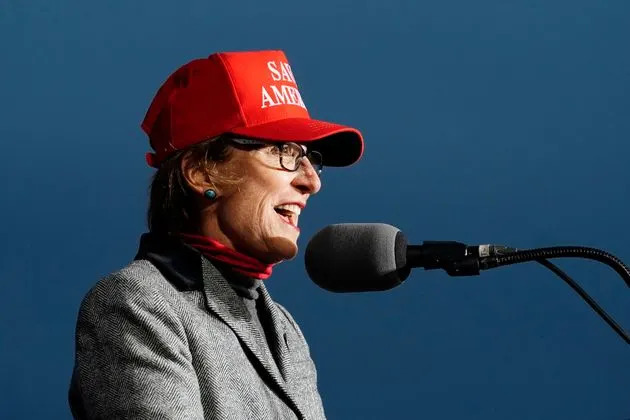
“We wonder now if we were in an echo chamber,” said state Sen. Wendy Rogers (R), who has also suggested throwing county officials in solitary confinement and spent years lying about the 2020 election.
“I don’t know, I’m just beginning to get some perspective,” added Rogers.
Rogers’ realization about echo chambers occurred in an interesting place: She was speaking to Charlie Kirk on his YouTube show, which is also broadcast on the Salem Radio Network.
Kirk is the founder of the right-wing youth group Turning Point USA, which has close ties to the Trump family and spent considerable time and money working to elect Arizona Republicans. The group’s nationwide endorsement page is now sprinkled with painful losses, including Lake and U.S. Senate candidate Blake Masters (R).
“Every pollster was wrong, every single one,” Kirk told Rogers. Later, he apologized to listeners for getting the projections wrong ― referring to positive polling for Lake as “Kool-Aid” ― and mentioned that he’d heard “they didn’t run an internal poll the whole campaign.”
“Never again are we going to trust polls, or tracking, or any of that stuff,” Kirk said.
As the results rolled in, the crew speculated that Lake, who in many ways emulated former President Donald Trump’s election denialism and theatrical antagonism of the press, was simply too much for some otherwise winnable Arizona voters.
“If every person who voted to retire [House Speaker Nancy] Pelosi in Arizona voted for Kari Lake, she’s governor,” Kirk said, referring to Arizona’s U.S. House delegation, which went from 5-4 Democratic to 6-3 Republican with this election.
“What that means … is a Republican undervote, and it looks like that happened,” he added, referring to voters who supported Republicans other than Lake.
Arizona state Sen. Wendy Rogers (R) has spent years making false claims about the 2020 election.
Arizona state Sen. Wendy Rogers (R) has spent years making false claims about the 2020 election.
Tyler Bowyer, TPUSA’s chief operating officer and a falsepresidential “elector” for Trump’s 2020 campaign, said “the same Trump attack messaging seemed to work” against Lake.
“I love Trump, I love him to death, but the Trump rally is an echo chamber,” Bowyer said separately, responding to Rogers’ comment. He recalled warning Lake’s political team against having “all the same people showing up to the same events” and not bringing in new supporters but rather “fangirls and fanboys.”
Rogers agreed that Trump’s more recent rallies felt like a “family reunion.”
“I do think voters are telling us that they’re fatigued,” Kirk said. “I think people are telling us, they’re trying to send it in more ways than one: ‘I’m going to vote for the more boring person.’”
A few minutes later, Kirk read the latest returns from Maricopa County ― home to more than half of Arizona’s residents ― which sealed the deal on Hobbs’ projected victory.
Then he read an email from a listener as he and his guests’ heads sank. “We all have Trump fatigue syndrome,” he read. “I reluctantly voted for Kari Lake but all my friends couldn’t do it. We don’t want all the bombast.”
When Kirk announced that Lake was trailing Hobbs by 20 points in Pima County, the second largest county in the state, Rogers did a double take. “You said 20 points?” she confirmed, seemingly stunned as she looked at her phone.
The MAGA energy that swept Kari Lake to victory in her primary has become hemlock in general elections.
Lake joins the list of hapless MAGA candidates who lost the governor’s offices in Michigan, Pennsylvania, New York and now Arizona.
Donald Trump recently boasted he created the modern Republican brand. Well, today the modern Republican brand is what, Edsel? Polaroid? Enron?
Nope.
It’s Old Hat.
Many of us dismissed Katie Hobbs
The temptation will be great to say Hobbs didn’t win the governor’s seat. Kari Lake lost it. Had Lake run as a normal Republican with her polished delivery and anchorwoman looks she’d be recarpeting the hallways right now on the Ninth Floor.
But let’s give Hobbs her due. This was a candidate widely underestimated by not only the Republicans but the media and even her own party, the Democrats.
Soft-spoken and understated, she was dismissed from the beginning as a lightweight and novice filled with self-doubt and struggling to find the right words in front of TV cameras. She stuck with her much-maligned strategy (that also took criticism from this corner) to skip debates in the primary and general elections.
What we didn’t know was that Hobbs had a brought a sledgehammer of her own to this race. She used it to smash conventional wisdom.
But Democrats have real reason to celebrate
Now that Hobbs has won the all-important Arizona governor’s race, Democrats are aglow. They should be.
To call what happened in Arizona and nationally a “red ripple” suggests the Republicans eked out a victory that could have been much larger. But this was not a Republican win. It was an indisputable and historic triumph for the Democratic Party and its candidates.
In a year when inflation was pushing up the price of milk and eggs, when the Democratic president was drowning in dismal approval ratings, when border crossings were at record highs and urban crime was beginning to scare people, the liberal party defied predictions and proved it is more in tune with the American people than its rival.
Democrats retained control of the Senate, and lost the House by such a fine margin, Republicans will be dancing with the devil trying to manage it.
Beneath the angst, Katie Hobbs has steel
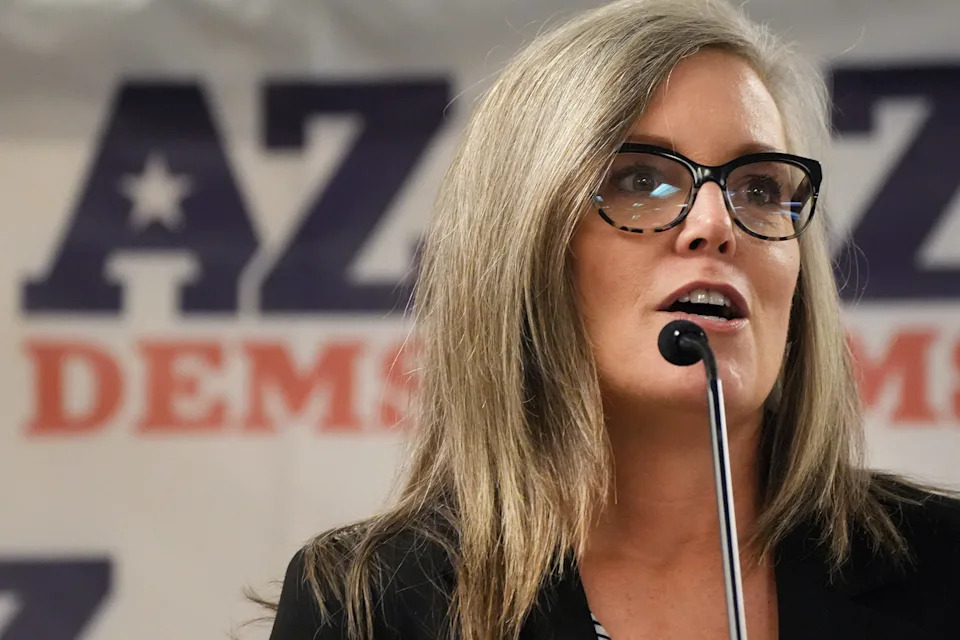
Gubernatorial candidate Katie Hobbs speaks as the Arizona Democratic Party hosts a Unity Rally with statewide candidates to energize Democratic voters and volunteers ahead of the November election at Carpenters Union Hall on Saturday, Aug. 27, 2022.
In Arizona, Democrats could not wait to start their well-earned gloating. Lobbyist and former state lawmaker Chris Herstam got the jump on it Sunday night by picking a Twitter fight with me:
“@boas_phil’s so-called “leftists” have done quite well in the midterm (in Arizona & DC). Arizona Democrats will do even better in ‘24 with a presidential election turnout & a reproductive freedom initiative on the ballot.”
I bring this up to illustrate just what a long haul this has been for Hobbs and to show that beneath all the surface angst and insecurity, Katie Hobbs has some steel.
Herstam’s tweet reminded me that from the very beginning Hobbs had to endure attacks from a large part of the Democratic establishment.
When she got into the race, Herstam tried to bury her campaign.
He pointed loudly to a recent jury verdict that found that Democratic legislative leadership had discriminated against Senate aide Talonya Adams when they fired her in 2015.
Hobbs faced a torrent of criticism
Hobbs was Senate Democratic leader at the time, so she faced a storm of criticism.
“I think she’s in real trouble,” Herstam told KJZZ radio. “Katie Hobbs needs to apologize profusely and compassionately, and she hasn’t really done that yet.
“Frankly, she should have apologized very directly when she announced her candidacy. … And she didn’t do so. … That was a bonehead political move by her team.”
Herstam at the time was plumping the potential candidacy of U.S. Rep. Greg Stanton, the former Phoenix mayor who had not yet decided to skip the gubernatorial race.
“The anti-Hobbs storm, it’s still to come,” said Herstam, predicting the Republicans would run ads on the discrimination verdict. “They will be a real blow to her candidacy, as well as the entire Democratic ticket.”
Republicans ran with the ‘bigot’ theme
Herstam was prescient in one sense. The Republicans did pick up the “Hobbs is a bigot” theme. They got the idea from Democrats.
No. Hobbs was never convicted. Never charged. This was a civil case, not criminal. Chainsaws are poor instruments for making such distinctions.
Still, it’s worth remembering that before Republicans got to Hobbs many Democrats were on a tear.
Even Democrats criticized her in the primary
Five high-profile leaders of the Phoenix African American community put out this statement: “We ask that all persons, especially people of color, reconsider any support for Katie Hobbs to become the next governor of Arizona.”
Understand that this was during the social upheaval sparked by the police killing of George Floyd. Feelings were raw. And a number of Democrats were working hard to destroy her campaign.
Warren Stewart, once a centrist Democrat who morphed into a sharper-edged social-justice hawk, said he was done with Hobbs.
Now that Hobbs has won the main prize in Arizona’s 2022 election, many will forget the onslaught she survived just to get her party’s nomination.
They’ll forget she showed up for the fight as other big-name Democrats demurred. That she fought through all the insults from her own party before Kari Lake fired her artillery.
It’s one thing to bring Kari Lake-level confidence to an election, throwing flames and spitting nails. It’s another to wrestle down your self-doubt every day before you armor up to compete.
Hobbs could not match the smooth delivery of Kari Lake and always seemed self-conscious of it.
She looked like she was fighting through private doubts that may have been her most formidable opponent. And yet she stayed with it. No one was going to push her out.
That takes guts.
And we would all do well never to underestimate her again.
Phil Boas is an editorial columnist with The Arizona Republic.
Why a Trump-appointed Texas judge blocked Biden’s student-debt cancellation plan
Ayelet Sheffey – November 14, 2022
A view of the US Capitol before a news conference to discuss student-debt cancellation on September 29, 2022.Drew Angerer/Getty Images
Trump-appointed Judge Mark Pittman struck down Biden’s debt relief in Texas last week.
He argued the two student-loan borrowers who sued have sufficient standing to block the plan.
But some legal experts and Democrats said Pittman should never have taken up the case in the first place.
A federal judge doesn’t think President Joe Biden’s plan to cancel student debt for millions of borrowers is legal.
On Thursday evening, Mark Pittman — a Texas judge appointed by former President Donald Trump — struck down Biden’s plan to forgive up to $20,000 in student-loans for federal borrowers making under $125,000 a year. He ruled in favor of two student-loan borrowers who filed the lawsuit because each of them didn’t qualify for the full amount of relief, and at this point, Pittman’s ruing bars the Education Department from discharging student loans until a final verdict is made.
The Texas case, along with a number of other lawsuits backed by conservative groups, challenges Biden’s authority to use the HEROES Act of 2003, which gives the Education Secretary the ability to waive or modify student-loan balances in connection with a national emergency, like COVID-19. They claimed that enacting broad student-loan forgiveness is an overreach of the authority and should require Congressional approval, while Biden has maintained one-time student-loan forgiveness is well within the administration’s legal authority.
Pittman appeared sympathetic to the conservatives’ arguments in his ruling. “This case involves the question of whether Congress—through the HEROES Act—gave the Secretary authority to implement a Program that provides debt forgiveness to millions of student-loan borrowers, totaling over $400 billion,” Pittman wrote in his ruling. “Whether the Program constitutes good public policy is not the role of this Court to determine. Still, no one can plausibly deny that it is either one of the largest delegations of legislative power to the executive branch, or one of the largest exercises of legislative power without congressional authority in the history of the United States.”
The other lawsuits are also moving through the courts. The 8th Circuit Court of Appeals, for example, ruled on Monday that its temporary pause on student-debt relief will remain in place until further orders from the court on a separate lawsuit in which six Republican-led states sued the loan forgiveness, arguing it would hurt their states’ tax revenues.
One of the key parts of Pittman’s ruling is that the plaintiffs actually met the legal requirements for a valid lawsuit. He ruled that they have standing to sue the administration, but several prominent Democrats and legal experts have questioned that decision — and other courts have thrown out similar conservative lawsuits due to a lack of standing.
The plaintiffs’ standing to sue
Both of the plaintiffs who brought the Texas lawsuit hold student loans. The first plaintiff, Myra Brown, sued because her loans are commercially-held and therefore ineligible for Biden’s debt relief, which requires the borrower to owe their debt directly to the federal government. And the other plaintiff, Alexander Taylor, sued because he was eligible only for $10,000 in debt forgiveness and not the full $20,000 since he did not receive a Pell Grant in college.
They both argued they were not given the opportunity to challenge the relief before its announcement since it didn’t go through the Administrative Procedure Act’s notice-and-comment period, and they said that failure to go through typical rulemaking processes, along with overstepping authority granted through the HEROES Act, were reasons why the debt relief should be blocked.
Pittman ruled that the plaintiffs have valid reasons for suing the administration. In his opinion, Pittman wrote that standing contains three legal requirements: there must be concrete injury, there must be causation, and there must be redressability, which is the likelihood the requested relief — in this case, blocking debt cancellation — would repair the injury caused. Pittman said that Biden’s Justice Department argument that the plaintiffs’ standing does not exist is “untrue.”
“Plaintiffs do not argue that they are injured because other people are receiving loan forgiveness,” Pittman wrote. “Their injury—no matter how many people are receiving loan forgiveness—is that they personally did not receive forgiveness and were denied a procedural right to comment on the Program’s eligibility requirements.”
And while Pittman concluded that debt relief did not violate procedural requirements, he said it violates authority under the HEROES Act because the “pandemic was declared a national emergency almost three years ago and declared weeks before the Program by the President as ‘over.’ Thus, it is unclear if COVID-19 is still a ‘national emergency’ under the Act.”
Some Democrats and legal experts take issue with the ruling
While Republican lawmakers were quick to laud Pittman’s decision, some legal experts weren’t sold on the merits of the ruling. Steve Vladeck, a CNN legal analyst and professor at the University of Texas School of Law, wrote in an opinion piece that “the biggest problem with Pittman’s ruling isn’t its substance; it’s why he allowed the case to be brought in the first place.”
Vladeck referenced prior conservative lawsuits seeking to challenge the debt relief that had been dismissed for lack of standing, and that if “the complaint is just that the government is acting unlawfully in a way that doesn’t affect plaintiffs personally, that’s a matter to be resolved through the political process – not a judicial one.”
And Leah Litman, a professor at the University of Michigan School of Law, wrote on Twitter that the ruling “is just the latest example of Trump-appointed district judges doing completely outlandish, lawless things to rule against policies by Democratic administrations,” referring to what she said was a lack of standing on the plaintiffs’ side.
Massachusetts Sen. Elizabeth Warren also slammed the ruling, telling NBC News on Sunday that “we have a court down in Texas, and if they’re going to play politics instead of actually following the law, they do put the program at risk.”
After a Senate Loss in Wisconsin, Democrats Turn on Each Other
Kara Voght – November 13, 2022
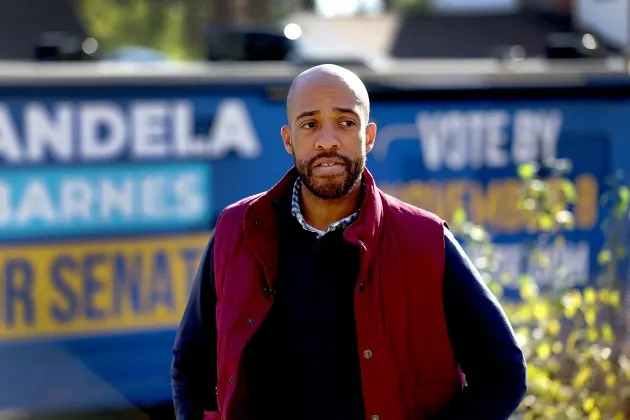
how-did-mandela-barnes-lose.jpg Mandela Barnes Campaigns Across Wisconsin On Eve Of Midterm Election – Credit: Scott Olson/Getty Images
In the weeks leading up to Election Day, Mandela Barnes’ supporters felt frustrated. They believed in Barnes as the best Democrat to take on Sen. Ron Johnson (R-Wisc.), and election forecasts all but guaranteed a Johnson victory. That frustration gave way to fury, however, once the ballots were counted on Wednesday. Barnes lost to Johnson by a single point.
It was a performance far stronger than what former Sen. Russ Feingold (D-Wisc.) achieved in his back-to-back runs against Johnson in 2010 and 2016. It also shouldn’t have been a shock. “This was a result that tracks with what our model suggested might happen,” says Ben Wikler, the chair of the Wisconsin Democratic Party. He’d spent the last few weeks explaining, both publicly and privately, that the race was tied — even as credible public polls found Barnes uncomfortably behind.
The unexpectedly sunny outcomes for Democrats on Tuesday night mostly staved off party soul searching — with one notable exception: The U.S. Senate race in Wisconsin. It wasn’t as if Democrats couldn’t win statewide there. Gov. Tony Evers won his reelection on Tuesday by more than 90,000 votes. The Senate race, meanwhile, had been the Democrats’ top target in 2022 as polls consistently deemed Johnson unpopular among Wisconsin voters. His reported efforts to help overturn Wisconsin’s 2020 presidential election results only made his ousting more desirable.
Barnes’ near miss has reopened intraparty wounds as Democrats lament the Senate seat that got away. At the root of it is a perennial question that follows high-profile losses: Was the candidate the wrong choice, or did he have insufficient resources to make his case? Barnes’ progressive allies point fingers at the Democratic establishment, whom they blame for discouraging big money from stepping in to counter tens of millions in attack ads unleashed upon Barnes after the primary. Democratic operatives, meanwhile, blame the Barnes campaign for not doing enough to counter those attacks with his own messaging — and for not putting enough distance between himself and past progressive positions they believe are toxic to Democrats running in tight races.
Barnes had been the early favorite to take on Johnson. The 35-year-old Black lieutenant governor had been a Democratic rising star ever since he’d won a Milwaukee-area seat in the Wisconsin legislature at age 25. He shared the winning gubernatorial ticket with Gov. Evers in 2018, a victory that boosted his visibility statewide. Barnes didn’t fit squarely in any ideological frame; both progressive stalwarts like Sen. Elizabeth Warren (D-Mass.) and moderate Black leaders like Rep. Jim Clyburn (D-S.C.) claimed Barnes as their own. It was a seemingly winning quality he shared with Pennsylvania’s John Fetterman, another Democratic lieutenant governor trying to flip a U.S. Senate seat. (”Just two tall bald dudes trying to get the job done,” Barnes toldPolitico of their very online bromance in July.)
He and Fetterman also shared a vulnerability: Liberal sensibilities to criminal justice reform. Barnes became the face of the Evers administration during the Kenosha riots that followed the police shooting of Jacob Blake, a Black man, in August 2020. He made frequent cable news appearances to demand police accountability. At one point, he suggested diverting funding from “over-bloated budgets in police departments” to community programs. The sentiment seemed to align Barnes with the goals of “defund the police,” the left-wing rallying cry that had grown radioactive in Democratic circles. Barnes had also been photographed holding an “Abolish ICE” T-shirt, another liberal slogan the GOP insisted on weaponizing.
Barnes tailored his campaign to neutralizing those attacks. He introduced himself as a candidate with a middle-class upbringing and a pocketbook-oriented platform. When asked about his criminal justice positions, Barnes would say he supported investing in both crime-prevention measures and law enforcement in equal measure. The strategy worked for the Democratic primary: He cleared a crowded field before any votes were cast as challengers, seeing Barnes as the clear frontrunner, dropped out and threw their support behind him.
The view from Washington, however, hadn’t been so convinced of Barnes’ obvious ascent. The Senate Democrats’ campaign arm had seen multiple candidates as strong contenders to challenge Johnson, declining to put its thumb on the scales for any candidate during the race. In the months leading up to the primary, a number of influential Democrats had privately raised doubts over Barnes’ electability — including Senate majority leader Chuck Schumer (D-N.Y.), according to several sources with knowledge of conversations. (“That’s ridiculous,” says a Schumer spokesperson, who noted that Schumer transferred $1 million from his own campaign coffers to Barnes’ efforts. “Sen. Schumer worked tirelessly to ensure Mandela Barnes and other Democratic candidates across the country had the resources they needed to run strong and competitive campaigns.”)
Then, just two weeks after the primary, the predictable happened. Four Johnson-aligned super PACs blanketed Wisconsin airwaves with ten different ads tying rising crime rates to Barnes. The spots preyed on the trauma of the Kenosha riots as well as a violent scene in Waukesha, where a man killed five attendees at the city’s annual Christmas parade as drove his car in November 2021. Nearly $25 million was spent in TV, radio, and digital advertising against Barnes during that period — including more than $10 million from Wisconsin Truth, a super PAC founded by three billionaire Johnson backers.
Barnes led Johnson by seven points in the first Marquette University poll taken after the primary, a time when a third of the Wisconsin electorate still hadn’t formed any opinion of Barnes. By the beginning of October, the Marquette poll found that Johnson had pulled ahead of Barnes by six points. “They were able to make Mandela look like a scary black man,” says Angela Lang, the executive director of BLOC, a Milwaukee-based Black civic engagement organization. The crime-ridden messaging had even penetrated among the city’s older Black voters, according to Lang. As BLOC’s organizers went door-to-door, they’d sometimes be asked: “Is Mandela really trying to let all these violent criminals out?”
“If the GOP smears had been met with equal intensity, I don’t think the country would have lost track of the fact that he really did have the chance,” Wikler, the Wisconsin Democratic chair, says. But Democrats disagree on what meeting those smears should have looked like. To Barnes’ progressive allies, the major Democratic party organs didn’t hit back hard enough during the GOP’s August and September blitz. They blame the lack of pushback on doubts prominent democrats raised over Barnes’ electability, saying it discouraged key donors from investing in the race. That attitude, according to Barnes’ boosters, delivered his campaign a fatal blow at a key moment. “That window was such a critical window — Mandela was ascendant,” says Maurice Mitchell, the executive director of the progressive Working Families Party, which backed Barnes in the race.
Indeed, the Senate Democrats’ campaign arm had, by that point, viewed Fetterman’s race for Pennsylvania’s open seat as a safer bet and decided to focus its resources on winning that race. Even so, Democrats had thrown $11.6 million behind opposing Johnson in those post-primary weeks — including $3 million from the DSCC in airtime “with the hopes that our nominee would use the air cover during this period to get their own advertising plans in order,” says a DSCC spokesperson. But Democrats defending those efforts point out that no amount of anti-Johnson spending would be as effective as hearing from Barnes himself. Research from the Center for American Progress, shared with Democratic campaigns in September, had found that the most effective strategies for combating crime attacks came from the candidates deflecting allegations themselves. Democratic Senate strategists had relayed these finds to the Barnes campaign and encouraged him to be prepared to face attacks on his record.
The Barnes campaign, attuned to this, stayed on the air throughout August and September with a seriesofads that featured Barnes refuting GOP claims. One from late August opened with Barnes in his kitchen in the midst of the quotidian tasks of putting away groceries. “Now they’re claiming I’m going to defund the police and abolish ICE,” Barnes said directly to camera. “That’s a lie.” It still wasn’t enough to counter the Republican onslaught with so many GOP attacks going unanswered; the Barnes campaign, still rebuilding its fundraising coffers from the primary, couldn’t match the spending. “We knew people needed to hear directly from him — ‘This is nonsense, this is what I believe,’” says Barnes campaign manager Kory Kozlowski. “The thing you can’t control is three of their ads for one of yours.”
Still, other Democrats point out that the attacks would have lost their sting if the candidate hadn’t held controversial positions in the first place. Matt Bennett, a cofounder of Third Way, a centrist Democratic political organization that supported Barnes in the general election, admits money was a huge factor — as was race, especially given the 120,000-vote delta between Barnes and Evers. “But it also can be true that Barnes did not effectively put distance between himself and his positions,” Bennett adds. Other Democrats point out that Barnes never walked away from his support of ending cash bail, a vulnerability Republicans successfully linked to the Waukesha tragedy, which had been perpetrated by a freed felon. “Proof points like that become really hard to overcome,” says Navin Nayak, the president of the Center for American Progress Action Fund. “That’s where good policy can bump up against scare tactics.”
But the Barnes campaign did find a potent strategy to crawl back into contention. Much of that was premised on hammering Johnson over his anti-abortion stances, a charge the Barnes campaign learned performed best against Johnson’s crime accusations. The Barnes campaign outraised Johnson in the final stretch and achieved a spending parity — and, at times, an advantage — as it got its own attack ads up in early October. Education among voters, too, softened the attack lines. “Naming the racism was important,” BLOC’s Lang says. “He’s talking about getting rid of cash bail, but that doesn’t actually keep our community safe.”
Barnes’ poll numbers steadily climbed each week leading up to the election. “One more week and we would have won,” Kozlowski, Barnes’ campaign manager, laments.
Johnson’s victory has no bearing on Democrats retaining their Senate majority. The caucus will, however, fall short of the 52 senators they needed to kill the filibuster — perhaps just one short if Sen. Rapahel Warnock (D-Ga.) wins a December runoff election.
Farmland Values Hit Record Highs, Pricing Out Farmers
Linda Qiu – November 13, 2022
Farmland outside of Clark, S.D., on Oct. 26, 2022. (Tim Gruber/The New York Times)
Joel Gindo thought he could finally own and operate the farm of his dreams when a neighbor put up 160 acres of cropland for sale in Brookings County, South Dakota, two years ago. Five thousand or six thousand dollars an acre should do the trick, Gindo estimated.
But at auction, Gindo watched helplessly as the price continued to climb until it hit $11,000 an acre, double what he had budgeted for.
“I just couldn’t compete with how much people are paying, with people paying 10 grand,” he said. “And for someone like me who doesn’t have an inheritance somewhere sitting around, a lump sum of money sitting around, everything has to be financed.”
What is happening in South Dakota is playing out in farming communities across the nation as the value of farmland soars, hitting record highs this year and often pricing out small or beginning farmers. In the state, farmland values surged by 18.7% from 2021 to 2022, one of the highest increases in the country, according to the most recent figures from the Agriculture Department. Nationwide, values increased by 12.4% and reached $3,800 an acre, the highest on record since 1970, with cropland at $5,050 an acre and pastureland at $1,650 an acre.
A series of economic forces — high prices for commodity crops like corn, soybeans and wheat; a robust housing market; low interest rates until recently; and a slew of government subsidies — have converged to create a “perfect storm” for farmland values, said Jason Henderson, a dean at the College of Agriculture at Purdue University and a former official at the Federal Reserve Bank of Kansas City, Missouri.
As a result, small farmers like Gindo are now going up against deep-pocketed investors, including private equity firms and real estate developers, prompting some experts to warn of far-reaching consequences for the farming sector.
Young farmers named finding affordable land for purchase the top challenge in 2022 in a September survey by the National Young Farmers Coalition, a nonprofit group.
Already, the supply of land is limited. About 40% of farmland in the United States is rented, most of it owned by landlords who are not actively involved in farming. And the amount of land available for purchase is extremely scant, with less than 1% of farmland sold on the open market annually.
The booming housing market, among a number of factors, has bolstered the value of farmland, particularly in areas close to growing city centers.
“What we have seen over the past year or two was, when housing starts to go up with new building construction, that puts pressure on farmland, especially on those urban fringes,” Henderson said. “And that leads to a cascading ripple effect into land values even farther and farther away.”
Government subsidies to farmers have also soared in recent years, amounting to nearly 39% of net farm income in 2020. On top of traditional programs like crop insurance payments, the Agriculture Department distributed $23 billion to farmers hurt by President Donald Trump’s trade war from 2018 to 2020 and $45.3 billion in pandemic-related assistance in 2020 and 2021. (The government’s contribution to farm income decreased to 20% in 2021 and is forecast to be about 8% in 2022.)
Those payments, or even the very promise of additional assistance, increase farmland values as they create a safety net and signal that agricultural land is a safe bet, research shows.
“There’s an expectation in the market that the government’s going to play a role when farm incomes drop, so that definitely affects investment behavior,” said Jennifer Ifft, a professor of agricultural economics at Kansas State University.
Eager investors are increasingly turning to farmland in the face of volatility in the stock and real estate markets. Bill Gates, the Microsoft co-founder and billionaire, is the biggest private farmland owner in the country and recently won approval to buy 2,100 acres in North Dakota for $13.5 million.
The number of private equity funds seeking to buy stakes in farmland has ticked higher, said Tim Koch, a vice president at an agricultural financial cooperative in the Midwest, Farm Credit Services of America. Pension funds also consider farmland a stable investment, Ifft said.
Farmers, too, have witnessed an influx of outside interest. Nathaniel Bankhead, who runs a farm and garden consulting business in Chattanooga, Tennessee, has banded with a group of other agricultural workers to save up to $500,000 to buy about 60 acres of land. For months, the collective has been repeatedly outbid by real estate developers, investors looking to diversify their portfolios and urban transplants with “delusional agrarian dreams,” he said.
“Places that I have looked at as potential farmland are being bought up in cash before I can even go through the process that a working-class person has to do to access land,” he said. “And the ironic thing is, those are my clients — like I get hired by them to do as a hobby what I’m trying to do as a livelihood. So it’s tough to watch.”
Bankhead characterized the current landscape as a form of “digital feudalism” for aspiring working farmers. Wealthy landowners drive up land prices, contract with agricultural designers like himself to enact their vision and then hire a caretaker to work the land — pricing out those very employees from becoming owners themselves.
“They kind of lock that person to this new flavor of serfdom where it’s, you might be decently paid, you’ve got access to it, but it will never be yours,” he said.
Unable to afford land in her native Florida, Tasha Trujillo recently moved her flower farm to South Carolina. Trujillo had grown cut flowers and kept bees on a parcel of her brother-in-law’s 5-acre plant nursery in Redland, a historically agricultural region in the Miami area, about 20 miles south of downtown.
When she sought to expand her farm and buy her own land, she quickly found that prices were out of reach, with real estate developers driving up land values and pushing out agriculture producers.
A 5-acre property in the Redlands now costs $500,000 to $700,000, Trujillo said. “So I essentially didn’t have a choice but to leave Miami and Florida as a whole.”
“Farming is a very stressful profession,” she added. “When you throw in land insecurity, it makes it 20 times worse. So there were many, many times where I thought, oh, my God, I’m not going to be able to do this. This isn’t feasible.”
As small and beginning farmers are shut out — the latest agricultural census said that the average age of farmers inched up to 57.5 — the prohibitively high land values may have ripple effects on the sector at large.
Brian Philpot, CEO of AgAmerica, an agricultural lending institution, said his firm’s average loan size had increased as farms consolidated, squeezing out family farms. This, he argued, could lead to a farm crisis.
“Do we have the skills and the next generation of people to farm it? And two, if the answer is going to be, we’re going to have passive owners own this land and lease it out, is that very sustainable?” he said.
Henderson also warned that current farmers may face increased financial risk as they seek to leverage their high farmland values, essentially betting the farm to expand it.
“They’ll buy more land, but they’ll use debt to do it,” he said. “They’ll stretch themselves out.”
Economists and lenders said farmland values appear to have plateaued in recent months, as the Federal Reserve raised interest rates and the cost of fertilizer and diesel soared. But with high commodity prices forecast for next year, some believe values will remain high.
A native of Tanzania who moved to South Dakota about a decade ago, Gindo bought 7 acres of land to raise livestock in 2019 and currently rents an additional 40 acres to grow corn and soybeans — all the while working full time as a comptroller to make ends meet.
For now, he has cooled off his search for a farm of his own even as he dreams of passing on that land to his son. The more immediate concern, he said, was whether his landlord would raise his rent. So far, the landlord has refrained because Gindo helps him out around the farm.
“He really doesn’t have to lend me his land,” Gindo said. “He can make double that with someone else.”
In Florida, Trujillo said, the owner of the land where her brother-in-law’s nursery sits has spoken of selling the plot while prices remain high, so he too has begun looking for his own property.
“That’s a big fear for a lot of these farmers and nursery owners who are renting land, because you just never know when the owner’s just going to say, ‘You know what, this year, I’m selling, and you’ve got to go,’” she said.
In Tennessee, Bankhead said he considered giving up on owning a farm “multiple times a day” as friends who have been longtime farmers leave the profession.
But so far, he remains committed to staying in the field and doing “the work of trying to keep land in families’ hands and showing there’s more to do with this land than to sell it to real estate developers,” he said. “But the pain of not having my own garden and not being able to have my animals where I live, it never stings any less.”
This editorial is the second in a series, “The Danger Within,” urging readers to understand the danger of extremist violence and possible solutions. Read more about the series in a note from Kathleen Kingsbury, the Times Opinion editor.
On May 29, 2020, Steven Carrillo decided that his moment to take up arms against the government had arrived.
It was a Friday in downtown Oakland, Calif., and at 9:44 p.m., Mr. Carrillo opened the sliding door of a white van and, according to court documents, opened fire with a rifle at the Ronald V. Dellums Federal Building and courthouse. Officer David Patrick Underwood was killed inside a guard booth, and his partner was seriously injured. The van sped away into the night.
About a week later, Mr. Carrillo, who was tied to the antigovernment paramilitary boogaloo movement, was arrested after he ambushed and murdered a police officer and wounded several others with homemade explosives and an assault rifle in another attack some 60 miles away. Mr. Carrillo wasn’t just linked to an antigovernment paramilitary group; he was also an active-duty sergeant in the Air Force. This summer, he was sentenced to 41 years in prison for attacking agents of the government he’d sworn to protect and defend.
There has been a steady rise in political violence in the United States — from harassment of election workers and public officials to the targeting of a Supreme Court justice to an attack on the husband of the speaker of the House of Representatives and, of course, the attack on the Capitol on Jan. 6. An alarming number of Americans say that political violence is usually or always justified, and this greater tolerance for violence is a direct threat to democratic governance.
America needs to reduce this threat. In recent years, the majority of political violence has come at the hands of members of right-wing extremist groups or unaffiliated adherents of their white supremacist and antigovernment ideologies. This editorial board argued in the first of this series that better enforcement of state and federal laws banning private paramilitary activity could help dismantle some of the groups at the vanguard of this violence.
One of the most troubling facts about adherents of extremist movements is that veterans, active-duty military personnel and members of law enforcement are overrepresented. One estimate, published in The Times in 2020, found that at least 25 percent of members of extremist paramilitary groups have a military background.
Still, only a tiny number of veterans or members of the active-duty military or law enforcement will ever join an extremist group. Their overrepresentation is partly due to extremist groups focusing on recruiting from these populations because of their skills. But the presence of these elements within the ranks of law enforcement is cause for extra concern. Of the more than 900 people arrested in connection with the Jan. 6 attacks, 135 had military or law enforcement backgrounds. The Program on Extremism at George Washington University found that among those in policing, 18 are retired, and six are active. One Capitol Police officer who was not on the scene that day but was aware of the attack later advised a participant on how to avoid being caught.
For decades, police departments, the Pentagon and the Department of Veterans Affairs have known about the problem, yet they have made only halting progress in rooting out extremists in the ranks.
Jan. 6 changed that. Secretary of Defense Lloyd Austin was so alarmed by the events of that day that he ordered all military commands to reinforce existing regulations prohibiting extremist activity and to query service members about their views on the extent of the problem. The Defense Department standardized its screening questionnaires for recruits and changed its social media policies, so that liking or reposting white nationalist and extremist content would be considered the same as advocating it. Service members could face disciplinary action for doing so. The department also began preparing retiring members to avoid being recruited by extremist groups.
But those reforms were more easily ordered than executed. A department inspector general report released this year found that the Pentagon’s sprawling bureaucracy was unable to identify the scope of the problem across the services because it used numerous reporting systems that were not interconnected. Commanders often didn’t have a clear understanding of what was prohibited. As a result, the department “cannot fully implement policy and procedures to address extremist activity without clarifying the definitions of ‘extremism,’ ‘extremist,’ ‘active advocacy’ and ‘active participation,’” the report concluded.
After 20 years of the war on terrorism, the country is now seeing many veterans joining extremist groups like the Proud Boys.
The end of wars and the return of the disillusioned veterans they can produce have often been followed by a spike in extremism. The white power movement grew after the end of the Vietnam War, with veterans often playing leading roles. Antigovernment activity climbed in the 1990s after the first Iraq war, culminating in the bombing of the Alfred P. Murrah Federal Building in Oklahoma City by Timothy McVeigh, an Army veteran who had served in Operation Desert Storm. “These groups can give disaffected veterans a sense of purpose, camaraderie, community once they leave military service,” said Cassie Miller, an extremism researcher at the Southern Poverty Law Center.
In 2012, Andrew Turner ended his nine-year Navy career at Walter Reed National Military Medical Center with a shattered hand and loathing of the government. He’d served around the world, from South Korea to Iraq, and the experience had left him disabled and furious. “When the military was done with me, they threw me on a heap. I took it personally and was so angry,” he said in an interview.
In 2013 a fellow service member suggested that he check out a group called the Oath Keepers. Mr. Turner, then 39, joined the Maryland chapter, paid his dues and “initially felt that esprit de corps that I’d missed from the military,” he said. He felt a bond and even spent time with the group’s founder, Stewart Rhodes, who is currently on trial and charged with seditious conspiracy for his role in the Jan. 6 attacks. (Mr. Rhodes has denied ordering the group to attack the Capitol and stop the certification of the 2020 election results, as the government contends.) There’s a photo of them at the World War II Memorial in Washington, holding an Oath Keepers banner.
But Mr. Turner soon realized that the group was not the apolitical, service-oriented veterans’ association he thought it to be. In private online forums, discussions were full of racist language, and members flirted with violence. He walked away after six months. “It’s easy to find vulnerable people at their weakest moments. I was naïve, but if anyone joins the Oath Keepers today, they know exactly what they’re getting into,” he said.
Experts in the field recommend some basic steps the military should take that could make a difference. Better training, counseling and discussion of the true nature of extremism are vital and must start long before service members retire and need to continue after they do. Better staff training and better funding for the Department of Veterans Affairs are also critical to meeting this challenge, so that members who are struggling can be coaxed down a different path.
While the military can exert fairly strict control over men and women in uniform, civilian law enforcement agencies face a different set of challenges in addressing extremists or extremist sympathizers in the ranks.
At least 24 current and former police officers have been charged with crimes in relation to the Jan. 6 attacks, and dozens of others have been identified as part of the crowd at the Capitol. Some officers who participated wanted things to go further than they did. “Kill them all,” Peter Heneen, a sheriff’s deputy in Florida, texted another deputy during the attack. The streets of the capital, he wrote, needed to “run red with the blood of these tyrants.”
Experts who track the tactics of extremist movements have been sounding the klaxon about the growing presence of antigovernment and white supremacist groups in law enforcement for years. “Although white supremacist groups have historically engaged in strategic efforts to infiltrate and recruit from law enforcement communities, current reporting on attempts reflects self-initiated efforts by individuals, particularly among those already within law enforcement ranks, to volunteer their professional resources to white supremacist causes with which they sympathize,” an F.B.I. intelligence assessment concluded in 2006.
Last year a leakedmembership roster of the Oath Keepers, a violent paramilitary group involved in the Jan. 6 attacks that recruits police officers and military personnel, included some 370 members of law enforcement and more than 100 members of the military, according to an Anti-Defamation League Center on Extremism analysis. An investigation by Reuters this year found that several police trainers around the country — who together have trained hundreds of officers — belong to extremist paramilitary groups or expressed sympathy for their ideas. One trainer, for instance, posted on social media that government officials disloyal to Donald Trump should be executed and that the country was on the brink of civil war.
A recent investigation by the Marshall Project found that hundreds of sheriffs nationwide are part of or are sympathetic to the ideas behind the constitutional sheriffs movement, which holds that sheriffs are above state and federal law and are not required to accept gun laws, enforce Covid restrictions or investigate election results. The Anti-Defamation League describes the Constitutional Sheriffs and Peace Officers Association as an “antigovernment extremist group whose primary purpose is to recruit sheriffs into the antigovernment ‘patriot’ movement.”
Identifying members of extremist groups and those sympathetic to their ideology to make sure they don’t join the thin blue line in the first place should be a priority for departments and governments nationwide. Yet most departments don’t have explicit prohibitions on officers joining extremist paramilitary groups, according to a 2020 study by the Brennan Center for Justice.
Since Jan. 6, however, some states have successfully pushed for reforms. This fall, California passed a law that requires law enforcement agencies to screen candidates for participation in groups that promote hate crimes or genocide. In April, Minnesota’s police officer standards board proposed a series of rule changes, including barring people who belong to or support extremist groups from getting a law enforcement license. Public hearings, which are set to be held on those changes, deserve support. Other states and communities should look closely at these measures as a model.
Prosecutors in communities all over the United States also have a powerful tool already at their disposal: cross-examination during criminal trial. All defendants in criminal cases have a constitutional right to know about potentially exculpatory evidence. If an arresting officer is a member of a hate group or expresses extremist beliefs, that should be a subject of cross-examination by the defense.
If prosecutors were more aggressive about vetting police officers for extremist views, “defendants will get fairer trials, the public will be informed of problem officers through public trials, and police and prosecutors get the opportunity to identify problematic police officers and take action to rid the force of these officers,” wrote Vida Johnson, a professor at Georgetown Law, in a 2019 law review article.
Americans have a nearly unlimited right to free speech and association, and any effort to stop extremist violence must ensure that those rights are protected. Reforms should be carefully structured to avoid the abuses that occurred in the wake of the Sept. 11 attacks — the violations of civil liberties, mass surveillance and the accelerated militarization of the police, to name a few. But protecting freedom of expression need not stand in the way of tackling extremism in police departments.
Officers around the country have rightly been fired for racist or extremist actions. But punishment for harboring extremist sympathies is a finer line, because Americans have the right to believe what they like. So, the treatment of officers with extremist beliefs and extremist connections is often uneven. This year, a New York prison guard who belonged to a right-wing hate group was ultimately fired — not just for membership but also for trying to smuggle hate literature into the prison. This may be a useful model in determining where extremist ideology crosses the line to actions that can be addressed by law or regulation.
Other recent attempts to root out extremism have been less clear-cut. An unidentified police officer in Chicago was given a four-month suspension but was not dismissed after it was discovered that he had ties to the Proud Boys. Last month, a police officer in Massachusetts was found to have been involved in the Unite the Right rally in Charlottesville, Va. He resigned, and the district attorney announced an investigation into all closed and pending cases he had worked on.
Coordinating the efforts of the nation’s roughly 18,000 law enforcement agencies has been notoriously difficult. Federal standards or even guidelines about how to deal with extremism — in recruiting officers, disciplining existing ones or even sharing information — would go a long way toward harmonizing law enforcement’s response. But carrying out such changes would require both local attention to detail and the political will to do so. It would also require staffing law enforcement with people committed to the rule of law, rather than rule by force. As one congressional staff member working on homeland security issues put it: “People have to decide this is a priority. We can’t legislate hearts and minds.”
Across the board, extremists and their sympathizers, whether they act on their beliefs or just spread them, erode the public’s trust in the institutions that are designed to keep the country safe. Extremists bearing badges can put at risk ongoing police investigations by leaking confidential information. In the military, extremists pose a threat to good order and discipline. In law enforcement, extremists — particularly white supremacists — pose a threat to the people they are meant to protect, especially people of color. In federal agencies, extremists can compromise national security and make our borders even less secure. Protecting those institutions and the nation they serve demands urgent action.
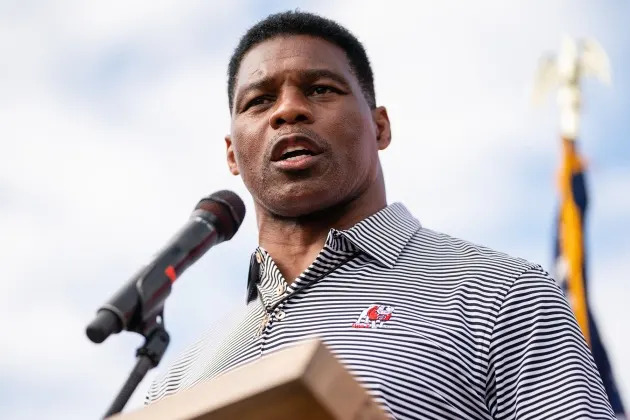
About half of Georgia voters cast a ballot for Herschel Walker on Tuesday. Most of these voters wouldn’t trust Walker to run the check-out at a Family Dollar. But that’s the whole point.
Herschel Walker has repeatedly proven himself to be stupid. Herschel Walker’s voters aren’t necessarily stupid. That’s too easy.
Georgia Republicans aren’t stupid. But they see safety in stupid politicians. The stupidity of Herschel Walker isn’t a problem for them. It’s a feature. And writing off Georgia Republicans as country idiots is a kind of smug, lazy thinking that oversimplifies a complicated political problem, not just in Georgia but across the country.
Herschel Walker was not nominated to govern. He was not nominated to bargain. He was not nominated to formulate policy. He was not nominated to exercise judgment. He was nominated to mash the R button whenever a vote comes up, no matter what.
“It could be Daffy Duck for all I care,” one such voter told the Atlanta Journal-Constitution at a Walker rally in Baxley, Ga. “Just get the Democrats out of Washington.”
Electing Walker is like replacing that check-out clerk with an automated self-scanner.
A smart man certainly wouldn’t have held up a fake badge during a debate after being accused of pretending to be a police officer. Rather than own up to the mistake, Walker started doing interviews with news reporterswhile wearing the badge. The number of children Walker was publicly willing to acknowledge were his has grown twice over the course of the campaign, surprising his own campaign staff with the revelations. Walker’s response to the revelations has been to argue that the children he doesn’t see aren’t campaign props, and please ignore the one who is shouting from the high hilltops about having to move six times in six months as his mother evaded Walker’s abuse.
Walker has argued for a national ban on abortion with no exceptions for rape or incest in interviews as late as August. He denied that he ever said he held a position that extreme, in his first debate with Warnock, but the record of his comments is crystal clear. “I believe in life,” Walker said at a forum in August. “And I said, you know, if anyone wants to have an exception, I said, ‘Not in my book,’” Walker said. “I said, ‘I’m sorry. I feel bad for anyone that’s a victim of any kind of crime.’ I do. I feel like that. That is terrible and that’s horrible, but we deal with that as it comes.”
He’s plainly a pro-life candidate either way.
Two women have come forward to say that Walker pressured them into getting abortions. One, the mother of one of Walker’s (known) children, had a check signed by Walker and a receipt from the abortion clinic. Normally, this would fall into the category of career-ending political scandals. But Walker’s stupidity is an asset. Wisdom might prevent mistakes, but it also generates the kind of self-reflection that creates a conscience, and that’s a problem.
On Tuesday, Republican Gov. Brian Kemp earned roughly 200,000 more votes than Herschel Walker, out of about four million cast. Sen. Raphael Warnock earned about 140,000 more than Stacey Abrams. That means that only about 1 in 20 voters saw the trainwreck that Walker presented – a history of mental illness, violence against women, plain lies about his charitable work with veterans and his business dealings, an absolutist stand on abortion and his connection to Donald Trump – and bailed. Only about two-thirds of those voters who walked away from Walker were actually willing to cross the aisle and vote for Warnock.
If you want a clearer example of bipartisanship’s death, well… you’re not going to find it.
An introspective candidate with Walker’s skeletons would never have run in the first place. But an introspective candidate wouldn’t have had Walker’s skeletons. This may seem counter-intuitive, but for a lot of Georgians, these kinds of mistakes solidify the view among Georgia’s right that Walker must have never thought he would go into politics and hasn’t lived the sterile careerist lifestyle of the political elite … which is the best qualification they know for higher office.
So rather than slink into a corner and collapse after the abortion stories, Walker simply denied everything and threatened to sue The Daily Beast for its reporting on the abortions he allegedly paid for. (So far, he hasn’t followed through on the threat.) He has continued to campaign on an unapologetically pro-life platform.
Wednesday, Susan B. Anthony Pro-Life America announced it would back Walker with $1 million in spending on the runoff.
A senator who stops to consider the personal or political consequences of his actions might vote for bills that don’t “own the libs.” For many Republican voters, this alone is enough reason to vote for Walker.
For example, Georgia did not expand Medicaid under the Affordable Care Act. The state contributes extra money into the national treasury for medical care that it does not receive, for no real reason other than keeping doctors away from poor people. Hospitals are closing across the state, mostly in communities with poor white residents, though the most significant recent closure was of a major Level 1 trauma center in downtown Atlanta.
The policy is profoundly stupid. It also hurts more Black people than white people in Georgia, so many Republicans support it. A smart politician would be looking for a policy workaround that brings that money to Georgia. But Republicans don’t want a smart politician. They want Walker.
Before you start feeling superior about your choices, the tribal desire to beat a political enemy is also the fundamental political motivation for most Democrats. Even Raphael Warnock has had issues surface during the campaign which might give voters a pause.
Warnock was arrested in 2002 and briefly accused of obstructing an investigation into child abuse at a summer camp. The charge was dropped once it became clear to a judge that Warnock was trying to prevent children from being questioned by police without parents or a lawyer. Walker’s campaign ran ads showing police body camera footage from a domestic case, where Walker’s ex-wife told cops he ran over her foot after an argument in 2020. Paramedics found no injuries on her.
Warnock’s church, the famed Ebenezer Missionary Baptist of Atlanta, owns a nonprofit which owns Columbia Tower at MLK Village, a senior residential housing complex. Some of its tenants have been served eviction notices for paltry sums in recent years, a point that Walker gleefully made during their debate. Warnock replied that no one had actually been evicted.
As a practical matter, none of these attacks mattered. Democrats voted for Warnock anyway. Politics have become tribal in Georgia.
That means a government that’s more dysfunctional, where there’s no incentive to agree to help people. That’s the whole point.
Tucker Carlson and others on the far right have been steadily reinforcing fears of the “Great Replacement” in the hearts of America’s white middle class. The threat of demographic change – and the concomitant political change – is the heart of this message. Sooner or later, they tell white conservatives, you’re going to be outnumbered. Once that happens, white nationalists argue that white people will become the targets of discrimination (instead of Black people.) They’re already arguing that in Georgia: Steven Miller’s team flooded TV and mailboxes with ads reminiscent of Jesse Helms’ “White Hands” ad with White people need not apply messages on jobs. The less functional and less legitimate that government is when the turnover happens, the easier it will be to fight.
Disabling the government is fundamental to white nationalist politics, and those politics have an audience in Georgia. But they can’t say that directly, because most voters reject that message and don’t like who is delivering it.
To be clear: most white Republicans are not crypto-white nationalists. But virtually all white nationalists will vote Republican, and they form a large-enough bloc within the party to influence primary contests in Georgia.
Ironically, Walker’s ethnicity is an added asset here. It’s harder to describe a Black man as a shill for a white nationalist agenda. Win or lose, it amuses the 4Chan wing of the party to amplify all the things they can’t say aloud in the voice of a Black man.
Usually, that play doesn’t work this well. Vernon Jones, a former CEO for majority-Black DeKalb County turned MAGA provocateur, ran for Congress with Trump’s blessings. He made it to a runoff and was thoroughly trounced.
It didn’t used to be like this. Georgia has produced highly educated, politically savvy, even smart Republican leaders over the years, from Newt Gingrich to David Perdue. The problem for the common Republican voter is that these guys – and they’re usually guys – have also tended to be corrupt. Elites are part of the problem. They know how to save their own skin if the ship is sinking. Georgia’s Republicans have decided it’s better to send in someone who wouldn’t know better.
And given the choice between a crooked brainiac and a simpleton, today’s GOP has made its preference clear.
As world population hits 8 billion, China frets over too few babies
November 13, 2022
FILE PHOTO: People walk and ride vehicles along a street, amid the coronavirus disease pandemic, in Shanghai
BEIJING/HONG KONG (Reuters) – Chinese software developer Tang Huajun loves playing with his two-year-old in their apartment on the outskirts of Beijing but he said he is unlikely to have another child.
Such decisions by countless people like Tang will determine the course not only of China’s population but that of the world, which the United Nations says is projected to reach 8 billion on Tuesday.
Tang, 39, said many of his married friends have only one child and, like him, they are not planning any more. Younger people aren’t even interested in getting married let alone having babies, he said.
The high cost of childcare is a major deterrent to having children in China, with many families in an increasingly mobile society unable to rely for help on grandparents who might live far away.
“Another reason is that many of us get married very late and its hard to get pregnant,” Tang said. “I think getting married late will definitely have an impact on births.”
China was for decades preoccupied with the prospect of runaway population growth and imposed a strict one-child policy from 1980 to 2015 to keep numbers in check.
But now the United Nations expects China’s population will start shrinking from next year, when India will likely become the world’s most populous country.
China’s fertility rate of 1.16 in 2021 was below the 2.1 OECD standard for a stable population and among the lowest in the world.
The anguish of the coronavirus pandemic and China’s strict measures to stamp it out may also have had a profound impact on the desire of many people to have children, demographers say.
New births in China are set to fall to record lows this year, demographers say, dropping below 10 million from last year’s 10.6 million – which was already 11.5% lower than in 2020.
Beijing last year began allowing couples to have up to three children and the government has said it is working towards achieving an “appropriate” birth rate.
OLD PEOPLE, NEW PROBLEMS
For planners, a shrinking population poses a whole new set of problems.
“We expect the aging population to increase very rapidly. This is a very important situation facing China, different to 20 years ago,” said Shen Jianfa, a professor at the Chinese University of Hong Kong.
The proportion of the population over the age of 65 is now about 13% but is set to rise sharply. A declining labour force faces an increasing burden of looking after the rising numbers of old folk.
“It will be very high for some years,” Shen said of the proportion of elderly in the population. “That’s why the country has to prepare for the coming aging.”
Alarmed by the prospect of an ageing society, China has been trying to encourage couples to have more children with tax breaks and cash handouts, as well as more generous maternity leave, medical insurance and housing subsidies.
But demographers say the measures are not enough. They cite high education costs, low wages and notoriously long working hours, along with frustration over COVID curbs and the overall state of the economy.
A key factor is job prospects for young people, said Stuart Gietel Basten, professor at Hong Kong’s University of Science and Technology.
“Why would you have more babies when the people you have cannot even get jobs?”
(Reporting by Thomas Suen and Farah Master; Editing by Robert Birsel)
Finding safe haven in the climate change future: The Midwest
David Knowles, Senior Editor – November 12, 2022
This Yahoo News series analyzes different regions around the country in terms of climate change risks that they face now and will experience in the years to come.
As the negative consequences of rising global temperatures due to mankind’s relentless burning of fossil fuels become more and more apparent in communities across the United States, anxiety over finding a place to live safe from the ravages of climate change has also been on the rise.
“Millions and likely tens of millions of Americans” will move because of climate through the end of the century, Jesse Keenan, an associate professor of real estate in Tulane University’s School of Architecture, told Yahoo News.“People move because of school districts, affordability, job opportunities. There are a lot of drivers and I think it’s probably best to think about this as ‘Climate is now one of those drivers.’”
A building is surrounded by floodwater in 2019 in Atchison, Kan. (Scott Olson/Getty Images)
In late October, a report by the United Nations concluded that average global temperatures are on track to warm by 2.1 to 2.9 degrees Celsius by the year 2100. As a result, the world can expect a dramatic rise in chaotic, extreme weather events. In fact, that increase is already happening. In the 1980s, the U.S. was hit with a weather disaster totaling $1 billion in damages once every four months, on average. Thanks to steadily rising temperatures, they now occur every three weeks, according to a draft report of the latest National Climate Assessment, and they aren’t limited to any particular geographic region.
To be sure, calculating climate risk depends on a dizzying number of factors, including luck, latitude, elevation, the upkeep of infrastructure, long-term climate patterns, the predictable behavior of the jet stream and how warming ocean waters will impact the frequency of El Niño/La Niña cycles.
“No place is immune from climate change impacts, certainly in the continental United States, and throughout the U.S. those impacts will be quite severe,” Keenan said. “They will be more severe in some places and less severe in other places. Certain places will be more moderate in terms of temperature and some places will be more extreme, but we all share the risk of the increase of extreme events.”
In this installment, we look at a region that is already used to weather extremes and where, thanks to climate change, even more are coming into view.
The Midwest
Made up of eight states — Ohio, Michigan, Indiana, Illinois, Missouri, Iowa, Minnesota and Wisconsin — the Midwest has found itself over recent centuries at the intersection of warm, moist air from the Gulf of Mexico and frigid polar vortexes that dip south from Canada. As with other regions of the country, climate change is already upending weather patterns in the Midwest and will, in the years to come, alter precipitation trends, food production, humidity and overall heat in profound ways.
Of the top 10 counties rated safest to live in the Midwest when it comes to climate change risks, six — Menominee, Vilas, Winnebago, Shawano, Portage and Polk — are located in Wisconsin, according to a 2020 analysis by the New York Times and ProPublica based on findings provided by the Rhodium Group, a data analytics firm. The remaining four in the top 10 Midwestern counties — Keweenaw, Luce, Crawford and Alger — are found in Michigan.
Many other counties in those two states and in Minnesota also ranked highly based on a cumulative scale that examined six major categories — heat stress, humidity (“wet bulb”), wildfires, crop loss, sea level rise and overall economic damages — and two emissions scenarios, high and moderate.
While northern counties in the Midwest offer relative protection from climate change risks, those further south, such as Missouri’s Camden, Hickory, Wayne, Bollinger, Dunklin, Maries, Phelps and Ripley counties as well as Illinois’s Alexander and Pulaski counties, all ranked lowest in the region, in large part due to poor scores on farm crop yields, heat and wet-bulb effect.
The bones of a fish washed ashore lie in a field of destroyed soybeans next to the Missouri River near Omaha in 2019. (Johannes Eisele/AFP via Getty Images)
While many Americans may not yet be familiar with the term “wet bulb,” they certainly will in parts of the Midwest before long. It refers to a potentially fatal combination of hot temperatures and high humidity that conspire to prevent the body from being able to cool itself down through the evaporation of sweat. That dynamic explains why even excessive “dry heat” feels less oppressive than less severe temperatures coupled with high humidity.
NASA predicts that Midwestern states like Missouri and Iowa will “hit the critical wet-bulb limit” in the next 50 years, leading to higher rates of weather-related deaths.
On average, the Midwest can expect dramatic shifts in temperatures if emissions continue at their current pace that will have a wide range of negative effects on human health.
“Compared to other regions where worsening heat is also expected to occur, the Midwest is projected to have the largest increase in extreme temperature-related premature deaths under the higher scenario,” the Centers for Disease Control and Prevention states on its website. “Northern midwestern communities and vulnerable populations that historically have not experienced high temperatures may be at risk for heat-related disease and death.”
As temperatures continue to rise, the Midwest will also find itself dealing with poor air quality, a risk category not included in the New York Times/ProPublica rankings.
“Increases in ground-level ozone and particulate matter are associated with the prevalence of various lung and cardiovascular diseases, which can lead to missed school days, hospitalization, and premature death,” the CDC states. “In the absence of mitigation, ground-level ozone concentrations are projected to increase across most of the Midwest, resulting in an additional 200 to 550 premature deaths in the region per year by 2050.”
An American flag remains standing after a tornado tore through rural Kentucky. (Jeremy Hogan/SOPA Images/LightRocket via Getty Images)
The CDC also warns that some of the climate change consequences forecast to hit the Midwest, such as drought, severe flash flooding and diminished air quality, can cause mental health problems like anxiety. Kristi White, a clinical health psychologist in Minneapolis, has already been treating young adults for anxiety born of climate change.
“Some of the things in the patients that I work with are things like asthma exacerbation due to poor air quality from wildfires [and] concerns around the risk for heat-related illnesses during extreme heat waves,” White told Yahoo News earlier this year.
While the climate change risks to the Midwest and other regions of the country have long been predicted by climate scientists using computer modeling, there’s still a large element of surprise when it comes to pinpointing which parts of the region can expect to see extreme weather events and exactly how bad they will be.
Indeed, this summer it seemed as though 1-in-1,000-year rain events traveled in threes.
One increasingly glaring problem with rating extreme rainfall events in terms of their historical likelihood is that the changing climate has rendered such scales woefully out of date.
“If you build a statistical model based on a climate that no longer exists, it’s not going to be too surprising that it fails,” UCLA climate scientist Daniel Swain, who also consults for ClimateCheck, a company that provides climate change risk assessments on real estate nationwide, told Yahoo News. Most “hydrologic models and the Army Corps of Engineers” do not factor in the Clausius-Clapeyron equation, which describes the increase in atmospheric moisture that results from every degree of temperature rise, into their modeling, Swain added.
Simply put, more atmospheric moisture can result in more rainfall. Overall, the Environmental Protection Agency has found that rainfall across the Midwest has risen by 5 to 10% in the past 50 years on average. Though average annual rainfall won’t rise at an equal pace across the region, the trend line based on current greenhouse gas projections is clear.
A street is flooded after water from the Tittabawassee River breached a nearby dam in 2020 in Sanford, Mich. (Gregory Shamus/Getty Images)
“Precipitation in the Midwest is expected to become more intense, leading to increased flood damage, strained drainage systems, and reduced drinking water availability,” the EPA says on its website.
But the other major aspect of the Clausius-Clapeyron equation is that warmer temperatures dramatically speed up evaporation rates so that even when a region sees an uptick in the amount of annual precipitation, it remains susceptible to drought. In 2021, for instance, 27% of the Midwest experienced a drought, according to the National Oceanic and Atmospheric Administration, including 70% of Michigan and 57% of Iowa.
In 2022, despite record-setting rains in some states, large portions of Iowa, Missouri and Minnesota now find themselves in severe or extreme drought, according to the U.S. Drought Monitor.
To be sure, while the Upper Midwest — including northern Minnesota and Wisconsin and Michigan’s Upper Peninsula — offers cooler average temperatures than other parts of the region, it has also been warming fastest in the region in recent years. Ice on the Great Lakes continues to melt away earlier and wintertime average temperatures across the region have risen significantly. For a little while, that might all seem like good news, sparing residents from the unrelenting winters of past decades. But should emissions continue at their current levels, the changes to the Midwest will be jarring.
Ice forms along the shore of Lake Michigan as temperatures hang in the single digits on Jan. 26 in Chicago. (Scott Olson/Getty Images)
For Hoosiers, that will mean an increase from seven days per year of temperatures exceeding 95°F at present to between 50 and 89 of them by the end of the century. That heat will, in turn, further decrease crop yields for corn and soybeans, potentially upending a way of life.
In some ways, the Midwest epitomizes the folly of trying to outrun climate change. For every global warming advantage that is offered in places like northern Michigan and Wisconsin, other hazards are poised to present themselves. In its entry on the Midwest, the U.S. Climate Resilience Toolkit highlights those emerging risks.
“Climate change is expected to worsen existing health conditions and introduce new health threats by increasing the frequency and intensity of poor air quality days, extreme high temperature events, and heavy rainfalls; extending pollen seasons; and modifying the distribution of disease-carrying pests and insects,” the website states.
Ukraine war’s environmental toll to take years to clean up
Sam Mednick – November 11, 2022
A view of a fuel depot hit by Russian missile in the town of Kalynivka, about 30 kilometers (18 miles) southwest of Kyiv, Ukraine, Thursday, Oct. 27, 2022. Environmental damage caused by Ukraine’s war is mounting in the 8-month-old conflict, and experts warn of long-term health consequences for the population. (AP Photo/Andrew Kravchenko)Workers inspect a fuel depot hit by Russian missile in the town of Kalynivka, about 30 kilometers (18 miles) southwest of Kyiv, Ukraine, Thursday, Oct. 27, 2022. Environmental damage caused by Ukraine’s war is mounting in the 8-month-old conflict, and experts warn of long-term health consequences for the population. (AP Photo/Andrew Kravchenko)
DEMYDIV, Ukraine (AP) — Olga Lehan’s home near the Irpin River was flooded when Ukraine destroyed a dam to prevent Russian forces from storming the capital of Kyiv just days into the wa r. Weeks later, the water from her tap turned brown from pollution.
“It was not safe to drink,” she said of the tap water in her village of Demydiv, about 40 kilometers (24 miles) north of Kyiv on the tributary of the Dnieper River.
Visibly upset as she walked through her house, the 71-year-old pointed to where the high water in March had made her kitchen moldy, seeped into her well and ruined her garden.
Environmental damage from the 8-month-old war with Russia is mounting in more of the country, with experts warning of long-term consequences. Moscow’s attacks on fuel depots have released toxins into the air and groundwater, threatening biodiversity, climate stability and the health of the population.
Because of the war, more than 6 million Ukrainians have limited or no access to clean water, and more than 280,000 hectares (nearly 692,000 acres) of forests have been destroyed or felled, according to the World Wildlife Fund. It has caused more than $37 billion in environmental damage, according to the Audit Chamber, a nongovernmental group in the country.
“This pollution caused by the war will not go away. It will have to be solved by our descendants, to plant forests, or to clean the polluted rivers,” said Dmytro Averin, an environmental expert with Zoi Environment Network, a non-profit organization based in Switzerland.
While the hardest-hit areas are in the more industrial eastern regions of Donetsk and Luhansk, where fighting between government troops and pro-Russian separatists has been going on since 2014, he said, the damage has spread elsewhere.
“In addition to combat casualties, war is also hell on people’s health, physically and mentally,” said Rick Steiner, a U.S. environmental scientist who advised Lebanon’s government on environmental issues stemming from a monthlong war in 2006 between that country and Israel.
The health impact from contaminated water and exposure to toxins unleashed by conflict “may take years to manifest,” he said.
Ukrainian authorities then began bringing in fresh water, but the shipments stopped in October when the tanker truck broke down, forcing residents to again drink the dirty water, they said.
“We don’t have another option. We don’t have money to buy bottles,” Iryna Stetcenko told The Associated Press. Her family has diarrhea and she’s concerned about the health of her two teenagers, she said.
In May, the government took samples of the water, but the results have not been released, said Vyacheslav Muga, the former acting head of the local government’s water service. The Food Safety and Consumer Protection agency in Kyiv has not yet responded to an AP request for the results.
Reports by other environmental groups, however, have shown the effects of the war.
In recent weeks, Russia has targeted key infrastructure like power plants and waterworks. But even in July, the U.N.’s environmental authority already was warning of significant damage to water infrastructure including pumping stations, purification plants and sewage facilities.
A soon-to-be-published paper by the Conflict and Environment Observatory, a British charity, and the Zoi Environment Network, found evidence of pollution at a pond after a Russian missile hit a fuel depot in the town of Kalynivka, about 30 kilometers (about 18 miles) southwest of Kyiv.
The pond, used for recreation as well as a fish farm, showed a high concentration of fuel oil and dead fish on the surface — apparently from oil that had seeped into the water, A copy of the report was seen by the AP.
Nitrogen dioxide, which is released by burning fossil fuels, increased in areas west and southwest of Kyiv, according to an April report from REACH, a humanitarian research initiative that tracks information in areas affected by crisis, disaster and displacement. Direct exposure can cause skin irritation and burns, while chronic exposure can cause respiratory illness and harm vegetation, the report said.
Ukraine’s agriculture sector, a key part of its economy, also has been affected. Fires have damaged crops and livestock, burned thousands of hectares of forest and prevented farmers from completing the harvest, said Serhiy Zibtsev, forestry professor at Ukraine’s National University of Life and Environmental Sciences.
“The fires are so massive,” he said, adding that farmers “lost everything they were harvesting for winter.”
The government in Kyiv is providing assistance when it can.
In Demydiv and surrounding villages, flood victims were given the equivalent of $540 each, said Liliia Kalashnikova, deputy head of the nearby town of Dymer. She said the government would do everything it could to prevent long-term environmental effects, but she didn’t specify how.
Governments have an obligation to minimize environmental risks for the population, especially during war, said Doug Weir, research and policy director for the Conflict and Environment Observatory, a U.K.—based monitoring organization.
Some Ukrainians have already lost hope.
“I feel depressed — there’s water all around and under my house,” said Demydiv resident Tatiana Samoilenko. “I don’t see much changing in the future.”