Large part of Ukranian corn crop may stay in fields over winter.
November 21, 2022
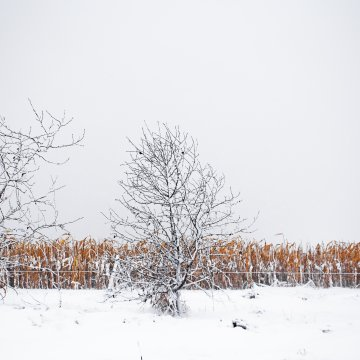
KYIV, Nov 20 (Reuters) – Significant areas of Ukraine’s corn crop may be left to overwinter in the fields due to difficulties with harvesting and fuel shortages, analyst APK-Inform said on Sunday.
Corn can potentially be harvested in winter or early spring, but previously only very small areas of the crop would be left to overwinter if farmers wanted to reduce grain moisture.
Ukraine is a major global corn grower and exporter and harvested almost 42 million tonnes in 2021. This year, analysts say, the harvest could total 27.5 million to 27.9 million tonnes.
APK-Inform said in a report that the prospect for a large part of the corn crop to stay in fields this winter was “becoming more and more possible” due to low domestic prices, difficulties with field work caused by the war and high fuel prices.
The Ukrainian agriculture ministry said on Friday only 50% of the area sown for corn had been harvested as of Nov. 17, or 12.3 million tonnes.
The government has said Ukraine could harvest between 50 million and 52 million tonnes of grain this year, down from a record 86 million tonnes in 2021, because of the loss of land to Russian forces and lower yields.
Farmers have already completed the 2022 wheat and barley harvests, threshing 19.4 million and 5.6 million tons respectively. (Reporting by Pavel Polityuk; Editing by Kirsten Donovan)
The midlife health checks you should never skip – and the ones worth paying for
Lebby Eyres – November 21, 2022
Even if you feel on top of your game and are symptom-free, it’s best not to ignore tests
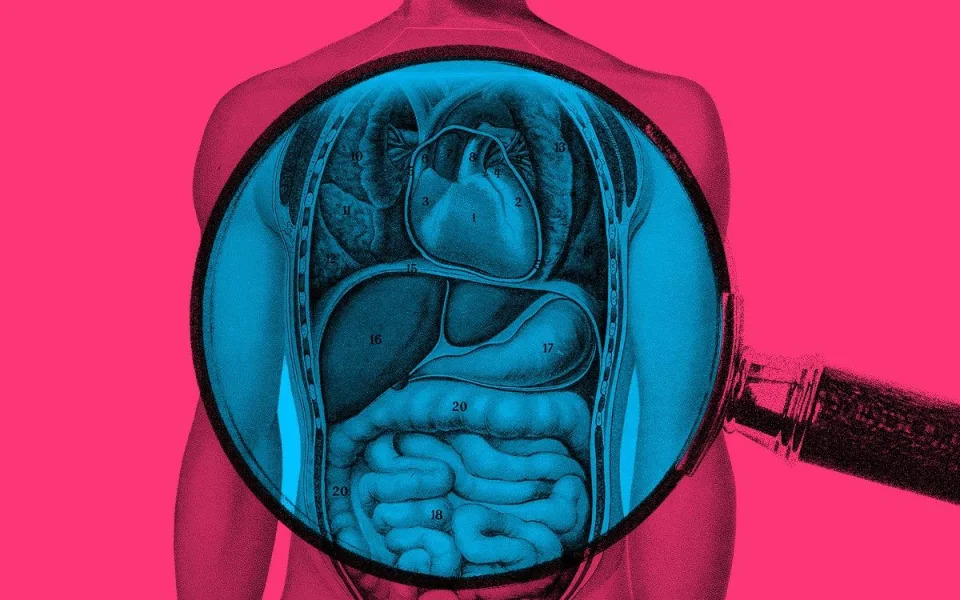
We’ve all heard the expression “Life begins at 40” – but, unfortunately, 40 is also the age when life starts to catch up with us. The gloomy truth is that if you’re drinking, smoking, eating a bad diet and sitting on your sofa a bit too much, you’re four times more likely to die in the next decade than your smoothie-drinking, teetotal, marathon-running mate.
But help is at hand, because even if those party invitations are petering out, midlife is when the NHS screening invites start to arrive. Even if you feel on top of your game and are symptom-free, it’s best not to ignore them – especially as it’s estimated around three million people missed screening appointments when most services were paused at the beginning of the pandemic, contributing to the 39,000 missed cancer diagnoses from April 2020 to March 2021. As a result, more people will be diagnosed at a later stage, meaning their cancer may be harder to treat or even incurable.
Despite this, around 30 per cent of us don’t go to the tests we’re entitled to. According to recent NHS figures, only 70 per cent of cervical cancer screening invitations were accepted, while mammograms were taken up by 64 per cent and only 71 per cent responded to bowel cancer screening invitations in 2022.
Preventative screening of a healthy population is different from diagnostic testing when symptoms are present. Dr James Gill, clinical lecturer in clinical skills at Warwick University, explains, “A test would be, ‘We think this is going on – can we find it?’ With screening, we are saying, ‘We don’t think anything is going on – but can we see any evidence of something going on early?’ Effective screening has three crucial features: to be able to identify a disease early on, to have a reliable test and, as a result of the first two, you must then be able to affect the course of disease to result in a positive outcome.”
In Britain, the independent UK National Screening Committee makes recommendations about screening programmes to ministers based on evidence, benefit vs harm ratio and cost-effectiveness.
You might ask why we don’t screen everyone in the relevant age bracket, every year for all the key cancers. Dr Samar Mahmood, a GP and clinical lecturer from South Yorkshire, explains: “So, more screening equals more cancers diagnosed, yes. But also more false positives and more harm to the additional people who ended up having further unnecessary tests [such as scans or biopsies]. There is a sweet spot, and the NSC crunch the numbers on this.”
Our national screening programmes are similar to other countries. Most focus on breast, bowel and cervical with some variation in frequency and age screening starts. Mammograms are offered every two years in France and Ireland from 50. Germany offers men aged 50 and women aged 55 a colonoscopy once every nine years, and a skin cancer check every two years to over-35s. In America, cervical screening begins at 21, and in Australia women can ask for a mammogram from 40 every two years.
But what is the situation in the UK? Here are the essential screening tests you’ll be invited to on the NHS.
The screening: the NHS Health Check
When you have it on the NHS: From aged 40, and repeated every five years
How you get it: In theory, you should be invited as everyone is entitled to a test but funding was paused during the pandemic. Dr Mahmood urges the over-40s to, “Check with your GP surgery whether or not you will be invited.”
What’s involved: Dr Mahmood says, “It’s a five-yearly MOT that consists of a set of routine blood tests and measurements of height, weight, blood pressure. It can pick up on signs you might develop certain diseases in the future, including diabetes and high blood pressure, whether you have anaemia, how high your cholesterol is, or, if you are clinically overweight.”
Regular check ups are important from midlife onwards – E+
Why it’s important: High BP (over 140/90) is a risk factor for kidney and heart disease and stroke and an indicator of diabetes. Your GP or nurse will calculate your “QRISK” score for cardiovascular disease using your results, which is the likelihood of having a heart attack or stroke in the next ten years.
What if you have an abnormal result?
“Any abnormalities picked up on the blood tests will then be reviewed further by the GP,” says Dr Mahmood. The GP may carry out a HbA1c test to see if you have diabetes. A QRISK score of over 10 per cent could result in statins being prescribed, while heavy drinkers could be offered a liver scan. Finally, the test may pick up if you have an increased risk of dementia. Lifestyle changes may be advised.
The screening test: Breast cancer screening
When you have it on the NHS: every three years from age 50-71 or annually from 40 for high-risk women.
How you get it: you should be sent an invitation by your GP, breast screening unit or hospital (if high risk). You must be registered with a GP.
Why it’s important: Eight out of ten breast cancers occur in women over 50. “We’re trying to find evidence for the disease early on before it becomes noticeable,” says Dr Gill, “and we’re trying to prevent a greater level of disease burden by treating these patients early.”
What’s involved: A mammographer will take two X-rays of each breast. It can be slightly uncomfortable but is a very quick procedure.
What if you have an abnormal result?
You’ll receive a letter with results, and diagnostic tests may take place such as another mammogram, ultrasound and biopsy.
The screening test: Cervical cancer screening
When you have it on the NHS: Women aged 25 to 49 have it every three years, and from 50 to 64 it changes to every five years.
Why it’s important: Around 3,200 cases are diagnosed each year. Fifty per cent survive for 10 years or more. “The vast majority of cervical cancers are due to HPV, Human Papilloma Virus,” says Dr Gill. “But even if someone isn’t sexually active, or has never had sex with men, it’s still advisable to have a cervical cancer screening, because not all causes are due to an HPV.”
Even if someone isn’t sexually active, or has never had sex with men, it’s still advisable to have a cervical cancer screening – Shutterstock
What’s involved: A smear test. Although the process is the same, there is now a new test which screens for the HPV virus first. If it is positive, your sample will be tested again to see if there are changes in the cells.
What if you have an abnormal result?
“If you’re positive for signs of HPV, we’ll make sure you are called in more frequently,” says Dr Gill. This is usually annually. If you are positive for HPV and have abnormal cells, you’ll have a colposcopy.
The screening test: Bowel cancer screening
When you have it on the NHS: Every two years for people aged 60-74 – although this is gradually being lowered to age 50.
How you get it: You’ll be sent a faecal immunochemical test in the post, which you send back. “It’s the most minimally invasive screening test you could have and looks for evidence of blood in the stool,” says Dr Gill. “A haemoglobin level of below 120 in women and 130 in men is an indication for a possible bowel cancer – patients will be sent a FIT test.”
Why it’s important: There are 16,800 cancer deaths in the UK every year, and it’s the second biggest cancer killer, yet 98 per cent will survive for a year or more if treated in the earliest stages.
What if you have an abnormal result?
Around 2 per cent of FIT tests are abnormal and patients are normally referred for a colonoscopy.
The screening test: Aortic Abdominal Aneurysm
This is for a swelling of the main blood vessel that leads from the heart to the abdomen.
When you have it on the NHS: Men aged 65 are offered a one-off screen.
Why it’s important: “If you have an AAA and it leaks or bursts in the community, your chance of dying is 90 per cent,” says Dr Gill.
What if you have an abnormal result?
“Sometimes we’ll keep an eye on it until it’s grown big enough that the risks of surgery outweigh the risks of leaving it,” says Dr Gill. “Once it’s big enough, we will go in to try and essentially line it with Gore-Tex to stop it bursting.”
The test: Prostate specific antigen test
When you have it on the NHS: There is no prostate screening on the NHS, as the benefit may not outweigh the harm. “The PSA test is not reliable,” says Dr Gill. “Sexual activity, vigorous exercise and eating a large amount of meat can throw off the PSA test, which is why we do it in a controlled situation.”
In 2018, Prostate cancer became the third biggest cancer killer in the UK – WBU
How you get it: Healthy men over 50 can ask for a PSA test via the NHS informed choice programme.
Why it’s important: In 2018, Prostate cancer became the third biggest cancer killer in the UK. in February, Prostate Cancer UK launched a Find the 14,000 Men campaign with the NHS to urge men to check their risk online and talk to their GP if they are: prostate cancer accounts for over a third of undiagnosed cancers during the pandemic.
What if you have an abnormal result?
PSA testing has a high number of false positives, and one in seven are false negatives. A positive result may result in further investigation including an MRI, sometimes followed by a biopsy. “Prostate biopsies can cause infections, impotence and bowel issues,” says Dr Gill.
Finally, although it has not been rolled out yet, in June this year, the UK NSC recommended the first national lung cancer screening programme, targeted at people aged 55-74 at high risk. When it is rolled out, people who smoke or used to smoke may be offered a low-dose CT scan.
Private healthcare providers also offer all of the above screening at your own convenience and in comfortable surroundings. Healthcare charity Nuffield Health provides 360 health assessments which offer additional non-invasive tests. Dr Kim Goldin, Senior General Practitioner and Clinical Lead for Nuffield Health’s GP team, says, “NHS Health Check is a very good baseline but there is more you can add on. For example, at Nuffield, we offer a HbA1c test, urate test and, for women over 50, TSH levels, Which test respectively for diabetes, gout and also metabolic diseases, and thyroid issues.”
But is it worth screening for cancer, or other illnesses, more often than the NHS advises? Not according to Dr Mahmood. “While there may be no long-lasting damage from a one-off private CT scan or X-ray, if somebody was frequently getting it done as part of a private screening test then there could be a chance of radiation-related cancer in itself,” he says. “The other thing to consider is harm in other ways. For example, regular private screening might indicate that somebody has health anxiety and perhaps the answer to this is to speak to their GP rather than get a screening test done.”
If you have symptoms, however, that could be a different matter.
The tests worth paying for
MRI tests often have a long wait for NHS patients – E+
In October, it was revealed that in August, 461,400 people had been waiting six weeks or more for one of 15 key diagnostic tests including an MRI or ultrasound. Some patients are choosing to go private, but how do you do that and what should you be aware of? Dr Mahmood answers the key questions.
Q: I’m worried about waiting. How do I get a diagnostic test done privately?
A: You can approach any private healthcare provider and ask whether they carry out the test you are interested in. For simple tests, such as blood tests or ECG, a consultation with a doctor is not required beforehand. For something more invasive, such as an endoscopy, you may need to consult with a clinician before they are able to recommend the test for you.
Q: Can I self-refer?
A: For a private consultation with a doctor, most providers will want a referral letter from your NHS GP. However, for the private tests (without a specialist consultation) mentioned above, a self-referral will usually be accepted.
Q: Can a GP access private health diagnostic results and vice versa?
A: GPs do not have access to private diagnostic results, other than paper copies of your results which you would need to provide them with. Similarly, private providers cannot access your NHS results/health records unless you provide them.
Q: What happens if I have an abnormal result?
A: Ordinarily, unless your private test is done following a private consultation with a specialist who will follow your case up, you would go back to your NHS GP for further management. Be aware it can be hard for the GP to interpret another provider’s test result without the context behind why the test was done.
U.S. Supreme Court rejects challenge to Republican-drawn Texas electoral district
Andrew Chung – November 21, 2022
FILE PHOTO: The U.S. Supreme Court building is seen in Washington
(Reuters) – The U.S. Supreme Court on Monday turned away an appeal by Black and Hispanic voters accusing the Republican-led Texas legislature of intentionally redrawing a state Senate district to diminish their political clout, part of broader challenge to congressional and state legislative maps in the state.
The justices declined to review a ruling by a three-judge federal district court panel denying an injunction against the reconfigured state Senate district sought by the challengers. The plaintiffs have argued that the district’s redrawn boundaries resulted from intentional racial discrimination against them in violation of the U.S. Constitution’s 14th Amendment guarantee of equal protection under the law.
The dispute centers on a state Senate district that includes part of the city of Fort Worth in north-central Texas.
The district is currently held by Democratic state Senator Beverly Powell. But she dropped her re-election bid last April, calling the race “unwinnable” because of the way the legislature had redrawn the district’s boundaries. Following the Nov. 8 election, the newly configured district will be represented by Republican Phil King, who ran unopposed.
Black and Hispanic plaintiffs sued after the Texas legislature approved new electoral maps in 2021. They argued that they had been “splintered” into other Senate districts where they will be “overpowered” by white voters.
While Powell’s state Senate district was previously confined within a single county, it is now spread across seven others that the three-judge panel said are “populated mostly by rural Anglos who tend by a large margin to vote Republican.”
Redistricting, carried out each decade after the completion of the U.S. census, is an increasingly contentious process in the United States. It is typically controlled by politicians already in office who may draw lines for partisan gain.
The Supreme Court in 2019 blocked federal courts from reviewing claims of so-called partisan gerrymandering, a practice that according to critics warps democracy by crafting electoral districts in a way that reduces the voting power of some voters while boosting the clout of others.
The Texas case represents one of many legal challenges to reconfigured electoral maps around the country.
The Supreme Court is set to hear arguments in a major case on Dec. 7 that could prevent state courts from second-guessing state legislatures’ rules and maps for federal elections.
The Texas lawsuit is one of several that have been consolidated before the three-judge panel. President Joe Biden’s administration sued Texas over the new maps last December. The panel denied an injunction that would have blocked the use of the newly devised district boundaries. In its ruling last May, the panel agreed that, given racially polarized voting patterns, the new map has a disproportionate impact resulting in “the loss of a seat in which minorities were able to elect candidates they preferred.”
But the court said there was no direct evidence that the legislature was motivated by an intent to racially discriminate.
In their appeal to the Supreme Court, the plaintiffs said resolution was needed prior to the 2024 election.
(Reporting by Andrew Chung in New York; Editing by Will Dunham)
World Cup 2022: Iranian players refused to sing national anthem before match with England
Tyler Greenawalt – November 21, 2022
Iran football players refused to sing their country’s national anthem before the team’s World Cup match with England in a show of support for those protesting their country’s government.
There have been nationwide protests in Iran for months over the country’s treatment of women, particularly after the death of Mahsa Amini, a young woman who was arrested for allegedly wearing a hijab too loosely and later died in police custody. Many Iranian athletes and celebrities have backed the protestors, but the football team’s decision to remain silent during the national anthem is perhaps the biggest display of support.
This act doesn’t appear spontaneous, either. Ehsan Hajsafi, the captain of the Iranian squad, offered his condolences to “all the bereaved families of Iran” following the many arrests and deaths (including 58 Iranian children) in the fallout from the protests. Hajsafi added that “we are with them and sympathize with them.”
“We are here but it does not mean that we should not be their voice, or we must not respect them,” Hajsafi said. “Whatever we have is from them. We have to fight, we have to perform the best we can and score goals, and present the brave people of Iran with the results. And I hope that the conditions change to the expectations of the people.”
IMPORTANT 🇮🇷 Ahead of their game against England, Iran’s captain Ehsan Hajsafi becomes the first Iranian player to speak out in support of women’s rights protesters in his home country, expressing condolences to families who’ve lost loved ones.pic.twitter.com/iyOiZ9cikl
While the players remain silent on the pitch, fans in the stands stayed loud as their own form of protest.
Women aren’t allowed to attend men’s football matches in Iran, so some traveled to Qatar (about a two-hour flight) to watch.
Some fans were even heard booing the national anthem, while others carried banners and flags similar to the Iranian flag that read “Woman. Life. Freedom.” Other fans were denied entry to the game for displaying a Persian flag instead of an Iranian one, according to the New York Times. (The difference between the flags is that the Persian one is adorned with a lion and sun in the center while the Iranian flag has a red Islamic emblem with Kufic script written above and below).
These acts of defiance against the Iranian government on an international stage come with potentially frightening consequences. Iranian professional climber Elnaz Rekabi didn’t wear a hijab during an international competition in October and her safety was questioned even after she returned.
This Week, Billionaires Made a Strong Case for Abolishing Themselves
Guest Essay By Anand Giridharadas – November 20, 2022
Mr. Giridharadas is the author of “Winners Take All: The Elite Charade of Changing the World” and other books.
Jeff Bezos, the founder of Amazon. Credit…Tom Brenner for The New York Times
In recent years, a swelling chorus of Americans has grown critical of the nation’s bajillionaires. But in the extraordinary week gone by, that chorus was drowned out by a far louder and more urgent case against them. It was made by the bajillionaires themselves.
One after another, four of our best-known billionaires laid waste to the image of benevolent saviors carefully cultivated by their class.
It is a commendable sacrifice on their part, because billionaires, remember, exist at our collective pleasure. If enough of us decided to, we could enact labor, tax, antitrust and regulatory policies to make it hard for anyone to amass that much wealth while so many beg for scraps. It is not only the vast political power of billionaires that keeps us keeping them around, it’s also the popular embrace of certain myths — about the generosity, the genius, the renegade spirit, the above-it-ness of billionaires, to name a few.
As of this writing, Elon Musk is running Twitter into the ground, with much of the company’s staff fired or quitting, outages spiking and everyone on my timeline hurrying to tell the app the things they have been meaning to say before it departs for app heaven (or hell?).
In tweeting through one of the most extraordinary corporate meltdowns in history, Mr. Musk has been performing a vital public service: shredding the myth of the billionaire genius.
His particular pretension of benevolence is that his uncontainable genius can solve any challenge. Now he is lavishing his mind and time on electronic money, now on colonizing Mars, now on electric cars and solar panels, now on saving Thai soccer players trapped in a cave, now on liberating speech from its liberal oppressors.
Mr. Musk’s genius pose has long been undermined by his actual record, which is defined by claiming credit for what others have built and is shot through with complaints of discrimination, mismanagement and fraud.
But it wasn’t until Mr. Musk took over Twitter that his claim of infinitely transferable genius truly fell apart. That what Mr. Musk has called the global town square can be eviscerated in a time period somewhere between a Scaramucci and a Truss makes one wonder if we should be more skeptical of all the other billionaire geniuses with ideas for our schools, public health systems and politics.
For example, Jeff Bezos, the founder of Amazon, who this week was doing his part to undermine another pretension of billionaire benevolence: the generosity pose.
On Monday, he made a big splash when CNN released an interview in which he announced that he was giving the great bulk of his more than $120 billion fortune away, with a focus on fighting climate change and promoting unity.
That sure sounds impressive, but his gesture wasn’t about generosity any more than Herschel Walker’s Senate candidacy in Georgia is for the children. After all, the money Mr. Bezos is now so magnanimously distributing was made through his dehumanizing labor practices, his tax avoidance, his influence peddling, his monopolistic power and other tactics that make him a cause of the problems of modern American life rather than a swashbuckling solution.
It’s too soon to tell if Mr. Bezos’s philanthropy will help others, but what’s certain is that it will help Mr. Bezos a lot. Mega-philanthropists of his ilk tend to give through foundations, which they establish in ways that save them an immense amount in taxes, sometimes merely by moving the money from one of their own accounts to another. Giving will also burnish Mr. Bezos’s reputation, in that way preserving and protecting his opportunity to earn yet more money — and to do more social damage.
And it will increase his already gigantic power over public life. For plutocrats like Mr. Bezos, that may be the biggest payoff of all. Their wealth is so vast that by distributing even a small fraction of it, they skew the public agenda toward the kind of social change they can stomach — the kind that doesn’t threaten them or their class. Shortly before his big announcement, Mr. Bezos gave Dolly Parton a $100 million “Courage and Civility Award” to spend on her chosen causes. Ms. Parton is indeed courageous and civil, but so are the workers fighting to unionize Amazon facilities, and I don’t see anyone offering them nine-digit thank-you bonuses.
But once again, instead of the usual critics having to make this case, this week Mr. Bezos took the wheel. Just minutes after his philanthropy announcement on CNN, news broke that Amazon would be laying off thousands of workers, reminding everyone of what was really going on.
At first glance, the two stories might seem like matter and antimatter, or at least two opposite realities. But they are the same story: The system that treats human beings as disposable commodities upholds and reproduces itself by sprinkling some fairy dust and hoping that we will forget the injustice that paid for it.
Then, of course, there was Sam Bankman-Fried, the disgraced crypto kingpin whose spectacular downfall, along with that of FTX, the company he founded, caused $32 billion to disappear, much of it belonging to hundreds of thousands of regular people.
Mr. Bankman-Fried embodies another pretension of plutocratic benevolence: that of the renegade, the people’s billionaire. Like many others, he hawked cryptocurrency as a fight against the establishment, against the big banks, against the powers that be, man. He has said his work was motivated by the ideals of effective altruism, a trendy school of thought that encourages people to go out and make as big a heap of money as they can so that they can use it to heal the world. But, as he admitted in an interview this week with Kelsey Piper of Vox, Mr. Bankman-Fried’s claims about the ethical nature of his pursuit were an example of “this dumb game we woke Westerners play where we say all the right shibboleths and so everyone likes us.”
Finally, of course, this week there was Donald Trump (because let’s face it, there’s always Donald Trump), who has incarnated the most dangerous billionaire pretension of all: that of the hero who in all the world is the only one who can save us. He gamed the system so effectively that only he knows how to un-game it; he manipulated politicians so much that only he knows how to drain the swamp; he amassed so much money that only he is above corruption.
On Tuesday night he addressed a crowded room at Mar-a-Lago and, as expected, announced that he was going to run for president again. He said the usual things that politicians are supposed to say, about how he was doing it for America’s benefit. But this time it was no longer possible to imagine that even he believed it. After all, only a week had passed since America had voted in the midterm elections and rejected most of the high-profile candidates he endorsed — in the process, even Republican commentators agree, rejecting him. He dragged the party down so far that it did not regain the Senate and only barely regained the House.
Fearing even more disastrous outcomes, trusted advisers and allies encouraged him not to run again, or at least to delay his announcement. But they were wasting their time. Standing up there onstage, so low-energy that even Jeb Bush’s son felt compelled to comment, Mr. Trump took in the applause but offered no new ideas or directions. It was a variant of the performance that the others had been putting on, but with one crucial difference: Unlike Mr. Musk and Mr. Bezos and Mr. Bankman-Fried, who strain to show us how public-spirited they are, Mr. Trump could hardly be bothered to care.
It was a particularly unsubtle reminder that billionaires are not our saviors. They are our mistake.
Russian chess legend says war in Ukraine is a ‘battle between freedom and tyranny’
Alexander Nazaryan, Senior W. H. Correspondent – November 19, 2022
NEW YORK — Chess is a cerebral game, but legendary Soviet grand master Garry Kasparov could make it seem like a contact sport. When he was at the height of his powers in the mid-1980s, he approached the chessboard with the buzzing physical intensity of a wrestler consigned to the wrong contest.
Today, his relentless energies are directed entirely against Russian President Vladimir Putin, whom Kasparov approaches with the same singular focus he once reserved for his Soviet nemesis, Anatoly Karpov — who, as it happens, now serves as a pro-Putin parliamentarian. But if the Kremlin autocrat disgusts him, nothing enrages Kasparov like Western hand-wringing over how much to help Ukraine, and for how long.
“Putin is attacking not just Ukraine. He is attacking the entire system of international cooperation,” Kasparov told Yahoo News in a recent interview. “Ukraine is on the frontline of this battle between freedom and tyranny.”
Garry Kasparov at the Congress of Free Russia in Vilnius, Lithuania, on Sept. 1. (Oleg Nikishin/Getty Images)
Last week’s congressional elections in the U.S. could complicate Ukrainian aid, especially if Republican skepticism hardens into outright resistance. Speaking at a press conference last week, President Biden expressed hope that aid to Ukraine would continue — but also bristled at charges that he’d given Ukraine too much.
“We’ve not given Ukraine a blank check,” the president told reporters, alluding to a complaint about the extent of Ukraine-focused spending made by Rep. Kevin McCarthy, who will assume the role of House speaker in January. “There’s a lot of things that Ukraine wants that we didn’t do.”
That is precisely the kind of talk that frustrates Kasparov. He praises Biden’s support of the Ukrainian effort, which has been consistently supplemented by European allies, but can’t imagine its scope being scaled back. “It was much less than Ukraine needed and wanted, but much more than Putin expected.”
The war in Ukraine is closer to poker than chess, a contest of stare-downs and bluffs. On the chessboard, an opponent has nowhere to hide his pieces, but poker is by its nature a game of incomplete information, of trying to guess and then being forced to act on those guesses.
Is one of the cards Putin is holding a nuclear strike? How long can an energy-starved Europe last before folding? How long will American aid last?
Kasparov does not ignore those very real considerations, but he also refuses to become paralyzed by the infinite varieties of geopolitical speculation. For him, the war retains an unignorable moral clarity. “I believe Ukraine can and will win,” he says. “I think it’s inevitable. It’s a matter of the cost. And every day of delay, of giving Ukraine what it needs to win, simply is pushing this cost up.”
Russia President Vladimir Putin at a videoconference at the Novo-Ogaryovo residence outside Moscow on Monday. (Gavriil Grigorov, Sputnik, Kremlin Pool Photo via AP)
Utterly unpalatable to Kasparov is the argument that Ukraine should sue for peace, not because the war is going badly for Kyiv but because it is expensive for Washington, London and Berlin.
That was the widely understood subtext of a letter sent on Oct. 24 by House progressives to Biden, urging him to “pursue every diplomatic avenue” while pointing out — not incorrectly — that the war is “fueling inflation and high oil prices for Americans in recent months.” A furor followed, and a day later the letter was recalled, but not without the Russians having noticed growing American reluctance to fund the Ukrainian resistance.
Kasparov finds such talk exceptionally dangerous. He thinks of the conflict in the Manichaean world of chess, where there is only black and white, defeat or victory. Either the West defeats Putin, or Putin defeats the West. “If we capitulate today in light of Putin’s nuclear blackmail, who’s to say that he won’t use the same exact blackmail five years later, six years later?” Kasparov wonders, his tone and expression suggesting this is far from an idle musing.
“And who’s to say,” he continues, “that other dictators around the world won’t look at this and say, ‘Oh, look at that. The West is willing to capitulate to nuclear blackmail? Why don’t we do the same thing?’ And for countries that don’t have nuclear weapons today? Why shouldn’t they have nuclear weapons if nuclear weapons are effective, and helping them get what they want?”
In a photo released on Oct. 26, a Yars intercontinental ballistic missile is test-fired as part of Russia’s nuclear drills in Plesetsk, northwestern Russia. (Russian Defense Ministry Press Service via AP)
Kasparov was especially dismayed — and, characteristically, infuriated — by Elon Musk’s “peace plan,” which would effectively cede vast swaths of Ukraine to Russia. Kremlin propagandists instantly embraced the idea, pointing to condemnation from the American political and media establishment as evidence that Musk (who did not respond to a Yahoo News request for comment sent over Twitter) had spoken some forbidden, consensus-shattering truth.
“He’s buying Russian propaganda points,” Kasparov says of Musk. “It’s very, very damaging.”
Kasparov left Russia in 2013, disgusted by the ever-deepening repressions of the Putin regime. In 2015 he published “Winter Is Coming,” an urgent warning to Western policymakers about Putin, whom he called “clearly the biggest and most dangerous threat facing the world today.”
Never especially shy or circumspect, Kasparov blames President Barack Obama for trying to “reset” relations with Putin shortly after Russia invaded Georgia in 2008, in what was the first incursion by the Kremlin into a sovereign nation since the fall of the Soviet Union. Later, Obama warned that if Russia crossed a “red line” in Syria and used chemical weapons in support of Bashar Assad’s regime, “there would be enormous consequences.”
Putin and President Barack Obama at a bilateral meeting during a G20 summit in Los Cabos, Mexico, in 2012. (Carolyn Kaster/AP)
Then Russia did use chemical weapons. “And Obama blinked,” Kasparov laments, charging the president with “weakness.” It’s not clear, however, what Obama — already managing two costly conflicts, in Afghanistan and Iraq — could have done to stop Putin, short of a military intervention that likely would have been unpalatable to the American public. A representative for the former president did not respond to a request for comment.
No development emboldened Putin to invade Ukraine, Kasparov argues, like the chaotic withdrawal of U.S. forces from Afghanistan. “I wouldn’t call it withdrawal. It was a stampede,” he told Yahoo News. “And it was a disaster. And undoubtedly, it added to Putin’s confidence.”
Today, the 59-year-old New York resident — who is retired from professional chess but still teaches a class on MasterClass — runs the Renew Democracy Initiative, a nonprofit that closely coordinates aid efforts with not-for-profit relief organizations working in Ukraine, which RDI executive director Uriel Epshtein says ensures that supplies and funds get to the right people, in the right places, instead of being squandered or lost.
“It’s our responsibility to give them what they need not merely to survive, not just enough to survive, but enough to actually win the war,” Epshtein, the son of Soviet immigrants who settled in New Jersey, told Yahoo News. He also described efforts in what has come to be known as the “information space,” which the Kremlin has tried to flood with its own propaganda.
Kasparov on MasterClass. (PR Newswire via AP)
RDI works with retired U.S. Gen. Ben Hodges to produce short, polished videos that explain the state of war in digestible terms. It has also solicited and published essays by dissidents from around the world in partnership with CNN, part of a series called Voices of Freedom. Contributors have included, among others, the Egyptian-American dissident Mohamed Soltan and the Iranian journalist Masih Alinejad, who was recently the target of an assassination attempt in New York.
“They have the credibility to break through our partisan shields,” Epshtein says, “to remind us that America is a force for good, and it can remain a force for good.”
That argument has been challenged by Putin’s dark tirades against what he has described as a West whose colonial bloodlust, in his telling, has been married to an anti-Christian progressive agenda. As the war has gone ever more poorly for Russia, these anti-Western screeds have grown ever more sharp.
“Putin’s Russia is on a steep decline,” Kasparov says. “I don’t believe that by next spring Russia will be able to conduct this war.” Recent military advances by Ukraine, including most recently the liberation of Kherson, do give hope of an eventual Ukrainian battlefield victory.
Here Epshtein intercedes: “It’s up to us,” he says.
Election certification avoiding chaos, except in Arizona
Morgan Lee and Scott Sonner – November 19, 2022
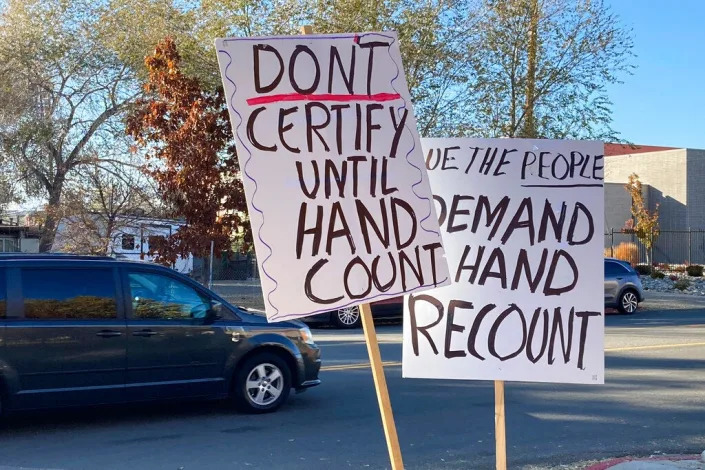
Signs are displayed outside the Washoe County Commission chambers to demand a hand count of ballots before commissioners were scheduled to canvass the vote in Reno, Nev., Friday, Nov. 18, 2022.
SANTA FE — Certification of this year’s midterm election results appears to be proceeding smoothly with little controversy across the country, with a small Arizona county being a rare exception, calming fears that local commissions consumed by talk of election conspiracies would create chaos by refusing to validate the will of the voters.
Action has been orderly even in places where suspicions about election fairness ran deep and led to bitter clashes at local public meetings.
In Nevada, a state that has been a hotbed of election conspiracy accusations and movements to ditch voting machines in favor of hand-counting all ballots, all 17 counties met a Friday-night deadline to certify election results.- ADVERTISEMENT -https://s.yimg.com/rq/darla/4-10-1/html/r-sf-flx.html
In rural Elko County, the county commission unanimously certified the results just weeks after questioning the reliability of voting machines and expressing support for hand-counting all ballots.
Commissioners praised county Clerk Kris Jakeman for a post-election audit that included random hand-counts backing up the results from machine tabulators. Some commissioners had watched the audit and said it helped relieve some of their skepticism.
“I’ve learned a lot this year,” said Commissioner Delmo Andreozzi. “And I appreciate everybody’s willingness to help educate me and help me become more aware about the whole process.”
It was much the same story in New Mexico, where several rural county commissions have been under intense pressure by some residents to reject certification since the state’s primary election in June.
In Otero County, where a crisis occurred this summer when commissioners initially denied certification after the primary, the general election results were certified this week with a drama-free unanimous vote.
“In my heart of hearts, I think Otero County does a good job,” Commission Chairwoman Vickie Marquardt said. “I have no reason not to certify this election.”
In another rural New Mexico county, where a livid crowd in June berated county commissioners as “cowards” and “traitors” as they certified the primary results, the room fell silent this week as the all-Republican board pored over vote tallies and signatures from poll judges. Commissioners peppered Torrance County election officials with questions before voting 3-0 to certify.
The commission had spent months responding to doubts about voting systems with a hand recount of the primary ballots and invitations to attend security testing of ballot-counting machines.
“I’m not seeing any discrepancies, commissioners. Are you?” Republican commission Chairman Ryan Schwebach told colleagues. He won reelection to the local post with roughly two-thirds of the vote, defeating a challenger who said vote-counting machines can’t be trusted. All but one county in New Mexico certified vote tallies this week.
Conspiracy-focused protesters rallied Friday outside an election board meeting in Reno, Nevada, with signs reading “Don’t certify before hand count” and “We the people demand hand count.” Despite the protests, the Washoe County commission voted 4-1 to certify the results.
County Commissioner Jeanne Herman, who represents the most rural part of the county, which stretches north to the border with Oregon, cast the lone dissenting vote. She made a failed attempt earlier this year to push an election reform package that, among other things, would have posted National Guard troops at polling places and relied almost exclusively on paper ballots.
Christiane Brown, a Reno gun control activist, told the commission that the system worked this year, and even most candidates who had embraced the 2020 election falsehoods conceded defeat.
“Denying results does not change them,” she said. “The people rejected lies, disinformation, intimidation and ignorance, as well as hatred. The voters spoke, the system worked, and the rule of law held.”
In Arizona, the state’s 15 counties are just beginning to certify their election results and have until Nov. 28 to do their canvass and send final vote tallies to the secretary of state. Kari Lake, the Republican who lost the race for governor, has refused to concede and in a Thursday video said she has a team of lawyers reviewing whether Election Day issues at the polls disenfranchised some voters.
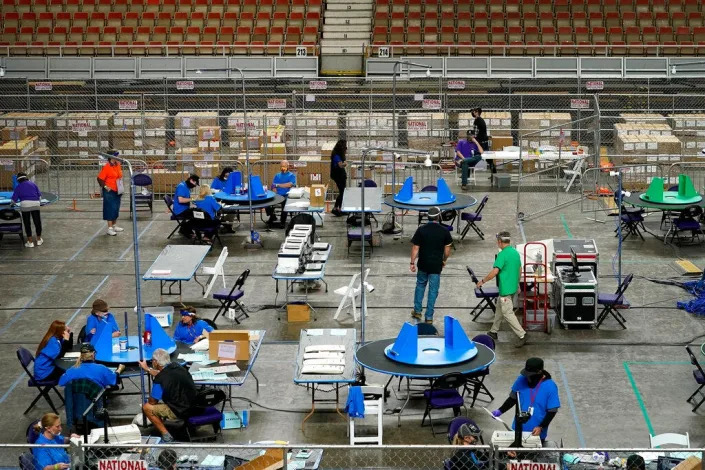
Maricopa County, Ariz., ballots cast in the 2020 general election are examined and recounted by contractors working for Florida-based company, Cyber Ninjas, in Phoenix on May 6, 2021. At least one recount will be on tap in Arizona after the counting from the Nov. 8, 2022, midterm elections ends.
The two Republicans who control the board in southeastern Arizona’s Cochise County delayed their certification Friday night after hearing from a trio of conspiracy theorists who argue vote-counting machines are not certified. The board ignored testimony from the state elections director, who said the contention was false.
The board delayed the vote until the Nov. 28 deadline, saying they wanted to see proof and have the three men evaluate it. State Elections Director Kori Lorick threatened legal action “to compel compliance” and ensure that votes from about 46,000 residents were property reported.
The state is set to certify results from all 15 counties on Dec. 5, a move needed before a recount can proceed in the race for state attorney general, which is too close to call.
Under Arizona law, the only role of the elected county boards is to accept the numbers as they are tallied by their elections departments. If they refuse to do so, either the secretary of state or a candidate would sue.
Election certification emerged as an issue after the 2020 presidential election in Michigan, where Trump and his allies pressured Republicans on both the state certification board and the one for Wayne County, which includes Detroit. The results, showing Democrat Joe Biden winning the state by 154,000 votes, were eventually certified.
Detroit City Clerk Janice Winfrey said her office anticipates having no problems with certification of the Nov. 8 general election. By midday Friday, 71 of the state’s 83 counties had certified results.
“More Michigan citizens cast ballots than ever before in a midterm election, and now bipartisan canvassing boards across the state are certifying the results in accordance with state law,” said Michigan Secretary of State Jocelyn Benson. “We are optimistic that all canvassers will continue to demonstrate this level of professionalism and commitment to upholding the will of the voters.”
Sonner reported from Reno, Nevada. Associated Press writers Christina A. Cassidy in Atlanta, Ken Ritter in Las Vegas, Gabe Stern in Reno; and Corey Williams in Detroit contributed to this report.
Finding safe haven in the climate change future: The Great Plains
David Knowles, Senior Editor – November 19, 2022
This Yahoo News series analyzes different regions around the country in terms of climate change risks that they face now and will experience in the years to come.
As the negative consequences of rising global temperatures due to humankind’s relentless burning of fossil fuels become more and more apparent in communities across the United States, anxiety over finding a place to live safe from the ravages of climate change has also been on the rise.
“Millions and likely tens of millions of Americans” will move because of climate through the end of the century, Jesse Keenan, an associate professor of real estate at Tulane University’s School of Architecture, told Yahoo News.“People move because of school districts, affordability, job opportunities. There are a lot of drivers, and I think it’s probably best to think about this as ‘climate is now one of those drivers.’”
The Buffalo Bayou in Houston. (Brandon Bell/Getty Images)
In late October, a report by the United Nations concluded that average global temperatures are on track to warm by 2.1°C to 2.9°C by the year 2100. As a result, the world can expect a dramatic rise in chaotic, extreme weather events. In fact, that increase is already happening. In the 1980s, the U.S. was hit with a weather disaster totaling $1 billion in damages once every four months on average. Thanks to steadily rising temperatures, they now occur every three weeks, according to a draft report of the latest National Climate Assessment, and they aren’t limited to any particular geographical region.
To be sure, calculating climate risk depends on a dizzying number of factors, including luck, latitude, elevation, the upkeep of infrastructure, long-term climate patterns, the predictable behavior of the jet stream and how warming ocean waters will impact the frequency of El Niño-La Niña cycles.
“No place is immune from climate change impacts, certainly in the continental United States, and throughout the U.S. those impacts will be quite severe,” Keenan said. “They will be more severe in some places and less severe in other places. Certain places will be more moderate in terms of temperature and some places will be more extreme, but we all share the risk of the increase of extreme events.”
In this installment, we look at the low-lying, expansive, north-south strip of states in the center of the country.
The Great Plains
A vast, predominantly flat stretch in the center of the country that extends from the Canadian border to the Gulf of Mexico, the Great Plains includesMontana, Wyoming, North Dakota, South Dakota, Nebraska, Kansas, Oklahoma and Texas.
While the large overall area of the Great Plains translates into markedly different weather — with North Dakota enduring frigid winters and states like Oklahoma and Texas baking in the summer months — the region has been warming quickly in recent years.
North Dakota, where the average annual temperature is 41.1°F, has warmed by an average of 2.6°F since the turn of the 20th century, according to data provided by the National Oceanic and Atmospheric Administration. Texas, where the average temperature is 65.8°F, has warmed by 1.5°F on average over that same period.
The bulk of that warming, we know, has occurred in recent decades because higher concentrations of greenhouse gases in the atmosphere have further amplified the greenhouse effect, speeding up the rate of temperature rise. Short of a technological breakthrough, unless concerted action is taken to stop burning fossil fuels to slow emissions, scientists say, the world will keep getting hotter.
Tumbleweed rolls across a dried-out landscape in central California’s Kern County. (Frederic J. Brown/AFP via Getty Images)
“The average annual Texas surface temperature in 2036 is expected to be 3.0°F warmer than the 1950-1999 average and 1.8°F warmer than the 1991-2020 average,” a 2021 report from the Texas state climatologist found. “The number of 100-degree days at typical stations is expected to nearly double by 2036 compared to 2001-2020, with a higher frequency of 100-degree days in urban areas.”
Texas, in fact, is home to all of the Great Plains’ top 10 worst-rated counties — Cameron, Galveston, Willacy, Kleberg, Refugio, Nueces, Pecos, Starr, Webb and Harris — in terms of overall climate change risks, according to information provided by data analytics firm the Rhodium Group and a 2020 analysis of counties in the lower 48 states published by ProPublica and the New York Times. And dozens of other Texas counties aren’t far behind on that list.
In no small part that’s because of two factors, the state’s latitude and its proximity to the Gulf of Mexico. The Rhodium rankings were based on six categories related to climate change: heat stress, the combination of heat and humidity (wet bulb), crop loss, sea level rise, very large fires and overall likely economic damages.
North Dakota’s Ward, Renville, Mountrail and Bottineau counties took the top four spots when it came to safest locations in the Great Plains for climate change risk, with the state also placing two more in the top 10 — Williams and Walsh counties. Montana’s Silver Bow, Glacier and Deer Lodge counties rated No. 5-No. 7 on that list, with Wyoming’s Uinta County ranking eighth-safest in the region.
Colter Bay Marina in Grand Teton National Park in Wyoming was closed for the summer due to the low water levels of Jackson Lake, seen here in August. (Amber Baesler/AP)
Summertime temperatures this year proved brutal for many states in the southern Great Plains, and drought conditions continued to worsen across the entire region.
On July 19, Oklahoma City set a new temperature record for that day, hitting 110°F during a heat wave that locked in triple-digit heat for more than a week. Yet all-time records, many of which were set in 1936 during the Dust Bowl years, were not surpassed.
Many climate deniers point to record high temperatures during the Dust Bowl years, which were amplified by poor farming practices, to try to show that global warming isn’t happening. If the records were set in the 1930s, the reasoning goes, then, by definition, the world is not warming.
That leaves out the fact that climate anomalies have continued to occur since humankind began pumping greenhouse gases into the atmosphere, that the incidence of heat waves is increasing and that the country on average continues to experience fewer days of extreme cold. In Houston, for example, five of the six hottest Julys on record have occurred since 2009, while the city’s top 10 coolest Julys all happened before 1980, according to data from the National Weather Service.
Skeptics who argue that humankind cannot influence something as large as the Earth’s climate also fail to address the impact that discarding harmful farming practices has had in preventing the return of Dust Bowl conditions. Yet rising temperatures and the continued depletion of the aquifers that help irrigate the Great Plains threaten that progress.
A sprinkler near Dodge City, Kan., in 2012. (Kevin Murphy/Reuters)
“Right now we are seeing more dust storms as this drought worsens in what was formerly the Dust Bowl region,” UCLA climate scientist Daniel Swain, who also consults for ClimateCheck, a company that provides climate change risk assessments on real estate nationwide, told Yahoo News. “Certainly nothing on the order of what we saw in the 1930s, but there is a severe, worsening drought there and there are some self-fulfilling feedback mechanisms whereby things start to get warm and dry, they dry out the soil, which begets more warmth and more dryness.”
As in other parts of the country, rising average temperatures in the Great Plains are wreaking havoc on the water cycle, specifically when it comes to sustaining water levels in the High Plains Aquifer. In the years to come, that could pose significant issues in the delivery of water for agriculture.
“In the northern portion of the Great Plains, rain can recharge the aquifer quickly. However, with climate change, precipitation in the winter and spring is projected to increasingly fall in the form of very heavy precipitation events, which can increase flooding and runoff that reduce water quality and cause soil erosion,” the EPA says on its website. “In the southern portion of the region, little recharge occurs, so declines in the aquifer’s water level are much greater. Climate change will worsen this situation by causing drier conditions and increasing the need for irrigation.”
While it is not entirely clear how climate change will impact precipitation trends across all of the Great Plains in the coming decades, there are warning signs in states like Montana, where the melting winter snowpack helps supply the region with water.
A serious drought has made it difficult to tell the difference between the prairie and the dirt road on the Cheyenne River Reservation near Dupree, S.D. (Jonathan Ernst/Reuters)
“Higher spring temperatures will also result in earlier melting of the snowpack, further decreasing water availability during the summer months,” the EPA says on its website.
More and more often, when it does rain across the Great Plains, it pours. Soil erosion, in turn, can set back the progress made to avert future Dust Bowls, and as evaporation rates rise in tandem with warmer temperatures, the threat of wildfires is also growing. Former Kansas State climatologist Mary Knapp has long warned that while agricultural advances have kept a 1930s disaster from recurring, climate change could yet plunge the Great Plains back into the danger zone.
“I’ve been saying that for years,” Knapp told the Mercury newspaper in Manhattan, Kan., in 2021. “The thought is, with modern agricultural and conservation techniques, that we would preclude the scenario that plagued the Dust Bowl, but there are other factors that can remove vegetation.”
Perhaps the surest climate change bet for the Great Plains is that warmer average temperatures will play out differently across a large region already accustomed to dramatic weather fluctuations. Some parts will have to deal with an uptick in what is known as the “wet bulb” effect, the potentially fatal combination of hot temperatures and high humidity that conspire to prevent the body from being able to cool itself down through the evaporation of sweat. That metric was one of the factors that explains why a place like Galveston County in Texas rated so poorly on the Rhodium analysis.
A heat advisory was issued in Dallas in July due to scorching weather. (Shelby Tauber/Reuters)
But climate change has also already disrupted the water cycle in other dangerous ways.
“In late August 2017, Hurricane Harvey ravaged the Houston area with 1 trillion gallons of rain, enough to run Niagara Falls for 15 days. No other big American city has withstood such a natural disaster in modern times,” Houston Mayor Sylvester Turner wrote in the introduction to the city’s 2020 plan on how to use billions in taxpayer funds to harden the city against the changing climate.
Harvey, which racked up $125 billion in damages and killed 107 people, and 2019’s Tropical Storm Imelda, which resulted in another $5 billion in damages and killed six, were both slow-moving systems that unloaded massive amounts of rain from an oversaturated atmosphere. In close succession, they shined a light on Houston’s vulnerability to flooding, but that’s not the only risk the city faces from rising global temperatures.
“Hurricanes, tropical storms, and flooding are not the only threats that we face. Houston is hot — and our heat is increasing due to climate change and the urban heat island effect,” Turner wrote.
Even though studies have shown that climate change is making tropical cyclones wetter, windier, slower and able to ramp up quicker than in a pre-climate-change world, persuading residents and elected officials to prepare for those risks is easier after they’ve witnessed the impacts firsthand.
People make their way down flooded Telephone Road in Houston in August 2017 in the wake of Tropical Storm Harvey. (Thomas Shea/AFP via Getty Images)
“If, for a location, the policy becomes [investing in] sea walls and sewage and drainage and stronger construction, better infrastructure and so forth, then places may be forecast to retain value and people may stay,” Parag Khanna, the founder and CEO of Climate Alpha, a company that helps investors quantify climate change risks to real estate, told Yahoo News.
“You can’t on the one hand continue to have the American dream rest on your property values going up, and on the other hand have people increasingly in survival society, being forced to rebuild time and again after disasters. Those two things are not compatible,” he added.
To be sure, hardening infrastructure from the daunting number of threats posed by climate change is quite expensive, but a reluctance to prepare can prove to be even more so.
In February 2021, a polar vortex descended on Texas, a state that years earlier had moved to deregulate its energy sector. The surging demand for electricity left more than 4.5 million homes and businesses without power. The storm essentially brought North Dakota-like winter conditions to the Lone Star State for days on end, resulting in the deaths of more than 170 people and more than $20 billion in damages, costing the state’s economy between $80 billion and $130 billion, according to the Dallas Federal Reserve.
As counterintuitive as it may sound, studies have since linked the severe winter outbreak to climate change. Thanks to the fact that the Arctic is warming faster than any other region on Earth, those higher temperatures have been shown to disrupt the behavior of polar vortexes, weakening them so that they wander south over the continental U.S.
That’s exactly what happened this week, when another high pressure ridge in Alaska sent another wave of cold arctic air over much of the country.
While the big picture is that the last eight years have been the warmest in recorded history, that warming will usher in an era of what scientists call “climate chaos,” in which a variety of new risks will present themselves. So, while states like Oklahoma and Texas have begun rolling out plans to help them endure hotter temperatures born of climate change, they also face a choice about how much to spend to winterize the electrical grid. Estimates for upgrading it so as to withstand a future polar vortex are anywhere between $5 billion and $20 billion, Texas Monthly reported.
Arizona attorney general race between Kris Mayes and Abe Hamadeh remains virtually tied
Tara Kavaler, Arizona Republic – November 19, 2022
Democrat Kris Mayes’ tiny lead continued to increase over Republican Abe Hamadeh Saturday night to 850 votes, up from 570 the night before.
Mayes had a 148-vote lead over Hamadeh at 5 p.m. Thursday, although her lead had dropped at one point to 55 votes.
This race is so close that no matter what the candidates get in the remaining ballot drops, it will go to a recount.
On Wednesday night, Mayes had a lead of 711 votes, after her margin fluctuated throughout the day from a low of 505 votes in the morning to a high of 1,609 votes by the afternoon.
On Tuesday, Mayes concluded the day with a 771 vote lead.
On Monday, Mayes led by 4,195 votes, or 0.2 percentage points.
Races with less than a 0.5 percentage-point difference between candidates automatically go to a recount.
With a little over 3,300 ballots remaining to count Saturday night in Arizona’s largest county, the race is headed to a photo finish.
The official result likely won’t be known for weeks because of the recount.
On Nov. 13, Mayes led by a little over 11,000 votes, or 0.4 percentage points. On Nov. 12, she led by approximately 20,000 votes, or 1 percentage point.
Mayes, a former member of the Arizona Corporation Commission, and Hamadeh, a former prosecutor at the Maricopa County Attorney’s Office, hit each other with tough rhetoric on social media and at campaign events during the race, and contempt between the two camps has shaped the race.
Abortion and election integrity were major issues in the campaign.
Another key issue in the race has been experience, namely prosecutorial experience, with each contender making claims about the other’s background.
While this has arisen as an issue on the campaign trail, the day-to-day job of the attorney general does not involve much prosecution. The attorney general oversees prosecutors, acts as counsel to state agencies, protects consumers and represents the state in front of the Supreme Court.
Hamadeh, a political newcomer, was dogged by revelations about his past that emerged after the Aug. 2 primary. Assisted by former President Donald Trump’s endorsement, Hamadeh beat out five other candidates in the crowded Republican primary field.
Abe Hamadeh and Kris Mayes are running for Arizona attorney general.
Hamadeh said Arizona’s pre-state law that bans all abortions is the state law. Mayes said the pre-state law violates the Arizona Constitution, which guarantees a right to privacy.
Hamadeh worked for about three years as a deputy Maricopa County attorney and tried cases in court. The Republic was unable to verify how many in total, but in a one-year period, documents show he took five trials to court as either lead or second prosecutor.
Mayes does not have traditional trial experience but points to her involvement with the Arizona Corporation Commission’s Securities Division.
Mayes spoke about her experience in an Oct. 30 social media post: “I’m proud of the work I did while serving AZ as a Commissioner, including overseeing 2,700 cases that included high level Securities Fraud cases.”
She served for seven years on the commission from 2003-2010.
Mayes also has argued that Hamadeh is a danger to democracy, as he does not acknowledge President Joe Biden’s victory in Arizona in 2020. In the primary, Hamadeh said he disagreed with Gov. Doug Ducey’s certification of that election due to voter fraud, despite no evidence of widespread problems after multiple audits and lawsuits.
Trump has contended that children born in the U.S. to parents without legal status should not receive citizenship. Hamadeh has echoed many of the same immigration stances as Trump, though not specifically on birthright citizenship.
Hamadeh made an issue of stock purchases Mayes acknowledged she made in 2000 when she was a reporter at The Arizona Republic. She was among the journalists who purchased stock through their 401(k) accounts in the company that owned the paper before its sale to Gannett, the news outlet’s current owner.
The move violated the newspaper’s ethics policy, a newsroom leader said at the time, because those involved acted on knowledge not available to the public. In comments made in 2003, Mayes maintained she did nothing wrong, that discussions about a possible sale of the business were happening inside and outside the newsroom, and said she made about $5,000 off the trade.
Dan Barr, Mayes’ campaign attorney, said in October Mayes was committed not to disparage The Republic over the matter and expected the same of the newspaper.
Hamadeh claimed victory Nov. 9 based on results that put him briefly in the lead. He posted on social media thanking voters and wrote, “I will NEVER forget who I’m fighting for.”
That slim lead evaporated by that evening.
In a statement to The Arizona Republic on Nov. 9, Mayes said, “To claim victory after one small favorable batch is unwise and irresponsible. This race is too close to call. There are at least half a million votes left to be counted, and every single one of those votes is important.”
Tara Kavaler is a politics reporter at The Arizona Republic.
Republicans on House Judiciary panel focus on first White House target
Kathryn Watson – November 18, 2022
With the House Judiciary Committee’s gavel and subpoena power close at hand, Rep. Jim Jordan, Republican of Ohio, is getting ready to launch his first investigations of the Biden administration, starting Friday with what he has recently referred to as the administration’s “anti-parent directives.” It’s the type of request from House Republicans that the White House is describing as politically motivated, as Republicans prepare to take control of the House.
In a letter obtained by CBS News, Jordan and Republicans on the panel made their first request for testimony and documents from the Biden White House since the GOP won control of the chamber. They wrote to White House chief of staff Ron Klain to ask White House officials to testify at the beginning of the next Congress, as part of a House GOP probe of what they say is the administration’s “misuse of federal criminal and counterterrorism resources to target concerned parents at school board meetings.”
House Judiciary Republicans want to know more about any actions the Biden administration took regarding an October 2021 memo from Attorney General Merrick Garland noting the “disturbing spike in harassment, intimidation, and threats of violence against school administrators, board members, teachers, and staff” and directing the FBI and U.S. attorneys to meet with federal, state, local, tribal and territorial leaders to address strategies for dealing with those threats.
The memo followed a September 2021 letter from the National School Boards Association asking the administration to investigate threats of violence against school board members that “could be the equivalent to a form of domestic terrorism and hate crimes.”
Jordan and Republicans on the committee believe employees within the Executive Office of the President were involved in discussions surrounding that National School Boards Association letter and earlier this year requested documents and information about the White House’s “collusion with the NSBA.”
Republicans on the committee allege the administration is using law enforcement to “chill” parents’ First-Amendment rights, although the letter doesn’t call parents who protest school board meetings “domestic terrorists,” as House Minority Leader Kevin McCarthy has claimed, as an Associated Press fact check noted.
“The American people … deserve much more accountability and transparency about the Biden administration’s anti-parent directives,” Jordan said in an Oct. 17 letter to Klain, asking the White House to preserve all records related to the matter.
Jordan’s Friday letter requested testimony from Mary C. Wall, the senior adviser for the COVID-19 response team; Julie C. Rodridguez, director of the Office of Intergovernmental Affairs; Katherine Pantangco, policy adviser for the Office of Intergovernmental Affairs; and Nezly Silva, senior policy analyst for the Office of Intergovernmental Affairs.
The request for testimony is voluntary — for now. But if the officials don’t agree to testify and provide records, in January, when Republicans control the House, “the committee may be forced to resort to compulsory process to obtain the material we require,” Friday’s letter says. Jordan’s efforts to obtain records related to the National School Boards Association letter and Justice Department memo have so far been unsuccessful.
The White House suggested congressional Republicans don’t have their priorities in the right place.
“Instead of working with President Biden to address issues important to the American people, like lower costs, congressional Republicans’ top priority is to go after President Biden with politically-motivated attacks chock full of long-debunked conspiracy theories,” said Ian Sams, spokesman for the White House Counsel’s office. “President Biden is not going to let these political attacks distract him from focusing on Americans’ priorities, and we hope congressional Republicans will join us in tackling them instead of wasting time and resources on political revenge.”
Jordan’s letter to the White House Friday is just the beginning of the array of probes the House is expected to undertake once the 118th Congress is seated and Republicans have control. Jordan’s committee and Republicans on the House Oversight and Reform Committee also plan to investigate Hunter Biden and the president himself. Jordan has sent the White House letters requesting testimony and information on a number of topics since Mr. Biden took office, despite Republicans’ current lack of subpoena authority.
It remains to be seen exactly how many seats Republicans will have in the 118th Congress, although CBS News has projected the GOP will have between 218-223 seats. To control the lower chamber, they need 218. A handful of races remain to be decided.
Not all Republicans believe a focus on multiple investigations into the Biden administration and Hunter Biden is the way to go. In a Wall Street Journal op-ed last week, Republican Sen. Mitt Romney, of Utah, appeared to encourage the party to avoid such types of hearings, and instead, focus on things like inflation, the debt, spending, and entitlement and immigration reform.
“Two roads diverge before this potential GOP majority,” Romney wrote last week. “The one ‘less traveled by’ would be to pass bills that would make things better for the American people. The more tempting and historically more frequented road would be to pursue pointless investigations, messaging bills, threats and government shutdowns.”