How Americans Can Stand Against Extremism

By The Editorial Board – December 24, 2022

A hole in a window, with a rainbow banner in the background.
Credit…Justin Metz

This editorial is the sixth in a series, “The Danger Within,” urging readers to understand the danger of extremist violence and possible solutions. Read more about the series in a note from Kathleen Kingsbury, the Times Opinion editor.

Whoever shot the small steel ball through the front window of the Brewmaster’s Taproom in Renton, Wash., this month wasn’t taking chances. The person wore a mask and removed the front and rear license plates of a silver Chevrolet Cruze. The police still have no leads.

The bar’s owner, Marley Rall, thought the motivation seemed clear: The attack followed social media posts from conservatives angry about the bar’s Drag Queen Storytime and Bingo, slated for the following weekend.

The Taproom sits in a two-story office park a 15-minute drive from downtown Seattle. It has a little outside patio and about two dozen local craft beers on tap. Dogs are welcome. A sign on the door reads: “I don’t drink beer with racists. #blacklivesmatter.” Now there’s also a note with an arrow pointing to the hole in the window reading: “What intolerance looks like.”

Over the past two years, criticism of the bar’s long-running monthly Drag Queen Storytime had been limited to nasty voice mail messages and emails. But talk on right-wing message boards has turned much darker, Ms. Rall said. One post this month about the Taproom event read: “Drag Queen Storytime Protest. STOP Grooming Kids! Bring signs, bullhorns, noisemakers.”

Ms. Rall knew how protests like this could escalate. There was an incident in 2019 at a library drag queen story hour about 10 minutes from the bar, where members of the Proud Boys and other paramilitary groups got into a shouting match with supporters of the event.

Was the shot at the Taproom a warning? She had no way to know, so she kept the event on the calendar.

Sitting in a corner of the Taproom a few hours before her story time was set to begin, Sylvia O’Stayformore said she didn’t care if the Proud Boys showed up to an event that was aimed at teaching children empathy. Protesters or not, she had a show to put on. “I’d never be intimidated by all this,” she said.

Far-right activists have been waging a nationwide campaign of harassment against L.G.B.T.Q. people and events in which they participate. Drag queen story events are similar to other public readings for children, except that readers dress in a highly stylized and gender-fluid manner and often read books that focus on acceptance and tolerance. This month alone, drag queen events were the target of protests in Grand Prairie, TexasSan AntonioFall River, Mass.Columbus, OhioSouthern Pines, N.C.Jacksonville, Fla.Lakeland, Fla.ChicagoLong Island; and Staten Island.

On Monday, protesters vandalized the home of a gay New York City councilor with homophobic graffiti and attacked one of his neighbors in protest of drag queen story hours held at libraries.

The protests use the language of right-wing media, where demonizing gay and transgender people is profitable and popular. Tucker Carlson, a Fox News host who rails against transgender people and the medical facilities that serve them, has the highest-rated prime-time cable news program in the country. Twitter personalities with millions of followers flag drag events and spread anti-trans rhetoric that can result in in-person demonstrations or threats. Facebook pages of activist groups can mobilize demonstrators with ease.

Some Republican lawmakers are using the power of the state in service of the same cause. Several states are trying to restrict or ban public drag shows altogether, amid a record number of anti-L.G.B.T.Q. bills introduced this year. Republican politicians also used a barrage of lies about trans people in their campaign ads during the midterm elections, funded to the tune of at least $50 million, according to a report released in October from the Human Rights Campaign Foundation.

This campaign isn’t happening in a vacuum. Levels of political violence are on the rise across the country, and while some of it comes from the left, a majority comes from the right, where violent rhetoric that spurs actual violence is routine and escalating. At anti-L.G.B.T.Q. events, sign-waving protesters are increasingly joined by members of the street-fighting Proud Boys and other right-wing paramilitary groups. Their presence increases the risk of such encounters turning violent.

In a series of editorials, this board has argued for a concerted national effort against political violence. It would require cracking down on paramilitary groups, tracking extremists in law enforcement, creating a healthier culture around guns and urging the Republican Party to push fringe ideas to the fringes. Every American citizen has a part to play, and the most important thing we all can do is to demand that in every community, we treat our neighbors — and their civil liberties and human rights — with respect.

One way to do that is to call out and reject the dehumanizing language that has become so pervasive in online discussions, and in real life, about particular groups of people. Calling L.G.B.T.Q. people pedophiles is an old tactic, and it makes ignoring or excusing any violence that may come their way easier. While direct calls for violence are beyond the pale for most Republican politicians, and the causes of specific violent acts are not easily traced, calling transgender people pedophiles or “groomers” is increasingly common and usually goes unchallenged.

Marco Rubio, a Republican senator from Florida, released a TV ad recently in which he said: “The radical left will destroy America if we don’t stop them. They indoctrinate children and try to turn boys into girls.” A conservative activist group recently ran ads in several states, including one that said, “Transgenderism is killing kids.” This year, as Florida lawmakers debated the so-called Don’t Say Gay bill, a spokeswoman for Gov. Ron DeSantis of Florida posted on Twitter: “If you’re against the Anti-Grooming Bill, you are probably a groomer or at least you don’t denounce the grooming of 4-8 year old children. Silence is complicity.”

The silence from a great majority of Republicans on the demonization of, and lies about, trans people has indeed meant complicity — complicity in what experts call stochastic terrorism, in which vicious rhetoric increases the likelihood of random violence against the people who are the subject of the abusive language and threats.


Drag queen story hours aren’t the only current target for right-wing extremists. On Aug. 30, an operator at Boston Children’s Hospital, a pioneer in providing gender-affirming care, answered the telephone at about 7:45 p.m. and received a disturbing threat. “There is a bomb on the way to the hospital,” the caller said. “You better evacuate everyone, you sickos.” It was the first of seven bomb threats the hospital received over several months. The most recent came on Dec. 14.

After extremists posted online the address of a physician who works with trans children at the hospital, the doctor had to flee the home. “These have been some of the hardest months of my life,” the doctor said.

Around the country, at least 24 hospitals or medical facilities in 21 states have been harassed or threatened in the wake of right-wing media attacks, according to a tally this month by the Human Rights Campaign Foundation. To protect their employees, some hospitals are stripping information about the transgender services they provide from their websites. The messages that appear to trigger these attacks are often outlandish lies about what care these medical facilities actually provide. As a result, many hospitals feel they have no choice but to protect their staff, even if it means making the care they provide less visible. Removal of official information creates a risk that more disinformation could fill the void.

Given the transnational nature of extremism, these threats can come from anywhere. The F.B.I. arrested three people in connection with the various threats against Boston doctors. One person lived in Massachusetts, another in Texas and the third in Canada.

Data collected by the Armed Conflict Location and Event Data Project, which tracks political violence, puts the harassment of hospitals into a wider, troubling context. Acts of political violence against the entire L.G.B.T.Q. community have more than tripled since 2021; anti-L.G.B.T.Q. demonstrations have more than doubled in the same period. And the nature of the intimidation is changing: Protesters dressed as civilians have been replaced by men in body armor and fatigues; signs have been replaced by semiautomatic rifles.

Even dictionary publishers have become targets. This year, a California man was arrested for threatening to shoot up and bomb the offices of Merriam-Webster because he was angry about its definitions related to gender identity.


‘Openly Gay’ Rep.-Elect George Santos Didn’t Disclose Divorce With Woman

Daily Beast

‘Openly Gay’ Rep.-Elect George Santos Didn’t Disclose Divorce With Woman

Roger Sollenberger – December 22, 2022

Photo Illustration by Thomas Levinson/The Daily Beast/Getty

Republican congressman-elect George Santos is under new scrutiny after a New York Times report earlier this week uncovered a string of apparent outright fabrications at the heart of some of the most fundamental facts of his life, but that backstory may also be notable for what Santos did not include—a publicly undisclosed marriage.

Santos, who claims he has “never experienced discrimination in the Republican Party,” broke barriers this year when he became the first openly gay non-incumbent GOP candidate elected to Congress.

But according to court records obtained by The Daily Beast, Santos appears to be the subject of a previously unacknowledged Sept. 2019 divorce with a woman in Queens County, New York. The divorce—which Santos has not discussed publicly—adds new uncertainty to his already shaky biographical and political claims.

“I am openly gay, have never had an issue with my sexual identity in the past decade, and I can tell you and assure you, I will always be an advocate for LGBTQ folks,” Santos told USA Today in October, responding to criticism about his support for Florida’s so-called “Don’t Say Gay Bill” signed into law this year by GOP Gov. Ron DeSantis.

New York Congressman-Elect George Santos Reportedly Caught Lying, Again

Less than two weeks after his divorce was finalized, Santos filed the official paperwork to launch his 2020 campaign. And while his 2022 campaign bio mentions his husband, who according to Santos lives with him and their four dogs on Long Island, he’s kept this previous marriage out of the public eye entirely.

It’s entirely possible that Santos, who claims he has “never experienced discrimination in the Republican Party,” has been living comfortably as an openly gay man for, as he says, more than a decade. People get married for countless reasons. But Santos’ situation is curious because he never disclosed his divorce to voters, and never reconciled his prior marriage to a woman—which ended just 12 days before he established his first congressional campaign—with his claims of being an out and proud gay Republican.

Santos, 34, made his first bid for Congress in 2020, losing to Rep. Tom Suozzi (D-NY) before toppling Democratic opponent Robert Zimmerman this year. But following a New York Times investigation that suggested Santos had fictionalized key elements of his resume, he’s already facing calls to resign, as well as a possible ethics investigation.

The colleges Santos says he attended don’t have a record of him; Citigroup and Goldman Sachs don’t either, though he claimed to work there; the IRS has no record of his nonprofit; he still faces “unresolved” legal trouble in Brazil; his past business ventures appear flimsy; and even his address was called into question.

In response to the Times report, Santos’ attorney Joseph Murray released a statement that, while stopping short of denying the accusations, painted his client as a victim, because he “represents the kind of progress that the Left is so threatened by—a gay, Latino, immigrant and Republican who won a Biden district in overwhelming fashion by showing everyday voters that there is a better option than the broken promises and failed policies of the Democratic Party.”

All the Holes in This Congressman-Elect’s Résumé

The Times story set off a rapid-fire round of criticism that extended not just to the congressman-elect, but to Democratic opposition researchers, Republican vetters, and media who had not called attention to the now-glaring holes in his story before the election.

While those details went largely unnoticed during the campaign, the Times investigation prompted reporters and internet sleuths around the country to dig deeper into Santos’ past—or what they could find of it.

It’s unclear why Santos has not disclosed his apparent marriage and divorce, but it doesn’t fit well with his current biography.

He has previously told U.S. and Brazilian media that he was engaged to a man, a fellow Brazilian whom Santos has identified as a pharmacist, and his campaign bio claims he lives on Long Island with his husband. (The Daily Beast could find no public record of the man’s work in that field, nor could we find a marriage record.)

But New York court records show that, in 2019, someone named George Devolder Santos, with a second initial of “A,” finalized an uncontested divorce with Uadla Santos Vieira Santos. Public records searches only reveal one person in the United States with that name.

Uadla Santos and George Santos did not reply to calls or questions sent via text message to numbers associated with them. (A deed for a $750,000 house purchase in Union County, New Jersey, this June lists Uadla Santos as the buyer, and says she is married; she is the only purchaser listed on the property documents.)

George Santos, whose middle name is Anthony, sometimes uses Devolder, his late mother’s maiden name. He incorporated it into his campaign—“Devolder Santos for Congress”—as well as his own supposed financial services company, the Devolder Organization.

Russian Oligarch’s Cousin Funneled Cash to N.Y. Politician

Santos has shifted between different combinations of those four names over the years, sometimes embracing his father’s Santos surname, other times going by his mother’s Devolder.

Santos’ mother died in 2016, according to an online crowdfunding campaign Santos launched to raise money to cover “the costs of the wake.” The GoFundMe page lists “Anthony D Santos” as the beneficiary—and Anthony Devolver of Sunnyside, New York, as the organizer—and the fundraising campaign remains open.

Santos’ campaign bio page claims his mother was “the first female executive at a major financial institution,” though the specific institution is unnamed. The bio also says “George’s mother was in her office in the South Tower” on the morning of Sept. 11, 2001.

“She survived the horrific events of that day, but unfortunately passed away a few years later”—about 15 years later.

And on Wednesday, Jewish outlet The Forward added still more intrigue, suggesting Santos may also have been untruthful when he claimed during the campaign—including on his website—to have Jewish ancestry. The report led incoming House Minority Leader Hakeem Jeffries to declare his future colleague a “complete and utter fraud.”

But the divorce revelation, and the apparent secrecy around it, complicates a central piece of the image Santos has burnished as a dynamic and culturally revolutionary figure.

In an election season where many of his fellow conservatives spouted nonsensical allegations of pedophilia among Democrats, targeted benign drag brunches as epicenters for “grooming,” and inflamed a hateful anti-gay and anti-trans movement—as attacks on the LGBTQ community skyrocketed—Santos made history as the first non-incumbent gay Republican to ever be elected to Congress.

But after achieving that victory, and just two weeks before his barrier-breaking inauguration, Santos’ relationship with the truth is facing tests he somehow dodged for two campaigns.

Thousands trapped on Pine Ridge burn clothes for warmth in wake of storm

Argus Leader

Thousands trapped on Pine Ridge burn clothes for warmth in wake of storm

Darsha Dodge – December 22, 2022

With a twinge of cold in her toes and a tone of concern tinted by exhaustion, Anna Halverson relayed the message: “We’re in a really extreme emergency down here.

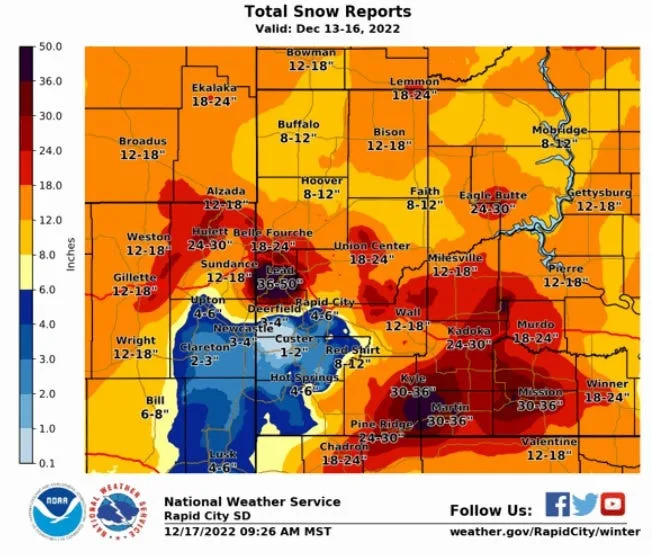
Winter Storm Diaz blanketed the Pine Ridge Reservation in more than 30 inches of snow – incredible enough on its own – but it was amplified by intense winds that brought the area to a standstill under drifts of snow several feet high.

A semi truck and trailer blocking a major highway on the Pine Ridge Reservation during Winter Storm Diaz.

Halverson, who represents the Pass Creek District on the Pine Ridge Reservation, described their harrowing situation to the Journal on Thursday.

“It’s been really tough,” she said. “We don’t have the proper equipment here to handle what’s been going on. We have drifts as high as some houses that stretch 60, 70 yards at a time.”

More than 10 days since the storm began, Diaz has moved on and the skies have started to clear, but the recovery process is just beginning. Halverson didn’t get dug out of her house until eight days after the storm. Others are still trapped, reachable only by snowmobile.

It seems like every time we open the road, the snow just drifts it back over,” she said.

More: Gov. Kristi Noem declares ‘winter storm emergency’ for South Dakota; activates National Guard

It’s an incredibly scary situation, she explained, as many of those snowed-in are missing dialysis treatments or dealing with other medical emergencies. One family ran out of infant formula, and spent four days drifted in before attempting to leave, Halverson said.

“We even talked about using drone drops to get the baby some Enfamil, because the baby was starving,” she said.

But Mother Nature wasn’t done yet.

If being trapped by formidable walls of ice and snow wasn’t enough, subzero temperatures, brought down by an Arctic front, took an already struggling region by the neck. Temperatures dropped into the negative teens and 20s this week, and the unkind Midwest wind shredded those figures with wind chills in the negative 40s and negative 50s.

Total snow reports from Dec. 13 - 16 in Western South Dakota
Total snow reports from Dec. 13 – 16 in Western South Dakota

Cold like that is deadly, just another blow to a reservation already crippled by conditions, Halverson said.

“Most of our members use wood stoves,” she said. “We’re not able to get them with deliveries because of the roads. A lot of our members across the reservation have no propane, because the propane companies can’t reach their tanks to fill. Even right now in my district, we haven’t had anybody able to deliver out to these members that have no propane since the storm started.”

Oglala-based service organization Re-Member provides firewood to families on all corners of the reservation, but the drifts of snow have rendered their wood stockpile inaccessible still – and it’ll be that way for the foreseeable future.

“Our wood pile remains inaccessible,” read a Facebook post on Dec. 20. “Our skid steer and plow are out-of-service. Given the conditions, it would be near impossible to operate our equipment and unsafe for our staff to work in the conditions we are facing. We appreciate the efforts being made by many to keep the Oyate safe during these challenging times.”

Those that can try to use electric heaters, which Halverson said isn’t keeping houses warm. Even her own furnace went out, blowing cold air in an already frigid atmosphere. She was able to travel to her mother’s house to keep her family warm.

Power went out in some places, once for 18 hours, she said. People with cars tried to use them to stay warm.

Reservation residents are resorting to last-ditch efforts to ward off the unimaginable cold.

More:Sioux Falls Regional Airport will close through much of Friday due to blizzard

“I’ve seen across the reservation some members were burning clothes in their wood stove because they couldn’t get access to wood,” Halverson said.

The conditions got so bad so quickly that Oglala Sioux Tribe President Frank Star Comes Out penned a proclamation declaring a state of emergency.

“These current blizzard conditions have caused closure of all BIA and tribal secondary roads on the reservation due to falling snow, high winds and snow drifts,” Star Comes Out wrote. “Such blizzard conditions pose an imminent threat to tribal government operations, to public safety and the health of tribal members who currently do not have access to medical care, such as dialysis, ambulance service for crisis intervention medical care such as heart attacks and delivering babies, and private transportation to secure food and other necessities of life.”

Halverson praised his efforts in trying to get help for the people of Pine Ridge. The exhaustion in her voice dissipated – for a brief second – calling her people “survivors.”

“We don’t live on our reservation,” she said. “We survive on our reservation. We’re in serious need of some help.”

Democrat who lost to George Santos calls on him to resign following NYT report

Yahoo! News

Democrat who lost to George Santos calls on him to resign following NYT report

Dylan Stableford, Senior Writer – December 20, 2022

Rep.-elect George Santos, R-N.Y., speaks at the Republican Jewish Coalition's annual leadership meeting in Las Vegas on Nov. 19, 2022. (Photo by Wade Vandervort/AFP via Getty Images)
Rep.-elect George Santos, R-N.Y., speaks at the Republican Jewish Coalition’s annual leadership meeting in Las Vegas on Nov. 19, 2022. (Photo by Wade Vandervort/AFP via Getty Images)

The Democrat who lost to GOP Rep.-elect George Santos in the race to represent New York’s Third Congressional District is calling on Santos to resign after the New York Times published a bombshell investigation suggesting that he fabricated key parts of his résumé during the campaign.

“The reality is Santos flat-out lied to the voters of NY-03,” Robert Zimmerman, who lost to Santos by 8 points in last month’s midterm elections, said in a statement late Monday. “He’s violated the public trust in order to win office and does not deserve to represent Long Island and Queens.

“Santos’ failure to answer any of the questions about these allegations demonstrates why he is unfit for public office and should resign,” Zimmerman added. “It demonstrates why there must be a House Ethics Committee, Federal Elections Commission, and U.S. Attorney investigation immediately.”

Robert Zimmerman
Democrat Robert Zimmerman concedes to Republican George Santos in Great Neck, N.Y., on Nov. 8. (William Perlman/Newsday RM via Getty Images)

The Times report published on Monday found that Santos may have misled voters about his college graduation, his criminal and employment history, his family-owned business, his animal rescue charity and his relationship with four victims of the 2016 Pulse nightclub shooting in Orlando, Fla.

In a statement, Joseph Murray, an attorney for Santos, said that his client “represents the kind of progress that the Left is so threatened by — a gay, Latino, immigrant and Republican who won a Biden district in overwhelming fashion by showing everyday voters that there is a better option than the broken promises and failed policies of the Democratic Party.”

“After four years in the public eye, and on the verge of being sworn in as a member of the Republican-led 118th Congress, the New York Times launches this shotgun blast of attacks,” Murray continued. “It is no surprise that Congressman-elect Santos has enemies at the New York Times who are attempting to smear his good name with these defamatory allegations.”

The statement — which ended with a quote erroneously attributed to Winston Churchill — did not directly address the allegations that appeared in the story in the Times.

George Santos
George Santos, R-N.Y., at a conference in Las Vegas last month. (Wade Vandervort/AFP via Getty Images)

If Santos were to resign, a special election would be called to fill his seat.

The revelations in the Times article also raise questions about why neither the Zimmerman campaign nor the Democratic Party, which lost control of the House of Representatives in the midterms, were unable to uncover the apparent holes in Santos’s biography before the election.

“This story is not a shock,” Zimmerman said, insisting that his campaign “worked to raise many of these issues” uncovered by the Times.

New York state Democratic Party Chair Jay Jacobs defended the Zimmerman campaign, telling CNN, “It’s unfair to blame the campaign for opposition research work that it did because the resources of a campaign are not as significant as a paper like the New York Times.”

“The important thing is to focus on George Santos,” Jacobs added. “He’s got a lot of explaining to do.”

Animals Are Running Out of Places to Live

The New York Times

Animals Are Running Out of Places to Live

Catrin Einhorn and Lauren Leatherby – December 16, 2022

Animals Are Running Out of Places to Live

Wildlife is disappearing around the world, in the oceans and on land. The main cause on land is perhaps the most straightforward: Humans are taking over too much of the planet, erasing what was there before. Climate change and other pressures make survival harder.

This week and next, nations are meeting in Montreal to negotiate a new agreement to address staggering declines in biodiversity. The future of many species hangs in the balance.

“If the forest disappears, they will disappear,” said Walter Jetz, a professor of biodiversity science at Yale University who leads Map of Life, a platform that combines satellite imaging with ecological data to determine how species ranges are changing around the world. Map of Life shared data with The New York Times.

Biodiversity — or all the variety of life on the planet, including plants, invertebrates and ocean species — is declining at rates unprecedented in human history, according to the leading intergovernmental scientific panel on the subject. The group’s projections suggest that 1 million species are threatened with extinction, many within decades.

The meeting in Montreal is intended to chart a different path. Delayed two years because of the pandemic, delegations are working to land a new, 10-year agreement to tackle biodiversity loss under a United Nations treaty called the Convention on Biological Diversity.

“With our bottomless appetite for unchecked and unequal economic growth, humanity has become a weapon of mass extinction,” U.N. Secretary-General António Guterres said in his opening remarks last week in Montreal.

The last global biodiversity agreement failed to meet a single target at the global level, according to the Convention on Biological Diversity itself, and wildlife populations continue to plummet.

Take the Honduran white bat.

At first glance, they resemble a cluster of cotton balls stuck under a leaf. But each tiny mound of fluff possesses an even tinier yellow snout and ears. Honduran white bats work together to fashion leaves into tent homes and are known to nurse one another’s young. At night, they fly out in search of a specific species of fig, dispersing its seeds in return.

These bats offer potential benefits to people. Their cuteness makes them an ecotourism draw, and they have an ability that’s rare in mammals to store carotenoids in their skin, which could hold promise for unlocking treatment for conditions such as macular degeneration.

But in the past 20 years, Honduran white bats have lost about half their range in Central America as people clear rainforest for pasture, crops and homes. Not yet considered endangered, they are nevertheless in steep decline, one of countless examples in this worsening global crisis.

It’s not only wildlife that will suffer as a result. Biodiversity loss can trigger ecosystem collapse, scientists say, threatening humanity’s food and water supplies. Alarm is growing that the threat is comparable in significance to the climate crisis.

“Climate change presents a nearer-term threat to the future of human civilization,” said Katharine Hayhoe, a prominent climate change researcher who also focuses on biodiversity as chief scientist at the Nature Conservancy. “The biodiversity crisis presents a longer-term threat to the viability of the human species.”

Scientists emphasize that one can’t be solved without the other because they are interconnected.

What Is Driving the Loss

The human population has doubled since 1970. Although the rate of population growth is slowing, the sheer number of people continues to rise. Consumption levels in different parts of the world mean some people put more pressure on nature. In the United States, for example, each person uses the equivalent of 8 global hectares on average, according to the Global Footprint Network, a nonprofit research group. In Nigeria, it’s about 1 hectare per person.

All that is related to the causes of biodiversity loss, which scientists have ranked. First are changes in land and sea use. Then comes the direct taking of species via, for example, hunting, fishing and wildlife trafficking. Climate change is next, followed by pollution and invasive species. Unfortunately for wildlife, these pressures build on one another.

In the future, scientists expect climate change to become the main driver of biodiversity loss as changes in temperature, rainfall and other conditions continue to transform ecosystems. That shift is expected “some decades down the road,” Jetz said. “But we might already be looking at a much-reduced set of species at that point.”

For the best chance at adapting to climate change, plants and animals need robust populations and room to migrate. Instead, they are depleted and hemmed in.

Why are people taking over so much land? Mostly for agriculture. In many parts of the world, that means exports driven by booming global trade. In recent decades, for example, Southeast Asia has become a major supplier of coffee, timber, rice, palm oil, rubber and fish to the rest of the world.

“All of that economic expansion has come at the cost of biodiverse habitat,” said Pamela McElwee, an environmental anthropologist at Rutgers University who studies the region.

Some momentum is building for companies to ensure that their products are deforestation-free. Reducing meat consumption and food waste are key to freeing up land for other species, McElwee said.

In many places, poverty, powerful interests and a lack of law enforcement make habitat loss especially hard to address.

In Central America, illegal cattle ranching drives deforestation on protected state and Indigenous lands, said Jeremy Radachowsky, director for Mesoamerica and the Caribbean at the Wildlife Conservation Society. Wealthy individuals, often affiliated with drug cartels, grab land, sometimes through illegal payments. They raise beef, some of which ends up in the United States, he said.

Elsewhere in the region and beyond, desperation sometimes pushes people to find remote areas with little government presence where they can simply take land to make a living.

“They need land in order to feed their families,” said David López-Carr, a professor of geography at the University of California Santa Barbara who studies how people interact with tropical forests in Latin America.

Rainforest countries such as Brazil and Congo are known for widespread deforestation. But the species that have lost the largest portions of their habitats tend to be concentrated in places that are geographically isolated in some way, such as the isthmus of Central America and Madagascar. Because animals there often have smaller ranges to begin with, habitat loss hits them especially hard.

For example, 98% of lemurs, primates that only exist in Madagascar, are threatened. Almost one-third are on the brink of extinction. “I don’t want to lose my hope,” said Jonah Ratsimbazafy, a primatologist who leads a nonprofit group on the island that seeks to save lemurs while helping people. Madagascar is among the poorest countries in the world.

Recognition is growing that stanching biodiversity loss requires addressing the needs of local communities.

“There needs to be a way that the people that live close to the forests benefit from the intact forests, rather than clearing the forest for short term gain,” said Julia Patricia Gordon Jones, a professor of conservation science at Bangor University in Wales. “That’s the ultimate challenge of forest conservation globally.”

The High Cost of Inaction

While countries in the global south are experiencing the most dramatic biodiversity losses right now, Europe and the United States went through their own severe declines hundreds of years ago.

“We lost pretty much 100% of primary forest in most parts of Europe,” Jetz said.

Now, with negotiations underway in Montreal, countries that are poor economically but rich in biodiversity argue that they need help from wealthier countries if they’re going to take a different route.

Overall, the financial need is daunting: hundreds of billions per year to help poorer countries develop and implement national biodiversity plans, which would include actions such as creating protected areas; restoring degraded lands; reforming harmful agricultural, fishing and forestry practices; managing invasive species; and improving urban water quality.

On the other hand, failing to address biodiversity loss carries enormous financial risk. A report by the World Economic Forum found that $44 trillion of economic value generation is “moderately or highly dependent on nature and its services and is therefore exposed to nature loss.”

A vast source of funding could come from redirecting subsidies that presently support fossil fuels and harmful agricultural practices, said David Cooper, deputy executive secretary of the Convention on Biological Diversity.

“Currently, most governments spend far more on subsidies that actually are destroying nature than they do on financing conservation,” Cooper said. “So, certainly a change in that will be critical.”

The United States is the only country besides the Holy See that isn’t a party to the convention, so although the United States will attend the meeting, it will be participating from the sidelines.

“We can play a very constructive role from the outside,” said Monica Medina, an assistant secretary of state who is also special envoy for biodiversity and water resources. But she acknowledged that being a member would be better. “I hope that someday we will be,” she said.

Of the many targets being negotiated, the one that has gotten the most attention seeks to address habitat loss head on. Known as 30×30, it’s a plan to safeguard at least 30% of the planet’s land and oceans by 2030. More than 100 countries back the proposal. Although some Indigenous groups fear it will lead to their displacement, others support the plan as a means to secure stronger land rights.

But experts emphasize that action will have to go further than lines on a map.

“You can set up a protected area, but you’ve not dealt with the fact that the whole reason you had habitat loss in the first place is because of demand for land,” McElwee said. “You have to tackle the underlying drivers. Otherwise, you’re only dealing with like half the problem.”

Methodology

All estimates on habitat loss come from Map of Life and its Species Habitat Index. Habitat loss estimates since 2001 run through 2021 and are approximations, based on models of geographic range that incorporate remote sensing and expert research. Map of Life shared data for terrestrial vertebrate species for which the group’s methods can confidently ascertain habitat loss. The researchers estimate many more species are experiencing significant habitat loss than are in the group’s data.

Common names for species used in this article come from Map of Life. Data used in the accompanying graphics showing habitat loss also comes from Map of Life.

Map of Life is led by Walter Jetz, professor of ecology at Yale University and scientific chair at the E.O. Wilson Biodiversity Foundation. Other Map of Life contributors to the research shown in this story include Kalkidan Fekadu Chefira, John Wilshire, Ajay Ranipeta, Yanina Sica and Rohan Simkin.

‘It could happen tomorrow’: Experts know disaster upon disaster looms for West Coast

USA Today

‘It could happen tomorrow’: Experts know disaster upon disaster looms for West Coast

Joel Shannon, USA TODAY – December 16, 2022

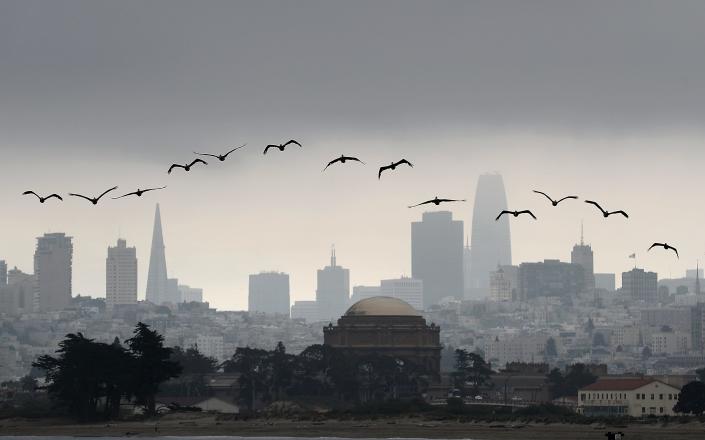
Brown pelicans fly in front of the San Francisco skyline Aug 17, 2018.

It’s the elevators that worry earthquake engineering expert Keith Porter the most.

Scientists say a massive quake could strike the San Francisco Bay Area at any moment. And when it does, the city can expect to be slammed with a force equal to hundreds of atomic bombs.

Porter said the shaking will quickly cut off power in many areas. That means unsuspecting people will be trapped between floors in elevators without backup power. At peak commute times, the number of those trapped could be in the thousands.

To escape, the survivors of the initial quake will need the help of firefighters with specialized training and tools.

But their rescuers won’t come – at least not right away. Firefighters will be battling infernos that could outnumber the region’s fire engines.

Running water will be in short supply. Cellphone service may not work at all. The aftershocks will keep coming.

And the electricity could remain off for weeks.

“That means people are dead in those elevators,” Porter said.

‘Problems on the horizon’

The situation Porter described comes from his work on the HayWired Scenario, a detailed look at the cascading calamities that will occur when a major earthquake strikes the Bay Area’s Hayward Fault, including the possibility of widespread power outages that will strand elevators.

The disaster remains theoretical for now. But the United States Geological Survey estimates a 51% chance that a quake as big as the one described in HayWired will occur in the region within three decades.

It’s one of several West Coast disasters so likely that researchers have prepared painstakingly detailed scenarios in an attempt to ready themselves.

‘SUPERIONIC’: Scientists discover the Earth’s inner core isn’t solid or liquid

The experts who worked on the projects are highly confident the West Coast could at any moment face disasters with the destructive power to kill hundreds or thousands of people and forever change the lives of millions more. They also say there’s more that can be done to keep individuals – and society – safer.

“We’re trying to have an earthquake without having one,” Anne Wein told USA TODAY. Wein is a USGS researcher who co-leads the HayWired earthquake scenario and has worked on several other similar projects.

Such disaster scenarios are massive undertakings that bring together experts from various fields who otherwise would have little reason to work together – seismologists, engineers, emergency responders and social scientists.

That’s important because “it’s difficult to make new relationships in a crisis,” Wein said.

Similar projects aimed at simulating a future disaster have turned out to be hauntingly accurate.

The Hurricane Pam scenario foretold many of the devastating consequences of a major hurricane striking New Orleans well before Hurricane Katrina hit the city.

More recently, in 2017, the authors of “The SPARS Pandemic” called their disaster scenario “futuristic.” But now the project now reads like a prophecy of COVID-19. Johns Hopkins University even issued a statement saying the 89-page document was not intended as a prediction of COVID-19.

“The SPARS Pandemic” imagined a future where a deadly novel coronavirus spread around the world, often without symptoms, as disinformation and vaccine hesitancy constantly confounded experts’ efforts to keep people safe.

The “SPARS scenario, which is fiction, was meant to give public health communicators a leg up … Think through problems on the horizon,” author Monica Schoch-Spana told USA TODAY.

At the time that SPARS was written, a global pandemic was thought of in much the same way experts currently describe the HayWired earthquake: an imminent catastrophe that could arrive at any time.

‘It could happen tomorrow’

Disaster scenario researchers each have their own way of describing how likely the apocalyptic futures they foresee are.

“The probability (of) this earthquake is 100%, if you give me enough time,” seismologist Lucy Jones will often say.

Earthquakes occurring along major faults are a certainty, but scientists can’t predict exactly when earthquakes will happen – the underground forces that create them are too random and chaotic. But researchers know a lot about what will happen once the earth begins to shake.

Earthquakes like HayWired are “worth planning for,” Porter said. Because “it could happen tomorrow.”

“We don’t know when,” Porter said. But “it will happen.”

Wein says we’re “overdue for preparedness.” You might say we’re also overdue for a major West Coast disaster.

The kind of earthquake described in HayWired historically occurs every 100-220 years. And it’s been more than 153 years since the last one.

Farther south in California, it’s difficult to pin down exactly how at risk Los Angeles is for The Big One – the infamous theoretical earthquake along the San Andreas fault that will devastate the city. But a massive magnitude 7.5 earthquake has about a 1 in 3 chance of striking the Los Angeles area in the next 30 years, the United States Geological Survey estimates.

A 2008 scenario said a magnitude 7.8 quake could cause nearly 2,000 deaths and more than $200 billion in economic losses. Big quakes in Los Angeles are particularly devastating because the soil holding up the city will turn into a “bowl of jelly,” according to a post published by catastrophe modeling company Temblor.

Another scenario warns that a stretch of coast in Oregon and Washington state is capable of producing an earthquake much more powerful than the ones California is bracing for. Parts of coastline would suddenly drop 6 feet, shattering critical bridges, destroying undersea communication cables and producing a tsunami.

Thousands are expected to die, but local leaders are considering projects that could give coastal residents a better chance at survival.

It too “could happen at any time,” the scenario says.

Earthquake scenarios often focus on major coastal cities, but West Coast residents farther inland also have yet another disaster to brace for.

Megastorms are California’s other Big One,” the ARkStorm scenario says. It warns of a statewide flood that will cause more than a million evacuations and devastate California’s agriculture.

Massive storms that dump rain on California for weeks on end historically happen every few hundred years. The last one hit around the time of the Civil War, when weeks of rain turned portions of the state “into an inland sea.”

‘Decades to rebuild’

Whether the next disaster to strike the West Coast is a flood, an earthquake or something else, scenario experts warn that the impacts will reverberate for years or longer.

“It takes decades to rebuild,” Wein said. “You have to think about a decade at least.”

A major West Coast earthquake isn’t just damaged buildings and cracked roads.

It’s weeks or months without running water in areas with millions of people. It’s mass migrations away from ruined communities. It’s thousands of uninhabitable homes.

Depending on the scenario, thousands of people are expected to die. Hundreds of thousands more could be left without shelter. And those impacts will be a disproportionately felt.

‘DYING ON THE STREETS’: Homelessness crisis is top issue in Los Angeles mayoral race

‘SURREAL’: Wildfire burning near iconic California coastal highway prompts evacuations

California already has a housing and homelessness crisis, and Nnenia Campbell said the next disaster is set to magnify inequalities. Campbell is the deputy director of the William Averette Anderson Fund, which works to mitigate disasters for minority communities.

Campbell doesn’t talk about “natural disasters” because there’s nothing natural about the way a major earthquake will harm vulnerable communities more than wealthy ones.

Human decisions such as redlining have led to many of the inequities in our society, she said. But humans can make decisions that will help make the response to the next disaster more equitable.

Many of those choices need to be made by local leaders and emergency management planners. Investing in infrastructure programs that will make homes in minority communities less vulnerable to earthquakes. Understanding how important a library is to unhoused people. Making sure all schools are built to withstand a disaster. Keeping public spaces open, even during an emergency.

But individuals can make a difference as well, Campbell said. You can complete training that will prepare you to help your community in the event of an emergency. Or you can join a mutual aid network, a group where community members work together to help each other.

Community support is a common theme among disaster experts: One of the best ways to prepare is to know and care about your neighbors.

If everyone only looks out for themselves in the next disaster, “we are going to have social breakdown,” Jones said.

What you can do

Experts acknowledge you’ll want to make sure you and your family are safe before being able to help others. Fortunately, many disaster preparedness precautions are inexpensive and will help in a wide range of emergency situations.

Be prepared to have your access to electricity or water cut off for days or weeks.

For electricity, you’ll at least want a flashlight and a way to charge your phone.

While cell service will be jammed immediately after a major earthquake, communications will likely slowly come back online faster than other services, Wein said. (And when trying to use your phone, text – don’t call. In a disaster, text messages are more reliable and strain cell networks less.)

To power your phone, you can cheaply buy a combination weather radio, flashlight and hand-crank charger to keep your cell running even without power for days.

A cash reserve is good to have, too, Jones said. You’ll want to be able to buy things, even if your credit card doesn’t work for a time.

Preparing for earthquakes specifically is important along the West Coast, too, experts said. Simple things like securing bookshelves can save lives. Downloading an early warning app can give you precious moments to protect yourself in the event of a big quake. Buying earthquake insurance can protect homeowners. And taking part in a yearly drill can help remind you about other easy steps you can take to prepare.

There’s even more you could do to ready yourself for a catastrophe, but many disaster experts are hesitant to rely on individuals’ ability to prepare themselves.

Just as health experts have begged Americans to use masks and vaccines to help keep others safe during the pandemic, disaster scenario experts believe community members will need to look out for one another when the next disaster strikes.

Telling people to prepare as if “nobody is coming to help you” is a self-fulfilling prophesy, Jones said.

For now, policymakers hold the real power in how prepared society will be for the next disaster. And there are many problems to fix, according to Porter, including upgrading city plumbing, because many aging and brittle water pipes will shatter in a major earthquake, cutting off water to communities for weeks or months.

“Shake it, and it breaks,” Porter said.

Getting ready for the next big earthquake means mundane improvements like even stricter building codesemergency water supply systems for firefighters and retrofitting elevators with emergency power.

The elevator change could prevent thousands of people from being trapped when the big San Francisco earthquake comes.

“A lot of that suffering can be avoided,” Porter said.

Get This: Strength Training Can Totally Count As Aerobic Exercise

Womens Health

Get This: Strength Training Can Totally Count As Aerobic Exercise

Julia Sullivan, CPT – December 16, 2022


“Hearst Magazines and Yahoo may earn commission or revenue on some items through the links below.”

From consuming fruits and veggies daily to flossing to remembering to mute (or block) toxic exes, there are a lot of healthy habits that doctors and officials urge pretty much everyone to follow.

At the top of that list: getting in aerobic exercise. But images of legwarmer-clad women in a pastel-colored workout class aside, what exactly is aerobic exercise?

Aerobic exercise is “any type of exercise that uses oxygen for the production of energy and work by the body,” explains Jason Machowsky, CSCS, exercise physiologist. In more simple terms, aerobic exercise is defined by muscle mechanics, which means any activity that uses large muscle groups (like the legs and core) in a continuous, rhythmic nature to keep the heart rate elevated.

Meet the experts: Jason Machowsky, CSCS, is a board certified sports dietitian and registered clinical exercise physiologist who specializes in working with clients post-rehab. Holly Roser, CPT, is a certified personal trainer and owner of Holly Roser Fitness Studio in San Mateo, California, where she and her team of trainers teach her signature H-Method in person and online.

As for what an “elevated” heart rate means, Holly Roser, CPT, says that number hovers anywhere from 60 to 90 percent of your maximum heart rate (which varies depending on individual fitness and how intensely you’re working).

Here’s what counts as aerobic exercise, the benefits of adding them to your routine, how to track progress, and more from the experts.

8 Aerobic Exercise Examples

If you’re thinking aerobic exercise sounds a lot like cardio, you’re spot on. “The term cardio is a shorthand phrase that represents steady-state aerobic exercise where the energy for the working muscles is predominantly coming from “aerobic” energy production, or oxygen, which is being shuttled to the working muscles by the heart and blood vessels, or the cardio system,” says Machowsky.

When you’re doing aerobic exercise, you’re working your cardiovascular system. Here are the most common forms of aerobic exercise to add to your routine:

1. Running And Jogging

Any exercise that utilizes large muscle groups in a sustained, submaximal way (meaning you’re not all-out sprinting or hitting your max RPE) over a prolonged period of time counts as aerobic exercise, Machowsky says—which makes running and jogging ideal candidates. That’s because the movement activates a wide swath of lower-body muscles at once—like the hamstrings, quads, calves, and glutes—as well as the core.

2. Walking

Although walking might seem like one of the more mundane, low-intensity movements a person can do, it sure-as-heck counts as aerobic exercise. Walking can lower a person’s blood pressureimprove mood, and reduce the risk of cardiovascular events, studies show.

3. Swimming

Machowsky is a fan of swimming for aerobic exercise because it, like running, fires up a host of muscles—but with more upper-body involvement. It’s also low-impact and may be especially helpful for folks with chronic pain, arthritis, or other conditions that prevent more high-intensity forms of exercise.

4. Dancing

If you regularly take dance classes, or simply enjoy dropping it low in the kitchen while meal-prepping, you’re participating in aerobic exercise, says Roser. Bonus points: Following the choreography while dancing might also boost your brain function, as some studies show. (Spending all that time rehearsing TikTok dances is worth it.)

5. Rowing

Another low-impact movement, rowing (either on an indoor rowing machine or on an actual boat) is a killer form of aerobic exercise. It’s also a full-body exercise, as one study from the English Institute of Sport found that rowing could activate upwards of 86 percent of muscles in the body (when done with proper form). Rowing also torches serious calories.

6. Circuit Training

While strength training might not seem like an aerobic exercise, Machowsky says it definitely is—if you’re working in a fast-paced circuit style. He notes that you get an aerobic benefit when “strength training is spread across different muscle groups so your body has a raised heart rate to recover from one area working (i.e. legs) while another one is working (i.e. back).” The key, he says, is to keep rest periods to a minimum to ensure your heart rate stays high.

7. Hiking

Like running, jogging, and walking on flat surfaces, hiking or walking uphill activates most of the lower-body muscles, says Roser. In fact, some muscles might receive more activation with the incline than on flat surfaces, as one study found that muscle activation in the calves increased with a 6 percent grade.

8. Cycling (indoor or outdoor)

Whether you’re circling the local pond or tapping it back in spin class, cycling—no matter the form—keeps your heart rate high and lower-body muscles working, says Roser. Cycling in particular might be an effective sleep aid when performed roughly two hours prior to getting shut-eye, a 2021 study in Sleep Medicine Reviews found. (Healthy heart and sleep!)

What are the benefits of aerobic exercise?
1. Better endurance.

The primary benefit behind aerobic exercise, says Machowsky, is that your cardiovascular health will improve. “Aerobic exercise improves your endurance by ensuring a more effective transfer of oxygen into the body via the lungs and to the working muscles via the heart and blood vessels,” he explains.

2. Improved brain health.

Aerobic exercise has a direct tie to brain function, Machowsky says. “[Aerobic exercise] improves blood flow to the brain, leading to better cognitive function related to better blood flow and supply of oxygen to the brain,” he says.

A year of aerobic exercise—which included walking and light jogging—helped to increase blood flow to the brain in older adults, a 2022 study from the Journal of Applied Physiology found. Blood flow to the brain is directly tied to memory and decision-making skills, as well as serious disease like dementia.

3. Lower risk of serious disease.

Getting your heart pumping could save you years and make them healthier in the long run, science shows.

Engaging in regular high-intensity aerobic exercise could decrease a person’s chance for developing metastatic cancers, a recent review from the American Association for Cancer Research found. These findings were from data extending a 20-year period and had 2,734 participants. Other studies have noted that aerobic exercise can help stave off cardiovascular disease.

4. Boosted mood.

In addition to managing brain function years down the road, aerobic exercise can also provide an instant mental lift, says Machowsky. “Aerobic exercise can help boost your mood, fight depression, and reduce stress,” he notes. That runner’s high phenomenon has scientific proof.

For example, running for as little as 15 minutes per day, or walking for an hour per day, could help reduce the risk of developing depression, a 2019 study from JAMA Psychiatry found.

5. Better blood sugar management.

Aerobic exercise can help increase your body’s demand for glucose and receptiveness to insulin, Machowsky says. In other words, aerobic exercise can help your bod manage your blood sugar.

Moderate to intense aerobic exercise performed three times per week helped participants improve their insulin levels after an eight-week period, according to a 2015 study from the Global Journal of Health Science (a Canadian academic publication).

6. Balanced cholesterol levels.

Aerobic exercise helps stimulate enzymes that move LDL (or low-density lipoprotein, often referred to as “bad” cholesterol) from the blood to the liver to be cleared out, Machowsky says. Science backs it up, too. Moderate-intensity aerobic exercise can help reduce LDL cholesterol, according to studies.

How often should you do aerobic exercise?

Ideally you hit the 150 minutes of moderate-intensity aerobic exercise per week that the Physical Activity Guidelines for Americans (2nd Edition) recommends. You can also hit it with 75 minutes of vigorous-intensity aerobic exercise each week.

Moving daily is the best way to divide that exercise time up throughout the week, Roser recommends. “Ideally, you would be able to get 30 minutes of aerobic exercise every day,” says Roser. “It doesn’t have to be all at once though. If possible, do 10-minute spurts of cardio at a time [three times per day], working up to a full 30 minutes.”

Aerobic exercise can be used as a tool in managing or losing weight, Machowksy and Roser both note. However, many studies conclude that aerobic exercise produces minimal weight loss on its own. Moreover, when exercise is tied directly to weight loss goals, it makes the individual much less likely to enjoy working out—and less likely to stick to a regular routine of movement, other studies have found.

So, if your goal is strictly to lose weight, relying only on aerobic exercise isn’t your best bet.

How To Progress Your Aerobic Exercise

There are three main ways to track your aerobic exercise progress, according to Machowsky. These variables include: frequency (how many times per week you’re working out), intensity (speed or similar measurement), and duration (how long each individual session is).

“Try to only increase one variable at a time so you don’t do too much too soon and increase your risk for injury,” he explains. For example, when running, maybe you boost your mileage each week (or duration) or, when engaging in circuit training, try to perform additional reps each week in the allotted workout timeframe (intensity).

Another key factor in tracking progress: writing it down. “Keeping a training log can allow you to gradually increase some of these variables so you can see your progress over time,” Machowsky says. “Some people find it satisfying to go to an older workout from a few months ago and repeat it to see how much better you feel doing it after a few months of training.” Dropping the intel in a basic spreadsheet can work.

It also helps to hone in on what kind of benefit you want to get out of aerobic training, as Machowsky says that a boosted mood can be felt in as few as one to two sessions, while improved blood sugar and cholesterol levels requires six to 12 weeks of regular aerobic exercise.

Woman With Dementia at 59 Shares the Symptoms Her Doctors Dismissed as Stress

Best Life

Woman With Dementia at 59 Shares the Symptoms Her Doctors Dismissed as Stress

Zachary Mack – December 15, 2022

The first signs of age-related illness such as cognitive decline can be challenging to spot, unlike cardiovascular disease or other primarily physical ailments such as diabetes. But the problem can be particularly challenging to identify when it starts progressing at a younger age, especially as it can often get mistaken for other issues. Unfortunately, such was the case for one 59-year-old woman in the U.K. who was recently diagnosed with dementia after doctors first dismissed her symptoms as stress. Read on to see how she first noticed the condition and what she’s doing about it now.

READ THIS NEXT: These 5 Popular Medications Have Been Linked With Alzheimer’s, Research Shows.

A woman diagnosed with dementia in her 50s says doctors first dismissed her symptoms as stress.

The pressures of everyday life can sometimes take a toll on our mental clarity and well-being. But for Jude Thorp, a 59-year-old mother of two living in Oxford, England, it became clear that something was seriously wrong when she first started noticing a change in her abilities while on the job, The Independent reports.

After years of experience in a career in theater, Thorp realized she had more difficulty completing simple tasks or focusing on her work. She soon noticed she was also repeating questions, forgetting important conversations, feeling fatigued, and having difficulty coming up with the right words during conversations.

Despite the changes, Thorp didn’t seek medical attention until her wife convinced her to book an appointment with a specialist in November 2016. But upon examination, she said her doctors quickly wrote her symptoms off as the result of stress and said “she had too much going on” in her life.

“Imagine, you know, just being told that you’re a bit daft,” she told The Independent, describing it as a “humiliating” experience. “That was my first time going to the doctors for something serious in my life, and it was horrendous, and afterward they said there’s nothing wrong with me.”

Thorp was eventually diagnosed with young-onset dementia.

Despite her first experiences, Thorp says she continued to visit different specialists over the following years. But it wasn’t until doctors performed a lumbar puncture and she underwent an MRI scan that she finally received a diagnosis of early-onset dementia caused by Alzheimer’s disease in January 2021, The Independent reports.

According to the Mayo Clinic, young-onset dementia is the term used to describe anyone under the age of 65 who begins showing signs of the condition. In the case of Alzheimer’s, the health organization says that five to six percent of people with the disease develop it in middle age—meaning that there could be anywhere between 300,000 to 360,000 people in the U.S. living with the condition.

Doctors say early-onset dementia has multiple causes but can be difficult to spot or diagnose.

Early-onset dementia can be caused by a number of conditions, including frontotemporal dementia (FTD), vascular dementia, or Lewy body dementia, according to the Alzheimer’s Society. However, the foundation says atypical Alzheimer’s disease is the most likely cause for anyone who begins experiencing their first symptoms between the ages of 30 and 60.

Different forms of the condition can manifest with varying sets of signs. They include posterior cortical atrophy (PCA), which can make it difficult to interpret visual information such as reading a sentence or gauging distances; logopenic aphasia, which can make it hard to find the right words while speaking or taking long pauses mid-sentence; and dysexecutive Alzheimer’s disease that can make planning more difficult and lead to inappropriate behavior in social situations, according to the Alzheimer’s Society.

Unfortunately, it can be difficult to identify these problems as early-onset dementia in middle-aged people. “Complaints about brain fog in young patients are very common and are mostly benign,” David S. Knopman, MD, a neurologist at the Mayo Clinic in Rochester, Minnesota, told The New York Times in an interview. “It’s hard to know when they’re not attributable to stress, depression, or anxiety or the result of normal aging. Even neurologists infrequently see patients with young-onset dementia.”

Getting the correct diagnosis can help you treat and manage early-onset dementia.
At doctors appointment physician shows to patient shape of brain with focus on hand with organ. Scene explaining patient causes and localization of diseases of brain, nerves and nervous system

Despite the challenges in identifying it, correctly diagnosing early-onset dementia can be absolutely vital. Besides being able to rule out any other treatable causes for the symptoms, knowing what they’re facing can help someone get the appropriate care and planning started so they can focus on improving their quality of life, according to the Mayo Clinic.

For Thorp, the diagnosis first felt like a heavy burden—especially when she had to break the news to her two young daughters. But she said the process ultimately brought her to a better place. “You have to mourn, you have to be cross or angry or upset. I mean, that’s part of grieving for something, isn’t it? But for me, I’m so lucky that I’ve got this diagnosis because I can still live well with it,” she told The Independent.

Since identifying her dementia, Thorp has been put in touch with support groups and found new fulfillment in charity work and outreach about the disease. “I think accepting a diagnosis of anything allows you to blossom in a way. And I think it’s really important that life can be rich,” she said. “I think it’s about living your best life and doing what you can.”

DeSantis blasted for ‘Orwellian’ vaccine investigation

Yahoo! News

DeSantis blasted for ‘Orwellian’ vaccine investigation

Alexander Nazaryan, Senior W. H. Correspondent – December 15, 2022

Florida Gov. Ron DeSantis speaking at a news conference in Miami.
Florida Gov. Ron DeSantis at a news conference in Miami on Dec. 1. (Ronen Tivony/SOPA Images via ZUMA Press Wire)

One day after Florida Gov. Ron DeSantis announced a push to investigate alleged harms caused by coronavirus vaccines, Dr. Anthony Fauci, President Biden’s chief medical adviser, criticized the move as a pointless exercise that would only undermine public confidence in efforts to boost and maintain protection against the circulating pathogen.

“We have a vaccine that, unequivocally, is highly effective and safe and has saved literally millions of lives,” Fauci said Wednesday on CNN. “What’s the problem with vaccines?”

The problem is vaccines have become part of America’s polarized politics. Since the advent of COVID-19 vaccines late in the Trump administration, skepticism of the established medical science has become a kind of creed for many conservatives, as well as for some on the far left. Political disagreements about lockdowns, mask mandates and vaccine requirements have hardened into antipathy toward the vaccines themselves.

Seizing on rare adverse side effects and diminishing effectiveness — the result of new variants and low booster uptake — vaccine critics have dismissed inoculation as ineffective and potentially dangerous.

Some have also embraced outlandish conspiracy theories about vaccines as a form of government and corporate control.

An anti-vaccination activist at a rally holds a sign that reads: No mandates. My body, my choice.
Anti-vaccination activists at a rally at the Lincoln Memorial in Washington, D.C., in January. (Alex Wong/Getty Images)

During a pandemic-related hearing in the House, Rep. Jamie Raskin, a Maryland progressive, called the proposed grand jury an “Orwellian” development. “These actions are transparently designed to falsely suggest that coronavirus vaccines, and not the coronavirus itself, are dangerous,” he said Wednesday.

DeSantis, who is widely expected to seek the Republican presidential nomination in 2024, played open to those concerns on Tuesday, when he announced he would call for Florida’s Supreme Court to empanel a grand jury “to investigate crimes and wrongdoing committed against Floridians related to the COVID-19 vaccine.” He is also seeking “further surveillance into sudden deaths of individuals that received the COVID-19 vaccine in Florida.”

Such deaths are rare, according to the Centers for Disease Control and Prevention, whose vaccine surveillance statistics indicate that 17,868 people — or 0.0027% of vaccine recipients — died after their shots. Those reports unquestionably include thousands of deaths that happened after vaccination but had nothing to do with the vaccines themselves.

Vaccine skeptics have often used reports of supposed side effects — such as those to a vaccine database that does not require confirmation — to exaggerate supposed dangers. And such critics invariably downplay the fact that vaccines are exceptionally effective at stopping serious and critical COVID-19 illness, which has killed more than 6.6 million people globally.

A health care worker administers an injection to someone sitting in a car.
A health care worker administers a COVID-19 vaccine at a drive-through site in Miami in December of last year. (Joe Raedle/Getty Images)

And with online misinformation and partisan politics exercising strong pressures on the American public, vaccine fears have been easily exploited, leading to low uptake among Republicans. As a consequence, heavily Republican areas have had higher death rates than Democratic ones.

In Florida, more than 83,000 people have died from COVID-19, and cases there have been rising recently. DeSantis, who has decried what he describes as “Faucism” (the echoes of “fascism” are difficult to miss), downplayed the seriousness of the pandemic from the start, though he has also been credited for opening schools and other businesses well before Democratic counterparts, some of whom remained in a cautious crouch well into 2021.

Earlier this year, DeSantis clashed with former President Donald Trump for supporting vaccination, refusing to say whether he had received a booster shot. Trump shot back by calling DeSantis “gutless.”

DeSantis has also regularly attacked Fauci in personal terms. “Someone needs to grab that little elf and chuck him across the Potomac,” he said earlier this year of Fauci, who has been the face of the pandemic for both the Trump and Biden administrations. (He was eventually sidelined by the former in favor of experts closer in line with DeSantis’s views.)

In late 2021, DeSantis hired Dr. Joseph Ladapo as Florida’s surgeon general. Ladapo has had no experience with infectious diseases and has routinely attacked vaccination and masking. “With these new actions, we will shed light on the forces that have obscured truthful communication about the COVID-19 vaccines,” Ladapo said after Tuesday’s event.

Florida’s surgeon general, Dr. Joseph Ladapo speaking from a podium as Gov. Ron DeSantis looks on.
Florida’s surgeon general, Dr. Joseph Ladapo, with DeSantis looking on, in Brandon, Fla., in November 2021. (Chris O’Meara/AP)

The announcement by DeSantis comes days after new Twitter owner Elon Musk attacked Fauci on Twitter, calling for his prosecution. A supporter of DeSantis, Musk has argued that prior to his ownership, Twitter executives suppressed information on the coronavirus that presumably undermined public health messaging.

Last week, he invited Stanford’s Dr. Jay Bhattacharya — an outspoken critic of pandemic precautions — to Twitter’s headquarters. Bhattacharya, who has advised DeSantis in the past, will be on the governor’s new public safety committee, along with Dr. Martin Kulldorff of Harvard (a co-author, with Bhattacharya, of the pro-reopening Great Barrington Declaration) and Bret Weinstein, a quasi-celebrity on the so-called Intellectual Dark Web with no professional experience in vaccinology.

“I’m not sure what they’re trying to do down there,” Fauci said in the Wednesday CNN interview. Though he is about to retire after four decades of federal service, he is likely to face calls to testify from House Republicans, who continue to accuse him of making misleading statements on masks, vaccines and the origins of the coronavirus.

As his retirement has approached, Fauci has been increasingly vocal and defiant about the challenges revealed by the nation’s faltering coronavirus response, which has left more than a million people dead in the U.S.

In a New York Times essay, Fauci lamented the role that “disinformation and political ideology” have played in sowing doubt about masks, vaccines and other measures.

The silhouette of Dr. Anthony Fauci against a blue background.
Dr. Anthony Fauci on Dec. 9 during a virtual event to urge Americans to get vaccinated ahead of the holiday season. (Saul Loeb/AFP via Getty Images)

Rep. Adam Kinzinger in final House floor speech says ‘limited government’ for GOP now means ‘inciting violence against government officials’

Business Insider

Rep. Adam Kinzinger in final House floor speech says ‘limited government’ for GOP now means ‘inciting violence against government officials’

Bryan Metzger – December 15, 2022

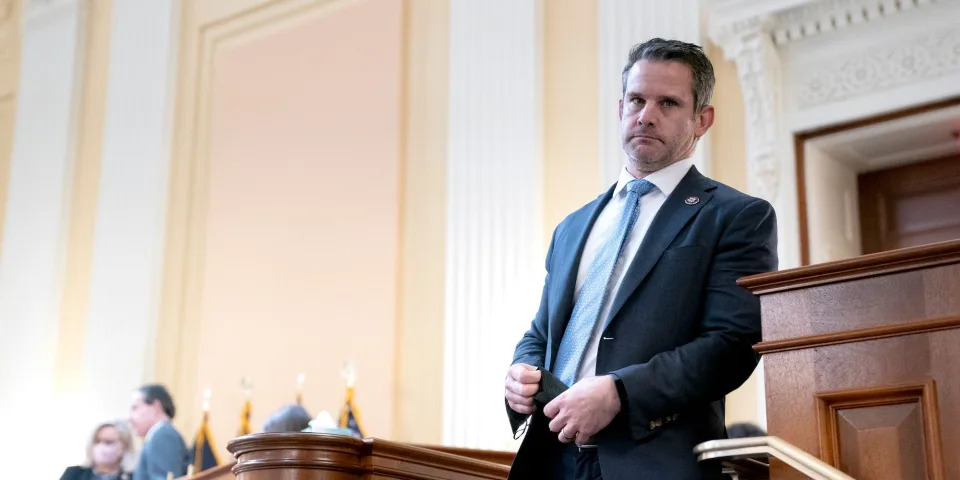
Republican Rep. Adam Kinzinger of Illinois at a January 6 committee meeting on December 1, 2021.
Republican Rep. Adam Kinzinger of Illinois at a January 6 committee meeting on December 1, 2021.Stefani Reynolds for The Washington Post via Getty Images
  • GOP Rep. Adam Kinzinger spoke on the House floor for the last time, having declined re-election.
  • He condemned his own party on Thursday, saying it has “embraced lies and deceit.”
  • He also criticized Democrats for boosting election-denying candidates in GOP primaries this year.

Republican Rep. Adam Kinzinger of Illinois spoke on the House floor for the final time on Thursday after declining to seek re-election.

Kinzinger, a member of the January 6 committee and one of 10 House Republicans who voted to impeach former President Donald Trump for incitement of insurrection following the Capitol riot, has emerged as a key critic of the GOP from within the party.

In his farewell speech, Kinzinger declared that “our democracy is not functioning” and said Republicans have “embraced lies and deceit.” Despite not mentioning Trump by name, he made numerous references to the assault on the Capitol.

“Republicans once believed that limited government meant lower taxes and more autonomy,” he said. “Today, limited government means inciting violence against government officials.”

He also criticized the leadership of the Republican National Committee, which used the phrase “legitimate political discourse” as it moved to censure him and Republican Rep. Liz Cheney of Wyoming for their participation in the January 6 committee.

“Our leaders today belittle, and in some cases justify attacks on the US Capitol as ‘legitimate political discourse,'” Kinzinger added. “We shelter the ignorant, the racist, who only stoke anger and hatred to those who are different than us.”

Kinzinger also criticized Democrats for helping to boost election-denying candidates in Republican primaries this year in order to produce weaker general-election nominees, a controversial tactic that some top Democrats publicly defended.

“To my Democratic colleagues, you must too bear the burden of our failures. Many of you have asked me: where are all the good Republicans? ” he said. “Over the past two years, Democratic leadership had the opportunity to stand above the fray.”

“Instead, they poured millions of dollars into the campaigns of MAGA Republicans, the same candidates Biden called a national security threat, to ensure these good Republicans did not make it out of their respective primaries,” Kinzinger continued. “This is no longer politics as usual. This is not a game.”