What will Miami look like with more sea rise? This high-tech car helps us picture it
Alex Harris – March 8, 2023
Hurricane Ian’s destructive storm surge last fall shocked many Floridians, even some who’d weathered severe hurricanes before. In some places, the waters were so high that survivors had to scramble to the second story or their roof for safety.
Experts say it’s tough for people to visualize what those record-breaking levels of surge would look like until they arrive.
But FloodVision, a new tool from nonprofit climate advocacy group Climate Central, could change that, with help from a high-tech car they’ve nicknamed the “flood rover.”
The vehicle isn’t anything special (it’s actually a rental), but the cameras and sensors strapped onto it are. They form a mobile scanning system that acts a lot like a souped-up Google Maps car, except the finished product is a simulation of a future flooded street.
Benjamin Strauss, CEO and chief scientist of Climate Central, calls it a “visual, visceral, powerful” way to explain the risks of hurricanes — and rising seas — to communities most at risk.
“We know the images are more powerful than any map we can make, or any graphic we can show you,” he said.
Strauss’ team has already done some scanning in Miami, Miami Beach, Fort Lauderdale and Tampa, and they debuted the car and the new system at the Aspen Ideas: Climate conference in Miami Beach this week.
This is a simulation of what a Miami street could look like in 2070 with no interventions to slow down sea level rise. It was produced with FloodVision, a new technology from Climate Central.
In one example in Miami, researchers at Climate Central captured a picture of a neighborhood with the car cameras, then superimposed the two or so feet of sea rise the region is projected to see by 2070 under NOAA’s intermediate high standard.
The result: enough water to come halfway up a tree and soak through the doors of parked cars. It’s a familiar sight to residents of flood-prone neighborhoods like Brickell, which can reach the same levels of flooding after an intense rainstorm.
Strauss plans to use the technology to simulate images of what sea rise or intense storm surge could look like to educate communities about the risks they face from climate change. One potential hurdle is that the technology does not account for protections that local governments may have already installed, like elevated roads or higher sea walls and stronger stormwater pumps.
Without that, the picture of what could likely happen is skewed in places like Miami Beach, which has spent millions installing new protections against rising seas. But despite the growing body of scientific evidence showing the need for coastal cities to adapt to sea level rise, the execution of these projects has been controversial in the places that need them most.
Strauss hopes that his team’s work can be used to help cut through the noise and visually show residents the benefit of investing in flood protection.
“It’s expensive to build flood protections, and it’s also disruptive,” he said. “This technology can be used, essentially, to show what you’re preventing.”
California Readers Share Photos of Their Winter Wonderland
By Soumya Karlamangla – March 8, 2023
The Owens River Gorge in eastern California. Credit…Stephen Cunha
So much snow has transformed the landscape across the state.
Winter weather in the Golden State, of all places, continues to draw national attention this year.
First, atmospheric rivers flooded towns and swallowed cars. Then, snow fell in Silicon Valley, Santa Cruz, Oakland and a whole host of places unaccustomed to it. Graupel, an ice-snow combo, dusted the Hollywood sign. Yosemite National Park closed indefinitely after record snowfall buried cabins and blanketed roads.
And starting Thursday, another set of heavy storms is expected to hit much of the state, which could bring more flooding and rain damage. I don’t need to tell you — it’s been a wild winter.
Late last month I was driving in Paso Robles, a city on the Central Coast known for its wineries and olive groves, when I noticed the tops of the gently sloping green hills sprinkled with snow. I’d never seen anything like it.
The small town of Shandon in San Luis Obispo County last month. Credit…Soumya Karlamangla/The New York Times
Twenty miles east in Shandon, a small community also in San Luis Obispo County, the skies were mostly blue — but the roofs of cars, small homes and wooden barns were all blanketed in snow. I watched as a father and daughter, bundled in scarves and jackets, assembled a wobbly snowman from what had fallen on a grassy field in the city’s park.
Today we’re sharing photos you emailed us of what this winter has looked like in your neck of the woods. Leslie Bates, a reader who lives in Gualala on the Mendocino Coast, said that she had been sending snow pictures to her brother who lives in the Catskills in New York: “The world turned upside down!”
Craig Whichard’s cabin in Arnold. Credit…Craig Whichard
Sandra Sincek, who lives in Julian, a small mountain town northeast of San Diego, described her child’s first sled run of the year.
“Occasionally we will get a few inches of snow, but this was a glorious winter event,” she wrote. “When the clouds finally parted, our son carried his wooden snow sled to the top of the hill, carefully positioned it, climbed in, and let go.”
Craig Whichard wrote to us from his cabin in Arnold, on the western side of the Sierra Nevada and about 70 miles east of Stockton. He said that the five feet of snow that fell late last month was more than he’d seen in his 14 years there.
More on California
Struggling to Recover: Weeks after a brutal set of atmospheric rivers unleashed a disaster, the residents of Planada in Merced County are only beginning to rebuild.
Exploring Los Angeles: Walking down Rosecrans Avenue is not necessarily a pleasure. But it does offer a 27-mile canvas of the city’s vastness and its diverse communities coexisting.
A Bridge Goes Dark: A light installation across part of San Francisco’s Bay Bridge, had to be turned off because of the region’s harsh weather. They hope to raise $11 million to refurbish it.
In Cloverdale in Sonoma County. Credit…Star CarpenterA geodesic dome in the Santa Cruz mountains. Credit…Karrie GaylordThe view from Hollister in San Benito County. Credit…Susan HeckSnow-capped San Gabriel Mountains, seen from Glassell Park in Los Angeles. Credit…Emily Zuzik HolmesSnow-covered mountains behind the Hollywood sign. Credit…Patrick T. Fallon/Agence France-Presse — Getty Images
Fighting chronic Lyme disease, healthcare policies in Indiana
Jayde Leary – March 6, 2023
Editor’s Note: The following is part of a class project originally initiated in the classroom of Ball State University professor Adam Kuban in fall 2021. Kuban continued the project this spring semester, challenging his students to find sustainability efforts in the Muncie area and pitch their ideas to Deanna Watson, editor of The Star Press, Journal & Courier and Pal-Item. Several such stories are being featured this spring.
MUNCIE, Ind. − Chronic Lyme disease patients in the state of Indiana and all over the United States have been struggling to find affordable treatment due to the disease itself not being covered by insurance past the 30-day treatment that is provided.
According to the Centers for Disease Control and Prevention, Lyme disease is transmitted to humans through being bit by infected blacklegged ticks. Patients who experience symptoms of pain, fatigue or difficulty thinking more than six months after they finish treatment have a condition called Post-Treatment Lyme Disease Syndrome, also known as chronic Lyme disease.
Most cases of Lyme disease can be treated successfully with a two-to-four-week course of antibiotics. According to an article by Medical Bill Gurus, insurance companies are not required to cover treatment per the Infectious Disease Society of America guidelines. Therefore, insurance companies do not recognize chronic Lyme disease and use these guidelines to deny coverage for long-term treatment.
A majority of all Lyme Literate Medical Doctors are not in-network with any major insurance companies, and this leaves those patients who still experience symptoms after the provided few weeks of antibiotics with slim options.
Lyme disease patients who continue to have symptoms after that four-week mark may not be able to get the treatment they need due to the lack of financial help. According to a 2022 study by Samantha S. Ficon published in “Nursing Continuing Professional Development”, the disease can be harmful and deadly if it is not treated effectively early on, and 10% to 20% of patients previously treated for Lyme disease still experience symptoms for more than six months after finishing antibiotic treatment.
Kimberly Sharp, director of pain management for Community Health Network, has worked in the field of chronic pain management for over 20 years.
“There is currently no evidence supporting the long-term use of antibiotics, and the CDC does not officially recognize chronic Lyme. There are limited dollars for care, so insurance companies must draw the line somewhere on what is covered,” Sharp said.
Many insurance companies are not covering what chronic Lyme patients need.
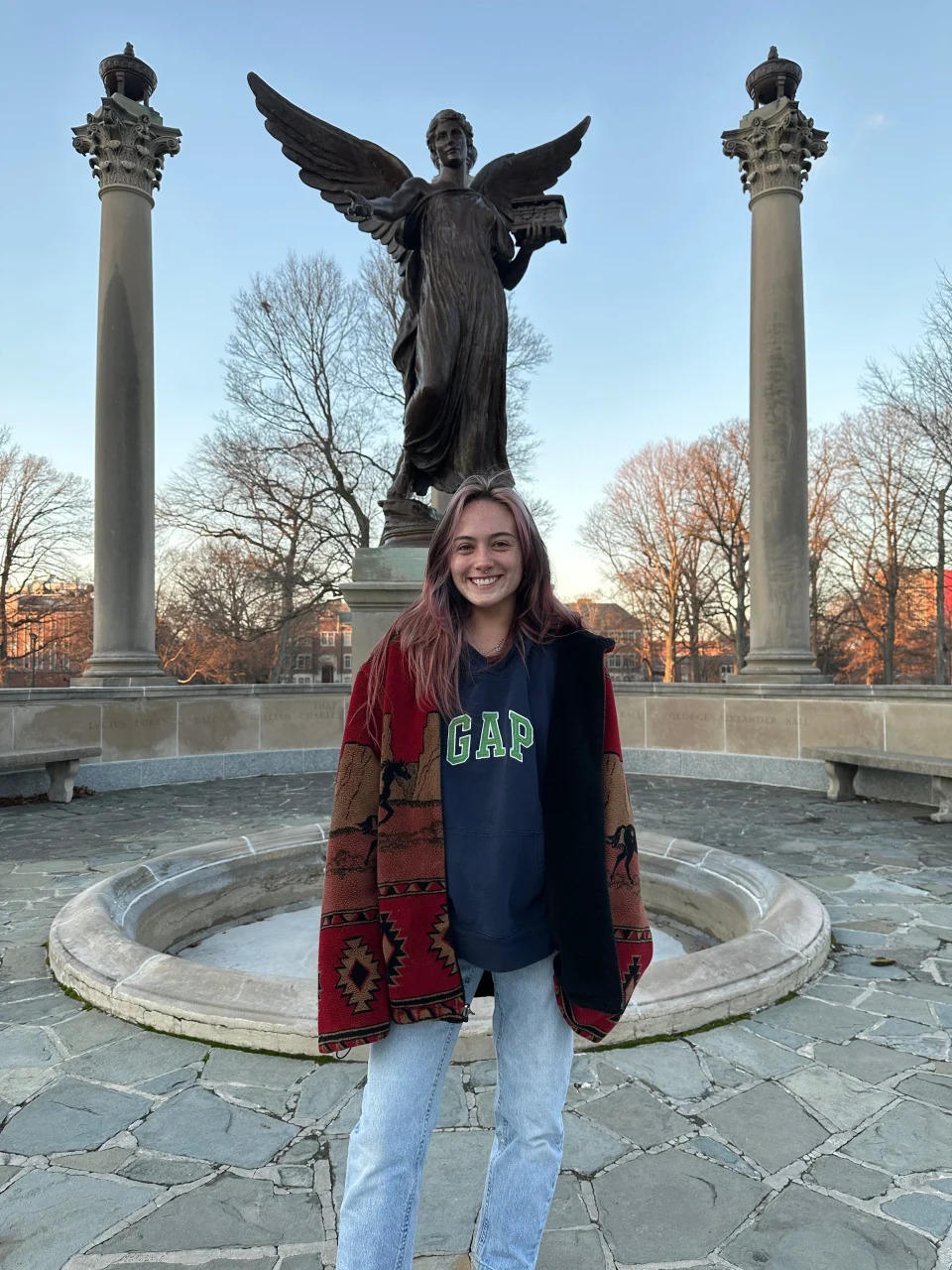
Riley Sims, senior art major, working on her schoolwork in the L.A. Pittenger Student Center at Ball State University. According to Tick Check, there were 2,013 cases of Lyme disease confirmed in the state of Indiana from 2000 to 2020.
Riley Sims, senior at Ball State University, was diagnosed with Lyme disease in May 2020 and struggles with the chronic illness daily. She said she has to work twice as hard to keep up with her schoolwork and day-to-day tasks, and she has no choice but to seek treatment. Sims looks to her mother and father for financial help in order to cover her chronic Lyme expenses. Due to being a busy college student, she does not have enough money at this point in time to cover the costs of treatment and appointments.
[Insert photo of Riley Sims in front of Beneficence]
“I take supplements for my chronic Lyme disease that are suggested by my doctor, and I also have to get many blood tests, but none of it is covered by insurance, not even my doctor appointments,” Sims said.
According to Global Lyme Alliance, patients can suffer for years not only from the symptoms of chronic Lyme, but from the financial impact as well. Patients end up paying out-of-pocket costs and hope for reimbursement. This leaves patients who become too sick to work with large financial struggles.
Mitchell Goldman, MD, senior associate dean for Graduate Medical Education and professor of medicine for the Department of Medicine/Infectious Diseases at the University of Missouri School of Medicine, previously worked at the Indiana University Medical Center and has experience with Lyme disease patients.
“Insurance companies often require an approval process to provide therapies beyond usual guidelines, and this requires a physician or other provider to plead the case to the insurance company that may accept or deny a therapy beyond usual time,” Goldman said.
According to the Centers for Disease Control and Prevention, there were 34,945 reported cases of Lyme disease in the United States in 2019. Compared to other tickborne illnesses, this number is high. There were 5,655 Anaplasmosis cases, 5,207 Spotted Fever Rickettsiosis cases, 2,420 Babesiosis cases and 2,093 cases of Ehrlichia chaffeensis ehrlichiosis. Many patients suffer daily from chronic Lyme disease with no help from their insurance providers, and some of them may even be forced to quit treatment due to financial challenges.
[Insert picture of Riley Sims working on schoolwork]
Sims said the Lyme Treatment Foundation has helped her tremendously and that other patients seeking financial help should look more into other non-profit organizations like this.
“Lyme disease is like a rollercoaster. I just wish we had more help riding it,” Sims said.
‘I just found myself struggling to keep up’: Number of teachers quitting hits new high
Matt Barnum – March 6, 2023
Why some US school districts are seeing extreme teacher shortages
The data is in: More teachers than usual exited the classroom after last school year, confirming longstanding fears that pandemic-era stresses would prompt an outflow of educators. That’s according to a Chalkbeat analysis of data from eight states – the most comprehensive accounting of recent teacher turnover to date.
In Washington state, more teachers left the classroom after last school year than at any point in the last three decades. Maryland and Louisiana saw more teachers depart than any time in the last decade. And North Carolina saw a particularly alarming trend of more teachers leaving mid-school year.
The turnover increases were not massive. But they were meaningful, and the churn could affect schools’ ability to help students make up for learning loss in the wake of the pandemic. This data also suggests that spiking stress levels, student behavior challenges, and a harsh political spotlight have all taken their toll on many American teachers.
“Education had changed so dramatically since COVID. The issues were getting bigger and bigger,” said Rebecca Rojano, who last year left a job teaching high school Spanish in Connecticut. “I just found myself struggling to keep up.”
Across 8 states, more teachers left the classroom following last school year
Since the pandemic threw U.S. schools into disarray, many educators and experts warned that more teachers would flee the profession. But in 2020, turnover dipped in many places as the economy stalled, then in 2021 it ticked back up to normal or slightly above-average levels.
As this school year began, widespread reports of teacher shortages suggested that turnover had jumped more significantly.
Data was hard to come by, though. The federal government doesn’t regularly track teacher quit rates. Many states don’t either, with education officials in California, New Mexico, Ohio and Pennsylvania saying that they don’t know how many teachers leave each year.
But Chalkbeat was able to obtain the latest teacher turnover numbers from eight states: Hawaii, Louisiana, Maine, Maryland, Mississippi, North Carolina, South Carolina, and Washington. These figures encompassed turnover between the 2021-22 year and this school year.
In all cases, turnover was at its highest point in at least five years – typically around 2 percentage points greater than before the pandemic. That implies that in a school with 50 teachers, one more than usual left after last school year.
“I am struck by just how consistent these patterns are looking at all of these different states,” said Melissa Diliberti, a researcher at RAND, which has monitored teacher attrition during the pandemic.
In Louisiana, for instance, nearly 7,000 teachers exited the classroom last school year, or about 1,000 more than usual. That’s a turnover rate of 14%, up from between 11% and 12% in a typical pre-pandemic year.
There was variation among the eight states. Mississippi’s teacher workforce was the most stable: Turnover was 13% this year, only slightly higher than the two years before the pandemic. North Carolina saw the largest spike: 16% of teachers left after last year, compared with less than 12% in the three years before the pandemic.
For Kimberly Biondi, who taught high school English for 21 years in a district outside Charlotte, her reasons for leaving were wrapped up in the politics of education. She advocated for remote instruction as well as in-school safety rules, such as masking, but faced personal criticism from a local group opposed to these measures, she said. Biondi was also worried that politics could eventually limit what she taught.
“I taught AP language where we were supposed to teach very controversial work. I taught Malcolm X. I taught all sorts of philosophers and speakers,” she said. “I could only imagine how I would be targeted for continuing to teach this.”
Other former teachers cited growing workloads and more difficulty managing student behavior.
Rojano said that student engagement plummeted as students returned to class in fall 2021, some for the first time in over a year. “A lot of these students are really hurting and suffering with intense emotional problems and high needs,” she said. “The needs just grew after the pandemic – I noticed a lot more emotional outbursts.”
It didn’t help, she said, that her class sizes were large, ranging from 25 to 30 students, making it hard to form close relationships with students. Plus, the school was short staffed and had many absences, forcing Rojano to constantly cover other teachers’ classes, losing her planning time.
She left in the middle of the last school year, something she never imagined doing because it was so disruptive for the school and her students. “It got so bad,” she said. “I was very overwhelmed and stressed. I was anxious and tired all the time.” Rojano ended up taking a job at an insurance company, where she is able to work remotely when she wants.
State reports hint that rising frustration has pushed more teachers out of the classroom. In Louisiana, the number of teachers who resigned due to dissatisfaction increased. In Hawaii, more teachers than usual identified their work environment as the reason for leaving. (In both states, personal reasons or retirement were still far more common explanations.)
A degree of staff turnover in schools is considered healthy. Some new teachers realize the profession just isn’t for them. Others take different jobs in public education, becoming, say, an assistant principal. But in general, research has found that teacher churn harms student learning – students lose relationships with trusted educators, inexperienced teachers are brought on as replacements, and in some cases classrooms are left with only long-term substitutes.
While the eight states where Chalkbeat obtained data may not be representative of the country as a whole, there are signs that higher attrition was widespread. In a recent nationally representative survey from RAND, school district leaders reported a 4 percentage point increase in teacher turnover. Data from a handful of districts show a similar trend. For instance, turnover among licensed staff, including teachers, spiked from 9% to 12% in Clark County, Nevada, the country’s fifth-largest district. In Austin, Texas, turnover jumped from 17% to 24%.
Other school staff appear to be leaving at higher rates, too.
Hawaii experienced a jump in aides and service staff who exited public schools. North Carolina saw over 17% of principals depart last school year, compared to an average of 13% in the three years before the pandemic. The RAND survey also found a sharp increase in principals leaving.
A degree of staff turnover in schools is considered healthy. Some new teachers realize the profession just isn’t for them. Others take different jobs in public education, becoming, say, an assistant principal. But in general, research has found that teacher churn harms student learning – students lose relationships with trusted educators, inexperienced teachers are brought on as replacements, and in some cases classrooms are left with only long-term substitutes.
“Teacher attrition can be destabilizing for schools,” said Kevin Bastian, a researcher at the University of North Carolina, where he calculated the state’s turnover rate.
He found that effective teachers were particularly likely to leave the state’s public schools last year. Mid-year turnover, which is especially disruptive, increased from under 4% in prior years to over 6% in the 2021-22 school year in North Carolina. The state also ended up hiring fewer teachers for this school year than it lost, suggesting that some positions were eliminated or left vacant.
Biondi is now seeing the effects on her own children, who attend school in the district where she taught. “My daughter lost her math teacher in December,” she said. “They don’t have a replacement teacher – she’s struggling very much in math.”
This year, schools may have been in a particularly fraught position. Teachers appear to be leaving at higher rates, and there’s been a longer-standing decline in people training to become teachers. At the same time, schools may have wanted to hire more teachers than usual because they remain flush with COVID relief money and want to address learning loss. That’s a recipe for a shortage.
Typically, shortages hit high-poverty schools the hardest. They also tend to be more severe in certain areas including special education, math, and science.
Benjamin Mosley, principal of Glenmount Elementary/Middle School in Baltimore, has been buffeted by these pressures. He’s had multiple teachers leave in the middle of this year, and has not been able to replace them or some others who left at the end of last year.
On a recent visit to the school, students in a math class listened to a teacher based in Florida teach a lesson virtually; the class was supervised by an intervention teacher who was originally meant to provide small group tutoring. A social studies class, whose teacher had recently resigned, was being overseen by a staff member who had been hired to serve as a student mentor.
Mosley is still actively trying to find teachers and is now considering candidates whom he might have passed over in years past.
“We can put a man on the moon, but yet we can’t find teachers,” he said.
Matt Barnum is a Spencer fellow in education journalism at Columbia University and a national reporter at Chalkbeat covering education policy, politics, and research.
Lawmakers unveil plan to keep Americans from claiming Social Security too early
Ben Werschkul, Washington Correspondent – March 6, 2023
Why you should delay Social Security benefits
Yahoo Finance columnist Kerry Hannon makes the case for why retirees should delay their Social Security benefits to age 70.
A bipartisan group of senators launched a multi-pronged effort this week to help Americans make better decisions about when to claim their Social Security benefits.
A letter and legislation released Monday said that Americans are confused about their options and that the Social Security Administration (SSA) needs to do a better job at communication — including bringing back paper statements.
“We believe that SSA should take more proactive measures to provide Americans with the tools and resources to determine how best to set themselves and their families up for financial security in retirement,” wrote Sens. Bill Cassidy (R-LA), Chris Coons (D-DE), Susan Collins (R-ME), and Tim Kaine (D-VA) in the note.
Monday’s announcement comes after years of discussion on the issue. Groups like the Bipartisan Policy Center have pushed for reforms for years and were cited in Monday’s letter. In a 2020 report, the group said many people are hurting their long-term financial security by claiming Social Security too early.
Sens. Bill Cassidy (R-LA) and Chris Coons (D-DE) are two of the authors of the new letter. (Tom Williams/CQ Roll Call)
Americans are jumping in ‘at a financially sub-optimal time’
The Social Security program gives retirees an option of when to start getting their checks. They can begin as early as age 62, but with a trade-off: Those monthly benefits are locked in at a lower rate for the rest of their lives. The benefit amount gets bigger the longer you wait to claim, topping out with maximum benefits for Americans who wait until age 70.
That decision has far-reaching implications and experts say many Americans are getting it wrong by claiming too early.
A recent study from a group called United Income — also cited in Monday’s letter — estimates that retirees collectively lose $3.4 trillion because they claim Social Security “at a financially sub-optimal time” That works out to $111,000 per household.
The problem, experts say, is that Americans don’t fully understand the consequences of their choice even though more than half of 65-or-over households rely on Social Security for a majority of their income.
A central recommendation released Monday is around changing the nomenclature. Currently, seniors are presented with what these four senators say are a battery of confusing terms from “early eligibility age” to “full retirement age” to “delayed retirement credits.”
Instead, the lawmakers say, Americans should be given a choice among “minimum benefit age,” “standard benefit age,” and “maximum benefit age.”
The bill also includes a push to redesign and bring back paper statements to Americans.
After years of blasting out millions of letters each year, the agency cut back in the last decade and now largely only reaches out to Americans via the U.S. Postal Service when they are over 60 and not receiving benefits.
If the legislation is enacted, all Americans in the workforce would get updates of where they stand and an explanation of their options at least every five years with the frequency increasing to annual notes after age 60.
Why are Americans claiming so early?
The letter from Capitol Hill also asks the agency to analyze why so many Americans claim benefits early and to outline its plans to “educate the public about the trade-offs of early versus delayed claiming.”
A 2019 release from the SSA laid out how age 62 remains the most common age for Americans with nearly 35% of men and 40% of women jumping into the program then.
But some of the reasons that Americans are interested in getting money as early as possible may also have to do with the uncertain future of the Social Security program as is does with any lack of education. A recent government trustees report found that, with no action from Congress, Social Security only has the funds to continue paying out 100% of benefits through 2034. After that, benefits could be decreased by around 24%.
In addition, Social Security has been a central issue in the ongoing debt ceiling fight. Democrats have charged that Republicans are looking to cut benefits in return for raising the debt ceiling. Most in the GOP adamantly deny this claim.
Polling has shown again and again that Americans are keenly aware of the perilous state of the program. In just one example, an AP-NORC poll in 2019 found that only 24% of Americans were confident Social Security would be able to pay out at least the same benefits in five years that it was paying out then.
Also in Washington, bipartisan talks are underway to shore up the program and give Americans more confidence. In recent months, those talks have been led by Sen. Cassidy (one of the co-signers of Monday’s letter) and Sen. Angus King (I-ME). In a statement Friday, the senators offered an update on those talks, noting that a dozen of options remained under discussion.
They pledged that “what we are discussing, millions would immediately receive more, and no one would receive less.” They hope to have “a fully developed plan” that can be released and debated in the months ahead.
Ben Werschkul is Washington correspondent for Yahoo Finance.
The North Idaho College Campus in Coeur d’Alene, Idaho, on Feb. 22, 2023. (Margaret Albaugh/The New York Times)
COEUR D’ALENE, Idaho — The February meeting of the North Idaho College board of trustees was, by recent standards, civilized.
There were no shoving matches or speeches from far-right podcasters. Nobody pulled the fire alarm. The parade of community members who, under the wary eye of campus security officers, took turns at the microphone mostly kept their voices below shouting volume, until an hour or so before midnight, when a woman cried “Shame on you!” and stormed out of the room.
Mostly, people seemed stunned that it had actually come to this.
For most of the past two years, the college’s governing board has been a volatile experiment in turning grievances into governance. Trustees backed by the county Republican Party hold a majority on the board. They have denounced liberal “indoctrination” by the college faculty and vowed to bring the school administration’s “deep state” to heel and “Make NIC Great Again.”
The injection of such sweeping political aims into the routine administration of a community college of 4,600 students, one better known locally for its technical training programs than the politics of its faculty, has devolved into a full-blown crisis. The school has faced lawsuits from two of the five presidents it has had since the start of the previous school year. A district court judge ordered one of those presidents reinstated Friday in a ruling that castigated the trustees for “steering NIC toward an iceberg.” The college has lost professors and staff and had its debt downgraded by Moody’s, which cited the school’s “significant governance and management dysfunction.”
The troubles culminated last month in a letter from the regional higher education commission, which warned that the 90-year-old college could be stripped of its accreditation if changes were not made in a matter of weeks — an effective threat of closure and a potential catastrophe for Coeur d’Alene, a town of 56,000 in the Idaho Panhandle. The college is the sixth-largest employer in Kootenai County and a source of skilled labor for much of the local economy.
“As a businessperson here, it’s heartbreaking to me to be standing on the brink of the loss of this institution,” said Eve Knudtsen, owner of a Chevrolet dealership in the neighboring town of Post Falls. Knudtsen, a Republican, attended NIC, as have both of her daughters, and she said one-third of the technicians hired by her dealership came out of the school.
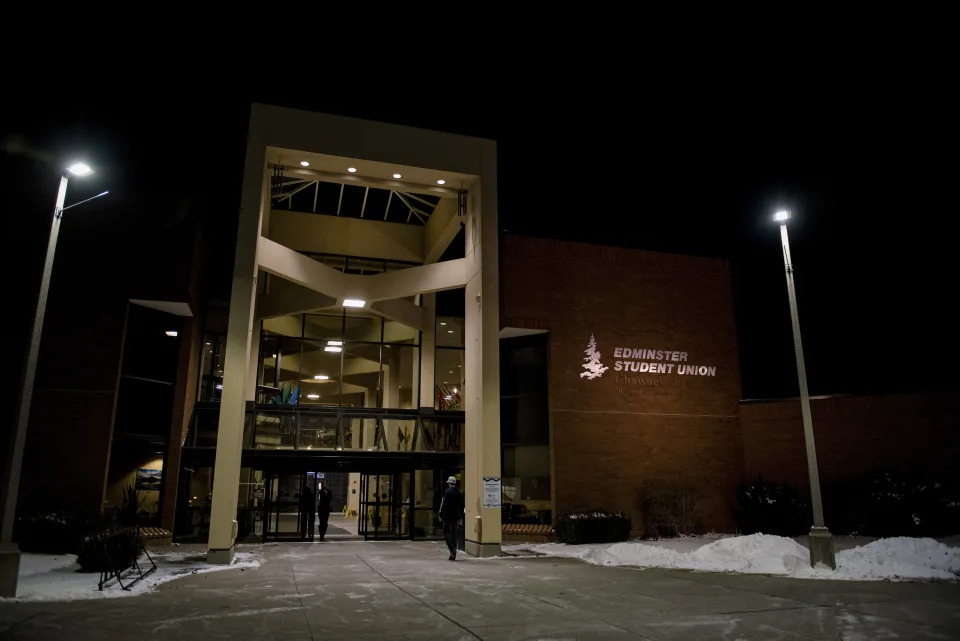
“It’s pretty much a dystopian farce,” said Kathleen Miller Green, an assistant professor of child development who attended the nearly six-hour, capacity-crowd meeting at the school’s student union building Feb. 22. “It’s laughable if you don’t have to live it.”
Rick MacLennan, a former president of the college who was ousted by the trustees in 2021, describes the school as “a canary in the coal mine” — a warning of what awaits local institutions across the country as fiercely partisan and disruptive cultural battles spread into new corners of public life. He and other critics of the trustees see parallels with Gov. Ron DeSantis’ efforts to remake New College, a state-run liberal arts school in Sarasota, Florida, as a conservative bastion.
What’s different about North Idaho College, however, is that local voters have more directly driven the change — and the results have been less ideological overhaul than organizational chaos.
In Kootenai County, a magnet for conservative retirees from other states where Donald Trump won 70% of the vote in 2020, most public institutions and services are overseen by directly elected trustees. That means that Republican activists and voters, who increasingly see even once-benign institutional authorities as a threat to their values, are in a position to do something about it.
The clash over the college began in 2020 when, after the killing of George Floyd by police in Minneapolis, the school’s diversity council issued a statement expressing support for social justice demonstrations, including Black Lives Matter protests. The statement caught the attention of the Kootenai County Republican Central Committee.
That year, the committee began vetting and endorsing candidates for county board positions in what are technically nonpartisan elections. In the Coeur d’Alene Press, a committee precinct-person accused the school of supporting a “radical, racist and Marxist organization” and “guilting white male students,” and urged county residents to vote for two candidates endorsed by the committee “to balance the NIC Board” in the November election.
Brent Regan, the committee’s chair, argues the endorsements are no different from those of the local Rotary Club or newspaper.
“The mission of the Republican Party in Kootenai County is to try to find people who will run for office — any office, from sewer districts to school boards to trustee boards — who embrace the policies of the Republican Party as outlined in our platform,” Regan said.
In the matter of the college’s imperiled accreditation, he said, “We’re a convenient scapegoat.”
The committee’s college trustee candidates both won. They formed an informal majority on the five-member board with a like-minded incumbent trustee, Todd Banducci, who had clashed on occasion with other trustees and the school’s administrators and staff.
In an email to a conservative student, Banducci wrote that he was “battling the NIC ‘deep state’ on an almost daily basis,” and complained that “the liberal progressives are quite deeply entrenched.”
In a conversation after the election, Banducci chided MacLennan, then the college president, for his wife’s support for Hillary Rodham Clinton and told him that he would give him “marching orders,” according to MacLennan.
“My perspective was, you can’t do that,” MacLennan recalled. “It’s not going to work like that.”
In January, he wrote a letter to the trustees expressing his concern over what he described as a pattern of behavior by Banducci, who had been privately censured by the board the year before following a report that a college staff member had felt “threatened and intimidated” by him. (Banducci did not respond to a request for comment regarding the incident.) In March, local human rights organizations filed a complaint with the Northwest Commission on Colleges and Universities, the accreditation body, arguing that Banducci’s conduct had “severely violated” several criteria for accreditation.
“They were in the process of dismantling the institution,” said Tony Stewart, secretary of the Kootenai County Task Force on Human Relations, which drafted the complaint.
Regan argued that Stewart’s organization, which formed in the 1980s to combat white supremacists who were active in Kootenai County, had strayed far from its mission.
“Were there human rights violations going on?” he said. “No.” He called the accreditation review a “political” process, “started by people who didn’t like the results of the election.”
Banducci’s bloc of trustees eventually fired MacLennan without cause, installing the school’s wrestling coach as interim president. A power struggle ensued, with the state education board at one point appointing several interim trustees who hired a new president. In the November 2022 election, candidates backed by the GOP committee once again claimed a majority and replaced him, too.
The turnover has been cited by the accreditation body, along with several votes of no confidence in the trustees from the college faculty and student government, as a source of its concern. Sonny Ramaswamy, the commission president, declined to discuss the accreditation review, citing discussions with the school.
In November, Greg McKenzie, the current board chair, dismissed the prospect of losing accreditation as “Fake News” in a letter to constituents.
But at the February meeting, as that loss suddenly seemed like a very real possibility, the trustees appeared somewhat chastened. McKenzie reminded the crowd that members of the accrediting commission were watching via livestream and asked attendees to help avoid the circuslike atmosphere of recent meetings.
In December, Vincent James Foxx, a far-right antisemitic podcaster who lives in Kootenai County, took the microphone to offer the bloc of trustees his “100% support.” That meeting was interrupted twice by fire alarms.
The threat of losing accreditation — which would leave the school ineligible for federal financial aid and students’ credits worthless if they transfer — has drawn local business leaders off the sidelines.
At the meeting, Greg Green, a telecom entrepreneur and philanthropist, vowed to fund challenges to the committee-backed bloc of trustees in the next election, in particular Banducci. “I had no clue how bad things were,” said Green, a Republican.
But the bloc has withstood one such challenge already. In November, the local chamber of commerce and a new political action committee called Friends of NIC endorsed a slate of rival candidates for three open trustee seats. But a Republican committee-backed candidate won one of the three races, enough to recapture a majority.
In interviews, students said the imminent threat of losing accreditation had caught the attention of a student body that had mostly tuned out the years of confusing power struggles.
“It’s really sad,” said Madeleine Morgan, a second-year English and chemistry double major from California. Morgan said she had come to Idaho from California hoping for more political diversity. “It’s not like I really disagreed with the ideas down there,” she said. “It’s just that I wanted a place where, conservative or liberal, you could speak your mind.”
Still, she found herself siding with the faculty. “They have families to feed and bills to pay,” she said. “They’re not the problem here. The trustees are.”
Hazards of Gas Stoves Were Flagged by the Industry—and Hidden—50 Years Ago
Kate Yoder, Grist – March 6, 2023
Photo: Scott Olson (Getty Images)
Newly uncovered documents reveal that the gas industry understood that its stoves were polluting the air inside homes 50 years ago — and then moved to conceal that information. It stands in stark contrast to the industry’s denial of the health dangers posed by gas stoves today.
In a draft report on natural gas and the environment in January 1972, the American Gas Association included a section on “Indoor Air Quality Control” that detailed its concerns with pollution from gas appliances like carbon monoxide and nitrogen oxides. The document showed that the trade group was in the process of researching solutions “for the purposes of limiting the levels of carbon monoxide and nitrogen oxides in household air.” But all that information disappeared from the final text, according to reporting by the climate accountability site DeSmog on Thursday.
That draft report was sent to the National Industrial Pollution Control Council, what was then a government advisory council made up of 200 business executives representing industrial heavyweights, including utilities. When the council’s final report was published in August 1972, those utilities had removed the section on air pollution concerns, according to the DeSmog article. Arguing that the fuel should replace the coal used for power, heating, and cooking in homes, the report spotlighted the pollution problems of burning coal while downplaying the dangers of natural gas.
In response to DeSmog’s investigation, Karen Harbert, the CEO of the American Gas Association, pointed to “a 1982 review of the available research that found no causative link between gas stoves and asthma, a conclusion shared by regulatory agencies.”
The concerns about indoor air quality in the report’s deleted section foreshadowed those held by health experts today. In recent months, studies have found that gas-burning stoves are responsible for nearly 13 percent of childhood asthma cases in the United States, and that they leak methane, a potent greenhouse gas, and benzene, a cancer-causing chemical, even when they’re shut off. Earlier this week, the federal Consumer Product Safety Commission made a formal request for information on the hazards of gas stoves. This is often the first step toward creating a regulation — although the commission has said it doesn’t plan on banning gas stoves entirely, after the mention of it sparked heated backlash.
The gas industry has pushed back against the peer-reviewed research showing that gas stoves increase the risk of childhood asthma. In January, the American Gas Association argued that the findings were “not substantiated by sound science” and that even discussing the asthma allegations would be “reckless.”
But the newly unveiled documents show that the gas industry itself was once concerned about the pollution coming from gas stoves — which the National Industrial Pollution Control Council called “the NOx problem” in 1970, referring to nitrogen oxides, a family of poisonous gases. Gas companies were even aware of the problem decades before, with the president of the Natural Gas Association warning of the dangers of emissions from gas stoves as far back as the early 1900s.
This Is the Absolute Best Food for Fighting Inflammation, According to Registered Dietitians
Emily Laurence – March 6, 2023
Plus, easy ways to incorporate it into your diet.
While inflammation isn’t inherently bad and plays an important role as part of the body’s natural defense system, high levels of chronic inflammation can cause all sorts of health woes. “Chronic, low-grade inflammation can cause a host of symptoms across the whole body. Digestive issues, brain fog, cardiovascular disease, chronic aches and pains, weight gain, hormone imbalances and autoimmune disease are all signs that the body is struggling to manage inflammation,” says functional medicine nutritionist Barbara Sobel, MS, CNS, LND. She adds that what we eat is one of the greatest modifiers of inflammation.
There are many, manyfoods and drinks that are anti-inflammatory, helping to prevent chronic inflammation. Coffee, tea, fruits, vegetables, legumes, nuts, seeds, fish and herbs are all anti-inflammatory and it’s best to eat a wide variety of these foods to get a wide range of nutritional benefits. But if you want to focus on adding one incredible anti-inflammatory food to your diet, there’s one in particular that healthy eating experts recommend: berries.
Why Berries Are So Beneficial for Preventing Chronic Inflammation
Whether your favorite is blueberries, strawberries, raspberries, blackberries or cranberries, there are specific properties that berries have in common that are linked to preventing chronic inflammation. According to Sobel, this includes antioxidants, fiber, vitamins, minerals, and polyphenols (a specific type of antioxidant).
Kristen Yarker, MSc, RD, a registered dietitian who leads a team of dietitians in Victoria, British Columbia, Canada, says that since most of the scientific studies surrounding berries and health have been done on animals and in labs, it’s difficult to know exactly why they’re so powerful in protecting against inflammation, but there is a lot of research supporting the benefits of antioxidants, including polyphenols. Scientific studies show that antioxidants protect tissues in the body from damage caused by free radicals, which in turn prevents an inflammatory response.
Yarker also says that fiber—which berries contain—is also linked with preventing chronic inflammation. One reason why this is particularly noteworthy is because a full 90 percent of Americans don’t eat the recommended daily amount, which is 25 grams a day. Incorporating berries into your diet is an easy (and yummy!) way to up your amount. “A diet rich in fiber, especially soluble fiber, has been shown to dampen this inflammatory process,” Sobel says. She adds that blackberries and raspberries each have eight grams of fiber per cup, while strawberries and blueberries have closer to three or 3.5 grams of fiber per cup.
Besides antioxidants and fiber, both experts say that berries have other vitamins and minerals that are linked to preventing chronic inflammation. The types and amounts of these vitamins and minerals vary slightly based on the type of berry. Their advice is to switch up which ones you eat. That way, you get a wide range of nutrients.
If you want to incorporate berries into your diet more, Sobel says that buying fresh or frozen are equally beneficial. The key, she says, is to avoid anything overly processed that contains added sugar, which can be found in some fruit cups, pre-made smoothies, or fruit juice. Also, it’s important to know that fruit juice doesn’t contain the beneficial fiber that makes berries so great for preventing inflammation.
There’s certainly no shortage of ways to incorporate berries into your diet. They can, of course, be eaten as is. Some breakfast ideas that include berries along with other anti-inflammatory foods include oatmeal, smoothies or Greek yogurt parfait. For lunch and dinner, berries can add an unexpected bit of sweetness to salads and grain bowls. And of course, there are plenty of dessert recipes that incorporate berries; just be mindful of the amount of sugar that’s used to keep it healthy.
While eating berries regularly can help prevent inflammation, both experts emphasize that it isn’t the only food to prioritize and that eating berries can’t cancel out a diet that is primarily full of foods that cause inflammation, such as simple refined carbohydrates, sugar and fried foods.
“Including a variety of different berries regularly in our diets along with a variety of other colorful plant foods, getting enough sleep, moving our bodies, managing stress, having close supportive connections with others, and addressing any microbiome imbalances all contribute to decreasing inflammation,” Sobel says.
To this point, consider upping your berry intake a starting point, not an end all be all. Through diet and lifestyle, you can work to prevent chronic inflammation, one healthy habit at a time.
You’re Now a ‘Manager.’ Forget About Overtime Pay.
Noam Scheiber – March 6, 2023
The Jack in the Box where Gonzalo Espinosa used to work in Roseville, Calif. on Feb. 23, 2023. (Max Whittaker/The New York Times)
For four years beginning in 2014, Tiffany Palliser worked at Panera Bread in South Florida, making salads and operating the register for shifts that began at 5 a.m. and often ran late into the afternoon.
Palliser estimates that she worked at least 50 hours a week on average. But she says she did not receive overtime pay.
The reason? Panera officially considered her a manager and paid her an annual salary rather than on an hourly basis. Palliser said she was often told that “this is what you signed up for” by becoming an assistant manager.
Federal law requires employers to pay time-and-a-half overtime to hourly workers after 40 hours, and to most salaried workers whose salary is below a certain amount, currently about $35,500 a year. Companies need not pay overtime to salaried employees who make above that amount if they are bona fide managers.
Many employers say managers who earn relatively modest salaries have genuine responsibility and opportunities to advance. The National Retail Federation, a trade group, has written that such management positions are “key steps on the ladder of professional success, especially for many individuals who do not have college degrees.”
But according to a recent paper by three academics, Lauren Cohen, Umit Gurun and N. Bugra Ozel, many companies provide salaries just above the federal cutoff to frontline workers and mislabel them as managers to deny them overtime.
Because the legal definition of a manager is vague and little known — the employee’s “primary” job must be management, and the employee must have real authority — the mislabeled managers find it hard to push back, even if they mostly do grunt work.
The paper found that from 2010 to 2018, manager titles in a large database of job postings were nearly five times as common among workers who were at the federal salary cutoff for mandatory overtime or just above it as they were among workers just below the cutoff.
“To believe this would happen without this kind of gaming going on is ridiculous,” Cohen, a Harvard Business School professor, said in an interview.
Cohen and his co-authors estimate that the practice of mislabeling workers as managers to deny them overtime, which often relies on dubious-sounding titles like “lead reservationist” and “food cart manager,” cost workers about $4 billion per year, or more than $3,000 per mislabeled employee.
And the practice appears to be on the rise: Cohen said the number of jobs with dubious-sounding managerial titles grew over the period he and his co-authors studied.
Federal data appear to underscore the trend, showing that the number of managers in the labor force increased more than 25% from 2010 to 2019, while the overall number of workers grew roughly half that percentage.
From 2019 to 2021, the workforce shrank by millions while the number of managers did not budge. Lawyers representing workers said they suspected that businesses mislabeled employees as managers even more often during the pandemic to save on overtime while they were short-handed.
“There were shortages of people who had kids at home,” said Catherine Ruckelshaus, general counsel of the National Employment Law Project, a worker advocacy group. “I’m sure that elevated the stakes.”
But Ed Egee, a vice president at the National Retail Federation, argued that labor shortages most likely cut the other way, giving low-level managers the leverage to negotiate more favorable pay, benefits and schedules. “I would almost say there’s never been a time when those workers are more empowered,” he said. (Pay for all workers grew much faster than pay for managers from 2019 to 2021, though pay for managers grew slightly faster last year.)
Experts say the denial of overtime pay is part of a broader strategy to drive down labor costs in recent decades by staffing stores with as few workers as possible. If a worker calls in sick, or more customers turn up than expected, the misclassified manager is often asked to perform the duties of a rank-and-file worker without additional cost to the employer.
“This allows them to make sure they’re not staffing any more than they need to,” said Deirdre Aaron, a former Labor Department lawyer who has litigated numerous overtime cases in private practice. “They have assistant managers there who can pick up the slack.”
Palliser said that her normal shift at Panera ran from 5 a.m. to 2 p.m., but that she was often called in to help close the store when it was short-staffed. If an employee did not show up for an afternoon shift, she typically had to stay late to cover.
“I would say, ‘My kids get out of school at 2. I have to go pick them up, I can’t keep doing this,’” said Palliser, who made from about $32,000 to $40,000 a year as an assistant manager. She said her husband later quit his job to help with their child care responsibilities.
She won a portion of a multimillion-dollar settlement under a lawsuit accusing a Panera franchisee, Covelli Enterprises, of failing to pay overtime to hundreds of assistant managers. Panera and representatives of the franchise did not respond to requests for comment.
Gassan Marzuq, who earned a salary of around $40,000 a year as the manager of a Dunkin’ Donuts for several years until 2012, said in a lawsuit that he had worked roughly 70 hours or more in a typical week. He testified that he had spent 90% of his time on tasks such as serving customers and cleaning, and that he could not delegate this work “because you’re always short on staff.”
Marzuq eventually won a settlement worth $50,000. A lawyer for T.J. Donuts, owner of the Dunkin’ Donuts franchise, said the company disputed Marzuq’s claims and maintained “that he was properly classified as a manager.”
Workers and their lawyers said employers exploited their desire to move up the ranks in order to hold down labor costs.
“Some of us want a better opportunity, a better life for our families,” said Gonzalo Espinosa, who said that in 2019 he often worked 80 hours a week as the manager of a Jack in the Box in California but that he did not receive overtime pay. “They use our weakness for their advantage.”
Espinosa said his salary of just over $30,000 was based on an hourly wage of about $16 for a 40-hour workweek, implying that his true hourly wage was closer to half that amount — and well below the state’s minimum wage. The franchise did not respond to requests for comment.
The paper by Cohen and his co-authors includes evidence that companies that are financially strapped are more likely to misclassify regular workers as managers, and that this tactic is especially common in low-wage industries such as retail, dining and janitorial services.
Still, lawyers who bring such cases say the practice also occurs regularly in white-collar industries such as tech and banking.
“They have a job title like relationship manager or personal banker, and they greet you, try to get you to open account,” said Justin Swartz, a partner at the firm Outten & Golden. “They’re not managers at all.”
Swartz, who estimated that he had helped bring more than two dozen overtime cases against banks, said some involved a so-called branch manager inside a big-box store who was the only bank employee onsite and largely performed the duties of a teller.
The practice appears to have become more difficult to root out in recent years, as more employers have required workers to sign contracts with mandatory arbitration clauses that preclude lawsuits.
Many of the cases “are not economically viable anymore,” said Swartz, citing the increased difficulty of bringing them individually through arbitration.
Some lawyers said only an increase in the limit below which workers automatically receive overtime pay is likely to meaningfully rein in misclassification. With a higher cutoff, simply paying workers overtime is often cheaper than avoiding overtime costs by substantially increasing their pay and labeling them managers.
“That’s why companies fought it so hard under Obama,” said Aaron, a partner at Winebrake & Santillo, alluding to a 2016 Labor Department rule raising the overtime limit to about $47,500 from about $23,500. A federal judge suspended the rule, arguing that the Obama administration lacked the authority to raise the salary limit by such a large amount.
The Trump administration later adopted the current cutoff of about $35,500, and the Biden administration has indicated that it will propose raising the cutoff substantially this year. Business groups say such a change will not help many workers because employers are likely to lower base wages to offset overtime pay.
Fish kills and breathing issues in humans can start when levels reach 10,000 cells per liter, according to the FWC.
Fish kills have been problematic in waters near Collier County, home of Naples, in recent weeks.
On the eastern coast of the state, water taken from the Juno Beach Pier on Feb. 15 tested positive for background amounts of red tide, but the amount was so miniscule it was not expected to have any detrimental health effects, and it was gone when a follow-up test was taken Feb. 22.
When the toxin from red tide is inhaled, it can cause respiratory symptoms in people, such as coughing, wheezing and sore throats.
In marine life, it’s a killer that affects the nervous system and can cause paralysis.
What exactly is red tide?
It is a sea-faring toxic algae, formally known as the single-cell Karenia brevis.
It produces a toxin as a defense mechanism.
What is the main cause of red tide and how long does it last?
Red tides are naturally occurring. They have been observed in the Gulf of Mexico since the 1800s.
They can grow far offshore in the Gulf and pile up near the coast in the fall and winter as wind patterns blow cold fronts into Florida.
Red tide is often gone by spring, but in some years, the infection has lingered.
Palm Beach lifeguard George Klein wears a mask at Midtown Beach in Palm Beach that remains closed due to red tide warnings, Sunday, September 30, 2018. (Melanie Bell / The Palm Beach Post)
Is red tide present in Florida right now?
Yes. Samples on Florida’s west coast from Venice to Naples tested at high levels of toxicity.
Fish kills have been problematic in Collier County waters in recent weeks. Rhonda Watkins, a pollution control environmental supervisor for Collier County, said reports of dead fish are widespread.
Medium levels have been found in the Florida Keys.
It’s possible a stronger dose of red tide could find its way to Florida’s east coast beaches, according to James Sullivan, executive director of Florida Atlantic University’s Harbor Branch Oceanographic Institute.
Red tide hit Florida beaches hard in 2018
A persistent red tide bloom lasted through the summer and into fall of 2018.
Tons of marine life died on the west coast of the state, triggering daily “fish kill clean-up” reports on Sanibel Island where dump trucks full of dead fish were removed.
In October 2018, Palm Beach County ocean rescue Captain Rick Welch, left, and lifeguard Russ Gehweiler, right, install newly printed signs warning visitors of the red tide outbreak along A1A, south of Indiantown Road in Jupiter. (Richard Graulich / The Palm Beach Post)
Manatee, Goliath grouper, shorebirds and sea turtles all perished in droves that year in areas from Sarasota through Naples.
Can red tide on Florida’s west coast reach the state’s east coast?
Yes. A west coast bloom can reach the east coast if it gets caught in the Gulf of Mexico’s loop current and travels through the Florida Straits into the Gulf Stream – a north-moving river of warm water that skims the Palm Beach County coastline.
Once in the Gulf Stream, waves can force the toxin produced to be dispersed in the air, which can be carried by east winds to the beaches.
Since 1972 when the transport of red tide from the west coast to the east was first identified, seven more instances had been documented prior to 2018, according to the Florida Fish and Wildlife Conservation Commission. Those include in 1990, 1997, 1999 and 2006. In 2007, a red-tide bloom near Jacksonville traveled south with a near-shore current.