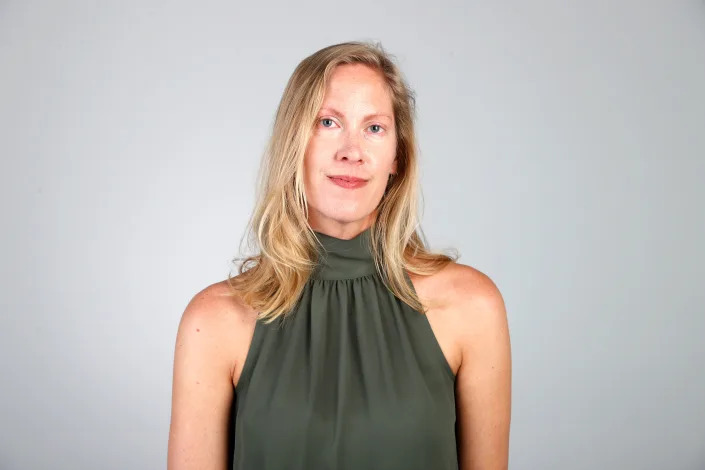
Harry Belafonte, Calypso King Who Worked for African American Rights, Dies at 96

Variety

Harry Belafonte, Calypso King Who Worked for African American Rights, Dies at 96

Chris Morris – April 25, 2023

Singer, actor, producer and activist Harry Belafonte, who spawned a calypso craze in the U.S. with his music and blazed new trails for African American performers, died Tuesday of congestive heart failure at his Manhattan home. He was 96.

An award-winning Broadway performer and a versatile recording and concert star of the ’50s, the lithe, handsome Belafonte became one of the first Black leading men in Hollywood. He later branched into production work on theatrical films and telepics.

More from Variety

As his career stretched into the new millennium, his commitment to social causes never took a back seat to his professional work.

An intimate of Dr. Martin Luther King Jr., Belafonte was an important voice in the ’60s civil rights movement, and he later embarked on charitable activities on behalf of underdeveloped African nations. He was an outspoken opponent of South Africa’s apartheid policies.

Among the most honored performers of his era, Belafonte won two Grammy Awards (and the Recording Academy’s Lifetime Achievement Award in 2000), a Tony and an Emmy. He also received the Motion Picture Academy’s Jean Hersholt Humanitarian Award at the Governors Awards ceremony in 2014.

Harold George Belafonte Jr. was born in New York but was sent to live with his grandmother in Jamaica at age 5, returning to attend high school in New York. But Jamaica’s indigenous calypso and mento would supply crucial material for his early musical repertoire.

After serving in the war, Belafonte gravitated to the New York theatrical scene. An early mentor was the famed Black actor, singer and activist Paul Robeson. He studied acting with Erwin Piscator and attended Broadway shows — on a single ticket he would hand off at intermission — with another struggling young actor, Sidney Poitier. Like Poitier, he performed at Harlem’s American Negro Theater.

Belafonte first made his mark, however, as a nightclub singer. Initially working in a pop and jazz vein, Belafonte began his singing career at New York’s Royal Roost and made his recording debut in 1949 on Roost Records. He soon developed a growing interest in American folk music.

A national tour and dates at New York’s Village Vanguard and Blue Angel followed. A scout for MGM spotted him at the latter venue and, following a screen test, Belafonte secured a role opposite Dorothy Dandridge in “Bright Road” (1953).

The same year, Belafonte made his Rialto debut in the revue “John Murray Anderson’s Almanac,” for which he received the Tony for best performance by a featured actor in a musical.

Ironically, while Belafonte was cast as a lead in Otto Preminger’s 1954 musical “Carmen Jones” — based on Oscar Hammerstein II’s Broadway adaptation of Bizet’s opera “Carmen” — his singing voice was dubbed by opera singer LeVern Hutcherson. Belafonte would soon explode in his own right as a pop singer.

He made his RCA Records debut in 1954 with “Mark Twain and Other Folk Favorites”; he had performed the titular folk song with his guitarist Millard Thomas in his Tony-winning Broadway turn. The 1956 LP “Belafonte,” featuring a similar folk repertoire, spent six weeks at No. 1.

Those collections were a mere warm-up to “Calypso.” The 1956 album sparked a nationwide calypso craze, spent a staggering 31 weeks at No. 1 and remains one of the four longest-running chart-toppers in history. It spawned Belafonte’s signature hit, “Banana Boat Song (Day-O),” which topped the singles chart for five weeks. A parody of that ubiquitous number by Stan Freberg reached No. 25 in 1957. Director Tim Burton employed the tune to bright effect in his 1988 comedy “Beetlejuice.”

Belafonte would cut five more top-five albums — including two live sets recorded at Carnegie Hall — through 1961. His 1960 collection “Swing Dat Hammer” received a Grammy as best ethnic or traditional folk album; he scored the same award for 1965’s “An Evening With Belafonte/Makeba,” a collaboration with South African folk artist Miriam Makeba.

He also supplied early employment for a future folk icon: His 1962 album “Midnight Special” featured harmonica work by Bob Dylan.

A frequent guest on TV variety shows, Belafonte became the first Black performer to garner an Emmy with his 1959 special “Tonight With Belafonte.”

Belafonte made his first steps into film production with two features he toplined: end-of-the-world drama “The World, the Flesh, and the Devil” (1959) and the heist picture “Odds Against Tomorrow” (1960). However, discontent with the roles he was being offered, he would remain absent from the big screen for the remainder of the ’60s and busied himself with recording and international touring as his involvement in the civil rights movement deepened.

Closely associated with clergyman-activist King, Belafonte provided financial support to the civil rights leader and his family. He also funded the Freedom Riders and the Student Non-Violent Coordinating Committee and was a key figure in the organization of the historic March on Washington of August 1963.

The racial tumult of the ’60s hit close to home: In 1968 he became the center of a furor when he appeared as a guest star on an NBC special hosted by British pop singer Petula Clark. During a performance of an anti-war ballad, Clark clutched Belafonte’s arm. Doyle Lott, VP for sponsor Chrysler-Plymouth, was present at the taping and demanded the number be excised, saying the “interracial touching” might offend Southern viewers. But Clark, who owned the show, put her foot down and the show aired as recorded, while exec Lott was fired by the automaker.

Belafonte returned to feature films in 1970 in the whimsical “The Angel Levine” alongside Zero Mostel. He co-starred with old friend Poitier in the comedies “Buck and the Preacher” (1972) and “Uptown Saturday Night” (1974), both directed by Poitier.

His acting appearances would be sporadic for the remainder of his career. Notably, he appeared opposite John Travolta in “White Man’s Burden” (1995), an alternate-universe fantasy-drama about racism; Robert Altman’s ensemble period drama “Kansas City” (1996); and “Bobby” (2006), Emilio Estevez’s account of Sen. Robert Kennedy’s 1968 assassination.

In 1985, Belafonte’s activism and musicianship intertwined when he helped organize the recording session for “We Are the World,” the all-star benefit single devoted to alleviating African famine. His appearance on that huge hit led to “Paradise in Gazankulu” (1988), his first studio recording in more than 10 years.

His latter-day production work included the 1984 hip-hop drama “Beat Street” and the 2000 miniseries “Parting the Waters,” based on historian Taylor Branch’s biography of Martin Luther King Jr.

In 2002, “The Long Road to Freedom: An Anthology of Black Music,” an immense collection of African and African-American music recorded and compiled by Belafonte over the course of a decade and originally set for release by RCA in the ’70s, was finally released as a five-CD set on Universal’s Buddha imprint. It garnered three Grammy nominations.

In later years, Belafonte remained as outspoken as ever, and his views sometimes courted controversy. He was a foe of South African apartheid, opposed the U.S.’s Cuban embargo and denounced George W. Bush’s military incursion into Iraq.

Belafonte was the son of a Jamaican housekeeper and a Martiniquan chef, spending the early and late parts of his childhood in Harlem but the crucial middle period in Jamaica. He enlisted in the Navy in 1944; during his service, he encountered the writing of W.E.B. DuBois, co-founder of the NAACP and a key influence.

He was accorded the Kennedy Center Honor in 1989 and the National Medal of the Arts in 1994.

Belafonte published his memoir “My Song,” written with Michael Shnayerson, in 2011. Susanne Rostock’s biographical documentary “Sing Your Song” was released in early 2012.

He is survived by his third wife Pamela; daughters Shari, Adrienne and Gina; son David; stepchildren Sarah and Lindsey; and eight grandchildren.

Garden planning from the book cellar

Resiliance – Food and Water

Garden planning from the book cellar

By Eliza Daley, orig. pub. by: By my solitary hearth – April 24, 2023

garden
Photo by Annie Spratt on Upsplash

It’s spring, so obviously it’s time to get the garden in production. For those who don’t know where to start or who just want more tips I have some recommendations on books that I use every year in planning and implementing food production. I know I just talked about my book-free kitchen, however, this is one very important caveat — I definitely use books for the intersection of kitchen and garden. These books are less about cooking than growing, processing and storing the harvest, and all three affect food safety. So reference books are necessary.

I am reading a new one — The Backyard Homestead Book of Kitchen Know-How by Andrea Chesman (2015, Storey Publishing). Chesman lives on an acre in Vermont, so this book is highly relevant to me. However, with her decades of practical experience — in addition to her homestead life, she’s written many books and teaches classes on storing the harvest — there are tips for anyone anywhere who grows typical garden produce. I have already found useful suggestions and I have almost as much experience as she does, so I feel like this is a good book to recommend to anyone with a veg plot. One caution: her methods do tend to lean toward agricultural extension agency practices, lots of plastic and electricity. She acknowledges that not everybody is going to have the capacity to run two refrigerators and a chest freezer, but she also doesn’t talk as much about lower-energy preservation methods. However, she includes the most detailed instructions on drying food that I’ve ever encountered. Mostly without electricity. And since she does this in Vermont — in normal, New England summer humidity — I think I may have found my solution to that problem.

She also spends a bit at the beginning of the book talking about what you should grow. For example, if you don’t like stuffing squash in summer heat, don’t plant round varieties. And if your family is less than Victorian in number, then don’t plant more than a few bushes of all the summer squashes put together. But she doesn’t talk as much about gardening as she does about produce, so there isn’t good information on yields and varieties. I have other books for that.

Keeping the Harvest by Nancy Chioffi and Gretchen Mead (1991, Storey Publishing) is a slim but indispensable reference for basic recipes and techniques. It also contains a chart I have been using for decades: the yields of frozen veg per unit of harvest (bushels, heads, pounds, etc). This table is gold! Nothing is more annoying than running out of pint containers in the middle of processing veg, especially the chiles. With this chart, I know that I need at least 18 pint containers washed and ready when I tackle the 25 pound box of Big Jim peppers in August. They also give yields per unit of planting area (row feet, square feet, bushes, trees, etc). So if you are unsure about how many potatoes you should plant for a given yield or how much space will be necessary for that yield or even how much ‘yield’ you will be able to eat, then buy this book.

Another extremely useful reference book is Rosalind Creasy’s The Complete Book of Edible Landscaping (1982, Sierra Club Books). This is a permaculture book from before permaculture. I learned how to grow abundant food in small spaces from this one book. More a gardening manual than food processing book, Edible Landscaping contains general guides to growing and using just about every kind of fruit, veg and herb that might be grown in temperate climates. (And a few from more tropical conditions.) Creasy gives hardiness, growing season length, light and moisture needs, soil types and whatever else you need to grow a plant. She describes the different growing needs of different varieties of a given species also. For example, you may not live in a climate with the 1000 chill hours needed by Wolf River apples (my favorites), but there are plenty of apple varieties that can be grown in regions with warmer winters.

These two books are my main garden production planning references. I have many other books, but these are the ones that come out every year. I definitely recommend getting them if you are new to producing and storing your own food, or even if you just want to learn more about these skills that everyone will be needing in the not so distant future. However, I would also advise you to get at least one recently published reference on canning and preserving. This is one type of cookbook that I do use. Nobody should improvise on this stuff!

My two go-to garden planning books have plenty of recipes, however there have been many changes in the intervening decades on food safety recommendations. For just one example, it’s been determined that tomatoes are not high enough in acid to kill harmful microbes, so pressure-canning is safer than the water-bath canning I used to use on canned tomato sauce. Most of the recipes are fine and obviously I’m still alive after using them for many years, but that might just be because I’ve been lucky. (That, and botulism doesn’t stand a chance in my sterile kitchen…) But still, preserving low-acid veg is flirting with food poisoning even in the best conditions. So use up-to-date information on how to avoid that nightmare. I use Saving the Seasons by Mary Clemens Meyer and Susanna Meyer (2010, Herald Press), and I have the most recent copy of the USDA’s Complete Guide to Home Canning and Preserving (2008). I have a few other books on jams, chutneys and other high-acid things, but I always cross-reference cooking times and temperatures with the books I trust implicitly. And sometimes I even go look things up on extension agency websites, which presumably have the most recent information available.

So those books go very far toward planning a garden, including what use you’ll make of the produce. But to round out garden planning, especially for those who are looking to create a landscape that needs little maintenance and very few inputs, I have two other book recommendations. These are not quick reads, and maybe I should have suggested starting them last November, but they are invaluable in garden planning. The first is the classic ecology book by Donald Worster, Nature’s Economy (1977, Sierra Club Books). From how ecological balance is physically achieved to the history and ethics of the conservation movement, Worster’s book is a complete education. I only include one other book because it is written specifically for the garden: Ecology for Gardeners by Steven B. Carroll and Severn D. Salt (2004, Timber Press). If there is a fault in Worster’s book, it’s that he doesn’t talk as much as I’d like about the kinds of plants we grow intentionally. Carroll and Salt make up for that — and include lots of images! I don’t know about you, but I will never be able to sort out the good caterpillars from the evil spawn of hell without a good visual guide.

Hope these references help! They’ve inspired me to try new things and see the garden in new ways each year. And speaking of… it’s time to cut up the potatoes so they’ll be cured before planting time. So… I’m off to the cellar now.

Eliza Daley

Eliza Daley is a fiction. She is the part of me that is confident and wise, knowledgable and skilled. She is the voice that wants to be heard in this old woman who more often prefers her solitary and silent hearth. She has all my experience — as mother, musician, geologist and logician; book-seller, business-woman, and home-maker; baker, gardener, and chief bottle-washer; historian, anthropologist, philosopher, and over it all, writer. But she has not lived, is not encumbered with all the mess and emotion, and therefore she has a wonderfully fresh perspective on my life. I rather like knowing her. I do think you will as well.

Can lawmakers save the collapsing Florida home insurance market?

Bankrate

Can lawmakers save the collapsing Florida home insurance market?

Cate Deventer – April 24, 2023
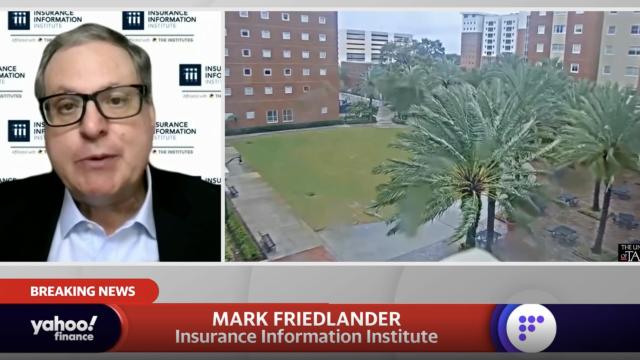
Hurricane Ian could be ‘one of the most severe loss events in U.S. history’: Insurance expert

Insurance Information Institute Director Mark Friedlander joins Yahoo Finance Live to discuss the fraud and over-litigation in Florida’s insurance markets, the losses expected from Hurricane Ian, and insurance reform legislation.

The Florida home insurance market has spent most of 2022 tumbling toward collapse, but recent legislation just might avert disaster. Bankrate dug deep into the Florida insurance industry to discover the cause of the problem and to report on the proposed solutions. We can help you understand why the Florida home insurance crisis is happening and your options if you receive a cancellation or nonrenewal notice on your homeowners insurance policy.

Lightbulb Key insights Governor Ron DeSantis signed a second insurance reform bill into law on December 16, 2022. Combined with earlier legislation, these new regulations may stabilize the spasming home insurance market.

Florida accounts for only 9 percent of the country’s home insurance claims but 79 percent of its home insurance lawsuits, many of them fraudulent.
Because of the fraudulent lawsuits and the high overall claim risk in Florida, insurance companies have faced two consecutive years with net underwriting losses over $1 billion.
The devastating damage from Hurricane Ian will likely put further strain on Florida insurers and could worsen the crisis.

The crisis in the Florida insurance market

Florida has always been a complex home insurance market, but recent issues are pushing the state’s market to the point of collapse. Since 2017, six property and casualty companies that offered homeowners insurance in Florida liquidated. Five more are in the liquidation process in 2022. Other insurance companies are voluntarily leaving the state. Even more are choosing to nonrenew swaths of home insurance policies, drastically tighten their policy eligibility requirements or request substantial rate increases.

For Florida homeowners, this is resulting in fewer home insurance companies and increased premiums. When a company goes insolvent, the Florida Insurance Guaranty Association (FIGA) takes on any claims that still need to be paid by that company. In late August, FIGA’s board and the Florida Office of Insurance Regulation (OIR) approved a .7 percent assessment to help cover the costs of open claims associated with the liquidated companies. That’s the second assessment this year, with a 1.3 percent assessment approved in March. Homeowners will pay these fees regardless of the insurance company they are with.

According to Logan McFaddin, Vice President of State Government Relations at the American Property Casualty Insurance Association,

Florida’s property insurance market is in crisis as insurers grapple with out-of-control litigation costs and billions in losses from recent natural disasters.

Florida’s Insurance Consumer Advocate (ICA) Tasha Carter agrees, saying, “Homeowners insurance options in Florida have become more and more limited, and consumers are facing dire consequences.”

Why are home insurance companies leaving Florida?

Florida insurers are canceling policies, leaving the state or liquidating at a rapid pace. Why? What is behind these companies’ aversion to insuring Florida homes?

Florida has always presented a risky market to home insurance companies due to the high threat of widespread weather-related damage, but the current crisis is caused by a number of factors reaching a boiling point at the same time.

Insurance fraud in Florida

The biggest issue right now in Florida is home insurance fraud, driven by fraudulent roofing claims. A proclamation from the office of Governor Ron DeSantis notes that, although Florida only accounts for 9 percent of the country’s home insurance claims, it is home to 79 percent of the country’s home insurance lawsuits. Many of these lawsuits are fraudulent. ICA Carter explains how the scams generally work:

  1. First, roofers canvas neighborhoods and offer inspections to unsuspecting homeowners. These contractors inevitably “find damage” on the roof and often promise a “free roof” to the homeowner, claiming they can have the home insurance deductible waived.
  2. Homeowners are pressured to sign an assignment of benefits form, giving contractors the right to file an insurance claim on their behalf.
  3. claims adjuster from the insurance company inspects the alleged damage. The adjuster either finds no damage or far more minimal damage than the contractor found, and the claim payout is less than what the contractor demanded.
  4. The contractor brings legal action against the insurance company, demanding a claim payout for the contractor’s original quote. Remember, the homeowner signed the benefits of the policy to the contractor, so the contractor doesn’t need the homeowner’s permission to do this.
  5. The insurance company now has a choice: it can pay the legal costs to fight the lawsuit or pay the costs to settle out of court. Either way, the insurance company loses money due to the legal action.

ICA Carter notes that “these schemes are real and are happening more frequently,” which puts more and more financial pressure on insurance companies, especially in a state with high claims costs due to weather-related events.

According to Mark Friedlander, Director of Corporate Communications at the Insurance Information Institute, “Florida property insurers are projected to post a cumulative underwriting loss of $1.7 billion for 2021” due to these runaway litigation costs. The governor’s office reports that, for two consecutive years, net underwriting losses have exceeded $1 billion. It’s no wonder that so many companies are going insolvent or leaving the state before they reach that point.

On top of that, Florida also previously had a “one-way attorney fee” system. This meant that, when a court ruled in favor of the plaintiff (in this case, a home insurance policyholder or the third-party contractor who filed the claim), the defendant (in this case, the insurance company) was responsible for paying the plaintiff’s attorney fees. So not only were insurers paying for fraudulent lawsuits, they were also paying for the fraudster’s legal costs. Friedlander notes that the insurance reform bill passed in December 2022 “addresses the two root causes of Florida’s residential insurance crisis — litigation abuse and assignment of benefits (AOB) abuse…Eliminating both is necessary to slow down the mass volume of lawsuits being filed against Florida insurers.” Going forward, assignment of benefits forms are banned for home insurance losses and Florida will no longer operate a one-way attorney fee system.

Roof age

Instead of leaving altogether, some companies are tightening their underwriting restrictions to lessen the risk of these scams. This may be the reason why several companies — including Southern Fidelity, Progressive and Universal — have chosen to continue operations in Florida but have nonrenewed tens of thousands of policies.

However, companies are now prohibited from denying coverage solely based on roof age if the roof is fewer than 15 years old and has a life expectancy of five years at the time the policy is issued. That said, insurers will have to decide if they are comfortable with these restrictions or if they will continue leaving Florida.

Storm risk

Risk will always be a consideration for home insurance companies in Florida. The state’s shape and geographic location mean that it could get hit from either side by a hurricane. Because the peninsula is so thin, even homes in the interior counties aren’t entirely protected.

To make matters worse, fraudulent claims may be more common after severe storms — and storms are not uncommon in the state. Hurricane Ian made landfall on September 28 as a powerful Category 4 storm, causing widespread damage. The damage and financial fallout could push the already-teetering home insurance market into collapse due to increased home repair expenses, including the potential of fraudulent roof claims.

However, although the risk of hurricane damage complicates things, it isn’t what’s driving the market to the brink of collapse. After all, other risky states don’t have this problem. A high likelihood of damage generally means paying a higher premium to offset that risk, but coverage is usually still available. Oklahoma, for example, has the highest average cost of home insurance in the nation at $3,593 per year for $250K dwelling coverage due to the likelihood of tornado damage, but homeowners in the state don’t face the same difficulty finding coverage that Floridians do.

Is anything being done to curb the crisis?

Yes, although the full effects of the measures have yet to be seen. Senate Bill 76 went into effect in July 2021 and included several provisions to curb fraudulent claims causing insurers so much strain. One such provision is aimed at reducing the solicitation tactics that fraudulent contractors often use at the start of a scam. While this legal measure may help solve the problem, Sean Harper, CEO of Kin Insurance, warns that “there will need to be additional action taken to restore the market to health.”

Florida lawmakers met for a special session from May 23 through May 27. The Legislature passed an insurance reform bill that includes several provisions to help slow the spiral of the market. The provisions included setting up the My Safe Florida Home Program, which provides grants to help Florida homeowners strengthen their homes against damage. Additionally, home insurance companies will not be able to deny coverage for homes solely based on roof age if a roof is less than 15 years old and still has five years of useful life left (older roofs may still be denied as they present a high risk of damage). Finally, lawyers will be restricted in the rates they can charge for property insurance claims cases, hopefully discouraging fraudulent lawsuits and decreasing litigation costs.

Update: December Special Session yields promising reform legislation

Additional legislation was signed into law on December 16, 2022. Senate Bill 2-A. The bill has numerous provisions but focuses on one-way attorney fees and the assignment of benefits scam. Friedlander told Bankrate:

“This is the strongest insurance reform package we have ever seen passed in Florida. It shows Florida’s new legislative leaders understand the enormity of the state’s property insurance crisis and are initiating decisive actions to create a path toward stability of the market.”

Doing away with one-way attorney fees and assignment of benefit forms could potentially remove massive financial pressure from insurance companies and reduce the number of fraudulent lawsuits. The combination of actions included in Senate Bill 2-A will hopefully buoy the rapidly-sinking insurers in the Florida market.

However, Friedlander notes that change won’t happen overnight: “…it will take time to see positive impacts of the legislative reform. We expect home insurance rates in Florida to remain high in 2023 due to expenses associated with ongoing litigation, combined with soaring reinsurance rates and double-digit replacement cost increases driven by escalating prices of construction materials and labor.”

In other words, relief may be coming, but it’ll likely take some time for homeowners and insurers to feel it.

Demotech responds to potential rating downgrades

Because many home insurance companies have been hit hard by the rampant and fraudulent litigation, they may no longer be as financially stable as they were. In late July 2022, financial strength rating company Demotech announced it was considering downgrading the financial strength ratings of 27 property insurance companies.

The situation is complex. While these carriers may no longer have the financial strength they used to, downgrading also causes issues. Downgrading financial ratings impacts homeowners with federally-backed mortgages — those from Fannie Mae and Freddie Mac — because these lenders require home insurance companies with Demotech ratings to maintain at least an ‘A’ level. Demotech has not released the names of the companies it is considering downgrading.

“Preliminary evaluations are just that — preliminary,” Demotech President Joe Petrelli told Bankrate. Some of the 27 could retain an ‘A’ or higher rating. But if these downgrades happen, homeowners whose coverage is with an affected company may need to find another insurance carrier in a market where options are already limited or expensive.

While a rating downgrade may present challenges for a company and its insureds, that hardship cannot, and does not, factor into our ratings, which are based on specific data and the objective application of our rating methodology.— Joe PetrelliPresident of Demotech

The Florida OIR established a reinsurance fund through its last-resort insurer, Citizens. This means that if an insurance company’s financial strength rating is downgraded below the ‘A’ level, the downgraded company could purchase coverage from Citizens to back it, similar to a co-signer backing a loan. Reinsurance through Citizens would allow the downgraded insurance company to meet Fannie Mae and Freddie Mac’s requirements. This is important because it would prevent policyholders from being required to find a new property insurer. However, a reinsurance solution further strains Citizens, which is already taking on substantial risk by insuring more policyholders in the state as other insurance companies exit Florida.

Learn more: Demotech downgrades and what they might mean for the Florida property insurance market

Update: Florida seeks to replace Demotech

On September 9, the Florida legislature approved a $1.5 million plan to search for a financial strength rating company to replace Demotech. The state will hire a consultant to seek out alternatives that may include finding another company or creating a state-backed financial strength rating agency. Petrelli released a statement in response:

“Since 1996 in Florida, Demotech has provided neutral, unbiased ratings to property insurers, among the approximately 50,000 such ratings we have produced across the country. Our review and analysis process has remained consistent throughout this time. Currently, at least four rating organizations acceptable to the government-sponsored mortgage enterprises operate in Florida and countrywide, and a research effort on rating alternatives could be accomplished at no cost to the taxpayers by reviewing existing Freddie Mac and Fannie Mae sellers or servicer guides. Today’s action is an unnecessary response to a problem that does not exist. The reality is that when Hurricane Andrew devastated the state nearly 30 years ago, the rating agencies involved in Florida chose to step away — but Demotech stepped up.”

It remains to be seen if finding another ratings agency will produce meaningful results toward correcting the Florida home insurance crisis. As always, Bankrate continues to monitor the situation.

How to lessen your risk of nonrenewal

If you live in Florida, having a plan could help you lessen your risk of receiving an insurance nonrenewal. There’s nothing you can do to prevent your company from pulling out of the state, but there are steps you can take to make your home as insurable as possible:

  • Keep your roof updated and in good shape: Inspect your roof regularly and repair minor damage as it happens. If you can afford to, replace your roof before it reaches 15 years of age to lessen the risk of being nonrenewed.
  • Install wind mitigation features: State law requires Florida home insurance companies to offer discounts for certain wind protection features, such as hurricane straps and other roof-bracing measures. These features lessen the risk of severe damage to your home, thus making your property more attractive to insurers.
  • Maintain your property: Generally, maintaining your property will make finding insurance coverage easier. Along with checking your roof, also regularly check the rest of the exterior features of your home for damage. You should also make sure no large tree branches or other potential hazards overhang your home, as these could put you at risk of roof damage in a windstorm.

Additionally, there are ways you can lessen the impact of home insurance fraud and help keep companies from having to liquidate. ICA Carter points out that “consumers have the power to help stop contractor fraud by being informed and reporting fraud.”

  • Know the signs and stay educated: ICA Carter created educational resources called “Demolish Contractor Fraud: Steps to Avoid Falling Victim” that may help homeowners recognize the signs of fraud, stop it before it happens and report it.
  • Be wary of solicitation: Soliciting business isn’t against the law, but contractors who canvas neighborhoods after storms — and especially those who offer incentives and rebates for an inspection — may be part of a scam. Instead, contact your insurance company if you are concerned your home sustained damage after a storm.
  • Do not sign an assignment of benefits form: These forms have been banned by Senate Bill 2-A, but keeping an eye out for them as you work with a contractor could still be useful. By keeping control of your policy, you decide if a lawsuit is filed, which vastly cuts down on fraudulent litigation. It’s worth noting that these forms are often buried within otherwise legitimate-looking contracts. Once you’ve signed, the form is legally binding, so it’s important to read everything you are asked to sign. Do not let a contractor simply point out a signature section on paperwork or scroll past the details on a tablet screen. Read the entire document carefully.

Additionally, some companies now offer a discount if you agree to make your policy unassignable. Kin is one such company, and Harper notes that having a high number of unassignable policies has shielded the company from much of the litigation nightmare ensnaring other carriers.

What to do if your home insurance has been canceled

If you’ve received a Florida homeowners insurance cancellation, act quickly. With hurricane season approaching and the insurance market in turmoil, getting another policy could be difficult, but it is possible.

McFaddin recommends that you “work closely with your insurer or insurance agent to see what options may be available to you.” ICA Carter’s advice was similar, advising that “consumers should contact their insurance agency immediately to determine what their options are for homeowners insurance.”

If you’re struggling to find home insurance coverage in Florida, there are still a few companies that may be able to help.

Kin

No home insurance company in Florida is immune to the ripping effects of raging litigation, but Harper notes that his company has “some things that we’re doing that allow us to stay open in Florida when other folks aren’t or are going out of business.” In addition to the bulk of the company’s policies being unassignable, the company also employs a unique system for assessing claim damage.

Harper explains that Kin uses software that monitors weather systems and accurately pinpoints which houses may be damaged. The company can then proactively reach out to homeowners to determine if a claim needs to be filed, thereby cutting out potentially predatory contractors.

It sounds crazy, right, to be an insurance company that is asking our customers for claims? But it actually pays off.— Sean HarperCEO of Kin Insurance

Citizens Property Insurance Corporation

Citizens is often one of the only options for homeowners in many areas of the state. The company has experienced rapid growth due to other carriers leaving the market. In 2018, the company had only 414,000 active policies; by August 2022, that number had ballooned to over 1,000,000. Michael Peltier, the spokesperson for Citizens, told Bankrate that the company is writing 5,000 to 6,000 new policies per week, and that in many parts of the state, Citizens is “the only game in town right now.”

Even so, Peltier says that “we do have underwriting guidelines,” so it may not be an option for all homeowners. Citizens is also affected by the same issues that are plaguing other insurance carriers and have recently raised their rates. Although the company requested a 10.7 percent increase on standard home insurance policies, the Florida OIR approved a 6.4 percent increase. While 6.4 percent is certainly better than 10.7 percent, it’s likely that many Citizens policyholders will still feel the strain of a larger bill. The rate increase will go into effect on September 1.

Additionally, Friedlander warns that, because Citizens is insuring so many of the high-risk homes that other carriers have walked away from, “a major hurricane striking Florida could have devastating effects” on the company and the industry. Offering reinsurance to companies if Demotech does downgrade ratings will add more risk to Citizens if a disaster strikes.

Citizens may get some relief from the December 2022 reform bill, though. Policyholders must now accept private insurance quotes if they are no more than 20 percent higher than Citizens’ quotes. Additionally, Citizens’ rates must be actuarially sound but are now required to be non-competitive with the private insurance market. Finally, Citizens policyholders will be required to carry flood insurance. Rates for a last-resort policy are likely to be higher going forward, but that should theoretically help curb the influx of policies that could drown Citizens entirely.

Update: Slide Insurance takes on some St. Johns and UPC policyholders after insolvency

Since its 2021 inception, Tampa-based company Slide Insurance has embraced taking on books of business from insolvent Florida home insurance companies.

In February of 2022, the Florida OIR announced that Slide would absorb about 147,000 policyholders from St. Johns Insurance Company when it reported its insolvency. In a similar move, approximately 72,000 UPC Insurance policyholders were transferred to Slide when UPC went belly-up in February 2023.

But what is Slide Insurance? Founded by former Heritage Insurance CEO Bruce Lucas, Slide is an insurtech that relies on AI and large data sets for its underwriting models. The company claims this is the edge it needs to thrive in the challenged Florida homeowners insurance market. Slide is rated A (Exceptional) by Demotech.

If you’re one of the many homeowners who have found themselves transferred to Slide, you might be wondering what’s next. According to the company, policyholders have no actions to take — as long as you pay your premiums, there will be no lapse of coverage. Additionally, Slide will notify your mortgage company for escrow purposes (if applicable).

One important thing to note is that Slide will not handle any open UPC claims that occurred before February 1, 2023. Instead, those that need help with an existing UPC claim should contact the UPC claims center directly.

Update: Florida OIR announces Tailrow Insurance Company as newest carrier to enter the Florida home insurance market

In April 2023, the Florida OIR announced that it approved the application for Tailrow Insurance Company, bringing a new carrier into the state.

While Tailrow is yet to be formed (the company has provisions to meet before the OIR will authorize it to do business), this may be a promising first step in stabilizing the market. Bankate’s experts are committed to staying on top of this story and will bring our readers new information as it unfolds.

The bottom line

Florida home insurance has always been complex due to the state’s high risk of storm damage, but the incidence of fraudulent roofing claims has pushed the market to the brink of collapse. The problem may not stay in Florida, either; if other high-risk states like Louisiana and California see an increase in insurance fraud, those markets could begin to degrade. There is hope, though, as measures are put into place to protect companies and policyholders from financial strength rating downgrades, laws are passed that could help curb scams and carriers take a different approach to insuring homes in the Sunshine State. But will these measures be enough to save a market in turmoil?

Joe Biden Wants to Make This Big Social Security Change

Joe Biden Wants to Make This Big Social Security Change — and Most Americans Could Be on Board With It

Updated Keith Speights – April 24, 2023

Key Points
  • Biden’s earlier plan for Social Security included a change similar to one he proposed recently to bolster Medicare.
  • The president’s idea appears to have solid public support from Americans.
  • While more changes will be needed to ensure Social Security’s solvency, this proposal would significantly reduce the program’s projected shortfall.
Two surveys — one in 2023 and another last year — appear to show that Americans like one of the president’s ideas to fix Social Security.

Social Security is in trouble. You know it. I know it. The program’s trustees definitely know it, recently reporting that Social Security will become insolvent one year earlier than previously forecast.

The president is also aware that something needs to be done to preserve Social Security. While his administration hasn’t proposed major reforms to Social Security yet, Joe Biden wants to make a big Social Security change based on his previous statements. And there’s reason to believe that most Americans could be on board with it.Social Security displayed on a highway sign.

Getty Images.

Biden’s big change

When Biden campaigned for president in 2020, he proposed several benefit increases for Social Security recipients. For example, he wanted to boost the benefits for older Americans who had been retired for at least 20 years. He also sought to increase the minimum benefit, allow surviving spouses to receive higher benefits, and eliminate penalties for public-sector workers.

However, the biggest Social Security change in Biden’s plan was to ask “Americans with especially high wages to pay the same taxes on those earnings that middle-class families pay.” In particular, he proposed increasing the payroll tax cap to $400,000. This cap is currently $160,200.

Thus far in his presidency, Biden hasn’t put forward a plan including this change. He did, though, include a similar idea for Medicare in his proposed 2023 budget. Biden called for a tax increase on all annual earnings above $400,000 to help preserve the federal healthcare program. 

What Americans think

A poll conducted by The Associated Press-NORC Center for Public Affairs Research last month appears to show that many Americans agree with the president’s ideas. Although this poll didn’t specifically ask about raising the Social Security payroll tax cap, the responses to other questions likely made the White House happy.

For example, a whopping 79% of Americans polled oppose reducing Social Security benefits. Three-quarters of those responding were against raising the full retirement age from 67 to 70. This aligns well with Biden’s commitments to prevent any cuts to Social Security. 

When asked about increasing taxes on households making more than $400,000 to help pay for Medicare, 58% of Americans favored the idea with another 19% on the fence. This doesn’t necessarily mean that similar numbers of Americans would favor raising the payroll tax cap to $400,000 to help fund Social Security. However, it seems to bode well for the president’s chances to gain public support should he move forward with the proposal.

Another survey conducted by the University of Maryland’s Program for Public Consultation (PPC) last year also looked good for Biden. The PPC survey found that 81% of respondents supported the proposal to apply payroll taxes to all income over $400,000 to fund Social Security. Importantly, the idea received bipartisan support, with 79% of Republicans and 88% of Democrats in favor.  

More changes needed

At least at this point, increasing the payroll tax cap appears to be one of the most likely reforms to help preserve Social Security’s benefits. However, this proposal won’t be enough on its own to ensure the program’s solvency over the long term.

The Social Security Administration estimates that raising the payroll tax cap to $400,000 beginning in 2024 would eliminate roughly 64% of the projected Social Security shortfall. This projection is close to the PPC’s estimate made last year that the change would reduce the program’s shortfall by 61%. 

The good news for retirees is that there are plenty of other alternatives available that would prevent Social Security from becoming insolvent in 2034. It’s also a positive sign that politicians from both major political parties are at least talking about ways to preserve the program.

While consensus hasn’t been reached on the best solutions yet, a bipartisan plan to fix Social Security remains a real possibility. In the meantime, the best thing for Americans approaching retirement to do is to save as much as they can and research ways to boost their overall retirement income.

Dangers from future technologies? It’s the current ones that are killing us

Resilience – Environment

Dangers from future technologies? It’s the current ones that are killing us

By Kurt Cobb, originally published by Resource Insights 

April 23, 2023

vision of the future
Image: “A futuristic vision: the advance of technology leads to rapid transport, sophisticated tastes among the masses, mechanization, and extravagant building projects. Coloured etching by William Heath” (1829). Via Wikimedia Commons https://commons.wikimedia.org/wiki/File:A_futuristic_vision_Wellcome_V0041098.jpg

Certainly, there a plenty of horror stories about possible disasters awaiting us from emerging technologies. I’ve written about two of them: 1) the possibility of small cheap, AI-guided drones used to commit mass slaughter (or targeted assassinations) and 2) lethal synthetic viruses for warfare or released by an apocalyptic cult trying to bring the apocalypse forward on the calendar. More recently, some have predicted that advances in artificial intelligence will ultimately lead to the destruction of humanity.

As bad as these sound, it’s possible that doomscrolling our way through the breathless coverage of dangerous new technologies is distracting us from what is already happening in right front of us: Existing technologies are already pushing humans quickly down the path to extinction (along with many plants and animals). Pretending that dangers to the survival of the human species come ONLY from the future is a perilous diversion.

In fact, the combination of climate change; the increasingly toxic pollution of the soil, water and air; depletion of arable soil, water, energy and critical metals; galloping development of wild and farm lands; and second order effects such as habitat and biodiversity loss, acidification of the oceans and dramatic loss of Greenland’s ice that may lead to a breakdown in the Gulf Stream ocean current that keeps much of Europe temperate—all this has gathered so much momentum that, frankly, we don’t need any help from the future to kill ourselves as a species. (Oh, I almost forgot; we could obliterate ourselves with a nuclear winter without any new nuclear technology or warheads needed.)

It turns out that we may be doing such a good job of threatening our species already that the emerging technologies we fear most will never get a chance to fully emerge. In the not-too-distant future, we humans may already be gone or our societies so degraded that launching a second apocalypse with the help of new technologies will be a practical impossibility. We won’t have the functioning infrastructure to do it!

And, that is basically the key to the lethality of most emerging technologies: connectivity. If communities become so isolated that inhabitants cannot travel to distant places harboring designer virus outbreaks, humanity will paradoxically be saved from extinction because of the loss of technology and any attendant mobility. Contemplate that for moment!

As for artificial intelligence, well, it needs a vast infrastructure of connected information sources to be effective. When I asked friends recently why we can’t literally just pull the plug on AI if it becomes dangerous, they had many explanations. But, perhaps the most telling one was that we have become so networked across the globe and AI will be so distributed, that we’d effectively have to pull the plug on ourselves—and we are not willing to do that even if not pulling the plug ultimately leads to our destruction.

Of course, the public has been told again and again that emerging technologies will bring abundance for all, solve climate change, get rid of pollution, cure most diseases, produce so much energy we’ll never have to think about the cost, and actually help regenerate the soil and the forests while increasing biodiversity.

I don’t know what they’ve been waiting for, but the tech overlords who’ve sold us this story had better get busy right now. There isn’t much time left for them to build out their “solutions.”

Kurt Cobb

Kurt Cobb is a freelance writer and communications consultant who writes frequently about energy and environment. His work has appeared in The Christian Science Monitor, Common Dreams, Le Monde Diplomatique, Oilprice.com, OilVoice, TalkMarkets, Investing.com, Business Insider and many other places. He is the author of an oil-themed novel entitled Prelude and has a widely followed blog called Resource Insights. He is currently a fellow of the Arthur Morgan Institute for Community Solutions.

A California journalist documents the far-right takeover of her town: ‘We’re a test case’

The Guardian

A California journalist documents the far-right takeover of her town: ‘We’re a test case’

Dani Anguiano in Redding with photographs by Marlena Sloss

April 22, 2023

In a seemingly long gone era – before the Trump presidency, and Covid, and the 2020 election – Doni Chamberlain would get the occasional call from a displeased reader who had taken issue with one of her columns. They would sometimes call her stupid and use profanities.

Today, when people don’t like her pieces, Chamberlain said, they tell her she’s a communist who doesn’t deserve to live. One local conservative radio host said she should be hanged.

Chamberlain, 66, has worked as a journalist in Shasta county, California, for nearly 30 years.

Never before in this far northern California outpost has she witnessed such open hostility towards the press.

She has learned to take precautions. No meeting sources in public. She livestreams rowdy events where the crowd is less than friendly and doesn’t walk to her car without scanning the street. Sometimes, restraining orders can be necessary tools.

Related: Far-right county throws out voting machines – with nothing to replace them

These practices have become crucial in the last three years, she said, as she’s documented the county’s shift to the far right and the rise of an ultraconservative coalition into the area’s highest office. Shasta, Chamberlain said, is in the midst of a “perfect storm” as different hard-right factions have joined together to form a powerful political force with outside funding and publicity from fringe figures.

The new majority, backed by militia members, anti-vaxxers, election deniers and residents who have long felt forgotten by governments in Sacramento and Washington, has fired the county health officer and done away with the region’s voting system. Politically moderate public officials have faced bullying, intimidation and threats of violence. County meetings have turned into hours-long shouting matches.

Chamberlain and her team at A News Cafe, the news site she runs, have covered it all. Her writing has made her a public enemy of the conservative crowd intent on remaking the county. Far-right leaders have confronted her at rallies and public meetings, mocking and berating her. At a militia-organized protest in 2021, the crowd screamed insults.

The response of parts of her community has left her shocked: “This isn’t how it’s supposed to be to be a journalist. I shouldn’t go to my car afraid one of these guys is gonna bash me in the head with a baseball bat,” she said on a beautiful spring day in Redding late last month.

But it has left her with a sense of urgency, a determination to warn readers about a movement that shows no signs of slowing down and could have national repercussions as extremists try to create a framework that could be replicated elsewhere. “I can’t imagine how bad things can get here,” she said.

A community swinging to the extreme right

A lifelong Shasta county resident, Chamberlain became a cub reporter in her late thirties. She went to college later in life after marrying her high school sweetheart and having children. She initially wanted to be a social worker but has always been drawn to scratching under the surface of things, she said, a tendency she attributed to her childhood: after the death of her mother, she and her sisters were raised by a family that was far less kind than they appeared to be from the outside.

For 10 years, she wrote a beloved column at the local newspaper, telling the stories of community characters and sharing her personal experiences, like her son’s deployment to Iraq. When she was laid off, a hundred people picketed outside the newspaper’s office.

With help from her son, she started A News Cafe, an online magazine that documents local affairs, and readers came with her. Just before Covid hit, she had considered selling the website, and then decided to scale back operations and change its focus to town happenings and recipes, a favorite topic of the hobby baker.

But then Covid shut down the state, and laid bare the bitter fault lines that divided this community.

Residents angry over pandemic closures began filling county meetings, sometimes forcing their way inside, and directed their ire at elected officials who enforced only the minimum restrictions required by the state. One local resident, Carlos Zapata, warned the board of supervisors at a meeting in August 2020 to reopen the county or things wouldn’t be “peaceful much longer”.

“When the ballot box is gone, there is only the cartridge box. You have made bullets expensive, but luckily for you, ropes are reusable,” another resident said at a board of supervisors meeting in January 2021.

Religious leaders defied state orders and continued holding events. Bethel church, a Redding megachurch with more than 11,000 members and a major footprint in this city of 92,000, reported hundreds of cases at its school of “supernatural ministry”.

But there was more than just a backlash under way. The anger coalesced into an anti-establishment movement backed financially by the Connecticut millionaire Reverge Anselmo, who has a longstanding grudge against the county over a failed effort to start a winery.

Leaders of the movement sought to recall county supervisors, and produced a glossy documentary series about their efforts to “take back” their county. In February 2022, voters ousted a longtime supervisor, a former police chief and self-described Reagan Republican, and gained control of the board of supervisors.

The climate in the area had shifted, residents said, and those who had expressed support for officials and Covid rules encountered hostility. One man had his tires slashed, Chamberlain said. Others reported being mocked and bullied in public for wearing masks.

Still, the recall election saw low turnout with just 41% of eligible voters casting a ballot. Though many residents opposed the rightwing agenda, they didn’t take the threat seriously, Chamberlain said.

Chamberlain followed the upheaval closely, and the far-right figures driving it, while still writing stories about the joys of loungewear and how to sell old belongings.

She began documenting the political developments through chatty and irreverent opinion columns, with analysis of what’s happening and who’s behind it, and warnings of the danger it poses to the community.

“As the shit storm of civil unrest piles up, the North State has become a tinderbox at the ready, on the verge of ignition. Slogans and memes are the kindling. Calls to action, aggression and civil war are often found on the same Facebook pages as family photos, holiday greetings and birthday wishes,” she wrote in August 2020.

Chamberlain and A News Cafe reporters were also often breaking news: a Bethel church leader officiating his son’s wedding, a large gathering held in defiance of Covid restrictions; a pandemic shortage of nurses temporarily closing a local neonatal intensive care unit; and a sheriff’s deputy promoting far-right extremist content on social media.

Chamberlain described Zapata, the resident who had threatened violence and had become the public face of Shasta county’s anti-establishment movement, as an “alt-right recall kingpin/militia member/bull-semen purveyor/restaurant owner/former Florida strip-club owner”. He lashed out in comments before the board of supervisor that Chamberlain was “coward” who wants to “poison children”.

Zapata told the Guardian he was frustrated with Chamberlain’s “incessant writing” about him and what he described as attacks on his reputation and his family. He argued he was cordial and willing to sit down for an interview, but feels Chamberlain has created a caricature of him by taking things out of context.

“I stand for the majority of residents in Shasta county who want to ensure Shasta county remains a safe and healthy place for our children to grow and prosper,” he said in a statement. “Doni doesn’t like that. That is why she has made it her priority to attack me in the name of journalism for several years.”

Zapata is the only person in Chamberlain’s three decade career whom she has refused to interview, the journalist said. Instead, she has quoted his statements and social media posts rather than speak with him directly. “He has used very abusive language. He has made threats against people. He doesn’t tell the truth often. I refuse to write things that I know are not going to be true.”

Chamberlain has made a point of not interacting with those who attack her directly, and continuing her reporting. But the exchanges, along with the menacing, graphic threats to her and her staff and others in the community, and the lack of action from law enforcement have fundamentally changed how she approaches her job.

Last year, for example, A News Cafe reported that Zapata had threatened a local man in a voicemail, telling him he was a “dead motherfucker” for talking about Zapata’s wife. Zapata apologized and law enforcement forwarded the case to the district attorney, requesting a charge of terrorist threats, Chamberlain said, but nothing has come of it. “Every time one of those guys gets away with saying something like that, with zero consequences, it moves the line a little further.”

Zapata described the incident to the Guardian as a “situation between two grown men”. “It was handled and there hasn’t been any further issue,” he said.

But the threats make doing journalism in Shasta county particularly challenging, she added. Finding sources is difficult. Many people are afraid of speaking out, even anonymously.

And her family worries for her. Her son has put cameras all around the house. For Mother’s Day, he gifted her gel pepper spray. She keeps an air horn next to her bed.

Chamberlain’s twin sister has warned her not to poke the bear.

“I say, ‘I’m not poking a bear, I’m just holding a flashlight, I’m reporting things other people can’t go report,’” she said. “I feel a moral responsibility to let people know what’s happening.”

Amid the rage, a loyal following

Chamberlain has vocal opponents, but she also has devoted followers.

As local journalism across the US disappears, Chamberlain has found a winning formula. Her site attracts more than 100,000 unique visitors a month, according to Chamberlain, and hundreds donate, locally and from across the US. She has several paid editorial staff members, even more than the local newspaper, she says. She’s looking to hire more.

At a board of supervisors meeting in March on the hiring of a new county CEO and the voting system, audience members could be seen browsing her site. (It had just published two bombshell stories: one revealing that police were investigating the county’s top candidate for said CEO job, a leader of a California secessionist group, for an incident with a teenage girl at a local business; the other an analysis from the county clerk about the risks of introducing an untested manual tally voting system in response to disproven theories about Dominion voting machines.) Chamberlain was sitting in the front of the room, her notebook and pen in hand.

In the back of the chambers, Jeff Gorder, the retired Shasta county public defender who came to urge supervisors to keep its voting system intact, said he was a longtime reader of the site. “What would we do without journalists like that to follow up on all of these issues? We’d really been in a world of hurt. Journalism is going away at the local level, so I’m really glad that we have them,” he said. “She’s just very thorough.”

Chamberlain has no plans to slow down and said she pulls all-nighters at least four times a month.

“As a journalist, you couldn’t ask for a place to have a more exciting job because so much is happening here,” she said.

She balances her work with the things that bring her joy: baking, spending time with friends and working on her home.

“There’s so many things that are out of my control. And what’s happening in Shasta county, all that kind of stuff is out of my control. So what I do have control of is planting, I planted hundreds of bulbs,” Chamberlain said. “That’s an optimistic thing to do. And when I was planting them, I was thinking, ‘I wonder what things will be like here when those tulips bloom.’”

Still, she fears for the future of Shasta county and the repercussions it could have. “I think we’re a test case for rightwing folks like [Mike] Lindell,” she said. “These big heavy-hitting wealthy people are using Shasta county, I believe, as this little petri dish … And so far, it’s working. I’m watching it unveil before my very eyes. And it’s terrifying.”

If GOP doesn’t listen to Nancy Mace on abortion, the party can count on losing big in 2024

The Abilene Reporter – News – Opinion

If GOP doesn’t listen to Nancy Mace on abortion, the party can count on losing big in 2024

Ingrid Jacques, USA TODAY – April 22, 2023

South Carolina U.S. Rep. Nancy Mace seems to understand some things that many others in her Republican Party are missing.

On issues such as abortion and guns, compromise is going to be necessary – or the GOP will lose the support of all but its most devout proponents. And that is not a recipe for winning elections.

Since the Supreme Court overturned Roe v. Wade last year, Mace has advocated a “middle ground” approach to abortion rights, warning that extreme anti-abortion views allowing for few if any exceptions aren’t compassionate toward women and will alienate moderate conservatives and independent voters. The majority of Americans now support legal abortion in most cases, according to polls.

Voters supported abortion rights: Here’s what anti-abortion leaders should learn from it

“The middle, the independent voters, right of center, left of center, they cannot support us,” Mace said on a Sunday TV show.

Court battle renews focus on abortion

The midterm elections made it clear that voters were motivated on the issue of abortion, and many Republicans weren’t ready with a message that resonated – if they had one at all.

Even former President Donald Trump has pointed out that the GOP fell short on the issue. While he was likely trying to take the heat away from his own role in the party’s losses, he has a good point.

And now the legal battle over access to frequently used abortion pill mifepristone has brought fresh attention to the matter. After a federal judge in Texas halted Food and Drug Administration approval of the drug this month, the case has moved quickly through the courts.

The debate over this pill is a big deal, because more than half of abortions in the United States are medication abortions. Mifepristone is used in conjunction with misoprostol, which can also be used on its own. The two drugs are also used to treat miscarriages.

The Supreme Court is expected Wednesday to make a decision about whether to uphold an appeals court’s restrictions on the drug. Last week, the 5th U.S. Circuit Court of Appeals agreed with the Biden administration that FDA approval of mifepristone could continue, but it allowed other restrictions on the drug’s access to stand.

A plea for ‘common sense’

The judge’s decision sparked outrage from Democrats, including New York Rep. Alexandria Ocasio-Cortez, who said the Biden administration should simply ignore the ruling. Sen. Ron Wyden of Oregon echoed the sentiment.

Mace joined in shortly thereafter, saying she agreed with “ignoring it at this point.”

As I wrote previously about Ocasio-Cortez and Wyden, Mace took things too far by making the argument that the executive branch can simply ignore the judicial branch when it doesn’t like a court decision. The ruling needs to play out in the courts, and it is.

Her broader point is worthy of consideration, however.

“This is an issue that Republicans have been largely on the wrong side of,” Mace told CNN after the Texas judge’s decision. “We have, over the last nine months, not shown compassion toward women, and this is one of those issues that I’ve tried to lead on as someone who’s pro-life and just have some common sense.”

Political decisions on issues as impactful as abortion shouldn’t be based solely on polls. Yet conservatives have to realize that imposing too much change at once on citizens will backfire on them.

USA TODAY columnist Ingrid Jacques

Politicians and groups opposed to abortion should listen to voices like Mace and fine-tune a strategy going into 2024 that is reasonable and won’t create a backlash that could hurt the GOP for years to come.

Saying NO to a farm-free future

Resilience – Society

Saying NO to a farm-free future

By Chris Smaje, originally published by Small Farm Future

April 20, 2023

The time has come to announce my new book, Saying NO to a Farm-Free Future: The Case for an Ecological Food System and Against Manufactured Foods. It’ll be published in the UK on 29 June and the US on 20 July, with ebook and audio versions also available. So there’s no excuse… I’m delighted that Sarah Langford, the author of Rooted, is writing a foreword for it.

The folks at Chelsea Green have come up with this attractive but unfancy cover, which matches my feelings about the book.

I wrote the book in a two-month blur as a job of work that I felt somebody had to do to combat the head of steam building around the case for a farm-free future associated with George Monbiot’s book Regenesis and the Reboot Food initiative. And if that somebody was me, so be it.

My original motivation was mainly just to critique the fanciful ecomodernism of Reboot Food, which I believe is apt to bedazzle people of goodwill but with limited knowledge of food and farming into thinking that a technological solution is at hand that will enable them to continue living high-energy, urban consumerist lifestyles while going easy on the climate and the natural world. Really, it isn’t. The danger is that farm-free bromides will, as usual with ecomodernism, instil a ‘great, they’ve fixed it!’ complacency at just the time when we need to jettison the techno-fix mentality and radically reimagine our social and political assumptions.

So the book takes a somewhat polemical approach in critiquing the arguments for manufactured food. But actually I found that this provided a pretty good foil for making an alternative case for agrarian localism, what I call in my book ‘a predominantly distributed rural population, energy restraint, diverse mixed farming for local needs, wildlands, human-centred science, popular smallholder democracy and keystone ecology’. So the book has that more positive framing too, much of which will be familiar to regular readers of this blog or of my previous book, although I like to think I’ve pushed a few things forwards. Still, it’s a short book, so a more detailed exposition awaits.

What I don’t and won’t do is offer some alternative technical or social one-size-fits-all solution. Solutionism of this kind is itself part of the problem. I daresay that will lead to some incomprehension in the book’s reception along the lines that if I can’t provide an alternative ‘answer’, then I can’t have anything worthwhile to say. Naturally, I don’t subscribe to that line of reasoning. Researchers, opinion-mongers and writers of books just don’t have ‘the answer’, whereas you – whoever ‘you’ are – probably do have part of an answer locally. But you have to work at it. Maybe my book will help. In that sense, what I offer is a bit like the answer of farming itself. Instead of the magic beans and golden geese of the Reboot Food narrative, all I can realistically offer is a bare seedbed awaiting productive work. The scene then has to be peopled by others, ordinary working people, doing the work.

Or maybe you could think of the book as an exercise in rewilding, because the nature of wildness is that you can’t really tell what’s going to happen next.

Anyway, I’ll be interested to see what kind of reception the book gets. Possibly, it’s presumptuous of me to expect it’ll get much of a reception at all, but my tweet from a few days back announcing the book has had around 34,000 views – so by my humble standards I think there may be an appetite out there for this.

I’m not going to steal my own thunder from the book pre-publication, but I thought I’d offer loyal readers of this blog a few tidbits by way of a sneak preview.

So, after some introductory material the book asks whether the energetics and economic geography implied in the manufactured food narrative are feasible (as I just said, I can’t give too much away just now about the book’s contents, but I’ll offer a clue: the answer is a two-letter word beginning with ‘n’). Then I consider whether the case against the wildlife and climate impacts of familiar plant-and-livestock based agriculture articulated in manufactured food narratives is plausible (answer: it’s complicated – let’s call it a two-letter word beginning with ‘n’ again, but with a side of three-letter word beginning with ‘y’). Next, I move on to examine whether a farm-free future for humanity is likely to involve what ecomodernist pioneer Stewart Brand called ‘urban promise’ – urbanization as a positive and prosperity-enriching experience. On that one, we’re back to a straightforward answer – the two-letter ‘n’ word again. Or at least we are if we have any commitment to justice. Finally, I make an alternative case for agrarian localism as the best means of securing human and natural wellbeing and climate stability, involving long-term human relationships with the land that, like all long-term relationships, require regular and ongoing work.

So there you have it. If you’d like to read the full version (or alternatively hear me reading it) I’d suggest pre-ordering a copy now! But I daresay I’ll write more about its themes on this blog once the book is out, albeit most likely with a bit less expounding than I devoted to my previous one.

Chris Smaje

Chris Smaje has coworked a small farm in Somerset, southwest England, for the last 17 years. Previously, he was a university-based social scientist, working in the Department of Sociology at the University of Surrey and the Department of Anthropology at Goldsmiths College on aspects of social policy, social identities and the environment. Since switching focus to the practice and politics of agroecology, he’s written for various publications, such as The Land , Dark Mountain , Permaculture magazine and Statistics Views, as well as academic journals such as Agroecology and Sustainable Food Systems and the Journal of Consumer Culture . Smaje writes the blog Small Farm Future, is a featured author at www.resilience.org and a current director of the Ecological Land Co-op. Chris’ latest book is: A Small Farm Future: Making the Case for a Society Built Around Local Economies, Self-Provisioning, Agricultural Diversity, and a Shared Earth.

Japan has almost completely eliminated gun deaths — here’s how

Business Insider

Japan has almost completely eliminated gun deaths — here’s how

Chris Weller, Erin Snodgrass, Katie Anthony, Azmi Haroun, Lloyd Lee – April 20, 2023

japan gun shotgun
japan gun shotgun

AP

  • Japan is a country of more than 127 million people, but it rarely sees more than 10 gun deaths a year.
  • Culture is one reason for the low rate, but gun control is a major one, too.
  • Japan has a long list of tests that applicants must pass before gaining access to a small pool of guns. 

A recent spate of mass shootings has prompted intensified discussions around gun control in the US.

On Saturday, four people were killed and 32 were injured in a shooting in Dadeville, Alabama, during a 16th birthday party. Last month, a 28-year-old woman opened fire at The Covenant School in Nashville, Tennessee, killing three elementary school students and three adult staff members, according to police.

The attacks come on the heels of several other mass shootings in the past year, including at a Fourth of July parade in Illinois, in a supermarket in Buffalo, New York, and at an elementary school in Uvalde, Texas.

There was 17 mass shooting this year, with 88 people killed, according to The Associated Press.

One of the biggest questions being asked: How does the US prevent this from happening over and over again?

Although the US has no exact counterpart elsewhere in the world, some countries have taken steps that can provide a window into what successful gun control looks like. Japan, a country of 127 million people and yearly gun deaths rarely totaling more than 10, is one such country.

“Ever since guns entered the country, Japan has always had strict gun laws,” Iain Overton, executive director of Action on Armed Violence, a British advocacy group, told the BBC. “They are the first nation to impose gun laws in the whole world, and I think it laid down a bedrock saying that guns really don’t play a part in civilian society.”

Japan is a country with regulations upon regulations

Japan’s success in curbing gun deaths is intimately linked with its history. Following World War II, pacifism emerged as one of the dominant philosophies in the country. Police only started carrying firearms after American troops made them, in 1946, for the sake of security. It’s also written into Japanese law, as of 1958, that “no person shall possess a firearm or firearms or a sword or swords.”

The government has since loosened the law, but the fact Japan enacted gun control from the stance of prohibition is important. (It’s also one of the main factors separating Japan from the US, where the Second Amendment broadly permits people to own guns.)

If Japanese people want to own a gun, they must attend an all-day class, pass a written test, and achieve at least 95% accuracy during a shooting-range test. Then they have to pass a mental-health evaluation, which takes place at a hospital, and pass a background check, in which the government digs into their criminal record and interviews friends and family. They can only buy shotguns and air rifles — no handguns — and every three years they must retake the class and initial exam.

japan riot police
Even Japanese riot police infrequently turn to guns, instead preferring long batons.Toru Hanai/Reuters

Japan has also embraced the idea that fewer guns in circulation will result in fewer deaths. Each prefecture — which ranges in size from half a million people to 12 million, in Tokyo — can operate a maximum of three gun shops; new magazines can only be purchased by trading in empty ones; and when gun owners die, their relatives must surrender the deceased member’s firearms.

The role of trust can’t be overstated

The result is a situation where citizens and police seldom wield or use guns.

Off-duty police aren’t allowed to carry firearms, and most encounters with suspects involve some combination of martial arts or striking weapons. When Japanese attacks do turn deadly, they generally involve fatal stabbings. In July of 2016, an assailant killed 19 people in an assisted living facility. Japan rarely sees so many fatalities from guns in an entire year.

Yet even Japan is not immune to gun violence. The assassination of former the county’s former Prime Minister Shinzo Abe on July 8, 2022, shocked the nation. Abe was shot and killed by a shooting suspect wielding what appeared to be a homemade firearm constructed of metal barrels attached to wood with black tape.

Video from the moments before Abe was shot show the suspect standing close behind him with little visible security around him. 

Nancy Snow, Japan director of the International Security Industrial Council, told Insider that Japan will be “forever changed” by Abe’s death.

“When I talk about Japan changing forever — the Japanese people, it’s hard to even have a conversation with them about the gun culture in the United States, without people getting viscerally upset thinking about it because they say, we’re not that country,” Snow said.

Gun control in Japan, combined with the prevailing respect for authority, has led to a more harmonious relationship between civilians and the police than in the US. It’s something of a chicken-egg problem: The police, in choosing to use sub-lethal force on people, generate less widespread fear among the public that they’ll be shot. In turn, people feel less of a need to arm themselves.

The US, meanwhile, has a more militarized police force that uses automatic weapons and armored cars. There is also less widespread trust between people (and between people and institutions). The factors combine to produce a much fearful culture that can seem to be always on-edge.

Japan’s approach would be a tough sell in the face of American gun culture, but it can provide a starting point for reining in the senseless violence that has become a hallmark of life in the US.

As Fears of Banking Crisis Surged, Members of Congress Sold Bank Shares

The New York Times

As Fears of Banking Crisis Surged, Members of Congress Sold Bank Shares

Kate Kelly – April 20, 2023

An account belonging to Representative Jared Moskowitz’s children sold shares of Seacoast Banking Corporation as fears of a banking crisis rattled investors. (AP)

WASHINGTON — On March 10, as fears were swirling over the health of the nation’s banks, an investment account belonging to the children of Rep. Jared Moskowitz, D-Fla., sold shares of Seacoast Banking Corp. worth $65,000 to $150,000.

Two days later, with the government working to control the crisis, Moskowitz said in a television interview that he had attended a bipartisan congressional briefing on the tumult. And on March 13, as investors fretted over the failure of Silicon Valley Bank and two other, smaller banks, Seacoast Banking shares fell nearly 20%.

A spokesperson for Moskowitz said in an email that the Seacoast share sales had been suggested by the congressman’s financial adviser as a means to diversify his young children’s holdings. Moskowitz said the congressional briefing on the bank crisis had taken place just before the television interview and after the shares were sold.

But the transaction was just one example of how members of Congress continue to buy and sell stocks and other financial assets in industries that intersect with their official duties.

At least eight members of Congress or their close relatives sold shares of bank stocks in March, according to an analysis by Capitol Trades, a project of the data firm 2iQ — a number that could rise in the coming days, as lawmakers make additional disclosures of trades made last month.

Although broadly legal, stock trading by members of Congress has become a flashpoint because lawmakers are sometimes privy to closely held information about the companies and industries they oversee.

A New York Times investigation last year showed that during a three-year period, nearly one-fifth of federal lawmakers or their immediate family members had bought or sold stocks or other securities that could have been affected by their legislative work.

Efforts to pass legislation to place limits on trading by members of Congress or to ban it have stalled in recent years. On Capitol Hill on Tuesday, Sen. Jeff Merkley, D-Ore., and Sen. Sherrod Brown, D-Ohio, announced a new bill intended to eliminate the practice that has 19 co-sponsors in the Senate.

A House version of the bill is co-sponsored by Rep. Michael Cloud, R-Texas, and Rep. Raja Krishnamoorthi, D-Ill.

“As the Silicon Valley Bank was closed, even during that period, there were reports that members of Congress were trading bank stocks,” Brown said. “I mean, imagine that — that members of Congress, we have more inside information,” he said, adding, “members of Congress are able, because of our jobs, to know more about the economy.”

Rep. Dan Goldman, D-N.Y., sold shares of First Republic Bank, the large depositor that was rapidly losing both cash and clients, on March 15, the day before it received an industry bailout of $30 million.

The wife and children of Rep. Ro Khanna, D-Calif., sold First Republic shares that same day. Rep. John Curtis, R-Utah, sold shares in First Republic from a joint account with his spouse on March 16, the day the industry bailout occurred.

By that time, First Republic shares had already fallen nearly 80% from a February peak. The timing of the sales by those three lawmakers or their relatives meant that the sellers averted an additional price swoon that was still to come. First Republic stock is down nearly 90% since the beginning of this year.

A spokesperson for Goldman has said that his portfolio is managed by a third party without his knowledge and that he is setting up a blind trust to avoid any appearance of a conflict of interest. Khanna has said that his filings relate to trades made by a diversified trust belonging to his wife and young children and that he has no involvement in it. Spokespersons for Curtis did not respond to requests for comment.

Some members were also buying bank shares during the volatility. On March 17, Rep. Nicole Malliotakis, R-N.Y., bought shares of New York Community Bancorp after private discussions with New York state bank regulators. Her transaction was first reported by The Wall Street Journal.

Two days later, New York Community Bancorp bought assets belonging to the failed Signature Bank — a deal that prompted its biggest share rally ever. Around that same time, other lawmakers, including Sen. Gary Peters, D-Mich., and family members of Khanna, bought shares in larger U.S. banks, like Truist Financial. Goldman, among other transactions, made a series of purchases of shares in foreign banks, like Lloyds Banking Group and Mizuho Financial Group.

A spokesperson for Malliotakis said that her financial adviser had recommended the purchase and that it amounted to less than $5,000 in value. A spokesperson for Peters did not respond to questions about the transaction.