Cheater in Chief, Pele Trump: Donald Trump’s nightmare golf shank caught on camera, and it’s embarrassing

Insider

Donald Trump’s nightmare golf shank caught on camera, and it’s embarrassing

Alia Shoaib – July 16, 2023

Trump LIV Golf
Former President Donald Trump.AP Photo/Seth Wenig
  • Donald Trump hit a terrible shot during a round of golf, shanking the ball way right of the green.
  • The former president’s poor shot was caught on camera at Trump National Golf Club in Los Angeles.
  • Trump has embraced reports he has a 2.8 handicap, but observers say he is not as good as he claims.

Former President Donald Trump was caught on video hitting a terrible golf shot, shanking the ball way right of his intended target.

In the video posted on Twitter, the person filming can be heard saying: “Trump’s shooting right now. Let’s see if he can hit the green.”

Despite being a few feet from the putting green, Trump takes his swing and sends the ball flying away from the hole and into the rough.

“Oh, he shanked it,” the commentator said in the video, filmed at the Trump National Golf Club in Los Angeles, and started laughing.

The former president is known to be an avid golfer, owning several golf courses and often devoting his spare time to the sport.

He has also embraced reports listing him as the greatest golfer of any US president with a handicap of 2.8, per The Independent. The average golf handicap for men in 2022 was 14.1, per the United States Golf Association.

But many observers have questioned Trump’s golfing prowess, with the ranking mocked by social media users.

Rick Reilly, a sportswriter, also cast doubt on the figure, writing in a book about Trump’s golfing: “If Trump is a 2.8, Queen Elizabeth is a pole vaulter.”

Others who have played with Trump agree that he may not be quite as good as some have made out.

Former pro golfer Brad Faxon said Trump was “a legit 10,” and former LPGA golfer Annika Sörenstam guessed he was “a 9 or 10,” per Golf Digest.

Former President Donald Trump at Trump National Golf Club Bedminster on July 28, 2022.
Former President Donald Trump at Trump National Golf Club Bedminster on July 28, 2022.Jonathan Ferrey/LIV Golf via Getty Images

Trump has also often been accused of serially cheating in golf.

“Trump doesn’t just cheat at golf,” Reilly wrote in his book about Trump’s golf.

“He throws it, boots it, and moves it. He lies about his lies. He fudges and foozles and fluffs. At Winged Foot, where Trump is a member, the caddies got so used to seeing him kick his ball back onto the fairway they came up with a nickname for him: ‘Pele.'”

Early this year, Trump claimed victory against “many fine golfers” in the Trump International Golf Club’s Senior Championship, despite reportedly missing one tournament day.

According to The Daily Mail, Trump’s competitors were surprised when they showed up to the course on Sunday only to find that the former president had claimed a five-stroke lead. According to the report, Trump claimed that an earlier round would count for his score in lieu of him having missed the start of the tournament.

Federal judge rules Oregon’s tough new gun law is constitutional

Associated Press

Federal judge rules Oregon’s tough new gun law is constitutional

July 15, 2023

FILE – Firearms are displayed at a gun shop in Salem, Ore., Feb. 19, 2021. A federal judge has ruled Oregon’s voter-approved gun control measure, one of the toughest in the nation, is constitutional. Oregon voters in November narrowly passed Measure 114, which requires residents to undergo safety training and a background check to obtain a permit to buy a gun. The Oregon measure’s fate has been carefully watched as one of the first new gun restrictions passed since the Supreme Court ruling last June. (AP Photo/Andrew Selsky, File) (ASSOCIATED PRESS)More

PORTLAND, Ore. (AP) — A federal judge has ruled Oregon’s voter-approved gun control measure – one of the toughest in the nation – is constitutional.

U.S. District Judge Karin Immergut ruled that banning large capacity magazines and requiring a permit to purchase a gun falls in line with “the nation’s history and tradition of regulating uniquely dangerous features of weapons and firearms to protect public safety,” Oregon Public Broadcasting reported.

The decision comes after a landmark U.S. Supreme Court decision on the Second Amendment that has upended gun laws across the country, dividing judges and sowing confusion over what firearm restrictions can remain on the books. It changed the test that lower courts had long used for evaluating challenges to firearm restrictions, telling judges that gun laws must be consistent with the “historical tradition of firearm regulation.”

Oregon voters in November narrowly passed Measure 114, which requires residents to undergo safety training and a background check to obtain a permit to buy a gun.

The legislation also bans the sale, transfer or import of gun magazines with more than 10 rounds unless they are owned by law enforcement or a military member or were owned before the measure’s passage. Those who already own high-capacity magazines can only possess them at home or use them at a firing range, in shooting competitions or for hunting as allowed by state law after the measure takes effect.

Large capacity magazines “are not commonly used for self-defense, and are therefore not protected by the Second Amendment,” Immergut wrote. “The Second Amendment also allows governments to ensure that only law-abiding, responsible citizens keep and bear arms.”

The latest ruling in U.S. District Court is likely to be appealed, potentially moving all the way up to the U.S. Supreme Court.

The Oregon measure’s fate has been carefully watched as one of the first new gun restrictions passed since the Supreme Court ruling last June.

Americans haven’t felt this good about the economy in almost two years

Yahoo! Finance

Americans haven’t felt this good about the economy in almost two years

Josh Schafer, Reporter – July 14, 2023

A commonly followed measure of consumer confidence in the US economy just increased to the highest level since September 2021.

The first July reading of the University of Michigan Consumer Sentiment Index showed a reading of 72.6 on Friday. The print came in significantly higher than the 65.5 economists had expected and reflected a 13% increase from the month prior. That marks the fastest pace since December 2005, when the economy was recovering from Hurricane Katrina.

“The sharp rise in sentiment was largely attributable to the continued slowdown in inflation along with stability in labor markets,” Surveys of Consumers director Joanne Hsu said in the release.

Consumers have had plenty to be bullish about recently, including a month of largely strong economic dataupbeat reports to kick off second quarter earnings, and waning fears of a second Federal Reserve rate hike in the back half of the year propelling the 2023 stock market rally higher.

A 19% surge in long-term business conditions and a 16% increase in short-run business conditions were the primary drivers behind Friday’s surprise print, according to the University of Michigan. The report did, however, include a slight uptick in consumers’ inflation expectations.

The expectations for inflation over the next year are now at 3.4%, up from 3.3% in June but down from the highs of 5.4% in April 2022. Analysts had anticipated one-year inflation expectations to tick down to 3.1%

“Easing concerns about a recession, which had been garnering a ton of headlines in the media for most of the year, may have helped push sentiment and expectation higher,” Oxford Economics chief US economist Ryan Sweet wrote on Friday.

Consumers have had plenty to be bullish about recently, including strong June jobs numbers and data showing that inflation eased during the month. (Photo by Allison Joyce/Getty Images)

The Friday release follows a week of upbeat economic data. On Wednesday, the Consumer Price Index for June came in cooler than projected, rising at its slowest pace since March 2021. On Thursday, the Producer Price Index painted a similar picture. The labor market, meanwhile, continued to show resilience with weekly jobless claims of 237,000 coming in lower than expectations for 250,000 claims and below the week prior’s 249,000 claims.

Last week’s June jobs report showed the labor market is cooling with nonfarm payroll additions coming in short of expectations for the first time in 15 months. But economists were quick to note that the economy still added 209,000 jobs, the unemployment ticked lower to 3.6%, and average hourly earnings grew 4.4% from the year prior.

At scale, that data paints a picture of a tight labor market where Americans have jobs while prices for goods continue to decrease.

Death Valley visitors drawn to the hottest spot on Earth during ongoing US heat wave

Associated Press

Death Valley visitors drawn to the hottest spot on Earth during ongoing US heat wave

TY O’NEIL  – July 14, 2023

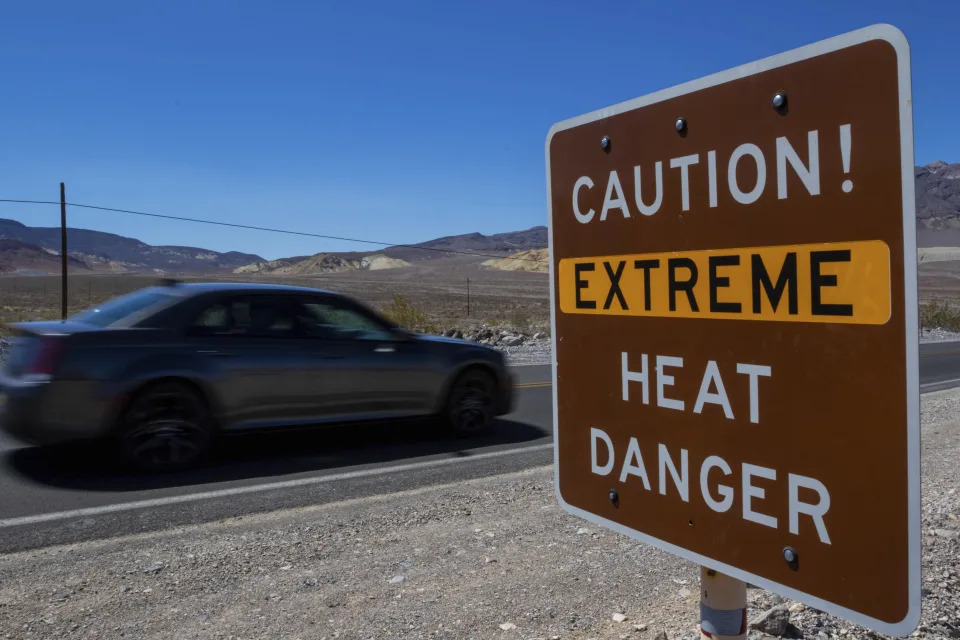
A sign stands warning of extreme heat Tuesday, July 11, 2023, in Death Valley National Park, Calif. July is the hottest month at the park with an average high of 116 degrees (46.5 Celsius). (AP Photo/Ty ONeil)
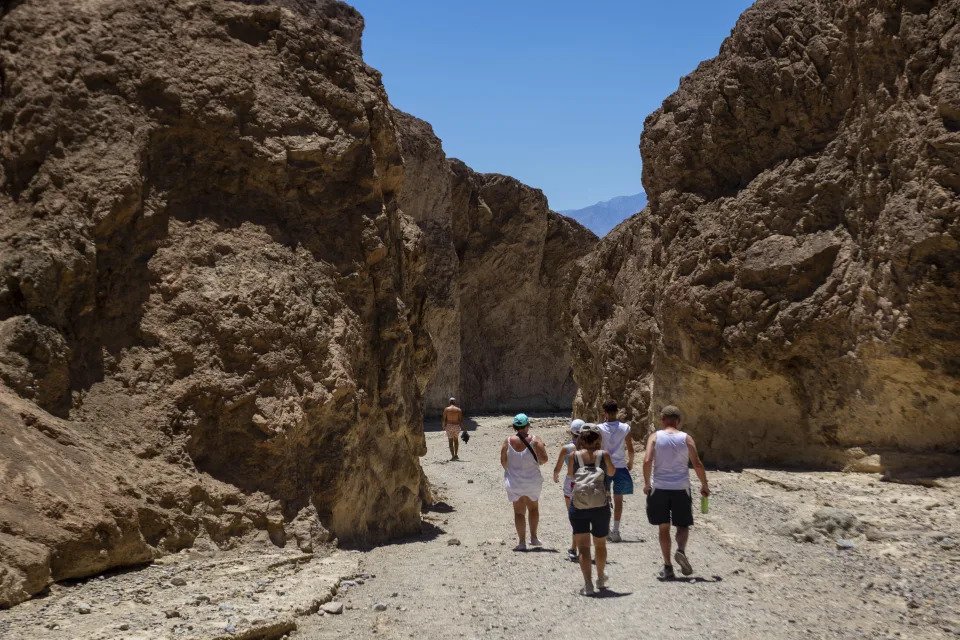
Hikers turn back to their vehicles in Golden Canyon on Tuesday, July 11, 2023, in Death Valley National Park, Calif. July is the hottest month at the park with an average high of 116 degrees (46.5 Celsius). (AP Photo/Ty ONeil)
People run to get sunset photos at Zabriskie Point on Saturday, July 8, 2023, in Death Valley National Park, Calif. July is the hottest month at the park with an average high of 116 degrees (46.5 Celsius). (AP Photo/Ty ONeil)
A man explores the Mesquite Flat Sand Dunes on Tuesday, July 11, 2023, in Death Valley National Park, Calif. July is the hottest month at the park with an average high of 116 degrees (46.5 Celsius). (AP Photo/Ty ONeil)
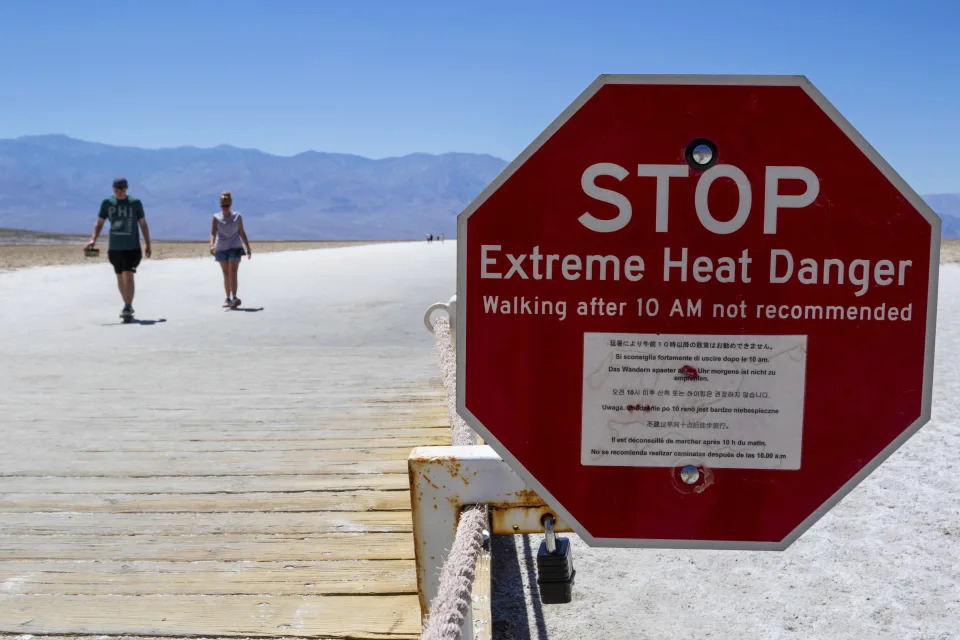
A sign warns people of extreme heat in multiple languages on Tuesday, July 11, 2023, in Death Valley National Park, Calif. July is the hottest month at the park with an average high of 116 degrees (46.5 Celsius). (AP Photo/Ty ONeil)

DEATH VALLEY NATIONAL PARK, Calif. (AP) — As uninviting as it sounds, Death Valley National Park beckons.

Even as the already extreme temperatures are forecast to climb even higher, potentially topping records amid a major U.S. heat wave, tourists are arriving at this infamous desert landscape on the California-Nevada border.

Daniel Jusehus snapped a photo earlier this week of a famed thermometer outside the aptly named Furnace Creek Visitor Center after challenging himself to a run in the sweltering heat.

“I was really noticing, you know, I didn’t feel so hot, but my body was working really hard to cool myself,” said Jusehus, an active runner who was visiting from Germany. His photo showed the thermometer reading at 120 degrees Fahrenheit (48.8 degrees Celsius).

Most visitors at this time of year make it only a short distance to any site in the park — which bills itself as the lowest, hottest and driest place on Earth — before returning to the sanctuary of an air-conditioned vehicle.

This weekend, the temperatures could climb past 130 F (54.4 C), but that likely won’t deter some willing to brave the heat. Signs at hiking trails advise against venturing out after 10 a.m., though nighttime temperatures are still expected to be over 90 F (32.2 C). The hottest temperature recorded at Death Valley was 134 F (56.6 C) in July 1913, according to the National Park Service.

Other parks have long-standing warnings for hikers. At Grand Canyon National Park in Arizona, officials are cautioning people to stay off the trails for most of the day in the inner canyon, where temperatures can be 20 degrees hotter than the rim.

In west Texas, Big Bend National Park near the Rio Grande is expected to be at least 110 F (43.3 C). The National Weather Service has said it’s best to just stay off the trails in the afternoon.

The precautions vary across parks and landscapes, said Cynthia Hernandez, a park service spokesperson. Certain trails might be closed if conditions are too dangerous. Alerts and restrictions are posted on websites for individual parks, Hernandez said.

Preliminary information form the park service shows at least four people have died this year from heat-related causes across the 424 national park sites. That includes a 65-year-old man from San Diego who was found dead in his vehicle at Death Valley earlier this month, according to a news release.

Death Valley National Park emphasizes self-reliance over expectations of rescue. While rangers patrol park roads and can assist motorists in distress, there’s no guarantee lost tourists will get aid in time.

More than 1.1 million people annually visit the desert park, which sits over a portion of the California-Nevada border west of Las Vegas. At 5,346 square miles (13,848 square kilometers), it’s the largest national park in the Lower 48. About one-fifth of the visitors come in June, July and August.

Many are tempted to explore, even after the suggested cutoff times. Physical activity can make the heat even more unbearable and leave people feeling exhausted. Sunbaked rocks, sand and soil still radiate after sunset.

“It does feel like the sun has gone through your skin and is getting into your bones,” said park Ranger Nichole Andler.

Others mentioned feeling their eyes drying out from the hot wind sweeping through the valley.

“It’s very hot. I mean, especially when there’s a breeze, you would think that maybe that would give you some slight relief from the heat, but it just really does feel like an air blow dryer just going back in your face,” said Alessia Dempster, who was visiting from Edinburgh, Scotland.

Death Valley is a narrow, 282-foot (86-meter) basin that is below sea level but situated among high, steep mountain ranges, according to the park service’s website. The bone-dry air and meager plant coverage allows sunlight to heat up the desert surface. The rocks and the soil emit all that heat in turn, which then becomes trapped in the depths of the valley.

The park’s brownish hills feature signage saying “heat kills” and other messaging, such as a Stovepipe Wells sign warning travelers of the “Savage Summer Sun.”

Still, there are several awe-inspiring sites that draw tourists. Badwater Basin, made up of salt flats, is considered the lowest point in all of North America. The eye-opening 600-foot (183-meter) Ubehebe Crater dates back over 2,000 years. And Zabriskie Point is a prime sunrise viewing spot.

Eugen Chen from Taiwan called the park “beautiful” and an “iconic … very special place.”

Josh Miller, a visitor from Indianapolis who has been to 20 national parks so far, shared that sentiment.

“It’s hot, but the scenery is awesome,” he said. ___ Associated Press writer Terry Tang in Phoenix contributed to this story.

House Republicans push through defense bill limiting abortion access and halting diversity efforts

Associated Press

House Republicans push through defense bill limiting abortion access and halting diversity efforts

 Lisa Mascaro and Kevin Freking – July 14, 2023

WASHINGTON (AP) — The House passed a sweeping defense bill Friday that provides an expected 5.2% pay raise for service members but strays from traditional military policy with Republicans add-ons blocking abortion coverage, diversity initiatives at the Pentagon and transgender care that deeply divided the chamber.

Democrats voted against the package, which had sailed out of the House Armed Services Committee on an almost unanimous vote weeks ago before being loaded with the GOP priorities during a heated late-night floor debate this week.

The final vote was 219-210, with four Democrats siding with the GOP and four Republicans opposed. The bill, as written, is expected to go nowhere in the Democratic-majority Senate.

Efforts to halt U.S. funding for Ukraine in its war against Russia were turned back, but Republicans added provisions to stem the Defense Department’s diversity initiatives and to restrict access to abortions. The abortion issue has been championed by Sen. Tommy Tuberville, R-Ala., who is singularly stalling Senate confirmation of military officers, including the new commandant of the Marine Corps.

“We are continuing to block the Biden administration’s ‘woke’ agenda,” said Rep. Lauren Boebert, R-Colo.

Turning the must-pass defense bill into a partisan battleground shows how deeply the nation’s military has been unexpectedly swept up in disputes over race, equity and women’s health care that are now driving the Republican Party’s priorities in America’s widening national divide.

During one particularly tense moment in the debate, Democratic Rep. Joyce Beatty of Ohio, a former chairwoman of the Congressional Black Caucus, spoke of how difficult it was to look across the aisle as Republicans chip away at gains for women, Black people and others in the military.

“You are setting us back,” she said about an amendment from Rep. Eli Crane, R-Ariz., that would prevent the Defense Department from requiring participation in race-based training for hiring, promotions or retention.

Crane argued that Russia and China do not mandate diversity measures in their military operations and neither should the United States. “We don’t want our military to be a social experiment,” he said. “We want the best of the best.”

When Crane used the pejorative phrase “colored people” for Black military personnel, Beatty asked for his words to be stricken from the record.

Friday’s voted capped a tumultuous week for House Speaker Kevin McCarthy, R-Calif., as conservatives essentially drove the agenda, forcing their colleagues to consider their ideas for the annual bill that has been approved by Congress unfailingly since World War II.

“I think he’s doing great because we are moving through — it was like over 1,500 amendments — and we’re moving through them,” said Rep. Marjorie Taylor Greene, R-Ga. She told reporters she changed her mind to support the bill after McCarthy offered her a seat on the committee that will be negotiating the final version with the Senate.

Democrats, in a joint leadership statement, said they were voting against the bill because Republicans “turned what should be a meaningful investment in our men and women in uniform into an extreme and reckless legislative joyride.”

“Extreme MAGA Republicans have chosen to hijack the historically bipartisan National Defense Authorization Act to continue attacking reproductive freedom and jamming their right-wing ideology down the throats of the American people,” said the statement from Reps. Hakeem Jeffries of New York, Katherine Clark of Massachusetts and Pete Aguilar of California.

The defense bill authorizes $874.2 billion in the coming year for the defense spending, keeping with President Joe Biden’s budget request. The funding itself is to be allocated later, when Congress handles the appropriation bills, as is the normal process.

The package sets policy across the Defense Department, as well as in aspects of the Energy Department, and this year focuses particularly on the U.S. stance toward China, Russia and other national security fronts.

Republican opposition to U.S. support for the war in Ukraine drew a number of amendments, including one to block the use of cluster munitions that Biden just sent to help Ukraine battle Russia. It was a controversial move because the weapons, which can leave behind unexploded munitions endangering civilians, are banned by many other countries.

Most of those efforts to stop U.S. support for Ukraine failed. Proposals to roll back the Pentagon’s diversity and inclusion measures and block some medical care for transgender personnel were approved.

GOP Rep. Ronny Jackson of Texas, who served as a White House physician, pushed forward the abortion measure that would prohibit the defense secretary from paying for or reimbursing expenses relating to abortion services.

Jackson and other Republicans praised Tuberville for his stand against the Pentagon’s abortion policy, which was thrust into prominence as states started banning the procedure after the Supreme Court decision last summer overturning the landmark Roe v. Wade law.

“Now he’s got support, he’s got back up here in the House,” Jackson said.

But it’s not at all certain that the House position will stand as the legislation moves to the Senate, which is preparing its own version of the bill. Senate Democrats have the majority but will need to work with Republicans on a bipartisan measure to ensure enough support for passage in their chamber.

McCarthy lauded the House for gutting “radical programs” that he said distract from the military’s purpose.

Democratic members of the House Armed Services Committee, led by Rep. Adam Smith of Washington state, dropped their support due to the social policy amendments.

Smith, who is white, tried to explain to Crane and other colleagues why the Pentagon’s diversity initiatives were important in America, drawing on his own experience as a businessman trying to reach outside his own circle of contacts to be able to hire and gain deeper understanding of other people.

Smith lamented that the bill that the committee passed overwhelmingly “no longer exists. What was once an example of compromise and functioning government has become an ode to bigotry and ignorance.”

Associated Press writers Farnoush Amiri, Stephen Groves and Mary Clare Jalonick contributed to this report.

The Energy Transition Is Underway. Fossil Fuel Workers Could Be Left Behind.

The New York Times

The Energy Transition Is Underway. Fossil Fuel Workers Could Be Left Behind.

Madeleine Ngo – July 14, 2023

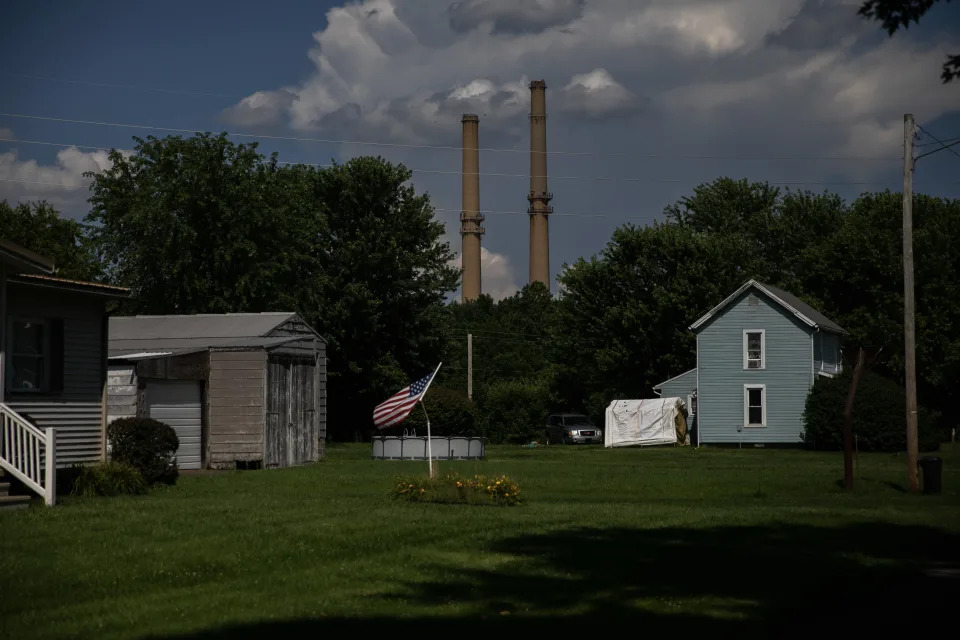
The decommissioned Conesville Power Plant in Conesville, Ohio, on July 5, 2023. (Maddie McGarvey/The New York Times)

WASHINGTON — Tiffany Berger spent more than a decade working at a coal-fired power plant in Coshocton County, Ohio, eventually becoming a unit operator making about $100,000 annually.

But in 2020, American Electric Power shut down the plant, and Berger struggled to find a job nearby that offered a comparable salary. She sold her house, moved in with her parents and decided to help run their farm in Newcomerstown, Ohio, about 30 minutes away.

They sell some of the corn, beans and beef they harvest, but it is only enough to keep the farm running. Berger, 39, started working part time at a local fertilizer and seed company last year, making just one-third of what she used to earn. She said she had “never dreamed” the plant would close.

“I thought I was set to retire from there,” Berger said. “It’s a power plant. I mean, everybody needs power.”

The United States is undergoing a rapid shift away from fossil fuels as new battery factories, wind and solar projects, and other clean energy investments crop up across the country. An expansive climate law that Democrats passed last year could be even more effective than Biden administration officials had estimated at reducing fossil fuel emissions.

While the transition is projected to create hundreds of thousands of clean energy jobs, it could be devastating for many workers and counties that have relied on coal, oil and gas for their economic stability.

Estimates of the potential job losses in the coming years vary, but roughly 900,000 workers were directly employed by fossil fuel industries in 2022, according to data from the Bureau of Labor Statistics.

The Biden administration is trying to mitigate the impact, mostly by providing additional tax advantages for renewable energy projects that are built in areas vulnerable to the energy transition.

But some economists, climate researchers and union leaders said they are skeptical the initiatives will be enough. Beyond construction, wind and solar farms typically require few workers to operate, and new clean energy jobs might not necessarily offer comparable wages or align with the skills of laid-off workers.

Coal plants have been shutting down for years, and the nation’s coal production has fallen from its peak in the late 2000s. U.S. coal-fired generation capacity is projected to decline sharply to about 50% of current levels by 2030, according to the Energy Information Administration. About 41,000 workers remain in the coal mining industry, down from about 177,000 in the mid-1980s.

The industry’s demise is a problem not just for its workers but also for the communities that have long relied on coal to power their tax revenue. The loss of revenue from mines, plants and workers can mean less money for schools, roads and law enforcement. A recent paper from the Aspen Institute found that from 1980 to 2019, regions exposed to the decline of coal saw long-run reductions in earnings and employment rates, greater uptake of Medicare and Medicaid benefits and substantial decreases in population, particularly among younger workers. That “leaves behind a population that is disproportionately old, sick and poor,” according to the paper.

The Biden administration has promised to help those communities weather the impact, for both economic and political reasons. Failure to adequately help displaced workers could translate into the kind of populist backlash that hurt Democrats in the wake of globalization as companies shifted factories to China. Promises to restore coal jobs also helped Donald Trump clinch the 2016 election, securing him crucial votes in states such as Pennsylvania.

Federal officials have vowed to create jobs in hard-hit communities and ensure that displaced workers “benefit from the new clean energy economy” by offering developers billions in bonus tax credits to put renewable energy projects in regions dependent on fossil fuels.

If new investments like solar farms or battery storage facilities are built in those regions, called “energy communities,” developers could get as much as 40% of a project’s cost covered. Businesses receiving credits for producing electricity from renewable sources could earn a 10% boost.

The Inflation Reduction Act also set aside at least $4 billion in tax credits that could be used to build clean energy manufacturing facilities, among other projects, in regions with closed coal mines or plants, and it created a program that could guarantee up to $250 billion in loans to repurpose facilities like a shuttered power plant for clean energy uses.

Brian Anderson, the executive director of the Biden administration’s interagency working group on energy communities, pointed to other federal initiatives, including increased funding for projects to reclaim abandoned mine lands and relief funds to revitalize coal communities.

Still, he said that the efforts would not be enough, and that officials had limited funding to directly assist more communities.

“We’re standing right at the cusp of potentially still leaving them behind again,” Anderson said.

Phil Smith, the chief of staff at the United Mine Workers of America, said that the tax credits for manufacturers could help create more jobs but that $4 billion likely would not be enough to attract facilities to every region. He said he also hoped for more direct assistance for laid-off workers, but Congress did not fund those initiatives.

“We think that’s still something that needs to be done,” Smith said.

Gordon Hanson, the author of the Aspen Institute paper and a professor of urban policy at the Harvard Kennedy School, said he worried the federal government was relying too heavily on the tax credits, in part because companies would likely be more inclined to invest in growing areas. He urged federal officials to increase unemployment benefits to distressed regions and funding for workforce development programs.

Even with the bonus credit, clean energy investments might not reach the hardest-hit areas because a broad swath of regions meets the federal definition of an energy community, said Daniel Raimi, a fellow at Resources for the Future.

“If the intention of that provision was to specifically provide an advantage to the hardest-hit fossil fuel communities, I don’t think it’s done that,” Raimi said.

Local officials have had mixed reactions to the federal efforts. Steve Henry, the judge-executive of Webster County, Kentucky, said he believed they could bring renewable energy investments and help attract other industries to the region. The county experienced a significant drop in tax revenue after its last mine shut down in 2019, and it now employs fewer 911 dispatchers and deputy sheriffs because officials cannot offer more competitive wages.

“I think we can recover,” he said. “But it’s going to be a long recovery.”

Adam O’Nan, the judge-executive of Union County, Kentucky, which has one coal mine left, said he thought renewable energy would bring few jobs to the area, and he doubted that a manufacturing plant would be built because of the county’s inadequate infrastructure.

“It’s kind of difficult to see how it reaches down into Union County at this point,” O’Nan said. “We’re best suited for coal at the moment.”

Federal and state efforts so far have done little to help workers like James Ault, 42, who was employed at an oil refinery in Contra Costa County, California, for 14 years before he was laid off in 2020. To keep his family afloat, he depleted his pension and withdrew most of the money from his 401(k) early.

In early 2022, he moved to Roseville, California, to work at a power plant, but he was laid off again after four months. He worked briefly as a meal delivery driver before landing a job in February at a nearby chemical manufacturer.

He now makes $17 an hour less than he did at the refinery and is barely able to cover his mortgage. Still, he said he would not return to the oil industry.

“With our push away from gasoline, I feel that I would be going into an industry that is kind of dying,” Ault said.

The #1 Sign You Aren’t Drinking Enough Water—Plus, How To Tell if You’re *Overhydrated*

Parade

The #1 Sign You Aren’t Drinking Enough Water—Plus, How To Tell if You’re *Overhydrated*

Emily Laurence – July 13, 2023

There are times when nothing sounds better than gulping down a big glass of water, like after an intense workout or coming inside after spending hours in the sun. But if you only drink water when you’re sweating, your body isn’t going to function properly. Staying properly hydrated is immensely important—playing a role in body temperature control, delivering nutrients to cells, keeping organs functioning and staying mentally sharp. Even when fluid loss is just 1% of body weight, it will negatively impact brain function and mood.

This is exactly why it’s important to drink enough water continuously, even before signs of dehydration start to show. But how can you make sure you’re drinking enough? Doctors share the tell-tale signs that you need to up your water intake.

Related: Eat Your Way to Better Hydration! Try These 7 Fresh and Hydrating Foods

How To Tell You Aren’t Drinking Enough Water: The Number One Sign

According to integrative medicine doctor and Cure medical advisor Dr. Dana Cohen, MD, the number one sign you aren’t drinking enough water is if it’s been more than three hours since you went to the bathroom last and when you do go, your pee is dark yellow. “The best way to measure your hydration levels is super easy: the frequency and color of your pee. You should be getting up to pee every two to three waking hours, and if you’re not, you’re probably dehydrated,” she says.

Dr. Cohen says that urine that’s pale yellow is a good indicator that you’re drinking enough. If it’s dark yellow, orange or brown, that means you’re not drinking enough. If your urine is clear, she says that’s a sign that you’re actually overhydrated, drinking more water than you need.

Related: Summer is Here! Learn the 10 Key Signs of Dehydration (and How to Fight It)

The one caveat to this, she says, is if you’ve eaten foods linked to discoloring urine, such as asparagus or beets. If you have, there’s another easy way to know you aren’t drinking enough water: if you’re thirsty. “The most common sign of inadequate hydration is feeling thirsty. If you consistently feel thirsty, it’s an indication that your body needs more fluids,” says Dr. Patrick Carter, DO, a board-certified family practitioner and the medical advisor for Prime IV Hydration & Wellness. However, he adds that there are other reasons someone may feel thirsty unrelated to hydration, including having certain medical conditions (like diabetes or sickle cell anemia).

Both doctors say that if you feel dizzy, fatigued, have a headache, or are experiencing muscle cramps and weakness, these are all signs of dehydration. Dr. Cohen says that signs of extreme hydration include anuria (no urine output), dizziness rendering the person unable to stand or walk normally, low blood pressure, fast heart rate, fever, lethargy, confusion and can lead to seizures, shock or coma. “These symptoms require immediate medical attention,” she says.

Related: This Is How Much Water People 50 and Older Should Drink Every Day, According to a Urologist

How To Stay Hydrated

Both doctors say hydration needs vary from person to person, but Dr. Carter says a good general guideline to follow is aiming to drink eight eight-ounce glasses of water a day. However, he adds that it’s important to take into account your individual needs, such as how active of a lifestyle you lead. “It’s always a good idea to consult with a healthcare professional to determine the appropriate amount of water for your specific needs,” Dr. Carter says.

When it comes to staying hydrated, both doctors say that while drinking water is important, drinking other liquids can help you meet your hydration goals. This includes herbal tea, unsweetened fruit juices, milk and electrolyte drinks. “I also recommend a green smoothie with chia seeds, as the fiber in the green smoothie acts like a sponge and holds onto hydration longer, while the minerals help move fluids into the center of your body more efficiently than plain bulk water,” Dr. Cohen explains. She adds that chia seeds hold up to 30 times their weight in water, which allows fluids and electrolytes to be held in the body longer.

If you struggle with remembering to drink enough water, Dr. Carter recommends setting reminders using your phone or an app like WaterllamaMy Water, or Aqualert. He also recommends carrying a reusable water bottle with you wherever you go, which serves as both a visual reminder and a way to meet your hydration needs.

Remember: It’s important to hydrate before you notice any symptoms of dehydration. Be mindful of your intake throughout the day and use your urine color and frequency as a hydration monitor. That way, you can function at your absolute best.

Next up, check out these 11 low-calorie drinks that will help you stay hydrated.

Florida orange harvest sees worst season since before World War II

Fox Weather

Florida orange harvest sees worst season since before World War II

Andrew Wulfeck – July 13, 2023

Florida orange harvest sees worst season since before World War II

MIAMI – Growers of the official fruit of the Sunshine State are continuing to struggle with orange production, which has reached its lowest levels since before World War II.

The U.S. Department of Agriculture held a teleconference on Wednesday when it announced the final 2022-23 season forecast of 15.85 million boxes of oranges, levels not seen since harvests in the 1930s.

The figure was in line with previous expectations and, like many other fruits, saw a significant drop in production from levels reported just one year ago.

During the 2021-22 season, over 41 million boxes were harvested, which was just a fraction of amounts produced during the late 1990s and early 2000s.

According to the USDA, orange production peaked in 1998 at 240 million boxes but saw a significant decline after the historic 2004 hurricane season.

ORANGE JUICE PRICES ON THE RISE: WHY WEATHER EXTREMES ARE TAKING A TOLL ON STRUGGLING FLORIDA CITRUS INDUSTRY

Harvesters have blamed weather disasters and citrus greening in recent years for the reduction in fruit production.

Citrus growers previously described the setbacks as “unprecedented” and told FOX Business that they were just trying to survive for a better day.

A report from the University of Florida’s Economic Impact Analysis Program estimated agriculture losses from 2022’s Hurricane Ian at around $1 billion.

The figure was on top of Hurricane Irma’s $2.5 billion in damage in 2017 and several billion dollars done by hurricanes in 2004.

FLORIDA SUFFERS $1 BILLION HIT TO AGRICULTURE INDUSTRY FROM HURRICANE IAN

In addition to weather disasters, citrus greening from an Asian bug discovered in the Lower 48 back in 1998 has been rampant.

According to university experts, once a tree becomes infected, its nutrient flow will slow and eventually impair its ability to produce fruit.

There is no known cure for citrus greening, meaning that a plant with the disease will deteriorate until it dies.

Trees producing grapefruits, lemons, tangerines, tangelos and other fruits are also susceptible to the disease.

According to USDA estimates, harvesters produced around 45% fewer boxes of grapefruit than last season and tangerines and tangelos saw a decline of around 36%.

Most major citrus operations have reached the end of the harvest season and won’t start up in earnest again until the fall and winter.

Another insurer is leaving Florida. How much is DeSantis to blame?

Tampa Bay Times, St. Petersburg, Fla.

Another insurer is leaving Florida. How much is DeSantis to blame?

Jay Cridlin, Tampa Bay Times – July 13, 2023

Gov. Ron DeSantis has signed more than 300 bills into law this year.

They include measures that touched on a broad swath of issues, including abortion, immigration, transgender care, space exploration, the death penalty, college diversity programs, phosphogypsum in road construction, alimony, a law enforcement registry for people with disabilities, drag shows, affordable housing and election reforms.

What wasn’t signed into law was a measure that might have prevented Farmers Insurance from announcing this week it was dropping tens of thousands of home, auto and umbrella policies in the state, following the lead earlier this year of insurers like United Property & Casualty.

In his bid for the Republican presidential nomination, DeSantis is promoting his record as governor, particularly how he’s led a reshaping of Florida’s education, diversity and investment policies.

But despite DeSantis signing multiple legislative packages since May 2022 designed to curtail skyrocketing rates, the state’s property insurance problem is still far from solved. More than a half-dozen insurers have withdrawn from Florida or faced insolvency in the past 18 months, all as record Atlantic Ocean temperatures have spurred hurricane forecasters to boost predictions for an above-average season this year.

DeSantis spokesperson Jeremy Redfern pointed to new laws targeting frivolous lawsuits against insurance companies and billions in funding to help insurers obtain backup reinsurance as evidence of the governor’s attention to the problem. The state is already seeing some progress in the form of new insurers entering the market, Redfern said.

“Even the most aggressive reforms will take time to affect the insurance industry,” Redfern said in an email. “The 2021, 2022, and 2023 legislative efforts will be effective.”

During a Wednesday radio appearance on the Howie Carr Show, DeSantis touted those legislative efforts, saying that, “because we did those reforms, it now is more economical for companies to come in. I think they’re going to wait through this hurricane season, and then I think they’re going to be willing to deploy more capital to Florida.”

”Knock on wood, we won’t have a big storm this summer,” DeSantis said. “Then I think you are going to start to see companies see an advantage.”

But Farmers’ abrupt exit Tuesday has opened DeSantis up to a fresh round of criticism that he and the Republican-led Legislature haven’t done enough to calm Florida’s insurance market.

“Knock on wood??? That’s not how this works,” Rep. Anna Eskamani, D-Orlando, said on Twitter. “Floridians need action on property insurance — not this.”

“It’s the No. 1 issue I hear about when I go talk to my constituents,” said Rep. Dan Daley, D-Coral Springs. “They’re not talking about drag shows. They don’t give a s—t about any of that. They care about being able to pay their property insurance bill and not being dropped by their insurer, and what we’ve done in this state is not really address that.”

Incremental change and patience

Property insurance reform was an issue in Florida long before DeSantis took office in 2019.

His first major action on the matter came that spring in the form of a bill limiting “assignment of benefits” claims, when contractors, not homeowners, seek reimbursement from insurers. DeSantis called it “meaningful” reform that “will protect Florida consumers from predatory insurance practices.” It was widely seen as a long-sought win for the insurance industry.

That more substantial changes weren’t an immediate priority reflects as much on the Legislature as it does on DeSantis, said former Republican state Sen. Jeff Brandes.

“This isn’t the battle he was taking on back then,” Brandes said. “He would tell you his statement was, ‘I will sign whatever the Legislature puts in front of me on property insurance.’ He said that comment multiple times. The Legislature chose not to send him anything.”

In May 2022, DeSantis convened a special legislative session designed to “stabilize the insurance market,” with an emphasis on targeting the “thousands of frivolous lawsuits” filed against insurance companies. The package that emerged included $2 billion in tax money to subsidize insurers’ reinsurance costs and $150 million to help hurricane-proof homes and tightened restrictions on suing insurers. DeSantis called it “the most significant reforms to Florida’s homeowners insurance market in a generation.”

After Hurricane Ian struck Southwest Florida, DeSantis called another session designed to “implement necessary reforms to the property insurance market.” In December, he signed a bill creating a $1 billion reinsurance fund and further tightening restrictions on lawsuits. Again, he called the reform “meaningful.”

“The issues in Florida’s property insurance market did not occur overnight, and they will not be solved overnight,” he said in a statement after signing. “The historic reforms signed today create an environment which realigns Florida to best practices across the nation, adding much-needed stability to Florida’s market, promoting competition, and increasing consumer choice.”

Then, during this year’s regular session, he signed a bill dubbed the Insurer Accountability Act, designed to impose transparency requirements on insurers and stiffen penalties on those that exhibited bad behavior. The law, he said, would “reinforce our commitment to Florida policyholders” and “protect consumers from predatory insurer practices.”

With each bill, supporters said it would take time to have a real impact.

“I do think that they were bold moves that will show positive changes for the homeowners’ industry over the coming years, but it is going to take two, three, four years for those changes to bear any fruit,” said Trevor Burgess, CEO of St. Petersburg flood insurer Neptune Flood. “And that’s because, for the past 10 years, there’s just been so much damage done. You’ve had all of these insurance companies fail. Those that haven’t failed have struggled, and so it’s been very difficult for anyone to make any money or build up any reserves.”

Brandes said that Farmers won’t be the last insurer to withdraw, and that he thinks rates will go up another 10% to 15% next year before stabilizing in 2025. But if DeSantis and the Legislature had done nothing, he said, “you wouldn’t have a market in Florida. You would have had 10 companies leaving instead of just one.”

Democrats say the changes under DeSantis represent positive steps; the bipartisan Insurer Accountability Act passed unanimously. But they’ve been too narrowly focused on tort reform, said House Minority Leader Fentrice Driskell, D-Tampa. In a statement explaining why it was leaving, Farmers didn’t even mention lawsuits.

In recent sessions, Democrats have proposed changes including a publicly elected insurance commissioner and blocking certain insurers from claiming insolvency. None gained traction.

“They don’t really know what to do,” Driskell said of Republican legislative leadership. “They keep trying to scramble and put together these piecemeal solutions that haven’t really stabilized the market or brought rates down. To me, it’s not so much a commitment of, ‘Oh, yes, we’re on top of this, there’s more to do, stay tuned.’ It’s more, ‘Eh, let’s try this. Oh, that didn’t work. Let’s see what we can try next.’”

That’s not all on DeSantis, she said; the House speaker and Senate president also have “so much power and authority in terms of shaping the policy agenda of this state.” But she also doesn’t see DeSantis pushing a more cohesive plan before a Legislature that rarely pushes back.

“I don’t even know what his plans and desires are with respect to property insurance, because he doesn’t articulate them,” she said. “He can articulate a blueprint for how to destroy DEI (diversity, equity and inclusion) in higher education. I have yet to see any blueprint for property insurance.”

“Distracted” by 2024

Since the Insurer Accountability Act was introduced in the Senate on March 31, DeSantis has spent at least 40 days out of state. He’s taken multiple campaign trips to the early-primary hotbeds of Iowa, New Hampshire and South Carolina; and he spent five days on an international trade trip to South Korea, Japan, Israel and the United Kingdom.

DeSantis hasn’t faced many questions about homeowners insurance on the presidential campaign trail. The most it became an issue was weeks before he officially entered the race, when former President Donald Trump took to social media, calling Florida’s latest insurance bill “the biggest insurance BAILOUT to Globalist Insurance Companies, in HISTORY.”

“He’s also crushed homeowners whose houses were destroyed in the Hurricane,” Trump wrote on his Truth Social platform. “They’re getting pennies on the dollar. His Insurance Commissioner does NOTHING, while Florida’s lives are ruined. This is the worst Insurance Scam in the entire COUNTRY!”

In stump speeches, DeSantis speaks about his legal battles with The Walt Disney Co., about his trips to the southern border with Mexico and about his campaign against corporate environmental, social and governance programs. He says little to nothing about Florida’s latest property insurance laws.

“He’s so ambitious and he’s so focused on that big goal that he’s let a lot of the everyday stuff go,” Driskell said. “You can’t just have a diet of red meat. You need some vegetables as well.”

One thing DeSantis does talk about is people moving to “the free state of Florida,” building and buying homes to escape “states governed by leftist politicians.”

“All I have to look at to see whether Chicago’s doing well, I just look at real estate values in Naples,” he said recently in New Hampshire. “When those are going up, I know Chicago’s done something stupid again, and people are fleeing.”

With pricier homes come pricier rates, though, which is keeping some residents from continuing to afford living here, said state Rep. Hillary Cassel, D-Dania Beach.

“If you can’t guarantee what your cost of insurance is going to be to insure that home, you can’t now become a homeowner,” Cassel said. “If your cost is going to increase 30% year after year after year, you can’t buy a house.”

In 2022, DeSantis called two special sessions on property insurance. Now that he’s running a national campaign, Driskell said he might be too “distracted” to do it again — although another catastrophic storm this season could change that.

Absent the right political motivation — whether it comes from a hurricane or from pressure on the campaign trail — Cassel isn’t sure lawmakers will swing back into action.

“Not with this leadership,” Cassel said. “Nope.”

More Clarence Thomas allegations stain the court: Lawyers with supreme court business paid Clarence Thomas aide via Venmo

The Guardian

Lawyers with supreme court business paid Clarence Thomas aide via Venmo

Stephanie Kirchgaessner in Washington – July 12, 2023

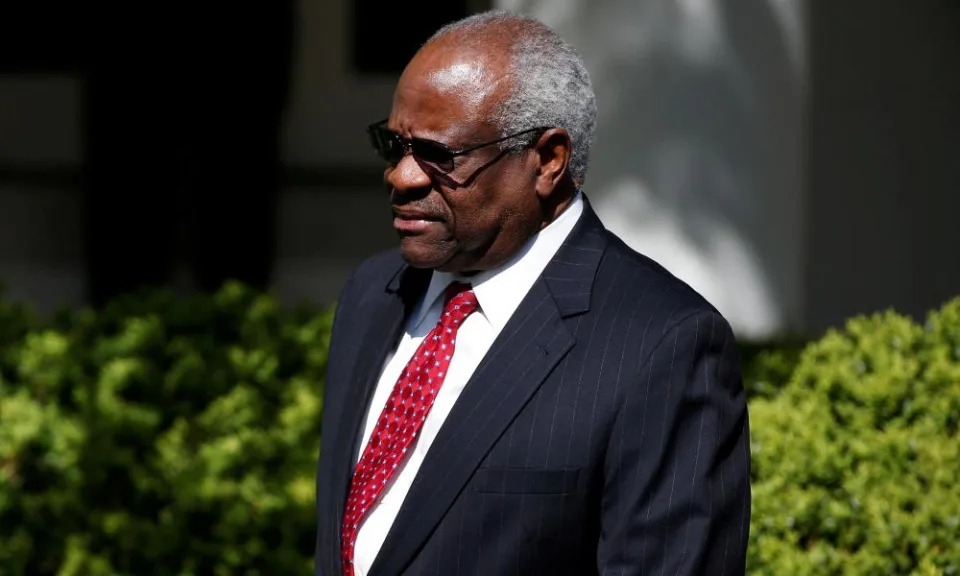
<span>Photograph: Joshua Roberts/Reuters</span>
Photograph: Joshua Roberts/Reuters

Several lawyers who have had business before the supreme court, including one who successfully argued to end race-conscious admissions at universities, paid money to a top aide to Justice Clarence Thomas, according to the aide’s Venmo transactions. The payments appear to have been made in connection to Thomas’s 2019 Christmas party.

The payments to Rajan Vasisht, who served as Thomas’s aide from July 2019 to July 2021, seem to underscore the close ties between Thomas, who is embroiled in ethics scandals following a series of revelations about his relationship with a wealthy billionaire donor, and certain senior Washington lawyers who argue cases and have other business in front of the justice.

Vasisht’s Venmo account – which was public prior to requesting comment for this article and is no longer – show that he received seven payments in November and December 2019 from lawyers who previously served as Thomas legal clerks. The amount of the payments is not disclosed, but the purpose of each payment is listed as either “Christmas party”, “Thomas Christmas Party”, “CT Christmas Party” or “CT Xmas party”, in an apparent reference to the justice’s initials.

However, it remains unclear what the funds were for.

The lawyers who made the Venmo transactions were: Patrick Strawbridge, a partner at Consovoy McCarthy who recently successfully argued that affirmative action violated the US constitution; Kate Todd, who served as White House deputy counsel under Donald Trump at the time of the payment and is now a managing party of Ellis George Cipollone’s law office; Elbert Lin, the former solicitor general of West Virginia who played a key role in a supreme court case that limited the Environmental Protection Agency’s ability to regulate greenhouse gas emissions; and Brian Schmalzbach, a partner at McGuire Woods who has argued multiple cases before the supreme court.

Other lawyers who made payments include Manuel Valle, a graduate of Hillsdale College and the University of Chicago Law School who clerked for Thomas last year and is currently working as a managing associate at Sidley, and Liam Hardy, who was working at the Department of Justice’s office of legal counsel at the time the payment was made and now serves as an appeals court judge for the armed forces.

Will Consovoy, who died earlier this year, also made a payment. Consovoy clerked for Thomas during the 2008-09 term and was considered a rising star in conservative legal circles. After his death, the New York Times reported that Consovoy had come away from his time working for Thomas “with the conviction that the court was poised to tilt further to the right – and that constitutional rulings that had once been considered out of reach by conservatives, on issues like voting rights, abortion and affirmative action, would suddenly be within grasp”.

None of the lawyers who made payments responded to emailed questions from the Guardian.

According to his résumé, Vasisht’s duties included assisting the justice with the administrative functioning of his chambers, including personal correspondence and his personal and office schedule.

Vasisht did not respond to an emailed list of questions from the Guardian, including questions about who solicited the payments, how much individuals paid, and what the purpose of the payments was. The Guardian also asked questions about the nature of Thomas’s Christmas party, how many guests were invited and where the event took place.

Reached via WhatsApp and asked if he would make a statement, Vasisht replied: “No thank you, I do not want to be contacted.”

Legal experts said the payments to Vasisht raised red flags.

Richard Painter, who served as the chief White House ethics lawyer in the George W Bush administration and has been a vocal critic of the role of dark money in politics, said it was “not appropriate” for former Thomas law clerks who were established in private practice to – in effect – send money to the supreme court via Venmo.

“There is no excuse for it. Thomas could invite them to his Christmas party and he could attend Christmas parties, as long as they are not discussing any cases. His Christmas party should not be paid for by lawyers,” Painter said. “A federal government employee collecting money from lawyers for any reason … I don’t see how that works.”

Painter said he would possibly make an exception if recent law clerks were paying their own way for a party. But almost all of the lawyers who made the payments are senior litigators at big law firms.

Kedric Payne, the general counsel and senior director of ethics at the Campaign Legal Center, said that – based on available information – it was possible that the former clerks were paying their own party expenses, and not expenses for Thomas, which he believed was different than random lawyers in effect paying admission to an exclusive event to influence the judge.

He added: “But the point remains that the public is owed an explanation so they don’t have to speculate.”

Thomas has been embroiled in ethics scandals for weeks following bombshell revelations by ProPublica, the investigative outlet which published new revelations about how the billionaire conservative donor Harlan Crow has paid for lavish holidays for the justice, bought Thomas’s mother’s home, and paid for the judge’s great-nephew’s private school education. The stories have prompted an outcry on Capitol Hill, where Democrats have called for the passage of new ethics rules.

Thomas is known for having close relationships with his former clerks. A 2019 article in the Atlantic noted that the rightwing justice has a “vast network” of former clerks and mentees who are now serving as federal judges and served in senior positions throughout the Trump administration. The large presence of former Thomas clerks, the Atlantic noted, meant that the “notoriously silent justice may end up with an outsize voice in the legal system for years to come”.

Thomas’s chamber did not respond to a request for comment.

Got a tip on this story? Please contact Stephanie.Kirchgaessner@theguardian.com