Trump’s pardoning of a Kushner-linked drug smuggler undercut a larger DOJ investigation

Insider

Trump’s pardoning of a Kushner-linked drug smuggler undercut a larger DOJ investigation

Lloyd Lee – November 27, 2023

Donald Trump
Former President Donald Trump.AP Photo/Phelan M. Ebenhack
  • Donald Trump pardoned Jonathan Braun, a convicted drug smuggler, on his last day in office.
  • Meanwhile, the DOJ hoped to use Braun in a separate probe into the predatory-lending business.
  • Braun’s commutation meant the DOJ lost the leverage it needed to get him to cooperate, the NYT reported.

Donald Trump’s pardoning of a convicted marijuana smuggler with ties to the Kushner family threw a wrench in the Justice Department’s larger probe into the predatory-lending industry, The New York Times reported.

On his last day in office, Trump pardoned Jonathan Braun, a Staten Island resident who at the time was serving a 10-year prison sentence for money laundering and running an international marijuana smuggling ring.

Braun’s pardon came while Trump’s Justice Department was working out its own deal with Braun to fast-track his sentence in exchange for his cooperation with a separate DOJ probe into the predatory-lending or merchant-cash-advance industry.

In the merchant-cash-advance business, lenders offer cash-strapped borrowers, such as small businesses, financing with high interest rates and fees. These terms can often leave borrowers in a vicious cycle of debt.

Braun was convicted of drug smuggling in 2011, but a law-enforcement official told the Times under the condition of anonymity that Braun was released from jail after a year and a half in custody as part of a plea deal to cooperate with investigations into other high-profile drug smugglers.

Although he was placed under house arrest, Braun was largely able to live as a free man for reasons still unknown, the Times reported. He spent nearly the next decade leading a predatory-lending operation as a “principal” of Richmond Capital group, prosecutors said in court documents seen by Business Insider.

Prosecutors accused Braun of harassing and sending threats to his clients. Braun, for example, told one merchant not to “fuck with him” and threatened, “I know where you live. I know where mother lives,” prosecutors said.

In eight years, Braun advanced about $80 million, targeting desperate small-business owners and setting interest rates often higher than 1,000% yearly, Bloomberg reported.

In a telephone interview with the Times, Braun denied any wrongdoing as a lender.

Years after his 2011 drug-smuggling conviction, Braun was sentenced to 10 years in a New York prison despite cooperating with investigators. He began his sentence in 2020, according to the NY attorney general.

But Braun’s hand in the lending industry made him a valuable asset to the Justice Department since the US attorney’s office in Manhattan was investigating the wider predatory-lending business, the Times reported.

With Braun’s experience, the DOJ hoped to cut out a deal with the convicted smuggler by commuting his sentence in exchange for providing information on other predatory lenders and possibly wearing a wire, the Times reported.

That deal would fall apart after Trump pardoned Braun in January 2021.

Key to gaining his clemency, The Times reported, was Braun’s connection to the family of Jared KushnerIvanka Trump‘s husband and a senior White House advisor during the Trump Administration.

Braun was a member of the inaugural class of the Kushner Yeshiva High School in Livingston, New Jersey, which the Kushner family funded, the report said.

As a member of the first freshman class, Braun was classmates with Jared Kushner’s youngest sister, Nicole, the Times reported.

One merchant-cash-advance dealer told the Times that Braun’s cousin, Isaac Wolf, told him Braun’s father sought help from Kushner’s father, Charles, to secure a pardon.

On his last day in office, Trump pardoned Braun, releasing a statement that misspelled Braun’s first name, despite calling for drug dealers to receive the death penalty a year later at a Pennsylvania rally.

“Every pardon application went through a vigorous vetting and review process overseen by the Office of the Pardon Attorney and various White House departments, including the counsel’s office,” a Trump spokesperson said in an email to Insider. “President Trump acted upon their recommendations that were based off each individuals’ circumstances.”

The Braun family also retained Alan Dershowitz, a member of Trump’s legal counsel, during the impeachment proceedings in 2020.

Dershowitz told the Times that Braun’s father regularly called him, saying he was “so upset my son is still in prison” and asked what the attorney could do to help.

The lawyer told the publication he could not recall what he did for Braun but that his involvement could have just been a phone call.

“I believe God made it happen for me because I’m a good person, and I was treated unfairly,” Braun told the Times, adding that his supporters sought several avenues to get him out of prison.

A spokesperson for the US Attorney’s Office in Manhattan could not be reached for comment during the weekend.

Trump hints at expanded role for the military within the US. A legacy law gives him few guardrails

Associated Press

Trump hints at expanded role for the military within the US. A legacy law gives him few guardrails

Gary Fields – November 27, 2023

FIlE - Surrounded by Army cadets, President Donald Trump watches the first half of the 121st Army-Navy Football Game in Michie Stadium at the United States Military Academy, Saturday, Dec. 12, 2020, in West Point, N.Y. Experts in constitutional law and the military say the Insurrection Act gives presidents tremendous power with few restraints. Recent statements by former President Donald Trump raise questions about how he might use it if he wins another term. (AP Photo/Andrew Harnik, File)
FILE - Former President Donald Trump speaks at a campaign rally Saturday, Nov. 11, 2023, in Claremont, N.H. (AP Photo/Reba Saldanha, File)
 Surrounded by Army cadets, President Donald Trump watches the first half of the 121st Army-Navy Football Game in Michie Stadium at the United States Military Academy, Saturday, Dec. 12, 2020, in West Point, N.Y. Experts in constitutional law and the military say the Insurrection Act gives presidents tremendous power with few restraints. Recent statements by former President Donald Trump raise questions about how he might use it if he wins another term. (AP Photo/Andrew Harnik, File)
FILE - In this Sept. 26, 1957, file photo, members of the 101st Airborne Division take up positions outside Central High School in Little Rock, Ark. The troops were on duty to enforce integration at the school. During the Civil Rights era, Presidents Johnson, John F. Kennedy and Dwight Eisenhower used the law to protect activists and students desegregating schools. Eisenhower sent the 101st Airborne to Little Rock, Arkansas, to protect Black students integrating Central High School after that state’s governor activated the National Guard to keep the students out. (AP Photo/File)
 In this Sept. 26, 1957, file photo, members of the 101st Airborne Division take up positions outside Central High School in Little Rock, Ark. The troops were on duty to enforce integration at the school. During the Civil Rights era, Presidents Johnson, John F. Kennedy and Dwight Eisenhower used the law to protect activists and students desegregating schools. Eisenhower sent the 101st Airborne to Little Rock, Arkansas, to protect Black students integrating Central High School after that state’s governor activated the National Guard to keep the students out. (AP Photo/File)
FILE - President George H.W. Bush addresses the nation on May 1, 1992, from the Oval Office in Washington. George H.W. Bush was the last president to use the Insurrection Act, a response to riots in Los Angeles in 1992 after the acquittal of the white police officers who beat Black motorist Rodney King in an incident that was videotaped. (AP Photo/Dennis Cook, File)
President George H.W. Bush addresses the nation on May 1, 1992, from the Oval Office in Washington. George H.W. Bush was the last president to use the Insurrection Act, a response to riots in Los Angeles in 1992 after the acquittal of the white police officers who beat Black motorist Rodney King in an incident that was videotaped. (AP Photo/Dennis Cook, File)
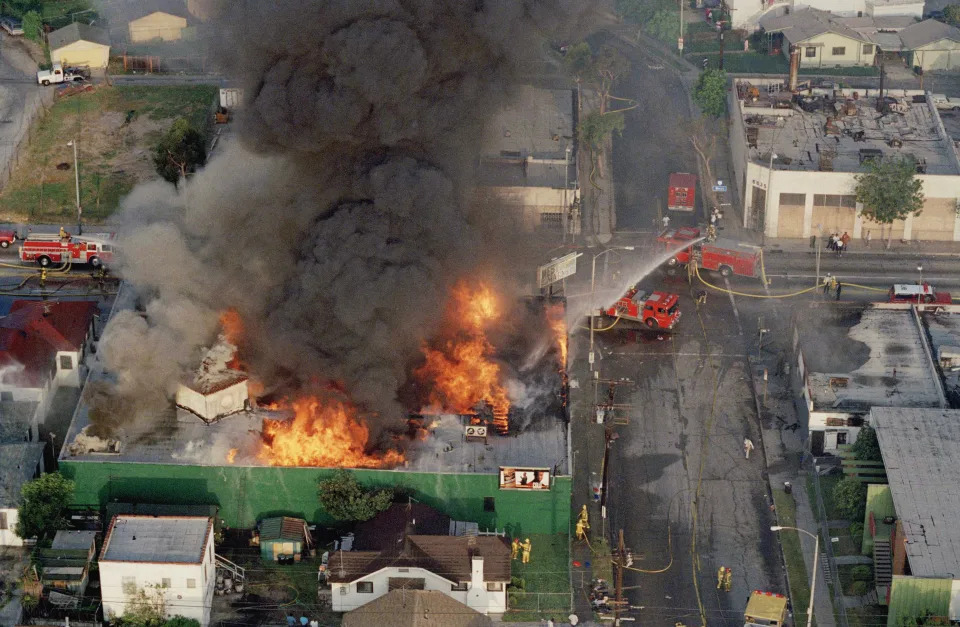
FILE - A fire burns out of control at the corner of 67th Street and West Boulevard in South Central Los Angeles, on April 30, 1992. On April 29, 1992, four white police officers were declared innocent in the beating of black motorist Rodney King, and Los Angeles erupted in deadly riots. George H.W. Bush was the last president to use the Insurrection Act, a response to riots in Los Angeles in 1992 after the acquittal of the white police officers who beat Black motorist Rodney King in an incident that was videotaped. (AP Photo/Paul Sakuma, File)
A fire burns out of control at the corner of 67th Street and West Boulevard in South Central Los Angeles, on April 30, 1992. On April 29, 1992, four white police officers were declared innocent in the beating of black motorist Rodney King, and Los Angeles erupted in deadly riots. George H.W. Bush was the last president to use the Insurrection Act, a response to riots in Los Angeles in 1992 after the acquittal of the white police officers who beat Black motorist Rodney King in an incident that was videotaped. (AP Photo/Paul Sakuma, File)
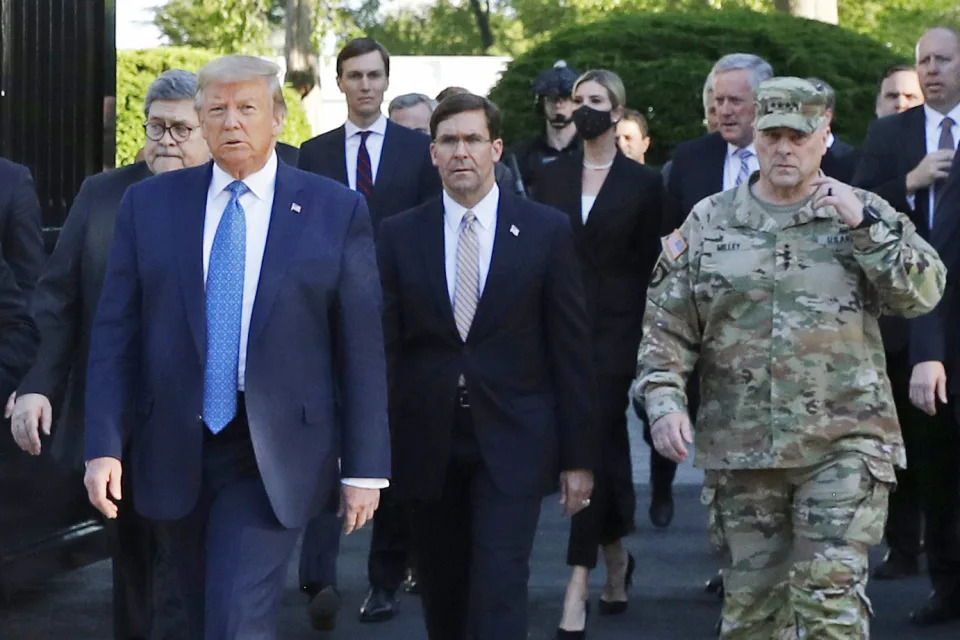
FILE - In this June 1, 2020 file photo, President Donald Trump departs the White House to visit outside St. John's Church, in Washington. Walking behind Trump from left are, Attorney General William Barr, Secretary of Defense Mark Esper and Gen. Mark Milley, chairman of the Joint Chiefs of Staff. Experts in constitutional law and the military say the Insurrection Act gives presidents tremendous power with few restraints. Recent statements by former President Donald Trump raise questions about how he might use it if he wins another term. (AP Photo/Patrick Semansky, File)
In this June 1, 2020 file photo, President Donald Trump departs the White House to visit outside St. John’s Church, in Washington. Walking behind Trump from left are, Attorney General William Barr, Secretary of Defense Mark Esper and Gen. Mark Milley, chairman of the Joint Chiefs of Staff. Experts in constitutional law and the military say the Insurrection Act gives presidents tremendous power with few restraints. Recent statements by former President Donald Trump raise questions about how he might use it if he wins another term. (AP Photo/Patrick Semansky, File)

WASHINGTON (AP) — Campaigning in Iowa this year, Donald Trump said he was prevented during his presidency from using the military to quell violence in primarily Democratic cities and states.

Calling New York City and Chicago “crime dens,” the front-runner for the 2024 Republican presidential nomination told his audience, “The next time, I’m not waiting. One of the things I did was let them run it and we’re going to show how bad a job they do,” he said. “Well, we did that. We don’t have to wait any longer.”

Trump has not spelled out precisely how he might use the military during a second term, although he and his advisers have suggested they would have wide latitude to call up units. While deploying the military regularly within the country’s borders would be a departure from tradition, the former president already has signaled an aggressive agenda if he wins, from mass deportations to travel bans imposed on certain Muslim-majority countries.

A law first crafted in the nation’s infancy would give Trump as commander in chief almost unfettered power to do so, military and legal experts said in a series of interviews.

The Insurrection Act allows presidents to call on reserve or active-duty military units to respond to unrest in the states, an authority that is not reviewable by the courts. One of its few guardrails merely requires the president to request that the participants disperse.

“The principal constraint on the president’s use of the Insurrection Act is basically political, that presidents don’t want to be the guy who sent tanks rolling down Main Street,” said Joseph Nunn, a national security expert with the Brennan Center for Justice. “There’s not much really in the law to stay the president’s hand.”

A spokesman for Trump’s campaign did not respond to multiple requests for comment about what authority Trump might use to pursue his plans.

Congress passed the act in 1792, just four years after the Constitution was ratified. Nunn said it’s an amalgamation of different statutes enacted between then and the 1870s, a time when there was little in the way of local law enforcement.

“It is a law that in many ways was created for a country that doesn’t exist anymore,” he said.

It also is one of the most substantial exceptions to the Posse Comitatus Act, which generally prohibits using the military for law enforcement purposes.

Trump has spoken openly about his plans should he win the presidency, including using the military at the border and in cities struggling with violent crime. His plans also have included using the military against foreign drug cartels, a view echoed by other Republican primary candidates such as Florida Gov. Ron DeSantis and Nikki Haley, the former U.N. ambassador and South Carolina governor.

The threats have raised questions about the meaning of military oaths, presidential power and who Trump could appoint to support his approach.

Trump already has suggested he might bring back retired Army Lt. Gen. Michael Flynn, who served briefly as Trump’s national security adviser and twice pleaded guilty to lying to the FBI during its Russian influence probe before being pardoned by Trump. Flynn suggested in the aftermath of the 2020 election that Trump could seize voting machines and order the military in some states to help rerun the election.

Attempts to invoke the Insurrection Act and use the military for domestic policing would likely elicit pushback from the Pentagon, where the new chairman of the Joint Chiefs of Staff is Gen. Charles Q. Brown. He was one of the eight members of the Joint Chiefs who signed a memo to military personnel in the aftermath of the Jan. 6, 2021, attack on the U.S. Capitol. The memo emphasized the oaths they took and called the events of that day, which were intended to stop certification of Democrat Joe Biden’s victory over Trump, “sedition and insurrection.”

Trump and his party nevertheless retain wide support among those who have served in the military. AP VoteCast, an in-depth survey of more than 94,000 voters nationwide, showed that 59% of U.S. military veterans voted for Trump in the 2020 presidential election. In the 2022 midterms, 57% of military veterans supported Republican candidates.

Presidents have issued a total of 40 proclamations invoking the law, some of those done multiple times for the same crisis, Nunn said. Lyndon Johnson invoked it three times — in Baltimore, Chicago and Washington — in response to the unrest in cities after the assassination of Dr. Martin Luther King Jr. in 1968.

During the Civil Rights era, Presidents Johnson, John F. Kennedy and Dwight Eisenhower used the law to protect activists and students desegregating schools. Eisenhower sent the 101st Airborne to Little Rock, Arkansas, to protect Black students integrating Central High School after that state’s governor activated the National Guard to keep the students out.

George H.W. Bush was the last president to use the Insurrection Act, a response to riots in Los Angeles in 1992 after the acquittal of the white police officers who beat Black motorist Rodney King in an incident that was videotaped.

Repeated attempts to invoke the act in a new Trump presidency could put pressure on military leaders, who could face consequences for their actions even if done at the direction of the president.

Michael O’Hanlon, director of research in foreign policy at the Brookings Institution think tank, said the question is whether the military is being imaginative enough with the scenarios it has been presenting to future officers. Ambiguity, especially when force is involved, is not something military personnel are comfortable with, he said.

“There are a lot of institutional checks and balances in our country that are pretty well-developed legally, and it’ll make it hard for a president to just do something randomly out of the blue,” said O’Hanlon, who specializes in U.S. defense strategy and the use of military force. “But Trump is good at developing a semi-logical train of thought that might lead to a place where there’s enough mayhem, there’s enough violence and legal murkiness” to call in the military.

Democratic Rep. Pat Ryan of New York, the first graduate of the U.S. Military Academy to represent the congressional district that includes West Point, said he took the oath three times while he was at the school and additional times during his military career. He said there was extensive classroom focus on an officer’s responsibilities to the Constitution and the people under his or her command.

“They really hammer into us the seriousness of the oath and who it was to, and who it wasn’t to,” he said.

Ryan said he thought it was universally understood, but Jan. 6 “was deeply disturbing and a wakeup call for me.” Several veterans and active-duty military personnel were charged with crimes in connection with the assault.

While those connections were troubling, he said he thinks those who harbor similar sentiments make up a very small percentage of the military.

William Banks, a Syracuse University law professor and expert in national security law, said a military officer is not forced to follow “unlawful orders.” That could create a difficult situation for leaders whose units are called on for domestic policing, since they can face charges for taking unlawful actions.

“But there is a big thumb on the scale in favor of the president’s interpretation of whether the order is lawful,” Banks said. “You’d have a really big row to hoe and you would have a big fuss inside the military if you chose not to follow a presidential order.”

Nunn, who has suggested steps to restrict the invocation of the law, said military personnel cannot be ordered to break the law.

“Members of the military are legally obliged to disobey an unlawful order. At the same time, that is a lot to ask of the military because they are also obliged to obey orders,” he said. “And the punishment for disobeying an order that turns out to be lawful is your career is over, and you may well be going to jail for a very long time. The stakes for them are extraordinarily high.”

Associated Press writers Jill Colvin and Michelle L. Price in New York, and Linley Sanders in Washington contributed to this report.

How white evangelicals’ support of Trump is creating schisms in the church

CBS News

How white evangelicals’ support of Trump is creating schisms in the church

Robert Costa  – November 26, 2023

https://s.yimg.com/rx/ev/builds/1.1.40/pframe.html

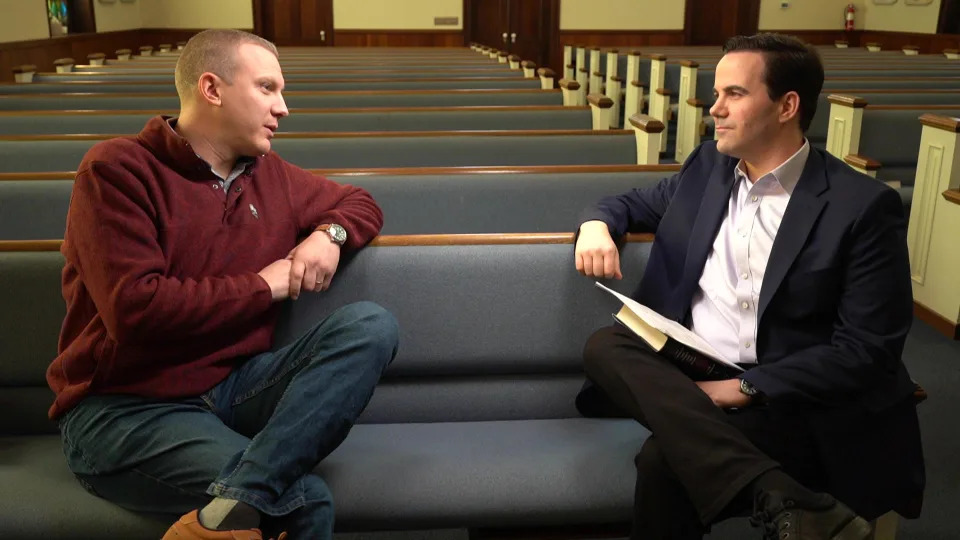
Goodwill Church, in New York’s leafy Hudson Valley, is a special destination for The Atlantic’s Tim Alberta. This was where his family’s faith journey began. “There’s something so deeply familiar about this place, it’s hard to describe,” he said. “My parents always described this church as holy ground for our family.”

Tim’s father, Richard Alberta, was once a pastor on this pulpit, after becoming a born-again Christian here nearly 50 years ago. “I don’t know where he sat,” said Alberta. “I don’t know what the sermon was that day. But something happened: A guy who’d been an atheist for years, you know, decided that he was gonna give his life to Jesus.”

The Alberta family later moved to Michigan, where Tim’s father led Cornerstone Evangelical Presbyterian Church. “My life was completely wrapped up in the church,” said Tim. “It was the sun around which we as a family revolved. It was our whole world.”

Tim Alberta of The Atlantic, with CBS News' Robert Costa. / Credit: CBS News
Tim Alberta of The Atlantic, with CBS News’ Robert Costa. / Credit: CBS News

But Tim Alberta sought a career in journalism, writing about politics. His father urged him to stay grounded, including in a 2019 chat he’ll never forget: “He keeps saying to me, ‘Don’t spend your whole career around these people. There are so many other stories.’ And that was one of the last conversations we had.”

Days later, Tim’s dad suddenly died.

He recalled, “When I come home to my church, I’m expecting, I guess, something different from what I got.”

While some offered consolation, Alberta also got confrontation from some conservative church members objecting to his reporting on then-President Donald Trump. “A lot of folks right there at the viewing just wanted to argue about politics,” he said. “They wanted to know if I was still a Christian. And my dad’s in a box, like, 100 feet away.”

Costa asked, “The church wasn’t a sanctuary from politics; politics was now part of the church?”

“That’s right. I knew that, to some degree. And in fact, I willfully ignored it.”

Alberta’s reckoning with faith and politics is the basis for his new book “The Kingdom, the Power, and the Glory,” which documents what he calls an “age of extremism” for evangelicals. “There was a real crisis in the American church, specifically a crisis in the white evangelical church,” he said.

 / Credit: CBS News
/ Credit: CBS News

According to Pew Research Center, about a quarter of American adults (24%) identify as evangelical. And as the Republican presidential race heats up, 68% of white evangelicals are supportive of Trump. Alberta says that reflects a shift away from norms — in the GOP and in the church.

“We should think about the American church almost in parallel to American politics,” he said. “When it gains enough influence, when it gains enough power, the fringe can overtake the mainstream. And that’s what we’ve seen happen in the church.”

The convulsions in today’s churches come after decades of evangelicals gaining influence, from Billy Graham’s stadium crusades, to the stadium rallies of Donald Trump. In recent years, evangelicals have had heated debates over the response to COVID and to Trump, all while many key Republicans (like House Speaker Mike Johnson) count themselves as one of them.

At Goodwill Church, Senior Pastor John Torres (who used to work with Tim’s dad) is uneasy about the shadow of politics over his church and others.

Costa asked Torres, “What do people say about politics?”

“That it’s bad. That it’s dirty.”

“What do they say to you about politics?”

“Don’t get involved,” Torres replied. “I don’t want somebody who’s sitting there, listening to me preach, whatever their views are, I want them to stay put. I wanna talk to them about Jesus. I don’t want to talk to ’em about politics. ‘Cause I don’t really know what I can offer them in terms of politics.”

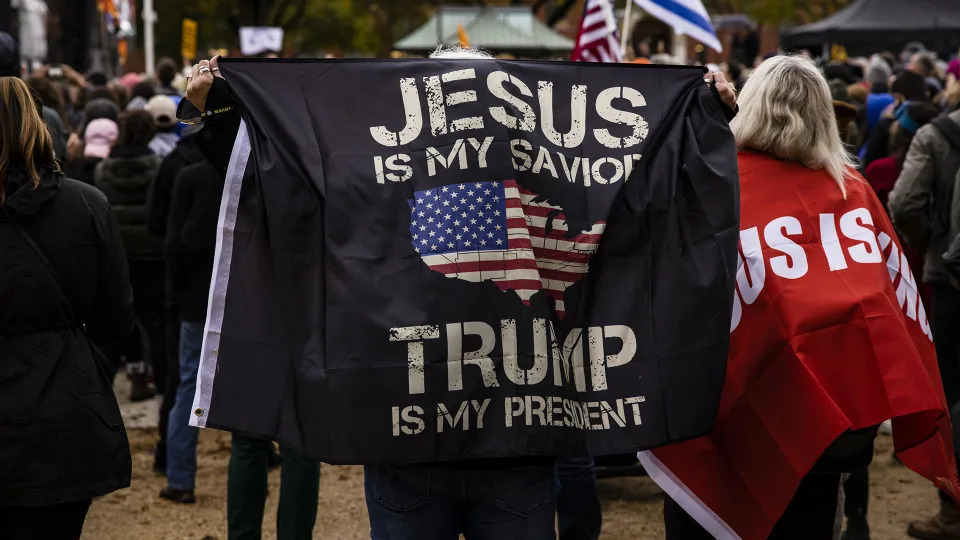
Other evangelicals don’t mind politics — and see this moment as an affirmation of hard-won power.

Worshippers attend a concert by evangelical musician Sean Feucht on the National Mall on October 25, 2020 in Washington, D.C.  / Credit: Samuel Corum/Getty Images
Worshippers attend a concert by evangelical musician Sean Feucht on the National Mall on October 25, 2020 in Washington, D.C. / Credit: Samuel Corum/Getty Images

Costa asked, “What do you say to evangelical leaders who might hear your argument and say, ‘You missed the point: Trump wins for evangelical Christians, he wins for conservative America’?”

“Wins what?”

“Supreme Court seats, a seat at the table at the White House?”

Alberta responded, “Show me where in scripture any of that matters.”

But it does matter to many of those standing with Trump as he once again seeks the White House. Alberta said, “You have millions of evangelical Christians who voted for Donald Trump and just sort of gleefully embraced his terrible rhetoric and his un-Christlike conduct.”

“Why did they ‘gleefully’ embrace it, to use your term?” asked Costa.

“Power,” Alberta replied. “Trump campaigned for president in 2016 promising that if he was elected, Christians would have power. He gave it to them.  He gave it to them in ways that, arguably, no American president has in modern history. And when you have power, you can very quickly lose sight of your principles, your values and your beliefs.”

Alberta says that, regardless, today his faith has never been better. His faith in reporting is also strong, and he says that is his own calling.

“You and I, we’re reporters,” said Alberta. “We’re not supposed to be the story. I never wanted to be the story. [But] once you see this, you can’t look away.”

   
For more info:

“The Kingdom, the Power, and the Glory: American Evangelicals in an Age of Extremism” by Tom Alberta (HarperCollins), in Hardcover, eBook and Audio formats, available via AmazonBarnes & Noble and Bookshop.orgTim Alberta (Official site)Goodwill Church, Montgomery, N.Y.

     
Story produced by Michelle Kessel. Editor: Emanuele Secci.

Trump’s Pardoning of a Loan Shark Derailed a Federal Investigation: Report

Rolling Stone

Trump’s Pardoning of a Loan Shark Derailed a Federal Investigation: Report

Peter Wade – November 26, 2023

Very early in the morning on Donald Trump’s last day in office, the president announced he was pardoning Jonathan Braun, a loan shark who had been convicted of running a vast marijuana ring. Braun, who at the time was serving a 10-year sentence, was pardoned along with 142 others, including rappers Lil Wayne and Kodak Black.

Trump’s move undermined a years-long federal investigation, The New York Times reported Sunday. The paper also uncovered ties between Braun and the family of Trump’s son-in-law, Jared Kushner.

Federal prosecutors were in the midst of negotiations hoping to secure Braun’s cooperation in a Justice Department investigation into predatory lenders in the merchant cash advance industry when Trump announced his clemency. Investigators felt that an industry insider like Braun could reveal information about predatory lending agreements, but after he was released from incarceration, prosecutors no longer had leverage they could use to compel Braun to talk.

Between 2011 and 2020, while awaiting sentencing in the marijuana case, Braun offered predatory loans to small businesses. Borrowers who took out loans from Braun say in court documents that he threatened them and their families for non-payment. During the nine years he was waiting to be sentenced, Braun was accused of making violent threats to eight people who had borrowed money from him, and a lawsuit claimed Braun had pushed a man off a deck at a Staten Island home in 2018.

A real estate developer who borrowed from Braun said in a court document that Braun threatened him, saying, “I will take your daughters from you.”

According to an affidavit, Braun allegedly told another borrower, “Be thankful you’re not in New York, because your family would find you floating in the Hudson.”

Only months following his release from prison, Braun was banned from making or collecting business loans by the state of New York. In a statement following the ban, New York Attorney General Letitia James claimed that Braun and others had been “harming small businesses through high-interest loans and undisclosed fees.” In a lawsuit, James alleged that “merchant cash advances, which are a form of short-term, high-interest funding for small businesses” offered by Braun and others “were in fact illegal, high-interest loans with astronomical and illegal rates.”

The court ordered Braun’s company — Richmond Capital Group, LLC — as well as two other companies — Ram Capital Funding, LLC, and Viceroy Capital Funding Inc. — to cancel debt owed by thousands of small businesses across the country as well as repay interest and overage charges, amounting to tens of millions of dollars.

The Times also raised questions about Braun’s connections to the Kushners. An investigation by the paper found that Braun was a member of the inaugural class of the Kushner Yeshiva High School in Livingston, N.J., which received a large amount of funding from the Kushner family.

A merchant cash advance dealer who wished to remain anonymous told The Times that a cousin who was running Braun’s business while he was in jail told him that Braun’s father, Jacob Braun, had reached out to Kushner’s father, Charles Kushner, regarding the family’s hopes that Trump would pardon Braun. The cousin, Isaac Wolf, later claimed that the Kushners had helped secure Braun’s release, the merchant cash advance dealer said.

Jacob Braun also regularly called Trump ally Alan Dershowitz to plead for Braun’s release. “Every single Friday by 3 o’clock in the afternoon: ‘Hi this is Jacob Braun, I’m so upset my son is still in prison, what can you do? It’s unfair, he’s a good boy,’” Dershowitz told the paper.

Federal investigators were not made aware of the pardon until the morning it was announced and, according to The Times, they were furious that Trump had sabotaged a possible deal with Braun over predatory lending practices.

Braun, however, maintains his innocence and claims he is a victim of the justice system’s unfair practices. “What is so bad about me?” he told the paper. “I never hurt anybody, never did anything wrong to anybody.”

Trump has publicly said that if he becomes president again, he intends to make more pardons, including for those convicted of crimes related to the Jan. 6 Capitol attack. He has also told allies privately he would pardon higher-level people involved in efforts to overturn the 2020 election.

Russian authorities are restricting abortion access amid population and military recruiting concerns

Insider

Russian authorities are restricting abortion access amid population and military recruiting concerns

Katie Balevic – November 25, 2023

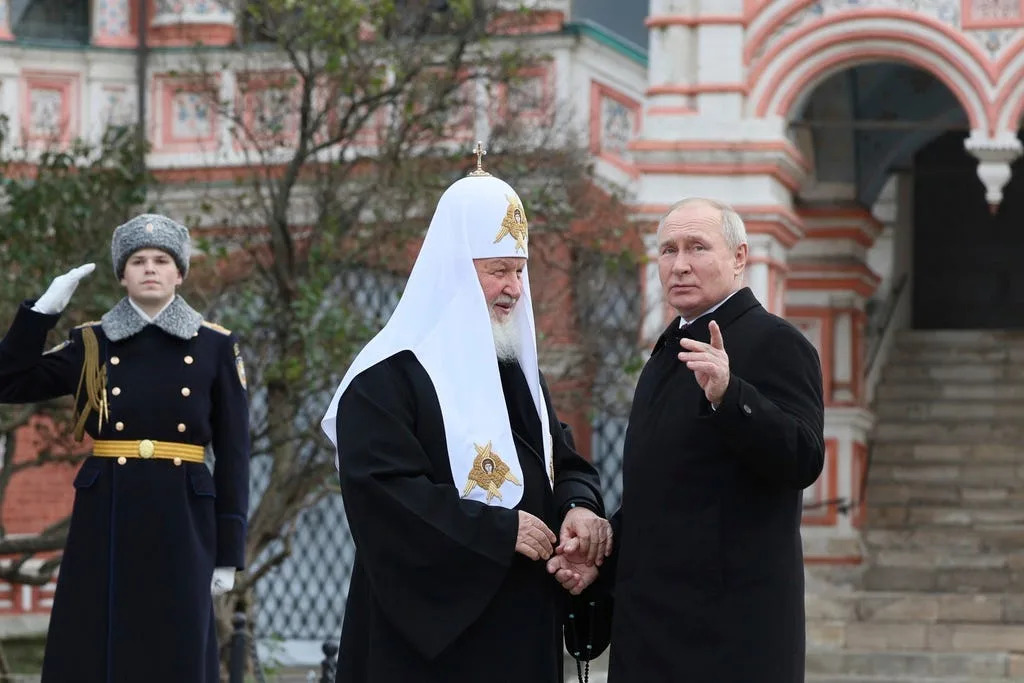
Russian President Vladimir Putin speaks to Russian Orthodox Church Patriarch Kirill at Red Square in Moscow.
Russian President Vladimir Putin speaks to Russian Orthodox Church Patriarch Kirill at Red Square in Moscow in November 2023.Gavriil Grigorov/AP
  • Top Russian authorities are restricting abortion access to combat population stagnation.
  • The head of the Russian Church said it would boost the population like “waving a magic wand.”
  • Russian women’s groups say the policies are forcing women to birth unwanted children, per the BBC.

Top Russian authorities are restricting abortion access, calling the procedure a “disaster.”

It comes amid the state’s concerns over population growth, particularly where it impacts military recruiting, according to the BBC. Some one in three women claim to have gotten the procedure, and more than 500,000 pregnancies were terminated in 2022, the outlet reported.

Patriarch Kirill, the head of the highly influential Russian Orthodox Church, is leading the charge.

“As a member of the clergy, I testify that an abortion is a disaster and a tragedy for the woman [and] those close to her,” Kirill said in January, per the BBC.

The church has close ties to the Kremlin, and Kirill has been a key supporter of President Vladimir Putin.

While Russia’s population leans male for births up to 14 years old, females outpace males ages 15 and up. Over 65% of the population is aged 15 to 64, and there are 3 million more women than men in that age bracket, according to the 2023 data from the Central Intelligence Agency.

The total population of 144 million stands at 2 million less than it did in 2001 when Putin came to power, the BBC reported. In 2022, over 500,000 Russian pregnancies were terminated compared to 1.3 million live births, the outlet reported.

Putin sees it as “an acute problem,” per the BBC. Kirill says anti-abortion policies are the solution.

“The population can be increased as if by waving a magic wand: if we solve this problem and learn how to dissuade women from having abortions, statistics will go up immediately,” Kirill said, per the BBC.

The patriarch’s policies of dissuasion include doctors telling pregnant teenagers to keep their child “because they are practically from the same generation,” the BBC reported. If a woman is single, doctors are to tell the pregnant patient that “having a child is no obstacle to finding a life partner.”

Authorities are also restricting the sale of medication used in medical abortions – over the protests of women’s groups who say such moves will cause the number of illegal and botched abortions to surge.

“Officials, ultra-right politicians and the church are actively forcing women and girls to give birth to unwanted children,” the Urals Feminist Movement group said, according to the BBC.

Thousands rally in Italy over violence against women after woman’s killing that outraged the country

Associated Press

Thousands rally in Italy over violence against women after woman’s killing that outraged the country

Giada Zampanou – November 25, 2023

A woman attends a demonstration on the occasion of International Day for the Elimination of Violence against Women, in Milan, Italy, Saturday, Nov.25, 2023. Thousands of people are expected to take the streets in Rome and other major Italian cities as part of what organizers call a "revolution" under way in Italians' approach to violence against women, a few days after the horrifying killing of a college student allegedly by her resentful ex-boyfriend sparked an outcry over the country's "patriarchal" culture. (AP Photo/Luca Bruno)
A woman attends a demonstration on the occasion of International Day for the Elimination of Violence against Women, in Milan, Italy, Saturday, Nov.25, 2023. Thousands of people are expected to take the streets in Rome and other major Italian cities as part of what organizers call a “revolution” under way in Italians’ approach to violence against women, a few days after the horrifying killing of a college student allegedly by her resentful ex-boyfriend sparked an outcry over the country’s “patriarchal” culture. (AP Photo/Luca Bruno)
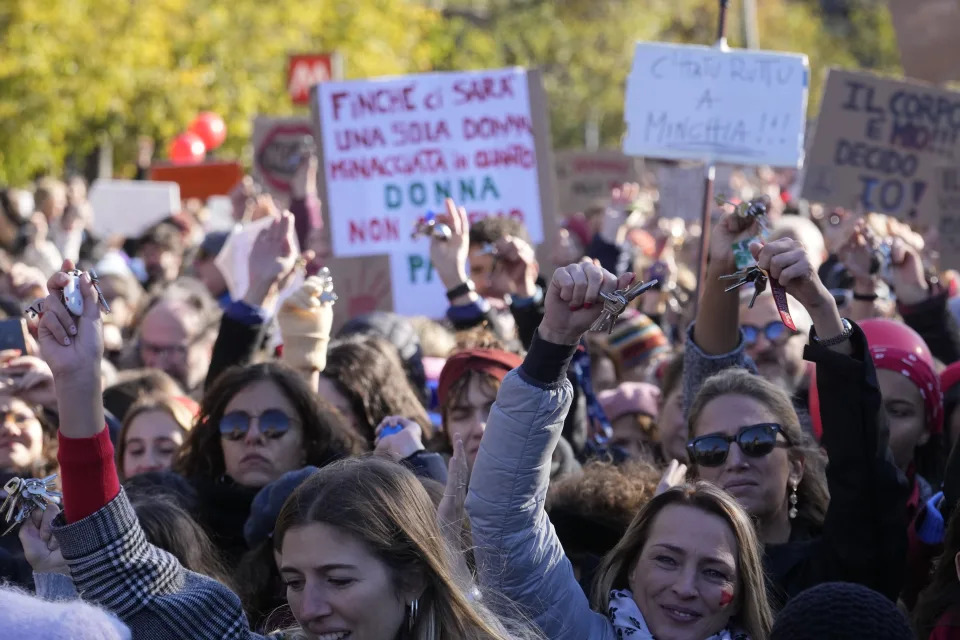
Women show keys as they gather on the occasion of International Day for the Elimination of Violence against Women, in Milan, Italy, Saturday, Nov.25, 2023. Thousands of people are expected to take the streets in Rome and other major Italian cities as part of what organizers call a "revolution" under way in Italians' approach to violence against women, a few days after the horrifying killing of a college student allegedly by her resentful ex-boyfriend sparked an outcry over the country's "patriarchal" culture. (AP Photo/Luca Bruno)
Women show keys as they gather on the occasion of International Day for the Elimination of Violence against Women, in Milan, Italy, Saturday, Nov.25, 2023. Thousands of people are expected to take the streets in Rome and other major Italian cities as part of what organizers call a “revolution” under way in Italians’ approach to violence against women, a few days after the horrifying killing of a college student allegedly by her resentful ex-boyfriend sparked an outcry over the country’s “patriarchal” culture. (AP Photo/Luca Bruno)
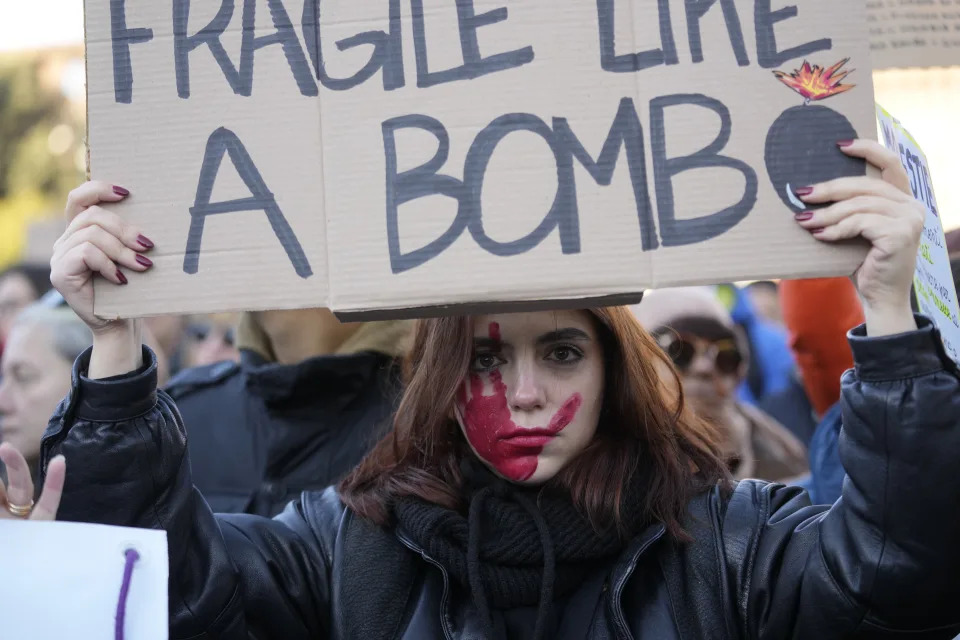
A woman shows a banner during a demonstration on the occasion of International Day for the Elimination of Violence against Women, in Milan, Italy, Saturday, Nov.25, 2023. Thousands of people are expected to take the streets in Rome and other major Italian cities as part of what organizers call a "revolution" under way in Italians' approach to violence against women, a few days after the horrifying killing of a college student allegedly by her resentful ex-boyfriend sparked an outcry over the country's "patriarchal" culture. (AP Photo/Luca Bruno)
A woman shows a banner during a demonstration on the occasion of International Day for the Elimination of Violence against Women, in Milan, Italy, Saturday, Nov.25, 2023. Thousands of people are expected to take the streets in Rome and other major Italian cities as part of what organizers call a “revolution” under way in Italians’ approach to violence against women, a few days after the horrifying killing of a college student allegedly by her resentful ex-boyfriend sparked an outcry over the country’s “patriarchal” culture. (AP Photo/Luca Bruno)
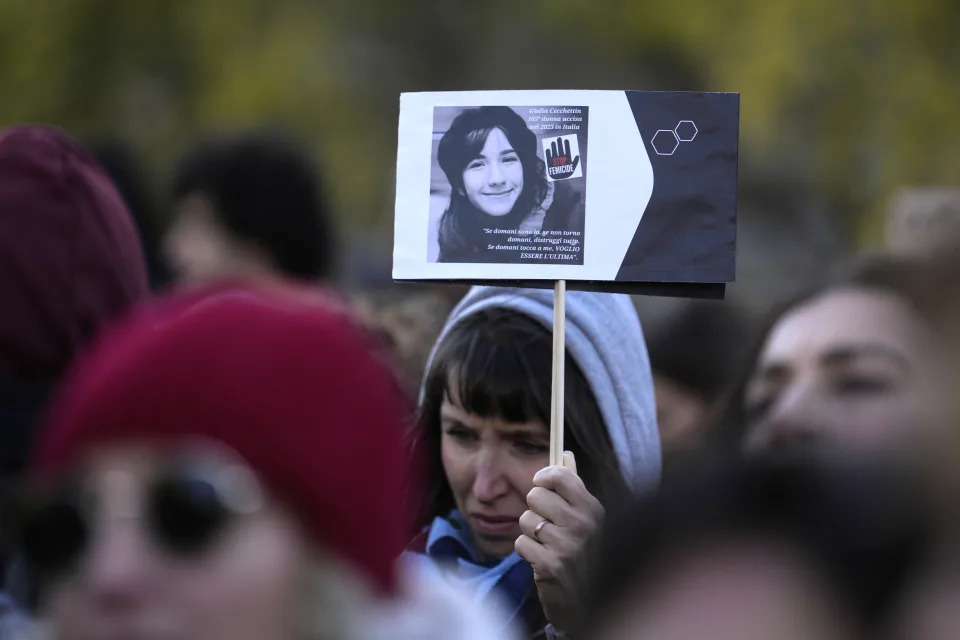
A woman shows a photo of Giulia Cecchettin, allegedly killed by ex-boyfriend, on the occasion of International Day for the Elimination of Violence against Women, in Milan, Italy, Saturday, Nov.25, 2023. Thousands of people are expected to take the streets in Rome and other major Italian cities as part of what organizers call a "revolution" under way in Italians' approach to violence against women, a few days after the horrifying killing of Giulia, the college student allegedly by her resentful ex-boyfriend sparked an outcry over the country's "patriarchal" culture. (AP Photo/Luca Bruno)
A woman shows a photo of Giulia Cecchettin, allegedly killed by ex-boyfriend, on the occasion of International Day for the Elimination of Violence against Women, in Milan, Italy, Saturday, Nov.25, 2023. Thousands of people are expected to take the streets in Rome and other major Italian cities as part of what organizers call a “revolution” under way in Italians’ approach to violence against women, a few days after the horrifying killing of Giulia, the college student allegedly by her resentful ex-boyfriend sparked an outcry over the country’s “patriarchal” culture. (AP Photo/Luca Bruno)
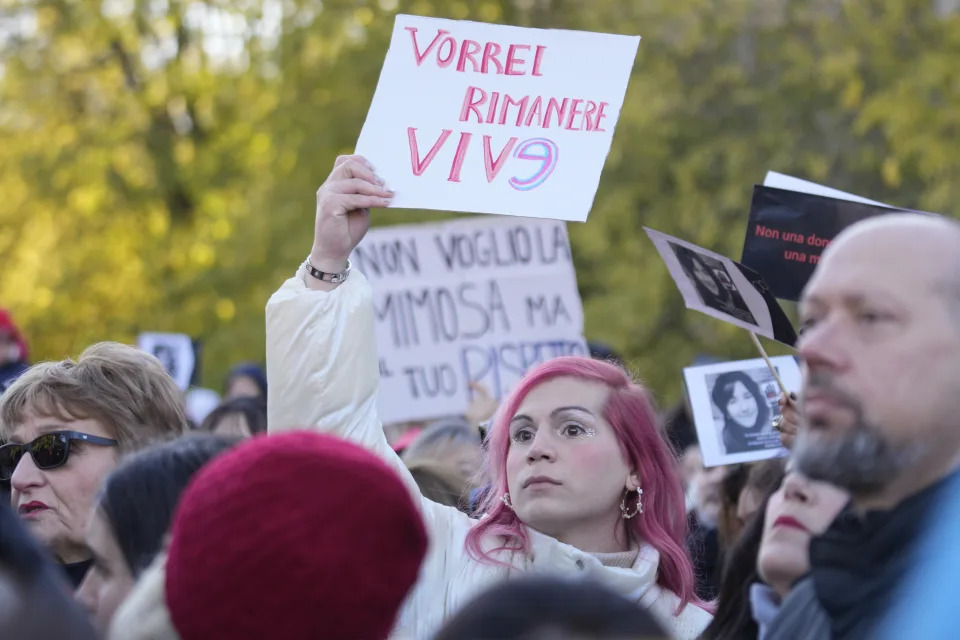
A woman shows a banner reading "I want to stay alive" during a gathering on the occasion of International Day for the Elimination of Violence against Women, in Milan, Italy, Saturday, Nov.25, 2023. Thousands of people are expected to take the streets in Rome and other major Italian cities as part of what organizers call a "revolution" under way in Italians' approach to violence against women, a few days after the horrifying killing of a college student allegedly by her resentful ex-boyfriend sparked an outcry over the country's "patriarchal" culture. (AP Photo/Luca Bruno)
A woman shows a banner reading “I want to stay alive” during a gathering on the occasion of International Day for the Elimination of Violence against Women, in Milan, Italy, Saturday, Nov.25, 2023. Thousands of people are expected to take the streets in Rome and other major Italian cities as part of what organizers call a “revolution” under way in Italians’ approach to violence against women, a few days after the horrifying killing of a college student allegedly by her resentful ex-boyfriend sparked an outcry over the country’s “patriarchal” culture. (AP Photo/Luca Bruno)
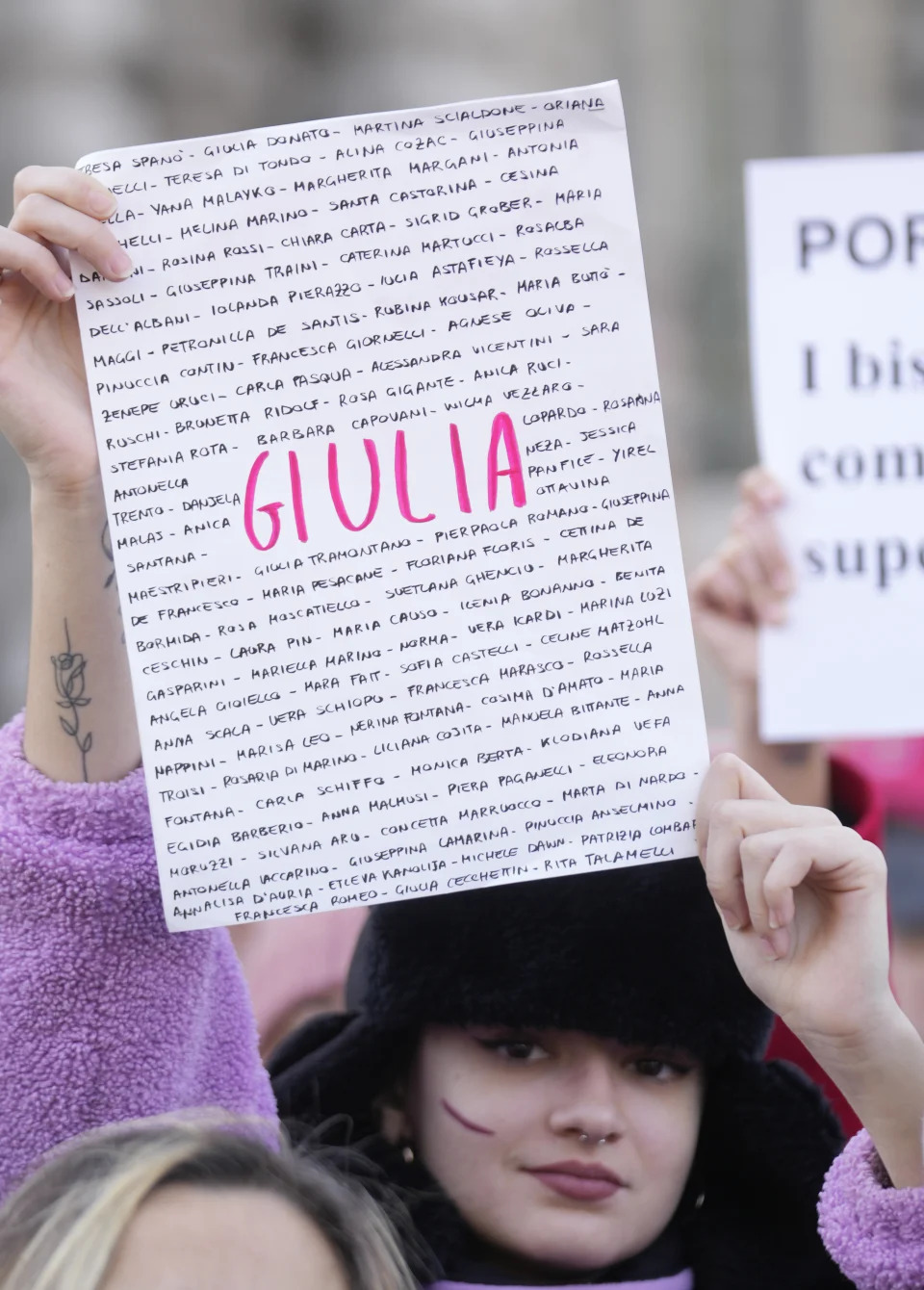
A woman shows a banner bearing the names of femicide victims on the occasion of International Day for the Elimination of Violence against Women, in Milan, Italy, Saturday, Nov.25, 2023. Thousands of people are expected to take the streets in Rome and other major Italian cities as part of what organizers call a "revolution" under way in Italians' approach to violence against women, a few days after the horrifying killing of a college student allegedly by her resentful ex-boyfriend sparked an outcry over the country's "patriarchal" culture. (AP Photo/Luca Bruno)
A woman shows a banner bearing the names of femicide victims on the occasion of International Day for the Elimination of Violence against Women, in Milan, Italy, Saturday, Nov.25, 2023. Thousands of people are expected to take the streets in Rome and other major Italian cities as part of what organizers call a “revolution” under way in Italians’ approach to violence against women, a few days after the horrifying killing of a college student allegedly by her resentful ex-boyfriend sparked an outcry over the country’s “patriarchal” culture. (AP Photo/Luca Bruno)

ROME (AP) — Tens of thousands took to the streets of Italy’s main cities on Saturday to mark International Day for the Elimination of Violence against Women, just as an Italian man suspected of killing his ex-girlfriend was extradited from Germany.

The slaying of 22-year-old university student Giulia Cecchettin, allegedly at the hands of her former boyfriend, sparked outrage across Italy, where on average one woman is killed every three days.

Suspect Filippo Turetta, 21, landed at the Venice airport around mid-morning on Saturday. He was immediately transferred to a prison in the northern city of Verona to face questions in the investigation into Cecchettin’s death, Italian media reported.

Cecchettin had disappeared after meeting Turetta for a burger at a shopping mall near Venice, just days before she was to receive her degree in biomedical engineering. The case gripped Italy.

Her body was found on Nov. 18 — covered by black plastic bags in a ditch near a lake in the foothills of the Alps. Turetta was arrested the following day in Germany.

Cecchettin’s killing has sparked an unprecedented wave of grief and anger in Italy, where many women say patriarchal attitudes are still entrenched.

Data from the Italian Interior Ministry show that 106 women have so far been killed in Italy this year, 55 of them allegedly by a partner or former partner.

Italy’s RAI state TV reported that in the days since Cecchettin’s body was found, calls to a national hotline for women fearing for their safety at the hands of men have jumped from some 200 to 400 a day — including from parents of young women.

“Rome has been invaded … we are 500,000,” said activists from Non Una Di Meno (Not one less), the anti-violence feminist association that organized the rally in the capital.

Many of the demonstrations that took place across Italy remembered Cecchettin and her striking story.

“Male violence is something that personally touched me and all of us, at every age,” said Aurora Arleo, a 24-year-old student, who went to the demonstration from Ladispoli, a town close to Rome. “We have united also in the name of Giulia, because her story struck us, and I hope it will change something.”

Monica Gilardi, 46, noted that her generation was probably “the one that suffered in silence more than others,” despite having experienced years of women’s battles and emancipation.

“Now that I’ve reached a different awareness, I hope to be able to share it with my sisters,” she said.

Thousands of men of all ages also responded to the call for joining Saturday’s initiatives against gender violence.

“I think it was important to be here today,” said Leonardo Sanna, 19, who took part in the Rome demonstration with female friends. “It’s not my first time, but I believe that Giulia’s death changed in part the perception of this problem among youths. And I hope this is not going to be short-lived.”

Earlier this week, the Italian parliament approved new measures to clamp down on violence against women, following unanimous support from the two chambers.

Among the measures being introduced is a campaign in schools to address sexism, machismo and psychological and physical violence against women.

“A human society that aspires to be civilized cannot accept, cannot endure, this string of attacks on women and murders,” Italy’s President Sergio Mattarella said on Saturday. “We cannot just counter this with intermittent indignation.”

In his message to mark the battle against gender violence, Pope Francis said it is a plague that must be rooted out from society and called for educational action.

“Violence against women is a poisonous weed that plagues our society and must be pulled up from its roots,” the Pope wrote in a post on X, formerly Twitter, on Saturday.

“These roots grow in the soil of prejudice and of injustice; they must be countered with educational action that places the person, with his or her dignity, at the center,” he added.

Violence against women and girls remains one of the most pervasive human rights violations in the world. According to the most recent U.N. data, globally, over 700 million women — almost one in three — have been subjected to physical and sexual intimate partner violence, non-partner sexual violence, or both, at least once in their life.

Thousands of people also rallied in Paris on Saturday to demand more government action to prevent gender violence. Protesters marched behind a large banner saying “women are angry, stop violence: actions and resources, now.”

France has taken steps in recent years to toughen punishment for rape and sexual misconduct. But while President Emmanuel Macron has promised to tackle deadly domestic abuse and other violence against women, activists say France still has a long way to go.

Associated Press writer Sylvie Corbet contributed to this report from Paris.

George Santos says he’ll treat expulsion as a ‘badge of honor’ as he claims his colleagues are drunkenly having sex with lobbyists ‘every night’

Insider

George Santos says he’ll treat expulsion as a ‘badge of honor’ as he claims his colleagues are drunkenly having sex with lobbyists ‘every night’

Bryan Metzger – November 25, 2023

Rep. George Santos of New York on Capitol Hill on October 24, 2023.
Rep. George Santos of New York on Capitol Hill. Justin Sullivan/Getty Images
  • Rep. George Santos went on an extended tirade against his colleagues on Friday evening.
  • Santos says he expects to be expelled this week and will wear it “like a badge of honor.”
  • He also called the Ethics Committee chairman a “pussy” and made wild claims about his colleagues.

Days before his likely expulsion from the House of Representatives, Rep. George Santos of New York went on his most unhinged tirade yet.

In an X Space hosted by conservative media personality Monica Matthews on Friday evening, the scandal-plagued Republican said he expects to be expelled when the House votes on the matter, which is likely to happen this coming week.

But he said he’s not sweating it.

“I don’t care. You want to expel me? I’ll wear it like a badge of honor,” Santos said. “I’ll be the sixth expelled member of Congress in the history of Congress. And guess what? I’ll be the only one expelled without a conviction.”

That was just one part of Santos’s lengthy and angry diatribe against his colleagues, during which the indicted congressman made a series of statements and claims that are unlikely to endear him to any colleagues who may still remain on the fence about expelling him.

At one point, he mocked the Republican chairman of the House Ethics Committee — Rep. Michael Guest of Mississippi — in the wake of that committee’s damning report about his conduct.

“It ain’t gonna be the dude from Mississippi that’s gonna kick me, a New Yorker, out of Congress,” Santos said. “No offense to people from Mississippi, but making that very, very clear, it’s going to take a lot more than that.”

He also said Guest needs to “stop being a pussy” and call up the expulsion resolution when Congress returns this week.

Spokespeople for Rep. Guest did not immediately respond to Business Insider’s request for comment sent outside of regular business hours.

And in a moment reminiscent of former Republican Rep. Madison Cawthorn — whose wild claims of cocaine-laden orgies among his colleagues spurred GOP leaders to plot his ouster last year — Santos claimed his colleagues were “hypocrites” who were regularly cheating on their spouses and barely doing their job.

“I have colleagues who are more worried about getting drunk every night with the next lobbyist that they’re gonna screw and pretend like none of us know what’s going on, and sell off the American people, not show up to vote because they’re too hungover or whatever the reason is, or not show up to vote at all and just give their card out like fucking candy for someone else to vote for them,” Santos claimed.

“This shit happens every single week,” he said. “Where are the ethics investigations?”

Santos is no longer seeking re-election and is set to go to trial next September following a federal indictment on charges that include money laundering, identity theft, and wire fraud.

According to the House Ethics Committee’s report on Santos’s conduct, the congressman was largely uncooperative during the investigation.

The report also found that Santos swindled campaign donors, using their money for luxury purchases at Hermes, Ferragamo, Sephora, OnlyFans, and Botox.

‘The poison continues to spread’: legal losses fail to quell election denial hotbed

The Guardian

‘The poison continues to spread’: legal losses fail to quell election denial hotbed

Rachel Leingang – November 25, 2023

<span>Photograph: Alberto Mariani/AP</span>
Photograph: Alberto Mariani/AP

In the year since two elected officials in rural Arizona tried to hand-count ballots then refused to certify an election, the consequences have started to trickle in.

Peggy Judd and Tom Crosby, the two Republican supervisors in Cochise county who led these efforts, were recently subpoenaed as part of an investigation by the state’s attorney general.

Related: Attempt to recall election denier fails in Arizona county as petition falls short

The Republican-led county on the US-Mexico border has had to pay hundreds of thousands of dollars in legal fees and settlements for the lawsuits it faced in the wake of Crosby and Judd’s decisions. They have lost in court multiple times in their quest to prevent machine counting – part of an ongoing rightwing effort to switch to hand counts – and stall election results.

The elections department has had four different leaders in the past year. A longtime elections director left because of a hostile work environment, followed by the county’s recorder taking over her duties. The county then hired a director who had questioned election results in the past, only to see that director leave quickly to return to the previous county he worked in, which he called a “welcoming home”. The current director, Tim Mattix, has been on the job since October.

To settle a lawsuit from the former director Lisa Marra, who left because of a toxic work environment caused by the two supervisors, the county’s insurance paid out $130,000. Other legal fees, primarily in the form of paying the costs of the other side’s attorneys in losses, have totaled nearly $170,000.

Still, the costs and consequences so far haven’t quelled election denialism in the county. An effort to recall Crosby fell short of its signature goal in May, and the former supervisor is now crowdfunding for legal help to continue his crusade. (Crosby and Judd did not respond to requests for interviews.)

The rural, red county has became a microcosm of far-right election fervor that’s featured a host of conspiracies and attempts to curtail voting access. Proponents have pushed the county to hand-count all ballots, get rid of any machines involved in the voting process, end voting by mail and vote solely on one day. They have rarely pointed to any specific claims of fraud in Cochise’s elections, but instead called out problems in other places or cited potential issues.

Cochise itself is not a swing county – it is reliably Republican. Arizona overall, though, has grown more purple in recent years, resulting in a backlash from the right over the state’s direction.

The topic has gripped the county’s meetings, with regular appearances from people speaking in favor of hand counts and against voting by mail or machine counting. Even during meetings where election considerations aren’t on the agenda, several speakers will focus on the topic during public comment periods. In response, a group of people who support the way elections have run there and opposed the hand count and certification delay have routinely spoken up at supervisors’ meetings.

Tricia Gerrodette, an unaffiliated voter who lives in Crosby’s district, started speaking up at meetings again after a decade or so off from the practice. She helped the effort that sought to recall Crosby. She doesn’t think her comments will sway the two supervisors at this point, but she has a broader mission.

“It’s more letting the general public, the population, know that there are other voices that do trust the elections, so we’re not drowned out by the deniers,” she said.

Despite the recall’s failure, its proponents say they found a broad array of voters from all political backgrounds who were sick of the election denial sideshow. They also informed many voters who weren’t aware of what supervisors do or what had happened with the election. Crosby now faces a Republican primary challenger in his re-election bid.

Tom Crosby.
Tom Crosby: ‘I have been an elections integrity proponent since before it became popular.’ Photograph: Alberto Mariani/AP

Some in the county wanted the state’s attorney general, Democrat Kris Mayes, to launch an investigation into the supervisors’ actions. It appears Mayes is doing just that. Crosby and Judd were summoned to a grand jury proceeding this month, and the Democratic supervisor, Ann English, told Votebeat that investigators asked her about the hand count and certification issues. (Mayes’s office would only confirm an active investigation into open meetings law violations.)

In a post on the rightwing crowdfunding site GiveSendGo, Crosby sought donations to defend himself. He has raised nearly $3,000 with a goal of $100,000.

“I have been an elections integrity proponent since before it became popular,” he wrote. “I have heard that a grand jury subpeona [sic] is almost a guaranteed indictment. If that is the case, I would expect to go to trial, and be stuck with tens of thousands or hundreds of thousands of dollars of court costs and legal fees. If my legal adversary is successful in defeating me, it will intimidate other AZ County Supervisors into falling in line with the globalist plans of compromised elections, and forced use of voting machines.”

In a board meeting this month, after hearing from people commenting on elections issues, Crosby foreshadowed that “election integrity issues are not going to go away heading into a presidential election year.”

As for Judd, who once said she was prepared to go to jail for her vote in favor of a full hand count, she told Votebeat that she felt “used” by outside attorneys who advised her on the issue and that she wouldn’t vote similarly this election.

Cochise’s troubles have so far deterred other Arizona counties from following suit. Mohave county, a Republican-led county, has twice rejected attempts to hand-count ballots, despite heavy lobbying efforts from state lawmakers and some local residents. The costs and potential legal consequences, highlighted by the county’s attorney and elections director, have kept Mohave from moving ahead with a hand count for 2024’s elections there. In advance of a second vote on a hand count earlier this week, Mayes’s office sent a letter to Mohave’s supervisors reminding them that undertaking a hand count would be illegal, and they would be sued for it.

While the hand count and certification issues already worked their way through the courts, an investigation into the issue takes time. In the meantime, the local Democratic party chair, Elisabeth Tyndall, said, “the poison continues to spread.”

All elections now are under intense scrutiny. A local all-mail election to fund jails snagged a lawsuit that sought to nullify the results and claimed the votes were all illegal. It was dismissed. When the board met to accept the results of the jail district election, Crosby abstained from the vote.

“It’s this cascading effect of creating distrust and creating chaos around basic maintenance elections, things that shouldn’t be controversial. It’s a yes or no vote,” Tyndall said. “It shouldn’t be a knockdown, dragout about whether mail-in elections are valid.”

The Mayes investigation came as welcome news to those who have been sounding the alarm about democracy issues in Cochise county, though there is also a concern that any criminal charges stemming from the hand count and certification issues could backfire, especially during a high-profile presidential election year in a swing state.

“I’m concerned that a felony charge … would really galvanize the opposition,” Gerrodette said. “And I’m just not sure what direction that might go. There’s some really angry people out there who really believe that their votes aren’t being counted, I guess.”

Trump Revives Plan to Dismantle Obamacare if Elected in 2024

Daily Beast

Trump Revives Plan to Dismantle Obamacare if Elected in 2024

Mark Alfred – November 25, 2023

Pacific Press/LightRocket via Getty Images

Former President Donald Trump said he is “seriously looking at alternatives” to the Affordable Care Act if he returns to the White House, reigniting his longstanding crusade against former President Barack Obama’s signature health-care law. Trump’s failed effort in 2017 to repeal the health-care law was blasted at the time over the prospect of millions of Americans losing their health insurance. “We had a couple of Republican Senators who campaigned for 6 years against it, and then raised their hands not to terminate it,” he wrote in reference to the late Senator John McCain’s successful effort to block the repeal of Obamacare. “It was a low point for the Republican Party, but we should never give up!” Now, a year out from the election, Trump stares down the possibility of a return to power with a more ambitious agenda and no McCain to block his effort.

Pedophile panic and coming political violence. What the Paul Pelosi case revealed

Los Angeles Times

Column: Pedophile panic and coming political violence. What the Paul Pelosi case revealed

Anita Chabria – November 24, 2023

This image from video from police body-worn camera footage, released by the San Francisco Police Department, shows Paul Pelosi, right, fighting for control of a hammer with his assailant, David DePape, during a attack at Pelosi's home in San Francisco on Oct. 28, 2022. DePape wrests the tool from Pelosi and lunges toward him the hammer over his head. The blow to Pelosi occurs out of view of the video as officers rush into the house and subdue DePape. (San Francisco Police Department via AP)
This image from police body-worn camera video shows Paul Pelosi, right, fighting for control of a hammer with his assailant, David DePape. (San Francisco Police Department via AP)

A unicorn costume, a hammer and a belief that pedophiles are using public schools to destroy democracy: The trial of David DePape for attacking Paul Pelosi was strange and disturbing.

But take away the costume and the hammer, and the reasoning for DePape’s vicious attack is alarmingly mainstream — pedophile panic.

By that, I mean the outrageous effort not just by hate-mongering conspiracy theorists to frame LGBTQ+ individuals as deviant and dangerous, lumping them in with criminals who sexually abuse children. But also a cynical bid by some politicians, clergy and grifters to do the same.

Anti-LGBTQ+ attacks are everywhere, both physical and political. Hysteria about pedophiles, driven by conspiracy theories, has trampled truth.

As DePape explained it on the stand, he is concerned about “groomer schools,” where teachers are “queering the students, pushing transgenderism to confuse children about their identities to make them more vulnerable to abuse and Marxist indoctrination.”

Sound familiar? It could have been a quote from a Huntington Beach City Council meeting, a Republican presidential rally or a debate on the floor of the Florida Legislature, where the controversial “don’t say gay” bill last year was described by an aide to Gov. Ron DeSantis as an “anti-grooming” law.

The quote is, in fact, DePape’s summary of what he learned from right-wing podcaster James Lindsay about one of DePape’s top targets, a professor of feminist theory and queer studies whose house seemed, to DePape, too difficult to break into. So he went to Pelosi’s brick mansion instead.

Read more: Fears of political violence are growing as the 2024 campaign and conspiracy theories heat up

When a San Francisco jury came back with a guilty verdict against DePape, it was hardly a bombshell. It is fact that DePape smashed a hammer into Pelosi’s skull, a brutal act caught on camera and uncontested even by his own lawyers.

What was lost with the quickness of the in-an-out, no-surprises trial — and what should be chilling to any supporter of civil rights — was the defense team’s argument about why DePape created his elaborate plot, which was going to involve donning the unicorn costume while interrogating the victim’s wife, Rep. Nancy Pelosi, about government corruption, and, you guessed it, pedophiles.

It wasn’t conventional politics. It wasn’t even aimed at Nancy Pelosi. The powerful San Francisco Democrat was somewhere down a list that included the mother of DePape’s two sons, Tom Hanks, George Soros, Hunter Biden and performance artist Marina Abramovic.

DePape was propelled by the hyper-drive conspiracies that have bled out from internet chat rooms onto streets and into school boards — amped-up paranoia about threats not just to the white Christian values that some perceive as intrinsic to our country’s identity, but to the safety of our children.

“It’s not just that she’s a pedo-activist. It’s that she wants to turn all the schools into pedophile molestation factories,” DePape said of the queer studies professor he was targeting.

“She wants to destroy children’s sense of identity because it’s her opinion that this will lead them to grow up dysfunctional and unhappy. And if they’re dysfunctional and unhappy, they will be maladjusted to society, hate society, and want to become communist activists,” he said.

Those kind of beliefs, ugly and untrue, can no longer be considered extreme, or extremism.

Take, for example, this commentary from earlier this year by Jonathan Butcher, a fellow at the ultraconservative and ultra-influential Heritage Foundation:

“For parents, rejecting radical gender theory is a matter of protecting their children. The rest of us, though, should reject queer theory’s attempt to gain control of the next generation,” he wrote.

Or the mugshot meme Donald Trump posted not too long ago insinuating that pedophiles were out to get him.

Or Trump’s recent sit-down interview with conservative activists Moms for America, in which he lamented that the “indoctrination programs” at public schools are “out of control” and promised quickly to end them if elected.

Jared Dmello, an expert on extremism and an incoming senior lecturer at University of Adelaide in Australia, told me that mainstream politics is “driving an anti-LGBTQ ideology.”

Where once conspiracy was relegated to dark corners, it now has a symbiotic relationship with the mainstream, he said, each building off whatever “evidence” or current events play into the narrative with such speed and force that the sheer amount of information makes it seem like it must be true.

“The whole goal is to introduce so much chaos into the atmosphere that it’s hard to distinguish what is fact from fiction,” he said.

Read more: Lizard people, deadly orgies and JFK: How QAnon hijacked Hollywood to spread conspiracies

Mission accomplished.

A recent Public Religion Research Institute (PRRI) poll on threats to American democracy found 59% of Republicans think that what children are learning in school is a critical issue facing the United States. A 2022 poll by USC found that while roughly 60% of Democrats support teaching high school students about gender identity, gay and transgender rights or sexual orientation, only about 30% of Republicans feel the same.

Of course, parents have good reasons to be concerned about public schools, especially in the wake of the pandemic when teachers are burned out, budgets are tight and students are coping with sky-high levels of mental health challenges.

But Joan Donovan, an expert in disinformation and a professor at Boston University, told me that while violence remains rare, vigilantes such DePape aren’t the lone wolves we like to believe. She said violence, whether by individuals or groups, is going to increase as the 2024 election nears.

“I wish it were the case that they were fringe, but they do seem to represent a larger sentiment online,” she said. “Of course taking action in the form of assaulting or attempting to murder people is in and of itself horrendous, but if you look at the kind of discourse that emboldens these people, it’s the natural outcome.”

Support for political violence has increased over the past two years, with nearly a quarter of Americans now agreeing that “because things have gotten so far off track, true American patriots may have to resort to violence in order to save our country.” That comes from the recent PRRI poll on threats to American democracy.

That percentage has increased from 15% in 2021.

But get ready for it: 41% of Republicans who like Trump agreed violence may be necessary, and 46% of Trump supporters who believe the election was stolen also believe violence may be an answer. That’s nearly half.

By all accounts, DePape was just a lonesome loser, unremarkable and peaceful, until he started delving into conspiracy theories during the pandemic. Living in a Bay Area garage that didn’t even have a bathroom, he spent his free time — hours every day — playing video games while listening to conspiracy podcasters pushing what we were then calling QAnon.

Read more: Accused Pelosi attacker David DePape spread QAnon, other far-right, bigoted conspiracies

I won’t go so far as to say he was a victim, but he was a vessel for a fire hose flow of propaganda, holding it all in until doing nothing seemed unconscionable. He is accountable for his violence, but it is clear he has lost the ability to parse truth from that swamp of what he calls research.

Somewhere along his journey, DePape began believing that a secret cabal of so-called elites was ruling the world and participating in a cult that sexually abused children.

That’s how DePape came up with his list of targets — most of those on it are somewhere in QAnon lore — a set of conspiracies that QAnon expert and Michigan State University professor Laura Dilley told me “absolutely are endemic now.”

At its core, the political turmoil caused by these falsehoods is not much different from the satanic panic that ruled in the 1980s, driven by discomfort with more women joining the workforce and leaving their children in day care. Then, too, conservatives vilified the LGBTQ+ community to fuel fear that children were in danger and American society was on the brink of collapse.

And Donovan points out that even the KKK focused on children and education in the 1920s, with the same arguments about American values.

So none of this is new.

But we are capable of not repeating the past. Hate and conspiracy aren’t normal. They aren’t American values, to be debated as valid political positions.

David DePape was fighting an enemy conjured by lies. That enemy may not be real, but the danger of those lies is.