LeBron James Neatly Dismissed Trump’s Racial Divisiveness in a Must-See Interview
The world’s greatest basketball player says he’d ‘never sit across’ from the president.
By Jack Holmes July 31, 2018
YouTube
Monday was the first day of school for hundreds of children in Akron, Ohio. They will attend a brand new academy, the I Promise School, which was built by Akron native LeBron James through his LeBron James Family Foundation. The world’s greatest basketball player launched the school to give at-risk youth in the area, as he once was, the opportunity to thrive—academically, athletically, and otherwise—despite sometimes perilous circumstances. In an endearing touch, James will give each student at his school a bike, “because he often credits his bicycle as a huge factor in his childhood that gave him an escape from dangerous parts of his neighborhood and the freedom to explore.”
To mark the occasion, James sat down with CNN’s Don Lemon for a wide-ranging conversation that often strayed into far larger issues. That included race, and the president:
CNN: LeBron James (@KingJames) says Trump’s trying to use sport to divide people, but he believes it brings people together. He sits down with @donlemon at the opening of his new elementary school for at-risk children in his hometown of Akron, Ohio. Watch 10pET https://cnn.it/2K7QBS8
While sports are not, strictly speaking, always a unifying force—racism remains a persistent problem in, say, European soccer—athletics are certainly often a way to build bridges of understanding where none might exist otherwise. And there is no denying that the president has, in complete contrast to that, used sports as a wedge to drive people apart.
One measure of this will be the reaction to the launch of James’ school. A calling card of those who oppose the anthem protests begun by Colin Kaepernick, and athlete activism more generally, is their accusation that athletes who protest on the field are not doing anything for their communities off of it. This has never been true: Kaepernick, for instance, has now given $1 million to charities serving underprivileged communities across the country, just as he promised. But James has now embarked on a grand mission in service of the community where he was born and raised by a single mother, from which he made it out against the odds. He will now intervene in the lives of hundreds of Akron children to try to give them the best shot of making it, too. Surely we can expect the same suspects who demand athletes walk the walk off the field to applaud him now—regardless of what he says about the president.
The entrance hall at the I Promise School
We can’t, of course, because none of this is about the practicalities. It’s not about Respect For The Anthem, which plenty of fans angry about the protests spend at the concession stand buying beer. It’s not about The Troops, whom so many people are so eager to speak on behalf of. (I spoke to four members of our armed forces, and they had a diverse array of viewpoints on the anthem protests. You know, like any group of Americans might.) And it’s not about “Chicago,” or “black-on-black crime,” or “doing something for the community,” as you might hear in the conservative infotainment sphere. It’s about telling a group of primarily black athletes to “shut up and dribble,” as Fox News’ Laura Ingraham once told LeBron James.
James himself is under no illusions about all that, as reflected in his answer to Lemon’s question on what he’d say to Donald Trump, American president, if he were sitting across from him:
Don Lemon asks LeBron what he would say to Trump if he were seated with them during today’s interview.
LeBron: “I would never sit across from him.”
This is reminiscent of an all-time James tweet: his response to Trump’s Mean Girls White House un-invitation to Steph Curry:
LeBron James: U bum @StephenCurry30 already said he ain’t going! So therefore ain’t no invite. Going to White House was a great honor until you showed up!
The fact is that Donald Trump is not having a good-faith discussion about any of this. He just sees it as a useful cudgel in his eternal battle against The Other. There’s no real reason to engage someone who calls you a “son of a bitch” for exercising your First Amendment rights in response to what you perceive to be a profound social injustice. Better to build a school, and make 240 kids’ dreams that much closer to a waking reality.
Anthony Reyes: Building Dignity for the Homeless Through Farming
By Sarah Henry, Food Justice, Urban Agriculture July 27, 2018
The farm manager at the Homeless Garden Project in Santa Cruz, Reyes approaches agricultural systems from a justice lens.
Anthony Reyes found his calling working at the intersection of farming and social justice with organizations such as the Tilth Alliance in Seattle, the youth education program Common Threads Farm in Bellingham, and now with the Homeless Garden Project in Santa Cruz. Reyes credits his college days at the University of California, Santa Cruz, for his passion for sustainable agriculture with a food justice focus. Reyes, a biracial Millennial with Mexican-American roots, always wanted to return to the area, a hub for farming with a mission. In 2017, he returned to the community where he first learned to grow food and view agricultural systems through a justice lens.
In his first year at the Homeless Garden Project, Anthony Reyes says he was asked about every stereotype imaginable when working with this marginalized population. Chief among them: Do homeless people really work? There’s a lot of stigma associated with this population, he says. “For the record, the crews here are some of the most hardworking people I’ve ever met,” says Reyes of the participants in the non-profit’s year-long employment-training program at Natural Bridges Farm.
The project serves people in Santa Cruz County who are homeless or formerly homeless, who have experienced barriers to employment, and who want to maintain a stable productive place in society. “The crew tackles every task seriously with passion and heart.”
Reyes spends his days on the farm bouncing between different posts—whether the field, greenhouse, farm stand, or kitchen—helping crews with their tasks on the 3.5-acre farm, which grows row crops and flowers. He’s also in charge of the organization’s three-pronged Community Supported Agriculture program. CSAs, an alternative marketing model that features a direct relationship between farmer and consumer, accounts for about 10 percent of the 25-year-old institution’s income.
The program includes a traditional CSA, a U-pick version, and a scholarship fund, where people can donate to a CSA program for 10 local organizations serving the needy. Flowers go to a local hospice program and the program includes a value-added enterprise making and selling jams, dried herbs, and floral wreaths, which are sold at their downtown store, in a new shop in nearby Capitola, and online.
Relationships are central to Reyes’s job, he says, and inform every aspect of work on the farm, which is slated to expand to a 9-acre permanent site expected to be fully operational in 2020. The 28-year-old strives to treat each crew member with care, compassion, and respect. He says he learns as much from his 17-member crew as they learn from him. “Every single day they inspire me. The farm itself is such a place of radical inclusivity. Everyone is embraced and welcomed,” he says. “And that is reflected in the pride people take in the work and the collaboration on the farm. It’s really a beautiful thing to witness on a day-to-day basis.”
Reyes has farming in his blood: Wisconsin dairy farmers make up his mother’s side of the family. His father is of Mexican heritage and his paternal grandfather ran a “mow and blow” business in Los Angeles. The smell of grass and a four-stroke engine is embedded in childhood memories, he says, and he looked up to his grandfather, a gentle soul. In college, Reyes says his studies helped him begin to see agriculture and outside work though a social justice lens. A key mentor on campus: a UC Santa Cruz lead groundskeeper whom he worked with, Jose Sanchez.
His “juiciest” days, Reyes says, are whenever he can get his hands in the earth. “I make some of the deepest connections with our crew members simply working alongside them,” he says. “Working the soil creates a safe space for people to be seen and heard for who they are.”
Reyes has seen first-hand what a difference growing food can make in someone’s life. “There’s something very restorative and transformative about planting a seed and watering it and watching it grow into a flourishing plant that can provide sustenance,” he says. “From a little speck in your hand to the harvest for your lunch: That has a calming, therapeutic effect.”
Crew members see the fruits of their labor and the value that it brings. “There are very real, tangible benefits at the end of the day, whether someone has spent it building a bed, weeding, or picking. You can see the difference you’ve made,” says Reyes. “There’s ownership and a sense of accomplishment.”
As Reyes points out, homelessness and joblessness go hand in hand. Lack of job skills, a spotty work history, an absent social support network, and low self-esteem can all make the transition out of homelessness more difficult. The Homeless Garden Project’s program is designed to address these concerns, in addition to the challenges that come with substance abuse, mental health issues, physical or developmental disability, and the unique problems faced by veterans—all obstacles that disproportionately impact the homeless community.
Housing is one of the most immediate problems. Some of the Homeless Garden Project’s clientele live in shelters, while others camp outside or in cars, or reside in tenuous subsidized housing situations. A team of social work interns help garden crew members find stable employment and housing. The interns also help the crew find resources to address other obstacles like transportation, substance abuse, and mental health problems.
“Every single person on the crew has personal challenges they’re trying to work through. We very much meet people where they are,” says Reyes. In a region known for exorbitant rents and real estate, Reyes is well aware that many residents of the greater community—including some farm project volunteers—are just a paycheck or two away from homelessness themselves.
Measuring success comes in multiple ways. More than 90 percent of participants in the program find stable housing and employment at the end of their garden project tenure. There’s also the less quantifiable personal growth that Reyes observes in his crews over time: “I watch people try new things and come out of their shell.”
His own on-the-job goals? “I remind myself constantly to show up, and what it means to be present. I’ve learned so much about myself in this line of work,” he says. “It’s also given me more confidence and allowed me to be okay with, and find strength in, vulnerability. It’s not just me. Every single person who steps onto the farm is changed by it.”
A debate about the country’s past has revealed sharply divergent views of its future.
By Elisabeth Zerofsky, The July 30, 2018 Issue
The history of the Second World War hangs over current political debates.
Illustration by Jarek Waszul
On a rainy afternoon in March, Andrzej Nowak’s lanky frame loomed in the cramped, faux-Renaissance entryway of the Tadeusz Manteuffel Institute of History, in Warsaw’s Old Town Market Square. For the past twenty-five years, Nowak, a decorated historian of Poland and Russia, has been conducting regular interviews with Jarosław Kaczyński, the leader of Law and Justice, the conservative political party that came to power in Poland in 2015. Since then, liberal leaders and intellectuals in Western Europe have begun to fear that the country, after two decades as the model student of European liberalism, is retreating from democracy. Critics point to the loyalists at the heads of public media, the increasing harassment of opposition politicians and judges, the country’s refusal to accept its European Union-mandated quota of refugees, and, especially, a series of dramatic reforms to the court system that may consolidate Law and Justice’s control. The Party says that these are necessary modernizations of Poland’s creaky institutions, which were mostly established after the country negotiated an end to Communist rule, in 1989. “You may disagree,” Nowak told me. “But Kaczyński perceived that the lack of revolutionary change after 1989 was something for which Poland paid very dearly.”
In 2016, Law and Justice lawmakers introduced a bill known as the “Polish-death-camps amendment,” an update to a 1998 law addressing the denial of war crimes. The amendment included a sentence of up to three years in prison for any false claim that “the Polish Nation or the Republic of Poland is responsible or co-responsible for Nazi crimes committed by the Third Reich.” The amendment was meant, in part, to put an end to the phrase “Polish death camps,” which many Poles feel blames the country for the barbarism that took place on Polish soil. One popular Polish tale holds that the phrase was spread by a postwar West German intelligence unit, to exonerate the German recruits who had worked in the camps.
Nowak said that the Western European and American press, when referring to the perpetrators of the Holocaust, never use the word “German.” “There is always one word: ‘Nazi,’ ” he told me. There is concern that, over time, people might begin to assume that the Nazi death camps in Poland were, in fact, Polish.
The phrase has attained wide currency. President Barack Obama used it, in a 2012 ceremony honoring Jan Karski, a Polish resistance fighter who, in 1943, gave Franklin Roosevelt an eyewitness account of Jews being transported to Belzec. (Karski himself used the phrase, as the title of an article for Collier’s.)
In the two years after the law was proposed, it made its way through the legislative process, despite warnings from parliamentary committees that its wording was poor and it was essentially unenforceable. On January 26, 2018, the day before International Holocaust Remembrance Day, the bill cleared the Polish parliament, and, in early February, President Andrzej Duda, of Law and Justice, signed it, though he sent it to the constitutional tribunal for review, knowing that parts of it would likely be rejected.
Israel’s Ambassador to Poland, Anna Azari, said that the law could be seen as criminalizing Holocaust survivors, many of whom were betrayed to the Nazis by Poles, simply for speaking about their experience. In the furor that ensued, it became clear that the law had backfired: a Polish friend told me about a meme showing two aliens newly arrived on Earth in late January. “Now even we have heard of Polish death camps!” they exclaim.
Nowak opposed the bill—he felt that research, not legal regulation, should shape our judgments of history—but he said that it was “an awkward reaction to a real problem.” He cited a speech that James Comey, then the director of the F.B.I., gave in 2015, at the Holocaust Museum in Washington, in which he spoke of the Holocaust’s perpetrators and their accomplices: Nazis, Poles, and Hungarians. “He numbered just these three names: unnamed Nazis, and two other nations,” Nowak said.
Unlike most European states that were occupied by the Germans, Poland didn’t collaborate with Hitler in any official capacity. After Germany invaded Poland, in September, 1939, the government went into exile, directing the Home Army, the main organization of what was perhaps the largest resistance force in Europe, from London. In contrast to France or Belgium, the Polish state did not administer its occupation, nor did it oversee the extermination camps that the Germans established, largely for Polish Jews. There were no Polish units working under the Waffen S.S., as was the case with Dutch, Norwegian, and Estonian units.
In Warsaw, the Home Army ran information and education networks, provided Jews in hiding outside the ghetto with identity documents, and declared that accepting employment at a concentration camp would be considered treasonous. It executed Poles who betrayed Jews or tried to blackmail them. In the summer of 1942, the Polish government-in-exile relayed intelligence to the Americans and the British about the Nazis’ mass murder at Treblinka, urging the Allies to do something. They did nothing.
Warsaw suffered like no other European capital during the war. Ninety-five per cent of the structures in the Old Town, where the Manteuffel Institute is located, were destroyed by the Germans in the late summer of 1944, during the Warsaw Uprising, a desperate bid for sovereignty by the city’s residents. Within nine weeks, more than a hundred and fifty thousand Poles were killed.
When the Soviets took Warsaw from the Nazis, in 1945, they set about shooting Home Army soldiers for participating in political actions that were not organized by Communists. “The Home Army was called Fascist,” Nowak said. “Even right after the war, Polish victims were identified as perpetrators.” This was a continuation of a historical tradition, he argued, dating at least to the eighteenth century, when Voltaire, influenced by his admiration of Catherine the Great, wrote that Poland was the home of “chaos,” “barbarity,” and “fanaticism.” For hundreds of years, Poland’s German and Russian neighbors had depicted Poland as backward and unenlightened, deserving of invasion.
In 2012, Nowak joined Reduta Dobrego Imienia, the Polish League Against Defamation, an organization of private citizens who wrote letters and helped launch lawsuits against media outlets, especially German ones, that perpetuated inaccurate characterizations of Polish history. But now, Nowak said, the group was not necessary; Kaczyński’s government was doing the work.
“The pinging noise is a broken valve, and the knocking noise is some dude in the trunk.”
A few days after my meeting with Nowak, I looked up Comey’s speech. Nowak is a careful speaker, so I was surprised to find that what he’d told me wasn’t entirely true. In his address, Comey said that he asked every F.B.I. special agent he hired to visit the Holocaust Museum, in order to understand the human propensity for moral surrender. “In their minds,” Comey said, “the murderers and accomplices of Germany, and Poland, and Hungary, and so many, many other places, didn’t do something evil. They convinced themselves it was the right thing to do.”
Jan Pietrzak, an affable eighty-one-year-old with thick white hair and a white mustache, grinned at the crowd that had gathered before a large stage in front of the Royal Castle, in Warsaw, an immense papaya-colored manor at the edge of the Old Town. “I have the blessing of the President to be here!” he shouted into a microphone. “And that’s a big change for me.” That morning, President Duda had stood on the same stage to celebrate the anniversary of the May 3rd Constitution of 1791, the second national constitution in the world. In 1792, Poland was invaded by Russia. Each year, on Constitution Day, the Jan Pietrzak Patriotic Association hosts a performance of the polonaise, a traditional dance. “Kaczyński’s government is the first one that is really betting on the Polish interests,” Pietrzak told me.
Pietrzak is a standup comedian and performer who became famous in the nineteen-sixties as the founder of the Kabaret pod Egidą, a troupe that satirized the Communist regime. In the late seventies, moved by the violent repression of workers’ demonstrations, Pietrzak wrote the song “Let Poland Be Poland,” which became an unofficial anthem of Solidarity, the trade union that started in 1980 in the Lenin Shipyard, in Gdańsk, seeking better pay, safer conditions, and free expression for workers. Pietrzak was an early supporter of Solidarity, and, as the movement grew, he performed his song at workers’ assemblies. In 1982, after the Polish regime declared martial law, the song’s title was swiped for an American television special, hosted by Charlton Heston, which tells the story of the Solidarity struggle through elegies from Ronald Reagan, Margaret Thatcher, Kirk Douglas, and Henry Fonda. “The song you’re hearing,” Heston says, after dedicating a candle’s “light of freedom” to the people of Poland, “was written recently by a young Pole.” (Pietrzak was forty-four at the time.) Solidarity became a broad social movement, led by the electrician Lech Wałęsa, that pressured the regime to engage in talks to negotiate a bloodless end to Communist rule.
In front of the Royal Castle, Pietrzak bellowed, “The most recent act of regaining independence was the 2015 election!” He moved to the back of the stage as it flooded with young couples. Women in long chiffon dresses, their hair in thick braids laced over their heads, swirled and curtsied around their partners, who wore the double-breasted uniform of eighteenth-century cavalrymen. They descended into the crowd, drawing hundreds of spectators into a promenade around the cobblestoned square, as Chopin’s “Polonaise No. 3” played over loudspeakers and Pietrzak admonished those who declined to join in.
Pietrzak founded his patriotic association during the term of Prime Minister Donald Tusk, who was a member of the liberal party Civic Platform. Tusk, who was elected in 2007, presided over what was perhaps the most dramatic period of growth in Polish history. Since the nineties, both the economy and salaries have doubled. Peasants, historically Poland’s largest social class, all but disappeared. Among the hulking Stalinist blocks of Warsaw’s city center, skyscrapers—Axa, Deloitte, MetLife—shot up. Sushi shops and espresso bars proliferated. “In how many towns in this country did you have latte before 2005?” Dariusz Stola, who runs the polin Jewish-history museum, quipped. But growth has been uneven. While Warsaw saw the introduction of Uber Eats and Mercedes taxis, rural areas in the east lagged behind. “Every rich person in the country is rich in the first generation,” Stola said. “And that makes a lot of relative deprivation. ‘Why did he become rich? I remember his father being as poor as mine.’ ” After Poland joined the European Union, in 2004, around two million Poles, in a country of thirty-eight million, migrated to other European countries.
“We never got anything from the E.U. for free,” Pietrzak said. “It was part of a deal.” A German official had said recently that Germany received more of the E.U. money invested in Poland, in the form of contracts with German businesses, than it paid into the bloc’s budget. “After democracy started in Poland, most of the banks were German, most of the supermarkets were German, most of the industry was taken over by Germans,” Pietrzak said. “And the people who were involved in Solidarity, we are really sensitive about the independence of the country. We don’t want Poland to go from under Soviet rule to under capitalist rule.”
Tusk, who described his governing philosophy as putting “warm water in the taps,” was the first Polish Prime Minister since 1989 to be reëlected. But, by 2014, when he resigned to take an E.U. leadership position in Brussels, basic economics weren’t enough. “People had been made to feel ashamed of their history—to feel dirty, to feel undereducated, limp, lacking teeth or whatever,” Pietrzak said. “Europe, on the other hand, was portrayed as so beautiful.” Among other scandals, Tusk’s Minister of the Interior was recorded at a popular Warsaw restaurant as saying that the Polish state “exists only theoretically,” and calling one of Tusk’s investment projects “dick, ass, and a pile of stones.”
“Polishness, historical Polishness, was wyszydzić—treated as something laughable,” Nowak told me. This dynamic was enacted in a debate, on Polish-Russian relations, held at the University of Cambridge in January, 2017, between Nowak and Radosław Sikorski, the suave Oxford-educated former Foreign Minister under Civic Platform. Sikorski stood at a podium and opened his remarks with a jovial wisecrack at his rival institution, delivered in a posh accent. After Nowak took his turn, choosing to remain seated, Sikorski returned to the podium and warned him that personal attacks, misquotations, and mistranslations would not be considered persuasive at Cambridge. “Maybe there’s a reason why this university is in the first tenth of the world universities, and I’m afraid not all Polish are in that league yet,” he said, to uncomfortable laughter in the audience.
In the summer of 2017, the sociologist Maciej Gdula interviewed Law and Justice supporters from a provincial town not far from Warsaw, many of whom had benefitted greatly from the economic boom. Still, they felt despised by Polish élites. Kaczyński, they thought, offered a vision in which “you no longer have to go to university, get a mortgage and buy a flat, and declare that you have ‘European values,’ in order to be a fully-fledged member of the Polish nation,” as one reviewer of Gdula’s book, “The New Authoritarianism,” put it.
They were also wary of refugees, who were perceived as being not only costly to the state but cowardly, for having left their families behind. In 2016, when the E.U. asked Poland to accept sixty-five hundred refugees from the Middle East, Africa, and South Asia, Law and Justice simply refused. In an interview with a Polish newspaper, Kaczyński said that accepting refugees would “completely change our culture and radically lower the level of safety in our country.” That year, however, Poland took in the second-highest number of immigrants in the E.U., mostly from Ukraine.
Kaczyński rarely speaks to foreign media. He made his first appearance in public life in 1962, at the age of thirteen, when he and his twin brother, Lech, starred as the puckish Jacek and Placek in the children’s adventure film “The Two Who Stole the Moon.” Both studied law and became involved in Solidarity, and Jarosław became Lech Wałęsa’s chief of staff in 1990, before turning against Wałęsa and joining a rival faction that argued that some of the liberal leaders of Solidarity had collaborated with the Communists. “Poland is a typical post-colonial state,” the far-right writer Rafał Ziemkiewicz told me. “People hate their élites because they think they don’t deserve it—rather, they collaborated with the occupiers.”
In 2001, that faction, led by Jarosław and Lech, founded Law and Justice. Jarosław served as Prime Minister from 2006 to 2007, and Lech served as President from 2005 until his death, in a plane crash, in 2010. Lech was the milder of the two, the softer tone in their duet. Jarosław has never married, and lived with his mother until her death, in 2013. Now he lives with his cats. He opened a bank account for the first time in 2009, does not have a driver’s license, and prefers to eat alone. A person who knows Kaczyński told me that, since the death of his brother, he has acted without the check on his decisions that Lech used to provide. Today, though Kaczyński is merely a member of parliament, he remains the indisputable decision-maker of the nation.
Kaczyński’s defenders say that he hates ethnic nationalism and adheres to a political tradition that is open to anyone who loves Poland. As proof, they point to the fact that Law and Justice negotiated a number of the more extreme clauses out of the final version of the Polish Death Camps bill; these provisions had been inserted by a far-right party. The government is building a museum dedicated to the Warsaw Ghetto, and renovating a large Jewish cemetery in the center of Warsaw.
But Kaczyński is also a well-known ally of Tadeusz Rydzyk, a powerful Catholic priest who founded a media empire that includes Radio Maryja, which a 2008 U.S. State Department report called “one of Europe’s most blatantly anti-Semitic media venues.” Law and Justice has given Rydzyk partial control of a planned museum that will focus on the past thousand years of Polish history, including the role played by Poland and Poles in the Second World War. Nowak argues that Kaczyński’s relationship with Rydzyk is strategic. “He doesn’t want to have any opposition on the right,” Nowak said. According to Polish press accounts, institutions affiliated with Rydzyk have received around twenty million dollars in government subsidies. In April, Polish media reported on a meeting between Kaczyński and Rydzyk during which Kaczyński promised to continue “favorable” treatment in exchange for a commitment not to support the creation of a new political party. Adam Michnik, the dissident intellectual who edits Poland’s most influential liberal newspaper, Gazeta Wyborcza, told me that he worried about a “creeping coup d’état that is transforming Poland into a Putinist-type state.”
After 1945, Stalin controlled Poland’s historical narrative as tightly as he did its economics. Polish war heroes were labelled traitors or Fascists. Because Poland was behind the Iron Curtain, the suffering of ordinary Poles, whom Hitler considered a Slavic sub-race and intended to enslave or annihilate, was underestimated in the West. In Poland, anti-Semitism and Communist paranoia impeded, for nearly fifty years, a full reckoning of what had happened to Eastern European Jews.
In 2000, while living in Princeton, New Jersey, the Polish historian Jan Gross published “Neighbors,” which follows the events of July 10, 1941, in the town of Jedwabne, in eastern Poland. In 1939, after Hitler and Stalin divided Poland, Jedwabne was taken by the Soviet Army, which seized property and sent Poles to the Gulag. Two years later, when the Germans took eastern Poland from the Soviets, they encouraged villagers to believe that the evils of Communism were a Jewish conspiracy that demanded retribution. Still, there can be no explanation for that July day, when, according to Gross, roughly half of the non-Jewish male inhabitants of Jedwabne, led by the mayor, summoned all the Jews, with whom they had lived for generations, to the town’s central square. There the men clubbed and stoned Jews to death, beheaded others, and drowned some in a pond. The survivors were ushered into a barn, which the men doused with kerosene and set on fire. By Gross’s estimate, some fifteen hundred people were burned alive. (Official Polish estimates are lower.)
In Poland, the response to “Neighbors” was a torrent of shame, guilt, anger, contrition, and denial. Essays and debates filled the newspapers. The President publicly asked for forgiveness. A memorial in Jedwabne, claiming that the Gestapo had committed the crime, was removed. But some residents of Jedwabne and their defenders maintained that the murders had been carried out—or, at least, organized—by the Germans. There were calls for Gross, who had received an Order of Merit for previous work, to be stripped of his honor. Eighteen years later, mention of Jan Gross frequently evokes in Poles a sense of gratitude to him for revealing the truth of their history, coupled with vexation at the manner in which his work fosters the perception of Poland as inherently anti-Semitic. “For me, 2001 was the high moment of democratic Poland,” Dariusz Stola, of the polin Jewish museum, told me. “It was so searching, so sincere, so fraught for so many people who read ‘Neighbors’ to talk about something really painful.”
Other scholars followed Gross’s path, using recently opened archives to chronicle similar events that occurred in other towns. “You know, Poland just went through twenty-five years of the best in its history,” Gross told me when I met him in Warsaw. “And, actually, thanks to the work of these historians there was just this sense of genuine response from audiences, that this is finally a society that can confront its own misdeeds.”
Yet, according to surveys, the percentage of people who think that Poles suffered as much as Jews during the war rose from thirty-nine in 1992 to sixty-two in 2012. When high-school students were asked recently in a nationwide poll what happened at Jedwabne, forty-six per cent said that the Germans murdered Poles who were hiding Jews. “After the fall of Communism, there was a tendency to conform to the Western interpretation,” Omer Bartov, a professor of modern European and Jewish history at Brown, told me. Now that Poland is coming into its own, there is a sense that “we don’t need these norms forced on us by the West.”
It is hard to say whether Law and Justice has led or merely followed the trend. In Poland, the ruling party appoints the heads of public media channels; a senior Law and Justice member acknowledged that public-television stations have been turned into official propaganda outlets, which continue to endorse the notion that the Germans were responsible for the massacre in Jedwabne. In 2016, the Ministry of Foreign Affairs issued a long list of “wrong memory codes,” expressions that “falsify the role of Poland during World War II.”
“Memory laws are always about what you should remember and what you should forget,” Bartov told me. Piotr Gliński, the Minister of Culture, argued that taking a position in historical debates is a government prerogative. “Look at other countries!” he said. “Aren’t the governments involved in pushing their version of history—or, not version, just the truth! So there are accusations that we want to rewrite history. No. We didn’t have a part in writing history before. So we want to be a participant.”
On an exceptionally cold afternoon in March, a writer and biographer named Klementyna Suchanow gathered with a group of friends in the parking lot of the Institute of National Remembrance, the agency responsible for managing Poland’s archives and for investigating crimes that took place in the country between 1939 and 1989. In 2016, after the government announced a plan for a near-total ban on abortion, Suchanow took part in a women’s demonstration that was credited with thwarting the legislation. Since then, she has often found herself in the streets, protesting the raucous gatherings of flag-waving, torch-bearing nationalists.
“You can be the mom. I want to be the family friend who has plants instead of babies.”
Suchanow and her friends walked up Wołoska Street, a broad avenue lined with glassy office parks, and down a residential lane to the former Mokotów Prison building, its grimy concrete façade still crowned with a spiral of barbed wire. For the past few years, the prison has been the site of an annual march in honor of the Cursed Soldiers, underground fighters who continued in armed combat against the Communists from 1944 to 1956. Law and Justice, whose party program includes a chapter on “identity and historical policy,” has devoted a campaign, which it calls “regaining of memory,” in part to reviving the memory of the Cursed Soldiers. Not surprisingly, that memory has not formed a historical consensus. Some factions were aligned with underground organizations that were not recognized by the government-in-exile, and they were often right-wing anti-Semites who favored a Poland free of Jews. If Poland had become independent after 1945, the government would probably have put many of them on trial, some for murdering civilians, among them ethnic Belarussians and Jews returning after the war. Instead, many Cursed Soldiers ended up at the Mokotów Prison, where the Communists tortured and executed them. Today, Law and Justice is turning the prison into a museum. “They are projecting their own genealogy, a kind of foundation myth of who they are,” Jan Gross said. In 2011, the parliament passed a bill establishing March 1st as an official holiday in honor of the Cursed Soldiers. “We have a new national day, which is celebrated by Fascist movements,” Suchanow told me.
Typically, the police keep opposing protests separated, but Suchanow, a slight, elegant woman with a pixie cut, was allowed to approach the head of the march. It was getting dark, but she could see that the participants were nearly all young men, dressed in a way that suggested that they were from middle-class families. Suchanow noticed that a friend, Rafał Suszek, a physics professor at the University of Warsaw, had gone missing. She phoned her lawyer and headed to the nearest police station, where she found Suszek, who had been beaten by the police. Suchanow was supposed to attend an awards gala that evening, and she called her publisher to say that she probably wouldn’t make it. A few hours later, the publisher called back to tell her that her biography of the novelist Witold Gombrowicz had won the award for Poland’s most important literary work of 2017. He went down to the Mokotów police station with the winner’s basket of Goplana chocolate, which Suchanow and her lawyer ate as they waited for Suszek to be released.
“Hate speech is more and more accepted by this government,” Suchanow told me. A few weeks after the Cursed Soldiers demonstration, neo-Nazis marched through Warsaw, some wearing the S.S. insignia, which is illegal in Poland; the police protected them against far-left counterprotesters.
One evening last December, Suchanow attended a protest after the parliament had passed its most controversial measure to date, which expands the number of seats on the Supreme Court, lowers the retirement age for current judges, and gives the government control over their replacements. The reforms are expected to allow Law and Justice to reshape up to two-thirds of the court. “We were so angry that we could do nothing about it,” Suchanow said. A group of protesters arrived at the Presidential Palace just as a line of black Audis carrying Law and Justice M.P.s pulled up to celebrate the bill’s signing. Suchanow and Suszek began throwing eggs at the legislators’ cars. As the police surrounded them, a photographer took a picture of Suchanow doubled over, an officer grabbing her by the collar of her jacket, and another one of her lying on the pavement, her cheek turned to one side, black police boots straddling her face.
I met Suchanow at a police station, where she was scheduled to give a statement. She pulled out a folder containing a thick stack of white envelopes, summonses that arrived in a constant stream in the mail. She couldn’t remember which infraction she was addressing today—maybe the one for jumping over a barrier at a demonstration, or for protesting earlier changes to the judiciary.
She had gone on trial the previous week for blocking the Independence Day parade, during which marchers chanted, “Pure Poland, White Poland,” and told reporters that they wanted to “remove Jewry from power.” The police had held Suchanow for three hours, supposedly for an I.D. check, a detention that a judge ruled to be illegal. “Over all, the judges are trying to be independent,” Suchanow said. “The change is happening on top, coming from the Ministry, from the government. The people on the bottom are still O.K., not crushed by the system. So that’s good. But we don’t know for how long.”
In late June, Prime Minister Mateusz Morawiecki, of Law and Justice, and the Israeli Prime Minister, Benjamin Netanyahu, issued a joint statement that their dispute had been resolved. Morawiecki said that the offenses described in the Polish Death Camps amendment had been modified from criminal to civil. “Those who say that Poland may be responsible for the crimes of World War Two deserve jail terms,” Morawiecki had said earlier. “But we operate in an international context and we take that into account.” (A former Polish diplomat said that the U.S. had used “brutal political blackmail” to get the Poles to do what the Israelis wanted.)
The Law and Justice government’s treatment of the past, the Yale historian Timothy Snyder told me, was indicative of the way it encouraged Poles to think about themselves. “That we were the greatest victims and nobody will understand us,” Snyder said, “so it doesn’t make sense to talk to others about it.” This is the kind of thinking that makes it difficult for Poland to operate within the European Union. A few days after the changes to the Holocaust bill were made, the European Commission began infringement proceedings against Poland over its judicial reforms. On July 3rd, the reforms went into effect. As the head justice arrived for work, in defiance of the government’s directive that she retire, Warsovians massed in front of the court building, singing the national anthem, “Poland Is Not Yet Lost.”
Meanwhile, the Polish narrative has been appropriated by conservatives across Europe, who applaud a country that has asserted its independence from Brussels and has refused to accept Muslim refugees. In March, after the Italian elections, which were won by outsider parties, Éric Zemmour, one of the most widely read columnists in France, wrote that the media had lectured the public about a divide in Europe between “East and West, between societies that don’t have a long democratic tradition, and ours—old, admirable democracies, multicultural societies distanced from their Christian roots and marked by an impeccable rule of law.” Voters in Britain, Austria, Germany, and now Italy were proving this theory wrong. “Elections in Western Europe show that the people are in agreement with the leaders of the East,” Zemmour wrote.
Some Poles are happy to be cast in the role of saviors of European civilization. Gdula, the sociologist, found that representations of Poland as the “bulwark” protecting Europe from the “flood” of refugees gave many Law and Justice supporters a sense of pride and purpose.
A revolution seemed to be under way, although Warsovians disagreed on whether it was a conservative one or a nationalist one: whether the contempt I encountered among those who opposed Law and Justice was actually a rejection of a government whose values and comportment offended their liberal European sensibilities; or whether their fears were justified, and what was happening represented a tightening of the grip over institutions and civil society that threatened to make Poland an authoritarian state.
In May, Kaczyński was hospitalized, ostensibly for a knee injury, though he ended up staying for a month. He was released, then readmitted a few weeks later, and the health minister acknowledged that this time it was under “life-threatening” circumstances. Most Poles I spoke with agreed that Law and Justice was a coalition that only Kaczyński was capable of holding together. It was reported that it had been Kaczyński who instructed M.P.s to vote for the latest change to the Holocaust amendment, for fear that they wouldn’t follow a directive from the Prime Minister. One might wonder how Kaczyński’s legacy will play out, but Kaczyński, it seemed, was looking behind him. “Kaczyński waited so long, he withstood the pressure,” Andrzej Nowak told me. “He was proven to be right.” ♦
What Brett Kavanaugh Must Be Asked About Torture, Guantánamo, and Mass Surveillance
By Amy Davidson Sorkin July 24, 2018
Brett Kavanaugh’s Supreme Court confirmation hearings could become a forum for discussions that Americans never fully had about the post-9/11 years. Photograph By Bill Clark / CQ Roll Call / Getty
If Donald Trump were, at some point in his Presidency, to turn to or even, in some wild way, to expand on some of the more dubious practices of the immediate post-9/11 years—mass surveillance, indefinite detention, torture—how might a Supreme Court that included Brett Kavanaugh react? One way to answer that is to ask how Kavanaugh acted back when he was close to what might be called the scene of the crime: he was an associate White House counsel, from 2001 to 2003, when some of his colleagues were turning out memos effectively allowing torture and throwing together plans for Guantánamo and military commissions that lacked crucial constitutional underpinnings. Some of the most notorious of the “torture memos,” as they became known, had been addressed to his boss, Alberto Gonzales, then White House counsel. Later, Kavanaugh was a staff secretary for President George W. Bush.
In 2006, Kavanaugh told the Senate Judiciary Committee, during his confirmation hearings for the Court of Appeals for the District of Columbia Circuit, that he’d known nothing about any discussions of those issues until the general public did—for example, after the torture memos became public, in 2004. (The memos were recognized as a source of disgrace, in part because of their efforts to come up with an absurdly narrow definition of torture in order to get around laws banning it, and were eventually withdrawn.) His denials are worth quoting at some length, because they raise yet more questions: whether he told senators the truth twelve years ago—and whether, as a result, they can trust him now. Senator Patrick Leahy, of Vermont, wrote in a Times Op-Ed, posted on Monday, that he believes Kavanaugh provided “a misleading account of his work in the White House,” making a full examination of his paper trail “all the more urgent.”
Kavanaugh was unequivocal at his confirmation hearings. He gave an unqualified “No” when the Judiciary Committee chairman, Arlen Specter, then a Republican, asked if he had had anything to do with issues related to the memos and “allegations of torture,” or to rendition, or, more generally, to “questions relating to detention of inmates at Guantánamo.” (Kavanaugh also said no when Specter asked if he would personally sanction “or participate in” torture.) He told Chuck Schumer that he had not been involved in any discussions about torture, in the context of the memos or otherwise. He then told Dick Durbin, “Senator, I did not—I was not involved and am not involved in the questions about the rules governing detention of combatants or—and so I do not have the involvement with that.”
Kavanaugh told Senator Leahy that he didn’t even see any documents related to torture or to a Bush-era National Security Agency warrantless-wiretapping program “until they had been “publicly released,” even though, when he was the President’s staff secretary, all manner of documents passed through his hands. “I think with respect to the legal justifications or the policies relating to the treatment of detainees, I was not aware of any issues on that or the legal memos that subsequently came out,” he told Leahy. “This was not part of my docket, either in the counsel’s office or as staff secretary.”
In 2007, though, a year after that hearing, the Washington Post reported on a heated meeting that had taken place at the White House in 2002, which addressed whether the Supreme Court might possibly have a problem with an assertion that the President had absolute discretion to label an American citizen, or anyone else, as an “enemy combatant,” and to detain him or her without any access to counsel. An associate White House counsel named Bradford Berenson made what ought to have been the obvious argument that there were at least five Justices on the Court who wouldn’t like that, at least with regard to citizens. In particular, he thought that Justice Anthony Kennedy wouldn’t go for it. The Post also reported that Berenson had backup from Kavanaugh, who had been a clerk for Kennedy, and “had made the same argument earlier.” In an article published last week, the Postfurther reportedthat Berenson, frustrated with the opposition from David Addington, a lawyer who had worked with Vice-President Dick Cheney, “asked for Kavanaugh to join the conversation. Kavanaugh said he agreed with Berenson that Kennedy would favor a hearing and legal representation for detainees, according to the two former White House officials.” According to the Post’s sources, the meeting devolved into a shouting match that included a table being pounded so strenuously that it sent a tray of nuts flying: “A White House secretary knocked on the door to ask whether everything was all right,” a participant said.
A couple of points are worth noting. First, attending this meeting or even just contributing a reading of Justice Kennedy’s likely view would seem to constitute taking part in a discussion on detention policies, and thus to contradict Kavanaugh’s sworn testimony. (Kavanaugh didn’t respond to the Post’s request for comment on the new story. Raj Shah, a White House spokesman, told the paper that “Judge Kavanaugh’s testimony accurately reflected the facts.”) When the 2007 report came out, Durbin told National Public Radio that he felt “perilously close to being lied to”; he also sent Kavanaugh a letter saying, “it appears that you misled me, the Senate Judiciary Committee, and the nation.” He asked Kavanaugh for “an explanation for this apparent contradiction.”According to Durbin, he never really got one. The day after President Trump announced Kavanaugh’s nomination, Durbin tweeted out an image of the letter with the comment, “I’m still waiting for an answer.”
Durbin, like Leahy and other Senate Democrats, argues that the conflict means that today’s Judiciary Committee can’t take Kavanaugh’s other denials at face value, either—that they need to see all the documents that he handled in the White House, and also maybe from when he was working for Ken Starr, the independent counsel, during the Clinton years. Even if the documents were, on the face of it, “innocent,” Durbin suggested last week, they might catch Kavanaugh in some sort of an untruth. Would it matter, in this political environment, if they did? The Democrats got some encouragement last week, when the Trump Administration withdrew its nominee for a seat on the Ninth Circuit, Ryan Bounds, after articles that he’d written as a undergraduate at Stanford, in which, among other things, he compared members of campus minority-activist groups to Nazis, proved too much for Republican senators Tim Scott, of South Carolina, and Marco Rubio, of Florida. They said that they would not support him; with a Republican majority of only 51–49 (and really one vote less, given Senator John McCain’s illness), that was enough to kill it. But the stakes in that case, and the pressure on senators to stay in line, were not as high as with a Supreme Court nomination. The Republicans have argued that the Democrats don’t really care what’s in the Kavanaugh documents—many have already said that they will oppose him, after all—and that they are just trying to stall until after the midterms, hoping that they will win a majority and be able to reject the nomination without any Republican votes. The corollary to that complaint is that the Republicans don’t care what’s in them, either. They just want Kavanaugh’s seat on the Court secured before November.
But another question has to do with that argument in the White House in 2002. The Bush White House ignored the warnings about its policies not standing up to the Supreme Court’s scrutiny and went ahead and adopted a startlingly expansive view of its own powers over “enemy combatants.” Presidents tend to think like that, and yet the President we have now might come to make his predecessors seem modest on this score. The Supreme Court, with Kennedy’s vote, did eventually push back against and restrain the Bush Administration. Kavanaugh needs to be asked not only whether he did, indeed, contribute to the earlier discussions regarding what Kennedy might do, but whether he thought that what Kennedy did do was right. How would Kavanaugh have voted, and how might he vote if Trump did half the things that he threatens to do in his tweets, such as stripping those he considers disloyal of their citizenship? What does Kavanaugh think of the ahistorical rejection of the Fourteenth Amendment’s promise of birthright citizenship, outlined in a recent Washington Post piece by Michael Anton, a former Trump official, that the President has suggested he shares? Kavanaugh’s confirmation hearings could become a forum for discussions that Americans never fully had, not only about accountability for torture but about challenges to our ideals that we are only beginning to glimpse.
What did Kavanaugh himself mean, for that matter, when, as a judge and not a staff lawyer, he wrote that he regarded the N.S.A.’s bulk collection of the telephone metadata of almost every American as “entirely consistent” with the Constitution? He added that, even if the bulk collection counted as a search limited by the Fourth Amendment—and he felt that it didn’t—it would be allowed because of the “special need” that the government has to prevent terrorism. “In my view, that critical national security need outweighs the impact on privacy occasioned by this program,” he wrote. That challenge was eventually rendered moot, because the Obama Administration and Congress acted to change the N.S.A.’s practices; those moves could, though, be reversed, and a new program brought to court again. The pretense that such discussions are taking place in some distant room is not one that can still be honestly maintained, if it ever could be. They are part of Brett Kavanaugh’s docket now.
2017 was deadly for environmental activists across the world
More than 200 were killed worldwide — more than half of them in Latin America.
By Luke Barnes July 25, 2018
Human rights activists take part in a protest to claim justice after the murder of indigenous activist leader Berta Caceres in Tegucigalpa on March 17, 2016. AFP photo credit: Orlando Sierra/AFP/Getty Images.
Environmental, land, and indigenous activists are being killed at a record rate and governments are turning a blind eye, according to a new report by the watchdog group Global Witness.
According to the report, at least 207 land and environmental defenders were killed in 2017. More than half (60 percent) of the murders took place in Latin America, with Brazil recording 57 killings, Colombia 24 and Mexico 15. The report also stressed that documenting and verifying these murders — particularly in Africa — was extremely difficult, so the real figure might be even higher.
“[Government and business’] willingness to turn a blind eye has permitted the systematic impunity that lets perpetrators know they will almost certainly never be brought to justice,” the report reads. “In fact, governments are often complicit in the attacks.”
The report singled out the threat that indigenous communities face. While the number of indigenous victims fell from 40 percent in 2016 to 25 percent in 2017, they still are a massively over-represented group of victims.
In 2016 one of those victims was Berta Cáceres, an indigenous activist who was fighting against the construction of the Agua Zarca Dam in Honduras. In March 2018 police arrested nine individuals in connections with Cáceres’ death — four with ties to the Honduran military. One of the suspects, Castillo Mejía, was also the executive president of the company charged with building the dam.
The Cáceres case highlights a consistent pattern that continued through 2017; activist and protesters falling foul of big business interests and paying a deadly price. Of the 207 documented victims last year, 46 were killed protesting against large-scale agriculture, another 40 against mining and oil, and 23 against logging and poaching each. Many of the murders were linked to government security services.
“Global Witness data shows that it is often government security forces committing the crimes,” the report reads. “They were linked to around a quarter of the murders last year — 30 linked to the army and 23 to the police.”
While activists in Latin America bore the brunt of the violence, one of the most alarming developments took place in the Philippines, which saw a 71 percent increase in killing to make it the second deadliest country in the world for environmental defenders, after Brazil. At least 48 were killed in the Philippines in 2017, fueled by President Rodrigo Duterte’s militarism and lack of respect for human rights.
One such incident occurred in late December 2017, when the Filipino military attacked the town of Lake Sebu, in the far south of the country, where the local Tabloi-manubo community had opposed a 300-hectare expansion of a coffee plantation over their ancestral land. According to Global Witness, at least eight members of the community where killed, 10 were missing and more than 200 were forced to flee the area.
“When I got there, the place was covered in empty bullet shells,” environmental defender Rene Pamplona said. “It made me think: all these indigenous people ever wanted was to be able to reclaim their ancestral lands and live in peace.”
Everything’s Bigger in Texas—Except Its Support for Small Farmers
Attorney, farmer, and activist Judith McGeary and the Farm and Ranch Freedom Alliance support small and sustainable farmers in the Lone Star State.
By Cat Modlin – Jackson, Farming, Local Eats July 24, 2018
Judith McGeary wanted answers that the State of Texas wasn’t willing to give, so the lawyer-turned-farmer fought the law—and won.
When McGeary learned she needed a food manufacturer’s license to keep selling meat at her local farmers’ markets, she contacted the Texas Department of State Health Services (DSHS) for clarification. “The response was, ‘that’s for you to decide,’” says McGeary.
Judith McGeary
Without the license, McGeary would have been unable to store packaged meat in a home freezer during the days between processing her grass-fed lamb meat and selling it at the market. Meeting requirements for the license was expensive, but there was no viable alternative if she wanted to stay in business. When McGeary learned she might have to spend hundreds of dollars on water testing to attain the permit, she asked the state for a concrete response. But instead of answers, she was told to take a gamble.
The decision is fraught: On one hand, paying steep fees for potentially unnecessary processes, and on the other skipping the testing and running the risk of punitive fines down the road. The incident illustrates a bureaucracy that hinders small-scale farmers, says McGeary. “The laws and regulations are just so opaque that a reasonably intelligent human being—even one with legal training—who reads through them will have significant difficulty figuring out just what do you have to do.”
And McGeary has more tools than just legal training. The one-time federal appeals court clerk is executive director of the Farm and Ranch Freedom Alliance (FARFA), which she founded in 2006 to support independent family farmers and protect them from convoluted regulations like the one she encountered. McGeary and the national organization she operates with the help of one other employee work to level the agricultural landscape by liaising between a predominantly Texan base of 1,000 members and lawmakers in both Austin and Washington, D.C.
Through her advocacy with FARFA, McGeary lobbied in 2013 for the successful passage of the state’s Better Communications Bill (HB 1392) requiring officials to answer farmers’ questions about how to follow the law.
In spite of the state’s reputation as a friend to small business, it’s no friend for small farmers, says McGeary. “The regulations are just not designed for small-scale or diversified production. They’re designed for large-scale single product lines.”
Since the organization was founded, FARFA has racked up a list of wins for small farmers. The first came after FARFA rallied a group of activist organizations across the country to stop the National Animal Identification System (NAIS), an elaborate livestock-tagging program that opponents said would have brought devastating costs and complications for small ranchers.
FARFA also led led a nationwide lobbying effort to get the Tester-Hagan amendment attached to the Food Safety Modernization Act (FSMA). The amendment kept small farmers from needing to comply with safety standards that FSMA opponents like McGeary said were designed for large-scale operations and burdensome, if not impossible, for small-scale farms to meet.
And under McGeary’s direction, FARFA has also brought cottage food laws to Texas, blocked legislation that would have inhibited rural communities’ access to vital water resources, and pushed to make it easier for permaculture farmers to receive the same benefits afforded to corporate monocropping operations.
A Texas native, McGeary started her career as an environmental lawyer in 1997, but she found herself frustrated trying to solve problems within the confines of the legal system. She decided to pursue a master’s degree in biology and become a consultant. But her path changed after meeting Dick Richardson, a professor of environmental studies at the University of Texas.
“If you care about the environment, you should care about where your food comes from,” Richardson told McGeary, and also offered a number of reading recommendations on sustainable agriculture. She studied independently for years, learning about the ways that sustainable agriculture is beneficial for both the planet and its people, and was so inspired by her education that she decided to put her knowledge into practice. In 2003, McGeary made the leap and became a sheep farmer in a town just outside of Austin.
Now McGeary is on the final leg of FARFA’s 2018 Raise Your Voice tour, traversing nearly 20 towns across Texas to hear from other farmers trying to survive.
Bucking a One-Size-Fits-All Approach to Regulation
From the Coast to the Panhandle, McGeary has heard from Texas farmers concerned about keeping up with the costs of licenses, permits, and equipment necessary to grow their business. A common complaint comes from those wanting to can vegetables at home for market sales.
McGeary wants what she calls a “scale-sensitive approach” to food safety regulation. She’s spent years advocating for looser laws on the sale of raw milk and policies that make it easier for farmers to process their food.
The cottage food laws she helped pass in 2011 and 2013 allow people to make and sell up to $50,000 of certain “non-potentially hazardous foods” in their home without having to pay thousands of dollars for a food manufacturers’ license and access to a commercial kitchen. But canned vegetables other than cucumber pickles don’t fall under the law’s purview—and McGeary says that’s preventing growers from applying sustainable practices to maximize profits. She plans to keep pushing lawmakers to include a practice that would allow farmers to extend harvests, prevent food waste, and, in some cases, keep from going under.
Few of the 48 states with cottage food laws allow producers to can food. The Food and Drug Administration reports that improperly canned foods can cause botulism, a potentially deadly illness. A representative with the Texas Department of State Health Services told Civil Eats that current canning regulations “are required to maintain a baseline of safety, regardless of the size of the operation.”
But local food advocates like McGeary say the real safety issues stem from the conventional labyrinth, wherein food from various farms is funneled into a centralized processing location, making it difficult to trace the source of a food-borne illness outbreak. Cottage production, however, closes the gap between producer and consumer, making it easier for both ends of the supply chain to troubleshoot in the event of an outbreak.
“The best way to protect food safety,” says McGeary, “is to reduce the complexity and scope of these distribution systems.”
Fighting for Small-Scale, Sustainable Farmers in the Land of Big Ag
Glen Miracle can testify to the impact that FARFA is having in Texas. McGeary is working to help farmers like Miracle, who struggled to get his 21-acre diversified vegetable farm recognized by officials as agricultural land.
The Texas Department of Agriculture is more concerned with the interests of large farms, says Miracle. “We needed somebody like Judith to set up advocacy for small farmers.”
When Miracle started farming vegetables and sheep full-time in 2012, he went to the Waller County Appraisal Office to apply for agricultural valuation, an assessment that would save him about $4,000 a year in taxes—no small sum in what’s often a break-even profession, at best. But he was denied.
Under Section 23.51 of the Texas Tax Code, land qualifies for agricultural use valuation if the space has been “devoted principally to agricultural use to the degree of intensity generally accepted in the area” for at least five years.
In Waller County, there are no clear guidelines for mixed vegetable farmers. Each of those farms is considered case-by-case, says the county’s chief appraiser, Chris Barzilla, who makes the final decision on what land meets the county definition for agriculture. Barzilla explains that one reason he denied Miracle the valuation in 2012 was because he had not been farming long enough. But that was only part of the problem. For diversified farmers like Miracle, who also keeps livestock and bees, it can be difficult to meet the county’s requirements of animal or crop density per acre.
It didn’t matter that Miracle made a living off income combined from his vegetables and sheep. “We don’t piecemeal it together,” says Barzilla. Were Miracle to qualify because of his sheep, he would have had to have at least three sheep per acre, a standard Barzilla says was set by a board of large farmers.
That definition of agriculture runs contrary to the principles of permaculture farming that Miracle lives by, however. “They have a set of rules that aren’t supported by science,” Miracle says. “They told me I had to have 60 ewes on this property… [but] this of course leads to overgrazing and erosion.” Ultimately it was Miracle’s bees that garnered the valuation in 2018, because Waller County residents with at least 20 acres and eight hives are also eligible.
Miracle says this is a prime example of the nonsensical approach to agricultural regulations in Texas. “How in the world does 60 ewes relate to eight beehives?”
Erin Flynn of Green Gate Farms, a FARFA supporter.
For the past three sessions, McGeary has lobbied the state legislature to make it easier for farms like Miracle’s to be recognized as agricultural for tax purposes. FARFA has proposed so-called fair property tax bills that would specify vegetable and fruit production as agricultural activity and encourage appraisers to consider farming methods, as opposed to just outcomes, when determining what land qualifies for the tax exemption.
Joe Outlaw, an agricultural economist at Texas A&M University who’s spent his career analyzing policies in Texas, explains that what seems like common sense doesn’t always translate into policy, especially in a state where land value feeds the budget.
“There’s a lot of people that question a lot of what happens in the government, but nothing happens that someone didn’t want,” says Outlaw. “[And] every time somebody wants something there’s going to be somebody on the other side.”
On the side of farmers and consumers nationwide, McGeary is one of the few lobbyists interested in sustainably produced food, says Brad Stufflebeam, a former president of the Texas Organic Farmers Association who played a role in FARFA’s creation.
“When we helped set FARFA up, it was because we saw the need for a national organization that would give small farmers and consumers a lobbying organization,” he says. “Judith grabbed the baton and ran with it.”
Working for a Win-Win System
As state lawmakers prepare for the 2019 session and congressional representatives butt heads over the farm bill, FARFA has its work cut out for it. The organization is pushing for legislation that McGeary says will help farmers stay in business.
Now that McGeary’s nearing the end of her listening tour, she’s using notes from the road to write FARFA’s legislative agenda for 2019. Small farmers want expanded cottage food laws, fairer taxes, and an agriculture ombudsman to help navigate the “regulatory maze,” she says.
Chasing after lawmakers is tiresome business, says McGeary, but local and sustainable food is worth fighting for because it benefits folks on all sides of the political spectrum.
“It doesn’t have to be a trade-off,” she says. From left-leaning environmentalists to far-right constitutionalists, “it’s something that’s good for everyone that can appeal to everyone.”
Top photo: Cowhands drive the 200-head longhorn herd at the 1,800-acre Lonesome Pine Ranch, a working cattle ranch that is part of the Texas Ranch Life ranch resort near Chappell Hill in Austin County, Texas. (Photo by Carol M. Highsmith / Library of Congress). All other photos courtesy of FARFA.
Vladimir Putin Has Donald Trump By The Balls In Jim Carrey’s Latest Portrait
Lee Moran, HuffPost July 24, 2018
Jim Carrey roasted President Donald Trump over his relationship with Russian President Vladimir Putin with his latest artwork shared online Monday.
The actor-artist’s new piece depicts Trump and Putin at their summit in Helsinki, Finland, last week. Trump has his hands down his pants and a caption beside Putin’s head reads, “I Keep The Balls.”
The “Dumb and Dumber” star has repeatedly used his artistic talents to take aim at the Trump administration, its policies and right-wing figures. A small sampling of his other works are below:
Jim Carrey’s new painting shows Donald Trump crucifying Jesus
Donald Trump inspired Jim Carrey’s new controversial painting
Labor has a far-right problem: Why some unions are cheering Trump’s immigration crackdown
ICE and Border Patrol unions have emerged as among the biggest cheerleaders of Trump’s immigration policies
By Sarah Lazare and Michael Arria July 23, 2018
(Getty/AP/Photo Montage by Salon)
This article originally appeared in In These Times.On June 21, Richard Trumka, president of the American Federation of Labor and Congress of Industrial Organizations (AFL-CIO), released a statement condemning the Trump administration’s immigration “enforcement overreach,” including the forcible separation of children from their parents.“Nothing embodies our broken immigration system more than the unnecessary pain and suffering of our immigrant brothers and sisters as families are torn apart at the border,” wrote the head of the federation, which is composed of 55 unions representing a total of 12.5 million workers.
Just eight days later, the president of an AFL-CIO affiliate — the National Border Patrol Council (NBPC) —w rote a column for Fox News forcefully defending Trump and arguing for more hardline immigration policies, including a wall between the United States and Mexico. “If families can’t enter illegally, then they won’t be separated while the adults await trial and sentencing,” wrote Brandon Judd, head of the NBPC, which represents 16,000 border patrol agents.
This divide raises pressing ethical questions for the U.S. labor movement, whose ranks are filled with undocumented workers demanding basic safety and dignity on the job, but which also includes unions representing U.S. Border Patrol and Immigration and Customs Enforcement (ICE) agents. Those unions constitute the far-right pole of the labor movement — and of the U.S. political spectrum — backing Trump and his hardline immigration policies. In These Times spoke with union members, as well as immigrant justice activists, who say the white supremacist and xenophobic positions of immigration enforcement unions are an affront to the principles of justice and solidarity that the labor movement should embrace as the undocumented workers in its ranks face unprecedented attack.
“There is no place for racism or xenophobia in the labor movement,” Sam Gutierrez, an activist member of American Federation of State, County and Municipal Employees (AFSCME) Local 2822, tells In These Times. “We have to understand when we are fighting for our rights, we are also fighting for everyone.”
The NBPC and the National ICE Council, a union representing ICE employees, have emerged as among the biggest cheerleaders of Trump’s hardline immigration policies. They endorsed him during the presidential election and have forcefully defended him in the press and lobbied for his most aggressive immigration policies. Amid mounting public outrage at family separations, Judd publicly defended the policy and called for more draconian actions, including the construction of a wall along the U.S.-Mexico border. The leadership of National ICE Council, meanwhile, has publicly expressed frustration that the president is too soft on immigration and is open about its intentions to push the Trump administration further to the right.
Doing public relations for Trump
The Trump administration’s “zero-tolerance” immigration policy, including the forced separation of more than 2,300 children from their parents at the border, has provoked widespread public outrage. People have taken to the streets across the country, occupied ICE detention centers and blockaded court proceedings. As the call to Abolish ICE goes mainstream, the Trump administration claims it will jail families together — yet, in reality, thousands of children are still separated.
In this climate, Judd hit the media circuit to defend Trump’s policies, appearing June 19 on NPR, where he argued that the media is largely overblowing the horrors of the Trump administration’s immigration policies—and falsely claimed that Border Patrol agents are not separating families for meaningful amounts of time. In a June 30 appearance on Fox and Friends, Judd again championed Trump’s proposed wall, which he said is a result of the “business expertise” Trump is “taking to the White House.” In a May 20 interview with Fox News, Judd defended Trump’s description of some immigrants as “animals,” saying “”They’re worse than animals, in my opinion. . . . Animals do not treat other animals the way MS-13 treats other human beings.”
During this period, the website and social media account of the NBPC looked nearly indistinguishable from the website of white nationalist publication Breitbart, referring to immigrants as “illegals” and choosing inflammatory headlines for its posts. Breitbart, incidentally, is where the union records its official podcast.
But the union’s pro-Trump public relations efforts predate his presidential victory. In March 2016, the NBPC broke with past practice of not endorsing presidential primary candidates, and came out in support of Trump. “We think it is that important: If we do not secure our borders, American communities will continue to suffer at the hands of gangs, cartels and violent criminals preying on the innocent,” said the union in its endorsement statement.
There is reason to believe Trump finds the alliance useful. In January, Judd appeared in an official White House video, in which he says, “The Trump administration has accomplished more in one year to secure our border than any other presidents. … He wants to ensure the American public is safe. He wants to ensure that we can go about our daily lives and not fear what might be coming across the border.”
On April 1, Judd went on Fox and Friends to call for even more hardline immigration policies, criticizing the policies that allow some people to leave detention facilities to attend immigration court at a later time. “They need to pass laws to end the catch-and-release program that’ll allow us to hold them for a long time,” Judd said. Trump immediately took to Twitter to echo Judd’s call, proclaiming: “Border Patrol Agents are not allowed to properly do their job at the Border because of ridiculous liberal (Democrat) laws like Catch & Release.”
The exchange prompted the New York Times to write a headline about Judd’s influence: “A Border Patrol Agent (and Frequent Fox News Guest) Has Trump’s Ear on Immigration.” Judd reiterated the demands in April 12 in testimony before the U.S. House of Representatives Committee on Oversight and Government Reform.
Pushing Trump further right
If anything, the ICE union is to the right of the NBPC — and of Trump. The National ICE Council, which says it represents roughly 7,600 “officers, agents and employees who work for the U.S. Immigration and Customs Enforcement,” endorsed Trump on the campaign trail but has grown frustrated with the Trump administration for not being aggressive enough on immigration. In a September 2016 statement explaining its first-ever presidential endorsement, the union citedTrump’s confrontational stance toward immigrants: “He has outlined core policies needed to restore immigration security—including support for increased interior enforcement and border security, an end to Sanctuary Cities, an end to catch-and-release, mandatory detainers, and the canceling of executive amnesty and non-enforcement directives.”
In January 2017, the union cheered Trump’s decision to build a wall along the Mexican border. “President Trump’s actions now empower us to fulfill this life saving mission,” reads part of its joint statement with the NBPC. By November 2017, however, the union began publicly declaring that the Trump administration had “betrayed” it by leaving Obama’s ICE team in place. That same month, its president Chris Crane wrote an open letter accusing Trump of inflicting “a stab in the back to the men and women of law enforcement who we know you support wholeheartedly.” Among his grievances, he cited “ICE managers ordering their own officers in the field not to wear bullet-proof vests because illegal aliens might find it offensive.” The letter also cites alleged deal-making that ICE managers are making with so-called sanctuary cities.
In February, Crane released another letter to the White House criticizing Trump’s immigration strategy: “We simply cannot in good faith support any legislative effort on immigration that does not include provisions regarding immigration detainers, sanctuary cities and the smuggling and trafficking of children across U.S. borders.” The union wants more money to detain people, as well as an end to “catch and release.”
Anonymous ICE employees have also created a website that criticizes the leadership of ICE and the Department of Homeland Security for not being tough enough on immigrants, citing articles from Breitbart. One typical headline reads, “ICE Officers forced to warn city officials before making arrests; Criminals and Fugitives ‘magically disappear’ before they can be arrested.”
There are signs that the Trump administration has been influenced by the political efforts of these unions. In January 2017, the president publicly thanked Judd and Crane, identifying them as “two friends of mine.” Trump said, “You guys are about to be very, very busy doing your job the way you want to do them.”
An unacceptable affiliation?
Both unions are chartered by the American Federation of Government Employees (AFGE), an AFL-CIO affiliate. The AFGE hasn’t taken an official position on the border crisis, but in the past, the border patrol union has praised the AFGE, saying the NBPC’s parent union has “gone above and beyond” in supporting it.
The NBPC is less pleased with the AFL-CIO and its stance on immigration. In the FAQon its website, the union justifies its AFL-CIO affiliation to its members by stating that, if it disaffiliated, the union would be placed in trusteeship by AFGE and lose its assets and status as the exclusive representative of border patrol agents. “Although NBPC is opposed to the shameless promotion of illegal aliens by the AFL-CIO, the NBPC must work through internal measures to change the position of AFL-CIO or risk jeopardizing our status,” reads the section. (When asked for comment, the AFL-CIO referred In These Times to Trumka’s aforementioned statement on the border crisis.)
For some labor and immigrant-justice activists, the affiliation is unacceptable. In 2016, the immigrant justice group #Not1MoreDeportation released a petition calling on the AFL-CIO to terminate the NBPC’s membership after the border patrol union endorsed Trump. “NBPC’s endorsement shines light on the disconnect between Border Patrol, immigrant communities and the rest of the labor movement across the United States,” reads the statement. “By endorsing Trump, Border Patrol endorses a racist, xenophobic and misogynist campaign that advocates mass deportation, torture, state-sanctioned discrimination against Muslims, subordination of women, and more broadly undermines the values and goals of the labor movement.”
There’s a precedent for the AFL-CIO to expel unions for political reasons — although, troublingly, it has only been applied to progressive unions: In 1949 and 1950, the CIO expelled 11 left-led unions, joining the liberal Cold War consensus and aligning itself with McCarthyism. The unions represented almost one million workers altogether and the ensuing strife ultimately led to the CIO merging with the American Federation of Labor (AFL) in 1955. Some of the expelled unions were able to survive outside of the AFL-CIO. One, the International Longshore and Warehouse Union (ILWU), rejoined the AFL-CIO in 1988, but chose to leave again in 2013 after the AFL-CIO failed to punish unions whose members had crossed an ILWU picket line.
The way the constitution of the AFL-CIO is currently written, it would be difficult to isolate the Border Patrol and ICE unions, since they’re within the AFGE, which also represents other federal and Washington, D.C.-based workers. However, with a two-thirds vote at one if its conventions, the AFL-CIO could conceivably amend the constitution to say it can expel certain chapters without expelling the whole affiliate. The AFL-CIO also has the option of pressuring AFGE to stop chartering the Border Patrol and ICE unions.
Whatever the best procedural path, some rank-and-file union members say the labor movement must grapple now with the urgent moral questions presented by the actions of border patrol and ICE unions. “As a federation, we cannot condone their behavior,” says Gutierrez, whose union is part of the AFL-CIO.
Carl Rosen, president of United Electrical Workers Western Region, told In These Times that he prefers not to comment on the AFL-CIO question, since his union is not a part of the federation. But he argues that the actions of border patrol and ICE unions should prompt soul searching on the part of the labor movement. “It’s extremely unfortunate that these organizations are taking those sorts of positions that are extremely destructive to the working class and antithetical to what the labor movement ought to stand for,” he said. “I think it is important for the labor movement as a whole to stand up on the side of justice and condemn organizations taking those positions.”
In a labor movement where other law enforcement unions have historically generated controversy and internal opposition, at least one labor council appears to be encouraging immigration enforcement agents to refuse orders. On June 26, Rusty Hicks, the head of the Los Angeles County Federation of Labor, released a statement declaring, “As L.A. labor, we call on immediate and comprehensive reform of the U.S. immigration detention system. We commit to defending and protecting all immigrants. We also commit to defending and protecting all workers who take a stand against orders they are asked to carry out in violation of basic human rights.”
And in February, Jordon Dyrdahl-Roberts, an employee at Montana’s labor department, quit his job after he learned that his agency was sending employee information to ICE. He called on other government employees to do the same. “So this is me, pointing at you, and telling you to act,” he wrote in a Medium post. “I’m especially telling you to take action if you find yourself as part of one of the agencies helping commit these atrocities.”
As the labor movement fends off attacks from Trump’s National Labor Relations Board and attempts to organize more workers, including undocumented immigrants, who are highly exploited by employers, its response to the current crackdown on immigrants could impact its success moving forward. According to Amy Livingston, a labor educator at the University of Minnesota at Minneapolis, “The call for the labor movement to divest from Border Patrol and ICE unions is a meaningful opportunity for the mainstream U.S. labor movement to stand with workers and communities of color by rejecting white supremacy.”
Carlos Rojas Rodriguez is an organizer with Movimiento Cosecha, which organizes undocumented workers to build collective power. He tells In These Times, “Unions have a responsibility to protect workers, and in the United States we have one of the most diverse workforces in the whole world. The recent statements made by the ICE and CBP unions defending Trump’s anti-immigrant and anti-worker policies are a betrayal to union values.”
Detroit Shows How Cuts to SNAP Affect an Entire Community
In the Motor City and across the country, restrictions on nutrition assistance in the House farm bill will affect individuals and families, small businesses, farmers, and others.
By Brian Allnutt, Farm Bill, Food Policy, Nutrition July 19, 2018
Editor’s note: As the Senate and House get set to reconcile the 2018 Farm Bill—the House version would lead to dramatic changes to SNAP nutrition assistance programs—during #SNAPweek, we are looking at how SNAP affects a range of different communities, and what the proposed changes might mean for a variety of Americans.
The future of the Supplemental Nutrition Assistance Program (SNAP) could be shaped this year, as Congress seeks to pass a final 2018 Farm Bill before the existing bill expires in October. Roughly 80 percent of the farm bill goes to SNAP, formerly known as food stamps, and while the Senate version of the bill maintains the program more or less in its current form, the House version goes to great lengths to restrict access to food assistance.
The House bill would raise by 10 years, to 59, the age limit that requires recipients to work or enroll in job training programs, remove dispensations for parents with children older than six years old, and impose harsh penalties for non-compliance, revoking an individual’s benefits for a year for a first offense and three years for subsequent infractions. According to the nonpartisan Congressional Budget Office, these changes would affect between 5 and 7 million of SNAP’s 40 million enrollees.
These proposed changes to SNAP would have wide-ranging impacts on communities around the country—rural and urban alike. To illustrate what those changes would look like on the ground, Civil Eats traveled around Detroit, Michigan—a state that is rolling out new state-level work requirementsfor SNAP recipients—for a first-hand look.
Individuals and Families
On the east side of Detroit, 42-year-old Roquesha O’Neal is one potential target of cuts to SNAP. She relies on the program to take care of herself and her disabled, teenage son. She receives a monthly Supplemental Security Income (SSI) check worth $750 for her son and makes an additional $150 a month babysitting and doing odd jobs for neighbors. After rent and utilities, her family is left with about $500 a month to live on.
Even with SNAP, putting food on the table can still feel like a full-time job: SNAP recipients only receive on average $1.40 a meal. O’Neal gets even less than this, feeding herself and her son on $205 a month or roughly $1.13 per meal, per person. And this doesn’t include her daughter’s son, for whom she provides free childcare and also has to feed.
O’Neal has had to be resourceful, visiting the local soup kitchen run by Capuchin Friars and “bargain shopping” with neighbors, making bulk purchases of staples like bread and rice to share. Luckily, O’Neal has a branch of the Aldi grocery store chain nearby, but she has to take public transportation or carpool with neighbors to get to the soup kitchen because she doesn’t have a car. She says that bus fare is her largest monthly expense.
She suffers from high blood pressure and fibromyalgia, and says that side effects from her medications make it nearly impossible to work. Even so, the state is disputing her claims for disability, something that could force her to work or lose SNAP benefits, and would put her in a bind in terms of taking care of her son and grandson. “Everything is connected,” O’Neal says. If she were to lose her benefits, “that means my son would miss meals,” a situation that could also affect her grandson. In terms of her own health, “It would mean life and death for me. If I don’t eat healthy, I could lose my life.”
O’Neal worries that other proposed changes in the House version of the farm bill would hurt her community. This area, in what’s sometimes called the “deep eastside” of Detroit, hasn’t gained much from recent investment downtown and, like many parts of the city, it suffers from high poverty and unemployment.
A reduction in food assistance here could radiate consequences, undermining local businesses, reducing employment even further, and placing additional stress on food pantries and other nonprofits. In addition, the House bill would remove benefits for residents who are just leaving prison, a move that some believe could increase recidivism.
Supermarkets and Grocery Stores
Sam Attam owns the Farmer John Food Center, a heavily secured market that anchors the businesses on the corner of Harper and Gratiot Avenue. He employs around a dozen people and offers the sort of full service-grocery that is often lacking in Detroit, where “party stores” with pre-packaged foods predominate. Attam says that food stamps make up 80 percent or more of his business, a statistic echoed by several grocers in the city, including Charles Walker, a former grocery store owner and the retail specialist for the Detroit-based Fair Food Network.
The Center for Budget and Policy Priorities, a progressive think tank, estimates that changes like those in the House bill could remove roughly 2 million people from food stamps, or about 5 percent of the program, creating a small but significant loss for businesses with typical profit margins in the low single digits.
Auday Arabo, President and CEO of the Associated Food and Petroleum Dealers, a trade group that represents grocery stores, gas stations, and convenience stores in the Midwest, says that SNAP cuts could result in layoffs and store closures in urban areas where chain stores have generally already left.
He also notes Detroit-specific problems: “you’re running into an infrastructure issue—you have a lack of transportation, and it’s just [a low] number of rooftops … if you have less rooftops, the stores are not going to sustain.” That lack of “rooftops” refers to Detroit’s dispersed population, where large areas of the city have seen sharp population declines. This, coupled with the lack of transportation, makes it harder for people to get to grocery stores and harder for grocery stores to survive.
All these factors weigh on a business like Attam’s, the loss of which could make both food and jobs harder to find in an already-struggling area.
Farmers’ Markets
Farmers’ markets have emerged as one bright spot in Detroit’s food landscape. The Double Up Food Bucks program, facilitated by the Fair Food Network and funded by the Farm Bill through the Food Insecurity Nutrition Program, allows food stamp recipients to double their food stamp dollars for up to $20 a day if they buy Michigan-grown fruits and vegetables at farmers’ markets.
And it appears to be working. The Michigan Farmers’ Market Association (MIFMA) reports that shoppers spent $662,921 in SNAP benefits in 2016, and they expect that figure to grow. Markets report an average of $470 in SNAP sales the first year they begin accepting benefits, whereas overall the average for markets that accept benefits is $4,725 a year, representing a tenfold increase for most markets that stick with the program.
But cuts to SNAP could diminish the positive effect programs like Double Up Food Bucks are beginning to have. “It’s detrimental to both families and to farmers,” says Amanda Shreve, MIFMA’s executive director. “In this case, cuts to SNAP can hit direct-marketing farmers twice: Once through cutting SNAP dollars spent at market, and the second time through limiting the number of families that can take advantage of the Double Up Food Bucks program.”
In addition, there’s a looming threat of discontinuation of the Mobile Market+ app by the Novo Dia Group. The Austin-based software company allows farmers’ markets to process SNAP transactions on certain mobile devices. Although Michigan has funds for markets to obtain new wireless devices, some markets may be unable to process transactions for several weeks until they get the new equipment.
Eastern Market, near downtown Detroit, which is one of the largest year-round farmers’ markets in the country, accounts for a significant portion of SNAP transactions statewide, Shreve says, and could be deeply affected by the cuts. But smaller neighborhood markets like the Oakland Avenue Farmers Market in the North End neighborhood—which also serves as a community art and performance space—could be even more vulnerable because they don’t have a wide customer base of both urban and suburban shoppers.
Jerry Ann Hebron, executive director of the North End Christian Community Development Corporation, which runs the market, says, “people walk to us or ride their bikes to us. We’re concerned about the impact it’s going to have on them to utilize those benefits to buy food.” Overall, she says that food stamps account for 40 percent of the sales at Oakland Avenue.
Hebron does say that those facing SNAP cuts could still get some food from the market in exchange for volunteer work. “It’s a kind of a barter that we work here,” she says. However, she adds “we don’t get too many volunteers on a regular basis … because people just don’t have the agility or the time to do this work when they’re working two or three jobs—or trying to.”
Food Banks and Charities
It’s unlikely that food banks or charities will be able to pick up the slack should food assistance be reduced in coming years. “For every one meal that the food bank network provides nationally, SNAP provides 12 meals,” says Kait Skwir, Deputy Director of the Food Bank Council of Michigan, underlining the massive disparity between what charities and government can do.
And if charities can’t make up the difference, the results would be predictable. “There would be more people who are hungry,” Skwir says. As she and others point out, roughly 40 percent of SNAP recipients are already working, using food stamps to supplement their salaries. Even if that population is able to pick up more work—or get paid a higher wage for their work—the effects on children and seniors who depend on those workers for caregiving could be significant.
There may also be other difficulties in store for the people forced to move into the workforce. As Roquesha O’Neal puts it, “If you don’t have the education, if you don’t have the right health … and if they take the SNAP program away, people are going to be too hungry to even go to work. To me it’s a losing situation.”
In a statement to Civil Eats, Michigan Senator Debbie Stabenow, ranking member of the Senate Agriculture Committee that oversees the Farm Bill, stressed her support for the Senate version of the bill saying, “Just as the Farm Bill has a safety net for farmers, it also has a safety net for families, which many people rely on to put food on the table during tough times.”
But even if the final version of the bill maintains SNAP as is, the fight over nutrition assistance seems destined to increase in intensity during the 2018 and 2020 elections. O’Neal says she’s committed to engaging in the fight. She has shown up at rallies in support of SNAP and engaged with local non-profits like Michigan United and Mothering Justice to learn about food stamps and other issues and raise awareness in her neighborhood. “I’m going to keep fighting and take a stand,” she says. “I’m going to wake my neighbor up and say you need to vote.”
After Janus, How to Tilt the Balance of Power Back to Workers
There’s a simple fix to Janus’s “free-rider” problem.
By Jessica Stites and Aaron Tang July 16, 2018
Illustrations by Annee Schwank
August Issue
This is the first of a four-part series on rebuilding labor after the Supreme Court’s Janus ruling. You can read the second part here, the third here, and the fourth here. All four pieces, as well as an exclusive interview with Bernie Sanders on the future of the labor movement, are featured in the August issue of In These Times magazine.
More than once during the ongoing crisis of organized labor in the United States,In These Times has wondered whether this event or that is the nail in labor’s coffin. Today, in the wake of the Supreme Court’s June 27 Janus v. AFSCME decision, we hear clods of earth hitting the lid. With private-sector union membership at an all-time low of 7 percent, Janus threatens labor’s last bastion: the 34-percent-unionized public sector.
Many unions are wisely channeling resources into deep member organizing, but a strong bedrock of legal protections for organized labor sure would help. As labor historian Nelson Lichtenstein wrote for In These Times’ 40th anniversary anthology, “Even the most creative forms of rank-and-file militancy could but rarely triumph against a free market-oriented neoliberal legal and financial regime.” The International Trade Union Confederation, in its annual workers’ rights assessment, routinely groups the U.S. with Iraq, Honduras and other countries where “fundamental rights [are] under continuous threat.”
The labor and employment protections that do exist have been eroded for decades, often on the Democrats’ watch. But unions and workers weary of broken promises from corporate-captured legislators may find a glimmer of hope in the current rise of progressive Democrats. To those candidates and legislators looking for strong pro-labor proposals, we invited labor experts to offer four concrete policies to bolster workers’ rights. You can find the first proposal, by Aaron Tang, below, and the rest on InTheseTimes.com over the course of the week.
We offer these with one caveat: Legislative change won’t happen without a groundswell of worker action, rooted in the conviction that we do not shed our rights when we clock in to work.
Jessica Stites, In These Times executive editor
A SIMPLE FIX TO JANUS
By Aaron Tang
If there is any agreement between Right and Left regarding the Supreme Court’s decision in Janus, it is that the ruling delivers a potentially crushing blow to public-sector unions across the country. Before Janus, small automatic deductions could be debited from workers’ paychecks to cover union bargaining costs. After Janus, this is no longer an option: The Supreme Court has ruled that requiring union contributions violates the First Amendment.
So, as a matter of law, all public-sector workers are now free to opt out of paying union dues while still retaining the benefits of union representation. Experts estimate that anywhere from 20 percent to 70 percent of those affected will stop paying—with significant negative effects on unions’ ability to advocate for workers’ interests.
This doomsday scenario is entirely avoidable, however. Lawmakers in the 22 states that permitted public-sector unions to collect fair-share fees before Janus can enact a simple legislative workaround that would neutralize essentially all of Janus’ impact. Most of these states are blue and ostensibly pro-labor, so they should jump at the opportunity.
Instead of deducting union dues from paychecks to reimburse union bargaining-related costs, government employers—fire departments, school districts, etc.—could be required to reimburse those expenses directly. Workers who previously objected would no longer have an issue, and unions would still enjoy the same, pre-Janus level of resources needed to carry out their representational activities.
It gets better. There is a hidden benefit to this “direct reimbursement” approach: Workers would actually experience a small net pay increase. The pre-Janus approach created an extra tax burden that would be alleviated. Union fees formally counted as wages (even though they never made it into employees’ bank accounts), so workers were paying taxes on the money that funded the union. The direct reimbursement approach would eliminate that oddity, resulting in a roughly $200 tax cut for an unmarried worker who earns $50,000 a year. (A worker earning $60,000 would get a $300 tax cut.)
If direct government reimbursement of union bargaining-related expenses sounds far-fetched to you, it shouldn’t. State lawmakers in Hawaii are already considering a government funding bill that would create a statewide pot of money (think of it as a “Janus fund”) to ensure that public-sector unions have the resources they need to bargain. Some states may prefer a statewide response like Hawaii’s; others, an employer-by-employer approach (which would be more similar to the pre-Janus fair-share system).
Lawmakers in Hawaii are already considering the creation of a statewide pot of money (think of it as a “Janus fund”) to cover public-sector unions’
One note of caution: Whatever approach states choose, it will be important for legislators to enact procedures to ensure unions remain fully independent from their government employers at the bargaining table—even though those employers are reimbursing bargaining costs. For example, rather than letting employers negotiate over union reimbursement levels alongside wage increases, employers could be required to reimburse unions for all bargaining-related expenses (the same costs that could be charged to all workers before Janus), with disputes resolved by a state Public Employment Relations Board. I explore these design questions and others—including proposing some model legislation—in “Life After Janus,” a full-length article posted on the Social Science Research Network.
The lesson is that Janus is only as big a problem as progressive lawmakers want it to be. There is a ready-made solution—if only they are willing to act.
AARON TANG is acting professor of law at the University of California, Davis, School of Law. A former clerk to Supreme Court Justice Sonia Sotomayor, he is the author of “How to Undo Janus: A User-Friendly Guide,” a short white paper that includes model legislation for state lawmakers.

 YouTube




 His “juiciest” days, Reyes says, are whenever he can get his hands in the earth. “I make some of the deepest connections with our crew members simply working alongside them,” he says. “Working the soil creates a safe space for people to be seen and heard for who they are.”
 “Every single person on the crew has personal challenges they’re trying to work through. We very much meet people where they are,” says Reyes. In a region known for exorbitant rents and real estate, Reyes is well aware that many residents of the greater community—including some farm project volunteers—are just a paycheck or two away from homelessness themselves.






 Judith McGeary
 A Texas native, McGeary started her career as an environmental lawyer in 1997, but she found herself frustrated trying to solve problems within the confines of the legal system. She decided to pursue a master’s degree in biology and become a consultant. But her path changed after meeting Dick Richardson, a professor of environmental studies at the University of Texas.
 Carrey also encouraged voter registration by linking to the
  The “Dumb and Dumber” star has repeatedly used his artistic talents to take aim at the Trump administration, its policies and right-wing figures. A small sampling of his other works are below:


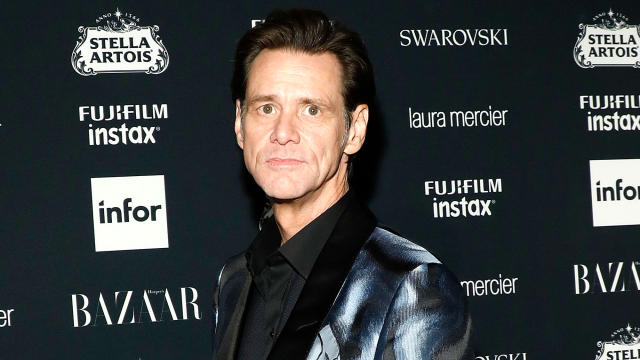



 The Center for Budget and Policy Priorities, a progressive think tank,