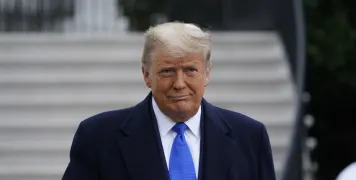
Secret intelligence exists that ‘would cast Trump in very negative light’, warns ex-FBI chief

Secret intelligence exists that ‘would cast Trump in very negative light’, warns ex-FBI chief

Kate Ng                          November 14, 2020
<p>Former FBI Deputy Director Andrew McCabe appears remotely during the “Oversight of the Crossfire Hurricane Investigation”</p> (Getty Images)

Former acting FBI director Andrew McCabe has warned that classified intelligence from bureau’s investigation into President Donald Trump’s 2016 campaign ties to Russia could contain information that would “risk casting the president in a very negative light”.

Mr McCabe has been at the centre of a Senate Judiciary Committee hearing, in which a Republican-controlled panel is reviewing the FBI’s recision to initiate the investigation.

He testified before the panel on Tuesday and told lawmakers that officials had a “duty” to carry out the investigation due to the information they had collected. Mr McCabe personally approved the decision to investigate Mr Trump for possible obstruction of justice.

In an interview with CNN on Friday night, Mr McCabe was asked what the risks were if more information from the Russia investigation was to be declassified.

CNN anchor Andrew Cuomo said Mr Trump was told by Devin Nunes, a close ally of the president’s and former chair of the House Intelligence Committee, that if more previously unreleased information comes out, the more it will appear that the president was “framed”.

“From your knowledge, is there anything that could come out that people would look at and say, ‘wow, I can’t believe they ever included the president in this analysis, he and his people clearly did nothing’?” asked Mr Cuomo.

Mr McCabe replied: “There is some very, very serious, very specific, undeniable intelligence that has not come out, that if it were released, would risk compromising our access to that sort of information in the future.

“I think it would also risk casting the president in a very negative light – so, would he have a motivation to release those things? It’s almost incomprehensible to me that he would want that information out, I don’t see how he spins it into his advantage, because quite frankly, I don’t believe it’s flattering.

Asked if Mr McCabe thought there was more “bad stuff” about Mr Trump that wasn’t already publicly known, he replied: “There is always more intelligence, there is a lot more in the intelligence community assessment than what is ever released for public consumption.

“The original version of that report was classified at the absolute highest level I have ever seen. We’re talking about top secret, compartmentalised code word stuff, and it would be tragic to American intelligence collection for those sources to be put at risk.”

The FBI has been accused by the Senate Judiciary Committee of going “rogue” with the Russia investigation, with one senator describing it as the “biggest scandal in the history of the FBI” on Tuesday.

Mr Trump has repeatedly railed against the FBI for the investigation and maintained there was “no collusion” between his 2016 presidential campaign and Russia.

In 2019, after a report by former FBI director Robert Mueller concluded that Mr Trump’s campaign did not conspire with Russia during the 2016 election – but did not clear him of obstruction of justice – Mr Trump tweeted: “No Collusion, No Obstruction, Complete and Total EXONERATION. KEEP AMERICA GREAT!”

During the hearing on Tuesday, Mr McCabe pointed out that Mr Trump fired then-director James B Comey in 2017 after Mr Comey refused to close an investigation into the president’s national security at the time, or say publicly that Mr Trump himself was not under investigation.

Mr McCabe said: “It became pretty clear to us that he did not want us to continue investigating what the Russians had done.

“We had many reasons at that point to believe that the president might himself pose a danger to national security and that he might have engaged in obstruction of justice, if the firing of the director and those other things were geared towards elimination or stopping our investigation of Russian activity.”

How the Koch brothers used their massive fortune to power a conservative crusade that reshaped American politics

Business Insider

How the Koch brothers used their massive fortune to power a conservative crusade that reshaped American politics

Joseph Zeballos-Roig                 November 13, 2020
GettyImages 110872550
In this February 26, 2007 file photograph, Charles Koch, head of Koch Industries, talks passion Bo Rader/Wichita Eagle/Tribune News Service via Getty Images. 

  • The Koch Brothers fueled a conservative crusade that profoundly reshaped American politics.
  • They built an influential network of donors aligned with their libertarian ideals of free-markets and lower taxes.
  • Charles Koch recently wrote he had misgivings about the partisanship he fostered in a new book. “Boy, did we screw up! What a mess!” he wrote.
  • Here’s a look at how the Koch brothers realigned the nation’s politics with their libertarian brand of conservatism.

Charles Koch is in the news after he shared lines from his newest book in a Wall Street Journal interview published Friday. He expressed regret for his role powering a conservative crusade that forever changed American politics.

“Boy, did we screw up! What a mess!” he wrote.

David and Charles Koch became a colossal political force in recent decades. Since the 1970s, they personally donated at least $100 million to aid the rise of the Tea Party movement and bolster the Republican Party, according to The New York Times.

They built an influential network of donors aligned with their libertarian ideals of free-markets, lower taxes, and shrinking the size of the federal government. As their network poured money into recent election cycles, critics assailed it as the “Kochtopus.”

The Koch brothers also funded initiatives that undercut climate science, and both “vehemently opposed the government taking any action on climate change that would hurt their fossil fuel profits,” author Jane Mayer wrote in her book “Dark Money.”

Here’s a look at how the Koch brothers realigned the nation’s politics with their libertarian brand of conservatism.

David Koch ran as the vice-presidential candidate for the Libertarian party in 1980, attacking campaign donation limits and calling for the repeal of laws criminalizing drug use and homosexuality. The loss compelled him to reevaluate his political approach, planting the seeds for the extensive donor network he would help create.

ed clark david koch


The Koch brothers founded Americans for Prosperity in 2004, now one of the most influential conservative political organizations. It counts more than 700 wealthy donors in its ranks and has chapters in 36 states. Its influence is only rivaled by the Republican Party.

Americans for Prosperity
Rep. Jim Jordan (R-OH) speaks during an Americans For Prosperity rally on Capitol Hill April 6, 2011 in Washington, DC. Alex Wong/Getty Images. Source:  The Wall Street Journal


The Koch Brothers were credited with financially aiding the rise of the Tea Party movement, which wrested control of the House for Republicans in the 2010 midterms at the tail end of President Barack Obama’s first term.

Tea Party
AP       Source: TIME

The Kochs backed the American Legislative Exchange Council, an organization of conservative state lawmakers and business lobbyists. They’ve drafted “model legislation” that lawmakers have introduced to cut taxes, weaken environmental protections, and promote other conservative ideas. More than 600 of them have become law across the US.

david koch 9
Phelan M. Ebenhack / AP Images.  Source: USA Today.


The Kochs have used their network to support academic programs and centers at colleges across the nation that teach conservative economic principles and theories. Its generated controversy from critics who argue it gives conservative organizations too much power in hiring and firing professors and researchers.

college campus students walk
College campus. Drew Angerer / Getty Images.

Source: Center for Public Integrity

As key players in the fossil fuel industry, the Koch brothers staunchly opposed efforts to fight climate change and have downplayed its risks. After the Supreme Court’s decision in Citizens United in 2011, the Kochs unleashed a wave of political advertising to elect Republicans who wouldn’t pass new environmental regulations.

Charles Koch
Charles Koch. YouTube/CBS This Morning. 

Sources: Washington Post, The New York Times 

During the 2016 presidential election, the Koch network spent around $750 million, putting it almost on par with the amount spent by the Republican Party. But the Kochs didn’t back Trump, and they’ve been critical of his policies on trade and immigration.

donald trump election
Republican president-elect Donald Trump in November 2016. Chip Somodevilla / Getty Images       Source: The Washington Post


The Kochs ramped up their political efforts during the 2018 midterms, vowing to spend up to $400 million to support conservative candidates . But they lost many of their races and Democrats recaptured the House, exposing limits to their influence.

Trump rally midterms Florida
The crowd cheered as Donald Trump looked at them at a campaign rally for GOP midterm candidates in Florida. Joe Raedle/Getty Images

Source: Center for Responsive Politics.

 The Kochs were key supporters of the First Step Act, a bipartisan criminal justice legislation that became law earlier this year. It was aimed at reducing recidism rates among federal prisoners, expanding early-release programs and modifying sentencing laws.

Chuck Grassley, Cory Booker, Mike Lee and Lindsay Graham after criminal justice reform bill passed
GettyImages 110872550
Charles Koch. Bo Rader/Wichita Eagle/Tribune News Service via Getty Images


Charles Koch said in a Wall Street Journal interview published Friday he regretted the conservative partisanship he fostered. He shared several lines from his new book.

Boy, did we screw up!” he writes in his new book, “Believe in People: Bottom-Up Solutions for a Top-Down World.” “What a mess!

Michigan governor seeks shutdown of Great Lakes oil pipeline

Michigan governor seeks shutdown of Great Lakes oil pipeline

John Flesher                              

FILE - In this Thursday, Nov. 12, 2020, file photo provided by the Michigan Office of the Governor, Gov. Gretchen Whitmer addresses the state during a speech in Lansing, Mich. Whitmer's office took legal action Friday to force the shutdown of Enbridge's Line 5 pipeline by revoking the easement that allows an underwater section to run through the Straits of Mackinac. (Michigan Office of the Governor via AP, File)

TRAVERSE CITY, Mich. (AP) — Michigan Gov. Gretchen Whitmer took legal action Friday to shut down a pipeline that carries oil beneath a channel linking two of the Great Lakes.

Whitmer’s office notified Canadian company Enbridge Inc. that it was revoking an easement granted 67 years ago to extend a roughly 4-mile (6.4-kilometer) section of the pipeline through the Straits of Mackinac. The revocation takes effect in 180 days, when the flow of oil must stop.

“Enbridge has routinely refused to take action to protect our Great Lakes and the millions of Americans who depend on them for clean drinking water and good jobs,” the Democratic governor said in a statement. “They have repeatedly violated the terms of the 1953 easement by ignoring structural problems that put our Great Lakes and our families at risk.

“Most importantly, Enbridge has imposed on the people of Michigan an unacceptable risk of a catastrophic oil spill in the Great Lakes that could devastate our economy and way of life.”

Michigan Attorney General Dana Nessel filed a lawsuit Friday to carry out Whitmer’s decision. Another pending case that Nessel filed last year targets the pipeline as a public nuisance.

Enbridge said there was “no credible basis” for Whitmer’s action.

“Line 5 remains safe, as envisioned by the 1953 Easement, and as recently validated by our federal safety regulator,” said Vern Yu, the company’s president for liquids pipelines.

Line 5 is part of Enbridge’s Lakehead network, which carries oil from western Canada to refineries in the U.S. and Ontario. The pipeline moves about 23 million gallons (87 million liters) daily between Superior, Wisconsin, and Sarnia, Ontario, traversing parts of northern Michigan and Wisconsin.

The underwater section beneath the Straits of Mackinac, which connects Lake Huron and Lake Michigan, is divided into two pipes that are 20 inches (50 centimeters) in diameter. Enbridge says they are in good condition and have never leaked.

Environmentalists say they’re vulnerable and that closing Line 5 should be part of a global effort to curb use of climate-warming fossil fuels.

“Line 5 remains exposed to uncontrollable and powerful forces, including exceptionally strong currents, lakebed scouring, new anchor and cable strikes and corrosion,” said Liz Kirkwood of For Love of Water.

Enbridge reached an agreement with then-Gov. Rick Snyder, a Republican, in 2018 to replace the underwater portion with a new pipe that would be housed in a tunnel to be drilled through bedrock beneath the straits.

The company is seeking state and federal permits for the $500 million project, which is not affected by Whitmer’s shutdown order.

Environmental activists, native tribes and some elected officials began pushing to decommission Line 5 after another Enbridge pipe spilled at least 843,000 gallons (3.2 million liters) of oil in the Kalamazoo River in southern Michigan in 2010.

Pressure grew as the company reported gaps in protective coating and installed supports when erosion opened wide spaces between sections of pipe and the lake bed.

An anchor dragged by a commercial tug and barge dented both pipes in April 2018. One of the pipeline supports was damaged this summer, apparently by a boat cable.

In a termination notice, Whitmer’s office said the easement should not have been granted in 1953. Placing the pipes beneath a busy shipping lane with no protective cover violated the state’s duty to protect the public’s interest in Great Lakes waters and bottomlands, the document said.

It referred to a Michigan Technological University report that said oil discharged in the straits could harm fish and foul hundreds of miles of beaches, dunes and wetlands.

The notice said Enbridge repeatedly violated a requirement that the pipelines rest on the lake bed or have other supports at least every 75 feet (22 meters). Spaces exceeding the threshold have been detected as far back as 1963 and most were never dealt with, it said.

Enbridge has repeatedly defended its operation of the pipeline, saying the coating gaps posed no serious threat. It has installed more than 120 supports to improve stability and stepped up patrols and other measures to prevent anchor strikes.

The company said shutting down Line 5 would cause shortages of crude oil for refineries in Michigan, Ohio, Pennsylvania and eastern Canada, as well as propane shortages in northern Michigan. It also would boost shipments of oil by rail or trucks, Enbridge said.

“Today’s move would kill jobs and increase fuel costs,” said Geno Alessandrini of the Michigan Laborers Union, which joined industry groups in criticizing Whitmer’s decision. “That’s the last thing Michigan needs as we work to overcome the coronavirus pandemic.”

Republican state Sen. Jim Stamas said the governor had sided with “environmental extremists” instead of “hardworking Northern Michigan families.”

Democratic U.S. Sen. Gary Peters, a member of the Senate committee that oversees the U.S. Pipeline and Hazardous Materials Safety Administration, endorsed Whitmer’s move and said he would work with officials “to swiftly evaluate alternatives to Line 5 while continuing to hold Enbridge accountable.”

‘What a mess’: Billionaire Charles Koch says he regrets fueling partisanship

‘What a mess’: Billionaire Charles Koch says he regrets fueling partisanship

Josh Marcus                          November 13, 2020
Charles Koch (Bo Rader/AP)


Charles Koch, the libertarian tycoon who helped funnel billions of dollars to conservative causes and politicians around the country, says the era of hyper-partisanship he helped create was a “mess.”

“Boy, did we screw up!” he writes in a forthcoming book, according to the Wall Street Journal. “What a mess!”

He also wrote that backing the Tea Party, a grassroots conservative movement advocating for low taxes and small government that challenged both Democrats and mainstream Republicans during the Obama years, did not pan out either.

“It seems to me the tea party was largely unsuccessful long-term, given that we’re coming off a Republican administration with the largest government spending in history,” he told the paper.

They are stunning admissions—or perhaps just canny post-Trump messaging—from an individual who is arguably the most influential person in US politics outside of the politicians themselves.

The Koch network of donors and organizations has funded numerous Republican political campaigns; helped nurture the Tea Party; backed advocacy groups and think tanks like the American Enterprise Institute, the Cato Institute, and Americans for Prosperity; bankrolled climate change denialism across the country; and helped fund roughly 1000 faculty members at 200 universities.

They acted, in the words of one writer, as “a private political bank capable of bestowing unlimited amounts of money on favored candidates, and doing it with virtually no disclosure of its source,” thanks to the Citizens United decision and other rulings rolling back political spending limits from individuals and corporations.

In recent years, the Koch network has increasingly diverged from the Republican party of Donald Trump. It didn’t support his campaigns in 2016 or 2020, and Mr. Koch once compared the president’s Muslim ban to Nazi Germany.

And the president has no love lost for them either, thanks to public spats on issues like trade

In 2018, the Koch network announced it would begin supporting certain Democrats who aligned with their priorities, and the billionaire executive, 85, says he hopes to spend his final act in politics working on bipartisan solutions to issues like immigration and criminal-justice reform.

Despite the change in rhetoric, Koch Industries, the conglomerate responsible for Mr. Koch’s fortune, donated $2.8 million in 2020 to Republicans via its political action committee and employee donations, compared to $221,000 to Democrats.

As Soon as Trump Leaves Office, He Faces Greater Risk of Prosecution

The New York Times

As Soon as Trump Leaves Office, He Faces Greater Risk of Prosecution

William K. Rashbaum and Benjamin Weiser      November 13, 2020
Trump faces loss of constitutional covering and may have to face law enforcement from N.Y. probe.


President Donald Trump lost more than an election last week. When he leaves the White House in January, he will also lose the constitutional protection from prosecution afforded to a sitting president.

After Jan. 20, Trump, who has refused to concede and is fighting to hold onto his office, will be more vulnerable than ever to a pending grand jury investigation by the Manhattan district attorney into the president’s family business and its practices, as well as his taxes.

The two-year inquiry, the only known active criminal investigation of Trump, has been stalled since last fall, when the president sued to block a subpoena for his tax returns and other records, a bitter dispute that for the second time is before the U.S. Supreme Court. A ruling is expected soon.

Trump has contended that the investigation by the district attorney, Cyrus R. Vance Jr., a Democrat, is a politically motivated fishing expedition. But if the Supreme Court rules that Vance is entitled to the records, and he uncovers possible crimes, Trump could face a reckoning with law enforcement — further inflaming political tensions and raising the startling specter of a criminal conviction, or even prison, for a former president.

“He’ll never have more protection from Vance than he has right now,” said Stephen I. Vladeck, a law professor at the University of Texas.

“Vance has been the wild card here,” Vladeck added. “And there is very little that even a new administration that wants to let bygones be bygones could do formally to stop him.”

A lawyer for the president, Jay Sekulow, declined to comment through a spokesman.

The district attorney’s investigation of a sitting president has taken on even greater significance because Trump’s past use of his presidential power — pardoning those close to him charged with federal crimes — suggests he will make liberal use of the pardon pen on behalf of associates, family members and possibly even himself, as he claimed he has the right to do.

But his pardon power does not extend to state crimes, like the possible violations under investigation by Vance’s office.

Vance’s inquiry could take on outsized importance if the incoming Biden administration, in seeking to unify the country and avoid the appearance of retaliation against Trump, shies away from new federal investigations.

Such a move would not bind the district attorney, an independent elected state official.

Vance’s lawyers acknowledged during the court fight over the subpoena that the Constitution bars them from prosecuting a president while in office, but the district attorney has said nothing about what might happen once Trump leaves the White House.

Danny Frost, a spokesman for Vance, declined to comment. It remains unclear whether the office will determine that crimes were committed and choose to prosecute Trump or anyone in his orbit.

Vance’s actions in the coming months are likely to put him under increasing political scrutiny. Trump will leave the White House amid calls for him to face criminal charges and a drumbeat of strident criticism from the left that he has evaded any legal consequences for his conduct over the years.

On the one hand, Vance could face pressure to forsake any charges to allow the country to move forward after a contentious presidential election. On the other, the district attorney was sharply criticized for his 2012 decision not to seek an indictment against Trump’s children, Ivanka Trump and Donald Trump Jr., after they were accused of misleading investors in a condo-hotel project. Vance has said that after a two-year investigation, his office could not prove a crime was committed.

Some legal experts said it would send the wrong message if Vance had evidence to justify charges but decided to walk away from a prosecution of Trump.

“That would put the president above the law,” said Anne Milgram, a former assistant district attorney in Manhattan and Democratic attorney general in New Jersey and a frequent critic of Trump.

And because Trump has repeatedly complained that the investigation was part of a broad partisan witch hunt, any decision to end it once the president left office could be seen as a tacit acknowledgment that such criticism was justified.

Few facts have been publicly disclosed about the course of the district attorney’s investigation or the people or potential crimes being examined because the inquiry is shielded by grand jury secrecy.

But during the legal battle over Vance’s subpoena, which sought eight years of Trump’s personal and corporate tax returns and other records from his accounting firm, prosecutors suggested in court papers that they were investigating a range of potential financial crimes. They include insurance fraud and criminal tax evasion, as well as grand larceny and scheming to defraud — which together are New York state&aposs equivalent of federal bank fraud charges.

And prosecutors argued in court that the documents they had demanded from the accounting firm, Mazars USA, represented “central evidence” for their investigation.

But they have provided little in the way of specifics beyond citing multiple news reports that detailed a range of potential criminal conduct by the president and his associates, including a series of 2018 New York Times articles that outlined possible tax crimes committed by Trump based on a detailed analysis of some of his tax return data obtained by the newspaper.

Trump, before and during his presidency, declined to publicly release his tax returns, breaking with 40 years of White House tradition, and he vigorously fought attempts by Congress and state lawmakers to obtain them.

The district attorney’s inquiry, which began in the summer of 2018, was first thought to focus on hush money payments made on behalf of Trump just days before the 2016 presidential election to an adult film star who had claimed she had an affair with him.

But the subpoena for Trump’s tax returns underscores an apparent greater focus on potential tax crimes, which tax experts, former prosecutors and defense lawyers agree can be among the toughest cases for the government to win at trial.

“The burden of proof is substantial,” said William J. Comiskey, a former longtime state prosecutor of white-collar and organized crime cases who later oversaw enforcement at New York’s Department of Taxation and Finance.

That, in large measure, is because prosecutors must prove that the defendant actually intended to evade taxes, Comiskey said.

And tax cases can be boring for jurors.

“They involve a complicated set of rules and numbers, and it’s hard for jurors — or anyone — to keep their focus through days and days of testimony,” said Amy Walsh, who handled tax cases as a federal prosecutor and later as a defense lawyer at a firm that specialized in tax matters.

The challenge in presenting such cases to a jury is compounded without a cooperating witness who can serve as a guide through complex financial strategies and records, or emails or other statements containing admissions, experts said.

“They need a smoking gun or they need someone to flip,” said Daniel J. Horwitz, who brought tax and complex fraud cases during more than eight years in the Manhattan district attorney’s office and is now a white-collar defense lawyer.

It is unknown whether Vance’s prosecutors have obtained the cooperation of any insiders for their investigation, but another consequence of Trump’s departure from office and loss of the power of the presidency could be that it would be easier for them to do so.

In addition to Vance’s inquiry, Trump also faces continuing scrutiny by New York state’s attorney general — who he has also claimed has targeted him out of partisan rancor.

In his lawsuit seeking to block the grand jury subpoena, Trump’s lawyers quoted 2018 campaign statements by Attorney General Letitia James, a Democrat, saying they were part of a “campaign to harass the president.”

They cited one statement, for example, in which she said Trump should worry because “we’re all closing in on him.”

Last year, James’ office opened a civil fraud investigation into Trump’s businesses. As recently as last month, Trump’s son Eric, after months of delays, was questioned under oath by the office’s lawyers.

Rebecca Roiphe, a former assistant district attorney in Manhattan who teaches legal ethics and criminal law at New York Law School, said James’ earlier statements made it appear there was some truth to the accusation that people who were investigating Trump were “at least capitalizing on that from a political perspective.”

The only way for Vance to avoid that perception, Roiphe said, was “to have a rock-solid case with overwhelming evidence, which will help convince the public that they’re holding the former president accountable for criminal acts.”

James, in response to criticism from Trump last year, tweeted that her office “will follow the facts of any case, wherever they lead.” She added: “Make no mistake: No one is above the law, not even the President.”

One thing seems likely: Defending against a white-collar investigation, even as a former president, will be challenging, stressful and disruptive for Trump, said Daniel R. Alonso, who was Vance’s top deputy from 2010 to 2014 and is now in private practice.

“There are subpoenas and seizures and documents all over the place, as well as constant meetings with lawyers,” Alonso said, adding, “It would certainly not be pleasant for him.”

Why Trump Fears Leaving the White House

Why Trump Fears Leaving the White House

Timothy L. O’Brien                      


(Bloomberg Opinion) — Donald Trump is the luckiest man alive. Unlike almost, well, everyone, he’s been protected from the consequences of his own mistakes his entire life.

Born into a wealthy family, he was insulated from lukewarm academic prospects and serial business crack-ups by his father’s money. (“I often say that I’m a member of the lucky sperm club,” is how he put it in one of his books.) Emerging as a reality-TV star in the early 2000s, Trump discovered that fame allowed him to be as predatory as he pleased without repercussions. (“When you’re a star, they let you do it.”) And his 2016 ascent to the White House opened his eyes to the presidency’s legal armor — which he interpreted broadly and often inaccurately. (“I have an Article II, where I have the right to do whatever I want as president.”)

Although Trump has over the years juggled, among other difficulties, ho-hum grades, the threat of personal bankruptcy, sexual assault accusations, an intensive federal investigation and an impeachment, he has plowed ahead relatively unwounded and unencumbered by regret. Wealth, celebrity and the presidency have kept him buoyant. All that insulation has also meant that he hasn’t learned from his mistakes. Every personal and public reckoning has been postponed or shunted aside.

Now, however, Trump is staring at two threats that loom after he leaves the White House in January. One is financial, the other legal. Neither is entirely under his control. And both may help explain, along with his perennial inability to accept losing, why Trump won’t acknowledge that President-elect Joe Biden is going to succeed him and why he has enlisted the Republican Party to help him gaslight Americans about the outcome of the presidential election.

Trump and the patchwork of businesses he houses inside the Trump Organization are saddled with more than $1 billion in debt, which Dan Alexander of Forbes has helpfully tallied. A portion of that total has been divulged over the past few years in the president’s personal financial disclosures, on file with the Office of Government Ethics. The New York Times recently revealed that Trump has personally guaranteed at least $421 million of the debt, with more than $300 million coming due within four years.

In other words, Trump is on the hook for a lot of money that he may have to scramble to repay in a Covid-19-battered economy in which his industries — hotels, leisure, urban real estate — have been particularly pummeled. Forbes estimates his assets are worth $3.7 billion; Bloomberg News pegs them at about $3.2 billion. He’s not going broke. But if the economy continues to struggle in coming months, those valuations will be tested. And much of what Trump holds isn’t liquid, meaning he may be hard-pressed to sell assets quickly if he needs to raise funds. Among Trump’s most valuable holdings, for example, are minority stakes in two properties controlled by Vornado Realty Trust. Rumors of fire sales might further depress the value of his portfolio.

Another thing that would weaken Trump’s ability to negotiate sweetheart financial deals or forgiveness: leaving the presidency.

On the legal side of the ledger, Trump, his children and their company face aggressive investigations into their finances, accounting practices and tax payments.

The Manhattan District Attorney’s Office is investigating Trump for possible tax fraud and falsification of business records, according to appellate court filings. In this probe, which is also examining the president’s payment of hush money to two women who allegedly had sexual encounters with him, the DA’s office is seeking eight years of Trump’s tax returns. It is also taking a look at whether Trump inflated the value of his properties and other assets in order to secure funds from lenders and investors.

New York Attorney General Letitia James has launched another investigation, also focused on whether the Trump Organization and the Trump family manipulated valuations to secure funding or engineer tax benefits. James’s probe is a civil case, which could bring hefty financial penalties against Trump but no prison time (unless she finds reasons to recast it as criminal case). Vance’s investigation is a criminal matter, however, and if the Trump crew is found guilty of felonies, prison time is on the table.

Trump’s team has fought back hard against the Vance investigation, including arguing before the U.S. Supreme Court that a sitting president is immune from state criminal prosecutions. While the court rejected that notion in a landmark ruling over the summer, it would become a moot argument in any venue once Trump is no longer president.

A Trump pushed outside the legal moat that surrounds the White House becomes, for the most part, a Trump who can be sued and penalized just as any other American can. That could also give fresh traction to the sexual assault cases against him.

It’s unclear how aggressive law enforcement officials in the Biden administration will be toward Trump. They could resurrect some of the obstruction charges that have gone fallow since former Special Counsel Robert Mueller ended his probe. On the other hand, the political firestorm that could ignite might persuade Biden to hold back.

What’s clear is that Trump’s money and freedom are in play. As he comes to grips with losing the 2020 election, he will continue responding ferociously and unpredictably, like a man who for 74 years has been accustomed to getting away with almost anything.

This column does not necessarily reflect the opinion of the editorial board or Bloomberg LP and its owners.

Timothy L. O’Brien is a senior columnist for Bloomberg Opinion.

Bye Bye Donnie , From Australia !

BrooklynDad_Defiant! on Twitter
“HOLY SHIT!!! 🤣🤣🤣🤣 The end of this video destroyed me. Thank you, Australia! 
BrooklynDad_Defiant! on Twitter
From     Christiaan Van Vuuren

Farmers are depleting the Ogallala Aquifer because the government pays them to do it

Farmers are depleting the Ogallala Aquifer because the government pays them to do it

Matthew R Sanderson, Professor of Sociology and Professor of Geography and Geospatial Sciences, Kansas State University, Jacob A. Miller, PhD Student in Sociology, Kansas State University, and Burke Griggs, Associate Professor of Law, Washburn University

<span class="caption">A center-pivot sprinkler with precision application drop nozzles irrigates cotton in Texas.</span> <span class="attribution"><a class="link rapid-noclick-resp" href="https://commons.wikimedia.org/wiki/File:Center_pivot_sprinkler_with_low_energy_precision_application_drop_nozzles_irrigates_cotton_growing_in_wheat_residue_used_as_a_cover_crop._(24486394864).jpg" rel="nofollow noopener" target="_blank" data-ylk="slk:USDA NRCS/Wikipedia">USDA NRCS/Wikipedia</a></span>
A center-pivot sprinkler with precision application drop nozzles irrigates cotton in Texas. USDA NRCS/Wipedia


A slow-moving crisis threatens the U.S. Central Plains, which grow a quarter of the nation’s crops. Underground, the region’s lifeblood – water – is disappearing, placing one of the world’s major food-producing regions at risk.

The Ogallala-High Plains Aquifer is one of the world’s largest groundwater sources, extending from South Dakota down through the Texas Panhandle across portions of eight states. Its water supports US$35 billion in crop production each year.

But farmers are pulling water out of the Ogallala faster than rain and snow can recharge it. Between 1900 and 2008 they drained some 89 trillion gallons from the aquifer – equivalent to two-thirds of Lake Erie. Depletion is threatening drinking water supplies and undermining local communities already struggling with the Covid-19 pandemic, the opioid crisis, hospital closures, soaring farm loses and rising suicide rates.

Map showing changing Ogallala Aquifer water levels over the past century

In Kansas, “Day Zero” – the day wells run dry – has arrived for about 30% of the aquifer. Within 50 years, the entire aquifer is expected be 70% depleted.

Some observers blame this situation on periodic drought. Others point to farmers, since irrigation accounts for 90% of Ogallala groundwater withdrawals. But our research, which focuses on social and legal aspects of water use in agricultural communities, shows that farmers are draining the Ogallala because state and federal policies encourage them to do it.

A production treadmill

At first glance, farmers on the Plains appear to be doing well in 2020. Crop production increased this year. Corn, the largest crop in the U.S., had a near-record year, and farm incomes increased by 5.7% over 2019.

But those figures hide massive government payments to farmers. Federal subsidies increased by a remarkable 65% this year, totaling $37.2 billion. This sum includes money for lost exports from escalating trade wars, as well as COVID-19-related relief payments. Corn prices were too low to cover the cost of growing it this year, with federal subsidies making up the difference.

Our research finds that subsidies put farmers on a treadmill, working harder to produce more while draining the resource that supports their livelihood. Government payments create a vicious cycle of overproduction that intensifies water use. Subsidies encourage farmers to expand and buy expensive equipment to irrigate larger areas.

Irrigation pump in field


With low market prices for many crops, production does not cover expenses on most farms. To stay afloat, many farmers buy or lease more acres. Growing larger amounts floods the market, further reducing crop prices and farm incomes. Subsidies support this cycle.

Few benefit, especially small and midsized operations. In a 2019 study of the region’s 234 counties from 1980 to 2010, we found that larger irrigated acreage failed to increase incomes or improve education or health outcomes for residents.

Focus on policy, not farmers

Four decades of federal, state and local conservation efforts have mainly targeted individual farmers, providing ways for them to voluntarily reduce water use or adopt more water-efficient technologies.

While these initiatives are important, they haven’t stemmed the aquifer’s decline. In our view, what the Ogallala Aquifer region really needs is policy change.

A lot can be done at the federal level, but the first principle should be “do no harm.” Whenever federal agencies have tried to regulate groundwater, the backlash has been swift and intense, with farm states’ congressional representatives repudiating federal jurisdiction over groundwater.

Nor should Congress propose to eliminate agricultural subsidies, as some environmental organizations and free-market advocates have proposed. Given the thin margins of farming and longstanding political realities, federal support is simply part of modern production agriculture.

With these cautions in mind, three initiatives could help ease pressure on farmers to keep expanding production. The U.S. Department of Agriculture’s Conservation Reserve Program pays farmers to allow environmentally sensitive farmland to lie fallow for at least 10 years. With new provisions, the program could reduce water use by prohibiting expansion of irrigated acreage, permanently retiring marginal lands and linking subsidies to production of less water-intensive crops.

These initiatives could be implemented through the federal farm bill, which also sets funding levels for nonfarm subsidies such as the Supplemental Nutrition Assistance Program, or SNAP. SNAP payments, which increase needy families’ food budgets, are an important tool for addressing poverty. Increasing these payments and adding financial assistance to local communities could offset lower tax revenues that result from from farming less acreage.

Amending federal farm credit rates could also slow the treadmill. Generous terms promote borrowing for irrigation equipment; to pay that debt, borrowers farm more land. Offering lower rates for equipment that reduces water use and withholding loans for standard, wasteful equipment could nudge farmers toward conservation.

The most powerful tool is the tax code. Currently, farmers receive deductions for declining groundwater levels and can write off depreciation on irrigation equipment. Replacing these perks with a tax credit for stabilizing groundwater and substituting a depreciation schedule favoring more efficient irrigation equipment could provide strong incentives to conserve water.

Rewriting state water laws

Water rights are mostly determined by state law, so reforming state water policies is crucial. Case law demonstrates that simply owning water rights does not grant the legal right to waste water. For more than a century courts have upheld state restrictions on waste, with rulings that allow for adaptation by modifying the definitions of “beneficial use” and “waste” over time.

Using these precedents, state water agencies could designate thirsty crops, such as rice, cotton or corn, as wasteful in certain regions. Regulations preventing unreasonable water use are not unconstitutional.

Allowing farmers some flexibility will maximize profits, as long as they stabilize overall water use. If they irrigate less – or not at all – in years with low market prices, rules could allow more irrigation in better years. Ultimately, many farmers – and their bankers – are willing to exchange lower annual yields for a longer water supply.

As our research has shown, the vast majority of farmers in the region want to save groundwater. They will need help from policymakers to do it. Forty years is long enough to learn that the Ogallala Aquifer’s decline is not driven by weather or by individual farmers’ preferences. Depletion is a structural problem embedded in agricultural policies. Groundwater depletion is a policy choice made by federal, state and local officials.

Stephen Lauer and Vivian Aranda-Hughes, former doctoral students at Kansas State University, contributed to several of the studies cited in this article.

Even If Joe Biden Wins, He Will Govern in Donald Trump’s America

The President's supporters in Grand Rapids, Mich., ignored the chill at the final rally of his 2020 campaign.The President’s supporters in Grand Rapids, Mich., ignored the chill at the final rally of his 2020 campaign. Peter van Agtmael—Magnum Photos for TIME
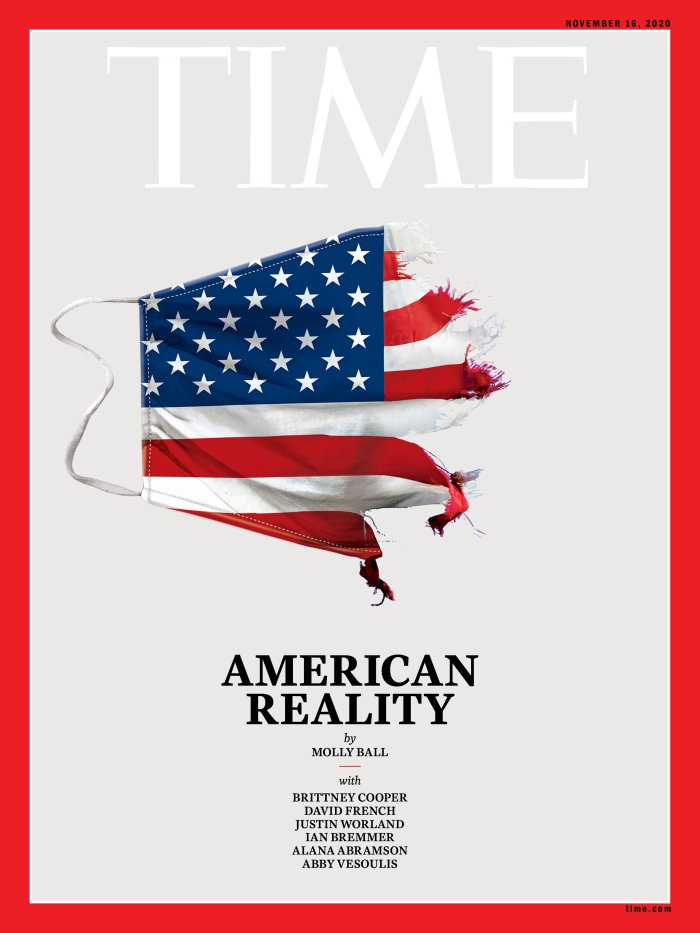
The car horns blared as Joe Biden took the stage just before 1 a.m.—not to proclaim victory, but to urge his supporters not to lose hope, no matter what President Donald Trump might say. “We believe we are on track to win this election,” the former Vice President told the crowd in Wilmington, Del., on Nov. 4. “It ain’t over until every vote is counted. Keep the faith, guys.”

As the new day dawned and dragged on, it increasingly looked as though Biden was right. Having flipped Michigan, Arizona and Wisconsin, Biden appeared to be inching toward victory. Pennsylvania, Georgia, Nevada and North Carolina remained too close to call as of the evening of Nov. 4. Independent forecasters believed Biden was likely to eke out the requisite 270 electoral votes when all the votes were counted, over the President’s noisy objections.

Even with the White House nearing their grasp, Biden’s supporters could be forgiven if they found it hard to keep the faith. The 2020 election did not go according to plan for the Democrats. It was a far cry from the sweeping repudiation of Trump that the polls had forecast and liberals craved. After all the outrage and activism, a projected $14 billion spent and millions more votes this time than last, Trump’s term is ending the way it began: with an election once again teetering on a knife’s edge, and a nation entrenched in stalemate, torn between two realities, two orientations, two sets of facts.

TIME illustration

Even if he has lost, a President who trampled the rule of law for four years was on pace to collect millions more votes this time than last. And though they braced for a bloodbath, the congressional Republicans who enabled him instead notched unexpected gains. The GOP appeared likely to retain the majority in the Senate and cut into the Democratic House majority, defying the polls and fundraising deficits. Republicans held onto states such as Florida, South Carolina, Ohio and Iowa that Democrats had hoped to flip. They cut into Democrats’ margins with nonwhite voters, made gains with Latinos in South Florida and the Rio Grande Valley, and racked up huge turnout among non-college-educated white people, while halting what many conservatives feared was an inexorable slide in the suburbs.

Amid record turnout, Biden seemed sure to win the popular vote, possibly with an outright majority—a resounding statement by any standard. But many Democrats expected more. They believed that voters had soured on Trump and his party, that his mishandling of the pandemic and divisive style had alienated a wide swath of the electorate, that a new political era was about to be born and Trumpism banished to history’s dustbin. They awoke to a different reality. “Democrats always argued, ‘If more people voted, we would win,’” says GOP strategist Brad Todd, co-author of The Great Revolt: Inside the Populist Coalition Reshaping American Politics. “Well, guess what? Everybody voted, and it didn’t help the Democrats. There is a multi-racial, working-class ethos that is animating the new Republican coalition.”

As the votes were tallied into the following day, the candidates’ positions fell along predictable lines. The challenger encouraged the core exercise of democracy to continue, while the President tried to stop it. Biden’s camp urged patience; Trump voiced unfounded suspicions about fraud and cast unwarranted doubt on still incoming returns. Despite widespread fears of chaos, the vote was mostly peaceful and devoid of major irregularities. The President’s baseless declaration of victory was a sign that the test he has posed to American institutions isn’t over yet.

If Biden emerges as the winner, his achievement—toppling an incumbent who manipulated the levers of government to try to gain an advantage, and made voter suppression a core campaign strategy—shouldn’t be discounted. As the vote count continued, his campaign projected confidence and noted it had always said the race would be close. But even if he becomes the next President, it seems clear that he will be governing Trump’s America: a nation unpersuaded by “Kumbaya” calls for unity and compassion, determined instead to burrow ever deeper into mutual antagonism. Win or lose, Trump has engineered a lasting tectonic shift in the American political landscape, fomenting a level of anger, resentment and suspicion that will not be easy for his successor to surmount.

Whoever takes the oath of office on Jan. 20 will be tested by a historic set of challenges. The COVID-19 pandemic has just entered its worst phase yet, rampaging across the country virtually unchecked. The economic fallout from the virus continues to worsen without new federal aid. Trump has given few hints of what his next months in office may hold, but few expect them to be smooth. An urgent set of policy problems, from climate change to health care to the nation’s crumbling infrastructure, may run into the wall of divided government. “If in fact Biden wins, it’s still the case that an openly bigoted aspiring authoritarian not only won the presidency but captured the complete loyalty of one of two major political parties, and—but for a once-in-a-century pandemic—he might have been re-elected,” says Ian Bassin, co-founder of Protect Democracy, a non-partisan legal group. “If that doesn’t tell you that something is completely rotten in the foundations of our democracy, I don’t know what would.”

The story of American politics in the 21st century has been one of escalating polarization and gridlock, a nihilistic feedback loop that has made the country all but impossible to lead. For years, a chaos-ridden nation has waited to deliver its verdict on Trump’s unorthodox presidency. But this is 2020—the year when up was down and real was fake, the year of the plague, the year of the unexpected: of course it would not be that easy. Both sides hoped for a knockout blow, a landslide that would forever settle the question of which version of America prevails. Instead, our identity crisis continues.

Steven Lewandowski views returns outside Chase Center in Wilmington, Del., on Nov. 3.Steven Lewandowski views returns outside Chase Center in Wilmington, Del., on Nov. 3.  Tony Luong for TIME

Violetta Smith holds portrait balloons of Harris and Biden at an outdoor election-night event in Wilmington, Del.Violetta Smith holds portrait balloons of Harris and Biden at an outdoor election-night event in Wilmington, Del. Tony Luong for TIME

The campaign unfolded over a year so convulsive that the third presidential impeachment in history now seems a distant memory. COVID-19 upended Americans’ lives and drained their bank accounts. Millions of people, from all walks of life, took to the streets to protest police violence. The West Coast’s sky was blotted by fire for weeks, while the East was battered by a record hurricane season. And yet, against this backdrop of chaos there was an odd political stasis: Trump’s standing in polls remained about where it had been when Biden first entered the race—a sign, Democrats believed, that Trump had little chance of persuading an electorate that had long since rejected him.

Not that he particularly tried. Strategists of both parties believe the campaign was winnable for the incumbent if he had embraced a more traditional strategy and style—something his entire presidency has shown him to be uninterested in doing. Discarding the advice of the political professionals, Trump insisted on rerunning the 2016 election, down to the leaked emails and antiestablishment rhetoric. He made little alteration to his bull-in-a-china-shop attitude, even though the hell-scape he raged against was now one that unfolded on his watch. “COVID certainly didn’t help, but this election was about the President’s performance over the last four years, not just the last nine months,” says Brendan Buck, a former top adviser to the GOP ex–House Speaker Paul Ryan. “It was four years of bumbling his way through every issue, alienating everyone who didn’t agree with him, and never being able to use the tools he had for any particular good.”

As Trump careened from one outrage to another, Biden limited his campaign to theatrically cautious appearances: masked speeches to small, distanced groups; “drive-in” rallies where attendees sat in their cars. The longtime pol known for his garrulousness and gaffes stuck unerringly to the script. Many lines in his final television ads were identical to what he said when he launched his campaign a year and a half before. Unusually for a general-election candidate, Biden actually saw the public’s estimation of him improve over the course of the campaign. Only about 10% of the ads aired by Biden’s campaign and allies were attacks on Trump, according to the Wesleyan Media Project. “The message has been incredibly consistent: an implicit contrast with Trump’s character flaws and their consequences for real people,” says Democratic strategist Jesse Ferguson, a veteran of Hillary Clinton’s 2016 campaign. “Trump is self-absorbed and chaotic; Biden is the opposite: in it for others, stable, the antidote to everything Trump represents.” But Democrats now wonder if Biden, like Clinton before him, put too much emphasis on character and not enough on kitchen-table issues, and whether his decision not to campaign more in person was a missed opportunity.

Biden was buoyed by a vast grassroots movement: the Trump era has seen a frenzy of political action, with thousands of newly motivated activists leading local political groups. Middle-class women gathered their Facebook friends to drink wine and make canvassing phone calls; disaffected Republicans waged a multimillion-dollar campaign to mobilize their peers. A weak fundraiser who ended the primary essentially broke, Biden shattered campaign-finance records—his campaign hauled in $952 million, dwarfing the incumbent by more than $300 million—as liberals showered donations on him and the party’s congressional candidates.

It's not my place or Donald Trump's place to declare who's won this election. That's the decision of the American people. — Joe Biden, at the Chase Center in Wilmington, Del., just after midnight on Nov. 4.“It’s not my place or Donald Trump’s place to declare who’s won this election. That’s the decision of the American people.” — Joe Biden, at the Chase Center in Wilmington, Del., just after midnight on Nov. 4. Angela Weiss—AFP/Getty Images

We'll be going to the U.S. Supreme Court. — Donald Trump, in the East Room of the White House early on the morning of Nov. 4.“We’ll be going to the U.S. Supreme Court.” — Donald Trump, in the East Room of the White House early on the morning of Nov. 4. Peter van Agtmael—Magnum Photos for TIME
Trump had his own army of enthusiastic supporters. His massive rallies—held at cavernous airport hangars and sports arenas with no social distancing and limited mask wearing—were not just aimed at flattering Trump’s ego or creating images of enthusiastic throngs for local and national media. Republican National Committee (RNC) teams perched outside each event, registering new voters and creating a database of supporters. “People sometimes pooh-pooh the rallies and say there’s really no campaign structural benefit to them,” says Brian Ballard, a Republican lobbyist with close ties to Trump. But they allowed the campaign to “utilize the crowds that not only go, but the crowds that registered to go, and sometimes that number is five times the amount of folks that actually show up.”

Trump also kept up his field-organizing program through the summer, while Biden’s team hung back out of safety concerns. The joint field program between the RNC and the Trump campaign boasted 2.6 million volunteers, according to figures provided by the RNC. They made more than 182 million voter contacts—more than five times what they did in 2016—and added nearly 174,000 new GOP voters to the rolls. Early voter-registration figures in Florida, North Carolina and other states showed that Republicans had “essentially neutralized what had been a Democrat advantage” by mobilizing new voters, says John Podesta, who chaired Clinton’s failed 2016 presidential bid.

Democrats underestimated the Trump tribe’s breadth to their detriment. “I think you miss some of the Trump quotient [in polls] because these folks come out of the woodwork, and they’re out of the woods and waters of South Carolina,” says former GOP Representative Mark Sanford, a Trump critic whose Charleston-area district Republicans took back on Nov. 3. Despite putting more than $100 million behind Senate candidate Jaime Harrison, Democrats fell short of defeating incumbent Lindsey Graham by double digits. “These Trump rallies and Trump parades and all those kinds of things, they don’t strike me as the type that would be answering a polling call,” Sanford says.

Having made the decision to forgo traditional field organizing, Biden’s campaign manager, Jen O’Malley Dillon, instead turned the campaign into what may be the largest digital-organizing machine in American political history. She “took a risk in investing as much in digital acquisition as she did,” says Patrick Stevenson, chief mobilization officer at the Democratic National Committee. “You’re putting down $1 million in April that you’re expecting to show back up as $5 million in August.” By September, the digital operation was printing money. Digital organizers recruited more than 200,000 volunteers and deployed them on hundreds of millions of text messages and phone calls. But the result raises questions about whether this virtual juggernaut could really substitute for old-fashioned face-to-face campaigning.

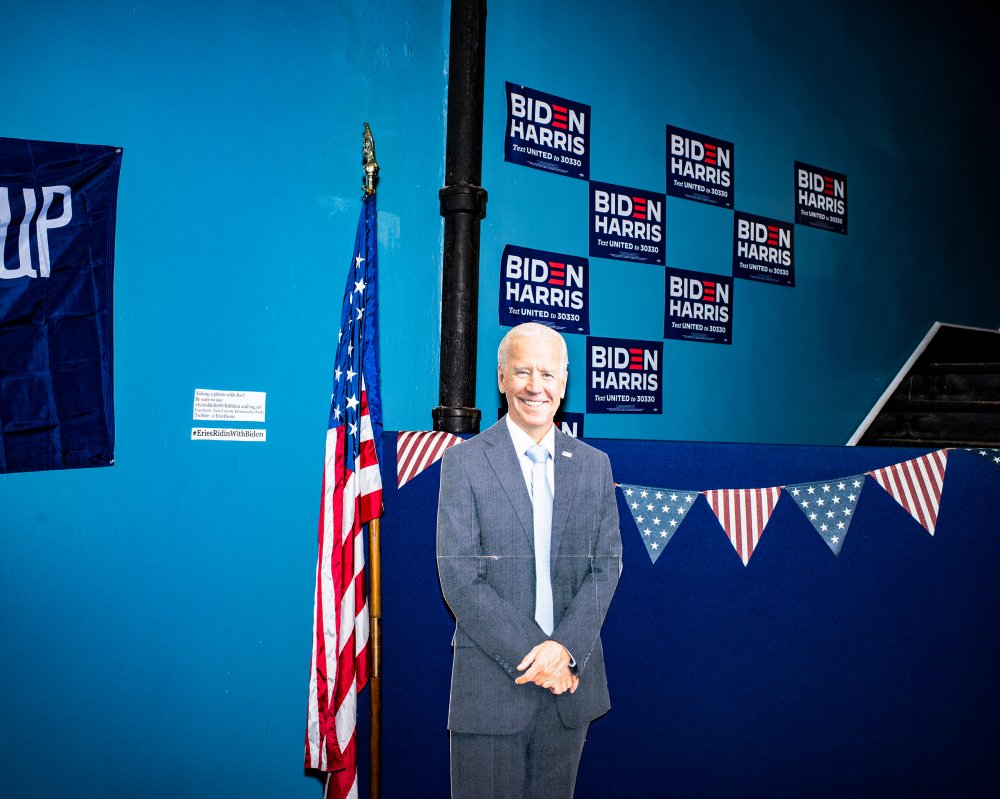
The different style of the campaigns—and of their supporters—was echoed in their Pennsylvania offices.The different style of the campaigns—and of their supporters—was echoed in their Pennsylvania offices. Lorenzo Meloni—Magnum Photos for TIME
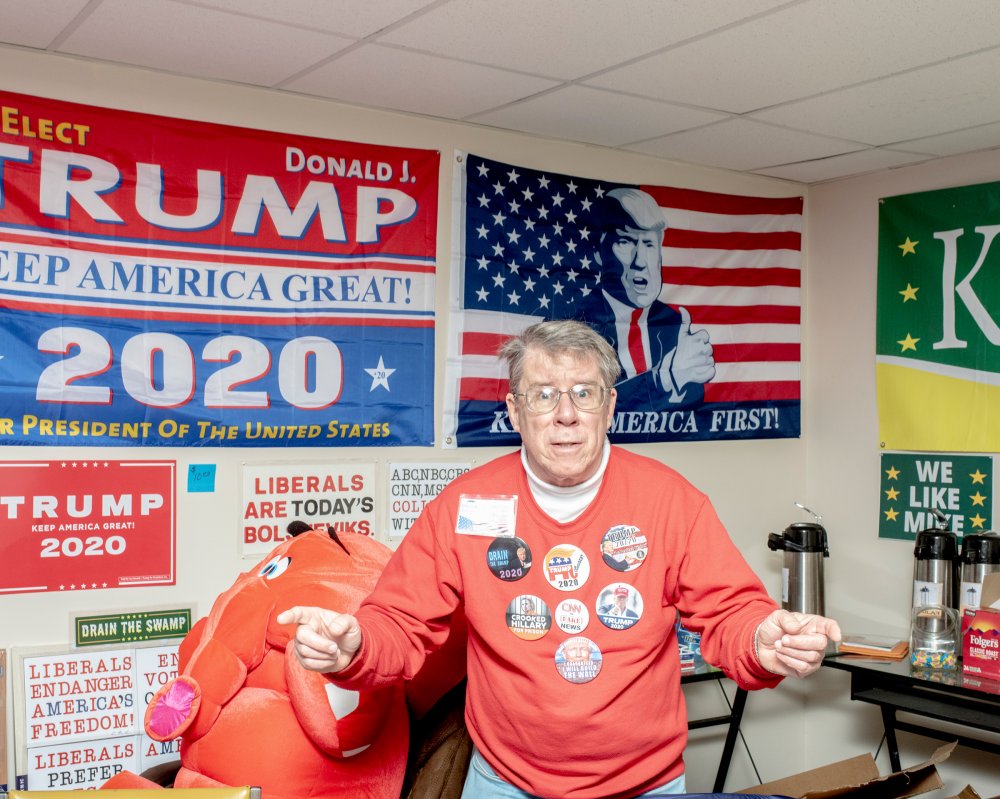
David Lawrence, a Republican supporter, in Erie on Nov. 3.David Lawrence, a Republican supporter, in Erie on Nov. 3. Lorenzo Meloni—Magnum Photos for TIME

What comes next is anybody’s guess. There are 2½ months until the next Inauguration. A lame-duck President with the world’s biggest platform, an even larger ego, and millions of supporters who internalized his rhetoric about election “rigging” could stir a lot of trouble on his way out of town. So much, including the odds of violence erupting, depends on Trump’s rhetoric in the days and weeks to come. Then there is the question whether he might tap the federal treasury on the way out—his companies and family have pocketed millions in government funds during his time in office—or seek to pardon himself and his allies. “His impulse might be to abuse executive authority, and my hope and prayer is that those around him would restrain him, though they haven’t been very successful so far,” says Tom Ridge, the GOP former Pennsylvania governor and Homeland Security Secretary who endorsed Biden. “I have never felt that this President has ever truly respected the Constitution, the rule of law and the freedoms embodied in our democratic process.”

If Biden does take office, he will confront a set of challenges like few Presidents before him. He has laid out a comprehensive—and expensive—federal plan to combat the COVID-19 pandemic that includes promoting mask wearing, ramping up testing and the production of protective equipment, improving information transparency and scientific reopening guidance, and creating and distributing a vaccine. Democrats have previously proposed trillions in new spending to help individuals, businesses and local governments and shore up the health care system—needs that will only grow in the coming months.

The coronavirus is far from the only problem Biden and the Democrats have promised to solve. A former chairman of the Senate Foreign Relations Committee, Biden would likely devote great attention to restoring America’s traditional trade and security alliances. House Speaker Nancy Pelosi recently said the congressional agenda for 2021 would include a major infrastructure bill and an expansion of health care. Liberals will be pushing for fast action on police reform, climate and immigration. Democrats have been remarkably unified since Biden effectively sewed up the nomination in March, but the party’s left wing has signaled it will not be so deferential once victory is in hand. Progressive groups have been circulating lists of potential Biden nominees they would (and would not) accept for key Administration posts.

Reflecting the exhaustion on both sides of the aisle, a Trump fan rests on a table at an election-night party in Las Vegas.Reflecting the exhaustion on both sides of the aisle, a Trump fan rests on a table at an election-night party in Las Vegas. John Locher—AP

Four years of trump have left Democrats with few worries about overreading their mandate. “If we win the election, we have a mandate to make change, period,” says Guy Cecil, president of the Democratic super PAC Priorities USA. But if Republicans retain their hold on the Senate, prospects for major legislation will be dim. Republicans had won 48 seats as of the evening of Nov. 4, with at least one January runoff in Georgia that could decide the balance of power in the chamber.

Whatever the ultimate result, the election exposed the shaky edifice of U.S. democracy. From the antiquated governing institutions that increasingly reward minoritarian rule, to the badly wounded norms surrounding the independent administration of justice, to the flimsy protections of supposedly universal suffrage, to the nation’s balky and underfunded election infrastructure, Trump’s presidency has laid bare the weaknesses in our system. But initiatives to reform campaign finance, government ethics and voting rights seem fated to run aground in a divided Washington.

A round of harsh recriminations seems certain for the Democrats, who had assumed that their coalition of minorities, college-educated white people and young voters was destined only to grow as a share of the electorate, while the post-Trump GOP would be doomed to rely on a dwindling population of older, white, non-college-educated voters. Instead, Republicans appeared to have increased their share of the Black and Latino vote. Democrats failed to topple any GOP incumbents in Texas and lost a congressional seat in New Mexico. Their hopes for a surge of college-educated suburban voters also fell short, suggesting that the GOP’s attacks on liberal ideology proved effective in places like Oklahoma City and Cedar Rapids, Iowa. “Democrats need to ask themselves why someone like Joe Biden is an endangered species in the party,” says Justin Gest, a political scientist at George Mason University and author of The New Minority: White Working Class Politics in an Age of Immigration and Inequality. “Why is the party of experts, urban intellectuals and woke social-movement activists not producing candidates who can mobilize people in Montana, Ohio, North Carolina? It just doesn’t look like a national party.”

Republicans, even if they lose the presidency, are likely to feel emboldened to continue pursuing Trump’s themes. “Donald Trump isn’t going away,” says Buck, the former Ryan adviser. “He’s still going to be the leader of the party and the biggest voice, and he’ll at least flirt with the idea of running again. It’s going to continue to be a populist, grievance-fueled party.”

Some elections mark a breakthrough—the emergence of a new American majority after years of conflict and gridlock. A landslide like Franklin D. Roosevelt’s in 1932 or Ronald Reagan’s in 1980 would have signaled a nation ready to move on from its cultural and ideological cleavages and seek some way forward together. Instead it looks more bitterly split than ever. “There was a substantial political divide in this country before Donald Trump was elected,” Ridge says. “His presidency has exacerbated that divide to an almost unimaginable degree. But that did not begin with Donald Trump, and it will not end with him, either.” —With reporting by Charlotte Alter, Brian Bennett, Tessa BerensonAbby Vesoulis and Lissandra Villa/Washington; Anna Purna Kambhampaty/Honolulu; and Mariah Espada, Alejandro de la Garza and Simmone Shah/New York

This appears in the November 16, 2020 issue of TIME.

Trump’s huge vote total breaks my heart. I recognize this America and I wish I did not.

Trump’s huge vote total breaks my heart. I recognize this America and I wish I did not.

Michael J. Stern, Opinion columnist        November 5, 2020

This is going to be a scorched-earth column, so buckle up.

Yes, former Vice President Joe Biden might squeak out a victory. But even if he does, we’ve been slapped with the heartbreaking reality that nearly half our country voted to reelect President Donald Trump after spending four years watching him spew unbridled bigotry, engage in blatant corruption, and tell so many lies you’d need a magnifying glass to read The Washington Post’s running list of false and misleading claims.

My best friend just called in disgust to say he did not recognize this country. Unfortunately, I do. It’s the same country that built itself largely on the backs of slaves who had their most basic human rights stolen and whose descendants, more than 150 years after emancipation, still carry the weight of the chains that held them down.

It’s the same country that closed its eyes to Matthew Shepard, beaten and broken and tied to a fence in rural Wyoming, where he was left to die … because he was gay.

And it’s the same country where you can see countless cellphone videos of people telling Latino Americans to speak English or “stay in Mexico” or “go back” to where they came from.

Our better and worse angels

True, slightly more than half the country voted to repudiate Trump. But that’s little consolation because many of those who chose Trump did not do so out of a simple difference of political opinion on which reasonable minds can differ. We can tease out each strand of the strangle knot, but in the end this election was a contest between our better and worse angels.

We were always imperfect but America was great, in part, because of what we aspired to be: “Land of the Free,” where hard work and equality meant everyone had a shot at earning a piece of the pie. We were born a mosaic of diversity and we celebrated it.

But that’s not what some in Trump’s America want to see when they look through the window of history. They want to see their own reflection. And despite Trump’s success in leading a 68 million-person chorus of “Make America Great Again,” it’s just a TV jingle.

Protest in Philadelphia on Nov. 4, 2020.


None of the policies enacted under the Trump-branded theme song has done anything to actually make America great. Tax cuts for the wealthiest, fighting the promise of universal health care, lethal mismanagement of a pandemic, use of the Justice Department for political gain and a personal financial windfall — these are the cornerstones of a presidency best characterized by golf and failure. While half of us were repelled, the other half voted for more.

Face up to it, Democrats: We’re a center left democracy hijacked by Trump and Republicans

People need to stop acting perplexed about how the polls could be so wrong — how they could show Biden up by 7 points in Michigan and still end up with a race almost evenly split. I never again want to hear the phrase “margin of error.” Trump knows what happened and most of us do, too, if we’re willing to say it out loud.

A lot of people are buying the bigotry and division Trump is selling — they just don’t want their family, friends and neighbors to know it, so they don’t tell the pollsters. They’re scarfing down a Big Mac in their car, in the dark corner of a McDonald’s parking lot, before heading home and pretending to enjoy a plate of baked chicken and broccoli.

Fictitious world marketed by Fox News

Perhaps the most dangerous implication of this election is the willingness of millions of Americans to reject unpleasant realities and accept a fictitious world created by an autocrat and marketed by co-conspirator Fox News. They don’t want to believe that almost a quarter-million people just like them could be alive one minute and body bagged the next. And so, they choose to believe Trump’s “rounding the corner” announcement claiming he has conquered the coronavirus pandemic even as the infection rate is hitting record highs — even as my partner called me two hours ago to say he’s got a fever, has been vomiting and is too sick to stay at the hospital where he works.

Hard 2020 lessons: Democrats counted on money and Hispanic voters to deliver a blue wave. They didn’t.

If things weren’t bad enough, Trump pronounced Tuesday night that he had won the election and demanded an end to vote counting in states where he is ahead, while simultaneously insisting that the count continue in states where he is trailing. Trump then threatened to take his plan to steal the election to the Supreme Court, where he appointed a third of the judges and expects a warm reception. He has already filed lawsuits in Michigan and Pennsylvania (to stop the vote count), demanded a recount in Wisconsin and “claimed” to have won several states before they were decided.

I can’t believe we’re here again. I can’t believe that nearly half my fellow Americans tried to reelect a man so singularly focused on satisfying himself, he’d bite his mother’s breast if sweeter milk caught his eye.

When all is said and done, Trump may be defeated in a close call. But I fear Trumpism, and the ugliness it reflects, is here to stay.

Michael J. Stern, a member of USA TODAY’s Board of Contributors, was a federal prosecutor for 25 years in Detroit and Los Angeles.