The North Carolina hog industry’s answer to pollution: a $500m pipeline project

The Guardian

The North Carolina hog industry’s answer to pollution: a $500m pipeline project

Michael Sainato and Chelsea Skojec                 December 11, 2020
<span>Photograph: Gerry Broome/AP</span>
Photograph: Gerry Broome/AP


Elsie Herring of Duplin county, North Carolina, lives in the house her late mother grew up in, but for the past several decades her home has been subjected to pollution from nearby industrial hog farms.

“We have to deal with whether it’s safe to go outside. It’s a terrible thing to open the door and face that waste. It makes you want to throw up. It takes your breath away, it makes your eyes run,” said Herring.

She explained they also deal with constant trucks on the road, hauling pigs, dead and alive, in and out of the area, feed trucks, and the flies and mice that the farms attract.

Eastern North Carolina has about 4,000 pink hued pools of pig feces, urine and blood as a result of the hog industry, where 9m pigs produce over 10bn gallons of waste annually in the state. When the waste lagoons reach capacity, excess waste is sprayed on to nearby fields. In 2000, Smithfield Foods agreed with state officials in North Carolina to finance research to find and install alternatives to the waste lagoons and spraying systems, but none were deemed economically feasible.

But now – instead of implementing safer waste systems – Smithfield Foods is pushing to use the hog waste lagoons to collect, transport and sell the methane gas they produce. That terrifies many local people and environmental activists who see it as seeking to profit from an ecological problem rather than fix it.

“It only lines their pockets. They’re trying to sell it as renewable energy. It’s only renewable if pigs continue to poop, which is why I’m afraid they’re going to push the moratorium on new hog farms, because if you have that great of a demand, you have to supply to meet it,” added Herring.

“They’re not treating the waste, they’re converting it, so how is that hog waste ever clean?”

The North Carolina Department of Environmental Quality is considering the first permit approval for an industrial-scale biogas project in North Carolina, which would cap waste lagoons from industrial pig farms in the state, capturing the methane and transporting it through pipelines to a processing plant.

The product, called biogas, is being proposed by a $500m joint venture between Smithfield Foods and Dominion Energy, Align RNG, as a solution to the hog waste pollution problems plaguing North Carolina, but residents and environmental organizers are raising concerns that the project will worsen the problem.

Related: ‘Suffocating closeness’: US judge condemns ‘appalling conditions’ on industrial farms

“The biogas is a false solution,” said Naemma Muhammad, a community organizer and resident of Duplin county. “It doesn’t solve the problems we’ve been dealing with for three decades, which is to get rid of the lagoons and spraying systems so people can breathe and enjoy their property in the way they intended. We don’t need anything to encourage this industry to continue business as usual.”

The Grady Road Project includes trapping methane gas at 19 industrial hog waste sites in Duplin and Sampson counties in North Carolina, where over 30 miles of pipelines will be constructed to a central processing facility and distributed through existing natural gas pipelines. Duplin and Sampson counties are the top-hog producing counties in the US. The project is one of several biogas proposals being pushed by Smithfield and Dominion Energy.

Muhammad noted residents still don’t know where the 30 miles of pipeline will be laid or which waste lagoons will be used for the project, and the pipelines will pose greater risks of spills and leaks to the wetlands and groundwater in the region.

Jets of liquified hog waste shoot from spray guns and on to a field near Wallace, North Carolina.
Jets of liquified hog waste shoot from spray guns and on to a field near Wallace, North Carolina. Photograph: Allen G Breed/AP


The methane capturing also produces other pollutants, posing greater risks to nearby communities when waste is sprayed on fields and spills are common, especially during strong storms.

“The process creates excessive concentrations of ammonia by extracting the methane,” said Sherri White-Williamson, the environmental justice policy director of North Carolina Conservation Network. “This is another way for the industry to be able to keep the lagoon sprayfield system in place. This is not a good system and to continue to find ways to justify keeping that system in place makes no sense.”

The waste produced by the industry has a long documented impact on the health, living conditions and pollution of communities near these hog farms, recognized as environmental racism as Black people, Native Americans and Latinos are more likely to live there than white people, according to a 2014 study by researchers at the University of North Carolina at Chapel Hill.

Living in the vicinity of a hog industrial operation has been linked to chronic illnesses such as asthma, anemia, kidney disease, certain cancers and high blood pressure.

“Methane aside, hundreds of other air and water pollutants remain uncaptured and are emitted untreated by the lagoon and sprayfield system to the environment and the communities which surround these facilities,” said Ryke Longest, the co-director of the Environmental Law and Policy Clinic at Duke University.

Will Hendrick, the staff attorney for Waterkeeper Alliance, noted North Carolina’s senate bill 315 passed in 2020 removed environmental standard requirements to pave the way for proposals such as the biogas project, despite other existing and cleaner technologies to produce biogas.

Young hogs at Everette Murphrey Farm in Farmville, North Carolina. Waste from the industry has had a long documented impact on the health of nearby communities.
Young hogs at Everette Murphrey Farm in Farmville, North Carolina. Waste from the industry has had a long documented impact on the health of nearby communities. Photograph: Gerry Broome/AP


Those standards called for new or modified permits to address five environmental problems with hog waste, including the elimination of animal waste discharge to surface water and groundwater, and substantially eliminating ammonia, odor, disease transmitting vectors, and nutrient and heavy metal contamination.

“The biggest problem with their biogas proposal is it fails to address those five long known well-documented problems,” said Hendrick. “Now suddenly they have money to invest in waste management technologies, but are conveniently overlooking their commitment to the people of North Carolina.”

The hog industry tried to appeal nuisance lawsuits won by residents in North Carolina over the effects of waste and odors from hog industry farms, and North Carolina legislators passed laws in response to the lawsuits limiting the ability of residents to sue the industry. A federal court recently upheld the verdict, in which a federal judge noted there was ample evidence farming practices persisted despite known harmful effects to neighbors. Herring was a party to that suit.

According to the North Carolina Department of Environmental Quality, a decision on the permit application will be decided within approximately 30 days after the hearing, which will be scheduled after 20 November.

“We care about their health and the health of our environment. That’s why we started this project in the first place, to improve the region’s air quality and protect the climate for future generations,” said a spokesperson for Dominion Energy. They claimed the project will reduce emissions in the area by more than 150,000 metric tons a year.

“We will continue reaching out to make sure everyone’s voice is heard and everyone has the facts. The community has our pledge we’re going to do this the right way.”

A fork in the road for responsible NC hog farming

A fork in the road for responsible NC hog farming

Derb Carter                      

Last month, a federal appeals court ruled that it was proper for a jury to award monetary damages to neighbors of a Smithfield Foods controlled hog operation in Bladen County. The neighbors complained that the putrid odor and other adverse impacts adversely affected their rights to use and enjoy their property. In affirming damages are proper, one judge concluded: “It is past time to acknowledge the full harms that the unreformed practices of hog farming are inflicting.”

Twenty years after Smithfield entered a formal agreement with the North Carolina Attorney General to convert its primitive lagoon and sprayfield waste management systems on all company-owned and contract farms to environmentally superior systems that are economically feasible, Smithfield has not converted any.

Smithfield industrial hog facilities continue to store vast amounts of raw hog waste in excavated lagoons and then spray it on to neighboring fields – polluting water and air. For many neighbors, the stench and filth outside their homes is unbearable.

Now, Smithfield is proposing to cover hog lagoons on many of its hog operations, capture methane or biogas, and construct miles of pipelines to convey the gas to a processing facility it proposes to construct in Duplin County in a joint venture with Dominion Energy. The processed gas would be injected into a natural gas pipeline and used as an energy source. While removing emissions of methane that would otherwise contribute to climate change and utilizing it for energy has merit, Smithfield’s approach is dependent on perpetuating the flawed, harmful lagoon and sprayfield waste system.

Flushing millions of gallons of raw hog waste from industrial-scale barns into lagoons and then spraying on nearby fields has had, and continues to have, substantial adverse impacts on the environment and many communities in eastern North Carolina.

Numerous studies have tied the lagoon and sprayfield system to increased nutrient levels that plague our coastal waters, leading to periodic algal blooms and fish kills. Capping lagoons to collect methane will actually increase the amount of nutrients generated from the hog waste, leading to more water quality problems.

It doesn’t have to be this way. In Missouri, Smithfield now touts its “next generation technology” to manage waste that it agreed to install on all of its hog operations there. This wholesale conversion to improved waste management was forced by lawsuits from neighbors and that state’s attorney general. It is operational and profitable on hundreds of Smithfield hog operations in Missouri.

Smithfield’s new waste management technology in Missouri appears to have been enabled by the revenue generated from marketing biogas. In addition to capturing and utilizing methane from the waste, Smithfield’s Missouri hog operations converted to mechanical barn scrapers instead of barn flushing. This reduced the amount of waste laden water and reduced odor from operations by 59 to 87 percent.

Smithfield has requested that North Carolina state agencies approve necessary permits authorizing the proposed biogas project. The pending decision places eastern North Carolina at a significant fork in the road. As Smithfield has requested, the state can allow Smithfield to simply cover lagoons, capture and profit from biogas, and perpetuate the flawed lagoon and sprayfield system.

Or the Attorney General can hold Smithfield to its commitment to use economically feasible and superior waste management systems that substantially eliminate impacts to neighbors and the environment.

Before allowing Smithfield to develop its proposed biogas venture, the Department of Environmental Quality should ensure the company at a minimum employs a complete waste management system that not only taps methane but substantially reduces or eliminates odors, nutrients, and pollution.

It is past time that Smithfield acts responsibly. If it can clean up its act in Missouri, it can do the same in North Carolina.

Derb Carter is director of the Southern Environmental Law Center’s North Carolina offices.

Trump Strutted Like a Player, But Also Got Played

Trump Strutted Like a Player, But Also Got Played

Timothy L. O’Brien                December 14, 2020


(Bloomberg Opinion) — Anyone still clinging to the idea that Donald Trump is a crafty strategist who furthered his goals by corrupting everyone around him during an unspooled and vindictive presidency might want to consider, instead, that Trump himself was often gamed — at least when it comes to some of the signature policies that will define his administration. To be sure, Trump unleashed torrents of dangerous vitriol that made it safe for his party and supporters to embrace racial, economic and cultural divisions more openly and enthusiastically. And Trump’s stagecraft was certainly sui generis, tethered to outre mythmaking and serial fabulism. But apart from propagating a cult of personality, Trump’s performance art rarely revolved around policy debates or goals. It just revolved around him. On the policy frontier, where voters’ lives are shaped and institutions are remodeled, others were in charge. Those people most likely regarded Trump as a useful foil, someone easy to manipulate or outmaneuver if you had the stomach and patience for it. There are myriad examples, but for now let’s focus on Senate Majority Leader Mitch McConnell, Attorney General William Barr and Federal Reserve Chair Jerome Powell. Each of those men embodies some traits needed to turn Trump into a sock puppet — or to simply keep him out of the way. They could be wily (McConnell, Barr, Powell), craven (McConnell, Barr) or courageous (Powell), but needed at least one of those attributes to achieve their goals. History will also probably judge each of them in proportion to how much their particular vices or virtues drove policy and procedure.“ At the risk of tooting my own horn, look at the majority leaders since L.B.J. and find another one who was able to do something as consequential as this,” McConnell, a history buff, told the New York Times after he rammed Justice Amy Coney Barrett onto the Supreme Court in October. McConnell regards his conservative reshaping of the federal judiciary as his signature accomplishment, and his legacy goes well beyond the Supreme Court. He has pressed the Senate to confirm at least 229 federal court appointments during Trump’s presidency, and, for the first time in 40 years, hasn’t left a left a single vacancy on district and circuit courts — even if that has meant repopulating the judiciary with young, white men bearing threadbare resumes. Trump didn’t have a sophisticated, informed view of the judiciary before becoming president. But he let McConnell transform such traditionally liberal venues as the Ninth Circuit Court of Appeals because the senator sustained him in other ways. McConnell ran interference when Trump was impeached. He helped court Trump’s incendiary political base. He kept to the shadows when Trump attacked the Black Lives Matter movement. He remained silent when Trump savaged the integrity of the presidential election. McConnell, according to those close to him, held Trump in low regard but protected him anyway to feed his own political ambitions, further fuel his fundraising apparatus and go about dismantling the federal government. McConnell’s fealty and machinations came home to roost this year when Trump failed to effectively respond to the Covid-19 pandemic and the Senate was left so broken it appears unable to pass a second coronavirus relief package even though it has bipartisan support. It’s not clear yet whether McConnell, content to wield power for power’s sake alone, will pay any penalties for cuddling with Trump. But there’s no question that he has spun the president like a top the last several years whenever one of his own goals was in play. Then there’s Barr, who, when asked last year whether his ward-heeler’s advocacy for Trump has tainted his legacy and his reputation in the legal community, responded with trademark indifference: “I’m at the end of my career. … Everyone dies.” Barr has been a longstanding proponent of an unrestrained imperial presidency, and those views took root long before he encountered Trump. But he went out of his way to audition for his Justice Department job because he undoubtedly saw Trump as a useful vehicle for furthering those aims. Among other things, Barr helped Trump end-run Special Counsel Robert Mueller’s Russia investigation, gave Trump the latitude to misuse federal force on U.S. streets, helped protect White House advisers on the wrong side of the law, knee-capped federal prosecutors investigating matters close to Trump and helped give early credence to Trump’s claims that the presidential election was rigged before later reversing himself. Trump grew weary with Barr after the attorney general refused to rush a Justice Department probe of how law enforcement went about investigating the president, but Barr initiated the investigation to begin with because he shared Trump’s belief that the deep state was out to get him. Barr reportedly worked hard to make sure that a federal investigation into President-elect Joe Biden’s son, Hunter, was kept under wraps during the election, but one wonders, given Barr’s record, how the investigation was started in the first place. Trump harbored authoritarian designs well before he intersected with Barr, but it’s Barr who tried to build a throne for the president — and taught Trump how to go about it. Powell, inhabiting the wonky and cloistered confines of the Federal Reserve, is the brighter tale here. An articulate, compassionate and relatively soft-spoken member of Trumplandia, Powell runs a financially powerful institution that Trump has repeatedly tried to strong-arm during his presidency. “Who is our bigger enemy, Jay Powell or Chairman Xi?” Trump once asked. Powell endured all of this with great calm and confidence, managing to win plaudits as one of the best Fed leaders of the modern era. He’s also been directly responsible for helping the U.S. economy weather the Covid-19 pandemic. He’s well aware that the Federal Reserve Act is meant to protect his independence from the White House, and he’s demonstrated repeated bravery charting his own course despite Trump’s interference. Asked during a congressional hearing if he’d pack up and leave if Trump tried to fire him, Powell said three times that he wouldn’t. “The law clearly gives me a four-year term, and I intend to serve it,” he responded. Trump pressured Powell to adopt rate cuts that would stoke the economy in the short run, but Powell largely made such calls on the merits. He also became one of the strongest voices in the government for using federal powers to support the financial well-being of average workers and the lives and livelihoods of those bowled over by the pandemic. To get there, he essentially ignored Trump — and expanded the Fed’s mandate and mission along the way. Powell’s tenure is a reminder that Trump can’t corrupt people willy-nilly. They have to be primed for it beforehand. And bad things didn’t happen during Trump’s time in office because he landed in Washington with a fully realized plan. Bad outcomes took root because Trump was surrounded by bad actors, some of whom knew exactly how to play him.

Trump Just Broke Through the Last Level of Neo-Fascism

Trump Just Broke Through the Last Level of Neo-Fascism

Michael Tomasky                           December 10, 2020
Tasos Katopodis/Getty


Never mind his latest Twitter storm of complaints and threats. Or do mind them, because their very desperation proves that it’s dawning on the Undapper Don that his chances of staying in the White House much longer are, as the mayor of Munchkin City put it, morally, ethically, spiritually, physically, positively, absolutely, undeniably, and reliably dead. He’ll see for what will probably be the first time in his life that there’s no judge he can buy (including the one he assumed he was buying, who has at least shown herself to be above mob-style corruption; hey, we’ll take it), no fixer he can bribe, no idiot cousin he can put on the payroll to fix things.

For the first known time in 74 years, Trump morality has met normal morality, and normal morality has won.

Which raises the question: With his legal options all but exhausted (we’re waiting on this Texas case, which seems more insane than most of them), what will Trump do next? Perhaps more concerningly, what will his followers do? Until this week, Trump and they could keep entertaining the fiction that some brave soul would step forward and, within the parameters of “the system,” somehow fix this and save him.

Rubbing Trump’s Face in His Loss Isn’t Just Fun—It’s Important

I’ve been writing lately that Trump foes should see him as a figure of derision and take joy in mocking him, and I believe that. That kind of moral cleansing is mentally healthy and necessary, after what he’s done to our brains for four years. But in saying that I don’t mean to make light of the threat Trump and his backers pose. That threat is still terrifying, both over the next 40-plus days and further into the American future than I’d care to admit. We’d better be ready.

When they start writing histories of the Trump era, I think the one-line summary will be something like this: While some portion of his appeal was based on legitimate grievances of working-class people against elites, he awakened an authoritarian impulse among the citizenry that was far larger and more rabid, and more easily triggered, than most of us ever imagined.

That is, if you’d asked me back in, oh, 2013, when Donald Trump was still just the foolish corrupt narcissist most everybody knew he was, what portion of the American public would fall for neo-fascism, I’d have said 25 percent tops. But events have shown us that it’s more like 40. At least 35. That’s pretty frightening.

What do I mean by neo-fascism? It’s a fairly obvious set of criteria. Here are five essential ones, though there are others: blind loyalty to a leader who’s really more of a national father figure; belief that the leader is the state; belief that opposition to the leader is opposition to the state, and thus treason; conviction (instilled or ignited by the leader) that the source of the problems facing the good wholesome ethnic majority is some Other or collection of Others who must be ostracized if not banished; agreement that the rules and constraints of democratic order are sometimes useful and should be obeyed as long as one can obey them and win, because doing so confers a certain legitimacy, but if they have to be cast aside to hold power, then cast aside they must be. These principles animate every fascist regime in human history. They are at the heart of Trumpism, and they have drawn many more adherents than I’d have thought possible in this country.

Among advanced democracies, the United States is, if not unique in this regard, certainly more susceptible now than most. If a Trump came along in Denmark, say, would Denmark elect him? I doubt it. Ditto most European countries. Some would. Some have: Hungary, Poland, and Turkey. But I think most would not.

We, however, did. And now that that impulse has been awakened, putting it back to bed will be the work of a generation. Or two. The main thing that has to happen is that the system has to work well for enough working- and middle-class people again such that neo-fascism’s allures are diminished.

That means doing things that will help working-class people: a decent minimum wage, infrastructure, public investment in rural areas and small towns, and yes, the building of a greener economy that might be able to bring some new hope to places like my native West Virginia.

But the confounding irony of course is that the working-class people have been convinced that those things, or most of those things, are socialism, and so they don’t want them. Their voting patterns tell us they’d rather stay with a set of ideas and priorities that are frankly failing them. So the hope of changing this dynamic in the long term is slim. But we have to try.

And in the short term, by which I mean until Jan. 20? A lot of it depends on the father-leader. Given that we’ve already seen armed protesters surrounding a Michigan state official’s house, and the Arizona GOP suggest that its members should be ready to martyr themselves for Trump, it’s hard to say. One casual comment from the father-leader could set something off. Or he might not even have to say a thing. If people are willing to die for him, anything is possible.

Go back over my list above of the five criteria of neo-fascism with special focus on number five. That’s exactly where we are now.

Democratic trappings were of use to Trump as long as he was the winner as he was in 2016. But this time around, he lost. Then he tried everything he knew to try within the democratic system (the recounts); then he tried audacious and outrageous things that no one has ever tried before but still were not against any democratic law (pressuring Georgia Governor Brian Kemp, summoning those two Michigan legislators to the White House). None of it worked. So there are no more democratic options.

Which means other options might now be pursued. So yeah, be on your guard. And, uh, why did Trump replace all those people at the Pentagon anyway? Remember that? Could be nothing. But it could be… something. The one thing we know is that he has no conscience holding him back.

Michael Flynn’s firing: A lie, a leak, and then a liability

NBC News

Michael Flynn’s firing:
A lie, a leak, and then a liability

Inside the 25 days that shook the Trump presidency.

By Carol E. Lee       December 3, 2020

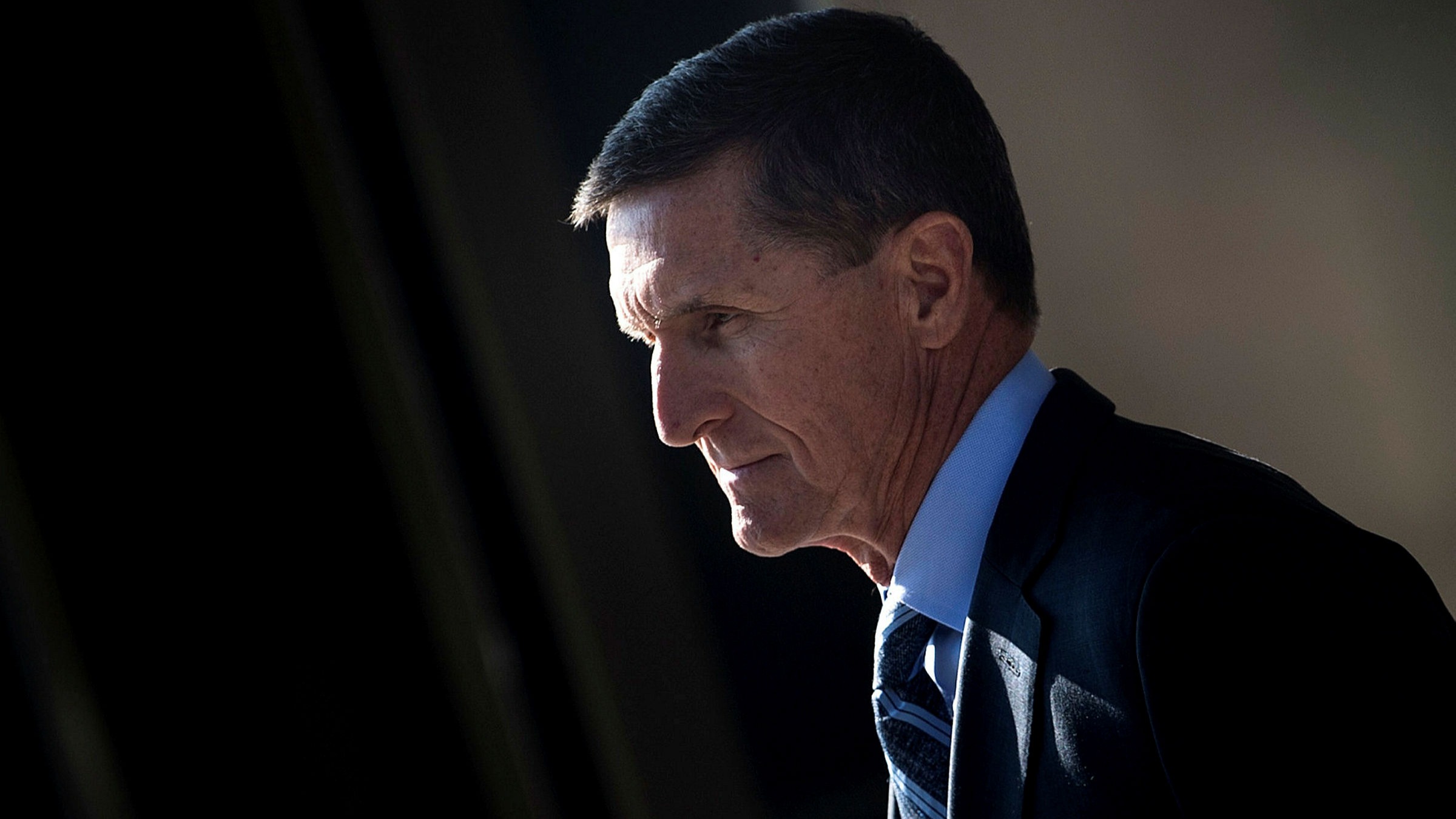
Donald Trump pardons ex-national security adviser Michael Flynn | Financial  Times

WASHINGTON — Michael Flynn was looking for a criminal defense attorney — on the internet.

The sun had set and much of the White House staff had cleared out for the night. Nearly alone, Flynn hovered over his assistant who was seated at her desk just outside his corner office, scanning attorney biographies on her computer screen.

He hadn’t told the president or his top advisers what prompted the Google search: Two FBI agents had interviewed him that afternoon about his contacts with Russia.

It was Flynn’s fifth day as President Donald Trump’s national security adviser. On Feb. 13, 2017, the 25th day of the Trump presidency, Flynn would be gone, fired for lying to the vice president and the FBI.

Now, after twice pleading guilty to making false statements to federal agents, Flynn is a free man — thanks to a president who says his former national security adviser was targeted by an overzealous FBI in a set up orchestrated by political foes. On a balmy Thanksgiving eve in Washington, Trump short-circuited the judicial process to grant Flynn a full pardon. He wished the retired Army general and his family a warm holiday. And Flynn returned the favor by appealing to the president’s leading grievance, writing that his former boss has been “viciously targeted” as a victim of “a coup against our nation.”

The president’s Nov. 25 pardon abruptly capped nearly four years of legal and political drama that began when Trump fired a national security adviser he’d come to privately disparage and ended with the White House declaring Flynn “an innocent man.”

“The president has pardoned General Flynn because he should never have been prosecuted,” the White House statement read. Vice President Mike Pence has so far been silent about the pardon. After portraying himself as a victim of Flynn’s deception who unwittingly repeated his falsehoods publicly, Pence earlier this year said he believes Flynn unintentionally misled him about his clandestine talks with the Russians.

But a comprehensive examination of his time as Trump’s national security adviser, including interviews with more than 20 people who were directly involved in uncovering or covering up his actions, suggests that Flynn knowingly misled investigators and the president’s inner circle repeatedly. Once considered one of the country’s top intelligence officials and skilled in deception, Flynn not only concealed key details of his conversations with Vladimir Putin’s handpicked ambassador in Washington, but also an investigation he knew was closing in on him.

By the end of the first week of Trump’s presidency, as the new administration plunged itself into foreign and domestic turmoil, a small group of senior White House officials had been repeatedly confronted with the truth about Flynn’s conversations with Russia’s ambassador, Sergey Kislyak – that they had discussed newly-imposed U.S. sanctions against Moscow. They also learned that two FBI agents had questioned Flynn about those conversations in a secure conference room just a short walk from the Oval Office, and that he’d answered with a false account similar to the one he’d given Pence.

“Everyone’s forgetting that Flynn was fired because he was lying to everyone,” one senior White House official directly involved with the Flynn matter said recently. “After weeks of asking him, he was still saying he never talked to the Russian ambassador about sanctions.”

And as officials grappled with Flynn’s own cover-up, they too engaged in similar action. The president and his closest aides worked to keep the revelations, including warnings from senior Justice Department officials that Flynn could be blackmailed by the Russians, from the public and just about every senior official in the fledgling administration all the way up to the vice president.

White House officials who worked alongside Flynn when he was national security adviser described a perfect storm of secrecy, distrust, loyalty and confusion that enabled the retired three-star general to remain on the payroll of the American taxpayers, with access to the country’s most tightly held secrets and at the helm of life-and-death decisions — despite knowledge at the highest levels of government that he could be a liability.

Those who agreed to share details from that time spoke to NBC News over many months on the condition of anonymity.

Their recollections revealed angry confrontations between a deceptive Flynn and his colleagues in the West Wing, an indecisive president more worried about his public image than the potential national security implications of Flynn’s actions, and a White House counsel searching for a crime instead of confronting a potential threat. Key evidence that Flynn had lied was only shared with Pence when its existence became public — 15 days after Trump and a handful of senior White House officials were informed of it.

This period of time, which was the subject of intense examination by Special Counsel Robert Mueller, stood at the intersection of his investigations: how Russia interfered in the 2016 election, whether Trump associates conspired with Moscow in that endeavor, and if the president attempted to obstruct the FBI’s investigation into any such coordination.


Flynn was one of the first Trump associates to be ensnared in the Russia investigation – and on Nov. 25 of this year he became the first to be relieved of the legal consequences of being a convicted felon.

Trump’s use of the presidential pardon power circumvented a pending decision by a federal judge, Emmet Sullivan, on whether to move forward with sentencing Flynn after the Justice Department filed a motion on May 7 to dismiss the case. Leadership at the Justice Department wasn’t consulted about the pardon and had preferred to see through the request for dismissal, which argued there was no investigation to justify the FBI interview in which the former national security adviser made false statements.

Flynn admitted to making false statements in that interview not only about his Russia contacts but also his attempt during the Trump transition to scuttle an Obama administration effort to condemn Israeli settlements with a resolution at the United Nations. As part of his plea deal, Flynn further admitted to giving false statements to the Justice Department about being paid for lobbying on behalf of the government of Turkey.

Sullivan balked at the Justice Department’s motion to dismiss a case the president had relentlessly portrayed as unfair in his efforts to undermine the Mueller investigation. Sullivan brought in a retired federal judge — who, as an assistant U.S. attorney, had prosecuted the mafia boss John Gotti — to argue that the judicial branch can reject a Justice Department request to dismiss a case if it’s believed to be politically motivated.

This past summer, Flynn tried to force Sullivan to grant the Justice Department’s motion. But the D.C. Circuit Court of Appeals ultimately rejected the effort.

It was one of many dramatic twists and turns in the sentencing of Flynn since he first appeared in Sullivan’s court in December of 2018. At that time the judge angrily rejected Mueller’s recommendation that Flynn merely be put on probation because he was a model cooperating witness. Over the next year, Flynn made the surprise decision to hire new lawyers, broke from the federal prosecutors he’d cooperated with and requested to withdraw his guilty plea.

“In truth, I never lied,” Flynn wrote in a court filing this past January. “I will fight to restore my good name.”

In response to specific questions about this article, Flynn’s lawyer, Sidney Powell, referred NBC News to court filings posted on her website.

Flynn’s first lawyer, Robert Kelner, declined to comment. The White House and Pence’s office had no comment.

A pardon for Flynn was a long-sought outcome for the president who hired him, fired him and, until losing re-election, said he’d consider bringing him back into the White House.

From his earliest days in office Trump has sought to shield Flynn from federal investigation, reportedly asking his then-FBI director to let any inquiry go. And after distancing himself from Flynn when he cooperated with the Mueller investigation, Trump later latched onto his case as a political cudgel. Flynn became a cause célèbre for the president and his Republican base.

Had Sullivan sentenced Flynn, Trump made clear he would pardon him, and the president’s team had been prepared since at least June for an announcement. “There was no question internally whether he would pardon Flynn,” a senior White House official said. It was just a matter of when.

In September, Powell, Flynn’s lawyer, said during a court hearing that she had spoken with the president directly and asked him not to pardon her client. But with Trump leaving the White House on Jan. 20, time was running out. “That was the motivation,” the senior White House official said of the timing.

Still, the pardon changes nothing about why Trump has said he fired Flynn: because he lied. Neither does Flynn’s reversal on his guilty plea. Or Pence’s newly adopted view that he is now “more inclined to believe” Flynn didn’t intentionally lie to him.

That Flynn remains the leading personification of Trump’s grievances – namely that forces are out to get him – and a catalyst for additional presidential pardons based on similar motivations makes his time as national security adviser and the circumstances around his firing newly germane.

Despite the lies and warnings that Flynn could be compromised, the president and his closest aides didn’t seriously discuss firing Flynn until the controversy was made public by journalists. That delay allowed Flynn to play a leading role in every sensitive national security decision in the early days of the Trump presidency:

* Trump’s hastily executed order banning travel to the U.S. by individuals from some majority-Muslim countries.

* An ill-fated counterterrorism raid in Yemen that led to the death of a Navy SEAL.

* A North Korea missile launch that caught the new administration flat-footed at the president’s Florida resort.

* Flynn publicly put Iran “on notice” over its aggression in the Middle East, a move that foreshadowed sharply escalated tensions between Washington and Tehran.

* As head of the National Security Council, Flynn arranged for a permanent council seat for the president’s chief political strategist, Steve Bannon, an unusual move and an unwelcome surprise to Trump.

Jan. 26, 2017

Trump was unmoved.

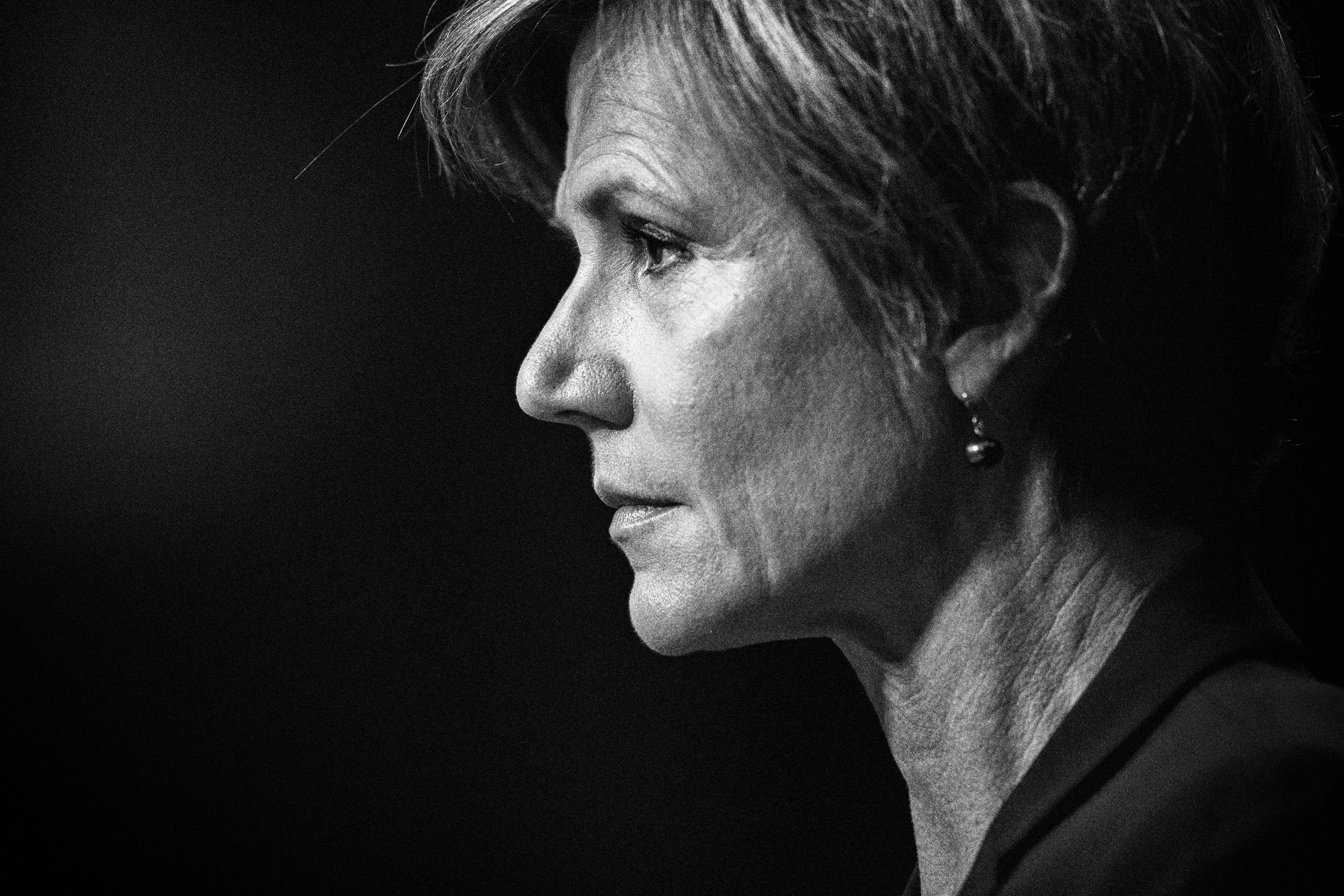
White House counsel Don McGahn was sharing what he had just learned: Flynn had been interviewed by the FBI and may have lied. McGahn had just met with Acting Attorney General Sally Yates for about 15 minutes and chief among Yates’ concerns was that Flynn wasn’t truthful with Pence and other White House officials when he told them he had not discussed U.S. sanctions with Kislyak, Russia’s ambassador in Washington, during phone calls several weeks before Trump’s inauguration on Jan. 20, 2017.

Flynn and Kislyak spoke on Dec. 29, 2016, the same day the Obama administration announced new sanctions against Russia in response to Moscow’s interference in the U.S. presidential election held the month before. They spoke again two days later, after Russian President Vladimir Putin announced he would not retaliate against the U.S. for the sanctions. Putin’s restraint had shocked American intelligence officials, who only later learned about Flynn’s discussions with Kislyak while analyzing Russia’s response to the sanctions.

Flynn’s Dec. 29 conversation with Kislyak became public in news reports on Jan. 12. Three days later, Pence said publicly that after talking to Flynn he could confirm that call “had nothing whatsoever to do with those sanctions.” That raised concerns at the Justice Department that Pence might also be in on the deception with Flynn.

The White House didn’t know it but the FBI had previously opened an investigation into Flynn because of concerns about his relationship with the Russian government. And Flynn’s phone calls with Kislyak, as well as his false assurance to Pence that they didn’t discuss sanctions, had raised new alarms among investigators.

McGahn explained Flynn’s possible legal exposure: the perjury statute and the Logan Act, which makes it illegal for any American to negotiate with foreign governments in a dispute with the U.S. without authorization from the current U.S. government.

Trump, with his chief of staff Reince Priebus and senior adviser Stephen Bannon by his side, listened but seemed unphased. He asked McGahn to start again.

McGahn told the president he didn’t think the FBI clearly had Flynn on charges of giving false statements and, after meeting with Yates, McGahn wasn’t sure what the issue was: Is Flynn a security risk? Should the president get rid of him? Is the national security adviser under investigation?

That’s when Trump perked up: “Not again, this guy, this stuff.”

The president had already grown frustrated with Flynn, in what one senior White House official described as “a personality clash.” Trump had started complaining to aides about Flynn during the transition. He thought Flynn interrupted him too much during briefings and that his Kislyak contacts were generating a steady stream of negative press coverage. Just days into his presidency, Trump wouldn’t even look at Flynn during intelligence briefings. “He couldn’t stand Mike Flynn,” another senior White House official said. “He wanted to fire Flynn before he even got to the White House.”

Trump told McGahn, Priebus and Bannon not to discuss the issue with any other White House officials. Instead, he directed them to figure out the problem and come back with a plan.

“Then no one looked into it,” with any urgency, a senior White House official at the time said.

Bannon was the one official among them who seemed to possibly know for weeks that Flynn had been lying. He’d spoken with Flynn about the sanctions on Jan. 1 — the day after Flynn’s second discussion with Kislyak — and they agreed they had “stopped the train on Russia’s response,” according to Mueller’s report.


Trump has insisted he had no knowledge of Flynn’s discussions about sanctions with Kislyak before the talks took place, though federal investigators later found it implausible that senior officials including Bannon and Flynn would have kept it from him.

The circle of people with knowledge of Flynn’s lies, his FBI interview, and the Justice Department’s warning, was tight. But McGahn made a decision to widen it slightly when he ignored Trump’s instructions and tapped John Eisenberg, a deputy White House counsel and legal adviser to the National Security Council, to figure out whether Flynn had given false statements to the FBI or violated the Logan Act.

McGahn also figured there must be a recording of Flynn’s phone call with Kislyak that they could listen to. The National Security Agency had wiretapped the phone of the Russian ambassador. It’s a standard U.S. intelligence operation that Flynn, a former military intelligence officer, later said he knew about when the FBI interviewed him on Jan. 24.

Deputy FBI Director Andrew McCabe had called Flynn on a secure phone line around lunch time that day to tell him the FBI wanted to come by the White House to talk to him about his contacts with Russians.

McCabe told Flynn he could have a lawyer present, though stressed that the matter would be handled more quickly if he didn’t. He also said if Flynn did bring along a lawyer, officials at the Justice Department would also have to get involved.

Flynn replied that he didn’t need a lawyer.

He agreed to meet without asking McCabe for any details.

Ahead of their arrival at the White House, FBI officials discussed how to approach Flynn. “What’s our goal? Truth/Admission or to get him to lie so we can prosecute him or get him fired?” one official wrote in a memo.

By 2:15 p.m. Flynn was alone in the White House with two FBI agents, including FBI Deputy Assistant Director Peter Strzok. Flynn appeared in a good mood. He talked about everything from hotels he’d stayed at during the presidential campaign to terrorism to Trump’s knack for interior design. He even offered the agents “a little tour” of the West Wing, walking them right past Trump and a couple of movers discussing where to place artwork.

When the conversation moved to his contacts with Kislyak, Flynn “was fully aware that federal officials routinely monitor, record, and transcribe such conversations with foreign officials,” he later wrote in a court filing, and knew the FBI probably had transcripts of his calls.

And yet there in the White House, with the two FBI agents, he denied asking Kislyak to hold back on moves that would escalate tensions. “It wasn’t, ‘don’t do anything,’” he said.

Flynn also said he didn’t remember a follow-up conversation with Kislyak, after Putin announced he would not escalate. That’s when the ambassador told Flynn his request had gone to the highest levels of the Russian government.

Despite the obvious discrepancies, the agents later noted that Flynn displayed no “indicators of deception” and didn’t leave them with the impression that he was lying or thought he was lying. Within hours of their departure, Flynn would be on the hunt for a lawyer.

Jan. 27, 2017

It’s possible the president’s national security adviser broke the law.

That’s what deputy White House counsel Eisenberg told his boss on a Friday morning, exactly one week after Trump’s inauguration.

After an initial look at Flynn’s conduct, Eisenberg suggested that Flynn might have given false statements to the FBI or violated the Logan Act. But, he noted, no one has ever been successfully charged under the Logan Act, and he downplayed the likelihood the Justice Department would pursue such charges.

McGahn told Eisenberg to ask Yates back to the White House for another meeting.

McGahn, Priebus and Bannon were already suspicious of Yates, a holdover from the Obama administration, and questioned her motives. Obama officials made clear they had no respect for Flynn. Obama had ousted Flynn as director of the Defense Intelligence Agency in 2014. And after the 2016 election, Obama personally advised Trump against hiring Flynn.

McGahn’s second meeting with Yates was also 15 minutes long but more contentious. McGahn questioned why it would matter to the Justice Department if one White House official lied to another. Yates replied that this situation “was a whole lot more than that,” walking McGahn again through her concerns.

He asked if taking action against Flynn would interfere with an FBI investigation into his conduct. Yates said it would not. “It wouldn’t really be fair of us to tell you this and then expect you to sit on your hands,” she said.

That’s when McGahn asked for evidence. “Is this something we could see?” Yates said she couldn’t give him the recordings of Flynn’s conversation but said she’d look into getting him transcripts.


A few paces away in the Oval Office, Trump called FBI Director James Comey, who was in charge of the Russia investigation, to invite him to the White House that night for dinner. The previous evening, Trump had asked several of his senior advisers during dinner what they thought of Comey.

Bannon and Priebus seemed nervous about the president dining alone with the FBI director. “Do you want someone to come with you?” Bannon asked Trump. Trump said he wanted to have dinner with Comey alone, that he was just meeting with him to decide whether to keep him in the job.

“Don’t talk about Russia, whatever you do,” Priebus told the president. Trump promised he wouldn’t.

But alone with Comey in the Green Room on the main floor of the White House, Trump did just that.

And he indicated he was souring on Flynn. To illustrate the point, he told Comey a story about Flynn waiting six days after Putin had reached out to Trump to schedule a return phone call with the Russian leader.

“The guy has serious judgment issues,” Trump said.

Jan. 28 to Feb. 2, 2017

“How’d it go?” Bannon asked the president the next after his dinner with Comey.

All the president revealed was that he had determined Comey was a good guy whom he intended to keep.

It was Saturday and Trump was about to hold his first phone call as president with Putin. Kislyak had tried multiple times for weeks to get Flynn to arrange for the two leaders to speak the day after Trump’s inauguration. The Russians had wanted it to be via secure video. But Flynn didn’t respond to those requests from Kislyak, who even left a voicemail for the incoming national security adviser the day before the inauguration asking for “an answer to the idea of our two president’s speaking.”

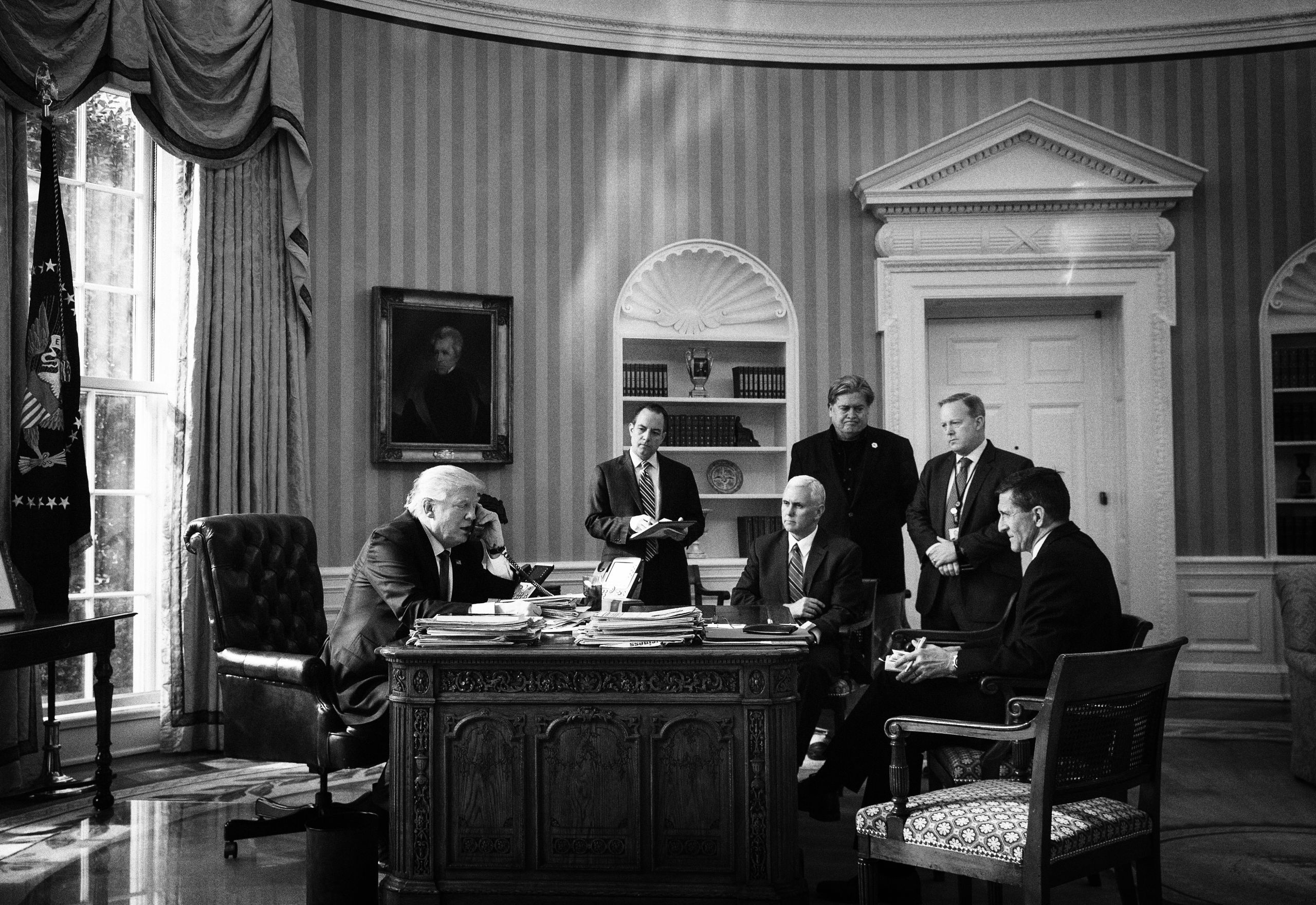
A week after the Russians had hoped that conversation would take place, Flynn, Pence, Priebus, Bannon and White House press secretary Sean Spicer had gathered around the Resolute Desk, while Trump was on the phone call with Putin.

Across the West Wing, a different phone call was about to be set up.

Mary McCord, the acting assistant attorney general who had accompanied Yates to her first meeting with McGahn, received an email sent from Flynn’s White House account requesting a secure phone call to follow up on the McGahn meeting. It was odd enough that Flynn was sending her an email. But what made this truly a mystery for McCord is that the email was signed by Eisenberg.

She decided not to reply and instead sent a new email directly to Eisenberg.

The following day, she and Eisenberg spoke. He told McCord that he had been in Flynn’s office the day before and an assistant had accidentally switched his and Flynn’s phones when giving them back. He then said that he and Flynn had the same password for their phones, and so he accidentally sent the email from the national security adviser’s account.

He also told McCord that from now on he would be handling the Flynn matter, not McGahn.

They spoke again the next day, Monday, about arranging for Eisenberg to review the transcripts of Flynn’s call with Kislyak. Yates also called McGahn to tell him the transcripts were ready for review.

Within hours of their discussion that morning of Jan. 30, Trump fired Yates, citing her refusal to enforce his travel ban.

McCord emailed Eisenberg Tuesday to say the transcripts were ready for him to review and she put him in touch with Peter Strzok, one of the FBI agents who interviewed Flynn and was involved with the case.

Eisenberg didn’t respond. She emailed him again the following day to ask if he’d accessed the transcripts. He didn’t respond until Feb. 2.

Within hours, two FBI agents arrived at the White House carrying a secure briefcase containing the highly classified transcripts.

McGahn told Eisenberg to look them over and report back on potential issues.

Flynn, meanwhile, held a meeting with National Security Council officials in the auditorium of the Eisenhower Executive Office Building next to the White House.

When one of them asked him what he thought about Yates refusing to defend Trump’s travel ban — and generally the idea of an administration official refusing to implement a president’s policies — Flynn was dismissive. “What she did was illegal,” he replied.

Eisenberg sat with the two FBI agents in McGahn’s West Wing office and read through the transcripts. It was clear Flynn had misled Pence.

But it wasn’t clear to Eisenberg what criminal charge deceiving the vice president would bring.

Eisenberg asked the FBI agents: Is this it? What am I missing? Is this a big deal?

The agents remained stone-faced and didn’t respond.

The agents packed up the documents in the briefcase and left the White House.

Eisenberg wrote a memo outlining the possible crimes Flynn could be accused of committing. But he wasn’t sure the White House had enough information to make a recommendation to the president. He discussed his findings with McGahn and they agreed that Flynn was unlikely to be charged with violating the Logan Act. However, they remained unsure if Flynn was vulnerable to a charge of giving false statements in his FBI interview.

The next day, Flynn had a private lunch with Trump in the presidential dining room.

Feb. 6 to Feb. 8, 2017

Trump had barely begun settling into the White House and was already seething over the latest chyrons scrolling across cable news about his administration.

He was in the Oval Office with Flynn, complaining about negative media coverage that had been circulating for almost a month about the calls with Kislyak. The details of Trump and Flynn’s private conversation were disclosed by Flynn to investigators and included in the final report issued by the Special Counsel.

The president wanted specifics. So Flynn dutifully listed the dates on which he said he had spoken with Kislyak.

When Trump asked what he and Kislyak talked about — the question driving the controversy — Flynn said that they might have discussed the Obama administration’s sanctions against Russia. It was a stunning departure from his insistence to the vice president, other senior White House officials, and the FBI that the topic had not come up.

Trump didn’t seem particularly shocked, according to Flynn’s own retelling of the meeting. And, he told investigators, that the president actually corrected him on one of the dates on which he said he’d spoken with Kislyak.

At 4 p.m. on Wednesday, Feb. 8, Comey arrived at the White House for a meeting with Priebus.

Trump had suggested that his chief of staff be the FBI director’s main point of contact in the White House, so Priebus had invited Comey over for what he described as a “meet and greet.” After some initial discussion of immigration issues, intelligence gathering and leaks, Priebus steered the conversation to Flynn.

“Do you have a FISA order on Mike Flynn?” Priebus asked, referring to a top-secret warrant to wiretap an American citizen suspected of being a spy for a foreign government.

It was highly unusual for a White House chief of staff to ask the FBI director such a question. But Comey agreed to answer and said there wasn’t a FISA warrant on Flynn.

A few hours later Flynn had a meeting with a Washington Post reporter. At the end of their discussion on a variety of foreign policy issues, the reporter asked Flynn if he was sure he didn’t discuss sanctions with Kislyak during their Dec. 29 call.


Despite denials, the Post had learned from multiple administration officials that Flynn had raised the topic on the call.

Although he had told Trump in the Oval Office that he might have, Flynn again repeated the answer he’d given multiple times: he was sure sanctions weren’t discussed. The reporter asked if that could be on the record, and Michael Anton, the NSC’s spokesperson, agreed.

Around 10 p.m., however, Flynn called Anton to ask the status of the Post’s story. Changing his story once again, Flynn told Anton he could no longer say with 100 percent confidence that he didn’t discuss sanctions with Kislyak. Anton called the Post reporter with a new statement — and unsuccessfully asked the paper not to report that Flynn had said just hours earlier that sanctions weren’t discussed.

The new statement that Flynn “couldn’t be certain that the topic never came up” was carefully worded but marked a sea change. Neither Flynn nor Anton told other senior officials about the new statement.

Feb. 9 to Feb. 10, 2017

At 9:30 p.m. on Feb. 9, the Post published its article. It immediately set off a firestorm inside and outside the White House. Nearly everyone in the West Wing was blindsided.

“We went bananas,” said a senior White House official who was there at the time.

Only then did McGahn, whom Trump had tasked with looking into Flynn’s conduct, decide to refocus on the issue.

Priebus was having dinner with the president in the White House residence when McGahn, who still had not read the transcripts of Flynn’s calls with Kislyak, urgently asked him to leave the dinner to discuss the Post article. Priebus was fuming. They summoned Flynn from the national security adviser’s suite, and a handful of senior White House officials, including White House counsel, deposed him in Priebus’ office.

“What the f— is going on?” Priebus asked Flynn.

Flynn responded that he now wasn’t completely sure if sanctions had come up in the Kislyak call.

“Well, you told me that didn’t happen, so which is it?” Priebus said to Flynn, who responded again that he was unsure.

Around 6:20 the following morning, Pence’s aide, Marc Lotter walked over to the West Wing to see Anton.

“We have a problem,” he said, adding that Flynn had “essentially made the Vice President of the United States a liar” by telling him he hadn’t discussed sanctions with Kislyak – a lie Pence then repeated in a nationally televised interview. Pence wanted to read the transcripts of Flynn’s Kislyak calls.

When David Ignatius of the Washington Post first reported that Flynn had spoken with Kislyak the day the Obama administration’s sanctions were announced, Flynn directed his deputy, KT McFarland, to call the columnist and say that he and the Russian ambassador did not discuss sanctions during the call.

“I want to kill the story,” Flynn told McFarland.

After McFarland spoke with the columnist, the Post updated his article with an anonymous Trump official saying Flynn and Kislyak did not discuss sanctions.

Pence knew he’d be asked about it during an interview the following Sunday on CBS, and he wanted to hear Flynn’s explanation directly. He called the incoming national security adviser, who told the vice president-elect that the topic of sanctions never came up. And that’s what Pence said on national television.

It was almost a month after Flynn told Pence he hadn’t discussed sanctions with Kislyak that Pence wanted to compare his conversation with Flynn to the ones Flynn had with Kislyak.

McCabe had been at the White House for an unrelated briefing that morning. When he got to his car outside the West Wing, his driver told him the White House had been frantically trying to reach him.

He connected by phone with Priebus who said the Vice President wanted to see the transcripts — now. McCabe said he’d have to get them.

“Where’s your office?” Priebus asked.

McCabe, the deputy director of the FBI, explained that he worked out of FBI headquarters.

The transcripts of Flynn’s phone calls with Kislyak were brought to the White House in a secure briefcase, just as they were eight days earlier.

Pence, his chief of staff Nick Ayers, Priebus and McGahn huddled in a conference room in the Situation Room suite reading the transcripts. McCabe remained in the room and at one point was asked whether Flynn had violated the Logan Act. He told the group that was a possibility that the FBI was investigating.

Pence asked Ayers to get him a printed copy of his CBS interview. After Ayers returned with it, Pence compared the transcript of his interview with the transcripts of Flynn and Kislyak.

He barely spoke as he read through the documents line by line.

“Number one, what I would ask you guys to do – and make sure this, make sure that you convey this, okay?” the transcript showed Flynn said to Kislyak during their Dec. 29 call – the day the Obama administration announced the Russia sanctions – “do not uh, allow this administration to box us in, right now, okay?”

“I know you have to have some sort of action,” Flynn continued. “Make it reciprocal. … Don’t go any further than you have to. Because I don’t want us to get into something that has to escalate.”

Kislyak explained that one of the problems Moscow had is in addition to expelling Russian diplomats from the U.S., the Obama administration just sanctioned key Russian intelligence entities.

“So that’s something that we have to deal with,” Kislyak said to Flynn. “But I’ve heard what you say, and I certainly will try to get the people in Moscow to understand it.”

Flynn made the case that “we need cool heads to prevail.”

Pence compared that to the transcript of his response on CBS, when asked about Flynn’s Dec. 29 phone call with Kislyak.

“I talked to General Flynn about that conversation,” Pence said in the interview. “They did not discuss anything having to do with the United States’ decision to expel diplomats or impose censure against Russia.”

“So did they ever have a conversation about sanctions ever on those days or any other day?” Pence was asked.

“They did not,” the vice-president elect replied.

Pence read the transcript of a follow-up call between Flynn and Kislyak on Dec. 31, after Russia announced it would not retaliate for the sanctions.

“I have a small message to pass to you from Moscow,” Kislyak told Flynn.

“I appreciate the steps your president has taken. I think that it was wise,” Flynn interjected.

“I just wanted to tell you that our conversation was also taken into account in Moscow,” Kislyak said.

“Good,” said Flynn.

“Your proposal that we need to act with cold heads, uh, is exactly what is uh invested in the decision,” Kislyak added.

“Good,” Flynn said again.

In Pence’s interview on CBS, the transcript showed, he had dismissed the idea of more than one conversation between Flynn and Kislyak. “I don’t believe there were more conversations,” he said.

“He was smoldering,” one person in the room described Pence as he read the transcripts.

Priebus got up in the middle of the meeting, said he’d seen enough, and left the room.

Afterward, Pence was clear: The transcripts revealed that Flynn hadn’t been truthful. But Pence wanted to think about whether he’d advise the president to fire Flynn.

More than two weeks after Yates’ first warning about Flynn, McGahn, Priebus and Bannon had the first serious conversation with Trump about whether to fire the national security adviser. They told Trump they had reviewed the transcripts of Flynn’s call with Kislyak, and that it was clear he had lied to Pence.

Priebus, who early on thought Flynn had to go, was even more certain. Flynn either knowingly lied to the vice president — which Priebus and McGahn believed he had done — or he was too incompetent to serve as national security adviser if he couldn’t remember details like the topics of his conversation with the Russian ambassador. Neither, from their perspective, was acceptable. All three advisers recommended Trump fire Flynn.

The drama unfolded behind the scenes as Trump welcomed Japanese Prime Minister Shinzo Abe to the White House for official meetings, followed by a weekend at his sprawling South Florida estate, Mar-a-Lago.

As national security adviser, Flynn had a high-profile role in Abe’s visit that day.

That afternoon Flynn joined Trump and senior White House officials on Air Force One for the flight to Florida and the weekend with Abe.

Trump wandered to the press cabin in the back of the plane while giving his wife a tour of the aircraft and told reporters he hadn’t seen the Post report on Flynn.

“I don’t know about that,” he said.

Feb. 11 to Feb. 12, 2017

“What’s he doing here?” Trump snapped to a friend when he saw Flynn that weekend at Mar-a-Lago.

The controversy over Flynn’s contacts with Kislyak showed no signs of waning. Yet Flynn felt confident he would weather the firestorm.

He played a role in the scramble that night on the outdoor terrace at Mar-a-Lago as the U.S. and Japanese delegations were dining, to craft a response to a North Korean missile test.

White House aide Stephen Miller was asked the following morning on the Sunday news shows whether Trump has confidence in Flynn, and he did not have an answer.

Meanwhile, Flynn was among those helping plan for Trump’s Monday meeting with Canadian Prime Minister Justin Trudeau at the White House.

On the president’s flight back to Washington Sunday, Flynn was in the conference room on Air Force One leaning over an aide to go over some paperwork, his image splashed on a large flat-screen TV behind him showing news coverage about whether he’d be fired.

During the flight, Trump asked Flynn if he had lied to Pence. Flynn said he might have forgotten details of his conversations with Kislyak but he didn’t believe he had lied. “OK,” Trump said. “That’s fine. I got it.”

After landing at the military base in Maryland where Air Force One is kept, Flynn was among the handful of aides who joined the president on his helicopter for the flight back to White House.

Feb. 13, 2017

Trump was still unsure about whether Flynn should go.

“He was torn,” said a White House official who was involved in the discussions.

The White House plan was for Flynn to do TV interviews that day criticizing North Korea’s test launch. And Flynn juggled national security meetings throughout the morning, ducking out of lunch with Trudeau to deal with a hiccup in the rollout of a major escalation in U.S. sanctions on a top government official in Venezuela that the administration was about to announce.

In a parallel set of Monday morning meetings, Trump’s most senior aides were vigorously debating Flynn’s future.

McGahn, Priebus and Bannon shuttled back and forth between the Oval Office and the chief of staff’s suite. All three had advised firing Flynn.

But Trump’s view was that firing his national security adviser after just a few weeks would play into the hands of his critics. And he worried about how it would reflect on him.

“It’s going to make me look bad,” he told his advisers. “We’re going to look like a bunch of clowns.”

Spicer told reporters Trump was “evaluating the situation” and speaking with Pence and others about the issue.

One of the president’s top aides thought Trump was trying to shift the burden of deciding whether to fire Flynn onto Pence when he said: “Mike, he disappointed you. He let you down.” Flynn had apologized privately to Pence who wasn’t happy with him. Still, Pence told Trump he’d support whatever decision he made.

By the afternoon, Trump had concluded that Flynn had to go. He tasked Priebus with delivering the news. A resignation letter was prepared and Priebus delivered the news.

“Flynn said he wanted to take a shot at drafting the letter,” one senior White House official who was there at the time said. “But there was a draft given to him.”

Flynn asked to say goodbye to Trump, so Priebus brought him to the Oval Office for his last meeting as Trump’s national security adviser. “He didn’t see this coming,” the official said of Flynn.

Trump hugged his national security adviser of just 24 days and shook his hand. “We’ll give you a good recommendation,” the president told him. “You’re a good guy. We’ll take care of you.”

Publicly, the White House had been sending a different message. Kellyanne Conway, the president’s counselor, said in an afternoon TV interview that Trump had full confidence in Flynn.

McGahn, meanwhile, worked with the White House press office on drafting talking points on Flynn’s resignation that said the president had been advised Flynn was unlikely to be prosecuted for any crime, but that Flynn had lost the president’s trust.

Before the White House announced Flynn’s resignation, The Washington Post published a detailed account of Yates’ Jan. 26 warning about him to McGahn.

Once again, the White House press office was caught off guard. McGahn hadn’t told officials about the meeting, even after the initial report about Flynn discussing sanctions with Kislyak.

“You didn’t need to know,” McGhan told Spicer.

Spicer told reporters that Flynn’s departure was “not based on a legal issue but based on a trust issue.”

After Flynn

Trump seemed relieved during lunch at the White House with New Jersey Gov. Chris Christie, a friend, and Jared Kushner, his son-in-law and senior adviser.

“Now that we fired Flynn, the Russia thing is over,” Trump told Christie. A former federal prosecutor, Christie laughed. “No way,” he said. “This thing is far from over.” And he warned Trump that Flynn would never go away, “like gum on the bottom of your shoe.”

Around 4 p.m., after a homeland security briefing, Trump asked Comey to stick around and kicked all the other officials out of the Oval Office, including the attorney general.

“I want to talk about Mike Flynn,” Trump said to Comey.

“He’s a good guy and has been through a lot,” Trump said, insisting Flynn didn’t do anything wrong in talking to the Russian ambassador but had to be fired for lying to Pence. “I hope you can see your way clear to letting this go, to letting Flynn go.”

Trump never said publicly or privately that Flynn had lied to him. Just to Pence, and, in a tweet in December 2017, the FBI.

Comey interpreted the president’s words “letting this go” as a directive to stop investigating Flynn. At this point in the FBI’s investigation, no grand jury subpoenas had been issued.

Yet the president still seemed worried that Flynn’s legal troubles might ensnare him. Ten days after Flynn was fired, Trump ordered Priebus to have the deputy national security adviser write an internal email saying that Trump did not direct Flynn to call Kislyak to discuss sanctions.

The deputy, KT McFarland, was already uncertain about her own future. She had been asked to resign and told a possible ambassadorship to Singapore was on offer. But she wasn’t sure about the truthfulness of the claim the president wanted her to make.

She consulted the White House counsel’s office and Eisenberg advised her against writing the email. Priebus then later did the same, coming by her office to tell her not to write it and to forget he even mentioned it.

Trump then asked Priebus to call Flynn to check in and tell him the president still cared about him. Priebus did and added that Flynn is an American hero. And then the president asked McFarland to convey to Flynn he felt bad for him and he should stay strong.

On March 5, McGahn learned the FBI had asked the presidential transition team for documents relating to Flynn. The president told his aides he wanted Dana Boente, the acting attorney general in charge of the Russia investigation, to find out whether he or the White House was under investigation.

Concerned about what else might come out on Flynn and the Russia investigation generally, Priebus and Bannon set up a Russia “war room” inside the White House in May, in part to compile a thick file on Flynn that included detailed diagrams on whom he met with and what conflicts he might have had. The idea was to be prepared with responses before any damaging new stories emerged.

But the “war room” was disbanded soon after because, some officials believed, the White House response was increasingly handled by a very tight circle of aides as the Mueller investigation appeared to get closer to members of the president’s family.

Six months later, Flynn began cooperating with Mueller’s investigation. His lawyer informed the president’s legal team that he could no longer share information with him, a typical step for someone whose client has decided to cooperate with investigators.

Trump’s personal lawyer at the time, John Dowd, left a voicemail for Flynn’s lawyer on Nov. 22, 2017, saying if “any information that implicates the president” comes up, “we need some kind of heads up. Um, just for the sake of protecting all of our interests if we can.” He then added that Trump’s feelings about Flynn hadn’t changed.

Flynn’s lawyer returned the call to reiterate that he couldn’t share information anymore. Dowd said the decision indicated a hostility toward Trump and he’d be sure to relay that to the president. Flynn’s lawyer took Dowd’s comments as an attempt to get Flynn to reconsider cooperating.

Before Flynn’s plea agreement was publicly disclosed in December, Jared Kushner spoke with Mueller’s team about the two issues the former national security adviser pleaded guilty to lying about: the Kislyak calls and Trump transition officials’ efforts to derail an Obama administration policy on Israel.

Five days after Flynn pleaded guilty in a Virginia federal court to lying to the FBI, Trump called then-Attorney General Jeff Sessions into the Oval Office. Sessions had infuriated Trump by recusing himself because of his own contacts with Kislyak and his deep involvement in the Trump campaign. Trump suggested to Sessions that he “unrecuse” himself and take control of the Russia investigation.

“You’d be a hero,” the president said.

Mueller concluded that it would have been reasonable for Flynn to want Trump to know about his conversations with Kislyak, given that the ambassador had indicated to Flynn that his request for Moscow not to retaliate had been relayed went all the way to Putin.

The special counsel also noted that when Trump explained why he fired Flynn, he never said that Flynn had lied to him, just to Pence. Still, he wrote, “the evidence is inconclusive and could not be relied upon to establish the president’s knowledge.”

Pence was asked in Dec. 2017 if he knew Flynn had lied to the FBI at the time he was fired. “”What I can tell you is that I knew that he had lied to me,” Pence told CBS. “And I know the president made the right decision with regard to him.”

Flynn reaffirmed his guilty plea at his first sentencing hearing in December 2018, when Judge Sullivan rejected the Mueller team’s recommendation of probation.


Over the next 23 months, the alliance between Flynn and federal prosecutors frayed – and the Justice Department under the new leadership of Attorney General Barr intervened.

“There was a lot of pressure on the Justice Department,” one person close to the White House said.

Flynn requested to withdraw his guilty plea on Jan. 14, 2020 – almost three years to the day that Pence publicly assured the country that Flynn had not discussed sanctions with Kislyak. . In response, federal prosecutors revised their sentencing recommendation to include a short jail sentence.

Several weeks later the prosecutors reversed that position to again say probation is an “appropriate” sentence, fueling speculation that pressure from the top levels of the Justice Department was weighing in on cases in which the president had a keen interest.

Unknown publicly at the time was that Barr was seeking an internal review of Flynn’s case, specifically his FBI interview. In February, Barr tasked a U.S. attorney in Missouri with investigating the circumstances surrounding the interview. That led to the Justice Department’s determination that Flynn’s case should be thrown out because “evidence is insufficient to prove its case beyond a reasonable doubt.”

The request followed a public shift by Flynn that aligned more closely with the president’s narrative.

“When FBI agents came to the White House on January 24, 2017, I did not lie to them,” Flynn wrote in a court filing. “I believed I was honest with them to the best of my recollection at the time.”

Yet for officials who worked with Flynn in the White House at the time — who asked him repeatedly for weeks if he’d talked about sanctions with Kislyak and were told no — the mystery still lingers: why wasn’t he honest with them?

“The biggest question that’s never been answered is why didn’t he tell everyone in the West Wing that he talked to him about sanctions?” one official said. “Because no one would have cared if he did.”

I saw Donald Trump’s presidency come crashing down at Four Seasons Total Landscaping

I saw Donald Trump’s presidency come crashing down at Four Seasons Total Landscaping

Richard Hall                         December 2, 2020
Trump and Biden supporters outside a press conference where Rudy Giuliani spoke to the media in the back parking lot of landscaping company on November 7, 2020 in Philadelphia, Pennsylvania (Photo by Chris McGrath/Getty Images) (Getty Images)


It began, as all good 2020 capers do, with a tweet from the president of the United States. It ended with his personal lawyer in the parking lot of a landscaping company, struggling to be heard over a man in his underpants shouting about George Soros.

They say a star burns brightest just before it dies, and this was the Trump presidency in all its flaming glory.

For five straight days, the world had waited for news, any news, from Pennsylvania, which for all of that time had been expected to imminently decide the winner of a bitter election. The president had spent much of the intervening period making grave and entirely unsubstantiated allegations of voter fraud, but even so he was unusually quiet.

“Lawyers Press Conference at Four Seasons, Philadelphia. 11:00 A.M,” he wrote to his 88 million followers on Saturday morning.

Journalists from around the world who had gathered in Philadelphia, most of whom had spent the last four days transfixed by moving maps on CNN, were eager for stimulation, and perhaps as a side note to see evidence of massive election fraud the president and his lawyers had alleged.

I sprang into action immediately, gathered my things, and was heading out of the door towards the Four Seasons Hotel in downtown Philadelphia when the next tweet came.

“Big press conference today in Philadelphia at Four Seasons Total Landscaping — 11:30am!”

Some mistake, I thought. A presidential typo? We’d seen worse over the last four years. Remember Covfefe?

I did a quick Google search. There was indeed a place called Four Seasons Total Landscaping in Philadelphia, but it was a small business in a drab industrial area on the edge of town. I struggled to think of any reason why the president’s lawyers would hold their press conference here, at this establishment, with its 3.1 star rating on Google reviews.

I decided to call the Four Seasons Hotel, from whom I was sure I would get confirmation that this press conference was indeed being held on their premises — perhaps in a grand ballroom or conference room.

A woman answered — she was primed: I was obviously not the first person to call.

“Yes there has been some confusion about this,” she said politely. “The press conference is not taking place here, it is taking place at Four Seasons Total Landscaping.”

It’s hard to explain the confusion I experienced as I sped along the highway out of downtown Philadelphia towards Four Seasons Total Landscaping. Was this one last act of revenge by the president against the lying fake news media while he still had our enrapt attention? Was it a ruse to get all the journalists out of town for when the results were announced?

Truth be told, it didn’t matter. However this turned out, Four Seasons Total Landscaping was the story now.

I arrived to see a media scrum around a chain link fence that led into the parking lot of Four Seasons Total Landscaping. The building itself was one-story, with a neat lawn and a row of hedges at the front. It was in that part of town that every town has, where businesses which have no right being grouped together nonetheless gather due to one reason or another — usually the cheap rent. Across the street from Four Seasons Total Landscaping was a crematorium. Next door to it was an adult book store with a bright yellow sign that displayed its offerings: DVDs and lotions, novelty gifts, viewing booths. It was called Fantasy Island. In retrospect, it was an omen of what was to come.

The Fantasy Island adult bookstore, next door to the place where the president&#x002019;s personal lawyer, Rudy Giuliani, held a press conference to allege voter fraud.Richard Hall / The Independent
The Fantasy Island adult bookstore, next door to the place where the president’s personal lawyer, Rudy Giuliani, held a press conference to allege voter fraud.Richard Hall / The Independent


The media was told to line up outside while the press conference was prepared. Journalists from Japan, Germany and Britain took their place as a crowd of Trump supporters gathered around them.

I approached a man named Ron, who held a sign that read: “Biden Laptop Matters.” Since we were about to hear from the president’s lawyers about how this election was stolen, I wanted to hear what he thought about the process.

“What they did is they got ‘em fearful with corona, and once they got them in a fearful state, they suppressed them, they funneled all the ballots through mail-in, where they controlled that process, they can manipulate better,” he said.

As we waited outside Four Seasons Total Landscaping, we began to wonder what had led us to this point. Had a Trump campaign staffer booked the wrong Four Seasons and diverted to the landscaping company as a quick fix? Was the owner of the business a witness to this massive voter fraud the president had alleged?

One journalist remarked that the entire episode was beginning to acquire a Muammar Gaddafi flavor to it. When Nato powers bombed Tripoli in support of Libyan rebels during the country’s civil war, and it appeared the leader was on his last legs, he emerged briefly from hiding, riding a golf cart and holding an oversized umbrella. It was intended to project perseverance and strength — it had the opposite effect.

Private security guards hired by the president’s lawyers began to call media outlets into the parking lot. When the names were called, gathered Trump supporters booed those which they felt had been unfair to the president. “Washington Post”.. “Boooo.” “Fox News”…. “Boooooo!” “CNN” “BOOOOOOOO!”

This was an American pantomime.

Inside Four Seasons Total Landscaping, the cameras were assembled, the sound levels checked, the pens were poised and the gates were closed. The world’s press waited for the evidence that would blow this big scam wide open. The sun shone brightly.

Then, out of nowhere, a journalist with a European accent announced the news: “CNN called the presidency for Biden!”

The assembled journalists were paralyzed for a moment. Phones started to ring and calls were made. Some were given instructions to leave and started to do so.

Soon after, the sound of car horns honking and cheers in the street began to drift into the back-lot of Four Seasons Total Landscaping.

Kelisha Carter and her daughters outside of four Seasons Total LandscapingRichard Hall / The Independent


A car with a young Black woman named Jada Carter stopped in front of the Trump supporters. She screamed at the top of her lungs: “Black lives matter! Black lives matter!” A flag with a picture of Donald Trump’s head superimposed onto the body of Rocky Balboa fluttered in the wind as she cried out.

Just a few minutes later, Rudy Giuliani appeared. This was the second press conference Mr. Giuliani had called in Philadelphia in a matter of days, both to make unsubstantiated claims about voter fraud. The first took place at an airport hangar.

The president’s personal lawyer was serious and solemn as he took his place at the podium, in front of a garage door covered with Trump campaign posters and a bright yellow hose pipe attached to the wall.

“I’m here to describe to you the first part of a situation that is very troubling,” he began. He went on to claim that dead people were still voting in Philadelphia.

“Joe Frazier is still voting here. Also, Will Smith’s father voted here twice since he died.”

He said he had brought with him a number of poll watchers who claimed they had been blocked from monitoring the vote count. When they spoke, however, their complaint appeared to center around how far they had been asked to stand away from the counting process. Not the evidence of massive fraud Mr. Giuliani or the president had promised.

Amid all the drama of the preceding 30 minutes, no one had told him that Joe Biden had been projected the winner of the presidential election. A member of the press asked Mr. Giuliani how his lawsuits could overturn the call for the former vice president.

“Who was it called by?”

“All of them,” came the response.

Mr. Giuliani took a moment before erupting in mock incredulity: “All the networks? Wow! All the networks!” He raised out his arms and looked to the sky, for a moment looking and sounding like Larry David doing a bit. But the wind had been sucked out of him. The smile had gone.

I walked out onto the street, where more Biden supporters had gathered across the road. A Trump supporter in his underwear and a Biden mask pulled up over his head (who appeared to be dressed as an embodiment of Trump’s insult “Sleepy Joe Biden”) shouted: “Who pays for all that? Who pays for it all. George Soros! George Soros! Tell your daughter who George Soros is hun! Give her a real education. Look it up!”

Next to him, a man wearing an American flag suit and hat, and a full Donald Trump mask, stood silently and still. Even the mask seemed to wear a dejected expression.

Across the road, Kelisha Carter was jubilant. She had come down with two of her daughters and a giant Biden flag to soak up the atmosphere.

“Relief! There’s some hope coming. God, I prayed for this,” she said, when asked how she felt about the victory.

“It’s not even that I don’t like that man, I just don’t like his tactics,” she said of Mr. Trump. “He just divides everybody. He brings the racists out of the closet. It’s scary for Black people, it’s scary for a lot of people. I have daughters and I have a husband that goes out every day and I want him to come home at night.”

Her daughter Jada, who had earlier argued with the Trump supporters from her car, was too excited to stand still. She performed a backflip in the middle of the road.

The owner of the Fantasy Island adult book store had come out onto his porch to watch the circus. He stood and stared in disbelief until a customer jolted him awake again.

“Are you open?”

“Yes,” he said, before following him inside.

It felt like an ending.

When he leaves office, can ex-President Trump be trusted with America’s national security secrets?

When he leaves office, can ex-President Trump be trusted with America’s national security secrets?

Ken Dilanian                     

WASHINGTON — When David Priess was a CIA officer, he traveled to Houston, he recalls, to brief former President George H.W. Bush on classified developments in the Middle East.

It was part of a long tradition of former presidents being consulted about, and granted access to, some of the nation’s secrets.

Priess and other former intelligence officials say Joe Biden would be wise not to let that tradition continue in the case of Donald Trump.

They argue soon-to-be-former President Trump already poses a danger because of the secrets he currently possesses, and they say it would be foolish to trust him with more sensitive information. With Trump’s real estate empire under financial pressure and his brand suffering, they worry he will see American secrets as a profit center.

“This is not something that one could have ever imagined with other presidents, but it’s easy to imagine with this one,” said Jack Goldsmith, who worked as a senior Justice Department official in the George W. Bush administration.

“He’s shown as president that he doesn’t take secret-keeping terribly seriously,” Goldsmith said in an interview. “He has a known tendency to disrespect rules related to national security. And he has a known tendency to like to sell things that are valuable to him.”

Goldsmith and other experts noted that Trump has a history of carelessly revealing classified information. He told the Russian foreign minister and ambassador in 2017 about extremely sensitive terrorism threat information the U.S. had received from an ally. Last year he tweeted what experts said was a secret satellite photo of an Iranian nuclear installation.

Image: President Donald Trump meets with Russian Foreign Minister Sergey Lavro (Russian Foreign Ministry Photo / AP)


The president also may be vulnerable to foreign influence. His tax records, as reported by the New York Times, reveal that Trump appears to face financial challenges, having personally guaranteed more than $400 million of his companies’ debt at a time when the pandemic has put pressure on the hotel industry, in which Trump is a major player.

“Is that a risk?” said Priess, who wrote “The President’s Book of Secrets,” about presidents and intelligence. “If it were someone applying for a security clearance, damn right it would be a risk.”

The White House did not respond to requests for comment. The Biden transition declined to comment.

Trump has said his finances are sound, and that the debts are a small percentage of his assets. Generally, though, large debts to foreign banks — Trump’s biggest creditor is reported to be Deutsche Bank, a German institution with links to Russia — would exclude a person from a top secret clearance.

Presidents, however, are not investigated and polygraphed for security clearances as all other government officials are. By virtue of being elected, they assume control over all the nation’s secret intelligence, and are allowed by law to disclose any of it, at any time, to anyone.

Former presidents aren’t subject to security clearance investigations, either. They are provided access to secrets as a courtesy, with the permission of the current president.

Typically, former presidents are given briefings before they travel overseas, or in connection with an issue about which the current president wishes to consult them, Priess and other experts say.

When President Bill Clinton sent former president Jimmy Carter to diffuse a tense stand off in Haiti, for example, Carter likely received classified briefings on the situation ahead of his trip.

And when George H.W. Bush visited his son in the White House, he sat in on on the President’s Daily Brief, the highly classified compendium of secrets that is presented each morning to the occupant of the Oval Office, according to Priess, who interviewed both men for his book.

It’s unclear whether former President Barack Obama has received intelligence briefings after he left office, but President Trump said in March that he hasn’t consulted his predecessors about coronavirus or anything else.

Former presidents have long made money after leaving office by writing books and giving speeches, but no former president has ever had the kind of international business entanglements Trump does. Trump has business interests or connections in China, Russia and other U.S. adversary countries that covet even tiny portions of what he knows about the American national security state.

That said, Trump probably is not conversant with many highly classified details, experts say, He was famous for paying only intermittent attention during his intelligence briefings and declining to read his written materials. Moreover, intelligence officials tend not to share specifics about sources and methods with any president, unless he asks.

So Trump probably doesn’t know the names of the CIA’s spies in Russia, experts say. But presumably he knows a bit about the capabilities of American surveillance drones, for example, or how adept the National Security Agency has been at intercepting the communications of various foreign governments.

Trump disclosed secret weapons system to Woodward

The president revealed to Bob Woodward in the new book ‘Rage’ that he had built a secret weapons system. The panel discusses.

Like so much with Trump, his track record of sharing secrets has been unprecedented in American presidential history.

In interviews with the journalist Bob Woodward for a book released this fall, Trump boasted about a secret nuclear weapons system that neither Russia nor China knew about.

According to the Washington Post, Woodward’s sources “later confirmed that the U.S. military had a secret new weapons system, but they would not provide details, and that the people were surprised Trump had disclosed it.”

When Trump briefed the public about the commando raid that killed ISIS leader Abu Bakr al Baghdadi, he disclosed classified and sensitive details, according to reporting by NBC News.

In 2017, Trump gave the location of two American nuclear submarines near North Korea to the president of the Philippines.

That same year, a member of his golf club at Mar-a-Lago took a photo of a briefing Trump and the Japanese prime minister were receiving in a public area about North Korea, and posted it on Facebook.

Image: Donald Trump and Shinzo Abe at Mar-a-Lago (Nicholas Kamm / AFP - Getty Images file)
Image: Donald Trump and Shinzo Abe at Mar-a-Lago (Nicholas Kamm / AFP – Getty Images file)


In 2018, the New York Times reported that Trump commonly used insecure cell phones to call friends, and that Chinese and other spies listened in, gaining valuable insights.

Doug Wise, a former CIA officer and Trump critic, argued this week in a piece on the Just Security web site that Trump has long posed a national security danger, and that affording him access to secrets after he leaves the White House would compound that danger.

Trump’s large debts, he wrote, present “obvious and alarming counterintelligence risks” to the United States.

Russian President Vladimir Putin, for one, would have a great incentive to pay Trump to act on Russia’s behalf, Wise wrote.

“Assuming President Joe Biden follows custom, Trump would continue to have access to sensitive information that the Russians would consider valuable,” he wrote. “As horrifying as it would seem, could a financially leveraged former president be pressured or blackmailed into providing Moscow sensitive information in exchange for financial relief and future Russian business considerations?”

It was not impossible to envision Trump paid millions on retainer by Gulf Arab states or other foreign governments, Harvard professor Goldsmith said, “in the course of which he starts blabbing and disclosing lots of secrets. It wouldn’t be an express quid pro quo, but people would pay for access to and time with him, knowing that he will not be discreet.”

Former CIA Director John Brennan, a frequent Trump critic who was denied access to his own classified file by the president, said the Biden administration should carefully weigh the question of Trump’s access to future secrets.

“The new administration would be well-advised to conduct an immediate review to determine whether Donald Trump should have continued access to classified information in light of his past actions and deep concern about what he might do in the future,” he said.

Then again, it may never become an issue, said former CIA officer Marc Polymeropoulos, who pointed out that Trump has long displayed “disdain” for American intelligence agencies.

“I would frankly be surprised if he even wanted these briefings,” Polymeropoulos said.

Treasury Secretary Mnuchin is moving $455 billion of unspent stimulus money into a fund the incoming Biden administration can’t deploy without Congress

Treasury Secretary Mnuchin is moving $455 billion of unspent stimulus money into a fund the incoming Biden administration can’t deploy without Congress

Joseph Zeballos-Roig                    
Mnuchin says he will talk to lawmakers about PPP disclosure
  • Treasury Secretary Steven Mnuchin is moving $455 billion in unspent stimulus money into a fund that the incoming Biden administration cannot deploy without Congress, Bloomberg reported on Tuesday.
  • It will leave Mnuchin’s likely successor, Janet Yellen, with only $80 billion in relief funds at her discretion.
  • Experts say Mnuchin’s move greatly limits the tools available to the Biden administration to manage the economic fallout of the pandemic.

Video: Billionaires’ net worth increased by half a trillion dollars during the pandemic

How billionaires saw their net worth increase by half a trillion dollars during the pandemic

40 million Americans filed for unemployment during the pandemic, but billionaires saw their net worth increase by half a trillion dollars. This isn’t the first time billionaires have seen gains while others dealt with loss, and it tends to tie back to two things. First, the government disproportionately gives more aid to banks and corporations. Then, when the stock market bounces back, the unequal bailouts mean that the wealthy still have money on hand to invest and thus profit, while the middle and lower classes do not. Wealth-friendly tax laws and loopholes then keep those billionaires at the top. Knowing all of this, some are advocating for policies to help level the playing field and create change.

Treasury Secretary Steven Mnuchin is moving $455 billion in unspent stimulus money into a fund that the incoming Biden administration cannot deploy without Congress, Bloomberg reported on Tuesday.

That amount includes money that Mnuchin is yanking from the Federal Reserve and unused loans for companies. The funds will be deposited into the Treasury’s General Fund, which requires legislative approval to use the money elsewhere. The Treasury Department did not immediately respond to a request for comment.

The move, experts say, will likely undercut the ability of Mnuchin’s likely successor, Janet Yellen, from restarting the Fed’s lending programs at a similar scale early next year. Instead, she will have only $80 billion at her discretion.

Ernie Tedeschi, a policy economist at Evercore ISI, called Mnuchin’s decision “a dangerous move” as the US economy faces a perilous moment in the pandemic.

“It’s one more enormous risk we are piling onto the winter in the US atop of other risks already there,” Tedeschi told Business Insider. “We may need that backstop again as cases have now blown through their prior peaks, state and local governments are making cuts, and we’re about to kick off millions of people from unemployment insurance.”

Bharat Ramamurti, a Democratic member of a congressional panel overseeing the funds, criticized the move.

“This is Treasury’s latest ham-handed effort to undermine the Biden Administration,” he wrote on Twitter. “The good news is that it’s illegal and can be reversed next year.”

The development came after Mnuchin recently announced he was not extending most of the Fed’s emergency lending programs past December 31, including those supporting markets for corporate bonds and another providing loans to medium-size businesses and state governments.

The Treasury and central bank jointly operate the lending programs under the CARES Act, which Congress approved in March. The pandemic relief law doesn’t mandate Mnuchin move the money into the Treasury’s General Fund — it could keep it within easy reach for President-elect Joe Biden in another pot of money until 2026.

Mnuchin also requested last week that Fed Chair Jerome Powell return unspent stimulus money. He objected and said the lending programs should continue, sparking a rare public clash between two figures that had collaborated closely to contain the economic devastation from the pandemic. The Fed later said in a letter it would return the funds.

Mnuchin then called on Congress to repurpose the unspent money, and he drew support from Republicans like Senate Majority Leader Mitch McConnell.

“We don’t need this money to buy corporate bonds. We need this money to go help small businesses that are still closed or hurt, no fault of their own, or people who are going to be on unemployment that’s running out,” he told CNBC last week.

Congress has been fiercely divided on passing another coronavirus relief bill that most economists say is urgently needed. Nearly 12 million workers are at risk of losing all of their federal unemployment aid next month, according to an analysis from the progressive Century Foundation.

Army Corps of Engineers issues Enbridge permit for $2.6B pipeline across northern Minnesota

Star Tribune

Army Corps of Engineers issues Enbridge permit for $2.6B pipeline across northern Minnesota

The permit is last big hurdle for the construction project, which will be one of largest in recent history for Minnesota.

The Corps decision paves the way for Calgary-based Enbridge to begin building the pipeline as early as next month. It will be one of the largest Minnesota construction projects in recent history and is expected to employ 4,000 workers.

“This decision is based on balancing development with protecting the environment,” Col. Karl Jansen, St Paul District commander, said in a statement. “Our decision follows an exhaustive review of the application and the potential impacts associated with the construction of the pipeline within federally protected waters.”

The Corps’ blessing was expected after the Minnesota Pollution Control Agency (MPCA) this month approved related construction permits for the pipeline, a replacement for Enbridge’s current Line 3.

The federal permit, issued by the Army Corps’ St. Paul district, covers construction impacts to myriad water bodies in Minnesota. The pipeline will ferry heavy Canadian oil across northern Minnesota to Enbridge’s terminal in Superior, Wis.

The 340-mile new pipeline will cross 212 streams and will affect more than 700 acres of wetlands in Minnesota — the reason many environmental groups have fought the project throughout the regulatory process.

“Enbridge has now received all remaining federal permits required for replacing Line 3, an essential maintenance project,” the Calgary-based company said in a statement.

The MPCA must still grant a stormwater drainage permit to Enbridge, a more routine approval that’s expected in the coming weeks. Enbridge is also waiting on a final construction authorization from the Minnesota Public Utilities Commission (PUC), which already has approved the project.

“We are prepared to start construction as soon as these are in hand,” Enbridge said.

The Army Corps was waiting for the MPCA to act on the more sweeping pollution permits before making its decision. The MPCA two weeks ago granted water quality permits related to Line 3 construction.

The pipeline has been winding through the Minnesota regulatory process for six years. The PUC, the state’s primary regulator of pipelines, approved the pipeline in February for the second time after a court sent it back to the panel for changes in the project’s environmental impact statement.

Environmental groups and Indian bands opposing Line 3 have already appealed the PUC’s decision to a state appellate court, and petitions to overturn the Corps’ permits may be in the offing, too.

“It’s tragic but it’s not a surprise that the Trump administration would approve these permits regardless of the water quality impacts from the pipeline, and during a time when a pandemic is sweeping across the North Country with workers already here,” Winona LaDuke, head of Indigenous environmental group Honor the Earth, said in a statement. “The tribes and others will surely sue and we will see them in court.”

Environmental groups and some Indian bands have said the pipeline — which follows a new route — will open a new region of pristine waters to the prospect of oil spills, as well as exacerbate climate change by allowing for more oil production.

Enbridge has said the new pipeline is a critical safety enhancement. The current Line 3 is so corroded it’s running at only half capacity. The new pipeline would restore full oil flow.

Jansen said the Army Corps staff consulted all parties on Line 3, working “deliberately and extensively with our federal and state partners, federally recognized tribes, environmental organizations and the applicant.”

Meet the South Poll cow: the healthier, naturally raised cattle of the future?

Meet the South Poll cow: the healthier, naturally raised cattle of the future?

Georgie Smith                      November 25, 2020


Missouri rancher Greg Judy spots a six-month-old South Poll heifer calf in his herd that is a prime example of what he calls a “good doing cow”. A cow that will “do good” on grass alone.

Related: ‘In the sun they’d cook’: is the US south-west getting too hot for farm animals?

She’s got a “big butt”, Judy says, meaning wide hips that will help her easily bear calves when grown. She sports a shiny, slick red hide that flies avoid landing on; cows stressed from fly bites – Judy has seen hundreds on a single cow – don’t grow well. She has a large “barrel” or gut, meaning enough stomach capacity to store large amounts of grass, which she will convert to energy and will keep her in good health, even during the winter with no extra feed. “This is the kind of heifer you want,” Judy says. “You can build a herd out of those.”

Judy raises cattle in a highly–managed, grass-only system that he believes is better for his cows and the environment. His 300-plus herd is kept together in a dense group, and moved often – Judy moves his cattle twice a day to fresh paddocks – creating a symbiotic relationship between cows and grasslands that soil scientists are finding encourages soil health and rapid grass growth.

But Judy has learned not all cows thrive on grass alone, especially the type of cattle favored by a US ranching industry that has grown largely dependent on feeding cattle grain rations.

In Judy’s system, those “common cows”, as he calls them, looked like they had been starved six months after he put them on a grass-only diet. Instead, Judy found success – after nearly going bankrupt in 1999 trying to raise cattle the conventional way – utilizing intensive, grass-based management with cows that had the “grass genetics” to thrive.

“At the end of the day, the money comes from animals that can excel on a grass diet,” says Judy, referring to the lower costs of raising cattle with a genetic predisposition to thrive on grass, since they don’t require the grain, growth hormones and antibiotics often used in traditional cattle ranching.

It’s a counterintuitive problem, considering cows evolved to eat grass. But today, approximately 97% of US beef cows spend the last four to six months in confined feedlots where they are fed grain rations until slaughter. Before that, they spend most of their lives out on the pasture, but even then some ranchers feed them grain to keep their weight up through winter or during stressful times like calving.

Meanwhile, the grass-only beef market is small, but growing rapidly, according to a report by Stone Barns Center. The intensively managed grazing Judy employs is a supercharged version of traditional cattle-grazing techniques. By moving his cows often, they do not have a chance to damage the grass by eating it too short. Instead, they encourage healthy root development increasing soil health, which some scientists have found allows the soil to capture and store carbon from the atmosphere – a process known as carbon sequestration.

This heavily managed grazing style – also called holistic grazing – is part of a growing worldwide interest in “regenerative agriculture”. By promoting multiple practices that build soil health, regenerative agriculture has been said to improve agricultural lands and ultimately sequester carbon, according to Rattan Lal PhD, an Ohio State University soil scientist and the 2020 World Food Prize winner.

But the growth of regenerative grazing systems has been slow, in part because, as the cattle industry turned to feeding grain, ranchers ended up breeding fewer cows that could thrive on grass alone, says Richard Teague PhD, a range ecologist with the Texas A&M University Agrilife Research center. Ranchers like Judy were put in a pickle, without the cows appropriate for their grass-only systems.

“People wanted to feed corn, [so] they bred huge animals that require very big inputs of corn and also pharmaceuticals,” says Teague. He argues that raising “cattle like that” comes at the expense of the health of consumers – and the health of the soil that nurtures them. “We have to go to animals that we know thrive under good management.”

The traditional ranching industry denies the charge that grass-raised cows are better for the climate than their grain-fed product. In a 2017 study by Oklahoma State University researchers found that grain-fed cattle – with their shorter lifespans – resulted in a 18.5 to 67.5% lower carbon footprint compared with grass-finished beef.

Meanwhile, a 2017 report from the Food, Climate and Research Network challenged the idea that grass-fed beef can be good for the environment at all, saying there was no evidence that grazing cattle helps sequester carbon except under the most ideal conditions.

However, Teague argues, “It’s not the cow, it’s the how.” A 2015 study in Georgia of dairy cows in an intensively grazed system recorded eight tons of carbon sequestered per hectare annually. The intensive livestock grazing systems such as Judy uses are one of the best ways within agricultural systems to sequester carbon, according to Teague. “Under decent management, sequestration exceeds emissions, and the better the grazing management, the more it exceeds it.”

For Judy, it comes down to raising cattle in a system that works with nature instead of against it. But to do that, he also had to find the best cattle to thrive in his environment. For him, that perfect cow is the South Poll.

A relative newcomer to the beef cattle scene, the South Poll is a small-framed, stout, highly fertile red cow, well adapted to hot and humid conditions. It has good mothering instincts that have earned it the nickname the “southern mama cow”. The breed also has a rock star – or at least, country music star – cachet; it was originally developed in the 1990s by Teddy Gentry, the bass player for the country music group Alabama.

Judy is far from alone in his enthusiasm for this up-and-coming breed. In mid-September, South Poll cattle fans from all over the US showed up in Copan, Oklahoma, for the annual South Poll cattle auction. The cows are becoming increasingly popular with grass-focused ranchers – especially in the south-eastern and mid-western US where the cattle are best adapted – according to Ann Demerath, secretary of the South Poll Grass Cattle Association.

Some of the animals purchased at the auction may be cross-bred with other cattle breeds. Ranchers hope to use the South Poll genes to adapt their existing cattle to do better on a grass diet, Judy says. He advises ranchers to start by purchasing the “best South Poll bull you can afford” and breed it to the best females in their existing herd. Then, ranchers should select the best females from that generation and breed those with a South Poll sire – a technique called “line-breeding” that quickly focuses on desirable traits without risking genetic defects.

Judy also advises ranchers to cull – or remove – any animals that don’t fit their standards for health and disposition, even if they “look at you funny”, from their breeding stock. His mantra? “You’ll never have a herd any better than what you are willing to cull for.”

Relentlessly selecting for the best-adapted cows within his own system has allowed Judy to produce South Poll mother cows so well-adapted that they stay healthy through the winter. That means, unlike most ranchers, Judy can give the mothers more time with their calves during the winterwhich gives those calves an extra boost of growth and leaves him with a stronger, bigger calf in the spring.

For Judy, that is the goal – a cow that needs nothing but well-managed grass, passing their health and wellbeing on to the next generation.

“The animals,” Judy says, “are just healthy.”