Paul Krugman Points Out The Unusual Thing About The GOP Cult Of Donald Trump

Paul Krugman Points Out The Unusual Thing About The GOP Cult Of Donald Trump

Economist Paul Krugman, in his latest column for The New York Times, pointed out the “unusual thing” about the GOP’s cult-like devotion to one-term, twice-impeached former President Donald Trump.

The party “doesn’t have a monopoly on power; in fact, it controls neither Congress nor the White House,” noted Krugman in his essay published Monday.

“Politicians suspected of insufficient loyalty to Donald Trump and Trumpism in general aren’t sent to the gulag. At most, they stand to lose intraparty offices and, possibly, future primaries,” Krugman continued. “Yet such is the timidity of Republican politicians that these mild threats are apparently enough to make many of them behave like Caligula’s courtiers.”

Krugman, who was awarded the Nobel Memorial Prize in Economics in 2008, pointed out that “many people, myself included, have declared for years that the GOP is no longer a normal political party.”

But it now “bears a growing resemblance to the ruling parties of autocratic regimes,” he added.

The GOP “has become something different, with, as far as I know, no precedent in American history although with many precedents abroad,” Krugman concluded. “Republicans have created for themselves a political realm in which costly demonstrations of loyalty transcend considerations of good policy or even basic logic. And all of us may pay the price.”

The Democrat blocking progressive change is beholden to big oil. Surprised?

The Democrat blocking progressive change is beholden to big oil. Surprised?

<span>Photograph: J Scott Applewhite/AP</span>
United States Senator from West Virginia
Photograph: J Scott Applewhite/AP


As “thousand-year” heat waves caused by the climate crisis rock the west coast and biblical floods engulf major cities, Senate Democrats are negotiating a $3.5tn budget package that could include an attempt to slow the use of fossil fuels over the next decade.

One prominent senator is very concerned about proposals to scale back oil, gas and coal usage. He recently argued that those who want to “get rid of” fossil fuels are wrong. Eliminating fossil fuels won’t help fight global heating, he claimed, against all evidence. “If anything, it would be worse.”

Which rightwing Republican uttered these false, climate crisis-denying words?

Wrong question. The speaker was a Democrat: Senator Joe Manchin of West Virginia.

West Virginia is a major coal-producing state. But Manchin’s investment in dirty energy goes far beyond the economic interests of the voters who elect him every six years. In fact, coal has made Manchin and his family very wealthy. He founded the private coal brokerage Enersystems in 1988 and still owns a big stake in the company, which his son currently runs.

In 2020 alone, Manchin raked in nearly $500,000 of income from Enersystems, and he owns as much as $5m worth of stock in the company, according to his most recent financial disclosure.

Despite this conflict of interest, Manchin chairs the influential Senate energy and natural resources committee, which has jurisdiction over coal production and distribution, coal research and development, and coal conversion, as well as “global climate change”.

He even gave a pro-coal speech in May to the Edison Electric Institute (EEI) while personally profiting from Enersystems’ coal sales to utility companies that are EEI members, as Sludge recently reported.

Manchin is one of many members of Congress who are personally invested in the fossil fuel industry – dozens of Congress members hold Exxon stock – but he is among the biggest profiters. As of late 2019, he had more money invested in dirty energy than any other senator.

How can this be? Wouldn’t basic ethics prevent someone from being in charge of legislation that could materially benefit them? Unfortunately, conflict-of-interest rules in the Senate are remarkably weak. And guess who is seeking to strip conflict-of-interest rules from a 2021 democracy reform bill?

His proposal “leaves out language that S 1 would add to federal statute prohibiting lawmakers from working on bills primarily for furthering their financial interests”, Sludge reported.

Manchin, the most conservative Democrat in the Senate, has used the evenly split chamber to block Joe Biden’s agenda. In the process he has become arguably the most powerful person in Washington. Hardly any Democratic legislation can pass without his vote.

That’s a problem – especially given that Manchin sometimes seems like he’s an honorary Republican. Earlier this month the Texas Tribune and other publications reported that Manchin was heading to Texas for a fundraiser hosted by several major Republican donors, including oil billionaires.

Manchin, along with Senator Kyrsten Sinema of Arizona, has vowed to protect the filibuster – a rule, frequently used to empower white supremacists, that requires 60 votes for most Senate bills to pass. That includes vital voting rights legislation, passed by the House, that is the only way to stop the Republican party from eviscerating what’s left of our democracy in the name of the “big lie” of voter fraud.

Because of his uniquely powerful position as a swing vote, Manchin can rewrite major legislation to his liking – effectively dictating the legislative agendas of Congress and the White House.

It appears that Manchin will have his way with the White House’s infrastructure package as well, and his changes will probably be more devastating, given the climate emergency we live in.

Manchin isn’t just sticking up for the coal industry and his family’s generational wealth; he’s doing the bidding of oil and gas executives, who also stand to lose money if the nation transitions away from toxic fuels.

Manchin’s political campaigns are fueled by the dirty energy industry. Over the past decade, his election campaigns have received nearly $65,000 from disastrously dishonest oil giant Exxon’s lobbyists, its corporate political action committee, and the lobbying firms that Exxon works with. A top Exxon lobbyist recently bragged about his access to Manchin.

In the 2018 election cycle, his most recent, Manchin’s campaign got more money from oil and gas Pacs and employees than any other Senate Democrat except then North Dakota senator Heidi Heitkamp. Manchin was also the mining industry’s top Democratic recipient in Congress that cycle.

If Biden wants to have any kind of legacy, he needs to stand up to Manchin, a member of his own party, and work with the Senate majority leader, Chuck Schumer, to get him in line. I don’t fully know why Biden permits the West Virginian to dictate his own presidential policy agenda. But what is crystal clear is that the leader of the United States should be doing a whole lot more.

  • Alex Kotch is an investigative reporter and editor with the Center for Media and Democracy, a nationally recognized watchdog that leads award-winning investigations into the corruption that undermines our democracy, environment, and economic prosperity
  • This article was produced in partnership with the Center for Media and Democracy

Scorched, Parched and Now Uninsurable: Climate Change Hits Wine Country

Scorched, Parched and Now Uninsurable: Climate Change Hits Wine Country

Stuart Smith, owner of Smith Madrone Vineyards & Winery, inspected burned tree stumps near his vineyards, which were charred in last year’s wildfires, in St. Helena, Calif. (Mike Kai Chen for The New York Times)


ST. HELENA, Calif. — Last September, a wildfire tore through one of Dario Sattui’s Napa Valley wineries, destroying millions of dollars in property and equipment, along with 9,000 cases of wine.

November brought a second disaster: Sattui realized the precious crop of cabernet grapes that survived the fire had been ruined by the smoke. There would be no 2020 vintage.

A freakishly dry winter led to a third calamity: By spring, the reservoir at another of Sattui’s vineyards was all but empty, meaning little water to irrigate the new crop.

Finally, in March, came a fourth blow: Sattui’s insurers said they would no longer cover the winery that had burned down. Neither would any other company. In the patois of insurance, the winery will go bare into this year’s burning season, which experts predict to be especially fierce.

“We got hit every which way we could,” Sattui said. “We can’t keep going like this.”

In Napa Valley, the lush heartland of America’s high-end wine industry, climate change is spelling calamityNot outwardly: On the main road running through the small town of St. Helena, California, tourists still stream into wineries with exquisitely appointed tasting rooms. At the Goose & Gander, where the lamb chops are $63, the line for a table still tumbles out onto the sidewalk.

But drive off the main road, and the vineyards that made this valley famous — where the mix of soil, temperature patterns and rainfall used to be just right — are now surrounded by burned-out landscapes, dwindling water supplies and increasingly nervous winemakers bracing for things to get worse.

Desperation has pushed some growers to spray sunscreen on grapes, to try to prevent roasting, while others are irrigating with treated wastewater from toilets and sinks because reservoirs are dry.

Their fate matters even for those who cannot tell a merlot from a malbec. Napa boasts some of the country’s most expensive farmland, selling for as much as $1 million per acre; a ton of grapes fetches two to four times as much as anywhere else in California. If there is any nook of U.S. agriculture with both the means and incentive to outwit climate change, it is here.

But so far, the experience of winemakers here demonstrates the limits of adapting to a warming planet.

If the heat and drought trends worsen, “we’re probably out of business,” said Cyril Chappellet, president of Chappellet Winery, which has been operating for more than a half-century. “All of us are out business.”

‘I Don’t Like the Way the Reds Are Tasting’

Stu Smith’s winery is at the end of a two-lane road that winds up the side of Spring Mountain, west of St. Helena. The drive requires some concentration: The 2020 Glass fire incinerated the wooden posts that held up the guardrails, which now lie like discarded ribbons at the edge of the cliff.

In 1971, after graduating from the University of California, Berkeley, Smith bought 165 acres of land here. He named his winery Smith Madrone, after the orange-red hardwoods with waxy leaves that surround the vineyards he planted. For almost three decades, those vineyards — 14 acres of cabernet, 7 acres each of chardonnay and riesling, plus a smattering of cabernet franc, merlot and petit verdot — were untouched by wildfires.

Then, in 2008, smoke from nearby fires reached his grapes for the first time. The harvest went on as usual. Months later, after the wine had aged but before it was bottled, Smith’s brother, Charlie, noticed something was wrong. “He said, ‘I just don’t like the way the reds are tasting,’” Stu Smith said.

At first, Smith resisted the idea anything was amiss, but he eventually brought the wine to a laboratory in Sonoma County, which determined that smoke had penetrated the skin of the grapes to affect the taste.

What winemakers came to call “smoke taint” now menaces Napa’s wine industry.

“The problem with the fires is that it doesn’t have be anywhere near us,” Smith said. Smoke from distant fires can waft long distances, and there is no way a grower can prevent it.

Smoke is a threat primarily to reds, whose skins provide the wine’s color. (The skins of white grapes, by contrast, are discarded, and with them the smoke residue.) Reds must also stay on the vine longer, often into October, leaving them more exposed to fires that usually peak in early fall.

Vintners could switch from red grapes to white, but that solution collides with the demands of the market. White grapes from Napa typically sell for around $2,750 per ton, on average. Reds, by contrast, fetch an average of about $5,000 per ton in the valley, and more for cabernet sauvignon. In Napa, there is a saying: Cabernet is king.

The damage in 2008 turned out to be a precursor of far worse to come. Haze from the Glass fire filled the valley; so many wine growers sought to test their grapes for smoke taint that the turnaround time at the nearest laboratory, once three days, became two months.

The losses have been stunning. In 2019, growers in the county sold $829 million worth of red grapes. In 2020, that figure plummeted to $384 million.

Among the casualties were Smith, whose entire crop was affected. Now the most visible legacy of the fire is the trees: The flames scorched not just the madrones that gave Smith’s winery its name but also the Douglas firs, the tan oaks and the bay trees.

Trees burned by wildfires do not die immediately; some linger for years. One afternoon in June, Smith surveyed the damage to his forest, stopping at a madrone he especially liked but whose odds were not good. “It’s dead,” Smith said. “It just doesn’t know it yet.”

Sunscreen for Grapes

Across the valley, Aaron Whitlatch, head of winemaking at Green & Red Vineyards, climbed into a dust-colored jeep for a trip up the mountain to demonstrate what heat does to grapes.

After navigating steep switchbacks, Whitlatch reached a row of vines growing petite sirah grapes that were coated with a thin layer of white.

The week before, temperatures had topped 100 degrees, and staff sprayed the vines with sunscreen.

“Keeps them from burning,” Whitlatch said.

The strategy had not worked perfectly. He pointed to a bunch of grapes at the very top of the peak exposed to sun during the hottest hours of the day. Some of the fruit had turned black and shrunken — becoming, effectively, absurdly high-cost raisins.

“The temperature of this cluster probably reached 120,” Whitlatch said. “We got torched.”

As the days get hotter and the sun more dangerous in Napa, wine growers are trying to adjust. A more expensive option than sunscreen is to cover the vines with shade cloth, Whitlatch said. Another tactic, even more costly, is to replant rows of vines so they are parallel to the sun in the warmest part of the day, catching less of its heat.

At 43, Whitlatch is a veteran of the wine fires. In 2017, he was an assistant winemaker at Mayacamas Vineyards, another Napa winery, when it was burned by a series of wildfires. This is his first season at Green & Red, which lost its entire crop of reds to smoke from the Glass fire.

After that fire, the winery’s insurer wrote to the owners, Raymond Hannigan and Tobin Heminway, listing the changes needed to reduce its fire risk, including updating circuit breaker panels and adding fire extinguishers. “We spent thousands and thousands of dollars upgrading the property,” Hannigan said.

A month later, Philadelphia Insurance Cos. sent the couple another letter, canceling their insurance anyway. The explanation was brief: “Ineligible risk — wildfire exposure does not meet current underwriting guidelines.” The company did not respond to a request for comment.

Heminway and Hannigan have been unable to find coverage from any other carrier. The California Legislature is considering a bill that would allow wineries to get insurance through a state-run high-risk pool.

But even if that passes, Hannigan said, “it’s not going to help us during this harvest season.”

Half the Insurance, Five Times the Cost

Just south of Green & Red, Chappellet stood amid the bustle of wine being bottled and trucks unloading. Chappellet Winery is the picture of commercial-scale efficiency, producing some 70,000 cases of wine a year. The main building, which his parents built after buying the property in 1967, resembles a cathedral; gargantuan wooden beams soar upward, sheltering row after row of oak barrels aging a fortune’s worth of cabernet.

After the Glass fire, Chappellet is one of the lucky ones; he still has insurance. It just costs five times as much as it did last year.

His winery now pays more than $1 million a year, up from $200,000 before the fire. At the same time, his insurers cut by half the amount of coverage they were willing to provide.

“It’s insane,” Chappellet said. “It’s not something that we can withstand for the long term.”

There are other problems. Chappellet pointed to his vineyards, where workers were cutting grapes from the vines — not because they were ready to harvest but because there was not enough water to keep them growing. He estimated it would reduce his crop this year by one-third.

“We don’t have the luxury of giving them the normal amount that it would take them to be really healthy,” Chappellet said.

To demonstrate why, he drove up a dirt road, stopping at what used to be the pair of reservoirs that fed his vineyards. The first was one-third full; the other, just above it, had become a barren pit. A pipe that once pumped out water instead lay on the dusty lake bed.

This is the disaster,” Chappellet said.

Water by the Truckload

When spring came this year, and the reservoir on Sattui’s vineyard was empty, his colleague Tom Davies, president of V. Sattui Winery, crafted a backup plan. Davies found Joe Brown.

Eight times a day, Brown pulls into a loading dock at the city of Napa’s sanitation department, fills a tanker truck with 3,500 gallons of treated wastewater and drives 10 miles to the vineyard, then turns around and does it again.

The water, which comes from household toilets and drains and is sifted, filtered and disinfected, is a bargain at $6.76 a truckload. The problem is transportation: Each load costs Davies about $140, which he guesses will add $60,000 or more to the cost of running the vineyard this season.

And that is assuming Napa officials keep selling wastewater, which in theory could be made potable. As the drought worsens, the city may decide its residents need it more. “We’re nervous that at some point, Napa sanitation says, ‘No more water,’” Davies said.

After driving past the empty reservoir, Davies stopped at a hilltop overlooking the vineyard.

If Napa can go another year or two without major wildfires, Davies thinks insurers will return. Harder to solve are the smoke taint and water shortages.

“It’s still kind of early on to talk about the demise of our industry,” Davies said, looking out across the valley. “But it’s certainly a concern.”

© 2021 The New York Times Company

‘We are so unprepared’: Extreme heat fueled by climate change putting farmworkers’ lives on the line

‘We are so unprepared’: Extreme heat fueled by climate change putting farmworkers’ lives on the line


Ricardo Sotelo called his wife, Lupita, three times on June 30, 2015. He repeated the same message at 10 a.m., noon and 3 p.m.: “I don’t feel good. I really don’t feel good.”

They were both working Olsen Brothers Farms in eastern Washington – Lupita in the warehouse, and Ricardo picking blueberries in the scorching sun. Temperatures topped 107 degrees that day, and Lupita recalls there was no shade or water in sight.

At home by 5 p.m., Ricardo clutched his chest and complained of a severe headache. Worried, his 15-year-old daughter rushed him to the hospital. By 6 p.m. he was dead. The cause: heatstroke.

“I never thought, coming from Mexico, that this would happen in the United States, that my husband would die at work,” Lupita said through a translator, explaining that she and Ricardo had come to America from Sonora, in 2011 in search of a better life.

But for thousands of farmworkers, extreme temperatures – as evidenced in intense heat waves gripping the U.S. this summer – pose an increasing threat, particularly as climate change warms the planet at a rapid rate.

A deadly and record-breaking heat wave in parts of the Western U.S. and Canada earlier this summer would have been “virtually impossible” without the influence of climate change, according to a study by leading scientists, who said global warming made the intense temperatures at least 150 times more likely to occur.

Pedro Lucas, center, nephew of farmworker Sebastian Francisco Perez, talks about his uncle&#39;s death on July 1, 2021, near St. Paul, Ore.
Pedro Lucas, center, nephew of farmworker Sebastian Francisco Perez, talks about his uncle’s death on July 1, 2021, near St. Paul, Ore.
Just 3 states have protective rules in place

Farmworkers, most of them immigrants, some documented and some not, are responsible for the lush spreads that adorn most Americans tables: They pick blueberries and cherries in Washington, figs and olives in California, citrus in Florida, peaches, plums and apples in Texas.

That fragrant fir decorating your living room every December likely arrived because of a farmworker in Oregon, the nation’s main producer of Christmas trees.

But farmworkers feed Americans often without any sort of protections from the American government. Just three states – California, Washington and Minnesota – have permanent rules and regulations that protect farmworkers from extreme heat.

When a heat wave suffocated the Pacific Northwest and temperatures soared to 117 degrees two weeks ago in Oregon, Sebastian Francisco Perez, a farmworker who had just arrived from Guatemala, died in St. Paul, 30 miles south of Portland. He was only 38.

‘He liked to be in the United States’: Family remembers farm worker who died in heat

As extreme temperatures and weather events become more common – often forcing workers to complete tasks in the hottest part of the day – advocates and sympathetic lawmakers worry about the future of farmworking in America. Will regulation and enforcement keep pace with climate change? Or will debates about the validity of science continue to put lives at risk?

Lorena Gonz&#xe1;lez, a candidate for Seattle mayor, grew up working in fields with her family and says &quot;thousands of people who work outside every day are bearing the brunt of our inaction&quot; on climate change.
Lorena González, a candidate for Seattle mayor, grew up working in fields with her family and says “thousands of people who work outside every day are bearing the brunt of our inaction” on climate change.


Lorena González, 44, the president of Seattle’s city council and a candidate for Seattle mayor, spent her childhood in central Washington picking cherries with her migrant family, earning her first paycheck at 8.

She still remembers the crippling heat, the layers of clothing worn to protect her skin from sunburns, the gallons of water they carried to every tree. She knows first-hand the risks farmworkers face every day, and what could happen if local and federal regulations aren’t passed in a timely fashion.

“It is a danger that our legislatures are stuck in their status quo of ‘legislate as usual,’” González said. “When you’re in the midst of a crisis, which is what climate change is, you have to figure out how to adapt your governance model in order to respond to the emerging need that’s before you.

“It’s just outrageous … there are thousands and thousands of people who work outside every day who are bearing the brunt of our inaction.”

Farmworker life expectancy: 49 years

On June 28, as temperatures skyrocketed to 117 degrees in the Willamette Valley, threatening Oregon’s all-time high of 119, Reyna Lopez told USA TODAY that something catastrophic could happen.

Lopez, the executive director of Pineros Y Campesinos Unidos del Noroeste (PCUN), Oregon’s largest farmworkers union, had already started to hear whispers that the heat had turned deadly. By Tuesday she had confirmation, when news broke about Perez.

At the time of his passing, Oregon had no heat-related rules to protect farmworkers. Initially expected in 2020, heat-related rules were delayed when COVID hit. Lopez called the COVID reasoning “a cop-out,” pointing out that farmworkers continued to labor through COVID, enduring historic heat waves, wildfire smoke that destroyed air quality and an ice storm in January.

OSHA adopts emergency heat rules following farmworker death

On July 8, Oregon Gov. Kate Brown, in conjunction with Oregon’s Occupational Safety and Health Administration (OSHA), announced emergency heat rules, which mandate access to shade and cold water and, when temperatures hit 90 degrees, 10-minute breaks every two hours. Her office told USA TODAY that permeant rules are expected “by the fall” but didn’t give a specific date.

Washington followed suit the next day, announcing expanded heat exposure protections – including paid breaks – that enhance the laws already in place. Gov. Jay Inslee, one of the nation’s leading voices on climate change, acknowledged the need for updated regulations in a statement, saying, “Our state has rules in place to ensure these risks are mitigated, however, the real impacts of climate change have changed conditions since those rules were first written and we are responding.”

Neither state has rules that workers be sent home if temperatures reach a certain high.

That could be problematic, according to Kristie Ebi, a professor at the Center for Health and the Global Environment at the University of Washington. Ebi has worked on issues of climate change and health for 25 years, and says temperatures don’t have to reach 115 degrees to do long-term damage to the human body.

Multiple studies have shown that prolonged exposure to high temperatures can ravage a person’s kidneys. Some of the world’s hottest regions, including Sri Lanka and Central America, where farmworking is common, have experienced a spike in kidney disease, which can lead to death.

In the U.S., the life expectancy of a farmworker is just 49 years. Most do not have access to health insurance.

A worker looks at a photo of Sebastian Francisco Perez who died while working in an extreme heat wave near St. Paul, Ore.


“I’m more concerned about the next decade or two than I am about the middle of the century,” Ebi said. “We are so unprepared. Temperatures will be higher mid-century, yes, and we’ll have even longer, more intense heat waves than we’re having now, and how intense will depend on our greenhouse gas emissions.

“But it’s the short-term we need to think about. How can we start investing in critical infrastructure that people need right now to be prepared for the climate change that’s already happening?”

U.S. senators propose protections

In March, a group of U.S. senators introduced the Asunción Valdivia Heat Illness and Fatality Prevention Act. In 2004, Valdivia died of heat stroke in California after picking grapes in 105 degrees for 10 consecutive hours. When Valdivia fell ill, his employer declined to call an ambulance and told Valdivia’s son to drive him to the ER instead. During the drive Valdivia, then 53, started foaming at the mouth. He died before he reached the hospital.

Organizations such as United Farm Workers, headquartered in California and the nation’s largest farmworking union, have lobbied strongly for the bill, and previously testified in front of Congress about the risks farmworkers face working in the heat. The bill has not been brought to the floor for a vote.

Sen. Jeff Merkley, D-Ore., a co-sponsor of that bill, told USA TODAY in an email that he was “deeply saddened” by the death of Perez and that it was “a stark reminder that as climate chaos progresses, those who will pay the steepest costs will often be the most vulnerable in society … we can and must do more to ensure farmworkers receive every necessary protection from extreme heat.”

Sen. Jeff Merkley, D-Oregon, gestures before a chart showing warming temperatures.


Merkley is also bullish about the need to protect farmworkers from wildfire smoke. Previously, he’s pushed for legislation that would do exactly that, introducing the Farmworker Smoke Protection Act with Sen. Ron Wyden, D-Ore., in 2019. Merkley said he plans to introduce an updated version of that legislation in the coming weeks.

At PCUN, Lopez was frustrated and surprised to see that Oregon’s emergency heat rules didn’t include anything for smoke, despite a historic drought in 2021 that’s likely to lead to another brutal fire season in the West. Lopez wants those rules now, not after wildfire smoke chokes anyone who steps outside to work.

California has smoke-related rules, but Ira Cuello-Martinez, PCUN’s climate policy associate – a position the organization recently added because climate change has become such a crucial piece of protecting farmworkers – said the California rules should not be the standard.

According to the California OSHA website, smoke-related rules are based on the Air Quality Index. When AQI hits 151, which is officially considered “unhealthy,” employers must provide workers with respirators, like N-95 masks, and encourage use of them. When the AQI hits 500, employers must require use of respirators even though at 301 AQI and higher, air is considered hazardous.

And there’s nothing that says when AQI hits a certain number – the scale only goes to 500 – work should be suspended for the day.

“That was a mistake on Cal OSHA’s end – that’s unbearably unhealthy,” Cuello-Martinez said, expressing worry that Oregon might adopt similar guidelines. “No one should be outside in those conditions.”

Last summer when COVID shuttered numerous restaurants, the only work available to many immigrants was in the fields. Workers told Cuello-Martinez about wildfire smoke so bad it stung their eyes and made them unable to see, how they got so nauseous they couldn’t stop vomiting. They were worried about working in hazardous conditions, but they didn’t have any other income opportunities.

A farmworker wipes sweat from his neck while working in St. Paul, Ore., as a heat wave bakes the Pacific Northwest in record-high temperatures on July 1, 2021.


Cuello-Martinez is concerned about the government’s ability to keep pace with climate change and adjust rules as more data becomes available about the long-term impact of working in extreme heat or smoky conditions.

“We don’t want life expectancy to continue decreasing,” he said.

‘A life of sacrifice so Americans can eat’

Along with rules based in science, Lopez and Cuello-Martinez also want disaster pay for farmworkers, so that if conditions are hazardous for any reason, farmworkers could stay home and not suffer financially. They think rules about air conditioning in employer-provided housing – PCUN estimates that about 9,000 of Oregon’s 87,000 field workers and hand harvesters live in employer-provided housing – need to be adopted immediately.

Lopez, Cuello-Martinez and other farmworking advocates, worry that climate-related deaths among farmworkers are severely underreported.

“I think about it every day,” Lopez said. “There are people in the deepest, darkest corners of rural Oregon that I have no idea about – and I guarantee you that there were multiple people who died (because of the heat) that we don’t know about.”

For Lopez, the fight feels personal. When she heard about Perez’s death she thought about how it could have been her mother, her father, her uncle or aunt or brother or sister.

“From the moment farmworkers leave their country due to economic hardship and come work in the fields, they’re living a life of sacrifice so Americans can eat,” Lopez said.

Lupita Sotelo, second from left, lost her husband, Ricardo, in 2015, when he died of heatstroke after spending hours working in the fields of eastern Washington picking blueberries.
It’s a truth Sotelo knows too well.


Now 50, Sotelo doesn’t think her body can handle working outside much longer. The farm she works at now is better though, she said: Her supervisor checks in on workers regularly, making sure they have water and take breaks in shade. When temperatures hit 91 last week, the farm called it a day and sent everyone home around 1 p.m.

This has been the hottest year she’s experienced in the decade she’s been in the U.S., Sotelo said. And though she said she will “never get over the pain of losing my husband,” she could not mourn forever. So she’ll continue to pick blueberries and cherries, doing her part to feed America.

Working in the fields is “the only option we have,” she said in Spanish. “We have to pay bills, too.”

Follow national correspondent Lindsay Schnell on Twitter at @Lindsay_Schnell

Letters to the Editor: Do Americans see how backward they look to the world on guns?

Letters to the Editor: Do Americans see how backward they look to the world on guns?

Kem Regik, of Virginia, stands on the sidewalk before a pro gun rally, Monday, Jan. 20, 2020, in Richmond, Va. There was a light crowd early morning Monday outside the Capitol ahead of the rally. (AP Photo/Julio Cortez)
A supporter of gun rights prepares for a rally in Richmond, Va., on Jan. 20, 2020. (Associated Press)

To the editor: I appreciated LZ Granderson’ op-ed column on this country’s gun worship.

I grew up in England, where gun violence was unheard of. I never once worried that someone might have a gun or that my life might be affected by gun violence.

Here in the United States, it’s impossible to find someone whose life hasn’t been impacted by gun violence. If Americans could see just how violent our society is, and how guns contribute to that violence, we might start to consider that our “rights” are meaningless if the cost is human life.

Gun violence is going to continue to get worse until people wake up from their stupor and realize that having more than 300 million firearms in circulation doesn’t make us safer. Rather, it makes us an outlier, the most violent and deadly society among the world’s modern and affluent countries.

David Tempest, Mar Vista

..

To the editor: We shouldn’t let gun worship define American patriotism and, for the most part we don’t.

But we have just had a president who was the very definition of toxic masculinity, and gun worship is a part of toxic masculinity. So we’re stuck with these gun nuts who consider themselves patriots, even though most of us think they do not deserve to be called thus.

The scariest part of Granderson’s column is that his examples of what seem like thwarted mass shootings show our police and judges don’t take the dangers posed by people holed up in hotel rooms with small arsenals seriously.

Joan DaVanzo, Long Beach

..

To the editor: With the sad increase in homicides, I was reminded of my dad’s words when my sister and I would argue. His plaintive plea: “Can’t we all just get along?”

Such a simplistic answer to a complicated problem, right?

Now, I want to shout in the same exasperated tone my father had, “People, we gotta be nicer to each other!”

Nora Barsuk, Glendale

Wisconsin workers fight factory move to Mexico: ‘Anxiety is through the roof’

Wisconsin workers fight factory move to Mexico: ‘Anxiety is through the roof’


For most of her 36 years at the Hufcor factory in Janesville, Wisconsin, Kathy Pawluk loved working there, at least until a private-equity firm took over four years ago. There were Christmas parties and summer picnics, and workers could listen to the radio as they built accordion-style room partitions for convention centers and hotel ballrooms.

“They treated people like they were family, not a number,” said Pawluk, 62. “We had the best health benefits. We had HR people who really cared about us.”

But Pawluk said things deteriorated soon after OpenGate Capital acquired Hufcor, a family-owned company founded in Janesville 120 years ago. “They basically told us ‘We don’t want to get to know you’ in so many words,” Pawluk said.

In late May, things took a turn for the worse. The company announced it was shuttering the sprawling plant and moving operations to Monterrey, Mexico, wiping out the jobs of 166 workers.

“They told us, ‘We can make a lot more money in Mexico. The labor is too high here. Parts cost too much here,’” Pawluk said “They’ll get away with paying dirt wages in Mexico.” Until she was laid off last week, she earned $20.92. Union officials now estimate that Hufcor’s workers in Mexico will make less than one-fifth that.

“I wasn’t so worried about myself. I’m close to retirement,” Pawluk said. “I’m more worried about the others. The rest of us are like family. We know each other’s kids. We know each other’s grandkids. Some friends have 30 years in, and they’re now forced to find another job. That sucks.”

The workers and their union – the IUE-CWA, the industrial division of the Communications Workers of America – sprang into action to try to get OpenGate to reverse itself. They held protests that called OpenGate a “vampire” private-equity company. They asked lawmakers to pressure Los Angeles-based OpenGate. They ran a full-page ad in the Los Angeles Times. They framed things as greedy Wall Street against needy Main Street.

Some friends have 30 years in, and they’re now forced to find another job

Kathy Pawluk

“It was definitely trying to pressure them to change their mind,” said Tom Casey, the president of the factory’s union local. “Hufcor has been in this community 120 years. OpenGate really didn’t have a stake in the community.” Casey has worked at the plant for 31 years, his mother worked there for 38 years.

Janesville, a city of 64,000 in south central Wisconsin, was slowly recovering from repeated plant closings and the pandemic. In 2008, General Motors closed its huge assembly plant in Janesville, costing more than 2,500 jobs, while Parker Pen, founded in Janesville, closed its factory in 2009.

“It seems like we were finally able to bounce back. But it seems like this will have a big effect on Janesville,” said Michelle Hilt, who has worked at the factory for 23 years, while her husband worked there for 36 years. They met at the plant.

Founded in 2005, OpenGate has made many acquisitions, the most famous being TV Guide. On its website, OpenGate says it “strives to acquire and optimize lower-to-middle market businesses” and “leverage our in-house investing” to “drive long-term value creation”.

OpenGate and Hufcor defended the decision to close the Janesville factory, saying in a statement: “Hufcor is suffering significant negative economic effects related to the Covid-19 pandemic … When considering these impacts, and Hufcor’s aging manufacturing facility in Janesville, the future of the entire business is in jeopardy. Therefore, to ensure Hufcor’s survival and long-term viability, the difficult decision was made to relocate manufacturing to an alternate facility.” Hufcor says it’s keeping its R&D and customer service operations in Janesville.

Casey, the union president, said management appeared to be making preparations to shut the plant even before Covid hit: “It wasn’t a complete shock because we had researched OpenGate and knew what we’re dealing with.”

The Janesville closing isn’t the first time OpenGate has angered communities and workers.

In 2013, OpenGate suddenly closed the Golden Guernsey Dairy in Waukesha, Wisconsin, providing no advance notice to the 100-plus workers who showed up at work and found the doors locked. In 2014, it shut Fusion Paperboard in Connecticut, soon after receiving a 10-year loan from the state and signing a six-year union contract. In 2015, OpenGate again without advance notice, closed the PennySaver newspaper in California, laying off 678 workers.

The Wisconsin senator Tammy Baldwin wrote to OpenGate, saying it “has a history of shutting down businesses and giving workers pink slips in Wisconsin”. In a Facebook post, Baldwin wrote: “It’s clear to me we need to take legislative action in Congress to rip up the predatory playbook that these private equity firms use to leave workers with nothing but pink slips and lost livelihoods.”

Rosemary Batt, the Alice Cook professor of women and work at Cornell and an expert on how private equity affects workers and communities, said: “OpenGate Capital does the same playbook we’ve seen again and again from private equity.” She said those firms buy out companies with good fundamentals and then cut costs and stop investing in new technologies and in maintaining and modernizing facilities. “Their financial tactics set this up and weakened the company so that the next step is Mexico,” Batt said.

The factory closing has many workers wondering what they will do next. “At first I was scared and then I was angry and now my anxiety level is through the roof,” said Michelle Hilt, alarmed that both she and her husband are losing their jobs. She plans to study to become a radiology assistant.

If there’s any silver lining, it’s that the Hufcor workers will receive federal trade adjustment assistance to help return to school. Pawluk plans to study accounting. Richard Hampton, a Hufcor worker for 14 years, hopes for some small business aid to open a soul food restaurant. “As soon as they [OpenGate] came in, they said we’re overpaid,” Hampton said. “It really sucks. They take our jobs and move them to another country.”

The workers still haven’t given up: “We’ve all been fighting this like crazy,” Hilt said.

Red Tide, stench of dead fish hangs over Fort De Soto beaches

Tampa Bay Times, St. Petersburg, Fla

Red Tide, stench of dead fish hangs over Fort De Soto beaches


TIERRA VERDE — A handful of anglers cast their lines off Fort De Soto’s fishing pier on Friday into Red Tide-infested waters.


In the sand below them lay dead snook and tarpon, grouper and horseshoe crabs, eels and pufferfish. The stench of dead marine life filled the air at Fort De Soto Park on Friday, one of the crown jewels of Pinellas County beach tourism.

One family waded out and tried putting their baby in the water. The baby cried.

They all drove past an 8 foot by 11 foot sign at the toll both with this warning in bold, italicized capital letters: RED TIDE.

None of those anglers or beach-goers wished to speak to a Tampa Bay Times reporter about why they had braved fish kills and Red Tide to visit the beach. Not many chose to join them on a summer morning in July.

While huge fish kills are being cleaned from St. Petersburg’s shoreline, Red Tide remains a problem for the Pinellas beaches as well.

The Florida Fish and Wildlife Conservation Commission’s Red Tide map shows high concentrations of the Karenia brevis cells that cause Red Tide were found along the county’s Gulf shores at Fort De Soto Bay Pier, Bunces Pass near the Pinellas Bayway, the 7th Avenue Pier near Pass-A-Grille Channel and as far north as Indian Shores Beach.

There were also areas of medium concentrations in water samples taken near Madeira Beach and Clearwater Beach.

The fish kills within Fort De Soto Park appeared to be mostly limited to the southern edge of the beaches, but the smell was everywhere.

While there are high concentrations of Red Tide found near Pass-a-Grille Beach, hardly any fish had washed ashore there.

Inside Fort De Soto, signs for Saturday’s Top Gun Triathlon — the biking is set to take place along the park’s roads, while the water will be used for swimming — remained in place on Friday. The organizers did not return calls for comment, but its Facebook page indicated the event will still be held.

Just outside the park, Peter Clark, president of Tampa Bay Watch in Tierra Verde, said the area is seeing far more dead fish over the last few days.

“There is a pretty strong Red Tide blooming right now,” Clark said.

Clark said the Red Tide is now killing fish in the Tierra Verde waters itself, whereas before dead fish from Tampa Bay washed ashore. He said he’s seen poisoned fish struggling on the surface of the water.

This week, his walks outside have been met with the pungent odor of dead sea life. He urges residents to check the Red Tide levels of whatever beaches or waterfront spot they visit before they go out there.

Red Tide resources

There are several online resources that can help residents stay informed and share information about Red Tide:

The Florida Fish and Wildlife Conservation Commission has a website that tracks where Red Tide is detected and how strong it is.

Florida Poison Control Centers have a toll-free 24/7 hotline to report illnesses, including from exposure to Red Tide: 1-800-222-1222

To report fish kills and get them cleaned up in Tampa Bay, call the Florida Fish and Wildlife Conservation Commission at 1-800-636-0511 or file a fish kill report online.

To report them in St. Petersburg, call the Mayor’s Action Center at 727-893-7111 or use St. Petersburg’s seeclickfix website.

Visit St. Pete/Clearwater, the county’s tourism wing, runs an online beach dashboard at www.beachesupdate.com.

Pinellas County shares information with the Red Tide Respiratory Forecast tool that allows beachgoers to check for warnings.

How to stay safe near the water
  • Beachgoers should avoid swimming around dead fish.
  • Those with chronic respiratory problems should be particularly careful and “consider staying away” from places with a Red Tide bloom.
  • People should not harvest or eat mollusks or distressed and dead fish from the area. Fillets of healthy fish should be rinsed with clean water, and the guts thrown out.
  • Pet owners should keep their animals away from the water and from dead fish.
  • Residents living near the beach should close their windows and run air conditioners with proper filters.
  • Visitors to the beach can wear paper masks, especially if the wind is blowing in.

Source: Florida Department of Health in Pinellas County

Devastating Photos Of The Floods In Germany That Have Killed Over 100 People

Devastating Photos Of The Floods In Germany That Have Killed Over 100 People


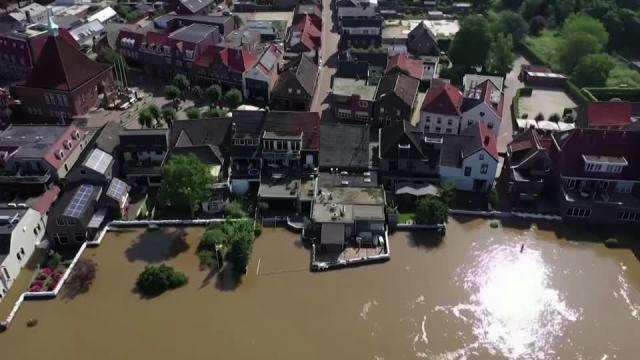
More than 100 people have been killed by floods in Germany after extreme rainfall caused rivers to overflow in the western part of the country on Thursday, and the toll is expected to increase as the floodwaters recede.

Dozens have also been killed in neighboring Belgium and the Netherlands.

Rescue operations are ongoing as hundreds of people are still listed as missing, although officials hope the number will decrease as communications are restored. According to the Associated Press, dozens of residents were rescued from their roofs, where they had taken refuge from the rising waters. The full extent of the damage is still unknown; many have suddenly lost everything, as homes collapsed and cars were swept away in the storm.

Weather disasters are inextricably linked to human-induced climate change. The planet has already warmed 2.1 degrees Fahrenheit since 1880, according to NASA, and that’s making disasters more dangerous and more costly. Stopping this vicious cycle will require drastically reducing our reliance on climate-polluting fossil fuels.

Our goal is to create a safe and engaging place for users to connect over interests and passions. In order to improve our community experience, we are temporarily suspending article commenting.

Related:

Photos reveal devastating impact as more than 125 killed by floods in Europe – ‘Warnings not taken seriously’

Ellen Manning                       

Damage caused by the flooding in Erftstadt, Germany. (AP)
Arial photo of the devastation caused by the flooding in Erftstadt, Germany. (AP

Over 120 people have died after floods swept through northwest Europe following heavy rainfall, devastating communities in Germany and Belgium.

The number of people who have died in the floods in the western part of Germany had risen to more than 100 by Friday afternoon.

More than 1,000 people were missing in the Neuenahr-Ahrweiler region, Koblenz police have reportedly said and entire communities have been completely ruined.

A damaged car, washed away by flood waters sits on some debris in a street in the town of Ahrweiler-Bad Neuenahr on July 15, 2021. - Heavy rains and floods lashing western Europe have killed at least 45 people in Germany and left around 50 missing, as rising waters led several houses to collapse. (Photo by Christof STACHE / AFP) (Photo by CHRISTOF STACHE/AFP via Getty Images)
Cars were washed away in the floods and left perched on debris in the town of Ahrweiler-Bad Neuenahr. (Getty)
An aerial view shows people as they inspect the emptying of the damaged Steinbach hydrolic dam in Euskirchen, western Germany, on July 16, 2021, after heavy rain hit parts of the country, causing widespread flooding. - The death toll from devastating floods in Europe soared to at least 126 on July 16, most in western Germany where emergency responders were frantically searching for missing people. (Photo by SEBASTIEN BOZON / AFP) (Photo by SEBASTIEN BOZON/AFP via Getty Images)
The damaged Steinbach hydrolic dam in Euskirchen, western Germany, after heavy rain hit parts of the country, causing widespread flooding (SEBASTIEN BOZON/AFP via Getty Images)
TOPSHOT - An aerial view taken on July 15, 2021 shows a bridge damaged by trunks following heavy rains and flood in Echtershausen, near Bitburg, western Germany. - Heavy rains and floods lashing western Europe have killed at least 59 people in Germany and eight in Belgium, and many more people are missing as rising waters caused several houses to collapse on July 15, 2021. (Photo by SEBASTIEN BOZON / AFP) (Photo by SEBASTIEN BOZON/AFP via Getty Images)
Debris including tree trunks have damaged roads and bridges after being swept away in the flooding. (Getty)

Record rainfall across western Europe saw the floods sweep through towns and villages, leaving people stranded, destroying homes, and washing cars down streets.

The floods have caused Germany’s worst loss of life in years and have also hit other countries, including Belgium, where 11 deaths have been reported.

Residents look at debris in the muddy streets, following flood waters in a street in the town of Ahrweiler-Bad Neuenahr, western Germany, on July 15, 2021. - Heavy rains and floods lashing western Europe have killed at least 45 people in Germany and left around 50 missing, as rising waters led several houses to collapse. (Photo by Christof STACHE / AFP) (Photo by CHRISTOF STACHE/AFP via Getty Images)
Hundreds of people have been left missing and the death toll continues to rise in Germany. (Getty)
People pass by the trunk of a tree that had fallen onto a passage which was damaged following heavy rains and flood in Echtershausen, near Bitburg, western Germany, on July 15, 2021. - Heavy rains and floods lashing western Europe have killed at least 59 people in Germany and eight in Belgium, and many more people are missing as rising waters caused several houses to collapse on July 15, 2021. (Photo by SEBASTIEN BOZON / AFP) (Photo by SEBASTIEN BOZON/AFP via Getty Images)
The flooding comes after heavy rainfall lashed western Europe. (Getty)

Some 15,000 police, soldiers and emergency service workers have been deployed in Germany to help with the search and rescue.

German President Frank-Walter Steinmeier said he was “stunned” by the devastation caused by the flooding and pledged support to the families of those killed and to cities and towns facing significant damage.

“In the hour of need, our country stands together,” Steinmeier said in a statement. “It’s important that we show solidarity for those from whom the flood has taken everything.”

Hundreds of soldiers used tanks to clear roads of landslides and fallen trees, while helicopters helped winch people to safety.

a bicycle is seen under the water from Rhine river in Cologne, Germany on July 15, 2021 as NRW experienced flooding after large amount of rain fell (Photo by Ying Tang/NurPhoto via Getty Images)
The Rhine river in Cologne, Germany, flooded, engulfing bikes and cars. (Getty)

A harrowing rescue effort unfolded In the German town of Erftstadt, southwest of Cologne, where people were trapped when the ground gave way and their homes collapsed.

“We managed to get 50 people out of their houses last night,” county administrator Frank Rock told German broadcaster N-TV.

Aerial photos showed what appeared to be a massive landslide at a gravel pit on the town’s edge..

“One has to assume that under the circumstances some people didn’t manage to escape,” Rock said.

Authorities were trying to account for hundreds of people listed as missing, but they cautioned that the high number could be due to duplicated reports and difficulties reaching people because of disrupted roads and phone service.

RHINELAND PALATINATE, GERMANY - JULY 15: A view of flooded area and damage after severe rainstorm and flash floods hit western states of Rhineland-Palatinate and North Rhine-Westphalia in Germany on July 15, 2021. The death toll in Germany&#39;s worst flood in more than 200 years rose to at least 42 as dozens of people remain missing. Search and rescue works continue in the area. (Photo by Abdulhamid Hosbas/Anadolu Agency via Getty Images)
Western German states of Rhineland-Palatinate and North Rhine-Westphalia were hard hit by the flooding. (Getty)

The governor of North Rhine-Westphalia Armin Laschet, who is hoping to succeed Chancellor Angela Merkel as the nation’s leader after Germany’s election in September said the disaster had caused immense economic damage to the country’s most densely populated state.

“The floods have literally pulled the ground from beneath many people’s feet,” Gov. Armin Laschet said at a news conference. “They lost their houses, farms or businesses.”

Federal and state officials have pledged financial aid to the affect areas, which also includes the state of Rhineland-Palatinate, where at least 60 people died and entire villages were destroyed.

Watch: Fears death toll will rise as officials warn dam will burst

Germany and Belgium floods: At least 120 dead and 1,300 missing – ‘many’ more deaths expected

The unprecedented rainfall has been blamed on global climate change by both weather experts and local politicians.

After Germany, where more than 100 people have died, Belgium was the hardest hit by the floods that caused homes to be ripped away. Belgian Interior Minister Annelies Verlinden told the VRT network Friday that the country’s official confirmed death toll had grown to 20, with 20 other people still missing.

Belgian Prime Minister Alexander De Croo has declared 20 July a national day of mourning.

“We are still waiting for the final toll, but this could be the most catastrophic flooding our country has ever seen,” he said.

LIEGE, BELGIUM - JULY 15: A damaged car is seen at the flooded site after heavy rain hit Oesival town in province of Liege, Belgium on July 15, 2021. Number of people who lost their lives due to floods caused by the rains that lasted for a few days in the country rose to 6. Because of the heavy rains, a state of emergency was declared in cities such as Liege, Verviers and Spa. In Liege, authorities asked those who do not live in the city to leave the area. Residents near the Meuse River were asked to climb to higher floors. River water level is expected to rise 1.5 meters (Photo by Dursun Aydemir/Anadolu Agency via Getty Images)
Lives were also lost in Belgium, where floods ravaged towns including Oesival. (Getty)
A picture taken on July 15, 2021, shows a flooded street in the Belgian city of Verviers, near Liege, after heavy rains and floods lashed western Europe. - The provincial disaster plan has been declared in Liege, Luxembourg and Namur provinces after large amounts of rainfall. Water in several rivers has reached alarming levels. - Belgium OUT (Photo by ANTHONY DEHEZ / BELGA / AFP) / Belgium OUT (Photo by ANTHONY DEHEZ/BELGA/AFP via Getty Images)
Streets were left under water in the Belgian city of Verviers, near Liege after water levels rose. (Getty)

Dr. Liz Stephens, Associate Professor in the Department of Geography and Environmental Science at the University of Reading, said: “The flooding in Europe is a sobering demonstration of how even the most developed countries are not prepared for the impacts of climate change.

“Intense summer rainfall events are expected to occur more frequently under climate change, and national and local governments need to wake up to the danger and make sure that appropriate measures are taken to avoid the unacceptable number of fatalities that have been reported from this event.

“The floods in London earlier this week provide a warning that we are not immune to these kinds of flood impacts in the UK and should learn our own lessons from this disaster.”

LIEGE, BELGIUM - JULY 15: People with their belongings leave the flooded site after heavy rain hit Oesival town in province of Liege, Belgium on July 15, 2021. Number of people who lost their lives due to floods caused by the rains that lasted for a few days in the country rose to 6. Because of the heavy rains, a state of emergency was declared in cities such as Liege, Verviers and Spa. In Liege, authorities asked those who do not live in the city to leave the area. Residents near the Meuse River were asked to climb to higher floors. River water level is expected to rise 1.5 meters (Photo by Dursun Aydemir/Anadolu Agency via Getty Images)
People were forced to flee their homes with their belongings in Belgium so they could get to safety as floodwaters rose. (Getty)
Illustration shows the flooded streets in Verviers after heavy rainfall, Thursday 15 July 2021. The provincial disaster plan has been declared in Liege, Luxembourg and Namur provinces after large amounts of rainfall. Water in several rivers has reached alarming levels. BELGA PHOTO ANTHONY DEHEZ (Photo by ANTHONY DEHEZ/BELGA MAG/AFP via Getty Images)
A provincial disaster plan was declared in Liege, Luxembourg and Namur provinces after large amounts of rainfall in the area. (Getty)
A house is submerged by water near the Dender river during floods near Geraardsbergen January 13, 2011. Several rivers burst their banks due to heavy rain flooding several towns and villages in Belgium, local media reported. REUTERS/Francois Lenoir (BELGIUM - Tags: DISASTER ENVIRONMENT)
Houses were left submerged near the Dender river during floods near Geraardsbergen in Belgium. (Reuters)


As the water started to recede, stunned residents in the worst affected towns inspected what was left of their homes and neighborhoods.

In the German town of Schuld, houses were reduced to piles of debris and broken beams. Roads were blocked by wreckage and fallen trees and fish flapped and gasped on puddles of water in the middle of the street.

A rescue effort was underway at the end of the week, with the military joining residents in the clean-up operation.

People walk past rubble in a street devastated by the floods in Euskirchen, western Germany, on July 16, 2021. - The death toll from devastating floods in Europe soared to at least 93, most of them in western Germany, where emergency responders were searching for hundreds of missing people. (Photo by SEBASTIEN BOZON / AFP) (Photo by SEBASTIEN BOZON/AFP via Getty Images)
Rubble was left in the street in Euskirchen, western Germany, as emergency responders continued to search for hundreds of missing people. (Getty)
RHINELAND PALATINATE, GERMANY - JULY 15: A view of flooded area and damage after severe rainstorm and flash floods hit western states of Rhineland-Palatinate and North Rhine-Westphalia in Germany on July 15, 2021. The death toll in Germany&#39;s worst flood in more than 200 years rose to at least 42 as dozens of people remain missing. Search and rescue works continue in the area. (Photo by Abdulhamid Hosbas/Anadolu Agency via Getty Images)
Soldiers have been helping in the search and rescue effort. (Getty)
A resident reacts in front of damaged furnitures following heavy rains and floods in Ahrweiler-Bad Neenah, western Germany, on July 15, 2021. - German authorities said late July 15, 2021 that at least 58 people had likely died in massive storms and flooding in the country&#39;s west, an increase on the earlier toll of 45 dead. (Photo by Christof STACHE / AFP) (Photo by CHRISTOF STACHE/AFP via Getty Images)
Businesses have been left ruined by the flooding. (Getty)


Professor Hannah Cloke OBE, Professor of Hydrology at the University of Reading, added: “The deaths and destruction across Europe as a result of flooding is a tragedy that should have been avoided.

“For so many people to die in floods in Europe in 2021 represents a monumental failure of the system. The sight of people driving or wading through deep floodwater fills me with horror, as this is about the most dangerous thing you can do in a flood.

“Forecasters could see this heavy rain coming and issued alerts early in the week, and yet the warnings were not taken seriously enough and preparations were inadequate.

“These kind of high-energy, sudden summer torrents of rain are exactly what we expect in our rapidly heating climate.

“The fact that other parts of the northern hemisphere are currently suffering record-breaking heat-waves and fires should serve as a reminder of just much more dangerous our weather could become in an ever-warmer world.”

Watch: Floodwaters surge through German town as death toll rises

Our goal is to create a safe and engaging place for users to connect over interests and passions. In order to improve our community experience, we are temporarily suspending article commenting.

Death toll rises to at least 157 in Europe floods

The search for survivors in stranded vehicles as the floodwaters finally start to recede in western Germany. Burst rivers and flash floods this week collapsed houses and claimed at least 157 lives across across Europe.The German President visited the scene of some of the worst flooding in the town of Erftstadt, near Cologne, where the disaster killed at least 43 people. ‘We mourn with those that have lost loved ones….their fate is ripping our hearts apart’, he said. These floods are the country’s worst natural disaster in more than half a century. Hundreds of people are still missing. Over the past several days the floods have cut off entire communities from power and communications. In Belgium, the death toll rose to 24, according to the national crisis center, which is coordinating the rescue effort. Emergency services in the Netherlands also remained on high alert as overflowing rivers threatened towns and villages throughout the southern province of Limburg. Tens of thousands of residents in the region have been evacuated in the past two days, while soldiers, fire brigades and volunteers worked frantically throughout Friday night to enforce dykes and prevent flooding.

Related:

Death toll rises to 170 in Germany and Belgium floods

ERFTSTADT, Germany/WASSENBERG, Germany (Reuters) -The death toll in devastating flooding in western Germany and Belgium rose to at least 170 on Saturday after burst rivers and flash floods this week collapsed houses and ripped up roads and power lines.

Some 143 people died in the flooding in Germany’s worst natural disaster in more than half a century. That included about 98 in the Ahrweiler district south of Cologne, according to police.

Hundreds of people were still missing or unreachable as several areas were inaccessible due to high water levels while communication in some places was still down.

Residents and business owners struggled to pick up the pieces in battered towns.

“Everything is completely destroyed. You don’t recognize the scenery,” said Michael Lang, owner of a wine shop in the town of Bad Neuenahr-Ahrweiler in Ahrweiler, fighting back tears.

German President Frank-Walter Steinmeier visited Erftstadt in the state of North Rhine-Westphalia, where the disaster killed at least 45 people.

“We mourn with those that have lost friends, acquaintances, family members,” he said. “Their fate is ripping our hearts apart.”

Around 700 residents were evacuated late on Friday after a dam broke in the town of Wassenberg near Cologne, authorities said.

But Wassenberg mayor Marcel Maurer said water levels had been stabilising since the night. “It’s too early to give the all-clear but we are cautiously optimistic,” he said.

The Steinbachtal dam in western Germany, however, remained at risk of breaching, authorities said after some 4,500 people were evacuated from homes downstream.

Steinmeier said it would take weeks before the full damage, expected to require several billions of euros in reconstruction funds, could be assessed.

Armin Laschet, state premier of North Rhine-Westphalia and the ruling CDU party’s candidate in September’s general election, said he would speak to Finance Minister Olaf Scholz in the coming days about financial support.

Chancellor Angela Merkel was expected to travel on Sunday to Rhineland Palatinate, the state that is home to the devastated village of Schuld.

In Belgium, the death toll rose to 27, according to the national crisis centre, which is coordinating the relief operation there.

It added that 103 people were “missing or unreachable”. Some were likely unreachable because they could not recharge mobile phones or were in hospital without identity papers, the center said.

COMMUNITIES CUT OFF

Over the past several days the floods, which have mostly hit the German states of Rhineland Palatinate and North Rhine-Westphalia and eastern Belgium, have cut off entire communities from power and communications.

RWE, Germany’s largest power producer, said on Saturday its opencast mine in Inden and the Weisweiler coal-fired power plant were massively affected, adding that the plant was running at lower capacity after the situation stabilized.

In the southern Belgian provinces of Luxembourg and Namur, authorities rushed to supply drinking water to households.

Flood water levels slowly fell in the worst hit parts of Belgium, allowing residents to sort through damaged possessions. Prime Minister Alexander De Croo and European Commission President Ursula von der Leyen visited some areas on Saturday afternoon.

Belgian rail network operator Infrabel published plans of repairs to lines, some of which would be back in service only at the very end of August.

HIGH ALERT IN THE NETHERLANDS

Emergency services in the Netherlands also remained on high alert as overflowing rivers threatened towns and villages throughout the southern province of Limburg.

Tens of thousands of residents in the region have been evacuated in the past two days, while soldiers, fire brigades and volunteers worked frantically throughout Friday night to enforce dykes and prevent flooding.

The Dutch have so far escaped disaster on the scale of its neighbours, and as of Saturday morning no casualties had been reported.

Scientists have long said that climate change will lead to heavier downpours. But determining its role in these relentless rainfalls will take at least several weeks to research, scientists said on Friday.

(Reporting by Petra Wischgoll and Leon Kuegeler in Erftstadt, David Sahl in Wassenberg, Matthias Inverardi in Duesseldorf, Philip Blenkinsop in Brussels, Christoph Steitz in Frankfurt and Bart Meijer in Amsterdam Editing by Frances Kerry)

Former Trump official says the GOP is the ‘number 1 national security threat’ to the US, bigger than ISIS or Russia

Former Trump official says the GOP is the ‘number 1 national security threat’ to the US, bigger than ISIS or Russia

  • An ex-Trump official said the GOP is the top national security threat to the US.
  • “Unless my Party reforms, its extremist elements represent the leading threat to our democracy,” he said.
  • Democracy scholars have issued similar warnings about the GOP, particularly since January 6.

A former Trump administration official on Thursday said the Republican party is the top national security threat to the US, as the party’s rank-and-file lawmakers continue to support former President Donald Trump’s baseless claims of election fraud that incited the Jan. 6 insurrection and use it as a rationale to impose voting restrictions.

“I’ve spent my whole career not as a political operative. I’ve never worked on a campaign in my life other than campaigning against Trump. I’m a national security guy. I’ve worked in national security against ISIS, al Qaeda and Russia,” Miles Taylor, a former Homeland Security official, said in an appearance on MSNBC’s “The Reid Out.”

“And the number one national security threat I’ve ever seen in my life to this country’s democracy is the party that I’m in – the Republican Party. It is the number one security national security threat to the United States of America,” Taylor added.

The former Homeland Security official has been an outspoken critic of Trump and his influence in the GOP. Taylor launched an anti-Trump GOP group and endorsed President Joe Biden during the 2020 campaign season, and in October was revealed as the anonymous author of a 2018 New York Times op-ed article that said there was a “resistance” in the Trump administration.

Read more: Where is Trump’s White House staff now? We created a searchable database of more than 328 top staffers to show where they all landed

Though Trump is no longer in the White House, he continues to wield unparalleled authority in the Republican party. Taylor on Thursday warned Americans that they should be concerned for the future of the country if this trend continues.

“If [House Minority Leader] Kevin McCarthy continues to pay homage to a twice-impeached presidential loser, I think should give all Americans pause and make them worry about the future of this country and national security,” Taylor said.

-The ReidOut (@thereidout) July 15, 2021


Taylor doubled-down on his remarks in a tweet on Friday.

“I stand by my statement. Unless my Party reforms, its extremist elements represent the leading threat to our democracy,” he said.

Scholars on democracy have issued stark warnings following the January 6 insurrection at the US Capitol, as the GOP vies to whitewash the fatal attack and Republican-led legislatures nationwide take extraordinary steps to restrict voting.

“With Trump gone, I hoped the Republican party might recalibrate, moving away from his illiberal, anti-democratic and irrational behavior and embracing a conservative, but firmly reality-based and small ‘d’ democratic politics,” Sheri Berman, a professor of political science at Barnard College and author of “Democracy and Dictatorship in Europe: From the Ancient Régime to the Present Day,” told Insider last month.

“That the Republican party has proven to be a greater threat than Trump – a single individual – bodes poorly for the health of American democracy,” Berman added.

How the wealthy use debt ‘as a tool to screw the government and everybody else’

MarketWatch – Extra Credit

How the wealthy use debt ‘as a tool to screw the government and everybody else’

An interview with the professor who coined the term ‘Buy, Borrow, Die,’ and a look at how debt destabilized Haiti.

Elon Musk and other billionaires frequently use debt to their advantage, according to recent reporting by ProPublica. But for other Americans, debt can lead to jail time. Brendan Smialowski/Agent France – Press/Getty Images.

Hello and welcome back to MarketWatch’s Extra Credit column, a weekly look at the news through the lens of debt.

This week we’re tackling the economic forces luring borrowers into debt and how a centuries’-old debt imposed on Haiti is still affecting the country today. But first up, how the rich use borrowing to their advantage.

Debt can mean a tax advantage for some and jail for others

ProPublica’s investigation into billionaires’ tax returns has more people paying attention to the strategies wealthy Americans use to avoid paying taxes. As it turns out, one of those tactics involves the advantageous use of debt. There’s even a catchphrase for it — Buy, Borrow, Die — that was the subject of a recent Wall Street Journal article.

In both the ProPublica and Wall Street Journal articles, I was struck by the way the wealthy opted to use debt as a strategy, when many borrowers I encounter in my reporting are relying on loans because they have to. I called Edward McCaffery, a professor at the University of Southern California’s Gould School of Law, who says he coined the phrase Buy, Borrow, Die decades ago, to learn more about it.

McCaffery said he first started thinking about the idea a few years into his tax law teaching career, when he noticed how certain tax law doctrines could benefit the wealthy. For example, the realization requirement, which means you don’t pay taxes on an asset until it produces cash.

That allows for the wealthy to build up their assets tax free. To most of us, it would seem that the problem with that method is that “sooner or later you’re going to have to sell,” he said. But that’s actually not the case. As long as someone is wealthy enough to live on a percentage of their assets, they never have to sell.

Instead, they can borrow against those assets at an interest rate that’s much lower than the rate at which the assets will appreciate over time, McCaffery said, and use those funds as spending money. But unlike the wages and salary most people use to pay for living expenses, the borrowing isn’t taxed, so they face a relatively low tax bill. Once they die, the assets pass to their descendents tax-free or with minimal tax treatment.

‘Need debt, you get screwed, don’t need debt you can use it as a tool to screw the government and everybody else.’

— Edward McCaffery, a professor at the University of Southern California’s Gould School of Law, who says he coined the phrase Buy, Borrow, Die

When McCaffery first started talking about Buy, Borrow, Die, 25 years ago, he said many were skeptical. For one, there wasn’t evidence that wealthy people were engaging in this behavior. In addition, the approach runs so counter to the way the 99% think about borrowing that it was hard to believe.

“They’ve been trained since birth, they’ve been trained in the womb, never a borrower nor a lender be, debt is bad, debt will cripple you,” he said.

And indeed, middle-class borrowers face higher interest rates than what billionaires are offered and they have bills coming due now; that means they have to tap their assets or earn money from work, which is taxed. For the poor, debt can often come in the form of loans that prey on their need for funds quickly. “Need debt, you get screwed, don’t need debt you can use it as a tool to screw the government and everybody else,” McCaffery said.

What the News Means for You and Your Money

For some, the consequences can be even more pernicious than high interest rates. Just ask Charles Anderson, who spent 28 days in jail over $2,500 in fines and unpaid court fees, AL.com reported this week. He was only freed after his mother took $1,000 from her Social Security check and put it toward his debt.

“In my opinion, it’s debtors’ prison because I owe money and you’re gonna lock me up for it,” he told AL.com. “How is this the United States, where we’re supposed to have more freedoms than anywhere else in the world, and we’re incarcerating people for not having money?”

Society’s focus on credentials is fueling student debt

The Wall Street Journal published an excellent article last week highlighting the debt students take on for graduate degrees offered by elite universities and the money those degrees make for the schools.

Though the focus was largely on film, acting and other arts programs — which typically don’t require licenses — the story also had me thinking about President Joe Biden’s recent executive order that would clamp down on occupational licensure requirements. Stay with me here.

As many on Twitter pointed out, the prestigious schools that were the focus of the WSJ piece are using some of the same tactics and benefiting from the same economic forces as for-profit colleges offering the certifications, education for licensure and degrees that students need — or at least think they need — to get a job or boost earnings.

A big driver of this trend is credentialization, or the idea that jobs require higher levels of education than they used to even though workers are performing the same tasks as in the past. In some cases, that can mean a license that didn’t used to be necessary to perform a job, in others, it means a graduate degree is a ticket to standing out because bachelor’s degrees are increasingly common.

Over the past several years, this phenomenon has pushed students towards more schooling, research indicates. And the higher education industry is capitalizing on it. Douglas Webber, an associate professor of economics at Temple University, said it’s not uncommon to see schools using buzzwords like “jumpstart your career” in marketing materials.

Those messages are “trying to get at people who, they have some job, but it’s maybe not the job that they envisioned,” he said. “You definitely see that, and not just from for-profit, or typically predatory institutions, you see that type of marketing from virtually everywhere, even publics.”

Students see accruing another degree as a way to improve their prospects in part because employers are demanding extra credentials at all levels of the labor market, Webber said.

“There’s just been this trend over time of firms and industries that have been trying to shift the cost of training to higher education and that is occupational licensing and that is also graduate education,” he said.

Biden announced last week that he would ban burdensome occupational licenses, as a way to improve workers’ ability to switch jobs, even when it requires moving across state lines. That could make it easier for workers without the funds to pay for school to get into those fields, said Kim Weeden, a sociology professor at Cornell University.

“If it takes you $400 to get a license and you have to sign up for very expensive continuing education courses every year, that’s a barrier to entry into either acquiring the skills, or keeping the skills up to date, or applying the skills that you already have,” she said.

There are some questions as to how getting rid of occupational licenses, or at least tamping down on them, could impact inequality. Occupations with licenses typically have a wage premium, even at the lower paying end of the labor market. Other research indicates that women and racial minorities who have occupational licenses experience smaller wage gaps than those without the licenses.

The debt forced onto Haiti centuries ago

Debt is not only a force in individuals’ lives, it can also destabilize an entire country. The recent turmoil in Haiti in the wake of the assassination of the country’s president, Jovenel Moïse, highlights the role financial exploitation by the international community has played in Haiti’s political and economic challenges.

Haiti declared its independence from France in 1804, after a slave-led rebellion wrested power from colonial occupiers. But in 1825, France, backed by the threat of war, ordered Haiti to pay 150 million francs in exchange for recognizing the country’s independence. To make the payments, Haiti had to borrow money from French banks — a debt it didn’t pay off until 1947.

That weight prevented Haiti’s economy from taking off. The economist Thomas Piketty has said France should repay Haiti a minimum of $28 billion to cover the debt and its consequences.

“We are talking about 122 years that a young nation had to pay money for the only crime it committed: To fight and to get its independence in order to lead a free life, a dignified life,” said Jean Eddy Saint Paul, the founding director of the Haitian Studies Institute at the City University of New York.

The debt owed to France was followed by decades of economic and political meddling into Haiti by the international community that laid the groundwork for today’s turmoil, Saint Paul, a professor at Brooklyn College, said. For example, The United States began a nearly 20-year occupation of Haiti in 1915, following the assassination of Haiti’s president, in part out of fear that the money owed to France would tie Haiti too closely to the country. The U.S. also moved Haiti’s financial reserves to the United States.

In more recent years, Haiti’s economy has been victim to, among other things, a neoliberal economic program “on steroids” that pushed the country to open its economy to the world, allowing goods to flood in and devastate the agricultural sector, said Robert Fatton Jr., a professor of politics at the University of Virginia.

“We have a long history of foreign involvement in Haiti,” said Fatton, who has written multiple books about the country. “You can’t understand Haitian politics without understanding foreign entanglements in Haiti’s affairs — not only in terms of the politics of the place, but also in terms of the economy.”