Coronavirus: Hundreds Test Positive In First Week Of School Across Tampa Bay
Kerry Sheridan, WUSF Public Media – WUSF 89.7 August 16, 2021
Coronavirus
News about coronavirus in Florida and around the world is constantly emerging. It’s hard to stay on top of it all but Health News Florida and WUSF can help. Our responsibility at WUSF News is to keep you informed, and to help discern what’s important for your family as you make what could be life-saving decisions.
Pasco County Schools
Actual case counts are almost four times higher than the district’s COVID dashboard shows, according to Sarasota school board chair Shirley Brown.
Even though classes just started last week, schools in the greater Tampa Bay region have already seen hundreds of students and staff test positive for coronavirus, and thousands of people are isolating due to exposure or illness.
The numbers were generally between 10 times to 20 higher than the cases that were counted in the first week of school last year, and in Sarasota, school board chair Shirley Brown said the numbers reflected on district dashboards are far below the actual case count.
“It’s actually worse than what our dashboard shows because we are having trouble keeping up with data entry,” Brown said in an email to WUSF Sunday night.
By Sunday, 261 students in Sarasota County schools had tested positive in the first week. According to the school district’s COVID dashboard, 194 students were in isolation on Sunday.
A case count of 261 is already more than 20 times higher than last year, in a district that contains about 45,000 students. The Sarasota Herald Tribune reported there were just 10 cases of COVID in the county’s schools the first two weeks last year. But Brown said that’s not even the full picture.
“We (have) 818 names on a report but I don’t know if (they are) staff or student or charter school student,” Brown added. “We may actually come close to last year’s numbers before the end of August.”
Brown said she has asked staff to “put a priority on data entry” so that the updated numbers are available before a school board workshop to discuss safety protocols on Tuesday.
Elsewhere, in the nation’s eighth largest school district, Hillsborough County reported 435 students — up from 41 in the first week of school last year — and 228 staff had tested positive for coronavirus.
About 2,900 were in quarantine as of Thursday, with no way to remotely access their classes, school board member Karen Perez said at a meeting that evening.
“How are these 2,000 — almost 3,000 — students receiving their lessons? How are they being contacted to get their reading, their math, their lessons completed?” she asked.
By the weekend, those numbers were higher: nearly 4,500 students were in quarantine, or 2 percent of Hillsborough’s 193,000 students, according to the Tampa Bay Times.
Last year, school officials said 10 to 15 percent would have to be out to consider closing a school, superintendent Addison Davis said Thursday.
Bus drivers, who are already in short supply, were also seeing staffing shortages due to sickness.
“We have 18 drivers that are in quarantine. And that’s without any absenteeism. I mean, that’s about more than double what we’re normally at this point of the year,” operations chief Chris Farkas said Thursday.
Pinellas reported 152 cases among students, and 79 among staff.
Manatee County reported 182 students tested positive last week, and announced random temperature checks for students.
Masks remain optional across the region, due to an executive order by Gov. Ron DeSantis that bars schools districts from issuing mandatory mask policies without parental exemptions.
Hillsborough County requires parents to complete an opt-out form so that their children don’t have to wear a face covering. District officials said about 14 percent of students had turned in an opt-out form.
The Manatee County School Board is scheduled to hold an emergency meeting at 9 a.m. Monday to discuss implementing a mask mandate with an opt-out for students.
The Florida Education Association is tracking cases statewide, and said 4,148 Florida Pre-K-12 students and staff have tested positive for coronavirus since Aug. 1.
Three children in Florida and 15 educations have died from COVID-19 since July, according to the Southeast’s largest labor union.
Kerry Sheridan is a reporter and co-host of All Things Considered at WUSF Public Media.
Y-Foundation housing projects in Helsinki, Finland. Y-FOUNDATION
What if homelessness was simply not an option?
That’s the approach that Finland took when it decided to address their homelessness problem, beginning with a comprehensive strategy to provide immediate, permanent housing for those who most needed it.
As a result, Finland has become the leading example of how to drastically reduce homelessness.
Juha Kaakinen is chief executive officer of Finland’s non-profit Y-Foundation, which develops housing and purchases existing housing, and then leases it out to people who’d otherwise be homeless. Mr. Kaakinen, who was at the forefront of Finland’s radical housing transformation, took part in a recent panel discussion on whether Canadian cities were using useless stopgap measures to solve the affordable housing crisis.
The Canadian Urban Institute held the virtual nine-speaker Aug. 4 event. In particular, the panel looked at homeless encampments that had become a feature of the pandemic in the past year, including large tent cities in Toronto, Vancouver and Victoria.
“I have always thought that there were a lot of similarities between Canada and Finland, but this seems to be an issue where we also have great differences, because I really can’t recall that we have had any homeless encampments in this century,” Mr. Kaakinen told the panel.
Juha Kaakinen is chief executive officer of Y-Foundation, which develops housing and purchases existing housing, and then leases it out to people who’d otherwise be homeless. KIRSI TUURA
That’s not to say Finland, a small country of around 5 million, has not had its problems. In 1987, Finland had a homeless population of about 20,000 and it became clear that temporary shelters weren’t a solution. They overhauled the system. Since then, Finland’s rate has plummeted to 4,300 single homeless people and an estimated 200 couples or families that are homeless. Most are temporarily living with friends or relatives, Mr. Kaakinen explained in an e-mail.
By comparison, Canada’s homelessness rate is conservatively estimated at around 235,000.
In an interview, Mr. Kaakinen expressed his dismay at the visible reality of Canada’s housing crisis, having seen pictures of people struggling on the streets and in parks.
“I’m not surprised to see pictures like these from the U.S.A., but Canada? These pictures remind me most of some pictures of Finland in the 1960s. For me, there is only one [criterion] for a civilized society: it takes care of all its members, including people experiencing homelessness. “There seems to be countries that regard themselves as highly developed, rich, world-leading countries, but utterly fail in securing basic human rights like housing.”
Vancouver’s homelessness crisis became a bleak reality during the pandemic, when an encampment set up in Oppenheimer Park and then Strathcona Park. The City of Vancouver conducted its last annual homeless count just before the pandemic broke, in early March, 2020. The count found that 2,095 residents in Vancouver identified as homeless. Of those, 547 people lived on the street and 1,548 people were living in shelters, including detox centers, safe houses and hospitals, with no fixed address, according to information provided by the city in an e-mail. Victoria Mayor Lisa Helps told the panel that her city saw an increase of people living in the rough go from about 35 at the onset of the pandemic to an estimated 465 people a month later.
Shelters are not an acceptable form of housing, and large encampments have never been a form of shelter in Finland, Mr. Kaakinen told the panel. He saw some homeless people grouped together near Helsinki in the 1980s, but even then there were many shelters and hostel beds.
Homeless advocate Chrissy Brett at a homeless encampment at Strathcona Park, in Vancouver, on Dec. 4, 2020. DARRYL DYCK/THE GLOBE AND MAIL
In 2008, the country adopted a national policy based on “Housing First” philosophy, whose advocates say that providing permanent housing is the first priority in solving the crisis. As a result, shelters were converted into comfortable permanent homes, with staff on hand to support those with addictions, or in need of life skills and training and work placement.
Housing First advocates say that research has shown stable housing for all people has proven to be the most effective remedy, both for improving lives and saving money.
One such study from 2009, published in the Journal of the American Medical Association, saw costs to Seattle’s public-health system drop by 60 per cent after the first six months, when chronically homeless people with severe alcoholism obtained stable homes.
In Finland, residents have their own apartments with rental contracts, and if necessary, they receive a housing benefit. Former homeless people are involved at the national level in the planning of social housing at the city level, Mr. Kaakinen said.
“The message from homeless people about homelessness has always been that it has to be a permanent housing, a safe place – not a shelter or a hostel. And so, since 2008, our policy has been based on this principle of providing permanent housing on rental contract, and support if that’s needed. … It’s been a partnership between the states, the government, local authorities and NGOs [non-governmental organizations] working at the national and local level.
“Of course, in practice, the greatest responsibility is on the cities … and we have homeless people represented in the national programs, in the steering groups. They are taking part in planning the services in the cities. I think that it has been a very pragmatic and successful way to work.”
The Y-Foundation started to buy private apartments throughout Finland in 1985, with grants obtained from the government-run Finland Slot Machine Association, he says. The grant covered 50 per cent of the price of an apartment, and today they also purchase apartments without grant money.
About 80 per cent of the apartments are subleased to municipalities and NGOs, who rent them out and provide support services, if needed. Revenues cover operating costs. NGOs and municipalities also develop new affordable housing. In Finland’s large urban centers, 25 per cent of all new housing must be for social housing. There’s no visible difference between private and public housing.
“It makes the idea of a more equal society a reality,” says Mr. Kaakinen. “It has obvious social benefits, and it has also a huge psychological importance [because] everybody can have the feeling that they belong to this society.”
Victoria resident Tina Dawson, 52, told the panel about her experience as a first-time homeless person in the past year, moving between shelters and encampments. People in her position need to be empowered and maintain their dignity, she said.
“Being newly homeless, I am gob-smacked at the way things are out of sight, out-of-mind, and the machine that is in place to keep people homeless. How on earth am I going to get out of this position? I’ve managed my entire life. I’ve raised three children. And I have no address. The problem is [putting together] the damage deposit. I’m on permanent disability. That’s hand to mouth.”
Panel member Leilani Farha, lawyer and global director of Ottawa-based affordable housing initiative The Shift, later said in an interview that part of the success of Finland is the national mindset around homelessness. It’s simply not an option.
“People have a right to housing as part of their constitution. They have embraced it. It’s a different culture,” said Ms. Farha, who travelled the world for six years visiting homeless encampments when she worked as the United Nations special rapporteur on the right to adequate housing.
Finland is a smaller country and highly regulated, so it’s more difficult for rents to escalate as they have in Canada, she adds. Helsinki, for example, owns the majority of land within the city limits, and operates an in-house construction company. But Canada, says Ms. Farha, could learn to think boldly and creatively, like the Finns. Why, for example, hasn’t Canada embraced a Housing First approach, she asks.
“I think people are beginning to realize that housing is just completely unaffordable, and we don’t have much social housing in this country – we have very little actually. So I think people are cottoning onto the idea that the average family person working at a minimum wage job could easily end up homeless. I think that’s changing, but I don’t know that we’re there yet.
“What I see in governments around Canada is a timidity around bold creative moves that are value based, and I think now is the time.
“We need some bold creativity, come on. I’m seeing all these things happening in other countries. Where is it in Canada?”
Everything You’ll Want to Know About Donald Trump’s Legal Woes
By Alison Greene
The Disgraced Former Guy Is In Over His Head in Court Cases and Investigations; Here’s Your Definitive Catalogue
Bookmark this article. It’s your scorecard to the trials and tribulations of Donald J. Trump.
DCReport has compiled a list of 21 legal cases, investigations and related matters engulfing Trump, his family and their four-generation criminal enterprise, the Trump Organization.
The items range from the widely reported grand jury investigation by the Manhattan district attorney to an obscure $1 million dispute regarding a Chicago property tax refund; from the congressional inquiry into the Jan. 6 Capitol insurrection to two defamation cases brought by women who claim Trump assaulted them.
Principals of the Trump crime family
What you read here is based on our own reporting as well as the ongoing Trump Litigation Tracker maintained by the online forum Just Security at New York University School of Law. We also relied on the Program on Extremism at George Washington University, which created a central database of court records related to the events of the Jan. 6. Capitol insurrection.
We believe our list is complete, but we invite anyone with knowledge of other pending or ongoing legal matters to alert us.
Our takeaway? In reviewing his legal battles, we noticed two common themes: money and lies. Trump’s penchant for lying, particularly his pattern of lying about his finances and the election, is coming back to bite him legally.
Throughout Trump’s presidency the phrase, “No one is above the law,” was heard frequently. But other than his record-setting two impeachments, Trump has effectively evaded legal consequence. That’s changing. Now that Trump is a private citizen, these lawsuits and investigations will determine whether he will be held accountable for his illegal conduct and sedition.
The Money
New York District Attorney Cyrus Vance Jr. (Ben Fractenberg / THE CITY)
1. Manhattan D.A.’s Criminal Investigations into Trump’s Finances
Manhattan District Attorney Cy Vance Jr. has been investigating Trump, the Trump Organization and its officers since at least 2018. Trump’s former lawyer Michael Cohen and the former daughter-in-law of Trump’s chief financial officer Allen Weisselberg are both known to be cooperating with the D.A.’s office, and a grand jury is well under way. Court filings and witnesses have indicated that one of the main components of the investigation is whether the former president and his company falsely inflated the value of their properties for banks and insurers and then undervalued the properties to skimp on taxes. Both the grand jury and Cy Vance’s tenure are set to expire in November so we expect announcements, not to mention indictments, before then.
Where’s the Justice Department?
Attorney General Merrick Garland
While Attorney General Merrick Garland’s Justice Department is on the periphery of many of these cases and investigations, the department is notably absent from any primary cases directed at Trump himself.
Indeed, in some cases such as the E. Jean Carroll defamation suit, Garland and the department actually supported Trump against his accusers. In other matters directly involving the politicization of the department, Garland chose to let its inspector general take the point.
“Sometimes we have to make decisions about the law that we would never have made and that we strongly disagree with as a matter of policy,” he told a Senate committee in June.
In July, the department cleared the way for government officials to testify in the congressional election interference investigation. The department said that it “would not be appropriate to assert executive privilege with respect to communications with former President Trump and his advisers and staff on matters related to the committee’s proposed interviews.”
2. New York Attorney General’s Civil and Criminal Investigations
In a similar vein to the Manhattan D.A.’s office, New York Attorney General Letitia James is investigating Trump for altering property values to avoid taxes. Although the case started in civil court, James announced in May that the probe expanded to a criminal investigation.
3. D.C. Civil Suit over Misuse of 2017 Inauguration Funds
For the 2017 inauguration, Trump raised a staggering and record-setting $107 million. The civil suit alleges that Trump used various schemes to siphon money from that inauguration fund and to direct it to the Trump businesses. In one example Trump’s inaugural committee allegedly paid $175,000 for event space at Trump’s own Washington hotel. That same day that same space was rented to a nonprofit for $5,000—in line with the hotel’s standard pricing guidelines. The suit alleges that the Trump nonprofit was used to enrich Trump’s personal businesses.
4. Mary Trump Fraud Litigation
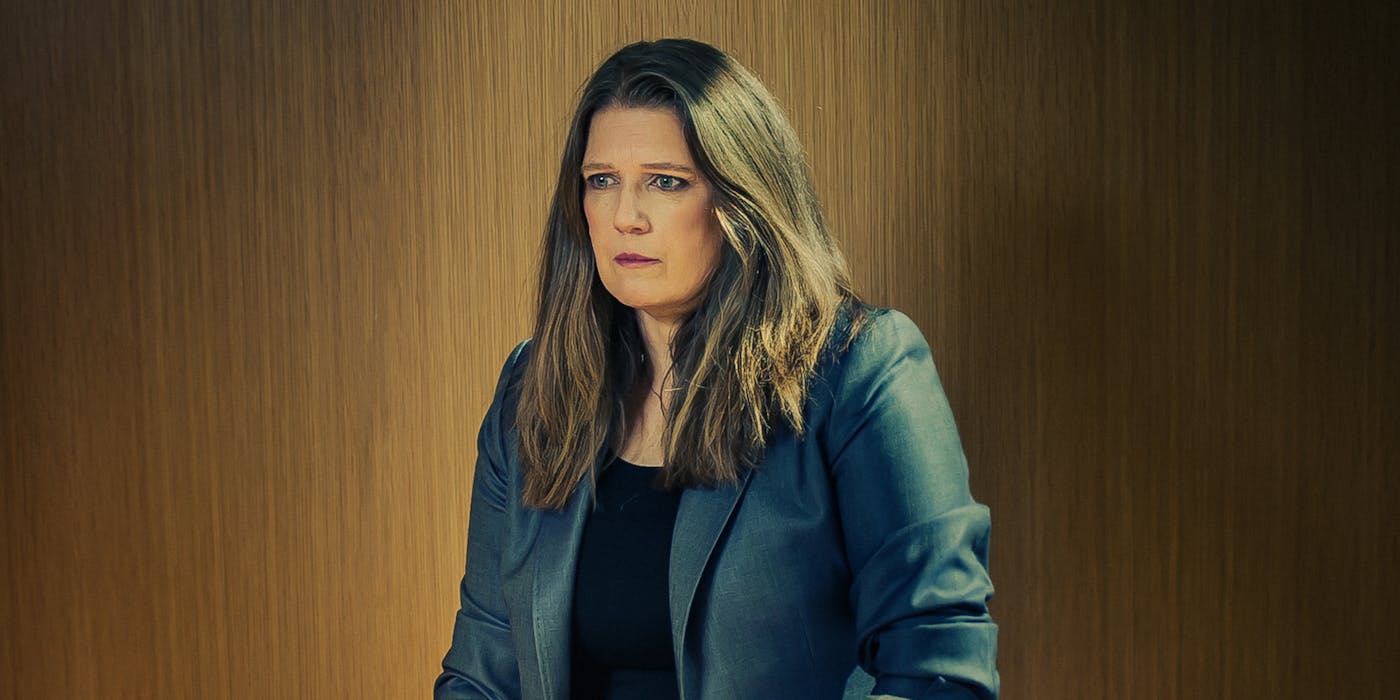
Mary Trump
Michael Cohen once told Congress that in his experience, “Trump inflated his total assets when it served his purposes.” In niece Mary Trump’s case, however, the daughter of his dead brother Fred Trump Jr. alleges that Trump devalued the family assets to defraud her out of 10s of millions of her grandfather’s inheritance. Mary Trump—a psychologist and author of the bestselling Too Much and Never Enough—alleges that her aunt and uncles presented her with fraudulent valuations to hide the real value of the estate, ty keeping 10s of millions for themselves.
5.Panama Hotel Fraud and Tax Litigation
Ithaca Capital, a real estate holding company, alleges that it purchased a majority share of the Trump Hotel in Panama based on false and misleading information. Ithaca claims that Trump’s company misrepresented the hotel as profitable and artificially deflated the expenses. The company alleges that the Trump Organization failed to report or fully pay Social Security withholding for hotel employees or pay income taxes to the Panama government. Additionally, Trump’s management company paid itself more than what was listed on the financial statements all while the hotel sat virtually empty and went uncleaned for years.
6. Doe vs. The Trump Corporation Class Action
In a class-action suit filed in 2018 by the New York law firm of Kaplan, Hecker & Fink, the plaintiffs allege that from 2005 to 2015 Donald, Ivanka, Don Jr. and Eric Trump used the Trump brand to promote and endorse various “Secrets of His Success”-style seminars, business opportunities and training programs through companies Trump claimed were independent of him. The suit alleges that the family allowed these companies to use Trump’s brand name and endorsements to defraud thousands of struggling Americans who invested in a range of exorbitantly priced offerings from these companies, knowing that the purchasers’ likelihood of success was minuscule. The family was paid millions by the companies, the suit claims.
The former Trump tower in Chicago (Trump Organization)
7. Chicago State’s Attorney Blocks a $1 Million Tax Refund
The Cook County State’s Attorney Kimberly Foxx has filed a suit to block a $1 million property tax refund awarded in June by the Illinois Property Tax Appeal Board. The board found that the Cook County Board of Review overestimated the value of Trump’s Chicago skyscraper and overcharged his firm in 2011. The refund has been controversial after an initial investigation was undertaken in 2020 due to allegations that a Republican state official who was the executive director of the Property Tax Appeal Board pressured his staff to reduce the value of the tax bill to try and obtain the $1 million refund for Trump. That state official was let go in October 2020 and the vote was delayed until after Trump left office, but it still passed unanimously in favor of Trump.
The Lies
8. Atlanta Criminal Election Influence Investigation
On Feb. 10, 2021, the Fulton County district attorney’s office opened an investigation into attempted election interference, based on the widely reported recording of a phone call between Trump and Georgia’s Secretary of State Brad Raffensperger. Trump was heard pressing the Georgian to overturn the election results saying, “I just want to find 11,780 votes.” The case looked to be stalled until last month when the county provided additional funds to the D.A.’s office to help handle a severe backlog of cases.
Shortly after the Jan. 6 Capitol insurrection, D.C.’s Attorney General Karl Racine said, “I know that I’m looking at a charge under the D.C. code of inciting violence, and that would apply where there is a clear recognition that one’s incitement could lead to foreseeable violence.” Inciting a riot in Washington is a misdemeanor with a very high bar to be able to prove, but related lawsuits and the congressional Jan 6 investigation could help Racine with his case.
10. Incitement Suit for Jan 6 Capitol Attack
Ten Democratic members of Congress are suing Trump, Rudy Giuliani the Proud Boys, the Oath Keepers, the Warboys and the head of the Warboys, Enrique Tarrio. The suit says that Trump violated the Ku Klux Klan Act by inciting the rioters with the intent to prevent the members from discharging their official duty of approving the Electoral College vote. The 1871 act allows members of Congress to sue individuals who conspire to violently “molest, interrupt, hinder, or impede” the discharge of a public official’s duties. The suit was originally filed in February by Rep. Bennie Thompson (D-Miss.), who later withdrew his name when he was appointed to lead the House select committee investigating the riot.
11. Eric Swalwell Incitement Suit for Jan. 6 Riots
On March 5, 2021, Rep. Eric Swalwell (D-Calif.) brought a suit against Donald Trump, Donald Trump Jr., Representative Mo Brooks (R-Ala.) and then-lawyer Rudy Giuliani. Like the suit brought by other members of Congress, Swalwell claims Trump violated the Ku Klux Klan Act and that Trump and the other defendants incited the violence in the Capitol. Swalwell’s suit additionally claims that the defendants should be held civilly liable for negligence because they committed criminal incitement under D.C.’s local code. Swalwell’s suit may lay the groundwork for the criminal charges that the D.C. attorney general announced he was pursuing.
12. Capitol Police Suit for Jan. 6 Riots
Two Capitol Police officers who were injured in the Jan. 6 riot have sued Trump, arguing that he was responsible for their physical and emotional injuries. They claim that Trump “inflamed, encouraged, incited, directed, and aided and abetted” the “insurrectionist mob” to force its way “over and past the plaintiffs and their fellow officers, pursuing and attacking them inside and outside the United States Capitol.”
13. NAACP’s Legal Defense Fund Voting Rights Case
The Michigan Welfare Rights Organization and three Michigan voters in November sued Trump and his campaign alleging that Trump falsely spread stories of widespread fraud and pressured election officials to disenfranchise Black voters in Detroit and other cities with large Black populations, including Philadelphia, Milwaukee and Atlanta. The complaint was amended a month later to include the NAACP as a plaintiff and the Republican National Committee as a defendant.
Trump addressed supporters near the White House on Jan. 6. (Washington Post photo)
14. 572 Federal Cases Against Capitol Insurrectionists
While Trump has not been charged for his role in the Jan. 6 violence at the Capitol, individual rioters have been. We are including the Capitol cases here because Trump’s role in the insurrection is at the very center of events. Many rioters have claimed that they went to Washington and marched on the Capitol because Trump told them to—and he may well end up being charged for his incitement of the riot.
Congressional Investigations
15. House Ways and Means Committee
On July 30, the Department of Justice reversed a Bill Barr-era decision, saying that Ways and Means Committee Chairman Richard E. Neal (D-Mass.) had made valid arguments and the IRS must hand over to the committee Trump’s elusive tax returns, two years after Neal’s initial request.
16. House Oversight and Government Reform Committee
A federal judge this week ruled that Trump’s accountants must turn over two years’ worth of his tax and financial records to the committee investigating whether Trump and his businesses profited from his service in the White House. U.S. District Court Judge Amit Mehta approved a subpoena for Trump’s records covering 2017 and 2018 but turned down most of the panel’s request for similar information dating back to 2011. The decision is likely to be appealed by Trump’s lawyers and could also be challenged by the House panel.
17. House Financial Services and Intelligence Committees
The House Financial Services Committee and the House Intelligence Committee subpoenaed Deutsche Bank in 2019 seeking years of the president’s personal and business records. In a filing on May 17, the parties said they were “continuing to engage in negotiations intended to narrow or resolve their disputes and believe they are close to an agreement.”
18. House Select Committee on the Jan. 6 Attack
Reps. Liz Cheney (R-Wyo.) and Bennie Thompson (D-Miss.)
Democrat House Speaker Nancy Pelosi established the committee after efforts to form a bipartisan commission were rebuffed by Republicans. She appointed seven Democrats and two Republicans: Liz Cheney of Wyoming and Adam Kinzinger of Illinois, both of whom had voted to impeach Trump in January. Cheney has said the committee must focus on Trump’s role in the insurrection: “We must know what happened here at the Capitol. We must also know what happened every minute of that day in the White House—every phone call, every conversation, every meeting leading up to, during, and after the attack.” The committee, led by Rep. Bennie Thompson of Mississippi, held its first public testimony on July 27.
19. Senate Judiciary Committee
Committee Chairman Dick Durbin (D-Ill.) is focusing on the Trump-era politicization of the Department of Justice, starting with the department’s acquisition of metadata related to some members of the House of Representatives—including Intelligence Committee Chairman Adam Schiff (D-Calif.), who was the chief prosecutor in Trump’s first impeachment. The committee has since expanded its areas of interest to include the department’s role in the obstruction of Special Counsel Robert S. Mueller’s investigation and its role in regard to Trump’s lies about the 2020 presidential election. The committee has taken testimony from former Acting Attorney General Jeff Rosen and Byung J. Pak, the U.S. attorney in Atlanta who abruptly resigned rather than say there was widespread voter fraud in Georgia.
Sexual Assaults
20. E. Jean Carroll Defamation Case
In 2019, journalist E. Jean Carroll wrote about her experience more than 20 years ago; she says Trump shoved her against the wall of a Bergdorf Goodman fitting room, forced himself on her and raped her. Trump accused Carroll of lying saying he didn’t even know her. Carroll disputed his claim with evidence in the form of a picture showing them together and by filing a defamation suit. Carroll’s civil defamation suit became complicated when William P. Barr’s Justice Department stepped in arguing that Trump was protected from being prosecuted for lying under the Federal Tort Claims Act which provides blanket immunity to federal employees who commit certain torts–including defamation–arising out of their official duties. The Justice Department also argued the case should be moved to federal court as it was a federal case as opposed to a state civil suit. In June, Merrick Garland’s Justice Department filed a reply continuing Barr’s arguments that the president is an employee under the act and that elected officials act within the scope of their employment when they respond to media inquiries.
21. Summer Zervos Defamation Suit
Before and after the 2016 presidential campaign, more than 25 women accused Trump of unwanted sexual conduct. Summer Zervos was one of Trump’s accusers. After Trump claimed she was lying, Zervos responded by filing a suit for defamation which was filed on January 17, 2017, three days before Trump took office. The case faced various delays during Trump’s presidency but on March 30, the New York Court of Appeals denied Trump’s ongoing argument that a state court could not hear a suit against a sitting president. In a one-sentence order, the court stated that the issue of Trump’s presidency was moot, and the case can now go forward.
Alison Greene is a political investigative journalist with a focus on election integrity and national intelligence issues. Follow her on Twitter @GrassrootsSpeak. Send tips to alisoniazoe@yahoo.com.
DeSantis’ Collateral Damage? Floridians and Conservatism.
Matt Lewis
Photo Illustration by Elizabeth Brockway/The Daily Beast/Getty
Just as the GOP abandoned years of conservative dogma to become the party of porn, Putin, and protectionism, so too has its respect for local authority—once understood to be a foundational principle—become situational.
Take Florida Gov. Ron DeSantis’ order banning local mask requirements and threatening to withhold the salaries of superintendents and school board members following the CDC’s new Delta variant guidance.
Texas Gov. Greg Abbott has similarly banned local mask mandates, which may be a lot of things but is not conservative.
For a proper explanation of how this flies in the face of conservatism, you only have to go back a few years ago, when then-Wisconsin Rep. Paul Ryan explained that “the [Catholic] principle of subsidiarity, which is really federalism” says the “government closest to the people governs best.” Ryan went on to say that this is how we can “advance the common good”—a term which has since been co-opted by the illiberal right to make the exact opposite argument—“by not having big government crowd out civic society, but by having enough space in our communities so that we can interact with each other, and take care of people who are down and out in our communities.”
Of course Ryan (who was then being heralded by the likes of Sarah Palin and Laura Ingraham) was merely advocating preexisting conservative concepts.
First, there is the “knowledge problem” that economist F.A. Hayek warned about. Central planners, he argued, can’t possibly know everything, and the arrogant assumption that they do is a “fatal conceit.” What is more, by imposing one-size-fits-all solutions, central planners deprive us of diversity and experimentation.
There is an argument that a real free market would simply let individuals decide for themselves whether to wear a mask. But that argument doesn’t translate well when you add in a contagious virus that impacts other individuals, including children—the “live and let live” formulation we apply to other circumstances doesn’t fit when “live and let die” may be the closer analogy.
Let’s be honest, the stakes are high. While it is clear that children are less susceptible to COVID than adults, we are seeing numerous reports of kids getting sick and even dying from it. According to The Atlantic, “as the hypertransmissible Delta variant hammers the United States, the greatest hardships are being taken on by the unvaccinated, a population that includes some 50 million children younger than age 12.” It’s too soon to know whether the Delta variant is making kids sicker than other variants, but it’s understandable why some communities want to err on the side of caution.
What we are left with is a prudential public policy decision: what level of government should be making that call?
Second, humans inherently trust their friends and neighbors more than distant bureaucrats. “To be attached to the subdivision, to love the little platoon we belong to in society, is the first principle (the germ as it were) of public affections,” wrote Edmund Burke, who many consider to be the founder of conservatism. “It is the first link in the series by which we proceed towards a love to our country, and to mankind.”
If members of this first link believe wearing masks is the right thing to do to keep their children safe and alive, then who is DeSantis to tell them otherwise? Can someone 500 miles away in Tallahassee realistically decide what’s best for kids and parents in Miami? Why not allow diverse community leaders who live in the community to exercise autonomy and err on the side of safety?
To be sure, automatic deference to local rule runs into problems when that local government is discriminatory, reactionary, xenophobic, oppressive or corrupt. But requiring masks isn’t the same as Jim Crow, no matter what Marjorie Taylor Greene might say. Although there is much hand-wringing about the physical and psychological toll of wearing masks, the potential downside of allowing local authorities to mandate wearing them is discomfort; the potential downside of DeSantis’ order is sickness, an overloaded medical system and needless deaths.
As Republicans abandon conservative principles—that private businesses can make their own decisions and that a deference to local control is generally prudent—the question may be what lines are left to be crossed. In eschewing localism and conservatism, DeSantis is embracing populism.
DeSantis is a smart politician who’s transparently doing this to advance his own political career. He knows which way the wind is blowing in the GOP and he recognizes that masks have become a culture-war symbol—thus his attempt to double down on his anti-mask, tough-guy image. The only danger is that his bullying nature leaves conservatism, and Floridians, as collateral damage.
China’s Port Shutdown Raises Fears of Closures Worldwide
Joe Deaux and Ann Koh
China’s Port Shutdown Raises Fears of Closures Worldwide
(Bloomberg) — Supply Lines is a daily newsletter that tracks trade and supply chains disrupted by the pandemic. Sign up here.
A Covid outbreak that has partially shut one of the world’s busiest container ports is heightening concerns that the rapid spread of the delta variant will lead to a repeat of last year’s shipping nightmares.
The Port of Los Angeles, which saw its volumes dip because of a June Covid outbreak at the Yantian port in China, is bracing for another potential decline because of the latest shutdown at the Ningbo-Zhoushan port in China, a spokesman said. Anton Posner, chief executive officer of supply-chain management company Mercury Resources, said that many companies chartering ships are already adding Covid contract clauses as insurance so they won’t have to pay for stranded ships.
Read More: China Partly Shuts World’s Third-Busiest Port, Risking Trade
It seemed as if things were just starting to calm down, “and we’re now into delta delays,” Emmanouil Xidias, partner at Ifchor North America LLC, said in a phone interview. “You’re going to have a secondary hit.”
The shutdown at Ningbo-Zhoushan is raising fears that ports around the world will soon face the same kind of outbreaks and Covid restrictions that slowed the flows of everything from perishable food to electronics last year as the pandemic took hold. Infections are threatening to spread at docks just as the world’s shipping system is already struggling to handle unprecedented demand with economies reopening and manufacturing picking up.
Ningbo-Zhoushan Port said in a statement late Thursday that all other terminals aside from Meishan have been operating normally. The port is actively negotiating with shipping companies, directing them to other terminals, and releasing information on a real-time data platform, it said.
To minimize the impact, it’s also adjusting the operating time of other terminals to make sure clients can clear their shipments. A spokesman for the port said there were no further updates when contacted Friday.
Company Reactions
Some ships that docked at the Meishan terminal before the closure are suspending cargo operations until the terminal re-opens, according to a notice sent by shipping line CMA CGM SA to shippers.
Other vessels which usually call at the Meishan terminal will stop at the Beilun terminal instead, according to a statement Thursday from A.P. Moller-Maersk A/S. One of the company’s ships will skip Ningbo next week, it said.
“We are working on contingency plans in order to mitigate the likely impact on our vessel schedules and cargo operations,” Orient Overseas Container Line, a subsidiary of Orient Overseas International Ltd. container subsidiary said via email.
Ningbo city is still considered a low risk virus area, according to the city’s health commission, although flights to and from the capital Beijing have been canceled.
Authorities in Ningbo said the port worker was fully vaccinated with an inactivated vaccine and had the second dose on March 17. The worker was asymptomatic as of Thursday afternoon. He was infected with the delta strain, genetic sequencing showed, and epidemiological investigation shows the worker had come into close contact with sailors of foreign cargo ships.
The Baltic Dry Index that serves as a global benchmark for bulk shipping prices is up more than 10% since a month ago as the delta variant began to spread rapidly. While there haven’t been significant effects on U.S. ports, the problems in China could hurt companies that rely on container exports from the nation.
Container prices also have soared, with the benchmark cost of shipping a container from Shanghai to Los Angeles up more than 220% over the past year to $10,322 this week.
Former ambassador to Afghanistan blames Taliban surge on Trump ‘delegitimizing’ Afghan government
Former U.S. Ambassador to Afghanistan Ryan Crocker appeared Thursday on Anderson Cooper 360, where he blamed former President Trump for the Taliban’s recent surge in the country. Trump had planned to meet with Taliban leaders and the Afghan president at Camp David in 2019. After the meeting was canceled, a U.S. representative for Afghanistan met with Taliban leaders in Qatar in February 2020, where both sides signed a peace agreement. It’s at that meeting that Crocker believes the current situation in Afghanistan was born. Not only were there no representatives from the Afghan government present at the meeting, but Afghanistan was asked to make certain concessions to the Taliban.
“In my view, we bear a major responsibility for this. Began under President Trump when he authorized negotiations between the U.S. and the Taliban without the Afghan government in the room. That was a key Taliban demand. We acceded to it, and it was a huge demoralizing factor for the Afghan government and its security forces,” Crocker said. “We pressed them to release 5,000 Taliban prisoners. Eventually they did it, and watched them go back into the fight against the people who released them. So this is a year and a half worth of demoralization.”
Crocker, who was appointed to his position by President George W. Bush, believes the U.S. pulling troops out of the country, which was part of the 2020 agreement, means the end for Afghan forces.
“Now this abrupt withdrawal on our part, I think, solidifies it,” Crocker said. “So it’s like any complex phenomenon. There are a number of reasons for the collapse, I think, of the Afghan forces, but we cannot ignore that we had a central role in delegitimizing them and their government.”
As the Taliban continues to capture major cities with seemingly little to no resistance, Crocker reiterated that the failure can be traced back to the supposed peace agreement.
“We were a major backer, of course, of the state and of its security forces. Symbolism counts, and the symbol of the U.S. military affecting a complete and final withdrawal was devastating,” Crocker said. “And again, it didn’t happen overnight. This demoralization process, if you will, began the first day we sat down with the Taliban and excluded the Afghan government.”
Former Ambassador to Afghanistan says Trump is responsible for ‘demoralizing’ Afghan forces
On Anderson Cooper 360 Thursday, former U.S. Ambassador to Afghanistan, Ryan Crocker, blamed former President Trump for the current situation in Afghanistan. The Taliban has been surging through the country, capturing cities with seemingly little to no resistance from Afghan forces as the U.S. pulls troops out. Crocker believes Afghan forces were demoralized when a U.S. representative met with Taliban leaders in early 2020 without representation from the Afghan government.
“In my view, we bear a major responsibility for this. Began under President Trump when he authorized negotiations between the U.S. and the Taliban without the Afghan government in the room. That was a key Taliban demand. We acceded to it, and it was a huge demoralizing factor for the Afghan government and its security forces,” Crocker said. “We pressed them to release 5,000 Taliban prisoners. Eventually they did it, and watched them go back into the fight against the people who released them. So this is a year and a half worth of demoralization.”
Now, he and his GOP enablers are peddling the Second Big Lie: that January 6 was just legitimate protest. It’s the crucial ingredient in convincing America to return them—and him—to power.
Win McNamee / Getty Images
I felt as though I had stumbled across a crime scene so violent that I couldn’t process it, let alone synthesize the images in front of me. The parts remained stubbornly separate, and there was no way to grasp the meaning of the whole.
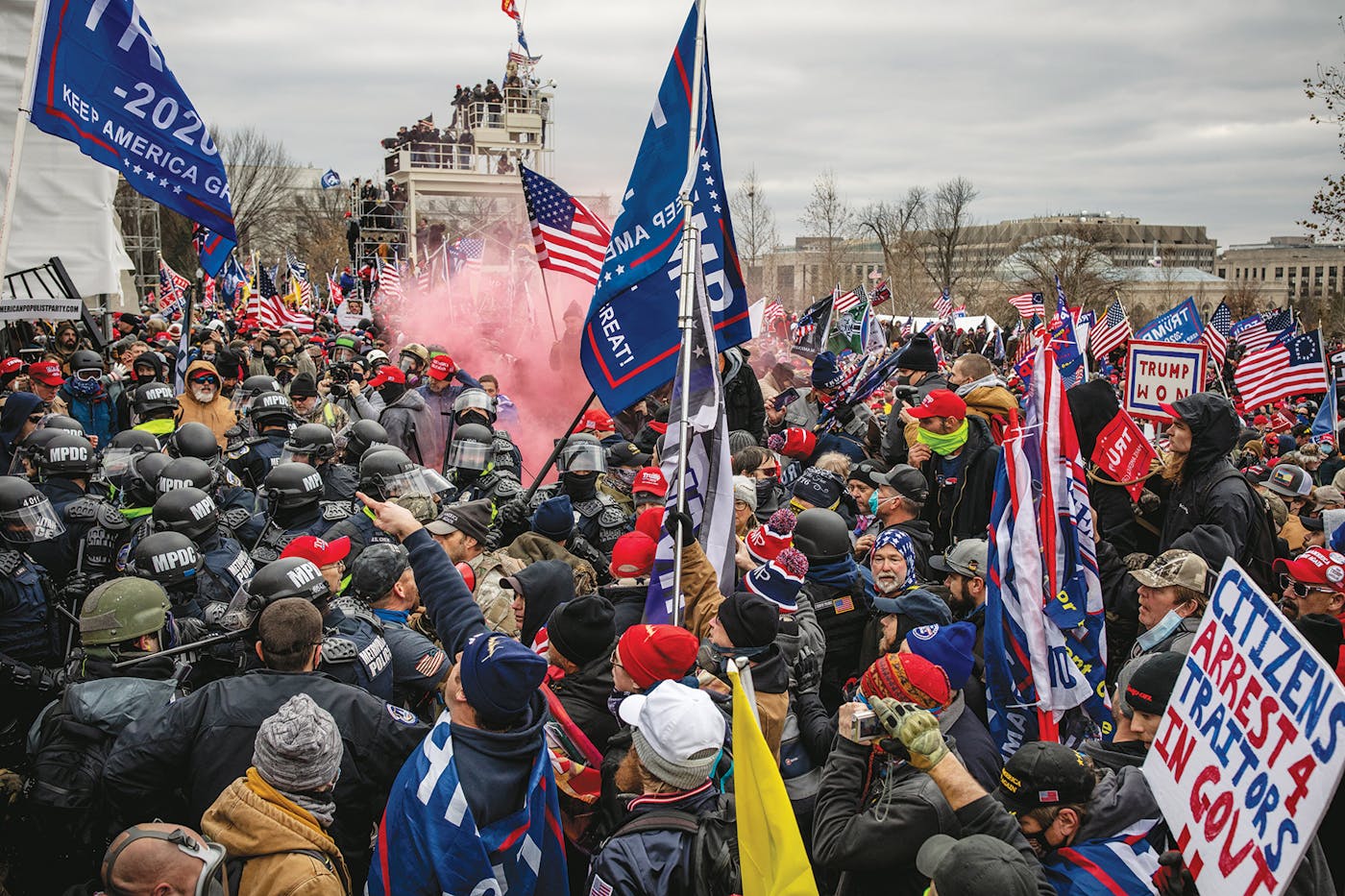
In the early afternoon of January 6, while the mob was still swarming the stairs of the Capitol, I was asked in an interview what I thought of the unfolding situation. I watched the crowd that had been stoked that morning by my uncle, and by Republicans like Ted Cruz, Josh Hawley, and Mo Brooks, with their Confederate flags, their MAGA hats, and their Camp Auschwitz shirts; I watched the smoke (the origin of which I couldn’t yet discern) drift through the air, and I heard their shouts of grievance and anger. It looked like a scene from a failed country whose government had just been toppled, a banana republic; but it was the United States of America, my country, our country, and, knowing who was responsible for the chaos here, the first word that came to my mind was “tawdry.”
Of course, it was so much more than that—so much more dangerous and serious than that, as we would eventually find out. At around 2:15, while Republicans Cruz and Paul Gosar were objecting to the legitimate results of the election, the insurrectionists breached the Capitol, Congress was adjourned, and frantic attempts were made to get the vice president and all of the senators and representatives to safety.
Two hours later, the Georgia Senate race was called for Jon Ossoff. It mattered, certainly; it meant that the Democrats would control the Senate. But there was no room for celebration. After four years of Donald’s incessant attacks and ineptitude, we were already exhausted. Joe Biden’s victory was supposed to have offered us some reprieve, but having given Donald room to promote his Big Lie, elected Republicans had now granted him the opportunity to incite an insurrection. So there would be no respite from the madness, from Donald’s particular blend of mendacity, cruelty, and destructiveness. There would be no celebrating.
Mary Trump
PHOTOGRAPH BY DINA LITOVSKY/REDUX FOR THE NEW REPUBLIC
That horrific day—which we now know General Mark Milley, chairman of the Joint Chiefs of Staff, referred to as a “Reichstag moment”—was bracketed by Donald’s incendiary speech given just before noon and a video released two hours after the Capitol had been breached that added more fuel to the fire. The speech itself was full of grievances—lies about the “landslide election” that had been stolen from him, threats to Mike Pence, whom he led the crowd to believe had the power to overturn the results of the election, fabulations about people voting as Santa Claus and Democrats’ taking down statues of Jefferson and Lincoln, and calls to action demanding that the crowd force Congress to “do the right thing.” In the 62 second video, Donald says the word peace three times, presumably because somebody convinced him he had to distance himself from the role he played in stoking the mob’s violence; but, because he can never help himself in these instances, he kept hammering away at what was supposedly stolen from them. The video sickened me just as the “apology” video he recorded after the Access Hollywood tape was released had sickened me. I feared the same result—that there would be no consequences.
That night, after I was finally able to turn off the news, the only two things I knew with absolute certainty were: one, that for the first time in our nation’s history there had not been a peaceful transfer of power, because my uncle, who could not accept his resounding defeat and the humiliation that came with it, had attempted to inspire a coup; and two, the next two weeks before Joe Biden’s inauguration would be the most dangerous this country had ever lived through.
On November 7, after Joe Biden was declared the winner, Donald began peddling the Big Lie—massive voter fraud and cheating by Democrats had turned Donald’s landslide victory into a loss. The phrase “the Big Lie,” coined by Adolf Hitler, describes the technique of saying something so outrageously false that people will believe it simply because they think nobody would have the audacity to lie so brazenly. This has been a specialty of Donald’s since, as a teenager, he had to convince his father everything he did was always the biggest, the greatest, and the best. Back then, his lies protected him from his father’s wrath. The Big Lie about the election protected him from having to face the deep narcissistic wound he’d suffered after losing to Biden. In addition, it kept his base riled up—keeping them afraid of what a Biden administration planned to take away from them (or force upon them) and enraged by what he claimed had been stolen from them.
In Donald’s January 6 video, the Second Big Lie was born. By telling them that they are loved and special, he transformed the violent anti-American mob into patriots who had merely been trying to save their country from the Democratic Party’s treasonous attempt to steal the election from him—and therefore from them. We’ve seen how this has become a strategy for almost every single Republican politician as well. Despite the testimony given by D.C. police officers Daniel Hodges and Michael Fanone, Capitol Police Officer Harry Dunn, and Capitol Police Sgt. Aquilino Gonell in front of the House select committee on July 27, which was impossible for any empathetic human being to watch without feeling a visceral rage and profound sadness, this will continue to be the Republican strategy. They know that if midterm voters still remember the truth about January 6, they’re in trouble. The insurrection of January 6 should have been a wake-up call. It looks, instead, to have been a dress rehearsal.
In the mind-bogglingly long and destabilizing year since the publication of my first book, Too Much and Never Enough, America’s weaknesses and structural deficiencies have been laid bare because one man, Donald John Trump, did something none of his predecessors would have dreamed of doing—through his destruction of norms, he actively set out to undermine and dismantle the very institutions that were designed, in part, to protect us from leaders like him. Keeping him in check required a functioning legislative branch and Cabinet secretaries, like the attorney general or the head of health and human services—who were willing to act with some independence—to put country over party. But having shown himself incapable of building anything, Donald has always been expert at tearing things down. In this endeavor, he has had plenty of sycophants, enablers, and users, just as he has throughout his life. And Republicans saw a way to make the most of it.
As a politician, Donald has benefited greatly from his rabid base of supporters. He embodies their fear and gives expression to their grievance. He doesn’t just give them permission to indulge in their white supremacy; he champions it. He makes them feel good about their prejudices. Following him by denying the virus or claiming immunity from it is another way for them to feel superior. It’s bizarre, because in the process they are putting themselves and those they love at risk, but it is similar to the function lynching has historically served for white people. Lynchings are not only about showing the power of the aggressor but also about demonstrating the other person’s weakness and total subservience. That makes sense in the context of what white supremacists and white supremacy were trying to accomplish, because, in an incurably racist society, the power so clearly belonged to the one race, and the vulnerabilities so clearly belonged to the other. The response to Covid—the denialism and disdain for science—functions the same way, but in this case, whether they acknowledge the reality and the risk or not, the denialists are victims, too. These are devout (for lack of a better word) Republicans. If the people they’ve voted for, at every level of government, equate mask-wearing with being liberal or claim that worrying about catching a deadly virus somehow makes you weak, you will follow their lead. Donald took it a step further. In order to demonstrate their allegiance and support, it was no longer enough for them to attend a rally. They had to do so in the middle of a deadly pandemic without social distancing or wearing a mask
That’s the part that is confounding. But it demonstrates how deeply it matters to them that they, at least in their own minds, maintain a position of superiority over those they consider less-than—particularly Black Americans and immigrants—and stay connected to a man who, through a mesmerizing dance of his followers’ micro-concessions and his own micro-aggressions against them, keeps them in thrall. That their children are dying or their parents and friends are dying isn’t beside the point—it is the point.
It’s impossible to understand the appeal Donald has for his followers if we try to do so from the perspective of people who value honor, decency, empathy, and kindness in their leaders. It isn’t that they see things in Donald that aren’t there. They identify with what is—the brazenness of his lies, his ability to commit crimes with impunity, his bottomless sense of grievance, his monumental insecurity, his bullying, and, perhaps most intriguing, the fact that he is an inveterate failure who keeps being allowed to succeed. Donald is their proxy and their representative. And their ardor has only seemed to grow since his loss. We need only look at data from North Carolina Senate candidate Ted Budd’s campaign to see how complete this identification is. When Republican primary voters were told that Budd had been endorsed by Donald, there was a 45-point net swing in his favor, skyrocketing him to a 19-point lead over his primary opponent. The idea that any other one-term president (George H.W. Bush or Jimmy Carter) would have had the same kind of influence is laughable. On the other hand, though, neither one of them would have tried.
By the same token, elected Republicans, Donald’s chief enablers, see Donald as a means of perpetuating their own power. But they aren’t just putting up with the worst of him simply because they see him as a means to an end. He is them. They value his mendacity and his name-calling and his autocracy because these work for them as well.
Republicans counter truth with absurdity, rendering the truth inoperable. Now a party of fascists, they call Democrats socialist communist Marxists, which is effective in part because it is so nonsensical and in part because they are never asked to define the terms. They cover up their massive (and successful) efforts at voter suppression with wild claims of widespread voter fraud, which essentially doesn’t exist—31 incidents in over a billion votes cast, a number so vanishingly small as to have no meaning.
The main mechanism by which they can successfully carry out these sleights of hand is fear. Whether it’s drug dealers from Mexico or caravans from Central America or Democratic presidents coming for your guns, abolishing religion, or letting gay people get married, they need to keep their voters afraid.
Mr. Lockwood, the frame-narrator of Wuthering Heights, describes a feverish nightmare in which, during a blizzard, he sees a child outside his window begging to be let in. He is so undone by the appearance of this wraith that he drags its wrist across the broken pane of glass, until its blood soaks his bedsheets. “Terror made me cruel,” he says. Fear is a deeply unpleasant emotion, and Republicans have become expert at stoking it, on the one hand, and transforming it into anger on the other. This state of affairs makes it much easier for their followers to become comfortable with the cruelty of their leaders—whether of policy or of action—as long as it is directed at groups they’ve been told they should fear. It also makes it easier for the Republican rank and file to be comfortable with their own cruelty—it feels better than fear, and it allows them to delude themselves into thinking they have some measure of control, because they have been granted permission by the powers that be to express their cruelty with impunity.
Elected Republicans have become Donald’s greatest enablers since his father, Fred. For all of their professed reluctance and half-hearted attempts to keep Donald at arm’s length, almost every single elected Republican at every level of government, either tacitly or enthusiastically, very quickly came to support his breaches—against decency, the rule of law, and the Constitution. Kevin McCarthy went from being one of Donald’s critics in the immediate aftermath of January 6 to pretending that creating a commission to find out what happened on that day was somehow a partisan witch hunt. Elise Stefanik intuited that going all in with Donald would be her best chance for advancement. The number three Republican in Congress, Liz Cheney, had the audacity to stand up against the Big Lie, for which she was removed from her leadership position and replaced by Stefanik.
The most dangerous Republican enabler by far is, of course, Mitch McConnell, who saw an opportunity that even he probably never dared hope for: The guy in the Oval Office wouldn’t just sign off on every aspect of the Republicans’ agenda, he would push the envelope—of decorum, of autocracy—so far that the system itself could be used to create permanent minority rule. Donald showed his party (and yes, it is his party) the limits of pretending to care about good governance or play by the rules. He also showed them the utility of not just stoking racism and hatred of the Other—in the form of immigrants, Democrats, and even epidemiologists—but championing those who espoused them.
McConnell is the greatest traitor to this country since Robert E. Lee (with the difference that McConnell has been trying to take our country down from within). He has always been expert at using existing rules and procedures in ways they weren’t intended to be used, and yet—whether it was denying Merrick Garland a hearing, pushing through Amy Coney Barrett’s confirmation, or ending the filibuster as it applied to Supreme Court nominees but employing it to block legislation that would expand voting rights—his anti-democratic maneuvers have been performed within the bounds of the system. The fact that he’s misusing the system outlined in the Constitution isn’t an exoneration of him, however; it’s a condemnation of the Constitution’s limitations. The definition of treason in the Constitution is so narrow (levying war against the country or giving aid and comfort to the enemy) that a case could never be made against him. It would be difficult, however, to find anybody in modern times who has so undermined our democracy.
This destruction of norms by Donald and other Republicans in the executive and legislative branches has happened so quickly, and has been so thorough, that it’s clear the seeds of it must have been planted a long time ago. It was possible for Donald, the weakest man I have ever known, to exploit the weaknesses in the system not because he introduced them, but because they were there for him to exploit in the first place.
These situations are not the result of four years or even four decades of poor governance—although the worsening of the problem has certainly accelerated since Ronald Reagan’s disastrous presidency. The combination of “trickle-down” economics, his devastating handling of the AIDS crisis, and the intensification of the “War on Drugs,” with all of its racist implications, accelerated the divide between Americans along economic, cultural, and racial dimensions. But we really need to go back to this country’s inception to understand how we got here and to assess how we can possibly repair the extensive damage. With Joe Biden’s election, we did indeed snatch democracy from the jaws of autocracy—a rarity in human history. But as the insurrection of January 6 made clear, we are not out of the woods yet—far from it.
I contend that we have arrived at this fraught political moment in which it feels that everything is at stake because of our long history of, on the one hand, failing to hold powerful white men accountable and, on the other, the normalization of white supremacy. How else do we grapple with the fact that we Americans appear so spectacularly vulnerable to corrupt and incompetent leaders? How else do we understand the breathtaking extent to which the federal government, because of the cynicism, selfishness, and opportunism of one man, proved incapable of managing the crises of Covid and the ensuing economic fallout? How else do we explain the effectiveness of Donald’s strategy of race-based division? And how do we avoid acknowledging that supporting him or even accepting him meant that institutionalized racism was not only not a deal breaker, it was an effective political strategy?
American terrorists, January 6, 2021
ASHLEY GILBERTSON/VII/REDUX
The initial response of Donald’s administration to the pandemic was driven by his inability to take it seriously. Once the virus had undeniably taken hold here, Donald hung on to the fact that it had originated in China, which allowed him to make it about the Other from the outset. In spring of 2020, when Covid was spreading almost exclusively in blue states, and later, when it became clear that Black Americans were being disproportionately affected, it was easier for him to dismiss the danger. Even when it became clear that no one was safe, he made the case that Americans had to choose between combating the virus and saving the economy, squandering what could have been an extraordinarily unifying moment for this country. But Donald has no interest in unity. He thrives on division and chaos—much of it racially driven. We saw this in the way he exploited the backlash against Barack Obama’s presidency, thereby giving his base permission to express their racism even more openly and proudly.
The Republicans haven’t lost their way. They have, instead, found it. And it has led them straight toward unabashed white supremacy and fascism. This is nothing new. We saw what happened after the Civil War. The traitors of the Confederacy were given a pass by the North, and the promise to grant freedmen and women their 40 acres was largely reneged in the interest of reestablishing “national unity.” Because of the enormity of the North’s postbellum failures and the terrorist tactics employed by the re-empowered Southern Redeemers—those believers in the Lost Cause, who are the direct ancestors of those who sullied the Capitol Rotunda with their Confederate flags—the Black vote in the South was all but eliminated. The large majority of the electorate of the Southern slave states remained racist and reactionary, allowing the South to continue as a closed, fascist state for another century.
Only the Democrats and the media can save democracy from fascism. But the Democrats are split between the activists who understand the stakes, and the institutionalists who keep following a rule book the Republicans lit on fire a long time ago. On the one side, the progressives and pragmatists, senators like Elizabeth Warren, Chris Murphy, and Amy Klobuchar, seem to understand the urgency of the problem—American democracy can’t survive if we fail to realize that the United States Senate is currently operating under the tyranny of the minority. On the other side, institutionalists like Joe Manchin and Dianne Feinstein cling to the idea that maintaining long-standing mechanisms like the filibuster, which is not in the Constitution and impedes the Senate’s ability to act democratically, is more important than enacting legislation that would, on the one hand, help the American people in substantive ways while bolstering Biden’s presidency and, on the other, prevent the Republican Party from turning this country into an apartheid state. It remains to be seen whether President Biden himself, who understands the workings of the body in which he served for almost 40 years, will be able to transcend his own institutionalist leanings. His July 13 speech on voting rights was a powerful repudiation of Republican voter suppression—but he didn’t mention the filibuster once.
What happens next also depends on how the media portray what’s currently going on. In 2016, the media lent Donald’s run a gravitas and seriousness it hadn’t earned. The Senate’s failure to convict him of impeachment the first time around was a crucial moment, as it allowed Donald to campaign for the 2020 election as if he were a legitimate candidate—but this time with all of the attendant powers of incumbency, including the massive bullhorn. By asking him questions they would ask any other candidate, the media didn’t just confer upon him legitimacy, they erased the fact that he was a traitor to his country who had been impeached for abuse of power and obstruction of Congress after seeking the help of a foreign power (for the second time) in undermining his political opponent. Anybody who was paying attention knew the trial Republicans put on was a sham, a shabby bit of political theater, the outcome of which was a foregone conclusion. “I am trying to give a pretty clear signal I have made up my mind,” said Senator Lindsey Graham before the trial even began. “I’m not trying to pretend to be a fair juror here.”
Since the election was called for Joe Biden, the media have done reasonably well calling the Big Lie what it is, and yet Republicans who lie about the Big Lie continue to be given a platform. There are propaganda outlets, led by Fox News, that amplify the lies of the Republican Party while distorting (or ignoring) facts. Many in the mainstream media, however, act as if journalistic neutrality means giving both sides equal time no matter the content of their message.
The Republicans continue to think that Donald is somebody whom they need. While it’s true that Trumpism, so-called, doesn’t scale, and that only Donald can carry the mantle of Trumpism, the fact that it’s not a winning formula (after all, Republicans, largely thanks to Donald, lost the House, the Senate, and the White House) is completely irrelevant. They continue to embrace Donald because they need him to keep the Big Lie alive in order to maintain the support of the base, so they can advance their voter-suppression legislation while continuing to cast doubt on the last election by pushing for audits in states, like Arizona, where the popular voter margin was narrow.
Every undemocratic facet of our system—from the filibuster to the Electoral College to voter suppression to failing to make the District of Columbia a state—favors Republicans. They have no incentive to change anything. Tens of millions of voters may be effectively disenfranchised by their legislation and faux-audits, but their voters are not. The endgame is to make it impossible for people who would vote against them to vote at all. In a country of changing demographics and increasing openness to diversity, at a time when elected Republicans are on the wrong side of almost every issue—gun safety, taxes, voting rights—they know the only way for them to cling to power is to cheat, and if there is one skill the de facto leader of their party has, it’s his ability to cheat his way out of—or into—just about anything.
Trumpism doesn’t need to scale. Republicans just need to keep that 35 percent so riled up that the base seems bigger than it is while they quietly make sure the rest of us don’t have a voice.
The stakes are incredibly high in every election going forward. The 2020 election was more important than 2016, and 2022 will be more important than 2020. We can’t discount the pernicious influence of white supremacy, which is not just an extremist movement. It’s not just the KKK, the Proud Boys, the Oath Keepers. It is the mainstream of the Republican Party, and we don’t need to qualify it.
Not only can’t Republicans give up their white supremacy, it turns out they don’t have to. It has been and continues to be a winning strategy. Donald got 62 million votes in 2016 and 74 million votes in 2020. Though Biden’s win was decisive, Republicans overall beat expectations, picking up seats in the House and becoming a minority in the Senate that, because of the filibuster, functionally leaves them with an enormous amount of leverage. We desperately needed a total repudiation of Donald and his Republican enablers. We did not get one.
It’s a tragedy, but it comes from having for decades convinced their electorate to vote against its own economic self-interest in the name of racial superiority. Their attitudes in this matter are positional. The question for them isn’t just “Am I doing well?” but “Am I doing better than?” And we all know who it is they need to be outperforming. As long as that is what matters to them, they will double down on white supremacy and hatred of the other side while maintaining their ability to do so through gerrymandering and voter suppression. That’s all they’ve got.
On July 6, President Biden tweeted, “Six months ago today, insurrectionists carried out a violent and deadly assault on our Capitol. It was a test of whether our democracy could survive. Half a year later we can declare unequivocally that democracy did prevail. Now, it falls on all of us to protect and preserve it.”
This well-intentioned statement misses the mark. The danger hasn’t passed—in fact, as Republicans continue their almost universal support for the first Big Lie, while using it to promote hundreds of sweeping voter-suppression laws in almost every state, they are now lining up behind the Second Big Lie, which is that the insurrection of January 6 was an inside job perpetrated by the FBI, or that the violent attempt to disrupt the peaceful transfer of power with the intention of hunting down the speaker of the House and hanging the vice president was a fun-filled protest carried out by wonderful real Americans like Ashli Babbitt, the latest martyr to their cause. Now, those who participated (and their supporters) are being told that it is they who have been wronged, it is they who are the patriots, and only they whose voices deserve to be heard.
Republicans have made it clear that going forward they will embrace whichever version of the Second Big Lie is most useful in the moment—causing the kind of cognitive dissonance they have become quite comfortable with. It’s absurd—but it’s also effective with enough of their voters that we can’t dismiss it, just as we can’t dismiss Donald. It’s exhausting. And it’s infuriating. But we look away at our peril. Democrats need to accept that there is no longer anything to hope for from their Republican colleagues. For all intents and purposes, we currently live in a country with only one functioning political party that is working to make the lives of all Americans better, only one party that believes in democracy.
Democrats must stop squandering their advantage as they waste time waiting for Republicans to feel shame. They have none. Over the four years Donald was in the Oval Office, there were any number of opportunities for Republicans to break with a man who, at every turn, undermined everything they claimed to have stood for—law and order, the military, moral conservatism, fiscal responsibility, and small government. And yet they never did.
January 6 should have been a wake-up call for all of us, Republicans in particular. Initially at least, some of them had been scared enough by a mob intent on committing violence against any member of Congress they came across to recognize that the monster they’d deluded themselves into thinking they controlled could not, after all, be tamed. Instead, they have followed Donald’s lead. Less than six months after the fact, Georgia Representative Andrew Clyde claimed the insurrection was a “bold-faced lie” and nothing more than “a normal tourist visit,” despite the fact that there is a photo of him rushing to help barricade the door against the mob. Donald continues to double down on his claim that these were peaceful people and actually said “there was such love at that rally.” There has been no pushback from Republican leadership. There can’t be. They know that any investigation into what happened that day is a losing proposition for them—either because they’ve been covering it over or because they’re guilty of sedition. They also know that the 2022 election will turn in part on how many Americans they can convince of the Second Big Lie: that the insurrection never happened.
And as far as the 2024 presidential election is concerned, I initially thought Donald wouldn’t run. Even if he managed to convince himself that he had won but the Democrats had somehow stolen the victory from him, his defeat was so resounding, I believed that, although he might pretend to run as a way to raise money and keep the spotlight on himself, he would never put himself in that position again. Now I’m not so sure. As has been the case since my grandfather discovered that his second son could be of use to him, everything has broken his way. In this case, almost the entire Republican Party has backed not one but two Big Lies that benefit him. If enough people buy into the Second Big Lie, if enough of those voter-suppression laws pass and Republicans make significant gains in Congress and state legislatures in 2022, Donald might begin to think that a win in 2024 would be a sure thing for him, and he might make the decision to run after all. And if he were to win … there would be no coming back from that.
Debt in a warm climate: coronavirus and carbon set scene for default
Dhara Ranasinghe and Karin Strohecker
Villagers attempt to put out a wildfire, in Achallam village
LONDON (Reuters) -Where COVID-19 has precipitated unprecedented debts, climate change could trigger defaults across a planet which a United Nations panel says is dangerously close to runaway warming.
To avert disaster, countries are committing to carbon cutting steps. But these will be costly and likely to add to a global debt pile which asset manager Janus Henderson estimates ballooned to $62.5 trillion by the end of last year.
With floods and wildfires devastating the world, estimates vary on how much damage warming will inflict on its economy.
But a report earlier this year by BofA put it at $54-69 trillion by 2100, which compares to a valuation of the entire global economy of around $80 trillion.
The financial repercussions could manifest themselves in under a decade, a study by index provider FTSE Russell warns.
The first climate-linked credit rating downgrades are set to hit countries soon, the report’s co-author and FTSE Russell’s senior sustainable investment manager, Julien Moussavi, added.
In a worst-case “hot house world” scenario developing countries including Malaysia, South Africa, Mexico and even wealthier economies such as Italy may default on debt by 2050.
In another, where governments are initially slow to react, states including Australia, Poland, Japan and Israel, will be at risk of default and ratings downgrades too, the study concluded.
While developing countries are inherently more vulnerable to rising sea levels and drought, richer ones will not escape the climate change fallout, such studies show.
“You can talk about climate change and its impact and it won’t be long before someone talks about Barbados, Fiji, or the Maldives,” Moritz Kraemer, chief economist at Countryrisk.io and former head of sovereign ratings at S&P Global.
“What was a surprise to me is the impact on higher-rated, richer countries,” Kraemer added.
Another study by a group of universities including Cambridge concluded that 63 countries – roughly half the number rated by S&P Global, Moody’s and Fitch – could see credit ratings cut by 2030 because of climate change.
China, Chile, Malaysia, and Mexico would be the hardest hit with six notches of downgrades by the end of the century, it said, while the United States, Germany, Canada, Australia, India, and Peru could see around four.
The corresponding increase in borrowing costs would add $137–$205 billion to countries’ combined annual debt service payments by 2100, this study estimated.
Ratings downgrades typically raise borrowing costs, especially if they cause countries to be ejected from bond indexes tracked by funds managing trillions of dollars.
WARNING LIGHT
Developed countries are ramping up spending to temper climate damage, with Germany creating a 30 billion euro recovery fund after recent floods, while Singapore is budgeting the equivalent of $72 billion to protect against rising sea levels in the next century.
For emerging economies, already scarred by COVID-19, the climate crisis will heap on more pressure.
The International Monetary Fund (IMF) warns that a 10 percentage-point rise in climate change vulnerability, as measured by the Notre Dame Global Adaptation Initiative index, is associated with an increase of over 150 basis points in long-term government bond spreads for developing nations.
The average rise across all countries was 30 bps.
The U.N. environment programme estimates that in developing countries, annual adaptation costs will be as much as $300 billion in 2030, rising to $500 billion in 2050.
As a percentage of gross domestic product, sovereign debt is still about 60% in emerging economies, data from the Institute of International Finance (IIF) shows, versus 100% or so in the United States and Britain, and 200% in Japan,.
The rise from pre-pandemic levels of around 52% is a particular concern. European, U.S. and Japanese central banks are essentially underwriting state borrowing, but this is not possible in poor countries, who must ultimately repay debt.
“How do you enable the sort of funding that is required given the high debt levels and the importance of the ratings frameworks?” Sonja Gibbs, director for global capital markets at the IIF said.
(Reporting by Dhara Ranasinghe and Karin Strohecker; Editing by Sujata Rao and Alexander Smith)
Put Rob Reiner in Charge of January 6th Investigation: Nails the Single MOST Important Evidence Needed
By Jason Miciak August
Highway hypnosis? Trump hypnosis? Similar things, you get so used to the same damn things coming at you for long periods, yellow or white dashes, old traditions were broken, rules never applied, you get so used to it that you damn near crash into the menu at McDonald’s.
Or your country crashes as a democratic republic. You got distracted and missed all the signs.
The fact that this country has yet to even convince half its citizens that January 6th was an extremely sophisticated and organized plot to overthrow the incoming proper government just goes to show that society is screwed. Everyone’s too into their social media, their online life (however risque one wants to be), and their sports teams, no one even really cares. There may be legitimate UFO objects breaking all known laws of physics flying around our country. The NYT cares, the Pentagon cares, citizens don’t. Our government was almost overthrown. The more we learn about what happened behind the scenes, the more we realize that we were almost “lucky” to get through that day with Biden still scheduled to be president. “Lucky,” on a day that’s supposed to be ceremonial.
But here’s where we get back to highway hypnosis, or Trump White House hypnosis again. We got so used to not seeing or hearing the evidence, we figure now it’s just impossible to get. We’re hypnotized.
But as Jeffery Rosen showed on Friday and Saturday, through his own testimony, Trump was personally (Dick Durbin’s words) building the fraud movement which led to the coup attempt, personal involvement, is the type of evidence we’re not used to getting. Trump’s first “Impeachment Trial” didn’t have a “witness.” Some of us STILL believe C.J. Roberts needed to actually pound the gavel and say, “It says here that I preside over a trial. Trials have witnesses. Would the prosecution please call its first witness.” But we didn’t, we’re used to Trump getting whatever he wanted, Putin-Like.
And here’s another thing we didn’t get much out of either impeachment, something normally assumed, documents. Governments are big on documents because no one would ever know who did what when and with what money without documents. Additionally, people make memorandums to keep memories fresh and to protect themselves. We didn’t get many documents in Trump’s first impeachment, some texts, and Trump’s “perfect phone call.” (He used the word “perfect” so many times one wondered if they doctored it. Probably not). But we did not get a lot of documents about communication back and forth among the staff wanting to send the aid.
Documents are more reliable than eyewitness testimony precisely because they’re nearly always made right as it happened. Studies have proven that eyewitness testimony is actually some of the least reliable evidence, rather than the gold standard. Documents, however….
Rob Reiner wants some documents, the ones that would tell a big part of the story:
Oh, it’s “arguable.” The “argument” would be that shit like that doesn’t come from the Trump White House. They were not constrained by laws, which is how we got here in the first place. Who here wonders whether they’ve already been destroyed? Maybe. But yes, documents are obviously needed, and we’ll go a little further.
We want documents from the 4-6th. Who visited the White House? Who called? Want to know what else we want? We want to look at the call logs to Josh Hawley and Ted Cruz the day or two before both – almost on the same day, maybe a day or two apart – said that they would be objecting to the votes.
Trump needed two things to win: Objections, getting electoral votes back to the states. And he needed Pence out of the Capitol for 12 hours. Pence wouldn’t get in the SUV under the Capitol – didn’t trust them. The call logs would cover that portion. We want Hawley and Cruz.
The Trump-highway hypnosis lifted, a lot, this last weekend. We have direct testimony about what Trump said and did with respect to telling his acting attorney general to sign a letter saying there was fraud in the election. Now, if we could just get over a few more elements, we would be able to tell the whole story, undeniably – for history’s sake, at least.
One doesn’t want to be the generation, so hypnotized by their sports, video games, p*rn, political hatred, and Trump, so as to become the first American generation that hands an autocratic minority government over to our grandchildren.




/cloudfront-us-east-1.images.arcpublishing.com/tgam/2PM5CABTDBEVNLPPLUKUINQLXQ.JPG)
/cloudfront-us-east-1.images.arcpublishing.com/tgam/2YDC2LO2FZFNPLZN7XZQV45IT4.JPG)
/cloudfront-us-east-1.images.arcpublishing.com/tgam/7TPLRPGSVBBTHMLD437QM4HL2I.JPG)

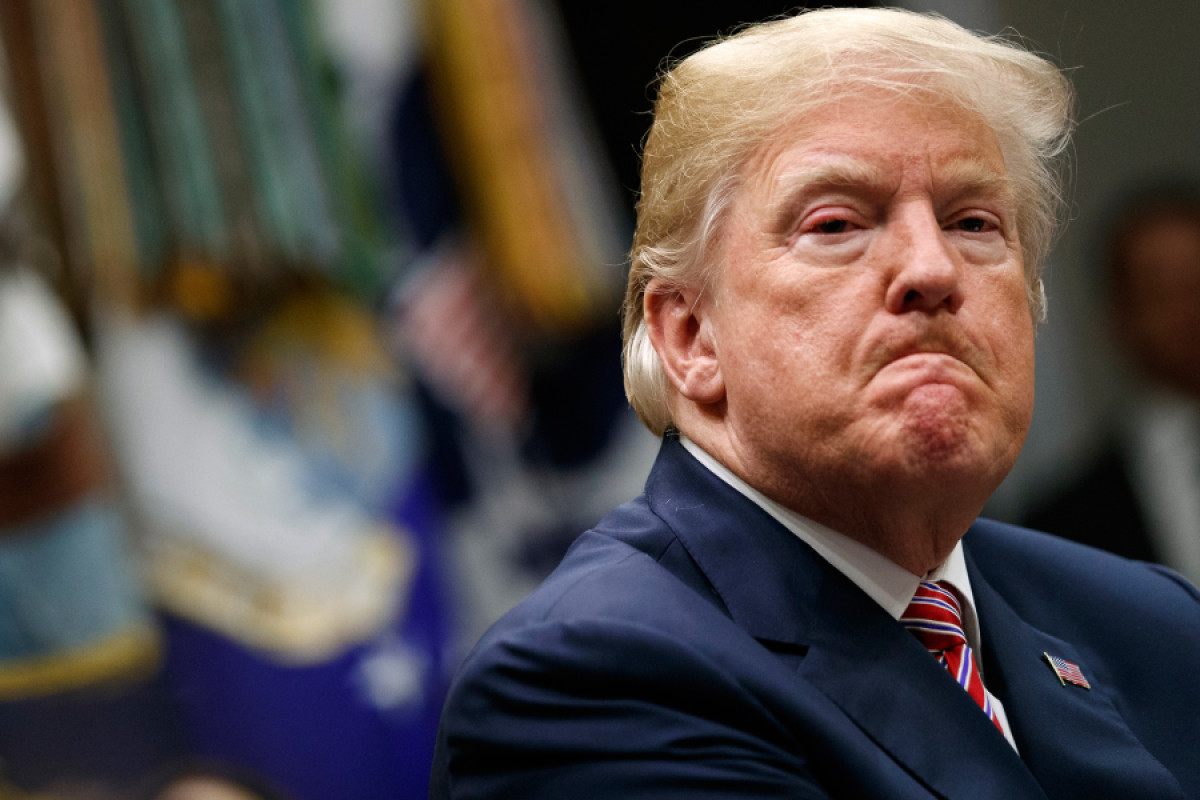


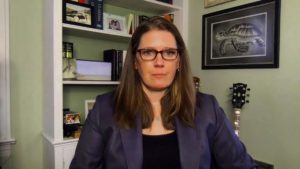

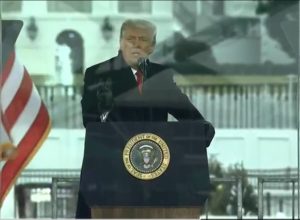
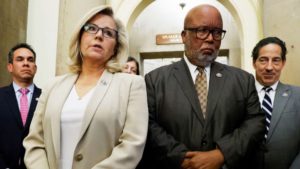
 20. E. Jean Carroll Defamation Case

 Win McNamee / Getty Images