Wonking Out: Inequality, Mortality, Medicare and Social Security

Paul Krugman – November 4, 2022

Credit…Illustration by The New York Times; images via Getty Images

My Thursday column is about the assault on Medicare and Social Security that is almost certain to follow if Republicans prevail on Tuesday. If the G.O.P. wins control of Congress, we can expect it to hold the economy hostage, most obviously by weaponizing the debt ceiling, in an attempt to force big cuts in Medicare and Social Security.

This isn’t an outlandish scenario. It already happened once. In 2011, after taking control of the House, Republicans sought to extort major cuts in the social safety net from the Obama administration — and they almost succeeded. In fact, President Barack Obama agreed to a rise in the age of Medicare eligibility, from 65 to 67. The deal fell through only because Republicans were unwilling to accept even modest tax increases as their part of the bargain.

This time around, the demands are likely to be even bigger. A report from the Republican Study Committee, which probably gives a good idea of where the G.O.P. will go, calls for upping the retirement age and the age of Medicare eligibility to 70.

The report justifies such a rise by pointing to the long-term increase in the number of years Americans can expect to live after age 65, which it calls a “miracle.”

What the report doesn’t note are two probably related caveats for this miracle. First, the increase in seniors’ life expectancy has actually been much smaller here than in other wealthy nations. Second, progress has been very uneven within America, with much bigger gains for groups with high socioeconomic status — precisely the people who need Medicare and Social Security the least — than for the less fortunate.

Let’s talk first about America’s lagging performance.

In the 2000s, as Democrats were nerving themselves up for another push on health care reform — a push that culminated in the Affordable Care Act — I would frequently encounter people who asserted, not having checked the numbers, that the United States had the world’s highest life expectancy. Not by a long shot. I don’t know how many people still believe that, but my sense is that relatively few Americans are aware just how badly we’ve fallen behind.

Much of America’s shortfall in life expectancy reflects factors that apply only or mainly to the nonelderly: high infant mortality, high rates of shootings and deaths in traffic accidents. Even among seniors, however, we have lagged ever further. Here’s a comparison of life expectancy at age 65 in the United States and France since 1980.

How’s that life, liberty, etc. thing going?
How’s that life, liberty, etc. thing going?Credit…O.E.C.D.
How’s that life, liberty, etc. thing going?

What explains older Americans’ tendency to die younger than their counterparts abroad? It’s not, for the most part, their inability to pay for health care in their later years. For now, at least, all Americans 65 or older are covered by Medicare, a universal, single-payer system, although it doesn’t cover everything, and many seniors still have trouble paying for medical necessities.

So what’s the problem? Inadequate health care earlier in life surely takes a toll, but more broadly, our high mortality probably reflects our society’s extreme inequality — not just in income but also in status, perceived economic opportunity and more. Americans on the losing side of high inequality have trouble affording health care and adequate nutrition; they are also, all too often, demoralized by their position, leading to deaths of despair and unhealthy lifestyles that take a toll over time.

That Republican report calling for Medicare and Social Security cuts mentions “inequality” just twice — both times in footnotes citing articles claiming that government antipoverty programs make poverty worse. That’s only to be expected: Conservatives tend to bristle at any mention of inequality and class, often denouncing anyone who even raises the issue as Marxist.

Yet progress in raising life expectancy has been extremely unequal among income groups. Here are widely cited estimates from Dana P. Goldman and Peter R. Orszag of likely life expectancy at 65 for American men born in 1928, 1960 and 1990, broken out by wage quartile — that is, which quarter of the wage distribution they were in while working. (The numbers for women are similar.)

Prosper and live long, or don’t and don’t.
Prosper and live long, or don’t and don’t.Credit…Goldman and Orszag
Prosper and live long, or don’t and don’t.

Life expectancy has been rising much more for relatively affluent Americans than for the less well off.

It’s not necessarily income per se that is driving these disparities. To some extent, it could reflect other factors that are correlated with income, especially education. Anne Case and Angus Deaton, who famously pointed out the rise of deaths of despair, have shown that mortality for adults — surely including adults over 65 — has been rising for Americans without a college degree but not for those with one.

And there’s also a strong regional element. Woolf and Schoomaker show that overall life expectancy, probably reflected among seniors, too, has diverged between lagging heartland states and coastal states, part of a trend of rising regional disparities as the knowledge economy has favored large metropolitan areas with highly educated work forces.

Here are estimates of life expectancy at birth — again, most likely closely correlated with life expectancy at 65 — for some selected states:

What’s the matter with Oklahoma?
What’s the matter with Oklahoma?Credit…Woolf and Schoomaker
What’s the matter with Oklahoma?

The numbers in parentheses are each state’s rank in 1959, 1990 and 2016. The rise of New York is striking; so is the relative decline of Oklahoma and Kansas, both of which had higher life expectancy than New York as recently as 1990.

How does all this bear on Republican proposals to raise the retirement and Medicare eligibility ages? Because seniors’ life expectancy varies so much by class, an increase in the age of eligibility for major programs will take a much bigger bite out of retirement for Americans with low socioeconomic status, and correspondingly fewer years to collect benefits, than it will on those higher on the ladder.

And because disparities have been rising over time, the disproportionality of that effect has been rising, too.

Look back at the figure on life expectancies by quartile. According to these estimates, American men in the bottom quartile born in 1960 can expect to live only 1.9 more years after 65 than their counterparts born in 1928. That’s slightly less than the increase in the retirement age that has already taken place. And even men in that quartile born in 1990 are expected to have only 3.5 years more time after 65 than those born in 1928; meanwhile, Republicans are proposing a rise in the retirement age to 70, a five-year total increase, and an equal rise in the Medicare age.

One way to think about all of this, which is only a slight caricature, is that Republicans are telling janitors in Oklahoma that they can’t get benefits in their 60s — even though their life expectancy hasn’t gone up by much — because lawyers in New York are living longer.

It’s quite a position to take, and it would surely provoke a huge backlash — if voters knew about it, which most of them seem not to.

Paul Krugman has been an Opinion columnist since 2000 and is also a distinguished professor at the City University of New York Graduate Center. He won the 2008 Nobel Memorial Prize in Economic Sciences for his work on international trade and economic geography.


This Is What Happens When Republicans Tear Off Their Masks

Opinion – Jamelle Bouie – November 4, 2022

Two men wearing masks on Jan. 6.
In costume for Jan. 6.Credit…Mark Peterson/Redux for The New York Times

Even by the degraded standards of 2022, it has been shocking to watch Republican politicians and conservative media personalities respond to the brutal attack on Paul Pelosi — Speaker Nancy Pelosi’s husband — with lies, conspiracymongering and gleeful disregard for the victim.

Glenn Youngkin, the Republican governor of Virginia, made light of the assault — which left the 82-year-old Pelosi hospitalized with serious injuries — while campaigning for Yesli Vega, the Republican running to unseat Abigail Spanberger, the Democratic representative in Virginia’s Seventh District.

“Speaker Pelosi’s husband, they had a break-in last night in their house, and he was assaulted. There’s no room for violence anywhere,” Youngkin said, in what appeared to be a straightforward condemnation of the attack until he added, to the cheers of the crowd, that “we’re going to send her back to be with him in California.”

“That’s what we’re going to go do,” he continued. “That’s what we’re going to go do.”

Kari Lake, the Republican nominee for governor of Arizona, used the attack on Pelosi — who underwent surgery to repair a skull fracture after he was struck on the head with a hammer by his assailant — as fodder for a joke.

“Nancy Pelosi, well, she’s got protection when she’s in D.C. — apparently her house doesn’t have a lot of protection.” According to Kate Sullivan, a CNN reporter, the joke landed: “The crowd burst into laughter, and the interviewer was laughing so hard, he covered his face with his notes.”

The crucial midterm elections

Republicans seem to be surging heading into November, with Democrats struggling to break through, as voters turn their focus from abortion to crime and inflation. Even if the polls are as off, as pollsters fear, all signs seem to be pointing toward a strong showing for the G.O.P.

For months now, Times Opinion has been covering how we got here. Chloe Maxmin and Canyon Woodward argued that Democrats abandoned rural America. Alec MacGillis traced how the party ignored the economic decline of the Midwest. And Michelle Cottle described the innovative Republican ground game in South Texas.

Opinion has also been identifying the candidates who could define the future of their party. Sam Adler-Bell captured the bleak nationalism of Blake Masters, the Arizona Republican challenging Senator Mark Kelly. Christopher Caldwell described the transformation of J.D. Vance, the venture capitalist from Ohio who went from Trump critic to proud member of the MAGA faithful. Michelle Goldberg traveled to Washington state to profile Joe Kent, a burgeoning star on the right.

And throughout this election cycle, Opinion has held discussions with groups of experts – hosted by Frank Bruni, Ross Douthat and others – that have followed the season’s twists and turns, from reviewing the primary landscape to a Democratic backlash against the Dobbs decision which gave way to a Republican surge in the fall. And we paused to consider the mysteries of polls and the politically homeless along the way.

In a now-deleted post on Instagram, where he has more than six million followers, Donald Trump Jr. shared a photograph of a hammer and a pair of men’s underwear with the caption “Got my Paul Pelosi Halloween costume ready.”

Not to be outdone, Representative Clay Higgins, a Louisiana Republican poised to chair a congressional subcommittee if his party wins the House, echoed a conservative conspiracy theory about the attack when he tweeted a picture of Nancy Pelosi with the comment “That moment you realize the nudist hippie male prostitute LSD guy was the reason your husband didn’t make it to your fund-raiser.”

The American political landscape has never been a particularly virtuous place, but nonetheless an important part of our politics has been the pretense that our leaders care about appearances, even as they fight to gain and hold power by any means necessary. Abraham Lincoln was both a bare-knuckled partisan brawler and a sagacious, broad-spirited political leader. So were many of our most revered and respected presidents, from Thomas Jefferson to Franklin Roosevelt and beyond.

From the beginning, Americans saw virtue — whether real or feigned, sincere or performed — as a key ingredient in the practice of republican self-government. Yes, the American system was built on the insight that institutions shape behavior and structure incentives. And yes, the main players at the Philadelphia convention tried to build a government that would harness self-interest and vice rather than rely on the better angels of our nature. But they still devoted a good deal of thought and attention to the role of virtue in their new order.

James Madison hoped that “the people will have virtue and intelligence to select men of virtue and wisdom” to lead their republic. And if not? If there was “no virtue among us,” then Americans were in a “wretched situation.” The reason, he explained, was that there were “no theoretical checks” that could render the nation secure in the absence of virtue: “To suppose that any form of government will secure liberty or happiness without any virtue in the people, is a chimerical idea.”

James Wilson, who helped produce the first draft of the Constitution and served as one of the first six justices on the Supreme Court, did not think that republican government could survive among a citizenry that could not or would not sacrifice its personal interest for the public good. “By the will and by the interest of the community, every private will and every private interest must be bound and overruled. Unless this maxim be established and observed; it is impossible that civil government could be formed or supported.”

Writing in a somewhat different vein, John Dickinson, who served as a delegate from Delaware to the constitutional convention, asked skeptics of the Constitution to ask how, exactly, a virtuous people would undermine their government. “Will a virtuous and sensible people choose villains or fools for their officers? Or, if they should choose men of wisdom and integrity, will these lose both or either, by taking their seats? If they should, will not their places be quickly supplied by another choice? Is the like derangement again, and again, and again to be expected? Can any man believe, that such astonishing phenomena are to be looked for?”

In all of this, the framers and founding fathers were interpreting the classical republican theorists, who emphasized, in one way or another, the vital importance of civic virtue. The Americans’ vision of virtue was different from that of many of their interlocutors — “Virtue became less the harsh and martial self-sacrifice of antiquity,” the historian Gordon Wood notes, “and more the modern willingness to get along with others for the sake of peace and prosperity” — but it was still critical to the maintenance and preservation of republican liberty.

As George Washington said in his first inaugural address, “There is no truth more thoroughly established, than that there exists in the economy and course of nature, an indissoluble union between virtue and happiness, between duty and advantage, between the genuine maxims of an honest and magnanimous policy, and the solid rewards of public prosperity and felicity.”

I used to scoff at much of this, thoroughly convinced that institutions mattered more than virtue. It was more important, in my view, to provide the right incentives than it was to try to cultivate values of honesty, decency, forbearance and public spiritedness.

But the example of the past seven years, from Donald Trump’s infamous ride down the escalator in June of 2015 to the present, has pushed me in the opposite direction. Institutions matter, but so does virtue, especially among the nation’s leaders. Even if it is insincere, the performance of virtue helps inculcate those values in the public at large. It says, in essence, that this is how we behave, even as we fight for power and political influence.

When politicians and other political leaders refuse to play this game — when they drop the pretense of virtue and embrace a politics of cruelty and malice, in which nothing matters but the will to power — voters act accordingly. Some may recoil, but just as many will embrace the chance to live vicariously through leaders who celebrate vice and hold virtue in contempt.

In a 1941 essay on socialism and British democracy, George Orwell observed, “An illusion can become a half-truth, a mask can alter the expression of a face.” In Britain, he wrote, “such concepts as justice, liberty and objective truth are still believed in. They may be illusions, but they are very powerful illusions. The belief in them influences conduct, national life is different because of them.”

“Even hypocrisy,” Orwell continued, “is a powerful safeguard.”

It is no small thing to have a public and political culture in which people feel the need to perform virtue, even if they don’t actually practice it. The mask alters the expression of the face; the performance becomes real.

And when would-be leaders and the people who follow them no longer want to wear the mask? When they no longer want to perform virtue in any sense or in any form? Then the face underneath can turn out to be very ugly indeed.

Marjorie Taylor Greene Makes Alarming Promise About Ukraine If GOP Wins Congress

HuffPost

Marjorie Taylor Greene Makes Alarming Promise About Ukraine If GOP Wins Congress

Lee Moran – November 4, 2022

Far-right Rep. Marjorie Taylor Greene (R-Ga.) on Thursday vowed to nix American funding for Ukraine’s resistance to Russia’s invasion if the GOP retakes Congress in next week’s midterm elections.

“The only border they care about is Ukraine, not America’s southern border,” Greene said of Democrats at a rally in Iowa. “Under Republicans, not another penny will go to Ukraine. Our country comes first. They don’t care about our border or our people.”

Greene’s pledge was met with cheers from the audience.

Outgoing Rep. Liz Cheney (R-Wyo.) slammed Greene’s comment as being “exactly” what Russian President Vladimir Putin wants.

“If we’d had Republicans like this in the 1980s, we would have lost the Cold War,” Cheney wrote on Twitter.

The GOP is currently split over whether to continue financially assisting Ukraine against the invasion, which Putin launched in February. The U.S. has so far donated more than $67 billion to the Ukrainian cause.

But this week, House Minority Leader Kevin McCarthy (R-Calif.) suggested U.S. pursestrings for the defense will be significantly tightened if his party wins control of the House and Senate.

“I think people are gonna be sitting in a recession and they’re not going to write a blank check to Ukraine,” McCarthy said. “They just won’t do it.”

Wisconsin Republicans Stand on the Verge of Total, Veto-Proof Power

The New York Times

Wisconsin Republicans Stand on the Verge of Total, Veto-Proof Power

Reid J. Epstein – November 4, 2022

Gov. Tony Evers campaigns at the Blue Wave Inn in Ashland, Wis., on Thursday, Nov. 3, 2022. (Tim Gruber/The New York Times)

FRANKS FIELD, Wis. — The three counties in Wisconsin’s far northwest corner make up one of the last patches of rural America that have remained loyal to Democrats through the Obama and Trump years.

But after voting Democratic in every presidential election since 1976, and consistently sending the party’s candidates to the state Legislature for even longer, the area could now defect to the Republican Party. The ramifications would ripple far beyond the shores of Lake Superior.

If Wisconsin Democrats lose several low-budget state legislative contests here on Tuesday — which appears increasingly likely because of new and even more gerrymandered political maps — it may not matter who wins the $114 million tossup contest for governor between Gov. Tony Evers, a Democrat, and Tim Michels, a Republican. Those northern seats would put Republicans in reach of veto-proof supermajorities that would render a Democratic governor functionally irrelevant.

Even though Wisconsin remains a 50-50 state in statewide elections, Democrats would be on the verge of obsolescence.

“The erosion of our democratic institutions that Republicans are looking to take down should be frightening to anyone,” said John Adams, a Democratic candidate for the state Assembly from Washburn, on the Chequamegon Bay of Lake Superior. “When you start losing whole offices in government, I don’t know where they’re going to stop.”

This rural corner of Wisconsin — Douglas, Bayfield and Ashland counties — has become pivotal because it has three Democratic-held seats that Republicans appear likely to capture; two in the Assembly and one in the state Senate. Statewide, the party needs to flip just five Assembly districts and one in the Senate to take the two-thirds majorities required to override a governor’s veto.

That outcome — “terrifying,” as Melissa Agard, a Democratic state senator and the leader of the party’s campaign arm in the chamber, described it — would clear a runway for Republican state legislators to follow through on their promises to eliminate the state’s bipartisan elections commission and take direct control of voting procedures and the certification of elections.

Wisconsin is not the only state facing the prospect of a Democratic governor and veto-proof Republican majorities in its legislature.

North Carolina Republicans, who also drew a gerrymandered legislative map, need to flip just three seats in the state House and two in the state Senate to be able to override vetoes by Gov. Roy Cooper, a Democrat. Gov. Laura Kelly of Kansas, a Democrat in a tight contest for reelection, already faces veto-proof Republican majorities, as do the Democratic governors of deep-red Kentucky and Louisiana.

Wisconsin Republicans, who have had a viselike grip on the Legislature since enacting the nation’s most aggressive gerrymander after their 2010 sweep of the state’s elections, make no apologies for pressing their advantage to its limits. Michels, the party’s nominee for governor, told supporters this week, “Republicans will never lose another election in Wisconsin after I’m elected governor.”

Former Rep. Reid Ribble, a Republican who served northeastern Wisconsin, said, “There’s a lot of complaining about gerrymandered House or state Assembly seats, and there’s some truth to that.”

But he added: “At the end of the day, you’d be hard-pressed to come up with a district in rural Wisconsin that would elect a Democrat right now.”

Republican control of the Wisconsin Legislature is so entrenched that party officials now use it as a campaign tactic. Craig Rosand, the GOP chairman in Douglas County, said that because Democrats had so little influence at the state Capitol, voters who want a say in their government should elect Republicans.

“The majority caucus always determines what passes,” he said. “Having a representative that’s part of the majority gets them in the room where the decisions are made.

Of Wisconsin’s 33 state Senate seats, 17 are on the ballot on Tuesday, including two Democratic-held districts that President Donald Trump carried in 2020. The picture is similarly bleak for Democrats in the state Assembly, where President Joe Biden, who won the state by about 20,000 votes, carried just 35 of 99 districts.

“When you can win a majority of voters and have close to a third of the seats, it’s not true democracy,” said Greta Neubauer, the Democratic leader in the State Assembly. “We are very much at risk of people deciding that it’s not worthwhile for them to continue to engage because they see how rigged the system is against the people of the state in favor of Republican politicians.”

As former President Barack Obama campaigned for Wisconsin Democrats on Saturday in Milwaukee, he addressed the implications of Republican supermajorities in the Legislature.

“If they pick up a few more seats in both chambers, they’ll be able to force through extreme, unpopular laws on everything from guns to education to abortion,” Obama said. “And there won’t be anything Democrats can do about it.”

The Republican leaders in the Wisconsin Legislature say they will bring back all 146 bills Evers has vetoed during his four years in office — measures on elections, school funding, pandemic mitigation efforts, policing, abortion and the state’s gun laws — if they win a supermajority or if Michels is elected. Evers warned of “hand-to-hand combat” to find moderate Republican legislators to sustain vetoes if he is reelected with a GOP supermajority.

“Katy, bar the door,” Evers said Thursday during an interview on his campaign bus in Ashland. “They’re going to shove all this stuff down our throat and it’s going to happen quickly and before anybody can pay attention. It could be bad.”

Evers predicted that Democrats would be able to narrowly sustain veto power in the Assembly. The state Senate, he said, is “tougher.”

In northwest Wisconsin, the three incumbent Democratic legislators decided against running for reelection under new, more Republican-friendly maps. Under the old maps, Biden carried each of the districts, which are home to large numbers of unionized workers in paper mills, mines and shipyards. Under the new lines Republicans adopted last year, Trump would have won them all.

Kelly Westlund, a Democrat running for the state Senate here, spent Wednesday morning going up and down the long driveways of rural homes 15 miles south of Superior. It was grueling door-to-door outreach that illustrated the difficulty of introducing herself to voters as a new candidate in a new district that includes three media markets.

“You don’t find a whole lot of folks here that are super jazzed about Joe Biden,” Westlund said. “But you do find people that understand there’s a lot at stake.”

Her pitch included warnings about what would happen if Republicans flip her seat and claim a supermajority. Few of the voters she met knew much about the candidates for the Legislature — but they did express strong feelings about the national parties.

“The Democrats have to own up to a certain amount of things that are going on now,” said John Tesarek, a retired commercial floor installer who would not commit to voting for Westlund. “I’m not totally certain I’m hearing them own up to much.”

The picture wasn’t much different during early voting at the city clerk’s office in Superior.

Ann Marie Allen, a hospital janitor, said she had voted for Evers and Lt. Gov. Mandela Barnes, the Democrat challenging Sen. Ron Johnson, a Republican. But she said she had also backed Westlund’s Republican opponent, Romaine Quinn, because she liked that he had his toddler son in his commercials. Quinn has spent eight times as much on TV ads as Westlund has.

“There was no smut in his ads,” Allen said. “You know how they cut down on other people? There wasn’t that much of that.”

Chad Frantz, a plumber, said he had voted a straight Republican ticket.

“I’ve been watching the Democrats bash every Republican,” he said. “They’ve been trying to make out every guy that’s a Republican running for a position into a male chauvinist pig.”

Mayor Jim Paine of Superior, a Democrat, said Republicans were capitalizing on “fissures” in local Democratic politics between union workers and environmentalists.

“Labor and the environment are both very important, but it’s leading to very real challenges,” Paine said. “They’re breaking up. That’s why you see more Republicans getting elected.”

The Republicans likely to head to Madison are far different from their Democratic predecessors.

Nick Milroy, a moderate Democrat, won seven terms in the Assembly and ran unopposed for a decade until he was reelected in 2020 by just 139 votes. His old district was Democratic in presidential years; Trump carried the new one by two percentage points.

The Republican who would replace him is Angie Sapik, a marketing executive. During the Capitol riot in 2021, Sapik tweeted, “It’s about time Republicans stood up for their rights,” “Rage on, Patriots!” and “Come on, Mike Pence!”

In a brief phone call, Sapik agreed to an interview, then ended the call and did not respond to subsequent messages.

Her Democratic opponent is Laura Gapske, a Superior school board member who said she had to call the police after receiving threatening calls when advertising that promoted Sapik’s candidacy included her cellphone number.

Democrats here described an uphill battle against better-funded Republican opponents, with the political atmosphere colored by inflation, concerns about faraway crime and an unpopular president.

They also spoke of the difficulty of spreading their message in what is effectively a news desert.

Adams, the Assembly candidate, is running in a district Trump would have carried by four points. Last week, Adams — an organic farmer who previously worked at small-town newspapers in Minnesota and Montana — drove two hours each way to Rhinelander to be interviewed by a local TV station.

“Because we live in a low-media environment up here, too many of us are getting our cable news and not enough are getting our local news,” he said. “If Fox News is telling the story of Democrats, then we lose.”

If Democrats lose Arizona’s U.S. Senate race, they’ve got a huge Kyrsten Sinema problem

AZ Central – The Arizona Republic

If Democrats lose Arizona’s U.S. Senate race, they’ve got a huge Kyrsten Sinema problem

Phil Boas, Arizona Republic – November 2, 2022

Sen. Kyrsten Sinema leads a council of water experts meeting in her office in Phoenix on Oct. 17, 2022. They were discussing how to spend federal drought relief funds available for keeping Colorado River water in Lake Mead.

No one knows who will win the U.S. Senate race in Arizona.

The latest Fox News poll conducted Oct. 26-30 has Mark Kelly up by 2 points and within the margin of error. A toss-up.

Republican Blake Masters has closed a large gap in the past month. A similar poll taken in October showed him down 6 points to Kelly.

If the unexpected happens and the Republican wins this race, it will set up a fascinating dynamic in the post-election:

What to do about Kyrsten Sinema.

If Kelly loses, would Democrats risk another seat?

This is admittedly getting way ahead of things. Kelly, the Democrat, is far outraising Masters to the tune of $75.5 million to $9.9 million as of Sept. 30.

Kelly has been flooding the airwaves and the internet with clever ads in which he plays a working-class guy in a red ballcap festooned not with “Make America Great Again” but the next closest thing, an American flag.

In the background is a big rig splashed with Old Glory.

In the campaign: Can Obama’s visit deliver independents to Mark Kelly?

If Kelly playing a Republican in his ads does not win over enough cross-over Republicans or independents, Arizona Democrats will have a serious dilemma.

Can they still afford to hate Kyrsten Sinema?

Because if the incumbent Kelly goes down, once an improbable outcome, it likely means a red tsunami struck America and the state of Arizona, and more Republicans will be taking their seats and control in Congress and at the Arizona Capitol.

It will mean that Kyrsten Sinema, better than her Democratic cohorts, read the horizon and understood what was coming.

It will demonstrate with stunning clarity that Sinema was farsighted holding fast to the legislative filibuster now that Democrats have become the minority in the U.S. Senate.

And if Democrats continue their hate-fest against Arizona’s senior senator, it could mean they risk losing two U.S. Senate seats in Arizona in two years – as quickly as they gained them.

The party has no love left for Kyrsten Sinema

Will Arizona Democrats who censured Sinema in January for “her failure to do whatever it takes to ensure the health of our democracy” be willing to bury the hatchet to ensure they hold on to their remaining U.S. Senate seat?

That’s hard to imagine.

One poll has shown that 54% of likely Arizona Democratic primary voters have a “very unfavorable” view of Sinema.

Left-wing vitriol aimed at Sinema is a gusher on the internet. She is probably the most detested politician in the country today.

Would Democrats risk running a more liberal candidate such as U.S. Rep. Ruben Gallego in the 2024 Senate primary to knock her out? Would they risk that knowing that the country and state had swung right in the 2020 election?

These are fascinating questions to ponder.

But my guess is we know the answer. The marriage is over. Democrats have decided their differences with Sinema are unreconcilable.

Arizona Democrats reflect the temper of Democrats nationally, and they’re in no mood to compromise.

Will they move left and lose or go with a winner?

With the slimmest of governing majorities, U.S. congressional and Senate Democrats tried to push an industrial-strength progressive agenda with huge spending on the rest of the country. That would have worked had they gotten Sinema and Sen. Joe Manchin, D-W.V., to eliminate the legislative filibuster.

But Sinema and Manchin resisted – to their political damnation.

If Kelly goes down, Arizona Democrats are more likely to self-remove themselves from an Arizona Senate seat than go with a sure winner in Sinema.

It takes a blue dog Democrat to win a Senate seat in Arizona, but Arizona Democrats may not be able to tolerate a blue dog long enough to hold it.

Kelly is not a blue dog.

He has shown some independence when he criticized the White House reversal on Title 42, the public health order that kept some controls on immigration. He showed it again when he opposed a White House pick for wage administrator for the Labor Department.

But he also hid in the shadows for two years as Sinema fought filibuster battles, and he later supported its specific removal to pass voting rights legislation.

All of this makes the present-day race more intriguing.

Which brings us back to Masters and politics today

Mark Kelly is up against Blake Masters, who strikes me as the biggest bull—-er in Arizona politics. I’ve just never believed that Mr. smooth-talking Stanford grad and Big Tech executive is the Trump Republican he plays on TV.

He’s not that stupid.

I’m guessing that in his private moments, Masters understands the toxic downside to Donald Trump. Just a hunch.

His general election conversion to more centrist views further persuades me. Fanatics don’t compromise.

Which makes for quite a spectacle in the 2022 race for U.S. Senate in Arizona.

You have two candidates, a Democrat and a Republican, both playing MAGA guys on TV to win over Arizona voters.

There’s a word for Arizona politics today.

Not “left.”

Not “right.”

Just “whacked.”

Phil Boas is an editorial columnist with The Arizona Republic. 

He was accused of stealing huge amounts of water over 23 years. Here’s why no one noticed

The Sacramento Bee

He was accused of stealing huge amounts of water over 23 years. Here’s why no one noticed

Dale Kasler, Ryan Sabalow – November 1, 2022

JOHN WALKER / jwalker@fresnobee.com

California’s water police struggle to track where water is flowing and whether someone is taking more than they’re supposed to.

A criminal case unfolding in the San Joaquin Valley underscores how the federal government seems to have similar problems.

Prosecutors say they uncovered a massive water theft that went on for 23 years without anyone noticing.

Earlier this year a federal grand jury indicted Dennis Falaschi, the former general manager of the Panoche Water District in the western San Joaquin Valley, on charges of conspiracy, theft of government property and filing false tax returns.

Falaschi’s alleged crime stemmed from the federal government’s operation of the Central Valley Project, the system of reservoirs and canals that dates to President Franklin Roosevelt’s administration.

According to prosecutors, Falaschi engineered a brazen scheme to steal $25 million worth of water from the U.S. Bureau of Reclamation, operator of the Central Valley Project. More specifically, Falaschi stands accused of having his underlings siphon water from the Delta-Mendota Canal, the main conduit for delivering federal water to farms along the west side of the San Joaquin Valley and part of Silicon Valley.

He then billed Panoche customers for this stolen water and used the proceeds to pay “himself and other co-conspirators exorbitant salaries, fringe benefits and personal expense reimbursements,” the indictment says.

How Panoche Water District legal trouble started

Falaschi’s legal troubles began in 2017, when the state controller’s office released an audit showing that the financial controls at Panoche were too lax. Among other things, staffers were allowed to use district credit cards to buy Oakland A’s and Raiders season passes, and tickets to a Katy Perry concert.

A month later, Falaschi left Panoche. Then in 2018 the state attorney general’s office charged him and three other former district employees with embezzling $100,000 from Panoche and illegally burying toxic chemicals on district property. Prosecutors said Falaschi allegedly used the embezzled funds to buy a pair of slot machines and some kitchen appliances, among other things. That case is still pending.

The latest indictment covers a scheme that, according to prosecutors, began in 1992 and wasn’t discovered until April 2015 when a canal maintenance worker saw a whirlpool above the equipment that prosecutors say Falaschi had hidden in the canal to siphon off the water.

The theft lasted long enough to enable Falaschi to grab a total of 130,000 acre-feet of water — enough to fill about 13% of Folsom Lake, prosecutors said.

Last year district officials made a civil settlement over the missing water, agreeing to pay $7.5 million to the federal government and another $1 million to an umbrella agency, the San Luis & Delta-Mendota Water Authority, which buys water from the feds.

The indictment came months after the civil settlement. The grand jury says Falaschi had several of his employees install a valve mechanism in the canal — submerged below the water line — near the district’s headquarters in Firebaugh.

Falaschi, who now lives in Aptos, could receive up to 24 years in prison if convicted.

He has pleaded innocent to the criminal charges. In a statement, his Fresno lawyer Marc Days blasted the feds for prosecuting Falaschi “over a leak from the government’s rotted pipe which the government failed to repair,” and for relying on the statements of “unreliable and incompetent witnesses motivated by their own self-interest.”

Days said the amount of water the federal government accuses Falaschi of taking pales in comparison to some of the other leaks from the same canal.

He said area farm districts receive “massive amounts of unmetered water,” including one leak that Days alleges siphons off 200 cubic feet a second, an amount that in a year would surpass the water prosecutors allege Falaschi stole over those two decades. The federal government, Days claims, has known about the problems but fails to do anything to prevent them.

Mary Lee Knecht, a spokeswoman for the Bureau of Reclamation, declined comment because of the pending case.

Why missing water goes undetected

Falaschi’s successor at Panoche, Ara Azhderian, said it’s no secret that water goes missing throughout the Delta-Mendota system. Evaporation alone takes a significant toll, he said.

In fact, Azhderian said Falaschi’s alleged scheme likely went unnoticed for so long due to the sheer size of the Delta-Mendota Canal and the volume of water it delivers.

Two million acre-feet of water moves through the canal in a typical year, and the canal is nearly 117 miles long.

“When you think about the system and how long it is, how big it is,” he said, “… it was such a small amount in the scheme of things as to be undetectable.”

Others say the problems along the canal — whether through massive leaks or by alleged thefts — highlight just how difficult it is to keep tabs on the state’s most precious resource.

“We really don’t know where our water is going,” said Jeffrey Mount, a water expert at the Public Policy Institute of California. “Where it really breaks down for us now is in this ever-tightening water world where we’re having to deal with less. Major chunks of it, we don’t know where it goes and who’s using how much.”

Endorsement: Please, don’t give your vote to Lauren Boebert

The Denver Post

Endorsement: Please, don’t give your vote to Lauren Boebert

Adam Frisch has no desire to impose liberal policies on the people of his district

The Denver Post Editorial Board – November 1, 2022

Five-year-old Jasper Fidura holds a campaign sign for Congresswoman Lauren Boebert of Colorado’s Third Congressional District during a campaign stop at Fort Wooten Veterans Square on October 5, 2022 in Trinidad, Colorado. (Photo by RJ Sangosti/The Denver Post)

We beg voters in western and southern Colorado not to give Rep. Lauren Boebert their vote.

Boebert has not represented the 3rd Congressional District well. Almost exclusively, she has spent her time and efforts contributing to the toxic political environment in this nation.

The good people in this district are not angry and abrasive; they are not hateful and caustic; they do not boast of their own prowess or sling insults as entertainment. The ranchers we know working the Uncompaghre Plateau, the teachers in Durango, the steel mill workers in Pueblo, and the farmers setting down roots in the San Luis Valley keep to themselves, watch their families grow, and pray for better days.

Boebert’s unproductive approach, combined with the efforts of others, has helped erode Congress’ ability to honestly debate public policy that could help people in her district.

Adam Frisch would be a better representative for the people of the 3rd Congressional District. Yes, he is a Democrat from the affluent enclave of Aspen, a ski town that most voters consider a playground for rich out-of-towners. But Frisch, who served on Aspen City Council and whose wife is on the school board, has no desire to impose liberal policies on the people of his district.

He has a pro-oil and gas development position that promotes responsible exploration of oil and gas on public lands while requiring that companies clean up their mess when they leave.

And the oil and gas industry will leave. Mesa County has weathered the boom, bust cycle of the oil and gas industry too many times for its residents not to be wary of promises that drilling and fracking will build a steady economy.

Frisch, a business owner who worked for a time in finance both on Wall Street and internationally, can support oil and gas development in the district while also helping the Western Slope develop a less volatile industry base for companies like Leitner-Poma of America in Grand Junction, Osprey in Cortez, or the many backcountry hunting and fishing guides in Craig.

Boebert, in contrast, is unable or perhaps unwilling to articulate any policy nuance on the extraction of oil and gas owned by taxpayers from our public lands. She has opposed every effort to protect public lands in the district and failed to disclose in a timely manner that her husband made almost $1 million as a consultant for the largest drilling company in the 3rd Congressional District’s Piceance Basin.

Rather than talk about these issues, Boebert slings mud.

Her performance at the Club 20 debate against Frisch was odd, to say the least, and she spent a good chunk of her speaking time talking about Speaker of the House Nancy Pelosi and criticizing the moderator.

In her primary, Boebert called a man born and raised in Montrose County a groomer – a term for a person who sexually abuses children. The remark, directed at Don Coram, a conservative Republican and rancher whose son happens to be gay, is just one example of Boebert’s casual yet crass cruelty, which she puts on display on a daily basis while in Washington, D.C.

Does she feel no remorse for this behavior? She told a joke, more than once, implying that a Muslim member of Congress was a terrorist bomber. She uses the derogatory term “jihad squad” to reference other members of Congress.

This is not what Western Colorado or Southern Colorado stands for.

Frisch’s campaign has taken the high road and not disseminated any of the many unsubstantiated rumors about Boebert that have circulated the community. Nor have we given such rumors credence in editorials.

Boebert took no such high road. Her campaign ran an ad and sent tweets accusing Frisch of giving in to blackmail and having an affair.

Frisch said these accusations are false, and he hopes voters trust him with their vote.

The closest Frisch has gotten to slinging mud in the campaign is accusing Boebert of having ties to a far-right militia group known as the “three percenters.”

Boebert has made no secret of the fact that she embraces the group’s support of her campaign, taking smiling photos with members clad in tactical gear, tweeting encouragement for events and rallies tied to members of the group. She tweeted out “I am the militia,” on June 14, 2020.

The group draws its names from the fable that only 3% of the population of the original colonies fought in the Revolutionary War and the misguided belief that this country is headed for another fight for liberation for which they must prepare to fight – often amassing weapons caches and making bombs.

Members of the group have been implicated in several violent plots – a planned bombing of a mosque in Minnesota, an FBI-foiled bombing attempt of a bank in Oklahoma, and the kidnapping plot of Michigan’s governor. And, of course, the Jan. 6, 2020, attempt to storm the U.S. Capitol and prevent Congress from seating the duly elected next president of the United States.

On Jan. 6, Boebert tweeted out: “Today is 1776.” Was it a reference to the signing of the Declaration of Independence on July 4 of that year and the hope for a peaceful transfer of power under the laws and requirements of the Constitution written in 1787, or was it a reference to the bloodshed of the Revolutionary War and hope that an attack on the Capitol could bring in a new form of government for this nation? We don’t like that we have serious doubts it was the former.

It is not too much to ask that Boebert distance herself from this group instead of making their calls for violence, including against the U.S. government, mainstream.  She has refused to address the issue.

We grieve that this is who represents our great state in Congress – a state known for our moderate positions and our policy-first approach to politics.

Rejecting all Boebert has come to represent – angry rants without offering real solutions — is important for the 3rd Congressional District, Colorado and this great nation. Frisch is a solid candidate who will stand in for the district in an honorable way.

As a former GOP lawmaker, let me tell you: Democrats are not the extremists on abortion

AZ Central – The Arizona Republic

As a former GOP lawmaker, let me tell you: Democrats are not the extremists on abortion

Heather Carter – October 31, 2022

In response to Phil Boas’ column, “Meet the extremists: 3 Arizona Democrats make a sharp left turn on abortion”:

You are wrong, Phil.

It is completely ironic that you, as a male, wrote what you did. Your health is not at risk – women’s health is at risk. The unintended consequences of what’s happening in Arizona around the Dobbs decision is dire and you reduced it to a conversation around compromise.

Your assessment on who will or will not compromise is wrong. As a female, former Republican lawmaker, I can tell you that there is zero room in the Republican caucus to have fact-based conversations about anti-abortion legislation.

Speak up on abortion bills? You’ll be ‘primaried’

I worked for 10 years to make sure that rough edges were smoothed on the “pro-life” bills passed by the Legislature.

What is even more shocking is our Republican congressional delegation, Reps. Andy Biggs, Paul Gosar, Debbie Lesko and David Schweikert, couldn’t even muster the courage to protect the right to contraception, voting against a bill that would codify the right to condoms, the pill, IUDs and other forms of birth control as decided by the Supreme Court in Griswold v. Connecticut.

I served as the House health committee chairwoman for six years. It was nearly impossible to get Republican leadership and enough Republican peers to address the unintended consequences of legislation.

In the election: Republicans have formed coalitions to support Democrats

For example, when I tried to get amendments to “pro-life” legislation to address complex policies regarding lethal fetal abnormalities, the risk of limiting training for future OBGYNs in Arizona or the use of taxpayer dollars to advance religious objectives, my objections fell on deaf ears.

I would have members tell me privately, “I agree with you but I don’t want to risk my primary election if I speak out. I am worried about getting attacked.”

They are not wrong. I lost my Republican primary, and the main “attack” on me was related to my work addressing the unintended consequences of anti-abortion legislation.

With 1 party in power, no one compromises

I have spoken privately to many of my Republican former colleagues at the Arizona Capitol and explained the current challenges related to the Dobbs decision. They were shocked to learn what this could mean for Arizona women but expressed the same reservations as before.

They are operating from a place of fear over being called anything less than 100% “pro-life” for having public conversations around the unintended consequences of legislation.

If you truly want compromise, the only path forward is a balance of power. If one party is in charge – meaning the same party in executive office and the majority in the Legislature – there is zero incentive to compromise or negotiate.

If Republican elected officials negotiate within their own party, they will be called out by the party base and will face a massive attack in their next election.

We saw this happen in the Republican primaries, where those Republicans who spoke out – who told the truth about the 2020 election, for example – were called “RINOs” (Republicans in name only) and every single one lost his or her election.

Heather Carter is a former Republican state lawmaker.

The critics are wrong: Voting in Georgia, Michigan and elsewhere is easier than ever

USA Today

The critics are wrong: Voting in Georgia, Michigan and elsewhere is easier than ever

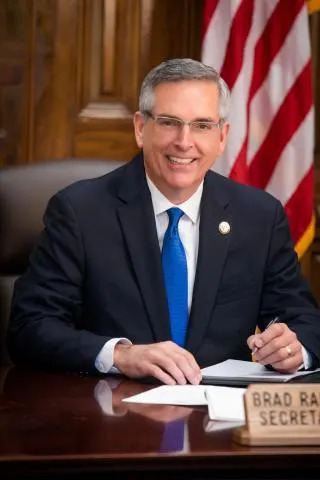
Jocelyn Benson and Brad Raffensperger – October 31, 2022

Voters in recent years have been inundated with disinformation telling them they can’t trust their fellow citizens and neighbors who administer elections. That voting is getting harder, and powerful forces are trying to prevent them from expressing their voice. That in a nation as closely divided as ours, the only secure election is one where the candidate they voted for wins.

These harmful and divisive messages fly in the face of reality. Our nation’s elections are as accessible to eligible voters, as professionally administered and as secure as they’ve ever been.

According to a report released recently by the nonpartisan Center for Election Innovation & Research, Georgia and Michigan – where each of us serves as the secretary of state – are leaders in making voting accessible, with robust options for early in-person voting, mail voting and Election Day voting.

Strong turnout for early voting

Voting is already happening in both our states, with high turnout and few if any problems. Voters who choose to vote by mail are receiving their ballots and returning them via mail or drop box, often planning to return their ballots with plenty of time before Election Day, as they should.

In fact, more than two-thirds of states offer these options. Despite what some are hearing, voters in nearly every state will find that voting this fall is familiar and convenient, regardless of what method they choose to use.

Early voting calendar: When early and in-person absentee voting starts in each state

That is as it should be – citizens having options and voting conveniently, with maximum confidence in the integrity of the process.

And that integrity is at its peak, as it was in 2020.

Early voting in Georgia in October 2022.

Voter lists in our states and nationwide are more secure than ever. Our states and nearly every other offer convenient online voter registration, allowing voters to easily get on the rolls and keep their records up to date.

Walker-Warnock debate: Herschel Walker beat expectations in Georgia U.S. Senate debate. Will it matter on Election Day?

Our states have led the way in fully integrating data from our departments of motor vehicles to ensure that when someone moves, the voter lists reflect that change. And importantly, our states have joined with the majority of states – blue states like Illinois and Connecticut, and red states like South Carolina and Texas – to administer the Electronic Registration Information Center, which helps let us know when one of our voters moves to another state or passes away, and even helps identify those rare instances when a voter tries to vote twice in different states.

Georgia and Michigan have verifiable, recountable, auditable paper ballots statewide, and we’re not unusual in this regard. Ninety-five percent of voters nationwide are casting paper ballots, including all of the battleground states. And our states, like virtually all the states with paper ballots, audit them by hand to confirm that the ballot tabulators worked properly.

In Georgia, we even recounted all of the ballots in the 2020 presidential race, by hand, confirming the technology correctly counted the ballots.

Gen Z voters could swing midterms: Here’s why they should vote

All of the election processes are observed by bipartisan observers at every stage, in our states and others. Voter lists are available to candidates and campaigns at all times. Voting machines are tested in public, in front of observers, and any citizen can attend the testing.

You can volunteer to help with elections

Poll watchers, properly trained and respectful of voters and workers, are entitled to observe voting and counting. Post-election audits confirming the results are open to representatives of the campaign, the candidates and the public.

We and our colleagues in other states open every part of our process to public review. And if doubts still remain, we encourage qualified citizens to volunteer to work at the polls, where they can receive training about the entire process, and see that process from beginning to end, from the inside, while serving their neighbors and fellow citizens.

It has never been easier to vote in this country, and we’re proud that our states have led the way. It’s also true that our elections have never been more secure, with verifiable paper ballots, audits and tests of voting machines and more transparency than ever.

USA TODAY Opinion series on the Future of Conservatism: Republicans must move past Trump for sake of the party’s future – and the nation’s

This is true for voters across the country – urban and rural voters, white voters and people of color, younger and older voters, Republicans, Democrats and everyone else. Almost every voter will find that methods available for voting in the past are still there, and that their election officials are professionals who will ensure their voice is heard, regardless of whom they vote for.

We come from different states and different political parties. We have disagreements about policy. But we are in absolute agreement that the way to resolve those disagreements is at the ballot box, and through our elected representatives, in a system where all eligible voters find it convenient to vote and have the maximum confidence in the integrity of the process.

Republican Brad Raffensperger is Georgia's secretary of state who's also a former member of the state House of Representatives.
Republican Brad Raffensperger is Georgia’s secretary of state who’s also a former member of the state House of Representatives.

Jocelyn Benson, a Democrat, is secretary of state of Michigan. Brad Raffensperger, a Republican, is secretary of state of Georgia. Both are running for re-election on Nov. 8.

Lula Defeats Bolsonaro in Brazil, a Crucial Win for the Amazon Rainforest

EcoWatch

Lula Defeats Bolsonaro in Brazil, a Crucial Win for the Amazon Rainforest

By: Paige Bennett, Edited by Chris McDermott – October 31, 2022

Luiz Inácio Lula da Silva attends a celebration event in São Paulo, Brazil

Luiz Inácio Lula da Silva attends a celebration event in Sāo Paulo, Brazil, on Oct. 30, 2022. Rahel Patrasso / Xinhua via Getty Images

A tense presidential election runoff in Brazil has led to a victory for left-wing candidate and former president Luiz Inácio “Lula” da Silva against the far-right incumbent, President Jair Bolsonaro. But as of Monday, October 31, Bolsonaro has not conceded. Lula is scheduled to be inaugurated on January 1, 2023.

In the initial election, Lula earned 48.4% of votes, and Bolsonaro received 43.2%. With neither party taking more than 50%, the election went into a runoff scheduled for October 30. In the runoff election, Lula won 50.9% of the votes, while Bolsonaro received 49.1% of votes. Bolsonaro is the first incumbent president of Brazil to not win re-election.

Bolsonaro has not yet conceded at the time of writing and has previously made statements regarding voting fraud, leaving some concern on the transition of power. 

“So far, Bolsonaro has not called me to recognize my victory, and I don’t know if he will call or if he will recognize my victory,” Lula told his supporters on Paulista Avenue in São Paulo.

During voting, truckers believed to be Bolsonaro supporters blocked highways. Nasdaq reported that in one online video, a person said truckers were planning to block highways and were calling for a military coup to prevent Lula from becoming president. According to Time, analysts say it is unlikely for military leaders to allow Bolsonaro to attempt a coup. The Guardian reported that a close ally to Bolsonaro, evangelical preacher Damares Alves, tweeted that “Bolsonaro will leave the presidency in January with his head held high.”

Lula’s win is especially crucial for the Amazon rainforest. He hopes to designate 193,000 square miles of the rainforest with protected status, decrease deforestation and offer subsidizing for sustainable farms. He also hopes to form an alliance for rainforest protection among Brazil, Democratic Republic of Congo and Indonesia. During his presidency in 2003 to 2010, Amazon rainforest deforestation decreased. Comparatively, over 13,000 square miles of Amazon rainforest were deforested during Bolsonaro’s four years as president.

“The socio-environmental and climate agenda is one of the places where Lula will need to act fast and firmly,” the Observatório do Clima said in a statement. “Stopping the slaughter of indigenous peoples and the devastation of the Amazon will require countering powerful gangs and, very often, the interests of allies and supporters in local governments and the Parliament. Expelling criminals from indigenous lands and reversing runaway deforestation are urgent measures, and necessary to for recover the Brazilian government’s credibility before its own people and the international community.”

Based in Los Angeles, Paige is a writer who is passionate about sustainability. She earned her Bachelor’s degree in Journalism from Ohio University and holds a certificate in Women’s, Gender and Sexuality Studies. She also specialized in sustainable agriculture while pursuing her undergraduate degree.