Stressed Colorado River keeps California desert farms alive

Associated Press

Stressed Colorado River keeps California desert farms alive

Kathleen Ronaynet – September 13, 2022

  • Farmer Larry Cox walks in a field of Bermudagrass with his dog, Brodie, at his farm Monday, Aug. 15, 2022, near Brawley, Calif. The Cox family has been farming in California's Imperial Valley for generations. (AP Photo/Gregory Bull)Farmer Larry Cox walks in a field of Bermudagrass with his dog, Brodie, at his farm Monday, Aug. 15, 2022, near Brawley, Calif. The Cox family has been farming in California’s Imperial Valley for generations. (AP Photo/Gregory Bull)
  • Water flows along the All-American Canal Saturday, Aug. 13, 2022, near Winterhaven, Calif. The canal conveys water from the Colorado River into the Imperial Valley. (AP Photo/Gregory Bull)Water flows along the All-American Canal Saturday, Aug. 13, 2022, near Winterhaven, Calif. The canal conveys water from the Colorado River into the Imperial Valley. (AP Photo/Gregory Bull)
  • Irrigator Raul Quirarte, 56, pauses during work to prepare a field to receive water from the All-American Canal, Sunday, Aug. 14, 2022, near Brawley, Calif. Quirarte started as an irrigator at the age of 18, taught by his father, who also was an irrigator. (AP Photo/Gregory Bull)Irrigator Raul Quirarte, 56, pauses during work to prepare a field to receive water from the All-American Canal, Sunday, Aug. 14, 2022, near Brawley, Calif. Quirarte started as an irrigator at the age of 18, taught by his father, who also was an irrigator. (AP Photo/Gregory Bull)
  • Water flows along the All-American Canal Saturday, Aug. 13, 2022, near Winterhaven, Calif. The canal conveys water from the Colorado River into the Imperial Valley. (AP Photo/Gregory Bull)Water flows along the All-American Canal Saturday, Aug. 13, 2022, near Winterhaven, Calif. The canal conveys water from the Colorado River into the Imperial Valley. (AP Photo/Gregory Bull)
  • Farmer Larry Cox watches a tractor at work on a field at his farm Monday, Aug. 15, 2022, near Brawley, Calif. The Cox family has been farming in California's Imperial Valley for generations. (AP Photo/Gregory Bull)Farmer Larry Cox watches a tractor at work on a field at his farm Monday, Aug. 15, 2022, near Brawley, Calif. The Cox family has been farming in California’s Imperial Valley for generations. (AP Photo/Gregory Bull)
  • Farmer Larry Cox looks at soil on a field at his farm Monday, Aug. 15, 2022, near Brawley, Calif. The Cox family has been farming in California's Imperial Valley for generations. (AP Photo/Gregory Bull)Farmer Larry Cox looks at soil on a field at his farm Monday, Aug. 15, 2022, near Brawley, Calif. The Cox family has been farming in California’s Imperial Valley for generations. (AP Photo/Gregory Bull)
  • Farmer Larry Cox walks stands in a field of Bermudagrass at his farm Monday, Aug. 15, 2022, near Brawley, Calif. The Cox family has been farming in California's Imperial Valley for generations. (AP Photo/Gregory Bull)Farmer Larry Cox walks stands in a field of Bermudagrass at his farm Monday, Aug. 15, 2022, near Brawley, Calif. The Cox family has been farming in California’s Imperial Valley for generations. (AP Photo/Gregory Bull)
  • A small pond sits between a field irrigated with water from the All-American Canal and a highway, Sunday, Aug. 14, 2022, near Brawley, Calif. The canal conveys water from the Colorado River into the Imperial Valley. (AP Photo/Gregory Bull)Colorado River Compact California. A small pond sits between a field irrigated with water from the All-American Canal and a highway, Sunday, Aug. 14, 2022, near Brawley, Calif. The canal conveys water from the Colorado River into the Imperial Valley. (AP Photo/Gregory Bull)
  • Farmer Larry Cox walks to his truck as his dog, Brodie, soaks in a water canal at his farm Monday, Aug. 15, 2022, near Brawley, Calif. The Cox family has been farming in California's Imperial Valley for generations. (AP Photo/Gregory Bull)Farmer Larry Cox walks to his truck as his dog, Brodie, soaks in a water canal at his farm Monday, Aug. 15, 2022, near Brawley, Calif. The Cox family has been farming in California’s Imperial Valley for generations. (AP Photo/Gregory Bull)
  • A worker diverts water as a sprinkler system is installed for alfalfa at the Cox family farm Monday, Aug. 15, 2022, near Brawley, Calif. The Cox family has been farming in California's Imperial Valley for generations. (AP Photo/Gregory Bull)A worker diverts water as a sprinkler system is installed for alfalfa at the Cox family farm Monday, Aug. 15, 2022, near Brawley, Calif. The Cox family has been farming in California’s Imperial Valley for generations. (AP Photo/Gregory Bull)
  • Water from the All-American Canal flows in a canal alongside fields Saturday, Aug. 13, 2022, near El Centro, Calif. The canal conveys water from the Colorado River into the Imperial Valley. (AP Photo/Gregory Bull)Water from the All-American Canal flows in a canal alongside fields Saturday, Aug. 13, 2022, near El Centro, Calif. The canal conveys water from the Colorado River into the Imperial Valley. (AP Photo/Gregory Bull)

SACRAMENTO, Calif. (AP) — When Don Cox was looking for a reliable place to build a family farm in the 1950s, he settled on California’s Imperial Valley.

The desert region had high priority water rights, meaning its access to water was hard for anyone to take away.

“He had it on his mind that water rights were very, very important,” said his grandson, Thomas Cox, who now farms in the Valley.

He was right. Today the Imperial Valley, which provides many of the nation’s winter vegetables and cattle feed, has one of the strongest grips on water from the Colorado River, a critical but over-tapped supply for farms and cities across the West. In times of shortage, Arizona and Nevada must cut first.

But even California, the nation’s most populous state with 39 million people, may be forced to give something up in the coming years as hotter and drier weather causes the river’s main reservoirs to fall to dangerously low levels. If the river were to become unusable, Southern California would lose a third of its water supply and vast swaths of farmland in the state’s southeastern desert would go unplanted.

“Without it, the Imperial Valley shuts down,” said JB Hamby, a board member for the Imperial Irrigation District, which holds rights to the largest share of Colorado River water.

EDITOR’S NOTE: This is part of a collaborative series on the Colorado River as the 100th anniversary of the historic Colorado River Compact approaches. The Associated Press, The Colorado Sun, The Albuquerque Journal, The Salt Lake Tribune, The Arizona Daily Star and The Nevada Independent are working together to explore the pressures on the river in 2022.

A century ago, California and six other states — Arizona, Colorado, Nevada, New Mexico, Utah and Wyoming — created a compact that split the water into two basins and set rules for how much water each would get. A series of deals, laws and court cases that followed led California to get the most water and made it the last to lose in times of shortage.

Fear and frustration over California’s use of the river has driven the compact since its early days. In western water law, the first person who taps the source gets the highest right, and California cities and farmers have relied on the river for more than a century.

Other western states worried California would lay claim to all the river’s water before their own populations grew. The compact and the series of deals that followed attempted to find a balance to protect California’s supply while ensuring other states got some too. California, meanwhile, benefitted when the federal government began building the Hoover Dam to help control the river’s flow.

Today, the states are now gearing up for a 2026 deadline to renegotiate some of the terms to better deal with drought and protect two major reservoirs, Lake Powell and Lake Mead. But before that, the U.S. Bureau of Reclamation has demanded the states find a way to cut their use by roughly 15% to 30% to stave off a crisis. The states failed to meet a mid-August deadline to reach a deal, but negotiations are continuing and no new date for an agreement has been set.

All eyes are on California and its major water rights holders — namely the Imperial Irrigation District and Metropolitan Water District of Southern California — to see if they will give up some of their share. Both districts say they’re willing to use less water or pay others to do so — especially if cooperating means they can avoid challenges to their senior rights.

But they’re playing coy about what exactly they’re willing to give.

The river is the only water supply for the Imperial Irrigation District, whose farmers grow broccoli, onions, carrots and other winter vegetables as well as alfalfa and other feedstock. The limited water underneath the ground in the region, near California’s border with Arizona and Mexico, is not usable, and it does not have access to state water supplies.

The irrigation district was historically entitled to more water than either Arizona or Nevada, though it’s given some up over the years in exchange for payment from cities like San Diego and Los Angeles. In 2019, its board rejected a drought contingency plan signed by other water users in Arizona, Nevada and California.

This time around, officials say the district would be open to leaving fields unplanted to save water on a temporary, emergency basis. But neither Hamby nor board spokespeople would say how much.

State officials are looking to the $4 billion approved by Congress for the Colorado River as a possible source of money that could be used to pay the district and, in turn, farmers, to use less water.

The farmers aren’t privy to all of the district’s negotiating tactics, but are trying to organize among themselves to avoid having cuts foisted on them, Cox said. Many farmers have already installed drip irrigation lines that use less water, but they would be willing to adopt more conservation tactics if they’d be paid to do so.

Already, Cox said he’s making decisions about whether to plant on all of his vegetable fields this fall because he’s getting less water than normal under a new system adopted by the board.

“With water uncertainty, there’s going to be more uncertainty on food supply,” he said.

And it’s not just farmers who rely on the Imperial Irrigation District’s water. Runoff from the farms feeds the Salton Sea, a massive inland lake created in the early 1900s when the Colorado River flooded. It’s now rapidly drying up, exposing surrounding communities to toxic dust and killing the habitat that birds and fish rely on. The state and federal government are now looking for other ways to support the sea in the absence of river water, and its being eyed as a possible site for lithium extraction.

“We’re talking about a body of water surrounded by communities who have been marginalized for so (long), that don’t have the infrastructure or capacity to protect themselves from climate change, from less availability of water, from more dust,” said Silvia Paz, executive director for Alianza Coachella Valley, an organization fighting to improve the economy and health outcomes in the region.

Behind the irrigation district, the Metropolitan Water District is the state’s second largest user of the river’s water. The Colorado makes up about one-third of the water supply the district uses to provide water for drinking, bathing, landscaping and recreating to roughly half the state’s population. Los Angeles County, the nation’s largest, is one of the many areas in Southern California that relies on the river’s water.

It’s allowed to store some of the water it doesn’t use in Lake Mead, which California officials say has actually helped stave off a river crisis in recent years. But this year, short on other supplies, the district may actually try to pull some of that water out if needed, a move that would likely cause friction with other states in the basin.

The district also gets water from the Sacramento-San Joaquin River Delta, the state’s main source of water supplies. But the Delta is suffering from drought, too, and the state only approved 5% of requested supplies this year. As it looks to stabilize its water supply for the future, the district is spending billions on a water recycling plant and urging people to use less water for their lawns.

Still, ensuring the Colorado River is available in dry years when other supplies aren’t available is the district’s priority, said Bill Hasencamp, the district’s Colorado River manager.

Farm-heavy water districts in the Coachella Valley and Riverside County also get Colorado River water, which they use for crops like citrus, melons and barley. The Fort Mojave Indian Reservation and Colorado River Indian Reservation are among the tribes in California with river rights.

Looking to the future, both climate change and politics are at play as California’s water users debate what it will take to keep the river alive.

“What they really want is reliability and predictability,” said Michael Cohen, a Colorado River expert with the Pacific Institute. “What they don’t want is Arizona screaming that Phoenix and Tucson are dried up and California doesn’t take a drop of reductions.”

The Associated Press receives support from the Walton Family Foundation for coverage of water and environmental policy. The AP is solely responsible for all content. For all of AP’s environmental coverage, visit https://apnews.com/hub/climate-and-environment
California’s drought touches everyone, but water restrictions play out unevenly across communities

Los Angeles Times

California’s drought touches everyone, but water restrictions play out unevenly across communities

Soudi Jiménez – September 13, 2022

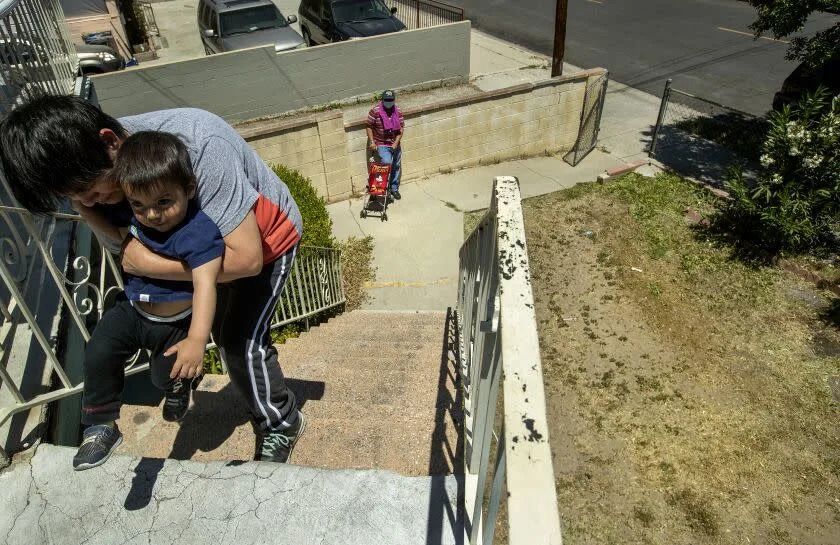
LINCOLN HEIGHTS, CA-MAY 11, 2022: Benita Perez, 55, teaches her grandson Nevaeh Perez, 1 and 1/2, how to walk at their apartment building on Thomas St. in Lincoln Heights. Area at right, below used to be all grass until a year ago, due to the drought. It's going to be a summer of brown grass and hard choices for Southern California lawn owners facing the Metropolitan Water District's one day a week watering restrictions starting June. 1. (Mel Melcon / Los Angeles Times)
Benita Perez teaches her grandson, Nevaeh Perez, 1, how to walk at their apartment building in Lincoln Heights. Area at right, below used to be all grass until a year ago, because of the drought. (Mel Melcon/Los Angeles Times)

Raúl Monterroso of San Fernando knows that he can do little to help the struggling garden patio in front of his house. After all, he takes the new water restrictions seriously.

“Here, everything is dry, we have the entire irrigation system closed, my poor wife is crying over her plants,” said the Guatemala native, who stopped watering the grass on June 1 when instructions to cut outdoor watering to once a week were issued.

Further restrictions went into effect Sept. 6, when a 15-day ban through Sept. 20 was mandated by an emergency repair that shut down the 36-mile Upper Feeder pipeline that brings water from the Colorado River to Southern California. The Metropolitan Water District of Southern California said that more than 4 million people are being affected by the shutdown across the region, including Beverly Hills and Malibu, Burbank and Glendale, Long Beach, the city of Inglewood and a large swathe of the South Bay, and other areas stretching as far east as Pomona.

Also under the ban is the city of San Fernando, at the northern edge of L.A.’s San Fernando Valley, 92% of whose 24,000 residents are Latino.

“The reality is that when they give you the alert, you have to be aware. The measures must be followed, there is no other option,” Monterroso said.

In Long Beach, an hour’s drive south of San Fernando, businesswoman Sandy Cajas said that urgent measures are needed to maintain a steady flow of water and find new sources of it.

“We are experiencing the worst drought in decades,” she said. “What is going to happen here is that we are going to have to recycle the water due to the scarcity that exists.”

That’s one item, among many, on the state capital’s agenda. Last month, a 16-page document released by Gov. Gavin Newsom, “California’s Water Supply Strategy — Adapting to a Hotter, Drier Future,” indicated that California’s water supply will shrink 10% by 2040.

Among other measures, the plan, backed by billions of dollars in investment, calls for recycling more wastewater and desalinating seawater and salty groundwater, as well as speeding up infrastructure development and pushing conservation, in hopes of providing enough water for more than 8.4 million homes by 2040.

According to Newsom, this “aggressive plan” will guarantee that future generations “continue to call California home in this hotter, drier climate.”

“The best science tells us that we need to act now to adapt to California’s water future. Climate change means drought won’t just stick around for two years at a time like it historically has — extreme weather is the new normal here in the American West and California will adapt to this new reality,” Newsom said in an Aug. 11 statement.

Yet the drought is playing out unevenly across different communities and among different households. Since June 1, about 6 million residents in Los Angeles, Ventura and San Bernardino counties have had to limit outdoor water use to once a week. But not everyone is complying.

Every day since 2003, Álex Guzmán has driven a truck for work from the San Fernando Valley to Beverly Hills. The Mexican immigrant labors for a landscaping company. His task is to maintain the trees and lawns of the mansions. But, above all, to water lots and lots of plants.

Hearing that additional restrictions on water use have been implemented, Guzmán just smiles.

“We have never stopped working in Beverly Hills, we have never stopped watering mansion gardens because of the restrictions,” he said.

“We are working normally, the bosses have not told us anything about lowering the use of water,” Guzmán added.

As reported by The Times, celebrities such as Sylvester Stallone, Dwyane Wade, Kevin Hart, Kim and Kourtney Kardashian are among the more than 2,000 customers who have received “notices of exceedance” for surpassing 150% of their monthly water budgets at least four times since the Las Virgenes Municipal Water District declared a drought emergency in late 2021.

That disparity in following restrictions shows up in many public spaces, said Patty López, a former Assemblywoman for District 39, pointing for example to the contrast between the independent city of San Fernando and Sylmar, which is part of the city of Los Angeles.

“If you look at the Veterans Memorial Community Regional Park in Sylmar it is completely green, but in the parks in our area the grass is dead,” said López, a San Fernando resident, lamenting that there is no clear, consistent application of policies, or rigorous follow-up and enforcement, throughout the region.

Under current conditions, if the use of water is not controlled, worse consequences won’t be long in coming.

Samuel Sandoval Solís, professor of water resources management at UC Davis, said that California has 30% of its water stored in dams, meaning that, because of the drought’s effects, 70% of its capacity is gone. Water level in the subsoil has dropped 25 feet since 2016.

“Everything is looking very bad,” said the academic, who has been researching, monitoring and teaching on the subject of water for 20 years.

According to a UC Berkeley study, as temperatures in California rose between 1960 and 1980, rainfall also diminished, based on climatological records and analyzing the cores of trees.

Given the current scarcities of water, and recent extreme heatwaves across the Golden State, even downpours in the upcoming rainy season wouldn’t be enough to compensate, Sandoval Solís said.

“It’s not enough to make it to the next year,” he said.

Sandoval Solís said that if Californians don’t do more to conserve water, the authorities will have to implement restrictions such as those imposed on some municipalities during a previous drought phase between 2014 and 2016. Those restrictions limited the amount of gallons per person to between 12 and 15 daily.

According to the California Dept. of Water Resources, the “current statewide median indoor residential water use is 48 gallons per capita per day, and that a quarter of California households already use less than 42 gallons per capita per day.” The U.S. Environmental Protection Agency website states that each American uses an average of 82 gallons per day at home, including consumption.

“We need to raise awareness that we must all enter this equally,” Sandoval Solís said, “regardless of whether you live in a luxury house or in an apartment, we all have to reduce water consumption.”

In Arizona, worry about access to Colorado River water

Associated Press

In Arizona, worry about access to Colorado River water

Tony Davis – September 13, 2022

FILE - Utah State University master's student Barrett Friesen steers a boat near Glen Canyon dam on Lake Powell on June 7, 2022, in Page, Ariz. In Arizona, water officials are concerned, though not panicking, about getting water in the future from the Colorado River as its levels decline and the federal government talks about the need for states in the Colorado River Basin to reduce use. (AP Photo/Brittany Peterson, File)
Utah State University master’s student Barrett Friesen steers a boat near Glen Canyon dam on Lake Powell on June 7, 2022, in Page, Ariz. In Arizona, water officials are concerned, though not panicking, about getting water in the future from the Colorado River as its levels decline and the federal government talks about the need for states in the Colorado River Basin to reduce use. (AP Photo/Brittany Peterson, File)
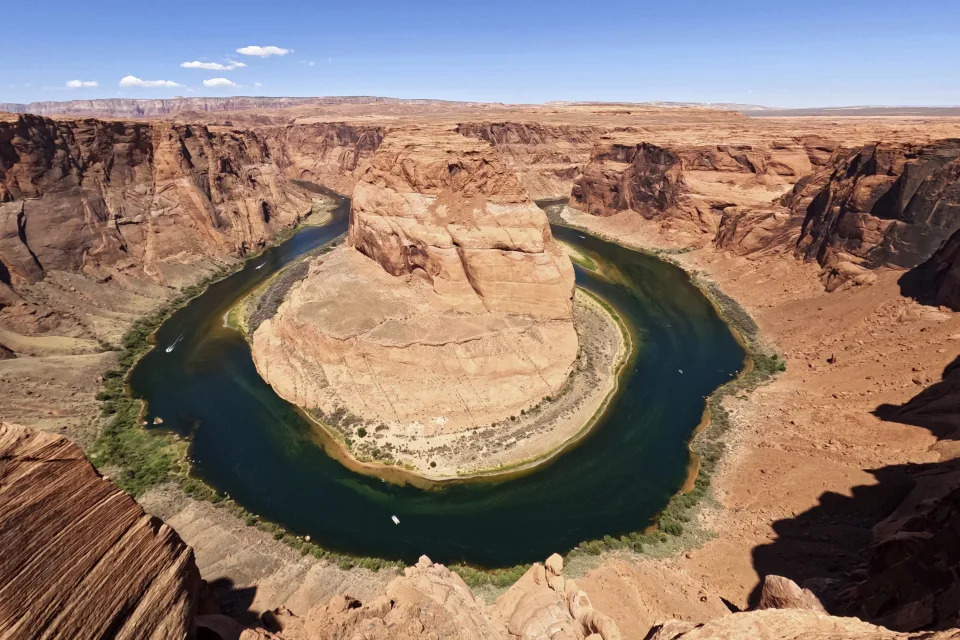
FILE - The Colorado River flows at Horseshoe Bend in Glen Canyon National Recreation Area, Wednesday, June 8, 2022, in Page, Ariz. In Arizona, water officials are concerned, though not panicking, about getting water in the future from the Colorado River as its levels decline and the federal government talks about the need for states in the Colorado River Basin to reduce use. (AP Photo/Brittany Peterson, File)
 The Colorado River flows at Horseshoe Bend in Glen Canyon National Recreation Area, Wednesday, June 8, 2022, in Page, Ariz. In Arizona, water officials are concerned, though not panicking, about getting water in the future from the Colorado River as its levels decline and the federal government talks about the need for states in the Colorado River Basin to reduce use. (AP Photo/Brittany Peterson, File)
FILE - Water from the Colorado River diverted through the Central Arizona Project fills an irrigation canal, Aug. 18, 2022, in Maricopa, Ariz. In Arizona, water officials are concerned, though not panicking, about getting water in the future from the Colorado River as its levels decline and the federal government talks about the need for states in the Colorado River Basin to reduce use. (AP Photo/Matt York, File)
 Water from the Colorado River diverted through the Central Arizona Project fills an irrigation canal, Aug. 18, 2022, in Maricopa, Ariz. In Arizona, water officials are concerned, though not panicking, about getting water in the future from the Colorado River as its levels decline and the federal government talks about the need for states in the Colorado River Basin to reduce use. (AP Photo/Matt York, File)
FILE - New home construction encroaches dormant fields owned by Kelly Anderson, left, Aug. 18, 2022, in Maricopa, Ariz. Anderson grows specialty crops for the flower industry and leases land to alfalfa farmers whose crops feed cattle at nearby dairy farms. (AP Photo/Matt York, File)
New home construction encroaches dormant fields owned by Kelly Anderson, left, Aug. 18, 2022, in Maricopa, Ariz. Anderson grows specialty crops for the flower industry and leases land to alfalfa farmers whose crops feed cattle at nearby dairy farms. (AP Photo/Matt York, File)
FILE - Boats move along Lake Powell along the Upper Colorado River Basin, June 9, 2021, in Wahweap, Ariz. In Arizona, water officials are concerned, though not panicking, about getting water in the future from the Colorado River as its levels decline and the federal government talks about the need for states in the Colorado River Basin to reduce use. (AP Photo/Ross D. Franklin, File)
Boats move along Lake Powell along the Upper Colorado River Basin, June 9, 2021, in Wahweap, Ariz. In Arizona, water officials are concerned, though not panicking, about getting water in the future from the Colorado River as its levels decline and the federal government talks about the need for states in the Colorado River Basin to reduce use. (AP Photo/Ross D. Franklin, File)
FILE - Tourists carry a kayak up a sandy hill Tuesday, June 7, 2022, in Page, Ariz. As Lake Powell levels drop, recreation is becoming tougher to access as boat ramps and marinas close. (AP Photo/Brittany Peterson, File)
 Tourists carry a kayak up a sandy hill Tuesday, June 7, 2022, in Page, Ariz. As Lake Powell levels drop, recreation is becoming tougher to access as boat ramps and marinas close. (AP Photo/Brittany Peterson, File)

TUCSON, Ariz. (AP) — Robbie Woodhouse’s grandfather began nearly a century of family farming along the Gila River near Yuma in the middle 1920s when he dug up a bunch of mesquite stumps on his land to make way for his barley, wheat, Bermuda seed, cotton and melon fields.

Farming never really took off at the Woodhouse homestead until 1954, when the federal government finished a 75-mile-long concrete canal to bring Colorado River water to what’s now known as the Wellton-Mohawk Irrigation and Drainage District, which covers about 58,500 acres along the Gila River east of the Colorado.

Today, Woodhouse presides over the governing board of a district with more than 120 individual growers, partnerships, trusts and other operating entities growing about 100 different crops, including seed crops as well as staples like wheat, cotton, lettuce and other produce. Wellton-Mohawk is one of six agricultural districts in the Yuma area that together grow 90% of the cauliflower, lettuce, broccoli and other winter vegetables sold in the U.S.

But now, the future of this district, of farming in the Yuma area in general and of Arizona’s second largest drinking water supply for urban residents are all mired in a sea of uncertainty. Due to a logjam in interstate negotiations for massive cuts in Colorado River water deliveries, farmers and urban users have no idea how much water use they’ll be ordered to cut, possibly starting next year.

All the Yuma area irrigation districts depend entirely on Colorado River water to nourish their crops. While groundwater does lie beneath many of the farm fields, its quality is uncertain or poor in many places.

“Obviously we’re very, very concerned,” said Woodhouse, whose 1,250 acres grow mostly produce, such as cauliflower, broccoli and lettuce. “Without the water, we don’t grow anything. But I wouldn’t say we are scared. We do feel an obligation to do our part.”

___

EDITOR’S NOTE: This is part of a collaborative series on the Colorado River as the 100th anniversary of the historic Colorado River Compact approaches. The Associated Press, The Colorado Sun, The Albuquerque Journal, The Salt Lake Tribune, The Arizona Daily Star and The Nevada Independent are working together to explore the pressures on the river in 2022.

___

Water officials of Arizona cities of Tucson, Goodyear and Scottsdale are also concerned and a little on edge although they’re not panicking. They are the most dependent of Arizona cities on river water delivered through the Central Arizona Project, a $4 billion, 336-mile-long canal system running from the river to the Phoenix and Tucson areas.

While all these cities have backup supplies, led by groundwater, to cushion them in the short- to medium-term in the event of river water cuts, their long-term picture is more uncertain because the CAP was extended into Arizona nearly 40 years ago precisely to get them off groundwater.

Arizona got about 36% of its total water supply from the river as recently as 2020. That share of river water feeding farms and cities has declined some since then, with the advent of a federally approved Drought Contingency Plan that will cut the state’s river water use by 21% starting in 2023. It’s expected to drop even further in the coming years but nobody knows how much right now.

The uncertainty was triggered first in June, when Reclamation Commissioner Camille Touton testified at a U.S. Senate Committee hearing that to stabilize the river’s declining reservoirs Lakes Mead and Powell, the basin states need to cut their water use by roughly up to 30% starting in 2023, and come up with a plan to do that by mid-August. If a plan doesn’t appear by then, she warned the federal government would impose its own, to “protect the system.”

But mid-August came and went with no agreement and no plan or timetable for a plan from the bureau. The bureau did say at an Aug. 16 news conference, however, that it was going to look closely at several measures such as modifying the Hoover and Glen Canyon dams so they can keep delivering water at lower elevations and counting evaporation of water from Lake Mead and the river against the Lower Basin’s total water supply, thereby reducing that supply by hundreds of thousands of acre-feet a year.

So now, Wellton Mohawk and the other irrigation districts are pushing a plan to cut one acre-foot of water used per acre annually, on 925,000 acres along the Lower Colorado River in Arizona and California. In return, they’re seeking $1,500 an acre-foot in compensation, or a total of $1.387 billion annually.

With that money, they’ll invest in water-efficient farming tools like drip irrigation, gradually switch to less thirsty crops from water-slurping alfalfa and weather economic losses from reduced water use, Woodhouse said.

“What we want to have happen is for each individual farmer to operate their farms in the matter that they want to operate and plant the crops that they feel they can maintain the fertility of their soils,” he said. “I’m sure it’s going to greatly change crop rotations and also change management practices of individual farmers, to exist on less water. It’s real important that those decisions be left to each individual farm.”

This proposal has been roundly criticized by urban water leaders, however. While saying farms must take the biggest water use curbs because they use 72% of Arizona’s water and close to 80% basin-wide, Central Arizona Project officials say the farmers’ price tag is unrealistically high and that whatever money is paid should be used strictly to modernize irrigation practices for the long term.

“Anytime anyone wants to sit down with us and talk about it, we’re more than willing to do so. But no one has been willing to discuss it,” countered Wade Noble, an attorney representing the Yuma-area irrigation districts. “Until we get to that point, our voluntary forbearance of a significant amount of the water we control will remain on the terms we put on the table. We’re not going to negotiate with ourselves.”

Where both Arizona farms and cities agree is that the other river basin states and the federal government haven’t moved fast enough to reduce water use.

“Reclamation has got to show some leadership and say this has got to be done and give us a guide map as to how the system is protected as the commissioner promised what it would be,” Noble said.

The CAP’s board president Terry Goddard and its previous president Lisa Atkins wrote a letter on Aug. 19 to Interior Secretary that made essentially the same point. To date, no written response from Interior has been forthcoming.

With no action forthcoming on a deal, some Arizona water users have pulled back on past commitments to leave water in Lake Mead to prop it up. The Tucson City Council, for instance, had pledged earlier this year to leave 30,000 acre-feet in the lake in 2022 and 2023 but has since backed off that pledge and voted to order its full allocation of 144,191 acre-feet for 2023 pending the negotiations’ outcome. The Gila River Indian Community withdrew an even larger commitment, to leave nearly 130,000 acre-feet in Mead next year. The CAP is holding onto 35,000 acre-feet it was going to leave in Mead and announced plans to remove another 18,000 acre-feet from the lake next year.

“Unfortunately, the community has been shocked and disappointed to see the complete lack of progress in reaching the kind of cooperative basin-wide plan necessary to save the Colorado River system,” said Gila River Indian Community Chairman Stephen Roe Lewis.

Until now, it’s left almost 600,000 other acre-feet of its CAP supply in Mead since 2016. In 2022 alone, CAP users and other Arizona Colorado River users left nearly 800,000 acre-feet in Mead, led by 512,000 acre-feet it legally had to leave there under the terms of the 2019 Drought Contingency Plan due to the lake’s falling levels. Arizona and California left another 268,000 acre-feet in the lake this year from what’s called the “500 Plus Plan,” which had sought a half-million acre-feet in voluntary contributions to the lake, but projections for next year show more water will be removed from the lake under that plan than will be left in it.

Many Arizona cities using river water are preparing for the inevitability they’ll have to use less. In Goodyear, in the Phoenix area’s West Valley, whose population is about 101,000, the city has recharged about half of its annual CAP supplies into the ground for several years. It’s also been recharging treated sewage effluent into the ground, and has stored a total of seven years’ supply of both sources. It anticipates no short-term problems in delivering water to customers, said Ray Diaz, Goodyear’s water resources and sustainability manager.

Colorado River shortfalls aren’t going to affect what the city does now but could in the future.

“What would happen if we were shorted and had to continue our approved development?” said Diaz. “It’s something we would have to look into and really assess what we could afford for the future — how much water we can provide.”

In Scottsdale in the Phoenix area’s East Valley, CAP supplies about 70% of the water for its 250,000 residents. Most is delivered directly to homes and businesses rather than recharged. If the city had to sustain a large cut in CAP supplies, it would have to rely much more heavily on groundwater, said Gretchen Baumgardner, the city’s water policy manager.

It has stored about 230,000 acre-feet of CAP water and treated sewage effluent in the ground — about 2.5 years worth of its current supply — but town officials don’t want to use it all at once, Baumgardner said. It also gets about 15% of its supply from Salt and Verde River surface supplies, delivered by the quasi-public utility the Salt River Project.

“There will be a larger portion of groundwater” used in the future, said Baumgardner, adding that city officials won’t know how much until they learn how drastic the cuts in CAP deliveries will be.

The city is also looking to extend its supply further. Its wastewater treatment plant in North Scottsdale operates a pilot project to treat a small amount of effluent to exceed state drinking water standards, a process called “direct potable reuse.” The city is working with the State Department of Environmental Quality to help set up new state regulations that would allow the plant to reuse its wastewater for drinking on a larger scale.

But when asked if a “Day Zero” could ever arrive in which Scottsdale failed to meet all residents’ demands for water, Baumgardner replied, “It’s just one of those uncertainties right now. That will really be hard to answer,” in part because of a pending effort by federal officials to overhaul its guidelines for operating its reservoirs — an effort that won’t be finished until 2026.

In Tucson, officials of the Tucson Water utility are more optimistic about their ability to survive major CAP cuts. The utility about 40 years ago signed up to take almost a third more CAP water than it needs today to serve the 735,610 customers living inside and outside city limits. That’s allowed it to store nearly five and a half years worth of CAP in large, recharge basins — water that can be pumped when needed during CAP shortages later. The utility also has access to a huge aquifer lying under a large expanse of former farmland northwest of the city that it bought and retired in the 1970s. It also is regularly recharging and storing underground large amounts of partially treated effluent that can be pumped later for drinking.

But there is one cautionary note. A recent Bureau of Reclamation study found that as the Southwest’s climate warms up, runoff of melting snows into rivers and washes surrounding the city is likely to decline, meaning less water will be replenishing its aquifer than in the past. That would increase the possibility that groundwater pumping in place of CAP water use could put increased pressure on the aquifer, triggering higher pumping costs and more likelihood of subsidence in which the ground collapses, possibly triggering fissures.

Ultimately, the story of CAP water in Arizona is a story about groundwater, added Kathryn Sorensen, a researcher for Arizona State University’s Kyl Center for Water Policy. When there’s less Colorado River water delivered to Arizona, the cities, farms and other users fall back on groundwater, she said.

“We are very blessed to have plentiful aquifers in central Arizona we can fall back on,” Sorensen said while noting they are fossil aquifers, meaning water entered them thousands of years ago and they are not easily replaced.

“If we pump them and are unable to replenish the pumping, the aquifers will pay the price,” she said.

100 years after compact, Colorado River nearing crisis point

Associated Press

100 years after compact, Colorado River nearing crisis point

Chris Outsalt and Brittany Peterson – September 12, 2022

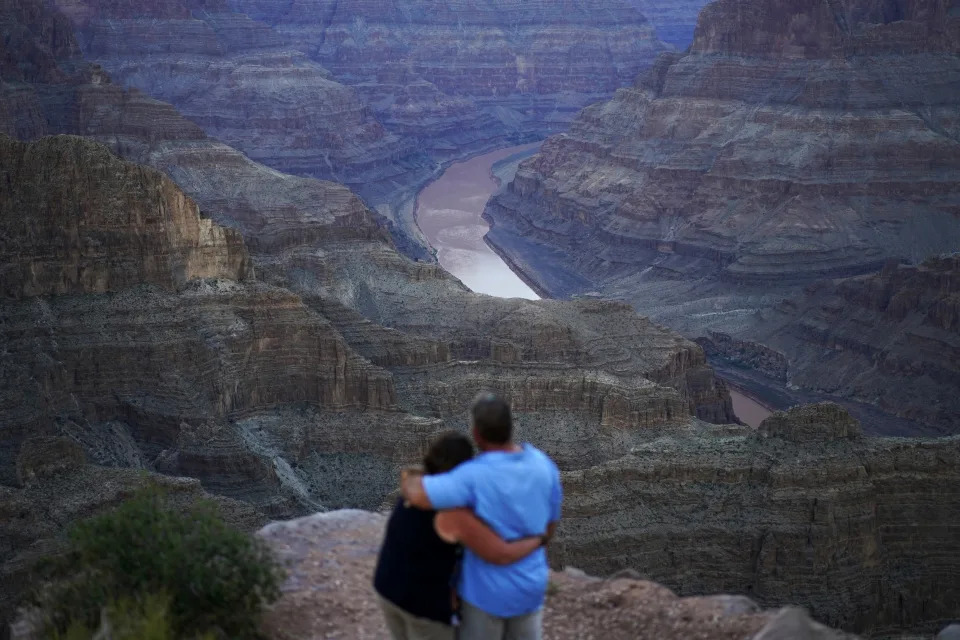
Alyssa Chubbuck, left, and Dan Bennett embrace while watching the sunset at Guano Point overlooking the Colorado River on the Hualapai reservation Monday, Aug. 15, 2022, in northwestern Arizona. In November 1922, seven land-owning white men brokered a deal to allocate water from the Colorado River, which winds through the West and ends in Mexico. During the past two decades, pressure has intensified on the river as the driest 22-year stretch in the past 1,200 years has gripped the southwestern U.S. (AP Photo/John Locher)
FILE - A formerly sunken boat sits upright into the air with its stern stuck in the mud along the shoreline of Lake Mead at the Lake Mead National Recreation Area, June 10, 2022, near Boulder City, Nev. In November 1922, seven land-owning white men brokered a deal to allocate water from the Colorado River, which winds through the West and ends in Mexico. During the past two decades, pressure has intensified on the river as the driest 22-year stretch in the past 1,200 years has gripped the southwestern U.S. (AP Photo/John Locher, File)
FILE – A formerly sunken boat sits upright into the air with its stern stuck in the mud along the shoreline of Lake Mead at the Lake Mead National Recreation Area, June 10, 2022, near Boulder City, Nev. In November 1922, seven land-owning white men brokered a deal to allocate water from the Colorado River, which winds through the West and ends in Mexico. During the past two decades, pressure has intensified on the river as the driest 22-year stretch in the past 1,200 years has gripped the southwestern U.S. (AP Photo/John Locher, File)
In this photo provided by the U.S. Bureau of Reclamation, Commerce Secretary Herbert Hoover presides over the signing of the Colorado River Compact in Santa Fe, N.M., on Nov. 24, 1922. Seven land-owning white men brokered a deal to allocate water from the Colorado River, which winds through the West and ends in Mexico. (U.S. Bureau of Reclamation via AP)
Garnett Querta carries a hose as he fills his water truck on the Hualapai reservation Monday, Aug. 15, 2022, near Peach Springs, Ariz. The divvying up between Colorado River Basin states never took into account Indigenous Peoples or many others, and from the start the calculation of who should get what amount of that water may never have been balanced. (AP Photo/John Locher)
A truck tire once in the water as part of a marina sits on dry ground as water levels have dropped near the Callville Bay Resort & Marina in the Lake Mead National Recreation Area, Tuesday, Aug. 30, 2022, near Boulder City, Nev. In November 1922, seven land-owning white men brokered a deal to allocate water from the Colorado River, which winds through the West and ends in Mexico. During the past two decades, pressure has intensified on the river as the driest 22-year stretch in the past 1,200 years has gripped the southwestern U.S. (AP Photo/John Locher)
Floating boat docks sit on dry ground as water levels have dropped near the Callville Bay Resort & Marina in the Lake Mead National Recreation Area, Tuesday, Aug. 30, 2022, near Boulder City, Nev. As water levels plummet, calls for reduced use have often been met with increased population growth. (AP Photo/John Locher)
Water flows along the All-American Canal Saturday, Aug. 13, 2022, near Winterhaven, Calif. In November 1922, seven land-owning white men brokered a deal to allocate water from the Colorado River, which winds through the West and ends in Mexico. During the past two decades, pressure has intensified on the river as the driest 22-year stretch in the past 1,200 years has gripped the southwestern U.S. (AP Photo/Gregory Bull)

DENVER (AP) — The intensifying crisis facing the Colorado River amounts to what is fundamentally a math problem.

The 40 million people who depend on the river to fill up a glass of water at the dinner table or wash their clothes or grow food across millions of acres use significantly more each year than actually flows through the banks of the Colorado.

In fact, first sliced up 100 years ago in a document known as the Colorado River Compact, the calculation of who gets what amount of that water may never have been balanced.

“The framers of the compact — and water leaders since then — have always either known or had access to the information that the allocations they were making were more than what the river could supply,” said Anne Castle, a senior fellow at the Getches-Wilkinson Center at the University of Colorado Law School.

EDITOR’S NOTE: This is part of a collaborative series on the Colorado River as the 100th anniversary of the historic Colorado River Compact approaches. The Associated Press, The Colorado Sun, The Albuquerque Journal, The Salt Lake Tribune, The Arizona Daily Star and The Nevada Independent are working together to explore the pressures on the river in 2022.

During the past two decades, however, the situation on the Colorado River has become significantly more unbalanced, more dire.

A drought scientists now believe is the driest 22-year stretch in the past 1,200 years has gripped the southwestern U.S., zapping flows in the river. What’s more, people continue to move to this part of the country. Arizona, Utah and Nevada all rank among the top 10 fastest growing states, according to U.S. Census data.

While Wyoming and New Mexico aren’t growing as quickly, residents watch as two key reservoirs — popular recreation destinations — are drawn down to prop up Lake Powell. Meanwhile, southern California’s Imperial Irrigation District uses more water than Arizona and Nevada combined, but stresses their essential role providing cattle feed and winter produce to the nation.

Until recently, water managers and politicians whose constituents rely on the river have avoided the most difficult questions about how to rebalance a system in which demand far outpaces supply. Instead, water managers have drained the country’s two largest reservoirs, Lake Mead and Lake Powell, faster than Mother Nature refills them.

In 2000, both reservoirs were about 95% full. Today, Mead and Powell are each about 27% full — once-healthy savings accounts now dangerously low.

The reservoirs are now so low that this summer Bureau of Reclamation Commissioner Camille Touton testified before the U.S. Senate Energy and Natural Resources Committee that between 2 million and 4 million acre-feet would need to be cut next year to prevent the system from reaching “critically low water levels,” threatening reservoir infrastructure and hydropower production.

The commissioner set an August deadline for the basin states to come up with options for potential water cuts. The Upper Basin states — Colorado, Utah, New Mexico and Wyoming — submitted a plan. The Lower Basin states — California, Arizona and Nevada — did not submit a combined plan.

The bureau threatened unilateral action in lieu of a basin-wide plan. When the 60-day deadline arrived, however, it did not announce any new water cuts. Instead, the bureau announced that predetermined water cuts for Arizona, Nevada and Mexico had kicked in and gave the states more time to come up with a basin-wide agreement.

STILL LEFT OUT

A week before Touton’s deadline, the representatives of 14 Native American tribes with water rights on the river sent the Bureau of Reclamation a letter expressing concern about being left out of the negotiating process.

“What is being discussed behind closed doors among the United States and the Basin States will likely have a direct impact on Basin Tribes’ water rights and other resources and we expect and demand that you protect our interests,” tribal representatives wrote.

Being left out of Colorado River talks is not a new problem for the tribes in the Colorado River Basin.

The initial compact was negotiated and signed on Nov. 24, 1922, by seven land-owning white men, who brokered the deal to benefit people who looked like them, said Jennifer Pitt of the National Audubon Society, who is working to restore rivers throughout the basin.

“They divided the water among themselves and their constituents without recognizing water needs for Mexico, the water needs of Native American tribes who were living in their midst and without recognizing the needs of the environment,” Pitt said.

Mexico, through which the tail of the Colorado meanders before trickling into the Pacific Ocean, secured its supply through a treaty in 1944. The treaty granted 1.5 million acre-feet on top of the original 15 million acre-feet that had already been divided, 7.5 million each for the Upper and Lower Basins.

Tribes, however, still don’t have full access to the Colorado River. Although the compact briefly noted that tribal rights predate all others, it lacked specificity, forcing individual tribes to negotiate settlements or file lawsuits to quantify those rights, many of which are still unresolved. It’s important to recognize the relationship between Native and non-Native people at that time, said Daryl Vigil, water administrator for the Jicarilla Apache Nation in New Mexico.

“In 1922, my tribe was subsistence living,” Vigil said. “The only way we could survive was through government rations on a piece of land that wasn’t our traditional homeland. That’s where we were at when the foundational law of the river was created.”

COMPETING INTERESTS

Agriculture uses the majority of the water on the river, around 70% or 80% depending on what organization is making the estimate. When it comes to the difficult question of how to reduce water use, farmers and ranchers are often looked to first.

Some pilot programs have focused on paying farmers to use less water, but unanswered questions remain about how to transfer the savings to Lake Powell for storage or how to create a program in a way that would not negatively impact a farmer’s water rights.

Antiquated state laws mean the amount of water that a water right gives someone access to can be decreased if not fully used.

That’s why the Camblin family ranch in Craig in northwest Colorado plans to flood irrigate once a decade, despite recently upgrading to an expensive, water-conserving pivot irrigation system. Nine years out of 10, they’ll receive payment from a conservation group in exchange for leaving the surplus water in the river. But in Colorado, the state revokes water rights after 10 years if they aren’t used.

Not only would losing that right mean they can’t access a backup water supply should their pivot system fail, but their property’s value would plummet, Mike Camblin explained. He runs a yearling cattle operation with his wife and daughter, and says an acre of land without water sells for $1,000, about a fifth of what it would sell for with a water right attached.

There are other ways to improve efficiency, but money is still often a barrier.

Wastewater recycling is growing across the region, albeit slowly, as it requires massive infrastructure overhauls. San Diego built a robust desalination plant to turn seawater to drinking water, and yet some agricultural users are trying to get out of their contract since the water is so expensive. Some cities are integrating natural wastewater filtration into their landscaping before the water flows back to the river. It’s all feasible, but is costly, and those costs often get passed directly to water users.

One of the biggest opportunities for water conservation is changing the way our landscapes look, said Lindsay Rogers, a water policy analyst at Western Resource Advocates, a nonprofit dedicated to protecting water and land in the West.

Converting a significant amount of outdoor landscaping to more drought-tolerant plants would require a combination of policies and incentives, Rogers explained. “Those are going to be really critical to closing our supply-demand gap.”

After years of incentive programs for residents, Las Vegas recently outlawed all nonfunctional grass by 2026, setting a blueprint for other Western communities. For years, the city has also paid residents to rip out their lawns.

In Denver, Denver Water supplies about 25% of the state’s population and uses about 2% of the water. The city has had mandatory restrictions in place for years, limiting home irrigation to three days per week.

This summer, in southern California, the Metropolitan Water District instituted an unprecedented one-day-a-week water restriction.

Still, regardless of the type of water use, more concessions must be made.

“The law of the river is not suited to what the river has become and what we see it increasingly becoming,” Audubon’s Pitt said. “It was built on the expectation of a larger water supply than we have.”

Careers and climate change have Americans on the move: Here are the top 10 states people are leaving (and where they are going)

MoneyWise

Careers and climate change have Americans on the move: Here are the top 10 states people are leaving (and where they are going)

Serah Louis – September 8, 2022

Careers and climate change have Americans on the move: Here are the top 10 states people are leaving (and where they are going)

Americans are packing their bags (and ordering a moving truck) and leaving behind their home states — and flocking to new lodgings in other parts of the country.

Moving company United Van Lines released its 45th Annual National Movers Study in January, which provides data on the number of people who joined or left each state last year.

While work remains the No. 1 reason for leaving, with almost a third of movers exiting their state to pursue a new job opportunity or transfer — it’s a significant decrease from 2015, when over 60% of Americans cited work as their primary reason.

With about 40% of Americans considering a move this year, it’s worth noting where people have been going and why.

The United Van Lines study found that about 32% of movers were motivated to live closer to their families, a new migration trend that’s been influenced in part by the COVID-19 pandemic. Fast forward to this year, a Forbes study found that nearly a third of Americans surveyed cited climate change and worsening weather conditions as a reason to move in 2022.

Here are the states where Americans are packing up and leaving, followed by the ones they’re driving that moving van to.

10. Nebraska

Outbound moves: 55.7%

Nebraska made it to the top 10 for states Americans were fleeing last year — KMTV reports the Cornhusker State loses around 2,000 residents a year due to “brain drain.”

College-educated adults are moving out of Nebraska for better jobs and pay, and looking at larger cities with more to offer, according to David Drozd, research coordinator at UNO’s Center for Public Affairs.

Nearly 42% of movers pointed to work opportunities as their primary reason for departing the state.

Some people also find the weather a nuisance. “Our winters are very cold … What is worse than the cold itself is the wind. 20 degrees with a strong wind from the west can chill you to the bone. When it gets into the single digits with a strong wind, it is hard to deal with. I have had to jump start batteries in that kind of weather, and it is not fun,” writes Keith Rockefeller on Quora.

9. Ohio
Cincinnati, Ohio, US
@christiemitchell1104 / Twenty20

Outbound moves: 56.3%

Ohio didn’t change spots from last year’s ranking, remaining one of the states with the largest outflows.

A new job or job transfer is the number one reason for Ohio’s outbound moves, but 28% of Buckeye movers say it was retirement that prompted them to relocate elsewhere.

The state might boast a relatively low cost of living, but some say the erratic weather can be an issue.

“110 degrees in the summer with 90% humidity. Then a couple weeks of autumn weather. I missed the changing foliage. Then straight into frigid winter. We got what they called a polar vortex. It was -10 degrees for six weeks. I had seven feet of snow in my drive. Then a couple weeks of spring weather, and right back into the brutal summer,” recounts Quora user Curtis Williams, who says he used to reside in Elkhorn, Blair and Tekamah.

8. Louisiana

Outbound moves: 56.5%

Residents in the Pelican State are eager to escape the sweltering heat and low income opportunities.

An overwhelming majority of movers pointed to work as their primary reason for getting out of Louisiana — more than 30 percentage points higher than the second biggest motivator (family). And nearly half of movers were under the age of 45.

“Everyone I know has left. Low pay and not many opportunities especially if you aren’t aiming for oil field,” writes cain261 on Reddit.

7. Massachusetts
Adams, Massachusetts
@eric_urquhart / Twenty20

Outbound moves: 57.6%

The Bay State might be renowned for its top educational institutions and charming coastal towns, but it’s also one of the least affordable states to live in the U.S.

The median home value lies upwards of $545,000, according to Zillow, and it’s even worse in cities like Boston.

Jobs, family and retirement were the top three reasons for movers abandoning Massachusetts.

“Gentrification is going on hardcore and causing rents to skyrocket even more. Kinda runs counter to the whole collegiate environment, as it’s hard for students to find affordable places to live,” writes Thomas Griffin on Quora.

6. Michigan

Outbound moves: 57.7%

Michigan is widely considered the center of the American automotive industry, but more residents are packing their bags and driving out of the state than into it.

Although the desire to be closer to family was the primary motivation for almost half the inbound movers, a third of outbound movers said they exited the Great Lake State for jobs.

Michigan also has one of the highest average auto insurance rates in the nation and residents say driving in the colder months can get particularly treacherous.

“The weather is miserable six months of the year. If you’re into winter sports, roads so icy that you fear for your life every time you get behind the wheel every winter, and constant grey dreary skies, then Michigan winters might be fine for you,” says one anonymous Quora user.

5. California
Real estate neighborhood community homes, San Diego, California
@TonyTheTigersSon / Twenty20

Outbound moves: 59.3%

California’s home to Disneyland, Hollywood and Silicon Valley — what’s not to love? — but the Golden State can lack luster for those who can’t afford it.

California’s quite expensive to live in, with the highest gasoline taxes in the nation, according to the American Petroleum Institute.

About 35% of movers also said they left the state to be closer to their family.

Quora user and resident Andrew T. Post claims overpopulation is a major problem in the state. “Housing prices are sky high. There’s too little housing and too many people — and too many regulations on the building of new housing. Traffic is insane, even in non-major cities.”

4. Connecticut

Outbound moves: 60.1%

The Nutmeg State is burdened by high taxes and expensive housing, and its residents simply cannot afford to stay.

About a third of outbound movers cite retirement as their primary motivation for leaving the state. Unlike most other states, all of your retirement income — including Social Security — gets taxed in Connecticut.

Residents contend with high property taxes as well. Others take issue with the weather.

“Winters are long, cold and usually quite snowy. Night time starts at 4:00 or so in the afternoon in the depths of winter. Go to work with your headlights on, and come home with them on again,” says resident David Dill on Quora.

3. New York
23rd st, Manhattan, New York
@itgnet / Twenty20

Outbound moves: 63.1%

The Empire State underwent an exodus during the COVID-19 pandemic with residents fleeing cramped, overcrowded apartments for more open, greener spaces.

New York slid down by one spot in 2021, however it still made the top three for outbound moves.

The top reason for movers exiting New York last year was to be closer to one’s family (29.4%), closely followed by retirement (29%).

“Most of New York State’s population can be found in the New York City area and, frankly, there’s no more room … The other population centers in New York are suffering from a combination of urban sprawl and a hollow industrial base. Buffalo, for example, has been losing population since 1950 and the growth of the metro area hasn’t kept pace,” says Steven Haddock on Quora.

2. Illinois

Outbound moves: 67.2%

Unlike New York, the Prairie State has plenty of rolling hills and open plains — and yet Americans are still fleeing Illinois in droves.

About 3 in 10 outbound movers left Illinois to be closer to their family. Around 28% each cited either retirement or jobs.

The state lacks job opportunities and reached an all-time high for resignations in August last year during the Great Resignation. To make matters worse, Kiplinger named it the least tax-friendly state for middle-class families in 2021.

Others say the climate can be off-putting as well. “I just can’t deal with winter or the humidity very well anymore. It used to only be the winter, but as I get older the humidity affects me more and more. We have 11 years until retirement and then we are moving to a cheaper, more temperate area,” says Sloth_grl on Reddit.

1. New Jersey
Newark, New Jersey, US
@p__nutbutter83 / Twenty20

Outbound moves: 70.5%

The Garden State holds the dubious distinction of holding the highest percentage of outbound moves — for the fourth year in a row.

About a third of movers said retirement was their main reason for relocating elsewhere.

New Jersey has some of the highest property taxes in the nation and the median home value is around $430,000, according to Zillow.

“It’s overpopulated, over-regulated and overtaxed. People also tend to hate it because almost every approach to the state drops you right in the middle of an industrial wasteland, and if you drive through it you only see the massively crowded highways,” writes emperorko on Reddit.

So those are the states people are fleeing the fastest. But where are all those people moving to?

The National Movers Study also contains data on the states Americans are flocking to as they seek better prospects and a more comfortable life for their families.

Keep reading as we check out the top states people are moving to.

10 (tie). District of Columbia
The Bicycle Shop, DC
@motherspreciousgems / Twenty20

Inbound moves: 59.1%

Washington, D.C. might not technically be a state — but United Van Lines still includes it on its list every year.

D.C. moved up five spots from the previous year’s ranking, and while it’s considered pretty pricey to live in, the job market’s thriving and you can expect higher-than-average income as well, according to the U.S. Census Bureau.

Redditor Gumburcules says D.C. also trumps other big cities you might normally compare it to.

“It’s so much quieter and more relaxed than NY. It’s much more compact and convenient than LA. The weather is miles better than Chicago, and you’re not stuck in the middle of the country, which makes travel and weekend getaways a million times better.”

10 (tie). Rhode Island

Inbound moves: 59.1%

America’s tiniest state has been steadily moving up the ranks of United Van Lines’ national movers list in recent years, jumping into the top 10 for inbound moves in 2021.

Nearly 36% of those entering Rhode Island said the jobs convinced them to relocate to the state.

That said, it’s also one of the costliest states to live in the U.S. and half of all inbound movers reported an income of $150,000 or more.

“It’s basically the Shire in LOTR, everyone knows everyone, people are generally friendly with each other but distrusting of strangers, and generally the people that live here never leave or want to leave,” says Redditor draqsko.

9. Idaho
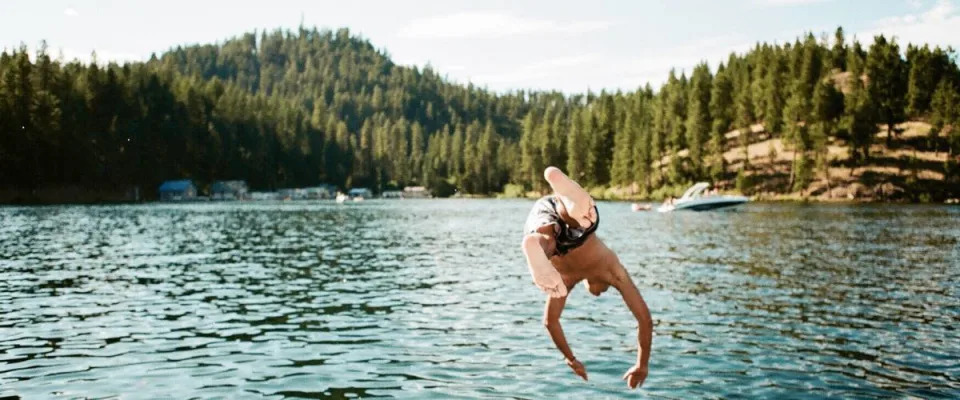
Diving in Coeur d'Alene, Idaho, US
@codykliu / Twenty20

Inbound moves: 60.4%

The Gem State wasn’t quite as prized in 2021 as it has been in previous years, plunging from first to ninth place.

Contrary to popular belief, Idaho isn’t all farmland and potatoes — its IT job market in particular has been flourishing and the state’s Department of Labor also reported strong population and job growth last year.

The low cost of living and abundance of outdoor recreational opportunities can make Idaho attractive to Americans seeking a more affordable lifestyle and open spaces as well.

“There’s a lot of positives especially if you’re the outdoors type. Huge swaths of wilderness in the state, desert in the south with more mountainous terrain and forests in the central and northern parts of the state. Even in Boise (where traffic can get ‘bad’), an hour of driving will get you into the wilderness,” says stormy370 on Reddit.

8. Oregon

Inbound moves: 60.5%

Lush forests and blue rivers delineate the Beaver State — however, its natural beauty wasn’t enough to stop it from slipping down the list.

Oregon took third place in United Van Lines’ list for 2021 and before that it held at No. 2 for three years in a row.

A sizable chunk of inbound movers (44%) said they chose Oregon for work-related reasons and that’s unsurprising considering the state’s thriving tech industry. A number of high-tech businesses are clustered around the Silicon Forest area around Portland.

That said, the state’s high cost of living and ballooning homeless population have become an issue for many.

7. Tennessee
Girl at  Tennessee State University, Nashville, Tennessee, US
@jazzze_phe / Twenty20

Inbound moves: 62%

Tennessee is home to more than just Graceland and fried chicken — plenty of Americans love the state for its low cost of living and affordable homes.

The Volunteer State has fairly low property taxes and won’t tax your Social Security benefits or income. Just be prepared to deal with sky-high sales taxes when you do your shopping.

The climate can be hit-or-miss for some people, as Larry Gwinn writes on Quora.

“If you hate winter, then Tennessee is a great state for you. Tennessee’s winter is mild and short. But, its summer is long and very humid.”

6. Alabama

Inbound moves: 62.1%

Sweet Home Alabama certainly lives up to much of the hype, ranking sixth place on United Van Lines’ list.

Residents in the Yellowhammer State benefit from extremely low property taxes and cheap home values.

However, Alabama’s job market was the top reason for both people moving out and into the state. The unemployment rate is fairly low, but median household income in the state is lower than the national median.

“Travel is easy and cheap in one of the most ecologically diverse states, meaning there is a ton to see and do in nature without spending much. Lots of diverse small/medium cities to visit … Alabama is also a sick hub for great weekend trips. Nashville, New Orleans, Atlanta are all reasonable to go to on a Friday after work and enjoy the weekend in,” says jsm2008 on Reddit.

5. Florida
Beach boardwalk, Florida
@Hanni / Twenty20

Inbound moves: 62.3%

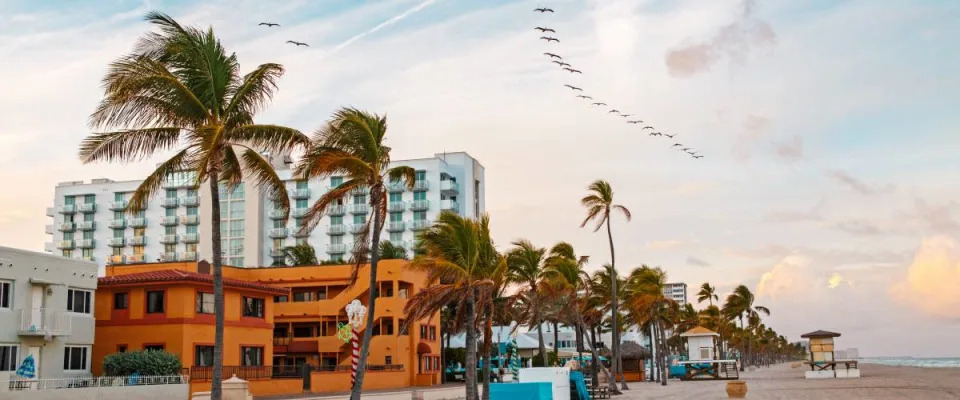
Florida’s got a little bit of everything for everyone, whether you’re hitting up the local beaches and theme parks or just looking for the ideal spot to settle down in your golden years.

Retirees adore the state (retirement was the top reason for almost 39% of inbound movers) for its excellent climate and recreational opportunities, as well as its tax-friendliness. There’s no state income tax, and the sales and property taxes are pretty average compared to the rest of the country.

It’s not all sunshine and rainbows in the Sunshine State, however, according to AdrianArmbruster on Reddit.

“It’s definitely not going to be all vaporwave aesthetics and Miami Beach sunsets all the time. Definitely don’t go expecting that. The primary industry being tourism both raises prices and depresses wages. Anyone thinking of coming here with a penny to their name may want to keep that in mind.”

3 (tie). West Virginia

Inbound moves: 63%

Those country roads are taking plenty of Americans into West Virginia — the state jumped up eight spots to make it to third place for inbound moves in 2021.

Close to half of those entering the Mountain State cited jobs as their main motivator, but a whopping 72% said they exited the state for the same reason.

West Virginia grapples with one of the worst poverty rates in the country, particularly with the decline of its coal industry.

However, Redditor OMothmanWhereArtThou says, “The cost of living in West Virginia is really low and it has so much natural beauty. If you’re an outdoorsy person, you can find a lot to get into. If you’re a fan of living near very few people, that can be easily achieved in WV.”

3 (tie). South Carolina
Elderly couple in  Magnolia Plantation and Gardens, Charleston, South Carolina, US
@speakboston / Twenty20

Inbound moves: 63.3%

South Carolina boasts a warm climate, friendly residents and outdoor attractions like Myrtle Beach and the salt marshes.

Like in 2020, the top reason for moving to the Palmetto State was retirement, and almost 70% of the new residents last year were 55 or older.

South Carolina is well known for its golf courses, beaches and historic buildings — and it’s pretty tax-friendly for retirees as well.

“There are plenty of gorgeous towns around: Beaufort, Hilton Head, Myrtle Beach and Charleston. I would even say that Charleston is perhaps the most underrated city in the U.S. I don’t think you can find that sort of wonderful, unique and well-preserved southern British colonial architecture anywhere else in the U.S.,” writes TheWalkingKing on Reddit.

2. South Dakota

Inbound moves: 68.8%

The Mount Rushmore State is clearly more than just the massive granite carvings it gets its nickname from — drawing almost 70% of its movers last year.

In fact, the desire to be closer to family was the main motivator for those relocating to South Dakota.

The cost of living is lower-than-average, plus the state has no income tax and low sales taxes.

“Sioux Falls is consistently rated one of the best places in the U.S. to live. It’s got a gorgeous parks system and lively local music scene. As to the rural parts of the state, it’s incredibly beautiful, basically the lyrics to ‘America the Beautiful’: beautiful, spacious skies; amber waves of grain; purple mountains majestically rising above a fruited plain,” writes nemo_sum on Reddit.

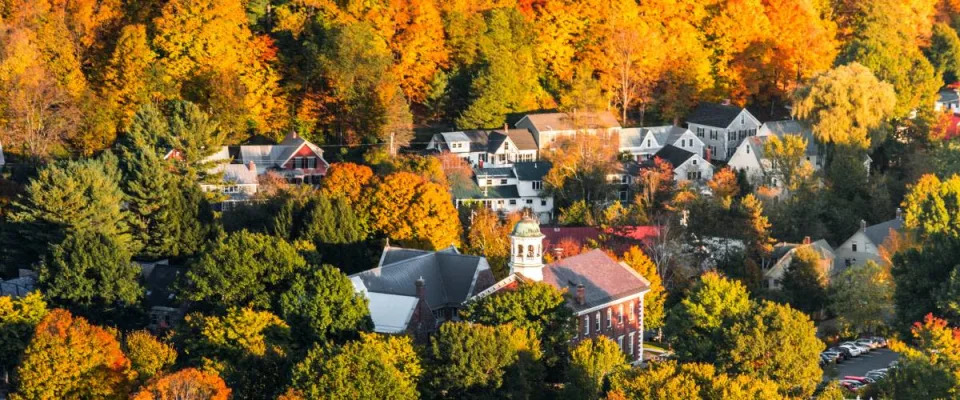
1. Vermont
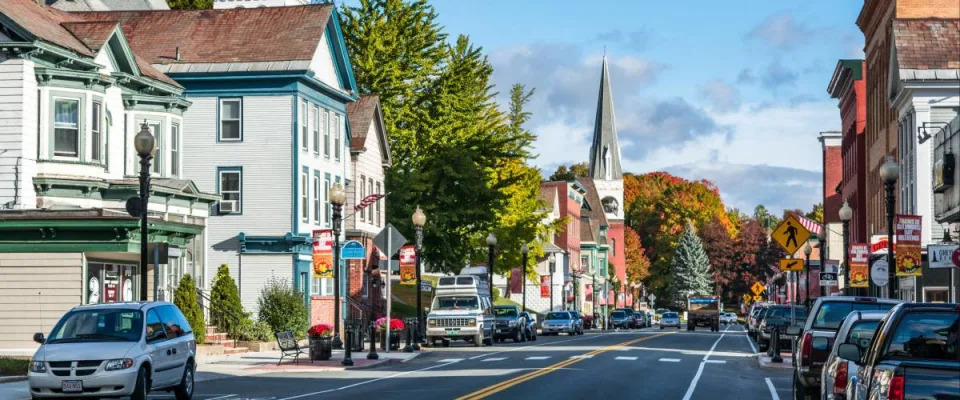
Autumn in Vermont
@eric_urquhart / Twenty20

Inbound moves: 74.3%

Despite being one of the least populated states in the nation, Vermont ranks No. 1 for the highest percentage of inbound moves in 2021.

Over 43% of inbound movers cited the jobs as their main reason for moving. The state has one of the lowest unemployment rates in the U.S., however it’s also considered quite expensive to run a business there, so it’s not ideal for launching a startup.

Redditor luxorange recommends the Green Mountain State for its natural beauty and recreational opportunities.

“It’s a really outdoorsy state. People are all about being outside, hiking, kayaking, biking, skiing. No matter where you live here, it is beautiful. The seasons are fun, it’s almost always a pretty drive, and the air is clean (seriously underrated feature of VT, how good the air smells).”

Rising seas fueled by climate change to swamp $34B in US real estate in just 30 years, analysis finds

USA Today

Rising seas fueled by climate change to swamp $34B in US real estate in just 30 years, analysis finds

Dinah Voyles Pulver, USA TODAY – September 8, 2022

Higher high tides, supercharged by rising sea levels, could flood all or parts of an estimated $34 billion worth of real estate along the nation’s coasts within just 30 years, a new report concludes.

Within the span of a 30-year mortgage, as many as 64,000 buildings and roughly 637,000 properties along the ocean and its connecting waterways could be at least partially below the tidal boundary level, the nonprofit Climate Central stated in a report released Thursday morning.

Seas are forecast to rise from 8 inches to 23 inches along the nation’s coasts by 2050, with the higher increases along the northern Gulf Coast and mid-Atlantic. As the oceans rise, every inch of additional water is expected to move farther inland making flood events worse and putting more properties at risk.

Latest climate report: 2021’s climate extremes show global warming has ‘no sign of slowing’

Tax dollars flowing into local governments will sink as rising water claims homes and land, lowering property values and sending a ripple effect through communities, said Don Bain, an engineer and Climate Central senior adviser.

The analysis concluded such losses could triple by 2100 in counties connected to the sea, depending on whether the world can rein in warming temperatures

The nonprofit looked at tax assessment data for 328 counties throughout the U.S. and tidal level property boundaries and elevation. Here’s what its analysis found:

Underwater

More than 48,000 properties could be entirely below the high tide lines by 2050, mostly in Louisiana, Florida and Texas.

Nearly 300,000 buildings could be at least partially under water by 2100. The value of buildings and properties below the high water level could rise to $108 billion, not including some 90 counties where the nonprofit couldn’t get tax assessor data.

Parishes under pressure

Parishes in low-lying Louisiana – where sinking ground compounds the effects of rising sea levels – are forecast to feel the brunt of the impacts. The analysis shows some 8.7% of the state’s total land area could be below water level by 2050.

Thirteen parishes rank in the top 20 among all counties and parishes for the most acres potentially below water level by 2050. More than half of the land in six parishes could be below water level by then, including Terrebonne, LaFourche, St. Charles, St. Mary, St. Bernard and St. John the Baptist.

Animals feel pressure too: Roseate spoonbills feeling the effects of rising seas and warming climate

Elevation matters

A scattering of counties in five other states also could feel bigger impacts.

New Jersey’s Hudson County, across the Hudson River from Manhattan, is among those, with more than 15% of its total acreage below the predicted higher water levels. It leads all counties in the nation with an estimated value of land and buildings at risk: more than $2.4 billion.

Also among the top 20 counties with the most acres predicted below water level by 2050 are:

  • Middlesex, along the Chesapeake Bay in Virginia
  • Monroe, home of the Florida Keys
  • Jefferson, Texas, on the northern Gulf coast at Beaumont
  • Dare, Tyrell and Currituck counties along North Carolina’s Outer Banks and Albemarle Sound

Among the counties with the greatest property values at stake are:

  • Galveston, Texas, $2.37 billion
  • Honolulu, Hawaii, $2.3 billion
  • Washington, DC, $1.4 billion
  • Miami-Dade, Florida, $1.3 billion
Losing land

As much as 4.4 million acres could fall below the shoreline boundaries that mark the line between private property and public land by 2050, a number the report estimated would double by 2100. The majority of that land in 2050 – 3.8 million acres – lies in just four states: Louisiana, Florida, North Carolina and Texas.

“Your land is going to be taken from you by the rising seas,” Bain said. “Nobody’s talking about that.”

The analysis used the relevant tidal boundary for each state, whether it’s the mean low water line, the mean high water line or the mean higher high water line, then calculated the land within each property that could fall below that boundary as seas rise.

They calculated the exposed tax-assessed value for properties that could be newly affected by higher water and multiplied the value of each property by the fraction forecast to be below the line. They used an entire building’s value when any of the building is at or below the line.

The loss of taxable value could greatly impact the budgets of many towns and counties, said A.R. Siders, an assistant professor in the University of Delaware’s Disaster Research Center. “If a town has no other income and is relying solely on property tax values, that town is not sustainable.”

Risky business

Climate Central is among numerous groups working to better define the nation’s climate risk.

The need for such information is huge as mortgage lenders, insurers and others try to discern what the future holds and what it means for business, said Bain, adding it’s important to balance sheets for governments, individuals and corporations.

“Climate change impacts are real,” said Mark Rupp with the Georgetown Climate Center at Georgetown University. “They are happening now, and they are affecting even the business world.

“How many mortgage lenders want to be lending for home mortgages in flood-prone areas, if they don’t think that they’re going to get paid back?”

Rupp also pointed to the number of insurance carriers who have pulled out of the market in Florida or become insolvent. He said it’s critical for local governments to get support from state and federal governments to plan and prepare in advance.

Inspire not frighten

The report’s conclusions aren’t meant to frighten or discourage people, Bain said. He hopes they give people information to influence outcomes and push officials at every level of government to begin working together now to adopt needed laws and regulations.

“I’s not too late to make course corrections,” Bain said. “Solving this problem is important because it’s a choice between better outcomes and really bad outcomes.”

It’s important to educate and inform people about what they’re facing so they can do the rest, Bain said. “I think we can have a bright and prosperous future but only if we put our minds and shoulders to it, and are well-informed and get after it.”

US Consumers See Home Prices Falling for First Time Since 2020

Bloomberg

US Consumers See Home Prices Falling for First Time Since 2020

Alex Tanzi – September 7, 2022

(Bloomberg) — For the first time in two years, US consumers expect home prices to fall over the next 12 months.

An August survey by Fannie Mae found that respondents see a 0.4% decline in housing prices compared with the prior month’s expectations for a 1.9% increase.

Consumers also anticipate that rental price growth will slow, with year-ahead expectations dropping nearly two percentage points, the steepest slide in data back to 2010, according to the survey released Wednesday.

The Fannie Mae report found that the share of respondents who say home prices will go up in the next 12 months decreased to 33% from 39%, while the percentage who expect them to fall increased 3 percentage points to 33%.

“The share of consumers expecting home prices to go down over the next year increased substantially in August,” said Doug Duncan, chief economist at Fannie Mae. “We also observed a large decline in consumers reporting high home prices as the primary reason for it being a good time to sell a home, suggesting that expectations of slowing or declining home prices have begun to negatively affect selling sentiment.”

Potential buyers anticipating further price declines and sellers not keen on giving up their lower, fixed mortgage rate may contribute to a further cooling in home sales through the end of the year, Duncan said.

A separate survey conducted by the Mortgage Bankers Association found that the average effective rate on 30-year fixed mortgage increased to 6.17%, the highest since mid-June, from 6.01%.

The Fannie Mae survey found that half of consumers think it would be difficult for them to get a home mortgage today — the largest share since October 2014.

Here’s why some homeowners skipped the refinance boom — and don’t regret it

Yahoo! Money

Here’s why some homeowners skipped the refinance boom — and don’t regret it

Gabriella Cruz- Martinez, Personal finance writer – September 7, 2022

As mortgage rates remain well above 5%, it seems homeowners who had the chance to refinance into historically low rates in the last two years but didn’t must be kicking themselves.

Instead, many probably made a financially savvy move, according to experts.

Nearly one-fourth of all homeowners refinanced their mortgage in 2021, according to data from the Federal Reserve Bank, when mortgage rates dropped below 3%. That refi boom is over, with activity falling to the lowest level since 2000, according to the Mortgage Bankers Association, leaving the 14.6% of homeowners with a current rate above 5% without many options.

“There are a lot of reasons why people don’t refinance,” Keith Gumbinger, vice president of HSH.com, told Yahoo Money. “You might find that loan amounts are too small to be bothered with, or you might be thinking about selling at some point in the future.”

Changing circumstances

Life happens and that can change your financial situation from where it was when you first purchased your home. For instance, a couple may have bought soon after marrying when they both had paying jobs. Five or six years later, things may look different and refinancing may not be in the cards even if rates are under 3%.

“You’ve since started a family and only one spouse is working or the other isn’t working full time to care for the child,” Gumbinger said. “Now your income might not even be enough to qualify you for the mortgage you’re already paying.”

Too small loan

Even if you want to refinance, a lender may not be interested because the outstanding balance is too small. “[The] paper work’s the same for a $1 million loan,” Gumbinger said, “but not nearly as profitable.”

Plus, what you would save overall on interest wouldn’t be as much with a smaller loan balance.

Planning to sell or tap
If you're planning on selling your home in a few years, a loan modification may be less expensive than refinancing your mortgage. (Credit: Getty Images)
If you’re planning on selling your home in a few years, a loan modification may be less expensive than refinancing your mortgage. (Credit: Getty Images)

Another “not-worth-it reason,” according to Gumbinger, may be when a homeowner plans to sell in the next year or two, so there’s little chance to get any benefit from a refinance.

“Depending on costs or the difference in monthly payment, there’s a chance that the refi can be a money-loser, too,” he added.

Similarly, older borrowers who intend to take out a reverse mortgage at some point soon — available to homeowners over 62 — may also want to avoid a refi no matter where rates are because the process pays off the existing loan and leaves no monthly payments.

The math doesn’t make sense

At least 15.2% of existing homeowners have a mortgage that’s over 10 years old, the FHFA survey found. Another 27.5% are right at the middle – with mortgages between 4 and 10 years old

“When you are well into the principal repayment portion of your loan — that is, you have far fewer than 30 years remaining on the term — almost the only way to achieve savings is to select a term that is only about as long as the remaining term or slightly longer, provided there is still a break in the interest rate compared to the existing loan,” Gumbinger said, “or to get a significantly lower interest rate compared to what your existing loan has.”

 Gabrielle Smychynsky, left, a first time home buyer, and her fiancé Wes White, right, take their dog Lucy and their seven-week-old puppy Ada for a walk in their neighborhood in Myrtle Beach, South Carolina on July 13, 2022. (Credit: Madeline Gray for The Washington Post via Getty Images)
Gabrielle Smychynsky, left, a first time home buyer, and her fiancé Wes White, right, take their dog Lucy and their seven-week-old puppy Ada for a walk in their neighborhood in Myrtle Beach, South Carolina on July 13, 2022. (Credit: Madeline Gray for The Washington Post via Getty Images)

You also have to consider your break-even point – or the amount of time it will take you to recoup your new loan’s closing costs — along with balancing what your monthly payment will be with the total interest you’ll pay over the life of the loan.

“Even with a lower interest rate, it can sometimes be difficult to overcome the costs of restarting the loan all over again — paying for a home for 37 years instead of the 30 you may have started with, for example,” Gumbinger said. “A lower payment may be the outcome of a refinance, but at the cost of a higher total interest charge.

Gabriella is a personal finance reporter at Yahoo Money. 

Scorching Temperatures Just Broke A World Record In California’s Death Valley

HuffPost

Scorching Temperatures Just Broke A World Record In California’s Death Valley

Ben Blanchet – September 3, 2022

Scorching Temperatures Just Broke A World Record In California’s Death Valley

Death Valley National Park in California scorched a world record for high temperatures on Thursday.

The park’s Furnace Creek thermometer hit 127 degrees this week, marking a world record for the hottest temperature ever recorded in September, CBS News reported.

Visitors flocked to the park on Thursday to experience the record-breaking heat, which came less than a month after 1,000 people were stranded in Death Valley due to flash flooding.

The rainfall, the park’s second-highest single-day total since 1936, reportedly buried some 60 vehicles in debris and mud, and washed away boulders and trees in the park.

Thursday’s record temperatures may not last long, according to KABC-TV.- ADVERTISEMENT -https://s.yimg.com/rq/darla/4-10-1/html/r-sf-flx.html

The news station reported that the weekend’s temperatures look like they’ll peak on Monday or Tuesday.

While historic, Death Valley’s incredible heat this week is not expected to break the world’s highest-ever recorded temperature of 134 degrees, CBS News noted.

That temperature occurred on July 10, 1913, also in Death Valley. It was recorded during a heat wave that featured multiple consecutive days with temperatures of 129 degrees or above, according to the National Park Service.

Earlier this week, California Gov. Gavin Newsom (D) declared a state of emergency as high temperatures continued to rock the state’s energy grid, KTVU-TV reported.

The move will allow people in the state to temporarily increase their energy usage as demand grows.

“This is just the latest reminder of how real the climate crisis is, and how it is impacting the everyday lives of Californians,” Newsom said. “While we are taking steps to get us through the immediate crisis, this reinforces the need for urgent action to end our dependence on fossil fuels that are destroying our climate and making these heat waves hotter and more common.”

UPDATE: Mill Fire explodes to 3,921 acres with no containment, Mountain Fire at 600 acres

Redding Record Searchlight

UPDATE: Mill Fire explodes to 3,921 acres with no containment, Mountain Fire at 600 acres

David Benda, Michele Chandler, Jessica Skropanic and Jenny Espino, Redding Record Searchlight

September 3, 2022

The fast-moving Mill Fire erupted on Friday near the area of the Roseburg Forest Products mill in Weed, a small city just over 50 miles from the Oregon border. 

There were reports of burn victims and destroyed homes in a neighborhood. Thousands were forced to leave their homes in the communities of Weed, Lake Shastina and Edgewood.

We’ve made these updates free to readers as an important public service to our North State communities. If you are able, help local journalism thrive by subscribing to your local newspaper, and check back here for updates.

10:20 p.m.: Mill Fire still growing, with no containment

Cal Fire on Friday night said sensor aircraft estimated the size of the Mill Fire to be 3,921 acres, roughly 1,300 acres more than fire officials believed earlier in the evening.

The fire, first reported at 12:49 p.m. on Friday, broke out at Woodridge Court and Woodridge Way, near the area of the Roseburg Forest Products mill in Weed. The Cal Fire-Siskiyou Unit via Twitter said the cause of the fire is under investigation.

Evacuations in Weed, Lake Shastina and Edgewood remain in place and Highway 97 remains closed.

8:40 p.m.: Mountain Fire doubles in size, Mill Fire unstable, Sheriff’s Office said

The Mountain Fire grew to 600 acres, twice its size two hours ago, according to Cal Fire.

Both the Mill Fire and Mountain Fire remain uncontained, according to Cal Fire.

“This incident (Mill Fire) is rapidly changing and our staff and partners are doing everything they can to get everyone to safety,” the Siskiyou County Sheriff’s Office said.

The sheriff’s office posted information to help those unable to reach family and friends in evacuation areas. They can call 530-842-8746.

An evacuation shelter is in use at the Yreka Community Center at 810 North Main St. in Yreka.

For information on evacuation zones go to www.zonehaven.com.

8:15 p.m.: Help available for animals in fire evacuation zones

The Siskiyou County Sheriff’s Office is offering animal welfare checks for people who had to evacuate from Mill and Mountain fire areas without their pets or livestock.

Evacuees can go to the Siskiyou County website at bit.ly/3Qc9Hsf and fill out a form to request a welfare check.

6:50 p.m.: Mill Fire explodes Friday afternoon

The Mill Fire exploded in size to 2,580 acres — up from 900 acres at 3 p.m., according to Cal Fire.

There is no containment on the fire, burning north of Weed near Lake Shastina.

The blaze damaged and destroyed multiple structures, including homes, but Cal Fire has not yet released the total number of structures.

The cause of the fire remains under investigation, Cal Fire said.

6:30 p.m.: Mountain Fire grows to 300 acres

The Mountain Fire burned 300 acres of forest eight miles southeast of the small town of Gazelle, according to Cal Fire.

It is not contained, Cal Fire said.

The fire started before 4 p.m. near China Mountain Road, west of Interstate 5, north of Weed.

5:30 p.m.: Some tankers being sent to nearby Mountain Fire

While firefighters continue to battle the Mill Fire burning in the area of Weed and Lake Shastina, six air tankers are being diverted to a second fire that started about an hour ago in the area of Gazelle.

The Mountain Fire is burning in heavy brush on the west side of Interstate 5 north of Weed. Firefighters there have reported that no structures are threatened.

5 p.m.: Wind pushing fire over dry hot terrain

Firefighters continue to battle strong winds while they fight the Mill and Mountain fires.

Those conditions won’t change until Friday night, said Jay Stockton, meteorologist with the National Weather Service in Medford. Weather conditions are ripe for fires to continue spreading until 11 p.m.

Friday afternoon, strong southeast winds blew up to 24 mph, with 36 mph gusts, Stockton said. Temperatures reached 98 degrees in Weed and brush is incredibly dry: 5% humidity.

“That combination of windy and dry is what’s creates conditions for rapid fire growth,” he said.

A red flag warning is in effect until 11 p.m. Friday, at which time the winds should calm down, Stockton said. Temperatures should cool to the mid-50s, increasing moisture in the air.

All that could help firefighters get a better handle on the fires, he said.

4:14 p.m.: Power outage reported in Weed, Mount Shasta, Lucerne

About 8,300 residents in Weed and Mount Shasta in Siskiyou County and Lucerne in Lake County were hit by a power outage shortly before 1 p.m. on Friday, according to electric power company PacifiCorp.

A cause of the outage is under investigation, said company spokesman Brandon Zero. Crews have been dispatched to the area, he said.

A smoke plume from the Mill Fire rises over downtown Weed on Friday, Sept. 2, 2022.
3:55 p.m.: Fire threatening Carrick outside Weed

Firefighters are communicating to each that the fire is threatening to jump Highway 97 and burn into the small community of Carrick just outside Weed.

3:20 p.m.: Mill Fire balloons to 900 acres

The Mill Fire burning north of Weed toward Lake Shastina is now more than 900 acres, Cal Fire reports.

Firefighters are asking for all strike teams to come to the Jackson Ranch Road area. Earlier, the fire jumped Jackson Ranch Road and started burning into Lake Shastina.

Currently, there is no containment.

All zones east of Interstate 5 from Weed to county road A12, south of county road A12 from Grenada to Highway 97, west of Highway 97 from A12 to I-5, Cal Fire said.

There is an evacuation Shelter at the Karuk wellness center in Yreka at 1403 Kahtishraam.

Meanwhile, all remaining Weed High School students were bussed to Mt. Shasta High School for pick up, officials said.

2:50 p.m.: Fire burning into Lake Shastina

The Mill Fire has jumped Jackson Ranch Road and is burning into the community of Lake Shastina, which is north of Weed, crews battling the blaze report. Firefighters also have asked for at least five more strike teams to help fight the fire.

Meanwhile, a temporary evacuation center is being set up at the Siskiyou County Fairgrounds in Yreka, according to scanner reports.

2:45 p.m.: Mill Fire grows to 555 acres

The communities of Weed, Lake Shastina and Edgewood are under evacuation orders as of 2 p.m. Friday due to the Mill Fire, according to the Siskiyou County Sheriff Office’s Facebook page.

Residents in those areas are asked to leave immediately.

Use caution, as emergency vehicles are assisting with evacuations, structure protection and fire suppression efforts. For more information, call 2 1 1. Real-time evacuation zone statuses are available on aware.zonehaven.com.

The Mill Fire near Weed has grown to 555 acres since first being reported on Friday afternoon, officials said.

The wildfire broke out the same day that the area was under a red flag warning due to high temperatures, gusty winds and low humidity. The chance of rain in the area remains in the single digits through Tuesday.

The wind was blowing north at 20 mph in the Weed and Lake Shastina areas on Friday afternoon, according to Windfinder.com.

Southerly winds of about 20 mph, with gusts as high as 30 mph, could emerge through Friday night, according to the National Weather Service.

The Mill Fire as seen from Interstate 5. The fire started on Friday afternoon, Sept. 2, 2022.

Saturday’s forecast calls for sun with widespread haze and a high near 89. Calmer winds becoming northwest at between 5 to 8 mph are expected in the afternoon, according to the weather service.

Pacific Power had not reported any outages in greater Weed as of mid-afternoon on Friday.

1:55 p.m.: Students to stay on campus

Firefighters battling the Mill Fire are recommending not to release students at Weed High School. They are asking the students to stay on campus for now, according to scanner reports.

Meanwhile, mandatory evacuations are being called for all residents east of Interstate 5 to Jackson Ranch Road. Firefighters say the blaze has reached Jackson Ranch Road.

Also, all of Lake Shastina is under a mandatory evacuation order.

Evacuation warnings are in place along Highway 97 in the Mt. Shasta Vista neighborhood.

1:49 p.m.: Evacuations ordered

Evacuation orders have been issued in the community of Weed due to a fire that started Friday afternoon in the area of Roseburg Forest Products mill.

Highway 97 is closed from the junction of Highway 265 in Weed to south of Macdoel due the Mill Fire, the California Department of Transportation said.

Firefighters are also asking for Jackson Ranch Road to be closed so residents who are evacuating in that area have a clear route out of the neighborhood, according to emergency scanner reports.

The fire also has reached Hoy Road.

Firefighters report that traffic in the area is backed up due to all the evacuations.

At least one ambulance has been dispatched to treat a burn victim and a medical triage has been set up to treat other burn victims, scanner reports said.