Proud purple to angry red: These Florida residents feel unwelcome in ‘new’ Florida

USA Today

Proud purple to angry red: These Florida residents feel unwelcome in ‘new’ Florida

Tom McLaughlin, USA TODAY NETWORK – August 21, 2023

When Alexander Vargas was a senior at Port Orange's Spruce Creek High School in 2021, he spoke at a school board meeting to fight for recognition of LGBTQ+ Health Awareness Week. The school board voted against the idea, but the superintendent later decided the week should be acknowledged.
When Alexander Vargas was a senior at Port Orange’s Spruce Creek High School in 2021, he spoke at a school board meeting to fight for recognition of LGBTQ+ Health Awareness Week. The school board voted against the idea, but the superintendent later decided the week should be acknowledged.

Jean Siebenaler moved to Florida following her retirement to bask in the warmth of the Sunshine State.

“I finally thought I’d be sitting on the water with an umbrella drink in my hand,” she said.

The Milton resident, a military veteran and retired physician, now says she wonders if Florida was where she needed to relocate after all. Having been politically active in her home state of Ohio, she finds beach time consumed by “steaming and stewing” over the state of the state and local politics.

“It’s very upsetting, the direction we see Florida heading,” she said. “Every day I wonder why I am living here.”

For many, Florida has changed. What was once a proudly purple state has turned an angry red, they say. Gov. Ron DeSantis, with the dedicated backing of a Republican supermajority in the state legislature, is waging war on what he calls “wokeism” — a term he has loosely defined as “a form of cultural Marxism.” But many — people of color, the LGBTQ+ community, immigrants, non-Christians, teachers, union members, students — feel it is a war against themselves, as they face ridicule, discrimination, and, potentially, violence.

The NAACP, Equity Florida and the League of United Latin American Citizens each issued travel advisories for Florida. The NAACP advisory states, in part, “Florida is openly hostile toward African Americans, people of color and LGBTQ individuals.”

“Under the leadership of Gov. DeSantis, the state has become hostile to Black Americans and in direct conflict with the Democratic ideals that our union was founded upon,” the advisory states.

Democrats feel vilified because of affiliation

There exist widespread reports of people abandoning the state because they no longer feel welcome here. Following her family’s exodus to Pennsylvania in May, former Brevard County resident and Democratic Party activist Stacey Patel told FLORIDA TODAY, “It’s like breathing, you know? After holding your breath for a really long time.”

Nikki Fried, the state’s former commissioner of agriculture and current Florida Democratic Party chair, predicted 800,000 immigrants had left the state after DeSantis signed SB 1718 into law. It imposes strict restrictions and penalties to deter the employment of undocumented workers in the state.

Democrats also count themselves among the groups feeling persecuted. Patel’s family was vilified, she said, for its party affiliation.

Siebenaler, who has stepped into the position of legislative chair for the Democratic Women’s Club of Florida, attended an early June meeting of the Santa Rosa County Commission to call out Commissioner James Calkins for labeling the Democratic Party as evil.

“I took an oath to defend against all enemies, foreign and domestic,” she told the governing board. “And I must speak out against the hate speech that is emanating from the Santa Rosa County Commission dais.”

Calkins has been admonished on several occasions by the public and his peers for his incendiary rhetoric and disruptive behavior. But Siebenaler is not one to typically show up at county board meetings.

“It’s very, very upsetting. We’ve lost all sense of sanity, logic and civil discourse. It’s so difficult to sit in on meetings because it’s such a clown show,” Siebenaler said. “People are so dramatic, so theatrical. It makes me just so sad that we have gotten to the point where the average person doesn’t want to go to these meetings, where all people do is yell and scream.”

Teachers are heading for the exit

Similarly, according to Lisa Masserio, the president of the teacher’s union in Hernando County, a minority segment of that county’s school board attached to Moms For Liberty is creating chaos in that area.

The school district typically provides at its May 30 meeting an accounting of how many teachers will be leaving the school district that year. This year it was announced that of the 49 people not returning to Hernando County schools next year, 33 had voluntarily tendered their resignations.

Masserio estimated the number of resignations had approximately doubled those of the year before and would create “the highest number of vacancies we’ve had in a long time.”

“We’ve seen so many resignations of people who have made the decision ‘I don’t want to teach here,’ ” she said.

Eighty-three percent of the Hernando County teachers with three years or less experience were among those who resigned, said Dan Scott, a former World History teacher at Springstead High School.

Scott, who was in his third year of teaching, was one of “13 or 14” at Springstead alone who chose to pursue another occupation, in large part, “based on the overhead decisions in the government of Florida,” he said.

“There are a lot of limitations being placed on teachers in regards to how we can communicate with students and what kind of content we’re allowed to discuss within the curriculum,” he said. “Education has become a very hostile environment from top to bottom.”

Among the limitations, Scott said, were soon-to-be-imposed sanctions on what text he could use. Among the outrages, a school board member stalking school hallways searching for items that didn’t correlate with the curriculum. In other words, Pride flags, Scott said.

“Not everyone left for the same reasons I did. For me, I didn’t want to teach if I couldn’t teach the truth and if I couldn’t represent students the way I thought I should,” he said. “I let every student be exactly who they wanted to be, whatever religion, whatever they identify as. I tried to give everybody their space. Whenever I couldn’t do that any more I realized I didn’t need to be in this career.”

Scott has returned to school himself to embark on the study of technology and cybersecurity, and Siebenaler remains steadfast in her dedication to battle the state’s continuing rightward trek. “I’m hoping it’s a blip on the historical radar and that I live to see sanity come back,” she said.

Others around Florida are facing what they view as ostracization by their state government in different ways. These are their stories:

‘Fighting with one hand tied behind your back’
David Lucas, left, unwittingly became the poster child for urban renewal in the early 1960s when he was a small child. His father, Harold Lucas, at right, was shopping for fishing poles in Sears on Beach Street in Daytona Beach when a man asked if it was OK if he photographed his son. The elder Lucas said OK, not realizing the photographer was a government official involved in the urban renewal program that wound up leveling many homes and businesses in Midtown.
David Lucas, left, unwittingly became the poster child for urban renewal in the early 1960s when he was a small child. His father, Harold Lucas, at right, was shopping for fishing poles in Sears on Beach Street in Daytona Beach when a man asked if it was OK if he photographed his son. The elder Lucas said OK, not realizing the photographer was a government official involved in the urban renewal program that wound up leveling many homes and businesses in Midtown.More

David Lucas grew up listening to his 90-year-old father’s stories of how cruel the world was to Black people in decades past.

While the 60-year-old Lucas has been spared much of what his father’s generation endured, he’s been getting an unexpected reality check on how some things have yet to improve for minorities.

The flurry of bills passed in Tallahassee over the past two years that impact voting, immigration, education, guns and LGBTQ+ people has left his head spinning.

“I just don’t understand how they can make so many changes so fast,” Lucas said. “As a Black man it’s alarming because we have so many different fronts we have to fight.”

The new laws have already impacted Lucas and his wife, who works alongside him at their Jamaican food restaurant in Daytona Beach’s Midtown neighborhood.

She’s from Jamaica, and while she’s not a U.S. citizen yet, she’s in the United States legally and has a visa. Some of Lucas’ friends from Jamaica, other Caribbean islands, Russia and Poland also have visas, but others are undocumented.

Several of those friends cleared out of Florida and headed north more than a month ago after a new immigration law left them scared they could be sent back to the countries they chose to leave.

“They were people who had lives here,” Lucas said.
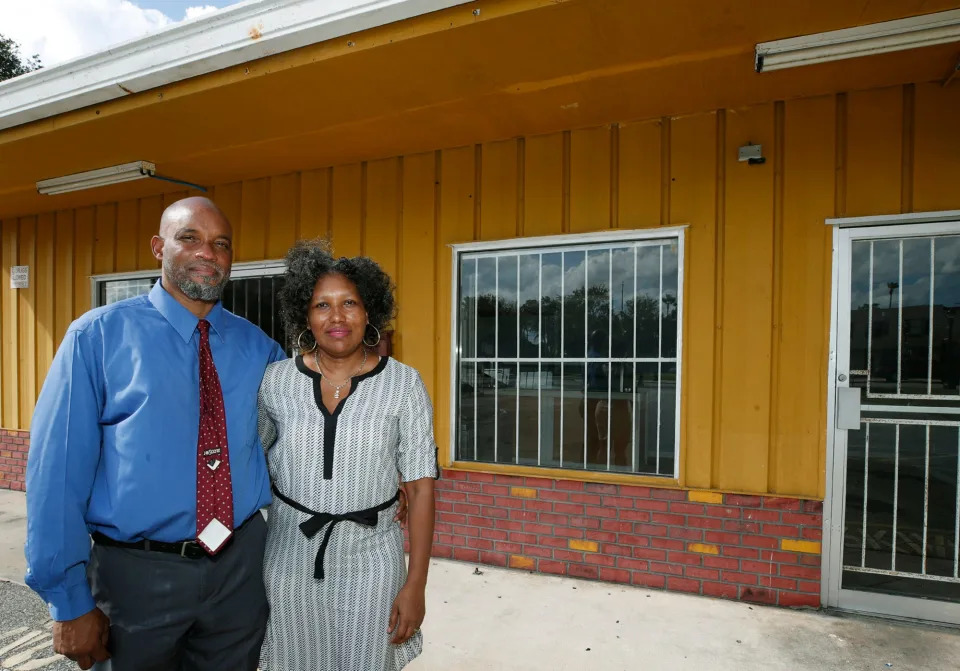
David Lucas and his wife Claudette are shown in front of their restaurant, A Golden Taste of Jamaican Food and Treats, on Mary McLeod Bethune Boulevard in Daytona Beach. Lucas is still trying to digest all the new laws passed in Florida the past two years that impact voting, education, immigration, guns and LGBTQ+ people.

The new law requires employers with 25 or more workers to use the U.S. Department of Homeland Security’s E-Verify system to confirm employees’ eligibility to work in the United States beginning July 1. E-Verify is an Internet-based system that compares information entered by an employer from an employee’s Form I-9, Employment Eligibility Verification, to records available to the U.S. Department of Homeland Security and the Social Security Administration to confirm employment eligibility.

The new Florida law imposes penalties for those employing undocumented immigrants, and enhances penalties for human smuggling.

The statute also prohibits local governments from issuing identification cards to undocumented immigrants, invalidates ID cards issued to undocumented immigrants in other states, and requires hospitals to collect and submit data on the costs of providing health care to undocumented immigrants.

Lucas is also bothered by a new law that will allow people to carry concealed weapons without securing a permit, taking a previously required class, or getting fingerprinted.

“You’ll have a lot of armed heroes,” Lucas predicted. “A lot of people don’t know how to use a handgun, but they’ll have their chest poked out waiting for a reason.”

Lucas said permitless carry has him personally worried.

“Now I don’t want to go anywhere there’ll be a lot of people,” he said.

A third of Black men in the United States have felony convictions, which prohibits them from purchasing or possessing a firearm. Lucas is afraid that’s going to mean many of them will be left vulnerable as more people than ever will be carrying concealed firearms without a permit.

Lucas is also bothered by recent changes in Florida laws that could make it more difficult for some people to vote.

“Voting is most important because that’s how things are changed,” he said. “That’s how jobs are created and taken away, laws are created and taken away. If you don’t have the strength of voting, then you’re basically fighting with one hand tied behind your back.”

New laws impacting what’s taught in Florida classrooms are also not sitting well with Lucas.

“I have children now that are in school not learning history the way it happened,” he said.

It appears to him to be an effort to erase pieces of history “like it doesn’t exist.”

Lucas said some people around his age aren’t pushing back on recent changes impacting minorities.

“They close their eyes and hope it’ll get better,” he said. “They say we’ll just have to live with it. Younger people aren’t going to have it. They have groups trying to fight it.”

‘Pretty damn depressed’
Erin Rothrock of Lakeland is a transgender man. He said the current political atmosphere in Florida makes him depressed and scared.

Until recently, Erin Rothrock felt relatively stable and content living in Florida.

Rothrock, a veterinarian and a married father of four (with another on the way), was considering buying into a clinic to become a business owner. His wife has a well-established law practice. Their children are enmeshed in their schools and have plenty of friends.

But Rothrock, a transgender man, no longer feels secure in Florida, his home since 2009.

“Emotionally, if I think about it, I get pretty damn depressed,” said Rothrock, 39, a Lakeland resident. “And I get scared.”

Rothrock said the climate of acceptance in Florida for LGBTQ+ people, and especially for transgender residents, has dramatically altered.

“It really feels like it’s really changed in the last six months,” he said. “Before that, it really felt like — OK, yeah, there are some conservative people around, but things aren’t bad. And now it’s just like — OK, now we have this environment where these conservative ideas and these conservative people are just making life miserable for people that are living here.”

He added: “I mean, it’s really uncomfortable. It’s off-putting. It’s unwelcoming, and it feels dangerous.”

Discussions with other transgender people have lately taken on a fraught quality, Rothrock said.

“So, conversations I’ve had with a lot of other trans people — besides just the usual, ‘Hey, how you doing? How’s life? How’s school? How’s work? How are the kids?’ — it’s ‘How are you doing? How are you feeling? Have you had any problems? Have you had any trouble getting your meds? Are you going to move? Where are you going? I’ve heard this place is safe,’ ” he said.

Rothrock and his family are considering a move out of Florida. He said he knows other transgender people who have already taken that step.

“I’ve got a friend in Canada that’s begging me to move up,” he said. “They’re offering to assist me. I’ve got a friend in New York begging me to move up. They’re offering to help me.”

Rothrock said that what’s happening in Florida seems to counter the prevailing overall trend in the country.

“I feel like nationally there’s a big push and pull because we know that the general consensus is that most people are OK with gay marriage, support gay marriage,” Rothrock said. “They support transgender people being able to transition and use the restroom that they fit into. But I feel like there’s this real pushback from that conservative base. At this point, I think they’ve outmaneuvered the progressive side.”

The push for new laws — in Florida and elsewhere — targeting medical care and other aspects of life for transgender residents seems a reaction against their increased visibility and acceptance, Rothrock said.

“I think it’s that backlash to the small gains in equality that we’ve made,” he said. “You know, we see it time and time again, historically, that whenever minorities get progress and make some advancements, there’s always a backlash. After the Civil War, there were these Jim Crow laws because Black people got too much power. Marriage equality (emerged), and now we have these new transgender restrictions and restrictions on what people can do.”

New guidelines on gender-affirming care are affecting adults and not only minors, Rothrock said. He recently had to scramble to find a new provider for his regular supply of hormone treatment and briefly ran out of medication.

“I don’t do well mentally, my mental state declines, when I’m not on my medication,” he said. “So I’ve got a therapist; I talk to her on a regular basis. I do everything I can to mitigate those things. But that’s extra mental baggage.”

‘Fear culture’ in the classroom

There is ‘no way’ retired educator Lillian De La Concepcion Martinez would step back into the classroom to do the work she once loved: teach Spanish and Art History to students in Manatee County.

Born to Cuban parents in Miami and raised in Fort Lauderdale, Martinez served as a hospital corpsman in the U.S. Coast Guard in the mid-1970s, and worked as an educator at Manatee County schools from 1989 until she retired in 2020.

“I’m of a different generation,” Martinez said. “When I showed up to boot camp, my staff sergeant looked at me, because I was this pretty girl, tan, nice clothes and I had this designer luggage with me. Nobody told me I couldn’t bring any clothes and I was carrying my suitcase.”

“He gets all us girls together and says, ‘well you girls are going to learn to cuff like a man or grow hair on your chest.’ Can you imagine that now? It’s almost like people are too sensitive nowadays, they take everything personally,” she said.
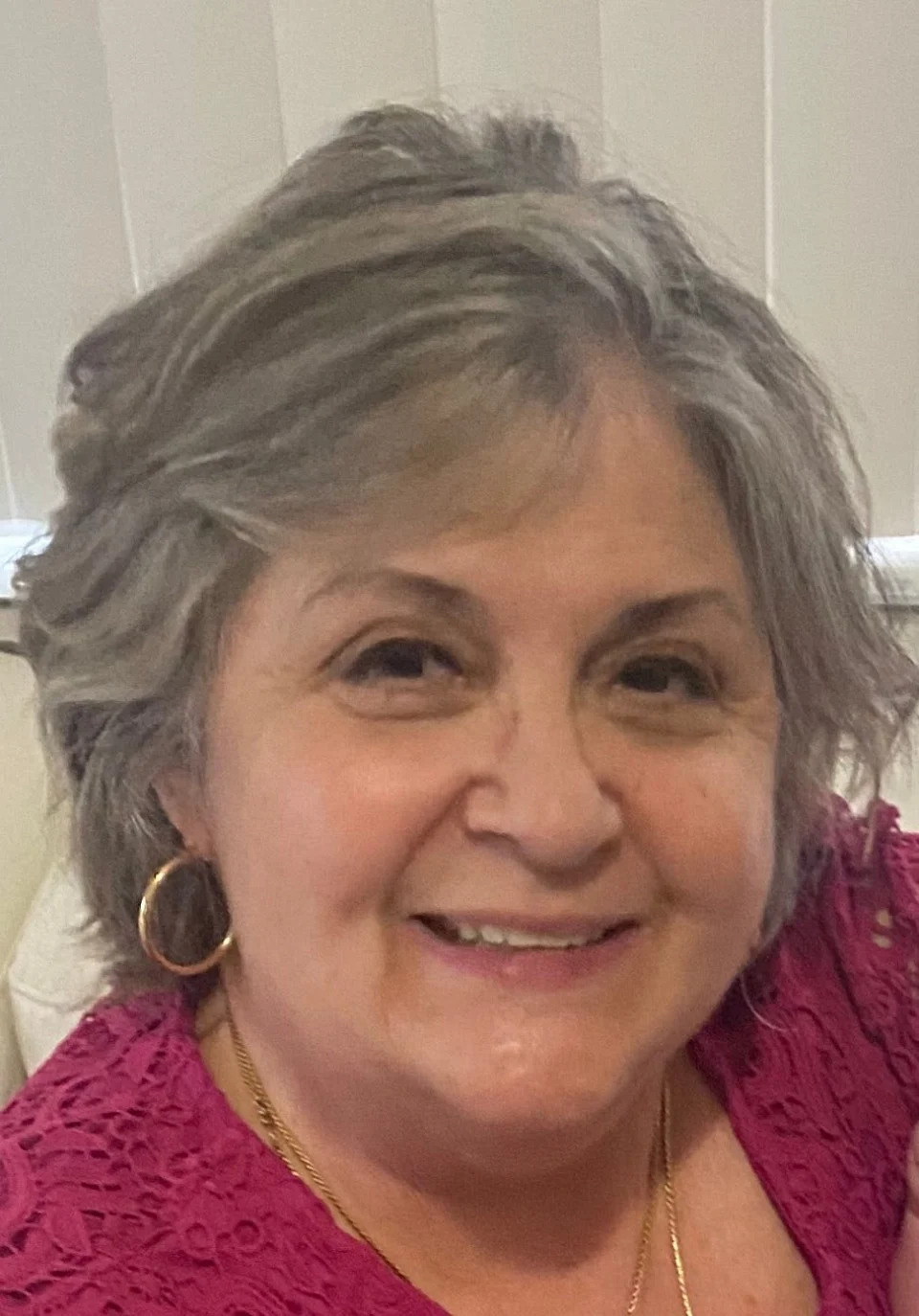
Lillian De La Concepcion Martinez

But he is glad she never had to experience the fear her former coworkers say they experience as educators today.

“There is a fear culture in the classroom now,” Martinez said. “I’m glad that I retired when I did, because I don’t know that I would want to teach under these circumstances. They did call me a few months back because they wanted to know if I wanted to come back and teach. I said, not ‘no,’ but ‘hell no.’ There is no way.”

Martinez began her career teaching English to migrant students as a tutor in Manatee County, then as a parent social educator. She attended the University of South Florida at night, and when she graduated in 1999 she became a teacher. Her last teaching job was at Lakewood Ranch High Schoo from 2003 until she retired.

She loves to teach, and always enjoyed using music and poetry and other outside-the-box strategies to teach her students.

“I just have a love for the language, for the culture, so I like to get them enthused,” Martinez said. “I love teaching Spanish 1 because they are fresh, but I really love teaching (Spanish) 4 because I could do so much with them culturally, and with poetry.”

“I think the last couple years (the song) “La Gozadera” was very popular,” she said. “I played that one for my level one kids like their second day. I gave them a sheet and said ‘write down how many countries that they say in Spanish that you recognize,’ just to see what they could hear, and they would surprise themselves when they were able to pick out a lot of words.”

“My kids had to memorize José Martí poems,” she said. “I said ‘guys, it will help with your language’ because of the flow. You can’t come up here and just say, ‘Yo soy un hombre sincero, de donde crece la palma.’ You have to have emotion. That’s what they had to work on and it helped with their fluency.”

But today, under the watchful eye of parents and politicians, Martinez said she doesn’t know how others would perceive many of the books she kept in her classrooms, or the historically accurate lessons she imparted to her students.

“I had a lot of books in my classroom by Spanish authors,” she said. “Books that I had read, and they were open and free for kids that wanted to take a book and read it. I did have a lot of multicultural-type books. Biographies on Hispanic people, artists. Frida. Dalí. Celia Cruz. Roberto Clemente.”

“And I’m hearing that a lot of those books are being pulled now, because they reflect a culture that’s different,” she said. “What is it, that it could ‘stress them out’ for whatever reason. Like with Celia Cruz, you have to talk about communism. She fled Cuba, and she said as long as Castro was alive she would never set foot in Cuba again. That’s very political. I don’t know if I could teach that now. You know? Because that’s a political statement. And Celia Cruz is Afro-Cuban, she identified as that. Could we even say that?”

Martinez questions the future of art history classes, especially after an incident in March when Hope Carrasquilla, a former principal at the Tallahassee Classical School, was forced to resign after teaching sixth-grade students about Michelangelo’s “David” and showing photos of the masterpiece sculpture.

“Somebody complained that it was pornographic,” Martinez said. “I just rolled my eyes and told a former colleague of mine that is also retired, I said, ‘you wait and see.’ This is after they banned the AP African Studies program. I said ‘pretty soon, they are going to drop AP art history,’ because there is nudity in AP art history.”

She wonders about her lessons about the casta paintings, and how lessons about their historic significance would be perceived today.

The paintings were drawn in the 18th century as a way to establish hierarchical scale of races after Spanish colonization of the Americas led to anxiety over racial mixing between Spanish colonizers, indigenous people and African slaves.

“The casta paintings, it’s treated like a work of art but it’s really an anthropological piece, because of what they documented in that artwork,” Martinez said. “I talked about one, but there were others. It’s really about the mixing of the races, and that white European is No. 1 on the hierarchy.

“I don’t know if that would fly right now,” she said.

“I like history, so I used art to teach something about the stuff that was going on,” she said. “It was never like ‘oh my god, Spaniards were bad, or anything.’ No. Those are just facts, it’s just the way it was. We can’t change history, all we can do is just not repeat it.”

“Gut punch after gut punch’

Andy Crossfield was in an airport in Lyon, France, last year when a fellow tourist from North Carolina learned that he and his wife, Emily, hailed from Florida.

“Don’t you just love your governor?” the woman asked.

Crossfield replied, “Are you kidding?”

Crossfield, a Lakeland resident and a self-described liberal Democrat, said the episode in France offered a reminder of his status as an undisputed political minority in Florida.

A Georgia native, Crossfield moved to Florida in 1978, during the tenure of Gov. Reubin Askew, the state’s third-to-last Democratic leader. Crossfield said that he didn’t become politically engaged until after his retirement in 1997 from a career as a mutual fund wholesaler.

He has since served as president of the Lakeland Democratic Club and an officer with the League of Women Voters of Polk County.

Crossfield, 70, said Democrats and Republicans seem to perceive virtually all occurrences through different lenses. He compared the phenomenon to the 2015 internet fad involving a photo of a dress that some perceived as blue and black and others as white and gold.

“We see instances of an event, and right away we try to figure out, ‘Is that good for my side, or is that bad for me?’ ” he said. “And this is politics taken to the extreme.”

Crossfield said the political divide has become personal for him and fellow Democrats. He said his relationship with his brother, who is conservative, has become strained.

“Everybody’s lost friends and neighbors over this,” he said. “You can’t have anything in common when you wish a completely different future for the country.”

Has Crossfield maintained friendships with any conservative Republicans?

“I try,” he said. “They make it difficult. I mean, they’re intelligent people, but they want to believe the most ridiculous things. I had a woman tell me — that I had a pretty good relationship with, I guess — that COVID was a fake. All these people that were dying, (it) was just a lie. And that (former President Donald) Trump had intercepted the virus and had his people manipulate it into something benign.”

Andy Crossfield, a self-described liberal Democrat living in Lakeland, holds a spark-spitting, windup u0022Trumpzillau0022 toy in his office.

Crossfield said it is “humbling” to be a Democrat in Florida at this point. He is highly critical of the policies promoted by DeSantis and the Legislature.

“We seem to have Jim Crow 2.0 now, because the attack on voting rights is very frightening,” he said, “The restrictions that Florida has put on people who just want to register people to vote is outrageous.”

Crossfield said he now avoids watching the news because he finds Florida’s politics so irksome.

“I think the electorate, the populace, is responsible for this,” he said. “Life is so hard that they’ll take somebody who wants to stick it to somebody they don’t like, rather than make my life better. I hate to say that, but that’s what it looks like to me.”

Crossfield lives in Polk County, which has not elected a Democrat to any partisan office in well over a decade. In recent cycles, some Republican legislators and county commissioners have been reelected without opposition.

“We have a catch-22 that I don’t know how to solve,” he said. “You can’t get quality candidates unless you have support from the grassroots. And you can’t get grassroots support after gut punch after gut punch results from elections without a quality candidate. I don’t know what breaks first.”

Crossfield empathized with liberal friends who yearn to flee the state.

“Yeah, there’s a lot of people who say, ‘Well, I’m going to leave,’ ” he said. “Somebody on Facebook posted this thing, saying, ‘Don’t leave Florida. Fix it’. And I think I responded, ‘Florida is not an old car that would shine with a little TLC. In fact, every time we take it in for repairs, the mechanic is stealing parts off of it.’ That’s where we are.”

When asked if he has become depressed about Florida’s politics, Crossfield found optimism in the performance of Lakeland Mayor Bill Mutz, an evangelical Christian and a Republican who has defied some expectations by supporting the removal of a Confederate statue from a downtown park and by not blocking the city’s issuance of LGBTQ Pride proclamations.

Crossfield said he now concentrates on small, concrete measures to improve the lives of his fellow citizens. For example, he and others in the local chapter of the League of Women Voters are promoting the distribution of gun locks.

“All we’re trying to do is just pick these areas that we can make some good, some change,” he said. “And yeah, that gives me hope.”

‘To hell and back because of who they are’
Transgender Stetson University student Alexander Vargas wants the same things other people his age do: To finish college, find a career he enjoys, and share his life with friends and family. Some new state laws are making his day-to-day life harder, including one measure that's making it more difficult for him to find a bathroom he can legally use.
Transgender Stetson University student Alexander Vargas wants the same things other people his age do: To finish college, find a career he enjoys, and share his life with friends and family. Some new state laws are making his day-to-day life harder, including one measure that’s making it more difficult for him to find a bathroom he can legally use.More

Alexander Vargas is a 19-year-old college student. His biggest worries should revolve around getting good grades, figuring out what kind of a career he wants after college, and deciding what he wants to do for fun every weekend.

Instead the Stetson University psychology major is always reminding himself to steer clear of public men’s restrooms so he won’t get fined for using bathrooms that align with his gender identity, but not the gender he was assigned at birth. Stetson officials have set him up with a one-person restroom he can use on campus, but once he leaves school property, bathroom access becomes a problem again.

He’s also adjusting to new state government rules that have made it more complicated for him to get the testosterone his doctor prescribes so he can more fully live as a male.

The young transgender man is trying to figure out if he should move to another state where basic day-to-day living wouldn’t be such a struggle, and he could escape the worsening anti-LGBTQ+ climate in Florida.

“Moving out of Florida is a last resort if things get worse, like if I can’t receive my gender-affirming care,” Vargas said. “I could move to another state and switch schools. It would be the easiest way to do it.”

He has both a “Plan B” and a “Plan C,” but he hopes he never feels compelled to use either one. Vargas would prefer to stay right where he is.

Vargas has a very supportive family he still lives with in eastern Volusia County. His partner and job are in the area.

He would love to finish his last two years of college at Stetson as he progresses toward his goal of working with autistic children and using art therapy as a form of communication for the kids when they become nonverbal.

“My life is here, and the thought of uprooting it is terrifying,” he said.

Vargas has been called a freak and he’s had slurs hurled his way.

He’s seen others in Florida subjected to the same things.

“I have trans friends who’ve been to hell and back because of who they are,” Vargas said.

Two years ago, when he was a senior at Spruce Creek High School, he found the courage to speak out.

Vargas attended a school board meeting to advocate for the LGBTQ+ community in the wake of a board vote that shot down recognition of LGBTQ+ Health Awareness Week. The school superintendent eventually decided the week should be acknowledged.

Vargas knows his family and friends have his back, and that empowers him to advocate for LGBTQ+ rights. But if things ever do get bad enough for him in Florida, he’ll start a new chapter somewhere else.

“I’m just waiting for that last straw,” he said.

Fighting against misinformation and fear

Grace Resendez McCaffery, the publisher of the Pensacola-based La Costa Latina Newspaper, a Spanish-language newspaper that covers Northwest Florida and South Alabama, has lived in Florida for 30 years after moving from her hometown of El Paso, Texas.

She founded La Costa Latina Newspaper a year after Hurricane Ivan hit in 2004. She saw the need in the region for a Spanish-language publication, and her newspaper has become a hub of information for the Hispanic community in the Panhandle.

Since DeSantis signed SB 1718, which targets immigrants who lack a permanent legal status, Resendez McCaffery has worked to fight against misinformation about the new law as well as make the broader community aware of its impact on the Hispanic community.

She said it’s discouraging to see a law like SB 1718, but is more worried about the state’s actions being adopted at the national level.

“I don’t have plans to leave,” Resendez McCaffery said. “I have imagined what would happen if our governor became the president.”

“If these types of policies became national policies, I think that would be pretty unpleasant,” she said. “And I have toyed with the idea that I might have to somewhere (out of country).”

Grace Resendez McCaffery, right, and Jessica Rangel, 21, hug as they and other protestors in support of DACA gathered at the corner of Palafox and Garden Streets in Pensacola on Sept. 5, 2017. United States attorney general Jeff Sessions announced the end of the DACA program.

In the meantime, Resendez McCaffery sees her mission as getting accurate information out to her community.

“My concern is an individual’s need right now,” she said. “They’re hungry, or they need housing, or they need just some support to know that not everybody hates them. Sometimes that’s all they want to know. And so, I know that my purpose here is to kind of relay that.”

Heartbreak and anger

In March, Jason DeShazo spoke to a Florida Senate committee while dressed as Momma Ashley Rose, his drag character, in a demure yet colorfully checkered dress with a fluffy blond wig.

“Do I look like a stripper?” the Lakeland resident asked members of the House Judiciary Committee, as they considered a bill intended to curtail drag performances.

With the legislative session over and the law taking effect July 1, DeShazo said it is a bleak time for Florida’s drag performers and the LGBTQ+ population in general.

“It’s kind of a mix between heartbreaking and anger, right?” said DeShazo, 44. “You just want to kind of shout it from the rooftops, like, we’ve got more important things to worry about. We worry about a drag queen reading stories to children when children are having to learn how to do active-shooter training and how to get away from active shooters in schools. And you’re telling me that I’m the issue?”

DeShazo, a gay man, has been performing in drag for more than 20 years. He created Momma Rose Dynasty, a nonprofit that he says has raised hundreds of thousands of dollars to support LGBTQ-oriented charities.

DeShazo specializes in “family friendly” shows and readings, at which his matronly character serves up affirmation and acceptance for youngsters who are LGBTQ or unsure about their sexuality or gender.

Last December, about a dozen men wearing Nazi attire showed up to protest a Lakeland event DeShazo had organized. The demonstrators projected lights onto the venue’s exterior bearing such messages as “Warning: Child grooming in process” — a claim DeShazo vehemently rejects.

An Orlando high school canceled DeShazo’s appearance in March as Momma Ashley Rose at a long-planned “Drag and Donuts” after-school event, under pressure from the Florida Department of Education.

And then the Legislature passed and DeSantis signed the bill officially titled “Protection of Children.”

“It’s just something that we never thought we would have to go through again,” DeShazo said. “This is stuff that our community went through in the ‘50s, ’60s and ’70s. It’s just kind of a shocker that drag has become such a target — not only just drag, but the trans(gender) community, too, is a huge target with what’s happening politically right now.”

Jason DeShazo of Lakeland performs as the drag queen Momma Ashley Rose. He said he is shocked that drag performers have become such a political target in Florida.

Since the Nazi incident, DeShazo said he has been forced to spend hundreds of dollars at every event for extra security. He has also bolstered protections at his house in response to death threats.

In May, the group Fathers for Freedom urged supporters to “accost” parents who took children to a tea party brunch in Lakeland staged by DeShazo’s organization. He said he was relieved that no protesters actually showed up.

“So, it is a daily fear,” he said. “I mean, I can honestly tell you that there are times I’m walking through a grocery store and I’m having to look over my shoulder because you never know, right? Especially now that my face as a boy and in drag is out there.”

DeShazo said he sought legal help to review the new law, and he is confident that his performances do not violate it. His costumes do not feature prosthetic breasts, one of the elements identified in the law as potentially lewd when used in “adult live performances.”

DeShazo said he knows of two drag queens who have already fled Florida and another who is making plans to leave. But he is determined to stay.

“I have no judgment for anyone that wants to leave because I think everyone has their own reasons — and valid reasons,” he said. “But for me, of course I want to pack up and leave. I don’t want to have to sit here and worry about my life and worry about what laws are going to be passed next to dehumanize me. But who’s going to stay and fight if we all leave? If everyone who is different, that they’re trying to drive out of here, leaves, who’s going to be here to stay and fight for the ones that can’t leave?”

‘Who I always was’: A 79-year-old transgender woman’s journey to acceptance

Does DeShazo feel that as a gay man and a drag queen he is no longer welcome in Florida?

“Politically, 100%,” he said. “It’s been known that we’re not welcome here. It’s been known that we’re not wanted here. But it definitely seems like the people don’t necessarily agree; the majority don’t agree.”

The publicity surrounding the taunts by neo-Nazis in December produced an outpouring of solidarity, DeShazo said.

“I think people are starting to see other people’s true colors, like, other people’s true discriminations and hate,” he said. “At the same time, we’ve had a huge influx of support, right? I would say 90% of the contacts we get are support, are love, are ‘We thank you for what you’re doing. Keep fighting; we stand with you.’ But that 5% to 10% is a lot to weigh you down because that could make a huge difference.”

More: With Gender affirming care bans peppering American map, Congress enters the conversation

USA TODAY NETWORK-FLORIDA journalists Jim Little, Eileen Zaffiro-Kean, Finch Walker, Gary White and Jesus Mendoza contributed to this report.

This article originally appeared on Pensacola News Journal.

Torrential rain from Hilary causes dangerous mudslides, rockslides in Southern California

Fox Weather

Torrential rain from Hilary causes dangerous mudslides, rockslides in Southern California

Angeli Gabriel – August 20, 2023

Floodwater surges in Southern California ahead of Hilary

Video shows floodwater rushing through the Sheep Canyon Wash in Wrightwood, California on August 20, 2023. (Courtesy: @TransverseDream / Twitter)

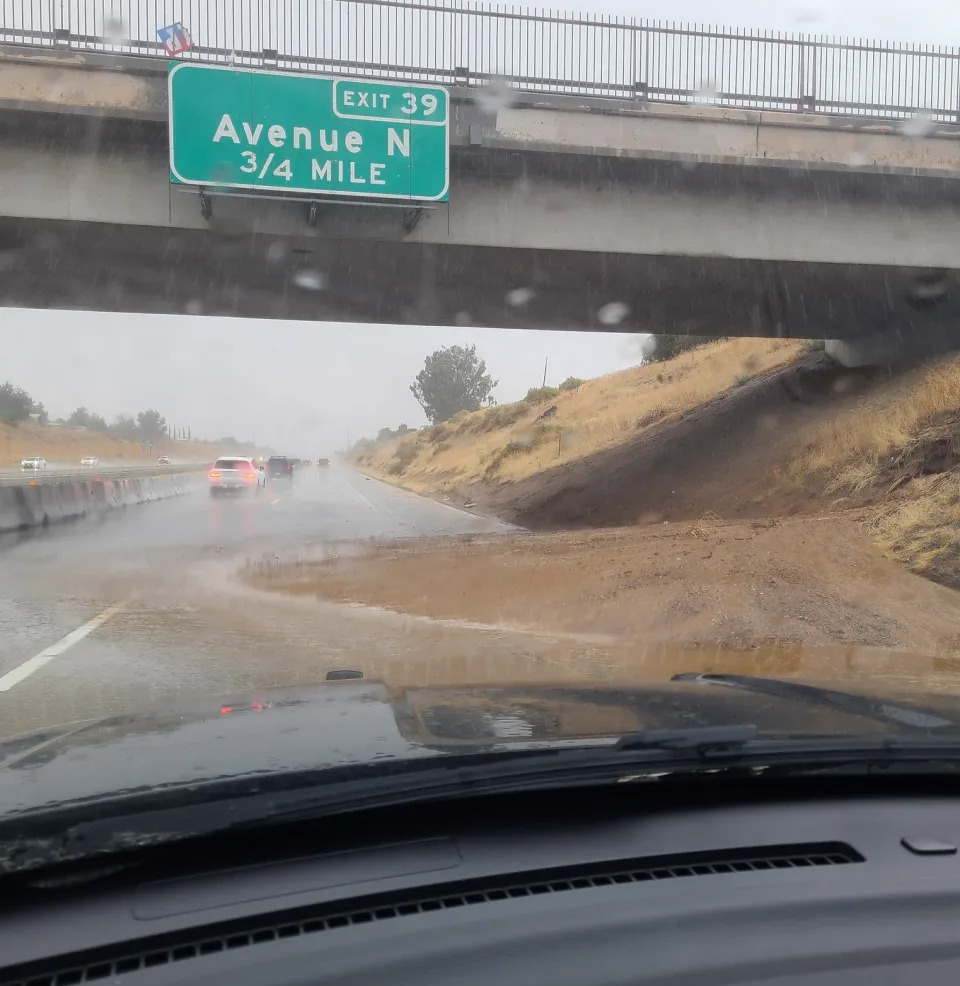
PALMDALE, Calif. – Mud poured onto a roadway near Los Angeles, creating hazardous conditions for drivers hours before Tropical Storm Hilary brought potentially life-threatening floods to the area.

Mudslide in Palmdale in Southern California. August 20, 2023.

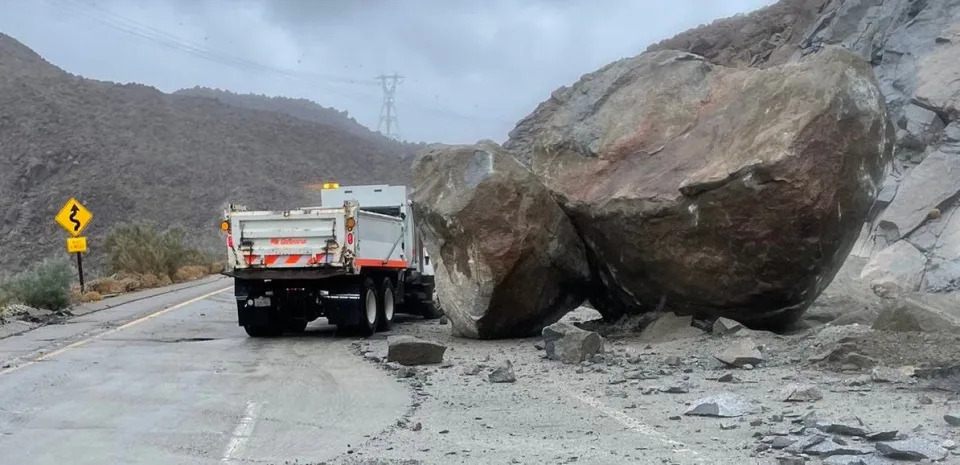
Down south in the town of Mountain Spring, a road was closed due to a rockslide, according to the National Weather Service. In nearby Calexico, another rockslide led boulders larger than a truck to fall onto the road.

California Department of Transportation crews addressing a rockslide on SR-98 near Calexico. August 20, 2023.

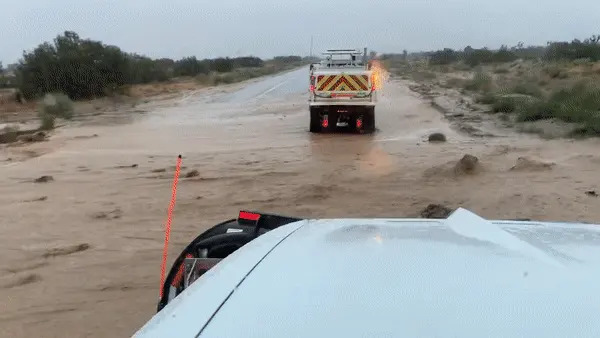
Rain from Tropical Storm Hilary also flooded some roads. In the video below, floodwaters rushed over EB Route 118 near the town of Llano in Southern California.

Floodwater from Hilary near Llano, California. August 20, 2023.

Tropical Storm Hilary has already pummeled the northern Baja California Peninsula of Mexico, where it dropped torrential rain and caused catastrophic flooding. The storm has already claimed at least one life in Mexico after a family of five was swept into the sea while crossing a stream in the Baja California Sur state, according to local officials.

Catastrophic flooding is also expected for parts of Southern California, which is experiencing its first-ever Tropical Storm Warning. In fact, some areas may receive up to 8 inches of rain through Tuesday evening.

Protest broke out at a 55+ Florida community over skyrocketing home insurance premiums: ‘We have no choice, we have to sell’

Fortune

Protest broke out at a 55+ Florida community over skyrocketing home insurance premiums: ‘We have no choice, we have to sell’

Alena Botros  – August 19, 2023

This week, hundreds of homeowners in a 55+ living community, known as Century Village, in Pembroke Pines, Fla., gathered together to protest an increase in their monthly housing fees due to skyrocketing insurance costs, as several insurers flee the state.

Homeowners were sent an email from Century Village that they’d have to pay an additional $100 to $200 a month due to “skyrocketing insurance premiums,” adding a potential special assessment for some units, according to NBC6, a local TV news outlet in South Florida that was first to report the incident. Footage shown in the TV segment shows several residents crowded together, visibly upset and shouting (although it’s unclear what exactly they’re saying). However, it seems that the protest escalated and police were called. Still, one resident told NBC6 reporter Laura Rodriguez that the increase in costs is forcing him to sell his home.

“So now we are over $700 a month that we are paying just in HOA fees, and they’re going to kick it up to $1,000 a month,” the resident told the reporter. “We have no choice, we have to sell. As a matter of fact, I just put my house on the market 10 minutes ago.”

Century Village did not immediately respond to Fortune’s request for comment.

Housing markets in Florida saw substantial increases in home prices during the pandemic, and in most cases are still seeing increases. That coupled with mortgage rates that have more than doubled, with the average 30-year fixed rate recently hitting a 20-year high, has deteriorated affordability. But now there’s a new force putting a strain on housing affordability, and that’s rising insurance costs.

Homeowners in Florida are paying the highest insurance premiums in the nation, with an average premium of $6,000 per year, according to Mark Friedlander, the Florida-based director of corporate communications for the Insurance Information Institute. To compare, the U.S. average $1,700 per year. And recently, several home insurers have either pulled out of the state, like Farmers Insurance, or have chosen to renew fewer policies, like AAA—and that’s making it more difficult for homeowners to find coverage, or even afford it, as Fortune’s previously reported.

“Just in the last 18 months, 15 companies have stopped writing business in Florida. Three have voluntarily withdrawn—Farmers being the most recent—and seven companies have been declared insolvent,” Friedlander recently explained to Fortune, before AAA said it would reduce its presence in Florida, rather than pull out completely as Farmers Insurance announced its plan to do so.

There are several factors behind the state’s insurance exodus that range from claim fraud, to an increase in claims following recent hurricanes, to an increase in reinsurance rates. All of which, essentially raise costs for insurance companies, which in turn raises costs for policyholders. However, we’re seeing that some insurers are simply choosing to leave the state, and that only makes it harder for homeowners to find coverage, and makes that coverage more expensive.

Insurance concerns are already having an impact on Florida’s housing market, with a recent homebuilder survey showing that buyers’ concerns over the availability and affordability of insurance are somewhat slowing sales, which could potentially get worse.

Gulf Coast officials are scrambling to prepare for two weather disasters to combine in deadly fashion

CNN

Gulf Coast officials are scrambling to prepare for two weather disasters to combine in deadly fashion

Rachel Ramirez, CNN – August 19, 2023

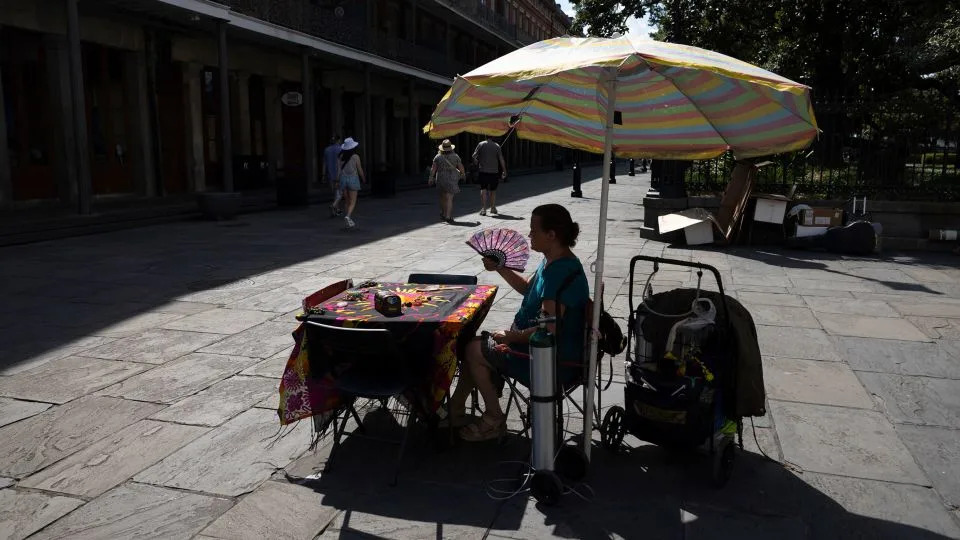
It’s been a sweltering summer for much of the US, with temperatures reaching new highs seemingly every day. And along the Gulf Coast, officials are now grappling with how to handle two potentially deadly disasters set to compound: a hurricane and extreme heat.

In New Orleans, this summer was the first time officials were forced to tap into their “rainy day” fund, which is typically meant for hurricane emergency response, to address heat emergencies.

“It’s really a new frontier for us,” Anna Nguyen, public information officer for New Orleans Homeland Security Emergency Preparedness, told CNN.

Last week, the city issued an emergency declaration for extreme heat, underscoring rising concerns about widespread power outages ahead of peak hurricane season. Without air conditioning and sufficient shelter capacity, the cascading effects of these dual disasters could be deadly for the most vulnerable people.

Hazards indirectly related to storms, like exposure to heat, kill nearly as many people as the storm itself, NOAA data shows. Nearly 22% of those so-called indirect deaths were caused by heat and generator misuse from 2013 to 2022. Experts have also said that extreme heat is a silent killer and can be a major contributing factor in the overall hurricane death toll.

Emergency response officials in major urban areas like Miami-Dade County, New Orleans and Houston — places that have endured blistering temperatures this summer — told CNN that they’ve had to rethink extreme weather.

“Climate change is functioning as a threat multiplier, and we’re seeing more and more often dual threats happening at once,” Christopher Dalbom, assistant director at the Tulane Center for Environmental Law, told CNN. “Anybody who’s been without power during hurricane season in the Gulf knows that even without an official emergency declaration for excessive heat, it gets pretty excessive.”

Cascading effects
Extreme heat has baked the Gulf Coast for weeks this summer. 
 - Christiana Botic/The New York Times/Redux
Extreme heat has baked the Gulf Coast for weeks this summer. – Christiana Botic/The New York Times/Redux

The Gulf Coast is no stranger to hurricanes, but consecutive days with temperatures over 100 degrees Fahrenheit are a new experience for many.

An intense hurricane and extreme heat could be a deadly combination because storm destruction and widespread power outages would leave people exposed and vulnerable to heat, said Nikisha Williams, managing director of collective impact at The Miami Foundation.

“If Miami experienced extreme heat at the same time, portions of our community would have no relief for what could be days or weeks,” Williams told CNN. “This is extremely dangerous for the most vulnerable populations such as children and the elderly.”

When Hurricane Irma pummeled Florida in 2017, for instance, several people were killed at a Hollywood nursing home due to overheating after the storm knocked out the air conditioning.

Texas is no different. Over the past few years, Houston has endured devastating hurricanes, a deadly winter freezedrought, forest fires and now oppressive heat. Officials there are still navigating how to properly prepare for the rapidly changing extreme weather to avoid mass casualties.

“Climate change has really been a huge eye-opener for us,” Thomas Muñoz, emergency management coordinator for Houston’s Office of Emergency Management, told CNN. “It’s so unpredictable now, I can say that. We’ve never seen record-breaking days like this.”

With dozens of record-high temperatures being set across Florida since the start of June, coupled with brutal humidity that has made the heat even more dangerous, Miami-Dade County officials have been scrambling to prepare for the day that extreme heat might combine with a landfalling hurricane.

Pete Gomez, director of emergency management in Miami-Dade County, said the county has been ramping up emergency management and disaster recovery efforts, especially when it comes to addressing both storm threats and extreme heat.

Residents gather at recreation center after Hurricane Ida in New Orleans on Sept. 3, 2021.  - Eva Marie Uzcategui/Bloomberg/Getty Images
Residents gather at recreation center after Hurricane Ida in New Orleans on Sept. 3, 2021. – Eva Marie Uzcategui/Bloomberg/Getty Images

In 2021, Miami-Dade County Mayor Daniella Levine Cava appointed the nation’s first ever chief heat officer with the goal of raising the public’s awareness about the dangers of extreme heat to the same level as hurricanes.

Since then, she has expanded initiatives to prepare for a dual-disaster scenario. The county was able to secure funding to install air conditioning units in some affordable housing that did not have any. Gomez said all shelters have backup generator systems to keep residents cool, and they’ve also established relationships with the county’s homeless trust and nonprofit groups, including The Miami Foundation.

“That’s the revision we need so we can meet the needs of the community,” Gomez said. “Part of that need is preparedness, getting the message out, and making sure that everything is done to try to minimize the impact of these events as much as possible.”

But Williams, who was born and raised in Miami, said the county is still not fully prepared due to rapidly changing demographics and the need for more widespread messaging and education on living in a region prone to climate disasters.

“I feel like I’m betraying my city, but the reality is we’re not prepared,” she said. “Every storm brings something incredibly different if I’m being honest. There’s always something new that we didn’t think of. And so, even in the best of situations, we probably will not be 100% prepared.”

“But I think we are more prepared today than we were before,” Williams added.

Lessons learned
Miami-Dade County Homeless Trust representatives distribute bottles of water and shelter information during a heat wave in Miami, Florida, on July 25, 2023.  - Eva Marie Uzcategui/Bloomberg/Getty Images
Miami-Dade County Homeless Trust representatives distribute bottles of water and shelter information during a heat wave in Miami, Florida, on July 25, 2023. – Eva Marie Uzcategui/Bloomberg/Getty Images

Emergency management officials from New Orleans and Houston say they are well-equipped and prepared for both disasters to happen, despite the unprecedented nature of how climate change has recently been taking shape.

In Houston, Muñoz said they have expanded their outreach, including revising messaging about resources available in the event of a disaster. They are not only deploying more languages like American sign language to accommodate the city’s diverse population, but they are also fostering partnerships with nonprofit groups and grassroots organizations.

“The best thing for us that I’ve learned is just that constant communication with people throughout the year and then when we start the process of seeing something, we do a lot of calling like what do y’all need? What I do we have issues?” Muñoz said. “It’s like we are constantly looking at the what ifs and then we work towards that, and of course, we capture the lessons learned and how we can do better.”

For New Orleans, Nguyen said that they’re continuously taking what they have learned from previous storms and are translating it to heat emergencies. Since Hurricane Katrina, she said officials have built robust relationships with the community in order to work toward preparedness and quick recovery.

“New Orleans has been battle-tested,” Nguyen said. “There’s always going to be room for improvement, that’s the nature of this work — you can always do things better, but it’s how do we take lessons learned and apply it to what’s in front of us now.”

Hurricane Hilary threatens ‘catastrophic and life-threatening’ flooding in Mexico and California

Associated Press

Hurricane Hilary threatens ‘catastrophic and life-threatening’ flooding in Mexico and California

Ignacio Martinez and Julie Watson – August 19, 2023

This Friday, Aug. 18, 2023, 1:10 p.m. EDT satellite image provided by the National Oceanic and Atmospheric Administration shows Hurricane Hilary, right, off Mexico’s Pacific coast. It grew rapidly to Category 4 strength and could reach Southern California as the first tropical storm there in 84 years, causing “significant and rare impacts” including extensive flooding. The U.S. National Hurricane Center said a tropical storm watch has been issued for Southern California, the first time it has ever done that. (NOAA via AP)
Seal Beach resident Tom Ostrom, walks past a home protected with sandbags in Seal Beach, Calif., Friday, Aug. 18, 2023. Hurricane Hilary is churning off Mexico's Pacific coast as a powerful Category 4 storm threatening to unleash torrential rains on the mudslide-prone border city of Tijuana before heading into Southern California as the first tropical storm there in 84 years. (AP Photo/Damian Dovarganes)
Seal Beach resident Tom Ostrom, walks past a home protected with sandbags in Seal Beach, Calif., Friday, Aug. 18, 2023. Hurricane Hilary is churning off Mexico’s Pacific coast as a powerful Category 4 storm threatening to unleash torrential rains on the mudslide-prone border city of Tijuana before heading into Southern California as the first tropical storm there in 84 years. (AP Photo/Damian Dovarganes)
Cal Fire Firefighter-Paramedic Capt. Tyler Williams checks the sandbags set outside of his garage in Seal Beach, Calif., Friday, Aug. 18, 2023. Hurricane Hilary is churning off Mexico's Pacific coast as a powerful Category 4 storm threatening to unleash torrential rains on the mudslide-prone border city of Tijuana before heading into Southern California as the first tropical storm there in 84 years. (AP Photo/Damian Dovarganes)
Cal Fire Firefighter-Paramedic Capt. Tyler Williams checks the sandbags set outside of his garage in Seal Beach, Calif., Friday, Aug. 18, 2023. Hurricane Hilary is churning off Mexico’s Pacific coast as a powerful Category 4 storm threatening to unleash torrential rains on the mudslide-prone border city of Tijuana before heading into Southern California as the first tropical storm there in 84 years. (AP Photo/Damian Dovarganes)
Seal Beach resident Tom Ostrom, right, sits along an empty water-pipe to be used to pump sea water back to the Pacific Ocean as homes are protected by sand berms in Seal Beach, Calif., Friday, Aug. 18, 2023. Hurricane Hilary is churning off Mexico's Pacific coast as a powerful Category 4 storm threatening to unleash torrential rains on the mudslide-prone border city of Tijuana before heading into Southern California as the first tropical storm there in 84 years. (AP Photo/Damian Dovarganes)
Seal Beach resident Tom Ostrom, right, sits along an empty water-pipe to be used to pump sea water back to the Pacific Ocean as homes are protected by sand berms in Seal Beach, Calif., Friday, Aug. 18, 2023. Hurricane Hilary is churning off Mexico’s Pacific coast as a powerful Category 4 storm threatening to unleash torrential rains on the mudslide-prone border city of Tijuana before heading into Southern California as the first tropical storm there in 84 years. (AP Photo/Damian Dovarganes)
A couple walks along berms in Seal Beach, Calif., Friday, Aug. 18, 2023. Officials in Southern California were also re-enforcing sand berms, built to protect low-lying coastal communities against winter surf. Hurricane Hilary is churning off Mexico's Pacific coast as a powerful Category 4 storm threatening to unleash torrential rains on the mudslide-prone border city of Tijuana before heading into Southern California as the first tropical storm there in 84 years. (AP Photo/Damian Dovarganes)
A couple walks along berms in Seal Beach, Calif., Friday, Aug. 18, 2023. Officials in Southern California were also re-enforcing sand berms, built to protect low-lying coastal communities against winter surf. Hurricane Hilary is churning off Mexico’s Pacific coast as a powerful Category 4 storm threatening to unleash torrential rains on the mudslide-prone border city of Tijuana before heading into Southern California as the first tropical storm there in 84 years. (AP Photo/Damian Dovarganes)

CABO SAN LUCAS, Mexico (AP) — Hurricane Hilary headed for Mexico’s Baja California on Saturday as the U.S. National Hurricane Center predicted “catastrophic and life-threatening flooding” for the peninsula and for the southwestern United States, where it was forecast to cross the border as a tropical storm on Sunday.

Officials as far north as Los Angeles scrambled to get the homeless off the streets, set up shelters and prepare for evacuations.

Hilary is expected to plow into Mexico’s Baja peninsula on Saturday night and then surge northward and enter the history books as the first tropical storm to hit Southern California in 84 years.

The U.S. National Hurricane Center issued tropical storm and potential flood warnings for a wide swath of Southern California from the Pacific coast to interior mountains and deserts. Officials talked of evacuation plans for California’s Catalina Island.

“I don’t think any of us — I know me particularly — never thought I’d be standing here talking about a hurricane or a tropical storm,” said Janice Hahn, chair of the Los Angeles County Board of Supervisors.

After rapidly gaining power early Friday, Hilary slowed some later in the day but remained a major Category 3 hurricane early Saturday with maximum sustained winds of 125 mph (205 kph), down from 145 mph (230 kph).

Early on Saturday, the storm was centered about 235 miles (375 kilometers) west of the southern tip of the Baja peninsula. It was moving north-northwest at 16 mph (26 kph) and was expected to turn more toward the north and pick up speed.

The latest forecast track pointed to Hilary making landfall along a sparsely populated area of the Baja peninsula at a point about 200 miles (330 kilometers) south of the Pacific port city of Ensenada.

It is then expected to continue northward up the peninsula, raising fears that its heavy rains could cause dangerous flooding in the border city of Tijuana, where many homes in the city of 1.9 million cling precariously to steep hillsides.

Mayor Montserrat Caballero Ramirez said the city was setting up four shelters in high-risk zones and warning people in risky zones.

“We are a vulnerable city being on one of the most visited borders in the world and because of our landscape,” she said.

Concern was rising in the U.S., too.

The National Park Service closed Joshua Tree National Park and Mojave National Preserve to keep people from becoming stranded amid flooding. Cities across the region, including in Arizona, were offering sandbags to safeguard properties against floodwaters. Major League Baseball rescheduled three Sunday games in Southern California, moving them to Saturday as part of split-doubleheaders,

Deputies with the Los Angeles Sheriff’s Department took to the road to urge homeless people living in riverbeds to seek shelter. Authorities in the city were arranging food, cots and shelters for people who needed them.

SpaceX delayed the launch of a satellite-carrying rocket from a base on California’s central coast until at least Monday. The company said conditions in the Pacific could make it difficult for a ship to recover the rocket booster.

President Joe Biden said the Federal Emergency Management Agency had pre-positioned staff and supplies in the region.

“I urge everyone, everyone in the path of this storm, to take precautions and listen to the guidance of state and local officials,” Biden told reporters Friday at Camp David, where he is meeting with the leaders of Japan and South Korea.

Officials in Southern California were re-enforcing sand berms, built to protect low-lying coastal communities against winter surf, like in Huntington Beach, which dubs itself as “Surf City USA.”

In nearby Newport Beach, Tanner Atkinson waited in a line of vehicles for free sandbags at a city distribution point.

“I mean a lot of people here are excited because the waves are gonna get pretty heavy,” Atkinson said. “But I mean, it’s gonna be some rain, so usually there’s some flooding and the landslides and things like that.”

Some schools in Cabo San Lucas were being prepared as temporary shelters, and in La Paz, the picturesque capital of Baja California Sur state on the Sea of Cortez, police patrolled closed beaches to keep swimmers out of the whipped-up surf. Schools were shut down in five municipalities.

It was increasingly likely that Hilary would reach California on Sunday while still at tropical storm strength, though widespread rain was expected to begin as early as Saturday, the National Weather Service’s San Diego office said.

Hurricane officials said the storm could bring heavy rainfall to the southwestern United States, dumping 3 to 6 inches (8 to 15 centimeters) in places, with isolated amounts of up to 10 inches (25 centimeters), in portions of southern California and southern Nevada.

“Two to three inches of rainfall in Southern California is unheard of” for this time of year, said Kristen Corbosiero, a University at Albany atmospheric scientist who specializes in Pacific hurricanes. “That’s a whole summer and fall amount of rain coming in probably 6 to 12 hours.”

The region could face once-in-a-century rains and there is a good chance Nevada will break its all-time rainfall record, said meteorologist Jeff Masters of Yale Climate Connections and a former government in-flight hurricane meteorologist.

Watson reported from San Diego. Associated Press writers Seth Borenstein in Washington, Maria Verza and Mark Stevenson in Mexico City, John Antczak in Los Angeles, and Eugene Garcia in Newport Beach, California, contributed to this report.

What home buyers need to know about soaring mortgage rates

The Washington Post

What home buyers need to know about soaring mortgage rates

Aaron Gregg, The Washington Post – August 18, 2023

A for sale sign stands outside a single-family residence on the market Sunday, June 18, 2023, in Denver. On Thursday, the National Association of Realtors reports on sales of existing homes in May. (AP Photo/David Zalubowski) (ASSOCIATED PRESS)

It’s getting even harder to buy a home.

The average mortgage rate recently hit a 21-year record of 7.09 percent, according to Freddie Mac, significantly increasing the cost of acquiring a home for all but the most cash-rich buyers. That’s more than double the rate of a few years ago.

Here’s what to know about rising mortgage rates and the effect on home buyers.

Why are mortgage rates so high?

Mortgages have become more expensive because of the Federal Reserve’s campaign to get inflation under control.

The U.S. central bank has repeatedly raised the federal funds rate – the interest rate at which banks lend each other money – to increase borrowing costs for everyday people and businesses. More expensive debt, the reasoning goes, means less spending and that should gradually slow the rise in prices.

To a large extent, it has worked: The annual rate of inflation stood at 3.2 percent in July, far lower than last summer’s peak of 9.1 percent.

Mortgage rates tend to move in the same direction as the federal funds rate, although lenders’ efforts to manage risk and expectations for future inflation also play a role.

How does this impact affordability?

Individuals buying houses typically get mortgages, which are loans for the purchase of a home. Home mortgages usually have terms that last 10 to 30 years.

Because mortgages cover such a massively expensive purchase over a loan period that can span a generation, even small differences in the interest rate can make a huge difference in what the homeowner has to pay every month.

Let’s say a home is being bought for $250,000 with a 20 percent down payment. Holding all else equal, the difference in monthly payment from a 3 percent interest rate and a 7 percent rate comes out to more than $500 a month, according to a Washington Post mortgage calculator.

Has this happened before?

Joe Gyourko, who studies the housing market at University of Pennsylvania’s Wharton School of Business, recalls when he and his wife bought a house in the early 1990s. Then, as today, the typical mortgage rate was close to 7 percent.

But housing prices have risen precipitously since then, and most people’s incomes have not kept up.

“It’s easy for an old-timer like me to say, ‘Ah, I remember rates like these,'” Gyourko said. “But prices were lower relative to income than they are today, particularly in the coastal markets.”

Rates could be even worse, one analyst said. Mortgage rates climbed throughout the 1970s and reached more than 18 percent in the early ’80s before declining.

“High rates are challenging for home buyers, but it’s worth noting that Americans bought homes before the recent era of super-low rates,” said Jeff Ostrowski, analyst at Bankrate.

How long will rates stay high?

“That is the million-dollar question,” said Jessica Lautz, deputy chief economist at the National Association of Realtors.

Experts say it’s hard to predict what path mortgage rates will take moving forward, but they will depend to a large extent on what happens with inflation and how the Fed responds.

Inflation has cooled significantly but still hasn’t reached the Fed’s goal of 2 percent. Fed chairman Jerome H. Powell has made clear that there is more work ahead to snuff out inflation altogether, even after last month’s 0.25 percent rate hike. Fed officials don’t know precisely when they will raise rates again, or how long they will hold at the current level.

Does it make sense to buy now and refinance later?

Some real estate professionals have been using the phrase “marry the house, date the rate,” to describe one possible homebuying strategy for today’s market.

The strategy entails buying a house at an unfavorable rate with the hope of refinancing at a later date, allowing the home buyer to capitalize on rising home prices while pivoting to the best mortgage deal available at a given point in time. It can also benefit lenders – they collect fees with each refinancing.

Experts caution that no one knows when rates will fall. Buyers could be stuck with an unfavorable mortgage for years, warns Wharton’s Gyourko.

“The problem is you need to at least be prepared to also marry the rate,” Gyourko said.

How can I keep my rate as low as possible?

There are a number of strategies home buyers can employ to lower their interest rate, although buyers will always be constrained by what lenders are willing to offer.

One way is to watch your credit score and diligently improve it over time. Credit reporting bureaus track things like the amount of debt you have, missed or late payments on credit card bills, and the length of your credit history. Your credit score can also take a hit from a “hard inquiry” that typically accompanies a loan application.

Pay off as much debt as possible before seeking a mortgage, says Lautz of the National Association of Realtors. Mortgage brokers closely examine the debt-to-income ratio on applications they receive. They tend to view debt-laden households as more risky and thus deserving of a higher rate.

Do these things, Lautz says, “and the bank will look at you as a more favorable consumer, and your mortgage will be better.”

These parts of California could get a year’s rain in a few days thanks to Hurricane Hilary

Los Angeles Times

These parts of California could get a year’s rain in a few days thanks to Hurricane Hilary

Grace Toohey, Hayley Smith, Rong-Gong Lin II – August 18, 2023

General view of the Medano beach before the arrival of hurricane Hilary at Los Cabos resort in Baja California state, Mexico on August 18, 2023. Hurricane Hilary strengthened into a major storm in the Pacific on Friday and was expected to further intensify before approaching Mexico's Baja California peninsula over the weekend, forecasters said. (Photo by ALFREDO ESTRELLA / AFP) (Photo by ALFREDO ESTRELLA/AFP via Getty Images)
Surf roils off Medano Beach at a Los Cabos resort in Baja California on Friday. (Alfredo Estrella / AFP via Getty Images)

Some areas of Southern California and southern Nevada could see a year’s worth of rain in the coming days as Hurricane Hilary arrives.

Historic flooding could hit a wide swath of Southern California and the Las Vegas area, especially in San Bernardino and Inyo counties, with Death Valley and the Morongo Basin expected to see the most major flooding.

Hilary is likely to have weakened to a tropical storm by the time it leaves Mexico and enters California. But officials are sounding the alarm for potential flooding.

Everyone “should prepare for the potential for significant flash flooding. This is not the time to wait to prepare; this forecast is unlikely to improve,” said the National Weather Service in Las Vegas, which also issues forecasts for Death Valley and Morongo Valley.

Read more: Hurricane Hilary forecast recalls infamous 1939 storm that killed scores of Californians

Some areas could even see as much as a year’s worth of rain in a 24-hour period Sunday — and if not then, over the next few days. “This will not be a constant rainfall, but rather several rounds of moderate/heavy rainfall,” from Friday through Monday, the weather service said.

“Once impacts begin in your areas, they will likely worsen as we head into next week,” forecasters said. Sometimes the rain “could be slowly compounding. Other times, it could be flash flooding. Not much time between rounds of rain for conditions to improve.”

Other desert areas are also expected to receive at least a year’s worth of rain during the storm, officials with the National Weather Service said.

Palm Springs and Yucca Valley both average 4 to 5 inches of rainfall per year, but the forecast shows a deluge of 4 to 7 inches falling between Saturday and Monday, according to Elizabeth Adams, a meteorologist with the weather service in San Diego.

“The amount of moisture we’re getting is just unbelievable,” Adams said. “The rain rates could potentially be really extreme as well — over an inch or 2 inches of rain in an hour will be possible.”

Even higher rainfall totals of 6 to 10 inches are possible along the east-facing desert slopes of the Riverside, San Bernardino and San Diego County mountains, Adams said.

She advised residents in the storm’s path to monitor forecast updates and ensure they have multiple methods of receiving warnings, including wireless emergency alerts, weather apps and local TV, radio and news stations.

In Yucca Valley, officials are warning residents to take precautions and avoid unnecessary travel, as access to some local roads may be limited.

“As the ability to travel may be reduced over the next two days, residents are reminded to keep a supply of necessary provisions and medications on hand,” Yucca Valley officials said on X, formerly known as Twitter. “Be sure to bring pets inside. Never use generators, outdoor heating or cooking equipment indoors.”

The National Weather Service office in Phoenix, which issues forecasts for portions of southeastern California, said it’s likely the storm will bring “significant and rare (and potentially destructive) impacts.”

Current models show moisture anomalies that are “off the charts,” the agency wrote in its latest forecast — “and almost unbelievably more extreme than previous iterations. Essentially every standardized field measure is pegged at a climatological extreme for this time of year at multiple time scales.”

Read more: How to prepare for Hurricane Hilary, the first tropical storm to hit L.A. in 84 years

The rains expected with Hilary are rare and bring a “life-threatening” risk of flash floods from Baja California to southern Nevada.

A tropical storm watch is in effect across much of southwestern California, from the California-Mexico border into parts of Los Angeles County, something the National Hurricane Center said is a first for this area.

A watch indicates that tropical storm conditions — meaning sustained winds of more than 39 mph — are possible within 48 hours, according to the hurricane center.

‘Life-threatening flash flooding’

While high winds are creating the unusual tropical storm conditions, officials continue to emphasize that rain remains the greatest concern.

“This could [bring] rare and life-threatening flash flooding in the heaviest areas of rainfall. That is especially going to be prevalent Sunday evening through Monday morning,” said Elizabeth Adams, a meteorologist with the National Weather Service in San Diego.

Read more: Tropical storm warning issued as Hurricane Hilary races toward Southern California

high-risk warning for excessive rainfall was issued for much of inland Southern California — from the San Bernardino Mountains through the Coachella Valley and down into the Anza Borrego Desert — indicating the high probability for flash flooding Sunday and Monday.

The warning was issued for the first time in more than a decade for the low deserts east of the Southern California mountains, which are typically the drier-facing slopes, Adams said.

Rainfall is expected as early as Saturday morning for the Southland’s mountains and deserts, continuing through Monday — with eastern-facing mountains likely to see the most extreme amounts of rain, from 6 to 10 inches, and up to a foot in some isolated areas. Three to 6 inches of rain will be expected across the deserts.

Read more: Full coverage of Hurricane Hilary as the storm approaches Southern California

Precipitation will move into the coasts and valleys, including the Inland Empire, likely by late Saturday, Adams said, where 2 to 4 inches will be expected through Monday.

According to the National Weather Service, Big Bear Lake, Julian, Idyllwild, and Mt. Laguna could get up to 7 inches of rain between Saturday and Monday. The Coachella Valley, including Palm Springs, could see up to 5 inches. Hemet, San Bernardino, Hesperia and Victorville could see up to 4 inches.

Coastal areas
  • High surf (5-9 feet)
  • Strong winds
  • Dangerous rip currents
  • Coastal flooding/beach erosion
  • Dangerous conditions for south- and southeast-facing harbors
  • Catalina Island could see hazardous winds and reduced visibility
Deserts and mountains
  • Intense rainfall in mountains, more than 10 inches in isolated areas
  • Coachella Valley could see up to 5 inches of rain
  • Flash flooding possible in some areas
  • Five to 7 inches of rain possible in Wrightwood, Big Bear and parts of Imperial County

New York City’s mayor just conceded defeat to remote work—and declared war on the housing crisis. Here’s how it went down

Fortune

New York City’s mayor just conceded defeat to remote work—and declared war on the housing crisis. Here’s how it went down

Alena Botros – August 17, 2023

Lev Radin/VIEWpress—Getty Images

New York City officials, led by Mayor Eric Adams, announced a plan to convert empty office buildings across the heart of its central business district into housing at a news conference on Thursday. Although parts of this plan were announced previously, and it must clear several hurdles en route to implementation, it represents the nearest thing to an admission that the scourge of remote work has spread too far to turn back now.

He admitted as much. “COVID taught us something, if we want to acknowledge it or not, we are in a different norm,” Adams said. “Everything has changed, and we have to be willing to change with it.”

Earlier in the press conference, Adams kicked off with, “we know New Yorkers are struggling, you hear it all the time, every elected [official] in this city, the number one thing they hear is housing, housing, housing. And [there’s] just not enough of it, that’s the reality of it, the demand is not meeting the need.”

Before fully diving into aspects of the plan, Adams said the city has the potential to remove barriers to create more housing, “with a proposal to rewrite zoning regulations so unused office space can become homes for New Yorkers.” He added that it was unbelievable how much empty office space is “sitting idly by,” when it can be developed into housing to address the city’s housing crisis, while also “revitalizing” business districts, given that remote work is costing Manhattan more than $12 billion a year.

With this plan, an additional 136 million square feet of office space will be eligible for residential conversions, allowing the city to create 20,000 homes and house 40,000 New Yorkers. While this is a drop in the bucket in a city of more than 8 million where the median rent for all bedrooms and property types has skyrocketed to $3,750 a month, it’s a significant departure for a mayor who swore he would return midtown to its pre-pandemic state.

The mayor’s office plans to call on the state to create a tax incentive for office to housing conversions. Another part of the plan, Adams said, is that the creation of an “office conversions accelerator,” an interagency group that will work with property owners to help speed up conversions and quickly increase the city’s supply of homes.

But converting empty offices that might not return to their pre-pandemic occupancy levels any time soon into desperately needed housing is much more complicated to actually do than you might think. Several commercial real estate executives have told Fortune as much, mostly because it doesn’t make economic sense, with one calling it a “pipe dream,” and another saying that “it’s not the slam dunk that everybody thinks it is.” At the end of the day, they said, investors want a return, and affordable housing doesn’t make that easy.

Nonetheless, aside from actually converting office spaces to housing, Adams also mentioned something he called the “Midtown South Mixed-Use Neighborhood Plan.” It will create a mixed-use community by rezoning Midtown South, an area running roughly from the low 40s to 23rd Street, given that no new housing has been allowed in the area until now, Adams explained.

New York isn’t the only city to hatch a plan in hopes of killing two birds with one stone. Last month, Boston Mayor Michelle Wu announced a residential conversion plan for downtown offices. The pilot program plans to offer the owners of “underutilized” office buildings a property tax break of up to 75% of the standard residential tax rate (which is lower than the commercial tax rate) for up to 29 years in return for converting their properties to residential homes “immediately.”

Gen Z has seen their debts skyrocket 179% over the past couple years.

Money wise

Gen Z has seen their debts skyrocket 179% over the past couple years. Here’s what’s causing their balances to snowball — and how to control them

Dan Weil – August 17, 2023

Gen Z has seen their debts skyrocket 179% over the past couple years. Here's what's causing their balances to snowball — and how to control them
Gen Z has seen their debts skyrocket 179% over the past couple years. Here’s what’s causing their balances to snowball — and how to control them

Entering adulthood is proving to be expensive for Generation Z, or those people born between 1997 and 2012. Just as the members of this generation are embarking on their careers, they’re also building up a hefty pile of debt — everything from mortgages to student loans, car loans and credit cards. And that debt can quickly start to balloon out of control.

In fact, Gen Zers aged 18 to 26 saw their overall debt burden soar 179% between 2021 and 2023, according to a recent study by LendingTree. That was the biggest change of any generation during that period, topping increases of 88% for millennials and 26% for Gen X. Meanwhile, baby boomers saw their debt burdens decrease nearly 16% in that timeframe.

But it’s not simply a case of young people spending recklessly — there are bigger issues at play. Here’s what’s really going on and how to get back on track if you’re snowed under too.

Don’t miss
What’s behind the growing debt for Gen Zers

As with any social trend, there are a number of reasons Gen Z is now grappling with a hefty deft load. But the cost of living can’t be overlooked: It has become increasingly expensive to live in these inflationary days, and younger generations don’t have decades of savings to fall back on to get through.

Which may account for why the most typical type of debt Gen Zers carry is on their credit cards — a reality for nearly 77% of people in this generation, according to the report from LendingTree. Gen Z appears to deploy credit cards for spending large and small, as their card balances have climbed 174% over the past two years, data from LendingTree shows.

And then there’s the auto loans: Many young adults also need to purchase a car for getting to work and general transportation. But car prices have increased over the past two years, according to Consumer Reports, and that’s seen auto loan balances climb 59% over that time period, to an average of nearly $9,900.

Student loans also play a part, with nearly 35% of Gen Zers holding an outstanding balance. And higher education has grown more expensive over the years, which has then translated into a 135% increase in their student loan balances over the past two years.

Many Gen Zers also lean on personal loans to get set up in life, including paying for improvements on the homes they’re starting to buy (which of course adds mortgage balances to the pile of debt too) and other general expenses that start cropping up in adulthood. Gen Z personal loan balances jumped 207% in the last two years to an average balance of more than $1,900, according to the LendingTree report.

With all the odds stacked up against them, many Gen Zers may find it’s easy to get into debt, while getting out of it can feel next to impossible. Here’s how to get back in the black whatever generation you’re from.

Read more: ‘Hold onto your money’: Jeff Bezos says you might want to rethink buying a ‘new automobile, refrigerator, or whatever’ — here are 3 better recession-proof buys

Control your spending

One of the most straightforward ways to control your debt is to control your spending, be it on small things (a daily coffee) or big-ticket items (opting not to buy a new car if your current car runs perfectly well or can be repaired for a reasonable price). It may help to look at all your spending for the last month and figure out where you can cut back. Although you can’t necessarily count on this happening, you may be able to negotiate price reductions with your phone, Internet, TV, and energy providers, which will reduce your monthly spending.

Creating a budget — and more importantly, sticking to it — is one of the best ways to keep your spending on track. Doing so can not only help you to reduce your debt, it’ll also help you to boost your savings and meet your long-term financial goals.

Increase your income

Another way to reduce your debt is by finding ways to boost your income. If there’s a way for you to make more money — either at your current job or by picking up some work on the side — that extra cash will obviously give you more resources to pay down your debt and save more money.

You could also earn some extra cash by selling items online, renting out some space (a room or even a parking spot) or getting a housemate to split some of your housing costs. If you’re open to getting creative, there are all kinds of ways to make money these days.

Create a debt paydown strategy

Think strategically about dealing with your debt. If you have the option, paying off your debt with the highest interest rates first can usually save you lots in interest. The average credit card rate is now 24.37%, according to LendingTree.

If credit card debt is a problem for you, you might consider calling the card company to ask for a lower interest rate. In fact, 76% of people who asked for a lower interest rate on their credit card in the past year were granted one, according to a recent LendingTree survey. Creditors for your other loans also may be willing to reduce your interest rate, so it may be worth your time to simply ask.

Finally, if you’re dealing with multiple different monthly payments, debt consolidation can make that easier. Banks, credit unions and online lenders offer debt consolidation loans. These loans consolidate your unsecured debt — such as credit cards and medical bills — into a single loan with a fixed monthly payment. This strategy can make sense if the interest rate on your debt consolidation loan is lower than the combined rate on the loans to be consolidated. You’ll save on interest payments and potentially erase your debts sooner with a debt consolidation loan. And instead of making payments to multiple creditors each month, you’ll only make one — to pay off the new loan.

What to read next

This (Florida) city famous for its water is now at risk of running out — here’s how things changed so quickly

TCD

This city famous for its water is now at risk of running out — here’s how things changed so quickly

Sara Klimek – August 15, 2023

The Florida city of Zephyrhills is known for its water — notably the bottled water company with the same name. But ironically the city, located northeast of Tampa, is setting off alarm bells for that exact reason. According to a state report, Zephyrhills is expected to run out of drinking water within the next two decades.

What’s happening?

Population growth in the Sunshine State has been one of the primary reasons for its water stress. According to the National Association of Realtors, Florida’s population increased by 1.9% in 2022 and is expected to continue to increase in the coming years.

“Visitors to Florida and new residents assume there is no problem with water,” Virginia Haley, president of the Sarasota Convention & Visitors Bureau, said. “There has always just been the assumption about the availability of drinking water that it is going to be there.”

However, this is proving not to be the case. Over 3 billion gallons of water are used in Central and South Florida every day, Southwest Florida TV station WGCU reports — and the strain on the water system is increasing with the new population booms.

Why is this problematic?

The major water use in South Florida is for landscape irrigation, meaning watering lawns and golf courses. Landscape irrigation diverts water that could be otherwise used for drinking, bathing, and indoor household use, and it leaches fertilizers, chemicals, and pesticides into local waterways.

As its water continues to dwindle, Zephyrhills is expected to funnel more funds into sourcing water from other sources in the region. So far, the city council approved placing a development moratorium to reduce the strain on its water supply.

This will allow the council the time to consider the future of development in the city as well as how to increase the “impact fees” to cover the pressure that development puts on city services — like the water supply. In turn, this can make development more expensive and potentially decrease the cost efficiency of development in the region.

What’s being done?

Governments in Southern Florida are having to assess current water stocks as well as search for alternative sources of drinking water, such as recycled water or aquifers.

Municipalities may have to be more strict about how much water residents can use for nonessential purposes, like watering lawns, or restrict the time window homeowners can water their lawns to help encourage water conservation.

People can also do their part to help decrease water use. “Wait for the dishwasher to be full before you run out. Do a full load of laundry, not a partial load, and take shorter showers,” said South Florida Water Management District section leader Tom Colios.