U.S. and China reach a deal on fighting climate change. Here’s what it means.
Ben Adler, Senior Editor – November 15, 2023
U.S. Special Presidential Envoy for Climate John Kerry shakes hands with his Chinese counterpart Xie Zhenhua before a meeting in Beijing, China, July 17. (Valerie Volcovici/Reuters) (REUTERS)
The United States and China may be at odds over everything from the Russia-Ukraine war to the status of Taiwan, but the world’s two largest economies just showed they can still work together on climate change.
The two superpowers jointly announced on Wednesday that they’ve agreed to a deal to rapidly increase the share of energy that comes from renewable sources and to reduce greenhouse gas emissions that cause global warming.
Committing to helping the world triple renewable energy capacity by 2030.
Reducing power sector emissions by the end of the decade.
Reducing future emissions of methane, a powerful greenhouse gas.
Halting deforestation by 2030.
The timing
Bifacial photovoltaic solar panels at the Roadrunner solar plant, owned and operated by Enel Green Power, near McCamey, Texas, Nov. 10. (Jordan Vonderhaar/Bloomberg via Getty Images) (Bloomberg via Getty Images)
The deal comes as scientists express growing alarm over the quickly escalating increases in warming and effects witnessed throughout the year, such as more extreme heat waves, wildfires and storms.
October was just the world’s fifth consecutive month of record-high global average temperatures.
The next round of U.N. climate negotiations, called COP28, is set to begin on Nov. 30 in Dubai. More than 60 countries, including the U.S., have recently called for the agreement produced there to include the tripling of renewable energy goals. The G20 also embraced that target in September.
The full moon sets behind a wind farm in the Mojave Desert in California, Jan. 8, 2004. (Toby Melville/Reuters) (REUTERS)
Experts are hailing Wednesday’s announcement as a welcome sign.
“It’s very promising to see the U.S. and China diplomatically engaging on climate change again, after the broader challenges in the relationship sort of brought that to a halt,” Pete Ogden, vice president for climate and environment at the United Nations Foundation, told Yahoo News. “To see that re-energized going into the COP is encouraging and hopefully something they can build on.”
But while the potential impact is huge, other experts note that the actual emissions reductions from this agreement is unclear.
“Since China’s power sector emissions are so large, any decline this decade could avoid a lot of emissions,” Jake Schmidt, senior strategic director for international climate at the Natural Resources Defense Council, told Yahoo News.
Heat projected to kill nearly five times more people by 2050
Daniel Lawler – November 15, 2023
Scientists have warned that the number of heat-related deaths will sore in the coming decades if the world does not decrease its carbon emissions (DAVID SWANSON)
Nearly five times more people will likely die due to extreme heat in the coming decades, an international team of experts said Wednesday, warning that without action on climate change the “health of humanity is at grave risk”.
Lethal heat was just one of the many ways the world’s still-increasing use of fossil fuels threatens human health, according to The Lancet Countdown, a major annual assessment carried out by leading researchers and institutions.
More common droughts will put millions at risk of starving, mosquitoes spreading farther than ever before will take infectious diseases with them, and health systems will struggle to cope with the burden, the researchers warned.
The dire assessment comes during what is expected to be the hottest year in human history — just last week, Europe’s climate monitor declared that last month was the warmest October on record.
It also comes ahead of the COP28 climate talks in Dubai later this month, which will for the first time host a “health day” on December 3 as experts try to shine a light on global warming’s impact on health.
Despite growing calls for global action, energy-related carbon emissions hit new highs last year, the Lancet Countdown report said, singling out still-massive government subsidies and private bank investments into planet-heating fossil fuels.
– ‘Crisis on top of a crisis’ –
Last year people worldwide were exposed to an average of 86 days of life-threatening temperatures, according to the Lancet Countdown study. Around 60 percent of those days were made more than twice as likely due to climate change, it said.
The number of people over 65 who died from heat rose by 85 percent from 1991-2000 to 2013-2022, it added.
“However these impacts that we are seeing today could be just an early symptom of a very dangerous future,” Lancet Countdown’s executive director Marina Romanello said.
Under a scenario in which the world warms by two degrees Celsius by the end of the century — it is currently on track for 2.7C — annual heat-related deaths were projected to increase 370 percent by 2050. That marks a 4.7-fold increase.
Around 520 million more people will experience moderate or severe food insecurity by mid-century, according to the projections.
And mosquito-borne infectious diseases will continue to spread into new areas. The transmission of dengue would increase by 36 percent under a 2C warming scenario, according to the study.
Meanwhile, more than a quarter of cities surveyed by the researchers said they were worried that climate change would overwhelm their capacity to cope.
“We’re facing a crisis on top of a crisis,” said Lancet Countdown’s Georgiana Gordon-Strachan, whose homeland Jamaica is currently in the middle of a dengue outbreak.
“People living in poorer countries, who are often least responsible for greenhouse gas emissions, are bearing the brunt of the health impacts,” she said.
– ‘Moving in the wrong direction’ –
World Health Organization chief Tedros Adhanom Ghebreyesus told an online conference launching the Lancet Countdown report that limiting warming to the Paris agreement target of 1.5C is a “public health imperative”.
“The world is moving in the wrong direction, unable to curb its addiction to fossil fuels and leaving vulnerable communities behind in the much-needed energy transition,” Tedros said.
On Tuesday, the UN warned that countries’ current pledges will cut global carbon emissions by just two percent by 2030 from 2019 levels — far short of the 43 percent drop needed to limit warming to 1.5C.
Romanello cautioned that if more progress is not made on emissions, then “the growing emphasis on health within climate change negotiations risks being just empty words”.
However there are “glimmers of hope”, she added.
The number of global deaths linked to air pollution from fossil fuels has fallen 16 percent since 2005, mostly thanks to efforts to reduce the impact of coal burning, the report said.
Global investment in green energy rose by 15 percent to $1.6 trillion last year, compared to $1 trillion for fossil fuels.
And if people changed to healthier, lower-carbon diets it would prevent up to 12 million deaths a year, at the same reducing emissions from dairy and red meat production by 57 percent, the report said.
‘Devastating toll’ of climate change now impacting ‘all regions’ of the U.S., Biden says
The federal government’s fifth National Climate Assessment, released Tuesday, details how climate change is affecting every corner of the country.
Ben Adler, Senior Editor – November 14, 2023
Every region of the United States is now seeing rapid warming due to climate change, according to the federal government’s fifth National Climate Assessment, which was released Tuesday.
“I’ve seen firsthand what the report makes clear: the devastating toll of climate change. And its existential threat to all of us,” President Biden said from the White House Tuesday morning. “I’ve walked the streets of Louisiana, New Jersey, New York, Florida, Puerto Rico, where historic floods and hurricanes wiped out homes, hospitals, houses of worship.”
“This assessment shows us in clear scientific terms that climate change is impacting all regions, all sectors of the United States — not just some, all,” he added.
The report lays out in stark detail how climate change is already harming communities nationwide.
“Climate change is finally moving from an abstract future issue to a present, concrete, relevant issue. It’s happening right now,” the report’s lead author, Katharine Hayhoe, chief scientist at the Nature Conservancy and a professor at Texas Tech University, said in a statement.
Here are the key takeaways from the assessment.
Everyone is feeling the heat
National Park Service Rangers Gia Ponce (left) and Christina Caparelli are photographed by Ranger Nicole Bernard next to a digital display of an unofficial heat reading at Furnace Creek Visitor Center in Death Valley National Park in Death Valley, Calif., on July 16. (Ronda Churchill / AFP via Getty Images) (AFP via Getty Images)
This year is on pace to be the warmest on record globally, and in the U.S., the heat is being felt nationwide, according to the report, which the federal government is required by law to produce every five years:
Every single region has higher average temperatures today than it did between 1951 and 1980.
The U.S. is warming faster than most of the world. Since 1970, the Lower 48 states have warmed by 2.5 degrees Fahrenheit, and Alaska by 4.2 degrees Fahrenheit, compared with the global average temperature rise of 1.7 degrees Fahrenheit.
Phoenix set a record this year with 54 days of high temperatures of 110 degrees Fahrenheit or greater, including 31 straight days over 110.
In Alaska, melting glaciers, thawing permafrost and disappearing sea ice are destroying the hunting and fishing-dependent economy. Some Indigenous communities may need to be relocated to flee rising sea levels.
Since warming is happening faster at higher latitudes, the report projects that the U.S. will warm about 40% more than the global average in the future.
Vehicles make their way through floodwater in Brooklyn, N.Y., on Sept. 29. (Ed Jones / AFP via Getty Images) (AFP via Getty Images)
Warmer air holds more moisture, so climate change is throwing the water cycle out of whack, researchers say. Since 2000, the western half of the country has endured a two-decade megadrought that has threatened freshwater supplies for millions of people.
But while annual rainfall has decreased in much of that region, the entire country has seen an increase in heavy precipitation events. As a result, this year saw a series of sometimes deadly flash floods from Californiato Vermont.
Burned trees from recent wildfires stand in a forest in Fort Chipewyan, Alberta, Canada, on Sept. 3. The United States has been inundated with wildfire smoke from Canada this year. (Victor R. Caivano/AP Photo) (ASSOCIATED PRESS)
Warmer temperatures and dried-out vegetation from drought lead to more frequent and severe wildfires. Wildfires and the smoke they create have been an increasingly prevalent and severe problem in the West in recent years, but this summer the Northeast and Midwest were also at times enveloped in thick smoke from Canada’s record-setting wildfire season.
An economic toll
The report notes a sharp rise in the number of billion-dollar disasters in the U.S., with one occurring every three weeks since 2018. In the 1980s, the country experienced a billion-dollar weather disaster once every four months, according to the assessment.
“Extreme events cost the U.S. close to $150 billion each year — a conservative estimate that does not account for loss of life, health care-related costs or damages to ecosystem services,” the report stated.
Growing threats
The report also identifies frequent flooding due to sea-level rise and more powerful storms as a threat to low-lying regions across the country. Health risks, such as food and water contamination, increased air pollution from smoke, dust and pollen are also expected to worsen.
“Climate change threatens vital infrastructure that moves people and goods, powers homes and businesses, and delivers public services,” the report states.
The U.S. has begun to combat climate change
President Joe Biden delivers remarks on his administration’s actions to address the climate crisis in the South Court Auditorium of the White House on Tuesday. (Saul Loeb/AFP via Getty Images) (AFP via Getty Images)
The report also notes that U.S. greenhouse gas emissions dropped 12% between 2005 and 2019 thanks to the adoption of renewable energy sources like wind and solar energy.
The Biden administration has attempted to build on this progress through regulatory measures, like stiff new fuel efficiency standards for cars and trucks. And Congress approved $369 billion for investments in clean energy and electric vehicles in the Inflation Reduction Act. But those measures are only projected to cut emissions by 40% by 2030, not the 50% Biden has pledged to the international community.
A need to adapt, and to act
States and cities across the country have begun retrofitting infrastructure to meet the challenges of climate change, and measures such as enhanced storm drain capacity and improved forest management have increased in every region since the last assessment in 2018, according to the assessment.
But the report finds that faster, more ambitious adaptation investments are needed to minimize the still-growing costs of climate change.
No place in the US is safe from the climate crisis, but a new report shows where it’s most severe
Ella Nilsen – November 14, 2023
The effects of a rapidly warming climate are being felt in every corner of the US and will worsen over the next 10 years with continued fossil fuel use , according to a stark new report from federal agencies.
The Fifth National Climate Assessment, a congressionally mandated report due roughly every five years, warned that even though planet-warming pollution in the US is slowly decreasing, it is not happening nearly fast enough to meet the nation’s targets, nor is it in line with the UN-sanctioned goal to limit global warming to 1.5 degrees Celsius – a threshold beyond which scientists warn life on Earth will struggle to cope.
This year’s assessment reflects the reality that Americans can increasingly see and feel climate impacts in their own communities, said Katharine Hayhoe, a distinguished climate scientist at Texas Tech University and contributor to the report.
“Climate change is affecting every aspect of our lives,” Hayhoe told CNN.
Some of the report’s sweeping conclusions remain painfully familiar: No part of the US is truly safe from climate disasters; slashing fossil fuel use is critical to limit the consequences, but we’re not doing it fast enough; and every fraction of a degree of warming leads to more intense impacts.
But there are some important new additions: Scientists can now say with more confidence when the climate crisis has made rainstorms, hurricanes and wildfires stronger or more frequent, long-term drought more severe and heat more deadly.
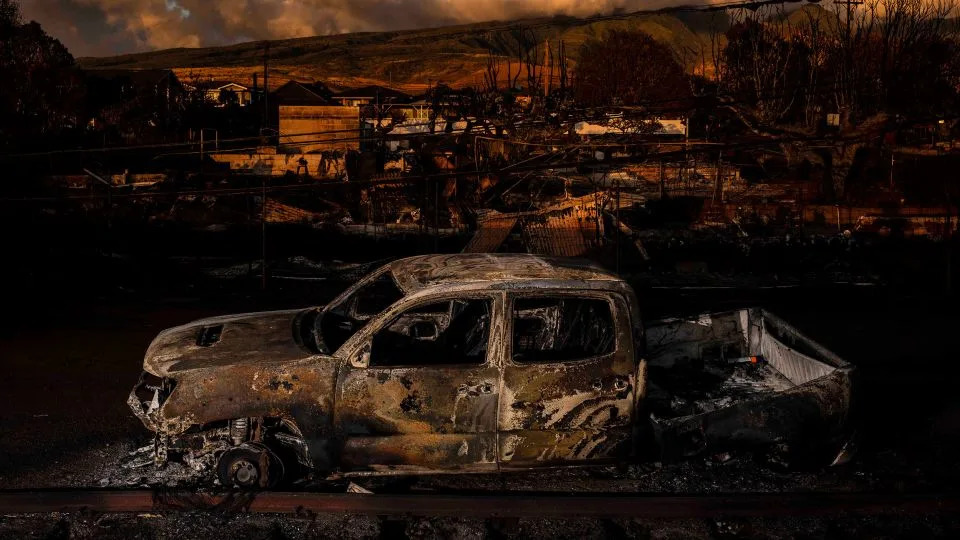
The remains of a vehicle in a burned neighborhood after wildfires in Lahaina in Maui, Hawaii, on August 18. – Bryan Anselm/New Jersey State Council for the Arts Fellowship/Redux
This summer alone, the Phoenix area baked through a record 31 consecutive days above 110 degrees, a shocking heatwave that was partly responsible for more than 500 heat-related deaths in Maricopa County in 2023 – its deadliest year for heat on record.
President Joe Biden will deliver remarks on Tuesday and is expected to unveil more than $6 billion in funding to strengthen climate resilience “by bolstering America’s electric grid, investing in water infrastructure upgrades, reducing flood risk to communities, and advancing environmental justice for all,” an administration official said.
The US needs “a transformation of the global economy on a size and scale that’s never occurred in human history” to “create a livable future for ourselves and our children,” White House senior climate adviser John Podesta told reporters.
Here are five significant takeaways from the federal government’s sweeping climate report.
It’s easier to pinpoint which disasters were made worse by climate change
Climate change doesn’t cause things like hurricanes or wildfires, but it can make them more intense or more frequent.
For instance, warmer oceans and air temperatures mean hurricanes are getting stronger faster and dumping more rainfall when they slam ashore. And hotter and drier conditions from climate change can help vegetation and trees become tinderboxes, turning wildfires into megafires that spin out of control.
“Now thanks to the field of attribution, we can make specific statements,” Hayhoe said, saying attribution can help pinpoint certain areas of a city that are now more likely to flood due to the effects of climate change. “The field of attribution has advanced significantly over the last five years, and that really helps people connect the dots.”
All regions are feeling climate change, but some more severely
There is no place immune from climate change, Biden administration officials and the report’s scientists emphasized, and this summer’s extreme weather was a deadly reminder.
Some states – including California, Florida, Louisiana and Texas – are facing more significant storms and extreme swings in precipitation.
Landlocked states won’t have to adapt to sea level rise, though some – including Appalachian states like Kentucky and West Virginia – have seen devastating flooding from rainstorms.
And states in the north are grappling with an increase in tick-borne diseases, less snow, and stronger rainstorms.
“There is no place that is not at risk, but there are some that are more or less at risk,” Hayhoe told CNN. “That is a factor of both the increasingly frequent and severe weather and climate extremes you’re exposed to, as well as how prepared (cities and states) are.”
Climate change is exacting a massive economic toll
Climate shocks on the economy are happening more frequently, the report said, evidenced by the new record this year for the number of extreme weather disasters costing at least $1 billion. And disaster experts have spent the last year warning the US is only beginning to see the economic fallout of the climate crisis.
Climate risks are hitting the housing market in the form of skyrocketing homeowners’ insurance rates. Some insurers have pulled out of high-risk states altogether.
Stronger storms wiping out certain crops or extreme heat killing livestock can send food prices soaring. And in the Southwest, the report’s researchers found that hotter temperatures in the future could lead to a 25% loss of physical work capacity for agricultural workers from July to September.
The US is cutting planet-warming pollution, but not nearly fast enough
Unlike the world’s other top polluters – China and India – planet-warming pollution in the US is declining. But it’s not happening nearly fast enough to stabilize the planet’s warming or meet the United States’ international climate commitments, the report explains.
The country’s annual greenhouse gas emissions fell 12% between 2005 and 2019, driven in large part by the electricity sector moving away from coal and toward renewable energy and methane gas, the latter of which is still a fossil fuel that has a significant global warming effect.
The decline is good news for the climate crisis, but look at the fine print and the picture is mixed.
The report finds US planet-warming emissions “remain substantial” and would have to sharply decline by 6% annually on average to be in line with the international 1.5-degree goal. To put that cut into perspective, US emissions decreased by less than 1% per year between 2005 and 2019 – a tiny annual drop.
Water – too much and not enough – is a huge problem for the US
One of the report’s biggest takeaways centers on the precarious future of water in the US, and how parts of the country are facing a future with either extreme drought and water insecurity, or more flooding and sea level rise.
Drought and less snowpack are huge threats to Southwest communities in particular. The report’s Southwest chapter, led by Arizona State University climate scientist Dave White, found the region was significantly drier from 1991 to 2020 than the three decades before.
White said that’s an ominous sign as the planet continues to warm, with significant threats to snowpack in California’s Sierra Nevada mountains and the Rockies – both of which provide crucial freshwater in the West.
White added that a lack of freshwater in the region also has significant economic and agricultural impacts, as it supports cities, farms, and Native American tribes.
“Mountains are our natural reservoirs in the region,” White told CNN. “Climate impacts on that mountain snowpack have really significant negative effects for the way our infrastructure operates. It’s just critical for us to protect those resources.”
It’s not even December and the US has already footed an unprecedented number of $1 billion bills for disasters nationwide
Laurelle Stelle – November 7, 2023
In the first 10 months of 2023, the U.S. has weathered droughts, floods, hurricanes, and wildfires — at least 24 of which were severe enough to cause over $1 billion apiece in damages. That’s a new record, Bloomberg reported, based on data through Oct. 10, with more than two months to go.
What’s happening?
According to Bloomberg, referencing a report from the National Centers for Environmental Information, the first nine months of 2023 saw $67.1 billion of disasters causing 373 deaths.
For years, billion-dollar disasters have been growing more common nationwide. The average between 2017 and 2021 was a devastating one every 18 days, compared to what Bloomberg says was the historical average since 1980 of 8.5 per year, or one every 43 days.
But in 2023, that pace is already at roughly one every 15 days — almost three times as fast as the historical average — assuming no other billion-dollar disasters are tallied through the end of December.
That’s also leaving out several disasters that have already happened, but whose costs haven’t been fully assessed yet. As Bloomberg points out, Hurricane Hillary, recent hail storms in Texas, and the flooding in New York each have the potential to top that $1 billion mark.
Why are there so many disasters happening?
The driving cause behind these disastrous events is the Earth’s rising temperature. As the average temperature of the planet rises due to heat-trapping air pollution, the weather gets less stable and more prone to extremes.
Dry areas often get drier and more prone to heat waves, fires, and droughts. Wet areas often get wetter, with increased flooding and storms. The strain on our infrastructure leads to dangerous complications like power outages, making the problem worse.
People across America are seeing the results. Even people not in the direct path of the destruction are feeling the pinch, as insurers raise their rates to offset the increase in claims. Some companies are completely pulling out of disaster-prone states like Florida and California.
What’s being done about these major disasters?
After every one of these incidents, state and federal agencies respond with disaster relief funds and services to help ease the burden. For example, in September, President Joe Biden authorized disaster relief for victims of Hurricane Idalia and those with contaminated drinking water due to saltwater intrusion in Louisiana.
Long-term, the best solution is to reduce air pollution to lower the temperature of the Earth. That means switching from gas to electric wherever possible; minimizing waste and the use of disposable plastic; and supporting policies and products that minimize pollution.
‘Sandwich generation’ is in a jam and struggling with caregiving costs, survey shows
Dylan Croll – November 4, 2023
Meeting basic living expenses is tough enough when you go it alone. But what about when you have someone else to look after?
According to New York Life’s new Wealth Watch Survey, nearly half of the “sandwich generation” – folks with children and elderly family members to look after – report being unable to meet basic living expenses, like food or medical care, in the last year due to caregiving costs.
Of those surveyed, 90% say they’ve made a “lifestyle change or financial decision” due to the cost of caregiving.
The study,which surveyed 1,003 sandwich generation adults between Aug. 31 and Sept. 10, showshow unprepared they are for the expenses of caregiving. It also reveals how they’re adapting.
“People should care because you can be individually financially healthy, have your bills under control, have adequate emergency savings,” said Suzanne Schmitt, head of financial wellness at New York Life. “But you’re one caregiving event away from having your own finances challenged.”
Is the so-called sandwich generation under financial siege? (Photo: Getty Creative) (BlessedSelections via Getty Images)
The study also reports a demographic shift in those who make up the Sandwich Generation. Millennials, 27-42 years old, are increasingly becoming caregivers. In 2023, the study reported, 66% of self-reported caregivers were millennials while 23% were Gen Xers. Meanwhile, in 2020, merely 39% of caregivers were millennials and 40% were Gen Xers, between the ages of 43 – 58.
Men are also playing a more active role in caregiving, according to the study. For instance, in 2023, 45% of self-reported caregivers were women while 55% were men. That’s in stark contrast to 2020, when 64% of self-reported caregivers were women and 36% were men.
“Males as a result likely of the pandemic are more willing to admit to providing care and are more apt to be pulled into the act of household caregiving for children and also older loved ones,” said Schmitt.
Though more men are becoming caregivers, women still bear a notable financial and emotional load from caregiving. The study found that 72% of men “said they would be able to afford providing the same level of care for their loved ones for at least another year before adjusting their financial plan” while only 54% of women said the same. And the report finds that 50% of women say that caregiving negatively impacts their mental health compared to 39% of men.
Women also continue to spend more hours per week caregiving than men, according to the study.
“Women historically have underreported caregiving, because it’s often just seen by many women as something they simply do,” Schmitt said. “Picking up prescriptions, managing medications, doing grocery shopping, doing cooking.”
Family caregivers are struggling to make ends meet. (Photo: Getty Creative) (Drazen Zigic via Getty Images)
Meanwhile, the sandwich generation as a whole is struggling to make ends meet as they care for children and the elderly. The study finds that 40% say they “made a financial decision they regret due to mental strain from caregiving.” More than 50% say they’ve “made a sacrifice” when it comes to financial security due to caregiving needs. Of those that have made a financial change due to caregiving responsibilities, 34% reported cutting back on expenses, 26% reported contributing less to their emergency savings, and 26% reported taking on more debt.
On the other hand, the sandwich generations’ financial struggles have also made them more far-sighted. For instance, over 3 in 4 agree that “the experience of caring for their aging relative led them to purchase or explore purchasing financial protection products,” according to the survey. New York Life also reports that 34% of study respondents plan to pay for future caregiving costs by paying more out of their own budget, 28% say they plan to do so by working overtime in their jobs, 27% say they will do so by spending the retirement savings of those they will be caring for.
The sandwich generation is also saving money for their children to take care of them. According to the study, 42% say they’ve put aside $43,136.67 on average.
“As a silver lining in all of this we believe that younger people are starting to have those thoughts and internal dialogue and conversations with spouses and partners earlier in life,” Schmitt said. “Where they simply have more time to save more runway to consider products and solutions, and ultimately be proactive in putting a plan in place before they find themselves in this care.”
New tool reveals swaths of American coastline are expected to be underwater by 2050: ‘Time is slipping away’
Brittany Davies – October 31, 2023
If you ask Climate Central — which has a coastal risk screening tool that shows an area’s risk for rising sea levels and flooding over the coming decades — Texas’s coastline is in trouble.
The new map-based tool compiles research into viewable projections for water levels, land elevation, and other factors in localized areas across the U.S. to assess their potential risk.
The predictive technology indicates that, under some scenarios, many of Texas’s coastal areas, such as much of Galveston Island, Beaumont, and the barrier islands, will be underwater during floods by 2050.
What’s happening?
Coastal areas face threats from rising sea levels caused by melting ice caps and warming oceans, as well as flooding from storms intensified by changing temperatures. The Environmental Protection Agency (EPA) estimates more than 128 million people live in coastal communities, many of which will be severely impacted by the effects of higher tides and dangerous storms.
CNN reports that coastal flooding could cost the global economy $14.2 trillion in damages, not including loss of life and well-being, by the end of the century. The loss of land due to sea level rise is also detrimental to the entire ecosystem, disrupting important wetlands and freshwater supplies.
Why is this concerning?
The coastal risk screening tool provides startling insight into how many areas will likely be affected by rising tides and floods, especially if nothing is done to mitigate Earth’s rapidly rising temperatures. As 2050 quickly approaches, time is slipping away to prepare and protect communities and ecosystems from the rising waters.
Planning, approving, and implementing new infrastructure and other major projects to keep communities safe can take years to complete. Because the wheels of bureaucracy turn slowly, cities need to start planning now before they find themselves in too deep.
What’s being done to reduce the risk?
Many of the most vulnerable regions are densely populated and people are already dealing with personal and economic damages from intensified flooding. While some may be able to move or make changes to their homes and communities to prepare for rising waters, not everyone has the means or desire to make these changes.
Several actions may be taken by individuals, organizations, municipalities, and the government to reduce the impacts of coastal flooding. The first step is understanding where the vulnerabilities are, indicates Peter Girard of Climate Central. Protecting existing wetlands and utilizing nature-based solutions such as living shorelines or sand dunes can lessen the impacts of flooding, storm surges, and erosion.
Community developers are encouraged to consider those most vulnerable when implementing coastal resiliency strategies such as shifting populations or building flood walls. Individuals living in flood zones should learn about the risks and obtain insurance protection if available.
Join our free newsletter for cool news and cool tips that make it easy to help yourself while helping the planet.
Idaho is the most ‘overvalued’ housing market in the U.S., says Moody’s Analytics. Here’s where Utah ranks
Katie McKellar – October 30, 2023
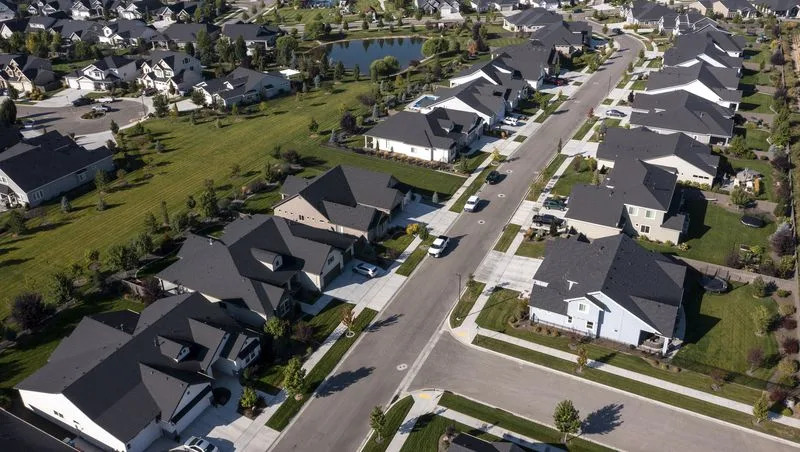
New homes in Eagle, Idaho, are pictured on Sept. 23, 2022. | Ben B. Braun, Deseret News
Even though the housing market is in the midst of a correction thanks to the rapid rise of mortgage rates that began in mid-2022, U.S. home prices are still overvalued — and some local markets are more overvalued than others.
That’s according to a new analysis from Moody’s Analytics, which estimates national median home prices are about 15.7% over their fundamental value. The firm’s economist Matthew Walsh predicts they’ll decline another 4% to 4.5% in coming months, Insider recently reported.
Based on Moody’s model — which accounts for variables such as construction costs, household formation rates and where home prices currently stand compared to median incomes — Insider ranked all 50 states, plus Washington, D.C., from least overvalued to most. One state in the West sank to the very bottom.
Idaho ranked 51st as the most “overvalued” local housing market as of the second quarter of 2023, with a median home price estimated by Redfin of $467,000, Insider reported.
Moody’s model estimates Idaho’s home prices exceed their fundamental value by 41.87%, according to Insider. Higher than 10% is considered overvalued and those more than 20% higher are considered extremely overvalued.
“If you look at Idaho over the past three years, you’ve had this extreme run up in home prices since the pandemic began,” Walsh recently told the Daily Mail. “So if you look at that relative to the demographic drivers — the household formation and the income growth there — that run up has been so much more extreme which is why we see the inflated valuation of houses there.”
It’s not the first time Idaho has made headlines for its home prices, which boiled over as low interest rates during the COVID-19 pandemic sent the West’s housing market into a frenzy. Housing markets in the West were also among the first to see the most dramatic price declines as interest rates skyrocketed amid the Federal Reserve’s battle with inflation.
Last year, when mortgage rates began rising from 3% to over 6%, Moody’s estimated Boise’s market was overvalued by an estimated 76.9%, Fortune reported. At the time, Moody’s estimated there were over 210 housing markets across the nation that were “significantly overvalued,” or overvalued by more than 25%.
That suggests home prices in Boise may have further to fall, especially with mortgage rates today that hover well over 7%, some days exceeding 8%, according to Bankrate.com.
In a May commentary, Walsh wrote most U.S. metro areas continued to be overvalued even as prices ticked down amid the housing market correction. However, the number of fairly valued metro areas also continued to climb as prices “fall back toward their equilibrium value in many markets.”
“Despite the improvement, overvaluation remains more widespread than during the height of the 2000s housing bubble. Today there are more than 300 metro areas that are overvalued or extremely overvalued compared with 260 during the final quarter of 2006,” Walsh wrote.
In that commentary, Walsh also pointed to Boise as topping the list as the most overvalued. At the time, prices exceeded their estimated fundamental value by more than 54%. Walsh noted that was a “sharp reduction” from the prior quarter when Boise was overvalued by more than 63%.
In February, Moody’s Analytics projected home prices would continue to fall 5% to 10% from their 2022 peaks by the beginning of 2025, and predicted the most “highly overvalued” metro areas — such as Boise, Phoenix, Austin and Nashville — would see the largest declines.
However, that same Moody’s analysis also noted these price corrections are “not a crash.”
“House prices will not crater like they did during the Great Recession,” the February analysis said, predicting home prices will fall back to late 2021 levels in early 2024. “Only this year’s gains will be wiped out by declines. For perspective: in 2025, when the next low is reached, we expect prices nearly 30% higher than they were at the beginning of 2020.”
Where does Utah rank?
In the Insider list based on Moody’s model, Utah ranked No. 40 — 11 spots below Idaho in terms of overvaluation. Moody’s estimated Utah’s home prices exceed their fundamental value by 26.31%, Insider reported.
Utah, like Idaho, was also hit hard by the pandemic housing rush and saw some of the biggest home price declines as interest rates rose.
In August, after six straight months of growth, home prices in most of Utah’s Wasatch Front counties tipped down. In Salt Lake County, the median price of all home types fell to $520,000 that month, a nearly 10% drop from a year ago and nearly 2% down from July, according to the Salt Lake Board of Realtors. With rates rising and demand set to fade even more heading into winter, Utah could see even more price declines in coming months.
To put those declines in perspective, however, Utah’s home prices surged by 72% over the past five years, according to the Federal Housing Finance Agency. In the two-year period from 2020 to 2022 alone, the median sales price of a home in Utah rose almost 50%, up from $336,300 in February 2020 to $500,000 the same month in 2022, according to estimates from the University of Utah’s Kem C. Gardner Policy Institute.
Utah’s housing experts have predicted Utah would be impacted somewhat by the national housing market correction — but they also expect Utah’s home prices to remain stubbornly high, largely thanks to the state’s years long housing shortage that they say is poised to worsen as home building contracts. In a recent report from the Kem C. Gardner Policy Institute, housing researchers predict Utah’s housing shortage will likely increase to over 37,000 units by 2024.
‘A remarkable role model’: Warren Buffett and Bill Gates call this fellow billionaire their hero — here are 3 big lessons to learn from Charles Feeney
Serah Louis – October 29, 2023
‘A remarkable role model’: Warren Buffett and Bill Gates call this fellow billionaire their hero — here are 3 big lessons to learn from Charles Feeney
He was known as the billionaire who gave it all away.
Charles “Chuck” Feeney made his much of his riches selling booze, cigarettes and perfume. The co-founder of the Duty Free Shoppers Group died on Oct. 9 at the age of 92, but fulfilled his pledge to donate the bulk of his $8 billion fortune long before his death.
“Chuck Feeney is a remarkable role model, and the ultimate example of giving while living,” Bill Gates told Forbes back in 2012.
Here’s what you can learn from how Feeney managed his money.
Diversification
While building his massive fortune, Feeney didn’t just focus on his global network of duty-free airport stores — he was a prolific investor as well.
By the early 1980s, he was profiting from hotels, property and retail, and he later invested in some tech start-ups. It wasn’t until 1996 that he sold his stake in Duty Free Shoppers for a tidy $1.63 billion that went to his foundation, Atlantic Philanthropies, a deal that multiplied in value by investment returns later, according to the Wall Street Journal.
Feeney followed the golden rule — don’t put all your eggs in one basket — and grew his wealth by diversifying his investments.
Similarly, while you’re buying stocks, make sure you’re not sticking to one company or sector. This will provide some shelter from any unexpected dips in the market. Do your research and build a balanced portfolio of companies or ETFs.
Frugality
Feeney went from purchasing luxurious multimillion-dollar homes — including in London and the French Riviera — to renting a two-bedroom San Francisco apartment with his wife.
Like many folk of his ilk, he once spent his time cruising on yachts and private jets — but decided in his later years to cut back and focus on his philanthropic efforts.
For Feeney, value was more important than showing off his wealth. He flew coach because he wasn’t getting anywhere any faster by opting for a first-class ticket. He wore a $15 watch and used plastic bags in place of a briefcase.
“I just reached the conclusion with myself that money, buying boats and all the trimmings didn’t appeal to me,” he was quoted saying in a 2007 biography about his life, “The Billionaire Who Wasn’t.”
Most importantly, Feeney was intentional with his spending, leaving enough funds behind for his investments and donations.
This is a crucial tenet for managing your money (even if you don’t have billions in your bank account). Consider creating a budget and monitoring your monthly expenses so that you’re leaving some of your income behind for your financial goals, too, such as your emergency savings or nest egg.
Charitable giving
Once dubbed “the James Bond of philanthropy” by Forbes, Feeney is perhaps best known for his charitable giving — despite his attempts to hide it for many years.
Feeney donated to a range of causes, including AIDS relief in South Africa, Operation Smile’s free surgeries for children with cleft lips and palates and earthquake relief in Haiti.
“People used to ask me how I got my jollies, and I guess I’m happy when what I’m doing is helping people and unhappy when what I’m doing isn’t helping people,” Feeney told Forbes.
There are potential financial benefits to charitable giving as well come tax time, as you may qualify for a tidy deduction on your next return.
The city landed that title through multiple metrics including its inflation rate and the cost of gas. The report also considered living costs from annual housing costs, median gross rent and high fees associated with homeownership.
The report said home prices exceed the national median sale price and added that many in San Diego’s downtown area must pay homeowners association fees to maintain living in housing complexes.
“Living in San Diego is not particularly affordable,” the report reads. “San Diegans are willing to pay these elevated prices, though, often referring to the cost-of-living differences as the ‘sunshine tax,’ or the price of enjoying a year-round temperate climate.”
Los Angeles was ranked the second most expensive city, followed by Honolulu and Miami. California actually made up seven of the top ten spots in the report and around half of the top 25. New York City, the most populated U.S. town, earned the 11th spot.
According to the report, the cities at the top of the list require the most amount of wealth in order to live comfortably.
What are the most expensive cities in the US?
These are the 25 most expensive American cities according to the U.S. News & World Report. For information on each city’s various qualities like value and quality of life, click here.