Social Security on the chopping block: How the GOP plans to fix its own budget mess

Salon

Social Security on the chopping block: How the GOP plans to fix its own budget mess

Republicans are going back to their dream: Cutting Social Security and Medicare

Charlie May         November 15, 2017  

https://s.yimg.com/lo/api/res/1.2/mBJIttctviJY__QJW44fUQ--/YXBwaWQ9eW15O3E9NzU7dz02NDA7c209MQ--/http://l.yimg.com/yp/offnetwork/60c7b0ca049e94d4b442d9e969a0655dSocial Security on the chopping block: How the GOP plans to fix its own budget mess

Amid the impending GOP tax reform bill there has been plenty of talk about the estimated $1.5 trillion slash in taxes, but there has been almost no discussion of how the Republicans — who regularly tout the importance of the federal deficit — plan to pay for their proposed cuts.

On Tuesday, House Speaker Paul Ryan, R-Wis., insisted that the national debt is a serious issue, and that in order for it to be fixed, entitlement programs would have to be gutted in order to pay for the tax cuts.

“You cannot get the national debt under control, you cannot get that deficit under control, if you don’t do both — grow the economy, cut spending,” Ryan said during a town hall event in Virginia for Fox News.

Ryan claimed that the Republican tax plan “grows the economy” but that the party has “a lot of work to do in cutting spending.”

Democrats have said the Republican tax plan is nothing more than a grab for social safety nets.

“This is a nasty, two-step strategy that has long been the holy grail for hard-right Republicans,” Senate Minority Leader Chuck Schumer, D-N.Y., told The New York Times. “If this bill passes, you can bet the Republicans will immediately sharpen the knives for middle-class benefits.”

The national debt surpassed $20 trillion in September, the highest mark in U.S. history. During this time, the nation has embedded itself in numerous conflicts abroad — a major driver of the massive debt — but has still dedicated more federal funds to the military than ever before.

The Congressional Budget Office “warned that the tax bill could set off an arcane budget rule” which would drastically cut funding for Medicare over the next decade and as much as $25 billion next year, according to Times:

The pay-as-you-go law requires that legislation that adds to the federal deficit be paid for with spending cuts or other offsets. If that does not happen, automatic cuts to programs like Medicare kick in. The Medicare cuts, which are capped at 4 percent of the program’s annual spending, could reach almost a half trillion dollars over 10 years, according to the nonpartisan Committee for a Responsible Federal Budget.

While bipartisan legislation could potentially be passed to avoid the Medicare cuts, it’s not clear if the Republicans would work towards making that happen.

“I can’t believe how quickly the deficit hawks in the Republican Party flew away after they saw the $1.5 trillion,” Oregon Senator Ron Wyden, the top Democrat on the Finance Committee, told the Times. “We’re sure that they will start making their way back when we see the deficits.”

President Donald Trump has widely proclaimed, both on his campaign and since he’s assumed office, that his tax agenda would provide relief for middle class families and that the plan would close loopholes and not benefit him or other wealthy elites.

As it turns out, Trump and his top economic adviser, a key architect of the plan, Gary Cohn, the former Chief Operating Officer at Goldman Sachs, have been demonstrably incorrect in their claims that the middle class will be the primary beneficiaries of the tax plan and that the wealthy won’t be showered with tax relief. Some Republicans have even argued that it doesn’t benefit the rich enough.

On Wednesday, during an event for the Wall Street Journal’s CEO Council, the crowd was asked by the WSJ, “If the tax reform bill goes through, do you plan to increase investment — your company’s investment, capital investment?”

After there was little participation by the crowd of CEO’s, Cohn asked, “Why aren’t the other hands up?”

https://pbs.twimg.com/ext_tw_video_thumb/930475469354471424/pu/img/YfgCRfCXyz2Z1EdK.jpg

Everything is going as planned for the GOP!

Charlie May is a news writer at Salon. You can find him on Twitter at @charliejmay

Shep Smith Breaks From Fox News Coverage, Tears ‘Uranium One’ Scandal To Shreds

HuffPost

Shep Smith Breaks From Fox News Coverage, Tears ‘Uranium One’ Scandal To Shreds

Alana Horowitz Satlin, HuffPost         November 15, 2017 

Fox News anchor Shep Smith broke from his network’s hyperventilating coverage of the “Uranium One” pseudo-scandal to debunk allegations of wrongdoings by Hillary Clinton.

Smith, never one to blindly toe the party line, took to task President Donald Trump ― and, implicitly, his cable news network of choice ― over the “inaccurate” portrayal of the sale of a Canadian mining company with major U.S. holdings to a Russian company.

“Here’s the accusation,” Smith explained Tuesday. “Nine people involved in the deal made donations to the Clinton Foundation totaling more than $140 million. In exchange, Secretary of State Clinton approved the sale to the Russians — a quid pro quo.”

It’s a claim that has dominated Fox News in recent weeks after The Hill published a deeply flawed report about a “Russian bribery plot” involving the sale. Following pressure from the president and several Republican members of Congress, Attorney General Jeff Sessions announced earlier this week that the Justice Department would consider appointing a special counsel to review the deal as well as other matters involving Clinton and other Democrats.

There’s never been any evidence that Clinton acted inappropriately and, as Smith notes, “the Clinton State Department had no power to approve or veto that transaction. It could do neither.” Indeed, the State Department was just one of nine agencies that signed off on the deal and Clinton herself wasn’t even on the committee.

“The accusation is predicated on the charge that Secretary Clinton approved the sale,” Smith said. “She did not. A committee of nine evaluated the sale, the president approved the sale, the Nuclear Regulatory Commission and others had to offer permits, and none of the uranium was exported for use by the U.S. to Russia. That is Uranium One.”

Since Smith’s segment, Uranium One has been mentioned over 40 times on various Fox News shows.

Related:

Newsweek

Fox News Anchor Destroys Conspiracy Theory About Hillary Clinton and Uranium One

By Graham Lanktree, Newsweek        November 15, 2017   

Updated | Fox News anchor Shep Smith dismantled a conspiracy theory about Hillary Clinton and the 2009 sale of the company Uranium One that has been promoted by network hosts Sean Hannity and Tucker Carlson.

Fox’s opinion show hosts have been echoing President Donald Trump and several Republicans in the hard-right Freedom Caucus urging the Department of Justice to launch a special counsel to investigate Clinton. This week, members of the caucus wrote an opinion piece for Fox News calling for Attorney General Jeff Sessions to investigate Clinton or “step down.”

They charge Clinton, who was then Secretary of State, got $145 million in kickbacks to the Clinton Foundation from Uranium One’s investors after the Canadian company was sold to the Russian state-owned atomic energy company, Rosatom.

http://s.newsweek.com/sites/www.newsweek.com/files/styles/full/public/2017/11/15/1115clinton.jpgFox News has promoted a conspiracy theory that Hillary Clinton received kickbacks for approving the sale of a uranium company to Russia. Aaron P. Bernstein/Reuters

“The accusation is predicated on the charge that Secretary Clinton approved the sale. She did not. A committee of nine evaluated the sale, the president approved the sale, the Nuclear Regulatory Commission and others had to offer permits, and none of the uranium was exported for use by the U.S. to Russia. That is Uranium One,” Smith summed up at the end of a six minute takedown of the conspiracy theory Tuesday. “It was unanimous, not a Hillary Clinton approval.”

“Most of those donations were from one man, Frank Giustra, the founder of the company in Canada,” said Smith. “He gave $131 million to the Clinton Foundation. But Giustra says he sold his stake in the company back in 2007. That is three years before the uranium/Russia deal and a year and a half before Hillary Clinton became secretary of state.”

The day before Smith’s takedown, Attorney General Jeff Sessions sent a letter to the House Judiciary Committee chairman stating the Department of Justice is looking at whether there is merit to investigating Clinton and the deal.

“Uranium deal to Russia, with Clinton help and Obama Administration knowledge, is the biggest story that Fake Media doesn’t want to follow!” Trump tweeted at the end of October. Days later, Trump said that the approval of the uranium sale is just one reason why Clinton should be investigated and, in a tweet, urged Republicans to “DO SOMETHING!”

During a private meeting with Trump in the Oval Office on November 1, Fox News host Jeanine Pirro insisted he should appoint a special counsel to investigate Hillary Clinton, according to The New York Times. “Everything I said to President Trump is exactly what I’ve vocalized on my show, Justice With Jeanine,” Pirro said. Fox News opinion show hosts Tucker Carlson and Sean Hannity have also promoted the Uranium One deal as a scandal.

After Smith’s segment on the Uranium One conspiracy theory Tuesday, Fox News host Tucker Carlson ran a piece on his show titled “Real Russia Scandal” with a picture of Clinton. During the segment Carlson argued the sale of Uranium One was a national security threat as it ceded control of American uranium to Russia. Treaties signed by Russia and the U.S. prevent the proliferation of nuclear weapons and Russia has used the uranium in its nuclear energy reactors.

Late last week, members of the Freedom Caucus argued in congress that the Uranium One deal disqualifies special counsel Robert Mueller from leading the investigation into whether the Trump campaign assisted Russia in its efforts to interfere in the 2016 election.

The group said Mueller has a conflict of interest because during the Uranium One deal he was heading the FBI while it was investigating corruption at a subsidiary of the Russian state-owned atomic energy company Rosatom that bought Uranium One.

“We are at risk of a coup d’état in this country if we allow an unaccountable person, with no oversight, to undermine the duly-elected President of the United States,” said Florida Rep. Matt Gaetz from the chamber floor.

“It is far past time to thoroughly investigate this [Uranium One] deal, the Obama administration’s actions, and the Clinton family’s role,” said California Rep. Scott Perry.

This article was updated to remove references referring to Shep Smith as a Fox News host. He is an anchor on the network.

CBO: House GOP tax plan triggers $25 billion in Medicare cuts

Yahoo – Finance

CBO: House GOP tax plan triggers $25 billion in Medicare cuts

Ethan Wolff-Mann      November 14, 2017 

https://s.yimg.com/lo/api/res/1.2/moyLCed2rqJ4QQaJmGtmCg--/YXBwaWQ9eW15O3c9NjQwO3E9NzU7c209MQ--/http://media.zenfs.com/en/homerun/feed_manager_auto_publish_494/0d9d222859937f980469f8cc78322f2eHouse Minority Whip Steny Hoyer, D-Md. clarified effects of the current House GOP tax legislation with the Congressional Budget Office. (AP Photo/Pablo Martinez Monsivais)

If the House GOP tax plan passes, it is projected to cut revenue significantly, likely increasing the deficit by $1.456 trillion from 2018 to 2027, according to the Joint Committee on Taxation and Congressional Budget Office (CBO).

With a number that large, Congress’s “pay as you go” rules that prevent unchecked spending would fall into place, a move that could cut Medicare’s budget by as much as $25 billion for 2018.

In a letter to House minority whip Steny Hoyer (D-MD), the CBO explained that without any more money to offset the fall in revenue, the Office of Management and Budget (OMB) would be required to issue a “sequestration order” to reduce spending in 2018 by $136 billion.

The effects of this sequestration order would trigger automatic cuts to various programs, including Medicare. According to the CBO, this could be as much as 4% for Medicare, which amounts to $25 billion in 2018. Furthermore, all non-exempt programs would be eliminated, which include some farming subsidies, border security, and student loan help. Others, like Social Security, would remain untouched.

At the same time, the tax plan’s changes to the estate and gift taxes would cut revenue $151 billion from 2018 to 2027, according to the JCT. Only 4,700 estates were large enough to be subject to the estate tax as the 2017, since the exemption is over $5 million.

Because of the rules exempting or limiting how much can be cut from certain programs, the CBO also estimated that the reductions would not make up for the need for money to pay for what Congress “bought.”

Touching Medicare has been traditionally considered explosive, and some have noted the “pay as you go” rules give Democrats leverage in the tax bill debates.

In a response to the CBO’s letter, Rep. Hoyer issued a statement, noting the broad impact beyond the deficit on the program cuts, adding that he actually wrote the “pay as you go” law, and called for a bipartisan lawmaking process.

According to the Committee for a Responsible Federal Budget, the “pay as you go rules” were passed with bipartisan support.

Ethan Wolff-Mann is a writer at Yahoo Finance.

Bill Gates, Jeff Bezos, and Warren Buffett Own More Wealth Than the Entire Poorest Half of the US Population

The Nation

Bill Gates, Jeff Bezos, and Warren Buffett Own More Wealth Than the Entire Poorest Half of the US Population

How can we get to a saner tax system, a more just distribution of wealth, and a healthier economy overall?

By Michelle Chen    November 13, 2017

https://www.thenation.com/wp-content/uploads/2017/11/buffett-gates-ap-img.jpg?scale=896&compress=80Berkshire Hathaway Chairman and CEO Warren Buffett speaks to Microsoft co-founder Bill Gates. (AP / Nati Harnik)

As treasure troves of the super-elite’s untold trillions glisten in offshore tax havens, Main Street is sinking in an underwater economy. Drowning in debt, clinging to the tatters of the welfare state, the gulf between the richest few and the rest of us could now widen even further with a new GOP tax bill loaded with another corporate bounty of loopholes, more tax “incentives,” and more trickle-up economics designed to concentrate as much wealth in as few hands as possible.

According to a report on the country’s widening wealth gap, published by the Program on Inequality at the Institute for Policy Studies (IPS), the elites at the helm of this upside-down economy would fit in a cozy lifeboat:

The three wealthiest people in the United States—Bill Gates, Jeff Bezos, and Warren Buffett—now own more wealth than the entire bottom half of the American population combined, a total of 160 million people or 63 million households.

More than half of US wealth is controlled by 25 billionaires. And multinational corporations shield an estimated 10 percent of global GDP from taxation through avoidance and evasion in obscure, unregulated financial enclaves.

Capitalism

The Paradise Papers—the massive trove of financial records exposing tech giants, Russian oligarchs, and White House officials alike—offer a glimpse of the hidden riches that remain untouchable by Uncle Sam, and the structural regulatory failures that feed global corporate impunity.

But, while the papers largely focus on corporate malfeasance, it’s vital to also look at the social injustices produced by this wealth imbalance, and the crisis of democracy that abets this global theft. According to recent estimates, “households in the top 0.01 percent, with wealth over $45 million, evade 25 to 30 percent of personal income and wealth taxes.”

Chuck Collins, director of the Program on Inequality, says via e-mail, “[T]hese concentrations of wealth understate the actual levels of inequality, due to hidden wealth systems. We believe that closing these systems of hidden wealth are critical to reducing extreme concentrations of wealth.”

The nationwide wealth gap represents how the neoliberal economic system operates as a zero-sum game based on disempowering the poor.

It’s no secret that wealthy individuals and corporations channel their enormous financial assets into tax havens. Yet for the most part the piracy of the gilded class is perfectly legal, even encouraged, under existing tax codes. The everyday struggle to stay housed, get an education, or pay for medicine, on the other hand, often traps working-class households in virtual debtor’s prisons. Today the bottom 1 percent of households are collectively $196 billion in the hole, while the top 1 percent sit on $33.4 trillion of combined net worth. A fifth of American households, and about a third of black and Latino families, are stuck with zero or negative net wealth. And while wealth divides deepen racial segregation, concentration of accumulated assets across society aggravates long-term economic insecurity within communities of color and across gender lines. Overall, the increasingly polarized economic structure has hollowed the middle class, eroded public services, and driven years of stagnant wages.

The GOP’s proposed tax bill purports to curb offshoring by shifting to a territorial tax system, which in theory would tax large profits held offshore. But advocates point to the fine print: Various exemptions would severely limit the amount of corporate profit that is actually captured. A measure to nominally tax “excess” profits sets a sharp threshold at revenues above $100 million. The framework is structured so that, as economist Kimberly Clausing of Reed College noted at a press conference on the bill, “Embedded in that tax is actually an incentive to move tangible assets offshore,” which would actually be an incentive to shift not just financial assets but real workplaces. According to the financial watchdog FACT Coalition, “companies will be incentivized not just to move profits on paper to tax havens but to move actual jobs and factories to lower tax countries.” And to further empower the most toxic forms of capital, Republicans have proposed a bonus for fossil-fuel industries, by granting an exemption from the adjusted tax rate just for oil and gas companies—the same companies that are ruining local habitats and hiding the spoils abroad.

That means American workers get hit on both ends: public revenue hemorrhages and jobs slip away from communities as multinationals are encouraged to invest abroad, in another round of capital flight.

The fundamental structural problem that must be fixed, advocates say, is the lack of basic transparency in the global taxation system, which would allow both policy-makers and the public to at least track what happens to the estimated $94 billion to $131 billion in revenue that multinationals funnel away from public coffers into a financial black hole through tax dodging each year. OxFam America has called for a global effort to overhaul reporting regulations, so there is robust disclosure on a country-by-country basis. And to really clamp down on asset hoarding overseas, they are also demanding a direct ban on offshore shell companies that allow for unfettered money laundering for criminal syndicates, politicians, and everything in between. The Corporate Transparency Act that has been proposed in Congress would be a first step in requiring registration of the ownership of these anonymous phantom companies.

The Paradise Papers ultimately represent just a tiny cross section of hidden offshore wealth. “This leak is only possible because of the radical secrecy embedded in our tax laws,” said Oxfam America Policy Director Gawain Kripke in a statement on the revelations. “This should be a clarion call for legislation to mandate basic transparency so we no longer need leaks like this to reveal the rot beneath the surface.”

But of course, if offshore tax holdings were fully disclosed, that would defeat the purpose of the tax-haven system. And who knows what else people would start to demand if politicians and billionaire CEOs were forced to come clean about the real sources of their riches? People might start to question who should be trusted to run our economies, and our governments.

Support Progressive Journalism

If you like this article, please give today to help fund The Nation’s work.

Get unlimited access to The Nation for as little as 37 cents a week!    Subscribe

Michelle Chen is a contributing writer for The Nation.

6 Documentaries That Will Shut Down Any Climate-Change Denier

POPSUGAR

Documentaries About Climate Change on Netflix

6 Documentaries That Will Shut Down Any Climate-Change Denier

by Lisette Mejia        November 14, 2017      View In Slideshow

https://media1.popsugar-assets.com/files/thumbor/4jaQ14m30q2uaw4jRxIuZzlX6_g/fit-in/1024x1024/filters:format_auto-!!-:strip_icc-!!-/2016/03/07/943/n/38761221/65c63749_edit_img_cover_file_40475020_1457385935_Chasing-Ice/i/Documentaries-About-Climate-Change-Netflix.jpg

Given President Donald Trump’s denial of climate change and his recent action of pulling the US out of the Paris Accord, now is probably an apt time to educate yourself on the environment. It’s even more important when you realize that the present Environmental Protection Agency director is a climate science denier — and he’s quite open about it.

Global warming is neither an engineered fallacy nor really even debated at this point. There is a broad consensus in the scientific community that climate change is occurring and heavily accelerated by humans.

An easy way to get educated on the matter? By watching a documentary, of course. We’ve compiled a list of environmental documentaries you can learn a lot from. Read on to see.

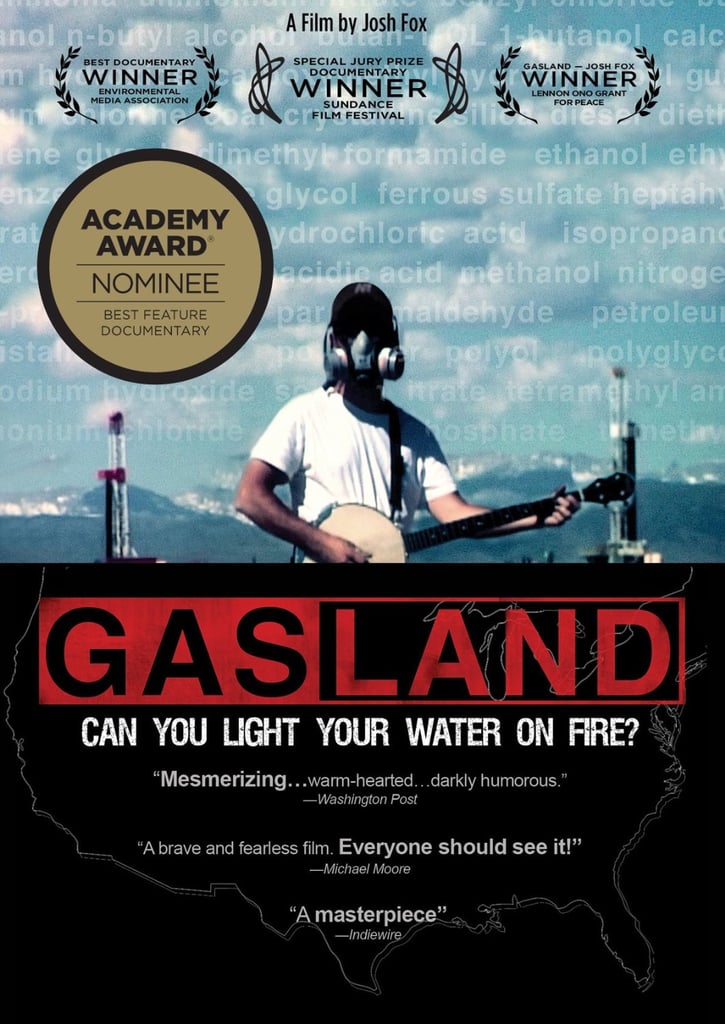
1 GasLand

https://media1.popsugar-assets.com/files/thumbor/7ifpHGcqIi2pyySXps_B0XQHXVA/fit-in/1024x1024/filters:format_auto-!!-:strip_icc-!!-/2016/03/07/934/n/38761221/91bf8b438670b3ff_81T0f8UXkpL._SL1500_/i/GasLand.jpg

Nominated for an Academy Award for best documentary in 2011, GasLand looks at the negative effects of fracking, also known as natural-gas drilling — like poisoned water sources and sick animals. It’s been incredibly influential as a tool in the anti-fracking movement and for those vocal about fracking’s role in worsening climate change.

2 More Than Honey

https://media1.popsugar-assets.com/files/thumbor/k8I3O-utPIz6yIZuXccnorQL8h0/fit-in/1024x1024/filters:format_auto-!!-:strip_icc-!!-/2016/03/07/984/n/38761221/20d7e527dff2ea85_more-than-honey-poster/i/More-Than-Honey.jpg

What do bees have to do with it? You’ll understand once you watch More Than Honey and discover that they’re dying in record numbers across the globe, thanks, in part, to climate change. You’ll also be reminded about how they pollinate much of our food supply, so their deaths have tragic consequences for humans, too.

3 Antarctic Edge: 70° South

https://media1.popsugar-assets.com/files/thumbor/Jn670hbiDtFXSp6yQscvZLTM0fc/fit-in/1024x1024/filters:format_auto-!!-:strip_icc-!!-/2016/03/07/934/n/38761221/83ed59e67e04ba9c_antarctic_edge/i/Antarctic-Edge-70-South.jpg

Follow along in Antarctic Edge: 70° South as a team of scientists explores the “fastest Winter-warming place on Earth” — the melting ice sheet of the West Antarctic Peninsula. The film was funded in part by the National Science Foundation and turns two decades of scientific research on climate change into a sad but significant narrative.

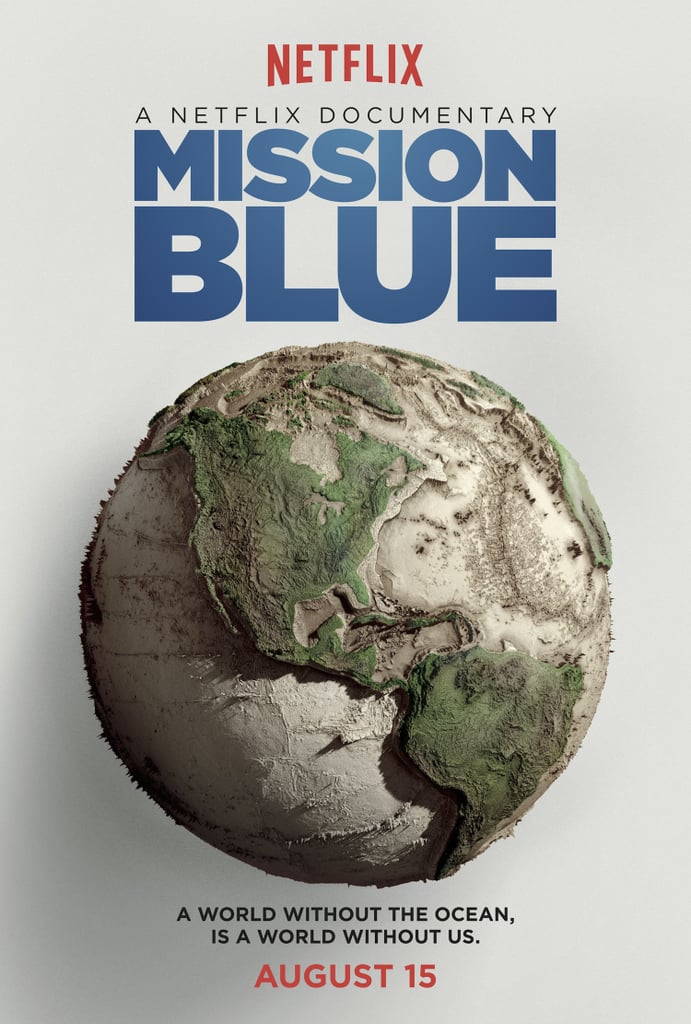
4 Mission Blue

https://media1.popsugar-assets.com/files/thumbor/j9szLCxixHG320PTZgjIqfBnASE/fit-in/1024x1024/filters:format_auto-!!-:strip_icc-!!-/2016/03/07/934/n/38761221/d38f0b4712de97ec_Mission-Blue-Film-Poster-Netflix/i/Mission-Blue.jpg

Mission Blue is a Netflix original documentary about a famous oceanographer named Sylvia Earle, and her efforts to create protected marine sanctuaries across the globe. You’ll leave with a greater appreciation for those who dedicate their lives to saving the ocean from effects like over-fishing, pollution, and climate change.

5 Chasing Ice

https://media1.popsugar-assets.com/files/thumbor/EdIZmse_mld5XZy5k7qXUQ3S2sg/fit-in/1024x1024/filters:format_auto-!!-:strip_icc-!!-/2016/03/07/934/n/38761221/02389ba1824e65cf_Chasing-Ice-poster/i/Chasing-Ice.jpg

Chasing Ice won a news and documentary Emmy in 2014 thanks to its stunning visuals paired with a sobering story line. In it, you see the work of National Geographic photographer James Balog as he captures time-lapses of glaciers eroding and disappearing.

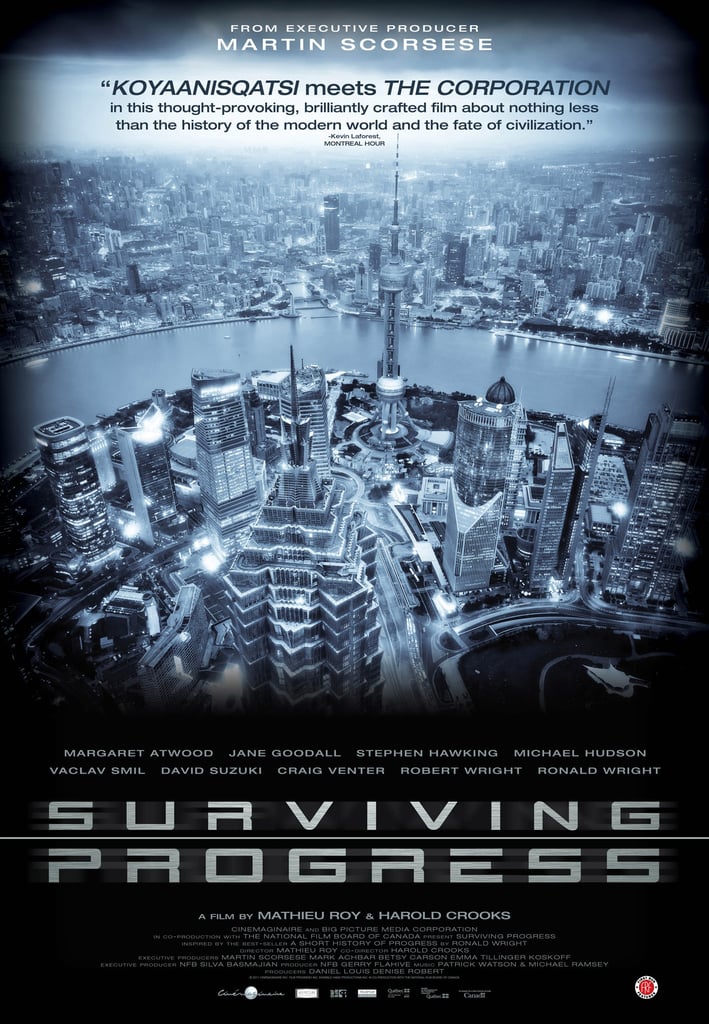
6 Surviving Progress

https://media1.popsugar-assets.com/files/thumbor/yuC4_Gyt4PJLTJM9CfBgazm8wi8/fit-in/1024x1024/filters:format_auto-!!-:strip_icc-!!-/2016/03/07/934/n/38761221/266b04a137b3a5a3_survivingprogress_poster/i/Surviving-Progress.jpg

What’s considered progress these days? Technological advancements and economic prosperity might come to mind. Surviving Progress says we have it all wrong and need to look at progress as our efforts to confront climate change — or else we’re screwing ourselves and future generations over.

New gas pipeline capacity sharply exceeds consumption, report says

StateImpact – Pennsylvania

Energy. Environment. Economy.   A reporting project of NPR member stations. About StateImpact Pennsylvania:

StateImpact Pennsylvania is a collaboration between WITF, WHYY, WESA and the Allegheny Front. Reporters Marie Cusick, Susan Phillips and Reid Frazier cover the commonwealth’s energy economy. Read their reports on this site, and hear them on public radio stations across Pennsylvania. This collaborative project is funded, in part, through grants from the Corporation for Public Broadcasting, Heinz Endowments and William Penn Foundation.

New gas pipeline capacity sharply exceeds consumption, report says

By John Hurdle        November 13, 2017

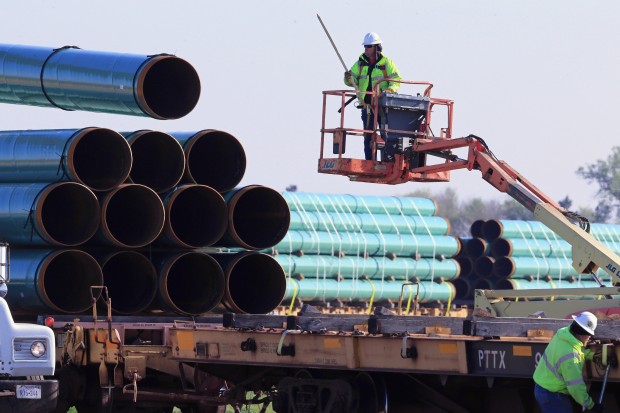
https://stateimpact.npr.org/pennsylvania/files/2016/03/pipeline-construction-620x413.jpg Nati Harnik / AP Photo. Workers unload pipes at a staging area in Worthing, S.D., for the 1,130-mile Dakota Access Pipeline. A new report says the nation’s new natural gas pipeline capacity resulting from a building boom is far more than is needed.

Charges that the U.S. pipeline industry is building far more natural gas pipelines than it needs are being fueled by a new report showing that the capacity of lines approved by federal regulators over the last two decades was more than twice the amount of gas actually consumed daily in 2016.

The report by the independent Analysis Group for the Natural Resources Defense Council said the Federal Energy Regulatory Commission has approved more than 180 billion cubic feet a day (bcf/d) of new pipeline capacity since 1999, when it began its current policy on approving interstate pipelines. The new capacity compares with the average daily consumption of only 75.11 bcf/d last year, the report said.

Even during the Polar Vortex of 2013/14 when exceptionally cold temperatures in the Northeast boosted the need for heating fuel, consumption of 137 bcf/d was still significantly lower than the combined capacity additions, the report said, citing data from the federal Energy Information Administration. In January 2017, national consumption was 93.1 bcf/d, even further below the capacity of the additional pipeline network, the report said. The data on additions to pipeline capacity are from FERC.

Topics:    Pipelines: The new battleground over fracking

https://stateimpact.npr.org/pennsylvania/files/2015/11/mechanicsburg-and-more-037.jpg

NRDC, in the report issued Nov. 6, said the overcapacity is being driven by the profits that can be earned by pipeline builders; by FERC’s willingness to accept builders’ assurances that there is a need for the additional gas, and by the regulator’s existing application policy that does not recognize big changes in the natural gas market since the policy began.

“The report underscores very real concerns that we are overbuilding the natural gas pipeline system,” said Montina Cole, an attorney with NRDC’s ‘Sustainable FERC’ project.

Cole told StateImpact that an increasing number of pipeline builders are justifying their projects with so-called affiliate agreements in which buyers of the gas are commercially linked with the carrier. When the buyer is an electric utility, that means ratepayers end up paying the cost of the pipeline, she said.

“The pipeline developer is really on both sides of the transaction,” Cole said. “They are both selling the capacity, and the buyers are affiliates, which are increasingly electricity companies that have captive ratepayers.”

She argued that FERC, which approves virtually all pipeline applications that come before it, is too ready accept builders’ assurances that there is a need for a pipeline.

“Pipeline companies tell FERC: ‘We can demonstrate the need because we have contracts subscribing the capacity of the pipeline.’ FERC places undue reliance on that in deciding whether a pipeline is needed,” she said.

https://stateimpact.npr.org/pennsylvania/files/2017/07/03_FERCOfficeBuilding-620x348.jpgIn a recent 2-1 ruling, the U.S. Court of Appeals for the District of Columbia found the Federal Energy Regulatory Commission failed properly quantify greenhouse gas emissions linked to a pipeline expansion project in the southeastern U.S.     Marie Cusick / StateImpact Pennsylvania

Despite the high cost of building new pipelines and the existence of spare capacity in existing lines, builders are attracted to new projects because they are more profitable, Cole argued.

“There’s a lot more money to be made if you build that new pipeline, and you have a guaranteed recovery of your costs,” she said. “It’s a very lucrative business.”

The Interstate Natural Gas Association of America, which represents pipeline builders, rejected the calls for a reform to FERC’s pipeline policy, saying it has served consumers by responding quickly to market need.

“The responsiveness of FERC’s certificate process has enabled U.S. consumers and the economy to benefit very quickly from the shale revolution,” said INGAA spokesman Cathy Landry. “This would not have occurred had FERC been bound by a policy requiring extensive proceedings to establish an administrative determination of the needs of the market.”

Landry said the idea of FERC incorporating regional planning into its application process, as proposed NRDC, would be at odds from the regulator’s “pro-competition” policies that rely on the “real world commitments” of pipeline companies to demonstrate market demand.

Still, the issue of over-capacity in the pipeline industry has also been raised by the U.S. Department of Energy, which said in 2015 it expects the rate of pipeline additions to slow in future as gas is increasingly carried in pipelines that have been built over the last decade in response to the shale boom.

“Higher utilization of existing interstate natural gas pipeline infrastructure will reduce the need for new pipelines,” the DOE said in a report.

Meanwhile, the NRDC said FERC’s policy on evaluating pipeline applications does not take into account significant market changes since the policy took effect, including a huge increase in shale gas production, public concerns on whether fracking taints drinking water, and how climate is affected by the shale gas boom.

“The time is ripe for FERC to undertake a structured and collaborative review of its pipeline certification guidance and policy,” said the report’s author, Susan Tierney, a former assistant secretary for policy at the DOE, in a statement.

FERC would not say whether it is looking at the NRDC report, how it responds to charges that it is approving too much pipeline capacity, or whether it is considering a review of its 1999 policy. “We don’t comment on outside reports,” said spokeswoman Celeste Miller.

But Commissioner Cheryl LaFleur indicated her own concerns with FERC’s approval process when she dissented in October from the commission’s approval of the Atlantic Coast and Mountain Valley Pipelines in West Virginia, Virginia and North Carolina, saying both projects would have significant environmental effects.

LaFleur, the only Democrat among the three current commissioners, said the FERC process would benefit from a fuller consideration of how to balance pipelines’ environmental effects, including downstream impacts, with their need.

John Quigley, former secretary of Pennsylvania’s Department of Environmental Protection, said that big changes to the supply of and demand for natural gas since the FERC policy was implemented would justify a fresh look at whether it is working as it should.

“When you look at the impact that this build-out clearly is having in states like Pennsylvania, the environmental impacts, the potential impacts in terms of public health, risks to public safety, climate risks, all of that needs to be considered,” he said. “It is not at all unreasonable to ask that they be considered anew given the rapid change and the scale of the challenge.”

On the issue of overcapacity, Quigley said that national figures may obscure regional variations in states like Pennsylvania where there are not yet enough pipelines to bring huge quantities of Marcellus gas to market.

“Generally speaking, there’s a lot of evidence to suggest overcapacity but when you look at regional and sub-regional places, especially in Pennsylvania, there’s a pretty strong argument on the other side that given the immense volume of gas that is being produced, it still can’t get delivered to the most lucrative markets,” said Quigley, who is now director of the Center for Environment, Energy and Economy at Harrisburg University of Science and Technology.

In Pennsylvania and New Jersey, opponents of the PennEast Pipeline project argue there’s no need for the line that would carry natural gas some 120 miles from the Marcellus Shale of Luzerne County, Pa. to Mercer County, NJ.

Their argument was backed up in 2016 by the New Jersey Division of Rate Counsel, a public advocate for utility ratepayers, which said the PennEast Pipeline Co. had failed to demonstrate the need for the gas that would be carried by the line, and seemed to be motivated “more by the search for higher returns on investment than any actual deficiency in pipeline supply or pipeline capacity to transport it.”

In a response to claims that the pipeline was not needed, PennEast released a consultant’s report in 2015 saying that energy consumers in New Jersey and eastern Pennsylvania could have saved $890 million in additional energy costs if the pipeline had been operational in the cold winter of 2013/14.

PennEast is still waiting for FERC to issue a Certificate of Public Convenience which would allow it to begin eminent domain proceedings against landowners who have refused its offers of compensation. The company previously said it expected the certificate to be issued in the summer of 2017, and now says it expects FERC to do so “shortly,” according to company spokeswoman Pat Kornick. She predicted the pipeline will be operational in the second half of 2018.

‘One of the most secretive, darkest states’: What is Kansas trying to hide?

McClatchy  D.C. Bureau

‘One of the most secretive, darkest states’: What is Kansas trying to hide?

 https://s.yimg.com/ny/api/res/1.2/31m98Es20TmCOWzLBOhEDw--/YXBwaWQ9aGlnaGxhbmRlcjtzbT0xO3c9ODAw/http://l.yimg.com/yp/offnetwork/f45de984d1fbfb6dca7262eac66a0f65

By Laura Bauer, Judy L. Thomas And Max Londberg, The Kansas City Star

November 13, 2017

The statement was simple. Factual.

A Kansas spokesperson was acknowledging that the state highway department didn’t have the money to rebuild a dangerous stretch of Interstate 70 that had been the scene of multiple wrecks and a grisly motorcycle fatality caught on video.

“KDOT has lost a lot of money over the last few years,” the spokesperson said. “There’s just no funding at this point.”

Simple, yes. But in Gov. Sam Brownback’s cash-strapped administration, those were fighting words. Days later, the spokesperson was fired.

“Your article was the nail in my coffin for being the face of KDOT,” the spokesperson said in an email to The Kansas City Star.

The terminated employee, who wishes to remain anonymous for fear of reprisal, had learned what it meant to cross the line — the one where the state of Kansas doesn’t discuss public business with Kansans.

Kansas runs one of the most secretive state governments in the nation, and its secrecy permeates nearly every aspect of service, The Star found in a months-long investigation.

From the governor’s office to state agencies, from police departments to business relationships to health care, on the floors of the House and Senate, a veil has descended over the years and through administrations on both sides of the political aisle.

Read more in this series: Why so secret, Kansas?

http://www.kansascity.com/news/politics-government/dq0g4f/picture184177746/alternates/FREE_768/1%20Secret%20Kan%20Child%20101617%20JAT%20(2)

Secrecy inside child welfare system can kill: ‘God help the children of Kansas’

http://www.kansascity.com/news/politics-government/j54oe9/picture184176586/alternates/FREE_768/A1%20Gut%20and%20GO

Here’s how Kansas lawmakers keep you from finding out what they’re doing —until it’s too late

http://www.kansascity.com/news/politics-government/iaegr9/picture184174726/alternates/LANDSCAPE_1140/Kansas_capitol_money

Who benefits from tax breaks in Kansas? You’re not allowed to know

http://www.kansascity.com/news/politics-government/22hfpm/picture184172766/alternates/LANDSCAPE_1140/Secret%20Kan%20Police%20101317%20JA

When cops kill in Kansas, you probably won’t hear their names or see the video

http://www.kansascity.com/news/politics-government/6a2xd2/picture184167381/alternates/FREE_768/1%20Secret%20KanCare%20083017%20JAT%200%20(2)

Caregivers of disabled left in dark under Kansas’ private healthcare system

“My No. 1 question to anybody who opts in favor of nondisclosure is, ‘What are you trying to hide from us?’  ” said former Rep. John Rubin, a Johnson County Republican, calling Kansas “one of the most secretive, dark states in the country in many of these areas.”

What’s hidden are stories of regular Kansans who have suffered inside the silence.

In the course of its investigation, The Star found that:

▪ Children known to the state’s Department for Children and Families suffer horrific abuse, while the agency cloaks its involvement with their cases, even shredding notes after meetings where children’s deaths are discussed, according to a former high-ranking DCF official. One grieving father told The Star he was pressured to sign a “gag order” days after his son was killed that would prevent him from discussing DCF’s role in the case. Even lawmakers trying to fix the troubled system say they cannot trust information coming from agency officials. (Story coming Monday)

▪ In the past decade, more than 90 percent of the laws passed by the Kansas Legislature have come from anonymous authors. Kansans often had no way of knowing who was pushing which legislation and why, and the topics have included abortion, concealed weapons and school funding. Kansas is one of only a few states that allow the practice. (Story coming Tuesday)

▪ When Kansas police shoot and kill someone, law enforcement agencies often escape scrutiny because they are allowed to provide scant details to the public. The release of body-cam video has become common practice around the country after several high-profile, police-involved shootings. But in Kansas, a new state law is one of the most restrictive in the nation, allowing agencies to shelve footage that could shed more light on controversial cases. (Story coming Wednesday)

▪ Kansas became the first state to fully privatize Medicaid services in 2013, and now some caregivers for people with disabilities say they have been asked to sign off on blank treatment plans — without knowing what’s being provided. In some of those cases, caregivers later discovered their services had been dramatically cut. (Story coming Thursday)

The examples, when stitched together, form a quilt of secrecy that envelops much of state government.

“Damn,” said Bob Stephan, a Republican and four-time Kansas attorney general. “That causes me concern. It’s very disheartening. … It’s gone crazy.”

Secrecy from the top down

Many lawmakers who have attempted more openness in government say accountability has withered in the Brownback era.

Sen. Anthony Hensley, a Topeka Democrat, has spent 41 years in the Legislature, making him the longest-serving lawmaker in Kansas history. He has served under eight governors — half of them Republicans, half Democrats.

“We’ve had a real problem with this current administration,” Hensley said. “This is the least transparent administration I have seen. To be able to even get basic information about issues like foster care and the corrections department, it’s next to impossible when you make an inquiry.”

Rubin pushed for transparency — often in vain — during his time in Topeka from 2011 to 2016. He was one of the first two legislators to sign a pledge created last year by a group called Open Kansas.

The pledge asked lawmakers to increase government accountability and transparency. Only 23 of the state’s 165 legislators signed the pledge during the 2016 session. After last November’s election, that number increased by 14 but still represented just 22 percent of the Legislature.

It’s no wonder Kansas got a flunking grade in a 2015 study by the Center for Public Integrity that measured transparency and state accountability. Among its bad grades: F’s in public access to information, internal auditing and executive accountability.

Though the state’s obsession with secrecy goes back decades, Brownback’s seven years as governor have been marked by efforts to shield executive decisions from the public.

In 2012, the Shawnee County district attorney’s office concluded that private meetings Brownback held with lawmakers at the governor’s mansion technically violated the state’s open meetings act. Prosecutors determined the violations were a result of ignorance about the law and did not pursue penalties.

Two years later, the state’s budget director used a private email address to share details of Brownback’s budget proposal with a pair of lobbyists who had close ties to the governor. The director shared the information several weeks before lawmakers saw it.

In late 2014, Brownback appointed two additional members to the Saline County Commission but refused to release the names of the applicants. Two news organizations sued and the court eventually sided with Brownback. But five applicants came forward and identified themselves. The year before, Brownback had refused a request to identify applicants for a seat on the Kansas Court of Appeals, the state’s second-highest court.

And last year, as Brownback’s office weighed budget cuts in the wake of massive tax reductions and huge revenue shortfalls, he refused to release financial documents that had been public under previous governors.

Critics say the governor also leaves behind a legacy of state agencies that avoid disclosure as a matter of policy.

This ‘suicide curve’ is the site of numerous violent crashes

After a fatal motorcycle crash on a dangerous stretch of Interstate 70 in Kansas City, Kan., a Kansas Department of Transportation spokesperson told The Star a lack of funding had prevented a rebuild project. Days later, the spokesperson was fired. Video courtesy of Leo Eilts.

Monty Davis and Max Londberg The Kansas City Star

A current Kansas Department of Transportation employee, who spoke on the condition of anonymity for fear of retaliation, likened the central office in Topeka to the Pentagon.

“They (spokespeople) are told what they can and cannot say,” the employee said. “Their public relations people are just there for show.”

The spokesperson who was fired after talking about highway funding deficits was known within KDOT as a social media expert whose communication initiatives had built public respect for the agency, one former colleague said.

The employee “was really the best public affairs manager that KDOT had,” said Martin Miller, who retired in 2015 as the spokesman for the department’s south-central Kansas district. “I would see Facebook posts, tweets, emailed press releases at 1 or 2 o’clock in the morning. (The terminated employee) did a great service for the residents of Kansas.”

The Star sent questions to Brownback’s office, including one asking whether anyone from KDOT had been disciplined for talking about funding issues. His office responded with a lengthy comment about transparency but did not answer the question about KDOT.

“Governor Brownback’s administration has always been sensitive to the fact that government is a public institution and that public institutions function best in the sunshine,” wrote Rachel Whitten, the governor’s interim spokeswoman, in an email Thursday. “He makes it a priority to remain open with the people he serves by answering thousands of media requests for comment, hundreds of open records requests, and signing numerous bills that increase transparency in state government.

“Public officials are required to balance transparency with many other considerations in the process of governing, including the law, and the privacy of private individuals who interact with the government, among a myriad of other important factors.”

Many do not see it that way. The state, they say, seems hellbent on keeping information from the public.

“If you don’t have transparency in every aspect of the government, then you aren’t making it clear to people that the public’s business is being done in a forthright way,” said Doug Bonney, the legal director of the American Civil Liberties Union of Kansas. “It’s something about Kansas; I don’t know what it is exactly. But Kansas is overly worried about information becoming public.

“If it’s not the least transparent state in the Union, it’s close to it.”

An ingrained mindset of privacy

Rumors had been running through Tonganoxie for days: Tyson Foods was coming.

But residents didn’t know any details of the planned poultry plant. Not until the big announcement inside the Brunswick Ballroom in early September when state and county officials were on stage smiling and clapping.

By then, much of Tonganoxie was pissed.

This wasn’t just going to be a small plant. It would be a $320 million state-of-the art complex, slaughtering and packaging 1.25 million birds each week. Residents worried about the smell, contamination to the area and how their town and schools would handle a projected 1,600 employees.

City and county officials, along with Brownback, had been quietly working on a deal for months. A site was already picked. “Project Sunset,” it was called behind closed doors.

“This was a done deal. They said they were going to break ground in 90 days,” said Steve Skeet, whose parents own land across the road from where Tyson wanted to build. “They knew about this but didn’t tell anybody. Giving it a code name made it a dirty secret that they wanted to hide.”

Residents heckled and jeered as the plans were revealed, and Skeet’s mom cried.

In the end, the town’s uproar was heard loud and clear. Two weeks later, the Leavenworth County Commission reversed its support of the project and Tyson said it would explore other locations.

Project Sunset could have played out anywhere in Kansas, where privacy is as deeply rooted as the wheat fields covering the Sunflower State.

“In Kansas, I do think folks tend to be somewhat private people,” said Sen. Molly Baumgardner, a Louisburg Republican. “The majority of the state is rural and that small-town approach, that ‘Our business is our business and it’s not anyone’s business until we want to share it,’ tends to be the thought of the day.”

Both Democrats and Republicans have run opaque administrations, said Burdett Loomis, who worked for former Democratic Gov. Kathleen Sebelius.

“Once you’ve got that lack of transparency, unless there’s something that rocks the boat, the people who benefit from it are perfectly happy to let it be,” said Loomis, a political science professor at the University of Kansas. “Corporations, lobbyists, lawmakers, a lot of these people have no reason to change anything very much.”

The culture that stifles transparency has become ingrained, said Benet Magnuson, executive director of Kansas Appleseed, a nonprofit justice center serving vulnerable and excluded Kansans.

“There’s something about once that culture sets in,” Magnuson said. “It’s really difficult to move out of.”

Raised in Kansas, Magnuson went to Harvard and Harvard Law School before moving to Texas. There, he never encountered problems when requesting open records or information. Then he returned to Kansas.

“Moving back here, time after time, the first question that would be asked is, ‘Who are you and why are you asking for this?’ ” Magnuson said. “In Kansas, I’m hesitant to say 100 percent, but it was close to 100 percent of the time that’s what you get — ‘who are you and what are you going to do with this?’ ”

The Star asked more than a dozen counties how they were responding to a new law intended to open criminal affidavits.

When it contacted Kurtis Jacobs in Finney County in southwest Kansas, the District Court administrator said he would not provide the information without first knowing the angle of the story. Or, he said, The Star could file an open records request.

“Under the Kansas Open Records Act (KORA), I can take three days to respond and then as long as I need to to get the information,” Jacobs said. “We can do this the easy way or we can do this the hard way.”

Three months after receiving two requests from The Star regarding the deaths of an infant and a 10-year-old boy, the Department for Children and Families said it could not fulfill them.

Why? Because it didn’t have enough staffing resources “due to its current workload of KORA requests.”

Meeting behind closed doors

Obtaining records and information isn’t the only obstacle regular citizens encounter.

Kansas is one of four states that do not require public notice of all regular public meetings, according to a Star analysis of the 50 states’ open meetings laws. The Kansas Open Meetings Act only requires notice be given to individuals who have requested it.

And Kansas and Arkansas are the only two states that do not require minutes to be kept of a public meeting.

Since 2016, the Kansas attorney general’s office has filed seven enforcement actions against municipalities that have violated the two open government laws. In each case, those who broke the law were asked to take additional training and agree to not break the law again.

The state also grants tax breaks worth hundreds of millions of dollars each year to lure businesses. Trouble is, you’ll never know who got those credits or how much. The state does what most states do not: It forbids the disclosure — even to lawmakers — of the recipients and how much they received. In Missouri and other states, that information is available online. (Story coming Tuesday)

It should be of little surprise then that Kansas has received D’s and F’s in several national studies about transparency over the years, including the 2015 Center for Public Integrity report where Kansas ranked with 10 states that scored F’s.

Some Kansans have fought to make the system more open.

Alan Cowles, a Lawrence physician, couldn’t find any record of his local health board or city or county commissions discussing a $750,000 lawsuit he knew about.

That’s because, he discovered, when members went into closed session they didn’t list specific reasons why. That prompted him to survey the state’s 10 largest cities and counties and he found that all but one — the Manhattan City Commission — would close meetings without giving “meaningful information” about the subjects they were going to discuss.

He found that they conducted at least 200 hours of government business behind closed doors.

“They were doing business in secrecy,” Cowles said. “What good is the open meetings act?”

He worked with Sen. Marci Francisco, a Lawrence Democrat, and Baumgardner, the Louisburg Republican, to change the law and require boards to state the specific topics they plan to discuss in a closed meeting. The legislation went into effect July 1.

“The public ought to have some chance in knowing what these governmental bodies were talking about,” Cowles said.

Judith Deedy, a mother of three in Johnson County, is worried about lack of transparency in education policy.

She is one of many Shawnee Mission School District parents who started paying closer attention to what happens in the state Capitol after budget cuts and other policy changes began affecting schools.

Deedy, executive director of the advocacy group Game On for Kansas Schools, recalled that a 2015 law changing education funding was “one of the wake-up calls.”

“That was a really clear example to so many people that we had a Legislature that was not listening to us,” she said, “and by us I mean any supporters of public education.”

The bill that made block grants the source for school funding was a “gut-and-go” measure — a common practice in Topeka where legislators take a bill that has already passed one chamber, gut it and insert an unrelated bill. The maneuver clears the path for less public debate and easier passage. (Story coming Tuesday)

“To us, it was absurd that something this important was getting rammed through so quickly,” Deedy said.

How did your legislator vote?

Aside from using “gut-and-go” measures and anonymous bills, lawmakers also can keep their votes from being disclosed to the public in committee meetings where much of the legislative work is done.

House rules don’t require committee votes to be logged unless a member requests his or her vote be recorded. The Senate only requires that the number of votes for and against an action be recorded.

When former Rep. Rubin told his committee in 2013 that the votes of each member would be recorded, “I had a revolt on my hands.”

Both Republicans and Democrats went to the House speaker, he said, and complained, asking how Rubin was allowed to do that. When the speaker said committee chairs have the power to require public votes, they asked to be removed from his committee.

Rubin backed down but still had every one of his own votes recorded; he recalled only three or four other committee members following his lead.

“I’ve talked to legislators in other states and so did Legislative Research, and they’ve never heard of such a thing,” Rubin said.

He said Topeka should not be a place for covert actions.

“The things we do in the Legislature affect people’s lives profoundly,” Rubin said. “People in Kansas have a right to know how their government operates and have the right to know about how decisions are arrived at that affect their lives.

“People have no idea this stuff is going on.”

The Star’s Kelsey Ryan, Bryan Lowry, Hunter Woodall, Andy Marso and Steve Vockrodt contributed to this report.

Laura Bauer: 816-234-4944, @kclaurab

Judy L. Thomas: 816-234-4334, @judylthomas

Max Londberg: 816-234-4378, @MaxLondberg

Monday

Many say that as children die, a state agency charged with protecting them instead focuses on itself.

Tuesday

Lawmakers hide their roles in legislation, and controversial bills pass outside the public’s eye.

Wednesday

Want to see what a police body camera captured? In a state where officers avoid scrutiny, good luck.

Thursday

Some of the state’s most vulnerable patients have suffered since Kansas privatized its Medicaid system.

Read more here: http://www.mcclatchydc.com/news/nation-world/national/article184298908.html#storylink=cpy

Algae Toxins In Drinking Water Sickened People In 2 Outbreaks

NPR    Public Health

Algae Toxins In Drinking Water Sickened People In 2 Outbreaks

Greta Jochem      November 9, 2017

https://media.npr.org/assets/img/2017/11/09/gettyimages-453151868_custom-b5bb5c09e32b3048ed501c7d3e68946d472a7713-s1100-c15.jpgA algae bloom in Lake Erie contaminated the water supply for Toledo, Ohio, in August 2014. About 400,000 people were without usable water. The Washington Post/Getty Images
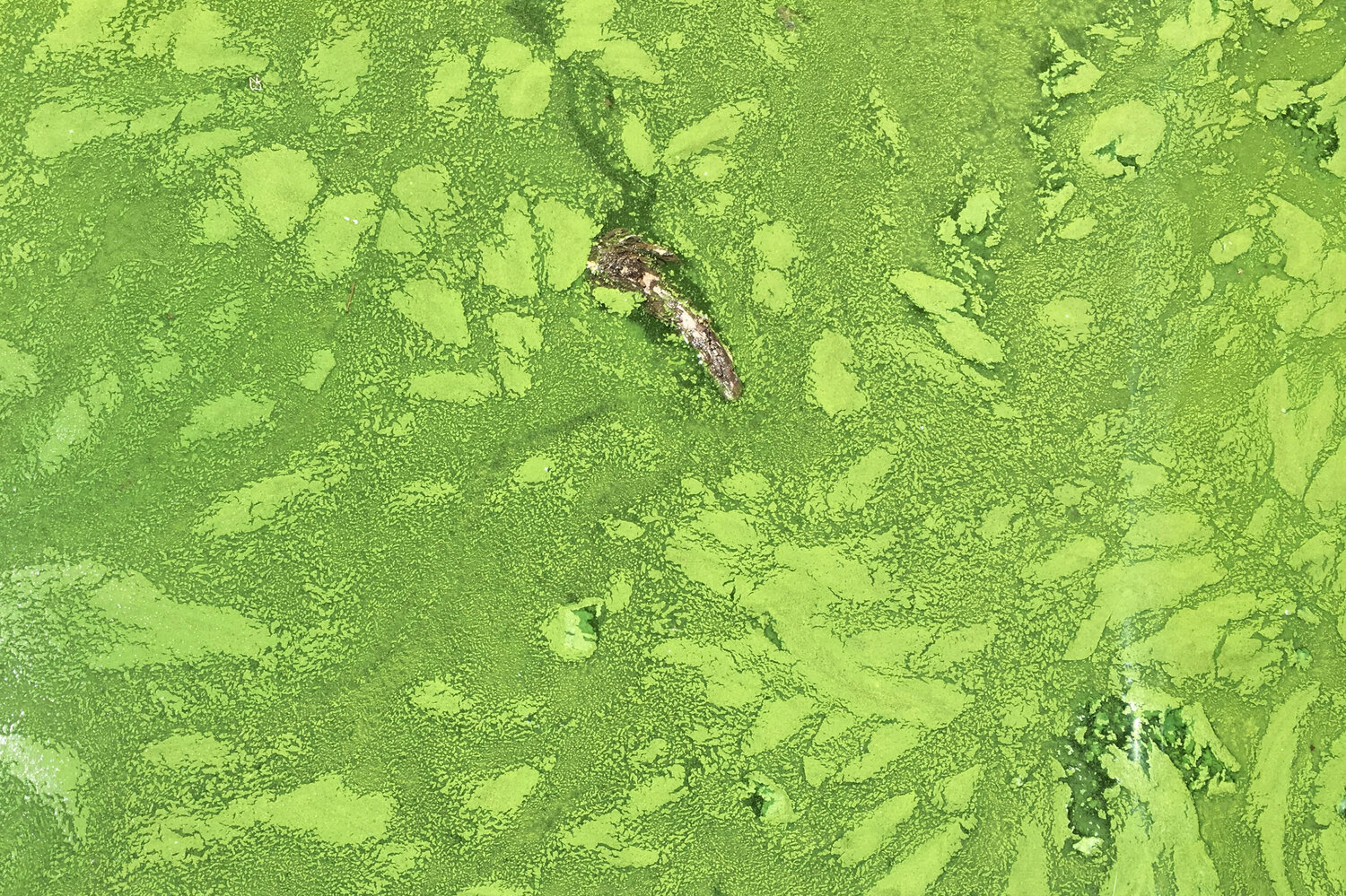
The city of Toledo and nearby communities have earned the dubious distinction of being the first to report outbreaks of human illness due to algae toxins in municipal drinking water, according to a report published Thursday by the Centers for Disease Control and Prevention.

Both areas take their drinking water from Lake Erie. Blue-green algae are common there and in many other in freshwater lakes, where they can multiply in the heat of summer and produce toxins, according to the Environmental Protection Agency.

Exposure to water contaminated by toxins can cause rashes, respiratory issues and stomach or liver illness, and are an ongoing issue in recreational areas around the country.

Not to mention they can cause dead zones in bodies of water, killing marine life. And if you’ve ever seen one, they don’t exactly make for a pleasant day at the beach. The bloom can look like chunks of green, earthy scum floating on the water, or make the water look like it’s been dyed green.

In September 2013, microcystin toxin was detected in the water treatment facility for Carroll Township, Ohio, at 3.5 times the safety threshold for drinking water. The township’s 2,000 residents were told to use water only for dishes and “non-drinking uses.” Six people suffered gastrointestinal illnesses in the outbreak, according to the CDC.

Then in August 2014, the state of Ohio declared a state of emergency after algal toxin contaminated the city of Toledo’s water supply. This time around, 110 people got sick, and almost half a million people had to quit drinking tap water until they got the all clear.

Drawing water from the cold depths of a lake can reduce the risk of contamination, according to the EPA, and water treatment facilities can filter out or neutralize toxins.

Among the biggest causes of algae blooms: an excess of nitrogen and phosphorus in warm, un-moving water. Those nutrients sneak into water predominantly through the use of fertilizer in agriculture. Warmer summers and higher rainfalls that cause sewer systems to overflow also help algae flourish.

It’s too early to know whether drinking water problems due to algae are becoming more common, says Jonathan Yoder, a CDC epidemiologist and one of the report’s authors.

“The bottom line is that we can’t say whether they are increasing or not, we know that the conditions that lead to algal blooms — nutrient pollution and warm water — are present in these freshwater lakes,” Yoder says. “I think there’s a continual risk in some of these areas for algal blooms and for some of them to be the type that have toxins that cause human illness.”

Kathy Benedict, lead author of the paper and an epidemiologist with the CDC’s Waterborne Disease Prevention Branch, points out that the cases in Ohio in 2013 and 2014 were not necessarily the first — they were just the first to be reported. The CDC is tracking harmful algal blooms through One Health Harmful Algal Bloom System (OHHABS) to help prevent illnesses, she says.

Fortunately, health problems from drinking water remain rare in the U.S. The CDC report, which was published in Morbidity and Mortality Weekly Report, found than in 2013-2014, 42 outbreaks were reported in 19 states, resulting in 1,006 illnesses and 13 deaths. Most of the cases and all of the deaths were caused by Legionella, the source of Legionnaire’s disease.

For Lake Erie, blue-green algae blooms have become an “annual summer plague,” in the words of Cleveland’s newspaper, The Plain Dealer. And they’ve just had one of their worst years yet. In the summer of 2017, blooms in the great lake were the third-largest ever recorded. The good news is that this time around, no one got sick.

Greta Jochem is an intern on NPR’s Science Desk.

Related:

Poisonous Algae Blooms Threaten People, Ecosystems Across U.S.

NPR    Environment

Poisonous Algae Blooms Threaten People, Ecosystems Across U.S.

From KQED, Heard on All Things Considered

https://media.npr.org/assets/img/2016/08/29/blue-green-algae-feature_slide-4531d73215d4ccb33756b50bcf8362704871020f-s1500-c85.jpgOfficials found the toxin microcystin in the blue-green algae present at Discovery Bay, Calif. For people exposed to the toxin, symptoms include dizziness, rashes, fever, vomiting and in more unusual cases, numbness.

Lesley McClurg/KQED      August 29, 2016

Serious algae outbreaks have hit more than 20 states this summer. Organisms are shutting down beaches in Florida, sickening swimmers in Utah and threatening ecosystems in California.

The blooms are a normal part of summer, but the frequency, size and toxicity this year are worse than ever.

And water managers are rattled.

“Everyone’s on edge with the cyanobacteria,” says Bev Anderson, a scientist with the California Water Resources Control Board.

Emails reporting outbreaks of cyanobacteria — or blue-green algae — fill Anderson’s inbox every morning.

The algae is showing up in lakes and big reservoirs like Shasta Lake and Lake Oroville. In some places, it looks like someone poured a giant can of green paint into the water. And the smell can be rank.

Anderson says California has posted danger signs at at least 30 lakes and reservoirs.

But what’s most alarming are the toxin levels, which Anderson says are “crazy.” Twenty micrograms per liter would be worrisome. Current readings are as high as 150,000 micrograms per liter.

As for the threat the algae outbreaks pose, water districts carefully screen for toxins in drinking water. It’s boaters and swimmers who are most at risk.

Discovery Bay, a community about 60 miles east of San Francisco, is normally buzzing with boats and personal watercraft. But this year, the waterfront has been eerily still for weeks.

On a recent day, Dave Holmes watches with disgust as his white speedboat and blue kayak bob in mucky green water.

“We’ve been here since 2002,” Holmes says. “It is by far the worst we’ve ever seen.”

Down the street, another Discovery Bay resident regrets diving into the water in mid-July. Wade Hensley ended up in the hospital because his body went numb from the waist down. It’s still numb.

“And, it was about three days of swimming. Not constant, but in and out. And they can’t pinpoint exactly what it is,” Hensley says.

But, county health officials did find microcystin — one of several toxins produced by algae — in Discovery Bay. More typical symptoms are dizziness, rashes, fever and vomiting.

https://media.npr.org/assets/img/2016/08/29/discovery-bay2_slide-f77a8c73ee98524eb0014d7f93d05ed72019cbdf-s1500-c85.jpgThe docks behind homes at Discovery Bay, Calif., are quieter than usual because of fears of blue green algae toxins. Lesley McClurg/KQED

Algae expert Bev Anderson blames a changing climate for the blooms, at least in part.

“We’re getting higher temperatures than we’ve seen ever in the past,” she says. “California had an unprecedented drought for the last five years which [has left] the water levels very low in a lot of areas.”

And shallow water means warmer water. Add to this cocktail, runoff from farms, golf courses and lawns — algae love fertilizers.

Worst of all, Anderson says, scientists are just starting to understand a problem they expect to escalate.

“Some areas have been monitoring and seeing blooms for decades, but they’ve never had toxins,” she says.

Researchers are finding poisonous blooms in surprising places like mountain lakes and streams.

So scientists are scrambling for solutions. The chemicals that kill algae can help temporarily, but they can also backfire by promoting other toxins.

When it comes to swimming, Anderson’s advice is simple.

“If in doubt, stay out!” she warns. “Don’t go in, don’t let your dogs in.”

There’s nothing to do now but wait for the green muck to disappear — and hope a cold winter kills it off.

Why Are Conservatives More Susceptible to Believing Lies?

Slate – Science

Why Are Conservatives More Susceptible to Believing Lies?

An interplay between how all humans think and how conservatives tend to act might actually explain a lot about our current moment.

http://www.slate.com/content/dam/slate/articles/health_and_science/science/2017/11/171103_SCI_FoxBelievers.jpg.CROP.promo-xlarge2.jpgPhoto illustration by Natalie Matthews-Ramo. Photos by FoxNews and FoxNews.com.

By John Ehrenreich               November 9, 2017

Many conservatives have a loose relationship with facts. The right-wing denial of what most people think of as accepted reality starts with political issues: As recently as 2016, 45 percent of Republicans still believed that the Affordable Care Act included “death panels” (it doesn’t). A 2015 poll found that 54 percent of GOP primary voters believed then-President Obama to be a Muslim (…he isn’t).

Then there are the false beliefs about generally accepted science. Only 25 percent of self-proclaimed Trump voters agree that climate change is caused by human activities. Only 43 percent of Republicans overall believe that humans have evolved over time.

And then it gets really crazy. Almost 1 in 6 Trump voters, while simultaneously viewing photographs of the crowds at the 2016 inauguration of Donald Trump and at the 2012 inauguration of Barack Obama , insisted that the former were larger. Sixty-six percent of self-described “very conservative” Americans seriously believe that “Muslims are covertly implementing Sharia law in American courts.” Forty-six percent of Trump voters polled just after the 2016 election either thought that Hillary Clinton was connected to a child sex trafficking ring run out of the basement of a pizzeria in Washington, D.C., or weren’t sure if it was true.

If “truth” is judged on the basis of Enlightenment ideas of reason and more or less objective “evidence,” many of the substantive positions common on the right seem to border on delusional. The left is certainly not immune to credulity (most commonly about the safety of vaccines, GMO foods, and fracking), but the right seems to specialize in it. “Misinformation is currently predominantly a pathology of the right,” concluded a team of scholars from the Harvard Kennedy School and Northeastern University at a February 2017 conference. A BuzzFeed analysis found that three main hyperconservative Facebook pages were roughly twice as likely as three leading ultraliberal Facebook pages to publish fake or misleading information.

Why are conservatives so susceptible to misinformation? The right wing’s disregard for facts and reasoning is not a matter of stupidity or lack of education. College-educated Republicans are actually more likely than less-educated Republicans to have believed that Barack Obama was a Muslim and that “death panels” were part of the ACA. And for political conservatives, but not for liberals, greater knowledge of science and math is associated with a greater likelihood of dismissing what almost all scientists believe about the human causation of global warming.

It’s also not just misinformation gained from too many hours listening to Fox News, either, because correcting the falsehoods doesn’t change their opinions. For example, nine months following the release of President Obama’s long-form birth certificate, the percentage of Republicans who believed that he was not American-born was actually higher than before the release. Similarly, during the 2012 presidential campaign, Democrats corrected their previous overestimates of the unemployment rate after the Bureau of Labor Statistics released the actual data. Republicans’ overestimated even more than before.

Part of the problem is widespread suspicion of facts—any facts. Both mistrust of scientists and other “experts” and mistrust of the mass media that reports what scientists and experts believe have increased among conservatives (but not among liberals) since the early ’80s. The mistrust has in part, at least, been deliberately inculcated. The fossil fuel industry publicizes studies to confuse the climate change debate; Big Pharma hides unfavorable information on drug safety and efficacy; and many schools in conservative areas teach students that evolution is “just a theory.” The public is understandably confused about both the findings and methods of science. “Fake news” deliberately created for political or economic gain and Donald Trump’s claims that media sites that disagree with him are “fake news” add to the mistrust.

But, the gullibility of many on the right seems to have deeper roots even than this. That may be because at the most basic level, conservatives and liberals seem to hold different beliefs about what constitutes “truth.” Finding facts and pursuing evidence and trusting science is part of liberal ideology itself. For many conservatives, faith and intuition and trust in revealed truth appear as equally valid sources of truth.

To understand how these differences manifest and what we might do about them, it helps to understand how all humans reason and rationalize: In other words, let’s take a detour into psychology. Freud distinguished between “errors” on the one hand, “illusions” and “delusions” on the other. Errors, he argued, simply reflect lack of knowledge or poor logic; Aristotle’s belief that vermin form out of dung was an error. But illusions and delusions are based on conscious or unconscious wishes; Columbus’s belief that he had found a new route to the Indies was a delusion based on his wish that he had done so.

Although Freud is out of favor with many contemporary psychologists, modern cognitive psychology suggests that he was on the right track. The tenacity of many of the right’s beliefs in the face of evidence, rational arguments, and common sense suggest that these beliefs are not merely alternate interpretations of facts but are instead illusions rooted in unconscious wishes.

This is a very human thing to do. As popular writers such as Daniel Kahneman, Cass Sunstein, and Richard Thaler have pointed out, we often use shortcuts when we reason, shortcuts that enable us to make decisions quickly and with little expenditure of mental energy. But they also often lead us astray—we underestimate the risks of events that unfold slowly and whose consequences are felt only over the long term (think global warming) and overestimate the likelihood of events that unfold rapidly and have immediate consequences (think terrorist attacks).

Our reasoning is also influenced (motivated, psychologists would say) by our emotions and instincts. This manifests in all kinds of ways: We need to maintain a positive self-image, to stave off anxiety and guilt, and to preserve social relationships. We also seek to maintain consistency in our beliefs, meaning that when people simultaneously hold two or more contradictory beliefs, ideas, or values, one or the other must go. And so we pay more attention and give more credence to information and assertions that confirm what we already believe: Liberals enthusiastically recount even the most tenuous circumstantial evidence of Trump campaign collusion with the Russians, and dyed-in-the-wool Trump supporters happily believe that the crowd really was bigger at his candidate’s inauguration.

These limits to “objective” reasoning apply to everyone, of course—left and right. Why is it that conservatives have taken the lead in falling off the deep edge?

The answer, I think, lies in the interaction between reasoning processes and personality. It’s each person’s particular motivations and particular psychological makeup that affects how they search for information, what information they pay attention to, how they assess the accuracy and meaning of the information, what information they retain, and what conclusions they draw. But conservatives and liberals typically differ in their particular psychological makeups. And if you add up all of these particular differences, you get two groups that are systematically motivated to believe different things.

Psychologists have repeatedly reported that self-described conservatives tend to place a higher value than those to their left on deference to tradition and authority. They are more likely to value stability, conformity, and order, and have more difficulty tolerating novelty and ambiguity and uncertainty. They are more sensitive than liberals to information suggesting the possibility of danger than to information suggesting benefits. And they are more moralistic and more likely to repress unconscious drives towards unconventional sexuality.

Fairness and kindness place lower on the list of moral priorities for conservatives than for liberals. Conservatives show a stronger preference for higher status groups, are more accepting of inequality and injustice, and are less empathetic (at least towards those outside their immediate family). As one Tea Party member told University of California sociologist Arlie Hochschild, “People think we are not good people if we don’t feel sorry for blacks and immigrants and Syrian refugees. But I am a good person and I don’t feel sorry for them.”

Baptist minister and former Republican congressman J.C. Watts put it succinctly. Campaigning for Sen. Rand Paul in Iowa in 2015 he observed, “The difference between Republicans and Democrats is that Republicans believe people are fundamentally bad, while Democrats see people as fundamentally good.”

These conservative traits lead directly to conservative views on many issues, just as liberal traits tend to lead to liberal views on many issues. But when you consider how these conservative traits and these conservative views interact with commonly shared patterns of motivated reasoning, it becomes clearer why conservatives may be more likely to run into errors in reasoning and into difficulty judging accurately what is true and what is false.

It’s not just that Trump is “their” president, so they want to defend him. Conservatives’ greater acceptance of hierarchy and trust in authority may lead to greater faith that what the president says must be true, even when the “facts” would seem to indicate otherwise. The New York Times cataloged no less than 117 clearly false statements proclaimed publicly by Trump in the first six months of his presidency, with no evident loss in his supporters’ faith in him. In the same way, greater faith in the legitimacy of the decisions of corporate CEOs may strengthen the tendency to deny evidence that there are any potential benefits from regulation of industry.

Similarly, greater valuation of stability, greater sensitivity to the possibility of danger, and greater difficulty tolerating difference and change lead to greater anxiety about social change and so support greater credulity with respect to lurid tales of the dangers posed by immigrants. And higher levels of repression and greater adherence to tradition and traditional sources of moral judgment increase the credibility of claims that gay marriage is a threat to the “traditional” family.

Conservatives are also less introspective, less attentive to their inner feelings, and less likely to override their “gut” reactions and engage in further reflection to find a correct answer. As a result, they may be more likely to rely on error-prone cognitive shortcuts, less aware of their own unconscious biases, and less likely to respond to factual corrections to previously held beliefs.

The differences in how conservatives and liberals process information are augmented by an asymmetry in group psychological processes. Yes, we all seek to keep our social environment stable and predictable. Beliefs that might threaten relationships with family, neighbors, and friends (e.g., for a fundamentalist evangelical to believe that humans are the result of Darwinian evolution or for a coal miner to believe that climate change is real and human-made) must be ignored or denied, at peril of disrupting the relationships. But among all Americans, the intensity of social networks has declined in recent years. Church attendance and union membership, participation in community organizations, and direct political involvement have flagged. Conservatives come disproportionately from rural areas and small towns, where social networks remain smaller, but denser and more homogeneous than in the big cities that liberals dominate. As a result, the opinions of family, friends, and community may be more potent in conservative hotbeds than in the more anonymous big cities where Democrats dominate.

The lack of shared reality between left and right in America today has contributed greatly to our current political polarization. Despite occasional left forays into reality denial, conservatives are far more likely to accept misinformation and outright lies. Deliberate campaigns of misinformation and conservative preferences for information that fits in with their pre-existing ideology provide only a partial explanation. Faulty reasoning and judgment, rooted in the interactions between modes of reasoning and judgment shared by all with the specific personality patterns found disproportionately among conservatives may also play a central role.