A Few Thoughts on the Keystone Pipeline

Esquire

A Few Thoughts on the Keystone Pipeline

Pipelines leak. We know this. Are they worth the cost?
Getty

By Charles P. Pierce      November 17, 2017

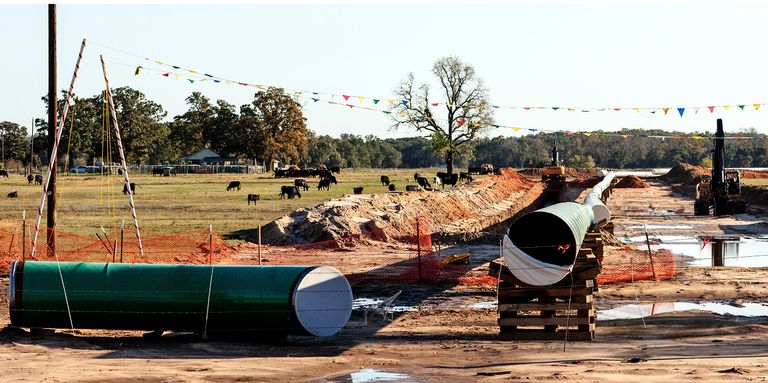
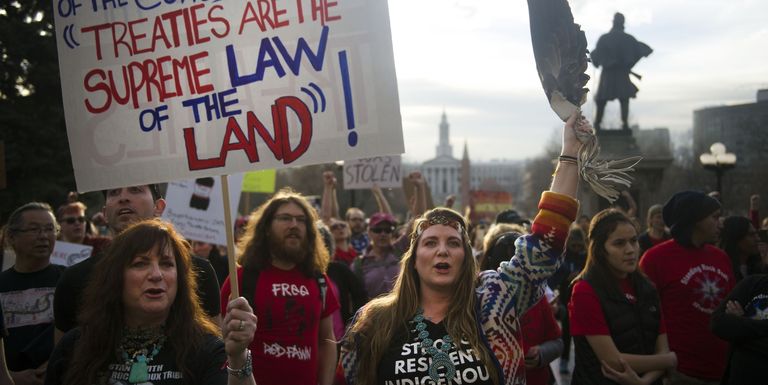
As part of my coverage of our old friend, the Keystone XL pipeline, the continent-spanning death-funnel and eternal conservative fetish object, I have attended several ceremonies at which Native American offered ritual prayers for the project’s demise. Because I am a spiritual daredevil, I was quite moved by these. Because I am something of a skeptic, I didn’t think you could pray away the forces of greed that are behind this misbegotten attempt to bring the world’s dirtiest fossil fuel from the blasted moonscape of northern Alberta through the hemisphere’s most valuable farmland. Now, I’m beginning to wonder.

Next Monday, the Public Service Commission of Nebraska will announce its ruling on whether or not the pipeline will be allowed to cross that state. Unfortunately for TransCanada, the energy behemoth that owns the pipeline, the pipeline itself isn’t with the marketing plan. This is because it is a pipeline, and pipelines leak. They always leak. From The Washington Post:  

“The spill on the first Keystone pipeline is the latest in a series of leaks that critics of the new pipeline say shows that TransCanada should not receive another permit. TransCanada, which has a vast network of oil and natural gas pipelines, said that the latest leak occurred about 35 miles south of the Ludden pump station, which is in southeast North Dakota, and that it was “completely isolated” within 15 minutes. The company said it obtained permission from the landowner to assess the spill and plan cleanup.”

Of course, there’s no reason to believe anything TransCanada says at this point, and 210,000 gallons sounds like a whole mess of tar-sands gloop to have in your field. If something like this happens in or near the Ogalalla Aquifer in Nebraska, you can kiss some of the world’s most arable farmland goodbye. That is what the Native holy men are defending with their prayers. They certainly have a point. Because pipelines leak, because they’re pipelines, and pipelines always leak.

Follow up from Charles P. Pierce:

Esquire

There’s Still a Long Way to Go for the Keystone Pipeline

Including many, many more lawsuits.
Getty

By Charles P. Pierce       November 20, 2017

The Nebraska Public Service Commission on Monday approved our old friend, the Keystone XL pipeline, the continent-spanning death funnel and longtime conservative fetish object. The vote was 3-2, with one Republican member of the PSC jumping to the opposition. This will be celebrated as the final victory for the world’s dirtiest fossil fuel—and for TransCanada, the land-grabbing foreign behemoth that trafficks in it. (Here’s Exhibit A, from The Washington Post.) But there’s many a slip twixt Alberta and Houston, as they’re saying around Marshall County, South Dakota these days.

First of all, there’s no question that the 210,000 gallons of noxious gloop that spilled all over Marshall County last week had an impact on the final PSC vote, making it closer than it might have been. This would indicate that at least part of official Nebraska is increasingly nervous about running tar-sands through or near the most important aquifer on the continent. However, because of skids that were, ah, greased earlier in the process, the state was not allowed to review or to govern on the issues of spillage and public safety. This was ludicrous at the time and looks even more so in the light of current events.

Second, and this is the most important part, the PSC tossed a joker into the deck that most people will overlook. Luckily, we have The Omaha World-Herald to suss the whole thing out:

‘In a 3-2 vote, the Nebraska Public Service Commission OK’d the so-called “mainline alternative route” for the controversial 36-inch crude oil pipeline, a path that would parallel about 100 miles of the route of the existing Keystone pipeline across the state. TransCanada built the Keystone and has proposed to build the Keystone XL. The decision, while giving the Canadian firm a route across Nebraska, raises many questions. One is that about 40 new landowners, along the 63 new miles of the alternative route, must be contacted to obtain right-of-way agreements for the underground pipe.’

Back in the good old days, before the people of Nebraska got their backs up concerning the high-handed way TransCanada was treating them, the company simply would have grabbed up some of the land along the new route while paying off the owners of the rest of it. But now, Nebraska’s had quite enough of the company, its officials, its pipeline, and the entire project in general. The 40 landowners on the route that the PSC approved likely will avail themselves of all the due process that they are, well, due.

As Crystal Rhoades, a member of the PSC who voted against the pipeline, wrote in her dissenting opinion:

“The route violates the due process of landowners. There are at least 40 landowners along the approved route who may not even know that their land is in this pipeline’s path. Since they might not know that they are in the path of the pipeline, they may not have participated in this proceeding.”

In addition, the State Department hasn’t approved this new route, so that whole process has to begin again. And even if you assume that State will rubber-stamp the new route, and even if you assume that Rex Tillerson has left enough people in place in that department to turn the lights on in the morning, I’d say it’s two more years, minimum, before TransCanada even gets a chance to uncrate its shovels. And that’s not even taking into account the inevitable appeal, the equally inevitable blizzard of new lawsuits, or the promised campaign of civil disobedience. Does the company really want two more years of protracted squabbling, or worse, before it even can begin? That remains an open question.

Additional Follow-up:

UPROXX     #disasters
The Keystone Pipeline Spill Could Be Up To Three Times Worse Than Previously Reported

Kimberly Ricci      November 19, 2017

Getty Image

On Thursday, TransCanada revealed that a Keystone pipeline leak had dumped approximately 210,000 gallons of oil in South Dakota, and drone footage posted by the BBC confirmed the spill from the sky. The one scrap of good news was that the spill did not reach a body of water, and TransCanada claims to have contained the oil. However, Vice News has spoken with a local activist who claims to have worked alongside TransCanada. He points out that the spill contained spilled an especially dense type of crude oil. This means that the disaster could be three times worse than initially estimated, and the leak may have actually dumped up to 600,000 gallons:

‘Kent Moeckly, a nearby land owner and member of the Dakota Rural Action Group, told VICE News he’s concerned that the spill could be much larger though, in large part because the computers used to detect oil pressure drops don’t always detect small leaks. “Transcanada thought it was 200,000 gallons. What we found out working with Transcanada, it could very well be 600,000 gallons,” Moeckly said.’

The type of oil that leaked during this spill — diluted bitumen (known also as “dilbit”) — is known, according to the New York Times, as a “garbage” type of crude oil. It’s darker and denser and less desirable within the oil industry, but they’ve resorted to recovering dilbit due to the scarcity of the preferred lighter types of crude oil. Because dilbit is so thick (akin to peanut butter), pipeline companies must dilute it in order to transport it.

As Vice points out, the dense and diluted nature of the new spill likely pushed it deep into the soil, so the full size of the leak hasn’t yet become apparent. The outlet also reminds readers that TransCanada’s last big Keystone spill (occurring in April 2016) was adjusted from 187 gallons to 16,800 gallons because they were working with diluted bitumen. So, official numbers (whenever they arrive) could be so much than previously estimated.

As of now, the portion of the Keystone pipeline that runs from Alberta to Oklahoma and Illinois remains closed while news of the spill jacked crude oil prices higher. And all of this is happening while Nebraska officials consider whether to approve TransCanada’s permit for the pipeline system’s Keystone XL extension. An update on the permit is expected within the next week.

(Via ViceReutersBBC & New York Times)

North Korea Women Are Raped, Sexually Abused And Not Represented Under Kim Jong Un’s Power

Newsweek – World

North Korea Women Are Raped, Sexually Abused And Not Represented Under Kim Jong Un’s Power

Greg Price, Newsweek           November 20, 2017      

North Korean women are subjected to rape and sexual assault while being denied education and work under Kim Jong Un’s totalitarian regime, a United Nations panel said Monday.

The UN Committee on the Elimination of Discrimination against Women found in its review of the North that women who managed to escape the regime’s clutches but were later brought back faced rape and assaults while in detention, Reuters reported.

According to the panel, the women who flee and return “are reportedly sent to labor training camps or prisons, accused of ‘illegal border crossing,’ and may be exposed to further violations of their human rights, including sexual violence by security officials and forced abortions.”

The panel said penalties for rape — including child rape, rape by a superior at work and recurrent rape — decreased in severity in 2012. In the case of rape by a work supervisor, the penalty was lowered from four years to three years in prison.

Kim himself was accused of having young girls pulled out of schools to be his sex slaves by a defector in September.

Women also lack access to education and are “under-represented or disadvantaged” in North Korea’s judicial system, according to the panel. Opportunities for management and leadership roles are scarce for them.

Twenty-eight percent of pregnant or lactating women were found to have “high levels of malnutrition.”

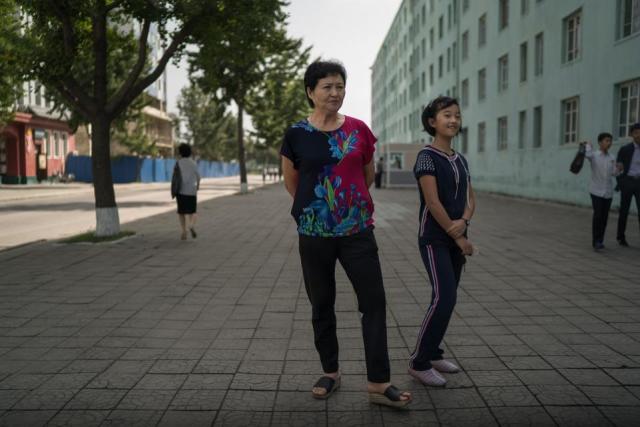
GettyImages-853458684In a photo taken on September 24, 2017 a women and child stand on a street in Pyongyang. AFP via Getty Images/Ed Jones

North Korea reportedly told the panel November 8 that recent economic sanctions were to blame for the poor treatment of women, and the panel agreed that the sanctions disproportionately affected women.

The United States and the UN have repeatedly tightened sanctions on the North this year to deter its rapidly expanding nuclear and missile defense programs. Kim has refused to cease weapons testing even as the U.S. and China have offered to come to the negotiating table, and it has accused America and its allies of preparing for a military strike or invasion.

This is only the latest instance of a UN panel exposing rampant human rights violations under Kim’s rule. Pyongyang has had a long and terrible history of human rights abuses and was ranked the fourth-worst nation in the world for human rights by watchdog group Freedom House.

The organization’s recent annual rankings put North Korea ahead of only Eritrea, Tibet and Syria in human rights, with North Koreans’ political rights and civil rights each scored at seven, the worst score possible for those categories.

American hostage mom describes brutal treatment by Taliban captors

ABC – Good Morning America

American hostage mom describes brutal treatment by Taliban captors

James Gordon Meek, Megan Christie, Brian Ross and Sean Langan,

Good Morning America          November 20, 2017 

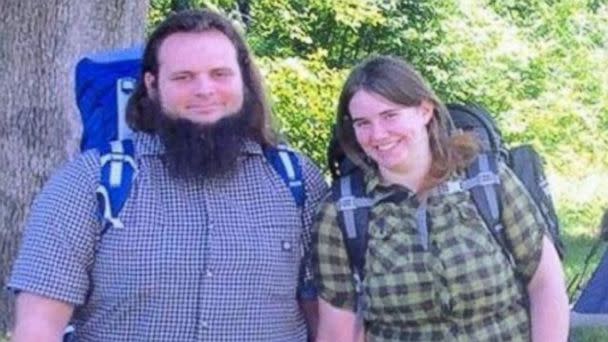
PHOTO: Caitlan Coleman Boyle, 31, of Stewartstown, Pennsylvania, had three children while in Taliban captivity from 2012 to 2017. (ABC News)The American mom held hostage by the Taliban for five years says she was beaten and raped as she tried to protect her children from their captors.

Caitlan Coleman Boyle, 31, from Stewartstown, Pennsylvania — who was abducted while traveling in Afghanistan with her husband, Joshua Boyle, 34, of Perth-Andover, Canada, and had three children in captivity — described the brutal treatment her family endured in captivity, in an exclusive broadcast interview with ABC News.

She said some of their guards “hated children” and targeted their eldest son for beatings, sometimes with a stick, claiming the young boy was “making problems” or being “too loud.” When Coleman Boyle tried to intervene, she was beaten as well. “I would get beaten or hit or thrown on the ground,” Coleman Boyle said.

According to her husband, Coleman Boyle sustained serious injuries while fighting to keep their captors from her children.

“She had a broken cheekbone,” Boyle said. “She actually broke her own hand punching one of them. She broke her fingers, so she was very proud of that injury.”

She accused her captors of even more grievous crimes, saying the guards murdered their unborn daughter in a “forced abortion,” and she was later raped by two men in retribution for trying to report the crime to their superiors.

“They just kept saying that this will happen again if we don’t stop speaking about the forced abortion, that this happened because we were trying to tell people what they had done and that it would happen again,” Coleman Boyle said.

The two told ABC News they are speaking out so soon after their release because they want justice for their abusers, hoping Taliban leaders will be put on trial for war crimes or otherwise be held accountable in the tribal justice system.

“Our focus is on trying to hold accountable those who have committed grave human rights violations against us and against others,” Boyle said. “I lost a daughter. That was more of a crushing blow to me than the years. What they did was a crime against humanity by international law.”

American hostage mom and family freed 5 years after being kidnapped by Taliban

As families of freed hostages rejoice, tensions rise about their return

The couple was abducted while traveling in eastern Afghanistan’s war-torn Ghazni province in 2012, taken prisoner by the Haqqani network, an extremist element of the Afghan Taliban, and quickly transported to Pakistan. Coleman Boyle, who was pregnant at the time of their capture, gave birth to three children while in captivity.

The family was frequently moved to different locations through Pakistan’s tribal belt. According to Boyle, who says he was shackled for the duration of his captivity, the family was usually held in a single room, often underground, sometimes on a concrete floor, sometimes on a dirt floor. The parents used discarded items as makeshift toys for their children.

“We would just teach them to use things like bottle caps or bits of cardboard, garbage essentially, but what we could find to play with,” Coleman Boyle said.

He said they taught their eldest son the alphabet, geography and constellations and tried their best to make the horrible tolerable. They used British history — the tale of the execution of Charles I in 1649 — to make up a game about beheadings, to ease their eldest son’s fear, should their captors do the same to his parents.

“He certainly knew that this type of thing could happen to his family, so he had great fun pretending to be Oliver Cromwell chasing Charles I around and trying to behead him,” she said. “So we made it a game so that he wasn’t afraid, because there was, you know, there was nothing we could do if it came to that except try to make him less afraid.”

PHOTO: The family sat down with ABC News' Chief Investigative Correspondent Brian Ross in their first television interview since being freed from the Taliban. (ABC News)Danger, however, was never far from their minds. Coleman Boyle said they told their son “some” of what was happening to them but tried to keep “the worst bits” from him.
“But he had to know that these people were bad that he was interacting with, outside of his family,” she said. “That everyone else he saw, you couldn’t trust.”

The physical abuse of the family escalated, Boyle said, when the Haqqani network demanded he join the extremist group as a Western propagandist.

“They had come four different times, to offer employment in the group … and I made it very clear that I’d rather be the hostage than be on your side of the cage.” Boyle said. “I’d rather be inside than outside.”

His refusal had serious consequences.

“There were beatings. There was violence. Then they’d come to make the offer again. Still said no. More beatings, more violence. Maybe that’ll be the solution. Still no,” Boyle said. “And after the final time — that’s when they killed our daughter. And after that, there were no more intimations of recruitment.”

Coleman Boyle, who was taken hostage when she was more than six months pregnant with her first son, had to hide the pregnancies of her two other children born in captivity. Her husband helped her deliver them, she said, with no doctor present.

“They didn’t want us to have any more,” she said.

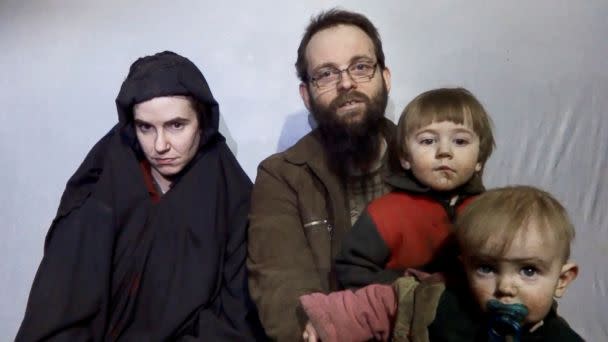
PHOTO: A still image from a video posted by the Taliban on social media, Dec. 19, 2016, shows American Caitlan Coleman next to her Canadian husband Joshua Boyle and their two sons. (Taliban/Social media via Reuters )She believes the guards put something in her food in 2014 to force a miscarriage of their unborn daughter, who the couple named Martyr Boyle. The couple complained to their captors and tried to slip notes to Taliban visitors informing them of the crime, so, the two said, their guards raped her while their eldest son was in the room to compel her to stay silent.
“One day they came into the cell, and they took my husband out forcefully, dragging him out, and one of the guards threw me down on the ground, hitting me and shouting, ‘I will kill you,’” Coleman Boyle said. “That’s when the assault happened. It was with two men. And then there was a third at the door. And afterwards, the animals wouldn’t even give me back my clothes.”

The day after she was raped, Coleman Boyle said, Pakistani gunships strafed Haqqani positions in North Waziristan.

“There were two helicopters with Gatling guns firing constantly,” she said. “There was a lot of AK-47 fire, and there were even some larger explosions.”

Shrapnel struck the buildings where Coleman Boyle and Boyle were held separately.

“It was a big, big battle. And our guards were hiding out of sight. They were absolutely terrified,” she said. “But my husband and I were each laughing to ourselves … thinking, ‘I hope that these sons of bitches die today.’”

Caitlan Coleman and her husband Joshua Boyle are seen here in this undated family photo. (Coleman Family)The family was freed in mid-October in what was described by the Pakistani army as an operation carried out by Pakistani troops, but details about that operation remain unclear.
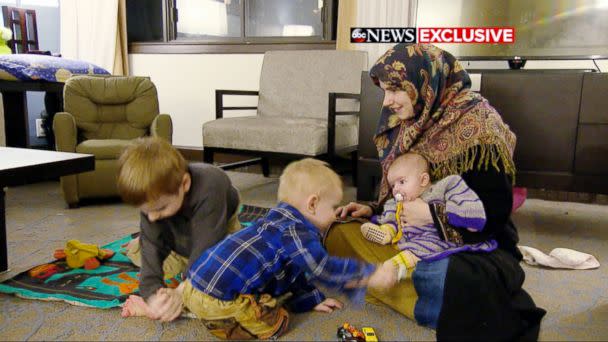
Now living in Canada and trying to adjust to freedom, with the help of supporters such as HostageUS, Coleman Boyle and Boyle say the scars from years of abuse in captivity are only beginning to heal. They weren’t ready to answer lingering questions about his past and the circumstances leading to their capture and release.

Boyle was previously married to a fellow Canadian, Zaynab Khadr, who had family ties to al-Qaeda. Her father was a suspected al-Qaeda financer killed by Pakistani security forces, and her younger brother Omar Khadr was once the youngest detainee at the U.S. terrorist prison at Guantanamo Bay, Cuba. He has since been released.

When the family arrived in Toronto a month ago, Boyle told reporters at a press conference that he and Coleman Boyle were captured while trying to help poor Afghans.

“I was in Afghanistan helping the most neglected minority group in the world, those ordinary villagers who lived deep inside Taliban-controlled Afghanistan, where no NGO, no aid worker and no government has ever successfully been able bring the necessary help,” he said.

Boyle refused to discuss with ABC News why he was in Afghanistan, however, saying he has already answered those questions from the news media.

Coleman Boyle confirmed that she and her husband “made the decision” to have more children, but she and Boyle declined to explain that decision further.

“I think it’s a sad statement on the state of affairs of the world when a family is asked to justify their decision to have children in any circumstance,” he said.

And the circumstances of the family’s release remain in dispute. The U.S. government had planned a commando raid to secure the family, but officials were surprised when the family suddenly appeared in the custody of the Pakistani military. Boyle maintained that the family was rescued in a firefight.

“The only thing being exchanged was bullets,” he said.

In the meantime, the two are focused on the future and on their family. Coleman Boyle says it was the children who kept her going while she was in captivity, so after years of trauma, she hopes it’s time for them to heal.

“I hope that they find enough happiness and joy to make up for it,” Coleman Boyle said.

PHOTO: Now living in Canada, Caitlan Coleman Boyle says she is focused on helping her children make up for lost time. (ABC News)

Sean Langan is a British filmmaker and ABC News contributor who was held hostage by the Taliban’s Haqqani network in 2008 and has produced a new documentary, “The USA vs. Bergdahl,” about former Taliban prisoner U.S. Army Sgt. Bowe Bergdahl.

House GOP doesn’t care about your taxes, your kids, or you

Chicago Sun Times

EDITORIAL: House GOP doesn’t care about your taxes, your kids, or you

Sun Times Editorial Board         November 17, 2017

House Speaker Paul Ryan of Wis., left, leads applause for his fellow Republican legislators on Thursday in Washington. (AP Photo/Jacquelyn Martin)

They don’t care about you.

They don’t care about your taxes.

They care about their corporate patrons above all, the big companies that pay for their election campaigns, put them in office and make them rich.

The House tax overhaul plan that was approved strictly along party lines on Thursday — not a single Democrat signed on — would reduce corporate taxes dramatically and permanently. It would reduce your taxes, as a middle-class family or single person, only temporarily, if at all.

By as early as 2021, your tax bill would shoot right back up. Boeing’s tax bill would not.

They don’t care about your kids’ educations.

The House bill passed Thursday would eliminate the ability for young people burdened by huge student loans to claim a tax deduction on the loan interest. College grads just starting out literally could go bankrupt. It would get rid of a tax incentive for businesses to offer employees help with college tuition.

The House bill would put a tax on college endowments, which might be a good idea for places like Harvard, which has an endowment valued at more than $37 billion, but terrible for most small private colleges, which have only modest endowments and use them to cut tuition for kids who don’t come from money.

They don’t care about your democracy.

Not when it interferes with extreme notions of the unassailable virtues of capitalism, where pretty much all taxes and regulations are evil. These Republicans were elected from radically gerrymandered congressional districts and represent the interests of only a minority of Americans — and an out-of-touch minority at that.

Opinion polls show that most Americans strongly believe corporations should pay more in taxes, not less. But opinion polls are irrelevant when the people’s will, as expressed in a true democracy, is no longer the point.

They don’t care about your health.

Now that the House has passed its bill, this tax overhaul scam moves on to the Senate, where Republicans propose to take the opportunity to also kill Obamacare. The Senate version of tax reform, as currently envisioned, would repeal the Affordable Care Act’s mandate that requires people to have health insurance or pay a penalty. Without that mandate, which the federal government subsidizes, insurance premiums would soar for the sick and the elderly. Thirteen million people eventually would lose insurance.

Republicans in Congress have pledged again and again that they will not kill Obamacare without coming up first with a humane replacement. Where’s the replacement, humane or otherwise?

And why do they want to eliminate the individual mandate? To reduce spending by $338 billion to make room for tax cuts for billionaires.

Champions of Republican-style tax reform say the House bill will lead to higher wages and salaries for ordinary Americans. Corporations, they say, will put a big chunk of the savings into their workers’ pockets. But polls show that a majority of Americans do not believe tax cuts will lead to higher wages, and they are right to be skeptical.

More so than ever in the last half  century, corporations shower their money on shareholders and top executives, doing as little as possible for those who work in cubicles, staff assembly lines and push brooms.

Last year, the average CEO of a large American firm was paid 271 times more than the average worker. Back in 1978, CEOs were paid only 30 times more.

Corporations come first in the House tax plan. It would cut the corporate tax rate to 20 percent from 35 percent.

Billionaires come second. The tax plan would cut their taxes, both on an absolute and percentage basis, the most. And it would phase out the federal estate tax by 2025 for even the richest Americans, such as Bill Gates, the Koch brothers and President Donald Trump.

Their children, even if they never worked a productive day in their lives, would possess the great bulk of America’s wealth. A dangerous concentration of American money and power into ever fewer hands would continue apace.

As for you?   Get in line.

Can ‘a normal person’ become governor?

Chicago Sun Times

Can ‘a normal person’ become governor?

Neil Steinberg           November 15, 2017

  J.B. Pritzker and Gov. Bruce RaunerJ.B. Pritzker gave another $7 million to his own gubernatorial campaign Friday.

Which, doing the math, is roughly the equivalent of me spending $700 on a plumber.

Except it isn’t, my finances being a lot more close to the bone than his. I miss $700 more than he misses $7 million.

We both get value for our money. I get a new boiler pump. And Pritzker airs TV commercials like the one I saw Monday night, a poignant spot with melancholy piano music and J.B. talking about his mother, who died of alcoholism. A medley of emotion, trying to humanize the billionaire.

It works. He comes off as very lifelike.

Which is more than what could be done for Gov. Bruce Rauner, who couldn’t be rendered human if Leo Burnett and J. Walter Thompson rose up from the grave and gave him the head-to-toe buffing makeover that Dorothy Gale gets upon arrival at the Emerald City.

No, the trouble is the whole notion of dueling tycoons.

The phone rang. It was Dan Biss, who is also running for governor but without benefit of an endless geyser of money fountaining over his head. We talked about nonpolitical things — who does that? — and laughed, for so long that I had to finally drop the hint: This is fun but I have work to do. What exactly is on your mind?

The race, of course.

“This has become a national referendum on whether you can run for office as a normal person at all,” he said. “In the era of Trump we have to decide if you can run for office if you’re not a billionaire. If you can’t run unless you are financing yourself, that is terrifying for democracy.”

“Terrifying for Democracy” could be the heading for our era in future public school textbooks. Assuming, of course, we have public schools. Or textbooks. Or a future.

I thought of quibbling at Biss, with his Harvard degree and MIT doctorate, casting himself as a regular joe. But I guess on the Pritzker scale he is.

We do seem to be at a watershed moment when it comes to our nation’s long slide back into the Gilded Age, when the rich crowned themselves in laurel branches and ate banquets on horseback while the poor sold matches in the street.

Here’s the part I don’t understand. You would think, being set for life, with enough to endow a dozen generations, the rich would care about the world they are leaving behind. Care about the Earth, about our social framework, which starts to hollow out if 99 percent are in squirming misery. The Republican policy now is a recipe for the 1 percent waking up one morning being tarred and feathered and loaded into a tumbril.

“You would think the super rich, who are obsessed with putting their names on stuff, would care about climate change,” Biss said. “The Koch brothers want to destroy the world so they have $90 billion next year instead of $70 billion.”

He quoted venture capitalist Nick Hanauer, who wrote in 2014: “If we don’t do something to fix the glaring inequities in this economy, the pitchforks are going to come for us. No society can sustain this kind of rising inequality.”

Pitchforks. I wouldn’t have believed it before. But we got Rauner. And we got Trump.

“Does it really have to be this way?” Biss asked. “Are we going to be told by Democrats that the only path forward is to pick our own billionaire?”

Isn’t it?

“I present the public a credible alternative,” he said. “Otherwise, we’ll have 17 billionaires having a meeting every four years to decide who will be governor.”

Someone — I’m not saying who, to throw certain readers off the trail — suggested that voters are backing the wealthy and applauding like seals as the rich tear down the social safety net because they are, for want of a better word, morons.

“I don’t agree that people are morons,” Biss said. “People are quick to gravitate to arguments. I think: ‘Oh my God, Donald Trump is president and he’s terrible. Bruce Rauner is the governor and he’s terrible. Maybe inexperienced billionaires aren’t the way to go.’”

Maybe not.

The U.S. has spent $4.3 trillion on war since 9/11. Every American could have free healthcare for a fraction of that.

ATTN: Video‘s video to the group: Veterans against the G.O.P.
The U.S. has spent $4.3 trillion on war since 9/11. Every American could have free healthcare for a fraction of that.

As we all know, the money is not going into the pockets of the Active Duty Military Personnel.

Spending On Wars

The U.S. has spent $4.3 trillion on war since 9/11. Every American could have free healthcare for a fraction of that.

Posted by ATTN: Video on Wednesday, November 15, 2017

How Canadians Solve Their Problems Without The 300 Million Guns America Covets.

How Canadians Solve Their Problems Without The 300 Million Guns America Covets.

Huge Snowball Fight

How Canadians Solve Their Problems

Posted by Only In Canada on Friday, November 10, 2017

Massive Pipeline Leak Shows Why Nebraska Should Reject Keystone XL

EcoWatch

Massive Pipeline Leak Shows Why Nebraska Should Reject Keystone XL

Lorie Shaull / Flickr

By Lorraine Chow       November 17, 2017

About 210,000 gallons (5,000 barrels) of oil leaked Thursday from TransCanada Keystone oil pipeline near Amherst, South Dakota, drawing fierce outcry from pipeline opponents.

The leak, the largest spill to date in South Dakota, comes just days before Nebraska regulators decide on whether its controversial sister project—the Keystone XL (KXL) Pipeline—will go forward.

“Enough is enough. Pipelines leak—it’s not a question of ‘if’, but ‘when.’ The pending permit for TransCanada’s Keystone XL pipeline should be flatly rejected by Nebraska’s Public Service Commission (PSC), but know that no matter what the outcome, the fight’s not over yet,” said Scott Parkin, Rainforest Action Netrwork‘s Organizing Director. “We need to stop all expansion of extreme fossil fuels such as tar sands oil—and we need the finance community to stop funding these preventable climate disasters—disasters for the climate, the environment and Indigenous rights.”

CNN reported that the spill occurred in the same county as part of the Lake Traverse Reservation.

“We are concerned that the oil spill is close to our treaty land, but we are trying to stay positive that they are getting the spill contained and that they will share any environmental assessments with the tribal agency,” said Dave Flute, tribal chairman of the Sisseton Wahpeton Oyate.

According to TransCanada, the Keystone pipeline system delivers Canadian and U.S. crude oil supplies to markets around North America, stretching 4,324 kilometers (2,687 miles) in length. It starts from Hardisty, Alta., east into Manitoba where it turns south and crosses the border into North Dakota. It then runs south through South Dakota to Steele City, Neb., where it splits. One arm goes east through Missouri for deliveries into Wood River and Patoka, Ill., and the other runs south through Oklahoma to Cushing and onward to Port Arthur and Houston, Texas.

The proposed KXL would add to the massive Keystone system, with its line starting in Hardisty, Alberta and ending in Steele City.

In March, President Trump overturned President Obama’s rejection of the KXL by signing an executive order to advance the project forward. Trump said that doing so would boost construction jobs but critics noted that it would only create 35 permanent jobs.

Environmental groups have long battled against the proposed tar sands project, over fears it would lock in decades of increase climate pollution. A peer-reviewed study funded by the U.S. Department of Energy found that extracting and refining oil sands crude from Canada produces 20 percent more greenhouse gas emissions than the same process for conventional American crude, Newsweek reported in 2015.

As the KXL’s proposed route crosses the Ogallala Aquifer, a major underground deposit of fresh water, a spill could threaten waterways and drinking water sources.

“Americans fought the Keystone Pipeline, because we knew it endangered our nation’s water and a stable climate,” Environment America‘s Global Warming Director Andrea McGimsey said in a statement after the spill. “The Nebraska Public Service Commission should look to today’s disastrous leak as Exhibit A when commissioners decide in the coming week whether to allow Transcanada to extend this hazardous pipeline through their state. This latest disaster is an urgent reminder that we must stop building infrastructure for dangerous fossil fuels and transition to clean energy as soon as possible.”

TransCanada said Thursday that it shut down the pipeline after detecting a pressure drop in their operating system. An investigation into the cause of the spill is underway.

“The safety of the public and environment are our top priorities and we will continue to provide updates as they become available,” the company said.

This isn’t the Keystone’s first spill. In April 2016, the line gushed 18,600 gallons (400 barrels) of oil in South Dakota.

“With their horrible safety record, today’s spill is just the latest tragedy caused by the irresponsible oil company TransCanada,” said Ben Schreiber, senior political strategist at Friends of the Earth. “We cannot let the world’s fossil fuel empires continue to drive government policy toward climate catastrophe. The only safe solution for oil and fossil fuels is to keep them in the ground.”

Brian Walsh, a spokesman for the state’s Department of Environment and Natural Resources told CNN that the were no initial reports of waterways, water systems or wildlife impacted by the leak.

“It is a below-ground pipeline but some oil has surfaced above ground to the grass,” Walsh said. “It will be a few days until they can excavate and get in borings to see if there is groundwater contamination.”

TransCanada said that crews, including its own specialists from emergency management, engineering, environmental management and safety as well as contracted, nationally recognized experts are assessing the situation.

Groups from other states that are facing their own pipeline battles have also decried the incident.

“From the multitude of spills we’ve seen in Ohio along the construction of the Rover Pipeline, to the 210,000 gallon spill today in South Dakota due to a mishap with the Keystone XL pipeline, we should be sure safeguards are in place to ensure that all Ohioans, and Americans, have clean air, land and water,” said Melanie Houston, the director of Climate Programs at the Ohio Environmental Council.

Greenpeace is also urging Nebraska officials to say no to the new pipeline.

“The Nebraska Public Service Commission needs to take a close look at this spill,” said Rachel Rye Butler of Greenpeace. “A permit approval allowing Canadian oil company TransCanada to build Keystone XL is a thumbs-up to likely spills in the future.”

Solar Panels in the Path of a Pipeline!

Tiny House Warriors

Solar Panels in the Path of a Pipeline! Tiny House Warriors + Lubicon Solar = #StopKM
Tiny House Warriors are building 10 Tiny Homes in the path of the Kinder Morgan pipeline and with the help of Lubicon Solar, we just solarized the first home! DONATE to help us stop destructive pipelines and build a renewable energy future! tinyhousewarriors.com & lubiconsolar.com

Solar Panels in the Path of a Pipeline

Solar Panels in the Path of a Pipeline! Tiny House Warriors + Lubicon Solar = #StopKMTiny House Warriors are building 10 Tiny Homes in the path of the Kinder Morgan pipeline and with the help of Lubicon Solar, we just solarized the first home! DONATE to help us stop destructive pipelines and build a renewable energy future! tinyhousewarriors.com & lubiconsolar.com

Posted by Tiny House Warriors on Wednesday, November 15, 2017

Reasons to Believe: Modern Agriculture and Climate Action

TriplePundit – people, planet, profit

Reasons to Believe: Modern Agriculture and Climate Action

by 3p Contributor     

Image credit: USDA

By Pam Strifler     November 17, 2017

For at least 10,000 years, agriculture has been central to the way people live. Yet across that immense span of time, there probably has been no time when the enterprise of growing our food has been more crucial to the world than right now.

As climate change increasingly affects the world around us, farmers find themselves front and center in the challenge to feed the world while overcoming increasingly erratic and extreme weather as well as heightened threats from insects, pests and plant diseases. And unless climate change is addressed more aggressively, the science community broadly agrees that the situation stands only to get worse.

Farmers hold an important key to a brighter future. Worldwide, the agriculture industry, coupled with forestry and other land-use changes, accounts for about 24 percent of human-related greenhouse gas emissions. Farmers have a major opportunity to help reduce these emissions and take action to mitigate climate change and its affect on them, their crops and the rest of us. Through the use of modern agriculture practices and technologies, farmers are reducing emissions and helping give us all a more sustainable future.

Personally, I believe there are considerable reasons for us to be optimistic. Here’s why.

As I write these words, some of my colleagues are in Bonn, Germany, attending the United Nations Climate Conference, an international gathering on climate action. They tell me that it’s impossible to be there and not feel the urgency of the moment and encouragement for the future, sentiments that I, too, share.

Recently, the UN’s Environment Programme helped set the stage for this conference with a new report. Both governments and non-governmental organizations must boost their efforts dramatically, the report said, if we are “going to save hundreds of millions of people from a miserable future” brought on by climate change. “We still find ourselves in a situation where we are not doing nearly enough,” the organization’s executive director, Erik Solheim, added in a press release.

Yet the report also detailed the vast potential available for different industries – agriculture included – to cut their greenhouse gas emissions.

That’s why I feel such optimism: I’ve learned from my own career in agriculture that the great people that make up this global industry will rise to the occasion.

Farmers have always adapted to change. They have been ever diligent and focused on providing from the land. More than most industries, agriculture is still mainly an inter-generational family enterprise, farmers everywhere think like stewards. They want to preserve their land and their farm for their children.

Farmers know how to do this, and with further advances in science and innovation they’ll be able to do even more. What agriculture needs to make farming more resilient and climate-smart are robust regulatory frameworks that are guided by sound science. With that in place, our challenge will be largely one of increasing adoption of what we already know is effective and continuing to develop science-based solutions that work for the good of farmers, society and the natural environment.

I am perplexed that many who embrace the sound science behind climate-change reject two decades of scientific research that has shown time and again that crops grown from genetically modified seeds (GMOs) are safe for people and better for the environment.

These technologies facilitate conservation tillage, where farmers either don’t turn the soil at all (no-till) or turn it less (reduced-till) than they typically would in preparing the soil for planting and weed control. The result is not only less need for fossil fuel, irrigation and machinery, but also less soil erosion and – most crucially in terms of fighting climate change – more storage of carbon in the soil. Crop production systems which include GMOs offered by many companies, including Monsanto, also have the ability to produce more productive plants and enable better harvests on less land. Taken together, these advantages have already resulted in a reduction of about 227 million metric tons of greenhouse gas emissions over the last 20 years. It would take more than 267 million acres of forests a full year to absorb that much carbon, representing roughly 35 percent all forestlands in the United States.

Science is now giving us even newer innovations that – if we embrace them – will drive agriculture more toward carbon neutrality. Digital tools and data science are helping farmers make better informed decisions about where and when to apply nutrients, pesticides and water, which means they grow more crops with lower inputs and less environmental impact. Using microbial seed treatment products – coating seeds with fungi and bacteria beneficial to their growth – offers great potential for increased soil health and producing robust crops that provide us more food and keep more greenhouse gases in the soil and out of the atmosphere as they grow.

Ironically, some of the things we need to do more of are not at all new. Thousands of years ago, Virgil, the ancient Roman poet, rightfully noted that planting cover crops between growing seasons can bring better harvests. Today, thanks to science and data modeling, we know that cover crops absorb carbon as they grow and help keep the soil intact, better storing that carbon.

The adoption of climate-smart practices like cover crops and reduced tillage are underutilized and that’s why agriculture holds so much promise as part of the solution to help mitigate climate change. If we want to make a difference however, we need to scale this, quickly.

Here’s yet more grounds for my optimism:

In December 2015, my employer, Monsanto, committed itself to achieving carbon neutrality in its own operations by 2021. At the time, I remember thinking that the goal was reachable, but the timeline? Bold.

Yet now, nearly two years down the road, we recently announced our early progress, showing that we’ve reduced our carbon footprint by more than 200,000 metric tons, which is equivalent to taking nearly 43 million cars off the road. We know this is just the beginning and expect the rate of our reductions to accelerate, but right now every incremental reduction from organizations and individuals around the world makes a difference. Consider just one part of our overall commitment – our efforts with the growers who produce the seeds we sell. By adopting conservation tillage and planting cover crops, those growers have already reduced the greenhouse gas emissions footprint associated with growing our seeds by about 85 percent.

But that’s really only part of the story. The other part is the extraordinary cooperation and collaboration that we have with these contract growers and so many other parties to our effort. Governmental entities like the U.S. Department of Agriculture; business groups like the National Corn Growers Association and the Climate-Smart Agriculture Working Group of the World Business Council for Sustainable Development; environmental groups like Conservation International, the Environmental Defense Fund and The Nature Conservancy – all of these, and many more, have joined together with the kind of urgency we need.

No doubt, we all have our work cut out for us. Agriculture faces an unprecedented challenge. But:

  • Take the practices, technologies and know-how that can drastically reduce emissions;
  • Add the enthusiastic, organized collaboration of so many willing to work together;
  • Blend in the passion of farmers everywhere to preserve the land for future generations;
  • And – with the awesome advances in science – we have plenty of reasons to believe.

Pam Strifler is Vice President Global Sustainability, Stakeholder Engagement and Corporate Insights for Monsanto. She oversees the development of Monsanto’s global sustainability strategy and execution of key initiatives.