Myths are used to scare people away from liking socialism.

AJ+’s Newsbroke posted a new episode on  Facebook Watch — with Francesca Fiorentini.

May 20, 2018

A bunch of myths are used to scare people away from liking socialism. Here are the biggest lies we’ve all heard.

The Biggest Myths About Socialism

A bunch of myths are used to scare people away from liking socialism. Here are the biggest lies we've all heard.

Posted by AJ+'s Newsbroke on Sunday, May 20, 2018

Messages in a bottle sent across the sea to North Korea

 CNN
May 21, 2018

These bottles contain food, medicine, and messages of hope — and they’re being thrown into the sea in the hope that they might reach North Korea: https://cnn.it/2wXKs9N

Messages in bottles sent across the sea to North Korea

These bottles contain food, medicine, and messages of hope — and they're being thrown into the sea in the hope that they might reach North Korea: https://cnn.it/2wXKs9N

Posted by CNN on Sunday, May 20, 2018

Trump Opens Door to Dangerous Fracking in Northern Arizona

EcoWatch

Trump Opens Door to Dangerous Fracking in Northern Arizona

Center for Biological Diversity      May 22, 2018

Petrified Forest National Park. Andrew Kearns / National Park Service

A new Trump administration plan proposes to auction off 4,200 acres of public land for oil and gas development in northern Arizona. The lands straddle the Little Colorado River, are within three miles of Petrified Forest National Park, and are near habitat for a federally threatened fish called the Little Colorado spinedace. Drilling and fracking would threaten to deplete and pollute groundwater in the Little Colorado River Basin.

The Bureau of Land Management (BLM) is planning the September auction—which would convey development rights to fossil-fuel companies—without any site-specific public or environmental review, as required by federal law. Planning documents cite Trump policies that forego National Environmental Policy Act (NEPA) analysis to fast-track fracking on public lands. According to BLM, about 90 percent of new oil and gas wells on public lands are fracked.

“This dangerous plan puts national parks, precious groundwater and wildlife in the crosshairs. We’ll do everything we can to stop it,” said Taylor McKinnon with the Center for Biological Diversity. “Fracking is a dirty, dangerous business that consumes enormous amounts of water and threatens wildlife and public health. Northern Arizonans won’t tolerate public lands being sacrificed as gifts from Trump to the fossil fuel industry.”

The BLM is using a shortcut to bypass the analysis of fracking’s harm to the land and water that is required under NEPA. The sweeping “determinations of NEPA adequacy,” or DNAs, presume that oil and gas development complies with the agency’s 30-year-old resource management plan, which predates the U.S. fracking boom. The agency is also foregoing tribal consultations, stating that “tribal consultation was adequate for the [resource management plan].” By deferring all analysis until the drilling-permit stage—after industry has the right to develop the land—the bureau is unable to deny subsequent drilling plans.

“Fracking or drilling development could be catastrophic for the region’s groundwater,” said McKinnon. “This is Trump’s energy dominance policy at work, where nothing matters except fossil-fuel interests.”

Trump policies issued in January require the BLM to auction lands nominated by the fracking industry, skip site-specific environmental review and limit public input. BLM records show that since 2014 the fracking industry requested 145 parcels in northern Arizona for oil and gas leasing, most near the Hurricane Cliffs and Big Valley north of Grand Canyon National Park.

The Center for Biological Diversity has sued the BLM for using DNAs to plan oil and gas auctions in Ohio and Colorado. In April the Center for Biological Diversity sued the Trump administration over its January policy encouraging their use.

RELATED ARTICLES AROUND THE WEB

Pennsylvania Lawmaker Advancing Pro-Fracking Legislation Profits

How Trump’s EPA Is Moving to Undo Fracking Wastewater Protections

Germany recycles more than any other country in the world

EcoWatch

May 22, 2018

What could your country learn from Germany?

Read more of EcoWatch’s stories on Germany:
https://www.ecowatch.com/tag/germany

Germany recycles more than any other country in the world

What could your country learn from Germany? Read more of EcoWatch's stories on Germany:https://www.ecowatch.com/tag/germany

Posted by EcoWatch on Tuesday, May 22, 2018

The Federal Energy Regulatory Commission is the most dangerous federal agency many Americans have never heard of.

Mississippi Stand shared a video.
May 22, 2018

The Federal Energy Regulatory Commission is the most dangerous federal agency many Americans have never heard of.

We care about FERC because it is in charge of approving–or not–interstate gas pipelines and infrastructure projects.

FERC has turned down only 2 gas pipeline projects out of over 500 submitted over the past 30 years.

See More

What is FERC?

The Federal Energy Regulatory Commission is the most dangerous federal agency many Americans have never heard of. We care about FERC because it is in charge of approving–or not–interstate gas pipelines and infrastructure projects. FERC has turned down only 2 gas pipeline projects out of over 500 submitted over the past 30 years. In a world where the impacts of fossil-fuel induced climate change are so clear, and so devastating, it’s absolutely necessary that FERC be replaced with an agency dedicated to an active and just transition off fossil fuels.#crackFERCopen #RubberStampRebellion #ResistFERC

Posted by Beyond Extreme Energy #BXE on Tuesday, May 22, 2018

Beyond Extreme Energy #BXE

The Federal Energy Regulatory Commission is the most dangerous federal agency many Americans have never heard of.

We care about FERC because it is in charge o… See More

“We didn’t cross the border. The border crossed us.”

The Wall posted a new episode on  Facebook Watch.

How a new barrier will fracture the Tohono O’odham tribe and its rich history. “We didn’t cross the border. The border crossed us.” https://usat.ly/2xe10td

EcoWatch shared The Wall‘s episode    May 22, 2018

Tribal lands: Most sacred places (From the USA TODAY Network)

How a new barrier will fracture the Tohono O'odham tribe and its rich history. "We didn't cross the border. The border crossed us." https://usat.ly/2xe10td

Posted by The Wall on Friday, September 29, 2017

In America, taking an Uber to the hospital is more affordable than calling an ambulance.

America Versus posted a new episode on  Facebook Watch.

May 22, 2018

In America, taking an Uber to the hospital is more affordable than calling an ambulance.

America Vs Germany: Ambulance Rides

In America, taking an Uber to the hospital is more affordable than calling an ambulance.

Posted by America Versus on Tuesday, May 22, 2018

Live dramatic images of Hawaii’s Kilauea Volcano spewing lava.

CNN is live now.
May 22, 2018

We’re watching dramatic images of Hawaii’s Kilauea Volcano spewing lava. https://cnn.it/2rYJmG1

Lava spews from Hawaii volcano

We're watching dramatic images of Hawaii's Kilauea Volcano spewing lava. https://cnn.it/2rYJmG1

Posted by CNN on Tuesday, May 22, 2018

Confounds the Science!

Parody Project

October 27, 2017

CONFOUNDS THE SCIENCE a parody of Sound of Silence. WARNING: May not be suitable material for Trump supporters. You’ve been warned so don’t get snarky if you wa

See More

CONFOUNDS THE SCIENCE (Sound of Silence Parody)

CONFOUNDS THE SCIENCE a parody of Sound of Silence. WARNING: May not be suitable material for Trump supporters. You've been warned so don't get snarky if you watch it. If you make the choice, just deal with the consequences.If you want to see our future posts, just like, share and/or comment so Facebook knows. That's how they do it now. You can also subscribe for notifications of our new parodies using this link:https://parodyproject.com/subscribe

Posted by Parody Project on Wednesday, October 25, 2017

Trump Wishes He Could Destroy Obama’s Legacy. He Hasn’t. And Won’t.

New York Magazine

The Daily Intellegencer

Trump Wishes He Could Destroy Obama’s Legacy. He Hasn’t. And Won’t.

By Jonathan Chait           May 21, 2018
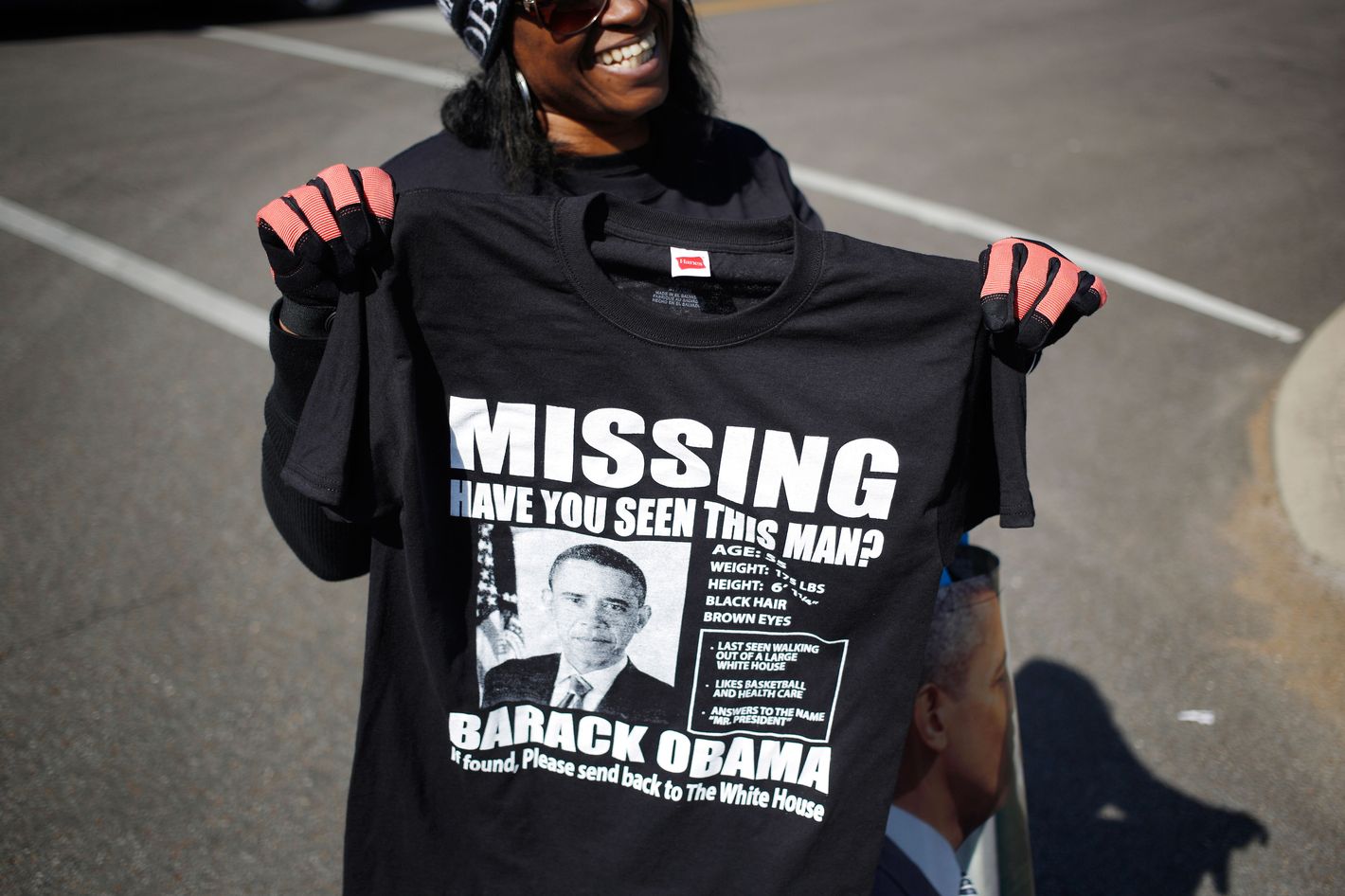
There has never been an American president so consumed with envy at his predecessor as Donald Trump. Consequently, there has never been a president whose legacy has been scrutinized in quite the same way as Barack Obama. That Trump would erase Obama’s achievements has served as a fantasy for Obama’s enemies on the right and the left (the latter, imagining that his shallow compromises could give way to True Socialism) and as a source of anxiety for his supporters. It has been asserted repeatedly as fact, most recently by my colleague Andrew Sullivan, who laments, “Obama’s Legacy Has Already Been Destroyed.”)

Obviously Trump has undone some of Obama’s work. But I think this conclusion makes three mistakes about Obama’s legacy: It understates its breadth, its depth, and conceptualizes the whole idea of a legacy in the wrong way.

Begin with breadth. The reason I wrote a book is that very few people, even people who follow politics closely or professionally, have been able to hold in their heads just how much Obama accomplished. Andrew is not alone in missing large swaths in his accounting. One of the most important elements of Obama’s legacy — indeed, at the time it was frequently said it would be the entire Obama legacy — was his response to the greatest financial crisis in 75 years. The stimulus, the stress tests that re-solidified the banking sector, and the auto bailout all collectively saved the economy from a second Great Depression. And all these measures passed in the face of total and frequently hysterical opposition from the entire Republican Party, along with many Democrats.

During the Obama administration, the recovery was widely slagged. It’s become clear that impression was in large part due to political messaging. Liberals complained about the recovery in order to make the case for even more robust stimulus than the historically large measures Obama enacted; conservatives dismissed the recovery for obvious partisan reasons. But the economy has not grown any faster under Trump. Trump’s greatest success has been to claim credit for the same growth rate and to rebrand it as “prosperity.” In so doing, he has, paradoxically, demonstrated his predecessor’s unappreciated policy success.

Andrew neglects to credit that achievement, which obviously cannot be rolled back. He likewise overlooks the education reforms spurred by Race to the Top, and the financial regulations created by Dodd-Frank. (Republicans have always pledged to repeal Dodd-Frank, but the most they could manage was a minor bill nicking slightly around its edges.) The opening to Cuba is another foreign policy achievement Trump has not touched.

Second, there is the question of depth. Andrew is correct that Trump is rolling back Obama’s achievements on climate and health care, but he overestimates the extent of this response. The $80-billion green energy investments in the stimulus stood up a massive expansion in green tech, from wind to solar to electric cars and more energy-efficient appliances. The plummeting cost of green energy gave world leaders the economic space to craft the first international climate accord.

Trump can’t unspend the green energy subsidies. He’s trying to undo Obama’s regulations, but courts are checking him, and market forces have stymied Trump’s desire to revive dirty energy, which continues to decline. The emissions targets reached in the first Paris accord were not ambitious enough, and were meant to set the table for continuous ratchets. Trump has thrown sand in the gears by pulling out of the accord. But while he has impeded progress, he has not stopped it, let alone restored the status quo ante. Political support for the Paris goals remains firm globally, and the economic basis for the developing world to follow a green energy path — rather than the dirty energy model the West followed — continues to brighten. Trump has been a speed bump on a path he cannot fundamentally alter.

The same basic story holds true on health care. The Affordable Care Act contained two basic changes: cost reforms, to reduce the trajectory of health care inflation, and coverage expansion. Trump’s first Health and Human Services Director, Tom Price, was a wealthy doctor and a fanatic for undoing Obama’s cost reforms. Price had to resign for his unrestrained greed, and his successor, Alex Acosta, has left those reforms in place.

The coverage expansion has proven more contentious. About half the coverage expansion occurred through Medicaid, which Trump tried, and failed, to roll back. (Andrew neglects to mention this, too.) The other half, the new individual exchanges, is more tenuous. Trump has sabotaged several aspects of the law, creating premium spikes that will harm many state exchanges and make insurance unaffordable for many customers who now have it. On the other hand, it seems unlikely that Trump will make the exchanges “unstable and unaffordable” for all. Many customers have their premiums subsidized 100 percent, which insulates them from price increases — the government is on the hook — and provides a customer base that ensures the exchanges won’t go into a full actuarial death spiral, in which only the sickest people apply. Again, Trump’s intervention is highly damaging, but not the death blow he has proclaimed (and that Andrew credits him for carrying out).

Nor is this the end of the story. Had the ACA never been passed, Trump could have kept the pre-ACA status quo at no political cost. Instead his party has absorbed massive political damage merely to achieve a partial rollback, with more damage to follow when the premium increases they engineered set in. Obama overcame the Herculean obstacle of finding 60 Senate votes to regulate health insurance. No Democrat will have to do that again. The next coverage expansion, shoring up and extending Obamacare, will start at a higher base and aim for a higher level, with less to stop it.

Finally, I take issue with the historical myopia with which Andrew approaches the whole question. In this, he is again hardly alone. Presidents are normally measured by what they accomplished, rather than how their successors managed their legacy. That the South created a feudal system of quasi-slavery after Reconstruction is not usually counted against Abraham Lincoln’s achievements in abolishing slavery. Modern Republican presidents have neutered enforcement of labor law, but you don’t usually encounter that fact when you read about how Franklin Roosevelt established the National Labor Relations Board.

It may be fair to consider the durability of legacy achievements. But in this bitter partisan age, they will inevitably swing back and forth. A still photo of the Obama legacy under Trump, as if the political clock has stopped forever, is the opposite of a long-term approach. Will Trump’s vision of health care have prevailed over Obama’s, 50 years from now? His ideas about democracy and tolerance? Will textbooks afford Trump more reverence than Obama? That story remains to be written by us all. But I suspect it will not be the one the angry, jealous old man in the Oval Office hopes for.
