Barack Obama Needs to Get His Hands Dirty

Esquire

Barack Obama Needs to Get His Hands Dirty

The former president will have to engage in serious political combat to defend his vision of America from Donald Trump.

By Charles P. Pierce      July 3, 2018
Getty Images

There was a story in The Washington Post: that caught The Cynic’s eye this week. It was about the latest scam with which the rich manage further to immiserate the poor. It was the headline that grabbed The Cynic’s attention. It contained the phrase “monetizing poor people,” which was a little too Soylent Green for The Cynic’s comfort.

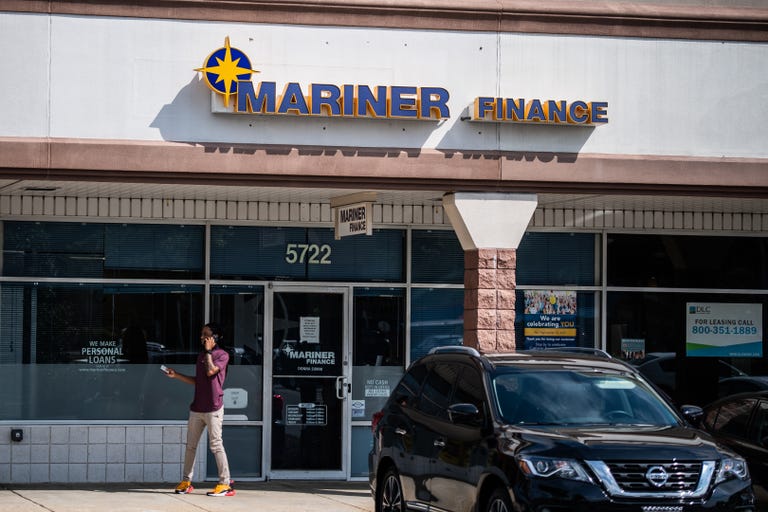
“A week later, though, his 2005 Chevy pickup was in the shop, and he didn’t have enough to pay for the repairs. He needed the truck to get to work, to get the kids to school. So Huggins, a 56-year-old heavy equipment operator in Nashville, fished the check out that day in April 2017 and cashed it. Within a year, the company, Mariner Finance, sued Huggins for $3,221.27. That included the original $1,200, plus an additional $800 a company representative later persuaded him to take, plus hundreds of dollars in processing fees, insurance and other items, plus interest. It didn’t matter that he’d made a few payments already. “It would have been cheaper for me to go out and borrow money from the mob,” Huggins said before his first court hearing in April.”

This is, in fact, true. The Mob is more straight-ahead honest with its collection procedures.

“Mass-mailing checks to strangers might seem like risky business, but Mariner Finance occupies a fertile niche in the U.S. economy. The company enables some of the nation’s wealthiest investors and investment funds to make money offering high-interest loans to cash-strapped Americans. Dozens of… investment firms bought Mariner bonds last year, allowing the company to raise an additional $550 million. That allowed the lender to make more loans to people like Huggins. “It’s basically a way of monetizing poor people,” said John Lafferty, who was a manager trainee at a Mariner Finance branch for four months in 2015 in Nashville. His misgivings about the business echoed those of other former employees contacted by The Washington Post. “Maybe at the beginning, people thought these loans could help people pay their electric bill. But it has become a cash cow.””

Moo, thought The Cynic. Moo, moo, moo. These guys are payday lenders in a $5,000 suit.
Getty Images

“Among its rivals, Mariner stands out for the frequent use of mass-mailed checks, which allows customers to accept a high-interest loan on an impulse — just sign the check. It has become a key marketing method. The company’s other tactics include borrowing money for as little as 4 or 5 percent — thanks to the bond market — and lending at rates as high as 36 percent, a rate that some states consider usurious; making millions of dollars by charging borrowers for insurance policies of questionable value; operating an insurance company in the Turks and Caicos, where regulations are notably lax, to profit further from the insurance policies; and aggressive collection practices that include calling delinquent customers once a day and embarrassing them by calling their friends and relatives, customers said.”

The Cynic believes—or, rather, knows in the deepest and most cynical part of his cynical heart—that the modern American corporate business model is fraud, that the primary purpose of the American financial system is to make money on money. He believed this before the crash of 2008 and he believes it today. He has believed it under at least the last five previous presidents of the United States. He believes that they believe it as well, and that all five of them, in one way or another, accepted the new business model as being as implacable a force as the wind and tides. This acceptance, the Cynic concludes, was what led directly to the election as president* of a pure product of modern American business fraud.
Getty Images

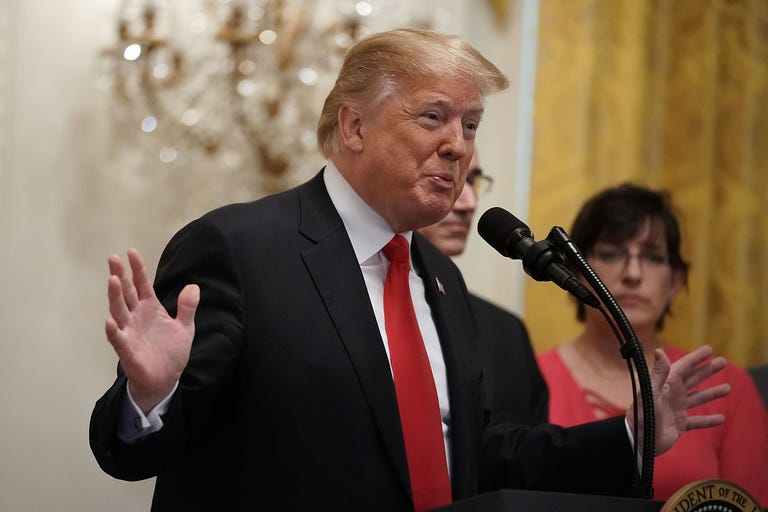
This latest bit of shameless brigandage, thought The Cynic, was the perfect illustration of how the current president* got rich and famous enough to become president*. The guy with the truck is all those subcontractors, the painters and landscapers and glaziers, who trusted his word that they’d get paid and ended up wearing a barrel because the president* had turned reneging on debts into a fine art. The vultures of Mariner Finance were the administration* he put together—chockfull of crooks and sharpers who get fat on broken promises and human misery.

Then The Cynic read further along, and he came to this passage, and he thought about the administration before this one:

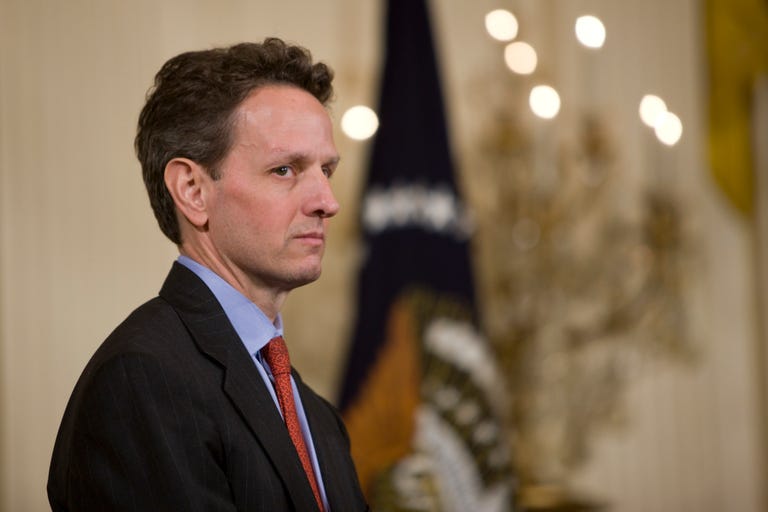
“Mariner Finance is owned and managed by a $11.2 billion private equity fund controlled by Warburg Pincus, a storied New York firm. The president of Warburg Pincus is Timothy F. Geithner, who, as treasury secretary in the Obama administration, condemned predatory lenders. The firm’s co-chief executives, Charles R. Kaye and Joseph P. Landy, are established figures in New York’s financial world. The minimum investment in the fund is $20 million.”

Why? The Cynic never has stopped asking this of President Barack Obama. Why Geithner, of all people, when the country was hungry for answers about who had wrecked the world economy and then cashed in the rubble? Why look forward and not back—on torture, and on massive, catastrophic fraud? At the end of the eight years, The Cynic was willing to give Obama a reluctant ‘B.’ He managed to get a national health-insurance bill passed, and damned if it hasn’t been surprisingly durable. He also signed the most sweeping financial reform bill of the previous half-century—although, as The Cynic sadly realized, that wasn’t saying much. He put two very tough liberal women on the Supreme Court. And people did look to him for honest leadership the way they hadn’t looked at politicians in a long time.
Tim Geithner. Getty Images

But the grade never got above ‘B,’ because, essentially, The Cynic believed that Obama never really understood the American people the way they are. He understood them the way he wanted them to be. The constant appeals to the country’s better angels rang hollow through history; even Lincoln couldn’t really summon them, because he got shot in the head, and then Andrew Johnson found political advantage in stirring up the race hatred that still burned throughout the country. The Cynic still believes, as he wrote the first time that he considered the phenomenon of Barack Obama:

“Why would anyone have faith in America, which is not tough but fearful, not smart but stupid, and not shrewd but willing to fall for almost anything as long it comes wrapped in a flag? Why would anyone have faith in Americans? Barack Obama says that he has that faith because of his own life, because he was able to rise to the point where he can be thought of as president of the United States. He is the country’s walking absolution. That’s his reason, the cynic thinks, but it’s not mine. There has to be confession. There has to be penance. Being Barack Obama is not enough. Not damn close to enough.

And it wasn’t. Virulent racism and crazy conspiracy theories attended his every move for eight years. One of the craziest was pushed by the guy who became his successor. This was not an accident.
Getty Images

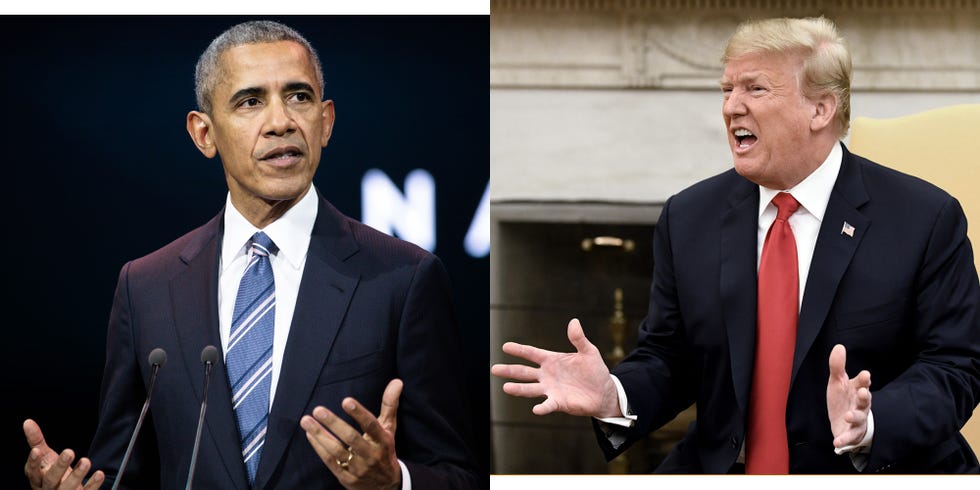
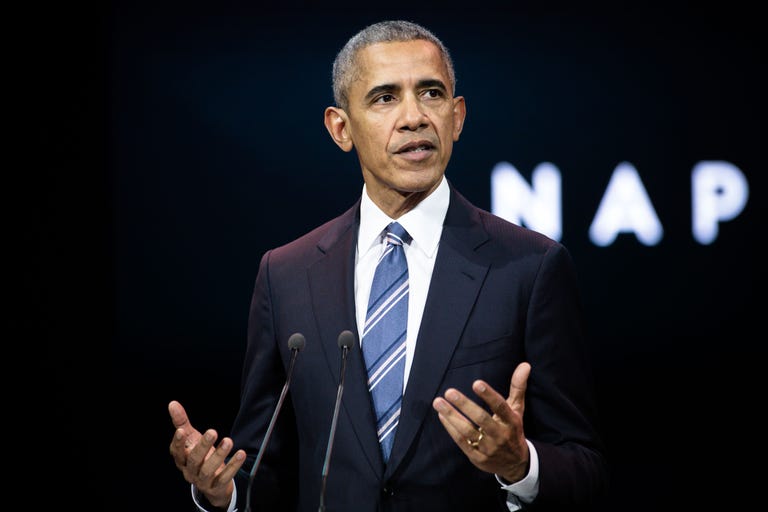
Unless things change drastically in the next two years, Barack Obama and Donald Trump are going to be history’s fraternal twins, their administrations seen as part of the same whole in the period when the survival of the American republic was in greater peril than any time since Lincoln got shot in the head. If he is not careful, The Cynic thought, Barack Obama may well be remembered through history as the president whose glorious vision of the country and considerable personal magnetism made the idea of a President* Donald Trump plausible, if only as an alternative, and as a vehicle for all those parts of the American character that Obama believed the American people could overcome.

All of the forces that produced the current president* were on vivid display during Obama’s eight years in office—the racism, the xenophobia, the lust for “taking our country back.” Guys with guns used to stalk the parking lots of arenas in which Obama was speaking. For eight years, Obama was presented with prima facie evidence that everything he said in that famous speech at the 2004 Democratic National Convention was sadly wrong, that his optimism was misplaced, and that the better angels of our nature were, as they are from time to time, off-duty or rolling sevens in Vegas.

UNLESS THINGS CHANGE DRASTICALLY IN THE NEXT TWO YEARS, BARACK OBAMA AND DONALD TRUMP ARE GOING TO BE HISTORY’S FRATERNAL TWINS.

That he managed to stay sane through that, let alone get as much done as he did, while still maintaining his essential humanity, is eternal testimony to the iron in his spine and to the granite in his character. However, it will not be hard for historians to conclude that his confidence in the American people and his caution in certain policy areas left a huge opening for the dark forces that Obama’s Boston speech had dismissed as phantoms conjured up by pollsters and political consultants. Certainly, Trump’s election has to be seen as a thorough rejection of that speech, just as the administration*’s campaign to roll back Obama’s achievements is a rejection of his policies.

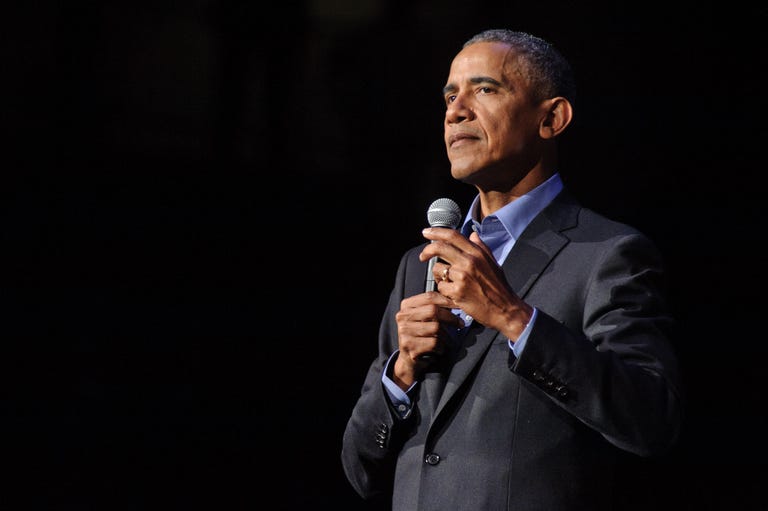
This is what The Cynic thinks when he sees that Tim Geithner is still operating on the modern American business model after a stint as Secretary of the Treasury. Was he completely untouched by the damage done by his lunch pals? Was he deaf to the message that his president brought to the country? Barack Obama left just enough of an opening in just enough places to make the idea of a Donald Trump’s presidency* something more than a punchline. Something like it might have happened anyway, given the raw energy of the naked racial animus that attended every move Obama made.
Getty Images

Emails reveal close rapport between top EPA officials, those they regulate

Washington Post

Emails reveal close rapport between top EPA officials, those they regulate

By Juliet Eilperin      July 1, 2018

 Does Scott Pruitt have an ethics problem?

Environmental Protection Agency Administrator Scott Pruitt faces rising scrutiny over several ethics issues, including his use of taxpayer money.(Video: Bastien Inzaurralde/Photo: Jabin Botsford/The Washington Post)

 On the morning of April 1, 2017, Environmental Protection Agency appointee Mandy Gunasekara welcomed to her office a team of lobbyists representing the makers of portable generators.

For months, the Portable Generators Manufacturers’ Association had been trying to block federal regulations aimed at making its product less dangerous. The machines — used by many Americans during power outages after severe storms — emit more carbon monoxide than cars and cause about 70 accidental deaths a year.

Just before President Barack Obama left office, the Consumer Product Safety Commission had approved a proposal that would require generators to emit lower levels of the poisonous gas. Now industry lobbyists were warning Gunasekara of “a potential turf battle . . . brewing” between the commission and the EPA, which traditionally regulates air emissions from engines.

Less than six weeks later, EPA Administrator Scott Pruitt sent a letter informing Ann Marie Buerkle, the commission’s acting chair, that his agency had primary jurisdiction over the issue. Just over three months later, Buerkle signaled she might reassess mandatory regulations and described the industry’s work toward voluntary standards as “very promising.”

The communication between the lobbyists and one of Pruitt’s top policy aides — detailed in emails the agency provided to Democratic Sens. Bill Nelson (Fla.) and Thomas R. Carper (Del.) — open a window on the often close relationship between the EPA’s political appointees and those they regulate. Littered among tens of thousands of emails that have surfaced in recent weeks, largely through a public records lawsuit filed by the Sierra Club, are dozens of requests for regulatory relief by industry players. Many have been granted.

In March 2017, for example, a lobbyist for Waste Management, one of the nation’s largest trash companies, wrote to two top EPA appointees seeking reconsideration of “two climate-related rules” affecting business. (Another lobbyist “sings your praises,” she told the pair.) The EPA subsequently delayed a rule targeting methane emissions from landfills until at least 2020.

 Environmental Protection Agency Administrator Scott Pruitt intervened as the Consumer Product Safety Commission was considering mandatory emissions limits for portable generators, saying the issue was instead the EPA’s domain. (Pablo Martinez Monsivais/AP)

Less than six weeks later, a representative of the golf industry wrote Samantha Dravis, then-associate EPA administrator for the Office of Policy, that “our guys” had been “amazed at the marked difference between our meeting today and the reception at EPA in years” past. The chief executive of the World Golf Association later sent his own email reminding Dravis of “our specific interest in repeal of the Clean Water Rule” — a rule the agency is now reviewing.

And in June 2017, Michael Formica, a lawyer for the National Pork Producers Council, sent a note “from my SwinePhone” thanking Gunasekara and other senior Pruitt aides “for your efforts to help address the recent air emission reporting issues facing livestock agriculture.” The EPA later revamped its guidelines so that pork, poultry and dairy operations do not have to report on potentially hazardous air pollutants arising from animal waste.

EPA spokesman Jahan Wilcox said many of these groups “were dealing with the costly consequences of President Obama’s policies that expanded federal overreach while doing little for the environment.”

Any rule changes underway, he added in an email, received “robust public comment” and have been developed “consistent with administrative law and the rulemaking process” with the goal of improving the environment.

Others are far less enthusiastic about the EPA’s performance under Pruitt — including what appears to be an “open-door policy towards the industries they are supposed to be regulating,” said Brendan Fischer, director of federal reform at the Campaign Legal Centera nonpartisan public watchdog group. “As these emails show, when lobbyists ask top EPA officials to jump, the answer is often ‘how high.’ ”

On some occasions, top EPA officials pushed back on the idea that they would automatically grant industry’s requests: In a sharply worded Aug. 21 email, Dravis told a lobbyist from ConocoPhillips that “no one committed” to relaxing a rule on small incinerators at the oil and gas company’s request. Career staff, she added, had raised concerns about the move.

Although the vast majority of the emails focused on industry concerns, Pruitt aides also tried to reach out to environmentalists, including Natural Resources Defense Council attorney John Walke and Environmental Defense Fund President Fred Krupp.

Walke, however, was unimpressed. “Scott Pruitt is at EPA only to serve the interests of polluting industries,” he said when asked about the overture. “A few token meetings with environmental groups cannot hide his destructive agenda.’’

EPA’s shifting stand on portable generators has proven particularly consequential. The Consumer Product Safety Commission had spent years examining whether to impose mandatory emissions requirements, concluding in late 2016 that the industry could not be trusted to lower emissions on its own. After Pruitt intervened, Buerkle announced last August that the commission would explore the voluntary standards being developed by the industry trade association even as rulemaking on the other front technically continued.

“Staff is obligated to proceed,” a spokeswoman for the commission said Sunday.

It is now working with the National Institute of Standards and Technology to evaluate two voluntary standards that would require a generator’s engine to shut off when carbon monoxide levels get too high.

“I don’t think anyone can deny that safer generators will now be produced,” Bracewell senior principal Edward Krenik, who represents the industry, said in an email Sunday. He noted that the shift is happening “voluntarily and without protracted litigation, which would have delayed any change.”

The safety consulting and certification company UL has proposed a more restrictive limit that would require the generators to emit lower levels of carbon monoxide overall — and shut off much sooner.

In May, Buerkle wrote Nelson and Sen. Richard Blumenthal (D-Conn.) to stress how, “thanks to many years of effort by the CPSC staff and generator manufacturers, safer portable generators are coming to market soon.” However, given that older machines remain in use, she wrote, “it is crucial to keep emphasizing the message that portable generators must be kept outdoors and as far from open windows and doors as possible.”

Despite aggressive public-information campaigns by federal and local officials on that point, carbon monoxide poisoning incidents remain a serious problem. The Florida Poison Information Center Network recorded 509 patients last year, compared with 327 in 2016 and 276 in 2015.

After Hurricane Irma, Nelson said in a statement, “at least 12 people died and many more were injured by carbon monoxide poisoning from portable generators in Florida.”

Nelson went on to accuse Buerkle and Pruitt of colluding “with industry and outside lobbyists to actually kill mandatory safety standards. It’s one of the worst examples of the fox guarding the henhouse I have seen, and it’s just shameful.”

Brady Dennis and Andrew Ba Tran contributed to this report.

Read more:

Amid ethics scrutiny, Pruitt finds his regulatory rollbacks hitting bumps

For Pruitt, gaining Trump’s favor came through fierce allegiance

We must not yield to cruelty, fear and divisiveness!

The Late Show with Stephen Colbert

June 26, 2018

Just when things seem too trumped up to trumptinue, #JonStewart tags in with a reminder not to yield to cruelty, fear and divisiveness.

A suburb bets on horses, but not in the way you think

Crain’s

A suburb bets on horses, but not in the way you think

By H. Lee Murphy        June 22, 2018

Tom Struzzieri, owner of Hits. Photo by John R. Boehm.

The south suburbs were devastated three years ago when the owners of the troubled Balmoral Park harness track in far south suburban Crete abruptly closed it. Horses had been running there since the mid-1920’s, and with mostly empty farmland surrounding the track, it was hard to imagine any way of reviving its fortunes.

Now, horses are back at Balmoral, though they aren’t hitched to sulky carts. An upstate New York firm called Hits acquired the 200-acre track and surrounding barns out of bankruptcy late in 2016, at a bargain price of less than $3 million, and has repurposed it as one of the nation’s premier horse show venues featuring hunters and jumpers. The dirt track is gone, replaced by 5-foot barriers and a well-mannered audience watching performers clad in the staunchly English tradition of scarlet coats and tan breeches.

The blue-collar town of Crete, population 8,300, is an unlikely backdrop for a sport that formerly was practiced in such wealthy suburbs as Barrington, Oak Brook, Wayne and Wheaton around metro Chicago. But nearly all the competing facilities in those towns have gone out of business, supplanted by the massive scale of Balmoral, which is big enough to house nine show rings, 1,500 horse stalls and a grandstand with seating for 35,000 spectators. By most standards, Balmoral suddenly ranks as the biggest horse show facility anywhere.

Tom Struzzieri, the owner of Hits (formerly Horse Shows in the Sun), has a half-dozen facilities spread between Palm Springs, Calif., and Saugerties, N.Y. Of some 1,700 horse shows in the U.S. every year, Hits stages 70 of them. Of the biggest 100 shows, it owns 40. Struzzieri, who grew up on Long Island with show horses of his own, offers several Grand Prix competitions each year with million-dollar prizes (Balmoral tops out at $500,000, at an event scheduled for August). Nobody else in the U.S. comes close.

“The big prize money attracts the best riders,” says Kevin Price, executive director of the U.S. Hunter Jumper Association in Lexington, Ky. “Hits has grown at an impressive rate. Harness tracks have fallen on hard times in a lot of places, and the reuse of Balmoral has been a win-win situation for everybody involved.”

MILLIONS INVESTED

Struzzieri, who poured $10 million of Hits money into Balmoral beyond the purchase price to recondition old barns and erect the rings, says he lost money last year in Crete and will be lucky to break even this year on 13 weeks of summer shows. But the Midwest was starved for top-flight competition—show jumping is centered on the East and West coasts—and his initial search several years ago for a venue had taken him to farms south of Rockford holding scant promise.

“We were in the right place at the right time when Balmoral became available,” Struzzieri says. He’s kept much of the old harness track memorabilia intact, down to the betting windows and posters on the walls, as well as the original finish line, maintained in the middle of the Grand Prix ring. “We wanted an old-time horsey ambiance here,” he explains. “The horses boarding here today can sense the history of the place. It gives them comfort.”

Local performers aren’t complaining. Steve Schaefer, a professional rider who owns a farm in the western Kane County town of Maple Park, competes for prize money nearly every weekend through the summer at Balmoral before moving on to Florida to compete in the winter. “This facility was a fabulous idea,” he says. “There may be no other facility in the country like this. Tom is attracting a strong following.”

Europe was once home to the biggest horse show events each summer, but Hits’ lofty prizes at Balmoral, where 75 are directly employed and $3 million will be offered this year, has managed to attract an international audience. Riders from 15 countries will be in residence in Crete in coming weeks. Gonzalo Estelles, a trainer from Argentina, brought four horses and two riders to Balmoral for the summer. “There isn’t a show-jumping place this nice anywhere in South America,” he says through an interpreter.

Michael Einhorn, Crete’s mayor for 33 years, is hoping to attract hotel and restaurant development to town to cater to the Balmoral visitors. “We have a lot of property here zoned for development and ready to go, but nobody really interested yet,” Einhorn says. He says that a new home hasn’t been built in Crete in over a decade, and the state of Indiana, three miles to the east, has siphoned away development. The CSX railroad has planned a $230 million intermodal center not far from Balmoral on 1,100 acres it acquired in 2007, but it is under review by CSX.

“As it is, the arrival of Hits here was a dream come true for us,” Einhorn says. “It’s one thing dealing with a storefront that goes dark downtown. Without Hits, what were we going to do with that 200-acre racetrack after it closed?”

Hits is hoping only for more spectators and sponsors now. Advertisements come from boot-makers and equine feed companies like Purina, but not the national names such as BMW that management covets. Hardly anybody bothers to watch classes on weekdays, while crowds on the busiest weekends top out at 5,000 or so (tickets are $5 on Saturdays; skyboxes in the covered grandstands can be rented). Hits also charges weekly rent to house the horses and an entry fee into every class they run; concessions and gifts offer another revenue stream.

Horse jumping, unique as the only Olympic sport in which men and women compete directly against each other, is an elite endeavor that may never appeal to the masses. “Even so, we have got to do more to market the sport,” Struzzieri says. “We can get much bigger here.”

Photo by John R. Boehm

Capital Gazette Reporter To Trump: ‘I Couldn’t Give A F**k’ About Your Prayers

HuffPost

Capital Gazette Reporter To Trump: ‘I Couldn’t Give A F**k’ About Your Prayers

Mary Papenfuss, HuffPost      June 29, 2018

Scott Pruitt Personally Involved in ‘Ratf*cking’ Ex-Aides Who He Feels Betrayed Him

Daily Beast – Order the Code Red

Scott Pruitt Personally Involved in ‘Ratf*cking’ Ex-Aides Who He Feels Betrayed Him

The EPA chief demands loyalty. He doesn’t always reciprocate, though.

Lachlan Markay and Asawin Suebsaeng      June 28, 2018

On May 18, a top aide to Environmental Protection Agency chief Scott Pruitt testified to a congressional committee that she had been tasked with procuring her boss a used mattress from the Trump International Hotel in Washington, D.C. Just days after news of that testimony broke, the aide, Pruitt’s now former director of scheduling Millan Hupp, submitted her resignation.

But even though Hupp was gone from the agency, Pruitt wasn’t done with her.

According to three sources familiar with the conversations, Pruitt was livid over Hupp’s testimony, which he felt had been particularly humiliating. And he personally reached out to allies in the conservative movement, including some at the influential legal group the Federalist Society, to insist that she had lied about, or at least misunderstood, the request for a used Trump mattress. He also stressed that Hupp could not be trusted—the implication being that she should not be hired at their institutions.

It was an aggressive move by a besiegedscandal-prone Cabinet member against a young staffer—one who worked on Pruitt’s attorney general campaign in Oklahoma, followed him to Washington, and by all accounts had been one of his most loyal aides at the EPA.

But it also showed a side of the EPA chief that top advisers say is not always readily apparent to the public. Though Pruitt demands loyalty among those in his inner circle, he has not reciprocated it to his aides, even as they face a legal and public-relations backlash stemming from his conduct at the agency. Sources say he’s actively undermined the reputations of former and current staffers, with campaigns that former senior EPA officials have described as “ratfucking.”

The targets aren’t just ex-schedulers either.

For months, Pruitt and top aides have suspected Kevin Chmielewski, Pruitt’s former deputy chief of staff, of leaking damaging details about the administrator’s travel and spending habits to the press. Sources say Pruitt led the charge to push back against his former senior aide. And he did so by tasking communications aides with leaking damaging information about Chmielewski’s alleged misconduct at EPA, including supposed unannounced vacations and shoddy timecard practices. Chmielewski has accused Pruitt of retaliation, a charge that is now under investigation by the Office of Special Counsel.

RELATED IN POLITICS

Scott Pruitt Made Staff Fetch His Snacks and Sweets

Lobbyist Pitched Scott Pruitt a Meeting With NatGeo Exec

GOP to Scott Pruitt: Cut the Crap

Knowledgeable sources also told The Daily Beast that Pruitt instructed staff to pitch “oppo hits” to media outlets on other officials who departed on bad terms or were sidelined. The targets include David Schnare, a former member of Donald Trump’s presidential transition team, and career official John Reeder, who Pruitt would privately call a “communist,” according to two people familiar with Pruitt’s complaints and thinking.

Pruitt’s vindictiveness doesn’t put him out of place within the administration. In many respects, it reflects some of the trademark impulses of his boss, Donald J. Trump. But for staff, the episodes have proven exhausting and demoralizing.

Hupp, for her part, was legally obligated to tell investigators the truth about seeking a used mattress from the Trump International Hotel. And as Pruitt faces a mounting number of investigations into his conduct and spending at the agency, other aides are now finding themselves facing their own inquiries, with little assistance from their EPA boss.

Pruitt set up a legal defense fund this year to deal with those inquiries. But sources say he has not offered to use the fund to assist current and former aides with their own considerable legal expenses. Nor, according to sources, has he offered apologies or expressed remorse to those aides for their ongoing legal and personal woes. The mounting financial difficulties that some of those aides face has fueled distress even among those who consider themselves loyal foot soldiers for Pruitt.

Cleta Mitchell, the attorney overseeing the Pruitt legal defense fund, did not respond to requests for comment.

Asked for comment, an EPA spokesperson referred The Daily Beast to Pruitt’s comments before a House committee in May. “I am not afraid to admit that there has been a learning process and when Congress or independent bodies of oversight find fault in our decision-making I want to correct that and ensure that it does not happen again,” Pruitt said at the time. “Ultimately, as the administrator of the EPA, the responsibility for identifying and making changes necessary rests with me and no one else.”

Pruitt Proposes Weakening EPA’s Power Over Water Polluters

EcoWatch

Pruitt Proposes Weakening EPA’s Power Over Water Polluters

Olivia Rosane      June 28, 2018

Cement Creek at Silverton, CO. The region downstream from the Gold King Mine has been an area of extensive USGS water quality research. U.S. Geological Survey

Environmental Protection Agency (EPA) head Scott Pruitt on Wednesday proposed another way to weaken U.S. environmental regulations protecting the nation’s waterways from pollution.

In a memo dated June 26 but released June 27, Pruitt asked the EPA’s Office of Water and Regional Administrators to draft a proposal that would restrict the agency’s ability to revoke permits issued by the U.S. Army Corps of Engineers (USACE) allowing projects to dispose of dredged or fill material in rivers, streams and other waterways, The Hill reported.

“Today, I am directing the Office of Water to take another step toward returning the agency to its core mission and providing regulatory certainty,” Pruitt wrote in the full text of the memo.

If the new proposal becomes policy, it would be the biggest change to how the EPA handles the dredging and filling of streams and waterways under the Clean Water Act in 40 years, according to The Hill.

Specifically, the proposal would block the EPA from preemptively blocking a permit to discharge materials in waterways before the USACE has issued one or revoking a permit issued by the USACE after the fact. It would also require that regional administrators get approval from EPA headquarters before vetoing a permit and that they listen to comments from the public before doing so.

Once a formal draft is ready, the public will have a chance to comment on Pruitt’s proposed change, and opponents can attempt to block it in court, according to The Hill.

Former EPA staffer of the nonprofit Public Employees for Environmental Responsibility Kyla Bennett told The Associated Press that the move would rob the EPA of one of its few means of protecting waterways from mining and other industry.

Instead of protecting waterways, Pruitt’s policy change would help those “he’s always concerned with: oil and gas and mining,” Bennett said. “His buddies who make money.”

Indeed, Pruitt justified the change as simplifying the permit process for businesses.

“This long-overdue update to the regulations has the promise of increasing certainty for landowners, investors, businesses and entrepreneurs to make investment decisions while preserving the EPA’s authority to restrict discharges of dredge or fill material that will have an unacceptable adverse effect on water supplies, recreation, fisheries and wildlife,” Pruitt wrote.

In practice, the EPA has rarely vetoed permits either retroactively or preemptively, though Republicans and industry have argued against their ability to do so. That ability was affirmed in a 2014 decision by the U.S. Court of Appeals for the District of Columbia Circuit.

Pruitt’s memo cited a case in which the EPA suggested it would use its veto power, under Obama, to preemptively block a permit for the pending Pebble Mine in Alaska after concerns from conservationists and Native American groups that it would harm salmon fisheries and wetlands, according to The Associated Press.

Pruitt started a process to reverse that preemptive decision, but in a surprise move, kept it in place following public outcry.

RELATED ARTICLES AROUND THE WEB

Scott Pruitt Has Betrayed the Mission, the National Interest and the

EPA administrator Scott Pruitt is slowly strangling his agency – Vox

Pruitt Takes Clean Water Act Decisions Away from Regional EPA

Scott Pruitt, Under Fire, Plans to Initiate a Big Environmental Rollback

DOON, IOWA Tar Sand Oil Spill.

DOON, IOWA Tar Sand Spill. Part 1 of 50 future videos.
Help me document this spill every few months to make sure it is cleaned up right. Go to HELPPA.org to join #teamJohnBolenbaugh and help fund a good fight against water contamination to save our children.

Most homeowners can go solar with a new program that has zero down and your solar system payment will be less than your current electric bill.

See More

Doon, Iowa Tar Sand spill part 1

DOON, IOWA Tar Sand Spill. Part 1 of 50 future videos. Help me document this spill every few months to make sure it is cleaned up right. Go to HELPPA.org to join #teamJohnBolenbaugh and help fund a good fight against water contamination to save our children. Most homeowners can go solar with a new program that has zero down and your solar system payment will be less than your current electric bill. Push freedomfromfossilfuels.com and enter your info

Posted by John Bolenbaugh WhistleBlower on Thursday, June 28, 2018

Steve Schmidt, Longtime G.O.P. Strategist, Quits ‘Corrupt’ and ‘Immoral’ Party

New York Times

Steve Schmidt, Longtime G.O.P. Strategist, Quits ‘Corrupt’ and ‘Immoral’ Party

By Niraj Chokshi     June 20, 2018

Steve Schmidt served as a top campaign adviser to George W. Bush in 2004 and John McCain in 2008. Credit:  Max Whittaker for The New York Times
For months, Steve Schmidt, a longtime Republican strategist, has warned about the degradation of his party, saying the Trump administration is responsible for a “coarsening of this country” and calling the president a “useful idiot” for Russia.

Now, Mr. Schmidt says he’s done: On Wednesday morning, he renounced his membership in the Republican Party, nearly three decades after joining it, and called for a Democratic wave in the midterm elections this fall.

Steve Schmidt: 29 years and nine months ago I registered to vote and became a member of The Republican Party which was founded in 1854 to oppose slavery and stand for the dignity of human life. Today I renounce my membership in the Republican Party. It is fully the party of Trump.

In a series of tweets, Mr. Schmidt, who served as a top campaign adviser to George W. Bush in 2004 and John McCain in 2008, said that the party he long served had become “corrupt, indecent and immoral.” He pointed to the Trump administration’s practice of separating children from their parents when apprehended at the border, saying it had resulted in “internment camps for babies.”

“This child separation policy is connected to the worst abuses of humanity in our history,” Mr. Schmidt said, reflecting the larger outpouring of anger over the administration’s zero-tolerance policy, which has included immigrants seeking asylum.

“It is connected by the same evil that separated families during slavery and dislocated tribes and broke up Native American families,” Mr. Schmidt said. “It is immoral and must be repudiated.”

 He also accused several officials of being “complicit” in enabling the president’s policies, including Kirstjen Nielsen, the secretary of homeland security; Mitch McConnell, the Senate majority leader; and Speaker Paul D. Ryan.

Save for a few governors, Mr. Schmidt said, the Republican Party is now filled with “feckless cowards.” He said that the few who deserved to be spared that label included Govs. Charlie Baker of Massachusetts, Larry Hogan of Maryland and John Kasich of Ohio.

As a result, Mr. Schmidt called for a Democratic wave in the midterms, describing that party as the only one remaining “that stands for what is right and decent.”

“The first step to a season of renewal in our land is the absolute and utter repudiation of Trump and his vile enablers in the 2018 election by electing Democratic majorities,” Mr. Schmidt wrote. “I do not say this as an advocate of a progressive agenda. I say it as someone who retains belief in DEMOCRACY and decency.”

Mr. Schmidt’s announcement was met with mixed emotions by liberals on social media, with some welcoming it and others suggesting the announcement was too little, too late. Some conservatives also scoffed at the defection.

While his decision to renounce his membership in the Republican Party stands out, Mr. Schmidt is far from alone in rebuking his party’s leadership. Other prominent Republicans, such as Senator Jeff Flake of Arizona, have been fiercely critical of President Trump and his policies — but have mostly continued to vote in line with Mr. Trump’s positions.

Supreme Court Conservatives Crush Workers, Again

HuffPost

Supreme Court Conservatives Crush Workers, Again

Leo W. Gerard, HuffPost Opinion        June 27, 2018 

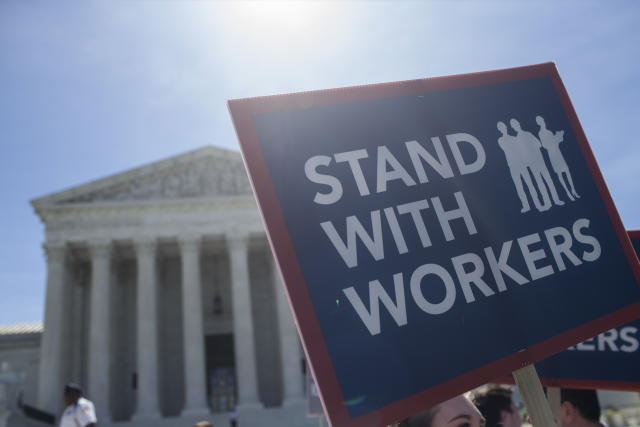
The radical conservatives on the U.S. Supreme Court have twice now in two months ganged up on working Americans, denying them their right to band together to achieve mutual goals.

Last month, the extremist court majority sided with big business to deprive workers of the right to sue collectively in class actions to redress violations like wage theft. This time, the same majority ruled against workers who organize themselves into unions, divesting public sector union members of the right to collect fair share fees from co-workers who don’t join but do receive all the benefits of union-negotiated contracts.

This is regression for the nation’s workers. In lockstep with the Trump administration and congressional conservatives, the high court’s right-wingers are shoving workers back to an earlier era, a time when corporations held all of the power and when workers, in what was supposed to be a free society, were in fact denied liberty.

Ideally, in the country that fought a war to rid itself of royal overlords, workers have the freedom to change jobs, even professions, to move across the country for better opportunities, to unite with co-workers, and to bargain collectively with corporations for better pay and benefits for the whole group.

But when money, and the power it spawns, are concentrated in the hands of a few, as it was with British royalty, these liberties are stripped from the majority. Indebtedness forecloses options to the ill-paid. The radical conservative cell on the Supreme Court is denying workers the tools that are vital for improving pay.

Labor unions are one of those tools.

Not that long ago, workers in this country were damned. Vast numbers were trapped. And so were their children and grandchildren. They had no way to achieve the liberty promised by their democracy. That is because they barely subsisted as wage slaves.

This included coal miners and textile workers and sharecroppers who lived in company-owned hovels and received company scrip, not U.S. currency, as pay. Though they worked 12-hour days, six days a week, they could never get ahead as owners raised rents and fees in the company store. Somehow, the sweat of their brow left them swamped in debt.

For coal miners, the change agent was the United Mine Workers of America. Instead of individuals pleading with wealthy coal field barons for a better wage, the workers banded together under the UMWA banner and collectively sought more pay. If owners still refused, the workers, together as a unit, could shut down the mine until owners relented. And they did.

No individual has that clout. Only the group does. The wealthy mine owners objected to workers realizing and wielding this power, of course, and did everything they could to outlaw and destroy labor unions.

During Democratic President Franklin Delano Roosevelt’s first term, a Democratic Congress passed the National Labor Relations Act to provide a clear legal pathway to collective bargaining. Union membership increased dramatically for the next 25 years until approximately 30 percent of all workers were members. During this time, workers’ wages rose in tandem with productivity. America’s great middle class was born and thrived.

By contrast, as the percentage of American workers represented by labor unions declined over the past 40 years, workers’ wages stagnated, even as productivity rose. Even though more public sector workers gained the right to unionize in the late 1950s, union density overall declined steadily after 1960.

Union representation shrank as legislation, regulation and Supreme Court decisions like the one issued Wednesday made collective bargaining increasingly difficult.

As soon as Republicans took over Congress in 1946, they moved to restrict workers’ bargaining rights, passing the Taft-Hartley Act in 1947. Still, the rate of union membership continued to rise until 1960, after which it declined steadily to 10.7 percent last year. Even with those small numbers, union workers continue to earn about 20 percent more than those who don’t collectively bargain.

The high court’s decision in the case of Janus v. American Federation of State, County and Municipal Employees, Council 31, could eviscerate public sector unions ― those representing government workers such as teachers, firemen and pollution monitors. Government workers are significantly more likely to be represented by unions than are private sector workers. And, of course, union extinction is the intent of both the right-wing organizations that bankrolled Janus and the right-wing jurists who decided it.

Unions must represent every worker within a unit. So, for example, the American Federation of Teachers is obliged to serve every educator in a school district, seeking better wages and working conditions for the entire group, filing grievances and hiring lawyers to pursue those cases even for instructors who choose not to join the AFT.

Union extinction is the intent of both the right-wing organizations that bankrolled Janus and the right-wing jurists who decided it.

Until now, in 22 states with legislation supporting workers’ rights, unions could charge nonmembers fair share fees ― amounts lower than dues ― to cover the costs of bargaining for them. In the Janus ruling, the Supreme Court’s conservatives said it was unlawful to collect those fees for public sector unions without the worker giving explicit consent. The upshot is this: The court’s radical conservatives have ordered union members to pay for services for nonmembers.

Such a system is sustainable only if the vast majority of workers in a unit choose not to shirk responsibility to the group. The union I lead, the United Steelworkers does have viable local unions in states that even before the Janus decision prohibited fair share fees.

But the union-hating conservative groups behind the Janus case have already launched a massive campaign to persuade public sector union members to quit and get free union services. This is destruction by subtraction. Backed by billionaires, these groups have the luxury of big bucks and unlimited time to pick off members, one by one, until a tipping point when the local union no longer has sufficient income to provide decent service and collapses.

Then, of course, no one gets services. No one will file a grievance for the teacher’s aide ordered by a principal to work an extra hour each day without pay. No one will conduct research and collectively bargain a labor agreement that will provide these highly educated professionals with decent pay and benefits. Compensation will fall. Fewer talented young people will choose teaching as a profession. The nation’s public schoolchildren will suffer.

And the rich will pay less in taxes. That’s exactly what radical right-wingers demand: less government, less taxes. Schoolchildren be damned! And their non-rich parents too.

Leo W. Gerard is the international president of the United Steel, Paper and Forestry, Rubber, Manufacturing, Energy, Allied Industrial and Service Workers International Union.