Drone footage shows the massive scale of Sunday’s protests in Hong Kong, where organizers said nearly 2 million people took to the streets to march against a controversial extradition bill. https://cnn.it/2KYbxPt
Drone footage shows the massive scale of Sunday’s protests in Hong Kong, where organizers said nearly 2 million people took to the streets to march against a controversial extradition bill. https://cnn.it/2KYbxPt
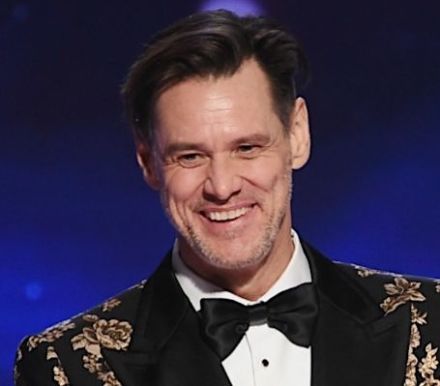
Jim Carrey Says ‘Good Riddance’ to Sarah Huckabee Sanders in Biblical Fashion
Daniel Kohn, The Wrap June 14, 2019
You can count Jim Carrey as the latest person to tell soon-to-be-former White House press secretary Sarah Huckabee Sanders to not let the door hit her on the way out.
A frequent critic of Sanders, Carrey expressed his pleasure with Sanders’ departure and displeasure with her as a person in his latest artistic rendering.
“Good Riddance, Sarah Huckabee Sanders! Now the only one you have to lie to is Jesus,” Carrey captioned the art, which portrays a multi-chinned Sanders in an unflattering pose praying at Jesus’ crucifix with a circle behind her head. Check out Carrey’s latest artwork. pic.twitter.com/qeWYpNxrtF
This isn’t the first time that Sanders has the subject of actor/artist Carrey’s art. Previously, he has depicted her as a Gorgon and has called her “monstrous.”
On Thursday, President Donald Trump announced in a series of tweets that Sanders would be leaving his administration.
Sanders has been with the Trump White House for two and a half years and has served as White House press secretary since May 2017, taking over for Sean Spicer.
“After 3 1/2 years, our wonderful Sarah Huckabee Sanders will be leaving the White House at the end of the month and going home to the Great State of Arkansas…” Trump wrote. “…She is a very special person with extraordinary talents, who has done an incredible job! I hope she decides to run for Governor of Arkansas — she would be fantastic. Sarah, thank you for a job well done!”
Carrey isn’t the only person who isn’t sad to see Sanders go.
The hashtag #ByeFelicia was trending on Twitter after her departure was announced — a dismissive farewell originally uttered by Ice Cube’s character in the comedy “Friday.”
Emails: Trump official consulted global warming rejecters
By Ellen Knickmeyer and Seth Borenstein, June 14, 2019
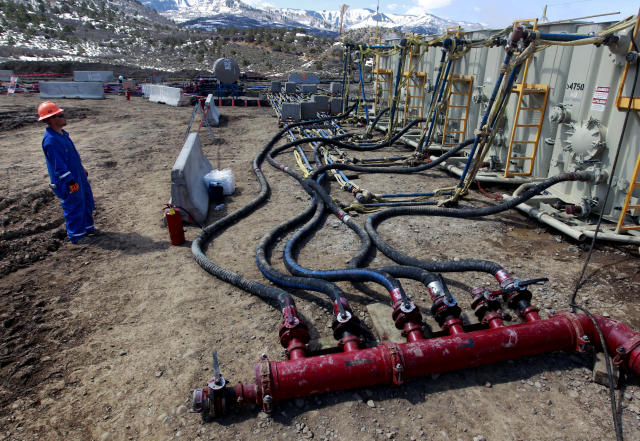
In this March 29, 2013, file photo, a worker helps monitor water pumping pressure and temperature, at an oil and natural gas extraction site, outside Rifle, on the Western Slope of Colorado. A Trump administration national security official has sought help from advisers to a think tank that disavows climate change to challenge widely accepted scientific findings on global warming, according to his emails. (AP Photo/Brennan Linsley, File)
WASHINGTON (AP) — A Trump administration national security official has sought help from advisers to a think tank that disavows climate change to challenge widely accepted scientific findings on global warming, according to his emails.
The request from William Happer, a member of the National Security Council, is included in emails from 2018 and 2019 that were obtained by the Environmental Defense Fund under the federal Freedom of Information Act and provided to The Associated Press. That request was made this past March to policy advisers with the Heartland Institute, one of the most vocal challengers of mainstream scientific findings that emissions from burning coal, oil and gas are damaging the Earth’s atmosphere.
In a March 3 email exchange Happer and Heartland adviser Hal Doiron discuss Happer’s scientific arguments in a paper attempting to knock down climate change as well as ideas to make the work “more useful to a wider readership.” Happer writes he had already discussed the work with another Heartland adviser, Thomas Wysmuller.
Academic experts denounced the administration official’s continued involvement with groups and scientists who reject what numerous federal agencies say is the fact of climate change.
“These people are endangering all of us by promoting anti-science in service of fossil fuel interests over the American interests,” said Pennsylvania State University climate scientist Michael Mann.
“It’s the equivalent to formulating anti-terrorism policy by consulting with groups that deny terrorism exists,” said Northeastern University’s Matthew Nisbet, a professor of environmental communication and public policy.
The National Security Council declined to make Happer available to discuss the emails.
The AP and others reported earlier this year that Happer was coordinating a proposed White House panel to challenge the findings from scientists in and out of government that carbon emissions are altering the Earth’s atmosphere and climate.
Happer, a physicist who previously taught at Princeton University, has claimed that carbon dioxide, the main heat-trapping gas from the burning of coal, oil and gas, is good for humans and that carbon emissions have been demonized like “the poor Jews under Hitler.” Trump appointed him in late 2018 to the National Security Council, which advises the president on security and foreign policy issues.
The emails show Happer expressing surprise that NASA Administrator Jim Bridenstine, a former Oklahoma congressman who once questioned mainstream climate science, has come round to accepting that science.
A May 2018 email exchange between Heartland’s Wysmuller and Happer calls the NASA chief’s change of heart on climate science “a puzzle.” The exchange calls scientifically established rises in sea levels and temperatures under climate change “part of the nonsense” and urges the NASA head — copied in — to “systematically sidestep it.”
Happer at the time was not yet a security adviser, although he had advised the Trump Environmental Protection Agency on climate change.
A NASA spokesman on Thursday upheld the space agency’s public statements on climate change.
“We provide the data that informs policy makers around the world,” spokesman Bob Jacobs said. “Our science information continues to be published publicly as it always has.”
But at the Heartland Institute, spokesman Jim Lakely defended the effort, saying in an email that NASA’s public characterization of climate change as manmade and a global threat “is a disservice to taxpayers and science that it is still pushed by NASA.”
After joining the agency, Happer sent a February 2019 email to NASA deputy administrator James Morhard relaying a complaint from an unidentified rejecter of man-made climate change about NASA’s website.
“I’m concerned that many children are being indoctrinated by this bad science,” said the email that Happer relayed.
Happer’s own message was redacted from the records obtained by the environmental group.
Two major U.S. science organizations took issue with Happer’s emails.
“We have concerns that there appear to be attempts by a member of the National Security Council to influence and interfere with the ability of NASA, a federal science agency, to communicate accurately about research findings on climate science,” said Rush Holt, chief executive officer of the American Association for the Advance of Science, the world’s largest general scientific society.
There have been hundreds of scientific assessments by leading researchers and institutions the last few decades that look at all the evidence and have been “extremely credible and routinely withstand intense scrutiny,” said Keith Seitter, executive director of the American Meteorological Society. “Efforts to dismiss or discredit these rigorous scientific assessments in public venues does an incredible disservice to the public.”
Strengthening them could blunt inequality and wage stagnation.
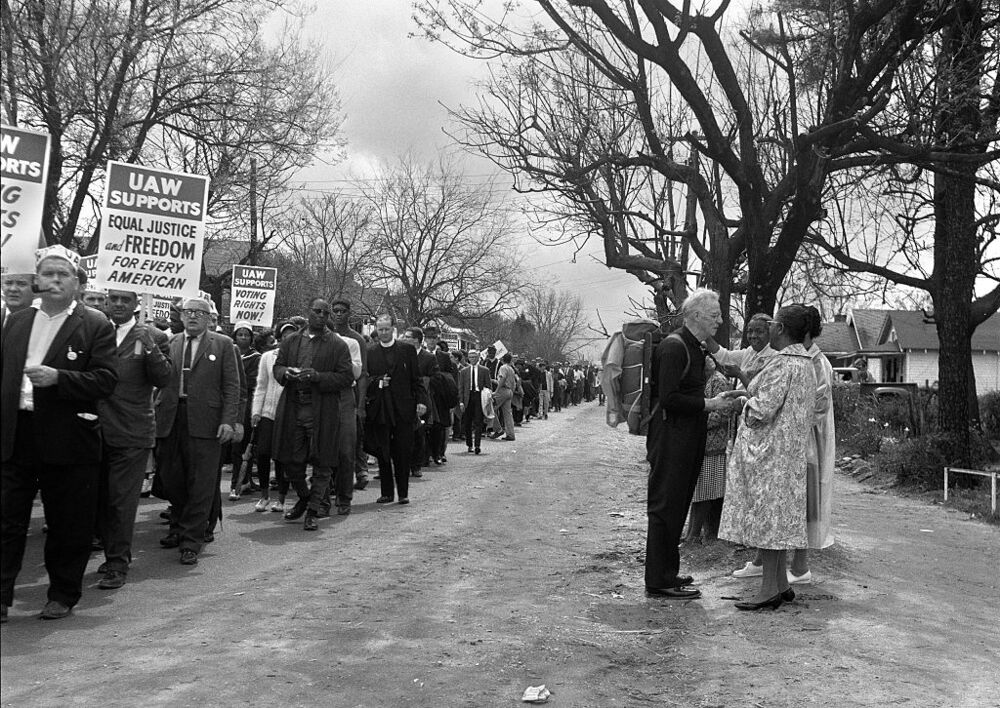
By Noah Smith Noah Smith is a Bloomberg Opinion columnist. He was an assistant professor of finance at Stony Brook University, and he blogs at Noahpinion.On the right side. Photographer: Stephen F. Somerstein/Archive Photos/Getty Images
Politically and economically, unions are sort of an odd duck. They aren’t part of the apparatus of the state, yet they depend crucially on state protections in order to wield their power. They’re stakeholders in corporations, but often have adversarial relationships with management. Historically, unions are a big reason that the working class won many of the protections and rights it now enjoys, but they often leave the working class fragmented and divided — between different companies, between union and non-union workers, and even between different ethnic groups.
Economists, too, have long puzzled about how to think about unions. They don’t fit easily into the standard paradigm of modern economic theory in which atomistic individuals and companies abide by rules overseen by an all-powerful government. Some economists see unions as a cartel, protecting insiders at the expense of outsiders. According to this theory, unions raise wages but also drive up unemployment. This is the interpretation of unions taught in many introductory courses and textbooks.
If this were really what unions did, it might be worth it to simply let them slip into oblivion, as private-sector unions have been doing in the U.S.:
It’s Been a While Since the Union Made Us Strong
But there are many reasons to think that this theory of unions isn’t right — or, at least, is woefully incomplete.
First, even back in the 1970’s, some economists realized that unions do a lot more than just push up wages. In a 1979 paper entitled “The Two Faces of Unionism,” economists Richard Freeman and James Medoff argued that “by providing workers with a voice both at the workplace and in the political arena, unions can and do affect positively the functioning of the economic and social systems.”
Freeman and Medoff cite data showing that unions reduced turnover, which lowers costs associated with constantly finding and training new workers. They also show that unions engaged in political activity that benefited the working class more broadly, rather than just union members. And they showed that contrary to popular belief, unions actually decreased racial wage disparities. Finally, Freeman and Medoff argue that by defining standard wage rates within industries, unions actually reduced wage inequality overall, despite the cartel-like effect emphasized in econ textbooks.
But the world didn’t listen to Freeman and Medoff, and private-sectors unions declined into near-insignificance. Now, four decades later, economists are again starting to suspect that unions were a better deal than the textbooks made them out to be. A recent paper by economists Henry Farber, Daniel Herbst, Ilyana Kuziemko and Suresh Naidu concludes that unions were an important force reducing inequality in the U.S. QuicktakeIncomeInequality
Since past data tends to be patchy, Farber et al. combine a huge number of different data sources to get a detailed picture of unionization rates going all the way back to 1936, the year after Congress passed a law letting private-sector employees form unions. The authors find that as unionization rises, inequality tends to fall, and vice versa. Nor is this effect driven by greater skills and education on the part of union workers; during the era from 1940 through 1970, when unionization rose and inequality fell, union workers tended to be less educated than others. In other words, unions lifted the workers at the bottom of the distribution. Black workers, and other nonwhite workers, tended to benefit the most from the union boost.
Now, however, private-sector unions are mostly a faded memory and their power to raise wages has waned — Farber et al. find that although there’s still a union wage premium, it’s now much more due to the fact that higher-skilled workers tended to be the ones who stayed unionized. A 2004 paper by economists John DiNardo and David Lee found that by 1984-1999, unions had lost much of their ability to force wages higher.
Given the contrast between the golden age of 1940-1970 and the current age of spiraling inequality, wouldn’t it make sense to bring unions back? Perhaps. The key question is why private-sector unions mostly died out. Policy changes — right-to-work laws, and the appointment of anti-union regulators, probably played a key role in reducing unionization. But globalization may have also played a big part. Competition from companies in countries like Germany — where unions often bargain to hold down wages in order to increase their companies’ competitiveness — might have made the old American model of unionization unsustainable. Now, with even stiffer competition from China, the challenge of re-unionizing the U.S. might be an insurmountable one.
But it might be worth it to try. Other than massive government redistribution of income and wealth, there’s really no other obvious way to address the country’s rising inequality. Also, there’s the chance that unions might be an effective remedy for the problem of increasing corporate market power — evidence suggests that when unionization rates are high, industry concentration is less effective at suppressing wages. Repealing right-to-work laws and appointing more pro-union regulators could be just the medicine the economy needs.
So supporters of free markets should rethink their antipathy to unions. As socialism gains support among the young, both economists and free-market thinkers should consider the possibility that unions — that odd hybrid of free-market bargaining and government intervention — were the vaccine that allowed the U.S. and other rich nations to largely escape the disasters of communism in the 20th century.
It looks like it’s time for a booster shot.
This column does not necessarily reflect the opinion of the editorial board or Bloomberg LP and its owners.
Near Record ‘Dead Zone’ Predicted for Gulf of Mexico
Jordan Davidson June 11, 2019
This map shows how pollution from cities and farms flows down into the Gulf of Mexico. NOAA
Every year the Gulf of Mexico hosts a human caused “dead zone.” This year, it will approach record levels scientists from the National Oceanic and Atmospheric Administration — or NOAA — estimate, in a statement released Monday.
The researchers predict the hypoxic zone — an area with little to no oxygen that can kill marine life — to be nearly 8,000 square miles or roughly the size of Massachusetts.
NOAA wasn’t the only organization to estimate a near record dead zone this summer. Researchers from Louisiana State University (LSU) released a statement on Monday predicting this year’s dead zone to be 8,717 square miles, making it the second largest on record.
“We think this will be the second-largest, but it could very well go over that,” said Nancy Rabalais, a marine ecologist who studies dead zones co-authored the LSUreport, as CNN reported.
The Gulf of Mexico’s dead zone is a result of nutrient pollution, including nitrogen and phosphorus from urban environments and farms, traveling through the Mississippi River watershed and into the gulf, according to NOAA’s press release.
NOAA pointed to the overwhelming spring rains along the Mississippi River, which led to record high river flows and flooding, as a major contributing factor to this year’s sizeable dead zone.
The record flooding brought a substantial amount of pollutants into the water. “This past May, discharge in the Mississippi and Atchafalaya rivers was about 67 percent above the long-term average between 1980 and 2018. USGS estimates that this larger-than average river discharge carried 156,000 metric tons of nitrate and 25,300 metric tons of phosphorus into the Gulf of Mexico in May alone. These nitrate loads were about 18 percent above the long-term average, and phosphorus loads were about 49 percent above the long-term average,” NOAA said in its press release.
What happens is the nitrogen and phosphorus stimulate the growth of phytoplankton, which fall to the bottom of the water and decompose with the bacteria that uses up the oxygen, creating an area with not enough oxygen to sustain life.
“The low oxygen conditions in the gulf’s most productive waters stresses organisms and may even cause their death, threatening living resources, including fish, shrimp and crabs caught there,” LSU said in a statement. “Low oxygen conditions started to appear 50 years ago when agricultural practices intensified in the Midwest.”
To prevent the problem in the future, a task force of federal, state and tribal agencies from 12 of the 31 states that comprise the Mississippi River watershed set a goal of reducing the dead zone from an average of about 5,800 square miles to an average of 1,900 square miles, but that number is far from today’s reality, according to NBC Dallas-Fort Worth.
“While this year’s zone will be larger than usual because of the flooding, the long-term trend is still not changing,” said Don Scavia, an aquatic ecologist at the University of Michigan who contributed to the NOAA report, in a University of Michigan statement. “The bottom line is that we will never reach the dead zone reduction target of 1,900 square miles until more serious actions are taken to reduce the loss of Midwest fertilizers into the Mississippi River system.”
In the meantime, farmers along the Mississippi can build embankments to stop runoff, diversifying their crops and using sustainable perennials like wheat grass, which will hold more nitrogen and soil in the ground since it has a longer root than corn and soybeans, according to CNN.

 On the right side. Photographer: Stephen F. Somerstein/Archive Photos/Getty Images