It’s Not the Heat—It’s the Humanity

The New Yorker

Annals of a warming planet

It’s Not the Heat—It’s the Humanity

Rising air temperatures remind us that our bodies have real limits.

June 23, 2021

A sign warns of high temperatures in foreground as people walk in the desert behind.
Last week, researchers at nasa and noaa found that “the earth is warming faster than expected.”Photograph by Kyle Grillot / Bloomberg / Getty


It’s hard to change the outcome of the climate crisis by individual action: we’re past the point where we can alter the carbon math one electric vehicle at a time, and so activists rightly concentrate on building movements large enough to alter our politics and our economics. But ultimately the climate crisis still affects people as individuals—it comes down, eventually, to bodies. Which is worth remembering. In the end, we’re not collections of constructs or ideas or images or demographics but collections of arteries and organs and muscles, and those are designed to operate within a finite range of temperatures.

I happened to be talking with Dr. Rupa Basu, the chief of air-and-climate epidemiology at California’s Office of Environmental Health Hazard Assessment, on Friday, a day after Palm Springs had tied its all-time heat record with a reading of a hundred and twenty-three degrees Fahrenheit. That’s hot—hotter than the human body can really handle. The day before, with temperatures topping a hundred degrees before noon, a hiker in the San Bernardino National Forest had keeled over and died. “We talk a lot about biological adaptability, but as humans we’re not supposed to adapt to temps that high,” Basu said. “If your core body temp reaches a hundred and five, that means death can be imminent. As humans, we can only adapt so much. Once the air temperature is above a hundred and twenty, there’s only so much you can do, except rely on air-conditioning and other mitigation strategies. And that puts a lot of pressure on the power grid, and that could result in brownouts and blackouts. It’s not really a long-term, chronic solution. It’s just living for the moment and hoping it works.”

And often it doesn’t work. Last summer, Basu published a remarkable paper, a “systematic review” of research on pregnant women. The studies she looked at—which collectively examined more than thirty-two million births—found that higher temperatures in the weeks before delivery were linked to stillbirths and low birth weights. “It’s weeks thirty-five and thirty-six that seem to be the trigger,” she told me recently. “What we think is happening is that a lot of the mechanisms from heat-related illness start with dehydration. If there are symptoms of dehydration, those might be overlooked. If someone doesn’t connect it with heat, they might not get to a cooler environment. You see vomiting—and people might say, ‘That’s O.K. Bound to happen when you’re pregnant.’ But it’s because of the dehydration.” Further along in the pregnancy, she said, “your body releases oxytocin, which triggers contractions. And if it happens prematurely—well, heat raises the level of oxytocin faster. If you’re not able to thermoregulate, get the temp down, it can trigger low birth weight or, earlier on, miscarriage or stillbirth.” Past a certain point, the body diverts blood flow to the subcutaneous layer beneath the skin, where the body’s heat can radiate out into the air. That diverts the blood “away from vital organs,” Basu said. “And away from the fetus.”

The brain is an organ, too. For all its metaphysical magnificence, it’s a hunk of cells that comes with operating specs. Again, don’t let its temperature get too high: in 2018, Basu published a study showing the effect of seasonal temperatures on mental health. A ten-degree-Fahrenheit jump in temperature during the warm season was associated with an increase in emergency-room visits for “mental-health disorders, self-injury/suicide, and intentional injury/homicide” of 4.8, 5.8, and 7.9 per cent, respectively. Those are big numbers, and the search for mechanisms that explain them is fascinating. Among other things, certain medications impede the body’s ability to thermoregulate: beta-blockers, for instance, decrease the flow of blood to the skin, and antidepressants can increase sweating, Basu told me. “There’s also some evidence to show that heat affects neurotransmitters themselves—that everything is just a little bit slower.”

Both these effects show up more strongly in this country in Black and Hispanic patients—probably, as Basu explained, because those groups disproportionately live in low-income neighborhoods. “They’re often in areas where there are more fossil-fuel emissions, fewer green spaces, and more blacktop and cement, which really absorbs and retains the heat,” she said. “And also living closer to freeways. That exacerbates air pollution. And, with the heat, that’s a synergistic effect. It’s environmental racism that leads to these differences in exposure.” Some people, she added, bristle at hearing that: “Someone said to me, ‘Oh, so now we’re breathing different air?’ And I said, ‘Yes, that’s exactly right. We can track it down to the Zip Code level.’ ” Call it critical race epidemiology.

Which leads us, of course, back to politics. There’s only so much that doctors can do to help us deal with heat; ultimately, it’s up to the Joe Bidens and the Joe Manchins—and the Xi Jinpings—of the world. “We’re seeing these kinds of extreme temperatures in Palm Springs right now,” Basu said. “If we start to see those in more populated areas, imagine the public-health impact.” That’s obviously what’s coming. Last week, researchers at nasa and noaa found that, according to satellite data, “the earth is warming faster than expected” and that the planet’s energy imbalance—the difference between how much of the sun’s energy the planet absorbs and how much radiates back out to space—has doubled since 2005, an increase equivalent to “every person on Earth using 20 electric tea kettles at once.” And the National Weather Service is forecasting a heatwave this week for the Pacific Northwest that could smash regional records.

Amid the endless deal-making—the U.S. last backed off what would have been a G-7 plan to end coal use—the human body is a useful bottom line. “I think what we need to do is prevent the warming,” Basu said, when I asked her for a prescription. “So it doesn’t get that hot.”

Passing the Mic

A 1999 graduate in sustainable design from the University of Virginia, Dana Robbins Schneider led sustainability efforts for many years at the commercial-real-estate giant J.L.L. As the director of sustainability at the Empire State Realty Trust, she oversaw an energy-efficiency retrofit of the iconic Manhattan skyscraper on Thirty-fourth Street, which demonstrated how landlords could save both carbon and money, and which helped pave the way for Local Law 97, the city’s effort to force large buildings to improve their energy performance. (Our interview has been edited.)

How did the Empire State Building retrofit come about? What are the bottom-line before-and-after numbers?

The Empire State Building’s ten-year energy-efficiency retrofit started as an exercise to prove—or disprove—that there could be an investment-and-return business case for deep energy retrofits. Once it was proven, it was implemented to save energy and reduce costs for both the tenants and Empire State Realty Trust. We partnered with the Clinton Climate Initiative, Rocky Mountain Institute, Johnson Controls, and J.L.L. to manage the project. Through the rebuild, we were able to cut emissions from the building by fifty-four per cent and counting, which has saved us upward of four million dollars each year, with a 3.1-year payback. We have attempted to inform policy with local, state, and federal governments to share what we’ve learned to reduce emissions—and to meet E.S.R.T.’s target for the building to achieve carbon neutrality by 2030.

As a result of the retrofit, the building is in the top twenty per cent in energy efficiency among all measured buildings in the United States. E.S.R.T. is the nation’s largest user of a hundred-per-cent green power in real estate and was named Energy Star Partner of the Year in 2021.

What were the key interventions? And do people working in the building even realize that much has changed?

The biggest lesson we learned was that there is no silver bullet—there is silver buckshot. A combination of measures that interact effectively delivers optimal savings. More than fifty per cent of the energy consumed in an office building is consumed by tenants, so the actions of tenants are critical. Landlord-tenant partnerships are the only way to drive deep energy-and-emissions reductions in the built environment.

The best practice for the lowest-cost implementation of energy-efficiency strategies is to make the right steps in the right order. Start with the envelope, or the exterior, of the building. Each project contributes to the success of other projects, so, when we measure effectiveness and R.O.I., it’s important to look at how each project interacts with another.

We were able to decrease energy use through strategic tactics throughout the building, with an emphasis on the reuse of existing resources. We executed eight major projects, which included:

  • Renovation of the central chiller plant.
  • On-site refurbishment of all sixty-five hundred and fourteen of the building’s double-glass windows, for which we reused more than ninety-six per cent of existing materials, to quadruple their performance.
  • Reflective insulation placed behind each radiator, to reduce energy.
  • Regenerative braking technology added to each elevator, to store energy instead of heat.

Do you hear from other building owners wondering how to do this? What do you think are the keys to getting it done?

From the earliest announcement, we have shared all our work for free with the public, and we have rolled out best practices from the Empire State Building’s deep energy retrofit to our entire portfolio. E.S.R.T. has a target to achieve carbon neutrality as a commercial portfolio by 2035. With Local Law 97 emissions limits effective in 2024, many building owners are unsure of how to make their buildings compliant. Our chairman, president, and C.E.O. serves on the LL97 Advisory Board and on the LL97 Technical Pathways for Commercial Buildings Working Group to develop and improve policy based on practice, and we are the only commercial landlord to serve on the Implementation Advisory Board.

The Empire State Building has long been a modern marvel, and we intend to keep that reputation as we transparently share our research and best practices in our annual sustainability report. As we prove that it works in the “World’s Most Famous Building,” which this year celebrates its ninetieth anniversary, we prove that it can work anywhere.

Climate School

The searing heat in Arizona and Utah has translated into early-season wildfires. The Pack Creek Fire, in the La Sal Mountains, scorched, among many other things, Ken and Jane Sleight’s Pack Creek Ranch, a literary landmark, where for decades many of the region’s writers have gathered. Some of them have put together a chapbook, “La Sal Mountain Elegies,” which includes Terry Tempest Williams’s account of being at the ranch, in 1989, on the day that Edward Abbey died.

There’s another controversy emerging at the Nature Conservancy.—this time about the use of forests. Last summer, a coalition of environmental groups around the country sent T.N.C. a letter asking it to reëvaluate support for promoting forestry as a “natural climate solution” and, in particular, to come out against burning trees to produce electricity—the so-called biomass energy that scientists now understand to be a major climate threat and that sociologists know to be a prime example of environmental racism. T.N.C. executives replied in a letter, saying that “reasonable people can disagree on approaches.” (I should note that I served for a decade as a board member of the Adirondack chapter of the Conservancy, and last winter I participated in a fund-raiser for it.) T.N.C. gets things done, but one of its strengths—access to lots of high-powered financial players who can bankroll their conservation efforts—can sometimes pose a problem, at least of optics. A board member and investor from Enviva sits on the group’s advisory board for its NatureVest “in-house impact investing program,” and Enviva is building plants across the Southeast to produce wood pellets for burning in European power plants. Danna Smith, of the Dogwood Alliance, which led the coalition that sent the letter last summer, told me, “Unfortunately, T.N.C. seems to be centering the financial interests of large landowners, investors, and corporations in ways that are seriously undermining efforts to protect biodiversity, solve the climate crisis, and advance environmental justice.”(In a statement, T.N.C. noted that it “only supports qualified use of biomass for energy generation produced as a by-product of native forest restoration,” and added that all of its decisions, “including on biomass, are informed by science, and are not influenced by the business relationships of any of our independent advisors. TNC is not engaged with Enviva, and we have no partnerships or plans for partnering with them.”)

Here’s a revealing examination of the weaknesses of carbon offsets: some University of California professors studying the system’s efforts to go carbon-neutral scrutinized the offsets that it was spending millions to purchase—and discovered that it was paying landfills in low-regulation states to burn methane as it was emitted by rotting garbage. This has, at best, a modest effect on greenhouse gases, and seems a very long way from the visionary leadership one would expect from one of the world’s greatest public university systems.

Writing in The Atlantic, Robinson Meyer lays out a useful case for the proposition that renewable-energy costs have become so low that they’re now driving rapid change even in politics and economics. What he calls the “green vortex” demonstrates “how policy, technology, business, and politics can all work together, lowering the cost of zero-carbon energy, building pro-climate coalitions, and speeding up humanity’s ability to decarbonize. It has also already gotten results. The green vortex is what drove down the cost of wind and solar, what overturned Exxon’s board, and what the Biden administration is banking on in its infrastructure plan.”

Anyone who’s lived in upstate New York or Vermont knows, and generally loves, Stewart’s Shops. The chain of convenience stores, based in Saratoga County, is the Wawa of the North. But, because it derives much of its income from selling gasoline, Stewart’s Shops is objecting to legislation passed, in April, by the New York State Senate mandating that only zero-emissions cars be sold by 2035. In an excellent letter to the Albany Times Union, a New Lebanon resident named Elizabeth Poreba chides the chain for embracing “nostalgia as a business plan.” (Maybe the executives figure that, if temperatures continue to rise, sales of its renowned ice cream will, too.)

Meanwhile, climate action from the state legislature in Albany seems to have ground to a halt, as the veteran activist Pete Sikora, of New York Communities for Change, points out. “For another year, legislators slinked out of Albany after failing to take climate action,” he writes. His remedy: more activism. Victories such as New York’s ban on fracking and the divestment of its pension fund from fossil fuels were “not won in dingy backrooms,” he writes, adding that it took “handing out leaflets, holding signs as backdrops for press conferences, blocking entrances to government offices to draw attention to the issues, lobbying and calling representatives to carry the day.” (On Tuesday, Sikora predicted that, if early election returns hold and Eric Adams is New York City’s next mayor, the city’s efforts to force buildings to conserve energy may be derailed.)

Scoreboard

A new report from Clean Energy Canada finds that, if the country pushed hard for a renewable-energy switch, the new jobs created by 2030 would far outnumber those lost as fossil fuels decline.

A United Nations report found that drought has affected 1.5 billion people so far this century. According to Mami Mizutori, the U.N. Secretary-General’s Special Representative for Disaster Risk Reduction, “this number will grow dramatically unless the world gets better at managing this risk and understanding its root causes and taking action to stop them.” Meanwhile, the U.N.’s eighty-five-billion-dollar pension fund has set out to decarbonize its portfolio: a forty-per-cent reduction in greenhouse-gas emissions from 2019 levels by 2025 is the target, with divestment from fossil-fuel stocks a key tool.

Warming Up

I have no idea who the Climate Change Jazz Fighters are—although I’m guessing from the song title “No More Petrol” that they may be European—but their album “Fridays for Future” is breezy listening on a hot summer afternoon.

This man spent last year flushing hundreds of toilets. The new fear as the pandemic wanes: Legionnaires’ disease

This man spent last year flushing hundreds of toilets. The new fear as the pandemic wanes: Legionnaires’ disease


LAS VEGAS – Michael Hurtado spent the past year of the pandemic flushing toilets. Once a week. Hundreds of toilets. Thousands of times.

“Every week, we go through the entire property and flush every toilet, run every hand sink, turn on every shower. You start at one end of the floor, and by the time you get back, you can turn them off,” he said.

Hurtado is the lead engineer for the Ahern Hotel, right off the Las Vegas strip. It’s officially been closed during the pandemic, and Hurtado had the job of keeping the building systems safe despite the lack of guests.

“It easily takes 60 hours a week every single week for my team,” he said.

Keeping water moving is necessary to protect shut-down buildings against pathogens that can build up in their miles of pipes.

The one that keeps safety experts up at night is Legionella pneumophila, the bacteria that causes 95% of Legionnaires’ disease cases. It kills at least 1,000 Americans a year, according to the Centers for Disease Control and Prevention.

“It’s almost certain that we’re going to be at risk for more Legionnaires’ disease cases after the shutdown,” said Michele Swanson, a professor of microbiology at the University of Michigan and an expert on Legionella.

The bacteria occurs naturally in ponds and streams and most often becomes a problem when it sits in stagnant, lukewarm, unchlorinated water and multiplies, said Swanson, a member of a National Academies of Sciences committee that wrote a report in 2020 on the management of Legionella in water systems.

Those are exactly the conditions that can occur in the pipes of a closed building. The hot water cools to prime Legionella growing temperatures. Chlorine from the municipal water treatment system doesn’t last long in stagnant pipes, said Chris Nancrede of Nancrede Engineering, an Indianapolis company that specializes in Legionella control systems and services.

“Without new water flowing through the hot water system to push out the old, it can dissipate rapidly,” he said.

Empty rooms and clean pipes

Water management companies said they’re getting double and triple the usual number of calls as buildings get ready to reopen.

“Calls have been through the roof,” said Brian Waymire, CEO of IWC Innovations in Greenwood, Indiana. His staff has treated hotels, corporate buildings, health care facilities, sports arenas and residential buildings in 45 states.

One of those calls was from the Ahern, which is working with IWC to create a water management plan before the hotel’s planned third-quarter opening.

If there’s been one silver lining of COVID-19, it’s that people are thinking of biosafety in ways they hadn’t, said Keith Wright, the Ahern’s general manager.

“People are coming to Las Vegas to have fun, not to get sick. We’re here to make sure that doesn’t happen,” he said.

Wright, Hurtado and the IWC team spent a day last month taking water samples from taps throughout the hotel, recording temperatures from hot water spigots and tracking the water system in the eight-story, 200-room hotel and conference center.

That included crawling around bedroom-sized air conditioning units, inspecting boilers the size of bathrooms and climbing multistory cooling towers.

What they found impressed them. “This place is so clean, you could eat off the floor,” said Bill Pearson, the company’s chief science officer. Even the stainless steel on the pipes coming out of the cooling units gleamed.

Legionella pneumophila (stained red) can survive and replicate within the lungs’ white blood cells (DNA stained blue and cytoskeletal network stained green) and cause Legionnaires' disease.
Legionella pneumophila (stained red) can survive and replicate within the lungs’ white blood cells (DNA stained blue and cytoskeletal network stained green) and cause Legionnaires’ disease.
Hard to catch but deadly

Legionnaires’ disease is rare but deadly, and a single case can scar the reputation of a building for years.

The main avenue for infection is breathing in Legionella-contaminated water mist. Symptoms include cough, shortness of breath, muscle aches, headache and fever.

The CDC estimated less than 5% of people are likely to become ill if exposed. The greatest risk is to older people, smokers and those with compromised immune systems.

Of those who fall ill, 10% will die.

To guard against a flare in cases, the CDC issued guidance last year on how to safely reopen buildings after prolonged shutdowns.

Not even the nation’s premier health agency was safe. In August, several Atlanta office buildings where the CDC leased space had to be closed after Legionella was found in water systems.

In San Francisco, the Public Utilities Commission was so worried by the number of large buildings where water consumption was down 50% to 70%, it sent out guidance to 952 of them on how to safely flush pipes when they opened again.

Though water engineers have to worry about Legionnaires’ disease everywhere, the general public shouldn’t, said Richard Miller, a longtime Legionella researcher at the University of Louisville, who runs a consulting business.

Legionnaires’ disease is not contagious, and people can’t get it from drinking water. It can be contracted only by inhaling the bacteria.

“If you drink water that’s got Legionella in it, there’s no disease because your stomach acid kills it off,” Pearson said.

The biggest danger zone is health care facilities, because they have vulnerable populations. The CDC estimated 25% of Legionnaire’s disease cases acquired in health care settings were fatal.

For the general public, hotel showers are where most cases start.

“Taking a bath is not as big an issue. It’s the shower at the hotel,” Miller said. “Office buildings aren’t nearly the same risk because you don’t stay the night.”

Other sources of infection are decorative fountains, hot tubs and cooling towers that are part of large-scale air conditioning systems. In 2015, a single cooling tower in a New York City building was responsible for an outbreak that sickened 138 people and killed 16, some of whom lived blocks away.

Remediation

Well-maintained water systems with properly followed water management plans generally don’t have problems, experts said.

“Basically, keep the hot water hot, the cold water cold and everything moving,” said Mark LeChevallier, who led research programs for 32 years at American Water, a multistate utility.

When things go wrong, the most common remedy is to inject high levels of chlorine into a building’s water system and let it sit for up to 12 hours.

It’s not a simple fix. A building’s entire water system must be shut down, which requires signs posted at every water source and staff to enforce it.

“Then when it’s done, you have to open every tap, turn on every shower and flush every toilet until the chlorine is back down to less than 4 parts per million. You can’t miss anything,” said Pearson, who has overseen hundreds of such cleanings.

The cost is $10,000 to $25,000 for a typical building, he said, but it can go much higher.

“That’s why buildings need to get water management plans; it’s a lot cheaper than having to remediate,” he said.

Eventually, buildings might be engineered to make Legionella impossible, but that’s a long-term goal, Nancrede said.

“The whole field of Legionella detection and control is very young. We’re in a constant state of learning,” he said.

The newest ideas include filters to catch bacteria, ultraviolet light to disinfect the water stream, pipes resistant to biofilm formation and designing buildings so the bacteria can’t grow.

“We’re starting to talk about engineering Legionella out of systems, so no chemicals are needed,” Nancrede said. “But then you need to talk about how many feet per second the water is moving and what size the pipes are, so you have a certain velocity.”

For now, the best offense is a good defense.

“You don’t want to make people sick, and you don’t want to kill people,” Nancrede said. “It’s not a razzle-dazzle thing, you just need to plan.”

Contact Elizabeth Weise at eweise@ustoday.com

Plastic Bottlers Are Lying About Recycling

Plastic Bottlers Are Lying About Recycling

By Edward Humes                        June 25, 2021

Photo by kwangmoozaa/iStock.

“100% recyclable”? In your dreams, Coca-Cola.

Too bad it’s not true.

On the contrary, the product Americans use at a rate of 3,400 every second—100 billion a year—is far more likely to end up in rivers, oceans, roadsides, landfills, and incinerators than inside any sort of recycled product.

On June 16, federal lawsuits were filed by the Sierra Club and a group of California consumers against major bottled water manufacturers Coca-Cola, Niagara, and BlueTriton (a subsidiary of global giant Nestlé). The suits allege that these companies’ labeling and marketing claims about the full recyclability of their beverage bottles are not just a little off, but blatantly false and a violation of consumer and environmental protection laws. They accuse the three global beverage titans of unfair business practices, false advertising, consumer fraud, and violations of state environmental marketing claims laws and Federal Trade Commission regulations.

The plaintiffs argue that these companies must be compelled to admit that their claims of recyclability are false and to end them.

Calling the recycling labels “a misinformation campaign,” Sierra Club executive director Michael Brune said, “These major plastic bottle manufacturers have known for decades that their products aren’t truly recyclable, and the public deserves to know the truth.”

That truth, according to the lawsuits and the studies they cite, is that the US recycling system is currently unable to recycle even a quarter of those supposed 100 percent recyclable bottles and lacks the capacity to recycle more than 12 percent of the bottle caps. Even the portion that does get recycled is never “100 percent recyclable”—about 28 percent is lost to processing or contamination and ends up in landfills.

In a final irony, the polypropylene plastic film labels on which the “100 percent recyclable” claims are printed on the bottles are themselves completely unrecyclable.

FTC Green Guide regulations state that a company can claim that a plastic bottle is recyclable only if recycling facilities for that type of plastic are available to at least 60 percent of the consumers or communities where the product is sold. Under 60 percent, and all recycling claims have to be qualified on the label—such as saying, for example, “This product is recyclable only in the few communities that have appropriate recycling facilities.”

“By that standard, these companies’ ‘100% recyclable’ claims are completely false,” said Sierra Club attorney Marie McCrary of San Francisco law firm Gutride Safier LLP. She said the suits are part of a larger campaign to educate consumers and businesses about recycling myths and the true impact of single-use plastic products on the environment. Accurate information stripped of green-washing claims, she says, can create demand for—and incentives to bring to market—truly recyclable and sustainable products and materials.

“As long as there are companies making 100 percent recyclability claims that are false, consumers can’t make an educated decision in the marketplace, and businesses lack an incentive to create an actually recyclable product,” she said.

A Coca-Cola representative said the company did not comment on active litigation, and spokespeople for BlueTriton and Niagara did not respond.

The brands specifically called out in the suits for allegedly deceptive recycling labels include Dasani, Arrowhead, Poland Springs, Ozarka, and Deer Park (in both lawsuits), and Niagara, Costco Kirkland, Save Mart Sunny Select, and Save Mart Market Essentials (in just the consumer class action lawsuit).

Lauren Cullum, Sierra Club California’s Sacramento-based policy advocate, said the suits are part of a broader effort to pick up lost ground after the ambitious California Circular Economy and Plastic Pollution Reduction Act stalled in the legislature in 2020. That act would have reinvented recycling in the state and created a system of producer responsibility, in which manufacturers of wasteful products such as plastic water bottles would have to bear the dollar cost of environmental damage and cleanup—an extension of the “polluter pays” concept in the state that already exists for the oil and gas industry.

Cullum says the costs to California cities to clean up single-use product litter on beaches, parks, and streets is massive: nearly a half billion dollars statewide, according to 2017 data compiled by the Natural Resources Defense Council. Los Angeles alone pays over $36 million a year, equivalent to $9.50 for every man, woman, and child in the city. Long Beach’s per resident cost is $28, and the city of Commerce, with a population of 12,000, pays $890,000 a year for litter cleanup, a whopping $69 for each citizen.

“Government and ratepayers are being swamped,” Cullum said.

Many of the goals of the circular economy and plastic pollution legislation have been resurrected as a citizen voter initiative, which will be on the November 2022 election ballot. Cullum sees the twin lawsuits as a means not only of holding global brands accountable for misinformation about recyclability, but also raising awareness about the need for new laws that rein in plastic pollution and lead to more sustainable products and materials.

“The end goal with all this is to get further and further away from relying on any type of single-use products,” Cullum said. “Any steps in that direction are what we need.”

“People want to make consumer choices that are good for the environment,” says Hoiyin Ip, Sierra Club California zero waste committee co-chair. “If they know the truth, I believe they will change those choices, just as they did with grocery bags. If they are confused or given false information, they end up making choices they might otherwise avoid.”

Judith Enck, a former EPA regional administrator who now leads the Vermont-based Beyond Plastics project, said the lawsuits pull the curtain back on the “abysmal failure” of plastics recycling and the beverage companies’ attempts to market their way out of taking responsibility for the damage their products cause. She puts the goal of the lawsuits in the bluntest of terms:

“We need companies to stop lying.”

Common Meds Linked to Higher Dementia Risk

Common Meds Linked to Higher Dementia Risk


Could the drug you take for insomnia, depression or bladder problems put you at greater risk for mental decline, or even dementia?

For the past decade, a growing number of studies have raised red flags about a common class of medications — called anticholinergics — that are frequently used by older adults.

These drugs, available both over the counter and by prescription, are used for a wide range of disorders, from hay fever and sleep problems to overactive bladder and Parkinson’s disease.

Find out which sleep medications may affect your memory. Check out this Staying Sharp story on whether these drugs are bad for your brain.

There’s a long list of medications included in the anticholinergic group — one estimate put it at 600 drugs — but some of the most common ones are old-school antihistamines like Benadryl (diphenhydramine); sleep aid drugs like Nytol and Tylenol PM, which contain diphenhydramine; certain antidepressants like Paxil (paroxetine) and Elavil (amitriptyline); and overactive bladder meds like oxybutynin (Ditropan XL and Oxytrol).

Anticholinergic drugs work by blocking a natural chemical in the brain, called acetylcholine, which helps different types of cells communicate with each other. It’s important for heart rate and certain muscle contractions, and it’s also vital for memory and learning, which is why taking these drugs may interfere with thinking ability.

Recent studies now indicate that regularly taking more than one anticholinergic drug, or taking a high dose for a long period, is linked to a higher likelihood of dementia in older adults.

And a new study finds that these drugs have a greater effect in those who are already at increased risk for Alzheimer’s.

To find out more, go to the full article: “These Common Meds Linked to Higher Dementia Risk.”

Australia’s mouse plague continues as a horde of mice infest a rural prison, forcing inmates and staff to evacuate

Australia’s mouse plague continues as a horde of mice infest a rural prison, forcing inmates and staff to evacuate

australia mouse plague
Mice scurrying around stored grain on a farm near Tottenham, Australia, on May 19, 2021. Rick Rycroft/AP 

  • A rural prison in New South Wales, Australia, is the latest victim of a seemingly unstoppable mice horde.
  • Australia is currently experiencing a mouse plague
  • About 420 inmates and 200 staff will be relocated in the meantime, reported ABC News.

Swarms of mice have infiltrated a rural prison in the state of New South Wales, as Australia struggles with one of its worst mice plagues in recent history.

The rodents gnawed away at circuitry and ceiling panels in Wellington Correctional Center, and have prompted a ten-day evacuation of 200 staff and 420 inmates to other prisons, Peter Severin, the Corrective Services commissioner, told ABC News.

“The health, safety, and wellbeing of staff and inmates is our number one priority, so it’s important for us to act now to carry out the vital remediation work,” he said.

The prison staff must quickly clear out dead and decaying mice from walls and ceilings or risk a mite infestation afterward, he added.

A small team will remain behind to clean and repair the center, reported The Guardian.

The state’s prison authority said the center’s operations would be reduced for four months while it is being restored, according to the BBC.

New South Wales, in particular, has suffered from the largest influx of mice in what has been described as a “biblical plague” in eastern Australia.

According to ABC News, millions of mice have poured into farming estates, ravaged grain stocks, invaded schools and homes, and spread disease with excrement and carcasses.

Their vast numbers are mostly due to a bumper grain harvest in the region and the decline of predators after a long drought followed a series of deadly bushfires.

As the Wellington Correctional Center re-stabilizes itself, the prison will look into ways to safeguard its grounds from future mice plagues, said ABC News.

‘Historic Moment’: ‘Ecocide’ Definition Unveiled By International Lawyers

DeSmog

‘Historic Moment’: ‘Ecocide’ Definition Unveiled By International Lawyers
If adopted, the draft law would mean individuals could be prosecuted in the International Criminal Court for causing ‘widespread or long-term damage to the environment’.
By Theodore Whyte                           
 
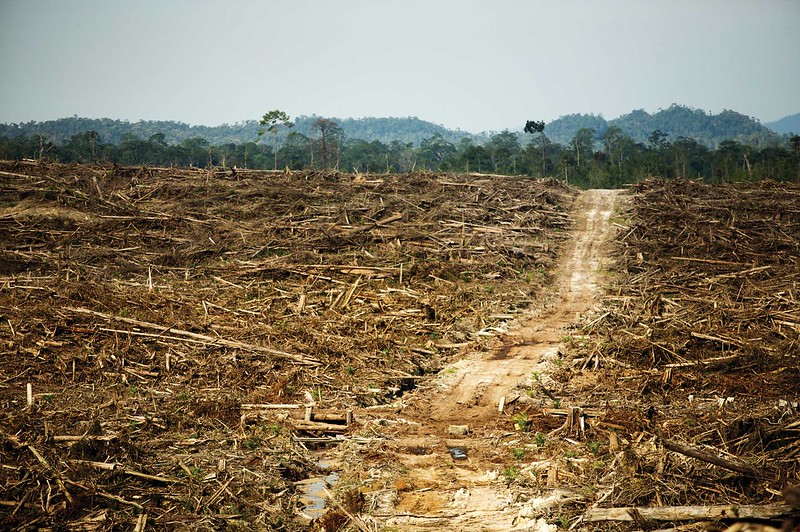
Deforestation in West Kalimantan, Borneo. Credit: David Gilbert / RAN (Creative Commons via Flickr)

A team of international lawyers has unveiled a definition of “ecocide” that, if adopted, would treat environmental destruction on a par with crimes against humanity.

After six months of deliberation, a panel of experts yesterday published the core text of a legal document that would criminalize “ecocide” if taken on by the International Criminal Court (ICC).

“This is an historic moment,” said Jojo Mehta, chair of the Stop Ecocide Foundation which commissioned the team of lawyers. “This expert panel came together in direct response to a growing political appetite for real answers to the climate and ecological crisis.”

Balancing Act

In the draft law, the panel of 12 lawyers defined ecocide as “unlawful or wanton acts committed with knowledge that there is a substantial likelihood of severe and either widespread or long-term damage to the environment being caused by those acts”.

If ratified by signatory states, ecocide would become the fifth international crime investigated and prosecuted by the ICC, alongside genocide, war crimes, crimes against humanity and the crime of aggression.

During a webinar marking the release of the document, panel co-chair Philippe Sands QC said the proposed definition would “cause us to think about our place in the world differently and it causes us to imagine the possibility that the law could be used to protect the global environment at a time of real challenge”.

“None of our international laws protect the environment as an end in itself and that’s what the crime of ecocide does,” Sands added.

Mehta described the draft law as a “necessary guardrail that could help steer our civilization back into a safe operating space”.

“Without some kind of enforceable legal parameter addressing the root causes of these crises, it’s hard to see how the Paris targets and the UNSDGs [United Nations Sustainable Development Goals] can possibly be reached,” she said.

The panel said that the idea of “unlawful or wanton” acts would allow judges and prosecutors to balance consideration of these elements. This idea of balance could be vital to the law’s success if it is to be agreed to by the states that subscribe to the ICC, according to co-chair Sands, who said it avoids “setting the bar too low and frightening states who we need to adopt the definition, or setting the bar so high that it becomes effectively useless in practice”.

A team of lawyers published its proposed definition of ‘ecocide’ on June 22, 2021. Credit: Stop Ecocide Foundation.
Defining ‘Ecocide’

Mehta acknowledged that ecocide legislation was likely to meet resistance from some richer nations, as it would inevitably force changes in corporate practice, “by making severe and reckless damage to nature illegal, and therefore unlicensable and uninsurable”.

This would close the door on “the old polluting ways”, she said. At the same time, Mehta argued, adopting ecocide legislation may be economically beneficial for stimulating innovation in green industries.

Sands said that oil spills, deforestation, and the authorization of new coal fired power stations could all potentially be considered ecocide under the definition.

However, specific acts such as these were left out of the final document, Mr Sands said, as doing so could run the risk of unintentionally omitting certain practices from the definition.

“This is not about catching every single horror that occurs in relation to the environment, but those horrors that cross a threshold and are of international concern,” he said, adding that it would be up to prosecutors and judges to form a view on whether a particular act is ecocide.

The campaign to criminalise ecocide, a term which was first coined in the 1970s, faces a number of further obstacles, with the entire process expected to take at least four years.

As a next step, any of the ICC’s 123 member states can propose the core text as an amendment to the Rome Statute treaty, before the annual assembly holds a vote on whether it can be considered for future enactment. It will then have to be approved by two thirds of the member states to go ahead, ahead of it being adopted by individual members into national jurisdiction.

This giant ‘inland ocean’ is Southern California’s last defense against drought

This giant ‘inland ocean’ is Southern California’s last defense against drought

Hemet, CA, Wednesday, June 16, 2021 - Diamond Valley Lake in Riverside County, the major drinking water storage facility for 18 million Southern Californians, as well as an insurance policy against just such a dry time as this. The Metropolitan Water District's 21-year-old reservoir holds enough drinking water to meet the region's emergency needs for six months. Lake employees ride near the marina. (Robert Gauthier/Los Angeles Times)
Diamond Valley Lake in Riverside County is the major drinking water storage facility for 18 million Southern Californians, as well as an insurance policy against dry times. (Robert Gauthier / Los Angeles Times)


Mechanical engineer Brent Yamasaki set out amid the recent blistering heat wave to take stock of the giant dams, pumps and pipes that support Diamond Valley Lake in Riverside County, the largest storehouse of water in Southern California.

The reservoir, which he helped build 25 years ago, is 4½ miles long and 2 miles wide and holds back nearly 800,000 acre-feet of water — so much that it would take 20,000 years to fill it with a garden hose.

Stand in a pontoon boat throttling up across its glassy surface, and the reservoir’s jaw-dropping vastness takes hold.

“It’s an inland ocean,” said Yamasaki, regional chief of operations for the Metropolitan Water District, “that Southern California can tap into in the event of a major disaster and in dry times like we’re in right now.”

A building at the edge of a lake.
A view of the Hiram Wadsworth pumping/generating station at Diamond Valley Lake. (Robert Gauthier / Los Angeles Times)


Pressed into service by a major earthquake, for example, the reservoir is designed to deliver enough drinking water to meet the needs of 18 million people from Ventura County to San Diego County for six months.

The facility near Hemet, about 90 miles southeast of Los Angeles, is the region’s hydraulic heart. Water flows in via a major artery: a conduit connected to State Water Project supplies at Lake Silverwood, 45 miles to the north.

It is also part of a galaxy of new laws, low-water landscaping strategies, storage projects, conservation efforts, wastewater recycling and desalination plants that Southern Californians have invested in to save water in an arid landscape prone to droughts.

A drought now in its second year, an early-season heat wave and a shortage of snowmelt in the Sierra Nevada range have drained hundreds of California’s reservoirs to their lowest levels in decades, raising anxieties about meeting demands for agriculture while preserving flows for habitat and endangered species.

A person stands next to a lake.
Brent Yamasaki, regional chief of operations for the Metropolitan Water District in Southern California, stands near an inlet-outlet tower on the north side of the lake. (Robert Gauthier / Los Angeles Times)


In May, those concerns spurred Gov. Gavin Newsom to declare a drought emergency in 41 counties in Northern and Central California — areas that are grappling with acute water supply shortages.

But water availability in Southern California “is expected to remain relatively stable over the next few years,” says Deven Upadhyay, the MWD’s chief operating officer. “Diamond Valley Lake is a key part of that forecast. Another is that customers aren’t using as much water as they used to.”

So far, there are no plans to turn off urban taps or launch a special public campaign urging people to conserve water.

Jay Lund, co-director of the Center for Watershed Sciences at UC Davis, said urban water use was reduced substantially during the 2012-16 drought and has remained at lower levels.

But the hot, dry weather, new environmental protections and cutbacks in water allotments do not bode well for wildlife and Central Valley farmers reliant on the all-important shrinking snowpack on the Sierra Nevada range.

Two boats on a lake.
The Metropolitan Water District’s 21-year-old reservoir holds enough drinking water to meet the region’s emergency needs. (Robert Gauthier / Los Angeles Times)


“The state should prepare for another five to six years of drought,” Lund said. “If you are a fish or a frog, you should be very worried about that. If you are a Central Valley farmer, you may want to fallow some fields or sell your land and start again someplace else.” But if you live in an urban area, you have a far larger hedge against drought, thanks to organization, money and political will, Lund said.

“If you live in Southern California, Diamond Valley Lake is an example of what it takes to be successful with water in one of the wealthiest, most densely populated metropolitan areas on Earth,” Lund said.

Amid a second consecutive year of drought, MWD officials are sending roughly 15% of the water stored at Diamond Valley Lake to customers elsewhere to supplement their declining allocations from the state.

Giant equipment.
Inside the Hiram Wadsworth pumping/generating station. (Robert Gauthier / Los Angeles Times)
A giant pipe.
A detailed view of an underground pipe inside the Hiram Wadsworth pumping/generating station. (Robert Gauthier / Los Angeles Times)


The withdrawals have caused the surface water level to drop a few feet, leaving a bathtub-style ring around the reservoir’s 20 miles of shoreline.

But MWD officials point to a stark contrast between 30 years ago, when a Southern California water shortage forced mandatory conservation measures, and today, when a shortage often merely means tapping reserves.

Back then, the MWD maintained about 600,000 acre-feet of water in storage, either in reservoirs or groundwater basins.

Construction work at the Diamond Valley Lake site — the largest earthen dam project in the U.S. — began in 1995.

An empty road next to a lake.
Diamond Valley Lake in Riverside County, the major drinking water storage facility for 18 million Southern Californians. (Robert Gauthier / Los Angeles Times)

Completed at a cost of $2 billion, the reservoir doubled Southern California’s water storage capacity and helped insulate its economy from the shock of a traumatic breakdown in the state’s aging water infrastructure.

Yamasaki recalled when the project was still under construction, and working at the site could be like walking through a herd of stampeding elephants.

Caravans of massive earthmovers bulldozed more than 110 million cubic yards of dirt into three earth-and-rock dams, up to 285 feet in height and two miles in length. Engineers yelled into hand-held radios to be heard over the clamor of heavy-duty helicopters hovering overhead. Cranes groaned and swayed to erect a 270-foot-tall concrete intake tower equipped with 18 stainless steel valves, each seven feet in diameter.

A moving boat on a lake.
Officials say the lake is at about 80% capacity. The water line on the banks reach as high as 30 feet. (Robert Gauthier / Los Angeles Times)


Amid the organized chaos, archaeologists uncovered evidence of Native American habitation dating back more than 7,000 years, and paleontologists unearthed the skeletal remains of mammoths, sloths, lions and camels that were later placed in a museum built on nearby MWD property.

In 2000, the MWD began funneling water from Northern California and the Colorado River Aqueduct into the reservoir. Eventually, the lake covered 4,500 surface acres and provided twice the capacity of Castaic Lake, the next largest reservoir in Southern California.

(Colorado River water has not been used since 2006 because of the threat of the quagga mussel, an invasive species found there, being transported to Diamond Valley Lake.)

A lake in front of a hill.
The scars remain on the hillsides from blasting operations during construction of the dam and reservoir. (Robert Gauthier / Los Angeles Times)


The facility includes the MWD’s largest hydroelectric power plant, where nine electrical generators produce up to 3.3 megawatts each.

Diamond Valley Lake opened in 2003 with a dedication ceremony that praised the “incredible amount of cooperative work it took to finish the job,” Yamasaki said.

After it ended, Yamasaki took his family for a spin in a pontoon boat.

As he motored out with undisguised pride, Yamasaki recalled telling them: “This is what all those long hours on the job and fighting traffic all the way home were all about.”

A Former NRA President Was Tricked Into Speaking At A Fake High School Graduation

BuzzFeed

A Former NRA President Was Tricked Into Speaking At A Fake High School Graduation

Instead, the 3,044 empty seats represented the students who did not graduate this year because they were killed by gun violence.

Amber Jamieson, BuzzFeed Reporter,                 June 23, 2021

Hundreds of empty white fold-out chairs
Change the Red

3,044 chairs placed in a stadium in Las Vegas to represent those seniors who didn’t graduate because they were killed by gun violence

In a speech to the James Madison Academy 2021 graduating class, David Keene, a former NRA president and current board member of the gun rights group, called on the teens to fight those looking to implement tighter gun restrictions.

“I’d be willing to bet that many of you will be among those who stand up and prevent those from proceeding,” he said, to a Las Vegas stadium of thousands of socially distanced chairs on June 4.

“An overwhelming majority of you will go on to college, while others may decide their dream dictates a different route to success,” said Keene. “My advice to you is simple enough: follow your dream and make it a reality.”

Except, they can’t. The students aren’t real. James Madison Academy doesn’t exist.

Without realizing it, Keene was actually addressing his comments to thousands of empty chairs set up to represent the estimated 3,044 kids who should have graduated high school this year and instead were killed by gun violence.

Change the Ref, an organization founded by Manuel and Patricia Oliver, whose son Joaquin “Guac” was killed in 2018 at Marjory Stoneman Douglas High School in Parkland, held a fake high school graduation for what they call “The Lost Class” of students.

They invited Keene and John Lott, an author and gun rights activist, to give remarks to a high school graduating class and filmed what they were told was a rehearsal in a stadium of empty chairs.

“Ironically, had the men conducted a proper background check on the school, they would have seen that the school is fake,” a Change the Ref spokesperson said in a press release.

Keene in a cap and gown is addressing a crowd in front of a Class of 2021 sign
Change the Ref

David Keene addressing the stadium

After filming, Keene and Lott were told the graduation was canceled and were not informed before the videos were released on Wednesday that the event was fake.

“You’re telling me the whole thing was a setup?” said Lott, when he responded to BuzzFeed News’ request for comment. “No, I didn’t know that.”

The stunt was designed to highlight how powerful gun advocates speak. “These two guys are part of the problem,” Manuel Oliver told BuzzFeed News. “We need to call them out, we need to show everyone — this is how they process the logic behind the gun industry.”

“We need to show we’re brave and we’re not afraid of these guys,” Oliver said. “We’ve already felt the worst possible situation. There’s no threat that can make me feel different.”

In videos released on Wednesday, Lott and Keene’s graduation speeches — in which they call for gun rights protections and talk about James Madison, the Founding Father who proposed the Second Amendment — are interspersed with audio from 911 calls about school shootings and the sound of gunfire.

Both Keene and Lott traveled to Vegas and were excited to speak, said Oliver, who did not meet either of them to make sure the stunt did not get disrupted by anyone recognizing him. Advertising agency Leo Burnett and production company Hungry Man helped create the event.

Lott said he was disappointed about the way the video was edited — he does support background checks but believes the current system mainly prevents law-abiding Black and Latino people from buying guns and should be adjusted.

“You want to stop dangerous people from getting guns, but you don’t want to stop the people who are potential victims from getting guns?” he asked.

Lott said he’d driven down from Montana for the speech, which took 13 hours, and showed emails where he’d been promised that he would receive $495, the equivalent of a plane ticket, but was never paid back. In the original email inviting him, Lott was told he was to be given the “Keeper of the Constitution” award.

Originally Lott wanted to give more general life advice in his commencement speech but had been encouraged to speak about James Madison and background checks. After the rehearsal, he was told the ceremony was canceled because of a credible threat of violence and after discussion with police. A week later, Lott tried to call the person who’d been in contact with him and the number was disconnected.

“Unfortunately, the fact they lied to me many times is kind of illustrated by the way they edited and chopped up the video that’s there,” Lott said. “Is that the way we want to have political debate in the country? Where people lie and creatively edit what people say?”

James Madison Academy isn’t a real school (a Google cache shows that a website was created to help ensure the stunt’s success). But the experience of thousands of families who’ve lost children to gun violence enduring graduations in recent months is very real, Oliver said.

“We lost Joaquin three months before his graduation. We know exactly the feeling of being there and receiving the diploma without your kid being there,” Oliver said. “Because we understand that, we know there are a lot of people going through that same experience right now.”

Sun Sentinel / Tribune News Service via Getty Images

Joaquin Oliver’s mother, Patricia, and father, Manuel, walk offstage after receiving their son’s diploma, which was awarded posthumously, during a graduation ceremony on Sunday, June 3, 2018, in Sunrise, Florida.

Oliver entwines his activism for gun violence prevention with art. To celebrate what would have been his son’s 21st birthday on Aug. 4, he is hosting Guacathon, a 21-hour festival of performances and exercise.

Gun violence is the leading cause of death for American middle and high school students. The 3,044 number was estimated by compiling firearm deaths by age since 2003 and matching it to student age.

“Never for a minute doubt that you can achieve that dream,” Keene said in his rehearsed speech to the seniors.

The contrast of knowing the students they are addressing are dead makes the comments appear deeply sarcastic, Oliver said.

“It shows them [as] weak,” he told BuzzFeed News. “But this is not about bragging about doing this to the former president of the NRA. No, this is about pushing our reps to move on with universal background check laws.”

UPDATE

This story has been updated with comments from John Lott.

Amber Jamieson is a reporter for BuzzFeed News and is based in New York.

This Louisiana Town Is A Bleak Forecast Of America’s Future Climate Crisis

This Louisiana Town Is A Bleak Forecast Of America’s Future Climate Crisis

Bridget Boudreaux didn’t know she was saying goodbye to her father last August when an ambulance took him away from her sweltering, hurricane-battered home near Lake Charles, Louisiana. The 72-year-old died alone after medics rushed him from a hospital to nursing homes, trying to find a facility that still had power after Hurricane Laura hit. But Boudreaux’s grief didn’t end there: It took her family another seven months to finally bury her father, as one disaster after another pummeled the riverbank city where she grew up.

With its 150-mile-per-hour sustained winds, Laura was the worst storm to hit the state in a century. Then, in October, Hurricane Delta rammed into Lake Charles as a Category 2 storm. Hurricane Zeta hit later that month. These were followed by a brutal ice storm that froze pipes and wrecked houses in February of this year. In May, historic rains flooded the area with upwards of 19 inches of water in a single day. Now, as the 2021 hurricane season gets underway, Boudreaux’s three-bedroom home — still askew on its foundation, with holes in its roof — is one of thousands in Lake Charles still waiting for a recovery that never happened.

“Right when you think you’re catching your breath, boom,” Boudreaux told BuzzFeed News. “You are constantly getting hit with these natural disasters, and sometimes it feels like you’re living in Revelations.”

Lake Charles exposes a grim, rarely discussed reality of climate change: Back-to-back or overlapping disasters, also known as compounding disasters, are becoming more frequent. And the US government’s largely hands-off approach to disaster recovery means the most vulnerable cities — those already struggling with aging infrastructure, housing shortages, pollution problems, segregation, and poverty — can’t cope.

Far from being an outlier, Lake Charles’s plight is “actually more of a window into the future,” said Jeff Schlegelmilch, director of Columbia University’s National Center for Disaster Preparedness.

Lingering heaps of debris render the city vulnerable to more flooding from future rains and storms.

And the city is close to its breaking point. People are exhausted, stressed, and hurting, and many cannot afford to change their circumstances. The crushing housing crisis has left families like Boudreaux’s living in unsafe conditions in their broken, mold-infested homes or in tents. Others have moved away. And lingering heaps of debris render the city vulnerable to more flooding from future rains and storms.

“There is a lot of PTSD in this community from what we have gone through,” Lake Charles Mayor Nic Hunter told BuzzFeed News. “In the past 25 years, Lake Charles had been through 11 federally declared disasters; five of those occurred just in the past year. We can debate what is causing it. But something is happening. You don’t have to be a scientist or a genius to see that.”

As the planet warms and people continue to build homes and businesses in high-risk areas, disasters have become more destructive, more frequent, and more costly. In 2020, the US experienced the most billion-dollar disasters on record. And it’s often low-income families and communities of color that are most impacted and get the least amount of support to build back.

Of the more than 56,000 homes statewide that were damaged by Laura, most were in Calcasieu Parish, home to Lake Charles. It’s one of the most segregated residential communities in the US, and its Black residents have among the highest rates of poverty and unemployment in the country. Against the backdrop of the COVID-19 pandemic, with many Black communities already clustered near the chemical plants and refineries spewing toxic emissions along the state’s Gulf Coast, the compounding disasters in Lake Charles epitomize how climate change disproportionately impacts those already most at risk.

“Lake Charles will be the poster child for climate racism,” said Kathy Egland, a climate rights activist who chairs the NAACP’s Environmental and Climate Justice Committee.

The parish now faces not only digging itself out of billions in damages, but also strengthening local defenses against future disasters. Though it has already received hundreds of millions from the Federal Emergency Management Agency (FEMA), the state’s request for an extra $3 billion from Congress — an unusual boost reserved for the nation’s worst disasters — remains in limbo.

“Lake Charles will be the poster child for climate racism.”

“What we are trying to do right now is use a water gun to put out a brush fire,” said Hunter, who has been begging leaders in Washington, DC, for help for months. Although President Joe Biden recently visited his city and met with him in person, the mayor is still waiting for the White House and Congress to push through the billions in additional disaster relief.

“We are languishing because of politics,” Hunter said.

The White House and the offices of Louisiana’s two senators have publicly come out in support of extra funding in the past month. But when asked about the holdup, none of them commented.

As the 2021 Atlantic hurricane season gets into full swing, Lake Charles residents worry that another major storm could mean they won’t ever fully recover.

“We are praying that we get a break this year so we can get on our feet and stay standing for a minute,” Boudreaux said. “If we get hit again, we will lose everything.”

More than nine months after Hurricane Laura’s devastating blow to Lake Charles, many of the city’s streets are still lined with homes covered by blue tarps.

“It’s startling, gut-wrenching to see how many people are living under blue tarps. It’s everywhere you look,” said Gary LeBlanc, cofounder of the nonprofit Mercy Chefs, which has provided food in disaster response situations for more than a decade. The group has visited Lake Charles multiple times over the past year. “We’ve been in places that had [Category 5 hurricane] damage, and we’ve never seen this many blue tarps a year after a storm.”

Chastity Bishop is one of those people. After a freak fire in her attic burned a hole in her roof last July, the 41-year-old, her fiancé, and her 9-year-old daughter moved to a rental on the southeastern side of town. When Hurricane Laura tore through the city, it caused severe wind and water damage in both structures. The rest of the year came with even more destruction: In October, Hurricane Delta flooded their rental home, and in February, the historic winter storm froze and burst its pipes. Then, as sheets of rain hit Lake Charles on May 17, Bishop watched in disbelief as water rose from the sidewalk to her porch to the windows before hitting her waist and submerging the house. Her fiancé helped rescue stranded residents, loading them into boats floating down the street, before they made it to higher ground a few miles away.

“It’s hard to explain the smell of flood — you have to live it to understand it.”

After the floods receded, Bishop’s family did everything they could to dry out the house with fans and dehumidifiers. But two weeks later, she and her daughter got sick from the mold. They had to evacuate so that the landlord could rip out all the flooring and walls.

“It’s hard to explain the smell of flood — you have to live it to understand it,” said Bishop, who grew up in Lake Charles. “And in these situations, you either live in a molded house or you come up with some money or find some family to live with.”

The family was able to shell out $1,500 to stay in hotels for a week before running out of money and moving back to their original home, where they’re living in their garage while they fix their tattered roof. They’ve set up a porta-potty, a gas grill, a microwave, and a mini fridge and are sharing a mattress. To bathe, they heat water on a burner. It’s tough, but there are much worse situations around them: Many people are still camping out in their yards and on their patios.

“People who didn’t need help for hurricanes need help now after floods, and no one is really helping,” Bishop said. “You are seeing people just quit, give up. People who are just trying to retire, who had all these plans, what do they do?”

It’s been hard for officials to tally the number of damaged structures or displaced residents in Lake Charles because the numbers keep shifting with each new disaster. Hunter estimates that Laura impacted 95% of the city’s homes and businesses and that 1,000 buildings still remain unoccupied just from that one hurricane. Hurricane Delta and the May floods then battered and rendered another 2,000 houses in the city unlivable.

“What we’re seeing is that the recovery cycle is continuing to get interrupted by disasters, so you can never quite get back up to that previous baseline,” said Columbia’s Schlegelmilch.

The main issue is supply. Building materials are so scarce and expensive that people are driving nearly 150 miles to Houston just to buy lumber. The direst scarcity is housing. Residents in ruined homes, as well as workers who are being hired to fix them, can’t find affordable places to live.

The housing situation “is a serious crisis,” said Tarek Polite, the director of human services for Calcasieu Parish, who is also in charge of recovery support for housing. “The supply that is left has become extremely expensive. Unfortunately, 50% of our low-income housing was damaged, and many apartment complexes are still fighting with insurance companies for payouts.”

“I have over 80 pictures of the damage,” Washington said. “You can’t tell me I can live there.

Lake Charles was already on the brink of an affordable housing shortage before the August hurricane struck, thanks to an industrial boom and an influx of chemical and energy plant workers, Polite explained. The result, he said, is a “new class of homeless individuals” who are toughing it out until they get money from the federal government.

Since Laura hit Lake Charles, the city has lost an estimated 6.7% of its population, according to Mark Tizano, the city’s community development director, though he said the real number is probably much higher. “People are living with relatives, gone out of town, anywhere they can lay their heads,” Tizano said.

For a small percentage of those who stayed, FEMA has helped fill the housing gap. As of mid-June, nearly 2,100 people statewide who were displaced after Laura and Delta were living in federally provided temporary housing.

But that’s not nearly enough, local officials say, and they don’t understand why the city has yet to receive more housing support from the federal government. “This is the first time we’ve seen this type of displacement after storms,” Tizano said. Months after Hurricane Rita slammed into Lake Charles in 2005, he added, “we were already quickly underway with a program to help people with housing.”

Monica Washington says she’s one of the lucky ones. After Laura’s intense winds tore open her condo, Washington, her 32-year-old daughter, and their two dogs and cat spent nearly a year hopping between hotels and sleeping crammed together in their car. She ended up spending about $21,700 on hotel bills, depleting her savings. Finally, they got a break on May 13 when FEMA placed them in one of the coveted temporary housing trailers outside of town.

It took months of back-and-forth with FEMA, and a formal request from Rep. Clay Higgins, to prove her family qualified for temporary housing. “I have over 80 pictures of the damage,” Washington said. “You can’t tell me I can live there. There’s no power.”

There wasn’t much to move into the trailer. Most of what they own has been destroyed, including Washington’s grandmother’s silverware and her daughter’s baby pictures. “Everything we own fits in one drawer,” she said. “Everything I have worked for my entire life, gone.”

To keep supporting her family, Washington, 58, will have to come out of retirement. She’s still fighting with her condo’s rental insurance for a payout and repeatedly emailing and calling FEMA about getting additional aid. “I can feel the anger building up when I think about what that storm did to us,” she said.

A big reason the country’s disaster response system is dysfunctional, experts say, is because the federal government’s role is limited. While FEMA is the country’s expert on emergency response, officials are adamant that their job is only to advise and support state and local governments as they rebuild, not take the lead. Local governments are usually the ones in charge of disaster response and finances.

But if it weren’t for nonprofit and volunteer organizations, many Americans, especially those with low incomes, would not make it through a disaster. These groups are on the ground first and often stay for months, filling a crucial void for survivors by providing food, healthcare, and other support, such as helping people navigate the confusing FEMA claims process.

“The issue with how the US approaches recovery is that it is highly reliant on people using their own resources to pay for their own recovery,” said Samantha Montano, an assistant professor in emergency management at Massachusetts Maritime Academy.

Insurance is “usually your best bet” to get enough money to rebuild your home, Montano explained. But, she later added, “there can be all kinds of problems actually getting payouts from insurance.”

Since many residents in Lake Charles were uninsured or renting their homes, they are responsible for trying to rebuild their lives using whatever savings they might have. And for those who did have insurance and have applied for assistance from FEMA, there is often a sizable gap between the reimbursement they receive and what it will cost to actually repair their homes.

FEMA also runs the nation’s flood insurance program, a broken system that has racked up billions in debt. Louisianans submitted more than 3,600 flood insurance claims for the three hurricanes combined, resulting in more than $120 million in funds paid by early June. More than 3,200 claims have already been filed in the aftermath of the May storms, roughly half of them coming from Calcasieu Parish, according to FEMA.

But most flood insurance policies do not repay people for hotels, food, or other costs incurred because their home was uninhabitable, meaning they have to pay those thousands of dollars on their own.

And it’s often people of color and those with low incomes who “get aid last,” said LeBlanc from Mercy Chefs. This heartbreaking reality has grown more widespread as climate change–fueled weather events have intensified in the last decade.

After 2020’s historic spate of disasters, a federal advisory panel published a scathing report that found FEMA’s disaster relief programs perpetually shortchange low-income communities and people of color while providing “an additional boost to wealthy homeowners.”

FEMA did not respond to questions from BuzzFeed News about Lake Charles’ slow recovery. “The people of Lake Charles, Calcasieu Parish and all of [Southwest] Louisiana have been through a difficult time,” Debra Young, a FEMA spokesperson, told BuzzFeed News in an email. Young added that FEMA has been a constant presence in the area and will “continue to work in Lake Charles to assist survivors by providing grants, loans and housing to those who are eligible.”

While Lake Charles is an extreme example, there are more than 50 towns and cities across the country currently dealing with compounding disasters, according to Mustafa Santiago Ali, vice president of environmental justice, climate, and community revitalization at the National Wildlife Federation.

“People don’t talk about it because they are Black, brown, and Indigenous people,” Ali said. “They are unseen and unheard.” He attributed the problem in part to decades of discriminatory housing policies, such as redlining, that forced people of color into floodplains and other disaster-prone areas.

“Many people ask, ‘Well, why don’t they just leave?’” said Egland, the NAACP climate justice chair. “They can’t. People who are economically challenged don’t have the luxury of choice; they’re bound by their situation.”

Egland, who lives in Gulfport, Mississippi, and survived Hurricane Katrina, said the ripples of climate racism are extensive and long-lasting. One event can impact food supply, agriculture, housing, access to healthcare, and education for years afterward, setting struggling communities even further back.

“You can get hit one time and maintain hope,” said LeBlanc. “You can get hit twice and still have hope and a promise for a new day. But getting hit a fourth time, a fifth time…people get to a place emotionally where it’s hard to find a bright spot. They’ve used them all up.”

For officials in Lake Charles and at the state level, getting Washington to provide enough financial aid and housing support to lift the community out of the shadow of these disasters feels impossible.

Last November, Louisiana Gov. John Bel Edwards sent a letter to former president Donald Trump asking for support, including asking Congress to approve nearly $3 billion to help rebuild homes and create more affordable rental housing. Without this funding, he wrote, “many neighborhoods and communities will not be able to recover.”

“The most disaster-stricken city in the most disastrous year in recent memory.”

The Trump administration did not fulfill his request. He then made a fresh appeal to Biden, writing to him in January to ask Congress to approve the money. The Biden administration appeared to take notice.

“When someone inevitably writes the book of what it was like to live through the past year, they might want to begin the story in Lake Charles,” said Treasury Secretary Janet Yellen following a roundtable with Hunter after the winter storm in late February. Lake Charles, she said, might have the unfortunate distinction of being “the most disaster-stricken city in the most disastrous year in recent memory.”

President Biden visited the city on May 6, using the Calcasieu River Bridge as a backdrop to announce his $2 trillion national infrastructure proposal, which could eventually help Lake Charles and places like it. He also announced $1 billion in additional funding for FEMA specifically to help communities prepare for future disasters. But weeks after his visit, there’s still no word on whether more recovery funds will be given to Lake Charles and the surrounding region.

For Mayor Hunter, the experience has left him feeling like his city is a “pawn” in a nonsensical political battle.

“Washington, DC, is failing American citizens in southwest Louisiana,” he said. “I have a problem with the narrative that it’s everyone else’s problem.”

As the days continue to tick by, bringing the area deeper into hurricane season, Boudreaux and other residents hope their funds and resilience will stretch until more help arrives. If she had a choice, Boudreaux would leave or buy a home, she doesn’t want to leave her family, her hometown. Her children and grandchildren are here. So she’ll continue to do what she and others in Lake Charles have gotten too good at doing: wait.

“We are good people, we work, we pay our bills, we live in a decent home, we go to church and do right by others,” she said. “Just seems everything is against us.”

Wildfires break out across Western states amid hottest week in history

Wildfires break out across Western states amid hottest week in history


Last week featured one of the worst June heat waves in decades across the West, shattering hundreds of daily records, as well as several all-time hottest temperatures recorded for the month.

Death Valley soared to a blistering 128 degrees, and Denver saw a rare hat trick of three 100-degree days in a row.

Tucson saw eight straight days of temperatures 110 degrees or higher, breaking the record for the number of consecutive days above that barrier and making it the city’s hottest week. Phoenix endured a record-setting six straight days of temperatures 115 or higher.

All of this heat contributed to a high fire danger which came to fruition over the weekend when multiple blazes broke out in several Western states including California, Colorado, Arizona and Oregon.

The Willow Fire in Monterey County, which forced evacuations Friday, continued to burn over the weekend sending smoke billowing into the Bay Area.

The Cow Fire in Shasta County also prompted evacuation orders, and at one point Sunday required a large air tanker to be diverted off the Willow Fire for increased firefighting efforts.

On Monday, 7 million people were under red flag warnings across six Western states where the combination of hot temperatures, wind gusts to 40 mph and bone-dry humidity lead to a critical fire threat.

Las Vegas was included in the risk zone for the fire danger.

The most recent heat wave was focused over portions of the Four Corners, desert Southwest and Southern and Central California. Next week, however, the area of most exceptional heat could park over northern California and the Pacific Northwest.

California Wildfires (Ringo Chiu / via AP)


This will lead to another week with a high risk of wildfires due to the already desiccated landscape void of much precipitation whether falling from the sky or locked in the mostly-melted snowpack.

With ground fuels already sitting at highly flammable and record-dry levels, all experts can do is warn people of the impending danger and hope for the best in what has already proven to be an early and destructive start to the Western wildfire season.

With climate change making heat waves three times more likely compared to 100 years ago and contributing to the current 22-year megadrought, wildfire seasons are starting earlier and lasting longer into the year. As the gap closes, experts say there isn’t so much a defined wildfire season in the West anymore, but instead it lasts year round.