One evacuated and the other chose to stay. 2 south Louisiana residents share the horror of Hurricane Ida.

One evacuated and the other chose to stay. 2 south Louisiana residents share the horror of Hurricane Ida.

Marquise Francis, National Reporter & Producer      August 31, 2021


Amber Russo of LaPlace, La., was attending performing arts classes at Louisiana State University last Tuesday, excited to be getting her senior year of college underway. She had no idea that her world would be turned upside down less than a week later, when Hurricane Ida wreaked havoc across the state.

“It was so short notice, because it popped up out of nowhere,” Russo, 22, told Yahoo News. “I had to convince my mom at first to leave. I told her, ‘We’ve got to get the hell out of here.’ … This time last week I was going to college, having theater classes and having voice lessons, and this week none of that is happening.”

On Sunday evening — the 16th anniversary of Hurricane Katrina, which devastated New Orleans and much of the Gulf Coast — Ida made landfall in Louisiana as a Category 4 hurricane. The storm and its 150 mph winds stretched across 45 miles. It destroyed countless homes and businesses and caused so much flooding that boats replaced cars in some parishes.

The entire city of New Orleans lost power Sunday night, and it may take weeks to restore in some areas. Two people died and 10 others were injured after a rain-battered highway collapsed in George County, Miss., late Monday.

But no community suffered more destruction than LaPlace.

LaPlace, the largest city in St. John the Baptist Parish, is located along the east bank of the Mississippi River, with a population of just under 30,000 people. The majority-Black parish was in the direct path of Hurricane Ida, leaving many residents stranded.

“The streets of LaPlace looked like a raging river, all while buildings swayed from the high winds, metal ripped away from rooftops and traffic lights looked like they would fly away into Oz during the catastrophic storm,” Newsweek reported.

Residents wait to be rescued by first responders from floodwaters in LaPlace, La., on Monday.
Residents wait to be rescued by first responders from floodwaters in LaPlace, La., on Monday. (Luke Sharrett/Bloomberg via Getty Images)


Russo, her mom and two brothers are thankful to have gotten out of town. Now they’re more than 400 miles away from home in Hot Springs, Ark., a city they’ve never been to before, after evacuating from their home early Sunday morning. They’re staying in a rented space for now, thankful for two $50 donations they’ve received online that have helped them get by so far.

“It’s been stressful,” Russo said, adding that she’s previously been diagnosed with schizophrenia. She called the situation “scary, leaving us wondering what’s going to happen.”

The Russo family is hoping for the best when they return home this Friday, which Amber said they would do, “power or no power.” A neighbor who stayed in town told Russo that while her family’s backyard shed was destroyed, their home appears to be intact. Russo admits that many others are in a worse predicament than her family, especially those who were unable to flee Ida’s path.

All Sunday evening, Twitter users shared their addresses in desperation for help, many having to retreat into their attics as floodwaters rose 5 feet or higher in some homes. Dozens of messages, with some iteration of “Send help!” or “Help needed!” or “Urgent help!,” were shared like digital SOS alerts on social media to anyone who could offer any type of aid.

“It’s the worst that I’ve seen in the 20 years I’ve been in the parish,” Randal Gaines, a state representative who represents St. Charles and St. John the Baptist parishes, told NBC News Monday. “And we’ve seen several hurricanes.”

A first responder walks through floodwaters left by Hurricane Ida in LaPlace, La., on Aug. 30, 2021.
A first responder walks through floodwaters left by Hurricane Ida in LaPlace, La., on Monday. (Luke Sharrett/Bloomberg via Getty Images)


By Monday morning, Parish President Jaclyn Hotard told the Times-Picayune that there were no known fatalities from “one of the most catastrophic” storms to hit St. John the Baptist Parish. Nearly 800 people were rescued through Monday, according to parish officials.

“We have been tested before, and we overcame,” Hotard said. “Please continue to pray for our community and know that we have all hands and resources on deck.”

While thousands of people evacuated the southern part of Louisiana ahead of the storm, many chose to hunker down. Some did so out of stubbornness, while others stayed because they had nowhere else to go.

Jessica Bowers and her family — including her two children — decided to outlast the hurricane from inside their mobile home in LaPlace. After not evacuating during Katrina and now Ida, Bowers told NBC affiliate KPRC-TV that the family is thankful to be alive.

“Never again,” she said. “Leave, evacuate.”

For those who lived through Katrina, Ida is one big nightmare all over again. But this time the spotlight wasn’t solely on New Orleans and its challenges.

“Don’t forget it isn’t JUST New Orleans that was destroyed,” one person tweeted. “Houma. LaPlace. Franklin. Baton Rouge. And many more. … These cities need attention and help too!”

First responders rescue residents from floodwater left behind by Hurricane Ida in LaPlace, Louisiana, U.S., on Monday, Aug. 30, 2021. [left] Floodwaters left behind by Hurricane Ida in LaPlace, Louisiana, U.S., on Monday, Aug. 30, 2021. [right] (Photo Illustration: Yahoo! News; Photos: Luke Sharrett/Bloomberg via Getty Images (2))


One of the most active people on Twitter sharing the addresses of those in need along with resources was Keva Peters Jr. of St. Rose, La. Despite riding out a “scary and nerve-racking” Sunday night in his own home, he also continued to help others.

“I’m still trying my best to help others even while dealing with my own issues, but disasters like this take the community,” Peters told Yahoo News. “I was younger for Katrina, but I do remember how bad the aftermath was.”

Since Sunday, Peters has been “taking it day by day,” as the small group he is now with is low on water and food, and has no power and limited amounts of money.

“I was in a house with six people during the storm, and we had to hunker down in the stairway,” he said. “The upstairs floors were caving in, and everything on top was going to topple over us. The eye of the storm was about 15 miles west of us. Luckily, we were able to escape to a neighbor’s house after the roof caved in.

“A lot of people are shaken up badly, including myself,” he added. “The smallest sounds make my heart drop now, after going through the storm.”

St. Rose, a community of less than 10,000 people located in the St. Charles Parish along the east bank of the Mississippi River, is currently under a curfew that lasts from 8 p.m. to 5 a.m., as first responders work to clean up the debris and assess damages in the community. Peters says that most people are without cell service, but Wi-Fi still works.

“What we’re going through isn’t unbearable, and we’re hopeful,” he said.

Patricia Henderson stands in the stairway at her home, which lost its roof during Hurricane Ida, on Tuesday in Ponchatoula, La.
Patricia Henderson stands in the stairway at her home, which lost its roof during Hurricane Ida, on Tuesday in Ponchatoula, La. (Sean Rayford/Getty Images)


The devastation of past natural disasters, including Katrina, explains why Peters has been so determined to help others. He noted that many people who rode out the hurricane had no other choice, including himself.

“My mom couldn’t evacuate, so I had to choose between evacuating or staying with her. So of course I stayed, even though our town was under mandatory evacuation,” he said. “Others had no family to go to or no money to spend on leaving. Others who left had dealt with Katrina and didn’t want to experience this again.”

Cover thumbnail photo illustration: Yahoo News; photos: Patrick T. Fallon/AFP via Getty Images (2)

‘It will be a challenge to come back from this’: Wildfire threatens to forever change clear blue waters of Lake Tahoe

‘It will be a challenge to come back from this’: Wildfire threatens to forever change clear blue waters of Lake Tahoe


The raging wildfire that is encroaching upon Lake Tahoe threatens to mar the pristine alpine lake that draws approximately 15 million visitors a year to its cobalt waters and sandy beaches, remote mountain trails and world-class ski resorts.

The Caldor Fire in California grew to more than 191,000 acres Tuesday, prompting the evacuation of 22,000 residents in South Lake Tahoe and the partial shutdown of casinos next door in Stateline, Nevada.

Beyond the immediate concern for public safety and the thousands of homes at risk is the threat fire poses to the clarity of and scenery around the world-renowned lake.

While wildfires have wreaked devastation across the West in recent years, it’s hard to imagine a more unsettling scenario than fire bearing down on Lake Tahoe, which Mark Twain described as “the fairest picture the whole earth affords.”

The lake straddles the California-Nevada line high in the Sierra Nevada. The top end is about 35 miles south of Reno and the lower end, which the fire is threatening, is about 100 miles east of Sacramento.

“Lake Tahoe is one of the more unique gems of lakes on the planet,” said Sudeep Chandra, a biology professor and director of the Global Water Center at the University of Nevada, Reno.

At more than 1,600 feet deep it is among the largest lakes in the country. Tahoe is about 22 miles long with more than 70 miles of shore, some of which is undeveloped and protected for outdoor recreation, and some of which is tightly packed with housing, gift shops and towering hotel casinos.

Caldor Fire:Roads packed after South Lake Tahoe ordered to evacuate; all national forests in California closed due to wildfires

A sad irony: Wildfires are burning up trees meant to fight climate change: ‘It’s definitely not working’

“It has a very high transparency,” Chandra said of the famed waters. “You can see almost 100 feet below the surface. It is one of the deepest lakes in the world. From a cultural viewpoint, it is important for the native peoples. The Washoe Tribe lived in the basin. And now it is important for recreation and the local economy.”

A fire burning to the shores of the lake threatens that famous clarity.

South Lake Tahoe, a California city on the south shore, is the most populous area within the basin, and is the area the Caldor Fire is encroaching upon as it moves northward.

Tahoe is known for year-round activities.

The Nevada side attracts people with its casinos. The four on the south end of the lake — Harrah’s Lake Tahoe, Harvey’s, Hard Rock Lake Tahoe and Montbleu Casino Resort — were limiting gambling Monday, with evacuation orders just across the state line in neighboring South Lake Tahoe and many workers needing to tend to affairs at home.

More: Escape from South Lake Tahoe: Evacuees seek shelter from Caldor Fire in Northern Nevada

Caldor Fire updates: Highway 50 packed as thousands flee South Lake Tahoe

Warmer months bring throngs of people seeking Tahoe’s beaches, hiking and biking trails, boating and a variety of water sports such as kayaking and paddle boarding. Among the areas evacuated Monday were the famed Emerald Bay as well as the Tahoe Keys Marina.

Winter brings travelers seeking deep snow at about a dozen ski resorts around the lake, some of which offer views of the deep blue water from the slopes.

Already the flames have enveloped hillsides around Sierra-at-Tahoe Resort. Webcam footage appeared to show firefighters using a lift at Kirkwood Mountain Resort in their fight to keep the flames at bay.

Heavenly Ski Resort straddles the state line, with lifts and trails in both states. Monday’s evacuation orders included the area around its California operations.

Fire comes during busy season

The end of summer is usually among the busiest tourism periods for Lake Tahoe, and tourism is the key industry for the region.

The entire lake basin’s annual economy is estimated at $5 billion, with visitor services making up about 62% of that, said Carol Chaplin, president and CEO of the Lake Tahoe Visitors Authority.

But occupancy for Tahoe-area hotels already fell to below 30% in the past week because smoke from the fires drove visitors away. That was before officials asked travelers to avoid the area.

Now many hotels either are housing evacuees or emergency workers in town because of the fire, Chaplin said.

Normally hotels would be between 80-90% full this time of year heading into Labor Day.

Tahoe attracts most visitors from the San Francisco Bay Area, but increasingly sees visitors from across the United States and, prior to COVID-19 travel restrictions, international markets.

“We are an international destination,” said Chaplin, who also is a trustee of the Reno-Tahoe International Airport. “Our largest (international) markets are the United Kingdom, Australia, but we were starting to see India, China, South America.”

Tahoe was more popular than usual amid the COVID-19 pandemic the past two summers, even with limited international travel.

“We didn’t feel that because of the additional interest in outdoor recreation areas during COVID,” Chaplin said, adding that lodging and the airport have operated above 2019 levels during the pandemic. “People are really getting out there and using the trails like never before.”

Chaplin said her immediate thoughts were with people who already had lost homes to the fire, as well as those still in the fire’s path. But the long-term impact to the travel industry and all the people it employs also gives her concern.

Choking on smoke: South Lake Tahoe, usually bustling now, is empty

Many travelers to Lake Tahoe from California drive from Sacramento on U.S. 50, several miles of which were overrun by the Caldor Fire.

“The approach will be different,” Chaplin said of road trips to the area once the fire is under control. “It will be a challenge to come back from this.”

Water clarity makes lake famous

Tahoe is known for its clarity, with Twain writing in his 1872 book “Roughing It” that drifting on the lake in a rowboat was akin to floating from a balloon because the water was so transparent.

And while development and pollution have clouded the water somewhat since that time, the lake is still clear enough to see to depths of more than 62 feet on average, according to the latest report from the Tahoe Regional Planning Agency, which monitors environmental quality in the basin. The best measurements taken last year afforded 80 feet of visibility.

“It is really a national treasure,” said Sean McKenna, executive director of the Division of Hydrologic Sciences at the Desert Research Institute in Reno. “It has stayed that way through a very concerted effort and management practices.”

Maintaining the lake’s clarity has been a concern since the 1960s, and the municipalities around the lake have taken extra precautions, such as pumping all of their wastewater outside of the lake’s basin for treatment, to ensure the water stays clear, he said.

The Tahoe Regional Planning Agency also enforces a variety of restrictions on development, often to the chagrin of home owners and developers, with the intent on keeping runoff out of the lake and maintaining Tahoe’s clarity.

The focus lately is on storm water entering the lake, carrying with it sediment and nutrients that can affect lake clarity.

“Something we worry about a lot is the post-fire hydrologic effects,” McKenna said. “The soils become less permeable, so that could lead to more runoff and debris flows, more sediment. A severe fire going through there will change all the year-round activities significantly.”

What researchers don’t know is whether the effects will last for a short term or continue for years.

In 2007, the Angora Fire burned just over 3,000 acres in the Tahoe basin, destroying 254 homes. That fire’s impacts on the watershed were studied and found to be minimal.

“It is safe to say it is not an easy fix and will take resources and energy above and beyond what we have contributed to restoration to date,” Chandra said.

Ecologically speaking, Tahoe was home to Lahontan cutthroat trout, which wildlife officials are reintroducing to waterways in the region, and remains home to 10 endemic invertebrates, Chandra said.

The smoke from wildfires alone, which have been hammering the region for weeks, can affect the lake by “reorganizing” fisheries and aquatic plants, Chandra said.

But the other concern is that a wildfire in the basin will leave a burn scar, allowing more runoff into the lake that can bring more nutrients and soil, clouding the water and providing nutrients for algae that can further affect the clarity.

“While these are challenging times certainly for the people of Lake Tahoe, the lake also has had the remarkable ability to recover over time,” Chandra said, citing deforestation in the 1800s that increased sediment in the lake.

That problem was largely resolved by the 1950s when the forest had regrown, he said.

“We are facing the same situation today, a catastrophic and in this case unintended event is occurring that has the potential to change the long term clarity in the lake,” Chandra said.

“The science-supported management activities that we need to plan after this fire can help us understand the short- and long-term impacts to the lake’s fragile clarity and — where to go next.”

McCarthy threatens companies that comply with Jan. 6 probe’s phone records requests

McCarthy threatens companies that comply with Jan. 6 probe’s phone records requests


Minority Leader Kevin McCarthy on Tuesday threatened to use a future GOP majority to punish companies that comply with the House’s Jan. 6 investigators, warning that “a Republican majority will not forget.”


McCarthy called out Rep. Adam Schiff (D-Calif.), Rep. Bennie Thompson (D-Miss.) and House Speaker Nancy Pelosi for what he called “attempts to strong-arm private companies to turn over individuals’ private data.” He asserted that such a forfeiture of information would “put every American with a phone or computer in the crosshairs of a surveillance state run by Democrat politicians.”

The select panel investigating the Jan. 6 insurrection took its first step in obtaining phone records on Monday, asking an array of telecommunications companies to save records relevant to the attack — a request that could include records from some lawmakers. More than 30 companies, including Apple, AT&T and Verizon, received a request for records from April 1, 2020, to Jan. 31, 2021.

“The Select Committee is investigating the violent attack on the Capitol and attempt to overturn the results of last year’s election,” a committee spokesperson said in a statement, responding to McCarthy’s threat. “We’ve asked companies not to destroy records that may help answer questions for the American people. The committee’s efforts won’t be deterred by those who want to whitewash or cover up the events of January 6th, or obstruct our investigation.”

On the substance of McCarthy’s complaint, congressional committees have routinely used subpoena power to obtain data from private companies, including phone records, emails and other communications. The Jan. 6 committee has not identified whose communications it is seeking, but it has made clear that members of Congress are among the potential targets, which would be a departure from past practices — one that members of the panel have said they believe is warranted in this case.

The Democratic-led committee’s investigators are looking for a fuller picture of the communications between then-President Donald Trump and members of Congress during the attack. McCarthy is among the Republicans known to have spoken with Trump on Jan. 6.

Republicans have already slammed the investigation’s interest in phone records as an “authoritarian” overreach by Democrats. Though two anti-Trump Republican lawmakers, Reps. Liz Cheney of Wyoming and Adam Kinzinger of Illinois, sit on the select panel, most of the party voted against the committee’s creation, and GOP senators filibustered a bill that would have formed an independent commission to investigate the Capitol insurrection.

“If these companies comply with the Democrat order to turn over private information, they are in violation of federal law and subject to losing their ability to operate in the United States,” McCarthy said in Tuesday’s statement. “If companies still choose to violate federal law, a Republican majority will not forget and will stand with Americans to hold them fully accountable under the law.”

Schiff said on Tuesday that McCarthy’s threat was “premised on a falsehood.”

“He’s scared. And I think his boss is scared,” Schiff said on MSNBC. “They didn’t want this commission and this select committee to go forward. They certainly didn’t want it to go forward as it is on a bipartisan basis, and they don’t want the country to know exactly what they were involved in.

“And Kevin McCarthy lives to do whatever Trump wants. But he is trying to threaten these companies, and it shows yet again why this man, Kevin McCarthy, can never be allowed to go anywhere near the speaker’s office.”

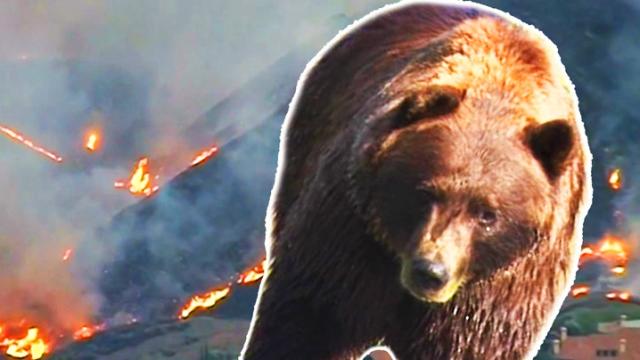
Firefighters say the raging Caldor Fire that sparked evacuations in the Lake Tahoe region may not be fully contained until mid-September

Firefighters say the raging Caldor Fire that sparked evacuations in the Lake Tahoe region may not be fully contained until mid-September

  • Firefighters say the Caldor Fire in Northern California will take another two weeks to contain.
  • The blaze has already consumed over 191,000 acres and destroyed over 600 buildings.
  • Five people – three first responders and two civilians – have been injured in the fire.

Firefighters say the massive Caldor Fire in Northern California will likely take another two weeks to contain, according to the California Department of Forestry and Fire Protection.

The wildfire has already consumed over 191,000 acres and destroyed over 600 buildings, fire officials said Tuesday.

Over 33,000 structures are threatened by the blaze that has prompted a series of evacuations orders and warnings in the area and caused gridlock on nearby highways as residents fled.

Five people – three first responders and two civilians – have been injured in the fire.

Cal Fire’s hourly updates on the fire’s trajectory and evacuation orders have warned there is a “potential threat to life and/or property.

What happens to animals during wildfires

It’s hard to imagine any good could come from a wildfire. But for some plants and animals, there are more benefits to wildfires than meets the eye.

A video shared on social media on August 27 shows the blaze casting an eerie, orange haze over the Lake Tahoe area.

The situation comes as firefighters in California face multiple active wildfires amid an ongoing drought. The Dixie Fire, currently the largest active wildfire in the state, grew to over 765,000 acres since it began in mid-July, Cal Fire said.

This story is developing. Please check back for updates.

To Save Lake Tahoe, They Spared No Expense. The Fire Came Over the Ridge Anyway.

To Save Lake Tahoe, They Spared No Expense. The Fire Came Over the Ridge Anyway.

San Marcos firefighters work to save a burning cabin in Strawberry, Calif. on Aug. 30, 2021. (Max Whittaker/The New York Times)


SOUTH LAKE TAHOE, Calif. — They sent thousands of firefighters, 25 helicopters and an arsenal of more than 400 fire engines and 70 water trucks. Yet the fire still advanced.

They dropped retardant chemicals through an ash-filled sky and bulldozed trees and brush to slow the march of the flames through the steep and rugged terrain of the Sierra Nevada. Yet the fire still advanced.

Bursting across a granite ridge into the Lake Tahoe basin, the Caldor fire now threatens tens of thousands of homes and hotels that ring the lake.

On Tuesday, the smoke-choked streets of South Lake Tahoe, the most populous city on the lake, were deserted, save for police patrol cars and an occasional convoy of fire vehicles. Thousands of residents and tourists had been evacuated the day before.

The lake, renowned for its bright blue hues and the evergreen forests that surround it, was smothered in a slate of sickly orange-gray haze. On the Nevada side of the border, which has not yet been evacuated, one industry was still limping along: A trickle of gamblers sat at slot machines to the whooshing sound of large air purifiers that attempted to keep out the pungent smoke. The air quality index was nearing 500, a level considered hazardous.

Battling the Caldor fire has been humbling and harrowing for California firefighters. Experts believe the challenge is a cautionary tale for future megafires in the West and lays bare a certain futility in trying to fully control the most aggressive wildfires.

“No matter how many people you have out on these fires, it’s not a large enough workforce to put the fire out,” said Malcolm North, a fire expert with the U.S. Forest Service and a professor at the University of California, Davis.

“You can save particular areas or particular homes,” North said. “But the fire is pretty much going to do what it’s going to do until the weather shifts.”

On Monday, propelled by strong winds, the fire crested a granite ridge that officials had hoped would serve as a natural barrier. Embers leapfrogged past firefighting crews and descended toward the valley floor just miles from South Lake Tahoe. By early Tuesday, the fire had taken hold in the Tahoe basin. Stands of pine ignited by flying embers were fully engulfed in flames, casting a bright orange glow into the night sky.

It was only the second time, officials said, that a wildfire that began on the western slopes of the Sierra Nevada crossed into the eastern side. The first was also this summer: the Dixie fire, the second largest in California history. No deaths have been reported in either fire.

The authorities say about 27,000 firefighters were battling blazes across the country, about 15,000 of them in California. All national forests in California will be closed by Tuesday night. Hundreds of soldiers and airmen and several military aircraft have been sent by the National Guard. But the resources are no match for the ferocious blazes, which continue to outpace firefighters and explode across the state.

The blazes in Sierra forests have exposed the domino effects of climate change on firefighting challenges: Frequent heat waves and overall higher temperatures have desiccated West Coast flora, making it more vulnerable to large fires. Droughts have weakened trees, encouraging insect infestations that have contributed to the deaths of close to 150 million trees. This creates more fuel for fires.

Scientists say there is also a correlation between global warming and the increased wind conditions that have fanned fierce wildfires across the state. And they point to a need for better forest management, thinning out some of the thickest woods.

What characterizes the megafires of recent years, experts said, is their tendency to launch embers far ahead of the main fire front — sometimes by miles — and for the embers to land on parched terrain that is instantly combustible. This can rapidly expand the perimeter of the fire, which hops over one of the main containment tools: the bulldozed areas, known as fire breaks, that create a line of containment.

The Tubbs fire in October 2017 jumped over what would normally be considered a formidable fire break — a six-lane freeway — and went on to incinerate 1,200 homes in the residential community of Coffey Park.

“These spot fires are causing a lot of havoc,” said Craig Clements, a professor of meteorology and the director of the Wildfire Interdisciplinary Research Center at San Jose State University, a group that is modeling the spread of the Caldor fire.

“There’s just fire all around,” Clements added, “and that makes it very difficult to suppress.” As a measure of how combustible the landscape has become, other scientists have calculated that embers have a 90% chance of becoming spot fires once they land.

The chaotic way these megafires spread was on display in the hills above South Lake Tahoe on Monday. Kyle Hukkanen was leading a crew of 12 inmate firefighters armed with axes, shovels and chain saws. They bounded down a steep hillside of granite boulders and evergreen trees until they reached a spot where wisps of smoke were rising from the ground.

They dug and sprayed the smoldering fire with water before ascending back to their idling truck. “This is not good,” Hukkanen said as gusts of wind fed the spot fire on the hillsides. The radio crackled with reports of spotting farther down the mountain toward South Lake Tahoe, and Hukkanen and his crew disappeared down a smoke-shrouded road.

Fire specialists say some firefighting tools are appropriate on a smaller scale but outmatched by the huge fires of recent years.

In the hills and gullies where the Caldor fire has burned 190,000 acres over the past two weeks, helicopters dropped large buckets of water — thousands of gallons at a time — but they hardly seemed a match.

“That’s great for protecting a neighborhood, but when you think about the size of a 750,000-acre fire, that’s nothing,” North, the U.S. Forest Service expert, said of dropping water or retardant in large swaths of forest.

He and others added that the Sisyphean task of fire containment pointed to a desperate need for better mitigation.

Controlled burns that embrace Indigenous methods to use “good” fire to fight destructive megafires has become an increasingly accepted method in recent years, but experts say that the state has a lot of catching up to do.

Until then, attempts to suppress fire are inevitably required to save lives and property. In the past year, California spent more than $1 billion on emergency fire suppression efforts but slashed its prevention budget. This year’s budget includes more than $500 million for fire prevention, Gov. Gavin Newsom said in April.

Still, resources remain strained. The U.S. Forest Service has struggled to retain federal firefighters, who earn around half of their state counterparts’ pay at Cal Fire. When the Caldor fire ballooned to 6,500 acres in mid-August, just 242 firefighters had been assigned to it. Eventually, hundreds more were redeployed from the Dixie fire, which has so far razed more than 800,000 acres and was still less than half contained by Tuesday morning.

On the receiving end of the worsening fires are the residents who wonder where, if anywhere, will be safe from wildfire.

Among the evacuees from South Lake Tahoe on Monday were Darren Cobrae, a real estate investor, and his partner, Stephanie Cothern, who was driving the couple’s car toward the Nevada state line.

Inside were bags of clothing, two large parrots and three dogs, Banana, Freddy and Copper.

Cobrae said he moved to South Lake Tahoe from Southern California, where his home was nearly burned in a wildfire in 2007.

“I figured I would be safe in this city,” Cobrae said. “And now this,” he said, pointing to a sky thickening with smoke.

A tale of two governors: COVID outcomes in Florida and Connecticut show that leadership matters

A tale of two governors: COVID outcomes in Florida and Connecticut show that leadership matters

Executive power is often circumscribed by complex geopolitical dynamics, volatile financial markets, disruptive new technologies, and tragic natural disasters. But key leaders still can have a profound impact—positive or negative—on millions of constituents. A comparison of Florida’s and Connecticut’s governors in their contrasting approach to the resurgence of the coronavirus reveals the consequential potential of individual leaders.

This summer, tragic public-health news was exacerbated by historic levels of political grandstanding by several Southern state governors. The rapid spread of the COVID-19 Delta variant was driven by a surge of new cases in Florida, Texas, and Missouri—as these states accounted for an astounding 40% of new U.S. coronavirus cases despite representing only 17% of the nation’s population. Ignoring science and evidence, the governors of these three states have taken a rigid, cynical stance, forbidding vaccine mandates by employers and mandatory indoor mask usage—even in cases where such mandates were intended to protect young schoolchildren ineligible for vaccines.

In Florida, Gov. Ron DeSantis even threatened to cut off funding and educators’ salaries for schools that required protective masks in compliance with Centers for Disease Control and Prevention (CDC) guidelines. Nonetheless, 10 school districts defied DeSantis by issuing mask mandates. Similarly, Disney, Carnival Cruise Line, and Royal Caribbean joined Norwegian Cruise Line in defiance of DeSantis’s ban on passenger vaccination passports, despite being threatened with fines of $5,000 for each such violation of his decree.

Florida’s hospital emergency rooms and intensive care units are now reaching capacity, with 90% of ICU beds occupied, the majority of them by COVID patients. More than 90% of these inpatients are unvaccinated; overall only one-third of Floridians between ages 12 and 64 are vaccinated.

DeSantis’s response to such wide swaths of the unvaccinated Florida population suffering from the highly contagious Delta variant has been to consult with anti-mask advocates who promote the horse parasite drug ivermectin and hydroxychloroquine, unproven elixirs, instead of scientifically developed, safe, and highly effective vaccines.

In contrast, Connecticut Gov. Ned Lamont has been relying on a science-based approach from the outset of the pandemic. He pulled together globally renowned virologists, microbiologists, epidemiologists, and business leaders in March of 2020, just as the pandemic was declared, and kept such advisory panels working to solve problems by relying on science, evidence, and smart management, independent of ideology. Accordingly, he worked with both top Trump administration and later top Biden administration leaders to keep manufacturing flowing without a day’s interruption, ensuring the needed supply of protective material to open schools early. Lamont also catalyzed a new nationwide weekly meeting of the nation’s governors, favoring quiet, effective, bipartisan, cross-sector problem-solving instead of seeking the public limelight.

As Lamont recently explained, “Our reopen committee included the scientists and the big business leaders that we needed to help us, and I’ve tried to do that throughout state government—get a wider variety of people at the table.” He did not mock scientists, intimidate public officials, or threaten business leaders as foils for political grandstanding. This resulted in the nation’s highest or second highest vaccination rates for every age group, from 75% upward—including 90% of seniors—and one of the lowest COVID-19 death rates in the nation (Connecticut is 35th out of 50 by that measure).

This focused approach to problem-solving and collaborative leadership style allowed Lamont to call for vaccine mandates in schools, nursing homes, and for all state employees recently—astoundingly without protest from unions, partisan political leaders of either party, or business leaders. Lamont pointed to heat maps of Southern state infections with overflowing hospitals and declared, “Sadly, in many cases, they have hospitals in different regions who are overwhelmed or close to being overwhelmed. We’re not gonna let that happen in Connecticut, and that is not happening in Connecticut.”

Just glancing at the two contrasting CDC charts of public health outcomes for Florida versus Connecticut below—showing the impact of the same disease, in the same country, over the same time period—illustrates the difference leaders can make. Even though Connecticut was hard hit in the pre-vaccine phase of the pandemic, the post-vaccine outcomes are dramatically different. This difference is not explained by age patterns: The average age in both states is about 41 years old, but the health outcomes of Connecticut residents tower over those of Floridians in every age bracket.

Florida COVID deaths, year to date

Commentary-FL-outcomes
Florida COVID deaths

Connecticut COVID deaths, year to date

Commentary-CT-outcomes
Connecticut COVID deaths


Sourcehttps://covid.cdc.gov/covid-data-tracker. Note that the blue axis in the charts above is not normalized by population and the orange axis has a slightly different scale in the two charts.

As the Delta variant rages across the country, the divergence of health outcomes is especially notable between the Northeast and the South. The map below shows that the divergence between Connecticut and Florida is reflected in a wider region surrounding each state. A year and a half into the pandemic, we have accumulated a great deal of knowledge and experience in designing effective public health responses. The divergence of health outcomes across the country is the result not of differences in the prevalence of the Delta variant, population demographics, access to health care, or environmental conditions; it is attributable at this point principally to differences in leadership.

Commentary-US-heat-map
COVID heat map


Leadership matters. Leadership matters not only in determining the effectiveness of government’s response to the public health crisis, but in shaping both individual opinions and the sense of common purpose.

Ideological extremism has caused needless deaths in our country. It is tragic that political differences among the states have resulted in a sharp divergence with respect to health-protective behaviors—vaccination and masking among them. Ideological differences and bitter political rivalries exist in all democracies, and individual attitudes toward vaccination and masking vary widely within all regions of the world, but nowhere else are these attitudes as closely aligned with political ideologies as they have become in the U.S. The U.K., India, and Israel are just three examples: In each country, the pandemic remains a grave danger, but each country’s political cleavages, no less intractable than in the U.S., are largely unrelated to health-protective behaviors. In the U.S., the political reinforcement of resistance to public health measures has hardened individual attitudes, as shown in the chart below, worsening the pandemic and its impact on American lives and the economy.

Commentary-Vaccine-status-and-intent
vax status and intent


The contrasting leadership approaches between the governors of Connecticut and Florida are not explainable by educational sophistication: Each governor holds college and graduate school degrees from both Harvard and Yale. The differences are not explained by credentials but rather by competence and character. Ron DeSantis is a smart person cynically willing to play the role of an anti-intellectual for political gain, while Ned Lamont is trying to do his job to save the lives of his constituents, seeking the best scientific knowledge and evidence we have gathered on the pandemic.

As Walt Disney, one of the business leaders who shaped modern Florida, once said, “Courage is the main quality of leadership, in my opinion, no matter where it is exercised.”

Jeffrey Sonnenfeld is a senior associate dean and professor of management practice at the Yale School of Management, where he is president of the Chief Executive Leadership Institute. Anjani Jain is deputy dean for academic programs and professor in the practice of management at the Yale School of Management.

Aerial photos: Hurricane Ida’s devastation

Aerial photos: Hurricane Ida’s devastation

Colin Campbell and Yahoo News Staff         


Communities across Louisiana and Mississippi are taking stock of the damage brought by Hurricane Ida, one of the most powerful storms to ever hit the U.S. mainland.

The death toll ticked up to four on Tuesday, including two people killed Monday night when a highway collapsed in Lucedale, Miss. Highway Patrol Cpl. Cal Robertson told the Associated Press that vehicles landed on top of each other as they plunged into a hole created by the rural highway turning into a darkened pit.

In Louisiana, the entire city of New Orleans is without power due to damage inflicted on the area’s electrical grid after Ida made landfall Sunday. It may take weeks to restore power to hundreds of thousands of people there and in nearby areas.

A truck drives through the flooded streets of Indigo Estates after Hurricane Ida moved through Monday, Aug. 30, 2021, in LaPlace, La. (Steve Helber/AP Photo)
A truck drives through the flooded streets of Indigo Estates in the aftermath of Hurricane Ida on Monday in LaPlace, La. (Steve Helber/AP)


Rescue and repair crews continue to navigate flooded streets and buildings reduced to rubble, a product of 150 mph winds and heavy rainfall blanketing the area. Many buildings’ roofs were either destroyed or ripped off entirely. Boats are the preferred vehicles for some neighborhoods previously navigated by cars.

Sweltering conditions brought by the summer heat have added a further layer of complexity to rescue efforts. The AP reported that a heat advisory was issued for the New Orleans region, “with forecasters saying the combination of high temperatures and humidity could make it feel like 105 degrees Fahrenheit (41 degrees Celsius) on Tuesday and 106 on Wednesday.” In the many neighborhoods without electricity, air conditioners are unable to tame the heat. Many of the same areas lack refrigeration due to power outages, and still others lack running water.

Scientists say human-caused climate change is altering the makeup of storms like Hurricane Ida, with rising ocean temperatures leading to higher wind speeds, and rising air temperatures leading to more rainfall. Flash floods caused significant fatalities and devastation in Tennessee, Germany, India and China earlier this year, among other places across the globe.

A house with no roof is seen after Hurricane Ida hit Houma, Louisiana, the United States, Aug. 30, 2021. With stranded people waiting for rescue on damaged roofs, flooded roads blocked by downed trees and power lines, and over one million people without power through Monday morning, Hurricane Ida has wreaked widespread havoc since its landfall in southern U.S. state of Louisiana on Sunday. (Nick Wagner/Xinhua via Getty Images)
A house with no roof after Hurricane Ida hit Houma, La., is seen on Monday. (Nick Wagner/Xinhua via Getty Images)
In this aerial photo, RVs are flipped over in an RV park after Hurricane Ida on August 31, 2021 in Paradis, Louisiana. Ida made landfall August 29 as a Category 4 storm southwest of New Orleans, causing widespread power outages, flooding and massive damage. (Scott Olson/Getty Images)
RVs flipped over in an RV park in the aftermath of Hurricane Ida on Tuesday in Paradis, La. Ida made landfall Sunday as a Category 4 storm southwest of New Orleans, causing widespread power outages, flooding and massive damage. (Scott Olson/Getty Images)
Homes and streets are overwhelmed by water on August 30, 2021 in Lafitte, Louisiana. (Michael Robinson Chavez/the Washington Post via Getty Images)
Homes and streets overwhelmed by water on Monday in Lafitte, La. (Michael Robinson Chavez/the Washington Post via Getty Images)
An aerial photo made with a drone shows damage caused by Hurricane Ida in La Place, Louisiana, USA, Tuesday. The Category 4 storm came ashore on 29 August causing heavy flooding, downing trees, and ripping off roofs. (Tannen Maury/EPA-EFE/Shutterstock)
Damage caused by Hurricane Ida is seen in LaPlace, La., on Tuesday. (Tannen Maury/EPA-EFE/Shutterstock)
An aerial photo made with a drone shows damage caused by Hurricane Ida in LaPlace, Louisiana, USA, 31 August 2021. The Category 4 storm came ashore on 29 August causing heavy flooding, downing trees, and ripping off roofs. (Tannen Maury/EPA-EFE/Shutterstock)
A building damaged by Hurricane Ida in LaPlace, La., on Tuesday. (Tannen Maury/EPA-EFE/Shutterstock)
Boats are seen lying on the earth in the aftermath of Hurricane Ida, Monday, Aug. 30, 2021, in Lafitte, La. The weather died down shortly before dawn. (David J. Phillip/AP Photo)
Boats lying on land in the aftermath of Hurricane Ida on Monday in Lafitte, La. The weather died down shortly before dawn. (David J. Phillip/AP)
Roof damage is seen in the aftermath of Hurricane Ida, Monday, Aug. 30, 2021, in Houma, La. (David J. Phillip/AP Photo)
Significant roof damage in the aftermath of Hurricane Ida on Monday in Houma, La. (David J. Phillip/AP)
A flooded city is seen in the aftermath of Hurricane Ida, Monday, Aug. 30, 2021, in Lafitte, La. (David J. Phillip/AP Photo)
A flooded Lafitte, La., in the aftermath of Hurricane Ida on Monday. (David J. Phillip/AP)
Damge is seen in the aftermath of Hurricane Ida, Monday, Aug. 30, 2021, in Houma, La. (David J. Phillip/AP Photo)
Structures flattened by Hurricane Ida in Houma, La., on Monday. (David J. Phillip/AP)
Damge is seen in the aftermath of Hurricane Ida, Monday, Aug. 30, 2021, in Houma, La. (David J. Phillip/AP Photo)
Barns and buildings damaged by Hurricane Ida in Houma, La., on Monday. (David J. Phillip/AP)
The roof of an apartment building is seen torn off by Hurricane Ida in Houma, Louisiana, the United States, Aug 30, 2021. With stranded people waiting for rescue on damaged roofs, flooded roads blocked by downed trees and power lines, and over one million people without power through Monday morning, Hurricane Ida has wreaked widespread havoc since its landfall in southern U.S. state of Louisiana on Sunday. (Chine Nouvelle/SIPA/Shutterstock)
An apartment building with the roof torn off by Hurricane Ida in Houma, La., on Monday. (Chine Nouvelle/SIPA/Shutterstock)
An Airboat glides over a city street in the aftermath of Hurricane Ida, Monday, Aug. 30, 2021, in Lafitte, La. (David J. Phillip/AP Photo)
An airboat glides over a city street in the aftermath of Hurricane Ida on Monday in Lafitte, La. (David J. Phillip/AP)

Power out for more than a million in Louisiana as weakened Ida moves through Mississippi

NBC News

Power out for more than a million in Louisiana as weakened Ida moves through Mississippi

Late Monday, two people were killed and 10 were injured after a 50-foot stretch of highway collapsed in George County, Mississippi.

By Rachel Elbaum and Eric Ortiz       August 31, 2021 

Video: blob:https://www.nbcnews.com/790fde02-2a33-45f3-b5e2-c27ef4e53807

More than a million homes and businesses remained without power Tuesday after Hurricane Ida tore through Louisiana and Mississippi, bringing with it floods, destruction and the deaths of at least four people.

The powerful storm, now a tropical depression threatening to produce flash flooding and tornadoes across the South and Mid-Atlantic, was one of the strongest hurricanes ever to make landfall in the region. While New Orleans was largely spared the catastrophic flooding that officials had feared, some communities across southern Louisiana remained cut off by water and blocked roadways, complicating rescue efforts as crews scramble to clear debris and begin the weekslong task of restoring electricity.

Louisiana Lt. Gov. Billy Nungesser, who planned to fly out to some of the harder hit areas on Tuesday with Gov. John Bel Edwards, said that the number of deaths could rise.

“Knowing that so many people stayed behind in places like Grand Isle and Lafitte, where flood waters have devastated those areas, we expect there will be more people found that have passed,” he said on NBC’s “TODAY” show.

“Too many people always ride these storms out and take their lives into their hands,” he added.

The latest on Ida:

Late Monday, two people were killed and 10 were injured after a 50-foot stretch of highway collapsed in George County, Mississippi, an area that had torrential rains in the past 24 hours. Three of the injured were critical, according to Mississippi Highway Patrol Trooper Calvin Robertson. Authorities have not identified the two people who died.

Earlier in the day, at least two deaths in Louisiana were linked to the storm: a 60-year-old man who died in Ascension Parish when a tree fell on his home, and a man who drowned after driving through a flooded road, authorities said.

Image: Emergency crews at the scene of a road collapse in George County, Mississippi where at least two people were killed late Monday.
Emergency crews at the scene of a road collapse in George County, Mississippi, where at least two people were killed late Monday. Mississippi Highway Patrol


Another 71-year-old Louisiana man was presumed dead after being attacked by an alligator on Monday in an area that flooded during Hurricane Ida, the St. Tammany Parish Sheriff’s Office said. A woman in Slidell said her husband was walking in floodwaters around noon when he was attacked by the large alligator, the sheriff’s office said.

She said she pulled him to safety and then went to get help in a boat, but when she returned, he was not on the front steps.

The weather system made its way to northern Mississippi early Tuesday, bringing with it heavy rains and the threat of floods from the Gulf Coast to the Tennessee and Ohio valleys and into the Mid-Atlantic on Wednesday, according to the National Hurricane Center. More than 71 million people are under flash flood watches from the Gulf Coast to the Northeast.

August 31, 2021

The hurricane center also warned of the threat of tornadoes across eastern Alabama, western Georgia and the Florida Panhandle. As the remnants of Ida move farther north, major East Coast cities, including Washington, Philadelphia and New York, are expected to receive heavy rainfall and the threat of flash flooding Wednesday and Thursday.

Ida made landfall as a Category 4 storm on Sunday, with howling 150 mph winds on the same date that the devastating Hurricane Katrina struck 16 years earlier.

More than 1 million homes and businesses in Louisiana remained without power for a second day on Tuesday. Entergy, one of the region’s main power utilities, tweeted Monday that it “will likely take days to determine the extent of damage to our power grid … and far longer to restore electrical transmission to the region.”

Officials at Louis Armstrong New Orleans International Airport said that there would be no flights in or out of the city on Tuesday, and there were about 200 canceled flights.

Utility crews were working around the clock to restore power. Nungesser said that some areas will come back on in days, while others will take weeks to get back on the grid.

“The good news is that Louisiana helps our neighbors out,” he said on “TODAY.” “With Covid on top of this, the stress on families is incredible. It’s going to be a long road and we’re going to need a lot of help.”

On Monday, dozens of rescue missions were launched across southern Louisiana to evacuate people stranded in their homes. Operations to answer the hundreds of rescue calls were hampered by inoperable 911 lines, now restored, and poor cellphone service reported throughout southeastern Louisiana.

The Louisiana National Guard activated 4,900 Guard personnel and was positioned to send nearly 200 high-water vehicles and more than 70 rescue boats and 30 helicopters. By Monday afternoon, nearly 200 people and their pets had been rescued after crews checked about 400 homes, Edwards said at a news conference.

Image: A Louisiana National Guard truck assists people in Laplace, Louisiana on Monday after Hurricane Ida came ashore.
A Louisiana National Guard truck assists people in Laplace, Louisiana on Monday after Hurricane Ida came ashore.Patrick T. Fallon / AFP – Getty Images


New Orleans did not experience the same level of devastation that was caused by Katrina, the 2005 storm that breached the city’s levees and led to some 1,800 deaths.

Mayor LaToya Cantrell tweeted Monday that the system of levees, which was built and designed after Katrina, “held the line” against the storm surge and the “worst case scenario did not happen.”

The new levee system “performed exceptionally well,” Chip Kline, the chairman of the state Coastal Protection and Restoration Authority, told NOLA.com. “The system’s first real test, and it did exceptionally well.”

Louisiana residents who stayed in the area throughout the storm woke up Monday to scenes of destruction. Theophilus Charles, 70, lost the home in Houma his grandmother built to Ida.

“I ain’t got a dry spot in the house. My roof fell. I lost all my clothes, my furniture, my appliances, everything,” he told Reuters.

“I lost everything that I had. I mean I lost everything. And nothing I can do with this, ain’t no repair, you know,” Charles said.

Louisiana’s medical system, already stretched to capacity by the Covid-19 crisis, was another major cause for concern both before and after the storm hit. Four hospitals have evacuated patients, while many others are surveying damage to their buildings.

Dr. Mark Kline, physician-in-chief of Children’s Hospital New Orleans, said Tuesday that the facility was running on six generators dedicated to patient care, while nonessential areas where being left in the dark.

“The best thing I can tell you is that all of the children remained safe and sound inside the hospital throughout the hurricane, and so things are going well for our patients,” Kline said on MSNBC.

The hospital had some flooding on the ground floor as well as water leaking through the roof. Kline said that he, along with much of the hospital’s staff, have yet to go home to survey the damage to their own properties.

Experts are also concerned that the Louisiana’s high levels of circulating coronavirus, coupled with the low vaccination rates and the forced close proximity that occurs during a storm, could set the stage for an explosion of Covid-19 cases.

These Images Show Just How Bad Hurricane Ida Hit Louisiana’s Coastline

NPR – Weather

These Images Show Just How Bad Hurricane Ida Hit Louisiana’s Coastline


Jeremy Hodges climbs up the side of his family’s destroyed storage unit on Monday, in Houma, La., which sits just along the coast of Louisiana. David J. Phillip/AP

Hurricane Ida’s fierce Category 4 winds and torrential rain left the Louisiana coastline badly beaten.

Images of the affected areas days after the storm show crushed homes, debris scattered across streets and flooded neighborhoods.

As cleanup is underway, officials are warning residents who evacuated not to return to their homes just yet because of the severe damage.

A man checks a broken gas pipe with a firefighter on Monday after Hurricane Ida tore through Bourg, La. Nick Wagner/Xinhua News Agency via Getty Images

When the storm made landfall, its winds were as high as 150 mph and tore roofs from homes and ripped trees from their roots. It was eventually downgraded to a tropical depression by Monday as it moved across Mississippi.

Hurricane Ida hit New Orleans on the 16th anniversary of Hurricane Katrina, the costliest storm on record in U.S. history. Katrina, which caused massive damage to New Orleans, was a Category 3 storm when it hit. Though a weaker storm (winds during Hurricane Katrina reached 125 mph), it was larger in size than Hurricane Ida, which experts say is why Katrina caused so much damage.

Thomas James Hand comforts Alzile Marie Hand, whose house in Houma, La., was seriously damaged by Hurricane Ida over the weekend. Go Nakamura/The Washington Post via Getty Images

The winds knocked out power in New Orleans, including, temporarily, the city’s 911 emergency response system, and in surrounding areas. More than 1 million residents were still without power by early Tuesday. It’s unclear when power will be restored to most residents, but officials believe it may last more than a month for some people.

A resident carries a dog through floodwaters left behind by Hurricane Ida, on Monday in LaPlace, La. The storm, wielding some of the most powerful winds ever to hit the state, drove a wall of water inland on Sunday. Luke Sharrett/Bloomberg via Getty Images

Hurricane Ida has been blamed for the death of at least two people as of Monday, according to Louisiana’s Department of Health. One man drowned after he attempted to drive his car through floodwaters in New Orleans. The other victim was found Sunday night after being hit by a fallen tree.

Gov. John Bel Edwards said he expects the number of fatalities to increase as recovery efforts continue.

A National Guard vehicle drives through flooded LaPlace, La., on Monday. Emergency and first responder teams, including the U.S. Coast Guard and National Guard, continue operations on Tuesday. Luke Sharrett/Bloomberg via Getty Images

President Biden approved Louisiana’s request for a major disaster declaration on Sunday, allowing federal funding to reach residents and business owners.

Emergency and first responder teams, including the U.S. Coast Guard and National Guard, continued operations on Tuesday. Search and rescue teams from more than 15 states are conducting operations in hard-hit areas, according to Federal Emergency Management Agency.

The U.S. Coast Guard conducts flyovers near Galliano, La., and elsewhere in the state to assess damages and identify hazards.

U.S. Coast Guard Heartland

FEMA also reminded residents to be cautious of news shared on social media being attributed to the agency.

Its website warned residents about false rumors being shared on online alleging the agency is paying for hotels for people who evacuated because of the storm. The agency said people must first apply for FEMA assistance online before receiving aid.

Marquita Jenkins stands in the ruins of her mother’s Be Love hair salon, which was destroyed by Hurricane Ida whose eastern wall went right over LaPlace. Michael Robinson Chavez/The Washington Post via Getty Images

Officials continue to remind Louisianans that bouncing back from Ida’s destruction is a marathon — not a sprint.

In New Orleans, the city put out a call for hot and nonperishable meals, generators and charging stations and offered options for those interested in donating to assist residents.

First responders prepare to launch rescue boats to transport residents out of flooded areas of LaPlace, La., on Monday. Luke Sharrett/Bloomberg via Getty Images

Hurricane Ida Slams Native Communities in Louisiana as New Orleans Loses Electricity & COVID Rages

Democracy Now

Hurricane Ida Slams Native Communities in Louisiana as New Orleans Loses Electricity & COVID Rages

Story – August 30, 2021


Hurricane Ida has completely knocked out power to the city of New Orleans and reversed the flow of the Mississippi River after it hit southern Louisiana and Mississippi, flooding the area with storm surges. The Category 4 storm hit on the same date Hurricane Katrina devastated the area 16 years earlier. “This is a storm like no other,” says Monique Verdin, a citizen of the United Houma Nation and part of the grassroots collaborative Another Gulf Is Possible. “This is a part of South Louisiana that is losing land at one of the fastest rates,” Verdin notes. She also discusses how the storm hit the area as “Delta has been raging in the Mississippi River Delta.”

Thomas James Hand comforts Alzile Marie Hand, whose house in Houma, La., was seriously damaged by Hurricane Ida over the weekend. Go Nakamura/The Washington Post via Getty Images

Transcript
This is a rush transcript. Copy may not be in its final form.


AMY GOODMAN: This is Democracy Now!, democracynow.org, The War and Peace Report. I’m Amy Goodman.

Hurricane Ida, one of the most powerful storms ever to hit the United States, roared ashore Sunday in southern Louisiana in an area dominated by the oil industry that’s also home to many Native communities. The storm brought a seven-foot storm surge, 150-mile-per-hour winds and up to two feet of rain to parts of the Gulf Coast. It was so powerful, it completely knocked out power to a million people, including the entire city of New Orleans, and reversed the flow of the Mississippi River. The Category 4 storm hit on the same day Hurricane Katrina devastated the area 16 years ago. It’s been blamed for at least one death, and more are expected.

A system of dikes and levees that protects the New Orleans region from rising waters is reportedly holding, for now, much of it built since Katrina. But still, it is underfunded, and officials say they could be overwhelmed by a forecasted 20 inches of rain.

Louisiana’s Gulf Coast is a major oil and gas hub, with 17 oil refineries, two liquefied natural gas export terminals, a nuclear power plant and many Superfund sites. Hurricane Ida made landfall near Port Fourchon, the oilfield service hub for almost all of the Gulf of Mexico and not far from the city of Houma.

In a minute, we’ll be joined by Monique Verdin, a citizen of the United Houma Nation, who just evacuated — the Houma Nation, one of the largest Native American tribes in North America. First, this is a trailer, though, for a documentary Verdin co-produced in 2012 called My Louisiana Love.

MONIQUE VERDIN: Our people have survived the natural cycle of floods and storms for centuries.

NARRATOR: In the bayous and swamps of Southeast Louisiana, filmmaker Monique Verdin explores her Native Houma roots.

MONIQUE VERDIN: I want to keep living on our land, but I’m inheriting a dying delta. Our love ties us to this place and makes us feel responsible to care for it.

NARRATOR: As Monique discovers, they’re battling their deadliest storm yet: the explosive growth of the oil and gas companies in the area.

DELTA RESIDENT: You see, the more gas and oil you got underneath your ground, the higher you’re going to sit. The more they’re going to pump, the lower your land is going to go.

CLARICE FRILOUX: We’ve been treated bad throughout the years, but this could destroy our tribe as a whole.

AMY GOODMAN: The trailer for the PBS documentary My Louisiana Love, co-produced by our guest, Monique Verdin, a citizen of the United Houma Nation. She has evacuated for Hurricane Ida. She’s also part of the collaborative Another Gulf Is Possible, which is now organizing mutual aid efforts to provide essential needs, repairs, supplies to the areas hit by Hurricane Ida.

Monique, thanks so much for joining us. I know this is a very difficult time. Can you explain the extent of the devastation that you’re hearing about, not only in Houma, but all over the area — a million people without power, all of New Orleans in the dark, people reporting they’re up to their chest in water?

MONIQUE VERDIN: Well, Amy, we’re really just starting to hear from folks. I know that many have just completely lost their homes. Many of our fishermen rode out the storm on their boats. We haven’t heard from a number of them. And there’s still — you know, everyone was waiting for the sun to come up, and that’s just happening. So, we’re not really sure, but we do know that there’s extreme flooding happening just to the west of the city. And all of those communities, all of the bayou communities, where the United Houma Nation, but also the Atakapa-Ishak of Grand Bayou and Plaquemines Parish, the Pointe-au-Chien Indian Tribe, the Biloxi-Chitimacha Confederation of Muskogee, Bands of Grand Caillou and Dulac, and the Isle de Jean Charles — you know, these are communities that often get left out of the news and have been weathering storms for many years. But this is a storm like no other.

AMY GOODMAN: So, talk about that. And talk about Houma. Talk about your community. And was a complete evacuation done of the Houma Nation?

MONIQUE VERDIN: No. The Houma are not ones to run from a storm. You know, we have boats and lands to take care of. And so, many people usually stay. More people evacuated this time than ever before. And we’ve all been scattered to the wind. Everyone went to whichever direction that they could, if they could. And many just went from the low-lying areas, that are just inside risk reduction levee systems, to higher grounds.

But they, too, you know, have — everyone is exhausted from just riding out the storm and the relentless wind and rains, that I’m hearing has been a very humbling experience. But we know that the disaster is only beginning to unfold. Hurricane Katrina really taught us that. Yes, the storm comes through, but the disaster keeps going for many years to come. And decisions get made in these moments, when people are completely disoriented and just trying to figure out how to get home. And at this moment, and knowing that all of Southeast Louisiana is out of power, when we get home and how we get home is a big question.

AMY GOODMAN: Can you talk about your family members who did not evacuate? Are you able to even be in contact with them? I mean, being in the dark is more than the actual darkness of the night, of course, as, as you said, people cannot communicate. Much of the rescue efforts can’t even start until today in daylight.

MONIQUE VERDIN: Yes. I have not spoken to very many. Social media is spotty, and I’m getting reports that cell service is also very spotty or nonexistent. I did get a text message in the middle of the night from a cousin saying that he didn’t think that he could get out of his home without a chainsaw, and also has — having no communication, so trying to be there for folks. But, you know, this is — everyone’s been kind of in shock. And now no one has power. No one has cell service. So, communication is going to be key.

AMY GOODMAN: Can you talk about the community that your relatives live in, called Big Woods, where there’s a waste pit in the flood areas? What does this mean? And we’re talking about scores of toxic sites that are directly in the hurricane’s path.

MONIQUE VERDIN: Yes. So, in the Yakni Chitto — it’s the “Big Country” between the Atchafalaya and Mississippi Rivers, where the majority of the Houma Nation still reside, at the ends of the bayous — this is a part of South Louisiana that is losing land at one of the fastest rates. And just to say to the audience, Louisiana is losing land at one of the fastest rates on the planet. The statistic is, every 100 minutes, a football field disappears from our shores. Of course, that’s a calculation divided over time, multiplied by disaster. So, you know, this is what we’re up against just in general.

And where these waste pits are, which are taking offshore oil and gas waste and “treating” it in these open-air pits, is just north of some of the fastest-deteriorating land on the planet and just south of what is the Houma Navigation Canal, which is a man-made canal. And this pit — these pits have been there for a very long time. And with every storm, this low-lying area, because of all of the levee infrastructure, too, that has been added since Hurricane Katrina, water goes towards the path of least resistance. And Grand Bois is left out of that levee system in a big way.

So, I haven’t gotten any reports from family in Grand Bois yet. I’m hoping to hear something today. The last photo I saw was a picture of my cousin’s house that was just completely flattened. So, what the water is like there, I’m not sure. Overnight, that’s when, you know, the surge just keeps — it had been pushing up against the levees all day. So —

AMY GOODMAN: And can you talk about climate change crashing into COVID? I mean, the reports on the South — Louisiana, Texas, Arkansas, Florida — you have oxygen running out in hospitals, where the patients who are dying are younger and younger. What does this mean at this time of the hurricane?

MONIQUE VERDIN: Delta has been raging in the Mississippi River Delta. Our hospitals have already been at capacity for weeks now. I read a report that one of the hospitals in Thibodaux actually — their generators, they lost power for a while and were having to manually pump oxygen into people who were in ICU and on ventilators that were not hooked up to the electrical system.

And it’s going to get really hot and humid, so wearing a mask is not ideal, and people are with each other and in each other’s homes at this time of evacuation and in the times of the disaster aftermath. You know, community is what gets you through this. And being in a time when we’re supposed to be social distancing and not being in the same space is really hard, especially when you’re going to start needing to rip out your walls and pull out your floors or, yeah, try to salvage what you have left.

The original content of this program is licensed under a Creative Commons Attribution-Noncommercial-No Derivative Works 3.0 United States License. Please attribute legal copies of this work to democracynow.org. Some of the work(s) that this program incorporates, however, may be separately licensed. For further information or additional permissions, contact us.