Kyiv may face ‘complete shutdown’, nearly half Ukraine’s energy system disabled
Max Hunder – November 18, 2022
KYIV, Nov 18 (Reuters) – Kyiv city authorities warned on Friday that a “complete shutdown” of the capital’s power grid was possible and Ukraine’s prime minister said almost half the country’s energy system had been disabled by Russian attacks.
Russia, which invaded Ukraine in February, has stepped up attacks on Ukrainian energy facilities in recent weeks, and pounded power infrastructure across the country in heavy air strikes on Tuesday and Thursday.
“Unfortunately, Russia continues to carry out missile strikes on Ukraine’s civilian and critical infrastructure,” Prime Minister Denys Shmyhal said after talks with European trade commissioner Valdis Dombrovskis. “Almost half of our energy system is disabled.”
Kyiv is one of the cities worst affected by the missile and drone strikes, which have at times knocked out electricity, heating and water in many areas as winter approaches.
Engineers have been racing to repair the power grid in the capital, which had its first snowfall of the season on Thursday.
“We are preparing for different scenarios, including a complete shutdown,” Mykola Povoroznyk, deputy head of the Kyiv city administration, said in televised comments.
He did not say what would happen in the event of the power grid being completely shut down, but officials have said they are not considering evacuating any cities.
FALLING TEMPERATURES
Ukraine has denounced the attacks on its energy infrastructure as Russian terrorism. Russia dismisses the criticism and describes the attacks are a response to Kyiv’s “unwillingness” to hold peace talks.
Ukraine’s state grid operator Ukrenergo wrote on Friday that the system was “withstanding the blows with dignity,” but later declared emergency outages in addition to cuts that had already been scheduled top help carry out repairs.
“The enemy has already carried out six large-scale missile attacks: October 10, October 11, October 17, October 31, November 11 and November 15,” Ukrenergo said.
Temperatures across Ukraine have plummeted below zero Celsius (32 Fahrenheit) and there is concern that the situation will become worse in coming months, when temperatures can fall much lower and frosts set in.
“Due to low temperatures, electricity consumption is increasing significantly. Therefore, now, more than ever, we need to save electricity,” Povoroznyk said.
Blackouts have become frequent and the government has urged the public to conserve energy by reducing use of domestic appliances such as ovens, washing machines, electric kettles and irons. (Reporting by Aleksandar Vasovic and Max Hunder, writing by Max Hunder, Editing by Timothy Heritage)
With new standards draft, critics say Virginia’s Youngkin wants to rewrite history
Marquise Francis, National Reporter – November 18, 2022
Virginia Gov. Glenn Youngkin at a campaign rally in Smithfield, Va., on Oct. 27. (Alex Wong/Getty Images)
A number of cultural groups, historians and Virginia residents are sounding the alarm about historical inaccuracies and oversights in the latest draft of history standards for K-12 education in the state proposed last week by Republican Gov. Glenn Youngkin.
Chief among their frustrations is the draft’s omission of teaching about the ongoing legacy of slavery and the Civil War in Virginia today, as well as LGBTQ history. Critics believe this shows that the governor is using his political power to rewrite history and downplay unsavory episodes in American history.
“The Youngkin administration is proposing revised standards that are racist and factually incorrect,” James J. Fedderman, president of the Virginia Education Association, the state’s largest teachers’ union, told Yahoo News. “This attack on these standards continues to be a divisive approach to put parents against teachers and to put teachers against parents.”
Last week’s draft, which has since been slightly revised, removed mention of Martin Luther King Jr. Day from the K-5 standards and made no mention of Juneteenth. Both have since been restored to the draft.
Students line up to enter their classrooms for kindergarten orientation at Lyles-Crouch Traditional Academy in Alexandria, Va., on Aug. 19. (Craig Hudson for the Washington Post via Getty Images)
Charles Pyle, a spokesman for the Virginia Department of Education, said the omissions were unintentional.
“The August draft included the broad standards and much more granular curriculum frameworks for each grade level and course,” Pyle told Yahoo News in an email. “Much of the recent public comment has centered on content that is still in the draft curriculum frameworks.”
The latest draft put forth by the Virginia DOE contains a bevy of changes from a draft it released in July, written largely by the Democratic administration of then-Gov. Ralph Northam. The Northam administration’s draft standard attempted to include a full breadth of history that included eras in which racism and slavery were widely accepted and antisemitism and homophobia were rampant in American society. Youngkin’s proposed rewrite seeks to downplay the role of bigotry in U.S. history.
Words like “Nazis” and “Final Solution,” which are essential to understanding the Holocaust, are omitted in the latest version. Inaccuracies include a statement saying that Virginia’s capital was relocated from Jamestown to Williamsburg during the Revolutionary War, when it was in fact relocated to Richmond.
An aerial view of Jamestown, Va., from a 17th century painting. (Universal History Archive/Universal Images Group via Getty Images)
The draft also states that the last U.S. president from Virginia was Zachary Taylor, who was elected in 1848, not Woodrow Wilson, elected in 1912. Wilson was born and raised in Virginia, though he served as governor of New Jersey before becoming U.S. president.
In August, the Virginia Board of Education was originally scheduled to vote on the recommended guidelines, which would have been the standards put together by the Northam administration. The decision was delayed after state Superintendent of Public Instruction Jillian Balow urged the board to give Youngkin’s five newly appointed board members additional time to review the documents.
Under Virginia law, history standards are required to be updated every seven years; the last time they were updated was 2015. They set Virginia’s expectations for student learning in history and social sciences statewide, which are eventually assessed through various tests.
The sweeping changes in this latest draft come less than 60 days after the department announced that it did not anticipate “any major changes or deletions of content” to a previous draft under Northam.
The original document under Northam was developed over nearly two years of consultation with a team of historians, professors, parents, students and museums, according to the Richmond Times-Dispatch.
Fedderman said the original version went through more than 400 experts, who devoted thousands of hours of their time on the standards, and he lamented that their work is now being “discredited” and “thrown out.”
“Gov. Youngkin continues to say, ‘We want to hear from parents.’ Well, there are educators who are parents,” Fedderman said, adding that he did not know why there had been no collaboration with his union.
Youngkin, then Virginia’s Republican gubernatorial nominee, addresses a rally in Henrico, Va., on Oct. 23, 2021. (Zach Gibson/Getty Images)
“There’s never been a decision that has been made that impacted children and public education, the teaching profession, without the Virginia Education Association being consulted,” he said. “Whether they took our advice or not, we were always consulted, there was always a discussion.”
The process that was followed for the latest document proposed by the Youngkin administration is unclear. The DOE did not provide answers to a direct question on the process posed by Yahoo News.
But Balow, the state superintendent, has publicly acknowledged seeking consultation with the Thomas Fordham Institute, a conservative education policy think tank, and Michigan’s Hillsdale College, which played an instrumental role in the drafting of the “1776 Report” on U.S. history commissioned by then-President Donald Trump. That report sought to promote a “patriotic education” about race and the birth of the nation, a direct counter to the New York Times’s “1619 Project,” a Pulitzer Prize-winning report on the major role of slavery in the founding of the United States. The “1776 Report” was widely condemned by groups like the American Historical Association for being “written hastily in one month after two desultory and tendentious ‘hearings’” and “without any consultation with professional historians of the United States.”
Nikole Hannah-Jones’s book, “The 1619 Project: A New Origin Story,” displayed in a bookstore in 2021. (Spencer Platt/Getty Images)
The new document also does not once mention the word “racism,” which James Grossman, executive director of the American Historical Association, described as “a problem.”
“You can argue that the central concepts in American history are freedom or liberty or democracy, but you cannot teach American history without helping students to understand that racism has been a central theme,” Grossman told the Times-Dispatch. “You just can’t.”
Gail Flax, a retired Virginia educator, told the Virginia Mercury that learning accurate history is the best way to understand the world around us.
“You have to know what happened before and what happened afterward to be able to analyze and contextualize history,” she said.
In all, the revision was more than 300 pages shorter than its predecessor, mainly because it excluded a curriculum framework, a more detailed document that the Board of Education approves a year before its implementation.
Kindergarten teacher Lindsey Lienau does a headcount of her students at Lyles-Crouch Traditional Academy on Aug. 19. (Craig Hudson for the Washington Post via Getty Images)
Cassandra Newby-Alexander, an endowed professor of Virginia Black history and culture at Norfolk State University, told VPM, a Richmond-based NPR affiliate, that she is “disturbed and troubled” by the new draft.
“This is not an update. … This is an entirely different document,” she said. “I have never seen such a messy, incoherent and inaccurate document that is age-inappropriate for the content that is being taught.”
Fedderman objected that any revisions to date have not shown any “significant improvement.”
“I believe that this is another attempt to show that Virginia Public Schools are failing our students, because if they push these standards through in the middle of the year, and students are assessed on all of these new standards without preparation, it’s going to show that they don’t have the skill set to be successful,” he said. “And that’s not the case. It’s just that this administration continues to move the goalposts every day.”
Cover thumbnail photo: Demetrius Freeman/The Washington Post via Getty Images
6 Popular Supplements Don’t Lower ‘Bad’ Cholesterol, Study Finds
Kristin Kirkpatrick – November 17, 2022
Longhua Liao
About 94 million U.S. adults have cholesterol levels higher than normal laboratory values, yet only a little more than half of these individuals use pharmacological approaches to treat it. A new study found that six popular supplements didn’t lower “bad” cholesterol levels or improve cardiovascular health, but statin medications did.
The study, presented at the American Heart Association’s Scientific Sessions and published in the Journal of the American College of Cardiology, sheds light on the effectiveness of statin drugs in lowering LDL cholesterol versus supplements. It was conducted at the Cleveland Clinic and funded by AstraZeneca, which makes the statin that was used in the study.
The trial followed 190 adults between the ages of 40 to 75 with no history of cardiovascular disease for 28 days. Individuals were randomized into groups and given either a low-dose statin medication (5mg of rosuvastatin daily), placebo or supplement. The supplements included fish oil, cinnamon, garlic, turmeric, plant sterols or red yeast rice. At the end of the trial, researchers assessed the percentage change in LDL cholesterol from baseline. Researchers found that the statin drug reduced LDL cholesterol by more (a 37.9% decrease in LDL cholesterol and a 24% decrease in total cholesterol) than all the supplements and the placebo.
In fact, none of the supplements showed any significant reductions in LDL cholesterol compared to the placebo and each supplement. As an added benefit, the statin drug was also found to reduce triglycerides (a marker of fat in the blood) and total cholesterol.
Dr. Luke Laffin was the lead author on the trial and is a cardiologist and co-director for the Center for Blood Pressure Disorders at Cleveland Clinic. Laffin said that the popularity of supplements among his patients as a motivating factor in conducting the study. He explained that “we see our patients taking all the tested supplements for ‘heart health’ or ‘cholesterol management’ — and that’s why we chose to evaluate them in the study.” Laffin said the most common that he sees in clinical practice are fish oil, red yeast rice, turmeric, and garlic.
There were several limitations to the trial. For example, the duration of the intervention was only 28 days in length. Although this time frame falls within the timeline of assessing the impact of statins based on the 2018 American College of Cardiology and American Heart Association guidelines, more studies may be needed to determine more long-term results. “We cannot definitively say that supplements would not have an impact if taken for longer,” Laffin said.
Dr. Paul Jurgens, preventative cardiologist at South Denver Cardiology Associates in Littleton, Colorado, was not involved with the study but is familiar with the findings. Jurgens said he was not surprised by the results, noting that “there have been some studies in the past looking at red yeast rice and garlic. These studies have not shown significant reductions in LDL cholesterol which is a major risk factor for heart attack and stroke.”
What to know about supplements and cardiovascular health
While supplements have often received mixed data in terms of effectiveness for lowering lipids, other studies have demonstrated potential benefits to other cardiac risk factors. A 2022 study, for example, showed that fish oil supplementation might help lower blood pressure. A study in the Journal of the American Medical Association found that folic acid and B12 supplementation may reduce the risk of heart attack and stroke.
Despite some positive data, the Food and Drug Administration regulates supplements differently than foods and drug products so consumers may need professional guidance in identifying which options are high quality, appropriate — and without added risk.
Laffin cautioned that patients need to assess the risk of treating high cholesterol with supplements. “One potential risk of supplements is that patients are not addressing a known cardiovascular risk factor — high cholesterol. Another risk of supplements is drug to drug interactions. We often do not know what is in these products, and they can interact with medications taken for any number of medical conditions,” he explained.
Lifestyle changes and, for some, medication play a role in lowering cholesterol
Lifestyle approaches, such as diet, exercise, and stress management, have also been cited as contributing factors in lowering and managing high cholesterol. Studies have shown that specific dietary patterns, such as the Nordic diet, may also help reduce cholesterol. Particular foods such as avocados, walnuts, and soy have also been implicated in reductions and incorporation of physical activity, and relaxation techniques such as yoga may also play a role.
Laffin explained that lifestyle changes “clearly play a role and can help not only with cholesterol reduction but reducing overall cardiovascular risk.” He also pointed out that genetics play a role as well, stating that a “large contribution to cholesterol levels are genetically mediated so certain individuals even with great lifestyle habits also need cholesterol-lowering medications.”
Jurgens agreed that lifestyle intervention is a key factor in management, stating, “For all of my patients, regardless of where they are in their heart health, I always recommend a combination of dietary interventions and physical activity.” He also frequently uses statins in his practice as well, explaining that, for his patients, he “calculates a unique and personalized risk assessment and then potentially recommends statins from there.”
Laffin explained that “cholesterol management is not one thing or another but rather a combination of factors. “An important point to remember is that it’s not a question of medications or lifestyle — the two go hand in hand. As I say to my patients, cardiovascular risk reduction takes a three-pronged approach: nutrition, exercise, and in certain cases, medications.”
Some studies have shown statin medication has benefits beyond improving cholesterol levels. A 2002 study showed that statin drugs might help reduce the risk of depression, and a 2022 analysis showed that they might even plan a role in preventing cancer cell metastasis. Statins have even been cited to positively impact the severity of COVID-19.
A 2018 review examining the treatment of cardiovascular disease found that diets heavy in plant-based foods, which provide a natural source of vitamins and minerals, should be reinforced as a treatment over the supplemental form. This advice aligns with the current trial’s findings: Eat more plants, move, and, if necessary, consider discussing stains with your physician. There is no one size fits all approach to health. Working with your physician on sustainable approaches that lead you towards a path of happiness, health, and longevity is perhaps the first step to better cholesterol levels.
Editor’s note: The author is a registered dietitian who works at the Cleveland Clinic, but had no role in the study.
CORRECTION (Nov. 18, 2022 at 8:41 a.m. ET): An earlier version of this article misstated that supplements are unregulated. The FDA regulates supplements under a different set of regulations than those covering food and drug products.
Teen’s eulogy to ‘racist, misogynistic, xenophobic, Trump-loving’ father at his funeral goes viral
Michelle De Pacina – November 17, 2022
A 19-year-old TikTok user has gone viral after sharing a video of their eulogy to their deceased father at his funeral, in which they call him a “racist, misogynistic, xenophobic, Trump-loving” man.
The user, identified as Saga, goes by the handle @saginthesunforever and has self-described themselves as a “Black supremacist” on their TikTok bio. Saga, who uses the pronouns they/them, has received widespread backlash after their viral video was re-posted to Twitter by controversial conservative account Libs of TIkTok on Tuesday.
In the video, Saga can be seen on stage delivering their eulogy speech to their father at his funeral.
“Dad, please know that while I am grateful and highly aware of all that you’ve given this family, I still don’t miss you,” Saga says. “When you died, I felt like there was a hole. I missed something, but it wasn’t you. It was the idea of what you could [have] become. I missed being able to hope and wish that one day you’d turn a corner and see the world from my perspective. I missed the idea that one day you might help me fight for the things that matter. I miss my fantasy of you.”
“Because when you died, it solidified the fact that you’ll never be what you could have been, but only what you are,” they add. “And what you are is a racist, misogynistic, xenophobic, Trump-loving, cis, straight white man. That is all you will ever be to me.”
To conclude their eulogy, Saga says, “You are everything I aspire not to be…I swear to god, I will make this world a better place. Not at all because of you, but in exact opposition to you.”
Although many viewers have praised Saga for their bravery, others condemned their “disrespectful” action at the funeral of their own father.
“What a dark, wicked heart this young lady has. I’m sure there were many there that loved this man and are grieving. Even if she hated her father, she had zero concern for the pain she caused those that were mourning his loss,” one user tweeted.
“He doesn’t have to deal with her relentless hatred anymore. He’s gone and she’ll still be perpetually outraged. She really made someone else’s funeral about her. Could have skipped it, but how would she get 15 minutes of internet attention then? She’s toxic,” another user wrote.
However, the 19-year-old reportedly defended their speech to The National Desk (TND), noting that they wanted to “stand firm in their truth and speak it no matter what dissenting opinions would say.”
“Funerals and speeches are to provide solace to the people giving them,” Saga told TND. “My solace was in my truth. It was in expressing and condemning all of the trauma my father has caused me and expressing my grief the way I needed to express it.”
“Some people think the funeral wasn’t the right place but what was the right place? When EVER would I get another opportunity to speak my truth and not just on TikTok to a screen but REALLY speak it,” Saga added. “A part of me wanted to prove to myself that I had the bravery and the balls to be able to stand in my truth and belt it out to whoever could hear which is why I did it.”
Former U.S. President Donald Trump has infamously been known to spread anti-China rhetoric through his repeated use of terms like “Chinese virus,” “Wuhan virus” and “Kung Flu” amid the COVID-19 pandemic. His use of racist terms have been blamed for fueling anti-Asian hate in America amid the global pandemic.
Last year, Trump was sued by the Chinese American Civil Rights Coalition (CACRC) for defamation and infliction of emotional distress. The organization claimed that Trump’s rhetoric has contributed to the rise of violence against Chinese and other Asian Americans.
Last week, Trump took a swing at Virginia Gov. Glenn Youngkin, saying that his last name was Chinese-sounding, once again deploying the “Chinese” descriptive in a negative way. The incident was described by Maryland Gov. Larry Hogan as “racist” and “Asian hate against a white governor.”
“It was definitely distasteful and inappropriate, not only because I don’t think my friend Glenn Youngkin deserved to be attacked like that, but it was also — I mean, it’s Asian hate against a white governor, and making fun of Asians,” Hogan said.
“He didn’t even have his nationalities, right, because Young Kin would be Korean, as opposed to Chinese,” Hogan added. “But it’s just more of the same from Donald Trump, insults and attacks. And that’s one of the reasons why the party is in such bad shape.”
Red tide update: State report shows toxic algae levels from Sarasota south to Marco Island
Chad Gillis, Fort Myers News-Press – November 17, 2022
Scientists are saying a red tide bloom that’s lingered along the coast for a few weeks is now being fed by nutrients running off the landscape in the wake of Hurricane Ian.
Red tide (Karenia brevis) is a naturally occurring organism in the Gulf of Mexico that sometimes blooms to toxic levels.
But research shows that nutrients from farm fields, lawns and septic tanks fuel red tide blooms close to shore — making them more frequent, longer-lasting and more intense.
“I don’t see any good evidence that hurricanes initiate a red tide, but once you have a red tide started, runoff will make it worse,” said Larry Brand, a water quality expert, scientist and professor at the University of Miami.
Ian didn’t create the conditions for the original bloom; but rain water and storm surge has helped fuel the bloom, which now stretches from the Sarasota area south to Marco Island.
Counts of 1 million cells per liter and higher have been reported at multiple locations along the Southwest Florida coast.
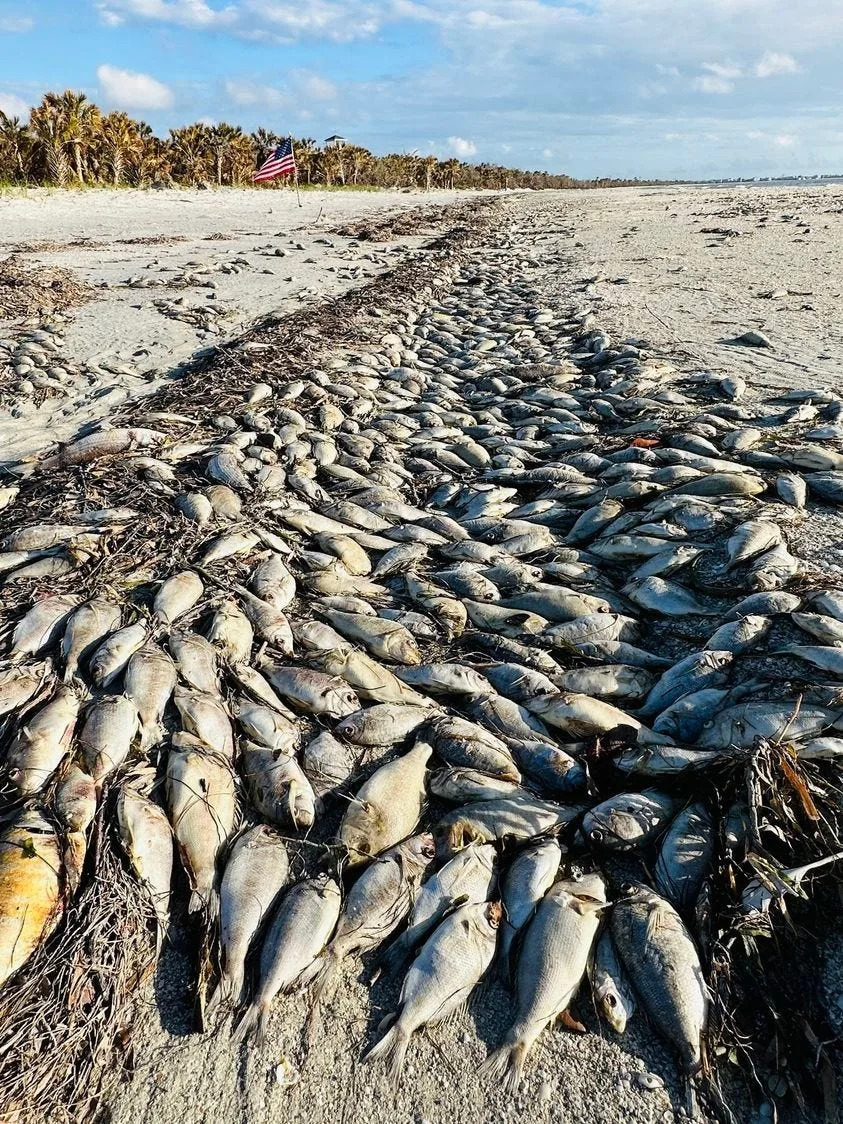
Dead fish litter many beaches in the region, and the Florida Department of Health in Collier County issued an exposure advisory Wednesday.
DOH agrees with Brand, that nutrients flowing off the landscape contribute to the intensity and duration of the bloom.
Thousands of dead fish line the high tide line at Cayo Costa State Park on Nov. 14, 2022. Red tide has moved into Lee County waters in recent weeks.
“Once inshore, these opportunistic organisms can use nearshore nutrient sources to fuel their growth,” a Wednesday DOH press release reads. “Blooms typically last into winter or spring, but in some cases, can endure for more than one year.”
What should Southwest Florida residents do?
DOH says people who live along the coast should even check their air conditioning filters.
“Residents living in beach areas are advised to close windows and run the air conditioner, making sure that the A/C filter is maintained according to manufacturer’s specifications,” DOH says. “If outdoors near an affected location, residents may choose to wear masks, especially if onshore winds are blowing.”
Carly Jones, spokeswoman for the Florida Fish and Wildlife Conservation Commission — the state agency charged with monitoring red tide, said offshore winds can help push the contaminated waters and the microscopic algae away from the coast.
The latest FWC report show the strongest red tide counts have been found in northern Lee and Sarasota counties.
“Some people experience respiratory irritation (coughing, sneezing, tearing and an itchy throat) when the red tide organism is present and winds blow onshore,” Jones wrote in an email to The News-Press. “Offshore winds usually keep respiratory effects experienced by those on the shore to a minimum. The Florida Department of Health advises people with severe or chronic respiratory conditions, such as emphysema or asthma, to avoid red tide areas.”
Red tide can contaminate shellfish, and the DOH recommends against collecting and eating shellfish from this region at this time.
Locally caught, properly cleaned and cooked fish can be eaten, the press release says.
DOH recommends washing yourself and all clothing if you make contact with waters containing the toxic algae.
Hurricane Irma also stirred nutrients in toxic algae bloom in 2017
Calusa Waterkeeper John Cassani has been monitoring the bloom online.
“I’m hearing people aren’t seeing as many gamefish species as compared to (Hurricane) Irma (2017),” Cassani said. “It’s mostly foraging fish but most are decayed to the point you can’t determine the species.”
Hurricane Irma stirred up nutrients in the Lake Okeechobee/Caloosahatchee River system five years ago, and the following summer was virtually lost to a massive red tide and blue-green algae bloom in the river.
Lee County was part of a state of emergency for both blooms.
Some scientists have speculated that Hurricane Ian’s aftermath will cause similar conditions between now and the spring of 2024.
The Hurricane Irma-fed red tide lasted from the fall of 2017 until the spring of 2019.
“It’s a neurotoxin,” Cassani said. “There are neurological symptoms that have been defined in response for red tide. And people with asthma are showing up in emergency rooms. There’s an influx often during a bloom. It’s an unregulated contaminant.”
Red tide worsens and spreads to Tampa Bay. Dead fish found on Anna Maria Island
Ryan Ballogg – November 16, 2022
A red tide bloom has worsened in Southwest Florida waters this week, the latest samples from the state show.
The algae that causes red tide, Karenia brevis, was observed at elevated levels in Tampa Bay, around Anna Maria Island, Longboat Key and in Sarasota Bay. Dead fish and breathing irritation have been reported on local beaches.
The bloom remains most intense further south offshore of Sarasota, Charlotte and Lee counties, according to samples from the Florida Fish and Wildlife Conservation commission.
On Monday, a very low concentration of red tide algae was detected in a water sample near the Rod and Reel Pier in Anna Maria —down from medium levels last week— and a medium concentration was again found in waters near Longboat Pass in Bradenton Beach.
University of South Florida’s red tide for predicts that very low levels of the algae will continue to circulate around Anna Maria Island through this weekend. At very low levels, respiratory irritation is possible.
USF predicts that low to medium levels of the algae will circulate around Longboat Key, with high levels persisting farther south in Sarasota Bay.
At levels of medium and above, which are considered “bloom concentrations” of the algae, respiratory irritation and fish kills are likely.
Slight breathing irritation and a few dead fish were reported on Anna Maria Island beaches this week, Mote Marine Laboratory’s red tide beach conditions report said. To the south, moderate breathing irritation and numerous dead fish were observed on several Sarasota County beaches.
Red tide’s patchy nature means that even beaches in close proximity can have very different conditions. Respiratory irritation and dead fish can also become more or less present as wind directions and tides change.
The National Oceanic and Atmospheric Administration forecasts the respiratory threat from red tide. On Wednesday, NOAA warned that beachgoers in Manatee, Sarasota, Charlotte, Lee and Collier counties could experience moderate to high levels of respiratory irritation over the next 36 hours.
On Monday, the Florida Department of Health Manatee County issued a red tide health alert for the following beaches:
Bayfront Park
Coquina Beach South
Longboat Pass/Coquina Boat Ramp
Rod and Reel Pier (City of Anna Maria Island)
FDOH-Manatee offers the following red tide safety tips:
Look for informational signage posted at most beaches.
Stay away from the water.
Do not swim in waters with dead fish.
Those with chronic respiratory problems should be especially cautious and stay away from these locations as red tide can affect your breathing.
Do not harvest or eat molluscan shellfish or distressed or dead fish from these locations. If caught live and healthy, finfish are safe to eat as long as they are filleted and the guts are discarded. Rinse fillets with tap or bottled water.
Wash your skin and clothing with soap and fresh water if you have had recent contact with red tide.
Keep pets and livestock away and out of the water, sea foam and dead sea life. If your pet swims in waters with red tide, wash your pet as soon as possible.
Residents living in beach areas are advised to close windows and run the air conditioner, making sure that the A/C filter is maintained according to manufacturer’s specifications.
If outdoors near an affected location, residents may choose to wear masks, especially if onshore winds are blowing.
Global population passes 8 billion, says UN amid concerns of impact on climate crisis
Sravasti Dasgupta – November 15, 2022
The world population has crossed eight billion, the United Nations said on Tuesday as it warned of the impact of climate change and resource scarcity.
John Wilmoth, director of the UN’s population division said that reaching eight billion people is “a sign of human success, but it’s also a great risk for our future”.
According to a statement by the UN, the global population is growing at its slowest rate since 1950.
UN projections suggest that the global population could grow to around 8.5 billion in 2030 and 9.7 billion in 2050.
It is projected to reach a peak of around 10.4 billion people during the 2080s and to remain at that level until 2100.
The figures were earlier released by the UN in a report ahead of World Population Day in July.
“China and India, with more than 1.4 billion each, accounted for most of the population in these two regions,” the report said.
“India is projected to surpass China as the world’s most populous country in 2023,” it added.
Despite the global population increasing, experts say that the growth rate has fallen steadily to less than 1 per cent per year.
“A big part of this story is that this era of rapid population growth that the world has known for centuries is coming to an end,” Mr Wilmoth said.
Experts have warned that the rising population combined with the impact of climate change will adversely affect vulnerable nations and people.
Deborah Balk, a demographic researcher at the City University of New York, said: “African cities will, on average, grow.”
Ms Balk said that this will leave millions more urban dwellers exposed to climate threats such as rising seas.
Analysts warn that there will also be resource scarcity with the population rise.
“Every single person needs fuel, wood, water, and a place to call home,” said Stephanie Feldstein, population and sustainability director at Center for Biological Diversity.
UN officials have also said that rising population is likely to impact achieving sustainable development goals.
“The relationship between population growth and sustainable development is complex and multidimensional” said Liu Zhenmin, UN Under-Secretary-General for Economic and Social Affairs in a statement.
“Rapid population growth makes eradicating poverty, combatting hunger and malnutrition, and increasing the coverage of health and education systems more difficult.
“Conversely, achieving the Sustainable Development Goals, especially those related to health, education and gender equality, will contribute to reducing fertility levels and slowing global population growth.”
Will Florida’s red tide get worse because of Hurricane Nicole? Here’s what experts say
Max Chesnes – November 15, 2022
Red tide was found this week in the waters off Anna Maria Island, and now experts fear Hurricane Nicole could possibly make conditions worse for Tampa Bay.
Extra runoff from rainfall could mean more algal-bloom-fueling nutrients dump into the bay. That may — or may not ― spark more Red Tide.
“Of course our eyes are on any additional rainfall and runoff that might occur in response to . . . Nicole’s passage,” said Ed Sherwood, executive director of the Tampa Bay Estuary Program. “With red tide now present in lower Tampa Bay, additional nutrient loads may exacerbate the bloom if salinities remain high.”
It’s a big if, with plenty of variables. The organism that causes red tide, karenia brevis, prefers salty marine environments. Rainwater is fresh, but brings pollution along with it as it flows into the bay. That pollution, in turn, can fuel red tide blooms.
“Any additional nutrient loads to our coast — especially when a red tide is already present in the estuary — is a concern,” Sherwood wrote in an email. “As the red tide bloom that formed further south is carried by winds and currents into our estuary, any additional stormwater nutrient loads caused by (Nicole) may promote water quality declines this winter.”
State water samplers detected medium concentrations of red tide-causing karenia brevis, between 100,000 and 1,000,000 cells per liter, on the northern tip of Anna Maria Island Monday, according to the latest Florida Fish and Wildlife Conservation Commission data. Scientists consider that level a “bloom,” meaning breathing problems are possible and fish kills are probable.
On Nov. 2, small amounts were measured 11 miles offshore of Tampa Bay, data show.
There’s cause for concern for residents in the Tampa Bay area, “because it is likely that a red tide bloom will evolve here,” according to Bob Weisberg, a physical oceanographer at the University of South Florida. Once Red Tide is measured at the mouth of Tampa Bay, tidal currents could easily bring it into the estuary. Now, add the winds from Nicole into the mix.
Medium concentration levels of Karenia brevis, the algae that causes red tide, were detected in water samples taken Monday by the Florida Fish and Wildlife Conservation Commission near Longboat Pass.
The storm is currently pushing northerly winds, which makes conditions more favorable for the spread of red tide here, according to Weisberg. “Such winds will result in red tide cells located offshore along the bottom being transported toward the shore and hence an increase in what may be observed here in subsequent days.”
Still, the mixing of wind and water during storm events are speculated to hurt red tide, so there may also be a die-off of some karenia brevis cells, Weisberg wrote in an email. Nicole isn’t nearly as strong as the recent Hurricane Ian, though, so there’s a chance that more Red Tide organism feeds on runoff entering the bay versus being killed off in turbulent water.
“Red tide ecology is the whole shebang,” Weisberg wrote.
The most recent models from the University of South Florida’s Ocean Circulation Lab show traces of the red tide organism — resembling green strands of spaghetti on the chart — in small amounts entering into Tampa Bay over the next few days, beginning from where it was first measured on Anna Maria Island.
The takeaway is that there’s no immediate threat of dangerous red tide exposure through the weekend, but it’s definitely something to watch, according to Yonggang Liu, the lab’s director.
The latest Red Tide models from the University of South Florida, which run through Nov. 12, show small concentrations of the Red Tide-causing organism flowing into Tampa Bay over the next few days.
“It may still be OK for Tampa Bay area in the next three days,” Liu wrote in an email. “You may go to a beach and enjoy water activities without issues of red tide.”
With Nicole expected to drop as much as four inches of rain in the area, it’s still to be determined just how much runoff the bay will receive. But storm surge shouldn’t be a major issue for the estuary, according to tide models provided by Liu. Sea level will first recede, but not nearly as much as what was documented with Hurricane Ian earlier this year and Hurricane Irma in 2017.
Once Nicole passes, the bay should hopefully start to see a reprieve, according to Sherwood.
“We’re coming to the tail-end of our rainy season, so with the exception of the recent tropical storms that are impacting our region, we should start to see a decline in storm-water nutrient loads from our coast,” Sherwood said. “That in combination with cooling temperatures will hopefully lead to some water quality improvements over the next several months.”
Why a Trump-appointed Texas judge blocked Biden’s student-debt cancellation plan
Ayelet Sheffey – November 14, 2022
A view of the US Capitol before a news conference to discuss student-debt cancellation on September 29, 2022.Drew Angerer/Getty Images
Trump-appointed Judge Mark Pittman struck down Biden’s debt relief in Texas last week.
He argued the two student-loan borrowers who sued have sufficient standing to block the plan.
But some legal experts and Democrats said Pittman should never have taken up the case in the first place.
A federal judge doesn’t think President Joe Biden’s plan to cancel student debt for millions of borrowers is legal.
On Thursday evening, Mark Pittman — a Texas judge appointed by former President Donald Trump — struck down Biden’s plan to forgive up to $20,000 in student-loans for federal borrowers making under $125,000 a year. He ruled in favor of two student-loan borrowers who filed the lawsuit because each of them didn’t qualify for the full amount of relief, and at this point, Pittman’s ruing bars the Education Department from discharging student loans until a final verdict is made.
The Texas case, along with a number of other lawsuits backed by conservative groups, challenges Biden’s authority to use the HEROES Act of 2003, which gives the Education Secretary the ability to waive or modify student-loan balances in connection with a national emergency, like COVID-19. They claimed that enacting broad student-loan forgiveness is an overreach of the authority and should require Congressional approval, while Biden has maintained one-time student-loan forgiveness is well within the administration’s legal authority.
Pittman appeared sympathetic to the conservatives’ arguments in his ruling. “This case involves the question of whether Congress—through the HEROES Act—gave the Secretary authority to implement a Program that provides debt forgiveness to millions of student-loan borrowers, totaling over $400 billion,” Pittman wrote in his ruling. “Whether the Program constitutes good public policy is not the role of this Court to determine. Still, no one can plausibly deny that it is either one of the largest delegations of legislative power to the executive branch, or one of the largest exercises of legislative power without congressional authority in the history of the United States.”
The other lawsuits are also moving through the courts. The 8th Circuit Court of Appeals, for example, ruled on Monday that its temporary pause on student-debt relief will remain in place until further orders from the court on a separate lawsuit in which six Republican-led states sued the loan forgiveness, arguing it would hurt their states’ tax revenues.
One of the key parts of Pittman’s ruling is that the plaintiffs actually met the legal requirements for a valid lawsuit. He ruled that they have standing to sue the administration, but several prominent Democrats and legal experts have questioned that decision — and other courts have thrown out similar conservative lawsuits due to a lack of standing.
The plaintiffs’ standing to sue
Both of the plaintiffs who brought the Texas lawsuit hold student loans. The first plaintiff, Myra Brown, sued because her loans are commercially-held and therefore ineligible for Biden’s debt relief, which requires the borrower to owe their debt directly to the federal government. And the other plaintiff, Alexander Taylor, sued because he was eligible only for $10,000 in debt forgiveness and not the full $20,000 since he did not receive a Pell Grant in college.
They both argued they were not given the opportunity to challenge the relief before its announcement since it didn’t go through the Administrative Procedure Act’s notice-and-comment period, and they said that failure to go through typical rulemaking processes, along with overstepping authority granted through the HEROES Act, were reasons why the debt relief should be blocked.
Pittman ruled that the plaintiffs have valid reasons for suing the administration. In his opinion, Pittman wrote that standing contains three legal requirements: there must be concrete injury, there must be causation, and there must be redressability, which is the likelihood the requested relief — in this case, blocking debt cancellation — would repair the injury caused. Pittman said that Biden’s Justice Department argument that the plaintiffs’ standing does not exist is “untrue.”
“Plaintiffs do not argue that they are injured because other people are receiving loan forgiveness,” Pittman wrote. “Their injury—no matter how many people are receiving loan forgiveness—is that they personally did not receive forgiveness and were denied a procedural right to comment on the Program’s eligibility requirements.”
And while Pittman concluded that debt relief did not violate procedural requirements, he said it violates authority under the HEROES Act because the “pandemic was declared a national emergency almost three years ago and declared weeks before the Program by the President as ‘over.’ Thus, it is unclear if COVID-19 is still a ‘national emergency’ under the Act.”
Some Democrats and legal experts take issue with the ruling
While Republican lawmakers were quick to laud Pittman’s decision, some legal experts weren’t sold on the merits of the ruling. Steve Vladeck, a CNN legal analyst and professor at the University of Texas School of Law, wrote in an opinion piece that “the biggest problem with Pittman’s ruling isn’t its substance; it’s why he allowed the case to be brought in the first place.”
Vladeck referenced prior conservative lawsuits seeking to challenge the debt relief that had been dismissed for lack of standing, and that if “the complaint is just that the government is acting unlawfully in a way that doesn’t affect plaintiffs personally, that’s a matter to be resolved through the political process – not a judicial one.”
And Leah Litman, a professor at the University of Michigan School of Law, wrote on Twitter that the ruling “is just the latest example of Trump-appointed district judges doing completely outlandish, lawless things to rule against policies by Democratic administrations,” referring to what she said was a lack of standing on the plaintiffs’ side.
Massachusetts Sen. Elizabeth Warren also slammed the ruling, telling NBC News on Sunday that “we have a court down in Texas, and if they’re going to play politics instead of actually following the law, they do put the program at risk.”
This editorial is the second in a series, “The Danger Within,” urging readers to understand the danger of extremist violence and possible solutions. Read more about the series in a note from Kathleen Kingsbury, the Times Opinion editor.
On May 29, 2020, Steven Carrillo decided that his moment to take up arms against the government had arrived.
It was a Friday in downtown Oakland, Calif., and at 9:44 p.m., Mr. Carrillo opened the sliding door of a white van and, according to court documents, opened fire with a rifle at the Ronald V. Dellums Federal Building and courthouse. Officer David Patrick Underwood was killed inside a guard booth, and his partner was seriously injured. The van sped away into the night.
About a week later, Mr. Carrillo, who was tied to the antigovernment paramilitary boogaloo movement, was arrested after he ambushed and murdered a police officer and wounded several others with homemade explosives and an assault rifle in another attack some 60 miles away. Mr. Carrillo wasn’t just linked to an antigovernment paramilitary group; he was also an active-duty sergeant in the Air Force. This summer, he was sentenced to 41 years in prison for attacking agents of the government he’d sworn to protect and defend.
There has been a steady rise in political violence in the United States — from harassment of election workers and public officials to the targeting of a Supreme Court justice to an attack on the husband of the speaker of the House of Representatives and, of course, the attack on the Capitol on Jan. 6. An alarming number of Americans say that political violence is usually or always justified, and this greater tolerance for violence is a direct threat to democratic governance.
America needs to reduce this threat. In recent years, the majority of political violence has come at the hands of members of right-wing extremist groups or unaffiliated adherents of their white supremacist and antigovernment ideologies. This editorial board argued in the first of this series that better enforcement of state and federal laws banning private paramilitary activity could help dismantle some of the groups at the vanguard of this violence.
One of the most troubling facts about adherents of extremist movements is that veterans, active-duty military personnel and members of law enforcement are overrepresented. One estimate, published in The Times in 2020, found that at least 25 percent of members of extremist paramilitary groups have a military background.
Still, only a tiny number of veterans or members of the active-duty military or law enforcement will ever join an extremist group. Their overrepresentation is partly due to extremist groups focusing on recruiting from these populations because of their skills. But the presence of these elements within the ranks of law enforcement is cause for extra concern. Of the more than 900 people arrested in connection with the Jan. 6 attacks, 135 had military or law enforcement backgrounds. The Program on Extremism at George Washington University found that among those in policing, 18 are retired, and six are active. One Capitol Police officer who was not on the scene that day but was aware of the attack later advised a participant on how to avoid being caught.
For decades, police departments, the Pentagon and the Department of Veterans Affairs have known about the problem, yet they have made only halting progress in rooting out extremists in the ranks.
Jan. 6 changed that. Secretary of Defense Lloyd Austin was so alarmed by the events of that day that he ordered all military commands to reinforce existing regulations prohibiting extremist activity and to query service members about their views on the extent of the problem. The Defense Department standardized its screening questionnaires for recruits and changed its social media policies, so that liking or reposting white nationalist and extremist content would be considered the same as advocating it. Service members could face disciplinary action for doing so. The department also began preparing retiring members to avoid being recruited by extremist groups.
But those reforms were more easily ordered than executed. A department inspector general report released this year found that the Pentagon’s sprawling bureaucracy was unable to identify the scope of the problem across the services because it used numerous reporting systems that were not interconnected. Commanders often didn’t have a clear understanding of what was prohibited. As a result, the department “cannot fully implement policy and procedures to address extremist activity without clarifying the definitions of ‘extremism,’ ‘extremist,’ ‘active advocacy’ and ‘active participation,’” the report concluded.
After 20 years of the war on terrorism, the country is now seeing many veterans joining extremist groups like the Proud Boys.
The end of wars and the return of the disillusioned veterans they can produce have often been followed by a spike in extremism. The white power movement grew after the end of the Vietnam War, with veterans often playing leading roles. Antigovernment activity climbed in the 1990s after the first Iraq war, culminating in the bombing of the Alfred P. Murrah Federal Building in Oklahoma City by Timothy McVeigh, an Army veteran who had served in Operation Desert Storm. “These groups can give disaffected veterans a sense of purpose, camaraderie, community once they leave military service,” said Cassie Miller, an extremism researcher at the Southern Poverty Law Center.
In 2012, Andrew Turner ended his nine-year Navy career at Walter Reed National Military Medical Center with a shattered hand and loathing of the government. He’d served around the world, from South Korea to Iraq, and the experience had left him disabled and furious. “When the military was done with me, they threw me on a heap. I took it personally and was so angry,” he said in an interview.
In 2013 a fellow service member suggested that he check out a group called the Oath Keepers. Mr. Turner, then 39, joined the Maryland chapter, paid his dues and “initially felt that esprit de corps that I’d missed from the military,” he said. He felt a bond and even spent time with the group’s founder, Stewart Rhodes, who is currently on trial and charged with seditious conspiracy for his role in the Jan. 6 attacks. (Mr. Rhodes has denied ordering the group to attack the Capitol and stop the certification of the 2020 election results, as the government contends.) There’s a photo of them at the World War II Memorial in Washington, holding an Oath Keepers banner.
But Mr. Turner soon realized that the group was not the apolitical, service-oriented veterans’ association he thought it to be. In private online forums, discussions were full of racist language, and members flirted with violence. He walked away after six months. “It’s easy to find vulnerable people at their weakest moments. I was naïve, but if anyone joins the Oath Keepers today, they know exactly what they’re getting into,” he said.
Experts in the field recommend some basic steps the military should take that could make a difference. Better training, counseling and discussion of the true nature of extremism are vital and must start long before service members retire and need to continue after they do. Better staff training and better funding for the Department of Veterans Affairs are also critical to meeting this challenge, so that members who are struggling can be coaxed down a different path.
While the military can exert fairly strict control over men and women in uniform, civilian law enforcement agencies face a different set of challenges in addressing extremists or extremist sympathizers in the ranks.
At least 24 current and former police officers have been charged with crimes in relation to the Jan. 6 attacks, and dozens of others have been identified as part of the crowd at the Capitol. Some officers who participated wanted things to go further than they did. “Kill them all,” Peter Heneen, a sheriff’s deputy in Florida, texted another deputy during the attack. The streets of the capital, he wrote, needed to “run red with the blood of these tyrants.”
Experts who track the tactics of extremist movements have been sounding the klaxon about the growing presence of antigovernment and white supremacist groups in law enforcement for years. “Although white supremacist groups have historically engaged in strategic efforts to infiltrate and recruit from law enforcement communities, current reporting on attempts reflects self-initiated efforts by individuals, particularly among those already within law enforcement ranks, to volunteer their professional resources to white supremacist causes with which they sympathize,” an F.B.I. intelligence assessment concluded in 2006.
Last year a leakedmembership roster of the Oath Keepers, a violent paramilitary group involved in the Jan. 6 attacks that recruits police officers and military personnel, included some 370 members of law enforcement and more than 100 members of the military, according to an Anti-Defamation League Center on Extremism analysis. An investigation by Reuters this year found that several police trainers around the country — who together have trained hundreds of officers — belong to extremist paramilitary groups or expressed sympathy for their ideas. One trainer, for instance, posted on social media that government officials disloyal to Donald Trump should be executed and that the country was on the brink of civil war.
A recent investigation by the Marshall Project found that hundreds of sheriffs nationwide are part of or are sympathetic to the ideas behind the constitutional sheriffs movement, which holds that sheriffs are above state and federal law and are not required to accept gun laws, enforce Covid restrictions or investigate election results. The Anti-Defamation League describes the Constitutional Sheriffs and Peace Officers Association as an “antigovernment extremist group whose primary purpose is to recruit sheriffs into the antigovernment ‘patriot’ movement.”
Identifying members of extremist groups and those sympathetic to their ideology to make sure they don’t join the thin blue line in the first place should be a priority for departments and governments nationwide. Yet most departments don’t have explicit prohibitions on officers joining extremist paramilitary groups, according to a 2020 study by the Brennan Center for Justice.
Since Jan. 6, however, some states have successfully pushed for reforms. This fall, California passed a law that requires law enforcement agencies to screen candidates for participation in groups that promote hate crimes or genocide. In April, Minnesota’s police officer standards board proposed a series of rule changes, including barring people who belong to or support extremist groups from getting a law enforcement license. Public hearings, which are set to be held on those changes, deserve support. Other states and communities should look closely at these measures as a model.
Prosecutors in communities all over the United States also have a powerful tool already at their disposal: cross-examination during criminal trial. All defendants in criminal cases have a constitutional right to know about potentially exculpatory evidence. If an arresting officer is a member of a hate group or expresses extremist beliefs, that should be a subject of cross-examination by the defense.
If prosecutors were more aggressive about vetting police officers for extremist views, “defendants will get fairer trials, the public will be informed of problem officers through public trials, and police and prosecutors get the opportunity to identify problematic police officers and take action to rid the force of these officers,” wrote Vida Johnson, a professor at Georgetown Law, in a 2019 law review article.
Americans have a nearly unlimited right to free speech and association, and any effort to stop extremist violence must ensure that those rights are protected. Reforms should be carefully structured to avoid the abuses that occurred in the wake of the Sept. 11 attacks — the violations of civil liberties, mass surveillance and the accelerated militarization of the police, to name a few. But protecting freedom of expression need not stand in the way of tackling extremism in police departments.
Officers around the country have rightly been fired for racist or extremist actions. But punishment for harboring extremist sympathies is a finer line, because Americans have the right to believe what they like. So, the treatment of officers with extremist beliefs and extremist connections is often uneven. This year, a New York prison guard who belonged to a right-wing hate group was ultimately fired — not just for membership but also for trying to smuggle hate literature into the prison. This may be a useful model in determining where extremist ideology crosses the line to actions that can be addressed by law or regulation.
Other recent attempts to root out extremism have been less clear-cut. An unidentified police officer in Chicago was given a four-month suspension but was not dismissed after it was discovered that he had ties to the Proud Boys. Last month, a police officer in Massachusetts was found to have been involved in the Unite the Right rally in Charlottesville, Va. He resigned, and the district attorney announced an investigation into all closed and pending cases he had worked on.
Coordinating the efforts of the nation’s roughly 18,000 law enforcement agencies has been notoriously difficult. Federal standards or even guidelines about how to deal with extremism — in recruiting officers, disciplining existing ones or even sharing information — would go a long way toward harmonizing law enforcement’s response. But carrying out such changes would require both local attention to detail and the political will to do so. It would also require staffing law enforcement with people committed to the rule of law, rather than rule by force. As one congressional staff member working on homeland security issues put it: “People have to decide this is a priority. We can’t legislate hearts and minds.”
Across the board, extremists and their sympathizers, whether they act on their beliefs or just spread them, erode the public’s trust in the institutions that are designed to keep the country safe. Extremists bearing badges can put at risk ongoing police investigations by leaking confidential information. In the military, extremists pose a threat to good order and discipline. In law enforcement, extremists — particularly white supremacists — pose a threat to the people they are meant to protect, especially people of color. In federal agencies, extremists can compromise national security and make our borders even less secure. Protecting those institutions and the nation they serve demands urgent action.