U.S. Man’s Death Suggests Deadly Tick Virus Is Spreading to New Regions
Ed Cara – February 24, 2023
The Lone Star tick (Amblyomma americanum) is known to spread several infectious diseases, including the Heartland virus.
A rare but sometimes fatal tickborne infection may be expanding its range in the U.S., local and federal health officials warn in a report this week. They say that a case of Heartland virus led to a man’s death in 2021. The infection is thought to have been caught in either Virginia or Maryland—a region of the country where the virus hasn’t been spotted in humans until now.
The report was published online Thursday in Emerging Infectious Diseases by officials with the Virginia Department of Health, the Centers for Disease Control and Prevention, and the National Institutes of Health, as well as doctors at the Johns Hopkins University School of Medicine.
The man was in his late 60s and visited an emergency room in November 2021 with symptoms of fever, diarrhea, aches, and general discomfort. He didn’t appear to have any tick bites, but given his symptoms and the fact that he spent time between two homes in rural Virginia and Maryland, his doctors suspected a tickborne infection and sent him home with antibiotics. Unfortunately, two days later, he returned to the ER with new symptoms, including confusion and unsteady gait, and he was then admitted to the hospital.
The man’s health continued to worsen, and he was soon sent to a specialized care center. Despite testing for various germs, doctors couldn’t find the source of his illness. He eventually developed hemophagocytic lymphohistiocytosis, a rare but life-threatening condition in which the body’s white blood cells attack the organs. His lungs and liver started to fail, and he developed cardiac arrest. He was then placed in palliative care. Thirteen days after his symptoms began, he died.
Doctors still suspected that he had contracted an infection spread by insects or ticks. Given the possibility of an ongoing threat to the public, officials with the Virginia Department of Health launched an investigation. They sent blood samples to the CDC for more extensive testing and went to the man’s homes in eastern Maryland and central Virginia the following summer to collect ticks in the area. The CDC testing finally revealed that he was infected with the Heartland virus, and a subsequent autopsy determined that he had died from complications of the infection.
Heartland virus was discovered in 2009 by doctors at the Heartland Regional Medical Center in northwestern Missouri. It’s known to be spread by the Lone Star tick (Amblyomma americanum), which is commonly found throughout the Eastern and Midwestern U.S. Many known cases of Heartland virus have led to hospitalization and death, but it’s only been sporadically documented in humans. Around 50 cases have been reported in over a dozen states to date, including Kentucky, Indiana, and as far north as New York.
Maryland and Virginia are within the tick’s expected range, but this case of Heartland appears to be the first ever traced back to either state. Because of the larger tick population found at the man’s home in Virginia, the report authors believe he caught it there. Interestingly enough, they failed to find the virus inside ticks at either location. But that doesn’t rule out its presence in these areas, they wrote, particularly because the virus seems to circulate in ticks at very low levels. They further suspect that the man caught the infection from larval ticks, since adults typically become inactive by late October (when he was likely bit). That could also explain why he didn’t notice the initial bite, given their smaller size, and why doctors failed to find any evidence by the time he felt sick roughly two weeks later, since any bite could have healed by then.
Especially compared to much more common tickborne diseases like Lyme disease, Heartland virus is a very rare danger to humans. But it is possible that we’re missing many milder cases of Heartland or that these infections are misdiagnosed as other tickborne diseases because they tend to share common symptoms, the authors say. And thanks in part to climate change, ticks generally are expanding their distribution throughout the U.S., which will make all of the many diseases they carry a bigger threat to worry about.
“Because tick ranges are increasing overall, incidence of previously regional tickborne infections, such as [Heartland virus], likely will continue to increase,” they wrote.
Toxic wastewater from Ohio train derailment headed to Texas
February 23, 2023
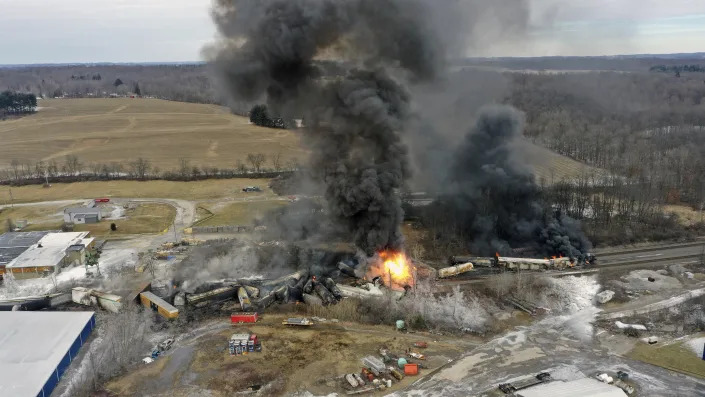
FILE – This photo taken with a drone shows portions of a Norfolk Southern freight train that derailed Friday night in East Palestine, Ohio are still on fire at mid-day Saturday, Feb. 4, 2023. Toxic wastewater used to extinguish a fire following a train derailment in Ohio is headed to a Houston suburb for disposal. Harris County Judge Lina Hidalgo says “firefighting water” from the East Palestine, Ohio train derailment is to be disposed of in the county and she is seeking more information.(AP Photo/Gene J. Puskar) (ASSOCIATED PRESS)
DEER PARK, Texas (AP) — Toxic wastewater used to extinguish a fire following a train derailment in Ohio is headed to a Houston suburb for disposal.
“I and my office heard today that ‘firefighting water’ from the East Palestine, Ohio, train derailment is slated to be disposed of in our county,” Harris County Judge Lina Hidalgo said in a Wednesday statement.
“Our Harris County Pollution Control Department and Harris County Attorney’s have reached out to the company and the Environmental Protection Agency to receive more information,” Hidalgo wrote.
The wastewater is being sent to Texas Molecular, which injects hazardous waste into the ground for disposal.
The Texas Commission on Environmental Quality told KTRK-TV that Texas Molecular “is authorized to accept and manage a variety of waste streams, including vinyl chloride, as part of their … hazardous waste permit and underground injection control permit.”
The company told KHOU-TV it is experienced in managing this type of disposal.
“Our technology safely removes hazardous constituents from the biosphere. We are part of the solution to reduce risk and protect the environment, whether in our local area or other places that need the capabilities we offer to protect the environment,” the company said.
The fiery Feb. 3 derailment in Ohio prompted evacuations when toxic chemicals were burned after being released from five derailed tanker rail cars carrying vinyl choride that were in danger of exploding.
“It’s … very, very toxic,” Dr. George Guillen, the executive director of the Environmental Institute of Houston, said, but the risk to the public is minimal.
“This injection, in some cases, is usually 4,000 or 5,000 feet down below any kind of drinking water aquifer,” said Guillen, who is also a professor of biology and environmental science at the University of Houston-Clear Lake.
Both Guillen and Deer Park resident Tammy Baxter said their greatest concerns are transporting the chemicals more than 1,300 miles (2,090 kilometers) from East Palestine, Ohio; to Deer Park, Texas.
“There has to be a closer deep well injection,” Baxter told KTRK. “It’s foolish to put it on the roadway. We have accidents on a regular basis … It is silly to move it that far.”
Transportation Secretary Pete Buttigieg, who visited the derailment site Thursday, has warned the railroad responsible for the derailment, Norfolk Southern, to fulfill its promises to clean up the mess just outside East Palestine, Ohio, and help the town recover.
Pritzker Will Do What It Takes to Keep Both DeSantis and Trump Out of the White House
Laura Davison and Shruti Date Singh – February 23, 2023
Pritzker Will Do What It Takes to Keep Both DeSantis and Trump Out of the White House
(Bloomberg) — Illinois Governor J.B. Pritzker said he’s willing to spend what it takes in the next election to help President Joe Biden keep his job — and keep Republicans like Ron DeSantis and Donald Trump out of the White House.
“It’s very important to me that we elect a Democratic president and that we make sure to keep DeSantis, Trump and the retrograde views that they carry out of the White House,” Pritzker, a longtime Democratic donor, said in an interview Thursday with Bloomberg News in Chicago. “I’ll continue to support Democrats in the best way I can to help them get elected.”
Pritzker, 58, is a member of one of the world’s wealthiest families, with a net worth of $3.7 billion, according to the Bloomberg Billionaires Index. The Democrat has been in the middle of recent spats with DeSantis, Florida’s Republican governor, and is a long-running nemesis of Citadel founder and GOP mega-donor Ken Griffin, who has said he’d back a DeSantis bid for president in 2024.
DeSantis, who visited Illinois this week, has criticized Chicago’s crime under Pritzker’s watch. Pritzker shot back, saying that DeSantis is trying to lower public education standards by banning the teaching of racial history.
Pritzker also said Griffin moved his financial empire headquarters to Miami from Chicago last year out of “embarrassment” after spending $50 million trying to defeat him in the gubernatorial race by backing Richard Irvin, the mayor of Aurora, Illinois.
“That person lost badly in the Republican primary,” Pritzker said in an interview Thursday with Bloomberg TV.
National Attention
Trading barbs with prominent Republicans sets up Pritzker for national political attention.
Pritzker, who was re-elected as Illinois governor in 2022, said he has been approached about potentially running for president, but declined to give any details about those discussions. He said he’s happy as governor, intends to serve the rest of his term and will back Biden this cycle.
Still, he’s raised his national profile by visiting New Hampshire and Florida, and has taken stances on expanding abortion access and banning assault weapons, stoking speculation that he has lofty ambitions beyond the Illinois statehouse in Springfield.
Regardless, the billionaire’s wealth promises to play a role in the 2024 race.
He poured more than $300 million of his own money into his two successful bids for governor. He spent about $51 million for a failed campaign to change Illinois’s flat income-tax structure to one that increases taxes on the rich.
Outside of Illinois, Pritzker and his wife have donated more than $39 million since 2011, according to campaign finance disclosures. Topping the list of recipients is Priorities USA Action, the super-PAC that’s supported Democratic presidential nominees since it was launched in 2011.
The Pritzkers have also given $2 million to support Hillary Clinton’s 2016 general election campaign and $1.4 million to back Biden in 2020.
Jo Wood on gardening: ‘A surprise diagnosis opened my eyes to all the chemicals in food’
Ria Higgins – February 23, 2023
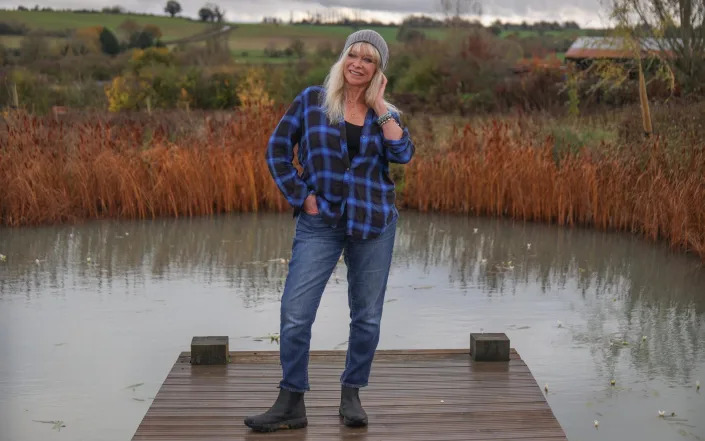
‘I loved the idea of being self-sufficient, not only growing my own food, but having my own heat, electricity and water supply’ – John Lawrence
The entrepreneur and ex-wife of Rolling Stones rocker Ronnie Wood on the joy of going off-grid and being in touch with nature.
Where do you live?
I live in Northamptonshire, near Silverstone, in a place I saw online four years ago. The property was being sold as an off-grid farmhouse and I’d dreamed of going off-grid. I loved the idea of being self-sufficient, not only growing my own food, but having my own heat, electricity and water supply. This was it! It came with six acres, old sheds and barns ripe for conversion. The land was barren and there was no garden, but it meant I could do things my way. After my divorce from Ronnie in 2011, I’d been living in central London, so it was a huge change.
What did you have to do to get the house and garden up and running?
I moved into the house in November 2019, and in those first few weeks, the water ran out, the solar panels didn’t work, the electrics were dodgy, and the generator for heat and light broke down. I sat in the kitchen and said to myself: “I’ve made such a terrible mistake.” But slowly, I found the right people to help me turn things around. A modern generator was installed, new solar panels fitted and, after locating an underground water supply, an engineer drilled a hole nearly 300ft down to provide me with my own water. It was expensive, but from then on, I’d have no more bills.
What were your plans for the garden?
One of the first things I did was to plant 70 trees, including willow, oak and apple. But my priority that first spring was to build raised beds for growing organic fruit and veg. Of course, four months after I moved in, the country went into lockdown; but with my son Tyrone and my daughter Leah and her family, we were all in the same bubble, so I got cracking and they helped me. Within no time, we’d sown everything from potatoes to pumpkins, with nasturtiums and calendula for colour. The house itself was already covered with climbing roses, so I planted lavender, rosemary and other scented herbs and flowers beneath.
‘One thing my kids were excited about was creating a wild swimming pond,’ says Jo Wood – John Lawrence
Why did you become so passionate about growing organic food?
I met Ronnie in 1977, when I was just 22. At that point, I had my son Jamie and he had his son Jesse. We had Leah and Tyrone together and got married in 1985. Then in 1990, I got ill and was diagnosed with Crohn’s disease. I was on steroids; I was miserable. Then someone who’d read about my illness told me to cut out processed foods and go organic – veg, fruit, meat, the lot. With nothing to lose, I did. Four months later, I felt fantastic. But I got ill again. This time, I found out I didn’t have Crohn’s, I had a perforated appendix. Doctors were amazed I was still alive. I recovered, but my eyes were opened to all the chemicals in food, so I became even more obsessed with organic.
How did your family react to your organic obsession?
Ronnie thought I was mad and the family banned me from using the word “organic”. But I was on a mission. The only thing I didn’t have was a garden big enough to grow my own food. It was when we went to stay at Ronnie’s house in Kildare, in Ireland, that I got my first taste of growing organic veg. I loved it. In fact, one year we had such a huge crop of potatoes, I put a load in a suitcase, took them to a Stones gig in Paris and asked their chef if he’d cook them. Keith Richards turned to me and said: “The trouble with you, darling, is that you’re addicted to organic.” Actually, Keith’s wife, Patti, has a veg garden in Connecticut. She gets it!
What other projects have you focused on in your new home?
One thing my kids were excited about was creating a wild swimming pond. It was part of my plan to rewild a huge section of the land that I’d already scattered with native wildflower seeds, such as red clover, cowslip, ragged robin and oxeye daisy. Tyrone took charge. He had the pond dug out and lined with local clay, and once we’d filled it with water, Leah, who now lives with her family up the road, helped me get started with aquatic plants such as water hawthorn, spearwort, lilies and yellow flag iris. By the second year, they all went mad. Glorious! It came alive with wildlife and watching birds fly in and out was magical.
Wood plans to have a whole field of lavender eventually – John Lawrence
Did you have a garden as a child?
Mum was from South Africa. She met Dad, who was from Devon, on a train. He was an architectural model maker and, after the war, he worked for Essex council on the model for a new town called Basildon. When it was completed, the council gave him a new council house and as soon as we moved in, Mum wanted chickens and an avocado tree – no one ate avocados back then. She also grew medicinal herbs; she was a huge believer in feverfew, an old remedy for fevers, and mullein, which is great for coughs. She’s inspired me to create a medicinal herb garden here. I might even grow avocados!
Do you think gardening is good for your mind as well as the body?
More and more, I find it’s so important to be outside, to soak up natural light, be in touch with nature, to feel the earth on my skin. In the summer, I often go around barefoot. Other times, there’s nothing like the simplicity of sitting under a tree and just soaking it all in. Trees are such amazing things. In 2016, I bought a little house with two acres in the hills of Murcia, in Spain, and filled it with fruit trees – pomegranate, fig, orange, lemon and olive. It’s my little getaway.
What’s your next project in the garden?
I have so many plans and one of them is to have a whole field of lavender. It would be so beautiful and I could get someone to harvest it. And now that we’ve got wildflowers, I also want to make my own honey. The bees will have a feast. Jamie’s also been studying the health benefits of supplements made from mushrooms and wants to start growing them, while Tyrone has converted old sheds into a bar and a play area for the kids. I’ve now got 10 grandchildren, so they have the best time here.
What have been the biggest challenges to going off-grid?
In the early days, I’d often have to stick on my wellies and go out in the rain in the middle of the night because the lights hadn’t come on or the hot water was like ice. Now, I’ve replaced everything and there’s an app on my phone that tells me if the generator’s on and how much heat I’m getting from my solar panels. It’s other things that give me grief. Rabbits. One morning, I came out to all these holes and half-eaten muddy carrots. The audacity! But mud or no mud, I haven’t given up my glamorous life altogether. I still swap my wellies and woolly hat for heels and sequins sometimes. I’ve got the best of both worlds.
Jo Wood’s organic product range is available to shop at jowoodorganics.com.
Donald Trump, who rolled back rail safety regulations and slashed environmental protections, donates Trump-branded water to East Palestine residents
Erin Snodgrass – February 22, 2023
Former President Donald Trump heads out of the East Palestine Fire Department next to his son, Donald Trump, Jr., as he visits the area in the aftermath of the Norfolk Southern train derailment Feb. 3 in East Palestine, Ohio, Wednesday, Feb. 22, 2023. In the background is a pallet of personalized Trump water he donated.AP Photo/Matt Freed
Donald Trump visited East Palestine, Ohio, on Wednesday, following a disastrous train derailment.
The 2024 Republican candidate donated pallets of Trump-branded water to residents.
Trump’s visit raised questions about his administration’s rollback of rail safety regulations.
The former president’s visit to the northeastern village preempted Transportation Secretary Pete Buttigieg’s arrival by one day, and Trump relished every opportunity to castigate his Democratic successors, saying Buttigieg “should have already been here,” and commanding President Joe Biden to “get over here,” according to local reports.
While assuring East Palestine residents that they had “not been forgotten,” Trump managed to tout his own presence in the besieged community and brush off questions about his administration’s noted history of rolling back regulations on both rail safety and hazardous chemicals.
Trump started his day by briefly visiting with local leaders, according to WKBN-27, before conducting a small press conference at a fire station, where, donning his signature “Make America Great Again” hat, he handed out a flurry of red baseball caps to attendees.
During his speech, Trump pledged to donate thousands of bottles of cleaning supplies, as well as pallets of Trump-branded water bottles to members of the community, many of whom have expressed continued concern over the safety of the town’s water supply following the derailment.
“You wanna get those Trump bottles, I think, more than anybody else,” Trump said, while flanked by state and local leaders, including Republican Sen. JD Vance.
The former president dismissed questions about his administration’s rollback of Obama-era rail safety regulations saying he “had nothing to do with it.”
The Department of Transportation under Trump justified the rollback with a 2018 analysis arguing the cost of requiring such brakes would be “significantly higher” than the expected benefits of the update.
A spokesperson for Trump did not immediately respond to Insider’s request for comment.
Following his Wednesday news conference, Trump visited a local Ohio McDonald’s where he handed out more MAGA hats and bought meals for firefighters.
San Francisco holds its breath to find out how much it will cost to protect its waterfront from sea level rise
David Knowles, Senior Editor – February 22, 2023
San Francisco’s waterfront. (Getty Images)
SAN FRANCISCO — On a brisk February morning, a portable orange traffic sign set up near the intersection of Mission Street and Embarcadero shuddered in the wind, blinking a warning to passing drivers: “Caution: King tides.”
Waves from San Francisco Bay now regularly breach the pier and spill into the streets at this spot during tidal surges and helped convince city officials that sea level rise caused by climate change is no longer a problem that can be ignored.
“It was into my second year that I realized that my whole job and the organization was going to do this work,” Port of San Francisco executive director Elaine Forbes, who was appointed to her position in 2016 by then-Mayor Ed Lee, said beneath the Ferry Building’s broken clock tower, its hands fixed to either high noon or midnight as it undergoes repairs. “You’re on the line of defense.”
A semi-independent entity, the port oversees 7.5 miles of the city’s coastal facilities along the bay, leasing out a wide array of properties, including landmarks like Fisherman’s Wharf, Pier 39, the Ferry Building, a cruise ship terminal and Oracle Park, where the Giants play baseball. Its revenues are crucial to the city’s bottom line, and in 2018 Forbes mobilized her office to help ensure the passage of Prop A, a voter initiative that raised $425 million in taxpayer funds to begin addressing repairs and seismic upgrades to a 3-mile section of the city’s crumbling, more-than-100-year-old sea wall in anticipation of sea level rise.
“We said at the time, this is really a down payment for the problem,” Forbes recounted.
Since then, projections for how bad that problem will get have only become more dire. In 2020, the Legislative Analyst’s Office, the nonpartisan fiscal and policy adviser to the California Legislature, issued a report stating that under a scenario of continued high greenhouse gas emissions, San Francisco could see as much as 7 feet of sea level rise by 2100.
A graphic from a 2020 report by California’s Legislative Analyst’s Office.
In response to that grim new estimate, Forbes and the port’s commissioners announced last fall that they were partnering with the U.S. Army Corps of Engineers to conduct a comprehensive yearlong study examining how best to protect the vulnerable waterfront. Doing nothing, everyone seemed to agree, was not an option.
“The increased frequency of flooding that you’ll see as the bay comes up and you have more frequent tidal flooding, the numbers are in the billions in terms of the damages that will accumulate from that,” Brian Harper, a director of planning with the Army Corps, told Yahoo News.
But just as significant increases in sea level will result in monumental damages, adequately protecting communities from the additional rise will also become much more expensive. Complicating San Francisco’s efforts, the pandemic has badly diminished revenues from tourism and financial district foot traffic, forcing port officials to go hat-in-hand to city, state and federal entities in search of money to use to harden the coastline against rising waters.
“We’re not even at a scale to pretend to be able to pay for this project,” Forbes said. “We have a $114 million balance sheet, maybe a little higher. If we’re lucky, we have a $25 million capital budget that we squeeze out of our net revenues.”
While noting that any estimate on how much a fix will cost depends on what the Army Corps recommends in its report, Forbes speculates that the range could end up between $10 billion and $30 billion. Other experts, however, believe that guess could be too low.
Pier 14 in the Embarcadero district of San Francisco. (Getty Images)
“Projects like this have never, ever been built for the initial cost estimate,” said Peter Gleick, a climate scientist and the founder of Oakland’s Pacific Institute, which in 1990 conducted California’s first-ever report on how sea level rise would impact the Bay Area. “It’s not just sea level rise. It’s the big storm in addition to sea level rise that’s the issue. Seven feet of sea level rise is devastating, and then on top of that you have the extreme storm and then the king tides on top of 7 feet. That’s when the real damages are felt, and they’re felt long before they reach 7 feet.”
While many Americans still doubt the existence of climate change or whether climate change represents a threat serious enough to spend billions to address, coastal communities across the country have already begun heeding the wake-up call issued by scientists. San Francisco is just one of several U.S. cities to seek help from the Army Corps of Engineers in recent years. Others include Charleston, S.C., Miami and Boston. As the reality of the situation and the costs associated with it continue to sink in, more and more cash-strapped communities will no doubt seek federal assistance.
“Our standard cost sharing for flooding coastal projects is 65% federal, 35% local,” Harper said.
But federal money for projects designed and proposed by the Army Corps is by no means guaranteed.
A king tide washes up along the Embarcadero in San Francisco on Jan. 3, 2022. (Brontë Wittpenn/The San Francisco Chronicle via Getty Images)
“Each step of the way, we need an authorization from Congress and we need appropriation of funding to move to the next step,” Harper said. “Our steps are: Study it, design it, construct it and then operate it. So in each of those stages we would be going back to the Congress with an updated status of where we are and request for appropriation to move to the next stage.”
With the GOP back in the majority in the House of Representatives, it’s unclear how future requests for climate adaptability from the Corps will be received. Not a single Republican, after all, voted in favor of the Inflation Reduction Act, and many lawmakers who abhor large federal outlays have already begun looking for ways to kill its climate provisions. Yet much of the funding for hardening ports and waterfronts was allocated in the bipartisan Infrastructure Investment and Jobs Act, and Harper notes that the Corps continues to get approval for large projects.
“The administration incorporated authorization for all federal infrastructure agencies to specifically address climate resilience across the country, but [also] in urban settings like San Francisco and other large cities,” Harper said. “Some of this is still evolving and developing as federal agencies and their local and state counterparts figure out how to make those partnerships come together. The climate resilience aspect is continually evolving.”
Seeing the future
Kevin Costner in the 1995 movie “Waterworld.” (Ben Glass/Universal/Kobal/Shutterstock)
Of all the consequences of climate change, sea level rise has so far remained something of an abstraction for many in the general public. While the oceans have indeed risen by an average of 8 to 9 inches since the 1880s, that difference can seem laughable when compared with Hollywood’s dystopian portrayal of what the future will look like. “Waterworld,” set in the year 2500, envisioned a world in which the polar ice caps and glaciers have completely melted away and sea levels have risen by 24,000 feet.
Since the 1995 debut of that film, the U.S. Geological Survey has released its own estimate of what an ice-free world would mean, concluding that “global sea level would rise approximately 70 meters (approximately 230 feet), flooding every coastal city on the planet.”
Given the swift transition to renewable sources of energy over the past few years, that outcome may also turn out to be too pessimistic. But until we dramatically slow the burning of fossil fuels, the planet will almost certainly continue to warm, causing the seas to keep rising. Though today’s 8 to 9 inches of sea level rise may not seem headline-worthy, almost half of the amount (3.8 inches) has occurred since 1990, according to the National Oceanic and Atmospheric Administration (NOAA). The pace of that rise, scientists predict, is poised to increase dramatically in the coming decades.
To better understand what multiple feet of additional sea level rise will mean for the nation’s coastlines, NOAA created its Sea Level Rise Viewer tool. When one toggles up to 7 feet of rise in San Francisco, Pier 39, Fisherman’s Wharf, Oracle Park and the $1.4 billion Chase Center, where the Golden State Warriors play basketball, are all shaded light blue, meaning they will be submerged in water. Forbes’s office on Pier 1, the Ferry Building next door and a good chunk of the financial district would also be permanently flooded, with access to multiple underground BART and Muni stations needing to be sealed off.
A screengrab from NOAA’s Sea Level Rise Viewer tool showing the San Francisco area with 10 feet of sea level rise.
But how seriously should people take the Legislative Analyst’s Office upper-end prediction?
“It’s based on very sophisticated model assumptions,” Gleick said. “There’s a range of estimates. We don’t know how fast the big ice masses on Greenland and Antarctica are going to destabilize, but 1 to 2 meters by 2100 is not out of the bounds of reality and what we can expect.”
The same year San Francisco voters passed Prop A with 82.7% of the vote in order to “protect $100 billion of assets and economic activity,” a poll from the University of California, Santa Barbara, found that 84% of area residents said they believed global temperatures were rising and would continue to do so, the highest number of any community in the U.S.
“It does help when they’re able to see the change. With flooding during a king tide they say, ‘Hey, this is different,’” Harper acknowledged. “But that doesn’t really capture the severity of what they’re going to see over a longer time frame.”
Like NOAA, the Army Corps has turned to visual aids to help residents understand what they will be up against, posting its own sea level rise viewer that overlays flooding depictions onto photos of urban areas.
“Here’s your downtown area. Here are buildings you should recognize because they’re in your community, and here’s what that future tidal event is going to look like,” Harper said.
If “Waterworld” was too fantastical, another sci-fi film, “Blade Runner 2049,” offered viewers a glimpse of something less abstract in scenes that featured a massive sea wall that shields Los Angeles from the encroaching ocean. That kind of utility-over-aesthetics approach has, despite the obvious drawbacks, been suggested in San Francisco to replace and dwarf the existing sea wall.
“We don’t just want to build a vertical wall. We could do that and just solve it, but that’s not good for anybody,” saidKevin Conger, president and founding partner of CMG Landscape Architecture, a San Francisco firm the port has hired to begin drawing up ideas for what a fortified sea wall would look like. “In order to adapt and hold the water back we need to elevate portions of the waterfront, but that causes another problem, which is inland flooding, because all the stormwater that’s running down by gravity is no longer going to be able to run out to the coast because you’ve elevated that edge.”
An aerial view of the Port of San Francisco shrouded in fog. (Getty Images)
Conger, Forbes and Harper all agree that whatever the final plan that emerges following the release of the Army Corps report, it should prioritize community access to the waterfront while preparing it for what’s ahead. To address the varying needs and limitations of the waterfront, the designs will include a mixture of solutions, including reinforcing and raising the existing sea wall; creating new parks that will help channel floodwaters; adding pumping stations; upgrading stormwater systems; elevating roadways, light rail tracks and even some buildings, and floodproofing the lower floors of many others; and, quite possibly, retreating from some areas altogether.
“Fundamentally, it’s looking at maintaining the line of defense, managing water, adapting with water or allowing water,” Forbes said. “There’s various alternatives that will work best in different locations along the waterfront.”
Despite the immense scale of the project, Conger stresses the long view.
“We get so sort of locked into a fear of change. But we’re always tinkering with our cities and changing things. For us to work on these projects, it’s not like we build them and walk away and we’re done, especially as landscape architects,” he said. “Our designs change constantly.”
In November, the Army Corps will present its draft to the public, inviting comments from a range of stakeholders before incorporating that feedback. Assuming congressional authorization follows suit, Harper said, the budgeting for design could come as soon as 2026.
“Depending on what the project is, design can be two to five years. Construction, again, can be two to five years. It will depend on what the specific project recommendation is coming out of the report, and it’s all subject to congressional action and administration support,” Harper said.
Calculating the final costs could itself be a years-long project. In surveys conducted by the port, for instance, San Francisco residents have prioritized elevating the 1898 Ferry Building to keep it above the rising waters. But lifting a three-story building that contains more than 200,000 square feet of office and commercial space and a 15-story clock tower won’t be cheap. Nor will be addressing possible groundwater contamination at Hunters Point Naval Shipyard, now an 866-acre federal Superfund site. Last June, a civil grand jury released a report that stated, “As the sea level rises, shallow groundwater near the shore rises with it, and can cause flooding, damage infrastructure, and mobilize any contaminants in the soil.” While the cleanup of buried radioactive soils is being overseen by the Environmental Protection Agency and state officials, the city is “poorly prepared,” the report said, for how sea level rise could cause the problem to spread into nearby lower-income neighborhoods.
San Francisco’s Ferry Building. (Getty Images)
All the coastal challenges facing San Francisco could become much more difficult depending on the precarious fate of the Thwaites Glacier in Antarctica. In 2021, a study was published that concluded that the Florida-size glacier was at risk of collapse in the following five years. Already, Thwaites accounts for roughly 4% of global sea level rise annually, and its collapse would, in the short term, translate into 2 more feet of rise. Because Thwaites helps hold other glaciers in place, however, its destruction would result in a cascading catastrophe resulting in an additional 10 feet of sea level rise.
Of course, the contiguous 7.5-mile stretch operated by the Port of San Francisco is just one small part of the Bay Area coastline that will be impacted by sea level rise.
“You’re going to have to build sea walls around the Oakland airport, the San Francisco airport, and sea walls around San Jose,” Gleick said. “When we did our study there were 29 wastewater treatment plants that were vulnerable to a meter of sea level rise.”
Though Gleick notes that San Francisco has plenty of options when it comes to combating rising seas, many poorer and less well-situated places aren’t as lucky.
“I guess the whole point is, this is just a little hint of the huge costs that are going to be associated with climate change in general and sea level rise in particular if we don’t slow these [temperature] changes,” he added.
Climate change is making disasters like hurricanes more devastating and frequent, and Floridians are already being forced to flee.Getty; Marianne Ayala/Insider
The state’s climate exodus has already begun
As many residents will be proud to tell you, the thousand-odd islands that make up the Florida Keys are one of a kind: there is no other place in the world that boasts the same combination of geological, ecological, and sociological characteristics. The islands have a special, addictive quality about it, an air of freedom that leads people to turn their backs on mainland life.
The Keys are also the first flock of canaries in the coal mine of climate change. Over the past few years, the residents of these islands have been forced to confront a phenomenon that will affect millions of Americans before the end of the century. Their present calamity offers a glimpse of our national future.
Nature is changing. Today’s hurricanes tend to be stronger, wetter, and less predictable than those of the last century. They hold more moisture, speed up more quickly, and stay together longer. It’s difficult to tell for certain what role climate change plays in any individual storm, but in the case of Hurricane Irma — which slammed the Keys in September 2017 — there is little doubt that the warmth of the Caribbean Sea made the storm more powerful, allowing the vortex to regain strength overnight as it barreled toward the islands. As global warming continues to ratchet up the temperature of our oceans, we can expect more storms like Irma. The danger to the Keys doesn’t end with hurricane season, either: a slow but definite rise in average sea levels over the past decade has contributed to an increase in tidal flooding, leaving some roads and neighborhoods inundated with salt water for months at a time.
In the five years since Irma, the bill has come due. The hurricane made undeniable what previous floods had only suggested: that climate change will someday make life in the archipelago impossible to sustain. The storm was the first episode in a long and turbulent process of collapse, one that will expand over time to include market contraction, government disinvestment, and eventually a wholesale retreat toward the mainland. Irma may not have destroyed the Keys in one stroke, but the storm ran down the clock on life on the islands, pushing conches (the Keys’ unique name for residents) into a future that once seemed remote. The impulse to stay, which once bespoke a conch’s devotion to his or her adopted home, now looks a little more like denial. The decision to leave, on the other hand, which once signified surrender, now looks more like acceptance of the inevitable.
Florida’s Great Displacement
The term “climate migration” is an attempt to explain why people leave one place in favor of another; it assigns motivation to movements that may be voluntary or involuntary, temporary or permanent. Yet even if the primary cause for migration is clear, there are still countless other factors that influence when, where, and how someone moves in response to a disaster. It’s this messiness that is reflected in the word “displacement”: the migratory shifts caused by climate change are as chaotic as the weather events that cause them.
For some families the decision to depart the Keys was easy. The storm was a traumatic event, more than enough to convince many people that life on the islands was too dangerous to accept. They came back home, fixed up their houses, and got out. That was the case for Connie and Glenn Faast, who left the island city of Marathon for the mountains of North Carolina after spending almost 50 years in the Keys. “It was pretty much immediate,” Connie told me. “It’s just too hard to start over when you get older. We couldn’t risk it.”
The Faasts had lived the kind of life you can only live in the Keys: Connie worked on commercial fishing boats and in a local aquarium, while Glenn owned a boat maintenance company and raced Jet Skis in his spare time. They had stuck it out in the Keys through several major storms, including 2005’s Hurricane Wilma, which brought five feet of water to their little island and totaled three of their cars; Connie still shudders when she remembers the image of her husband wading through the water around their house with snakes climbing all over him, clinging to him for shelter from the flood. The Faasts had second thoughts after that storm, but the Keys were paradise, and besides, they didn’t know where else they would go.
When Irma came 12 years later, though, the choice was much easier. During the evacuation, it took the Faasts a week to find a decaying hotel in Orlando where they could wait out the storm. As the hurricane passed over the center of the state, it knocked out their power, leaving them and their pets to spend the night in 100-degree heat without air conditioning. “That was it for us,” she said. They had to get out — not just out of the Keys, but out of Florida altogether.
When they returned to Marathon, they discovered that their home was the only one in the neighborhood with an intact roof. They put the house on the market as soon as they could, but it took a year for the place to sell, in part because property values had risen so steeply that most people in the area couldn’t afford to buy.
The storm had scared many people off, but it had also destroyed a quarter of the Keys’s housing stock, which drove up prices for the homes that survived. In the meantime, the Faasts saw their friends start to leave as well: one moved to Sarasota, another to Orlando, and a third friend, who had been the first-ever mayor of Marathon, talked about moving to central Florida.
“We thought it would be devastating when we left,” Connie said, “because we love the Keys. But when we pulled out of there, we were so, so relieved.”
No more housing
Hundreds of people like the Faasts left the Keys of their own volition in the years after Irma, deciding one way or another that the risks of staying there outweighed the benefits. But perhaps the more turbulent phenomenon after the storm was the involuntary displacement caused by the shortage of affordable housing on the islands. The storm destroyed not only the massive mobile home parks on islands like Big Pine, but also hundreds of so-called downstairs enclosures, small apartment-style units that sat beneath elevated homes.
It also wiped out dozens if not hundreds of liveaboard boats and older apartment complexes in island cities like Marathon. These trailer parks and apartment complexes had been havens for resort waiters, boat buffers, and bartenders, allowing them to get a foothold in an archipelago that had long ago become unaffordable for anyone who wasn’t rich. Now all that housing was gone, and FEMA’s 50% rule — which prohibits improvements to structures that cost more than 50% of its market value — prohibited most trailers and downstairs enclosures from being rebuilt.
Many of those who had been lucky enough to own small homes or campers hadn’t been able to afford insurance, which meant they missed out on the payouts that went to wealthy homeowners and part-time vacationers. To make matters worse, the government of the Keys couldn’t build enough new homes to fill the gap created by the storm: the state had long ago imposed a de facto cap on the number of building permits Monroe county — which encompasses the islands — could issue, an attempt to make sure the population did not grow too large to evacuate the islands in a single day. Thus it was impossible for most residents either to rebuild their old homes or to buy new ones.
Some of those who lost their homes were able to crash with friends and family, and others got by living in tents or trailers, but others resorted to a forest homeless encampment. The lack of housing made the storm survivors feel as though they were stuck in a permanent limbo: life on the islands became a game of musical chairs, in which only the highest bidders could end up with a seat.
Delaying the inevitable
Debra Maconaughey, the rector at St. Columba Episcopal Church in Marathon, spent the years after Irma trying to forestall this involuntary displacement. When the storm hit, Maconaughey and much of her congregation were in Ireland, retracing the steps of the original St. Columba, and by the time they returned to the Keys it was clear that housing would be the defining challenge of the next few years. “Everybody’s house was destroyed. That’s what people would need the most.”
We were speaking in the church’s open-air pavilion, where Maconaughey had been delivering outdoor sermons even before the coronavirus pandemic. Irma had weakened the timbers that supported the roof of the central chapel, forcing the church to move worship outside.
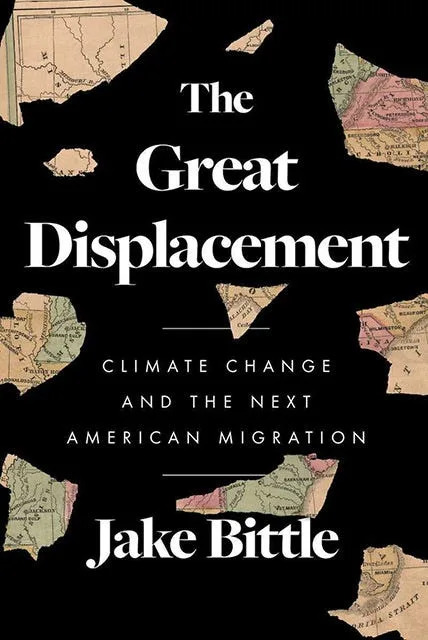
The Great Displacement: Climate Change and the Next American Migration by Jake BittleSimon & Schuster
In the first week Maconaughey was back, she helped transform St. Columba’s campus into a massive shelter for boaters who had lost their homes in the storm, cramming two dozen air mattresses into a loft that had previously been used for an after-school program. The next week, Maconaughey and her congregation installed approximately two dozen trailers around Marathon, giving the boaters a long-term place to stay.
Maconaughey knew there was no chance the county government would restore all the housing that had been lost in the storm, but after a year went by, she found herself shocked at how little had been rebuilt. A nonprofit land trust had erected only a handful of new cottages and a $50 million state program called Rebuild Florida had repaired only two homes, a pittance compared to the thousands of dwellings that had been swept away.
So Maconaughey called up the nonprofits who were funding St. Columba’s relief efforts and made an unconventional proposal: the church, she proposed, would buy some derelict housing and fix it up. She had her eyes set on a leaky, mold-filled apartment complex in Marathon that had been condemned for sewage issues a few years earlier. The apartment complex finally opened in the summer of 2020, providing cut-rate housing to 16 families who had been staying on couches or in trailers since the day the storm hit.
Never coming back
But for every person who found permanent shelter, there were more who could not afford to wait for the islands to recover. This wasn’t only because people didn’t want to return, but also because there were no homes to which they could return. Maconaughey told me with distaste that in several places along Marathon’s beachfront, developers have built single large mansions on lots that once contained three or four small homes each.
The lack of affordable housing in turn created a labor shortage: fire and police departments couldn’t find enough officers to fill their shifts, boat maintenance companies struggled to locate buffers and repairmen, and many hotels went shorthanded through the on-season rush. When employers exhausted their hiring options on the islands, Maconaughey said, they started to hire workers from the mainland towns of Homestead and Florida City, who take a two-hour bus ride in either direction to work for minimum wage.
“I think people are really struggling, and it’s just below the surface,” she said. “We’re a tourist area, so it’s in our best interests to make it look nice from the highway, but there’s hidden pain.”
Maconaughey told me about the church sexton, Mike, who was driven out of the Keys by Irma. Mike showed up after the recession in a homeless shelter in Marathon. He was blind, and when he first arrived at the shelter he couldn’t take a shower or put on clothes without assistance. After a year in the shelter, Mike started attending services at St. Columba, and soon displayed a great talent for weaving wooden canes and chairs, a craft he often practiced on the church pavilion after sermons. He also taught the kids in the after-school program how to play chess.
Mike was on the Keys as the storm approached, not with the congregation in Ireland. He first sought refuge in the massive Miami hurricane shelter, but by the time he got there, that shelter was full. As shelters in Florida all reached capacity, emergency officials herded evacuees from the Keys up toward Georgia, North Carolina, and Virginia, offering them bus transportation as far as they were willing to go. Mike was unsure when he would be able to return to the Keys, so he asked for a ticket to Minnesota, where he grew up. He was never able to get back.
“We kind of lost him,” Maconaughey said. “He got on a bus to evacuate and now he’s gone. He was a huge part of our community … You have to ask yourself, do you ever recover from something like this?”
Jake Bittle is a climate reporter and staff writer for Grist.
More than 122 million Americans have high blood pressure, which can lead to heart disease and stroke. Here’s how to get your numbers under control
Wändi Bruine de Bruin – February 21, 2023
Stunning as it may sound, nearly half of Americans ages 20 years and up – or more than 122 million people – have high blood pressure, according to a 2023 report from the American Heart Association. And even if your numbers are normal right now, they are likely to increase as you age; more than three-quarters of Americans age 65 and older have high blood pressure.
Also known as hypertension, high blood pressure is a major risk factor for heart disease and stroke.
Our research has found that most Americans don’t know the normal or healthy range for blood pressure – yet strikingly, they think they do. And that is cause for serious concern.
In our new study, published in January 2023, we found that 64% expressed confidence in their understanding of blood pressure numbers – but only 39% actually knew what normal or healthy blood pressure is. A healthy diet, more exercise and less salt and alcohol are all ways to improve your blood pressure numbers.
False confidence, deadly consequences
Such false confidence can be harmful because it may prevent people from seeking care for high blood pressure. After all, if you think it’s normal, why bother talking to your doctor about your blood pressure?
Part of the reason for this overconfidence begins in the doctor’s office. Typically, a nurse brings over a blood pressure cuff, straps it on your upper arm and takes a reading. The nurse may announce the result, remove the cuff and record it for the doctor.
When the doctor arrives, the session may well move on to other matters without a word about the blood pressure reading. This likely happens because your doctor wants to focus on how you’re feeling and why you’re there. But as a result, you may leave your appointment thinking your blood pressure is fine, even if it’s not.
To lower your risk of heart attacks and strokes, it’s critical to understand your blood pressure readings. This is especially true for patients with conditions such as heart disease, kidney disease and diabetes.
Normal or healthy blood pressure is less than 120/80 millimeters of mercury (mm Hg) for adults. This is a unit of measurement that stems from early blood pressure monitors, which looked at how far your blood pressure could push a column of liquid mercury. For most patients, lower tends to be better.
Stage 1 hypertension, which is the lower stage of high blood pressure, begins at 130/80. Stage 2 hypertension, which is the more severe stage of high blood pressure, begins at 140/90. Both numbers are critically important, because every increase of 20 millimeters of mercury in systolic blood pressure, or 10 in diastolic blood pressure, doubles a person’s chances of dying from a heart attack or stroke.
10 tips for healthier blood pressure
To avoid false confidence, ask about your blood pressure at every doctor’s visit, and find out what the numbers mean. If your blood pressure is above the normal or healthy range, then the American Heart Association recommends the following 10 tips.
Talk with your doctor. If your blood pressure is high, ask your doctor about strategies for lowering it, and how you can track your blood pressure at home.
Eat a heart-healthy diet. Vegetables, fruit, whole grains, low-fat dairy products, skinless poultry and fish, nuts and legumes, and olive oil are all good for your heart. Red meat, saturated and trans fats and ultraprocessed foods are unhealthy for your heart.
Limit your alcohol use. Whether it’s beer, wine or spirits, alcohol increases your blood pressure. It’s better to not drink alcohol, but if you do, observe the limits recommended by the Dietary Guidelines for Americans. For women, that’s one drink per day at the very most. For men, it’s two drinks per day at most. One drink is 12 ounces of beer, 4 ounces of wine, 1.5 ounces of 80-proof spirits or 1 ounce of 100-proof spirits.
Be more physically active. Just two and a half hours per week of physical activity can help lower blood pressure. For example, that’s a 30-minute walk five days a week. You might also switch up your physical activity by swimming, lifting weights, doing yoga or going dancing.
Manage stress, which is bad for your blood pressure. While stress relief doesn’t always lower blood pressure, bringing down your stress level can help you feel better. The Mayo Clinic recommends several ways to manage stress, including learning to say no sometimes, spending time with family and friends and meditating.
Take medication, which is often recommended for people with stage 2 hypertension, and for some with stage 1 hypertension, including those who also have heart disease, kidney disease or diabetes. Most patients need two to three medications to lower blood pressure to normal or healthy levels. A recent meta-analysis demonstrated that lowering systolic blood pressure by 5 mm Hg through medication reduces the risk of major cardiovascular events by about 10%, irrespective of baseline blood pressure or previous diagnosis of cardiovascular disease.
Track your blood pressure at home. The American Heart Association recommends an automatic, validated cuff-style monitor that goes on your upper arm. A record of readings taken over time can help your doctor adjust your treatments as needed.
High blood pressure is a silent killer. Being proactive and knowing your numbers can be a lifesaver.
In its extreme, obesity reduces life expectancy by an average of three to 10 years, depending on severity, according to the NHS. It is also estimated that obesity and being overweight contribute to at least one in every 13 deaths in Europe.
So, with many of us feeling that we have put on a little weight here and there, and with stubborn tummy fat hard to shift – how can you get back in shape in 2023?
How to get rid of fat in 10 easy steps
1. Drink less alcohol
how to lose weight diet fitness health issues 2022 uk men women struggling to get rid of belly fat new year resolution fit alcohol – iStockphoto
Yes, it can be very tempting to reach for the Merlot at the end of a particularly taxing day, but studies show that alcohol is one of the main offenders when it comes to storing belly fat. Consider this: if you consume just two glasses of wine an evening, that’s an extra 72,000 calories a year, which equates to 20 pounds of fat.
Alcohol contains a very high amount of “empty” calories which don’t have any nutritional value. Women are more likely to store the fat created by these surplus calories on their hips, thighs and arms, whereas men store it on their tummy, hence the “beer belly”.
If you’re keen on reducing your tummy fat quickly, it’s advised that you cut out alcohol from your diet completely. If that sounds too severe, try to at least stay under the NHS-recommended 14 units (spread across three days or more). Aim to cut down your intake by capping your nightly intake to two glasses, and always having several alcohol-free days each week.
2. Eat a high protein diet
protein steak how to lose weight diet fitness health issues 2022 uk men women struggling to get rid of belly fat new year resolution fit – iStockphoto
There’s a good amount of evidence to suggest that protein is key to losing tummy fat. Firstly, it releases the hormone PYY, which helps to send a message to your brain that you’re full. A good portion of protein in a meal should help you avoid overeating.
Many observational studies prove that people with a higher protein intake have lower levels of belly fat. It also raises your metabolic rate, making you more likely to build muscle during and after exercise. Try to get a serving with every meal: breakfast, lunch and dinner.
3. Reduce your stress levels
Stress causes your body to gain fat because it triggers the release of the stress hormone cortisol, which in turn increases your appetite.
How do you relieve stress? To an extent, the answer is entirely personal – we’re all different – but studies consistently show that getting out in nature and regular bouts of meditation work to reduce our anxiety.
4. Don’t eat a lot of sugary foods
Calorie for calorie, sugar is different to other food groups such as protein, complex carbohydrates, and fat, because it confuses your normal appetite controls and causes your body to produce fat.
Refined sugars are often hidden in a plethora of different products that you wouldn’t expect such as fruit juices. Make sure to check the labels before eating the products.
5. Address food sensitivities
People often have food sensitivities that go unaddressed for years. If you think you may be suffering from an allergy, it’s important that you report it to your doctor who may refer you to a dietitian.
Common food sensitivities include dairy and gluten, both of which can result in an inflammation of the gut, making it even more prone to developing more sensitivities. Addressing these allergies can have dramatic impacts on weight loss, and even mood and behaviour.
6. Build up your strength
resistance training how to lose weight diet fitness health issues 2022 uk men women struggling to get rid of belly fat new year resolution fit – MBI / Alamy Stock Photo
Everyone knows that regular exercise is necessary in order to lose weight; however, not everyone knows that resistance training is one of the best ways to do so.
Resistance training, also known as weight lifting or strength training, is important for improving and maintaining muscle mass. It also helps to spike our metabolisms, which means your body burns fat even after you’ve put the weights down.
However, it’s worth saying that the best possible training plan probably combines a variety of exercises.
7. Get plenty of sleep
sleep how to lose weight diet fitness health issues 2022 uk men women struggling to get rid of belly fat new year resolution fit
Sleep is one of the most important aspects of your overall health and wellbeing, especially when it comes to managing your weight. A 2013 study by the University of Colorado found that one week of sleeping about five hours a night led participants to gain an average of two pounds.
Easy ways to improve the quality of your sleep are by making sure you don’t look at screens late at night and by doing some gentle yoga before bed.
8. Eat fatty fish every week
Omega-3 fatty acids are lauded with such attractive qualities as delaying ageing and fighting degenerative diseases. However, it’s less well known that eating fatty fish is also excellent for weight loss (when accompanied by a balanced diet and regular exercise, of course).
Foods such as mackerel and herring are high in protein and “good fats” that help to break down some of the more dangerous fats in your body. Try to eat fish two or three times a week.
9. Replace some of your cooking fats with coconut oil
low fat cooking oils coconut how to lose weight diet fitness health issues 2022 uk men women struggling to get rid of belly fat new year resolution fit
Put aside the butter and olive oil and try coconut oil instead.
According to Web MD – and other medically-led sites – the medium-chain fats in coconut oil boost metabolism and decrease the amount of fat you store in response to high calorie intake.
10. Eat plenty of soluble fiber
Soluble fibre is ideal for aiding weight loss because it forms a gel with the food in your digestive tract, slowing it down as it passes through. This type of fibre promotes gut bacteria diversity, which has been frequently linked to a lower risk of belly fat.
Excellent foods to eat to increase your soluble fibre intake include avocados, legumes (try lentils, peas or chickpeas) and blackberries. In a 2021 study, volunteers ate one meal provided by researchers each day – one group ate an avocado, while a control group ate a meal similar in calories, but with the Instagrammer favourite left out.
“Female participants who consumed an avocado a day as part of their meal had a reduction in visceral abdominal fat,” says study leader Naiman Khan, the Illinois professor of kinesiology and community health. “However, fat distribution in males did not change, and neither males nor females had improvements in glucose tolerance.”
Easy exercises to burn belly fat
The best way to burn belly fat is to add around 30 minutes of cardio or aerobic exercise into your daily exercise routine.
Researchers from the Mayo Clinic in Minnesota ranked a variety common exercises based on information obtained from the US National Institutes of Health. The research calculated the number of calories burned during an hour of each exercise, with surprising results. With this in mind, these are some of the best work-outs to try:
Walking
Picking up the pace of your walk can work wonders for burning fat. When it comes to enjoying a brisk walk (3.5mph), you can burn between 314 and 391 calories.
A 2013 study by the University of Michigan also found that walking on uneven terrain while hiking increases the amount of energy your body uses by 28 per cent compared to walking on flat ground.
Skipping
Similarly to the above, skipping can help burn between 861-1,074 calories per hour, and thus burns fat. It is also a weight-bearing exercise so can help to improve bone density, which helps stave off osteoporosis.
Running
It goes without saying that running is a great way to burn calories. Running at 8mph will burn around 861-1,074 per hour (depending on your weight); you can burn 606-755 calories even running at 5mph, and 657-819 by simply running up the stairs.
Additionally, a 2005 study by the British Journal of Sports Medicine found that sedentary women who incorporated stair climbing into their daily activities increased their VO2 max, or maximum aerobic capacity, by 17.1 per cent and reduced “bad” LDL cholesterol by 7.7 per cent. (Read our guide to the best fitness trackers to learn how to track your workouts.)
Swimming
Experts agree that “vigorous swimming” is a full-body workout that is great for your joints. (By vigorous we’re sure they don’t mean splashing about in the shallow end.) It will help burn between 715-892 calories per hour of activity.
Breaststroke is the least beneficial stroke for burning calories, but a much better cardiovascular workout than the other strokes.
This guide is kept updated with the latest advice.
What Happens When You Die? Hospice Workers Share Conversations With Patients as They Near the End of Their Life
Lyssa Goldberg – February 19, 2023
Hospice workers share some of their impactful conversations with patients.
Talking about mortality can definitely be a frightening subject. But for some people, like those who work in hospice, discussing what happens when you die may feel like a more natural conversation to have.
So, what does it feel like to be days from death? And what happens to you when you die? While some of these questions may never be answered, we spoke to several hospice care professionals across the U.S. to find out what they’ve learned from their patients in their final days as they prepared to make a transition from life to death.
“Very few people are afraid of death. They’re afraid of dying, the process leading to death,” says Travis Overbeck, National Director of Patient Experience for Seasons Hospice.
Of course, no one truly knows what comes next, but some patients have a very clear idea of what they believe should happen once they die, says Overbeck. Hospice workers like himself get to explore their patients’ belief systems and ask them what they’d like their death to look like.
For instance, in the Buddhist tradition, there’s an expectation of silence at the time of death, according to Overbeck, and there should not be any wailing or grieving at the individual’s bedside so they can make their way peacefully into the next life.
“I’ve seen so many patients at the time of death. Most often, there’s this sense of peace and calm, and it’s really beautiful,” Overbeck says. “That’s why I do what I do. It’s all about bringing that peace and comfort to our patients at end of life.”
Here are some of the most common themes that have emerged from end-of-life conversations with hospice workers.
“Would you mind praying for me?”
Overbeck, a chaplain who sees patients of all faiths and backgrounds but practices Christianity himself, remembers his final conversations with a Jewish patient in her last days of life. She said, “I know you’re Christian, and I know I’m Jewish, but would you mind praying for me?”
“What would you like me to pray for?” Overbeck replied.
“I pray that when I die, it will be peaceful, and I will be comforted,” was the patient’s request.
After some conversation, they prayed together and the two hit it off. When Overbeck returned to the hospital the next day, the patient’s friend found him in the hallway. She told Overbeck that the patient had become unresponsive—but before she stopped speaking, the patient asked her friend to have Overbeck pray for her again if he returned.
Overbeck entered the patient’s room and, knowing that hearing is typically the last sense to go, he reintroduced himself and said, “I’m going to go ahead and pray for you.” He prayed again for peace and a comfortable transition. And at the end of his prayers, suddenly the patient began to talk.
“I’m going on a journey to a place I’ve never been before,” she started, “and everybody is sparkling, and everybody is smiling at me.” The patient died about 45 minutes later.
“I don’t care what belief system you are or aren’t. At the end of the day, that’s real. That was her experience,” Overbeck says.
Much of Overbeck’s work is dedicated to tying up loose ends and bringing his patients’ life to closure, whether that’s reuniting family members that have become estranged or ensuring the patient’s legacy is preserved. “There’s a process in dying,” Overbeck says. “It’s the opportunities to say, ‘I love you,’ opportunities to say, ‘I forgive you,’ opportunities to ask for forgiveness, opportunities to say, ‘Goodbye.’”
Overbeck recalls another conversation with a patient who was the CEO of a very large, well-known company. “Travis, I had it all,” the CEO told Overbeck. “I had the vacation homes. I was able to send my kids to the finest schools. We traveled the world. But at some point, I lost my focus. I began to value my job and my money more than anything else.”
Along the way, it cost him not only his marriage but his relationship with his kids. In fact, the patient had a grandchild he’d never even meet. Overbeck asked the patient for permission to reach out to his family. A few phone calls later, they were flying into town to visit the hospital.
Overbeck helped facilitate conversations between the patient and his family members, and while he acknowledges it wasn’t easy, he was ultimately able to bring them a feeling of closure. Most importantly, the patient was able to meet his grandchild for the first time. The patient died later that day.
“The biggest realization that I’ve had is that we all have a finite amount of time—it’s about how you’re going to live with that time,” Overbeck says.
Cultivating gratitude
Carolyn Gartner, licensed clinical social worker with Visiting Nurse Service of New York Hospice and Palliative Care, began practicing meditation and studying Buddhism around the same time she started pursuing social work.
Working in hospice care, she’s found her patients hold a perspective of gratitude and acceptance that parallels what she’s been taught through her meditation practice. “I feel my older patients really understand the idea of letting go, and not letting small things bother you,” Gartner says. “We get so caught up in the day-to-day, and I see my older patients are a good role model for how those things pass.”
Gartner works with a diverse array of patients throughout Brooklyn, from celebrities to patients in public housing. Recently, she and a chaplain from VNSNY Hospice went to visit a Jamaican patient who loves Bob Marleymusic.
The patient’s daughter told them that her mother had experienced a severe explosion of pain the day before, so Gartner prepared to handle the situation sensitively, thinking perhaps the patient wouldn’t want to listen to music that day.
When they walked in the door, however, the patient was wearing a big smile on her face and said: “Okay, ladies, when are you starting the Bob Marley?’”
“I do think that this work, almost every day, reinforces to me: We are energy. We are light. There is a spirit,” Gartner says.
At end-of-life, people like to reflect on their life story, Gartner says. Patients will take out old photos and share stories of joy and pain all in one session. Having studied screenwriting as an undergrad at New York University, Gartner uses these same storytelling techniques with her patients to learn and listen to their stories.
“My observation is that people will often die the way they live, so it’s really interesting to see how people process what they’ve gone through,” she says.
While the patients may seem ready to accept what comes next, Gartner says it’s the families who often need help coming to terms with it. VNSNY Hospice assists with the pre-bereavement process for family caregivers so they can see beyond the grief and enjoy the time they have left with the patient.
“Patients almost always know what’s going on in their body. It’s the family who doesn’t,” she says.
Over the years, Kalah Walker, patient care administrator for VITAS Healthcare, has seen numerous hospice cases where the patients will call out to their loved ones who’ve passed, as if they’re seeing someone that everyone else cannot.
Often, they look out into the distance, and the hospice worker knows it’s the name of a family member who’s no longer with us. Generally, this happens within the last days of their life, Walker notes.
“You know what they’re seeing when they’re looking off into the distance…,” she said. “Once they do that, they’re able to let go.”
Sometimes, the patients will ask their hospice worker if they can see the family member too. Walker says it’s important to be there in the moment with them, agree, and allow the moment to happen as the patient is experiencing it. “There’s a nurse who gets to be there to bring life into this world, and we get to stand there and hold a patient’s hands or their family’s hands as a life leaves this world,” she says.
Walker says the real work with end-of-life care comes after the patient passes, however. “Hospice isn’t just about death and dying. It’s about learning about what’s really important in life and keeping those memories alive,” Walker said.
VITAS’ staff supports families who’ve experienced loss with programs like gifting them memory bears as reminders of their loved ones or butterfly release ceremonies. At the butterfly release ceremony, families will open a package and release butterflies into the sky, giving them a chance to reflect and experience a feeling of release themselves. “I’ve seen the butterflies sit there in the moment. You notice they kind of hover around, and it’s almost as if that butterfly is the loved one,” Walker says.