Fish kills and breathing issues in humans can start when levels reach 10,000 cells per liter, according to the FWC.
Fish kills have been problematic in waters near Collier County, home of Naples, in recent weeks.
On the eastern coast of the state, water taken from the Juno Beach Pier on Feb. 15 tested positive for background amounts of red tide, but the amount was so miniscule it was not expected to have any detrimental health effects, and it was gone when a follow-up test was taken Feb. 22.
When the toxin from red tide is inhaled, it can cause respiratory symptoms in people, such as coughing, wheezing and sore throats.
In marine life, it’s a killer that affects the nervous system and can cause paralysis.
What exactly is red tide?
It is a sea-faring toxic algae, formally known as the single-cell Karenia brevis.
It produces a toxin as a defense mechanism.
What is the main cause of red tide and how long does it last?
Red tides are naturally occurring. They have been observed in the Gulf of Mexico since the 1800s.
They can grow far offshore in the Gulf and pile up near the coast in the fall and winter as wind patterns blow cold fronts into Florida.
Red tide is often gone by spring, but in some years, the infection has lingered.
Palm Beach lifeguard George Klein wears a mask at Midtown Beach in Palm Beach that remains closed due to red tide warnings, Sunday, September 30, 2018. (Melanie Bell / The Palm Beach Post)
Is red tide present in Florida right now?
Yes. Samples on Florida’s west coast from Venice to Naples tested at high levels of toxicity.
Fish kills have been problematic in Collier County waters in recent weeks. Rhonda Watkins, a pollution control environmental supervisor for Collier County, said reports of dead fish are widespread.
Medium levels have been found in the Florida Keys.
It’s possible a stronger dose of red tide could find its way to Florida’s east coast beaches, according to James Sullivan, executive director of Florida Atlantic University’s Harbor Branch Oceanographic Institute.
Red tide hit Florida beaches hard in 2018
A persistent red tide bloom lasted through the summer and into fall of 2018.
Tons of marine life died on the west coast of the state, triggering daily “fish kill clean-up” reports on Sanibel Island where dump trucks full of dead fish were removed.
In October 2018, Palm Beach County ocean rescue Captain Rick Welch, left, and lifeguard Russ Gehweiler, right, install newly printed signs warning visitors of the red tide outbreak along A1A, south of Indiantown Road in Jupiter. (Richard Graulich / The Palm Beach Post)
Manatee, Goliath grouper, shorebirds and sea turtles all perished in droves that year in areas from Sarasota through Naples.
Can red tide on Florida’s west coast reach the state’s east coast?
Yes. A west coast bloom can reach the east coast if it gets caught in the Gulf of Mexico’s loop current and travels through the Florida Straits into the Gulf Stream – a north-moving river of warm water that skims the Palm Beach County coastline.
Once in the Gulf Stream, waves can force the toxin produced to be dispersed in the air, which can be carried by east winds to the beaches.
Since 1972 when the transport of red tide from the west coast to the east was first identified, seven more instances had been documented prior to 2018, according to the Florida Fish and Wildlife Conservation Commission. Those include in 1990, 1997, 1999 and 2006. In 2007, a red-tide bloom near Jacksonville traveled south with a near-shore current.
DeSantis, GOP lawmakers ready for Culture Wars 2.0 as Florida Legislature convenes
Lawrence Mower – March 5, 2023
Daniel A. Varela/dvarela@miamiherald.com
When Florida lawmakers met for their annual legislative session last year, they championed bills that led to months of headlines for Gov. Ron DeSantis about sexual orientation,abortion, immigration, voting and the teaching of the nation’s racial history.
For this year’s legislative session, which begins Tuesday, DeSantis has a preview: “You ain’t seen nothing yet.”
Emboldened by an overwhelming reelection victory margin and the most compliant Legislature in recent memory, DeSantis is pushing lawmakers to pass the legislation conservatives have been wanting for years.
Lawmakers are preparing to advance bills sought by DeSantis that would require private companies to check their employees’ immigration status. They’re eyeing sweeping changes to limit lawsuits against businesses. They could do away with requiring permits to carry a concealed weapon. More abortion restrictions might be on tap, too, when the 60-day legislative session officially kicks off.
It’s an agenda that’s expected to give DeSantis months of headlines — and springboard his anticipated 2024 presidential run. Some of the bills could help shore up his conservative bona fides against fellow Floridian Donald Trump, who has already announced he’s running to take back the White House, and to further endear him to deep-pocketed donors.
“I’ve never seen a governor in my lifetime with this much absolute control of the agenda in Tallahassee as Ron DeSantis,” said lobbyist Brian Ballard, who has been involved in Florida’s legislative sessions since 1986 and supports the governor.
DeSantis is coy about his presidential ambitions, but legislative leaders are prepared to pass a bill allowing him to run without having to resign. Political observers believe he’ll enter the race after the session ends in May.
Already, DeSantis is promising “the most productive session we’ve had,” aided by his 19-point reelection victory.
And the Republican super-majority Legislature has signaled that it’s along for the ride. Lawmakers in his own party have appeared reluctant to challenge him.
The goal over the next two months, according to House and Senate leaders: Get DeSantis’ priorities “across the finish line.”
The legislation — which included the Parental Rights in Education bill that critics called “don’t say gay” — led to months of headlines in conservative and mainstream media that helped cast DeSantis as the most viable alternative to Trump in a presidential GOP primary.
This year, DeSantis and lawmakers are looking to continue the trend — and check off several bills that failed to get traction in previous years.
The governor and lawmakers are also looking to limit liberal influences in schools and state government. A bill has been filed to end university diversity programs and courses, and lawmakers are preparing bills to prevent state pension investments that are “woke.” Legislators are also considering laws governing gender-affirming care for minors.
And when lawmakers craft their budget for the next fiscal year, it’s likely to include DeSantis’ requests for $12 million more to continue the program that sent migrants from Texas to Martha’s Vineyard in Massachusetts. DeSantis also wants a tripling of the size of his Office of Election Crimes and Security, from 15 to 42 positions. And in a dig at President Joe Biden after an official in his administration suggested a ban on gas stoves, DeSantis wants to adopt a permanent tax break for anyone who buys one.
Perhaps his most ambitious proposal is another attempt to make good on his 2018 campaign promise requiring private employers to use the federal online system E-Verify to check that employees have entered the country legally.
In 2020, DeSantis caved after resistance from the business community and legislative leaders; he quietly signed a watered-down version of the bill into law. Late last month, he announced he would try again.
That’s one of several items on some Florida Republicans’ wish lists. Others include:
▪ An expansion of school vouchers to all school-aged children in the state, the culmination of two decades of education reforms;
▪ A measure allowing Floridians to carry concealed weapons without first seeking a permit and receiving training;
▪ Tort reform legislation long sought by the state’s business associations;
▪ A bill making it easier to sue media outlets for defamation, an idea DeSantis’ office pitched last year but that no lawmakers sponsored.
“Now we have super majorities in the Legislature,” DeSantis said. “We have, I think, a strong mandate to be able to implement the policies that we ran on.”
A changed Legislature under DeSantis
If DeSantis has a chance to pass those bills, it’s during this legislative session.
The culture in Tallahassee is far different than it was when Republicans took control more than 20 years ago. Gone are the days when Republicans publicly debated ideas. Today, floor debate among House members is time-limited, and bills are often released in their finished form following backroom deals with Republican leaders. Committee chairpersons could block leadership bills they didn’t like. Today, they’re expected to play along.
In years past, lawmakers would push back hard against the governor, such as in 2013, when they refused to carry out then-Gov. Rick Scott’s plan to expand Medicaid coverage to more than 1 million Floridians.
Today is a different story.
Much as DeSantis has exerted control over schools, school boards, Disney, high school athletics, universities and the state police, DeSantis has thrown his weight around with the Legislature over the last four years.
He’s called them into special legislative sessions six times in 20 months. Once was to pass DeSantis’ new congressional redistricting maps after he vetoed maps proposed by legislators. It was the first time in recent memory that a governor proposed his own maps.
He endorsed Republican Senate candidates during contested primary races last year, something past governors considered an intrusion into the business of legislative leaders. In one race, he supported the opponent of incoming Senate President Kathleen Passidomo, R-Naples. The move was considered to undermine only the third woman to be Senate president in the state’s history.
He’s also shown little regard for the priorities of past House speakers and Senate presidents. In June, he vetoed the top priorities of the then-House speaker and Senate president, joking about the cuts while both men flanked him on stage.
DeSantis is aware of his influence over state lawmakers, according to his book “The Courage to be Free,” released last week. In one part, he writes that his ability to veto specific projects in the state budget gave him “a source of leverage … to wield against the Legislature.”
Legislative leaders say they’re aligned
The state’s legislative leaders in 2023, Passidomo and House Speaker Paul Renner, R-Palm Coast, consider themselves ideologically aligned with the governor.
“We have a very, very similar philosophical view of things on really every issue,” Renner said in November.
Republicans have two-thirds super-majorities in the Legislature, an advantage that allows them to further limit Democratic opposition on bills. The last two Republican legislators willing to publicly criticize their leaders’ agendas left office last year. Multiple moderate House Republicans decided not to run again last year.
DeSantis’ sway over the Legislature has not gone unnoticed.
When Luis Valdes, the Florida director for Gun Owners of America, spoke to lawmakers last month, he was upset that legislators weren’t allowing gun owners to openly carry firearms. He concluded that it must be because DeSantis didn’t want it.
“If he tells the Legislature to jump, they ask, ‘How high?’ ” he said.
Former lawmakers and observers have noticed the shift in Tallahassee.
Former Republican lawmaker Mike Fasano laments that legislators don’t exercise the power they used to have. But Fasano, who supports DeSantis, said the governor’s popularity makes it risky to go against him.
“A Republican in the Legislature, I’m sure, is aware of that,” Fasano said.
The Democrats’ lament
Senate Minority Leader Lauren Book, D-Plantation, who grew up in the legislative process thanks to her father, a big-time Tallahassee lobbyist, said the changes in the Legislature are obvious.
“This is not the same Florida Senate, Florida House, as it was when the titans were here,” Book said.
DeSantis’ culture wars have overshadowed more practical problems in Florida, such as the high costs of rent and auto and homeowners insurance, said House Minority Leader Fentrice Driskell, D-Tampa.
Passidomo has proposed broad legislation to create more affordable housing, but the governor has not endorsed the bill.
Driskell said Floridians want a pragmatist, not a populist, as governor.
“This governor has never seemed to care to know the difference.”
Tampa Bay Times political editor Emily L. Mahoney contributed to this report.
Texas GOP votes to censure Rep. Tony Gonzales over support on gun, same-sex legislation
Caroline Vakil – March 4, 2023
The Republican Party of Texas voted on Saturday to censure Rep. Tony Gonzales (R-Texas) over his stance on several pieces of legislation, including his support on a bipartisan gun law passed last year and federal same-sex marriage protection legislation.
In a 57-5 vote within the Texas GOP’s State Republican Executive Committee, the state party censured the Texas House Republican. Only one member abstained.
In the state party’s resolution to censure Gonzalez, the Texas GOP cited his support over the Respect for Marriage Act, which was signed late last year and requires both that same-sex marriages be recognized at the federal level and that, if they happened in states were they are legal, they be recognized in all other states.
The censure also criticized him for being the only Republican in January to vote against a House rules package over concerns of possible cuts to the defense budget in addition to supporting bipartisan gun legislation passed in the wake of several high-profile shootings, including at Uvalde, Texas, which Gonzales represents.
“The Republican Party of Texas officially censured Representative Tony Gonzales today, imposing the full set of penalties allowed by the rules, for lack of fidelity to Republican principles and priorities,” the Texas GOP said in a press release.
A campaign spokesman for the congressman hit back at the state Republican Party in a statement, suggesting Gonzales was representing his constituents through his work.
“Today, like every day, Congressman Tony Gonzales went to work on behalf of the people of TX-23. He talked to veterans, visited with Border Patrol agents, and met constituents in a county he flipped from blue to red,” the campaign spokesman said. “The Republican Party of Texas would be wise to follow his lead and do some actual work.”
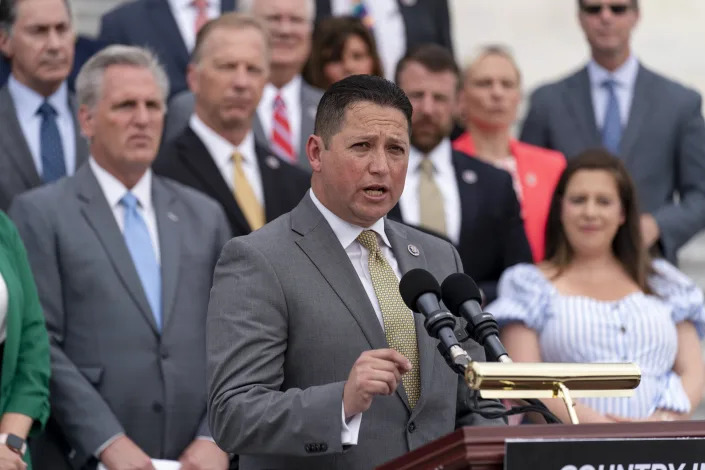
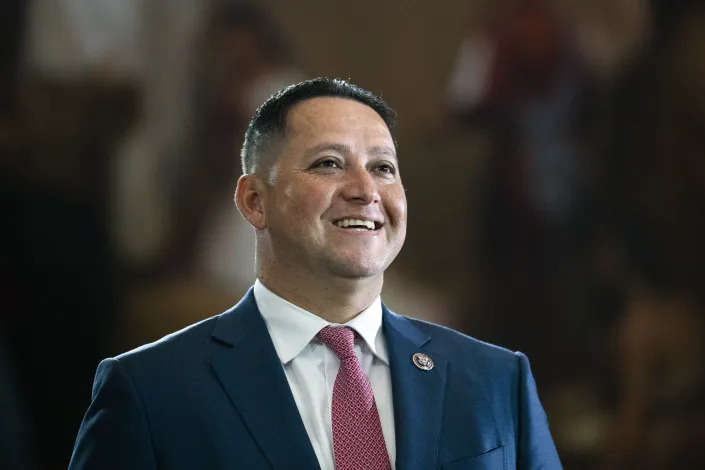
Rep. Tony Gonzales, R-Texas, center, accompanied by House Minority Leader Kevin McCarthy of Calif., left, and House Republican Conference chair Rep. Elise Stefanik, R-N.Y., right, speaks at a news conference on the steps of the Capitol in Washington, July 29, 2021. Gonzales was censured Saturday, March 4, 2023, in a rare move by his state party over votes that included supporting new gun safety laws after the Uvalde school shooting in his district. (AP Photo/Andrew Harnik, File) Rep. Tony Gonzales, R-Texas, is seen before the flag-draped casket bearing the remains of Hershel W. “Woody” Williams lies in honor in the U.S. Capitol, July 14, 2022, in Washington. Gonzales was censured Saturday, March 4, 2023, in a rare move by his state party over votes that included supporting new gun safety laws after the Uvalde school shooting in his district. (Tom Williams/Pool photo via AP, File)
AUSTIN, Texas (AP) — Republican U.S. Rep. Tony Gonzales of Texas was censured Saturday in a rare move by his state party over votes that included supporting new gun safety laws after the Uvalde school shooting in his district.
The Republican Party of Texas voted 57-5 with one abstention, underlining how the two-term congressman’s willingness to break with conservatives on key issues during his short time in office has caused GOP activists and some colleagues to bristle.
That independent streak includes opposing a sweeping House GOP immigration proposal over the U.S.-Mexico border, which includes a large portion of his South Texas district. He has also voted to defend same-sex marriage and was an outright “no” against a House rules package after Republican leader Kevin McCarthy became speaker.
Gonzales was defiant before the vote and did not attend the meeting of Texas GOP leaders and activists in Austin.
“We’ll see how that goes,” he told reporters in San Antonio on Thursday.
Gonzales spent the day working, according to Sarah Young, his spokesperson.
“He talked to veterans, visited with Border Patrol agents, and met constituents,” Young said in a statement. “The Republican Party of Texas would be wise to follow his lead and do some actual work.”
The vote followed an hourlong, closed-door executive session in which party members were allowed to debate the resolution.
There were no public comments by members before or after the executive session, and the vote was held about one minute after the meeting resumed, followed by applause and cheers from committee members.
In practical terms, a censure allows the state party to come off the sidelines if Gonzales runs again in 2024 and to spend money to remind primary voters about the rebuke. Passage of a censure required a three-fifths majority, or 39 votes of the State Republican Executive Committee, according to committee Chair Matt Rinaldi.
More than a dozen county GOP clubs in Gonzales’ district had already approved local censure resolutions.
Gonzales cruised through his GOP primary and easily won reelection last year in his heavily Hispanic congressional district. He first won in 2020 to fill an open seat left by Republican Will Hurd — who also didn’t shy from breaking with the GOP, and whose aides say is now considering a run for president.
The censure illustrates the intraparty fights that still flare in America’s biggest red state even as Republicans celebrate 20 years of having full control of the Texas Legislature and every statewide office.
Last year, former Texas GOP Chairman Allen West stepped down from the job to mount a faint primary challenge against Republican Gov. Greg Abbott. The state party in 2018 also censured a former moderate Texas House speaker who opposed bathroom restrictions for transgender people.
Norfolk Southern train derails in Springfield, Ohio
Faris Tanyos – March 4, 2023
Nearby residents have been asked to shelter in place after a Norfolk Southern train derailed near a highway in the Springfield, Ohio, area on Saturday.
Norfolk Southern confirmed in a statement to CBS News that 20 cars of a 212-car train derailed. The railway company said there were no hazardous materials aboard the train, and there were no reported injuries.
Residents within 1,000 feet of the derailment were asked to shelter-in-place out of an “abundance of caution,” the Clark County Emergency Management Agency reported. The derailment occurred near State Route 41.
A Norfolk Southern train which derailed in Springfield, Ohio. March 4, 2023. / Credit: Jon Shawhan/Twitter
On Feb. 3, a Norfolk Southern train carrying hazardous materials derailed in a fiery crash in East Palestine, Ohio. Of the 38 cars that derailed, about 10 contained hazardous materials. Hundreds of residents were evacuated, and crews later conducted a controlled release of toxic chemicals, including vinyl chloride, because of the risk that the derailment could cause an explosion.
State and federal officials have faced significant criticism over their response to the East Palestine incident, with local residents concerned that the contamination to the area could pose significant long-term health risks.
The Environmental Protection Agency has so far said that air quality levels remain at safe levels. However, on Thursday the EPA said that it had ordered Norfolk Southern to conduct dioxin tests at the site of the derailment, and if those dioxin levels were found to be at unsafe levels, it would order an immediate cleanup.
Transportation Secretary Pete Buttigieg, who was also criticized for not visiting East Palestine until three weeks after the derailment, tweeted Saturday night that he had been briefed by Federal Railroad Administration staff about the Springfield derailment and had also spoken to Ohio Gov. Mike DeWine on the incident.
“No hazardous material release has been reported, but we will continue to monitor closely and FRA personnel are en route,” Buttigieg said.
Springfield is located about 200 miles southwest of East Palestine.
Warm atmospheric rivers in California forecast could spell trouble for massive snowpack
The risk of flooding could rise dramatically with the arrival of warm rains later this month.
David Knowles, Senior Editor – March 2, 2023
A series of atmospheric river storms brought heavy snowfall to the region around Mammoth Lakes, Calif., Jan. 22. (Mario Tama/Getty Images)
Californians are bracing for the arrival of more atmospheric rivers over the coming weeks that could dump rain on the state’s massive snowpack and dramatically increase the risk of flooding.
“I would suggest that literally anyone who lives in the flood plains of these rivers, which is millions of people, pay attention to what’s going on and be prepared for floods,” Peter Gleick, climate scientist and founder of the Pacific Institute, told Yahoo News.
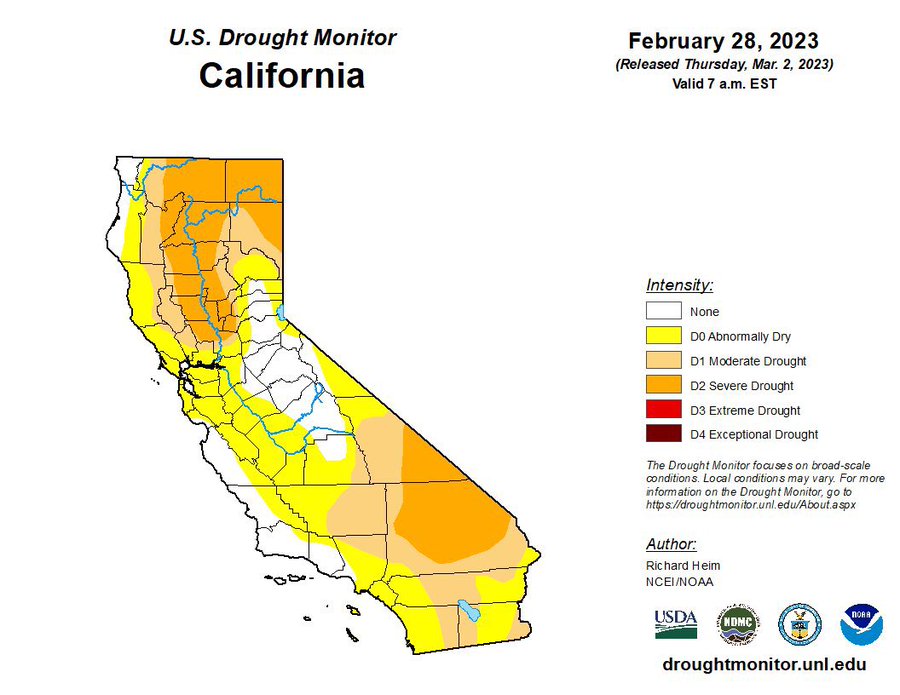
With snowpack levels already near all-time highs, cold temperatures in the state have begun moderating in recent days, and there is a roughly 20% chance of warmer atmospheric river rains later this month.
“The really big worry for flooding when you have a lot of snow in the mountains, your reservoirs are relatively full and you get a really warm, massive storm that dumps a lot of rain and melts a lot of snow, is that you overwhelm the reservoirs,” Gleick said.
On the bright side, this year’s rain and snow amounts have helped erase or ease California’s long-term drought crisis.
But the impressive snowpack coupled with warmer air and rain poses other risks.
“This is a good pattern for drought relief,” UCLA climate scientist Daniel Swain told Yahoo News about the rain and snowpack. “We’ve got to think about what happens when that all comes downstream in the late spring and early summer. There’s almost guaranteed to be at least minor snowmelt flooding this year. The question is whether we’re lucky and it’s nice and gradual and it doesn’t cause any big problems. Do we get some huge early season heat waves? That would be big uh-oh.”
Swain and Gleick both stress that human beings are not good at predicting weather more than a few days in advance. But the arrival of one or more warm atmospheric rivers in California over the coming weeks could be bad news for those living downstream from the snowpack.
“There’s no way to know. It depends on where that storm comes,” Gleick said. “Probably the most vulnerable area, generically speaking, is Sacramento on the American River. The main reservoir that protects Sacramento from flooding is Folsom, which is on the American River. Folsom, I think everyone would acknowledge, is undersized for the level of protection that Sacramento really needs.”
So far this year, in terms of historical averages for March 2, Folsom is at 114% of average capacity, a little more than half-full overall. But multiple additional atmospheric river rain events could be problematic.
Imposing snowbanks in Mammoth Lakes, Calif. (Mario Tama/Getty Images)
“We have the classic dilemma in California, which is that we want to keep our reservoirs relatively empty in the winter for flood protection, and we want them as full as possible at the end of the rainy season in April,” Gleick said. “The biggest demand for water is during the dry season, April through September, the growing season. So reservoir operators have to balance those two things. They don’t want to fill the reservoirs too soon if there’s a risk of flooding, and it’s bad if they don’t capture as much water as they can for the dry part of the year.”
While Republicans like House Speaker Kevin McCarthy of California often criticizes Democratic Gov. Gavin Newsom for not diverting runoff water during the rainy season into reservoirs, Gleick explained that reservoir managers have a difficult task this year due to the above-average rain and snowfall.
“They look at how much water is in the mountains stored as snow and they look at what’s in the reservoirs. They have models that tell them, Well, you can add this much water, you can let this much out. That’s the way they operate the system,” Gleick said. “The problem of course is that historical data are just averages, they’re not perfect and you can be surprised. The other problem, of course, is that climate change is telling us that all of the historical data are no longer a guide to the future.”
For now, the Sierra Nevada continued to receive multiple feet of snow this week.
“If we were to get heavy rain with a warm system and a lot of tropical moisture feeding into it, that would melt all of the snow that just fell in the mountains,” David Sweet, a meteorologist with the National Weather Service in Oxnard, told the Los Angeles Times, adding, “We need to stick that in the back of our mind and think, ‘Boy, I sure hope that doesn’t happen.’”
For older adults, every 500 additional steps taken daily associated with lower heart risk
March 2, 2023
Research Highlights:
A study of people ages 70 and older found walking an additional 500 steps per day, or an additional quarter mile of walking, was associated with a 14% lower risk of heart disease, stroke or heart failure.
Compared to adults who took less than 2,000 steps per day, adults who took about 4,500 steps per day had a 77% lower observed risk of experiencing a cardiovascular event.
Only about 3.5% of participants who took around 4,500 steps per day had a cardiovascular event, compared to 11.5% of those who took less than 2,000 steps per day, over the 3.5-year follow-up period.
(NewMediaWire) – March 02, 2023 – DALLAS A new study found that walking an additional 500 steps, or about one-quarter of a mile, per day was associated with a 14% lower risk of heart disease, stroke or heart failure, according to preliminary research to be presented at the American Heart Association’s Epidemiology, Prevention, Lifestyle & Cardiometabolic Health Scientific Sessions 2023. The meeting will be held in Boston, February 28-March 3, 2023, and offers the latest science on population-based health and wellness and implications for lifestyle and cardiometabolic health.
“Steps are an easy way to measure physical activity, and more daily steps were associated with a lower risk of having a cardiovascular disease-related event in older adults,” said Erin E. Dooley, Ph.D., an assistant professor of epidemiology at the University of Alabama at Birmingham School of Public Health and lead researcher of the study. “However, most studies have focused on early-to-midlife adults with daily goals of 10,000 or more steps, which may not be attainable for older individuals.”
Participants in the current analysis were part of a larger study group of 15,792 adults originally recruited for the ongoing Atherosclerosis Risk in Communities (ARIC) study. The present study evaluated health data collected from ARIC study visit 6 (2016-17) to evaluate the potential association between daily step counts and cardiovascular disease.
Researchers analyzed health data for 452 participants who used an accelerometer device similar to a pedometer, worn at the hip, that measured their daily steps. Participants were an average age of 78 years old; 59% were women; and 20% of participants self-identified as Black adults (70% of whom were women, and 30% of whom were men).
The devices were worn for three or more days, for ten or more hours, and the average step count was about 3,500 steps per day. Over the 3.5-year follow-up period, 7.5% of the participants experienced a cardiovascular disease event, such as coronary heart disease, stroke or heart failure.
The analysis found:
Compared to adults who took less than 2,000 steps per day, adults who took approximately 4,500 steps per day had a 77% lower observed risk of experiencing a cardiovascular event.
Nearly 12% of older adults with less than 2,000 steps per day had a cardiovascular event, compared to 3.5% of the participants who walked about 4,500 steps per day.
Every additional 500 steps taken per day was incrementally associated with a 14% lower risk of cardiovascular disease.
“It’s important to maintain physical activity as we age, however, daily step goals should also be attainable. We were surprised to find that every additional quarter of a mile, or 500 steps, of walking had such a strong benefit to heart health,” Dooley said. “While we do not want to diminish the importance of higher intensity physical activity, encouraging small increases in the number of daily steps also has significant cardiovascular benefits. If you are an older adult over the age of 70, start with trying to get 500 more steps per day.”
Additional research is needed to determine if meeting a higher daily count of steps prevents or delays cardiovascular disease, or if lower step counts may be an indicator of underlying disease.
The study had limitations. Participants had to enroll in the accelerometer device study, and hip-worn accelerometers are limited in capturing other activity behaviors that may also be important to heart health, such as bicycling and swimming. Study participants were more likely to have had at least some college or above education compared to the overall ARIC sample, and primarily self-identified as white and female, which may limit the study’s generalizability. Additionally, steps were only measured at one single point in time, and the researchers were unable to examine if changes in steps over time impacted CVD event risk.
Co-authors are Brady Rippon, M.S.; Pablo Martinez-Amezcua, M.D., Ph.D.; Amanda Paluch, Ph.D.; Lisa Pompeii, Ph.D.; Priya Palta, Ph.D.; and Kelley Pettee Gabriel, Ph.D. Authors’ disclosures are listed in the abstract.
The Atherosclerosis Risk in Communities study has been funded by the National Heart, Lung, and Blood Institute, a division of the National Institutes of Health; the National Institutes of Health; and the U.S. Department of Health and Human Services.
Statements and conclusions of studies that are presented at the American Heart Association’s scientific meetings are solely those of the study authors and do not necessarily reflect the Association’s policy or position. The Association makes no representation or guarantee as to their accuracy or reliability. Abstracts presented at the Association’s scientific meetings are not peer-reviewed, rather, they are curated by independent review panels and are considered based on the potential to add to the diversity of scientific issues and views discussed at the meeting. The findings are considered preliminary until published as a full manuscript in a peer-reviewed scientific journal.
The Association receives funding primarily from individuals; foundations and corporations (including pharmaceutical, device manufacturers and other companies) also make donations and fund specific Association programs and events. The Association has strict policies to prevent these relationships from influencing the science content. Revenues from pharmaceutical and biotech companies, device manufacturers and health insurance providers and the Association’s overall financial information are available here.
Additional Resources:Video interview: American Heart Association volunteer expert, Monica C. Serra, Ph.D., associate professor and research investigator in the Department of Medicine, Division of Geriatrics, Gerontology & Palliative Medicine and the Sam and Ann Barshop Institute for Longevity and Aging Studies at UT Health San Antonio and vice-chair of the program committee for the Association’s Epidemiology, Prevention, Lifestyle & Cardiometabolic Health Scientific Sessions 2023.
The American Heart Association’s EPI/LIFESTYLE 2023 Scientific Sessions is the world’s premier meeting dedicated to the latest advances in population-based science. The meeting will be held Tuesday-Friday, February 28March 3, 2023, at the Omni Boston Seaport in Boston, Massachusetts. The primary goal of the meeting is to promote the development and application of translational and population science to prevent heart disease and stroke and foster cardiovascular health. The sessions focus on risk factors, obesity, nutrition, physical activity, genetics, metabolism, biomarkers, subclinical disease, clinical disease, healthy populations, global health and prevention-oriented clinical trials. The Councils on Epidemiology and Prevention and Lifestyle and Cardiometabolic Health (Lifestyle) jointly planned the EPI/Lifestyle 2023 Scientific Sessions. Follow the conference on Twitter at #EPILifestyle23.
About the American Heart Association
The American Heart Association is a relentless force for a world of longer, healthier lives. We are dedicated to ensuring equitable health in all communities. Through collaboration with numerous organizations, and powered by millions of volunteers, we fund innovative research, advocate for the public’s health and share lifesaving resources. The Dallas-based organization has been a leading source of health information for nearly a century.
My dad was diagnosed with dementia 5 years ago. It’s hard watching him slowly slip away.
Kelly Burch – March 1, 2023
The author and her dad on her wedding day.Courtesy of Kelly Burch
My father has vascular dementia caused by strokes, diagnosed five years ago.
These days he has trouble even operating a phone.
There’s nothing I can do but remain compassionate.
The first time I noticed my dad was suffering from dementia, he asked me to pull through the ATM. I was driving, so he handed me his card and told me his PIN — not that he needed to; it’d been the same since I was a child.
But when I handed him crisp $20s, he looked at the bills with utter confusion, unable to understand what they were worth or where they’d come from. I hid my tears as I tucked the money into his wallet.
At that point in 2017, I was already used to parenting my parent. I grew up knowing my dad was bipolar. A severe mental breakdown when I was in college left him unable to work, and he moved from our family home back in with his mother. For years he rarely got out of bed. Then a series of small strokes set him back even further.
That day in the car, I felt terrified. Mental illness has cognitive effects, and I’d seen my dad dazed or confused before. But I always had hope that his symptoms might abate with the right form of medication and therapy. As a health reporter, I’ve written about dementia. I knew the condition was progressive, and the reality was that my dad would get worse, not better. The hope I’d held for the future — working on writing projects with my author father or watching him frolic with my children — slipped even further away.
My dad has trouble dialing the phone now
A few short years later, my dad was unable to care for himself. He was admitted to a nursing home with a diagnosis of vascular dementia, a type of dementia caused by changes in blood flow to the brain. In my dad’s case, it was caused by strokes. It’s different from frontotemporal dementia — the type the actor Bruce Willis was diagnosed with — which can affect personality, but vascular dementia still changed who my dad is and my relationship with him.
There are lots of misconceptions about dementia. Sometimes my dad’s long-term memory is better than mine. He’ll tell me about dreams he had when I was a child or recall conversations with neighbors we haven’t seen in years.
His memory loss shows up in small but impactful ways. He doesn’t remember to shower, get a haircut, or take his medications — all reasons he requires full-time care. For years he called me 10 times a day or more, oblivious to the fact that we’d just talked. This year he’s been unable to operate a phone on his own; the absence of those calls is a blow I wasn’t prepared for.
People respond differently to dementia than to mental illness
I’ve been helping my dad navigate chronic illnesses since I was 18. And while there are a lot of similarities between his bipolar disorder and his dementia, there are stark differences too.
Healthcare providers and laypeople seem to take his medical needs more seriously now. Though both bipolar disorder and dementia are very serious, there was always an underlying attitude that my dad should “just” treat his mental illness: Just take your meds, just do what you’re supposed to, just get up. Now that he has dementia, there’s a recognition that his brain simply can’t do those things — but that was true long before his strokes and the dementia they caused.
While I’ve always been outspoken about mental health, other family members are much more comfortable talking about dementia than they were about bipolar disorder. It’s easier to explain that a loved one’s deficits are because of a condition that people have pity for rather than one that’s wrapped in blame and shame.
I talk to my daughters about being compassionate for their papa
My daughters are now 4 and 8. We’re having more and more conversations about my dad’s condition. My oldest daughter, who has an attitude more like a teenager’s every day, gets annoyed if he repeats questions or says something strange.
“You have to be patient,” I remind her. “Papa’s brain doesn’t work right anymore.”
That’s the truth of the matter — one that’s so difficult to accept. Dementia is more than memory loss: It changes a person’s personality, communication, and interactions with the world. It’s earth-shattering, and yet all we can do is love them and ourselves through it.
These days, they let their freak flag fly. And no, I’m not talking about dubious yarns of after-hours debauchery—though I am old enough to remember Steve Stockman’s hot tub party (no, I wasn’t there). I’m talking instead about political statements that will be uttered on stage by credentialed speakers or on camera by attention-starved activists and attendees. I mean, the event just kicked off Thursday, and already, a video with a self-described “Jan. 6 political prisoner” is garnering buzz.
Those small potatoes will quickly be forgotten. Every CPAC has a narrative, but what will this year be? Attendance could be down. That’d be embarrassing. Big names like Gov. Ron DeSantis are skipping this year’s event. Could it be that CPAC isn’t as relevant as it used to be? What is more, this year’s meeting is taking place on the heels of allegations that the event’s organizer, Matt Schlapp, groped a Herschel Walker campaign aide.
Any of these stories could be the big one. But my money’s on another option: The Trumpification of CPAC.
Kellyanne Conway envisioned this future back in 2017, when she dubbed the event “TPAC.” Of course, back then, Trump was a newly-minted president—not a perpetual drag on the party’s electoral prospects. The fact that CPAC is doubling down on Trumpism now tells you all you need to know about the direction of the movement and the party, not to mention their penchant for lost causes (one of the other big speakers this year will be election-denier Kari Lake).
This is not how it was supposed to go. Trust me, I know. Back in 2012, I was CPAC’s “Blogger of the Year.” I know what you’re thinking: What’s a blogger? It doesn’t matter. The point is that a mere eleven years ago, I wasn’t just the kind of person that CPAC could tolerate, I was feted.
But even for those who aren’t huge McCain fans, the contrast is clear. My friend Craig Shirley, the acclaimed conservative historian, was recently quoted in The New York Times lamenting the conference’s decline since the ‘70s. “It’s more of like a boat show,” Shirley said.
I can think of other words besides “boat.” Ship might be closer.
CPAC was serious and wonky back in the Reagan era, but that started to change long before I attended the first of my many CPACs in 2000. By then, the hall was bustling with young college students who had presumably been bussed in by organizers and/or campaigns vying to win the presidential straw poll.
To be sure, there have always been eccentric attendees. A tongue-in-cheek essay I wrote for the Daily Caller in 2012 lamented the “gadflies” and “time burglars” who populate these events.
But there used to be a lot of intellectually stimulating things to do and see.
To be sure, CPAC speakers have long existed on a spectrum, somewhere between William F. Buckley and P.T. Barnum. But in the last dozen years, or so (coinciding, it seems, with the election of Barack Obama—and then exploding with Trump’s election), it began skewing very heavily toward the Barnum end.
There are numerous warning signs along the way, but let me remind you of just a few:
In 2009, my friend and former boss Tucker Carlson was briefly booed at CPAC for praising The New York Times for accuracy.
In 2011, CPAC invited Donald Trump—who was just a crazy celebrity touting “birtherism”—to give a speech.
In what might be considered his political coming out (as a conservative) party, Trump “was by far the best-received speaker and the audience lapped up his act,” reported Maggie Haberman.
None of these things, in and of themselves, were terribly surprising or noteworthy (the straw poll was always manipulated by campaigns, which is to say the results were far from organic or even scientific). Collectively, however, these developments now strike me as telling. They were harbingers of things to come.
My conclusion is this: If you want to know what the conservative movement will look like in five years, look at what today’s CPAC hall is like.
That is a scary thought, because if that analysis turns out to be true, Donald Trump is the GOP’s future. After all, he’s their celebrated hero. And with Ron DeSantis presumably sitting this CPAC out, he’s the only game in town.
Trump can be sued for Jan. 6 riot harm, Justice Dept. says
Eric Tucker and Alanna Durkin Richer – March 2, 2023
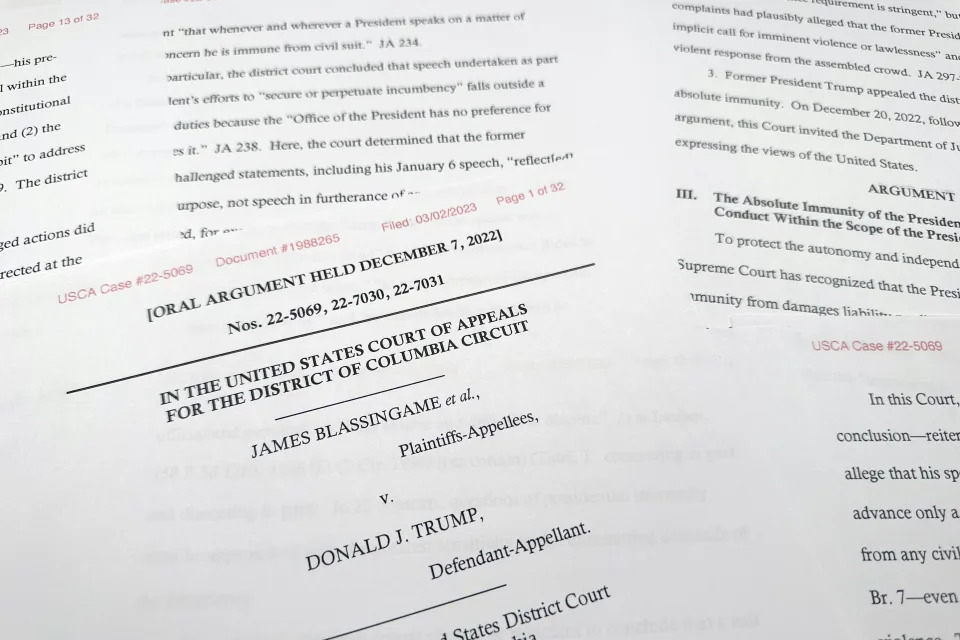
In this Jan. 6, 2021, file photo, President Donald Trump speaks during a rally protesting the electoral college certification of Joe Biden as President in Washington. Trump can be sued by injured Capitol Police officers and Democratic lawmakers over the Jan. 6, 2021 insurrection at the U.S. Capitol, the Justice Department said Thursday, March 2, 2023, in an ongoing federal court case testing the limits of executive power. (AP Photo/Evan Vucci, File)A federal court filing from the Justice Department is photographed Thursday, March 2, 2023. Former President Donald Trump can be sued by injured U.S. Capitol Police officers and Democratic lawmakers over the Jan. 6, 2021, insurrection at the U.S. Capitol, the Justice Department said in a federal court case testing Trump’s legal vulnerability and the limits of executive power. (AP Photo/Jon Elswick) In this Jan. 6, 2021, file photo with the White House in the background, President Donald Trump speaks at a rally in Washington. Trump can be sued by injured Capitol Police officers and Democratic lawmakers over the Jan. 6, 2021 insurrection at the U.S. Capitol, the Justice Department said Thursday, March 2, 2023, in an ongoing federal court case testing the limits of executive power. (AP Photo/Jacquelyn Martin, File)Attorney General Merrick Garland testifies as the Senate Judiciary Committee examines the Department of Justice, at the Capitol in Washington, Wednesday, March 1, 2023. Former President Donald Trump can be sued by injured Capitol Police officers and Democratic lawmakers over the Jan. 6, 2021 insurrection at the U.S. Capitol, the Justice Department said Thursday in an ongoing federal court case testing the limits of executive power. (AP Photo/J. Scott Applewhite, File)
WASHINGTON (AP) — Former President Donald Trump can be sued by injured Capitol Police officers and Democratic lawmakers over the Jan. 6, 2021, insurrection at the U.S. Capitol, the Justice Department said Thursday in a federal court case testing Trump’s legal vulnerability for his speech before the riot.
The Justice Department told a Washington federal appeals court in a legal filing that it should allow the lawsuits to move forward, rejecting Trump’s argument that he is immune from the claims.
The department said it takes no position on the lawsuits’ claims that the former president’s words incited the attack on the Capitol. Nevertheless, Justice lawyers told the court that a president would not be protected by “absolute immunity” if his words were found to have been an “incitement of imminent private violence.”
“As the Nation’s leader and head of state, the President has ‘an extraordinary power to speak to his fellow citizens and on their behalf,’ they wrote. “But that traditional function is one of public communication and persuasion, not incitement of imminent private violence.”
The brief was filed by lawyers of the Justice Department’s Civil Division and has no bearing on a separate criminal investigation by a department special counsel into whether Trump can be criminally charged over efforts to undo President Joe Biden’s victory in the 2020 presidential election ahead of the Capitol riot. In fact, the lawyers note that they are not taking a position with respect to potential criminal liability for Trump or anyone else.
Trump’s lawyers have argued he was acting within the bounds of his official duties and had no intention to spark violence when he called on thousands of supporters to “march to the Capitol” and “fight like hell” before the riot erupted.
“The actions of rioters do not strip President Trump of immunity,” his lawyers wrote in court papers. “In the run-up to January 6th and on the day itself, President Trump was acting well within the scope of ordinary presidential action when he engaged in open discussion and debate about the integrity of the 2020 election.”
A Trump spokesperson said Thursday that the president “repeatedly called for peace, patriotism, and respect for our men and women of law enforcement” on Jan. 6 and that the courts “should rule in favor of President Trump in short order and dismiss these frivolous lawsuits.”
The case is among many legal woes facing Trump as he mounts another bid for the White House in 2024.
In the separate investigation into Trump and his allies’ efforts to keep the Republican president in power, special counsel Jack Smith has subpoenaed former Vice President Mike Pence, who has said he will fight the subpoena.
Trump is appealing a decision by a federal judge in Washington, who last year rejected efforts by the former president to toss out the conspiracy civil lawsuits filed by the lawmakers and police officers. U.S. District Judge Amit Mehta ruled that Trump’s words during a rally before the violent storming of the U.S. Capitol were likely “words of incitement not protected by the First Amendment.”
“Only in the most extraordinary circumstances could a court not recognize that the First Amendment protects a President’s speech,” Mehta wrote in his February 2022 ruling. “But the court believes this is that case.”
One of the lawsuits, filed by Rep. Eric Swalwell, D-Calif., alleges that “Trump directly incited the violence at the Capitol that followed and then watched approvingly as the building was overrun.” Two other lawsuits were also filed, one by other House Democrats and another by officers James Blassingame and Sidney Hemby.
The House Democrats’ lawsuit cites a federal civil rights law that was enacted to counter the Ku Klux Klan’s intimidation of officials. The cases describe in detail how Trump and others spread baseless claims of election fraud, both before and after the 2020 presidential election was declared, and charge that they helped to rile up the thousands of rioters before they stormed the Capitol.
The lawsuits seek damages for the physical and emotional injuries the plaintiffs sustained during the insurrection.
Even if the appeals court agrees that Trump can be sued, those who brought the lawsuit still face an uphill battle. They would need to show there was more than fiery rhetoric, but a direct and intentional call for imminent violence, said Laurie Levenson, a Loyola Law School professor and former federal prosecutor.
“We are really far away from knowing that even if the court allows the lawsuit to go forward whether they would be successful,” she said. “Even if the court says hypothetically you can bring an action against a president, I think they’re likely to draw a line that is very generous to the president’s protected conduct.”
In its filing, the Justice Department cautioned that the “court must take care not to adopt rules that would unduly chill legitimate presidential communication” or saddle a president with burdensome and intrusive lawsuits.
“In exercising their traditional communicative functions, Presidents routinely address controversial issues that are the subject of passionate feelings,” the department wrote. “Presidents may at times use strong rhetoric. And some who hear that rhetoric may overreact, or even respond with violence.”