The Mojave Desert is burning in California’s biggest fire of year, torching Joshua trees

Los Angeles Times

The Mojave Desert is burning in California’s biggest fire of year, torching Joshua trees

Grace Toohey, Alex Wigglesworth – July 31, 2023
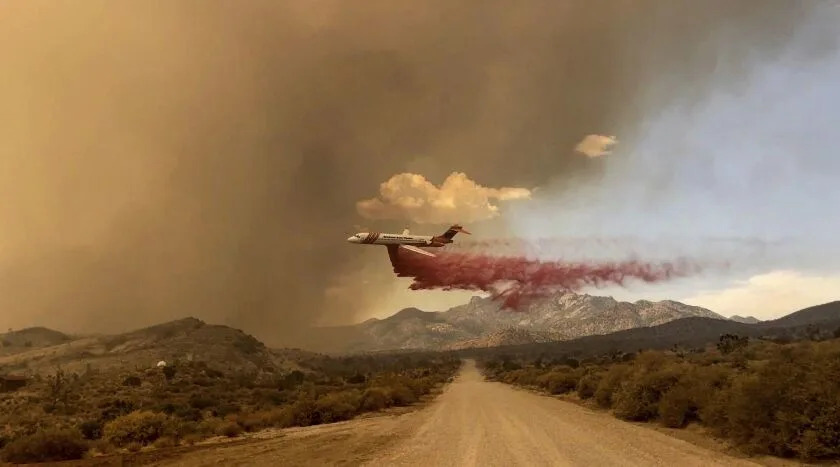
An air tanker making a fire retardant drop over the York fire in Mojave National Preserve on Saturday, July 29, 2023.
An air tanker drops fire retardant over the York fire in the Mojave National Preserve on Saturday. (R. Almendinger / National Park Service)

California’s biggest wildfire of the year — burning through delicate Joshua Tree forests along the California-Nevada border — is an unusual desert blaze being fueled in part by the rapid growth of underbrush from this winter’s record rains.

The York fire had scorched 77,000 acres as of Monday, with no containment. After first being observed Friday, the blaze has spread mainly across the Mojave National Preserve in eastern San Bernardino County, but recently jumped into western Nevada. No evacuations have been issued as a result of the fire, which is burning in mostly remote areas.

“It’s a public misconception that the desert doesn’t burn, but we’re seeing right here that that’s not case,” said Sierra Willoughby, a supervisory park ranger at Mojave National Preserve. “They’re not as rare as we would hope them to be.”

Just 10 days before this wildfire was spotted in the New York Mountains area of the Mojave National Preserve, park officials warned of extreme fire risk for the federally protected desert, banning all open flames.

“Even though we had a good moisture year with the [winter] season, the very high temperatures that came in July were a concern for our fire folks,” Willoughby said.

Read more: Wildfire burns at California-Nevada border, spawning fire tornadoes, torching desert landscape

Southern California’s wet winter and cool spring helped foster increasing levels of invasive grasses and underbrush in the Mojave and Colorado deserts, federal officials said, which has made the region exceptionally susceptible to brush fires this summer as those plants dry out.

This year’s climate patterns have provided a “more continuous fuel bed” than is typical for desert ecosystems, UCLA climatologist Daniel Swain said on Twitter. 

“Big fires in the desert are entirely consistent with the fire season outlook for 2023,” Swain wrote, noting that poses a major concern for ecologists and desert conservationists.

Fire regimes tend to vary on a gradient from climate-limited, in which there is an abundance of fuel but conditions are often too wet to carry fire, to fuel-limited, in which the climate is generally conducive to fire but there is usually not enough vegetation to carry it.

For this reason, forecasters had called for a less active fire season in California’s higher-elevation forests, which are dense but remain moist from the wet winter. But at lower elevations, the rains helped more grasses grow, and then several weeks of high temperatures caused the vegetation to dry out — or cure — priming it to become wildfire fuel.

Already, a June 10 wildfire burned more than 1,000 acres in the Pleasant Valley area of Joshua Tree National Park. Invasive grasses played a role in stoking that fire, known as the Geology fire, which burned in an area populated by Joshua trees, Mojave yucca, creosote and senna, park officials said.

“Most of the deserts in the southwestern U.S. are fairly fuel-limited in dry years, so there was that kind of natural fire break between plants or keeping it confined to relatively small areas,” said Christopher McDonald, a natural resources advisor at UC Cooperative Extension.

But after a year of above-average rainfall, there’s more fuel connecting perennial shrubs and Joshua trees, which enables fire to spread among the plants, he said. Hot, windy conditions further primed vegetation to burn.

Read more: Wet winter may delay — but not deter — 2023 fire season; ‘We must not let our guard down’

Joshua trees and other desert plants have limited natural defenses to fires, officials said, and would struggle to recover from such blazes.

The extent of the plants and animals at risk in the York fire are still under investigation, Willoughby said, noting that the blaze has already burned through Joshua tree, juniper and pinyon pine groves. Stephanie Bishop, a National Park Service public information officer and a spokesperson for the York fire, said endangered tortoises that live in the region also could be harmed.

“What we’ve seen is fires go through these areas and take out quite a bit,” Willoughby said. The York fire is burning in some of the areas that last saw flames in 2005 from the Hackberry Complex fire, which eventually burned more than 70,000 acres. Willoughby said many of the forests harmed in that blaze 18 years ago still have not recovered.

Read more: California wildfires map

The 2020 Dome fire, which burned more than 40,000 acres across the southwestern California desert — including in the national preserve, but in a different area from the York fire — destroyed an estimated 1 million Joshua trees. Crews and volunteers are trying to replant and revitalize those groves.

In the Eastern Mojave, the heavy winter rains stoked the growth of native grasses, including big galleta, said ecologist Laura Cunningham, California’s director at the Western Watersheds Project and co-founder of conservation group Basin and Range Watch. The area doesn’t have as many invasive grasses, such as red brome and cheatgrass, which are more common in low-creosote deserts, but it does have a big Sahara mustard problem, which could be adding to the fuel, she said.

Some models suggest that increased global temperatures as a result of climate change are bringing more rain to the Mojave desert, fueling grass growth and the risk of lightning strikes, Cunningham said. On top of that, more humans traveling into desert areas increases the risk of sparks — from a bullet glancing off a rock while someone is target shooting or a chain dragging on the pavement while someone is hauling a trailer, she said.

The New York Mountains in the Mojave National Preserve have an enormous density of rare plants, including blue blossom, manzanita and uncommon chaparral shrubs, that could be devastated by fire, she said.

“In those desert areas, the mountains are like sky islands, they call them,” she said — they rise from the “sea” of the hot desert floor that surrounds them and host dramatically different populations of plants and animals.

She thinks the vegetation and plants will recover from the fire, but probably very slowly — too slowly for one person to witness in their lifetime, she said.

“It’s kind of sad because it won’t be when we can see it,” she said. “We can watch it recover slowly, but those old-growth Joshua tree woodlands and shrublands, we won’t see those again in our lifetimes.”

California’s other big fire of the year — the Bonny fire, which has charred 2,300 acres in Riverside County — is also burning across some arid landscapes as well as through the mountains. It has forced 122 people to evacuate their homes, with almost 800 structures threatened, according to officials with the California Department of Forestry and Fire Protection.

The Bonny fire, burning south of Anza, was 20% contained as of Monday morning. One structure has been destroyed, and at least one firefighter was injured in the effort to control the flames. Almost 2,000 personnel are working that blaze, which began Thursday. Its cause is under investigation.

Read more: What wet winter? California prepares for peak wildfire season

Winds remain a major concern for both fires, officials have said.

A challenging weekend of high winds up to 30 mph sparked dangerous fire whirls that pushed the York fire across the Mojave National Preserve, said Bishop, a spokesperson for the York fire and a National Park Service public information officer. The weather overnight into Monday had improved slightly, with winds that were not as strong and some precipitation, which allowed for some groundwork and minimal fire growth, she said.

A monsoonal influence in the area could produce more of that helpful precipitation, but that pattern typically comes with heavy winds, officials said, and the test of the hot desert heat remains.

Read more: Multiple fires erupt as heat wave descends on Southern California

“The biggest challenge today that they’re going to be dealing with is limited visibility due to thick smoke,” Bishop said, noting that visibility has dropped to one mile in some areas.

Federal, state and local firefighting teams are battling the York fire, with more than 260 personnel assigned, officials said. The fire has also moved into the Avi Kwa Ame National Monument, which is Bureau of Land Management land, Willoughby said.

What ignited the fire remains under investigation, but Bishop said it was determined to have started on private land within the preserve.

Cunningham expressed concern for area residents — as people live in Fourth of July Canyon, right next to Caruthers Canyon, where there are inholdings within the preserve. The fire is also spreading toward Nipton and Searchlight, she said.

“Today is going to be a windy monsoonal stormy day, so we’ll see,” she said. “This ain’t over till it’s over.”

Big fires in the Mojave Desert are “unfortunately becoming a greater concern,” McDonald said.

“Historically, in general, deserts tended to burn fairly infrequently,” he said. “And that’s one of the reasons why you have a lot of these long-lived plants that can grow into big giant Joshua trees, or saguaros in the Sonoran Desert. But as more and more invasive plants, especially invasive grasses, have grown in desert areas, they’re able to carry fire and burn those long-lived plants and cause a change in the fire regime.”

An increase in fire can also lead to a shifting of habitats into something new, Cunningham said.

“If there are too many fires that happen in the same place over and over again, that can eliminate Joshua trees and other plants and turn it into some other type of vegetation,” she said. “So that’s definitely a concern. And again, if temperatures get hotter, that can cause vegetation to sort of migrate upward in elevation or more northerly.

“We know climate change is impacting the earth, so we have to really protect these special places now — really try to maintain them in a resilient way,” she added. “If there’s going to be a fire, we have to help them recover. They will restore themselves, but we can maybe speed up the process by preventing other fires in those same locations, maybe actively planting some seeds out there to help the plants regrow.”

‘I’m not wanted’: Florida universities hit by brain drain as academics flee

The Guardian

‘I’m not wanted’: Florida universities hit by brain drain as academics flee

Joseph Contreras – July 30, 2023

<span>Photograph: The Washington Post/Getty Images</span>
Photograph: The Washington Post/Getty Images

With the start of the 2023-24 academic year only six weeks away, senior officials at New College of Florida (NCF) made a startling announcement in mid-July: 36 of the small honors college’s approximately 100 full-time teaching positions were vacant. The provost, Bradley Thiessen, described the number of faculty openings as “ridiculously high”, and the disclosure was the latest evidence of a brain drain afflicting colleges and universities throughout the Sunshine state.

Related: Trans people, students and teachers are besieged by DeSantis’s crusade. But he’s not done yet

Governor Ron DeSantis opened 2023 with the appointment of six political allies to the college’s 13-member board of trustees who vowed to drastically alter the supposedly “woke”-friendly learning environment on its Sarasota campus. At its first meeting in late January, the revamped panel voted to fire the college president, Patricia Okker, without cause and appoint a former Republican state legislator and education commissioner in her place.

Over the ensuing weeks, board members have dismissed the college’s head librarian and director of diversity programs and denied tenure to five professors who had been recommended for approval.

In a statement given to 10 Tampa Bay about faculty vacancies that was issued earlier this month, NCF officials said that six of the openings were caused by staff resignations and one-quarter of the faculty member departures “followed the changes in the New College board of trustees”. One of those resignations was submitted by Liz Leininger, an associate professor of neurobiology who says she started looking for an exit strategy as soon as she learned about the DeSantis appointments in the first week of 2023.

The 40-year-old scientist joined the New College faculty in 2017, drawn by the opportunities of living near her ageing parents on Florida’s Gulf coast and working closely with undergraduates at a relatively small school where total student enrollment hovers around 700. But as the Republican-controlled Florida legislature passed a series of bills over the last two years that sought to curtail academic freedom and render a professor’s tenure subject to review at any time, Leininger witnessed first-hand the devastating effects of the new laws on her colleagues’ morale.

“All of the legislation surrounding higher education in Florida is chilling and terrifying,” said Leininger, who is rejoining the biology department at St Mary’s College in Maryland this fall where she had been teaching before moving to central Florida. “Imagine scientists who are studying climate change, imagine an executive branch that denies climate change – they could use these laws to intimidate or dismiss those scientists.”

The new laws have introduced a ban on the funding of diversity, equity and inclusion programs at Florida’s public colleges and universities, withdrawn a right to arbitration formerly guaranteed to faculty members who have been denied tenure or face dismissal, and prohibited the teaching of critical race theory, which contends that inherent racial bias pervades many laws and institutions in western society, among other changes.

In the face of that and other legislation backed by DeSantis and Republican lawmakers that has rolled back the rights of Florida’s LGBTQ+ community, many scholars across the state are taking early retirement, voting with their feet by accepting job offers outside Florida or simply throwing in the towel with a letter of resignation.

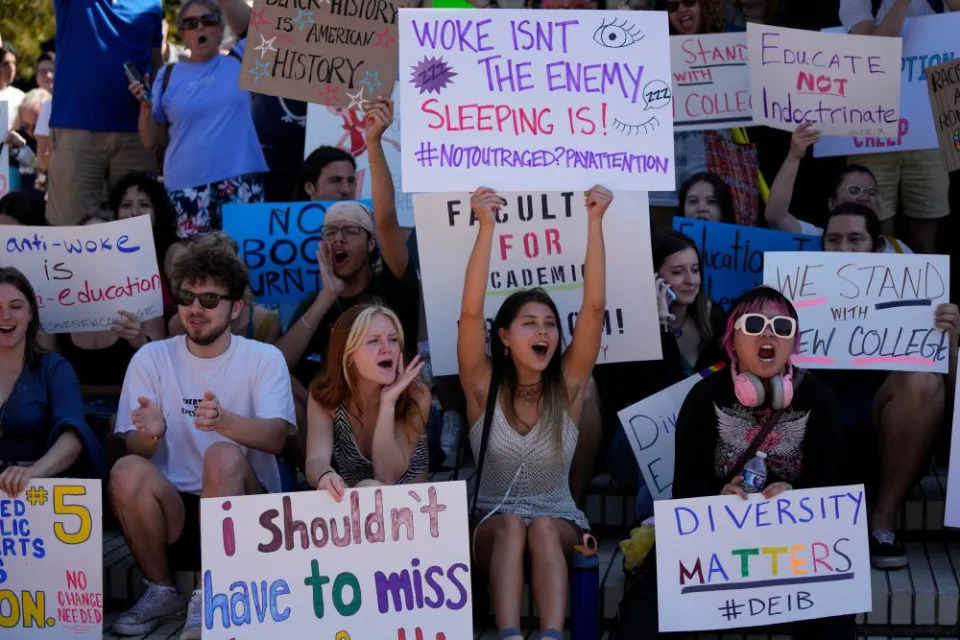
Students protest at New College of Florida
Students protest at New College of Florida, one of Ron DeSantis’s particular targets. Photograph: Rebecca Blackwell/AP

Hard figures for turnover rates will not be available until later this year, and none of the other 11 state-run universities are expected to match New College’s exceptionally high percentage of faculty vacancies.

A spokesperson for the office of State University System chancellor, Ray Rodrigues, issued a statement asserting that the “State University System of Florida has not received any concerns from our member institutions indicating turnover this year has been any higher than previous years. Turnover occurs every year.”

But Andrew Gothard, the state-level president of the United Faculty of Florida labor union, predicts a loss of between 20 and 30% of faculty members at some universities during the upcoming academic year in comparison with 2022-23, which would signify a marked increase in annual turnover rates that traditionally have stood at 10% or less.

James Pascoe moved to the Gainesville campus of the University of Florida in 2018, the same year that DeSantis was first elected governor. Three years later, the Dallas native started looking for jobs elsewhere when new disclosure requirements made it more difficult for Pascoe to apply for grants. An unsuccessful attempt by the DeSantis administration to prohibit three University of Florida colleagues from testifying as expert witnesses in a voting rights case raised more alarm bells in Pascoe’s mind.

Related: Cries of cronyism as DeSantis bids to place rightwing ally at top university

Then came the passage of legislation in March 2022 that banned the discussion of gender identity and sexuality with elementary school students between kindergarten and the third grade. Pascoe and his male partner began to worry about their future eligibility for adopting children in an environment that was becoming increasingly hostile to gay couples in their judgment.

“It was becoming clear that the university was becoming politicized,” the 33-year-old assistant professor of mathematics said. “When I was waiting to hear back on job applications, they started passing all these vaguely anti-gay, anti-LGBTQ+ laws. The state didn’t seem to be a good place for us to live in any more.”

In the summer of 2022, Pascoe accepted a comparable position at Drexel University in Philadelphia. His partner followed suit by joining the biology department at Haverford College in a nearby suburb.

The prevailing political climate in Florida has complicated efforts to recruit qualified scholars from outside the state to fill some vacancies. Kenneth Nunn served on a number of appointment committees during the more than 30 years he spent on the faculty of the University of Florida’s law school. He said the task of persuading highly qualified applicants of color to move to Gainesville has never been more difficult under a governor who, earlier this year, prohibited a new advanced placement course in African American studies from being taught in high schools.

DeSantis came under renewed criticism this month when the state department of education issued guidelines recommending that middle school students be taught about the skills slaves acquired “for their personal benefit” during their lifetimes in bondage.

Related: ‘The point is intimidation’: Florida teachers besieged by draconian laws

“Florida is toxic,” noted Nunn, one of the few Black members of the law school faculty who says he chose to retire last January in part because of the legislated ban on the teaching of critical race theory. “It has been many years since we last hired an entry-level African American faculty member. They’re just not interested in being in a place where something with the stature of critical race theory is being denigrated and attacked.”

The 65-year-old Nunn will be teaching law in the fall in Washington DC as a visiting professor at Howard University, one of the nation’s leading historically Black colleges and universities.

“I could have stayed in a place where I’m not wanted and tough it out,” he adds. “Or I could retire and look for work elsewhere.”

In the end, Nunn says, concerns about his professional career and even his own physical safety made that decision a relatively easy one.

Why Republicans can’t get out of their climate bind, even as extreme heat overwhelms the US

CNN

Why Republicans can’t get out of their climate bind, even as extreme heat overwhelms the US

Analysis by Ella Nilsen, CNN – July 30, 2023

Deadly heatwaves are baking the US. Scientists just reported that July will be the hottest month on record. And now, after years of skepticism and denial in the GOP ranks, a small number of Republicans are urging their party to get proactive on the climate crisis.

But the GOP is stuck in a climate bind – and likely will be for the next four years, in large part because they’re still living in the shadow of former president and 2024 Republican frontrunner Donald Trump.

Even as more Republican politicians are joining the consensus that climate change is real and caused by humans, Trump’s inflammatory rhetoric has driven the party to the right on climate and extreme weather. Trump has called the extremely settled science of climate change a “hoax” and more recently suggested that the impacts of it “may affect us in 300 years.”

Scientists this week reported that this summer’s unrelenting heat wave would have been “virtually impossible” were it not for the planet-warming pollution from burning fossil fuels. They also confirmed that July will go down as the hottest month on record – and almost certainly that the planet’s temperature is hotter now than it has been in around 120,000 years.

Yet for being one of the most pressing issues of the 21st century, climate is rarely mentioned on the 2024 campaign trail.

“As Donald Trump is the near presumptive nominee of our party in 2024, it’s going to be very hard for a party to adopt a climate-sensitive policy,” Sen. Mitt Romney, a Republican from Utah, told CNN. “But Donald Trump’s not going to be around forever.”

When Republicans do weigh in on climate change – and what we should do about it – they tend to support the idea of capturing planet-warming pollution rather than cutting fossil fuels. But many are reticent to talk about how to solve the problem, and worry Trump is having a chilling effect on policies to combat climate within the party.

“We need to be talking about this,” Rep. John Curtis, a Republican from Utah and chair of the House’s Conservative Climate Caucus, told CNN. “And part of it for Republicans is when you don’t talk about it, you have no ideas at the table; all you’re doing is saying what you don’t like. We need to be saying what we like.”

Extreme weather changes GOP minds

With a few exceptions, Republicans largely are no longer the party of full-on climate change denial. But even as temperatures rise to deadly highs, the GOP is also not actively addressing it. There is still no “robust discussion about how to solve it” within the party, said former South Carolina Rep. Bob Inglis, who now runs the conservative climate group RepublicEn, save for criticism of Democrats’ clean-energy initiatives.

“The good news is Republicans are stopping arguing with thermometers,” Inglis told CNN. Still, he said, “when the experience is multiplied over and over of multiple days of three-digit temperatures in Arizona and record ocean temperatures, people start to say, ‘this is sort of goofy we’re not doing something about this.’”

Meanwhile, the impacts of a dramatically warming atmosphere are becoming more and more apparent each year. Romney and Curtis, two of the loudest climate voices in the party, both represent Utah – a state that’s no stranger to extreme heat and drought, which scientists say is being fueled by rising global temperatures.

“There are a number of states, like mine, that are concerned about wildfires and water,” Romney said, adding he believes Republican governors of impacted states have been vocal about these issues.

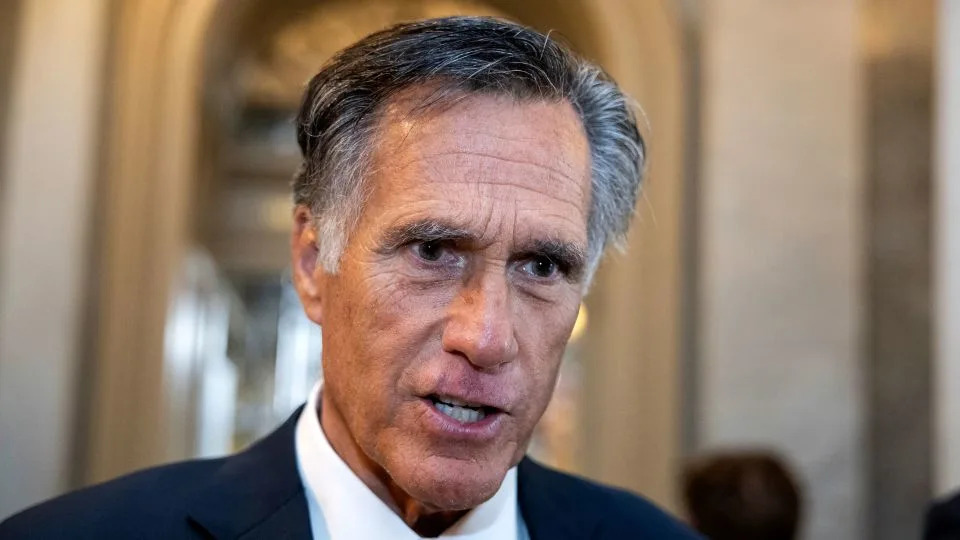
Sen. Mitt Romney is one of a handful of Republicans who wants the party to get proactive on climate solutions. - Francis Chung/POLITICO/AP
Sen. Mitt Romney is one of a handful of Republicans who wants the party to get proactive on climate solutions. – Francis Chung/POLITICO/AP

Utah and other Western states are looking for ways to cut water use to save the West’s shrinking two largest reservoirs, Lakes Powell and Mead. And even closer to home, Utah’s Great Salt Lake has already disappeared by two-thirds, and scientists are sounding alarms about a rapid continued decline that could kill delicate ecosystems and expose one of fastest-growing metropolitan areas in the nation to toxic dust.

“I think the evidence so far is that the West is getting drier and hotter,” Romney told CNN. “That means that we’re going to have more difficulty with our crops, we’re going to have a harder time keeping the rivers full of water. The Great Salt Lake is probably going to continue to shrink. And unfortunately, we’re going to see more catastrophic fires. If the trends continue, we need to act.”

An issue ‘held hostage’

While Republicans blast Democrats’ clean energy policies ahead of the 2024 elections, it’s less clear what the GOP itself would prefer to do about the climate crisis.

As Curtis tells it, there’s a lot that Republicans and Democrats in Congress agree on. They both want to further reform the permitting process for major energy projects, and they largely agree on the need for more renewable and nuclear energy.

As the head of the largest GOP climate caucus on the Hill, Curtis’ Utah home is “full solar,” he told CNN, and is heated using geothermal energy.

While at a recent event at a natural gas drilling site in Ohio, as smoke from Canada’s devastating wildfire season hung thick in the air, House Speaker Kevin McCarthy was asked how he would solve the climate crisis. He suggested planting a trillion trees to help offset the pollution created by burning fossil fuels – a bill House Republicans introduced in 2020. The measure has not yet passed the House and has an uncertain future in the Senate.

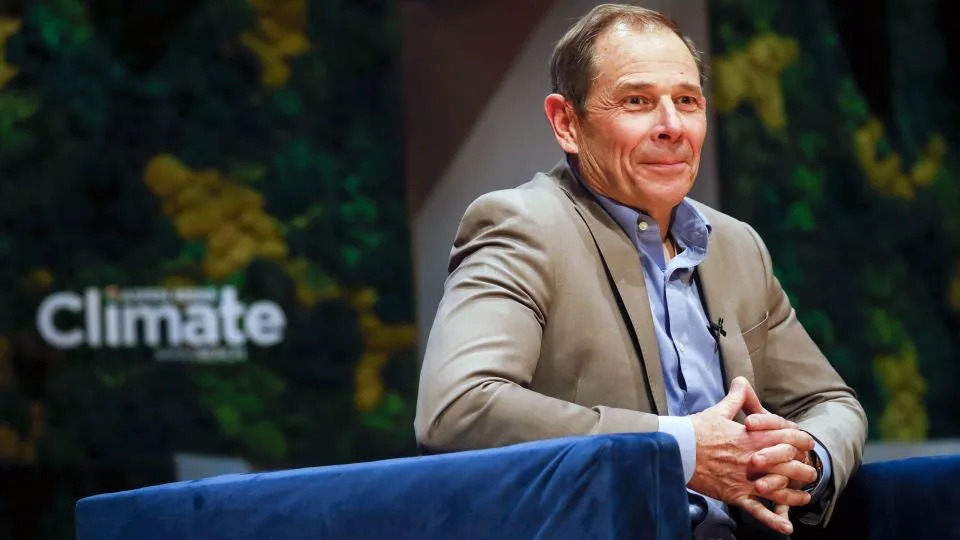
Rep. John Curtis, a Utah Republican, said his home is decked out in solar panels and geothermal energy. - Eva Marie Uzcategui/Bloomberg/Getty Images
Rep. John Curtis, a Utah Republican, said his home is decked out in solar panels and geothermal energy. – Eva Marie Uzcategui/Bloomberg/Getty Images

But the biggest and most enduring difference between the two parties is that Republicans want fossil fuels – which are fueling climate change with their heat-trapping pollution – to be in the energy mix for years to come.

Democrats, meanwhile, have passed legislation to dramatically speed up the clean energy transition and prioritize the development of wind, solar and electrical transmission to get renewables sending electricity into homes faster.

On Wednesday, Senate Majority Leader Chuck Schumer of New York said Democrats want to pass more climate legislation if they take back a full majority in Congress. He later told CNN the GOP is “way behind” on climate and there’s been “too little” progress on the party’s stances.

“I think we’d get a lot more done with a Democratic House, a Democratic president and continuing to have a Democratic Senate,” Schumer told CNN. “Unfortunately, if you look at some of the Republican House and Senate Super PACs, huge amounts of money come from gas, oil and coal.”

Even though Curtis and Romney are aligned on the party needing to talk about climate change, they differ on how to fix it. While Curtis primarily supports carbon capture and increased research and development into new technologies, Romney is one of the few Republicans speaking in favor of a carbon tax – taxing companies for their pollution.

“It’s very unlikely that a price on carbon would be acceptable in the House of Representatives,” Romney said. “I think you might find a few Republican senators that would be supportive, but that’s not enough.”

The idea certainly doesn’t have the support of Trump, or other 2024 candidates for president, and experts predict climate policy will get little to no airtime during the upcoming presidential race.

“Regrettably, the issue of climate change is currently being held hostage to the culture wars in America,” Edward Maibach, a professor of climate communication at George Mason University and a co-founder of a nationwide climate polling project conducted with Yale University, told CNN in an email. “Donald Trump’s climate denial stance will have a chilling effect on the climate positions of his rivals on the right — even those who know better.”

Even if climate-conscious Republicans say Trump won’t be in the party forever, Inglis said even a few more years may not be enough time to counteract the rapid changes already happening.

“That’s still a long way away,” Inglis said. “The scientists are saying we can’t wait, get moving, get moving.”

Just what does home insurance cost in Florida? Estimates vary widely, and new state data might surprise you

South Florida Sun-Sentinel

Just what does home insurance cost in Florida? Estimates vary widely, and new state data might surprise you

Ron Hurtibise – July 30, 2023

Just what does the average Florida homeowner pay for property insurance? Good luck figuring that out based on wildly varying estimates quoted across the media.

About the only thing everyone agrees on is that the state’s insurance rates have been rising sharply. Insurers say they need higher premiums to offset mounting losses from hurricane claims, severe weather events, high rates of litigation, and resulting increases in the cost of reinsurance — insurance that insurers must buy to make sure they can pay all claims after a disaster.

Reforms enacted in 2022 to curtail costs from litigation are expected to eventually stabilize premium costs, but that hasn’t happened yet.

Meanwhile, online insurance aggregators publish estimates that are all over the map.

Policygenius says average Florida homeowners pay $2,442 for home insurance.

Bankrate says $1,981 — but that’s just to insure the dwelling and doesn’t include other vital elements like liability coverage, loss of use, or personal property.

Insurify crunched numbers from 10 Florida ZIP codes and estimated average homeowners are paying a whopping $7,788 this year.

For a report comparing insurance costs across the nation, USA Today estimated that Floridians pay an average of $2,389.

And Insurance Information Institute, an industry-funded nonprofit organization, estimated Florida’s average home insurance premium was $4,321 last October and $6,000 currently.

Which number is closest to what Florida homeowners are actually paying? It’s impossible to say because the estimates are calculated based on “proprietary methods,” said Mark Friedlander, corporate communications director for the Insurance Information Institute.

Insurance agents in South Florida say their clients are paying on the high side of the estimated range of average premiums.

Yet, recently released data by the Florida Office of Insurance Regulation include figures that some might find surprisingly low in comparison to the higher estimates.

The state’s most recent data comes from insurers themselves — sent to OIR each quarter under a law enacted in May 2022.

The data sent by insurers was used to create county-by-county estimates of premiums paid to insure single-family homes, Those estimates were included in the office’s twice-yearly Property Insurance Stability Report released in early July.

State data shows average rates are lower

The report found that on March 31:

Homeowners in 48 of Florida’s 67 counties paid estimated average premiums between $2,000 and $2,999. Averages were below $2,000 in four counties — Sumter, Marion, Baker and Hernando.

Average premiums were in the $3,000s in seven counties: Lee, Okeechobee, Escambia, Okaloosa, Gulf, Pinellas, and Indian River.

Residents of three counties — Walton, Franklin, and Collier — paid average premiums in the $4,000s.

And homeowners in the five southernmost counties — Martin, Palm Beach, Broward, Miami-Dade, and Monroe — paid average premiums of more than $5,000.

In fact, average premiums in Palm Beach, Broward and Miami-Dade exceeded $5,500 while homeowners in Monroe, which includes the Florida Keys, paid an average $7,584.

Premium amounts calculated by the Office of Insurance Regulation preceded rate hikes tied to higher reinsurance rates that insurers secured as hurricane season began on June 1. Renewal prices charged after companies secured their reinsurance rates will reflect the higher costs. That means the next six-month report will likely reflect significant rate increases.

Missing from the twice-yearly report is a statewide average premium.

The Sun Sentinel tallied data in a separate release by the office of company-level data that includes numbers of policyholders per coverage category and corresponding direct written premium totals. Direct written premiums are the total dollar amount of all premiums paid to the company by its policyholders. Dividing the number of policyholders into the direct written premium data reveals the average premium charged by the company.

Dividing the total number of policyholders into the total direct written premium total for all Florida-regulated insurance companies reveals Florida’s average homeowner insurance premium on March 31 was $3,134.

How many homeowners in Florida’s five southernmost counties would like to be paying that right now?

Probably all clients of Fort Lauderdale-based insurance agent Phil Portnoy, who works at Donna Carrara Insurance Agency.

“The average I’ve seen from private insurers is anywhere from $6,000 to $10,000 for, say, $350,000 in coverage,” Portnoy said last week. “I’ve seen renewals down in Pinecrest for as much as $17,000 for a million in coverage and as much as $27,000 for a Palm Beach County intracoastal renewal of $1 million in coverage.”

Al Mendez, partner in Mendez & Associates Insurance in Pembroke Pines, says his average policies range from $4,200 to $6,000 to insure homes in the tri-county region with replacement costs of $300,000 to $500,000.

Mendez calls the current state of the insurance market — with rate increases of 25% to 70% over each of the past three years — “the worst I’ve experienced” in 30 years in the industry.

Some of his clients have seen increases of 100% to 200%, he said. “Florida is now the most expensive state to live in,” he said.

South Florida insurance costs are higher

Mark Friedlander of the Insurance Information Institute said he stands by his organization’s estimates that statewide average premiums increased from $4,231 last fall to $6,000 this year as “verified as accurate by numerous third parties, including insurers and insurance agents.”

As Friedlander is a popular source of insurance information, the $6,000-a-year estimate has shown up in stories by numerous national publications about Florida’s insurance crisis.

Two weeks ago, Friedlander said, “a Barron’s reporter verified our premium data with numerous industry analysts and confirmed its accuracy.”

Insurify, Policygenius and USA Today each used insurance data from a single source — Quadrant Information Services — to produce different estimates.

Chase Gardner of Insurify, which calculated an average estimate of $7,788 for Florida, said the company developed its estimates by using average costs in 10 zip codes “representative of each state’s population distribution.” Zip codes with larger populations were weighted more heavily in calculating the average, he said, which may explain why his company’s estimates were so much higher that Insurify’s and Bankrate’s numbers.

“Even though we both collected Florida data from Quadrant Information Services, prices vary a lot depending on where you live in the state,” Gardner said. “For example, we found that average prices were closer to $2,000 to $3,000 per year or less in northern, inland parts of the state, whereas prices could skyrocket to more than $10,000 per year in southern coastal cities like Miami.”

Friedlander said that the Insurance Information Institute’s estimates looked only at private sector policies and excluded policies sold by the insurer of last resort, state-owned Citizens Property Insurance Corp.

Citizens insured 719,347 single-family homes for an average premium of $3,254 in the first quarter of 2023, the state data shows.

That’s high from a statewide perspective but low for South Florida.

In March 2022, Citizens produced a chart that showed its average premium in Broward, Palm Beach and Miami-Dade, where 52% of its policyholders are located, was $4,196 — 28% less than the $5,856 combined average of 13 competitors selected for the comparison.

Ultimately, the only home insurance cost estimates that matter are the ones offered to you to cover your home for the upcoming year. And at least for the near future, they’re continuing to increase, agents say.

Ron Hurtibise covers business and consumer issues for the South Florida Sun Sentinel. 

Doctor: What I didn’t know until I got skin cancer

CNN – Opinion

Doctor: What I didn’t know until I got skin cancer

Opinion by Susannah Hills – July 29, 2023

Editor’s Note: Susannah Hills is a pediatric airway surgeon and assistant professor and vice chair of the Department of otolaryngology-head and neck surgery at the Columbia University Medical Center. The opinions expressed in this commentary are her own. View more opinion at CNN. 

As a practicing physician, my life revolves around caring for my patients, helping them stay healthy, educating them about diseases and picking up on the signs of health concerns that need to be addressed. A few weeks ago, however, it became painfully obvious that I had missed the signs of my own major health issue.

Dr. Susannah Hills - John Abbott
Dr. Susannah Hills – John Abbott

To my surprise, I was diagnosed with skin cancer on my scalp. The diagnosis of basal cell cancer, and the fact that I ignored it for so long, have really made me pause to reflect on my own health habits and some common misconceptions about skin cancer.

For over a year, I thought I had an irregular patch of skin behind my left ear.  It was covered by my hair, so it was easy to ignore. I watched this skin peel and scab.  I thought it was eczema, which I have had for many years, put hydrocortisone didn’t help.  I finally went to the dermatologist, much later than I should have considering my medical background, and I had a biopsy.  Basal cell cancer.  Another was found on my neck right after that.

I was bewildered. I thought I had been protecting myself from sun exposure so carefully. I spend most of my waking hours indoors at the hospital and still I wear sunscreen every day. I hardly have time for sunbathing and on those rare occasions when I’m in the sun for an extended time, I try to cover up.

As it turns out, my skin cancer has probably been brewing for decades, the result of genetics and basking in the sun many years ago.  Damage from the sun’s UV rays is cumulative, increasing the risk of cancer over time.  Just five blistering sunburns among 15- to 20-year-olds can increase the risk of melanoma by 80% and two other skin cancers, squamous cell carcinoma and basal cell carcinoma, by 68%, according to research published in Cancer Epidemiology Biomarkers & Prevention. So, I’m probably seeing effects of my early years at the beach now.

My mother also had multiple skin cancers, so my risk of getting one myself was significantly higher. When there is a family history of skin cancer, the risk of early-onset basal cell cancer is more than doubled, per the journal Cancer Epidemiology, the risk of squamous cell cancer is increased four-fold, according to the journal Dermatologic Surgery, and the risk of melanoma is increased by 74%, as reported in the Journal of the American Academy of Dermatology.

Still, it seemed so strange to me that my skin cancer showed up on my scalp, underneath a covering of hair. Wouldn’t sun-exposed areas like my nose, forehead, or chin be more susceptible?

With a little research, I discovered that 13% of skin cancers involve the scalp, according to an article in the Journal of the German Society of Dermatology. Skin cancer can show up in all kinds of unusual spots — the eyelids, palms of the hands and soles of the feet.  And with the popularity of gel manicures, which use direct UV light to the hands and nails, there is increasing risk of skin cancers in the cuticles and beneath the nails.

Skin cancers can also happen in all types of skin.  Malignancies are far more common in light complexions, but cancer of skin with darker pigmentation is often caught later, with higher mortality rates. Everyone is at risk.

Now more than ever, developing good sun protection habits is so important because the risk of developing skin cancer is escalating at an alarming rate. It is estimated by the American Academy of Dermatology that one in five Americans will develop skin cancer in their lifetime, and rates of nonmelanoma skin cancer have increased 33% across the globe since 2007, according to JCO Global Oncology. Many experts attribute this trend to factors such as climate change, global warming and increased exposure to harmful UV rays.  Despite this mounting risk, our efforts in skin cancer prevention and early detection are woefully inadequate, with too many people failing to get regular skin exams.

It is up to each of us to develop good sun protection habits early and to learn when to seek medical care for unusual skin changes.  Irregularities like changes in color, irregular borders of moles and freckles, skin wounds that don’t seem to heal and areas of chronic peeling or scabbing should never be ignored. An exam should be done every year to monitor unusual skin changes, or if you are at higher risk for developing skin cancer.

This summer, protect yourself.  Slather on that sunscreen, wear a hat and seek shade whenever possible. And that peculiar patch of skin you’ve been ignoring?  Don’t put off getting it checked out any longer.  I learned the hard way that anyone can get skin cancer and it can show up where you least expect.  The earlier you catch it, the better your odds, so go see your doctor. I’m glad I did.

Coronavirus is back, but how worried should you be?

Yahoo! News

Coronavirus is back, but how worried should you be?

Parts of the country are seeing an uptick, and hospitalizations are rising nationwide.

Alexander Nazaryan, Senior W. H. Correspondent  – July 28, 2023

A cluster of people in face masks come in and out of a COVID-19 vaccine clinic.
People at a COVID-19 vaccine clinic in Los Angeles on Aug. 5, 2022. (Xinhua via Getty Images)

Dr. Bob Wachter was an expert who diligently practiced what he preached. For three years, the prominent University of California at San Francisco physician advocated masking and vaccination for those who, like him, wanted to avoid the coronavirus, as well as the mysterious, long-lasting symptoms known as long COVID.

When Wachter’s wife contracted the coronavirus last year when they were on a trip to Palm Springs, Calif., together, he still managed not to get sick — even after they sat next to each other in the car on the nine-hour trip back home.

But Wachter’s luck ran out earlier this month, when he finally contracted the coronavirus. To make matters worse, he fell in the bathroom while battling flulike symptoms and was hospitalized for stitches.

Wachter wrote on Twitter that he wanted his experience to serve as a “teachable moment,” a reminder that “Covid’s still around [and] it can still be pretty nasty.”

Not only is the coronavirus still around, but it appears to be returning in parts of the United States.

Read more from Yahoo News: Is the COVID pandemic really over?

A summer mini-spike
An overcrowded airport lounge with lines of travelers in the background.
Weary holiday travelers wait for air traffic to resume at Ronald Reagan Washington National Airport in Arlington, Va., on June 30. (Evelyn Hockstein/Reuters)

Washington was not especially rattled by the infections, but the cases are a reminder that the virus lingers. Students competing in the Solar Car Challenge in Orange County, Calif., for instance, saw the race disrupted this month after about two dozen competitors tested positive for COVID-19.

When the president of Israel, Isaac Herzog, visited the White House earlier this month, several members of his delegation tested positive for COVID-19. In North Carolina, Gov. Roy Cooper also caught the coronavirus this month. These do not appear to be isolated incidents.

Wastewater analysis in the San Francisco Bay Area, where Wachter lives, shows increasing levels of the coronavirus. Los Angeles is seeing a similar trend.

“There’s no doubt compared to our nadirs, or the stability that we’ve enjoyed, that there’s a slight increase in test positivity,” California’s health secretary, Dr. Mark Ghaly, told the Los Angeles Times this week.

While most people aren’t locking down or sending kids home from summer camp, the virus appears to be causing a vibe shift. “The U.S. has experienced increases in COVID-19 during the past three summers, so it’s not surprising to see an uptick,” CDC spokeswoman Kathleen Conley told Yahoo News.

In previous coronavirus waves, colder weather drove people indoors and allowed the pathogen to spread. Extremely hot weather could have the same effect. “We are in a very warm year, and people are spending a lot of time indoors,” infectious disease expert Dr. Luis Ostrosky told the Wall Street Journal. “People are congregating in air-conditioned settings, and that is providing an opportunity for transmission.”

Most institutions that had reported coronavirus cases with online trackers are no longer producing daily updates, making both local and national trends difficult to spot. For its part, the CDC drastically scaled back its own tracking in May.

Read more from Yahoo News: COVID-19 emergency isn’t over, and the most ‘painless’ way to prevent it is being ignored, doctors warn

‘Clearly rising,’ but nothing like the past
A pedestrian waits at an intersection by a COVID-19 testing site.
A COVID-19 testing site on a sidewalk in Manhattan in December 2022. (Spencer Platt/Getty Images)

According to the Centers for Disease Control, COVID-19 hospitalizations rose by 10% in the week of July 15, as compared to the previous week, from 6,444 hospitalizations to 7,109.

“Risk of getting infected is still fairly low, but clearly rising now,” Dr. Tatiana Prowell, a Johns Hopkins oncologist, wrote on Twitter. “Be aware.”

Masking continues to be an easy means of protection, especially when traveling or gathering in crowded settings like concert venues or sports arenas. And many people have neglected to update their vaccines, meaning that they lack some protection from the ever-evolving disease. The latest spike could be driven, in part, by an Omicron subvariant known as Arcturus.

According to the CDC, only 17% of the American population has received the bivalent booster introduced last fall.

“At this time, CDC’s genomic surveillance indicates that the increase in infections is caused by strains closely related to the Omicron strains that have been circulating since early 2022,” CDC’s Conley told Yahoo News.

Those are the very strains the bivalent booster was created to target. The Food and Drug Administration is also preparing an updated booster shot that should be available in September.

Read more from Yahoo News: There will be a new COVID vaccine this fall, but will people get it?

Moving on
A woman in a hat and face mask on a sidewalk.
A pedestrian in a face mask in New York City on July 6. (Amr Alfiky/Reuters)

During the Delta spike in the summer of 2021, nationwide hospitalizations for COVID-19 topped 100,000. A year later, the Omicron wave hospitalized 16,000 people across the country.

Today’s figures are much smaller by comparison. And as of the week of July 22, there had been 166 deaths from COVID-19 across the United States — a far cry from the 26,000 weekly deaths recorded in the U.S. in the first week of 2021.

Those at high risk for severe outcomes should make sure they’re up to date on boosters and know where to access treatment if they contract the virus, Dr. Leana Wen, a professor at George Washington University’s Milken Institute School of Public Health, told Yahoo News.

Between vaccination and multiple infections, the overwhelming majority of Americans have some immunity. Many have thus simply accepted the coronavirus as a part of life.

“The pandemic, for all intents and purposes, now is gone,” Donald Yealy, chief medical officer of the University of Pittsburgh Medical Center, told the Washington Post several weeks ago.

But, he cautioned, “the virus isn’t gone yet.”

Nobody wants to leave the party. But is that a smart governmental strategy? The Mitch McConnell episode on Wednesday is a reminder that anything can happen at any time.

Chicago Suntimes – Opinion, Joe Biden is too old to run again

STEINBERG: Nobody wants to leave the party. But is that a smart governmental strategy? The Mitch McConnell episode on Wednesday is a reminder that anything can happen at any time.

By Neil Steinberg – July 27, 2023

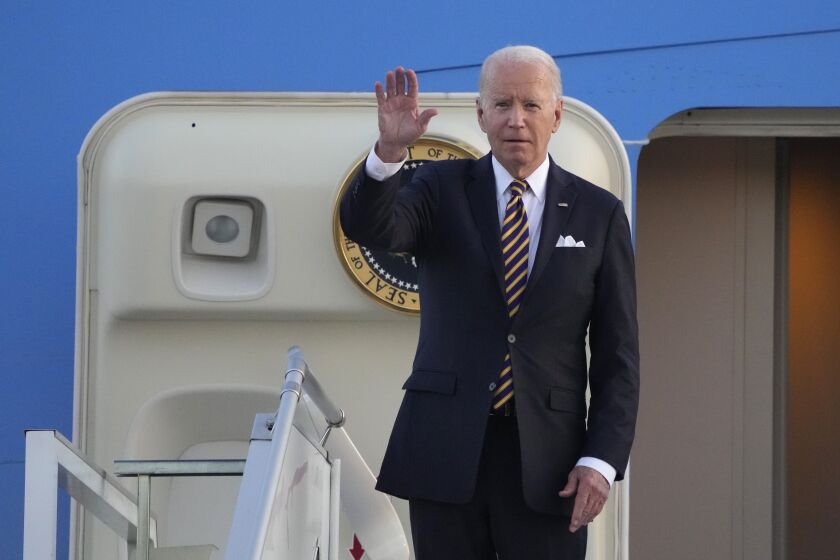
Joe Biden arrives at Helsinki Airport in Finland on July 12. The nation’s oldest elected president was attending the US–Nordic Leaders’ Summit.

The median age for Americans is almost 39, according to the U.S. census.

Which might be surprising — we feel like a much older nation, and for good reason. Look at our leaders. President Joe Biden is 80. Majority Leader Chuck Schumer is 72, and Minority Leader Mitch McConnell is 81. The oldest senator, Dianne Feinstein, is 90.

To ask if that is “too old” is to ask the wrong question. Of course, people can be busy and productive to a very old age — we just visited Edith Renfrow Smith, making jelly at 109.

But things happen. Feinstein has struggled to do her job. McConnell froze in the middle of a news conference Wednesday, standing silent and stricken until he was led away. He returned later and declared himself fine. Maybe he is fine. But the writing is on the wall. As I like to say, you can ignore facts but that doesn’t mean facts ignore you. As Francis Hopkinson Smith once said, the claw of the sea-puss gets us all in the end. Sooner or later, the strong riptide drags us out to that cold, dark ocean from whence none returns.

No wonder we cling to the dry shore. Nobody wants to leave the party. But is that a smart governmental strategy? The McConnell episode is a reminder that anything can happen at any time. It can come for you in the middle of a news conference. And the older you are, the closer you are to whatever is going to eventually come and get you.

That’s why those handicapping the 2024 election are deluding themselves. The life expectancy of an 80-year-old man is seven years, meaning that should Biden be reelected, the oldest president ever, he’d be pushing his luck to reach the end of his term.

Right now, Biden gives very few news conferences and hasn’t sat down at all with a reporter from a major newspaper. He walks stiffly, speaks awkwardly, was at a loss to say how many grandchildren he has or what his favorite movie is.

Sixty-seven percent of Americans — including half of Democrats — think Biden is too old to run. I am among them.

It isn’t that he hasn’t been an effective president, from marshaling European support for Ukraine to his infrastructure bill. The question is: Will he remain so until he’s 86? Are we willing to bet our country on it?

This is where his probable opponent comes in.

Donald Trump is no spring chicken either at 77 and has more health concerns — he weighs 250 pounds and was seen having trouble lifting a glass of water to his lips.

Ego is a curse at any age or party. Our leaders aren’t doing what’s best for the country, but what’s best for them. No one wants to surrender their prerogatives. If it’s a struggle to get Dad to give up the car keys, imagine how hard it would be to pry him off Air Force One.

All things being equal, I believe in perseverance. “I will be conquered,” the great Samuel Johnson said. “I will not capitulate.”

But does that mean we all must keep doing what we do, forever? An esteemed colleague, a few years older than myself, just walked away. Went on a safari. No announcement. No curtain clutching. That struck me as the path of the hero. Because if I’ve learned one thing about life, it’s this: It isn’t about me. Or you. We are all replaceable. And we’re all going to be replaced.

There’s a beautiful, brief poem by Jennifer Michael Hecht with the cumbersome title, “On the Strength of All Conviction and the Stamina of Love.”

It begins:

Sometimes I think

we could have gone on.

All of us. Trying. Forever.

We could; but we don’t:

But they didn’t fill

the deserts with pyramids.

They just built some. Some.

Then they stopped.

They’re not still out there,

building them now. Everyone,

everywhere, gets up, and goes home.

Or drops dead. Eventually. I’m sorry that Joe Biden can’t see his way to tap out in favor of, oh, Gavin Newsom. He has a choice. We don’t.

A big lie, an attack on the Capitol — and soon, another indictment

Politico

A big lie, an attack on the Capitol — and soon, another indictment

Kyle Cheney – July 26, 2023

Julio Cortez/AP Photo

In a more than two-month blitz that ended in violence, Donald Trump lied, cajoled, inveighed and inspired his supporters to challenge the results of an election he lost. Now, special counsel Jack Smith appears on the verge of indicting Trump for those efforts.

Two and a half years have passed since the insurrection of Jan. 6, 2021. Yet investigators are still piecing together the breadth of Trump’s attempt to derail the transfer of power. It wasn’t a singular plan but in fact was many disparate schemes, led by distinct groups of advisers who embraced increasingly fringe strategies and were not always working in harmony.

Each arm of the effort was held together by one core lie with Trump at the center: that the election was stolen. And each tentacle has faced withering scrutiny from Smith’s investigators, who may ask a federal grand jury any day now to approve criminal charges tied to Trump’s election subversion, mere weeks after Smith charged Trump in a separate case for hoarding classified documents.

But if and when Smith brings charges related to Trump’s wide-ranging bid to cling to power, it will fall to the courts and a jury to determine whether Trump’s conduct — no matter the broad powers and immunities of the presidency — crossed the line into criminality.

The exact charges that Smith will seek are unclear, but here’s a look at the extraordinary range of conduct that will figure into them.

The disinformation campaign
Key figures: Rudy Giuliani, Sidney Powell

Even before votes were cast, Trump began conditioning his supporters to distrust the outcome of the 2020 election, insisting that mail-in voting — which states embraced to contend with Covid-era dangers — would be exploited by Democrats, foreign adversaries and bad actors to steal the election.

Trump rejected advice from his own allies, like campaign manager Bill Stepien and House GOP Leader Kevin McCarthy, to embrace mail-in voting as a way to drive turnout among his supporters. Instead, he set up mail ballots to be a scapegoat for his possible defeat.

In tandem with this effort was Trump’s plan, which he telegraphed to advisers, that he would declare victory on election night — when interim results were likely to be tilted in his favor due to delays in counting mail-in ballots — even though large shifts toward Joe Biden were anticipated as all votes were tallied in the days following the election.

Trump did just that. In the wee hours of the morning on Nov. 4, 2020, at the urging of Trump’s lawyer Rudy Giuliani and against the advice of virtually everyone else in his inner circle, Trump declared victory and warned his supporters that Democrats would try to steal the election.

Trump followed his early claim of victory with a weekslong campaign alleging — without evidence — widespread fraud in a handful of states Biden won: Michigan, Pennsylvania, Wisconsin, Georgia and Arizona. He and his allies filed dozens of lawsuits aimed at overturning the results or throwing out millions of votes in areas that favored Biden. Most were summarily dismissed for lacking substance or being filed in untimely ways.

A last-ditch bid to challenge the results, filed by Texas but supported by Trump in a separate legal brief, was turned aside by the Supreme Court.

Despite being rebuffed in the courts, wild conspiracies proliferated in pro-Trump circles. Figures like Sidney Powell, an attorney who represented Trump’s former national security adviser Michael Flynn in criminal matters, promoted the false notion that election machines made by Dominion Voting Systems had been manipulated by foreign governments to tip the election toward Biden.

In the meantime, Trump barraged the airwaves and his supporters’ inboxes with fundraising appeals and ads accusing Democrats of cheating, stuffing his campaign’s coffers even as many of his own advisers privately indicated that he had, in fact, lost the race.

Smith may be eyeing Trump’s fundraising and messaging tactics for potential crimes related to defrauding donors or the public at large.

The Electoral College, Part I: The states
Key figures: Rudy Giuliani, Jenna Ellis, Brad Raffensperger, John Eastman

As Trump’s efforts flailed in the courts, his allies began eyeing a second target: state legislatures. Although by late November election officials and governors had certified Biden’s victory, Giuliani began promoting the notion that state legislatures could simply override those decisions by citing fraud or “irregularities” that justified a different outcome.

To support this notion, Giuliani and Trump campaign attorney Jenna Ellis traveled to the states Trump was contesting and convened public hearings with sympathetic GOP legislators to highlight allegations of fraud. They pushed GOP-controlled legislatures to attempt to designate pro-Trump slates of presidential electors to replace or compete with Democratic electors that had been certified by election officials and governors.

Most notably, Trump leaned on Georgia Secretary of State Brad Raffensperger, a Republican, to simply “find” the votes that would put Trump ahead of Biden in the state. A recorded Jan. 2, 2021, phone call captured the lengthy exchange and has become fodder for Smith as well as investigators in Georgia.

Raffensperger balked. So did other state leaders, refusing to appoint their own slates of electors despite Trump’s increasing pressure.

This stage of Trump’s strategy is where John Eastman — a conservative attorney with fringe theories about the Electoral College — began gaining prominence in Trump’s orbit. He participated in Trump’s efforts to lean on state legislatures to act, appearing at public hearings convened by Republican legislators. Ultimately, Eastman would become the driving force behind Trump’s final, desperate bid to stay in power, a plan focused squarely on Jan. 6.

The Electoral College, Part II: The fake electors
Key figures: John Eastman, Rudy Giuliani

When the Electoral College met on Dec. 14, 2020, in 50 state capitals and Washington, D.C., no contested states had designated pro-Trump electors to compete with Biden’s electors. Nevertheless, in seven of those states, dozens of pro-Trump activists convened in state capitals, at the same time as Democratic electors, and cast ballots that they claimed made them legitimate presidential electors.

These “alternative” or “contingent” electors signed certificates claiming to be the states’ duly qualified electors and delivered them to the National Archives and Congress, following a process set out in federal law for actual presidential electors.

Enter Eastman. Emails released by the House select committee on Jan. 6 show that after the Electoral College ballots had been cast, he shifted his focus to legitimizing the uncertified electors.

The conservative attorney, who advised Republican legislators during the contested Bush v. Gore election of 2000, had been advising Trump and his allies since before the 2020 election, joining a working group assembled by attorney Cleta Mitchell to develop a post-election litigation strategy.

Within days of the Nov. 3 election, Mitchell asked Eastman to draw up a plan for state legislatures to appoint pro-Trump electors to supplant those certified by governors. Eastman obliged, and his plan, by late November, had made its way to the Oval Office.

Eastman, who would also author Trump’s Supreme Court brief in the Texas case, spent much of December leaning on state legislators to declare their elections invalid, citing fraud and irregularities, and use that as a pretense to appoint alternate electors. Eastman told allies at the time that without the imprimatur of a state legislature, these “contingent” electors wouldn’t have any legal force.

Mulling the seizure of voting machines
Key figures: Sidney Powell, Mike Flynn

After the Supreme Court refused to consider the Texas election challenge Dec. 11, 2020, Trump saw his options dwindle to an increasingly desperate few.

He had begun mobilizing members of Congress to formally challenge the election results Jan. 6, when the House and Senate were required to meet and count electoral votes. And he still hoped state legislatures would swoop in and send their own electors to Washington. But he also began eyeing a more extreme option.

Powell, Flynn and their allies had been in Trump’s ear about the prospect of invoking presidential authority to seize voting machines in the states he was contesting, using a combination of national security directives to justify the move. Various drafts of an executive order supporting such a move circulated in the White House (some of which were turned over to the Jan. 6 select committee).

The conversation culminated in a Dec. 18 Oval Office meeting with Trump, Flynn, Powell, Giuliani and others. At the meeting, Trump flirted with naming Powell a roving “special counsel” to pursue election-related matters, and Flynn advocated for taking the machines. But White House aides and Giuliani pushed back, and Trump ultimately opted against the move.

Hours later, in the middle of the night, Trump issued his first call to supporters to descend on Washington, D.C., on Jan. 6, 2021. “Be there,” he tweeted. “Will be wild.”

Deploying the Justice Department
Key figures: Jeff Rosen, Rich Donoghue, Jeff Clark, Pat Cipollone, Scott Perry

Trump was publicly frustrated that his own Justice Department had openly rejected his claims of widespread election fraud, and when Attorney General Bill Barr resigned in December 2020 — amid open conflict with the president — Trump eyed another mechanism to bolster his bid to remain in power.

Rep. Scott Perry (R-PA.), who espoused some fringe theories about election fraud, had begun connecting Trump with Jeff Clark, a Justice Department official who was sympathetic to his efforts. Several documented meetings or calls with Trump in late December 2020 and early January 2021 showed Clark had Trump’s ear during this crucial period.

Internally, Clark had been pressing Justice Department leaders to issue a letter to the states Trump was challenging, describing “irregularities” and recommending that their legislatures reconvene to consider whether Trump, rather than Biden, should be declared the winner.

Clark faced sharp pushback from Barr’s successor, acting attorney general Jeff Rosen, and his deputy, Rich Donoghue. But Trump briefly considered outflanking them by naming Clark acting attorney general and giving him the perch to implement the effort. But Trump backed down after a mass resignation threat by Trump Justice Department officials and top White House lawyers, including White House counsel Pat Cipollone.

Records revealed by the Jan. 6 select committee indicate that Trump may have briefly effectuated Clark’s appointment as acting attorney general before rescinding it.

The Electoral College, Part III: Pressuring Pence
Key figures: Mike Pence, John Eastman, Greg Jacob, Ken Chesebro

When all else failed, Trump turned firmly to Jan. 6, 2021, seen by his increasingly fringe group of allies as the ultimate deadline to stop the transfer of power to Biden. Though no states had endorsed alternative slates of electors, Congress was still in receipt of the unofficial slates sent in by pro-Trump activists.

The Jan. 6 session, required by the Constitution as well as an 1887 law known as the Electoral Count Act, has long been a formality, a ceremonial gathering to affirm the certified results of the states. Only a handful of times in American history have challenges been brought — and no challenge to a state’s electoral votes had ever been sustained.

But in Trump’s view, the Jan. 6 session was a last stand of sorts. And he had one final cudgel to attempt to stave off a Biden presidency: his vice president, Mike Pence.

The Constitution requires that the vice president — who doubles as the president of the Senate — preside over the counting of Electoral College ballots. So Trump spent the final weeks of his presidency pressing Pence to assert the power to simply refuse to count Biden’s electoral votes. Pence, Trump argued, could cite the competing slates of electors and declare the results to be in doubt, postponing the count and sending the matter back to the states for consideration.

His contention was backed by a coterie of fringe attorneys who had spent a frantic few weeks fleshing out what they dubbed “The president of the Senate strategy.” Emails obtained by the Jan. 6 select committee show Eastman communicating with lawyers like Giuliani and Ken Chesebro, who attempted to muscle through what they acknowledged was a constitutionally dubious plan.

But Pence resisted. He recognized that taking such steps would require violating provisions of the Electoral Count Act and would be an unprecedented assertion of single-handed authority to determine the outcome of the election.

Trump publicly and privately browbeat Pence to change course, but Pence repeatedly refused. On the morning of Jan. 6, Trump called Pence for one final, angry phone call in which he derided Pence for refusing to bend to his will. It was the last time they would speak that day.

As violence unfolded at the Capitol that afternoon, Eastman and Giuliani continued to press Trump’s allies to stop the election process. Giuliani called Republican members of Congress and asked them to mount continued challenges to the results that might buy more time, and Eastman corresponded with a Pence aide, counsel Greg Jacob, in a final effort to get Pence to delay the electoral vote count.

Jacob pushed back on Eastman, even as he fled from the first wave of rioters. He has since become a key witness in California bar discipline authorities’ bid to strip Eastman of his law license over his Jan. 6-related actions.

The rally
Key figures: Ali Alexander, Alex Jones, Steve Bannon

After Trump told his supporters to “be there” for a “wild” protest in Washington, D.C., on Jan. 6, a large pro-Trump faction responded. The tweet invigorated groups like Ali Alexander’s “Stop the Steal” organization, which made plans for a rally on Capitol grounds Jan. 6. Women for America First organized a rally near the White House that became Trump’s primary event that day.

The rally was the primary reason tens of thousands of Trump supporters descended on Washington. And Trump’s tweet imploring them to “be there” has figured into dozens of prosecutions stemming from the riot that followed the rally. It was the moment, prosecutors have argued, that extremists like Proud Boys leader Enrique Tarrio and Oath Keepers leader Stewart Rhodes began mobilizing large contingents to descend on Washington. Both have since been convicted of seditious conspiracy.

The far-right conspiracy theorist and broadcaster Alex Jones, who attended the rally, helped lead hundreds of people from the Ellipse to the Capitol. Nearby, at the Willard Hotel, a pro-Trump “war room” was working to manage the ongoing efforts to overturn the election, featuring participation from Steve Bannon, Giuliani and other Trump allies.

Trump used the rally crowd as a means to pressure Congress, telling them that if they didn’t “fight” to stop Biden’s victory they wouldn’t “have a country anymore.” He then pointed them to the Capitol, where he urged them to march “peacefully and patriotically” to reject the election results.

But Trump’s rhetoric was overwhelmingly packed with apocalyptic imagery, which has led at least one federal judge to say he might plausibly be accused of inciting the violence that followed.

The riot
Key figures: Mark Meadows, Mike Pence, Pat Cipollone

After Trump’s rally speech, he retreated to the White House — furious that his Secret Service detail had resisted his desire to go to the Capitol, where violence had begun to break out.

Instead, he withdrew to the Oval Office dining room, where he watched the chaos at the Capitol unfold on TV. While watching, he resisted desperate pleas from allies like McCarthy and other Republicans in Congress, aides, advisers and family members to explicitly tell his supporters to go home. For hours, Trump ignored those appeals while outnumbered police officers were battered and members of Congress — and Pence — evacuated to safety.

While Pence fled, Trump tweeted an attack on his vice president, saying he lacked the courage to stop Biden’s election. That tweet appeared to inflame the crowd; the Jan. 6 committee has shown how the mob intensified in the ensuing moments and many on hand at the Capitol shared it with those around them.

Throughout the day, Trump held court with a long list of advisers, like chief of staff Mark Meadows and Cipollone. Both have become key witnesses in Smith’s probe. Pence has also testified to the special counsel.

When Trump finally did tell supporters to go home, 187 minutes after the first police line was breached, many in the crowd seemed to respond. Videos from the riot show supporters sharing the tweet with one another and heeding his call.

The damage, however, was done. Five people died during or shortly after the attack; hundreds more were injured. In the 30 months since, more than 1,000 rioters have been criminally charged for what they did Jan. 6. Now, Smith’s next moves — and the secret vote of a grand jury that has undoubtedly heard all of the evidence above — will determine whether Trump, and members of his inner circle, will stand trial, too.

Whitmer signs bills impacting Michigan teachers and potentially bringing more to the state

Detroit Free Press

Whitmer signs bills impacting Michigan teachers and potentially bringing more to the state

Clara Hendrickson, Detroit Free Press – July 26, 2023

Gov. Gretchen Whitmer signed a series of bills Wednesday that expand bargaining power for teachers’ unions, make it easier for out-of-state teachers and counselors to move to Michigan and eliminate a restriction on setting teacher pay that only applies to Detroit educators.

“This legislation will build on our efforts to recruit and retain the talented educators that provide Michigan students with a phenomenal education,” Whitmer said in a statement.

The bills aren’t the only changes to education policy the governor has made recently. Earlier this month, she overhauled the state’s education department, announcing the creation of a new one that will consolidate early childhood and higher education programs currently spread across multiple state agencies. Last week, she signed an education budget that will provide free breakfast and lunch to all PreK-12 public school students and expand eligibility to enroll in Michigan’s state-funded preschool program.

Here’s a look at the other changes the bills signed by Whitmer will bring to Michigan’s classrooms.

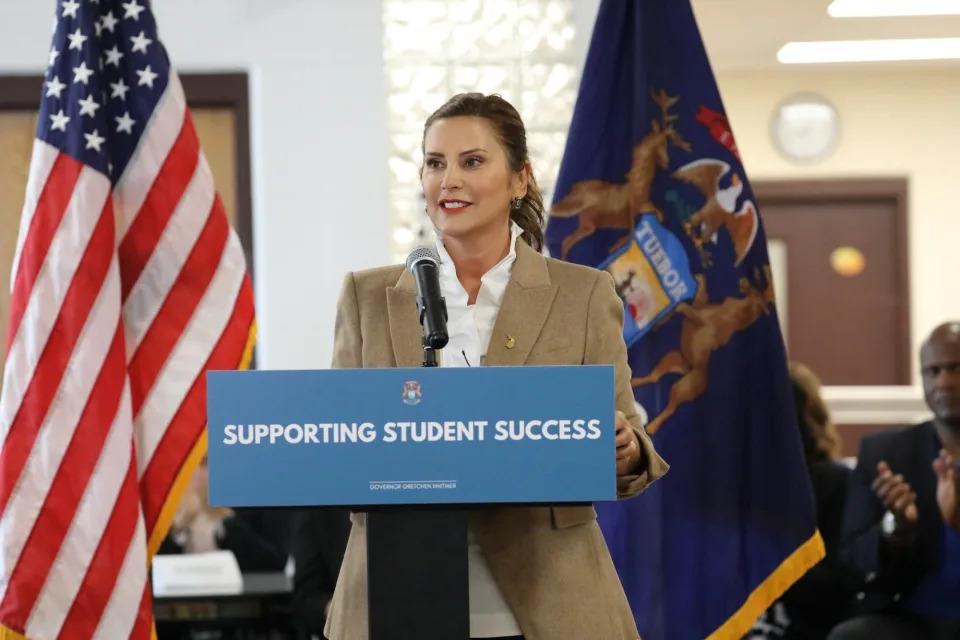
Gov. Gretchen Whitmer speaks at a bill signing ceremony in Suttons Bay on July 20, 2023 before signing the education budget.
Bills eliminate restrictions affecting teacher unions

Whitmer signed House Bill 4354, which eliminates restrictions on teacher’s unions from bargaining with public schools about performance evaluation systems and teacher placements. House Bill 4820 signed by Whitmer also changes how seniority is considered in public schools’ personnel decisions. Currently, length of service generally cannot be factored into those decisions.

Whitmer also signed House Bill 4044, which repeals a ban on public employers paying higher wages and providing more generous benefits after a collective bargaining agreement expires. And Whitmer approved House Bill 4233 which eliminates a prohibition against public school employers from using school resources to help unions collect dues or fees from public school employees. Bill sponsor state Rep. Jaime Churches, D-Wyandotte, touted the legislation for enabling teachers to automatically have their union dues withdrawn from their paychecks.

House Minority Leader Matt Hall, R-Richland Township, blasted the legislation. “As they hand out favors and power to their union boss allies, Michigan Democrats are continuing to undermine public education and put the needs of students last,” he said in a statement. With the exception of House Bill 4233 which garnered the support of one GOP lawmaker − state Sen. Ed McBroom, R-Waucedah Township − Republicans opposed the package bills.

School funding: Gov. Whitmer signs $24.3 billion Michigan education budget

Detroit teachers compensation

Senate Bill 359 signed by Whitmer eliminates the requirement that compensation for Detroit teachers and administrators be determined primarily on the basis of job performance. Instead, it allows teacher and administrator pay to take into account the number of years spent on the job and advanced degrees held by Detroit Public Schools Community District employees.

The bill has its origins in a 2016 Republican effort aimed at addressing financial challenges facing Detroit’s public school system which created a different process for determining teacher and staff compensation from the rest of the state.

Bill sponsor state Sen. Stephanie Chang, D-Detroit, said in a June statement that the ban on considering longevity and advanced degrees to determine Detroit teachers’ compensation was an “unfair prohibition” that has caused teachers to leave the district.

Michigan schools: Gov. Whitmer announces new Michigan education department focusing on early and higher ed

Lure out-of-state teachers and counselors to Michigan

Finally, Whitmer signed Senate Bills 161 and 162 aimed at making it easier for school teachers and counselors to move to Michigan. The pair of bills reduce the barriers both out-of-state teachers and school counselors face to work in Michigan’s schools by easing the state’s teacher and school counselor certification requirements.

Sheryl Kennedy, the legislative liaison for the Michigan Department of Education, said about a quarter of Michigan teachers moved in from out of state and the bills could make Michigan a destination for educators. “Michigan’s kind of really becoming a place where teachers really want to go from other states,” she said during a hearing on the legislation.

A classroom sits empty at the Cesar Chavez Academy High School in Detroit last March after the pandemic hit.

Senate Bill 161 enables those with a teaching credential from a federally recognized Indian tribe or another country to apply to the state superintendent of public instruction to receive a teaching certificate without needing to take teacher certification exams in Michigan. The bill also eases the criteria for those eyeing a move from another state to Michigan to teach. For example, it allows those with a teaching certification from another state, federally recognized Indian tribe or country to be eligible for a Michigan professional education certificate if they have successfully taught for at least three years in their prior jurisdiction.

Senate Bill 162 creates similar pathways for out-of-state school counselors.

“Incandescently stupid”: Former DHS official says he had to “dumb” down classified memos for Trump

Salon

“Incandescently stupid”: Former DHS official says he had to “dumb” down classified memos for Trump

Gabriella Ferrigine – July 26, 2023

Donald Trump Mark Makela/Getty Images

Miles Taylor, who served as chief of staff at the Department of Homeland Security under Donald Trump, shared how he often had to oversimply national security reports for the former president.

“This fifty-page memo that we would normally give to any other president about what his options are is something Trump literally can’t read. The man doesn’t read. We’ve gotta boil this down into a one-pager in his voice,” Taylor told podcast host Brett Meiselas on Tuesday. “And so I had to write this incandescently stupid memo called something like, ‘Afghanistan, How to Put America First and Win.’ And then bullet by bullet, I summed up this highly classified memo into Trump’s sort of bombastic language because it was the only way he was gonna understand,” Taylor added. “I mean, I literally said in there, ‘You know, if we leave Afghanistan too fast, the terrorists will call us losers. But if we wanna be seen as winners, we need to make sure the Afghan forces have the strength to push back against these criminals.’ I mean, it was that dumb and that’s how you had to talk to him.”