These Voters Share Almost No Political Beliefs, but They Agree on One Thing: We’re Failing as a Nation

The New York Times

These Voters Share Almost No Political Beliefs, but They Agree on One Thing: We’re Failing as a Nation

Ruth Igielnik – August 20, 2023

A Jackson, Miss., precinct worker cuts individual “I Voted in Hinds County” stickers from the roll, Tuesday, Aug. 8, 2023. Each voter in Hinds County receives a sticker upon receipt of a paper ballot. Voters statewide are selecting their party’s nominees for a number of county and statewide offices in their respective Democratic or Republican primaries. (AP Photo/Rogelio V. Solis) (ASSOCIATED PRESS)More

There are few things that Republicans and Democrats agree on. But one area where a significant share of each party finds common ground is a belief that the country is headed toward failure.

Overall, 37% of registered voters say the problems are so bad that we are in danger of failing as a nation, according to the latest New York Times/Siena College poll.

Fifty-six percent of Republicans and Republican-leaning independents said we are in danger of such failure. This kind of outlook is more common among voters whose party is out of power. But it’s also noteworthy that fatalists, as we might call them, span the political spectrum. Around 20% of Democrats and Democratic-leaning independents say they feel the same way.

Where they disagree is about what may have gotten us to this point.

Why Republicans say the U.S. is in danger of failing

Republican fatalists, much like Republican voters overall, overwhelmingly support former President Donald Trump. This group is largely older — two-thirds of Republicans older than 65 say the country is on the verge of failure — and less educated. They are also more likely than Republican voters overall to get their news from non-Fox conservative media sources like Newsmax or The Epoch Times.

Many of these gloomy Republicans see the Biden administration’s policies as pushing the country to the verge of collapse.

“Things are turning very communistic,” said Margo Creamer, 72, a Trump supporter from Southern California. “The first day Biden became president, he ripped up everything good that happened with Trump; he opened the border — let everyone and anyone in. It’s just insane.”

She added that there was only one way to reverse course: “In this next election if Trump doesn’t win, we’re going to fail as a nation.”

Many Republicans saw the pandemic, and the resulting economic impact, as playing a role in pushing the country toward failure.

“COVID gave everyone a wake-up call on what they can do to us as citizens,” said Dale Bowyer, a Republican in Fulton County, Indiana. “Keeping us in our houses, not being allowed to go to certain places, it was complete control over the United States of America. They think we’re idiots and we wouldn’t notice.”

Why Democrats say the U.S. is in danger of failing

While fewer Democrats see the country as nearing collapse, gender is the defining characteristic associated with this pessimistic outlook. Democratic and Republican women are more likely than their male counterparts to feel this way.

“I have never seen things as bleak or as precarious as they have been the last few years,” said Ann Rubio, a Democrat and funeral director in New York City. “Saying it’s a stolen election plus Jan. 6, it’s terrifying. Now we’re taking away a woman’s right to choose. I feel like I’m watching the wheels come off something.”

For many Democrats, specific issues — especially abortion — are driving their concern about the country’s direction.

Brandon Thompson, 37, a Democrat and veteran living in Tampa, Florida, expressed a litany of concerns about the state of the country: “The regressive laws being passed; women don’t have abortion access in half the country; gerrymandering and stripping people’s rights to vote — stuff like this is happening literally all over the country.

“If things continue to go this way, this young experiment, this young nation, is going to fall apart,” he said.

More than just on the wrong track

Pollsters have long asked a simple question to take the country’s temperature: Are things in the U.S. headed on the right track or are they off in the wrong direction?

Americans’ views on this question have become more polarized in recent years and are often closely tied to views of the party in power. So it is not surprising, for example, that currently 85% of Republicans said the country was on the wrong track, compared with 46% of Democrats. Those numbers are often the exact opposite when there’s a Republican in the White House.

Views on the country’s direction are also often closely linked to the economic environment. Currently, 65% of Americans say the country is headed in the wrong direction. That’s relatively high historically, although down from last summer when inflation was peaking and 77% of Americans said the country was headed in the wrong direction. At the height of the recession in 2008, 81% of Americans said the country was headed in the wrong direction.

What seems surprising, however, is the large share of voters who say we’re on the verge of breaking down as a nation.

“We’ve moved so far away from what this country was founded on,” said William Dickerson, a Republican from Linwood, North Carolina. “Society as a whole has become so self-aware that we’re infringing on people’s freedoms and the foundation of what makes America great.”

He added: “We tell people what they can and can’t do with their own property and we tell people that you’re wrong because you feel a certain way.”

Voters contacted for the Times/Siena survey were asked the “failing” question only if they already said things were headed in the wrong direction. And while this is the first time a question like this has been asked, the pessimistic responses still seem striking: Two-thirds of Republicans who said the country was headed in the wrong direction said things weren’t just bad — they were so bad that America was in danger of becoming a failed nation.

“Republicans have Trump and others in their party who have undermined their faith in the electoral system,” said Alia Braley, a researcher at Stanford’s Digital Economy Lab who studies attitudes toward democracy. “And if Republicans believe democracy is crumbling, it can become a self-fulfilling prophecy, in that they will stop behaving like citizens of a democracy.”

She added, “Democrats are often surprised to learn that Republicans are just as afraid as they are about the future of U.S. democracy, and maybe more so.”

After the blaze, coping with ‘fire brain’

THe Washington Post

After the blaze, coping with ‘fire brain’

Marlene Cimons and Kim Bellware – August 20, 2023

Many people escaped the deadly Maui wildfires – some in harrowing fashion – but their ordeal may not be over.

The harmful effects of wildfire exposure don’t disappear once the flames are extinguished, experts said. There is growing research that suggests breathing in the tiny particles from wildfire smoke can produce cognitive deficits, which may appear in as little as six to 12 months or even years later.

Surviving a near-death experience also raises the risk of post-traumatic stress, with such symptoms as depression, sleep disorders, anxiety and survivor’s guilt, researchers said.

“Of course, the immediate most important thing is to survive,” said Marc Weisskopf, professor of environmental epidemiology and physiology at Harvard T.H. Chan School of Public Health, who studies the relationship between air pollution and brain health. “But unfortunately, those who do survive also may be vulnerable to both long- and short-term effects on the brain caused by this exposure.”

Some survivors of wildfires describe their cognitive struggles after escaping the blaze as “fire brain.”

Living with ‘fire brain’

Randy Gerhardt, 66, and wife Sandi Knapp Gerhardt, 55, fled the 2018 Camp Fire in California, the deadliest and most destructive in that state’s history, and noticed changes in themselves almost immediately. They would have clear mental pictures of an item they would be looking for – a tool, a lawn game – but couldn’t recognize the new item they replaced it with. Other times, they would walk into a room and not know why they were there.

Gerhardt, a retired salesman for Frito-Lay, had been used to a busy work schedule and just as robust slate of projects and hobbies. After the fire, he couldn’t finish tasks, let alone get enough motivation to start them.

“I didn’t know what the heck was wrong with me,” Gerhardt said. “I built seven houses, helped build two churches. Used to work 65-70 hours a week.”

The couple chalked up their new behavior to stress. “But this was different than just stress,” Gerhardt said. “You wonder why you’re being so worthless and lazy. I’d have a list and not feel like doing any of it. Even my bills, I’d just let them sit there for a month.”

Even rebuilding a home in Paradise took Gerhardt an uncharacteristically long two years. “All my friends would ask, ‘how is the house coming?’ and I just wouldn’t work on it,” he said.

For a period of two years after the fire, Gerhardt and his wife met weekly with five other couples who were living in trailers set up on the property of a tile factory owned by a friend. The group, who dubbed themselves “the forever friends,” would talk and exchange information and what they were going through.

He thinks it was in that group that someone first mentioned to him the idea of “fire brain.” In chats with emergency room doctors since then, he was given further confirmation that what he was experiencing was not only real but also common among some fire survivors.

Having his feelings and behaviors named made him feel less broken, he said.

“I felt vindicated,” he said. “I wasn’t crazy. What I was going through was normal, I wasn’t weaker.”

Trauma related to climate change

Trauma from surviving natural disasters related to climate change is also different from other one-time events such as a car accident or sexual assault, said Dhakshin Ramanathan, associate professor in residence in psychiatry at the University of California at San Diego.

“People see the environment as a refuge, a positive healing thing,” he said. “When something you see as positive turns against you, that’s a difficult thing for many people to deal with.”

There is added stress from not being able to predict whether survivors will be exposed again. “Climate will be a sustained stress that will be harder to treat,” Ramanathan said.

One study conducted after the Camp Fire found that more than 30 percent of those directly exposed had symptoms of post-traumatic stress, “and these symptoms were three times more prevalent than in non-exposed communities on the West Coast,” said Jyoti Mishra, lead author and associate professor of psychiatry at the UC-San Diego.

“Indirectly exposed individuals, that is, those who lived in the community where the wildfire happened, were also affected by PTSD but to a lesser extent than directly exposed individuals,” she said.

Laura Nelson, 39, fled the Camp Fire with her cat, dog and bearded lizard hoping to find a quick exit by car. Instead, she was stuck in a massive traffic jam along Paradise’s Skyway as the fire raced uphill.

“I thought I was going to die in a line of cars for four hours,” Nelson recalled.

With no close family nearby, she lived in her car for several months before settling in Oregon where she began experiencing tinnitus, vertigo, intrusive thoughts and nightmares.

“In Oregon, part of the mental health effects I was experiencing was isolation, it was being misconceived,” said Nelson, whose new community could not understand why she found traffic jams or the smell of smoke triggering.

She struggled to reconcile with the reality that her possessions had been destroyed in the fire, often bypassing items at the mall because she believed she still had a particular fork or sweater or belt. Beyond what she described as a kind of brain fog, symptoms of her worsening mental health emerged later, including thoughts of suicide.

“I was totally alone,” Nelson said. “It became very overwhelming and isolating, and you think of things that you’ve never thought of before.” Doctors prescribed medication, but there was no pill for what she needed.

“I didn’t have a disease,” Nelson said. “I had trauma.”

There also is guilt, along with increased anxiety and depression, experts said. “Survivors often feel they should have done more to help others, which can be psychologically damaging and guilt-producing – and totally irrational,” said Andrea Roberts, senior research scientist in environmental health at the Chan school, who was not involved in the Camp Fire study. “In most cases, there is nothing they could have done.”

Cognitive deficits after escaping wildfire

The Camp Fire study also looked at cognitive functioning within six months to a year after the fire, using the Flanker task, which measures the ability to suppress distractions while focusing on a task. They found a 20 percent deficit among those who had been exposed to wildfires compared with those who had not.

“Breathing in particulate matter can lead to inflammatory responses in the body,” Mishra said. ‘That affects brain processes. How it influences brain processes is still a question.”

When the researchers looked at brain function underlying specific cognitive functions, they found heightened activity in the left frontal part of the brain that was more pronounced in those exposed to wildfires, she said.

“It’s overprocessing all the stimuli coming at you,” Mishra said. “That’s what happens in traumatized brains.”

These results are consistent with the “common trajectory” of mental health that follows a traumatic event, said Irva Hertz-Picciotto, professor of public health sciences and director of the environmental health sciences center at the University of California at Davis, who was not part of the Camp Fire study.

“Often people go into high gear in the immediate aftermath, where the need to get into survival mode is intense, and all systems are on high alert, and that can last for months,” she said. “But at some point, it is too much to sustain, and people crash, often around six months where they may sink into a deep depression.”

Smoke particles that cause brain inflammation

Until recently, scientists focused more on how inhaling tiny smoke particles affected the cardiovascular and respiratory systems than the brain, said Kent Pinkerton, professor of pediatrics at the UC-Davis school of medicine, who studies how vapors, gases, particles and fibers affect respiratory, cardiovascular and neurological functions.

Breathing through the nose in stressful conditions is good, he said, because it serves as a filter, and “the particles will deposit in your nose, rather than deep in the lungs.” At the same time, though, cells responsible for the sense of smell can carry the particles to the brain and produce inflammation, Pinkerton said.

Inflammation – when it becomes chronic – can be dangerous.

“Wildfire exposure is so intense that it causes neuroinflammation on a rapidly occurring scale,” Weisskopf said. “The initial inflammation is actually a protective response – like when you have a fever or injury – but in some people, it can become chronic. The longer it lasts, the more likely you are to have more long-lasting effects.”

Also, toxic metals often are “hitchhiking” on these tiny particles, said Ray Dorsey, the professor of neurology at the University of Rochester.

“If you look at the brains of people with Alzheimer’s disease and Parkinson’s, you find higher concentrations of these toxic metals: lead, iron from brake pads, platinum from catalytic converters,” he said. “They are probably bypassing the blood-brain barrier. The nose may be the front door in exploiting the normal protective mechanisms of the brain.”

The effects of trauma probably influence future brain disease, experts say. “PTSD is a major risk factor for later dementia, though it is years later, not next year,” said Paul E. Schulz, professor of neurology and director of the Neurocognitive Disorders Center at UTHealth Houston.

The effects of inhaling wildfire smoke, compounded by trauma, sets up a complicated mystery scientists need to explore further, Mishra said.

“There are all these jigsaw puzzle pieces,” she said. “The particulates enter the brain system and can cause inflammation. We know this can interact with emotions and cognitive systems in the brain. But in the context of wildfires, we don’t know yet how all this comes together.”

Nelson, the survivor who fled the Camp Fire with her pets, has advice for the people on Maui facing a challenging road ahead.

“Take it easy. This is a grief and loss process,” she said. “Sometimes you can go through all the phases of grief in one day. Sometimes it takes years.”

Protest broke out at a 55+ Florida community over skyrocketing home insurance premiums: ‘We have no choice, we have to sell’

Fortune

Protest broke out at a 55+ Florida community over skyrocketing home insurance premiums: ‘We have no choice, we have to sell’

Alena Botros  – August 19, 2023

This week, hundreds of homeowners in a 55+ living community, known as Century Village, in Pembroke Pines, Fla., gathered together to protest an increase in their monthly housing fees due to skyrocketing insurance costs, as several insurers flee the state.

Homeowners were sent an email from Century Village that they’d have to pay an additional $100 to $200 a month due to “skyrocketing insurance premiums,” adding a potential special assessment for some units, according to NBC6, a local TV news outlet in South Florida that was first to report the incident. Footage shown in the TV segment shows several residents crowded together, visibly upset and shouting (although it’s unclear what exactly they’re saying). However, it seems that the protest escalated and police were called. Still, one resident told NBC6 reporter Laura Rodriguez that the increase in costs is forcing him to sell his home.

“So now we are over $700 a month that we are paying just in HOA fees, and they’re going to kick it up to $1,000 a month,” the resident told the reporter. “We have no choice, we have to sell. As a matter of fact, I just put my house on the market 10 minutes ago.”

Century Village did not immediately respond to Fortune’s request for comment.

Housing markets in Florida saw substantial increases in home prices during the pandemic, and in most cases are still seeing increases. That coupled with mortgage rates that have more than doubled, with the average 30-year fixed rate recently hitting a 20-year high, has deteriorated affordability. But now there’s a new force putting a strain on housing affordability, and that’s rising insurance costs.

Homeowners in Florida are paying the highest insurance premiums in the nation, with an average premium of $6,000 per year, according to Mark Friedlander, the Florida-based director of corporate communications for the Insurance Information Institute. To compare, the U.S. average $1,700 per year. And recently, several home insurers have either pulled out of the state, like Farmers Insurance, or have chosen to renew fewer policies, like AAA—and that’s making it more difficult for homeowners to find coverage, or even afford it, as Fortune’s previously reported.

“Just in the last 18 months, 15 companies have stopped writing business in Florida. Three have voluntarily withdrawn—Farmers being the most recent—and seven companies have been declared insolvent,” Friedlander recently explained to Fortune, before AAA said it would reduce its presence in Florida, rather than pull out completely as Farmers Insurance announced its plan to do so.

There are several factors behind the state’s insurance exodus that range from claim fraud, to an increase in claims following recent hurricanes, to an increase in reinsurance rates. All of which, essentially raise costs for insurance companies, which in turn raises costs for policyholders. However, we’re seeing that some insurers are simply choosing to leave the state, and that only makes it harder for homeowners to find coverage, and makes that coverage more expensive.

Insurance concerns are already having an impact on Florida’s housing market, with a recent homebuilder survey showing that buyers’ concerns over the availability and affordability of insurance are somewhat slowing sales, which could potentially get worse.

What mosquitoes are most attracted to in human body odor is revealed

CNN

What mosquitoes are most attracted to in human body odor is revealed

Kate Golembiewski, CNN – August 19, 2023

What mosquitoes are most attracted to in human body odor is revealed

Sign up for CNN’s Wonder Theory science newsletter. Explore the universe with news on fascinating discoveries, scientific advancements and more.

Anyone who has spent a summer evening swatting away mosquitoes, or a summer day scratching mosquito bites, can agree: Mosquitoes stink. But the smells produced by humans are an important part of what draws mosquitoes to us.

In a scientific report published in May, scientists helped pinpoint the different chemicals in body odor that attract these insects by building an ice-rink size testing arena and pumping in the scents of different people.

Mosquitoes are part of the fly family, and most of the time, they feed on nectar. However, females preparing to produce eggs need a meal with extra protein: blood.

Best-case scenario, getting bitten will just leave you with an itchy red bump. But mosquito bites often turn deadly, thanks to parasites and viruses the insects transmit. One of the most dangerous of these diseases is malaria.

Malaria is a blood-borne disease caused by microscopic parasites that take up residence in red blood cells. When a mosquito bites a person infected with malaria, it sucks up the parasite along with the blood. After developing in the mosquito’s stomach, the parasite “will migrate to the salivary glands and then be spat back out into the skin of another human host when the mosquito blood-feeds again,” said Dr. Conor McMeniman, an assistant professor of molecular microbiology and immunology at the Johns Hopkins Bloomberg School of Public Health and Johns Hopkins Malaria Research Institute in Baltimore.

Malaria has been eradicated in the United States in the past century thanks to window screens, air-conditioning and improvements to drainage systems where mosquitoes’ aquatic larvae can grow, but the disease remains a danger to much of the world.

“Malaria still accounts for more than 600,000 deaths per year, mostly in children under the age of 5 years, and also pregnant women,” said McMeniman, senior author of the study published in the journal Current Biology.

“It inflicts a lot of suffering around the world, and part of the motivation for this study was to try and really understand how mosquitoes that transmit malaria are finding humans.”

McMeniman, along with Bloomberg postdoctoral researchers and the study’s first authors, Drs. Diego Giraldo and Stephanie Rankin-Turner, focused on Anopheles gambiae, a species of mosquito found in sub-Saharan Africa. They partnered with Zambia’s Macha Research Trust, led by scientific director Dr. Edgar Simulundu.

“We were really motivated to try and develop a system where we could study the behavior of the African malaria mosquito in a naturalistic habitat, reflective of its native home in Africa,” McMeniman said. The researchers also wanted to compare the mosquitoes’ smell preferences across different humans, to observe the insects’ ability to track scents across distances of 66 feet (20 meters), and to study them during their most active hours, between 10 p.m. and 2 a.m.

Researchers set up a screened facility the size of skating rink to help understand how mosquitoes that transmit malaria find humans. - Julien Adam/Macha Research Trust/Johns Hopkins Malaria Research Institute
Researchers set up a screened facility the size of skating rink to help understand how mosquitoes that transmit malaria find humans. – Julien Adam/Macha Research Trust/Johns Hopkins Malaria Research Institute

To tick all these boxes, the researchers created a screened facility the size of a skating rink. Dotting the perimeter of the facility were six screened tents where study participants would sleep. Air from their tents, carrying the participants’ unique breath and body odor scents, was pumped through long tubes to the main facility onto absorbent pads, warmed and baited with carbon dioxide to mimic a sleeping human.

Hundreds of mosquitoes in the main 20-by-20-meter facility were then treated to a buffet of the sleeping subjects’ scents. Infrared cameras tracked the mosquitoes’ movement to the different samples. (The mosquitoes used in the study were not infected with malaria, and they couldn’t reach the sleeping humans.)

The researchers found what many who have been on a picnic would attest to: Some people attract more mosquitoes than others. What’s more, chemical analyses of air from the tents revealed the odor-causing substances behind the mosquitoes’ attraction, or lack thereof.

The mosquitoes were most attracted to airborne carboxylic acids, including butyric acid, a compound present in “stinky” cheeses such as Limburger. These carboxylic acids are produced by bacteria on human skin and tend not to be noticeable to us.

While carboxylic acids attracted the mosquitoes, the insects seemed to be deterred by another chemical called eucalyptol, which is present in plants. The researchers suspected that one sample with a high eucalyptol concentration might have been related to the diet of one of the participants.

Simulundu said that finding a correlation between the chemicals present in different people’s body odor and the mosquitoes’ attraction to those scents was “very interesting and exciting.”

“This finding opens up approaches for developing lures or repellents that can be used in traps to disrupt the host-seeking behavior of mosquitoes, thereby controlling malaria vectors in regions where the disease is endemic,” said Simulundu, a coauthor of the study.

Dr. Leslie Vosshall, a neurobiologist and vice president and chief scientific officer of the Howard Hughes Medical Institute who was not involved with the study, was similarly enthusiastic. “I think it’s a super exciting study,” she said. “It’s the first time that an experiment of this type has been done at this scale outside the lab.”

Vosshall researches another mosquito species that spreads dengue feverZika and chikungunya. In a study published in 2022 in the journal Cell, she and her colleagues found that this mosquito species also seeks out the scent of carboxylic acids produced by bacteria on human skin. The fact that these two different species respond to similar chemical cues is a good thing, she said, because that could make it easier to create repellents or traps for mosquitoes across the board.

The research might not have any immediate implications for avoiding bug bites at your next barbecue. (Vosshall said that even scrubbing with unscented soap doesn’t get rid of the natural scents that attract mosquitoes.) However, she noted that the new paper “gives us some really good clues about what mosquitoes are using to hunt us, and understanding what that is, is essential for us to come up with the next steps.”

Kate Golembiewski is a freelance science writer based in Chicago who geeks out about zoology, thermodynamics and death. She hosts the comedy talk show “A Scientist Walks Into a Bar.”

Gulf Coast officials are scrambling to prepare for two weather disasters to combine in deadly fashion

CNN

Gulf Coast officials are scrambling to prepare for two weather disasters to combine in deadly fashion

Rachel Ramirez, CNN – August 19, 2023

It’s been a sweltering summer for much of the US, with temperatures reaching new highs seemingly every day. And along the Gulf Coast, officials are now grappling with how to handle two potentially deadly disasters set to compound: a hurricane and extreme heat.

In New Orleans, this summer was the first time officials were forced to tap into their “rainy day” fund, which is typically meant for hurricane emergency response, to address heat emergencies.

“It’s really a new frontier for us,” Anna Nguyen, public information officer for New Orleans Homeland Security Emergency Preparedness, told CNN.

Last week, the city issued an emergency declaration for extreme heat, underscoring rising concerns about widespread power outages ahead of peak hurricane season. Without air conditioning and sufficient shelter capacity, the cascading effects of these dual disasters could be deadly for the most vulnerable people.

Hazards indirectly related to storms, like exposure to heat, kill nearly as many people as the storm itself, NOAA data shows. Nearly 22% of those so-called indirect deaths were caused by heat and generator misuse from 2013 to 2022. Experts have also said that extreme heat is a silent killer and can be a major contributing factor in the overall hurricane death toll.

Emergency response officials in major urban areas like Miami-Dade County, New Orleans and Houston — places that have endured blistering temperatures this summer — told CNN that they’ve had to rethink extreme weather.

“Climate change is functioning as a threat multiplier, and we’re seeing more and more often dual threats happening at once,” Christopher Dalbom, assistant director at the Tulane Center for Environmental Law, told CNN. “Anybody who’s been without power during hurricane season in the Gulf knows that even without an official emergency declaration for excessive heat, it gets pretty excessive.”

Cascading effects
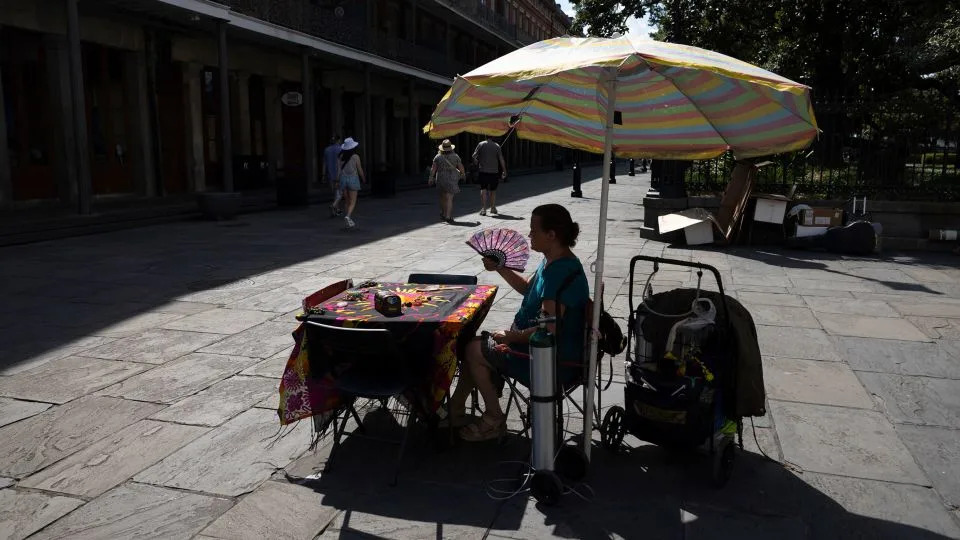
Extreme heat has baked the Gulf Coast for weeks this summer. 
 - Christiana Botic/The New York Times/Redux
Extreme heat has baked the Gulf Coast for weeks this summer. – Christiana Botic/The New York Times/Redux

The Gulf Coast is no stranger to hurricanes, but consecutive days with temperatures over 100 degrees Fahrenheit are a new experience for many.

An intense hurricane and extreme heat could be a deadly combination because storm destruction and widespread power outages would leave people exposed and vulnerable to heat, said Nikisha Williams, managing director of collective impact at The Miami Foundation.

“If Miami experienced extreme heat at the same time, portions of our community would have no relief for what could be days or weeks,” Williams told CNN. “This is extremely dangerous for the most vulnerable populations such as children and the elderly.”

When Hurricane Irma pummeled Florida in 2017, for instance, several people were killed at a Hollywood nursing home due to overheating after the storm knocked out the air conditioning.

Texas is no different. Over the past few years, Houston has endured devastating hurricanes, a deadly winter freezedrought, forest fires and now oppressive heat. Officials there are still navigating how to properly prepare for the rapidly changing extreme weather to avoid mass casualties.

“Climate change has really been a huge eye-opener for us,” Thomas Muñoz, emergency management coordinator for Houston’s Office of Emergency Management, told CNN. “It’s so unpredictable now, I can say that. We’ve never seen record-breaking days like this.”

With dozens of record-high temperatures being set across Florida since the start of June, coupled with brutal humidity that has made the heat even more dangerous, Miami-Dade County officials have been scrambling to prepare for the day that extreme heat might combine with a landfalling hurricane.

Pete Gomez, director of emergency management in Miami-Dade County, said the county has been ramping up emergency management and disaster recovery efforts, especially when it comes to addressing both storm threats and extreme heat.

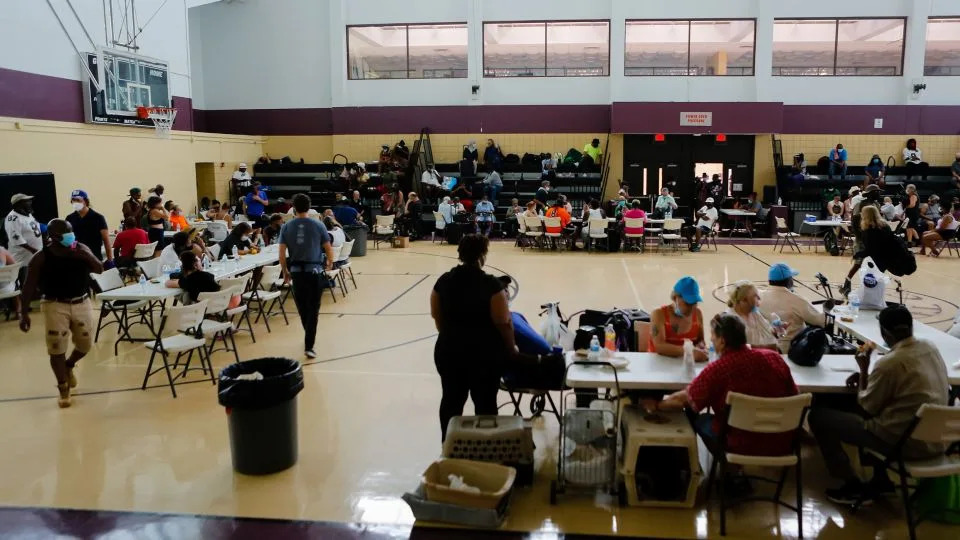
Residents gather at recreation center after Hurricane Ida in New Orleans on Sept. 3, 2021.  - Eva Marie Uzcategui/Bloomberg/Getty Images
Residents gather at recreation center after Hurricane Ida in New Orleans on Sept. 3, 2021. – Eva Marie Uzcategui/Bloomberg/Getty Images

In 2021, Miami-Dade County Mayor Daniella Levine Cava appointed the nation’s first ever chief heat officer with the goal of raising the public’s awareness about the dangers of extreme heat to the same level as hurricanes.

Since then, she has expanded initiatives to prepare for a dual-disaster scenario. The county was able to secure funding to install air conditioning units in some affordable housing that did not have any. Gomez said all shelters have backup generator systems to keep residents cool, and they’ve also established relationships with the county’s homeless trust and nonprofit groups, including The Miami Foundation.

“That’s the revision we need so we can meet the needs of the community,” Gomez said. “Part of that need is preparedness, getting the message out, and making sure that everything is done to try to minimize the impact of these events as much as possible.”

But Williams, who was born and raised in Miami, said the county is still not fully prepared due to rapidly changing demographics and the need for more widespread messaging and education on living in a region prone to climate disasters.

“I feel like I’m betraying my city, but the reality is we’re not prepared,” she said. “Every storm brings something incredibly different if I’m being honest. There’s always something new that we didn’t think of. And so, even in the best of situations, we probably will not be 100% prepared.”

“But I think we are more prepared today than we were before,” Williams added.

Lessons learned
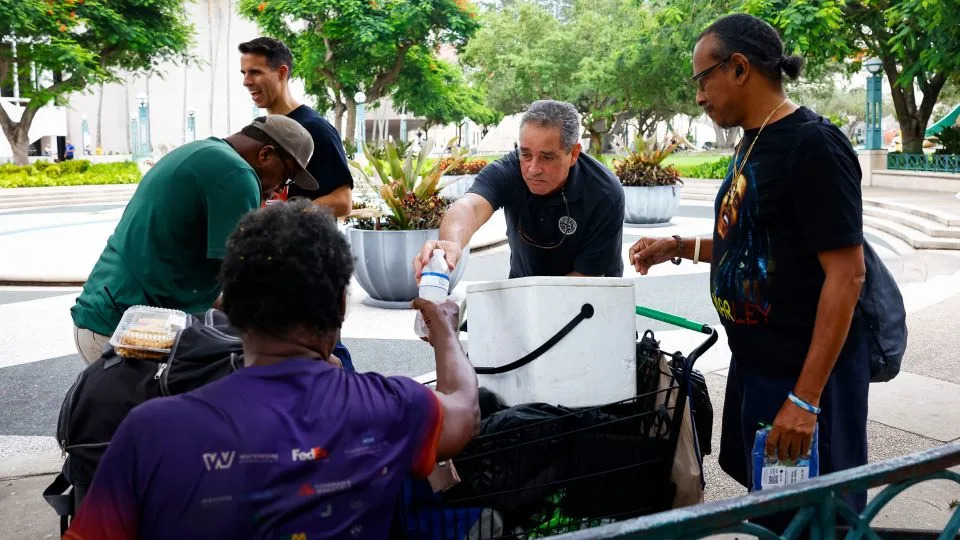
Miami-Dade County Homeless Trust representatives distribute bottles of water and shelter information during a heat wave in Miami, Florida, on July 25, 2023.  - Eva Marie Uzcategui/Bloomberg/Getty Images
Miami-Dade County Homeless Trust representatives distribute bottles of water and shelter information during a heat wave in Miami, Florida, on July 25, 2023. – Eva Marie Uzcategui/Bloomberg/Getty Images

Emergency management officials from New Orleans and Houston say they are well-equipped and prepared for both disasters to happen, despite the unprecedented nature of how climate change has recently been taking shape.

In Houston, Muñoz said they have expanded their outreach, including revising messaging about resources available in the event of a disaster. They are not only deploying more languages like American sign language to accommodate the city’s diverse population, but they are also fostering partnerships with nonprofit groups and grassroots organizations.

“The best thing for us that I’ve learned is just that constant communication with people throughout the year and then when we start the process of seeing something, we do a lot of calling like what do y’all need? What I do we have issues?” Muñoz said. “It’s like we are constantly looking at the what ifs and then we work towards that, and of course, we capture the lessons learned and how we can do better.”

For New Orleans, Nguyen said that they’re continuously taking what they have learned from previous storms and are translating it to heat emergencies. Since Hurricane Katrina, she said officials have built robust relationships with the community in order to work toward preparedness and quick recovery.

“New Orleans has been battle-tested,” Nguyen said. “There’s always going to be room for improvement, that’s the nature of this work — you can always do things better, but it’s how do we take lessons learned and apply it to what’s in front of us now.”

Brita water filter company accused of false advertising

Los Angeles Times

Brita water filter company accused of false advertising

Dorany Pineda – August 19, 2023

An opened water purification filter is pictured at the headquarter of German water filtration company Brita in Taunusstein, Germany, on August 16, 2017. / AFP PHOTO / Daniel ROLAND (Photo credit should read DANIEL ROLAND/AFP via Getty Images)
Water filters on an assembly line at Brita’s factory in Taunusstein, Germany. (AFP via Getty Images)

A lawsuit filed against the maker of some of the nation’s most popular water filtration systems has accused the Brita company of falsely advertising that its products remove or reduce hazardous contaminants from tap water.

The proposed class-action lawsuit, which was filed Wednesday in Los Angeles County Superior Court, claims that deceptive advertising has led customers to falsely believe that Brita products filter such contaminants as arsenic, nitrate, hexavalent chromium and certain PFAS, or “forever chemicals,” from tap water.

Brita is owned by Clorox Co., which is headquartered in Oakland. Clorox released a statement Wednesday saying it was still reviewing the complaint, but looked forward to “defending ourselves vigorously.”

“Brita takes the transparency of the variety of water filtration options we offer seriously,” the statement said. “Our products include a standard filtration option that improves taste and odor of tap water and is certified to reduce identified contaminants as communicated. For those consumers looking for water filters certified to reduce PFOS or PFOA, the Brita Elite pour-through and Brita Hub are both certified to reduce PFOS/PFOA, as well as lead and other identified contaminants.”

Read more: Risk of tap water exposure to toxic PFAS chemicals higher in Southern California

The lawsuit was filed by Los Angeles County resident Nicholas Brown, who is currently the sole plaintiff. Brown purchased a Brita water pitcher and standard filter for about $15 in 2022 after reading the product label and believing the device would filter contaminants to below lab detectable limits, the lawsuit said.

“Unfortunately, the Products are not nearly as effective as defendant deliberately leads people to believe, causing consumers to overpay millions and forego more effective alternatives,” the lawsuit said. “In this way, defendant has not only bilked millions of dollars from consumers in ill-gotten gains, but Defendant has put the health and welfare of millions of consumers and their families at risk.”

At the heart of the lawsuit is the basic and fundamental human right to clean and safe drinking water, said the plaintiff’s lawyers. They argue that Brita products, which are widely available and affordable, are a staple in the homes of students, renters, working families and others who can’t spare the price of high-quality filters for their taps.

The company’s marketing “creates the illusion of safety and protection for people and their families,” said Ryan Clarkson, managing partner of the Clarkson Law Firm in Malibu. “And that’s really the big problem that we need to solve here. When people are running their tap water with PFAS through these Brita water filters, it’s just a superfluous act. It does nothing whatsoever as it relates to chemicals like PFAS.”

PFAS, or per- and polyfluorinated substances, are a group of thousands of manufactured chemicals that have been widely used for decades in products that resist heat, oil and water. They can be found in such everyday items as nonstick cookware, dental floss, period underwear, fast food boxes, water-repellent clothing and firefighting foam.

Known as forever chemicals because they don’t degrade naturally in the environment, PFAS have made their way into rivers, lakes, aquifers and people’s blood streams. Exposure to high levels of some PFAS has been linked to adverse health effects such as decreased fertility, increased risk of high cholesterol, obesity, high blood pressure, certain cancers, and liver and immune-system damage.

The lawsuit accuses the company of violating California laws concerning unfair competition, false advertising, breach of contract and others. It seeks damages and other remedies.

Read more: ‘This is taking too long’: California community awaits cleanup of PFAS-contaminated wells

Depending on the type of filter, Brita products are certified to reduce or remove contaminants such as chlorine, lead, mercury, asbestos, some particulates, zinc, copper and select pesticides, herbicides and pharmaceuticals, according to its website.

The lawsuit comes at a time of increasing concern over drinking water contamination.

Researchers recently estimated that at least 45% of the nation’s tap water is contaminated with one or more PFAS chemicals, and that drinking-water exposures may be more common in urban areas across Central and Southern California than in other regions.

The Environmental Protection Agency plans to begin regulating several types of PFAS in drinking water and has proposed strict limits on two common ones — PFOA and PFOS — and L.A. County supervisors supported a proposal last month to investigate PFAS levels in drinking water.

Arsenic and nitrate, which are linked to certain cancers and other health issues, are also widespread in parts of California. According to state data, 22% of primary maximum contaminant level (MCL) violations in public water systems last year were for arsenic, and 22% were for nitrate, the highest of any contaminants. MCLs are health-protective drinking-water standards.

The lawsuit argues that claims on the labels and packages of certain Brita water filters, pitchers and dispensers — such as “Cleaner, Great-Tasting Water for Over [20, 25, or 30] Years,” “The #1 FILTER” and “Reduces 3X Contaminants” — are false and misleading. Other claims like “Better water for you. Better water for the planet” and “Fresh filter = Fresh water” reinforce consumer beliefs that the products remove or reduce to below lab detection limits common hazardous contaminants, the lawsuit says.

The lawsuit also claims that numerous Brita products have not been registered with the California State Water Resources Control Board since they’ve been marketed and sold, and that none of their products have been certified to remove or reduce health-hazardous contaminants, making it unlawful to market and sell them in the Golden State.

“What the case seeks is really two things,” Clarkson said. “First, greater transparency for consumers so they understand what these water filters are capable of filtering out and what they are not capable of filtering out. We don’t believe that the advertising and labeling of these products communicate in a transparent and effective way to consumers what the products can and can’t do.

“And secondly, we’re looking for compensation to all purchasers of these products who have relied upon the products to fulfill a promise that they simply haven’t fulfilled,” he added. The class period will go back to Aug. 16, 2019.

Hurricane Hilary threatens ‘catastrophic and life-threatening’ flooding in Mexico and California

Associated Press

Hurricane Hilary threatens ‘catastrophic and life-threatening’ flooding in Mexico and California

Ignacio Martinez and Julie Watson – August 19, 2023

This Friday, Aug. 18, 2023, 1:10 p.m. EDT satellite image provided by the National Oceanic and Atmospheric Administration shows Hurricane Hilary, right, off Mexico’s Pacific coast. It grew rapidly to Category 4 strength and could reach Southern California as the first tropical storm there in 84 years, causing “significant and rare impacts” including extensive flooding. The U.S. National Hurricane Center said a tropical storm watch has been issued for Southern California, the first time it has ever done that. (NOAA via AP)
Seal Beach resident Tom Ostrom, walks past a home protected with sandbags in Seal Beach, Calif., Friday, Aug. 18, 2023. Hurricane Hilary is churning off Mexico's Pacific coast as a powerful Category 4 storm threatening to unleash torrential rains on the mudslide-prone border city of Tijuana before heading into Southern California as the first tropical storm there in 84 years. (AP Photo/Damian Dovarganes)
Seal Beach resident Tom Ostrom, walks past a home protected with sandbags in Seal Beach, Calif., Friday, Aug. 18, 2023. Hurricane Hilary is churning off Mexico’s Pacific coast as a powerful Category 4 storm threatening to unleash torrential rains on the mudslide-prone border city of Tijuana before heading into Southern California as the first tropical storm there in 84 years. (AP Photo/Damian Dovarganes)
Cal Fire Firefighter-Paramedic Capt. Tyler Williams checks the sandbags set outside of his garage in Seal Beach, Calif., Friday, Aug. 18, 2023. Hurricane Hilary is churning off Mexico's Pacific coast as a powerful Category 4 storm threatening to unleash torrential rains on the mudslide-prone border city of Tijuana before heading into Southern California as the first tropical storm there in 84 years. (AP Photo/Damian Dovarganes)
Cal Fire Firefighter-Paramedic Capt. Tyler Williams checks the sandbags set outside of his garage in Seal Beach, Calif., Friday, Aug. 18, 2023. Hurricane Hilary is churning off Mexico’s Pacific coast as a powerful Category 4 storm threatening to unleash torrential rains on the mudslide-prone border city of Tijuana before heading into Southern California as the first tropical storm there in 84 years. (AP Photo/Damian Dovarganes)
Seal Beach resident Tom Ostrom, right, sits along an empty water-pipe to be used to pump sea water back to the Pacific Ocean as homes are protected by sand berms in Seal Beach, Calif., Friday, Aug. 18, 2023. Hurricane Hilary is churning off Mexico's Pacific coast as a powerful Category 4 storm threatening to unleash torrential rains on the mudslide-prone border city of Tijuana before heading into Southern California as the first tropical storm there in 84 years. (AP Photo/Damian Dovarganes)
Seal Beach resident Tom Ostrom, right, sits along an empty water-pipe to be used to pump sea water back to the Pacific Ocean as homes are protected by sand berms in Seal Beach, Calif., Friday, Aug. 18, 2023. Hurricane Hilary is churning off Mexico’s Pacific coast as a powerful Category 4 storm threatening to unleash torrential rains on the mudslide-prone border city of Tijuana before heading into Southern California as the first tropical storm there in 84 years. (AP Photo/Damian Dovarganes)
A couple walks along berms in Seal Beach, Calif., Friday, Aug. 18, 2023. Officials in Southern California were also re-enforcing sand berms, built to protect low-lying coastal communities against winter surf. Hurricane Hilary is churning off Mexico's Pacific coast as a powerful Category 4 storm threatening to unleash torrential rains on the mudslide-prone border city of Tijuana before heading into Southern California as the first tropical storm there in 84 years. (AP Photo/Damian Dovarganes)
A couple walks along berms in Seal Beach, Calif., Friday, Aug. 18, 2023. Officials in Southern California were also re-enforcing sand berms, built to protect low-lying coastal communities against winter surf. Hurricane Hilary is churning off Mexico’s Pacific coast as a powerful Category 4 storm threatening to unleash torrential rains on the mudslide-prone border city of Tijuana before heading into Southern California as the first tropical storm there in 84 years. (AP Photo/Damian Dovarganes)

CABO SAN LUCAS, Mexico (AP) — Hurricane Hilary headed for Mexico’s Baja California on Saturday as the U.S. National Hurricane Center predicted “catastrophic and life-threatening flooding” for the peninsula and for the southwestern United States, where it was forecast to cross the border as a tropical storm on Sunday.

Officials as far north as Los Angeles scrambled to get the homeless off the streets, set up shelters and prepare for evacuations.

Hilary is expected to plow into Mexico’s Baja peninsula on Saturday night and then surge northward and enter the history books as the first tropical storm to hit Southern California in 84 years.

The U.S. National Hurricane Center issued tropical storm and potential flood warnings for a wide swath of Southern California from the Pacific coast to interior mountains and deserts. Officials talked of evacuation plans for California’s Catalina Island.

“I don’t think any of us — I know me particularly — never thought I’d be standing here talking about a hurricane or a tropical storm,” said Janice Hahn, chair of the Los Angeles County Board of Supervisors.

After rapidly gaining power early Friday, Hilary slowed some later in the day but remained a major Category 3 hurricane early Saturday with maximum sustained winds of 125 mph (205 kph), down from 145 mph (230 kph).

Early on Saturday, the storm was centered about 235 miles (375 kilometers) west of the southern tip of the Baja peninsula. It was moving north-northwest at 16 mph (26 kph) and was expected to turn more toward the north and pick up speed.

The latest forecast track pointed to Hilary making landfall along a sparsely populated area of the Baja peninsula at a point about 200 miles (330 kilometers) south of the Pacific port city of Ensenada.

It is then expected to continue northward up the peninsula, raising fears that its heavy rains could cause dangerous flooding in the border city of Tijuana, where many homes in the city of 1.9 million cling precariously to steep hillsides.

Mayor Montserrat Caballero Ramirez said the city was setting up four shelters in high-risk zones and warning people in risky zones.

“We are a vulnerable city being on one of the most visited borders in the world and because of our landscape,” she said.

Concern was rising in the U.S., too.

The National Park Service closed Joshua Tree National Park and Mojave National Preserve to keep people from becoming stranded amid flooding. Cities across the region, including in Arizona, were offering sandbags to safeguard properties against floodwaters. Major League Baseball rescheduled three Sunday games in Southern California, moving them to Saturday as part of split-doubleheaders,

Deputies with the Los Angeles Sheriff’s Department took to the road to urge homeless people living in riverbeds to seek shelter. Authorities in the city were arranging food, cots and shelters for people who needed them.

SpaceX delayed the launch of a satellite-carrying rocket from a base on California’s central coast until at least Monday. The company said conditions in the Pacific could make it difficult for a ship to recover the rocket booster.

President Joe Biden said the Federal Emergency Management Agency had pre-positioned staff and supplies in the region.

“I urge everyone, everyone in the path of this storm, to take precautions and listen to the guidance of state and local officials,” Biden told reporters Friday at Camp David, where he is meeting with the leaders of Japan and South Korea.

Officials in Southern California were re-enforcing sand berms, built to protect low-lying coastal communities against winter surf, like in Huntington Beach, which dubs itself as “Surf City USA.”

In nearby Newport Beach, Tanner Atkinson waited in a line of vehicles for free sandbags at a city distribution point.

“I mean a lot of people here are excited because the waves are gonna get pretty heavy,” Atkinson said. “But I mean, it’s gonna be some rain, so usually there’s some flooding and the landslides and things like that.”

Some schools in Cabo San Lucas were being prepared as temporary shelters, and in La Paz, the picturesque capital of Baja California Sur state on the Sea of Cortez, police patrolled closed beaches to keep swimmers out of the whipped-up surf. Schools were shut down in five municipalities.

It was increasingly likely that Hilary would reach California on Sunday while still at tropical storm strength, though widespread rain was expected to begin as early as Saturday, the National Weather Service’s San Diego office said.

Hurricane officials said the storm could bring heavy rainfall to the southwestern United States, dumping 3 to 6 inches (8 to 15 centimeters) in places, with isolated amounts of up to 10 inches (25 centimeters), in portions of southern California and southern Nevada.

“Two to three inches of rainfall in Southern California is unheard of” for this time of year, said Kristen Corbosiero, a University at Albany atmospheric scientist who specializes in Pacific hurricanes. “That’s a whole summer and fall amount of rain coming in probably 6 to 12 hours.”

The region could face once-in-a-century rains and there is a good chance Nevada will break its all-time rainfall record, said meteorologist Jeff Masters of Yale Climate Connections and a former government in-flight hurricane meteorologist.

Watson reported from San Diego. Associated Press writers Seth Borenstein in Washington, Maria Verza and Mark Stevenson in Mexico City, John Antczak in Los Angeles, and Eugene Garcia in Newport Beach, California, contributed to this report.

This is the best exercise to lower blood pressure, study finds

Today

This is the best exercise to lower blood pressure, study finds

A. Pawlowski – August 18, 2023

High blood pressure is known as the “silent killer” because it often comes with no symptoms and puts people at a higher risk of heart disease.

Exercise can lower blood pressure without medication, so experts have been urging doctors to prescribe it for people with hypertension, which is defined at or above 130/80 mmHg.

But what kind of exercise is best?

A recent review of studies suggests it’s isometric exercise, particularly the wall squat.

Two people doing wall sits together. (FilippoBacci / Getty Images)

Unlike walking or running, which is all about movement, isometric exercise involves contracting muscles and holding that position for a few minutes without moving. It’s static, but very intense. Think of a plank.

The paper, published in the British Journal of Sports Medicine, found all types of physical activity — including aerobic exercise, resistance training and high-intensity interval training — were “significantly effective” in reducing resting blood pressure.

But isometric exercise was the most effective. It reduced systolic blood pressure (the upper number of the reading) by 8 points and diastolic blood pressure (the lower number) by 4 points, the authors write.

The findings are based on a systematic review and meta-analysis of 270 randomized controlled trials that involved more than 15,000 participants and looked at the effects of various modes of exercise on resting blood pressure.

It’s not clear why isometric exercises are so effective, but it appears to be linked to the unique physiological response to a static muscle contraction, says Jamie Edwards, the lead study author.

“When holding this contraction, the local blood vessels in the surrounding area become mechanically compressed by the contracting muscles,” Edwards, a researcher and instructor at Canterbury Christ Church University in England, tells TODAY.com.

“On release of this contraction — for example, when you stand up from a squatting position — there is a reactive rush of blood flow to the vessels, which causes the release of molecules that (widen) your vessels.”

How to do a wall squat:

The wall squat was the most effective individual exercise in the isometric category, Edwards and his colleagues found.

It’s simple, but incredibly intense. Stephanie Mansour, a certified personal trainer, instructs people to lean against a wall with feet hip-width apart and slide down into a squat. Feet should be far enough from the wall so that the knee joints can form a 90-degree angle, with thighs parallel to the floor.

Edwards suggested doing four wall squats lasting 2 minutes each, separated by rest intervals of 1 to 4 minutes. This should be done three times per week. Keep breathing normally throughout an isometric contraction, he advises.

It’s likely that repeating this pattern over several weeks results in sustained reductions in blood pressure, Edwards notes.

Cardiologist’s take

Dr. Luke Laffin, co-director of the Center for Blood Pressure Disorders at the Cleveland Clinic, says there’s no question people need to exercise to manage their blood pressure.

But the ultimate goal is to reduce the risk for strokes and heart attacks, and study after study has shown aerobic physical activity — like walking, cycling or running — is better than isometric exercise when it comes to lowering cardiovascular risk, he notes.

“Aerobic exercise training should be promoted above all else,” Laffin tells TODAY.com.

He recommends at least 150 minutes of moderate intensity aerobic physical activity per week, split most any way people want. Studies show “weekend warriors” who squeeze all their exercise into two days get similar health benefits as people who do more frequent shorter workouts.

Moderate intensity activity means you can carry on a conversation while you’re doing it, Laffin says.

Different types of exercise can offer different benefits, so a combination of cardio, resistance training and high-intensity interval training can be best, with isometric exercise considered complimentary to those workouts, both Laffin and Edwards say.

Who should avoid isometric exercise?

People with aortic aneurysms or history of aortic dissection should avoid it, Laffin says. Women make up most cases of spontaneous coronary artery dissection — a tear or a bleed within the layers of a heart artery wall.

Isometric exercise produces a sudden acute load on the aorta, which can lead to further damage, Laffin warns.

How long does it take to lower blood pressure with exercise?

Exercise has been associated with “immediate significant reductions” in systolic blood pressure (the upper number of the reading), which can last for almost 24 hours, studies have found. This is known as post-exercise hypotension.

The body releases nitric oxide, which causes blood vessels to open wider for improved blood flow, Laffin says.

A sustained change would take about three months of regular exercise, Bethany Barone Gibbs, a vascular researcher who studies the prevention and treatment of cardiometabolic disease, previously told TODAY.com.

These parts of California could get a year’s rain in a few days thanks to Hurricane Hilary

Los Angeles Times

These parts of California could get a year’s rain in a few days thanks to Hurricane Hilary

Grace Toohey, Hayley Smith, Rong-Gong Lin II – August 18, 2023

General view of the Medano beach before the arrival of hurricane Hilary at Los Cabos resort in Baja California state, Mexico on August 18, 2023. Hurricane Hilary strengthened into a major storm in the Pacific on Friday and was expected to further intensify before approaching Mexico's Baja California peninsula over the weekend, forecasters said. (Photo by ALFREDO ESTRELLA / AFP) (Photo by ALFREDO ESTRELLA/AFP via Getty Images)
Surf roils off Medano Beach at a Los Cabos resort in Baja California on Friday. (Alfredo Estrella / AFP via Getty Images)

Some areas of Southern California and southern Nevada could see a year’s worth of rain in the coming days as Hurricane Hilary arrives.

Historic flooding could hit a wide swath of Southern California and the Las Vegas area, especially in San Bernardino and Inyo counties, with Death Valley and the Morongo Basin expected to see the most major flooding.

Hilary is likely to have weakened to a tropical storm by the time it leaves Mexico and enters California. But officials are sounding the alarm for potential flooding.

Everyone “should prepare for the potential for significant flash flooding. This is not the time to wait to prepare; this forecast is unlikely to improve,” said the National Weather Service in Las Vegas, which also issues forecasts for Death Valley and Morongo Valley.

Read more: Hurricane Hilary forecast recalls infamous 1939 storm that killed scores of Californians

Some areas could even see as much as a year’s worth of rain in a 24-hour period Sunday — and if not then, over the next few days. “This will not be a constant rainfall, but rather several rounds of moderate/heavy rainfall,” from Friday through Monday, the weather service said.

“Once impacts begin in your areas, they will likely worsen as we head into next week,” forecasters said. Sometimes the rain “could be slowly compounding. Other times, it could be flash flooding. Not much time between rounds of rain for conditions to improve.”

Other desert areas are also expected to receive at least a year’s worth of rain during the storm, officials with the National Weather Service said.

Palm Springs and Yucca Valley both average 4 to 5 inches of rainfall per year, but the forecast shows a deluge of 4 to 7 inches falling between Saturday and Monday, according to Elizabeth Adams, a meteorologist with the weather service in San Diego.

“The amount of moisture we’re getting is just unbelievable,” Adams said. “The rain rates could potentially be really extreme as well — over an inch or 2 inches of rain in an hour will be possible.”

Even higher rainfall totals of 6 to 10 inches are possible along the east-facing desert slopes of the Riverside, San Bernardino and San Diego County mountains, Adams said.

She advised residents in the storm’s path to monitor forecast updates and ensure they have multiple methods of receiving warnings, including wireless emergency alerts, weather apps and local TV, radio and news stations.

In Yucca Valley, officials are warning residents to take precautions and avoid unnecessary travel, as access to some local roads may be limited.

“As the ability to travel may be reduced over the next two days, residents are reminded to keep a supply of necessary provisions and medications on hand,” Yucca Valley officials said on X, formerly known as Twitter. “Be sure to bring pets inside. Never use generators, outdoor heating or cooking equipment indoors.”

The National Weather Service office in Phoenix, which issues forecasts for portions of southeastern California, said it’s likely the storm will bring “significant and rare (and potentially destructive) impacts.”

Current models show moisture anomalies that are “off the charts,” the agency wrote in its latest forecast — “and almost unbelievably more extreme than previous iterations. Essentially every standardized field measure is pegged at a climatological extreme for this time of year at multiple time scales.”

Read more: How to prepare for Hurricane Hilary, the first tropical storm to hit L.A. in 84 years

The rains expected with Hilary are rare and bring a “life-threatening” risk of flash floods from Baja California to southern Nevada.

A tropical storm watch is in effect across much of southwestern California, from the California-Mexico border into parts of Los Angeles County, something the National Hurricane Center said is a first for this area.

A watch indicates that tropical storm conditions — meaning sustained winds of more than 39 mph — are possible within 48 hours, according to the hurricane center.

‘Life-threatening flash flooding’

While high winds are creating the unusual tropical storm conditions, officials continue to emphasize that rain remains the greatest concern.

“This could [bring] rare and life-threatening flash flooding in the heaviest areas of rainfall. That is especially going to be prevalent Sunday evening through Monday morning,” said Elizabeth Adams, a meteorologist with the National Weather Service in San Diego.

Read more: Tropical storm warning issued as Hurricane Hilary races toward Southern California

high-risk warning for excessive rainfall was issued for much of inland Southern California — from the San Bernardino Mountains through the Coachella Valley and down into the Anza Borrego Desert — indicating the high probability for flash flooding Sunday and Monday.

The warning was issued for the first time in more than a decade for the low deserts east of the Southern California mountains, which are typically the drier-facing slopes, Adams said.

Rainfall is expected as early as Saturday morning for the Southland’s mountains and deserts, continuing through Monday — with eastern-facing mountains likely to see the most extreme amounts of rain, from 6 to 10 inches, and up to a foot in some isolated areas. Three to 6 inches of rain will be expected across the deserts.

Read more: Full coverage of Hurricane Hilary as the storm approaches Southern California

Precipitation will move into the coasts and valleys, including the Inland Empire, likely by late Saturday, Adams said, where 2 to 4 inches will be expected through Monday.

According to the National Weather Service, Big Bear Lake, Julian, Idyllwild, and Mt. Laguna could get up to 7 inches of rain between Saturday and Monday. The Coachella Valley, including Palm Springs, could see up to 5 inches. Hemet, San Bernardino, Hesperia and Victorville could see up to 4 inches.

Coastal areas
  • High surf (5-9 feet)
  • Strong winds
  • Dangerous rip currents
  • Coastal flooding/beach erosion
  • Dangerous conditions for south- and southeast-facing harbors
  • Catalina Island could see hazardous winds and reduced visibility
Deserts and mountains
  • Intense rainfall in mountains, more than 10 inches in isolated areas
  • Coachella Valley could see up to 5 inches of rain
  • Flash flooding possible in some areas
  • Five to 7 inches of rain possible in Wrightwood, Big Bear and parts of Imperial County

We Just Got a Hint About Conservatives’ New Supreme Court Strategy on Abortion

Slate

We Just Got a Hint About Conservatives’ New Supreme Court Strategy on Abortion

Mary Ziegler – August 17, 2023

The Supreme Court building with clouds shaped like mifepristone.
What does this augur for the Supreme Court? Photo illustration by Slate. Photos by Robert Alexander/Getty Images and Bill Grenblatt via Getty Images.

On Wednesday, the U.S. Court of Appeals for the 5th Circuit again voted to reimpose limits on the abortion pill mifepristone. If the court had its way, the clock would turn back to 2016, when patients could get mifepristone for only seven weeks of pregnancy, and only after more than one in-person visit with a physician. The ruling won’t have any immediate impact because the Supreme Court issued a stay last spring that keeps the status quo in place as litigation continues. But even if this ruling doesn’t change anything on the ground, it represents conservatives’ best guess that the Supreme Court is going to go much further than it did in Dobbs in limiting abortion at a national level—even if not necessarily in this case.

This case began when the Alliance for Hippocratic Medicine, a group of anti-abortion doctors, set up shop in Amarillo, Texas, where a judge widely believed to be the most hostile to abortion in the country, Matthew Kacsmaryk, presides. AHM, which is represented by the Christian-right powerhouse Alliance Defending Freedom, argued that the Food and Drug Administration lacked the authority to approve the pill mifepristone all the way back in 2000. Last spring, Kacsmaryk lived up to expectations, issuing a humdinger of an opinion agreeing with this claim and embracing the language of fetal personhood. Not much later, a different 5th Circuit panel concluded that the plaintiffs had waited too long to challenge the original approval of mifepristone, but held that the plaintiffs would probably prevail on their claims that the FDA did not have the power to lift restrictions on mifepristone in both 2016 and 2021. The Supreme Court, however, did not seem to be buying any of it. The court issued a stay that keeps the status quo in place as litigation continues.

One of the factors the court considers in issuing a stay is the plaintiffs’ probability of prevailing when the case is all said and done. Most of the justices seem to think this case is doomed.

Given the Supreme Court’s obvious skepticism, judges with more self-restraint might have let this case die. There are explosive claims made by these plaintiffs that many conservatives want the Supreme Court to take up sooner or later. AHM argues that the federal Comstock Act, a 19th-century anti-vice law, means that the FDA did not have the authority to permit access to mifepristone via telehealth. According to the plaintiffs, that’s because mailing abortion pills is already a federal crime. In fact, if the Comstock Act is interpreted in this light, any abortion violates federal law: No procedure in the nation takes place without a drug or device going through the mail. That argument is not a slam-dunk—it ignores decades of precedent interpreting the statute far more narrowly—but ambitious anti-abortion lawyers still have big plans for Comstock. Based on what the majority of the three-person panel ruled, the 5th Circuit could be saving this argument for a better case, as they instead ruled on procedural grounds (in a separate opinion partially concurring and dissenting from the panel majority, Trump appointee James C. Ho stated that the Comstock Act meant that it is illegal to send abortion medication via mail). The same wait-and-see game goes for claims that the FDA did not have the authority to loosen restrictions on mifepristone, or even to approve it in the first place.

But the 5th Circuit, by ruling in part with AHM on procedural grounds, is also is placing a bet that no case is procedurally defective enough for the court that gave us Dobbs. To say the plaintiffs’ case for standing is weak is to put the matter gently. The physicians bringing the case stressed that they had treated patients for mifepristone complications in the past. Since the complication rate for mifepristone is not zero (it stands at roughly 0.3 percent), that meant that some future patients might suffer complications, and might seek care from the doctors bringing the case, and some of those doctors might suffer conscience-based injuries. If you think that sounds speculative, you aren’t wrong. The 5th Circuit understood this problem and dedicated a whopping three-dozen pages to explaining why against all evidence, these plaintiffs do have standing.

Even the substance of the decision—which would reinstate restrictions in place in 2016—seems intended to lower the temperature, likely to try to make things more palatable for the Supreme Court. The majority refused to address the Comstock Act and steered clear of explicitly pro-life language.

Reading Judge Ho’s partial dissent makes this tactical move that much clearer. Judge Ho described mifepristone as a drug that takes the life of an unborn child. He concluded that the FDA lacked the authority to approve mifepristone in 2000 because—as abortion opponents have long argued—pregnancy is not a disease, but a normal rite of passage. He chided his colleagues for not ruling on the relevance of the Comstock Act and argued that the act does amount to a ban on mailing abortion pills. He argued that physicians treating a patient for post-abortion complications suffer an “aesthetic harm” worthy of redress.

But the differences between the two opinions are strategic, not substantive. The panel members were united in believing that no standing defect will worry this Supreme Court if it has a chance to limit access to abortion. Judge Ho is just ready to say the quiet part out loud—and to press the court to go even further, even faster. In that way, the majority’s opinion may be a snapshot of where the Supreme Court is today—on this case and abortion more broadly. Judge Ho’s opinion is a prediction about where the court is headed—if not in this case, then in the future.

Reimposing 2016 restrictions on mifepristone would have dramatic effects. But as Judge Ho’s opinion makes clear, mifepristone rules are just the beginning. If these plaintiffs have standing, it’s hard to see how conservatives raising other challenges to controversial drugs, such as those used in gender-affirming care or IVF, won’t be able to establish the same thing. And if the Comstock Act means what Judge Ho thinks it does, then a Republican president could seek to treat any abortion anywhere as a federal crime.

What does this augur for the Supreme Court? The plaintiffs’ standing arguments don’t sound any better when the 5th Circuit makes them. From a procedural standpoint, this case is still a dud. Given this truth—and the fact that the Supreme Court already seems to have its doubts about this case—this is still unlikely to be the case that revolutionizes access to the leading abortion method nationwide.

But the judges on the 5th Circuit understand who is on the Supreme Court, and they know that any loss is likely to be temporary. This ruling may shift the Overton window—passing off the majority opinion here as a sensible, middle-ground outcome. And if the court isn’t ready to go much further on abortion yet, that will likely change later. Judges with more self-restraint might have let this case go. But as the 5th Circuit seems to believe that when it comes to this Supreme Court on abortion, there is no reason for self-restraint when you have nothing to lose.