Why Your Poop Might Look Narrow

Health

Why Your Poop Might Look Narrow

Courtney Battaglia, RN – August 27, 2023

Medically reviewed by Robert Burakoff, MD

Stool should typically look like a sausage or snake. But what your stool (poop) looks like can change from time to time. Sometimes, stool can be narrower than usual. There are various reasons why your stool may have a smaller diameter. Some causes, like constipation, might be less concerning, while others, like cancer, may be more severe. A healthcare provider can determine what is causing the change in stool shape and provide any needed treatment.

What Causes Narrow Stools?

Depending on factors like what you eat or what conditions you have, you might experience some variation in the shape of your stool.

Constipation

Constipation is a condition that makes it so that you have infrequent bowel movements, difficulty making a bowel movement, or both. The regular shape of your stool can change when you’re constipated, causing it to look narrower than usual after you strain to get it out.- ADVERTISEMENT -https://s.yimg.com/rq/darla/4-11-1/html/r-sf-flx.html

Constipation is very common. It’s usually caused by a lack of fiber in your diet, though some medications and conditions like Parkinson’s disease can also contribute to constipation.

Signs of constipation include:

  • Having fewer than three bowel movements in a week
  • Producing stool that is hard, dry, and difficult to pass
  • Experiencing stomach bloating
  • Straining during a bowel movement
Irritable Bowel Syndrome

Irritable bowel syndrome (IBS) is a group of digestive symptoms that can cause stomach pain as well as diarrhea, constipation, or both. IBS can occur because of a problem with the movement of the intestines, an issue with the intestinal nerves, or a problem with how the brain controls intestinal functions. Even though there is an issue with the functioning of the intestines, there aren’t any structural abnormalities in your intestines.

Healthcare providers diagnose IBS from your symptoms. IBS can lead to a change in your stool’s appearance, including making it narrower than usual. Other symptoms of IBS are:

You may even experience symptoms that do not seem to be related to the intestines, like fatigue and difficulty sleeping.

Diverticular Disease

The lining of the intestine wall is usually smooth. When pouches develop in the wall of the intestine, it is known as diverticular disease. These small balloon-like pouches usually form from weakened areas of the intestine muscles. When the pouches become inflamed repeatedly, it can lead to scarring that narrows the inside of the intestines. The narrowing of the intestines can make it difficult for stool to come out, potentially causing narrow stools.

Other symptoms of diverticular disease are:

  • Pain in the lower left side of the abdomen
  • Changes in bowel habits, such as diarrhea or constipation
  • Symptoms that get worse after eating and better after a bowel movement
  • Pain that gets worse when someone places pressure on your stomach
  • Symptoms that come and go or remain constant
Colorectal Cancer

Colorectal cancer develops in the tissues of your colon or rectum. At first, you might not experience any symptoms. As the disease progresses, you might start having some symptoms. One symptom of colorectal cancer is narrowed stool. The stool can become so narrow that it is sometimes described as pencil-thin.

Other signs of colorectal cancer are:

  • Fatigue
  • Blood in stool
  • Diarrhea or constipation
  • Unexplained weight loss
  • A feeling like your bowels are not empty
Anal Stenosis

Anal stenosis is a rare condition that happens when the anal canal becomes narrow from scarring. This condition usually happens after surgeries hemorrhoid removal, also known as a hemorrhoidectomy, or other surgeries of the anus. Other causes of anal stenosis are chronic diarrhea, long-term laxative use, trauma, radiotherapy, tuberculosis, and other infections.

Besides narrow stools, other symptoms of anal stenosis are:

  • Painful bowel movements
  • An inability to pass stool
  • Bleeding with bowel movements
When to See a Healthcare Provider

Having stool that’s typically normal but occasionally narrow is not usually something to worry about. However, you’d want to see a healthcare provider if your narrow stool lasts for more than two weeks or if your stool continuously gets thinner, especially to the point that’s it’s pencil-thin.

Other signs that may indicate you should have an evaluation are:

  • Unexplained weight loss
  • Bloody stools
  • A feeling as though there is a mass in your rectum
  • No bowel movement in three days
  • Abdominal bloating and pain
  • A feeling as though your bowel isn’t emptying

If you are experiencing any concerning symptoms and have certain risk factors that make you more likely to develop colorectal cancer, it is even more critical to see a healthcare provider. These risk factors include being older, having a history of polyps, having inflammatory bowel disease, and having a family history of colon cancer.

Diagnosis

Healthcare providers usually diagnose narrow stools based on your symptoms and a physical exam. Depending on what symptoms you are experiencing and your risk factors for certain conditions, there may be a need for further diagnostic testing, like imaging scans.

Your healthcare provider may perform the following tests:

  • Digital rectal exam: Healthcare providers insert a gloved finger into your rectum. The purpose of this exam is so your healthcare provider can feel for any irregularities, like masses, in the area.
  • Complete blood cell count (CBC): A CBC is a blood test that can help detect certain conditions like infections, anemia, cancers, and diseases that affect the immune system.
  • Imaging tests: Some scans, like an abdominal ultrasound or an abdominal X-ray, can show intestinal problems.
  • EndoscopyAn endoscopy is a type of test where a healthcare provider will guide a tube with a camera on it through your intestines. There are different types of endoscopies used for which part of the body needs exploration. A flexible sigmoidoscopy can give providers a view of your rectum and lower colon while a colonoscopy can view your entire colon. The procedures can be used to check for tumors or polyps, and a biopsy can be taken from the intestines to check for cancer.
  • Fecal occult blood test: This test will help detect any bleeding in your intestines that the human eye can not see. It can help diagnose different intestinal disorders, such as ulcers, colitis, and colorectal cancer.

A healthcare provider may also use different criteria and charts to help classify symptoms. For instance, the Rome criteria help healthcare providers diagnose IBS. The requirements to meet the criteria include having had abdominal pain for at least one day a week in the last three months, along with two or more signs of additional symptoms that occur with abdominal pain.

Meanwhile, the Bristol stool chart is an assessment tool covering the seven different stool types. It helps healthcare providers diagnose intestinal problems such as constipation and diarrhea.

How to Get Your Stool Back to Normal

Treatment will vary based on the exact cause of your narrow-shaped stool. For example, if constipation is causing the stool change, you can try increasing your fiber intake. This can include eating whole grains, legumes, berries, apples, vegetables, and nuts. You should also drink more water to help your stool become softer. If you need additional help to relieve your constipation, talk with your healthcare provider about medications like stool softeners or laxatives.

If IBS is causing the narrow stools, you can try managing your IBS. This might include eating smaller, more frequent meals and eating meals more slowly. You can also avoid foods that cause gas and bloating, like cabbage and beans. You can consider implementing a low-FODMAP diet since the diet avoids certain carbohydrates that increase gas. Certain foods and stress can make IBS symptoms worse, so you’ll want to take note of foods or situations that induce symptoms and try to avoid them if possible. Increasing physical activity may help keep you regular too.

Diverticular disease, colorectal cancer, and anal stenosis need to be managed by a healthcare provider. Treatment would depend on which condition you have and how advanced the disease is. Diverticular disease may benefit from probiotics, fiber supplements, or anti-inflammatory medications. Colorectal cancer may require surgery, radiation, or chemotherapy. Anal stenosis might need surgery.

A Quick Review

Narrow stool is not usually a concern when it happens occasionally. The temporary change in stool shape might be due to constipation or irritable bowel syndrome. If the stool stays narrow or continues to get narrower, you should contact a healthcare provider. Stool that is very thin might be a sign of colorectal cancer. Narrow stool may also be a sign of diverticular disease or anal stenosis. A healthcare provider can determine what is causing your stool to be narrow and provide proper treatment, if necessary.

An ‘obscene’ number of kids are losing Medicaid coverage

CNN

An ‘obscene’ number of kids are losing Medicaid coverage

Tami Luhby – August 26, 2023

For months, Evangelina Hernandez watched helplessly as her autistic twin sons regressed – their screaming, biting and scratching worsening. The Wichita, Kansas, resident couldn’t afford the $3,000 monthly tab for their 10 prescriptions or their doctor visits without Medicaid.

The toddlers, along with three of their sisters, lost their health insurance in May, swept up in the state’s eligibility review of all its Medicaid enrollees. Hernandez said she only received the renewal packet a day before it was due and mailed it back right away. She also called KanCare, the state’s Medicaid program, and filled out another application over the phone, certain that the kids remained eligible.

Yet, every time she inquired about the children’s coverage, she was told the renewal was still being processed. And though her partner works for an airplane manufacturer, the family can’t afford the health insurance plan offered by his employer.

“My kids are suffering. You can see it,” said Hernandez, who along with her infant daughter, remained on Medicaid thanks to coverage provisions for low-income, postpartum mothers and babies. “The medication they’re on, I can’t afford it.”

Just over a week ago, Hernandez got the call she had been waiting for: The kids’ coverage was reinstated. However, the pharmacy told her it could not immediately fill her sons’ prescriptions because it had to get their new enrollee information – and even then, she could only pick up the medication for one son because there were errors in her other son’s file.

The delays have consequences. Once they start taking the medications again, it will take about a month before their behavior starts to improve, she said.

All across the US, hundreds of thousands of children are being kicked off of Medicaid, even though experts say the vast majority continue to qualify. They are among the more than 87 million people in Medicaid and several million more in the Children’s Health Insurance Program who are having their eligibility checked and are facing possible termination of coverage for the first time since the Covid-19 pandemic began.

States regained the ability to start winnowing their Medicaid rolls of residents whom they deem no longer qualify on April 1, when a pandemic relief program expired. Since then, at least 5.4 million people have lost their benefits, according to KFF, formerly the Kaiser Family Foundation.

Not every state breaks down their terminations by age. But in the 15 states that do, at least 1.1 million youngsters have been dropped, according to KFF. That includes Texas, where nearly half a million non-disabled children lost coverage between April and the end of July, accounting for 81% of the total disenrolled. In Kansas, Idaho and Missouri, kids make up at least half of those losing benefits.

As many as 6.7 million children are at risk of having their benefits terminated during the so-called unwinding process, according to Georgetown University’s Center for Children and Families. Roughly three-quarters of them are expected to remain eligible for Medicaid but will likely lose coverage because of administrative issues, such as their parents not submitting the necessary paperwork or errors made by state Medicaid agencies.

This could lead to a doubling of the uninsured rate among children, said Joan Alker, the center’s executive director, noting that Medicaid covers about half of kids in the US.

“Children have an incredible amount at stake here,” she said. “We continue to be extremely worried as we see what’s happening around the country.”

Overall, nearly three-quarters of adults and children who have lost coverage were dropped for so-called procedural reasons, according to KFF. This typically happens when enrollees do not complete the renewal form, often because it may have been sent to an old address, it was difficult to understand or it wasn’t returned by the deadline.

Some people, however, may not return their forms because they know they earn too much to qualify or they obtained coverage elsewhere, such as from an employer.

The high rate of procedural terminations worries federal officials and advocates because at least some of these folks likely remain eligible for Medicaid but may become uninsured.

A flood of terminations

In Idaho, there were 211,000 youngsters in the state’s Medicaid and CHIP programs in February – accounting for about half of the state’s total enrollees.

But more than 55,000 children had their insurance terminated in the first four months of the unwinding.

“An obscene number of kids are losing their Medicaid,” said Hillarie Hagen, a health policy associate at Idaho Voices for Children.

Among those processed were 33,000 children in families whom the state believes are no longer eligible. Nearly 23,000 of them were dropped for procedural reasons, Hagen said.

Also of great concern is that enrollment in Idaho’s CHIP program has fallen by 16,000 kids during the same period. Hagen expected the number to rise since CHIP has a higher income threshold than Medicaid so some children should have shifted over automatically.

One main reason why so many children – and adults – are losing coverage is because Idaho is focusing initially on households that it knows earn too much or who haven’t responded to the state in the last few years, said Shane Leach, welfare administrator for the state’s Department of Health and Welfare. Idaho continued to check enrollees’ eligibility during the pandemic, though it did not drop those who no longer qualified until now.

The department issues two rounds of notices, sends text messages and posts information in an online portal to let families know they need to return their renewal forms. Even if they miss the deadline, they can regain their coverage, he said.

“If anybody feels that they’re eligible, then reach out and reapply,” Leach said.

Children have higher income limits

Many parents may not realize that even though they don’t qualify for Medicaid anymore, their children may still be eligible because the household income limit for kids to remain covered is higher, said Jennifer Tolbert, an associate director of KFF’s Program on Medicaid and the Uninsured. This is especially true in the 10 states – including Kansas, Florida and Texas – that have not approved the expansion of Medicaid benefits to low-income adults.

Advocates are urging parents to complete and submit the renewal documents even if they think they earn too much to qualify themselves.

In some other cases, children are possibly being dropped because their state is applying the wrong income threshold to them.

In Florida, for instance, parents in a family of four must earn less than $8,520 annually to qualify, but children ages 1 to 5 are eligible if their household income is no more than $43,500, and those ages 6 to 18 can keep their coverage if their family earns less than $41,400, said Lynn Hearn, a staff attorney with the Florida Health Justice Project, an advocacy group.

Children’s enrollment in Medicaid dropped by roughly 154,000 kids, or 5.7%, between May and July, according to a Georgetown analysis of state data. The state does not break down terminations by age.

Hearn and her colleagues have had success in restoring some children’s coverage by appealing to the state and pointing out that the family’s income is less than the eligibility threshold for kids.

Another concern is that youngsters are not being automatically referred to the state’s CHIP program, Florida KidCare, Hearn said.

“I have yet to see a case where the referral happened timely and accurately,” she said.

When asked about the advocates’ concerns, Florida’s Department of Children and Families referred CNN to a fact sheet listing the state’s outreach efforts and enrollee support, including that it has more than 2,700 employees processing cases and assisting participants.

Restoring benefits can be complicated

Once a family loses coverage, regaining it can be frustrating and time-consuming. Tanya Harris spent weeks calling Florida’s Department of Children and Families, waiting on hold for hours at a time, to restore her kids’ insurance.

The Jacksonville resident only learned in late June that they would be cut off after she called the insurer that contracts with Florida to provide her family’s Medicaid benefits. She needed to discuss her 17-year-old daughter’s upcoming spinal surgery. Harris quickly filled out the renewal paperwork on the state’s online portal but was stuck in processing limbo for well over a month.

Tanya Harris, left, spent hours on hold with Florida's Medicaid agency to restore her children's coverage. - Courtesy Tanya Harris
Tanya Harris, left, spent hours on hold with Florida’s Medicaid agency to restore her children’s coverage. – Courtesy Tanya Harris

Harris, who is on long-term disability from her employer as she battles several health conditions, spoke to multiple supervisors and uploaded verifications of her and her husband’s income and address over and over again.

Though the family regained Medicaid coverage in early August, their headaches aren’t over. Some doctors won’t see the kids until they receive their new insurance information, which Harris hopes will be settled next week. And she’s still not able to get some of their medications.

Meanwhile, her 6-year-old son, who has a severe peanut allergy, cannot sit with his classmates at lunch at his new school until his doctor sends in a medicine authorization form for his EpiPen.

“It was just devastating,” Harris said of the coverage loss. “The kids didn’t get the care that they need.”

Engaging parents

Some advocates are trying to take advantage of the start of the school year to alert parents to the importance of submitting their renewal documents.

In Kansas, where nearly 46,000 youngsters have been disenrolled so far, multiple groups are setting up tables at back-to-school events, working with school nurses and doing outreach through early childhood organizations, said Heather Braum, a health policy adviser at Kansas Action for Children.

KanCare reaches out to enrollees at least four times before their renewal is due to encourage them to return the needed paperwork, said Matt Lara, communications director for the state’s Department of Health and Environment. The agency also paused procedural terminations in May and June to give folks more time to send in their packets, as well as hired extra staff to work in the call center and help process renewals.

However, more should be done to improve the system and make sure eligible children maintain their coverage, Braum said.

“Kids’ medical care in so many situations can be very time sensitive – where they’re getting therapies and treatments and prescriptions,” she said. “If it gets delayed, it can have a permanent impact on their lives. Outcomes can be very different. And that’s inexcusable to me.”

The ‘curse of 35’: In China, millennials are already too old for some employers

CNN

The ‘curse of 35’: In China, millennials are already too old for some employers

Berry Wang and Jessie Yeung – August 26, 2023

When Han lost her job as an interface designer in Beijing in February, she figured her 10 years of experience meant she wouldn’t need to look long for alternative work.

But with the job hunt dragging on, she’s beginning to worry. She’s sent off hundreds of job applications – and been invited to only four interviews.

Out of options in her chosen profession, she has turned to part-time jobs to make ends meet, working as a food delivery driver – where she was “lucky to earn 20 yuan ($2.8)” a day – and as a shopping guide, which she gave up after developing acute appendicitis, she says from standing too long.

“I tried every possible job, but they were either too energy-consuming or paid too little,” she said. “It’s difficult to maintain basic life every day, it seems.”

The root of Han’s problem, she believes, is that she has simply become too old in the eyes of many would-be employers. She is 34 years old.

Han, who CNN is identifying by only her last name due to privacy concerns, is among the many millennial workers in China who fear they have succumbed to the “curse of 35.”

The term was originally coined on social media to describe rumored lay-offs of older workers by major tech companies, but it has since become so widespread it is referenced even by advisers to China’s ruling Communist Party.

Anyone who doubts the curse’s potency need only look at the countless online job listings and recruitment sites that state explicitly that candidates should be no older than that age, which many experts don’t even consider middle-aged.

Or look on social media; in June, a traveler’s complaint that hostels in Beijing commonly turn away customers older than 35 sparked heated debate, as did a recruitment drive by a Taoist temple in June when it said new monks must be “under 35 years old.”

Indeed, even the Chinese government rules out candidates above 35 for many of its civil servant positions – a policy challenged by a lawmaker at last year’s annual gathering of China’s parliament and top political advisory body.

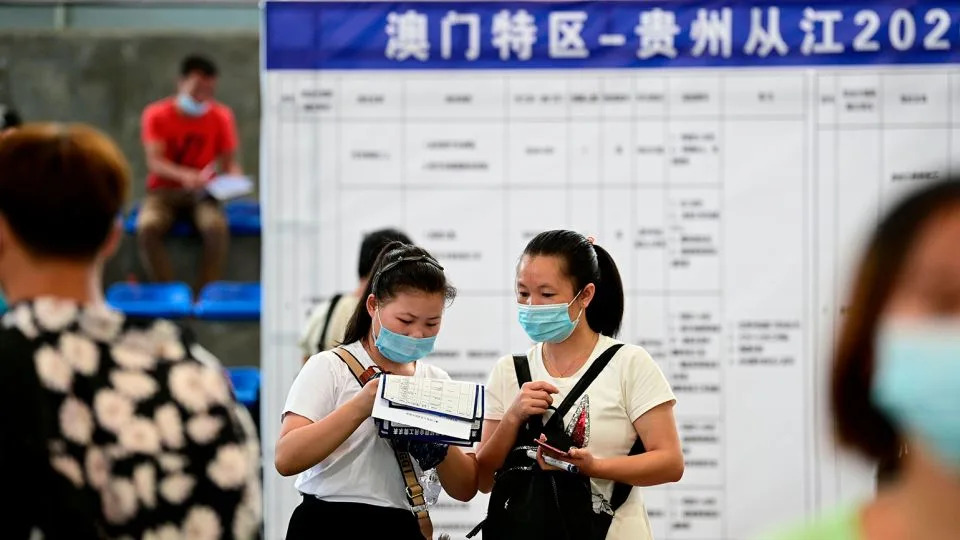
A job fair in Congjiang, China, on August 20, 2020.  - Stringer/AFP/Getty Images
A job fair in Congjiang, China, on August 20, 2020. – Stringer/AFP/Getty Images

“Invisible age discrimination for 35-year-olds has always existed in the workplace,” lawmaker Jiang Shengnan told the gathering, reported state-run China Youth Daily. “It’s a huge waste of talent to reject candidates for their age.”

Even top academics and officials have acknowledged the issue. In a 2022 report by the state-run paper People’s Daily, a professor at the government-run Central Party School – which educates Chinese Communist Party cadres – referred to the curse as a “common phenomenon in the mass labor market” and blamed it for causing widespread public anxiety.

This year, the state-run news agency Xinhua proposed what it saw as a possible solution – special policies favoring workers above 35, along with financial assistance and regulations against ageism.

For many among China’s hundreds of millions of millennials, solutions can’t come fast enough. With China still struggling to recover from the economic damage of the pandemic and signs its growth is slowing, unemployment has become a pressing concern for many. Nationally, the official jobless rate surged to a near-record high of 6.1% last year, and while the end of lockdown brought some relief, it remains at 5.2%.

Leaders or bust

The issue has been brought to the fore in part by the rise of China’s tech industry and its notorious “996 culture” – working from 9 a.m. to 9 p.m., six days a week.

It’s an uncompromising schedule that’s even harder for older employees with families to attend to, but it’s a common expectation in the country’s highly competitive – and relatively young – tech sector.

Experts also point out that young workers hired straight from school tend to be cheaper, though others suggest the preference is not only about keeping expenditure low.

A 2021 Xinhua report reasoned that employees who hadn’t been promoted to management levels by 35 may be perceived as less successful, thus more susceptible to layoffs.

The Central Party School professor made this point in his report last year, saying: “Generally speaking, most employees with 10 years of experience will become leaders or team managers if their abilities are really good. In other words, the ’35-year-old threshold’ is not about age itself, but a measure of work ability for employers.”

But these limits mean many people find themselves like Han, the Beijing resident: overqualified, educated, experienced, and struggling to keep themselves afloat with gig work.

This is especially true as more and more people pursue masters’ and PhD degrees in the hopes of gaining an edge in the crowded job market – thus ironically delaying their entry into the old job market.

The content creator Tao Chen in a video posted on Chinese social media. - Douyin
The content creator Tao Chen in a video posted on Chinese social media. – Douyin

One content creator, Tao Chen, gained nationwide attention in March after posting about his experience online. After graduating from the prestigious Sichuan University with a master’s degree in philosophy, he was laid off from a journalism job, then embarked on a string of failed business projects. At 38 years old, with few other prospects, he became a food delivery driver – eventually giving up that job too because the income wasn’t enough to make ends meet.

“Although I had really good work experience and a master’s degree, I’m really uncompetitive after 35 years old,” Tao Chen said in his Douyin video. More than 98% of his job applications were unanswered, while the rest found he was “unfit” for the role.

“I almost had a mental breakdown,” he said.

New twist on an old story

For many Chinese women, the “curse” builds upon and further compounds the entrenched gender discrimination that has long plagued the workplace.

Female workers in this age range often say they face pressures from employers reluctant to pay maternity leave. They report missing out on promotions because their employer fears they will take a long stint off, or worse – they might not get employed in the first place.

“Seeing this age, many companies aren’t willing to recruit you,” said Han, the Beijing resident. “They prefer the young ones. After all, I might get married and have kids in their eyes. Even though I tell them I do not intend to get married, they wouldn’t believe it.”

When 35-year-old Shenzhen resident Liu returned to her job at a bioengineering firm after a six-month maternity leave, she was expecting to join a new project. Instead, she said, she was abruptly laid off and her position given to a fresh graduate.

Months later, she has yet to find another job. Liu, who requested a pseudonym for privacy reasons, believes it was her maternity leave that prompted her dismissal.

“They are very realistic. When I don’t need you, I replace you with cheaper labor,” she said.

Men can be affected, too. Liu remembers witnessing a male colleague who had just become a father being given what she called inappropriate assignments, like being sent on a business trip immediately after the birth.

She said she had also seen millennial and middle-aged employees being singled out for embarrassment by being asked to raise their hands in meetings if they were over 30 or by not being invited to company parties.

Liu suspects the biggest motivation for employers is simply their bottom line. “Many companies consider cost efficiency,” Liu said. “They think my salary is higher than new graduates, so they’d rather choose the graduates.”

‘I can see through their tricks’

Experts say the best way to guard against both ageism and gender inequality is through legal reform.

Yiran Zhang, assistant professor at Cornell Law School, said that while China’s labor law prohibited discrimination on grounds of ethnicity, gender, and religious belief, it does not do so on the grounds of age.

And even in areas where some protection was offered – such as for mothers taking maternity leave – enforcement of the law is weak, and gender discrimination remains common, she said.

Employees who do successfully sue their employer may only receive low damages, disincentivizing some from pursuing legal action, Zhang added.

Students and graduates at a college job and internship fair in Suqian, China, on August 9, 2023.  - Costfoto/NurPhoto/Getty Images
Students and graduates at a college job and internship fair in Suqian, China, on August 9, 2023. – Costfoto/NurPhoto/Getty Images

“A large amount of age discrimination is intersectionality – discrimination of age, gender, pregnancy, and caregiving duties,” said the assistant professor.

Zhang and other experts noted there had been attempts in the past to legislate against age discrimination, with some politicians seeing it as a priority to lift the falling birth rate, but so far these have failed to pass in parliament.

Some small progress came earlier this year, when several provinces and regions relaxed age restrictions for civil servant jobs, raising the limit from 35 to 40, state media reported.

Meanwhile, Liu – the former project manager in Shenzhen – now hopes to make a living as a content creator so she doesn’t have to return to a traditional workplace riddled with ageism and discrimination.

“I have been in both big companies and small companies, I can see through their tricks,” she said. “I just want to run away from there.”

With coronavirus on the upswing in California, new vaccine coming sooner than expected

Los Angeles Times

With coronavirus on the upswing in California, new vaccine coming sooner than expected

Rong-Gong Lin II – August 26, 2023

WATTS, CA - AUGUST 17, 2023 - TO MASK OR NOT TO MASK, THAT IS THE QUESTION - - With an uptick of coronavirus cases in the Southland a member of the medical staff at MLK Community Hospital wears a mask while being framed by a sculpture titled, "Pieces Together," by Lawrence Argent in Watts on August 17, 2023. (Genaro Molina / Los Angeles Times)
With an uptick of coronavirus cases in the Southland, a member of the medical staff at MLK Community Hospital wears a mask while being framed by a sculpture titled “Pieces Together” by Lawrence Argent in Watts on Aug. 17. (Genaro Molina/Los Angeles Times)

With coronavirus cases increasingly on the upswing across California and the nation, an updated COVID-19 vaccine is expected to come out even earlier than expected.

Coronavirus transmission has been rising this summer and hospitalizations, while still low, have recently started to tick up as well.

In Los Angeles County, COVID-19 levels have risen for the fifth consecutive week, with the number of newly reported infections likely growing because of travel, the back-to-school season and new Omicron subvariants, health officials said.

New outbreaks are up at L.A. County’s nursing homes, and one Hollywood studio temporarily imposed a mask mandate after several employees were infected. Nationally, there were 12,613 weekly COVID-19 hospitalizations for the week that ended Aug. 12 — double the number from the start of this summer, but just one-third of the level seen at this time last year.

Read more: Masks are back on at Lionsgate HQ as COVID outbreaks rise, including at ‘Masked Singer’ studio

The U.S. Food and Drug Administration said this year’s updated version of the COVID-19 vaccine is likely to come out by the middle of next month, a bit earlier than the late September timeline previously announced by the Department of Health and Human Services.

The earlier-than-expected arrival became apparent after the U.S. Centers for Disease Control and Prevention scheduled a Sept. 12 meeting of its Advisory Committee on Immunization Practices, a likely indication that the vaccine would become available shortly afterward.

The latest version of the vaccine is designed against the Omicron subvariant XBB.1.5, unofficially known as Kraken. Unlike last year’s formulation, a bivalent vaccine that was designed against both the ancestral coronavirus strain and the BA.5/BA.4 Omicron subvariants that were circulating at the time, the upcoming vaccine will be monovalent, specifically designed against XBB.1.5.

Kraken, dominant as of this spring, has seen other upstart subvariants rise to compete against it, such as XBB.1.16 (unofficially refered to as Arcturus) and EG.5 (also known as Eris). The differences between these subvariants are relatively minor, and it’s expected the new vaccine will be effective against all three.

Read more: New coronavirus subvariant Eris is gaining dominance. Is it fueling an increase in cases?

But officials are closely watching another subvariant that has raised more questions: BA.2.86, nicknamed Pirola, after an asteroid.

In a CDC risk assessment, the agency said that Pirola “may be more capable of causing infection in people who have previously had COVID-19 or who have received COVID-19 vaccines.”

The effectiveness of the upcoming vaccine against Pirola is still being evaluated, the CDC said Wednesday, but the agency still expects the new version will be effective at reducing severe disease and hospitalization.

“At this point, there is no evidence that this variant is causing more severe illness. That assessment may change as additional scientific data are developed,” the agency added.

Read more: With coronavirus uptick, should I get a COVID shot? When are new vaccines available?

Unlike more recently identified subvariants, which might have one or two mutations that distinguish them from earlier versions, Pirola has 36 distinct mutations from XBB.1.5, “which is making people raise their eyebrows,” said Dr. Peter Chin-Hong, a UC San Francisco infectious-disease expert.

“BA.2.86,” he said, “is so different that people worry that the vaccine in the fall won’t be a perfect match — but nevertheless, it will still protect people against serious disease.”

“And who knows if it’s even going to become ruler of the roost? It really hasn’t taken off so far that we know,” Chin-Hong added. “But again, sequencing always lags and not a ton of people are doing sequencing anymore around the world.”

Very few cases of Pirola have been identified in the U.S. thus far, and the subvariant has yet to be detected in Los Angeles County. But in some parts of Europe, Pirola now makes up perhaps 1% to 2% of cases, and the fact that it’s on more than one continent suggests it is spreading, Chin-Hong said.

Read more: COVID-19 is ‘heating up all around’ this summer. Should we be wearing masks again?

Still, those infected with the Pirola subvariant have so far experienced generally mild symptoms, Chin-Hong said. Based on what’s currently known, if Pirola does become dominant, “at some point, it may fuel another round of transmission, and may find people who are ‘no-vids”’ — people who have never been infected — “or people who are more vulnerable to getting ill,” Chin-Hong said.

Regardless of the new mutations in Pirola, Chin-Hong said, the anti-COVID therapeutic drugs Paxlovid and remdesivir should remain effective.

Generally speaking, Chin-Hong said many people who have been infected with the coronavirus this summer did not require hospitalization, likely because they were vaccinated, had been previously infected, or both. Even those COVID-19 patients who have been hospitalized, Chin-Hong said, are generally requiring shorter stays than earlier in the pandemic.

Still, those who are being hospitalized tend to be older and those who haven’t received a COVID-19 booster shot in the past year — meaning they are not considered “up to date.”

Read more: Are we in a summer surge? What to do if you get COVID now

Areas of the country that are seeing particularly notable increases in new weekly COVID-19 hospitalizations are in the South, CDC data show. In California, there were 1,930 new weekly COVID-19 hospitalizations for the week that ended Aug. 12. That’s more than a 60% increase from the start of the summer, but still relatively low historically.

Coronavirus-positive hospitalizations are also increasing in L.A. County. For the week that ended Aug. 19, there were an average of 422 such patients in hospitals per day, a nearly 30% increase from the prior week.

Coronavirus levels in L.A. County wastewater are at about 28% of the peak seen last winter, during the region’s last significant spike. That concentration has been increasing since early July, when coronavirus levels were at about 8% of this past winter’s peak.

“While hospitalizations are increasing, the current levels are still far lower than what was seen in 2022 during the summer peak, when there was an average of 1,287 COVID patients hospitalized each day,” the L.A. County Department of Public Health said.

Read more: Are you getting billed for COVID-19 tests you didn’t order? Here’s what you need to know

There were 39 new coronavirus outbreaks in skilled nursing facilities in L.A. County for the most recent week of data available, up from 20 the prior week. “While resulting hospitalizations and deaths among skilled nursing facility residents are lower than at other points during the pandemic, nonetheless, increased transmission of COVID-19 at nursing homes carries heightened risk for frail elderly,” officials said.

In a blog post, Dr. Eric Topol, director of the Scripps Research Translational Institute in San Diego, said that recent trends underscore how “the pandemic isn’t over.”

Topol described the recent increase in transmission as a “wavelet” that could pick up steam but is more likely related to waning immunity and behavior than the latest subvariants.

“The fact that the inexorable evolution of the virus continues — to find new hosts and repeat hosts —cannot be ignored,” he wrote.

“At the moment there’s no reason for alarm. … What we’ll see in the weeks ahead is whether BA.2.86 takes hold or not. If it does, that will pose a new challenge, and make the ‘updated’ booster shots considerably less helpful than what was conceived when XBB.1.5 was selected as the target,” Topol wrote.

Read more: A coronavirus mystery: Why New York was hit so much harder than L.A. County

People who are infected with COVID-19 should stay home for at least five days following their first onset of symptoms or first positive test, whichever comes first, L.A. County health officials said.

County health officials urged people at high risk, and those who spend time with them, to consider precautions against infection, such as wearing a mask in crowded indoor settings, especially those with poor ventilation, and on public transit.

It’s also important to test for an infection when symptomatic or after an exposure to someone with COVID-19, staying home when sick, and seeking anti-COVID drugs if infected.

Californians who don’t have insurance or are having a hard time getting a prescription for anti-COVID medication can make a free phone or video appointment through the state’s COVID-19 telehealth service, reachable through sesamecare.com/covidcaor by calling (833) 686-5051.

L.A. County has similar free telehealth services, which are accessible at (833) 540-0473. Free at-home COVID tests also can still be picked up at county libraries and vaccination sites operated by the county Department of Public Health, as well as at many food banks and senior centers.

Study identifies surprising culprit behind the poor performance of some NFL teams: ‘The evidence is piling up’

TCD

Study identifies surprising culprit behind the poor performance of some NFL teams: ‘The evidence is piling up’

Laurelle Stelle – August 26, 2023

The amount of air pollution in an athlete’s city has a measurable effect on their performance, according to a new study in the International Journal of Environmental Research and Public Health.

Researchers from two Louisiana universities recently collected data on two high-level team sports: Major League Baseball (MLB) and the NFL. They then compared those stats to the air quality index for each team’s home city.

Their analysis, published in January, shows that baseball teams commit an extra 0.000993 errors per game for every additional air quality index point, while quarterbacks can expect a 0.23-point dip in their QB rating, an all-around stat for measuring on-field performance.

This study is the latest in a series of recent papers examining the effects of air quality on athletics. Another study published this year found that air pollution impacts running speed, while one conducted in 2017 linked air quality to the number of passes that soccer players made.

In this case, researchers accounted for other factors that might affect performance, like the team’s budget.

Francis Pope, a University of Birmingham professor of atmospheric studies, told The Daily Beast that this data is about more than just the heart and lungs — pollution also affects the brain. Unlike a sport like track in which the athlete is constantly moving, baseball and football are played in short bursts, so errors can easily occur due to failures in judgment.

“Certainly the evidence is piling up,” he told the outlet, “that pollution does appear to have an effect on the cognitive impacts of people, both in the short term and, via increased rates of diseases like Alzheimer’s, the long term.”

Study co-author Jeremy Foreman stressed to the Daily Beast that air quality isn’t the only factor that can affect an athlete’s performance.

“It doesn’t mean that a high-performing quarterback is going to all of a sudden be awful because he’s playing in a certain city,” he said. “But how much better could you be if there was better air?”

New Study Reveals Surprising Reason for High Blood Pressure—Experts Explain

Prevention

New Study Reveals Surprising Reason for High Blood Pressure—Experts Explain

Madeleine Haase – August 26, 2023

New Study Reveals Surprising Reason for High Blood Pressure—Experts Explain
  • COVID-19 infection may trigger the development of high blood pressure, new research shows.
  • Researchers found that COVID-19 infections had a much higher association with hypertension than influenza.
  • Experts explain the study’s findings.

Unfortunately for many, a COVID-19 infection’s effects don’t end with a negative COVID test. With new variants like EG.5 (dubbed “Eris) and 2.86 (nicknamed “Pirola”) (nicknamed “Pirola”), staying up-to-date on the latest COVID research can be instrumental in maintaining health. Experts are still learning about the effects of long COVID, and now, research shows that a COVID-19 infection may cause long-term high blood pressure, or hypertension.

A study published in Hypertension, an American Heart Association (AHA) journal, investigated the development and risk factors associated with persistent high blood pressure in people with COVID-19 infection compared to influenza, a.k.a. the flu.

Researchers analyzed health data from electronic medical records at the Montefiore Health System in Bronx, NY, which serves a large, racially and ethnically diverse population. Researchers looked at 45,398 people with COVID-19 (hospitalized between March 1, 2020, and February 20, 2022) and 13,864 people with influenza without COVID-19 (hospitalized between January 2018 and February 20, 2022) who returned to the hospital system for any medical reasons within an average follow-up period of six months.

The analysis found that 21% of people hospitalized with COVID-19 developed high blood pressure, compared to 11% of those who were not hospitalized for COVID-19, per the news release. Meanwhile, 16% of people hospitalized with influenza developed high blood pressure, and only 4% of those with influenza but not hospitalized developed high blood pressure.

Researchers also found that people hospitalized due to COVID-19 were more than twice as likely to develop persistent hypertension, and those not hospitalized were 1.5 times more likely, compared to both groups of those with influenza (hospitalized and not hospitalized.)

Finally, the study found that those with the highest risk of developing high blood pressure were those with SARS-CoV-2 infections who were over 40 years old, Black adults, or those with preexisting conditions (such as chronic obstructive pulmonary disease, coronary artery disease, or chronic kidney disease). Persistent high blood pressure was also more common among people infected with SARS-CoV-2 who were treated with low blood pressure medications and anti-inflammatory medications, both of which are known to raise blood pressure, during the pandemic.

How can COVID-19 impact my blood pressure?

COVID-19 is an endothelial disease, says Jayne Morgan, M.D., cardiologist and the Clinical Director of the Covid Task Force at the Piedmont Healthcare Corporation in Atlanta, GA. “In other words, it negatively impacts the lining of the veins and arteries, even increasing the risk of developing blood clots,” she says. Therefore, Dr. Morgan says it should not be a surprise that it also impacts blood pressure.

In addition to cardiovascular stress and respiratory compromise, inflammation, stress from the pandemic, and reduced physical activity could all contribute to new persistent hypertension in individuals who have no history of hypertension, says Tim Q. Duong, Ph.D., senior investigator of the study and AHA volunteer.

From a public health perspective, a small rise in the population’s blood pressure could mean an increased number of hypertension-related complications, such as stroke, heart diseases, and kidney diseases, notes Duong. “These findings should heighten awareness to screen at-risk patients for hypertension after COVID-19 illness,” he says.

Why are people more prone to high blood pressure after a COVID-19 infection vs. influenza?

Duong says that we don’t know exactly what causes the increased susceptibility to new hypertension in COVID-19 patients compared to the flu. “We speculate that SARS-CoV-2 could stimulate our body’s hormone system that keeps our blood pressure regulated, which could result in hypertension,” he notes.

COVID is also a much more severe disease overall, compared to the flu, and affects markedly more people, especially early in the pandemic and before vaccines became available, Duong adds.

Does being vaccinated put people at less risk for developing high blood pressure due to COVID-19?

While it hasn’t been well-studied, the assumption is yes, being vaccinated does put people at less risk for developing hypertension as vaccines diminish the severity of infection, says Amesh A. Adalja, M.D., senior scholar at the Johns Hopkins Center for Health Security.

So while it’s not a sure thing that you won’t have some high blood pressure effects from a COVID infection, staying up to date with your vaccines and booster shots should be your best shot at a less severe infection and less post-COVID complications. (Learn more about the vaccines coming this fall here.)

Do new strains of COVID-19 affect blood pressure more than previous strains?

With new strains like EG.5 and 2.86 circulating, it’s normal to wonder if these latest variants boast the same effects as previous COVID strains.

Dr. Morgan says that data shows that the severity of the disease, including hospitalization, greatly contributes to the risk of developing hypertension following COVID-19 infections. “Thus far, the new strains of SARS-Cov-2 continue to cause mild disease as of the date of this publication, and therefore, are expected to impact both temporary and persistent hypertension to a smaller degree than the earlier, more virulent variants that caused hospitalizations at a higher rate,” she says.

However, there is a long-term impact of Long COVID on persistent hypertension, of which the consequences are still being measured, adds Dr. Morgan. “One in six Long COVID patients will develop hypertension, most frequently women,” she says.

The bottom line

This study illustrates that COVID-19 has impacts on many bodily systems and emphasizes the importance of vaccination and antiviral use to blunt this impact, says Dr. Adalja.

This study also highlights the need to screen patients for hypertension following a COVID-19 illness, especially for those at-risk with multiple comorbidities, and/or direct risk factors for heart disease such as diabetes, increased cholesterol, obesity, and smoking, says Dr. Morgan.

It’s important to acknowledge that this study was carried out in a major academic health system in the Bronx, serving a large racially and ethnically diverse population with a high proportion of patients with low socioeconomic status, says Duong. The Bronx was an epicenter of SARS-CoV-2 infection early in the pandemic as well as a few subsequent waves.

This data suggests Black patients with COVID-19 in the U.S. are more susceptible to developing new hypertension, consistently with some health disparities reported associated with COVID-19 disease, says Duong. “We think that it is important to follow up these patients longer term and to investigate hypertension-related disorders in patients with COVID-19,” he says.

This article is accurate as of press time. However, as the COVID-19 pandemic rapidly evolves and the scientific community’s understanding of the novel coronavirus develops, some of the information may have changed since it was last updated. While we aim to keep all of our stories up to date, please visit online resources provided by the CDCWHO, and your local public health department to stay informed on the latest news. Always talk to your doctor for professional medical advice.

People are falling ill with COVID again. What to know about boosters, testing and masks

Miami Herald

People are falling ill with COVID again. What to know about boosters, testing and masks

Michelle Marchante – August 26, 2023

D.A. Varela/dvarela@miamiherald.com

Are you feeling sick?

COVID-19 is going around again, and hospitalizations are on the rise, including in Florida, though its much lower then this time last year.

And while no one seems to wear masks or worries about social distancing anymore, a new COVID-19 vaccine booster is slated to roll out this fall to better protect people against new circulating strains.

Here’s what to know as we move into fall:

What’s the COVID situation in Florida? What about in Miami-Dade, Broward, the Keys and Palm Beach County?

COVID-19 hospitalizations in the country have ticked up again, with 12,613 new admissions the week ending Aug. 12, an increase of 21.6% from the prior week, according to data from the U.S. Centers for Disease Control and Prevention. The agency says Florida saw 1,871 new admissions in the week ending Aug. 12, an increase of 11.6% from the prior week.

Current hospitalization numbers in the U.S. are “about three times lower than the same time last year and about six times lower than in 2021, according to the CDC,” ABC News reports.

The CDC is using COVID hospitalization admissions to determine whether a county is considered to have a low, medium or high COVID risk level. As of Friday, much of Florida is considered to be low risk, including Miami-Dade, Broward and Monroe counties. Some parts of the state, including Sarasota and Palm Beach counties, are considered to have a medium COVID risk level.

People considered to be at high risk for COVID should wear a high-quality mask or respirator, such as an N95 mask, in indoor public settings if they live in or are visiting a medium risk county, according to the CDC. The federal agency says anyone who lives with or is in contact with high-risk people should also self-test for COVID before seeing them, and also consider masking up when indoors with them.

The CDC is also recommending everyone, regardless of their county’s risk level, stay up to date on vaccinations and avoid contact with people who are suspected or confirmed to have COVID-19. And if you test positive for COVID, quarantine. The agency is also recommending that people considered to be high risk for the disease speak with their doctor about precautions.

For Aarti Raja, a professor and virology expert in the department of biological sciences at Nova Southeastern University’s Halmost College of Arts and Sciences, the increase of COVID hospitalizations in the country is likely due to the time of the year, with lots of summer travel, along with the arrival of several new strains.

And while Raja said there’s some concern with how the country will handle the possibility of another “trifecta” of flu, COVID and RSV circulating in the fall, she said the U.S. is better prepared with COVID vaccines and boosters, influenza vaccines and new RSV vaccines and monoclonal antibodies.

READ NEXT: Are you sick, too? If not COVID, you may have another virus spreading in South Florida

What’s the dominant COVID strain in Florida? Common symptoms?

EG.5, also known as Eris, is the dominant COVID-19 strain in the U.S., including in Florida, and is a descendant of the omicron variant, according to the CDC. The CDC estimates that Eris makes up about 20.6% of cases in the country.

Common symptoms are similar to other omicron strains and include a runny nose, sore throat and other cold-like symptoms. Raja said that Paxlovid, the oral antiviral medication used to treat COVID in certain patients, should still work.

When will the new COVID booster come out?

A new COVID-19 booster, formulated to provide protection against the XBB lineage of the omicron variant, such as XBB.1.5, is expected to be available this fall, possibly in September or October.

Newer subvariants have emerged since manufacturers began working on the boosters, including EG.5. However, these strains are so closely related, the updated vaccine should provide some protection against them, according to Raja.

Both the U.S. Food and Drug Administration and the CDC will need to give the OK to the updated booster before it becomes available.

“The best way to think of it is a lot like the flu vaccine, where, yes, you may have gotten the flu vaccine last year and the year before, but you kind of have to get the updated one to cover for the most prevalent strain that is floating around in the population,” Raja said.

COVID-19 testing options?

Raja said most COVID tests should still be able to detect if someone is ill with COVID, regardless of the new circulating variants. However, it won’t be as easy to get tested. Popular South Florida COVID-19 test sites, like the one at Tropical Park, no longer exist. If you want to get tested, check with pharmacies such as CVS and Walgreens and other healthcare providers for options.

Keep in mind that since the federal COVID emergency ended in May, insurers are no longer required to cover COVID-19 testing, including at-home test kits and PCR testing. Check with your insurance to see if it will cover part or all of your COVID testing costs, and if there are any restrictions, such as requiring the test to be done with an in-network provider.

If you have expired at-home tests, check the U.S. Food and Drug Administration’s website to see if the tests expiration date has been extended.

READ MORE: When should you test for COVID, and what if you test positive? Here are latest tips

Should you wear a mask again with COVID on the rise?

While some schools and businesses in the country recently reinstated mask mandates, the face coverings have mostly become a pandemic relic.

However, Raja said those who are considered to be high risk for severe disease, such as seniors and those who are immunocompromised, might want to consider wearing a mask if they live or are traveling to an area that has begun to see more COVID circulating. It depends on your risk factor and current situation.

“People 65-plus and people who are immunocompromised should strongly consider masking during flu, RSV, COVID season while in indoor public spaces,” said Dr. Céline Gounder, a CBS News medical contributor and editor-at-large for public health at KFF Health News, told CBS News. “And for everyone else — it all depends on what their risk tolerance is.”

And while the COVID alphabet soup will likely continue as newer variants appear, Raja said “we just have to be smart about it, realize and acknowledge this is out there and take the precautions necessary.”

“If we have the means and mechanisms in place to protect ourselves, we should protect ourselves and start maybe getting used to the idea that this likely will resemble flu, not resemble the flu virus and what it does, but more in how we take precautions against it,” Raja said. “Just like how we think of the flu as a seasonal issue, we’re going to have to start thinking about COVID more along those lines.”

Forget covid, Las Vegas Strip faces a new health issue

The Street

Forget Covid, Las Vegas Strip faces a new health issue

Since the covid pandemic, Las Vegas has struggled with RSV, bed bugs, and multiple other health issues.

Daniel Kline – August 26, 2023

Las Vegas collects the health problems of the world: If there’s an infectious disease, someone brings it to Sin City.

That’s partly why in the early days of the covid pandemic some of the first super-spreader events took place at Las Vegas-based conventions. 

You can’t blame that on anything that the city has done, or not done. If you put a lot of people in close proximity and even one of them has a highly contagious disease, then it will spread quickly.

DON’T MISS: More Las Vegas Strip casinos end a popular practice

What happened in Las Vegas also happened at theme parks, on cruise ships, and anyplace else where people gathered in mass. Since covid, however, the Las Vegas Strip has been plagued with a number of other significant health issues.

RSV threatened to overwhelm area hospitals, a deadly fungus proved difficult for doctors to cure, and numerous Las Vegas Strip properties were plagued by bedbugs. People may say “what happens in Vegas stays in Vegas,” but in recent months a visit to the Strip increasingly might mean bringing home an unhealthy souvenir.

That bad luck is apparently continuing as Southern Nevada Health District is investigating multiple instances of a highly communicable disease on the Las Vegas Strip.

A tower at Caesars Palace. Caesars Lead
Caesars Palace is Caesars Entertainment’s premiere property. Image Source: Shutterstock.
Caesars Palace has a Legionnaires’ disease problem

“Legionnaires’ disease is a serious type of pneumonia (lung infection) caused by Legionella (LEE-juh-nell-a) bacteria,” according to the Centers for Disease Control and Prevention. “People can get sick when they breathe in small droplets of water or accidentally swallow water containing Legionella into the lungs.” 

The Southern Nevada Health District is investigating two travel-associated cases of Legionnaires’ disease in guests who stayed at Caesars Palace Hotel and Casino.

“Two individuals who have been diagnosed with Legionnaires’ disease stayed at Caesars Palace Hotel and Casino within the last 12 months. Environmental samples taken from the property tested positive for Legionella,” according to a health-district news release.

Caesars Entertainment (CZR) – Get Free Report has been cooperating with the investigation. Subsequent tests of the Caesars Palace water system did not detect Legionella bacteria.

For those who might have contracted Legionnaires’ disease: The symptoms generally begin to appear between two and 10 days after you were infected.

“People should watch for symptoms such as cough, shortness of breath, fever, muscle aches, and headaches for up to two weeks after exposure,” according to the Southern Nevada Health District.

The Las Vegas Strip heads into a huge stretch 

While Las Vegas has fully recovered from the covid pandemic, it remains vulnerable to health concerns that cause people to stay away. We saw that during the Consumer Electronics Show 2022, when the omicron variant of covid caused most major companies to pull out of the convention.

In that period vaccines already were common and Las Vegas’s hospitals had plenty of capacity. The issue was not the dangers covid presented but rather the optics of companies sending employees into a city where — despite testing, vaccine requirements, and mask protocols — the risks of infection persisted.

In the coming months, Las Vegas will host two of the biggest events in its history. November will bring Formula 1 to the Strip for an event that looks to be a boon for Caesars, MGM Resorts International, Wynn Resorts, and every hotel on the Strip. 

That will be followed in February by an even bigger event: the Super Bowl. Both the F1 race, which will literally take place on the Strip, and the Super Bowl will bring record crowds and revenue to the Strip.

An outbreak of Legionnaires’ disease — or any other highly communicable health problem — may not cancel those events, but it could cause crowds to stay away. 

That may seem unthinkable, but CES normally packs the city, and the 2022 event left hotels operating at roughly 30% occupancy.

Get investment guidance from trusted portfolio managers without the management fees. Sign up for Action Alerts PLUS now.

Arena Group Editor at Large Daniel Kline focuses on the travel industry while also writing about retail, pop culture, and technology.

Tiny Forests With Big Benefits

The New York Times

Tiny Forests With Big Benefits

Cara Buckley – August 25, 2023

Andrew Putnam, superintendent of urban forestry and landscapes for the city of Cambridge, Mass., in Danehy Park, near Harvard University, July 26, 2023. (Cassandra Klos/The New York Times)

The tiny forest lives atop an old landfill in the city of Cambridge, Massachusetts. Although it is still a baby, it’s already acting quite a bit older than its actual age, which is just shy of 2.

Its aspens are growing at twice the speed normally expected, with fragrant sumac and tulip trees racing to catch up. It has absorbed stormwater without washing out, suppressed many weeds and stayed lush throughout last year’s drought. The little forest managed all this because of its enriched soil and density, and despite its diminutive size: 1,400 native shrubs and saplings, thriving in an area roughly the size of a basketball court.

It is part of a sweeping movement that is transforming dusty highway shoulders, parking lots, schoolyards and junkyards worldwide. Tiny forests have been planted across Europe, in Africa, throughout Asia and in South America, Russia and the Middle East. India has hundreds, and Japan, where it all began, has thousands.

Now tiny forests are slowly but steadily appearing in the United States. In recent years, they’ve been planted alongside a corrections facility on the Yakama reservation in Washington state, in Los Angeles’ Griffith Park and in Cambridge, where the forest is one of the first of its kind in the Northeast.

“It’s just phenomenal,” Andrew Putnam, superintendent of urban forestry and landscapes for the city of Cambridge, said on a recent visit to the forest, which was planted in fall 2021 in Danehy Park, a green space built atop the former city landfill. As dragonflies and white butterflies floated about, Putnam noted that within a few years, many of the now 14-foot saplings would be as tall as telephone poles and the forest would be self-sufficient.

Healthy woodlands absorb carbon dioxide, clean the air and provide for wildlife. But these tiny forests promise even more.

They can grow as quickly as 10 times the speed of conventional tree plantations, enabling them to support more birds, animals and insects and to sequester more carbon, while requiring no weeding or watering after the first three years, their creators said.

Perhaps more important for urban areas, tiny forests can help lower temperatures in places where pavement, buildings and concrete surfaces absorb and retain heat from the sun.

“This isn’t just a simple tree-planting method,” said Katherine Pakradouni, a native plant horticulturist who oversaw the forest planting in Griffith Park. “This is about a whole system of ecology that supports all manner of life, both above and below ground.”

The Griffith Park forest occupies 1,000 square feet and has drawn all manner of insects, lizards, birds and ground squirrels, along with western toads that journeyed from the Los Angeles River, Pakradouni said. To get to the forest, the toads had to clamber up a concrete embankment, traverse a bike trail, venture down another dirt embankment and cross a horse trail.

“It has all the food they need to survive and reproduce, and the shelter they need as a refuge,” Pakradouni said. “We need habitat refuges, and even a tiny one can, in a year, be life or death for an entire species.”

Known variously as tiny forests, miniforests, pocket forests and, in the United Kingdom, “wee” forests, they trace their lineage to Japanese botanist and plant ecologist Akira Miyawaki, who in 2006 won the Blue Planet Prize, considered the environmental equivalent of a Nobel award, for his method of creating fast-growing native forests.

Miyawaki, who died in 2021 at the age of 93, developed his technique in the 1970s, after observing that thickets of indigenous trees around Japan’s temples and shrines were healthier and more resilient than those in single-crop plantations or forests grown in the aftermath of logging. He wanted to protect old-growth forests and encourage the planting of native species, arguing that they provided vital resilience amid climate change while also reconnecting people with nature.

“The forest is the root of all life; it is the womb that revives our biological instincts, that deepens our intelligence and increases our sensitivity as human beings,” he wrote.

Miyawaki’s prescription involves intense soil restoration and planting many native flora close together. Multiple layers are sown — from shrub to canopy — in a dense arrangement of about three to five plantings per square meter. The plants compete for resources as they race toward the sun, while underground bacteria and fungal communities thrive. Where a natural forest could take at least a century to mature, Miyawaki forests take just a few decades, proponents say.

Crucially, the method requires that local residents do the planting, in order to forge connections with young woodlands. In Cambridge, where a second tiny forest, less than half the size of the first one, was planted in late 2022, Putnam said residents had embraced the small forest with fervor. A third forest is in the works, he said, and all three were planned and organized in conjunction with the nonprofit Biodiversity for a Livable Climate.

“This has, by far and away, gotten the most positive feedback from the public and residents than we’ve had for any project, and we do a lot,” Putnam said.

Still, there are skeptics. Because a Miyawaki forest requires intense site and soil preparation, and exact sourcing of many native plants, it can be expensive. The Danehy Park forest cost $18,000 for the plants and soil amendments, Putnam said, while the pocket forest company, SUGi, covered the forest creators’ consulting fees of roughly $9,500. By way of comparison, a Cambridge street tree costs $1,800.

“A massive impact for a pretty small dollar amount in the grand scheme of the urban forestry program,” Putnam said.

Doug Tallamy, an American entomologist and author of “Nature’s Best Hope,” said that while he applauded efforts to restore degraded habitat, particularly in urban areas, many of the plants would eventually get crowded out and die. Better to plant fewer and save more, he said.

“I don’t want to throw a wet blanket on it; the concept is great, and we have to put the plants back in the ground,” Tallamy said. “But the ecological concept of a tiny forest packed with dozens of species doesn’t make any sense.”

Kazue Fujiwara, a longtime Miyawaki collaborator at Yokohama National University, said survival rates are between 85% and 90% in the first three years, and then, as the canopy grows, drop to 45% after 20 years, with dead trees falling and feeding the soil. The initial density is crucial to stimulating rapid growth, said Hannah Lewis, author of “Mini-Forest Revolution.” It quickly creates a canopy that shades out weeds and shelters the microclimate underneath from wind and direct sun, she said.

Throughout his life, Miyawaki planted forests at industrial sites globally, including at an automotive parts plant in southern Indiana. A turning point came when an engineer named Shubhendu Sharma took part in a Miyawaki planting in India. Enthralled, Sharma turned his own backyard into a miniforest, started a planting company called Afforestt and, in 2014, delivered a TED Talk that, along with a 2016 follow-up, ended up drawing millions of views.

Around the world, conservationists took notice.

In the Netherlands, Daan Bleichrodt, an environmental educator, plants tiny forests to bring nature closer to urban dwellers, especially city children. In 2015, he spearheaded the country’s first Miyawaki forest, in a community north of Amsterdam, and has overseen the planting of nearly 200 forests since.

Four years later, Elise van Middelem started SUGi, which has planted more than 160 pocket forests worldwide. The company’s first forest was planted on a dumping ground alongside the Beirut River in Lebanon; others were sown later near a power plant in the country’s most polluted city and in several playgrounds badly damaged by the 2020 blast at Beirut’s port.

And Earthwatch Europe, an environmental nonprofit, has planted more than 200 forests, most of them the size of a tennis court, throughout the United Kingdom and mainland Europe in the past three years.

Although many of the forests are still very young, their creators say there have already been outsize benefits.

The woodlands in Lebanon have drawn lizards, geckos, birds and tons of insects and fungi, according to Adib Dada, an architect and environmentalist and the main forest creator there. In the West African country of Cameroon, where eight Miyawaki forests have been planted since 2019, there are improved groundwater conditions and higher water tables around the forest sites, according to Limbi Blessing Tata, who has led the reforestation there. Crabs and frogs have also returned, she said, along with birds that were thought to be extinct.

According to Bleichrodt, a 2021 university study of 11 Dutch miniforests found more than 1,100 types of plants and animals at the sites — kingfishers, foxes, hedgehogs, spider beetles, ants, earthworms and wood lice.

“A Miyawaki forest may be like a drop of rain falling into the ocean,” Fujiwara wrote in an email, “but if Miyawaki forests regenerated urban deserts and degraded areas around the world, it will create a river.”

“Doing nothing,” she added “is the most pointless thing.”

Biden administration expected to unveil Tuesday first drugs subject to Medicare negotiations

CNN

Biden administration expected to unveil Tuesday first drugs subject to Medicare negotiations

Tami Luhby and Kayla Tausche – August 25, 2023

Kurt Wittman/Universal Images Group/Getty Images

The Biden administration is preparing to reveal Tuesday the first 10 drugs that will be subject to negotiation in Medicare, according to two sources briefed on the matter.

The controversial program was authorized by the Inflation Reduction Act that Democrats pushed through Congress last year. The drug industry and their supporters, however, are determined to quash the effort, filing at least eight lawsuits in recent weeks declaring it unconstitutional.

Undaunted, the Centers for Medicare and Medicaid Services has pushed ahead with its historic new power, which Democrats have long argued is a way to lower drug prices. The White House is planning public events to coincide with the announcement, which comes a few days ahead of the agency’s September 1 deadline to make the list public.

Multiple industry experts and the drugmakers themselves have predicted which medications are likely to be in the first round of negotiations. They include Eliquis, manufactured by Bristol Myers Squibb, which said in a lawsuit filed in June that it expects its blood thinner to be on the initial list, and Januvia, a diabetes drug made by Merck, which was the first to take legal action in early June. Other names floated include the blood thinner Xarelto, the cancer treatment Imbruvica and Ozempic, a blockbuster medication used for diabetes and weight loss.

The initial set of drugs will be chosen from the top 50 Part D drugs that are eligible for negotiation that have the highest total expenditures in Medicare. CMS will consider multiple factors when developing its initial offer, including the drugs’ clinical benefits, the price of alternatives, research and development costs and patent protection, among others.

What happens next

Drugmakers have a month to decide whether to participate. CMS and the manufacturers will then negotiate, and the agency will publish the agreed-upon maximum fair prices by September 1, 2024. The prices won’t take effect until 2026.

If drugmakers don’t comply with the process, they will have to pay an excise tax of up to 95% of the medications’ US sales or pull all their products from the Medicare and Medicaid markets. The pharmaceutical industry contends that the true penalty can be as high as 1,900% of sales.

After the initial round, the Health and Human Services secretary can negotiate another 15 drugs for 2027 and again for 2028. The number rises to 20 drugs a year for 2029 and beyond. Only medications that have been on the market for several years without competition are eligible.

In the first two years of negotiations, CMS will select only Part D drugs that are purchased at pharmacies. It will add Part B drugs, which are administered by doctors, to the mix for 2028.

The program is expected to save Medicare $98.5 billion over 10 years, according to the Congressional Budget Office.

Drugmakers’ court challenges

Manufacturers hope to halt the negotiation process, filing multiple lawsuits in federal courts across the US. They each argue the program is unconstitutional in various ways and also say that the negotiation provision will harm innovation and patients’ access to new drugs.

Among the arguments are that the program violates the Fifth Amendment’s “takings” clause because it allows Medicare to obtain manufacturers’ patented drugs, which are private property, without paying fair market value under the threat of serious penalties.

Plus, the negotiations process violates the First Amendment, the challengers say, because it coerces manufacturers into saying that they agree to the price that the government has dictated and that it’s fair.

Another argument is that the process violates the Eighth Amendment by levying an excessive fine if drugmakers refuse to negotiate and continue selling their products to the Medicare market.

The Biden administration, however, has said that nothing in the Constitution bars it from negotiating drug prices. Legal experts have generally agreed.

“The Biden-Harris Administration isn’t letting anything get in our way of delivering lower drug costs for Americans,” Secretary of Health and Human Services Xavier Becerra said in a statement in June. “Pharmaceutical companies have made record profits for decades. Now they’re lining up to block this Administration’s work to negotiate for better drug prices for our families. We won’t be deterred.”