Water-starved Saudi confronts desalination’s heavy toll

AFP

Water-starved Saudi confronts desalination’s heavy toll

Robbie Corey-Boulet – September 16, 2023
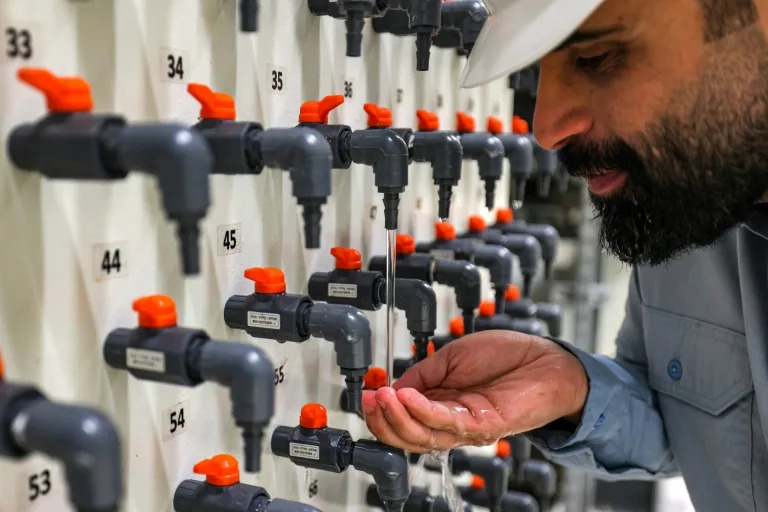
General manager Mohamed Ali al-Qahtani checks the quality of the ouput at the Ras al-Khair desalination plant (Fayez Nureldine)

Solar panels soak up blinding noontime rays that help power a water desalination facility in eastern Saudi Arabia, a step towards making the notoriously emissions-heavy process less environmentally taxing.

The Jazlah plant in Jubail city applies the latest technological advances in a country that first turned to desalination more than a century ago, when Ottoman-era administrators enlisted filtration machines for hajj pilgrims menaced by drought and cholera.

Lacking lakes, rivers and regular rainfall, Saudi Arabia today relies instead on dozens of facilities that transform water from the Gulf and Red Sea into something potable, supplying cities and towns that otherwise would not survive.

But the kingdom’s growing desalination needs –- fuelled by Crown Prince Mohammed bin Salman’s dreams of presiding over a global business and tourism hub –- risk clashing with its sustainability goals, including achieving net-zero emissions by 2060.

Projects like Jazlah, the first plant to integrate desalination with solar power on a large scale, are meant to ease that conflict: officials say the panels will help save around 60,000 tons of carbon emissions annually.

It is the type of innovation that must be scaled up fast, with Prince Mohammed targeting a population of 100 million people by 2040, up from 32.2 million today.

“Typically, the population grows, and then the quality of life of the population grows,” necessitating more and more water, said CEO Marco Arcelli of ACWA Power, which runs Jazlah.

Using desalination to keep pace is a “do or die” challenge, said historian Michael Christopher Low at the University of Utah, who has studied the kingdom’s struggle with water scarcity.

“This is existential for the Gulf states. So when anyone is sort of critical about what they’re doing in terms of ecological consequences, I shake my head a bit,” he said.

At the same time, he added, “there are limits” as to how green desalination can be.

– Drinking the sea –

The search for potable water bedevilled Saudi Arabia in the first decades after its founding in 1932, spurring geological surveys that contributed to the mapping of its massive oil reserves.

Prince Mohammed al-Faisal, a son of King Faisal whom Low has dubbed the “Water Prince”, at one point even explored the possibility of towing icebergs from Antarctica to quench the kingdom’s growing thirst, drawing widespread ridicule.

But Prince Mohammed also oversaw the birth of the kingdom’s modern desalination infrastructure beginning in 1970.

The national Saline Water Conversion Corporation (SWCC) now reports production capacity of 11.5 million cubic metres per day at 30 facilities.

That growth has come at a cost, especially at thermal plants running on fossil fuels.

By 2010, Saudi desalination facilities were consuming 1.5 million barrels of oil per day, more than 15 percent of today’s production.

The Ministry of Environment, Water and Agriculture did not respond to AFP’s request for comment on current energy consumption at desalination plants.

Going forward, there is little doubt Saudi Arabia will be able to build the infrastructure required to produce the water it needs.

“They have already done it in some of the most challenging settings, like massively desalinating on the Red Sea and providing desalinated water up to the highlands of the holy cities in Mecca and Medina,” said Laurent Lambert of the Doha Institute for Graduate Studies.

– Going green? –

The question is how much the environmental toll will continue to climb.

The SWCC says it wants to cut 37 million metric tonnes of carbon emissions by 2025.

This will be achieved largely by transitioning away from thermal plants to plants like Jazlah that use electricity-powered reverse osmosis.

Solar power, meanwhile, will expand to 770 megawatts from 120 megawatts today, according to the SWCC’s latest sustainability report, although the timeline is unclear.

“It’s still going to be energy-intensive, unfortunately, but energy-intensive compared to what?” Lambert said.

“Compared to countries which have naturally flowing water from major rivers or falling from the sky for free? Yeah, sure, it’s always going to be more.”

At desalination plants across the kingdom, Saudi employees understand just how crucial their work is to the population’s survival.

The Ras al-Khair plant produces 1.1 million cubic metres of water per day –- 740,000 from thermal technology, the rest from reverse osmosis –- and struggles to keep reserve tanks full because of high demand.

Much of the water goes to Riyadh, which requires 1.6 million cubic metres per day and could require as much as six million by the end of the decade, said an employee who spoke on condition of anonymity because he was not authorised to brief the media.

Looking out over pipes that draw seawater from the Gulf into the plant, he described the work as high-stakes, with clear national security implications.

If the plant did not exist, he said, “Riyadh would die”.

Researchers make disturbing discovery while analyzing samples taken from the Great Lakes: ‘We know we are being exposed’

The Cool Down

Researchers make disturbing discovery while analyzing samples taken from the Great Lakes: ‘We know we are being exposed’

Erin Feiger – September 17, 2023

It has long been said that water is life, as no human can survive without it. Humans, however, aren’t showing our waters the appreciation they deserve in return.

The Guardian reported that a recent peer-reviewed paper from the University of Toronto found that nearly 90% of water samples taken from the Great Lakes over the last 10 years contain levels of microplastics unsafe for wildlife.

What’s happening? 

Our planet is riddled with plastic pollution. Plastics take ages to break down, and as they do, they create microplastics — tiny particles less than five millimeters (about 0.2 inches) in length.

Of the samples taken and analyzed from the Great Lakes, about 20% are at the highest level of risk.

“Ninety percent is a lot,” Eden Hataley, University of Toronto researcher and co-author of the study, told the Guardian. “We need to answer some basic questions by monitoring … so we can quantify risks to wildlife and humans.”

The authors reviewed data from other peer-reviewed studies from the last 10 years. These studies showed that the highest levels are found in tributaries leading to the lakes or around major cities like Chicago and Toronto, with the highest average levels in Lake Michigan and Lake Ontario.

Statista reported that about 40 million tons of plastic are thrown out annually in the United States. Only about 5% of this gets recycled, per Greenpeace, and about 85% ends up in landfills.

Researchers found that nearly 22 million pounds of plastic debris enter the Great Lakes every year from the U.S. and Canada. That’s as much weight in plastic as about 5,500 cars.

Hataley believes wastewater treatment plants, microfibers that come off clothing in washing machines, and preproduction plastic pellets used in manufacturing are major contributors of plastics to the Great Lakes basin.

She also noted that alarming levels of microplastics have been found in fish consumed by humans and beer brewed with water from the Great Lakes.

“We know we are being exposed,” she told the Guardian, “but what that means in terms of harm or what’s a safe level – we have no idea, and that’s going to take more research.”

Why is this concerning? 

Combined, the Great Lakes supply drinking water to over 40 million people across Canada and the U.S. They hold nearly 90% of the freshwater in the U.S.; and they are home to 3,500 species of plants and animals, according to the Guardian.

If these lakes aren’t healthy, neither are we.

However, the study’s authors said that if the U.S. and Canada act now, the damage to the Great Lakes can be reversed.

What can be done to save the Great Lakes? 

The authors say both governments must start monitoring the lakes’ microplastics levels now.

Hataley pointed out that the Great Lakes Water Quality Agreement already has programs monitoring other pollutants, and adding microplastics to the list would not be difficult.

Adding filters to washing machines or storm sewers at manufacturing sites would also greatly help, Hataley told the Guardian.

As individuals, we can research ways to reduce our reliance on single-use plastics and take steps to do so.

“The timeline is not that shocking,’ Hataley said, “but it makes a lot of sense to do it now.”

Moroccan earthquake shattered thousands of lives

Associated Press

AP PHOTOS: Moroccan earthquake shattered thousands of lives

Sam Metz and Mosa Ab El Shamy – September 16, 2023

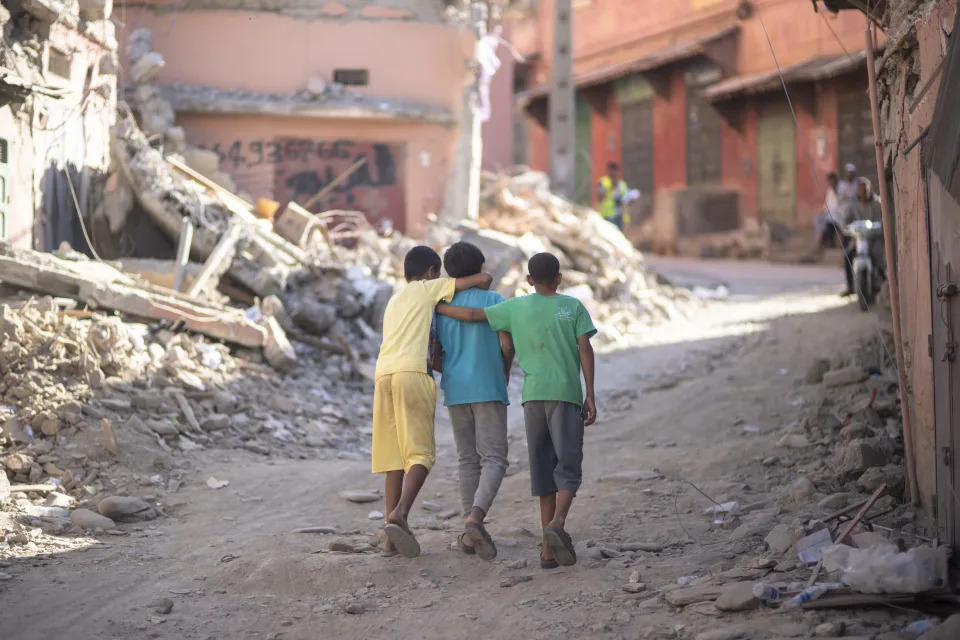
Children walk through the rubble of their town of Amizmiz which was damaged by the earthquake, outside Marrakech, Morocco, Thursday, Sept. 14, 2023. (AP Photo/Mosa'ab Elshamy)
Children walk through the rubble of their town of Amizmiz which was damaged by the earthquake, outside Marrakech, Morocco, Thursday, Sept. 14, 2023. (AP Photo/Mosa’ab Elshamy)
A child reacts after inspecting the damage caused by the earthquake, in her town of Amizmiz, near Marrakech, Morocco, Sunday, Sept. 10, 2023. An aftershock rattled Moroccans on Sunday as they prayed for victims of the nation’s strongest earthquake in more than a century and toiled to rescue survivors while soldiers and workers brought water and supplies to desperate mountain villages in ruins. (AP Photo/Mosa'ab Elshamy)
A child reacts after inspecting the damage caused by the earthquake, in her town of Amizmiz, near Marrakech, Morocco, Sunday, Sept. 10, 2023. An aftershock rattled Moroccans on Sunday as they prayed for victims of the nation’s strongest earthquake in more than a century and toiled to rescue survivors while soldiers and workers brought water and supplies to desperate mountain villages in ruins. (AP Photo/Mosa’ab Elshamy)
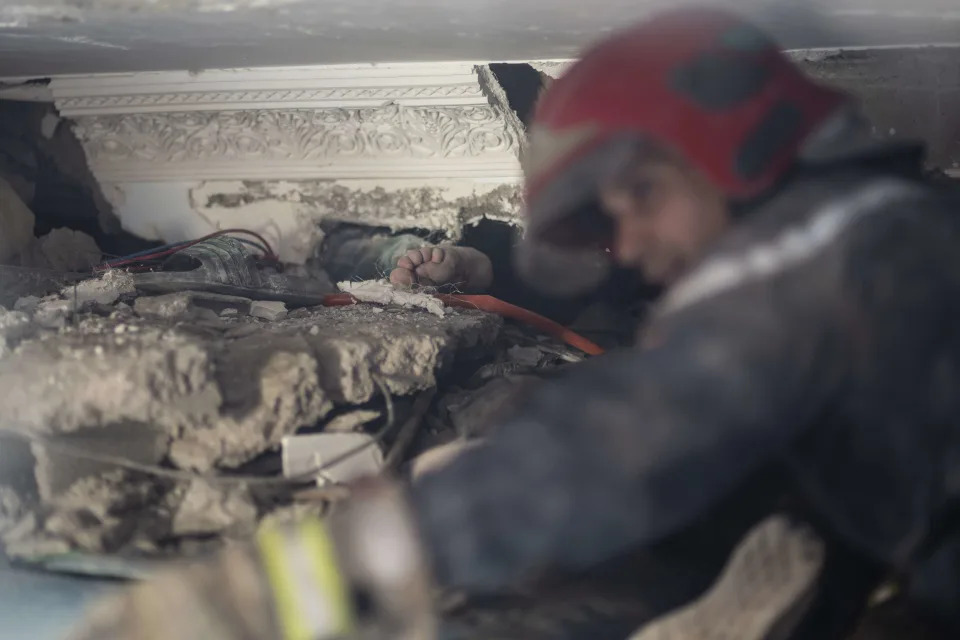
The foot of a man stuck under rubble while a rescue operation for him is underway, after an earthquake, in Moulay Brahim village, near Marrakech, Morocco, Saturday, Sept. 9, 2023. A rare, powerful earthquake struck Morocco late Friday night, killing more than 800 people and damaging buildings from villages in the Atlas Mountains to the historic city of Marrakech. But the full toll was not known as rescuers struggled to get through boulder-strewn roads to the remote mountain villages hit hardest. (AP Photo/Mosa'ab Elshamy)
The foot of a man stuck under rubble while a rescue operation for him is underway, after an earthquake, in Moulay Brahim village, near Marrakech, Morocco, Saturday, Sept. 9, 2023. A rare, powerful earthquake struck Morocco late Friday night, killing more than 800 people and damaging buildings from villages in the Atlas Mountains to the historic city of Marrakech. But the full toll was not known as rescuers struggled to get through boulder-strewn roads to the remote mountain villages hit hardest. (AP Photo/Mosa’ab Elshamy)
A woman tries to recover some of her possessions from her home which was damaged by the earthquake in the village of Tafeghaghte, near Marrakech, Morocco, Monday, Sept. 11, 2023. Rescue crews expanded their efforts on Monday as the earthquake's death toll continued to climb to more than 2,400 and displaced people worried about where to find shelter. (AP Photo/Mosa'ab Elshamy)
A woman tries to recover some of her possessions from her home which was damaged by the earthquake in the village of Tafeghaghte, near Marrakech, Morocco, Monday, Sept. 11, 2023. Rescue crews expanded their efforts on Monday as the earthquake’s death toll continued to climb to more than 2,400 and displaced people worried about where to find shelter. (AP Photo/Mosa’ab Elshamy)
A rescue team recovers the body of a woman who was killed by the earthquake, in the town of Imi N'tala, outside Marrakech, Morocco, Tuesday, Sept. 12, 2023. (AP Photo/Mosa'ab Elshamy)
A rescue team recovers the body of a woman who was killed by the earthquake, in the town of
Imi N’tala, outside Marrakech, Morocco, Tuesday, Sept. 12, 2023. (AP Photo/Mosa’ab Elshamy

AMIZMIZ, Morocco (AP) — With their arms around each other, three boys walked through the streets of their town at the foot of Morocco’s Atlas Mountains.

It could have been a scene like millions around the world that day. But in the Moroccan town of Amizmiz, the boys were walking through rubble, one week after an earthquake rattled their community’s homes, schools, mosques and cafes. Their possessions were buried beneath tons of mud and clay bricks, along with an untold number of people whom the boys knew.

A little girl held her palms to her cheeks, stunned at the destruction.

The 6.8 magnitude earthquake hit Morocco at 11:11 p.m. on Sept. 8, causing mass death in mountain villages near the epicenter that have collapsed in on themselves. A magnitude 4.9 aftershock hit 19 minutes later.

Entire villages higher up the mountains were leveled. In many, at least half of the population appears to have died.

Photos of the disaster show how fathers, mothers, children and their animals remain trapped under bricks, appliances and fallen ceilings. Going without power for days, residents see at night by the light of their phones.

“It felt like a bomb went off,” 34-year-old Mohamed Messi of Ouirgane said.

When mud and clay brick — traditional materials used for construction in the region — turn to rubble, they leave less space for oxygen than collapsed construction materials in countries like Turkey and Syria, which were also hit by quakes this year.

The day after the quake, hundreds of residents of the mountain town of Moulay Brahim gathered to perform funeral rites, praying on rugs arranged neatly in the street before carrying blanket-covered bodies from the town’s health center to its cemetery.

“People are suffering here very much. We are in dire need of ambulances. Please send us ambulances to Moulay Brahim. The matter is urgent. This appeal must reach everyone, and on a large scale. Please save us,” said Ayoub Toudite, the head of a community group in Moulay Brahim. “We hope for urgent intervention from the authorities. There is no network. We are trying to call, but to no avail.”

The United Nations reported that roughly 300,000 people were likely affected by the earthquake. UNICEF said that likely included 100,000 children.

As the Moroccan government approved only limited assistance from four countries and certain NGOs, Salah Ancheu, a 28-year-old from Amizmiz, told The Associated Press that nearby villages desperately needed more assistance. Residents of his town swept all the rubble off the main road so that cars, motorycles and aid crews can reach villages further along the mountain roads. A giant pile of steel rods, baskets and broken cinderblocks lay just off the center of the road.

“It’s a catastrophe,” he said. ‘’There aren’t ambulances, there aren’t police, at least for right now. We don’t know what’s next.’’

In parts of Amizmiz that weren’t leveled by the temblor, families began to return on Sunday to sort through the wreckage and retrieve valuables from homes where at least one floor remained standing. People cheered the trucks full of soldiers speeding through the road bisecting the town, as women and children sat under tents eating bread, cheese and vegetable stew.

Hafida Fairouje, who came from Marrakech to help her sister’s family in Amizmiz, said smaller nearby villages had nothing left, expressing shock that it took authorities about 20 hours after the earthquake to reach some of the nearby villages.

Morocco on Monday created a special government fund for earthquake-related efforts, to which King Mohammed VI later donated the equivalent of $97 million (91 million euros). Enaam Mayara, the president of the parliament’s House of Councilors, said it would likely take five or six years to rebuild some affected areas.

A foul stench permeated the air through the beginning of the week as rescuers worked to dig out bodies and sort through wreckage in smaller villages.

In Tafeghaghte, residents estimated that more than half of the 160 people who lived in there had perished.

Aid began to arrive and piles of flour, blankets and yogurts were stacked in villages where most buildings were reduced to rubble. People said they had been given food and water, but they still worried about shelter and their long-term prospects.

Moroccan military forces and international teams from four approved countries — Qatar, Spain, the United Arab Emirates and United Kingdom — erected tents near Amizmiz while their teams wound through mountain roads to contribute to ongoing rescue efforts in villages such as Imi N’Tala, where a slice of mountain fell and destroyed the vast majority of homes and killed many residents.

Young boys sang “Hayya Hayya” — the theme song of the 2022 World Cup hosted in Qatar — as the country’s trucks drove through the mountains.

“The mountain was split in half and started falling. Houses were fully destroyed,” a local man, Ait Ougadir Al Houcine, said Tuesday as crews worked to recover bodies, including his sister’s. “Some people lost all their cattle. We have nothing but the clothes we’re wearing. Everything is gone.”

Families and children relocated to yellow tents provided by Moroccan authorities as fears set in about the time it would likely take to rebuild their homes.

“We just started the new school year but the earthquake came and ruined everything,” Naima Ait Brahim Ouali said, standing under an umbrella outside of a yellow tent as children play inside. “We just want somewhere to hide from the rain.”

After King Mohammed VI donated blood in Marrakech and later presided over an emergency response meeting, Moroccan officials said the government would fund both emergency relief and future rebuilding for residents of roughly 50,000 homes that were damaged or destroyed by allocating cash, depending on the level of destruction.

Scientists develop unreal solution to get toxic microplastics out of our drinking water: ‘[They] pose a growing threat’

The Cool Down

Scientists develop unreal solution to get toxic microplastics out of our drinking water: ‘[They] pose a growing threat’

Ben Raker – September 16, 2023

Widely available sawdust and plant-based materials could be the keys to filtering plastic from our drinking water, according to research led by scientists at the University of British Columbia.

Although it’s still at the testing stage, the study’s filter technology may provide a natural and effective solution to the problem of microplastics in water supplies.

The filtration material, which the researchers named “bioCap” and described in a recent paper, is composed of wood sawdust and tannins. Tannins are “natural plant compounds that make your mouth pucker if you bite into an unripe fruit,” as a university news release described them.

The scientists showed in tests that the sawdust with tannins removed 95.2 to 99.9% of microplastics in a column of water.

“There are microfibers from clothing, microbeads from cleansers and soaps, and foams and pellets from utensils, containers, and packaging,” Orlando Rojas, director of the university’s  BioProducts Institute and the project’s lead researcher, stated for the news release. “[O]ur bioCap solution was able to remove virtually all of these different microplastic types.”

Microplastic particles are generally said to be no longer than 0.2 inches long — about the length of a grain of rice.

One study showed that 83% of drinking water samples taken from around the world contained microplastics, with 94% of U.S. samples containing them, the Guardian reported.

The World Health Organization said that “no reliable information suggests” that microplastic in drinking water is a human health concern. However, it also points to “insufficient information” on the topic and recommends generally firmer control of plastics getting into the environment.

Other experts are wary of microplastics because of the limited information, the known toxicity associated with certain plastics, and how widespread microplastics have become.

The bioCap technology may provide some peace of mind for those who would prefer to keep plastics out of their hydration routines.

Various other researchers are also looking at ways to remove plastic from water, including one team in Korea that reportedly removed a similar percentage of particles using advanced filtration.

The advantages bioCap has are its use of natural materials and its flexibility.

SciTechDaily called it “a scalable and sustainable solution to microplastic pollution.”

“Most solutions proposed so far are costly or difficult to scale up,” Rojas noted for the news release. “We’re proposing a solution that could potentially be scaled down for home use or scaled up for municipal treatment systems.”

He added that bioCap “uses renewable and biodegradable materials: tannic acids from plants, bark, wood, and leaves, and wood sawdust — a forestry byproduct that is both widely available and renewable.”

It’s unclear how long it might take before this technology could be used widely, but the research team suggested that it could be scaled up quickly with an industry partner. Rojas told the Vancouver Sun that the BioProducts Institute already works with forest companies to supply wood byproducts for their creative approach.

“Microplastics pose a growing threat to aquatic ecosystems and human health, demanding innovative solutions,” Rojas said.

Outraged beachgoer shares shocking footage of the plastic ‘nurdles’ they collected after a storm: ‘There were probably thousands’

The Cool Down

Outraged beachgoer shares shocking footage of the plastic ‘nurdles’ they collected after a storm: ‘There were probably thousands’

Hayleigh Evans – September 15, 2023

In a viral Reddit post, one user has declared war. While their enemy may be small, they are a sizable opponent responsible for mighty environmental consequences.

This Redditor is fighting plastic pollution by hunting down nurdles and removing them from nature. Nurdles are tiny pellets that are essential ingredients in many plastic products.

They are melted down to make plastic water bottles, vehicle parts, and other products.

These microplastics resemble fish eggs. Nurdles are frequently clear or white, but you may come across brightly colored pellets as well. They are lentil-sized, or about 3 to 5 millimeters in diameter.

“So many nurdles after a rain,” the Redditor writes. “I friggin hate nurdles.”

This Redditor’s quest is a noble environmental pursuit. Billions of nurdles have entered ecosystems around the world, as ships have repeatedly spilled tons of them into oceans during transport.

Roughly 253,000 tons of nurdles enter oceans each year. These toxic pellets then make landfall on coastlines, and they are especially prevalent after rainfall.

Research shows these pellets absorb and transport toxic chemicals into marine environments. Seabirds, fish, and crustaceans will mistakenly eat them because they resemble fish eggs.

This mistake can be extremely harmful, if not deadly, to these animals. Nurdles can cause stomach ulcerations that lead to starvation and introduce harmful chemicals to animals and the greater food chain.

This Redditor is one of many nurdle hunters who want to protect coastlines, wildlife, and water sources. Fellow Redditors have applauded their efforts in the post’s comment section.

“I live on the coast and saw a bunch of them in multiple colors,” one user comments. “I spent 20 minutes picking them up (especially the brightly colored ones since I didn’t want the birds or wildlife to eat them) but there were probably thousands left on that beach.”

“Going for the nurdles! This person rocks,” another user says.

“I’m all for the nurdle patrol,” one user adds.

Scientists are sounding the alarm about a dangerous problem that will soon affect 2 billion people — here’s what to know

The Cool Down

Scientists are sounding the alarm about a dangerous problem that will soon affect 2 billion people — here’s what to know

Laurelle Stelle – September 15, 2023

As the world has gotten hotter, more people are exposed to dangerously high temperatures each year. Recent findings published in Nature Sustainability show that without policy changes, the world will heat up enough by the end of the century that more than 2 billion people will live in life-threatening hot climates, as Science Hub reported.

What’s happening?

So far, the world’s average temperature has risen by just under 1.2 degrees Celsius (about 2 degrees Fahrenheit) above preindustrial level due to human activity, according to Science Hub. The Paris Agreement — an international treaty to limit heat-trapping gases produced by each country and stop the world from getting hotter — proposed to cap the increase at 2.7 degrees Fahrenheit.

However, the new study found that with the current laws, population growth, and environmental conditions, the world will likely reach about 4.8 degrees Fahrenheit above the preindustrial benchmark, per Science Hub.

The researchers then looked at which areas would be most affected if the temperature increased to that level. They defined “unprecedented heat” zones as areas where the average temperature throughout the year, counting all seasons, is 84.2 degrees Fahrenheit or higher.

Science Hub reported that 40 years ago, only 12 million people worldwide lived in regions with temperatures surpassing that heat. Today, thanks to the warming we’ve already experienced, about 60 million people are affected.

The study found that by 2100, 2 billion out of the world’s projected population of 9.5 billion will live in areas with an average temperature higher than 84.2 degrees Fahrenheit. The most affected areas will be countries around the equator, noted Science Hub: India, Nigeria, Indonesia, the Philippines, and Pakistan.

Why is this heating worrisome?

The hotter the world gets, the more heat waves, droughts, and wildfires we experience. As Science Hub reported, studies have also linked the rising heat to everything from more contagious diseases to lower labor efficiency and more conflict between people.​

“That’s a profound reshaping of the habitability of the surface of the planet, and could lead potentially to the large-scale reorganization of where people live,” study author Tim Lenton, director of the Global Systems Institute at the University of Exeter, told ScienceAlert.

What’s being done?

Science Hub reported that if the global community reaches the goal set by the Paris Agreement, the affected population would be limited to half a billion people instead of 2 billion.

In the meantime, individuals can protect themselves from heat waves with these tips for cooling off.

As cancer rises in young people, man, 35, details symptoms he ignored: ‘Can’t be me’

Today

As cancer rises in young people, man, 35, details symptoms he ignored: ‘Can’t be me’

Meghan Holohan – September 14, 2023

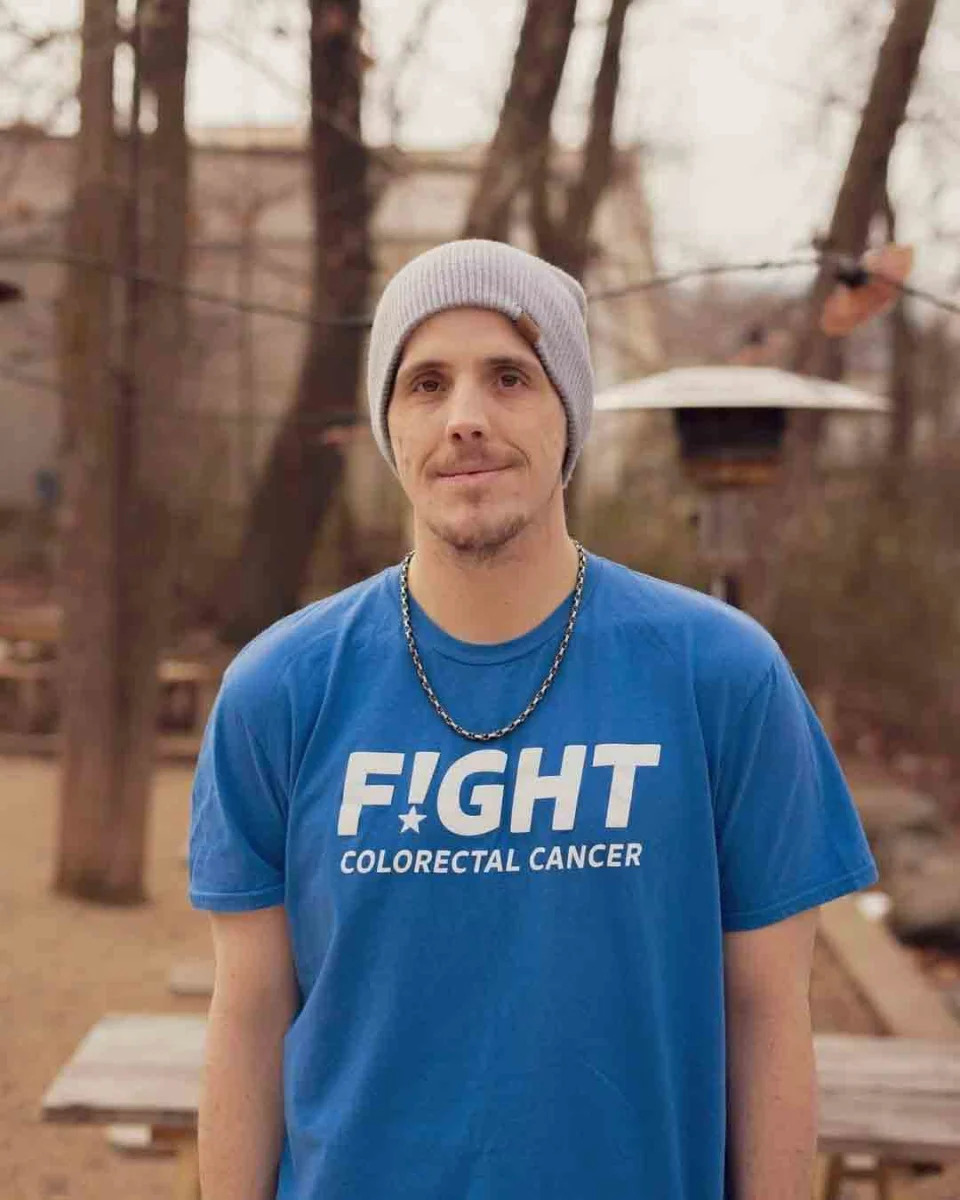
In 2015, JJ Singleton, then 27, felt a throbbing pain in his abdomen. He thought he pulled a muscle — until the pain started intensifying. Then he noticed blood in his stool, started getting acid reflux and developed fatigue so bad that he went to bed by 6 p.m.

“I still kept ignoring it. I always had an excuse in my head about what was going on,” Singleton, 35, of Canton, North Carolina, tells TODAY.com. “I started getting dehydrated every day because everything I ate or drank, I would just throw it up.”

Singleton’s mom made him visit the doctor. By that time, the doctor could see his abdomen pulsating. Singleton soon learned why: He had stage 4 colorectal cancer, and that throbbing was the tumor.

“Looking back, I was that stupid typical male who’s like, ‘Nothing’s wrong,’” he says. “I would Google my symptoms, like what was hurting, and at the bottom, it was always stomach or colon cancer. And I was like, ‘That can’t be me.’”

J.J. Singleton (Courtesy J.J. Singleton)

Singleton is part of a growing trend of more young people in the U.S. developing cancer.

August 2023 research published in JAMA Network Open found that cancer diagnoses increased in people under 50 from 2010 to 2019, with gastrointestinal cancers, like Singleton’s, rising fastest. In the same time frame, rates of cancer in people over 50 decreased. A report from the American Cancer Society published in March 2023 found that people under 55 accounted for 11% of colon cancer diagnoses in 1995, compared to 20% in 2019.

The reason for the spike in colon cancer in young people, as well as other types of cancer, is currently not known. But in Singleton’s case, the cause of his illness is clear: He has Lynch syndrome, a genetic mutation that increases the risk of a variety of cancers for young people with it. Lynch syndrome also may be a factor in the growing rates of cancer in young people overall, experts say.

Singleton discovered he had Lynch syndrome after undergoing a test from Myriad Genetics. Suddenly, the premature cancer deaths of his relatives made sense.

“(My family has) a lot of family members that died young, but that was just God’s will. They didn’t question the thing. It happened and you move on with life,” Singleton says. “We had no indication that there was a genetic problem. I (had) never even heard or talked about genetics.”

What is Lynch syndrome?

Lynch syndrome is a genetic condition that increases a person’s risk of many kinds of cancer, often at a young age. Parents can pass Lynch syndrome to their children.

It “is a common form of inherited cancer risk,” Dr. Matt Yurgelun, director of the Lynch Syndrome Center at the Dana Farber Cancer Institute, tells TODAY.com. He estimates, based on recent studies, that about one in 300 people has some version of Lynch syndrome, putting it “on par,” he says, with BRCA gene mutations, which increase breast and prostate cancer risk, among others.

Having Lynch syndrome means you’re more likely to develop certain cancers before turning 50, according to the U.S. Centers for Disease Control and Prevention. These cancers include:

  • Colorectal
  • Uterine
  • Stomach
  • Liver
  • Kidney
  • Brain
  • Some skin cancers

Colorectal and uterine cancers are the most common in people with Lynch syndrome, Yurgelun says.

J.J. Singleton (Courtesy J.J. Singleton)

Genetic testing can tell you if you have Lynch syndrome, though sometimes people do not find out until after they develop cancer.

For those who do undergo genetic testing — often because of a high number of young cancer deaths in their family — regular screenings help detect cancer in earlier stages. For example, people with known Lynch syndrome should undergo colonoscopies earlier and more often, every one or two years instead of every 10 years for those without an increased risk.

“(Colonoscopy) substantially reduces somebody’s chances of getting colorectal cancer if they have Lynch syndrome,” Yurgelun says. He also points out that research shows taking a daily aspirin can reduce colon cancer risk by 40% to 50% for those with Lynch syndrome.

To reduce uterus and ovarian cancer risk for those with Lynch syndrome, the best course of action is to remove them, Yurgelun says. Patients usually do this in their 40s or later, depending on the specifics of their Lynch syndrome, he explains, adding that it’s “a decision that everybody comes to at their own speed.”

The lack of awareness of Lynch syndrome means many people who could benefit from genetic testing do not get it.

“We’ve been trying to get the word out for a while,” Yurgelun says. “I don’t think it’s penetrated public consciousness as much as we would have liked.”

But before you spring for a genetic test without consulting your doctor, know that you shouldn’t be overly worried about Lynch syndrome, Yurgelun stresses. He recommends asking about your family history of cancer and that anyone diagnosed with cancer, especially if it’s at a young age, undergo genetic testing.

That’s because having Lynch syndrome can change how to treat the cancer. For example, chemotherapy works less well, but some new immunotherapies, which help the immune system fight the cancer, work “exceptionally well,” Yurgelun says.

“A big area in the field right now is figuring out how and when to use things like immunotherapy to treat cancers that arise in the setting of Lynch syndrome,” he adds.

Lynch syndrome changes lives

Dana, 51, who asked not to use her last name to protect her privacy, has had many family members die young from cancer. In fact, she and her sister believed they weren’t going to live past their 30s.

Dana’s father died of colon cancer when she was 2 years old, and it was “very far along when they found it,” she tells TODAY.com.

Her paternal grandfather died of cancer when her father was also 2, but the family knows little about it. They were living in Ireland at the time, and her grandmother moved to the U.S. after his death.

“They only knew it was cancer,” Dana says. “When they did autopsies on (my grandfather) — or anyone prior (in my family) — the cancer was always so far along they didn’t really identify the source.”

Dana’s great-grandmother was said to have died of stomach cancer, but it’s not clear if the cancer started or was just first found there.

For a long time, no one in Dana’s family would “even say the C-word. They were just afraid of it,” Dana says. “They didn’t know what was causing it. Nobody really shared any information.”

So, Dana and her sister enrolled in a clinical trial, where they both learned they had Lynch syndrome. Now, Dana undergoes an annual colonoscopy, and she took birth control for years with the goal of decreasing her uterine cancer risk. At 45, she had a hysterectomy. Every two to three years, she gets a procedure to check her stomach for cancer and even gets her urinary tract tested. Dana hasn’t had cancer, but her sister was diagnosed with colon cancer at 53.

“We’re just screening all the time,” she says. “Most people have been having a better quality of life since finding out (they have Lynch syndrome) versus (their older) relatives.”

Caroline Yost (Courtesy Caroline Yost)

After Caroline Yost was diagnosed with stage 1 breast cancer in 2018 at age 49, she underwent genetic testing and learned she had Lynch syndrome. Her mother was diagnosed with breast cancer in 2006, so Yost had been seeing a breast specialist for her increased risk.

“I made up my mind (when my mom had cancer) that if I were ever diagnosed with breast cancer, I was going to do a double mastectomy and be done with it,” Yost, who lives outside Atlanta and works for genetic testing company Invitae, tells TODAY.com.

A genetic counselor helped her understand her increased risk for cancers, and Yost decided to have a total hysterectomy, as she’d “finished having children,” she says.

Yost said her three kids were tested for Lynch syndrome, and they do not have it, so they cannot pass on the genes to their own kids.

To reduce her risk, Yost also undergoes yearly colonoscopies, frequent checks of her stomach and visits a urologist every year. But she prefers this cycle to not knowing about her health.

“(My Lynch syndrome diagnosis) put my mind at ease, and having that knowledge continued to let me be proactive,” she says.

September marks eight years that Singleton has lived with cancer. At first, doctors treated his cancer with a variety of chemotherapy cocktails. None of them worked.

“I was pretty much bedridden for most of the day because the cancer … grew around my stomach and completely closed it off so I wasn’t able to eat or drink,” he says. He relied on IV nourishment.

Then, Singleton faced two choices: starting hospice care or joining a clinical trial for an immunotherapy drug. He didn’t “want to die,” he recalls, so he knew which to choose. The experimental treatment shrunk his tumor, allowing him to undergo surgery, and now he can eat and drink again. Every three weeks, he receives an infusion of the medication.

Now, Singleton shares his experience as a patient advocate. He recently spoke about having cancer at a conference.

“(The immunotherapy) allows me to live my life more than I was before,” he says. “Having cancer changed me. … I’m a lot better person because of what I went through.”

Earth is outside its ‘safe operating space for humanity’ on most key measurements, study says

Associated Press

Earth is outside its ‘safe operating space for humanity’ on most key measurements, study says

Seth Borenstein – September 13, 2023

FILE - A woman is silhouetted against the setting sun as triple-digit heat indexes continue in the Midwest, Aug. 20, 2023, in Kansas City, Mo. Earth is exceeding its “safe operating space for humanity” in six of nine key measurements of its health, and two of the remaining three are headed in the wrong direction, a new study said. (AP Photo/Charlie Riedel, File)
A woman is silhouetted against the setting sun as triple-digit heat indexes continue in the Midwest, Aug. 20, 2023, in Kansas City, Mo. Earth is exceeding its “safe operating space for humanity” in six of nine key measurements of its health, and two of the remaining three are headed in the wrong direction, a new study said. (AP Photo/Charlie Riedel, File)
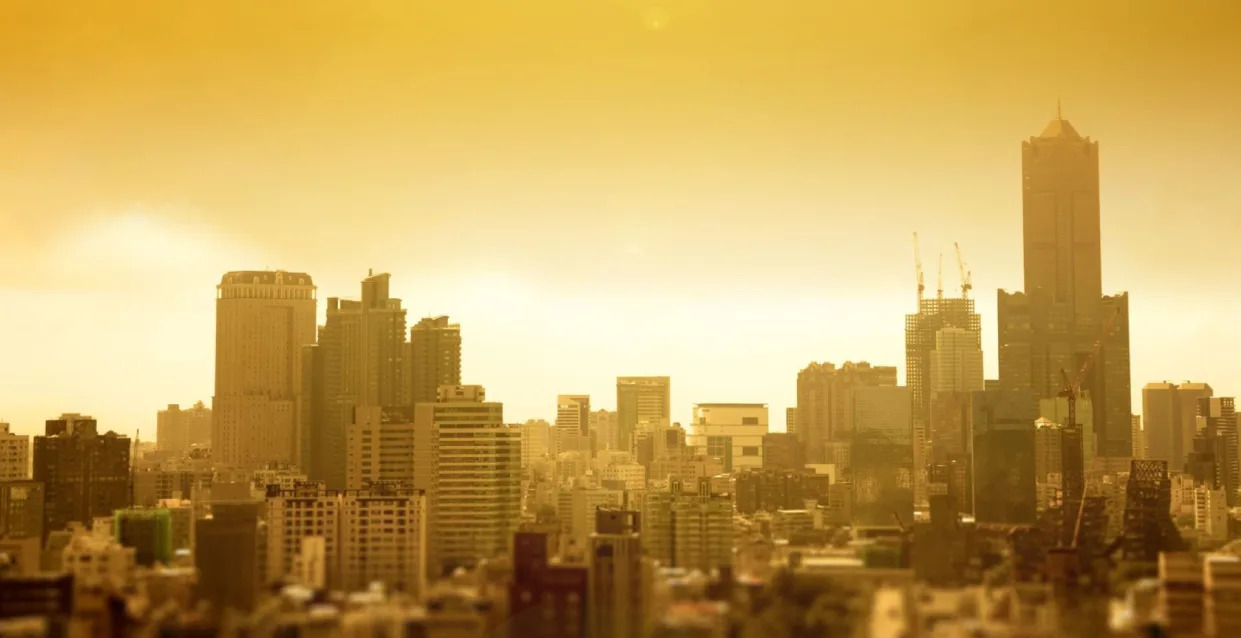
FILE - Haze blankets the main business district in Jakarta, Indonesia, Aug. 11, 2023. Earth is exceeding its “safe operating space for humanity” in six of nine key measurements of its health, and two of the remaining three, one being air pollution, are headed in the wrong direction, a new study said. (AP Photo/Dita Alangkara, File)
Haze blankets the main business district in Jakarta, Indonesia, Aug. 11, 2023. Earth is exceeding its “safe operating space for humanity” in six of nine key measurements of its health, and two of the remaining three, one being air pollution, are headed in the wrong direction, a new study said. (AP Photo/Dita Alangkara, File)

Earth is exceeding its “safe operating space for humanity” in six of nine key measurements of its health, and two of the remaining three are headed in the wrong direction, a new study said.

Earth’s climate, biodiversity, land, freshwater, nutrient pollution and “novel” chemicals (human-made compounds like microplastics and nuclear waste) are all out of whack, a group of international scientists said in Wednesday’s journal Science Advances. Only the acidity of the oceans, the health of the air and the ozone layer are within the boundaries considered safe, and both ocean and air pollution are heading in the wrong direction, the study said.

“We are in very bad shape,” said study co-author Johan Rockstrom, director of the Potsdam Institute for Climate Impact Research in Germany. “We show in this analysis that the planet is losing resilience and the patient is sick.”

In 2009, Rockstrom and other researchers created nine different broad boundary areas and used scientific measurements to judge Earth’s health as a whole. Wednesday’s paper was an update from 2015 and it added a sixth factor to the unsafe category. Water went from barely safe to the out-of-bounds category because of worsening river run-off and better measurements and understanding of the problem, Rockstrom said.

These boundaries “determine the fate of the planet,” said Rockstrom, a climate scientist. The nine factors have been “scientifically well established” by numerous outside studies, he said.

If Earth can manage these nine factors, Earth could be relatively safe. But it’s not, he said.

In most of the cases, the team uses other peer-reviewed science to create measurable thresholds for a safety boundary. For example, they use 350 parts per million of carbon dioxide in the air, instead of the Paris climate agreement’s 1.5 degrees (2.7 degrees Fahrenheit) of warming since pre-industrial times. This year carbon in the air peaked at 424 parts per million.

The nine factors are intermingled. When the team used computer simulations, they found that making one factor worse, like the climate or biodiversity, made other Earth environmental issues degrade, while fixing one helped others. Rockstrom said this was like a simulated stress test for the planet.

The simulations showed “that one of the most powerful means that humanity has at its disposal to combat climate change” is cleaning up its land and saving forests, the study said. Returning forests to late 20th century levels would provide substantial natural sinks to store carbon dioxide instead of the air, where it traps heat, the study said.

Biodiversity – the amount and different types of species of life – is in some of the most troubling shape and it doesn’t get as much attention as other issues, like climate change, Rockstrom said.

“Biodiversity is fundamental to keeping the carbon cycle and the water cycle intact,” Rockstrom said. “The biggest headache we have today is the climate crisis and biodiversity crisis.”

University of Michigan environmental studies dean Jonathan Overpeck, who wasn’t part of the study, called the study “deeply troubling in its implications for the planet and people should be worried.”

“The analysis is balanced in that it clearly sounds a flashing red alarm, but it is not overly alarmist,” Overpeck said. “Importantly, there is hope.”

The fact that ozone layer is the sole improving factor shows that when the world and its leaders decide to recognize and act on a problem, it can be fixed and “for the most part there are things that we know how to do” to improve the remaining problems, said Carnegie Mellon chemistry and environment professor Neil Donahue.

Some biodiversity scientists, such as Duke’s Stuart Pimm, have long disputed Rockstrom’s methods and measurements, saying it makes the results not worth much.

But Carnegie Mellon environmental engineering professor Granger Morgan, who wasn’t part of the study, said, “Experts don’t agree on exactly where the limits are, or how much the planet’s different systems may interact, but we are getting dangerously close.”

“I’ve often said if we don’t quickly cut back on how we are stressing the Earth, we’re toast,” Morgan said in an email. “This paper says it’s more likely that we’re burnt toast.”

The Mighty American Consumer Is About to Hit a Wall, Investors Say

Bloomberg

The Mighty American Consumer Is About to Hit a Wall, Investors Say

Reade Pickert and Vildana Hajric – September 11, 2023

(Bloomberg) — After staving off recession for longer than many thought possible, the US consumer is finally about to crack, according to Bloomberg’s latest Markets Live Pulse survey.

More than half of 526 respondents said that personal consumption — the most important driver of economic growth — will shrink in early 2024, which would be the first quarterly decline since the onset of the pandemic. Another 21% said the reversal will happen even sooner, in the last quarter of this year, as high borrowing costs eat into household budgets while Covid-era savings run down.

The finding is at odds with the optimism that’s permeated US equity markets for most of the summer, as cooling inflation and low unemployment bolstered hopes for a so-called soft landing. Should the economy stop growing — a scenario that’s quite likely if consumer spending contracts — it could mean more downside for stocks, which have already slipped from late-July highs.

“The likelihood of a soft landing, falling inflation, an end to Fed tightening, a peak in interest rates, a stable dollar, stable oil prices — all those things helped drive the market up,” says Alec Young, chief investment strategist at MAPsignals. “If the market loses confidence in that scenario, then stocks are vulnerable.”

‘It Is Not Sustainable’

Right now, the US economy appears to be speeding up rather than stalling. Growth is forecast to accelerate in the third quarter on the back of a recent pickup in household spending, which jumped in July by the most in six months.

To some analysts, it looks a bit like a last hurrah.

“The big question is: Is this strength in consumption sustainable?” says Anna Wong, Bloomberg Economics’ chief US economist, who expects a recession to start by year-end. “It is not sustainable, because it’s driven by these one-off factors” – notably a summer splurge on blockbuster movies and concert tours.

Read More: Barbenheimer, Swift, Beyonce = Mirage of US GDP Boom

The enduring strength of the US job market has propped up household spending in the face of the biggest price increases in decades. It’s led some analysts to push out their expectations for a recession — or even scrap them altogether.

Economists at Goldman Sachs Group Inc. expect the consumer to outperform yet again in 2024 — and keep the economy growing — amid steady job growth and pay hikes that beat inflation.

‘Really Struggling’

But there are plenty of headwinds looming.

Researchers at the Federal Reserve Bank of San Francisco say the excess savings that have helped consumers get through the price spike will run out in the current quarter — a sentiment that three-quarters of the MLIV Pulse respondents agreed with.

“There’s increasingly an issue where the lower end of the income and wealth spectrum is really struggling with the accumulated inflation of the last couple years,” while wealthier Americans are still cushioned by savings and asset appreciation, said Thomas Simons, Jefferies’ US economist.

In the aggregate, consumers have been able to bend under the weight of higher prices, he said. “But there will come a point where that’s no longer feasible.”

Read full results: Savings Dwindle, US Student Debts Come Due: MLIV Pulse Results

Delinquency rates on credit cards and auto loans are rising, as households feel the financial squeeze after the Fed raised interest rates by more than 5 percentage points.

And another kind of debt — student loans — is about to come due again for millions of Americans who benefited from the pandemic freeze on repayments.

A majority of investors in the MLIV Pulse survey pointed to the declining availability and soaring cost of credit — mortgage rates are near two-decade highs — as the biggest obstacle for consumers in the coming months.

Some three-quarters of respondents said auto or retail stocks are the most vulnerable to declining excess savings and tighter consumer credit – a concern that’s not entirely priced in by the markets. While General Motors Co. and Ford Motor Co. have essentially missed out on this year’s wider stock rally, Tesla Inc. more than doubled in value.

‘Just Taking Longer’

Since the economy’s fate hinges on what US consumers will do next, investors are looking in all kinds of places for the answer.

Asked what they consider a good leading indicator, MLIV Pulse respondents pointed to everything from the most standard measures – like retail sales or credit-card delinquencies — to airline bookings, pet adoptions, and the use of “Buy Now Pay Later” installment plans.

That’s perhaps because conventional guides have often proved to be unreliable amid the turbulence of the past few years.

“The traditional playbook for the economy and markets is challenging in this post-pandemic environment,” said Keith Lerner, co-chief investment officer at Truist Wealth. “Things are just taking longer to play out.”

The MLIV Pulse survey of Bloomberg News readers on the terminal and online is conducted weekly by Bloomberg’s Markets Live team, which also runs the MLIV blog. This week, the MLIV Pulse survey asks whether investors have fully regained the confidence in UK assets that they lost during the short-lived premiership of Liz Truss. Click here to share your views.

New tool reveals swaths of American coastline are expected to be underwater by 2050: ‘Time is slipping away’

The Cool Down

New tool reveals swaths of American coastline are expected to be underwater by 2050: ‘Time is slipping away’

Brittany Davies – September 11, 2023

If you ask Climate Central — which has a coastal risk screening tool that shows an area’s risk for rising sea levels and flooding over the coming decades — Texas’s coastline is in trouble.

The new map-based tool compiles research into viewable projections for water levels, land elevation, and other factors in localized areas across the U.S. to assess their potential risk.

The predictive technology indicates that, under some scenarios, many of Texas’s coastal areas, such as much of Galveston Island, Beaumont, and the barrier islands, will be underwater during floods by 2050.

What’s happening?

Coastal areas face threats from rising sea levels caused by melting ice caps and warming oceans, as well as flooding from storms intensified by changing temperatures. The Environmental Protection Agency (EPA) estimates more than 128 million people live in coastal communities, many of which will be severely impacted by the effects of higher tides and dangerous storms.

CNN reports that coastal flooding could cost the global economy $14.2 trillion in damages, not including loss of life and well-being, by the end of the century. The loss of land due to sea level rise is also detrimental to the entire ecosystem, disrupting important wetlands and freshwater supplies.

Why is this concerning?

The coastal risk screening tool provides startling insight into how many areas will likely be affected by rising tides and floods, especially if nothing is done to mitigate Earth’s rapidly rising temperatures. As 2050 quickly approaches, time is slipping away to prepare and protect communities and ecosystems from the rising waters.

Planning, approving, and implementing new infrastructure and other major projects to keep communities safe can take years to complete. Because the wheels of bureaucracy turn slowly, cities need to start planning now before they find themselves in too deep.

What’s being done to reduce the risk?

Many of the most vulnerable regions are densely populated and people are already dealing with personal and economic damages from intensified flooding. While some may be able to move or make changes to their homes and communities to prepare for rising waters, not everyone has the means or desire to make these changes.

Several actions may be taken by individuals, organizations, municipalities, and the government to reduce the impacts of coastal flooding. The first step is understanding where the vulnerabilities are, indicates Peter Girard of Climate Central. Protecting existing wetlands and utilizing nature-based solutions such as living shorelines or sand dunes can lessen the impacts of flooding, storm surges, and erosion.

Community developers are encouraged to consider those most vulnerable when implementing coastal resiliency strategies such as shifting populations or building flood walls. Individuals living in flood zones should learn about the risks and obtain insurance protection if available.