America’s dirtiest city is revealed — and it’s not NYC or anywhere near the north
Mary K. Jacob – May 28, 2024
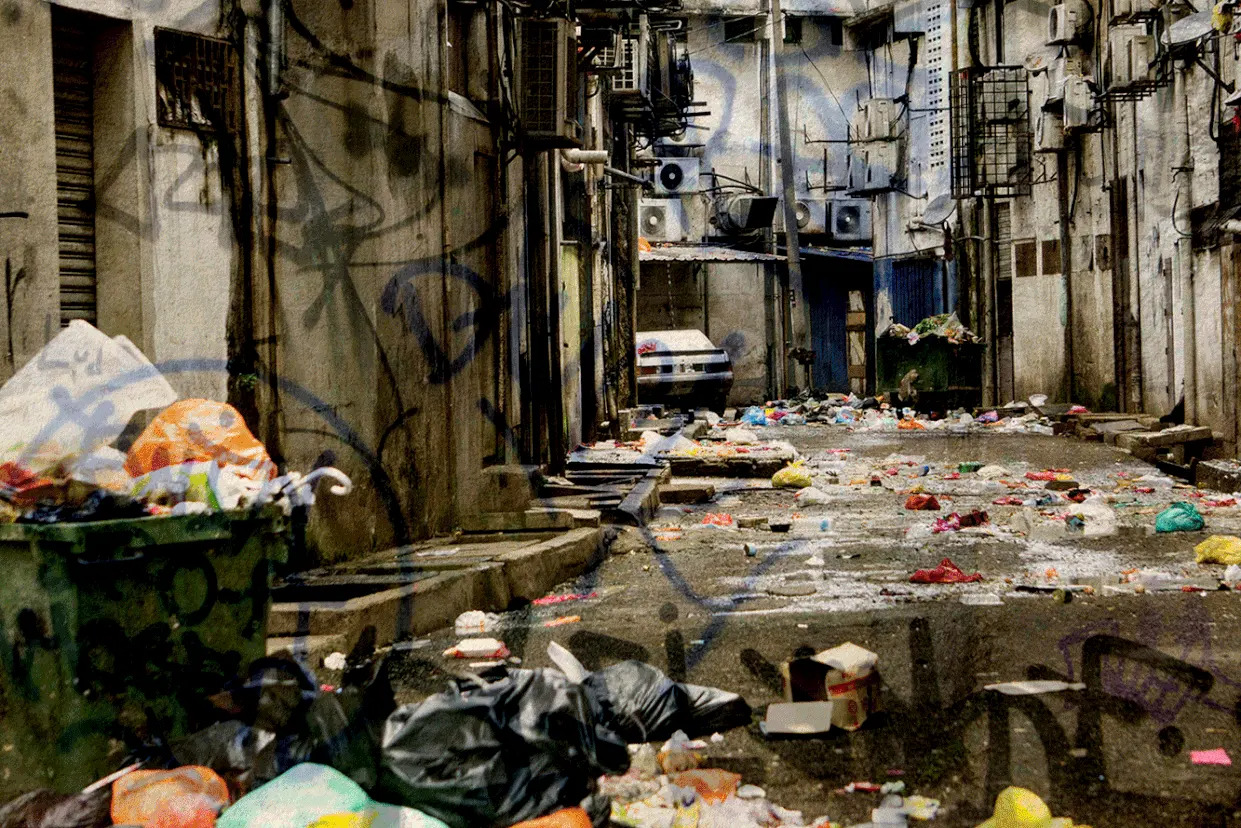
The dirtiest city in America is not exactly what you would expect it to be.
Do you think New York’s filthy sidewalks, gross subway cars and rat infestations make it America’s dirtiest city? You’re in for quite a surprise.
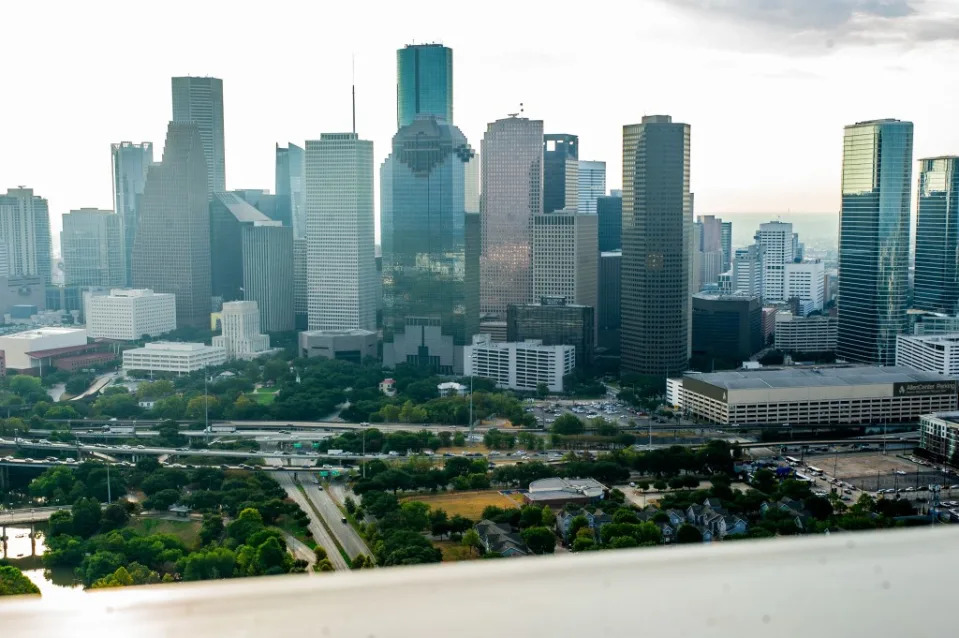
A recent study by LawnStarter has crowned Houston, Texas, as the nation’s dirtiest city — bumping Newark, New Jersey from the top spot.
New York City, despite its notorious grime, didn’t even crack the top 10. It landed in 12th place. While the Big Apple dodged the title of dirtiest, it’s still grappling with its trash and pest problems.
The dirtiest city in America is not exactly what you would expect it to be. NY Post compositeA recent study found that Houston currently stands as the dirtiest city in America. Houston Chronicle via Getty ImagesTrash floating around a construction barge at Buffalo Bayou in Houston. Houston Chronicle via Getty Imag
Houston’s new dubious honor stems from its terrible air quality, infrastructure woes and a staggering number of pests invading homes.
LawnStarter’s sister site PestGnome pulled data showing Houston has the worst cockroach problem, with the city crawling with the creepy critters.
It’s not just Houston; southern cities seem to be a haven for cockroaches. San Antonio, Texas and Tampa, Florida, join Houston in the top three for cockroach infestations.
If cockroaches aren’t your nightmare, steer clear of Boston, Philadelphia and Baltimore. These cities top the list for rodent-infested homes.
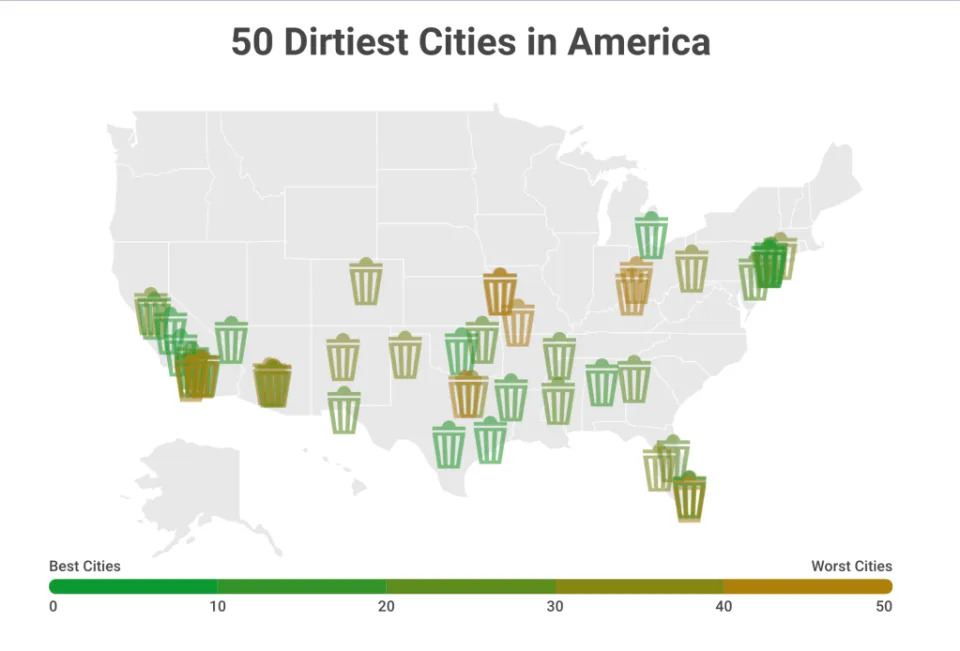
A chart showing the nation’s worst offenders. Lawn Starter
Despite California’s hefty spending on cleaning efforts, several of its cities still rank poorly. San Bernardino, notorious as the “armpit” of California, ranks fourth dirtiest due to atrocious air quality.
Riverside and Ontario, also in the LA metro area, share this dismal air status, now plagued by pollution-heavy warehouses that have replaced orange groves and vineyards.
San Francisco, however, shines as a cleaner gem in California. With a $72.5 million street cleaning spree in 2019 and an additional $16.7 million budget in 2023, it’s among the cleaner half of US cities.
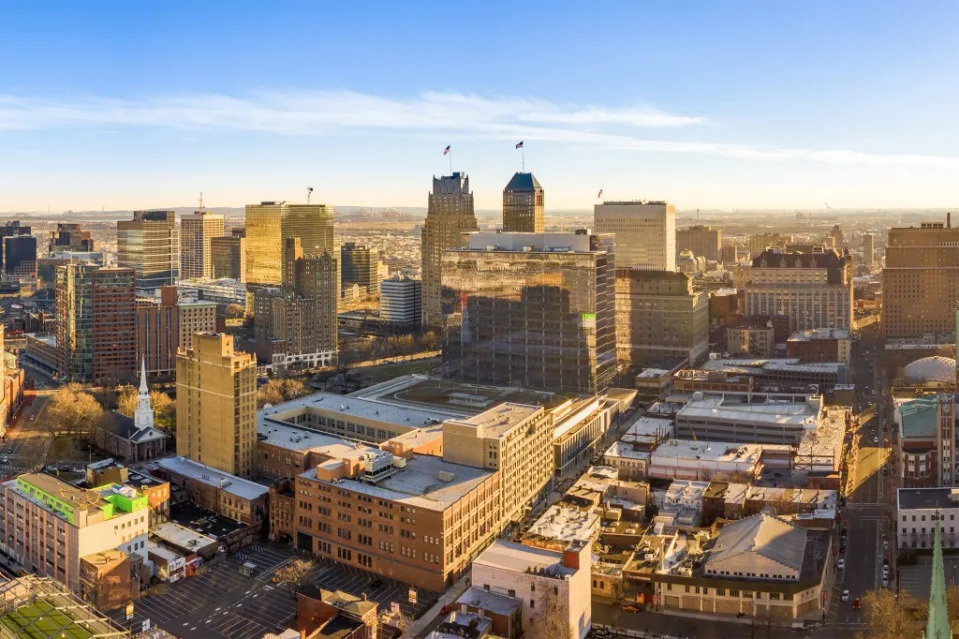
Newark, New Jersey ranked second of the dirtiest cities in America. mandritoiu – stock.adobe.com
But this doesn’t account for the rising homeless and drug epidemic facing the city.
Dirty air isn’t the only issue — drinking water contamination is rampant in the southwest. Except for Salt Lake City, every major southwest city violated the Safe Drinking Water Act in 2020. Las Vegas, ranking 19th dirtiest overall, has the most unsafe water in the region.
Ohioans have a particular knack for littering cigarette butts. With five Ohio cities boasting the highest share of smokers, the state is battling an onslaught of discarded cigarettes, despite local campaigns urging residents to kick the habit.
Surprisingly, many of the cleanest cities are coastal, with Virginia Beach topping the list.
However, being near water isn’t a cleanliness guarantee — Fremont, California, and Winston-Salem, North Carolina, also rank among the most pristine cities despite their inland locations.
Don’t look up. South Korean authorities warned residents along the border with North Korea that an “air raid” was underway. But it wasn’t rockets that were incoming. Rather: floating overhead were more than 150 balloons carrying trash and what’s believed to be feces.
An emergency disaster text alert was sent across cities on Tuesday night, according to South Korean newspaper Hankyoreh, ordering residents to “refrain from outdoor activities and report [objects] to military bases when identified,” along with the message in English: “Air raid preliminary warning.”
The incursion comes days after North Korea warned it would retaliate against anti-Pyongyang leaflets sent over by activists in South Korea earlier this month.
South Korean news agency Yonhap reported that South Korea’s military detected the balloons flying and falling in various locations across the country from Tuesday evening to Wednesday morning local time, going as far as South Gyeongsang, a province more than 180 miles from the demilitarized zone border between the two countries.
The balloons appeared to carry trash—like plastic bottles, batteries, shoe parts, and even feces—a South Korea Joint Chiefs of Staff official said. The military is working with police to collect the materials for analysis, local paper Chosun Ilbo reported, and has advised residents not to come into contact with the droppings and instead report them to authorities.
This photo provided by South Korea Defense Ministry, shows trash from a balloon presumably sent by North Korea, in Seoul, South Korea, Wednesday, May 29, 2024. South Korea Presidential Office—AP
“Tit-for-tat action will be also taken against frequent scattering of leaflets and other rubbish by [South Korea] near border areas,” North Korea’s vice minister of national defense said on Sunday. “Mounds of wastepaper and filth will soon be scattered over the border areas and the interior of [South Korea] and it will directly experience how much effort is required to remove them.”
South Korea’s military condemned the act, saying on Wednesday that the balloons “clearly violate international law and seriously threaten our people’s safety.”
It’s not the first time North Korea has flown in garbage through balloons: in 2016, it sent what were initially feared to be biochemical substances but eventually turned out to be cigarette butts and used toilet paper.
North Korean defectors and activists in South Korea have also flown balloons the other way with propaganda payloads for years, in hopes of convincing North Korean residents to stand up against Kim Jong-un’s totalitarian regime. Pyongyang has long bridled against the practice, which it has labeled “psychological warfare.”
Park Sang-hak, center, a refugee from North Korea who runs the group Fighters for a Free North Korea, and South Korean activists prepare to release balloons bearing leaflets during an anti-North Korea rally near the border village of Panmunjom in Paju, South Korea, on April 15, 2011.Lee Jin-man—AP
Earlier this month, a group of North Korean defectors sent about 20 large balloons carrying some 300,000 leaflets criticizing Kim. The balloons also reportedly carried about 2,000 USB sticks containing K-pop content, including songs from members of Korean boyband sensation BTS. (Kim has called South Korean K-pop a “vicious cancer.”)
As tensions escalate between North and South Korea, experts emphasize that this kind of exchange of balloons remains far preferable to missiles. Peter Ward, a research fellow at the Sejong Institute, told Reuters: “These kinds of grey zone tactics are more difficult to counter and hold less risk of uncontrollable military escalation, even if they’re horrid for the civilians who are ultimately targeted.”
North Korean trash balloons are dumping ‘filth’ on South Korea
Jessie Yeung and Yoonjung Seo – May 29, 2024
North Korean trash balloons are dumping ‘filth’ on South Korea South Korea’s Joint Chiefs of StaffSouth Korean authorities said the balloons, which landed in several locations, were filled with “filth and garbage.” – South Korea’s Joint Chiefs of StaffThe deflated balloon that carried the North Korean trash bags. Balloons have previously been used by South Korean activists to send materials across the border. – South Korea’s Joint Chiefs of Staff
North Korea has adopted a new strategy to contend with its southern neighbor: sending floating bags of trash containing “filth” across the border, carried by massive balloons.
The South Korean military began noticing “large amounts of balloons” arriving from the North starting Tuesday night, detecting more than 150 as of Wednesday morning, according to the country’s Joint Chiefs of Staff (JCS).
Photos released by the JCS show plastic bags carried by two giant balloons, with some broken packages spilling scraps of plastic, sheets of paper, and what appears to be dirt onto roads and sidewalks.
The balloons so far contain “filth and garbage” and are being analyzed by government agencies, said the JCS, adding that the military was cooperating with the United Nations Command.
South Korean authorities said the balloons, which landed in several locations, were filled with “filth and garbage.” – South Korea’s Joint Chiefs of Staff
“North Korea’s actions clearly violate international law and seriously threaten the safety of our citizens,” it added. “All responsibility arising from the North Korean balloons lies entirely with North Korea, and we sternly warn North Korea to immediately stop its inhumane and low-level actions.”
Local governments also sent messages to residents in the northern Gyeonggi and Gangwon provinces to warn of the “unidentified objects,” and advised against outdoor activities. The packages risk damaging residential areas, airports and highways, said the JCS.
The move, according to North Korean state media KCNA, was to retaliate against South Korean activists who often send materials to the North – including propaganda leaflets, food, medicine, radios and USB sticks containing South Korean news and television dramas, all prohibited in the isolated totalitarian dictatorship.
Campaigners in the South, including defectors from North Korea, have long sent these materials through balloons, drones, and bottles floating down the cross-border river – even after South Korea’s parliament banned such actions in 2020.
“Scattering leaflets by use of balloons is a dangerous provocation that can be utilized for a specific military purpose,” said Kim Kang Il, North Korea’s Vice Minister of National Defense, KCNA reported on Sunday.
He accused South Korea of using “psychological warfare” by scattering “various dirty things” near border areas, declaring that the North would take “tit for tat action.”
The deflated balloon that carried the North Korean trash bags. Balloons have previously been used by South Korean activists to send materials across the border. – South Korea’s Joint Chiefs of Staff
“Mounds of wastepaper and filth will soon be scattered over the border areas and the interior of (South Korea) and it will directly experience how much effort is required to remove them,” Kim said, according to KCNA. “When our national sovereignty, security and interests are violated, we will take action immediately.”
Kim also decried joint US-South Korea military drills, which have increased in recent years as tensions have risen in the Korean peninsula.
The 2020 law that prohibited sending leaflets also restricted loudspeaker propaganda broadcasts, which the South’s military once championed as part of psychological warfare against the North until it withdrew the equipment following a 2018 summit between the two Koreas.
But even after parliament passed the ban, activists told Reuters they planned to continue – including the defector Park Sang-hak, who had been sending materials back to his homeland for 15 years, vowing to continue in an effort to give North Koreans a rare glimpse of the outside world.
Earlier this month, Park’s organization Fighters for a Free North Korea said in a statement it had sent 20 balloons toward North Korea, containing 300,000 leaflets that condemned Kim Jong Un and 2,000 USB sticks containing K-pop and music videos.
“In order to appeal and urge the North Korean people to rise up and put an end to Kim Jong Un … the group is sending the leaflets to the compatriots in North Korea,” the organization said in a statement.
For decades, North Korea has been almost completely closed off from the rest of the world, with tight control over what information gets in or out. Foreign materials including movies and books are banned, with only a few state-sanctioned exceptions; those caught with foreign contraband often face severe punishment, defectors say.
Earlier this year a South Korean research group has released rare footage that it claimed showed North Korean teenagers sentenced to hard labor for watching and distributing K-dramas.
Restrictions softened somewhat in recent decades as North Korea’s relationship with China expanded. Tentative steps to open up allowed some South Korean elements, including parts of its pop culture, to seep into the hermit nation – especially in 2017 and 2018, when relations thawed between the two countries.
But the situation in North Korea deteriorated in the following years and diplomatic talks fell apart – prompting strict rules to snap back into place in the North.
North Korea Accused of Launching Floating Poop Balloon Attack
Dan Ladden-Hall – May 29, 2024
Yonhap via Reuters
South Korea’s military on Wednesday accused North Korea of floating balloons loaded with trash and manure across the border and immediately demanded that Pyongyang halt its “inhumane and vulgar” operation.
More than 260 balloons have already been detected in South Korea since the operation began on Tuesday night, South Korea’s Joint Chiefs of Staff said. Images released by the military appear to show the balloons carrying plastic bags—one of which had the word “excrement” written on the side, according to Reuters.
A JCS official told the Seoul-based Yonhap News Agency that the balloons—all of which have fallen to the ground—carried trash, including bits of shoes, plastic bottles, and manure.
No damage or injuries have been reported so far in connection with the balloons, but the military has deployed bomb disposal units and other experts to collect them. Residents have been warned against touching the objects.
“These acts by North Korea clearly violate international law and seriously threaten our people’s safety,” the JCS said, adding a stern warning to “North Korea to immediately stop its inhumane and vulgar act.”
The balloons started arriving days after Kim Kang Il, North Korea’s vice defense minister, slammed propaganda leaflets criticizing the Pyongyang regime that North Korean defectors in the South have been attaching to balloons and sending northward for years.
The minister on Sunday accused Seoul of “despicable psychological warfare” by “scattering leaflets and various dirty things near border areas” and vowed to deliver “tit-for-tat action” in response.
“Mounds of wastepaper and filth will soon be scattered over the border areas and the interior of [South Korea] and it will directly experience how much effort is required to remove them,” he said.
These Insiders Know What Awaits Trump Lawyer Todd Blanche if He Loses
Justin Rohrlich – May 29, 2024
Photo Illustration by Thomas Levinson/The Daily Beast/Getty
The one man perhaps even more anxious for a verdict in the Trump hush-money trial than Donald Trump himself is Todd Blanche.
Trump has already reportedly expressed his frustration with Blanche, his latest defense attorney, and if he loses, Trump’s modus operandi is to go on the offensive. That’s because there are two types of people in Donald Trump’s personal orbit: those who have been publicly trashed by the former president, and those who will be.
“There is no public client quite like Mr. Trump,” former Trump lawyer Jenna Ellis told The Daily Beast. “While every person deserves competent counsel, that counsel also deserves loyalty from their client. Loyalty goes one way with Trump. The problem with the current MAGA base is that they will take whatever position Trump tells them to.”
The twice-impeached ex-commander-in-chief has openly lambasted, to name but a few, his own national security adviser, John Bolton (“one of the dumbest people in Washington”); his own Joint Chiefs of Staff chair, Gen. Mark Milley (“a Woke train wreck”); his own attorney general, William Barr (“a coward who didn’t do his job”); his own UN ambassador, Nikki Haley (“birdbrain”); his own secretary of state, Rex Tillerson (“lazy as hell”), campaign adviser Steve Bannon (“Sloppy Steve”), and his own vice-president, Mike Pence (“wimp,” “traitor,” “not a very good person”).
Trump has hurled insults at judges and at least one state attorney general. He has also not been kind to the various lawyers he has used up and discarded, calling, for example, his onetime personal attorney and “fixer” Michael Cohen a “bad lawyer and fraudster” after Cohen turned on him in 2019. Last month, Trump began badmouthing Blanche, a former federal prosecutor and his lead defense attorney trying to help him beat back 34 felony counts related to a $130,000 hush money payment to porn star Stormy Daniels (“Horseface”), according to sources who spoke to The New York Times. Trump has reportedly bellyached that Blanche isn’t sufficiently deferential to his strategic ideas, and wanted to see Blanche be more aggressive in attacking witnesses.
Closing arguments began on Tuesday; a verdict is expected as early as this week. But what will become of Blanche if Trump is found guilty?
Todd Blanche (right) in Manhattan Criminal Court with Donald Trump during the former president’s criminal hush money trial.Mark Peterson-Pool/Getty Images
To Ellis, who in October pleaded guilty to a felony charge of aiding and abetting false statements in service of Trump’s attempt to overturn the results of the presidential 2020 election, the outcome is highly predictable.
“If Trump decides to publicly trash or blame Todd Blanche and the other attorneys, I’d bet that MAGA immediately brands them ‘the worst lawyers ever’ …instead of recognizing that lawyers can only do as much as they can with the situation—and client—they have,” she said. “From what I have seen, the defense team has done the best they could. Trump frankly is lucky he can even get anyone competent to agree to represent him at this point and I think he would be wise not to trash his lawyers.”
Former White House lawyer Ty Cobb, who represented Trump during the Mueller investigation, has been on the receiving end of Trump’s wrath. After Cobb said last year that Trump’s defense was weak in the ongoing federal case against him for purloining classified documents when he left the Oval Office and refusing to return them, Trump took to his Twitter clone, Truth Social, to denigrate him.
“Ty Cobb is a disgruntled former Lawyer, who represented me long ago, and knows absolutely nothing about the Boxes Hoax being perpetrated upon me,” Trump posted in response. “…His words are angry, nasty, and libelous, only because I did not continue using him (and paying him), and for good reason.”
Jenna Ellis with Rudy Giuliani in 2020.Rey Del Rio/Getty Images
For his part, Cobb doesn’t envision any scenario under which Trump beats the hush money charges.
“The chance of an acquittal is zero to none,” Cobb told The Daily Beast, adding that the odds of a hung jury are “real,” but “not likely.”
However, whether or not Blanche remains on Trump’s legal team is up in the air, he said.
“Who knows, in terms of how Trump will treat his lawyers,” Cobb continued, noting that Manhattan defense attorney Joe Tacopina, who represented Trump in his unsuccessful libel case against writer E. Jean Carroll, withdrew from the hush-money case earlier this year, saying he had to “follow my compass.”
However, attorney Alina Habba, who replaced Tacopina on the Carroll case and proceeded to lose Trump $83 million, “is still on the payroll. So, you don’t really know with him. Now, Todd’s not as attractive as Alina, so…”
Cobb described Blanche as “a cut above, talent-wise and experience-wise, than most of the lawyers in the Trump stable—not all, but many of them, certainly Habba—and I would suspect him to remain on the team.”
“I think Blanche stays on the team,” Cobb went on. “He should stay on the team. Although he was a little less comfortable in court than I expected. I saw a lot of reporting [on Tuesday] that he seemed a little nervous and not necessarily as confident, at least in their assessment… But he’s got the skill set and the experience to do this well.”
Former Trump attorney Ty Cobb.Jerry Cleveland/The Denver Post via Getty Images
Blanche, who used to work as an assistant U.S. attorney in the Southern District of New York, was well respected by his peers there, according to Cobb, citing personal relationships with several of Blanche’s former coworkers. (Blanche did not respond to The Daily Beast’s request for comment on Tuesday.)
“It’d be a real mistake to take Blanche off the team,” Cobb said. “On the other hand, [Trump] has gone through some excellent lawyers.”
A third former member of Trump’s orbit, who asked that their name not be used so as to avoid taking additional public flak from the ex-president, predicts Blanche will quickly become “a target” if Trump loses the case.
“He turns on everyone,” the source told The Daily Beast.
Many of the lawyers who have become overly involved with Trump go on to face criminal charges of their own, are sued, or eventually disbarred, according to the source. They said they believe Blanche “crossed that rubicon—he put all his eggs into [Trump’s] basket, and that’s not a healthy basket, because the eggs eventually go rotten… Rudy Giuliani was his best friend; he turned his back on him in two seconds. He’s disbarred, he’s twice-indicted, he’s bankrupt, he’s a laughing stock. He’s got nothing left.”
If Trump would do this to Giuliani, the source continued, “he’ll do it to anybody.”
“This guy is kryptonite,” they said. “He really is. You know you’re gonna take shrapnel. But then you still get abandoned.”
Miami-Dade man recorded rape of a Palm Beach schoolgirl. He had her sell the videos
David J. Neal – May 29, 2024
ERIC PAUL ZAMORA/THE FRESNO BEE/Fresno Bee Staff Photo
Using social media, an Opa-locka man coerced Palm Beach and Broward 15-year-olds into letting him commit statutory rape, got one of the two girls to let him record it on video and sell the videos for him.
The above violations were chronicled in 26-year-old Malik Atkinson’s guilty plea to two counts of online solicitation of a minor to commit a sexual act, crimes for which Atkinson was sentenced to 30 years in Miami federal court Friday. After Atkinson’s release, which will be at least 25 years and six months in the future, he’ll be subject to a lifetime of supervised release.
Federal public defender Scott Berry, anticipating the prosecution would ask for life under the statutes involved, argued for mercy based on Atkinson being “a 26-year-old child in a man’s body,” who lived with his father, had no previous criminal record and “was acting out sexually through pornography, multiple sexual partners, underage sexual partners, and videotaping his sexual exploits.”
Assistant U.S. Attorney Greg Schiller rejected Berry’s argument for a 10-year sentence and the testimony of forensic psychologist Dr. Sheila Rapa as to Atkinson’s possibilities in treatment. “Despite Dr. Rapa’s analysis and [Atkinson’s] youth, the minimum sentence of 10 years is wholly insensitive to the crimes purported in this case: [Atkinson] sexually assaulted two girls, produced child pornography of them, and solicited countless others,” Schiller said.
Atkinson actually thought the first girl he lured into his van was 13, not 15. They electronically talked across several social media platforms, but virtually met on Twitter in 2022.
What follows comes from Atkinson’s guilty plea, which includes what the Palm Beach Gardens girl — referred to as “Minor Victim 1” or “MV1” — told investigators.
MV1 called him “Bearie” after they met on X back when it was still Twitter. She never knew him as “Malik Atkinson.” On the Discord app, Atkinson/”Bearie” was “unknown_ value#5871.”
Atkinson’s guilty plea includes a Discord conversation from May 4, 2022, during which MV1 tells him she’s 13 and in high school, and Atkinson tries to figure out how they can meet. Her band practice was an impediment as well as her family’s sleeping habits (“Can you sneak out at nights or do they stay up for too long?” “They stay up too long…”).
On May 9, MV1 told Atkinson they can meet at “a small church in the middle of the town that people get picked up a lot so it won’t be super sus plus it doesn’t really matter. It’s like a 5 min walk” from her house.
Atkinson told her, “Now ironically Ima be in a suspicious van lol…”
He also asked, “Wanna try making this a weekly thing? And food wise what do you want. Cus I am nice. I’m not just gonna rape you and make you a — dumpster without like feeding you. That’s horrible lol.”
They met in Atkinson’s 1997 white Chevrolet van with a small red and white logo the next day for the first of four or five times. Before they met, Atkinson agreed to pay MV1 $40. She didn’t collect, then told him not to worry about it.
“Atkinson admitted he recorded the sexual encounters with his cellphone, which he sent to Minor Victim 1,” the guilty plea said. “Atkinson said he and Minor Victim 1 exchanged payments to one another for sexually explicit images and videos that Minor Victim 1 sold of herself. Atkinson gave Minor Victim I access to his CashApp account, including his usermame and password. He said that Minor Victim 1 sold sexually explicit images and videos of herself and directed purchasers of said images and videos to send CashApp payments to Atkinson’s CashApp account.”
2 Yale researchers are pulling back the curtain on Russia’s sanctions-stricken economy — and it’s landed them on a list of Putin’s enemies
Jennifer Sor – May 25, 2024
Jeffery Sonnenfeld and Steven Tian have landed themselves on a list of sanctioned individuals for their work shining a light on Russia’s economic situation.Mikhail Klimentyev/Sputnik AFP
Jeffrey Sonnenfeld and Steven Tian, two Yale researchers, have issued dire predictions for Russia’s economy.
Their work has landed them on a list of sanctioned individuals in Russia.
In their view, the country’s economy is in shambles, and Putin could end up losing support of the people.
Jeffrey Sonnenfeld and Steven Tian, two researchers at the Yale School of Management, have been targeted for their views on Russia’s economy since the war in Ukraine began.
Over the last few years, they’ve found themselves on Vladimir Putin’s watch list for stating what they see as a simple truth: the Russian economy is in trouble, and there’s only so much cherry-picking of the data that can obscure that fact.
Moscow has fiercely defended its vision of a prospering economy, but the evidence speaks for itself, Sonnenfeld and Tian say. Soaring prices and ailing consumer sentiment have hit key sectors in Russia’s economy, and Moscow is paying a huge cost to keep its war machine running.
The nation is in such dire straits that citizens could even start turning on Putin later this year, they predicted, assuming the West continues to supply military and financial aid to Ukraine.
“We can list for you what Putin has concealed – suddenly – the past three years. If his economy was performing at the level he claims, he’d provide the data ad not hide those facts,” Sonnenfeld told Business Insider in an interview. “Putin survives only by cannibalizing Russian businesses – throwing the living room furniture into the furnace to keep the fire burning.”
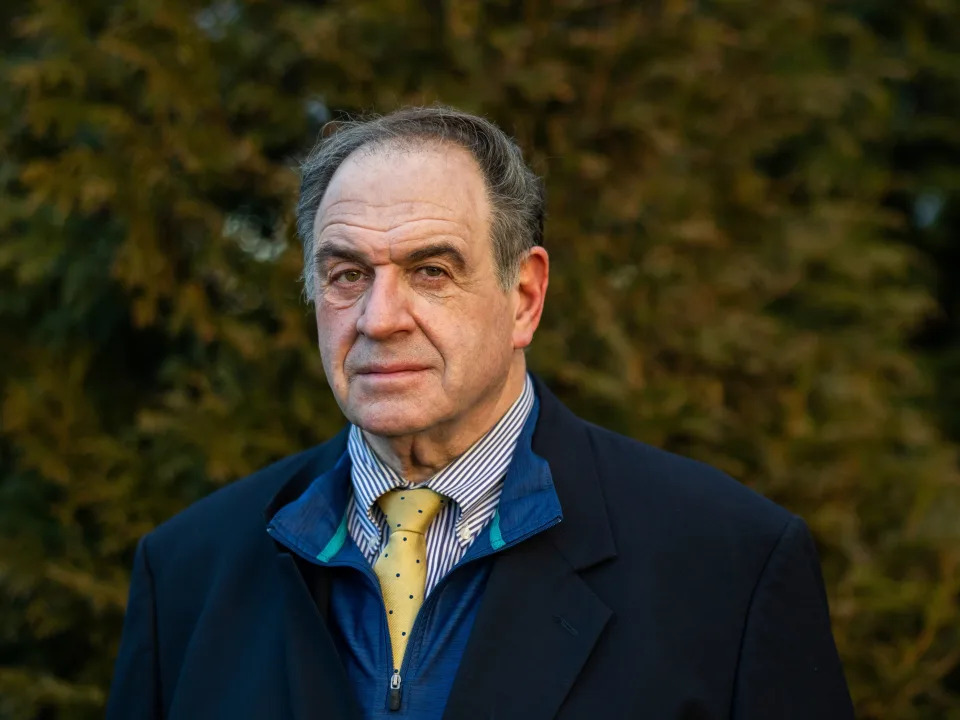
Jeffrey SonnenfeldCourtesy of Jeffrey Sonnenfeld
The researchers, who met as a professor-student pair at Yale, have received a lot of criticism for their work on Russia, much of it in the form of hate mail and threatening phone calls.
“I’ve had a lot of threats on the phone, and my home has been vandalized,” Sonnenfeld told BI last summer. “Now we have so many security cameras I can’t even have my shirt tails untucked, let alone walk around in my shorts at home.”
Both are barred from entering Russia and were put on the nation’s sanctioned US citizens list in 2022.
Still, neither of them regrets their work.
“We’re pretty excited about it,” they said of their research. “Any of the threats only motivate us to work down much harder.”
Putin’s top critics
Sonnenfeld, 70, and Tian, 25, didn’t plan on getting their names added to a list of Putin’s critics.
Neither are technically economists, but they began researching Russia’s economy while compiling a list of companies that exited or scaled back their operations in Russia in the wake of the invasion of Ukraine.
That list went viral online, and was instrumental in getting more than 1,000 companies to scale back their business in the country, the Yale School of Management says on its website.
Steven Tian headshot
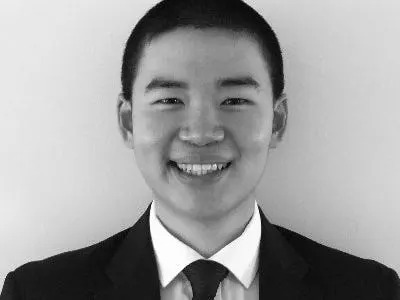
Steven TianCourtesy of Steven Tian
At that time, Tian and Sonnenfeld began noticing cracks forming in Russia’s economy. Putin has claimed Russia is becoming the new “growth hub” of the world, and the IMF says Russia’s economy is on track to grow over 3% this year, more than any other OECD economy, including the US. But that doesn’t square with data Sonnenfeld and Tian are seeing, with some pockets of the country’s economy in dire shape.
Among their biggest predictions is that the situation in Russia is so bad that the country could eventually turn on Putin, with a shift in the domestic temperament coming as soon as the November US presidential election this year.
That’s because if Biden is re-elected, the US will likely continue supplying aid to Ukraine, forcing Russia to continue spending money and lives to keep waging war on Ukraine.
“Putin has no grand strategy other than to hope Trump wins and cuts a favorable deal with Russia,” Tian said. “Russia is in for a world of economic pain for a long time to come.”
Positive forecasts on Russia’s economy are based on a lack of visibility, Sonnenfeld and Tian say.
The pair began working together when Tian was an undergraduate at Yale, chasing Sonnenfeld around lecture halls. Eventually, Sonnenfeld became Tian’s advisor and has mentored Tian for over eight years.
The two researchers are still working on ways to urge the West to tighten and enforce sanctions on Russia. They also continue to update their list of companies that have exited the country in the hope that it will encourage more firms to do the same.
Colleagues describe Sonnenfeld as opinionated but generous and charismatic. Tian, meanwhile, has a near-photographic memory and is a highly analytical thinker, colleagues mentioned.
“Steven does a lot of the analytic heavy lifting, and I do the flamboyant color,” Sonnenfeld said of their work together.
People who have worked with them also say the pair is extremely passionate about their work, and both are often known to answer emails at all hours of the night and early morning.
“We don’t believe in regular sleep patterns,” Sonnenfeld added. “Actually, we know it’s very important, but sometimes when there’s a sense of urgency, we do seriously dive into the crisis du jour. We just don’t like bullies, whether or not it’s Putin or some other bravado.”
Former President Donald Trump speaks at a rally at Crotona Park in the Bronx on Thursday, May 23, 2024. (Hiroko Masuike/The New York Times)
NEW YORK — When his criminal trial finishes for the day, Donald Trump typically returns to the marble-and-gold triplex atop Trump Tower, the high rise he built in the early 1980s and used to establish a public image as a master builder.
It is the silver lining for Trump, as he spends his first sustained period of time in Manhattan since he moved to Washington in 2017. He passes the days in a dingy courtroom downtown, where he faces 34 felonies, listening to people from his old life describe him as a depraved liar who sullied the White House. At the end of it all, he could be sent to prison.
But in the evenings, people who have spoken to him say, he has been enjoying being back in the penthouse apartment that he moved into four decades ago. He still considers it home — and a permanent reminder of the easiest period of his life.
That period was the greed-is-good era in which Trump sold himself nationally as a titan of industry, despite a relatively small, and local, real estate portfolio. He had just built a glittering tower on Fifth Avenue, infuriating elites and demanding a tax break from the city. And it is the era he alludes to constantly, referring to 1980s cultural touchstones, including the news show “60 Minutes,” Time magazine and celebrities like boxer Mike Tyson.
It is also the last time Trump’s preferred public image was intact, and it soon came crashing down. The decade ended with a monthslong tabloid war in which people around the city chose sides between him and his first wife, Ivana. At the same time, the image-obsessed Trump was the subject of one investigative story after another, making clear he had far less money than it had seemed, had relied on his father for help and had managed his empire into something close to ruin.
It was in the ’80s that he was in a public dance over whether he wanted to be accepted by elites or throw stones at them, marked most visibly by his decision to smash art deco friezes that had been atop the building he razed to construct Trump Tower.
Yet despite the claims that the city’s power brokers all sneered at him, Trump was humored, indulged and even accepted by some of them. The ’80s were a time when, his path having been helped by his father’s connections in the corrupt Brooklyn political machine, he was developing relationships with publishing titans such as S.I. Newhouse and hanging out in the stadium box held for George Steinbrenner, the New York Yankees owner.
Trump had begun a budding and durable association with one of the city’s power brokers, Manhattan District Attorney Robert Morgenthau, a man whose proximity gave Trump a sense of comfort, according to former Trump Organization employees, and who Trump has said would never have stood for the charges against him.
“It’s absolutely true — that was his golden time, no question,” said Andrew Stein, who was the City Council president in the 1980s and still supports Trump after having briefly suggested he should bypass his third presidential campaign.
Even being president — moving to a city and a world where the rules and laws were foreign and uninteresting to him, and where the establishment rejected him before he arrived — rarely seemed to delight Trump the way that holding court at the 21 Club in midtown Manhattan did.
The trial has highlighted the parts of Trump’s makeup that became clear in the decade that followed, in the 1990s, the ones less immediately apparent after the fame afforded him by his ghostwritten 1987 book, “The Art of the Deal.” The courtroom days have repeatedly touched on his penchant for payback, his love of fixers to defend him, his obsession with being seen as a playboy, his business practices at what is essentially a mom-and-pop company.
But they have also underscored the reality that a man who spent years building an artifice about himself in the press and on TV managed to capture the presidency, when suddenly the question of what parts of him were real or fake was obscured by the power of the Oval Office, a giant government infrastructure and tens of millions of people who had cast ballots for him.
The era that shaped Trump was perhaps best encapsulated by author Tom Wolfe in “The Bonfire of the Vanities,” in which a wealthy investment banker strikes a young Black man in a hit-and-run in the Bronx amid widespread racial tensions, and is ultimately tried in the borough’s beaten-down criminal courthouse as the tabloids devour the story.
It was a building not unlike the one in which Trump has sat most days each week for six weeks, the fluorescent lighting beaming down on the decrepit benches and the letters reading “In God We Trust” over Justice Juan M. Merchan’s head.
Some days, Trump has eviscerated his lawyers and complained privately that he has no Roy Cohn, his original fixer and mentor and lawyer. Like Trump, Cohn was born into outer-borough privilege and then alternately reviled and accepted by powerful people. Cohn, a closeted gay man who tried to purge the federal government of gay people, died in 1986; he had AIDS but told people it was liver cancer.
Cohn, whose connections included President Ronald Reagan, Rupert Murdoch and mobsters, had introduced the Queens-bred Trump to a new world and had taught him to always deny wrongdoing, to attack his attackers and to seek lawyers willing to do anything. But at the start of the ’80s, as he was gaining respectability himself, Trump already seemed ready to put some distance between himself and Cohn.
“All I can tell you is he’s been vicious to others in his protection of me,” Trump told journalist Marie Brenner a few years before Cohn’s death. “He’s a genius. He’s a lousy lawyer, but he’s a genius.”
Trump essentially dropped Cohn, who had been indicted repeatedly, when he fell ill. It was later that Trump lionized Cohn, despite his own criticism of his mentor, as the ideal that his other lawyers, including the new ones he dealt with in Washington, should strive to live up to.
Trump never spent much time back at Trump Tower while he was president. Most weekends, he traveled to Mar-a-Lago, in Palm Beach, Florida, or to Bedminster, New Jersey. He said he was avoiding Manhattan because his motorcade would snarl traffic. But Manhattan had rejected him at the ballot box. Residents had even laughed in his face as he went to vote on Election Day in 2016; one told him, “You’re gonna lose!”
And so in September 2019, after consulting his tax lawyers, Trump rejected Manhattan right back, switching his residence to Florida. By the time he left office, 14 days after an attack on the Capitol by a pro-Trump mob, he was close to done trying to appease anyone but himself.
This month, the former president and presumptive Republican nominee has sought to troll the city he left, to show he can still dominate a place that, in the post-pandemic period, has continued to feel off-kilter.
On Thursday evening, he held a rally of thousands of people not in Manhattan but in the Bronx. The event was in a heavily Black and Latino neighborhood, in a borough where Trump went to college at Fordham University for two years, and where Cohn’s former law partner was once a Democratic Party leader. Trump had suggested to donors at a Manhattan fundraiser days earlier that he might get hurt in the neighborhood, although he seemed quite pleased once he was there.
He denounced transgender girls and women competing in women’s sports, to cheers. He attacked immigrants who entered the U.S. illegally, whose growing use of city services has been a flashpoint.
But the theme of his stories was the past. He talked about building Trump Tower, declaring, “Wherever I go, I know that if I could build a skyscraper in Manhattan, I could do anything.”
He lingered for several minutes describing how he rebuilt the defunct Wollman Rink in Central Park in 1986, a relatively small job that he nonetheless milked for intense media coverage. He detailed the copper pipes that had been stolen and the concrete wasted, and then he said he had found a way to turn the rink into something different.
“The biggest cost was demolition,” Trump said of his work. “Taking it down and then starting all over.”
What a justice’s upside-down flag means for the Supreme Court
Mike Bebernes – Senior Editor – May 22, 2024
Photo illustration: Alex Cochran for Yahoo News; photos: Getty Images (Photo illustration: Alex Cochran for Yahoo News; photos: Getty Images)
What’s happening
Arecent report that an upside-down flag — a popular symbol of the “Stop the Steal” movement to reject the 2020 presidential results — flew outside the home of Supreme Court Justice Samuel Alito in the days following the Jan. 6 assault on the U.S. Capitol has created yet another scandal for a court that was already mired in controversy.
Late last week, the New York Times reported that neighbors had spotted the inverted flag at Alito’s Virginia home in mid-January 2020, just a few days before President Biden was inaugurated. Then on Wednesday, the newspaper published a followup story revealing that a flag featuring a different symbol popular among “Big Lie” proponents had flown outside Alito’s beach house in New Jersey.
The upside-down flag has historically been used as a distress signal by the U.S. military, but in recent decades it has been wielded by a variety of protest movements on both the left and the right. After Biden won the 2020 election, it was adopted by supporters of former President Donald Trump who subscribed to Trump’s lies that the race had been stolen, culminating in a Trump rally where his followers attacked the Capitol building to try to prevent Congress from certifying Biden’s victory.
Alito told the Times that he had “no involvement whatsoever” in flying the inverted flag at his home. It was raised, he said, by his wife in response to yard signs featuring “objectionable and personally insulting language” outside their neighbor’s home.
Legal experts told the Times and other news outlets that the flag was a clear violation of judicial ethics rules, which bar judges from making political statements that might undermine the public’s faith in their ability to be impartial in divisive cases. Unlike other federal courts, though, the Supreme Court enforces its own rules, meaning any response to the flag could only come from the justices themselves.
The judicial code also calls for judges to recuse themselves from cases in which their “impartiality might reasonably be questioned.” But like the ethics rules, recusal decisions are left up to individual judges. Liberal Justice Ketanji Brown Jackson, for example, chose not to take part in recent cases challenging Harvard’s admissions procedures because of her involvement at the school both as a student and a member of its board. Though Alito has recused himself as much as any of his colleagues in recent years, he has thus far declined to step aside from cases involving the 2020 election.
Alito isn’t the only conservative justice on the court to face ethical questions related to the “Big Lie.” His colleague Clarence Thomas also faced calls to recuse himself from cases related to the election and Jan. 6, which he ignored, because of his wife’s involvement in efforts to overturn the results.
Thomas has also been at the center of controversy over his friendship with a wealthy conservative political operative, who reportedly brought Thomas along on dozens of lavish vacations over the past several decades. Alito has faced similar questions about his relationship with a different conservative billionaire who later had cases before the Supreme Court. Both justices have asserted that there is nothing improper about their actions. However, the incidents helped prompt the court to adopt a new voluntary ethics code.
Why there’s debate
Democrats have characterized the flag report as yet more evidence that at least two of the Supreme Court’s conservative justices can’t be trusted to fairly rule on anything related to Jan. 6. Democratic Sen. Dick Durbin, chair of the Senate Judiciary Committee, insisted that both Alito and Thomas recuse themselves from any cases on the issue — including the question of whether Trump has presidential immunity from prosecution, which is currently being considered by the court. Durbin also reiterated his call, echoed by other members of his party, for Congress to pass legally-binding ethics rules for justices.
Some left-leaning legal analysts have gone even further, arguing that Alito’s willingness to have such an inflammatory symbol outside his home is a sign of how the Supreme Court’s conservative majority feels no obligation to display even the appearance of political impartiality.
Judicial experts also worry about how this situation might further erode the public’s faith in the country’s highest court, which has hit record lows in recent years amid a wave of recent scandals and deeply controversial rulings — most notably the decision that overturned abortion rights established by Roe v. Wade.
Some Republicans have said they wish Alito had given more consideration to how the flag might be perceived. But they have roundly rejected suggestions that it indicates he’s incapable of doing his job fairly, arguing that it’s absurd to make the assumption that his wife’s response to a neighborhood spat in any way reflects on his ability to make sound decisions on the court. In the eyes of many conservatives, this controversy — along with broader criticism of conservative justices — is part of a Democratic campaign to pressure the justices into issuing less-conservative rulings or delegitimize the decisions that don’t fit their liberal worldview.
What’s next
Some Senate Democrats have called for an investigation into the flag incident, but Durbin is opposed to the idea, meaning it likely won’t happen.
The court is expected to release decisions in two major Jan. 6 cases — one concerning charges brought against hundreds of people who stormed the Capitol, the other on Trump’s immunity claims — within the next few weeks.
Perspectives
Anyone who is OK with the Big Lie can’t be impartial on Jan. 6 cases
“Who can possibly think he will decide this case in a neutral manner? Of course, Justice Alito’s political leanings were already well-known. But the flag flying incident indicates he has strong views about the facts underlying this case. His decision seems pre-ordained.” — Leslie Levin, University of Connecticut law professor, to Salon
There’s zero reason to question Alito’s ability to rule fairly
“The left wants to tarnish Justice Alito’s reputation, as well as cause him to recuse himself from participating in any case involving Mr. Trump. No such recusal is necessary on ethical or any other grounds. The political views of spouses don’t dictate, or in our experience even influence, how a Justice will rule.” — Editorial, Wall Street Journal
Alito knows that there are no consequences, no matter how openly partisan he is
“The arrogance is bottomless. Why did the Supreme Court justice do this, or allow ‘Mrs. Alito’—on whom he pinned the blame—to do it? He knew it was petty. And he surely knew that, by conventional ethical standards, it was wrong. But he didn’t care because he knew that he stands beyond punishment for such acts.” — Michael Tomasky, New Republic
Liberals have lost the court, so they’ll take any chance to try to tear it down
“There are two transparent purposes of these: to intimidate the justices into trimming their sails for fear of more criticism, and (when that fails) to delegitimize their decisions and lay the groundwork for radical changes to destroy the Court in its longstanding form.” — Dan McLaughlin, National Review
The integrity of the next election is in serious danger with Alito on the court
“After this November’s general election, there are almost certainly going to be further legal challenges to the election results, just as there were in 2020. Alito will be on the court to hear Trump’s arguments in those cases, too. The flag, then, is just the latest reminder of a disturbing reality: that as the Republican party further radicalizes against democracy, the Supreme Court – the body which is tasked with checking these unconstitutional impulses – has become their ally.” — Moira Donegan, Guardian
The court’s critics are trying to turn a nonstory into a national scandal
“If you look hard enough, you can find disturbing symbols anywhere you look, but you must sometimes suspend logic and reason in order to do so. This does not seem like a situation where a sitting Supreme Court justice is supporting overthrowing election results; it looks like a situation where the New York Times is straining to make that the narrative.” — Liz Wolfe, Reason
Alito and Thomas shouldn’t be on the court at all
“There are currently strong grounds to impeach not just Samuel Alito but his fellow benchwarmer Clarence Thomas. Both judges have given evidence of disqualifying corruption as well as of their harboring insurrectionist sentiment.” — Jeet Heer, The Nation
Alito’s wife has every right to express any opinion she wants
“Mrs. Alito has both the constitutional right to express whatever political opinions she pleases, whether I like them or not, as well as a moral right to express them independently of her husband and his position on the court.” — Bret Stephens, New York Times
If I’d pictured Donald Trump’s first criminal trial a few years ago, I’d have imagined the biggest, splashiest story in the world. Instead, as we lurch toward a verdict that could brand the presumptive Republican nominee a felon and possibly even send him to prison, a strange sense of anticlimax hangs over the whole affair.
In a recent Yahoo News/YouGov poll, only 16 percent of respondents said they were following the trial very closely, with an additional 32 percent following it “somewhat” closely. “Those numbers rank as some of the lowest for any recent news event,” wrote Yahoo News’s Andrew Romano. When people were asked how the trial made them feel, the most common response was “bored.” TV ratings tell a similar story. “Network coverage of Donald Trump’s hush money trial has failed to produce blockbuster viewership,” Deadline reported at the end of April. Cable news networks, Deadline said, saw a decline in ratings among those 25 to 54 since the same time last year. At the courthouse last week, I met news junkies who’d lined up at 3 a.m. to get a seat at the trial and maybe score selfies with their favorite MSNBC personalities, but it felt more like wandering into a subcultural fandom than the red-hot center of the zeitgeist. A block or so away, you wouldn’t know anything out of the ordinary was happening.
Perhaps the trial would have captured more of the public’s attention had it been televised, but lack of visuals alone doesn’t explain America’s collective shrug. The special counsel Robert Mueller’s report didn’t have images, either, but when it was published, famous actors like Robert DeNiro, Rosie Perez and Laurence Fishburne starred in a video breaking it down. I’m aware of no similar effort to dramatize this trial’s testimony, and I almost never hear ordinary people talking about it. “Saturday Night Live” tried, last weekend, to satirize the scene at the courthouse with a cold open mocking Trump’s hallway press appearances, but it ended with an acknowledgment of public exhaustion: “Just remember, if you’re tired of hearing about all of my trials, all you’ve got to do is vote for me, and it will all go away.”
It wasn’t a particularly funny line, but it gets at something true that helps explain why this historic trial doesn’t seem like that big a deal. When Trump was president, his opponents lionized lawyers and prosecutors — often in ways that feel retrospectively mortifying — because liberals had faith that the law could restrain him. That faith, however, has become increasingly impossible to sustain.
Mueller punted on the question of whether Trump obstructed justice in trying to impede the Russia probe. The jury in the E. Jean Carroll defamation case found that he committed sexual abuse, but it had little discernible effect on his political prospects. A deeply partisan Supreme Court, still mulling its decision on his near-imperial claims of presidential immunity, has made it highly unlikely that he will face trial before the election for his attempted coup. A deeply partisan judge appointed by Trump has indefinitely postponed his trial for stealing classified documents. With the Georgia election interference case against Trump tied up in an appeal over whether District Attorney Fani Willis should be disqualified over an affair with a member of her team, few expect that trial to start before 2025 — or 2029, if Trump wins the election. And should he become president again, there’s little question that he’ll quash the federal cases against him once and for all.
In theory, the delays in Trump’s other criminal cases should raise the stakes in the New York trial, since it’s the only chance that he will face justice for his colossal corruption before November. But in reality, his record of impunity has created a kind of fatalism in his opponents, as well as outsize confidence among his supporters. In a recent New York Times/Siena poll, 53 percent of voters in swing states said it was somewhat or very unlikely that Trump would be found guilty. That included 66 percent of Republicans but also 42 percent of Democrats.
These voters may be overstating Trump’s chances of an acquittal; many legal experts think the prosecution has an edge. A hopeful possibility, then, is that a guilty verdict will come as a shock to many Americans who have checked out of the news cycle, perhaps giving them pause about putting a criminal in the White House. I wouldn’t count on it, though. In several polls, small but significant shares of Trump supporters said they wouldn’t vote for him if he was a felon, but if recent history is any guide, a vast majority of his supporters will easily rationalize away a conviction. Trump’s minions are already working hard to discredit the proceedings, with House Speaker Mike Johnson calling the trial “corrupt” and a “sham.” It’s worth remembering that the recent embarrassing uproar in a House Oversight Committee meeting, where the Republican Marjorie Taylor Greene insulted a Democratic colleague’s eyelashes, began with Greene’s insinuations about the daughter of the judge in the New York case.
Of course, no matter what Republicans say, Trump can still face prison time if he loses this case. But if he does, he will inevitably appeal, meaning there’s little chance that he’ll be incarcerated before Election Day. It’s not surprising, then, that most people are tuning out the twists and turns of the trial. Whether Trump truly gets his comeuppance is up to the voters, not the jury.