Wisconsin Republicans ask voters to take away governor’s power to spend federal money

Associated Press

Wisconsin Republicans ask voters to take away governor’s power to spend federal money

Scott Bauer – July 28, 2024
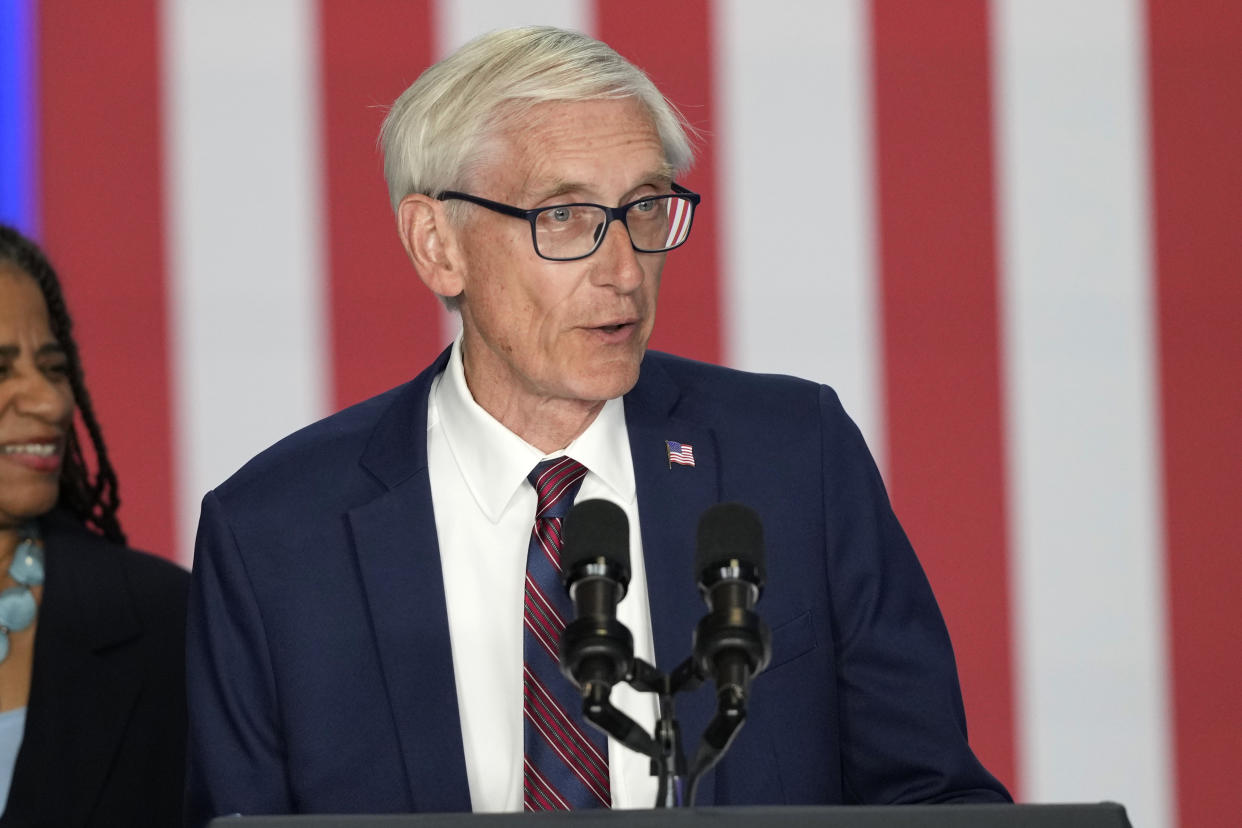
Wisconsin Gov. Tony Evers speaks before President Joe Biden at a campaign rally at Sherman Middle School in Madison, Wis., Friday, July 5, 2024. (AP Photo/Morry Gash)

Wisconsin Republicans are asking voters to take away the governor’s power to unilaterally spend federal money, a reaction to the billions of dollars that flowed into the state during the COVID-19 pandemic.

Democratic Gov. Tony Evers was free to spend most of that money as he pleased, directing most of it toward small businesses and economic development, angering Republicans who argued the Legislature should have oversight.

That’s what would happen under a pair of related constitutional amendments up for voter approval in the Aug. 13 primary election. The changes would apply to Evers and all future governors and cover any federal money to the state that comes without specific spending requirements, often in response to disasters or other emergencies.

Democrats and other opponents are mobilizing against the amendments, calling them a legislative power grab that would hamstring governors’ ability to quickly respond to a future natural disaster, economic crisis or health emergency.

If the amendments pass, Wisconsin’s government “will become even more dysfunctional,” said Julie Keown-Bomar, executive director of Wisconsin Farmers Union.

“Wisconsinites are so weary of riding the partisan crazy train, but it is crucial that we show up at the polls and vote ‘no’ on these changes as they will only make us go further off the rails,” she said in a statement.

But Republicans and other backers say it’s a necessary check on the governor’s current power, which they say is too broad.

The changes increase “accountability, efficiency, and transparency,” Republican state Sen. Howard Marklein, a co-sponsor of the initiative, said at a legislative hearing.

The two questions, which were proposed as a single amendment and then separated on the ballot, passed the GOP-controlled Legislature twice as required by law. Voter approval is needed before they would be added to the state constitution. The governor has no veto power over constitutional amendments.

Early, in-person absentee voting for the Aug. 13 election begins Tuesday across the state and goes through Aug. 11. Locations and times for early voting vary.

Wisconsin Republicans have increasingly turned to voters to approve constitutional amendments as a way to get around Evers’ vetoes. Midway through his second term, Evers has vetoed more bills than any governor in Wisconsin history.

In April, voters approved amendments to bar the use of private money to run elections and reaffirm that only election officials can work the polls. In November, an amendment on the ballot seeks to clarify that only U.S. citizens can vote in local elections.

Republicans put this question on the August primary ballot, the first time a constitutional amendment has been placed in that election where turnout is much lower than in November.

The effort to curb the governor’s spending power also comes amid ongoing fights between Republicans and Evers over the extent of legislative authority. Evers in July won a case in the Wisconsin Supreme Court that challenged the power the GOP-controlled Legislature’s budget committee had over conservation program spending.

Wisconsin governors were given the power to decide how to spend federal money by the Legislature in 1931, during the Great Depression, according to a report from the Legislative Reference Bureau.

“Times have changed and the influx of federal dollars calls for a different approach,” Republican Rep. Robert Wittke, who sponsored the amendment, said at a public hearing.

It was a power that was questioned during the Great Recession in 2008, another time when the state received a large influx of federal aid.

But calls for change intensified during the COVID-19 pandemic when the federal government handed Wisconsin $5.7 billion in aid between March 2020 and June 2022 in federal coronavirus relief. Only $1.1 billion came with restrictions on how it could be spent.

Most of the money was used for small business and local government recovery grants, buying emergency health supplies and paying health care providers to offset the costs of the pandemic.

Republicans pushed for more oversight, but Evers vetoed a GOP bill in 2021 that would have required the governor to submit a plan to the Legislature’s budget committee for approval.

Republican increased the pressure for change following the release of a nonpartisan audit in 2022 that found Evers wasn’t transparent about how he decided where to direct the money.

One amendment specifies the Legislature can’t delegate its power to decide how money is spent. The second prohibits the governor from spending federal money without legislative approval.

If approved, the Legislature could pass rules governing how federal money would be handled. That would give them the ability to change the rules based on who is serving as governor or the purpose of the federal money.

For example, the Legislature could allow governors to spend disaster relief money with no approval, but require that other money go before lawmakers first.

Opposing the measures are voting rights groups, the Wisconsin Democratic Party and a host of other liberal organizations, including those who fought to overturn Republican-drawn legislative maps, the League of Women Voters of Wisconsin and Wisconsin Faith Voices for Justice.

Wisconsin Manufacturers and Commerce, the state’s largest business lobbying group, and the Badger Institute, a conservative think tank, were the only groups that registered in support in the Legislature.
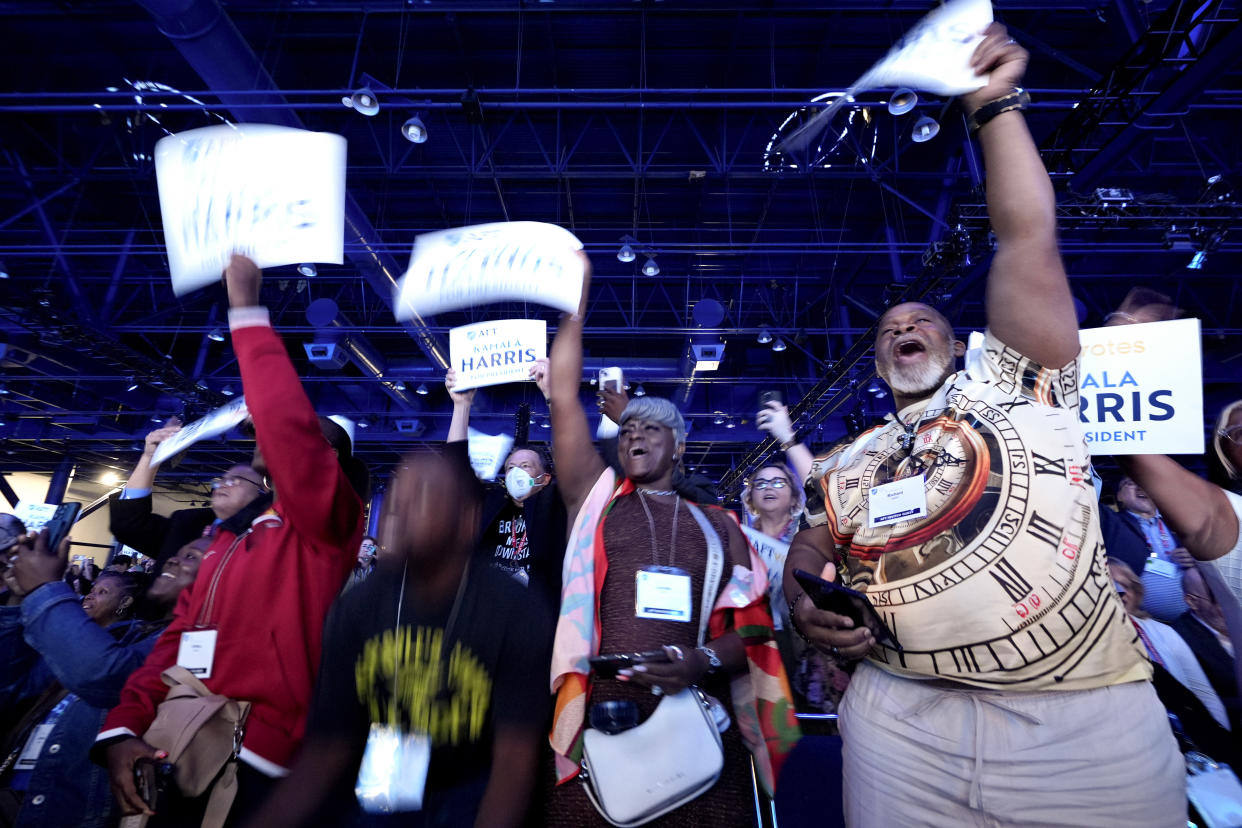
The election has been totally upended. Here’s what the polls show.

Politico

The election has been totally upended. Here’s what the polls show.

Steven Shepard – July 27, 2024

The polls are in after a chaotic few weeks in the 2024 presidential election, and they point to a newly hyper-competitive race.

Vice President Kamala Harris’ elevation has jolted the race and blunted the momentum former President Donald Trump could have seen coming out of the Republican convention and the assassination attempt that preceded it. Though polling showed Trump building a lead over President Joe Biden following their debate last month, that advantage has mostly evaporated against Harris in the fresh round of surveys conducted since she became the all-but-certain Democratic nominee.

The new polling shows just how much the landscape has shifted since Biden dropped out last Sunday. For months, the contest appeared set, and Biden’s modest deficit going into the debate threatened to decline further. That’s now changed.

Trump still maintains a slim edge over Harris — but the race is now close, which was not the case for the Biden-vs.-Trump contest after the debate. Just this week, new polls from The New York Times/Siena College (Trump +1 over Harris), The Wall Street Journal (Trump +2) and CNN (Trump +3) all represent tightening from 6-point Trump leads in all three polls following the debate.

Looking only at the horserace, it’s difficult to evaluate whether opinions of Trump shifted after the assassination attempt, or whether he received a bounce out of the GOP convention and his selection of Sen. JD Vance (R-Ohio) as his running mate

But look deeper, and one can see some signs that Trump is viewed differently now than he was before the assassination attempt. Similarly, the crosstabs show how Harris has closed the gap with the Republican nominee, performing stronger with traditionally Democratic groups among whom Biden had lagged badly.

Here are five takeaways from the latest numbers:

Harris has started to rebuild a more traditional Democratic coalition

A switch in the Democratic candidate has rippled through the electorate and, at least initially, restored traditional demographic patterns.

Even before his debate debacle, Biden had struggled to keep key elements of the Democratic base in the fold: Support had eroded significantly among young voters, Black voters, Latino voters and other reliable supporters of Democratic candidates in the past, including Biden in 2020.

Harris has brought some of those voters back into the fold. In the New York Times/Siena poll, for example, she is running stronger than Biden has all year among young voters and voters of color while mostly keeping pace with Biden among older and white voters, where his numbers had been more durable.

That doesn’t mean Trump’s gains have entirely disappeared in a matter of days now that he’s running against a 59-year-old woman of color instead of an 81-year-old white man. Harris is still short of Biden’s 2020 numbers among young voters and voters of color, and the former president is still running well ahead of his 2016 and 2020 numbers among those groups.

Harris has more paths to 270 electoral votes than Biden did

As she shifts the electorate, Harris is creating more potential pathways to the White House.

For Biden, the election was looking like Rust Belt or bust. But Harris’ stronger numbers among Black and Latino voters could translate to better prospects in some of the Sun Belt states where he had fallen well behind Trump: Arizona, Georgia, Nevada and North Carolina.

Biden’s campaign was still actively contesting those states, but his deficits in public polling had been significant even before the debate. There’s very little polling so far in the Sun Belt swing states, but the changes taking place in the national polling suggest Harris could put those states back into play.

Biden was still in the ballgame, at least before the debate, in the “Blue Wall” states that were competitive and decisive in both 2016 and 2020. And a set of new Fox News polls out Friday show Harris and Trump neck-and-neck in MichiganPennsylvania and Wisconsin.

And polls in states with similar demographic profiles also suggest Harris is inching closer to Biden’s winning 2020 numbers — and not toward the devastating, landslide loss that some Democrats had feared if Biden had stayed in the race after the debate. A Fox News poll in Minnesota showed Harris 6 points ahead of Trump, similar to Biden’s 7-point win. Two polls in New Hampshire this week gave the vice president leads that essentially matched Biden four years ago. Trump allies had argued in recent weeks that those states were among a slew of blue-leaning states that had been put in play.

Harris seems to be shutting that down. She has work to do to catch up to Trump, but she already has more options than Biden did.

Trump is more popular than at any point in the last four years

While Harris’ takeover of the news cycle may have blunted any Trump bump in the horserace polling after the assassination attempt and last week’s convention, there’s still evidence of one in the former president’s favorability ratings.

In poll after poll, Trump has notched favorable ratings at or near his highest ever recorded.

It’s not a terribly high bar: Even when he won the 2016 election, more voters have consistently said they view Trump unfavorably than view him favorably — he’s had some electoral success despite his image. Trump’s still underwater, but his image rating is a lot closer to 50-50 than it has been at virtually any time in his political career.

In the Wall Street Journal poll, his favorable/unfavorable rating was 47 percent/50 percent. That’s a significant shift: In nine previous polls dating back to November 2021, the percentage of voters with an unfavorable opinion of Trump had always been at least 10 points higher than the percentage who viewed him favorably.

Some of Trump’s numbers in the early weeks of the pandemic rival his current standing. But by this time four years ago, his image had declined. And in all that’s happened since then, it hadn’t recovered — until now.

Biden’s retirement is wildly popular

In this era of polarization, it’s hard to imagine that Biden and his 39-percent approval rating could do anything that would be almost unanimously popular.

But his decision to pull the plug on his moribund campaign is well received across the political spectrum.

More than three-in-four likely voters in the New York Times/Siena poll said they were enthusiastic or satisfied that Biden had dropped out. The numbers were similar in the Fox News state polls, including in Pennsylvania, where 78 percent of voters said they approved of Biden dropping out.

Biden’s decision is earning bipartisan praise: Large majorities of Democrats, Republicans and independents support him stepping aside. But, ironically, it’s Democratic voters who are more enthusiastic about it. Significantly more Democratic voters than GOP voters in the Fox News Pennsylvania poll, 86 percent versus 69 percent, approve of Biden dropping out, despite Republicans’ general antipathy toward the president.

RFK Jr. is in freefall

With Trump’s post-convention bounce, Democrats’ candidate switch and his own missteps, independent candidate Robert F. Kennedy Jr.’s numbers are dropping like a rock.

In the New York Times/Siena poll, Kennedy was at 5 percent, down from 8 percent right after the Biden-Trump debate. He’s at 4 percent in the Wall Street Journal poll, down from 7 percent in the previous poll.

Kennedy cried foul last month when he fell short of CNN’s criteria for a debate invitation: He earned 15 percent in three polls (needing four) and was well shy of the cable network’s threshold for ballot access (Kennedy argued it was unfair, since many states don’t certify independent candidates until later in the year).

And now, even as he’s gotten on the ballot in more states, it appears that the polling threshold for the next debate will be his undoing. He needs to earn 15 percent in four qualifying polls from Aug. 1-Sept. 3 to be able to compete in the ABC News debate on Sept. 10, and he’s nowhere near that right now.

Kennedy and various third-party candidates have been courting the significant share of voters who viewed both Biden and Trump unfavorably. But these so-called double haters are increasingly rare now, thanks to improved views of Trump and Harris’ stronger image than Biden.

Those developments might not last: Trump could fall back to his consistently poor image, and Harris’ honeymoon with the public could be short-lived, especially in the face of nascent Republican attacks.

But, for now, more voters like at least one of the candidates, and fewer say they’ll be holding their noses in November. After months of careening toward a dismal rematch of 2020, the election has been abruptly upended, and there is a lot more uncertainty about its trajectory from here. Right now, at the outset of the Harris-Trump contest, it looks like a close race.

Russia’s Putin vows ‘mirror measures’ in response to U.S. missiles in Germany

Associated Press

Russia’s Putin vows ‘mirror measures’ in response to U.S. missiles in Germany

The Associated Press – July 28, 2024

Russian President Vladimir Putin greets sailors prior to the main naval parade marking Russian Navy Day in St. Petersburg, Russia, on Sunday, July 28, 2024. (Vyacheslav Prokofyev, Sputnik, Kremlin Pool Photo via AP)
Russian President Vladimir Putin, center, Russian Defense Minister Andrei Belousov, second left, and Russian Navy Commander-in-Chief Admiral Alexander Moiseyev, left, arrive to watch the main naval parade marking Russian Navy Day in St. Petersburg, Russia, on Sunday, July 28, 2024. (AP Photo/Dmitri Lovetsky, Pool)
Russian President Vladimir Putin, center, Russian Defense Minister Andrei Belousov, second right, and Russian Navy Commander-in-Chief Admiral Alexander Moiseyev, right, greet sailors prior to the main naval parade marking Russian Navy Day in St. Petersburg, Russia, on Sunday, July 28, 2024. (Vyacheslav Prokofyev, Sputnik, Kremlin Pool Photo via AP)

Russia may deploy new strike weapons in response to the planned U.S. stationing of longer-range and hypersonic missiles in Germany, Russian President Vladimir Putin said on Sunday.

Speaking at a naval parade in St Petersburg, Putin vowed “mirror measures” after the U.S. earlier this month announced that it will start deploying the weapons in 2026, to affirm its commitment to NATO and European defense following Moscow’s all-out invasion of Ukraine in February 2022.

“If the U.S. implements such plans, we will consider ourselves free from the previously imposed unilateral moratorium on the deployment of intermediate and shorter-range strike weapons, including increasing the capability of the coastal forces of our navy,” Putin said. He added that Moscow’s development of suitable systems is “in its final stage.”

Both Washington and Moscow have in recent weeks signaled readiness to deploy intermediate-range ground-based weapons that were banned for decades under a 1987 U.S.-Soviet treaty. The U.S. pulled out of the agreement in 2019, accusing Moscow of conducting missile tests that violated it.

The allegations, which Russia denied, came as tensions mounted between Moscow and the West in the wake of the downing of a Malaysian airliner carrying 298 people over war-torn eastern Ukraine. Two Russians and a pro-Moscow Ukrainian were ultimately convicted over their role in the attack.

Washington and Berlin said in a joint statement this month that the U.S. weapons to be placed in Germany would ultimately include SM-6 missiles, Tomahawk cruise missiles, and “developmental hypersonic weapons”, including those with a significantly longer range than the ones currently deployed across Europe.

Most of Russia’s missile systems are capable of carrying either conventional or nuclear warheads. Russia’s deputy foreign minister, Sergei Ryabkov, said last week that the Kremlin did not rule out new deployments of nuclear missiles in response to the U.S. move.

Ryabkov added that defending Kaliningrad, Russia’s heavily militarized exclave wedged between NATO members Poland and Lithuania, was of particular concern.

Putin warns the United States of Cold War-style missile crisis

Reuters

Putin warns the United States of Cold War-style missile crisis

Guy Faulconbridge and Dmitry Antonov – July 28, 2024

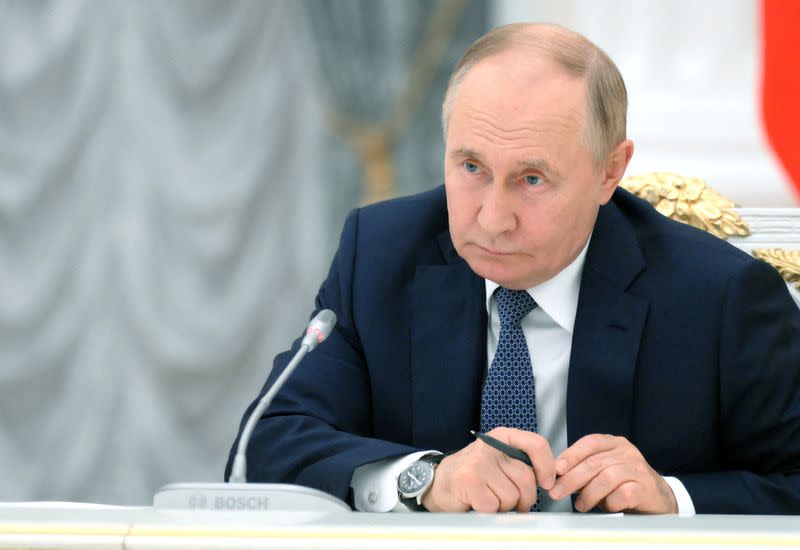
Russian President Putin chairs a meeting in Moscow

MOSCOW (Reuters) -Russian President Vladimir Putin on Sunday warned the United States that if Washington deployed long-range missiles in Germany then Russia would station similar missiles in striking distance of the West.

The United States said on July 10 that it would start deploying long-range missiles in Germany from 2026 in preparation for a longer-term deployment that will include SM-6, Tomahawk cruise missiles and developmental hypersonic weapons.

In a speech to sailors from Russia, China, Algeria and India to mark Russian navy day in the former imperial capital of St Petersburg, Putin warned the United States that it risked triggering a Cold War-style missile crisis with the move.

“The flight time to targets on our territory of such missiles, which in the future may be equipped with nuclear warheads, will be about 10 minutes,” Putin said.

“We will take mirror measures to deploy, taking into account the actions of the United States, its satellites in Europe and in other regions of the world.”

Putin, who sent his army into Ukraine in 2022, casts the war as part of a historic struggle with the West, which he says humiliated Russia after Soviet Union fell in 1991 by encroaching on what he considers Moscow’s sphere of influence.

Ukraine and the West say Putin is engaged in an imperial-style land grab. They have vowed to defeat Russia, which currently controls about 18% of Ukraine, including Crimea, and parts of four regions in eastern Ukraine.

Russia says the lands, once part of the Russian empire, are now again part of Russia and that they will never be given back.

COLD WAR?

Russian and U.S. diplomats say their diplomatic relations are worse even that during the 1962 Cuban Missile Crisis, and both Moscow and Washington have urged de-escalation while both have made steps towards escalation.

Putin said that the United States was stoking tensions and had transferred Typhon missile systems to Denmark and the Philippines, and compared the U.S. plans to the NATO decision to deploy Pershing II launchers in Western Europe in 1979.

The Soviet leadership, including General Secretary Yuri Andropov, feared Pershing II deployments were part of an elaborate U.S.-led plan to decapitate the Soviet Union by taking out its political and military leadership.

“This situation is reminiscent of the events of the Cold War related to the deployment of American medium–range Pershing missiles in Europe,” Putin said.

The Pershing II, designed to deliver a variable yield nuclear warhead, was deployed to West Germany in 1983.

In 1983, the ailing Andropov and the KGB interpreted a series of U.S. moves including the Pershing II deployment and a major NATO exercise as signs the West was about to launch a pre-emptive strike on the Soviet Union.

Putin repeated an earlier warning that Russia could resume production of intermediate and shorter range nuclear-capable missiles and then consider where to deploy them after the United States brought similar missiles to Europe and Asia.

(Writing by Guy Faulconbridge; editing by David Evans)

Donald Trump Tells Christians They ‘Won’t Have to Vote Anymore’ if He’s Elected to Another Term

People

Donald Trump Tells Christians They ‘Won’t Have to Vote Anymore’ if He’s Elected to Another Term

Charlotte Phillipp – July 27, 2024

Kamala Harris’ campaign team later called the former president’s comments a “vow to end democracy”

<p>Joe Raedle/Getty</p> Donald Trump speaks during a Turning Point USA Believers Summit conference at the Palm Beach Convention Center on July 26, 2024.
Joe Raedle/GettyDonald Trump speaks during a Turning Point USA Believers Summit conference at the Palm Beach Convention Center on July 26, 2024.

Former President Donald Trump made waves after urging his Christian followers to vote for him in the upcoming presidential election “just this time” — and saying that they “won’t have to do it anymore” if he wins.

During an event on Friday, July 26, hosted by the conservative Christian organization Turning Point Action, Trump, 78, addressed the crowd and implied that if he were to be voted in, “everything” would be “fixed,” according to multiple sources, including Rolling Stone and The Hill.

“Christians, get out and vote, just this time,” Trump said as the crowd in West Palm Beach, Fla., cheered, per the outlets.

Related: Donald Trump Didn’t Always Oppose Kamala Harris. He Helped Get Her Reelected as Calif. Attorney General in 2014

“You won’t have to do it anymore,” he said. “Four more years, you know what, it will be fixed, it will be fine. You won’t have to vote anymore, my beautiful Christians.”

<p>Brandon Bell/Getty</p> President Donald Trump speaks to attendees during his campaign rally on July 24, 2024 in Charlotte, N.C.
Brandon Bell/GettyPresident Donald Trump speaks to attendees during his campaign rally on July 24, 2024 in Charlotte, N.C.

“I love you Christians. I’m a Christian. I love you, get out, you gotta get out and vote. In four years, you don’t have to vote again, we’ll have it fixed so good you’re not going to have to vote,” Trump continued.

At the same event, Trump also claimed that he would “once again appoint rock-solid conservative judges who will protect religious liberty,” per Rolling Stone.

Related: What Is Project 2025? Inside the Far-Right Plan Threatening Everything from the Word ‘Gender’ to Public Education

In a statement shared by Vice President Kamala Harris‘ campaign team on Saturday concerning what they called “Trump’s vow to end democracy,” Harris for President spokesperson James Singer said: “When Vice President Harris says this election is about freedom, she means it.”

“Our democracy is under assault by criminal Donald Trump: After the last election Trump lost, he sent a mob to overturn the results,” Singer continued.

“This campaign, he has promised violence if he loses, the end of our elections if he wins, and the termination of the Constitution to empower him to be a dictator to enact his dangerous Project 2025 agenda on America,” he added.

<p>Ting Shen/Bloomberg via Getty</p> Kamala Harris
Ting Shen/Bloomberg via GettyKamala Harris

Many Democrats have criticized Trump’s rhetoric around the 2020 election, and specifically his claims of voter fraud, after he was defeated by President Joe Biden, as well as the recent Supreme Court decision allowing for presidential immunity for any official acts taken during their time in the White House.

Biden, 81, previously cited the Jan. 6, 2021 Capitol riot as one reason that the ruling set a “dangerous” precedent because the power of the presidential office “will no longer be constrained by the law.”

Trump Tries to Flip the Script on Democracy After Biden’s Withdrawal Democracy After Biden’s Withdrawal

The New York Times

Trump Tries to Flip the Script on Democracy After Biden’s Withdrawal

Nick Corasaniti and Jim Rutenberg – July 23, 2024

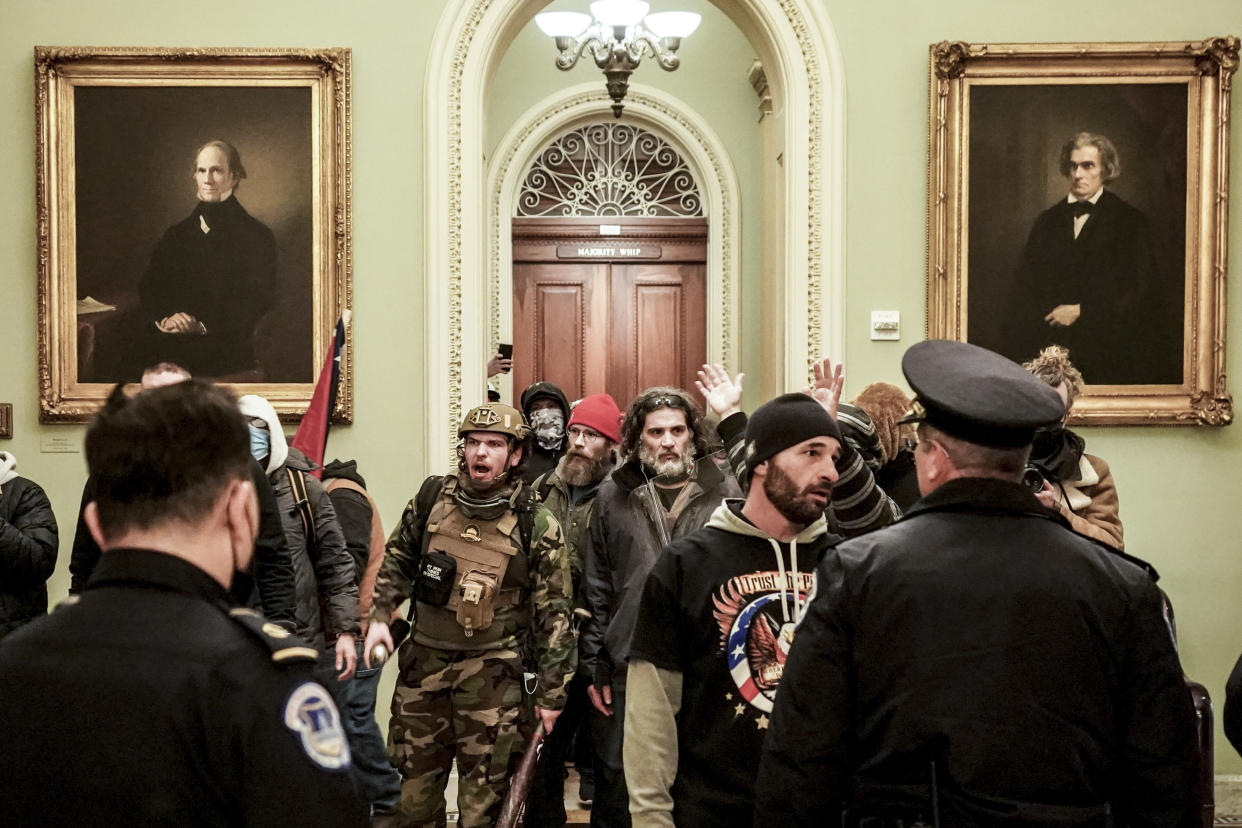
Supporters of former President Donald Trump outside the Senate chamber during the Jan. 6 riot at the Capitol in Washington, Jan. 6, 2021. (Erin Schaff/The New York Times)

Ever since rioters stormed the Capitol on Jan. 6, 2021, the Democratic Party has sought to claim the mantle of democracy, painting Donald Trump and his allies as extremists willing to deny the will of voters to cling to power.

Now, after President Joe Biden dropped his reelection bid and Democrats swiftly aligned behind Vice President Kamala Harris as a replacement, Republicans are trying to flip the argument.

In a series of statements and social media posts, Republicans have argued that Democrats, by pressuring Biden to quit, have “disenfranchised” the 14 million people who voted for him in the party primaries.

The accusation isn’t based on any party rule or supposed legal violation. Instead, it is the Republicans’ latest attempt to muddy the waters on an issue that helped Democrats win key races two years ago. Since Trump’s attempt to overturn his defeat in 2020, which led to the Jan. 6 riot and criminal charges against the former president, Democrats have cast Republicans as a threat to democratic norms.

They have used images from the Jan. 6 riot in attack ads and mobilized Democratic voters against Republican-backed legislation restricting voting. The issue was especially potent for Democratic governors and secretaries of state in critical swing states, who won every election for statewide office except for governor in Nevada and Georgia in 2022.

On Monday, Trump tried a new tactic to neutralize that threat, zeroing in on the “stolen” nomination claim. “They stole the race from Biden after he won it in the primaries — A First!” Trump posted on his social media site. “These people are the real THREAT TO DEMOCRACY!”

The two most senior Republican congressional leaders — House Speaker Mike Johnson of Louisiana and Sen. Mitch McConnell of Kentucky — echoed the claim.

“Having invalidated the votes of more than 14 million Americans who selected Joe Biden to be the Democrat nominee for president, the self-proclaimed ‘party of democracy,’ has proven exactly the opposite,” Johnson said. McConnell, the Republican minority leader in the Senate, said Democrats were “trying to upend the expressed will” of primary voters.

There is nothing in Biden’s withdrawal or his endorsement of Harris that appears to violate any party or election rules. Under party rules, when a candidate withdraws after the primary elections but before officially securing the nomination, delegates are free to vote for another candidate of their choosing. Republican Party rules outline a similar process.

Democrats and voting rights experts dismissed the criticism as a specious, and argued that Republicans lacked credibility on the subject.

On Monday, Alex Floyd, a spokesperson for the Democratic National Committee, said it was Trump who was trafficking in “anti-democratic rhetoric as part of his campaign,” adding that the former president “himself inspired a violent insurrection on Jan. 6, 2021.”

He said that Democrats were “committed to an open process” to select Biden’s successor on the ticket. That process includes a vote by the party’s nearly 4,000 delegates. Other Democrats noted that the 14 million people who voted for Biden certainly did so knowing he was on a ticket with Harris, the current front-runner.

Civil rights groups and democracy activists did not appear to share the Trump campaign’s concerns about Democratic disenfranchisement. Polling from this summer showed a majority of Democrats wanted Biden to step aside.

“I don’t think this is anti-democratic in the slightest,” said David Becker, director for the Center for Election Innovation and Research, a nonpartisan nonprofit organization. Becker noted that Trump sought to throw out millions of votes in the states where he contested his defeat, as part of his attempt to hold on to power after losing the 2020 election.

It’s unclear whether Republicans’ attacks about the “stolen” Democratic primary will land with swing voters. But Trump has been trying to reframe the political debate over democracy for years, with some signs of success. He has cast the Jan. 6 rioters as patriots and accused Democratic prosecutors of using indictments to interfere with the election.

A recent Washington Post poll found that voters in six battleground states were more likely to trust Trump than Biden to handle threats to democracy. The survey found 61% of voters in those states listed “threats to democracy” as extremely important to their vote. The only issue rating higher was the economy.

“I am the only one saving democracy for the people in our country,” Trump said as he accepted his party’s nomination last week.

Trump and his allies also sought to use the attempt on Trump’s life at his July 13 rally in Pennsylvania to portray him as a “defender” of democracy.

They have painted the shooting as an anti-democratic attempt to remove Trump from the race. (Virtually nothing is known about the motives of his shooter, Thomas Matthew Crooks.)

In making the argument that Biden’s exit from the race disenfranchised millions of primary voters, Trump and his party picked up a theme the president’s campaign had also emphasized. When Biden was resisting calls to drop out, he and his surrogates often pointed to those votes to defend his decision to stay in the race.

“We had a Democratic nominating process where the voters spoke clearly,” Biden had told MSNBC hosts Joe Scarborough and Mika Brzezinski. “I won 14 million of those votes.”

The Republican attempts to seize on that argument as their own, democracy activists say, is part of a broader, yearslong effort to erode trust in the electoral process.

“I see this all as just a continued effort to try to cast doubt on our elections, to try to undermine pro-democracy candidates,” said Joanna Lydgate, CEO of the States United Democracy Center.

Hillary Clinton: How Kamala Harris Can Win and Make History

The New York Times – Guest Opinion

By Hillary Rodham Clinton – July 23, 2024

Mrs. Clinton was the Democratic nominee for president in 2016.

Kamala Harris, seen outside the White House.

Credit…Andrew Harnik/Getty Images

History has its eye on us. President Biden’s decision to end his campaign was as pure an act of patriotism as I have seen in my lifetime. It should also be a call to action to the rest of us to continue his fight for the soul of our nation. The next 15 weeks will be like nothing this country has ever experienced politically, but have no doubt: This is a race Democrats can and must win.

Mr. Biden has done a hard and rare thing. Serving as president was a lifelong dream. And when he finally got there, he was exceptionally good at it. To give that up, to accept that finishing the job meant passing the baton, took real moral clarity. The country mattered more. As one who shared that dream and has had to make peace with letting it go, I know this wasn’t easy. But it was the right thing to do.

Elections are about the future. That’s why I am excited about Vice President Kamala Harris. She represents a fresh start for American politics. She can offer a hopeful, unifying vision. She is talented, experienced and ready to be president. And I know she can defeat Donald Trump.

There is now an even sharper, clearer choice in this election. On one side is a convicted criminal who cares only about himself and is trying to turn back the clock on our rights and our country. On the other is a savvy former prosecutor and successful vice president who embodies our faith that America’s best days are still ahead. It’s old grievances versus new solutions.

Ms. Harris’s record and character will be distorted and disparaged by a flood of disinformation and the kind of ugly prejudice we’re already hearing from MAGA mouthpieces. She and the campaign will have to cut through the noise, and all of us as voters must be thoughtful about what we read, believe and share.

I know a thing or two about how hard it can be for strong women candidates to fight through the sexism and double standards of American politics. I’ve been called a witch, a “nasty woman” and much worse. I was even burned in effigy. As a candidate, I sometimes shied away from talking about making history. I wasn’t sure voters were ready for that. And I wasn’t running to break a barrier; I was running because I thought I was the most qualified to do the job. While it still pains me that I couldn’t break that highest, hardest glass ceiling, I’m proud that my two presidential campaigns made it seem normal to have a woman at the top of the ticket.

Ms. Harris will face unique additional challenges as the first Black and South Asian woman to be at the top of a major party’s ticket. That’s real, but we shouldn’t be afraid. It is a trap to believe that progress is impossible. After all, I won the national popular vote by nearly three million in 2016, and it’s not so long ago that Americans overwhelmingly elected our first Black president. As we saw in the 2022 midterms, abortion bans and attacks on democracy are galvanizing women voters like never before. With Ms. Harris at the top of the ticket leading the way, this movement may become an unstoppable wave.

Time is short to organize the campaign on her behalf, but the Labour Party in Britain and a broad left-wing coalition in France recently won big victories with even less time. Ms. Harris will have to reach out to voters who have been skeptical of Democrats and mobilize young voters who need convincing. But she can run on a strong record and ambitious plans to further reduce costs for families, enact common-sense gun safety laws and restore and protect our rights and freedoms.

She has a great story to tell about the accomplishments of this administration. Mr. Biden and Ms. Harris led America’s comeback after Mr. Trump bungled the pandemic and left our economy in free fall. Under their leadership, the United States has created more than 15 million jobs, and unemployment is near a 50-year low.

When inflation spiked around the globe, many economists said the only way to tame it would be a painful recession with major job losses. But Mr. Biden and Ms. Harris kept Americans working as inflation fell back toward normal levels and real incomes for working people rose.

When many thought bipartisanship was dead, Mr. Biden and Ms. Harris brought Republicans and Democrats together to pass major legislation on infrastructure and clean energy, microchips and national security. From drug prices to student debt, they’ve delivered results that have made our country stronger and people’s lives better.

Ms. Harris is chronically underestimated, as are so many women in politics, but she is well prepared for this moment. As a prosecutor and attorney general in California, she took on drug traffickers, polluters and predatory lenders. As a U.S. senator, she rigorously questioned squirming Trump administration officials and nominees and was inspiring to watch. As vice president, Ms. Harris has sat with the president in the Situation Room, helping make the hardest decisions a leader can make. And when the extremist Supreme Court overturned Roe v. Wade, she became the administration’s most passionate and effective advocate for restoring women’s reproductive rights.

I look forward to hearing her prosecute a compelling case against Mr. Trump, who failed as a president the first time and is running on a dangerous agenda. A second Trump term would be much worse than the first. Mr. Trump’s plans are more extreme, he is more unhinged, and the guardrails that constrained some of his worst instincts are gone.

Ms. Harris can explain to the American people that inflation would surge again under Mr. Trump, thanks to his proposed across-the-board tariffs, sweeping tax cuts for the rich and mass deportations. The policies outlined by Mr. Trump’s allies in Project 2025, from further restricting abortion rights to dismantling the Department of Education, are a recipe for a weaker, poorer, more divided America.

The vice president’s law enforcement experience gives her the credibility to rebut Mr. Trump’s lies about crime and immigration. The facts are on her side: After spiking under Mr. Trump, the murder rate is plummeting under the Biden-Harris administration. Illegal border crossings are also dropping fast and are now the lowest they’ve been since 2020, thanks in part to Mr. Biden’s recent executive order. We’d be making even more progress if Mr. Trump hadn’t killed a bipartisan immigration compromise in Congress this year for his own selfish political purposes.

As a friend and supporter of Mr. Biden, I find this a bittersweet moment. He is a wise and decent man who served our country well. We have lost our standard-bearer, and we will miss his steady leadership, deep empathy and fighting spirit. Yet we have gained much as well: a new champion, an invigorated campaign and a renewed sense of purpose.

The time for hand-wringing is over. Now it’s time to organize, mobilize and win.

Hillary Rodham Clinton was the Democratic nominee for president in 2016 and is a former U.S. secretary of state and senator from New York.

With Biden out, Michelle Obama would be Donald Trump’s worst self-inflicted nightmare | Opinion

Miami Herald – Opinion

With Biden out, Michelle Obama would be Donald Trump’s worst self-inflicted nightmare | Opinion

Dion Lefler – July 21, 2024

If there’s one thing you can generally count on with Republicans, it’s political efficiency.

This time, they may have been too efficient.

The news that Joe Biden is dropping his campaign to be reelected president is about the worst thing that could have happened for Donald Trump.

Let’s face it, this race has always been a contest between age-related forgetfulness and age-related anger and aggression.

Now, instead of running against a man who appears too old to keep his thoughts together, Trump will have to face off against a younger and more vital opponent — at exactly the time the American people have said in a loud, clear voice that they’re tired of the same old men and the same old rhetoric.

Trump, and his party, brought this on themselves. They turned their remarkably efficient attack machine on too early.

The debate last month pretty conclusively showed that Biden isn’t up to what Americans expect from their president anymore.

It’s not his fault. Biden has been a man of great accomplishments in the Senate, as vice president, and as president over a long and productive career.

But age catches up to everyone.


From The Opinion Team

President Joe Biden withdrew Sunday from the 2024 presidential race. Read more on this developing news event, from our Opinion team:

Biden’s withdrawal solves one of Dems’ many problems. But it creates one, too

With Biden stepping down as nominee, Democrats make history book for the wrong reasons

Once again, Joe Biden is giving America its best chance to defeat Donald Trump


Four years ago, Biden was the bulwark against the continuation of Trumpism. That’s what Democrats want and what the country needs again in 2024.

The way for Republicans to ensure their victory would have been to go along with the Democrat-created illusion of “Joe’s fine,” until after the Democrats held their convention and it was too late to turn back and pick someone else.

In the first debate, Trump should have tried to channel Ronald Reagan, politely smiling and answering the questions that were put to him. He should have waited for the second debate to pounce on Biden’s infirmity.

It’s the difference between tactics and strategy.

Now, no matter whom the Democrats choose to run against Trump, he’ll have a much harder case to make for himself.

He’s going to have to defend a Republican Party that, as we saw at their convention, basically supports restoration of the Soviet Union and seems terrified of fruit-pickers and hotel maids at the border.

To keep his vital right-wing evangelical base, Trump’s going to have to embrace their demands to ban abortion by any means necessary, which Americans in states blue and red (even Kansas) have voted repeatedly not to do. Against a more agile opponent, he won’t get away with claiming Democrats support abortion up to the moment of birth, or after, as he did against Biden in their debate.

And to keep his billionaire mega-donors, he’ll have to defend the Heritage Foundation’s God-awful Project 2025, a blueprint for dismantling just about everything in the United States that makes it a decent place to live.

So now, let’s see if the Democrats can be more strategic than Republicans (which, admittedly, they seldom are).

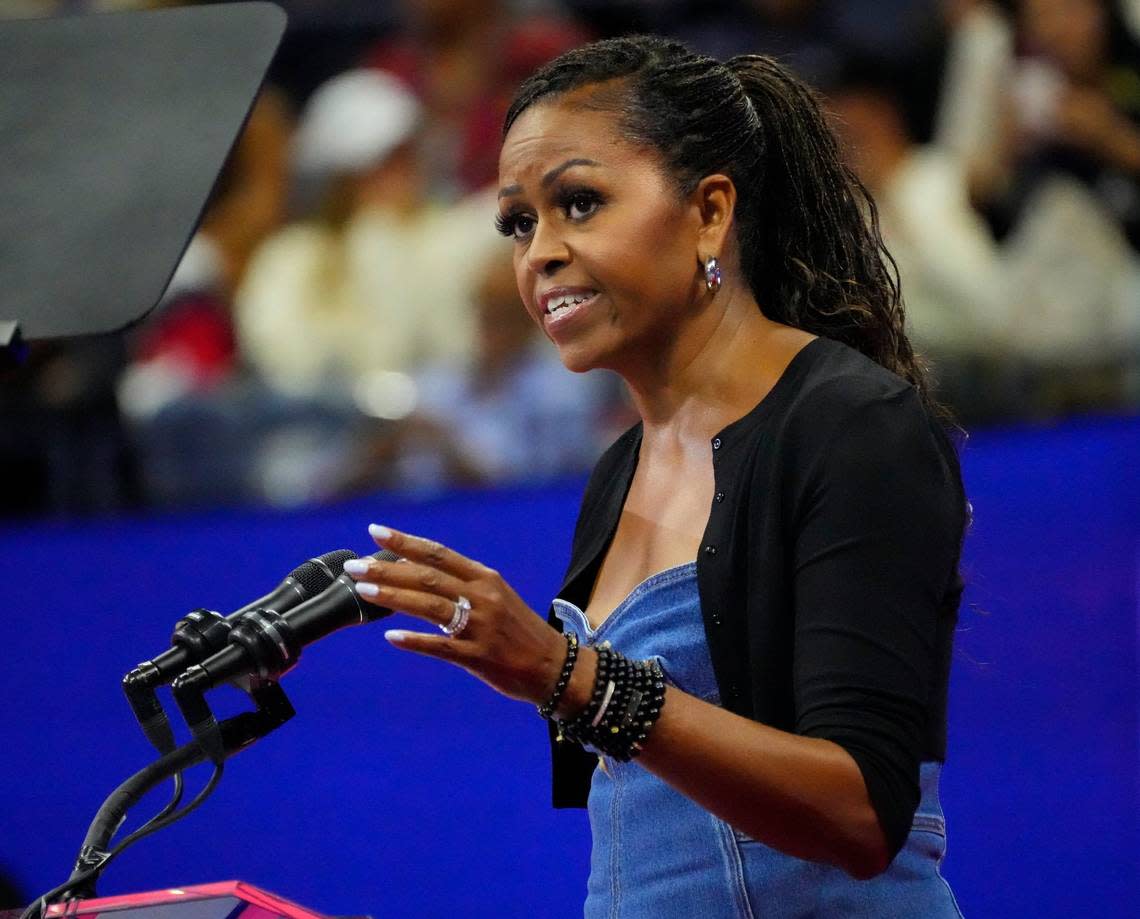
While they have several candidates who could potentially beat Trump, the Democrats have only one sure thing: Michelle Obama.

Polls show that other possible contenders, including Vice President Kamala Harris — who Biden endorsed shortly after announcing that he was stepping down — run slightly behind Trump. They’d start out playing catch-up.

In those same polls, Michelle Obama crushes Trump by 11 points.

Since her husband left the White House, she’s been the good soldier, supporting others for the top job while always saying she’s not interested in it herself.

But she’s also said she’s “terrified” at the potential outcome of the November election. While she might not actively campaign for the nomination, I’d think she’d find it pretty hard to turn it down if delegates at the Democratic National Convention were to draft her next month.

Dawn Staley, women’s basketball legend, head coach at the University of South Carolina and a four-time Olympic gold medalist (three as a player, one as coach), called the right play in a recent appeal to former president Barack Obama on X:

“Now please let us borrow @MichelleObama for just 4 short years! First Gentleman is a good look for you.”

Nobody knows better than Staley that when you’re down by a couple of points late in the fourth quarter, you want to get the ball in the hands of your best player to take the final shot.

The Democratic Party would do well to listen to her.

Dozens of Local Police Officers Were at Trump’s Rally. Very Few Were Watching a Critical Area.

The New York Times

Dozens of Local Police Officers Were at Trump’s Rally. Very Few Were Watching a Critical Area.

Campbell Robertson – July 21, 2024

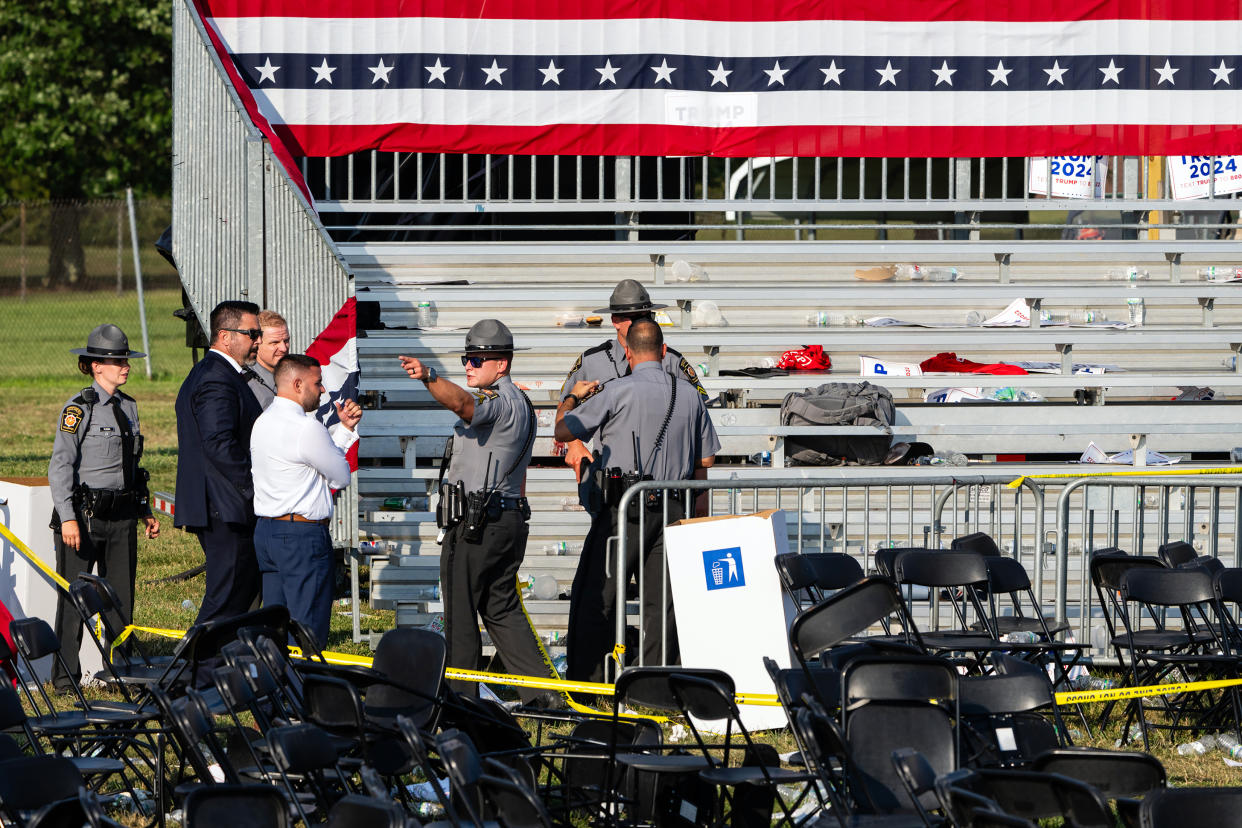
Law enforcement officers survey a scene after former President Donald Trump’s campaign event at Butler Farm Show Inc. in Butler, Pa., on Saturday, July 13, 2024.  (Eric Lee/The New York Times)
Law enforcement officers survey a scene after former President Donald Trump’s campaign event at Butler Farm Show Inc. in Butler, Pa., on Saturday, July 13, 2024. (Eric Lee/The New York Times)

BUTLER, Pa. — A key question after an assassination attempt on former President Donald Trump a week ago is why the Secret Service excluded from its secured zone a nearby warehouse that the gunman used for his assault.

But another possible flaw in the Secret Service’s plans for the campaign rally at the farm show grounds in Butler, Pennsylvania, is emerging. The protection agency expected the sizable contingent of officers from local law enforcement agencies to contain any threats outside the secured zone but assigned almost all those officers to work inside it, according to numerous interviews with local law enforcement and municipal officials.

None of the law enforcement agencies that assisted the Secret Service that day — the Pennsylvania State Police, the Butler Township Police Department, the Butler County Sheriff, Pittsburgh Bureau of Police or the multicounty tactical teams — say they were given responsibility for watching the zone outside the Secret Service’s security perimeter.

More specifically, the local law enforcement officials say that none of them were assigned to safeguard the complex of warehouses just north of the farm show grounds. The gunman was able to use the roof of the warehouse closest to the stage — about 450 feet from the podium — from which to shoot.

“I am going to defend those guys, because it wasn’t their job to secure the building,” said Richard Goldinger, the district attorney in Butler County, who oversees the multicounty tactical teams that were used at the rally July 13.

Rather, an overwhelming majority of the dozens of local and state officers called upon to aid the Secret Service were given other duties at or inside the secured perimeter — an area that was protected by a fence, metal detectors and the Secret Service itself.

With law enforcement focused elsewhere, a would-be assassin roamed freely outside the perimeter. The only officers who got close to him were ones who left their designated posts to do so.

Their job had been to direct traffic.

The assigned responsibilities of local law enforcement officers raise questions as to whether these resources were effectively deployed. The assignments also suggest there was a breakdown in the Secret Service’s communication with local law enforcement.

Secret Service Director Kimberly Cheatle will almost certainly face sharp questions about why that rooftop was left unguarded during a hearing with the House Committee on Oversight and Accountability on Monday. In an interview with ABC News this past week, Cheatle said local police — not the Secret Service — had been responsible for the area in which the warehouses were located.

“In this particular instance, we did share support for that particular site and that the Secret Service was responsible for the inner perimeter,” Cheatle said. “And then we sought assistance from our local counterparts for the outer perimeter. There was local police in that building — there was local police in the area that were responsible for the outer perimeter of the building.”

Local agencies quickly issued statements disputing her account, saying that no officers were deployed in the building the gunman used. She has not spoken publicly since.

The gunman, later identified as Thomas Matthew Crooks, 20, of Bethel Park, Pennsylvania, shot at Trump, leaving his ear bloodied, and injured three rally attendees, one fatally. A Secret Service sniper then shot and killed Crooks.

Anthony Guglielmi, a Secret Service spokesperson, said his agency took responsibility. He said the agency would cooperate with all relevant investigations and was committed to better understanding what happened before, during and after the shooting.

But Guglielmi could not answer detailed questions about who was assigned to guard the area that included the warehouses, owned by AGR International.

On July 3, the Trump campaign called the Butler Farm Show, an annual fair and livestock show, to ask if Trump could rent their fairgrounds July 13.

“It just seemed like an awful quick turnaround,” said Ken Laughlin, president of the farm show’s board.

Laughlin said the campaign did not ask questions about the venue, which includes a few barns and a fence around the outside to stop people from attending the show without buying tickets.

Laughlin said that three agents from the Secret Service came to visit the grounds five days later, on July 8.

Retired agents said that collaborating with local law enforcement on unfamiliar sites is essential to their work.

“We cannot do our job without the locals; we come from nowhere, and these are our partners,” said Beth Celestini, who worked on protective details assigned to President George W. Bush and President Barack Obama before retiring in 2021.

In the days that followed their first site visit, the Secret Service made its requests for local assistance. The law enforcement presence at the site on the day of the rally — federal, state and local — ending up totaling more than 100 officers, a Secret Service official said.

Butler County Sheriff Michael Slupe said he had about six deputies at the rally, whose primary jobs were to secure the perimeter and “make sure people didn’t jump the fence” into the event.

Keeping watch over the complex of warehouses, Slupe said, “wasn’t our role or responsibility.” Instead, his deputies were detailed to the metal detector areas and command communications posts.

Local agencies had a security briefing on July 8 with Secret Service agents to plan assignments, the sheriff said.

“If people could have prevented that roof issue,” he said, referring to the building from which the gunman had shot, “we’d have no issue, right?”

The State Police said in a statement that its 30 to 40 troopers were there “to assist with securing the inside perimeter.” The statement said the agency “was not responsible for securing the building or property at AGR International.”

Tactical law enforcement teams compiled from Butler County and neighboring counties provided two counter assault teams and a quick-response team. They were placed in the secured zone in case something went wrong.

Between the July 8 walk-through and another to finalize plans July 11, the Secret Service had another request. It asked for two police sniper teams to supplement the two sniper units that were to be deployed by the agency’s forces.

The emergency service units, another name for the county tactical teams, provided seven counter snipers. Four of the seven were given duties within the security perimeter, according to a local law enforcement official.

The three others took a position in a warehouse directly behind the one that Crooks ultimately used. Even those snipers were assigned to use their second-floor window view to survey the crowd inside the secured zone — not to watch over the warren of buildings where they were stationed, a law enforcement official said, speaking on the condition of anonymity to discuss the continuing investigation.

The Secret Service’s counter snipers were placed on barn rooftops, directly behind Trump.

The U.S. Immigration and Customs Enforcement had 16 Homeland Security Investigations agents at the rally assisting the Secret Service, according to two U.S. officials. One of the officials, who spoke on the condition of anonymity to discuss the continuing investigation, said the ICE agents were deployed in various roles such as screening members of the news media as they entered the secured area and helping direct traffic.

A Pittsburgh police spokesperson said its team had officers on motorcycles to lead and follow Trump’s vehicle. “They were ABSOLUTELY NOT responsible for monitoring any buildings or anything else at the site,” the spokesperson said in an email.

Officers from the Butler Township Police Department also helped out. But they were not security, according to Butler Township Commissioner Edward Natali.

“There were seven officers all assigned to traffic detail. Period!! The BTPD was NOT responsible for securing AGR or any other location,” Natali said in a post on social media. “Anyone who says so, reports on it, implies it, etc… is uninformed, lying, or covering their own backsides.”

Once there was notification of a suspicious person in the crowd outside of the secured area at the rally, four Butler Township police officers left their traffic posts and went hunting for him, officials who briefed members of Congress said this past week.

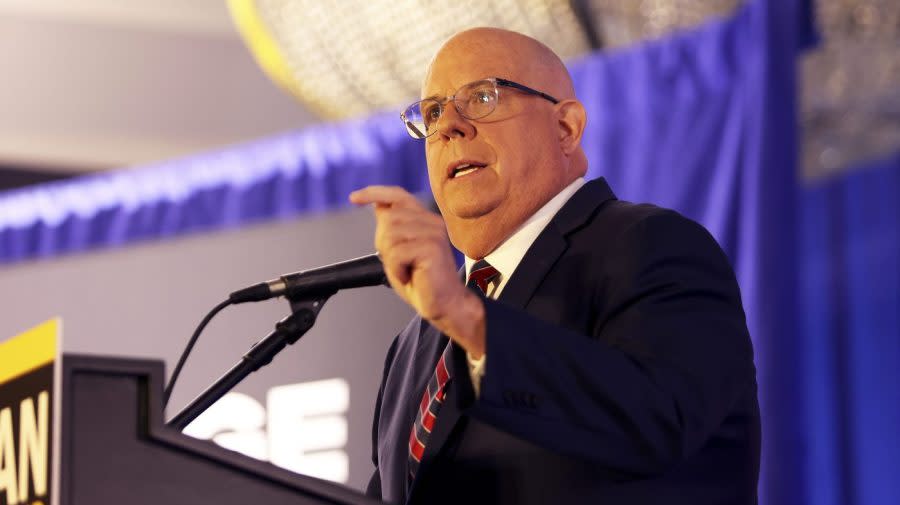
Larry Hogan blasts Project 2025 as a ‘dangerous path’ for GOP

The Hill

Larry Hogan blasts Project 2025 as a ‘dangerous path’ for GOP

Lauren Irwin – July 20, 2024

Former Maryland Gov. Larry Hogan (R) criticized Project 2025 in a recent op-ed, calling the policy priorities outlined in the conservative agenda “absurd and dangerous.”

Hogan, in the piece published Friday by The Washington Post, argued that “traditional American Values” are under threat on both sides of the aisle.

“On the left, the refusal by some to clearly stand up to radicals such as antisemitic and pro-Hamas protesters, advocates of defunding the police, and the open-borders movement has done substantial damage,” Hogan wrote. “However, on the right, there is no clearer example of the threat to American values than Project 2025.”

The 900-age policy agenda, led by the conservative Heritage Foundation, is gaining traction as the unofficial presidential transition project. It is divided into sections based on five main topics — “Taking the Reins of Government,” “The Common Defense,” “The General Welfare,” “The Economy” and “Independent Regulatory Agencies.”

Project 2025 has gained support from more than 100 other right-wing organizations and conservatives who critics argue could staff a second Trump administration if he’s reelected in November.

Trump, however, has called attempts to link him to the document “pure disinformation” and claimed he has “nothing to do” with it.

Hogan said to call the ideas in the plan radical would be “a disservice,” even as Republicans downplay the influence of the plan.

“In truth, Project 2025 takes many of the principles that have made this nation great and shreds them,” he wrote in the opinion piece.

Hogan, who is running for the vacant Senate seat left by retiring Sen. Ben Cardin (D-Md.), noted that one of the primary goals in the plan targets federal workers, and could affect more than 150,000 Maryland residents.

“The goal is to remove nonpartisan civil servants, most of whom patriotically do their jobs without fanfare or political agendas, and replace them with loyalists to the president,” Hogan said. “Republicans who believe this power grab will benefit them in the short term will ultimately regret empowering a Democratic president with this level of control.”

The former governor, whose father was an FBI agent, also highlighted an aspect of the plan that he said would weaken the Department of Justice’s independence from the president. Impartial justice should not be abandoned by choice and design, Hogan argued.

Of the “absurd and dangerous” policies in the plan, Hogan highlighted that the Education Department and the Federal Reserve could potentially be disbanded, as well as mass deportations.

“This radical approach is out of touch with the American people,” Hogan said. “Most Americans — regardless of party affiliation — have more in common than many realize.”

“They want common-sense solutions to address the cost of living, make our communities safer, and secure the border while fixing the broken immigration system,” he continued. “Instead of addressing these problems, Project 2025 opts for total war against the other side, making it impossible to find common ground.”