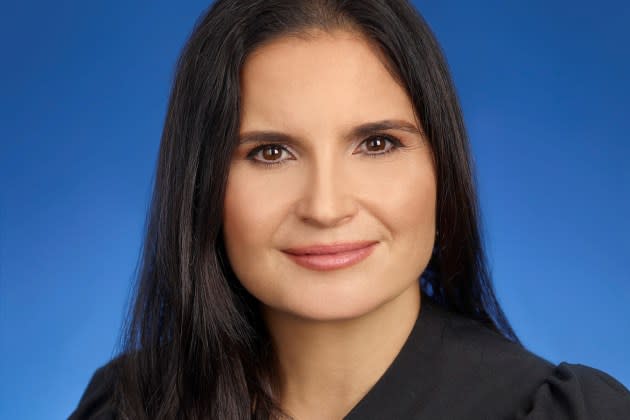
Judge Cannon Is Hiding a Far-Right Lecture Circuit
Ellie Quinlan Houghtaling – September 18, 2024
The Trump-appointed judge who threw out the former president’s criminal classified documents case wasn’t up-front about her own conflicts, and now the details of her backroom liaisons are beginning to trickle out.
Judge Aileen Cannon failed to disclose that she attended a banquet at a conservative law school in May 2023 to honor the late conservative Supreme Court Justice Antonin Scalia, flouting a 2006 rule requiring judges to file formal disclosures when they attend seminars or conferences that could influence their decisions. But it’s not the only time that Cannon has failed to notify the public of her partisan behavior, according to ProPublica.
In 2021 and 2022, Cannon took week-long trips for legal colloquiums sponsored by conservative judiciaries and hosted at an expensive resort in Pray, Montana, where rooms can cost upward of $1,000 per night. The retreats did not go reported until NPR reporters called Cannon out on the omission as part of NPR’s national investigation into gaps in judicial disclosures.
“Judges administer the law, and we have a right to expect every judge to comply with the law,” Virginia Canter, chief ethics counsel for the watchdog group Citizens for Responsibility and Ethics in Washington, or CREW, told ProPublica.
Cannon, who seemed determined to hold up the classified documents case at every possible opportunity, ultimately tossed the case in July on the basis that special counsel Jack Smith’s appointment was unconstitutional. Smith is currently appealing the decision with the Eleventh Circuit. (William H. Pryor Jr., the chief judge of the Eleventh Circuit, was also at the May 2023 banquet, though he properly disclosed his attendance.) But her own future on the case isn’t clear: CREW has asked the appeals court to intervene and replace the controversial judge on the critical case.
Judge Who Tossed Trump’s Docs Case Repeatedly Violated Disclosure Rule: Report
Nikki McCann Ramirez – September 17, 2024
Florida District Court Judge Aileen Cannon failed to disclose her attendance at several right-wing judicial seminars — including one that took place after she began overseeing former President Donald Trump’s classified documents case, which she ultimately threw out — in apparent violation of federal court rules.
According to a Tuesday report from ProPublica, in May of 2023, Cannon attended a swanky banquet hosted by George Mason University’s Antonin Scalia Law School — one of the leading conservative law schools in the nation. The school was renamed in honor of the late Supreme Court justice after a $20 million donation brokered by Supreme Court architect Leonard Leo, who controls a billion-dollar dark money fund and serves as co-chair chairman of of the Federalist Society, the powerful conservative lawyers network.
Cannon, a longtime member of the Federalist Society, attended a lecture and dinner alongside members of the society, Scalia’s family members, and prominent federal judges, according to materials obtained by ProPublica. Cannon submitted several reimbursement requests to the law school related to her travel expenses.
Federal judiciary rules require judges to report travel reimbursements for such events within 30 days. Cannon made no such disclosure within the designated time limit, and it’s not the first time.
ProPublica’s report builds on two disclosure omissions identified in May by NPR. In 2021 and 2022, Cannon and her husband attended week-long colloquiums hosted by George Mason at a luxury resort in Montana. Cannon did not post the required disclosures until approached by NPR. Clerk of Court Angela Noble blamed the oversight on technical issues and told NPR that “Any omissions to the website are completely inadvertent.”
In a separate statement to ProPublica, a clerk for Cannon stated that while the judge had submitted the necessary disclosure, they had not been posted on the website. “Judges often do not realize they must input the information twice,” they said.
Cannon’s failure to disclose invitations to expensive educational events hosted by prominent conservative groups is particularly concerning given her short tenure as her judge and her role in one of the most prominent criminal cases in the country.
In July, Cannon dismissed the classified documents case against Trump, ruling that the appointment of Special Counsel Jack Smith — who heads the Justice Department’s two cases against the former president — was unconstitutional. The decision, which was appealed by the Justice Department, put a spotlight on past rulings by Cannon — a Trump appointee — seen as overly favorable to the former president.
In 2022, Cannon was sharply rebuked by the 11th Circuit U.S. Court of Appeals after granting the former president a request for a “special master” to review troves of classified documents seized during the FBI’s search of Mar-a-Lago. The court of appeals wrote that the unprecedented nature of Trump’s case did not give “the judiciary license to interfere in an ongoing investigation.”
In June, The New York Times reported that senior judges in the Southern District of Florida had advised Cannon to pass the case along to a more experienced judge — and one with fewer questions surrounding their objectivity.
But for all of the criticism leveled against Cannon by experienced legal minds, the former president loves her. As previously reported by Rolling Stone, Trump has privately suggested that Cannon will be a model for judicial picks in a potential second term — and that Republicans “need more like her.”
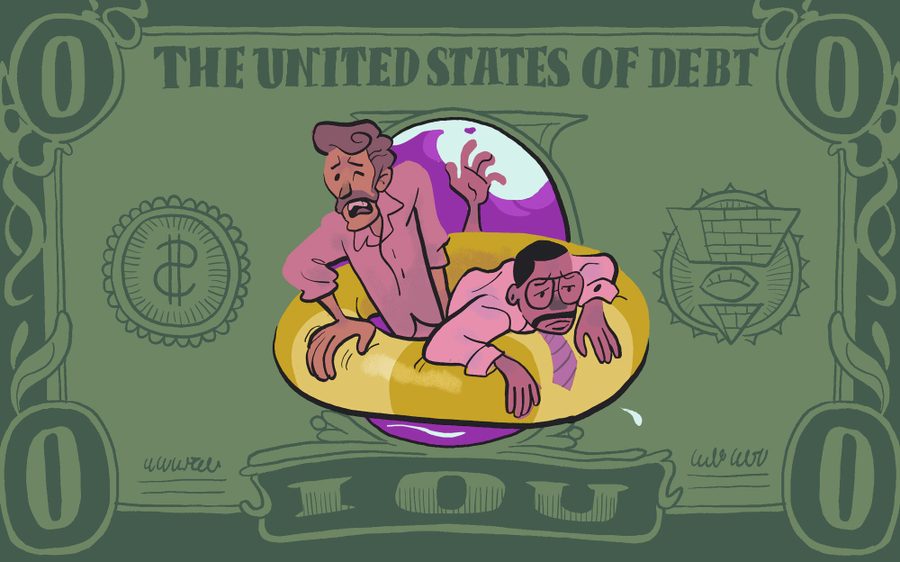
Debtor Organizing Can Transform Our Individual Financial Struggles Into a Source of Collective Strength
Alone, our debt is a liability. Together, it’s our leverage.
J. Patrick Patterson – September 16, 2024
ILLUSTRATION BY KAZIMIR ISKANDER
debt•or pow•er
noun
leverage that springs from an organized association of debtors, often in debt to shared creditors, to negotiate the terms and conditions of debt contracts, including the abolition of unjust debts
the transformation of individual financial struggles into a source of collective strength by waging strategic campaigns of economic disobedience and debt refusal
a tool to build reparative public goods using debt as leverage
Debtor organizing has the potential to bring millions of people who may never have the option of joining a traditional labor union into the struggle for economic justice. —Debt Collective, Can’t Pay, Won’t Pay: The Case for Economic Disobedience and Debt Abolition
Is this a new idea?
Collective debt resistance — if not debtors’ unions — has happened for centuries! Ancient Roman plebeians used strikes, demonstrations and periodic exoduses to win a range of concessions from the aristocratic class, including substantial political rights and the elimination of debt slavery. Today, just as organized renters have leverage over their landlords because they owe the same person, collectively withholding payments (or threatening to!) builds collective power to make demands.
But where does the power come from?
A debtors’ union is a newer concept that is still emerging. Debt Collective is in the throes of this experiment, but the provocation is simple: Just as workers have potential collective power over capital in the form of their employer, and tenants in the form of their landlord, debtors can also wield this kind of collective power when they organize against their creditors.
How can we use it once we build it?
Although debtors’ unions are a new, emerging front in the fight against racial capitalism, their potential holds across many types of debt.
The millions of people being crushed by medical debt could organize locally to demand hospitals cancel their bills. Or they could start a national medical debt strike to advance the cause of universal healthcare.
Credit card debtors could rally against usurious lending practices and advocate for a socially productive — as opposed to predatory — system of credit and debt. Student debtors could transform not only the predatory lending that has become synonymous with higher education, but also the landscape of who has access to that higher education in the first place.
And people with debts in the criminal punishment system could organize to challenge fines, fees and other costs associated with incarceration, demanding the abolition of a system that extracts on so many levels. The possibilities for debt resistance campaigns are practically endless.
J. PATRICK PATTERSON is the Associate Editor at In These Times. He has previously worked as a politics editor, copy editor, fact-checker and reporter. His writing on economic policies and electoral politics has been published in numerous outlets.
He wants you to believe that as he simultaneously hurls inflammatory rhetoric at Harris and while he sits idly by as Springfield, Ohio, suffers bomb threats and school evacuations over his outrageous and racist lies about legal Haitian immigrants.
Early Monday, Trump spoke with Fox News and decried statements from Democrats calling him “a threat to democracy.”
“Their rhetoric is causing me to be shot at, when I am the one who is going to save the country, and they are the ones that are destroying the country – both from the inside and out,” Trump said, referring to Harris and Democrats as “the enemy from within” and “the real threat.”
Republican presidential nominee Donald Trump addresses journalists at Trump National Golf Club Los Angeles on Sept. 13, 2024, in Rancho Palos Verdes, Calif.
Trump denounces political rhetoric while hurling inflammatory nonsense
The logic in Trump’s statements is twisted beyond comprehension. It’s schoolyard-level reasoning, effectively saying: “You called me a threat to democracy, and that’s a terrible thing to do. And besides, you’re the enemy and you’re destroying the country.”
Let’s start with the apparent assassination plan the Secret Service thankfully foiled. An advance agent spotted a rifle sticking through a fence several hundred yards away from where Trump was playing golf. The agent fired at the gunman, and the man, who didn’t fire any shots, was later apprehended.
The 58-year-old suspect appears to be, as one would expect, a nut whose politics are all over the place. NPR described him as a “vocal supporter-turned-critic of Trump who was passionate about defending Ukraine in its war with Russia.”
There is zero evidence connecting either gunman to Democrats calling Trump “a threat to democracy.” More important, however, that label is not hyperbolic.
Trump is a threat to democracy. That’s a fact with ample evidence.
The idea that Harris or her campaign should stop talking about the threat Trump poses to our democracy is absurd. Democrats aren’t encouraging any form of violence against him or anyone else. They’re speaking a self-evident truth and asking voters to respond accordingly at the ballot box.
On Sunday, before the incident on the Florida golf course, Trump posted on social media: “The Democrats are DESTROYING OUR COUNTRY!”
On Monday morning, he posted on social media: “Because of this Communist Left Rhetoric, the bullets are flying, and it will only get worse! Allowing millions of people, from places unknown, to INVADE and take over our Country, is an unpardonable sin. OUR BORDERS MUST BE CLOSED, AND THE TERRORISTS, CRIMINALS, AND MENTALLY INSANE, IMMEDIATELY REMOVED FROM AMERICAN CITIES AND TOWNS, DEPORTED BACK TO THEIR COUNTIES OF ORIGIN.”
Trump’s racist lies have terrorized an Ohio town
That comes on the heels of a campaign of vile lies about Haitian immigrants in Springfield, Ohio ‒ lies that have led to repeated bomb threats and widespread fear among a community of hardworking, legal immigrants.
On Friday – days after spouting nonsense about Haitian immigrants eating pets – Trump lied, saying: “In Springfield, Ohio, 20,000 illegal Haitian migrants have descended upon a town of 58,000 people destroying their way of life.”
Springfield City Manager Bryan Heck releases a statement in September 2024 saying there’s no evidence of any cats or other pets being harmed or eaten by the Haitian immigrants. Springfield, a central Ohio city of 58,000 about 50 miles west of Columbus, is experiencing a “significant housing crisis,” according to a letter from Heck. He says the city’s Haitian population has increased to 15,000-20,000 in recent years.More
On Sunday, Trump’s running mate, Sen. JD Vance, R-Ohio, effectively admitted that the campaign’s vicious lies about Haitians in Springfield were made up, and that he didn’t care: “If I have to create stories so that the American media actually pays attention to the suffering of the American people then that’s what I’m going to do.”
Except, according to the Republican governor of Ohio, Vance and Trump are also making up the part about the suffering. Springfield has had challenges with an influx of legal immigrants, but the city has not been “destroyed” in any way, shape or form.
Ohio Gov. Mike DeWine said: “These people are here legally. They came to work. They are looking for good people. These are hardworking people.”
Trump has based his entire political identity on inflammatory rhetoric
So spare me the sanctimony over anyone describing him as a threat to democracy. That’s what he is.
Democrats haven’t promoted violence – only voting
Political violence, on any side and of any sort, is abhorrent. Whatever the suspect arrested Sunday was plotting, I’m immensely glad it was stopped.
But whatever the plot was, it can’t be blamed on directly and factually highlighting the threat posed by a man who spews anti-democratic and racist lies without the slightest concern for others.
Trump and his campaign, through their dishonest rhetoric, are wreaking havoc on a Midwestern town. That’s a fact. Through his statements and actions past and present, he poses a threat to our democracy. That’s a demonstrable fact.
The only solution to those concerns, the only action being promoted by Harris and her campaign or people like me who care about America’s basic sense of decency, is simple: Vote.
Vote, and don’t be cowed into silence by a dishonest hypocrite.
Katie Phang: Voters can reject Donald Trump and his misogyny at the ballot box
Katie S. Phang, Traci Tillman, Ivy Green and Allison Detzel
September 2, 2024
This is an adapted excerpt from the Aug. 29 episode of “Alex Wagner Tonight.”
Just one month before Election Day in 2016, the infamous “Access Hollywood” tape was leaked. It was a shocking and despicable 70-second video that will surely have its own wing in the future Donald J. Trump Museum of Sexism.
In the wake of that offensive “hot mic” audio, panicked talks ensued to replace Trump at the top of the Republican ticket. At that moment, the GOP had the chance to do the right thing and replace him as the nominee. But, of course, that didn’t happen and he eventually became the president of the United States.
This turn of events sent a very depressing reminder to women across America: Even someone as lewd and misogynistic as Trump can rise to the highest office in our country. In other words, sexism is acceptable.
Now, in 2024, Trump is once again running for president; his opponent is, once again, a woman; and his gross sexism is, once again, in overdrive and on full display.
On Wednesday, Trump went on a Truth Social rampage, reposting QAnon slogans, altered images and calls to jail his political rivals. In a period of just 30 minutes, he reposted 30 times … and I’m supposed to believe women are the emotional ones?
In the midst of this vomitous social media spew, Trump reposted a photo of arguably the two most accomplished female politicians in America, Hillary Clinton and Vice President Kamala Harris. The photo was accompanied by a caption that is almost unspeakably vile, suggesting that the vice president of the United States slept her way to the top. A Trump campaign senior adviser laughably tried defending the former president by suggesting that Trump had not read the caption.
But that’s only just the latest example of Trump’s sexism in this election cycle. He and his supporters have been making gender-based attacks on Harris for weeks now.
All of that is in addition to the racist attacks Trump and Fox News have made about Harris’ mixed-race identity, including calling her a “DEI hire.” There’s also the fact that just last year, a jury of Trump’s peers found him liable for the sexual abuse of columnist E. Jean Carroll.
We have a chance to redo that moment from 2016. Back then, despite Trump’s sexism and misogyny, he still became president. But now in 2024, we have the chance to show that in America sexism will not be tolerated. It’s time for us to show we’re better than that. We’re better than Trump.
It’s not hard to see why most women despise Trump, a man who bragged about sexually assaulting women on tape. On the policy front, of course, Trump is the single person most responsible for the overturn of Roe v. Wade. The published agenda for his second term, Project 2025, includes plans for a national abortion ban and restrictions on contraception. Not only does Trump not try to hide his misogyny, but his campaign makes it a selling point in a bid to win over bitter male voters. On Wednesday, Trump posted a sexually explicit comment about Harris to Truth Social, accusing her of selling sex because she dated other men before she met her husband. As Anderson Cooper noted on CNN, this is not “out of character” for Trump, who usually calls women “pigs,” “dogs” and “nasty” for showing anything but submission to him.
Trump’s campaign is in danger if he can’t get at least a few skeptical women to vote for him. So on Friday, Trump is scheduled to be the keynote speaker at the third annual Moms for Liberty summit in Washington, D.C. It’s another sign that his campaign has run out of ideas to appeal to women. Moms for Liberty’s fall from political grace has been as rapid as their rise to prominence. Associating with the group is more likely to hurt Trump with female voters than to help him.
Moms for Liberty was founded in January 2021. Initially, the group found success in helping Republicans claw back support from suburban women that had been lost during the Trump presidency. By channeling the frustrations parents felt over pandemic school closures, Moms for Liberty positioned itself as a moderate-seeming “parental rights” organization. In reality, the group was controlled by far-right activists with deep ties to Christian nationalism. When Moms for Liberty-linked school board members started taking actions like banning books and vilifying LGBTQ teachers, it provoked a nationwide backlash, with parents in affected communities coming together to kick Moms for Liberty members off their school boards.
“DeSantis and MfL appear to have lost their juice,” journalist Kelly Weill wrote in her recent MomLeft newsletter. “In 2022, the group claimed to have elected approximately half of its 500-plus school board candidates,” reaching an 80% success rate in Florida. In 2023, however, the group only won 35% of its races, and that’s after dramatically scaling back the number of candidates they were running. This month, Moms for Liberty got another shellacking, as only 6 out of 23 candidates backed by DeSantis and Moms for Liberty in Florida even won a primary.
“Big losses across the state for candidates who advanced the group’s agenda, including efforts to ban library books and restrict lessons about race, sex and gender, pointed to mounting dissatisfaction with an organization that had quickly gained sway with powerful Republicans amid the anti-mask, parental rights politics of the pandemic,” reports the Tampa Bay Times.
Despite this, Politico reports, “Republicans show no signs of changing their strategy.” Last year, Trump’s speech before Moms for Liberty drew heavily on plans outlined in Project 2025 to gut public education altogether, starting with abolishing the Department of Education. This year, Moms for Liberty head Tiffany Justice said she hopes “to hear some more plans” regarding this, because “it’s a little more complicated than just waving a magic wand and making it go away.” Democrats no doubt agree they’d like to hear more about Trump’s plan to end the Department of Education, as 64% of Americans oppose the idea.
That Trump and Republicans are sticking with Moms of Liberty suggests they’re desperate. Polling shows that since Harris replaced President Joe Biden as the nominee, there’s been a major uptick in female support for the Democratic ticket. On Tuesday, Democratic research firm TargetSmart published a new report chronicling the surge of voter registrations since Harris joined the race, including a whopping 175% spike in registrations from Black women under 30.
Harris’ appeal is a huge part of this, but it’s also driven by women’s outrage over Trump and his running mate, Sen. JD Vance of Ohio. Vance can’t seem to pull his nose out of women’s uteruses. New quotes of Vance painting childless women as “miserable cat ladies” and “sociopathic” are released practically every day. Like Trump, he has a special zeal for attacking hardworking schoolteachers, claiming teachers who do not have biological children “disorient and really disturb” him.
This rhetoric seems like it will only further alienate female voters, especially mothers who tend to have close relationships with local teachers and know they don’t need to be parents to be skilled professionals. (For one thing, most start teaching full-time at age 22. That’s five years younger than the average age of a first-time parent, and 12 years younger than when Vance had his first child.) It just reinforces the accusation of the Harris campaign that Vance is “weird” and out of touch with how normal Americans live.
But it’s not like Trump and Vance have a lot of options for reaching out to female voters. Moms for Liberty’s brand is failing and their views are unpopular, but they do have “Moms” in their name and female leaders for Trump to be photographed with. If you squint hard enough, that could look like Trump playing nice with women. Moms for Liberty doesn’t offer much, but it’s the best the Trump campaign can do.
How California Became a New Center of Political Corruption
Ralph Vartabedian – August 29, 2024
Over the last 10 years, 576 public officials in California have been convicted on federal corruption charges, according to Justice Department reports, exceeding the number of cases in states better known for public corruption, including New York, New Jersey and Illinois. (Getty Images)More
LOS ANGELES — Jose Huizar’s downfall at Los Angeles City Hall was as stunning as his rise to success, a political tragedy that, like many in the land of dreams, has become a familiar one.
Born to a large family in rural Mexico and raised in poverty near the towering high-rises of downtown Los Angeles, he overcame enormous odds to graduate from the University of California, Berkeley, Princeton University and UCLA law school.
He returned to his old neighborhood in East Los Angeles to run for the school board and eventually the City Council, where he gained control of the influential committee that approves multimillion-dollar commercial development projects across the city.
His spectacular fall — after FBI agents caught him accepting $1.8 million worth of casino chips, luxury hotel stays, a liquor box full of cash and prostitutes from Chinese developers — was cast by federal prosecutors as an epic Hollywood tale. They persuaded a judge in January to sentence him to 13 years in prison on charges of tax evasion and racketeering.
“He was the King Kong of LA City Hall for many, many years,” Mack E. Jenkins, chief of the criminal division at the U.S. attorney’s office in Los Angeles, told the court. “And with his fall, a lot of devastation was left in his wake.”
This week, when Huizar is scheduled to report to prison, he will become the third recent Los Angeles City Council member to go down on charges of corruption, part of a much larger circle of staff aides, fundraisers, political consultants and real estate developers who have been charged in what federal authorities called an “extraordinary” recent wave of bribery and influence-peddling across California.
Two other members of the City Council, Mitchell Englander and Mark Ridley-Thomas, were convicted earlier on various corruption charges, as was the former head of the city’s Department of Water and Power. A fourth City Council member, Curren Price, is facing charges of embezzlement, perjury and conflict of interest.
Over the last 10 years, 576 public officials in California have been convicted on federal corruption charges, according to Justice Department reports, exceeding the number of cases in states better known for public corruption, including New York, New Jersey and Illinois.
California has a larger population than those states, but the recent wave of cases is attributable to much more than that, federal prosecutors say.
A heavy concentration of power at Los Angeles City Hall, the receding presence of local news media, a population that often tunes out local politics and a growing Democratic supermajority in state government have all helped insulate officeholders from damage, political analysts said.
In Los Angeles, Huizar’s influence was even greater than that of most other council members: Not only did his district include downtown Los Angeles, where billions of dollars of foreign investment was transforming the skyline, but he also controlled the Planning and Land Use Management Committee that approves major developments all over the city.
“When you have that kind of power, pay-to play schemes run amok,” said U.S. Attorney Martin Estrada, whose office has led many of the recent prosecutions in Los Angeles. “I wouldn’t call it ordinary what these folks did. It is extraordinary.”
Huizar, 55, pleaded guilty to racketeering, a charge often used in prosecuting organized crime or street-gang cases. The $1.8 million in bribes he received was twice the amount that recently convicted Sen. Bob Menendez of New Jersey was charged with accepting.
In March, a jury convicted Raymond Chan, a former Los Angeles deputy mayor whom prosecutors called the “architect” of the Huizar conspiracy, also on racketeering charges. In all, more than 50 key political figures and executives in Los Angeles and San Francisco have been convicted since 2019. Many more were investigated or resigned after allegations surfaced.
California also had cases of corruption in the days, now in the distant past, when Republicans held statewide office.
But political analysts say the Democrats’ present lock on political power leaves little opportunity for Republicans to effectively raise the issue of corruption as a campaign issue.
“When a political party enjoys that much uncontested power, there’s no penalty for stepping over ethical or legal lines,” said Dan Schnur, a former head of the state Fair Political Practices Commission and a former Republican who is now an independent.
A two-year-old reform effort to curb some of the extraordinary power conferred to individual council members in Los Angeles has foundered.
“When you talk about reducing individual council member discretion over land use, there is real pushback,” said Nithya Raman, a council member who sits on the city’s charter reform committee.
What happened in Los Angeles had been playing out on a smaller scale for years in the small industrial cities of Los Angeles County that have been described as a “corridor of corruption”: South Gate, Bell, Lynwood and Vernon, among others, where civic leaders were prosecuted for taking bribes or tapping into city funds.
“You have large immigrant populations, largely marginalized communities that do not have the resources to watch their politicians closely,” said Estrada, whose parents emigrated from Guatemala. “I think you have a pretty unique cauldron of factors in Los Angeles and the greater Los Angeles area that allow for these things to happen.”
The arrival of large-scale investments from China starting in 2011 heightened the risks.
Over the next half-dozen years, about $26 billion of direct investment from Chinese firms and their billionaire owners arrived in the state.
Downtown Los Angeles underwent a dramatic revival. New high-rise condos and hotels went up, abandoned warehouses were converted into loft apartments and galleries and expensive restaurants opened.
The 40-year-old Grand Hotel, a rundown eyesore used until recently by the city as a homeless shelter, was at the center of one investor’s grandiose plan.
The investor, Wei Huang, a billionaire owner of the development company Shen Zhen New World, bought the hotel in 2010 with plans to convert it into a 77-story tower, the highest in the western United States.
What he needed was help managing the byzantine political approval process. He found it, federal prosecutors said, with Huizar, who had been elected to the council in 2005.
Starting in 2013, federal prosecutors said, Huizar took the first of 20 all-expenses paid trips to Las Vegas with Huang, during which he was supplied with about $10,000 worth of casino chips each time.
Their involvement deepened just before a 2015 election, when Huizar faced allegations from his deputy chief of staff that he had sexually harassed her. Huang, prosecutors said, provided him with $600,000 of collateral for a loan to settle out of court.
But it was the free casino chips in Las Vegas that would ultimately unravel the arrangement. During one trip to the Cosmopolitan casino in 2016, its security chief, a former FBI agent, spotted Huizar playing a $16,000 pile of chips at a card table. When he asked his identity, he became flustered and walked away, leaving the chips.
“Who walks away from $16,000 of casino chips?” said Carlos Narro, who was then the chief of the FBI’s public corruption section in Los Angeles, who got a call from the security chief.
In short order, Narro had the casino’s video of the scene at the card table and flight records. With those, the FBI got court approval for wire taps and searches of Huizar’s text messages and emails.
Ultimately, the investigation found that Huang had paid roughly $1.8 million to Huizar, but that was only part of a much wider network of corruption, investigators found. The wide-ranging racketeering indictment to which Huizar pleaded guilty also targeted a City Hall aide, a deputy mayor, a lobbyist and a political fundraiser, all of whom were also convicted.
Huang was also indicted and is now a fugitive, believed to be in China. His company was fined $4 million.
Also included in the indictment were three other large development projects whose backers, prosecutors said, obtained Huizar’s help in exchange for bribes.
The scandal was almost inevitable, said Miguel Santana, the former top administrative officer of Los Angeles.
“The depth of power that a council member has around development in their own districts almost facilitates the level of corruption that took place,” Santana, now president of the California Community Foundation. “That level of power still exists today.”
San Francisco has had its own round of corruption cases, many of the recent ones surrounding the former Department of Public Works chief, Mohammed Nuru, who pleaded guilty in 2021 to accepting gifts, including a tractor for his ranch outside the city, a Rolex watch and millions of dollars, from various people with business before the city.
Florence Kong, the owner of a recycling company, pleaded guilty to offering some of the bribes in exchange for city contracts. Zhang Li, a Chinese developer also accused of offering bribes, signed a deferred prosecution agreement.
Now scheduled to surrender to prison by Saturday, Huizar made a public apology at his sentencing hearing, saying he had long been dedicated to his community. “Shiny things were dangled in front of me, and I could not resist the temptation,” he said in a letter to the judge asking for leniency. “The money, the fancy dinners, luxury flights. It was there for the taking, and I could not say no.”
Estrada, the U.S. attorney, said that Huizar’s corruption offended him as a Latino.
“It feels like a real betrayal,” Estrada said. “Because for those of us whose families came from Latin America, and know that system, there’s just rampant corruption there. You come to this country, you have more opportunities, you are offered to be part of a system that is theoretically supposed to operate cleanly.”
Where Does Biden’s Student Loan Debt Plan Stand? Here’s What to Know.
Zach Montague – August 29, 2024
President Joe Biden discusses his administration’s actions to cancel or reduce student loan debts, at the Julian Dixon Library in Culver City, Calif., Feb. 21, 2024. (Al Drago/The New York Times)
WASHINGTON — President Joe Biden’s latest effort to wipe out student loan debt for millions of Americans is in jeopardy.
The Supreme Court on Wednesday refused to allow a key component of the policy, known as the SAVE plan, to move forward after an emergency application by the Biden administration.
Until Republican-led states sued to block the plan over the summer, SAVE had been the main way for borrowers to apply for loan forgiveness. The program allowed people to make payments based on income and family size; some borrowers ended up having their remaining debt canceled altogether.
Other elements of Biden’s loan forgiveness plan remain in effect for now. And over the course of Biden’s presidency, his administration has canceled about $167 billion in loans for 4.75 million people, or roughly 1 in 10 federal loan holders.National & World NewsLatest U.S. and global stories
But Wednesday’s decision leaves millions of Americans in limbo.
Here is a look at what the ruling means for borrowers and what happens next:
Who was eligible for SAVE?
Most people with federal undergraduate or graduate loans could apply for forgiveness under SAVE, which stands for Saving on a Valuable Education.
But the amount of relief it provided varied depending on factors such as income and family size. More than 8 million people enrolled in the program during the roughly 10 months that it was available, and about 400,000 of them got some amount of debt canceled.
The plan has been on hold since July, when a federal appellate court issued a ruling temporarily blocking the program. The Supreme Court on Wednesday denied a request by the Biden administration to lift that injunction.
What happens next?
SAVE is on hold and interest on loans will not accrue while lower courts consider the merits of the legal challenges.
If those challenges succeed, millions of students will most likely be forced to revert to other plans with significantly higher monthly payments.
The Supreme Court said it expected a lower court to move quickly on the case and “render its decision with appropriate dispatch.” The Education Department has said it will provide regular updates for borrowers on its website.
Who can still apply for debt relief?
There are still pathways for people who want to apply for debt relief, including those who borrowed money to attend schools that misled or took advantage of them financially.
Another program is aimed at people working in public service — including teachers, firefighters and members of the military — who had been paying down loans for at least 10 years.
The Public Service Loan Forgiveness Program was established in 2007, but it had been plagued by years of bureaucratic delays and other problems.
A report by the Consumer Financial Protection Bureau in 2017 found that federal loan servicers routinely failed to inform borrowers about their eligibility for the program and systematically miscounted payments that could count toward forgiveness.
The Biden administration revived the program, which has led to debt relief for nearly 1 million people.
The administration has also approved $14.1 billion in forgiveness for about 548,000 borrowers with a total and permanent disability that prevents them from working, a group that includes many military veterans.
Why is this issue tangled up in the courts?
Surveys have consistently found that a majority of Americans support some form of debt relief. But Republican attorneys general and conservative groups have tried to block Biden’s plans in court, saying he is overstepping his authority.
Critics of the debt relief plan characterize it as a taxpayer-funded giveaway.
The legal challenges have steadily chipped away at Biden’s ambitions.
At the beginning of his presidency, Biden promised to wipe out more than $400 billion in student debt for more than 40 million borrowers. The Supreme Court struck that down in June 2023, ruling that his administration did not have the authority to do so.
Cumulatively, this campaign has succeeded in maintaining a comparatively high level of support from ordinary Russians for a fight that has lasted much longer and exacted a much heavier toll than authorities in Moscow originally advertised. But since mid-July, Ukraine’s unexpected incursion into Russia’s Kursk region — and Moscow’s inability to marshal a serious response to it — has shaken public sentiment within Russia.
By just how much? This is documented in a new study by OpenMinds, a Ukrainian data analytics and communications firm. By extensively parsing Russian social media and news outlets, it chronicles that the events in Kursk have impacted popular support for the war among ordinary Russians, as well as increased their dissatisfaction with the Kremlin.
Specifically, it notes a surge of content relating to the war as a result of Ukraine’s raid, as well as a significant decline in positive sentiment in posts, broadcasts and messages regarding the broader conflict. This, the study attributes to two causes.
First, it notes, “there have been fewer cheerful publications about the war” by Russia’s extensive state propaganda organs. Second, “there were more grievances compared to the previous two months … [both] blaming the Russian authorities and general panic regarding the incursion.”
Local fears are indeed rising. Russia’s September 2022 “partial mobilization,” as Vladimir Putin’s domestic conscription effort was euphemistically known, proved to be profoundly unpopular at home, sparking a mass exodus of citizens eager to avoid the draft. Now, worries are rising anew that Moscow’s ongoing struggles on the Ukrainian front could prompt the Kremlin to launch a new effort to beef up its military ranks.
The study documents “a growing concern” for renewed mobilization to respond to Ukraine’s incursion. During the first week of Ukraine’s offensive, it notes, “approximately 39 percent of the publications about mobilization mentioned the Kursk incursion” as a potential precipitating factor. So significant was the furor that Russian lawmakers were forced to speak out publicly to refute rumors that plans for a new conscription drive were in the works.
All this has profoundly constrained the Kremlin’s options. Ordinarily, Moscow would be quick to rally the country around Kyiv’s incursion, which it would invariably depict as an “existential threat” to its sovereignty. However, it hasn’t yet done so — something the OpenMinds study suggests is because “the Russian government understands the sociopolitical risks of a new wave of mobilization and fears the potential consequences related to it.”
What all this might mean for Russia is still too early to tell. Policymakers in Moscow have initiated an array of measures in response to the Ukrainian incursion, ranging from declaring a state of emergency in Kursk as well as the neighboring Belgorod region, surging troops into the area, and creating new administrative units to manage the crisis). Still, as NATO officials have noted, Russia’s official response has been “slow and scattered” — at least so far.
Whether it stays that way is still an open question. It’s already clear, however, that Ukraine has accomplished one of the principal aims of its daring military raid: to bring the conflict home to ordinary Russians and underscore that the war of choice embarked upon by their president carries potentially dire consequences for them personally.
Ilan Berman is senior vice president of the American Foreign Policy Council in Washington, D.C.
MSNBC’s Morning Joe tore into former President Donald Trump following visit to Arlington National Cemetery that has sparked outrage among veterans. In addition to Trump’s awkward thumbs up photo on Monday it was later reported that two Trump campaign staffers got in a physical altercation with cemetery workers who tried to stop the candidate from using the occasion to attack his political rivals, arguing that it violates federal law.
“I know a lot of military veterans were very uncomfortable with the idea that Trump was there at all,” correspondent Jonathan Lemire, who was filling in for Joe Scarborough said Wednesday morning. “Some of these veterans were sort of just aghast that even in any way, shape, or form, our Arlington National Cemetery, arguably the most sacred place in our country, was being used as a backdrop for political purposes.”
“Is nothing sacred?” added contributor Mike Barnicle about Trump’s behavior at the ceremony. “That is sacred ground. And the idea that any candidate of any party would, intentionally or unintentionally, use that sacred ground as a prop for a political campaign is beyond condemnation.”https://www.youtube.com/embed/hPdWaNanrrw
Barnicle continued, “It’s terribly upsetting, obviously, to people who have buried loved ones in Arlington National Cemetery. It’s terribly upsetting to many veterans. It’s terribly upsetting to people who view it as a spectacle.”
Most importantly, Barnicle argued, “It ought to be terribly upsetting to any American who values what the military does for this country worldwide, and has done for this country for centuries, and will continue to do for this country.”
Lemire also noted that this scandal “comes just days after Trump suggested that a civilian medal, the Medal of Freedom, was better than the Medal of Honor, because the army soldiers who receive the Medal of Honor are often either killed or wounded.”
“And of course,” he continued, “we’ve been reminded of late how Trump used to refer to veterans, even deceased soldiers, as ‘suckers and losers,’ a comment confirmed by his own chief of staff.”
Amidst the backlash, Trump released a statement of support from family members of the Marines whose grave he was photographed smiling and giving the thumbs up this week. Campaign spokesperson Steven Cheung told The Daily Beast on Wednesday, “There was no physical altercation as described and we are prepared to release footage if such defamatory claims are made.” He did not reply to requests for the footage.