As Trump crows about immigration in prime time, here are 7 facts about immigration in under 70 seconds. Help spread this video to combat Trump's barrage of lies.
Posted by Robert Reich on Tuesday, January 8, 2019
S. Adam Ramin, M.D., U.S. News & World Report January 9, 2019
Those of us in the medical profession are faced with a dilemma when educating the public about diseases: We need to inform — without creating hysteria. That’s tough to do today; sometimes it’s the less reputable voices that become the loudest, and we begin hearing from patients who “read somewhere” that XYZ condition is caused by “doing something completely normal that basically everyone does.” Misinformation is the last thing we need because it clouds the truth. And sometimes, changing the way information is delivered can go a long way toward creating understanding and equipping people with the facts to make the best, most informed health decisions. Prostate cancer is one of those conditions surrounded by some reasonably widespread misinformation, and this is an excellent place to help clear it up.
Most people know that prostate cancer is a disease that affects only men, since the prostate gland is one part of the male genital/urinary system. But did you also know that it’s the second leading cause of cancer death in men, just behind lung cancer? Shocking statistics aside, prostate cancer is not a death sentence for many of the men who develop it. In fact, most men who are diagnosed with prostate cancer don’t die from the disease. And in even better news, the trend in death rates among men diagnosed with prostate cancer has been steadily declining since the mid-1990’s, according to the American Cancer Society. We can thank better education, diagnosis and treatment options for that.
Prostate cancer isn’t a disease that just affects “old guys.” With humans living longer on this earth than ever before, does 66 seem “old” to you? Your answer to that question is likely relative to how close you are to that age. But, the average age of prostate cancer diagnosis for men is in the mid-60’s range, and I can say from experience that the men in this age range (and younger) who I’ve delivered a diagnosis to didn’t feel “old enough” to receive it.
Speaking of diagnosis, one valuable tool that helps uncover prostate cancer is something called a PSA test. PSA stands for prostate-specific antigen. This is the protein produced by the prostate gland that can be a prostate cancer indicator depending on the levels or velocity of the protein in the bloodstream. However, a PSA test really isn’t a “cancer test.” There are some issues besides cancer that can result in an elevated PSA level in a man, from inflammation to infection, and this test alone isn’t a definitive prostate cancer detector. Instead, it can be a first step in further evaluating a potential problem. If a physician is concerned with a man’s PSA levels and suspects prostate cancer, he or she would then move to more definitive diagnostic measures, including a biopsy of the prostate.
Regarding what causes prostate cancer, research has currently not revealed a direct cause, and a vast array of misinformation remains out there. For example, it was once suspected that having a vasectomy increased a man’s risk for developing prostate cancer. This topic has been researched heavily, and there is currently no reputable clinical evidence to prove it. Frequent ejaculation was also previously believed to cause prostate cancer, but this has been debunked by science, especially now that some research is revealing that more frequent ejaculation is associated with a lower prostate cancer risk.
What is known is that there are vital factors that can increase prostate cancer risk. Beyond the age factor, these include:
— Genetics/family history (having a first-generation relative who has been diagnosed with the disease).
— Race and ethnicity (African-American men and men of African ancestry are at a higher risk than other races).
— Geographic location (prostate cancer is most common in North America).
When it comes to the treatment of prostate cancer, we again see varying schools of expert thought, and all have merit. Some medical experts believe that treating a cancer that won’t likely result in death isn’t the best course of action. However, we can’t always know when a prostate cancer that starts out as “slow growing” may turn aggressive. And from a personal decision standpoint, there are plenty of men who don’t sit well with knowing they have cancer, but have been told not to do anything about it — yet. These factors and plenty of others make the treatment decision a very personal one and require the thoughtful consult with loved ones and a trusted physician who can help make the treatment decision that’s right for you or the man you love. There really is no one-size-fits-all option here.
So the next time you read a headline about prostate cancer (or any other medical condition, for that matter) that has you shocked and are wondering whether or not it’s true, consider the source. Has it been distributed by a reputable news outlet? Was it written by a medical expert who has authority, credentials and experience in the diagnosis and treatment of the condition being discussed? Is the article attempting to persuade you or a loved one into buying a product or service intended to “cure” the disease? Figuring out the answers to these questions can go a long way toward helping you figure out what’s true and what isn’t. And when in doubt, call your doctor.
S. Adam Ramin, M.D., is a board-certified urologist and founder and medical director of Urology Cancer Specialists in Los Angeles. He is a medical staff member at prestigious medical centers such as City of Hope National Medical Center, in Duarte, California, where he has served as Assistant Professor of Surgery in the Department of Urologic Oncology, and Cedars-Sinai Medical Center in Los Angeles, where he performs robotic laparoscopic prostatectomy.
Dr. Ramin received his Bachelor of Science degree in 1990 from the University of California, Los Angeles, with a double-major in biochemistry and philosophy. He went on to complete postgraduate training with an internship and residencies in general surgery and urology at Loma Linda University in Loma Linda, California. He performed his fellowship training in urological oncology at the City of Hope Medical Center in Duarte, California. Upon completing his extensive medical education and training, Dr. Ramin established his private medical practice in the Los Angeles area. He became a contributor to U.S. News in 2017, covering a range of prostate cancer, urologic cancer and urological health-related topics. As an expert in prostate cancer and robotic laparoscopic prostatectomy, Dr. Ramin has published numerous textbook chapters, peer-reviewed articles, abstracts and presentations on prostate cancer and urological health subjects. He is certified by the American Board of Urology in Robotic Assisted Urologic Surgery and Urologic and Oncology and Laparoscopic Surgery, and he has trained numerous urologists in techniques of minimally invasive laparoscopy and robotic surgery. Dr. Ramin is a past president of the Los Angeles Urological Society and is a member of numerous professional medical societies including The American Urological Association, American Medical Association and American Society of Laparoscopic Surgeons. Dr. Ramin is a frequent medical expert contributor to mainstream media publications and news outlets, including local ABC and Fox television affiliates, as well as national online publications such as MSN, Yahoo, Women’s Health, Men’s Health, Huffington Post and Reuters Health.
Just over 60 percent of millennials (classified here as those aged 18-37) with debt don’t know when, or if, they’ll ever be able to pay off what they owe, according toa new CreditCards.com report. That includes roughly 42 percent of millennials who don’t know when they’ll be able to wipe out their debt, and almost 20 percent of those who expect to die in debt.
There are some bright spots in the data: Among those aged 18 to 30 with credit card debt specifically, 79 percent say they have a plan to wipe it out. On average, they expect to be debt-free by age 43, CreditCards.com finds.
Still, a lot of young people are feeling trapped. A lot of older people, too: Over 35 percent of those over age 73 predict that they’ll never pay off their debt.
Making a plan to tackle debt can help
Debt doesn’t have to be a life sentence, says CreditCards.com industry analystTed Rossman. Though it may require some hard work and planning, he says, “Everybody can get out of debt.”
It can help to make a plan. After picking up several freelance jobs in 2018 and limiting his spending to about $2,000 a month — “there were times when I ate peanut butter and jelly sandwiches until I ran out of peanut butter, and then I just ate jelly sandwiches,” he recalls — 34-year-old Dietrich Knauth celebrated his birthday by paying off the last of his $117,000 in student loans.
And 32-year-old Guen Garrido managed to pay off $68,600 in about three years after drawing inspiration from the “snowball method” and YouTube tutorials.
It also helped her to set a target date by which she would have paid off everything she owed. “I think a lot of people think they’re never going to be debt-free, so they don’t even try to get out,” Garrido says. “But once you set a date, you start to think, ‘OK, I can do this,'” she says.
Guen Garrido became debt free in March 2018 and celebrated by popping a large balloon filled with confetti.
Getting creative can work, too: 27-year-old John Sweat, who temporarily moved into his van, expects to be debt-free bythe end of next winter. “I’ve spent most of my adult life feeling like I have a ton of money, or feeling really strapped and on the edge,” he says. “Right now, I feel more financially competent and stable and well-set up than I ever have.”
Northwestern Mutual recently found that two in 10 people put over 50 percent of their income toward getting out of debt. If you can’t do that, though, don’t sweat it. The nonprofit American Consumer Credit Counseling recommends allocating about 5 percent of your income towards that goal.
Remember your other financial priorities, too
While having a plan is an important first step toward becoming debt- free, Rossman says that millennials would benefit from a comprehensive approach. “Take a long view of your finances,” he says.
While student loans can “feel like an albatross around your neck,” Rossman says, there’s usually hope, because many student loans have built-in, easy-to-understand expiration dates. Still, educational debt, though it represents the biggest portion of the average millennial’s debt, is just one kind of loan.
Rossman recommends planning for a future that may include big purchases such as a home or a car, as well as expenses such as children and retirement.
Put aside a portion of your income — most experts recommend at least 10 percent — for retirement, he suggests, rather than throwing everything you’ve got at paying off what you borrowed for school.
David Bach
Additionally, you should aim to have three-to-six months of living expenses set aside in an account earmarked for emergencies. That can sound like a lot, so start small, says David Bach, co-founder of AE Wealth Management. Consistently save a percentage of your paycheck by setting up automatic transfers.
“When your paycheck gets deposited, move money automatically from your checking account into a separate money market account or a separate savings account that you won’t touch,” Bach tells CNBC Make It. “You literally want to almost forget it’s there.”
The key thing to remember is “it’s good to be attacking multiple priorities at once,” Rossman says. Otherwise, when different expenses or crises arise, you’ll simply have to “re-start the debt clock.”
President Trump will not answer any more questions from Mueller: Giuliani
By Karen Freifeld, Reuters January 9, 2018
By Karen Freifeld
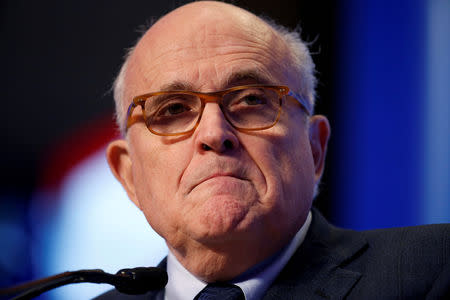
(Reuters) – Lawyers for U.S. President Donald Trump have told special counsel Robert Mueller that he will not answer any more questions in the probe of Russia’s meddling in the 2016 election, Trump lawyer Rudy Giuliani told Reuters on Wednesday.
Trump submitted written answers to questions from Mueller in late November. In an interview with Reuters, Giuliani said Mueller raised the possibility of follow-up questions but that the president’s outside legal team told the special counsel before Christmas that Trump would not respond.
Trump’s lawyers and Mueller’s team have had no contact since then, Giuliani said.
“As far as we’re concerned, everything is over,” Giuliani told Reuters. “We weren’t convinced they had any questions they don’t know the answer to.”
Giuliani said the ball was now in the special counsel’s court. “They could try to subpoena him if they want,” he said. “But they know we could fight that like hell.”
Peter Carr, a spokesman for Mueller, declined to comment.
U.S. intelligence agencies have concluded that Russia interfered in the 2016 presidential election to try to help Trump win.
Trump has denied any collusion with Moscow and Russia has said it did not meddle in the election.
Mueller was appointed in May 2017 to investigate the Russian interference and possible collusion with the Trump campaign. It is unclear when the probe, which has clouded Trump’s first two years in office, will end.
Trump answered Mueller’s campaign-related questions focused on Russia in November. However, Giuliani told Reuters at the time, he would not answer questions on whether he tried to obstruct the investigation once he won office, such as by firing former FBI Director James Comey.
In his latest interview, the president’s lawyer said it was time for the special counsel to issue his report. “Put up or shut up,” Giuliani said. “We challenge you to do it.”
When Mueller ends his investigation, he will send a report on his findings to the Justice Department. It is unclear if the report will be made public.
Since at least last summer, Trump’s legal team has been drafting a rebuttal in preparation for Mueller’s report. Giuliani said the team also was ready to respond to legal issues raised by the hush money paid to an adult film star and a former Playboy playmate before the 2016 election.
Former Trump lawyer Michael Cohen was sentenced last month to three years in prison for crimes including orchestrating the payments in violation of campaign finance laws. When he pleaded guilty, Cohen said he was directed by Trump.
“We have a memo from a number of campaign finance experts that paying what they call hush money, since it has a personal purpose, is not considered a campaign contribution,” Giuliani said. “Therefore it’s not a violation of the campaign finance law.”
Giuliani said it is unclear to the legal team whether acting Attorney General Matthew Whitaker or Deputy Attorney General Rod Rosenstein is now in charge of the investigation.
Rosenstein, who is preparing to leave his job soon after attorney general nominee William Barr takes office, has overseen the Mueller probe since former Attorney General Jeff Sessions recused himself in 2017.
(Reporting by Karen Freifeld in New York; Editing by Lisa Shumaker)
To understand Trump’s speech, look at the US-Mexico border as it exists today
By Johnny Simon
Donald Trump delivered a statement last night from the oval office, laying out his argument for funding a wall along the US’s southern border with Mexico. Funding for a wall has been the sticking point in federal budget negotiations and has led to the government being shut down for the past few weeks.
Rhetoric from the Trump administration around “border issues” has been growing more more dire and fearsome in recent weeks, despite a lack of factual basis for the supposed concerns. While it is true some people entering the country illegally climb over current fencing, sometimes in full view of photojournalists, the amount of crossings has been on the decline for years. That’s why Trump opponents have become louder and louder in pointing out the sheer ludicrousness of the wall. Even Trump’s visions for his proposed wall have changed over time. From the monolithic concrete vision he commissioned prototypes for, just last week the phrasing had shifted to, in his words, “a see-through wall made out of steel.” Those are often called “fences”—which already exist across much of America’s southern border.
The network of border barriers in its current incarnation covers over 650 miles of the U.S, stretching in portions through desert, towns, and ending in the sea.
REUTERS/EDGARD GARRIDO
A house stands next to a section of the border fence separating Mexico and the US, in Tijuana, Mexico in 2017.
AP PHOTO/RUSSELL CONTRERAS
A US Border Patrol agent drives near the US-Mexico border fence in Sunland Park, New Mexico in 2016.
AP PHOTO/CHRISTIAN TORRES
Sunland Park, New Mexico, is seen over the US border fence as a protestor finishes painting the Spanish slogan “Neither delinquents nor illegals, we are international workers” on the Anapra, Mexico side of the fence in 2016.
AP PHOTO/RODRIGO ABD
A farm located adjacent to the fence at the US-Mexico border in the Juarez valley, Mexico in 2017.
AP PHOTO/BRIAN SKOLOFF
An aerial photo of the border fence along the edge of Nogales, Arizona.
AP PHOTO/RODRIGO ABD
The border fence that divides Mexico and the US is seen in Tecate, Mexico in 2018.
REUTERS/MIKE BLAKE
US Border Patrol supervisor Robert Stine looks out over the border wall from the top of a hill near Jacumba, California in 2016.
AP PHOTO/DANIEL OCHOA DE OLZA
Migrants looks for a place to jump the border fence to get into the US side to San Diego, California from Tijuana, Mexico in December of 2018.
AP PHOTO/DANIEL OCHOA DE OLZA
Tijuana, Mexico, left, and San Diego, California, right, are seen separated by the US border fence.
AP PHOTO/REBECCA BLACKWELL
US Border Patrol vehicles are parked along a secondary fence as they respond to a group of Central American migrants crossing the border wall illegally, seen from across the wall in Tijuana, Mexico in 2018.
REUTERS/MIKE BLAKE
US border patrol agents on horseback patrol along the US Mexico border fence near San Diego, California in 2016.
REUTERS/JOSE LUIS GONZALEZ
A section of the US-Mexico border wall at Sunland Park, taken from the Mexican border city of Ciudad Juarez, in 2016.
REUTERS/MIKE BLAKE
Three men jump the fence from Mexico and give themselves up to US border patrol agents in Calexico, California in 2017.
AP PHOTO/DANIEL OCHOA DE OLZA
The border fence that extends onto the beach between San Diego, California and Tijuana, Mexico is reflected on a puddle of sea water as seen from Mexico on Jan. 3, 2019.
AP PHOTO/DANIEL OCHOA DE OLZA
A bird stands on top of the border fence between San Diego, California, and Tijuana, Mexico on Jan 3, 2019.
Complaints about fake Social Security calls up 1,000 percent
By Stephanie Zimmermann January 1, 2019
Federal officials report that at least $10 million has been stolen in 2018 by scammers posing as Social Security Administration employees. Shauna Bittle/Sun-Times.
Calls from scammers impersonating Social Security Administration officials threatening to take away benefits ballooned in 2018, with complaints increasing by almost 10 times.
About 35,000 consumers reported getting Social Security scam calls in 2018, up from 3,200 reports the previous year, according to the Federal Trade Commission.
The FTC released audio of one of the scam calls, in which a computer-generated voice claims a person’s Social Security account will be suspended “on an immediate basis as we have received suspicious trails of information in your name.”
It directs the victim to call a toll-free number immediately or face arrest.
In some versions of this scam, the con artist claims the person’s Social Security number has been linked to a drug or money laundering crime, or claims someone else has used the number to apply for a credit card.
The scammers ask the victim to confirm the number and send a fee to supposedly reactivate it or get a new number. Sometimes, the caller says the person’s bank account will be seized and offers instructions on how to withdraw the money and supposedly keep it safe.
Victims lose millions
As improbable as the scam may sound, the FTC says panicked victims have already lost $10 million just this year.
The scammers often spoof the real Social Security Administration’s phone number on the victim’s caller ID to make the con more believable, the FTC says.
The Social Security scam is similar to the fake IRS agent scam, which has hit taxpayers in recent years. In that scam, callers pretend they are from the IRS and say they need to collect back taxes.
The IRS says it will never call a taxpayer to demand immediate payment via a prepaid debit card, gift card or wire transfer – and it won’t threaten to have you arrested or deported, or have your driver’s license or business licenses taken away. If you owe taxes, the IRS will mail you a bill.
The FTC offers these tips:
Ignore the calls. Your Social Security number is not about to be suspended, and your bank accounts won’t be seized.
The Social Security Administration does not call people to threaten their benefits or demand money be wired or sent via cash or gift cards. Any such demand is a scam.
If you would like to speak to the Social Security Administration, you should make the call yourself to their real number, (800) 772-1213. (Be aware that scammers calling you can spoof this number on your caller ID.)
Never give out your Social Security number (even the last four digits) or your bank account number or your credit card number to someone who contacts you out of the blue.
As Democrats take control of the House, they must make getting big money out of politics a top priority. It’s a prerequisite to accomplishing everything else. Big money continues to corrupt American politics, creating a vicious cycle that funnels more wealth and power to those at the top and eroding our democracy.
As Democrats take control of the House, they must make getting big money out of politics a top priority. It’s a prerequisite to accomplishing everything else. Big money continues to corrupt American politics, creating a vicious cycle that funnels more wealth and power to those at the top and eroding our democracy.
Posted by Robert Reich on Thursday, January 3, 2019







 Federal officials report that at least $10 million has been stolen in 2018 by scammers posing as Social Security Administration employees. Shauna Bittle/Sun-Times.