
Study links declining union strength to more workplace deaths

Salon

Study links declining union strength to more workplace deaths

There is a small but growing body of research highlighting the health benefits of unions

Eli Wolfe      July 9, 2018

Getty Images

It’s no secret that the waning power of American unions has contributed to stagnant wages. But a new study suggests that this trend hasn’t affected just worker income. It also may have cost thousands of lives.

The portion of the U.S. work force covered by unions has fallen for decades, and the labor movement suffered another major setback Wednesday when the U.S. Supreme Court struck down public-employee contracts requiring workers to pay union dues.

The new study focuses in particular on the extent to which state “right to work” laws — which barred mandatory union dues for non-union members even before Wednesday’s Supreme Court ruling — translate into more workplace deaths. Using mathematical modeling techniques, the study found that the rate of job-related deaths among U.S. workers from 1992 through 2016 was 14.2 percent higher than it would have been if union membership had not been undercut by right to work laws.

That equated to roughly 7,300 extra workplace deaths over the 25-year period, according to author of the analysis, Michael Zoorob.

The conclusions of the study, published in the medical journal BMJ, in some respects buck conventional wisdom. Workplace deaths generally have declined over the years, thanks in part to outsourcing of dangerous jobs to other countries, technological advances and a rise in less hazardous service employment.

But after falling below the 4,600 level annually during the Great Recession, on-the-job fatalities have risen since 2013, reaching 5,190 in 2016, according to the U.S. Bureau of Labor Statistics.

Zoorob said this uptick roughly coincided with a rise in the adoption of state right to work laws. Twenty-eight states now have such laws up, from 21 in 2000.

“The implication is that this results in changes in workplace policies that increase occupational mortality,” said Zoorob, a PhD candidate at Harvard University’s Department of Government.

There is a small but growing body of research highlighting the health benefits of unions. Zoorob’s study cited a 2016 report in the American Journal of Public Health that union contacts provide, among other benefits, protections against workplace hazards.

“The overarching point is that unions are important in workplace protections, and the fact that they’re declining because of public policies like right to work is concerning,” he added. Harvard was the sole source of funding for Zoorob’s study.

Supporters of right to work laws weren’t persuaded by Zoorob’s findings. James Hohman, director of Fiscal Policy for the Mackinac Center for Public Policy, a think tank that promotes free-market principles, said occupational injuries and deaths have actually dropped in some states following the passage of anti-union laws.

He cited as one example Michigan, which has experienced a 17 percent decline in non-fatal injuries and illnesses since passing a right to work law in 2012. In a related example, Indiana has reported an 18.6 percent decline in non-fatal injuries since passing similar legislation in 2012.

“Workplaces have become safer over time even as unionization has declined,” Hohman said in an email.

Yet both Michigan and Indiana have seen a spike in occupational fatalities, despite the decline in injuries, since passing right to work laws.

In general, though, occupational fatalities have fallen. They declined nationally from 6,217 in 1992, when the BLS began keeping a comprehensive count, to 5,190 in 2016.

Zoorob and other scholars attribute most of that decline to a combination of technological progress and the outsourcing of dangerous jobs. He calculated that the death toll for workers would have been 131,436 during the 1992-2016 period instead of 138,736 if it hadn’t been for the adoption of right to work laws. Union membership in the U.S. declined from 15.7 percent of the workforce in 1992 to 10.7 percent in 2017.

Labor advocates say the right to work movement has ignored the role played by unions in reducing occupational fatalities.

“Most employers do want to do the right thing, but you have a number who will cut corners on health and safety,” said Jordan Barab, who was deputy assistant secretary of labor for occupational safety and health in the Obama administration. “It’s the unions that are there to push them and ensure they comply with the law.”

Barab also credited unions with improving workplace safety by lobbying for important legislative and regulatory changes – although, as labor organizations lose dues-paying members, they have increasingly had to eliminate the staffers who handle health and safety campaigns.

The Service Employees International Union, for example, plans to terminate its sole remaining national staffer for health and safety on July 1. Other major labor groups, like the American Federation of Teachers, have opted to not hire new officials when long-term staffers retire.

“We just don’t have the bodies to go up to the hill and lobby Congress or testify at hearings,” he said. He noted that President Donald Trump has twice tried to axe OSHA’s Susan Harwood Training Grant Program, which trained many of the health and safety staff employed by unions.

While right to work laws have undermined private sector unions, they have not had as much success eliminating the power of public sector unions, which represent 34.4 percent of public workers. But that could change very soon.

On Wednesday the U.S. Supreme Court issued a decision in the landmark case of Janus v. AFSCME Council 31. (AFSCME is the American Federation of State County and Municipal Employees). In a 5-4 ruling, the court overturned a 1977 precedent that allowed public unions to collect fees from non-union workers to pay for collective bargaining efforts.

As a result, all state and local government workplaces could effectively become right to work sites, said Catherine Fisk, a law professor at University of California, Berkeley, who specializes in labor issues. Fisk, who spoke about the case shortly before the ruling came down, said it’s easy to see how the decision could quickly undermine worker health and safety.

“One expects that union membership will drop because workers will figure they don’t have to pay for dues,” Fisk said. “Therefore, unions will have less money to spend doing what they do, and one of the things they do is monitor workplace safety.”

There are an estimated 5 million non-union workers employed by state and local governments who no longer have to pay these fees.

The Janus decision also could increase the likelihood of the Supreme Court reviewing litigation that challenges similar mandatory fee arrangements for non-members in private sector unions.
What trump has done this past week?

July 8, 2018

The Trumpiest thing Trump has done this week!

The Trumpiest thing Trump has done this week!

Posted by Wake Up America on Sunday, July 8, 2018

Big Oil Knew: Denial and Distraction

War On Our Future  June, 2018

Big Oil Knew: Denial and Distraction

The oil industry discovered the links between fossil fuels and climate change back in the 1960’s. Here’s what they did when they found out… #YEARSproject #BigOilKnew

Big Oil Knew: Denial and Distraction

The oil industry discovered the links between fossil fuels and climate change back in the 1960s. Here's what they did when they found out… #YEARSproject #BigOilKnew

Posted by War On Our Future on Wednesday, June 13, 2018

Through Our Eyes: Teachers Living on the Brink of Bankruptcy

NowThis Reports

June 28, 2018. Being a full-time teacher shouldn’t mean working multiple jobs and still turning to food pantries just to feed your family. But in Oklahoma, it does.

Through Our Eyes: Teachers Living on the Brink of Bankruptcy

Through Our Eyes: Teachers Living on the Brink of Bankruptcy

Being a full-time teacher shouldn't mean working multiple jobs and still turning to food pantries just to feed your family. But in Oklahoma, it does.

Posted by NowThis Reports on Tuesday, June 12, 2018

How Dinosaurs Prove The Theory of Evolution

Did You Know shared a video.

July 8, 2018. There are people who think dinosaurs never existed.  How Dinosaurs Prove The Theory of Evolution

How Dinosaurs Prove The Theory of Evolution

There are dinosaurs all around us *right* now. 🦖 🦅 🦕

Posted by Today I Watched on Wednesday, May 23, 2018

Can plastic roads curb the waste epidemic?

CNN

July 8, 2018

Can these plastic roads solve two environmental problems? Every ton of this asphalt contains approximately 70,000 single-use plastic bags — and could potentially improve the quality of the roads we drive on: https://cnn.it/2u1SE4L

Can plastic roads curb the waste epidemic?

Can these plastic roads solve two environmental problems? Every ton of this asphalt contains approximately 70,000 single-use plastic bags — and could potentially improve the quality of the roads we drive on: https://cnn.it/2u1SE4L

Posted by CNN on Saturday, July 7, 2018

Former GOP senator Bill Frist: Republicans should protect Mueller investigation

USA Today

Former GOP senator Bill Frist: Republicans should protect Mueller investigation

Michael Collins, USA Today      July 7, 2018

Photo: Lawrence Jackson, AP

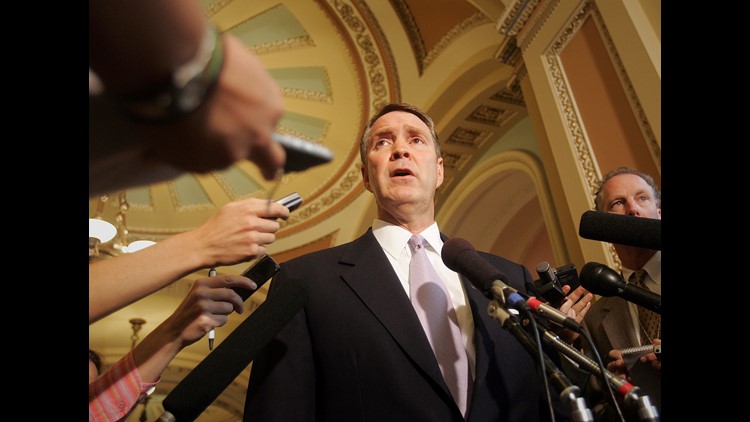
Washington,– Former Senate Majority Leader Bill Frist is urging his fellow Republicans to put country before party and protect special counsel Robert Mueller’s investigation into Russian interference in the 2016 presidential election.

“Special counsel Robert S. Mueller III is under assault, and that is wrong,” Frist wrote in an op-ed published Friday night in The Washington Post. “No matter who is in the White House, we Republicans must stand up for the sanctity of our democracy and the rule of law.”

Frist, who served as the Senate majority leader for four years before leaving Congress in 2007, said he doesn’t believe that President Donald Trump colluded with Russian President Vladimir Putin to win the 2016 election. But he said he believes Putin purposely tried to undermine the democratic process.

Trump’s assault on Mueller’s investigation doesn’t help the president or his party, Frist said.

“When Trump talks about firing the special counsel or his power to pardon himself, he makes it seem as though he has something to hide,” wrote Frist, a heart and lung transplant surgeon who lives in Nashville. “The president must remember that only Mueller’s exoneration can lift the cloud hanging over the White House.”

The special counsel’s investigation is not about Trump – it’s about national security, Frist said.

“Every American should be rooting for Mueller’s success in determining precisely how Russia interfered in our fundamental democratic process,” he wrote.

“As a party, we can’t let the president or his allies erode the independence of the Justice Department or public trust in the vital work of law enforcement,” he said. “That would be true even if the stakes were much lower, but it is overwhelmingly so when it comes to investigating foreign interference in our elections. Congress must ensure that Mueller is able to do his job without interference or intimidation.”

“Congress must never abandon its role as an equal branch of government,” Frist concluded. “In this moment, that means protecting Mueller’s investigation. We’re at our best as senators and Republicans when we defend our institutions. But more than that, it’s our best face as Americans.”

Trump freezes Obamacare payment program, leaving insurers scrambling

ThinkProgress

UPDATED: Trump freezes Obamacare payment program, leaving insurers scrambling

The sabotage of Obamacare continues.

Amanda Michelle Gomez     July 7, 2018

Washington, D.C. – July 25, President Trump holds a joint news conference with Lebanese Prime Minister Saad Hariri in the rose garden at the White House July 25, 2017. Trump began the news conference by announcing that senate Republicans had passed a procedural vote on repealing Obamacare. Photo: by Chip Somodevilla/Getty Images.

The Trump administration is freezing a critical Affordable Care Act (ACA) insurance payment program that discourages insurers from cherry picking healthier enrollees by compensating them for sicker ones.

The move could rattle insurance companies at the very moment when they’re deciding whether to continue selling ACA plans and setting premiums for 2019. It’s not immediately clear what this means for ACA enrollees, if anything.

The news comes after the Wall Street Journal reported they might suspend the program:

“The suspension of some payouts under the program, known as risk adjustment, could come in the wake of a recent decision by a federal judge in New Mexico, who ruled that part of its implementation was flawed and hadn’t been adequately justified by federal regulators, people familiar with the plans said.”

“We were disappointed by the court’s recent ruling. As a result of this litigation, billions of dollars in risk adjustment payments and collections are now on hold,” said the Centers for Medicare and Medicaid Services (CMS) Administrator Seema Verma in a statement released on Saturday. “CMS has asked the court to reconsider its ruling, and hopes for a prompt resolution that allows CMS to prevent more adverse impacts on Americans who receive their insurance in the individual and small group markets.”

CMS argues the ruling prevents it from making further collections or payments in the risk adjustment program, including amounts for the 2017 benefit year which amount to $10.4 billion, until the litigation is resolved. However, outside experts are skeptical of the claim.

To make it easier for people with pre-existing conditions to buy coverage and ensure market stability in the process, the risk adjustment program moves money from insurers who cover healthier populations than the statewide average to insurers who cover sicker populations.

The government uses a complicated formula to determine which insurers pay in and this formula was the point of contention, prompting two nonprofit insurers to file two different lawsuits.

CREDIT: KAISER FAMILY FOUNDATION

A New Mexico-based federal judge called the risk adjustment formula  “arbitrary” and “capricious” in ruling that the CMS formula was flawed. However, a Massachusetts based-federal judge upheld the risk adjustment formula, which means the Trump administration doesn’t need to end the payments altogether.

“Although the ongoing litigation raises the question of whether there will be a delay in risk adjustment transfers for 2017 and 2018, the payments themselves should not be at risk,” said Health Affairs’ Katie Keith.

Former CMS administrator Andy Slavitt added on Twitter that there’s “[n]ot a reason to stop all the payments unless politically motivated.”

Replying to ASlavitt: This has a lot of similarities to Trump and DOJ taking a court case to stop protections against pre-ex conditions.

In this case, there is a court case in New Mexico with a simple remedy for the Administration.

ASlavitt: Even Trump’s HHS stated in the case in question that what is happening would be “disruptive for insurers, policyholders and state insurance markets.”

That apparently is exactly what those in (what I assume we will learn to be) the White House wanted.

For 2016, risk-adjustment payments were valued at 11% of total premium dollars, so insurers could lose a good amount of money. But this doesn’t affect all insurers who participate on the marketplaces, as ACA policy expert David Anderson points out. For example, insurers who are the only carriers in the state for 2017 and 2018 should remain unaffected. Nor does it mean big loses for all insurers participating in the program, as ending risk adjustment could mean windfalls for others, as Kaiser Family Foundation’s Larry Levitt said on Twitter.

So far, ACA marketplaces have proven to be resilient, defying expectations that Trump sabotage would destroy the exchanges. Roughly 12 million people signed up for the ACA marketplace in 2018 and insurance options are growing for 2019. That’s because companies have learned how to turn a profit, and are now joining the ACA marketplaces. That said, insurers are still submitting pricey premium ratesfor 2019, citing uncertainty and repeal of the individual mandate. For this reason, the market will be even less affordable for people who don’t qualify for federal subsidies.

Ending the risk adjustment program or temporarily freezing payments could unnerve insurers who thought they were in for a relatively calm ACA season. CMS added in its statement that it will issue guidance shortly on how insurers should treat the news, in terms of financial losses.

Georgetown health policy expert Edwin Park said should the risk adjustment program end, insurers over the long run “would be forced to sharply raise premiums or reconsider participation.”

This story has been updated to reflect the official CMS statement ending the program that was released on Saturday. 

Like your 8-hour work day and weekends off? Thank unions

NowThis Politics

July 4, 2018

Like your 8-hour work day and weekends off? Thank unions

Dolores Huerta on Why Unions Matter

Like your 8-hour work day and weekends off? Thank unions

Posted by NowThis Politics on Wednesday, July 4, 2018

This solar farm is the size of 160 football fields

CNN

This is the world’s largest floating solar farm that transformed flooded coal mines into a big investment into clean energy http://cnn.it/2uFqAq9

Aspiration shared a video.

July 6, 2018

This solar farm is the size of 160 football fields … and it floats!

See the world's largest floating solar farm

This is the world's largest floating solar farm that transformed flooded coal mines into a big investment into clean energy http://cnn.it/2uFqAq9

Posted by CNN on Tuesday, July 18, 2017