Some workers who rebuild homes after hurricanes are afraid to go to Florida. They blame a law DeSantis championed

CNN

Some workers who rebuild homes after hurricanes are afraid to go to Florida. They blame a law DeSantis championed

Catherine E. Shoichet, CNN – September 7, 2023

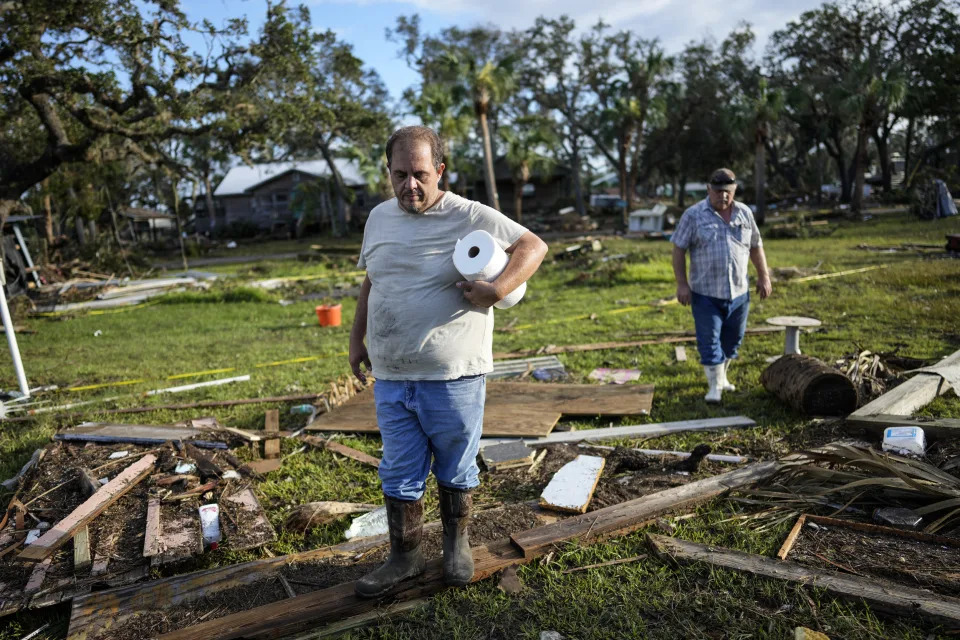
Immigrant workers from across the US raced to Florida to help rebuild after Hurricane Ian devastated the region.

But now, nearly a year later and days after another major hurricane hit, some of those workers say this time they’re staying home.

Saket Soni, whose nonprofit Resilience Force advocates for thousands of disaster response workers, says there’s one clear reason behind the shift: Florida’s new immigration law, which Gov. Ron DeSantis has championed.

In a survey Resilience Force conducted over several months this summer, Soni says more than half of the nonprofit organization’s roughly 2,000 members said they would not travel to Florida to help with hurricane recovery efforts because of the law. And in the aftermath of Hurricane Idalia, he says, many remain concerned.

“They felt very fearful,” says Soni, the organization’s executive director. “No amount of money would be worth it if it meant they would be incarcerated or deported.”

Normally, Soni says Resilience Force workers wouldn’t think twice before heading to a disaster zone.

The group is made up largely of immigrants, many of whom are undocumented, Soni says. And much like migrant workers who follow harvest seasons and travel from farm to farm, they crisscross the US to help clean up and rebuild when disaster strikes. Soni says many of them see the skills they’ve honed over years of responding to major storms as a calling, in addition to a means of supporting their families.

“Sadly,” he says, “you have all of these workers sitting in Houston and in New Orleans, coming to our offices, asking us, is there a chance this law will be repealed? Is there any chance they could go?”

DeSantis touted the law as ‘ambitious.’ Immigrant rights advocates call it ‘draconian’

CNN has reached out to DeSantis’ office for comment. In May, the Florida governor and aspiring GOP presidential candidate signed what he touted as “the most ambitious anti-illegal immigration laws in the country.” The measure – also known as SB1718 – went into effect on July 1. It includes provisions that:

– Make it a third-degree felony to “knowingly and willfully” transport someone who’s undocumented into the state

– Require business with at least 25 workers to use E-Verify, a federal program that checks workers’ immigration status

– Invalidate driver’s licenses issued to unauthorized immigrants in other states

– Require certain hospitals in Florida to ask patients about their immigration status

At a press conference after he signed the bill, DeSantis described its passage as a “great victory.”

“In Florida, we want businesses to hire citizens and legal immigrants. But we want them to follow the law and not (hire) illegal immigrants, and that’s not that hard to do,” he said. “And once we get that kind of as a norm in our society, I think we’re going to be a lot better off.”

Supporters of the law have said stopping undocumented immigrants from coming to the state and pushing out those who already live in Florida is part of their aim.

Critics call the law “draconian” and argue that it’s hurting the state’s economy and putting immigrant communities on edge.

“People are living in fear,” says Adriana Rivera, communications director of the Florida Immigrant Coalition.

Before it went into effect, the law spurred a travel advisory from one of the most prominent Latino advocacy groups in the United States. And immigrant advocates warn that concerns over the law have already caused some workers in key industries like agriculture and construction to leave Florida.

“This law is particularly problematic because it really doesn’t benefit anyone. This law was created to demonize the state’s immigrant communities that have been so critical in building our state and growing our economy,” says Samuel Vilchez Santiago, Florida state director for the American Business Immigration Coalition.
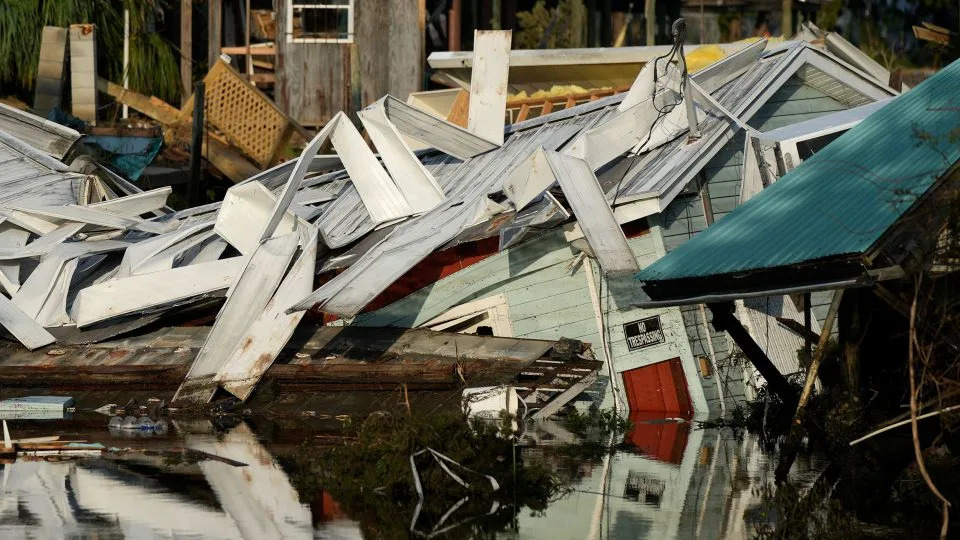
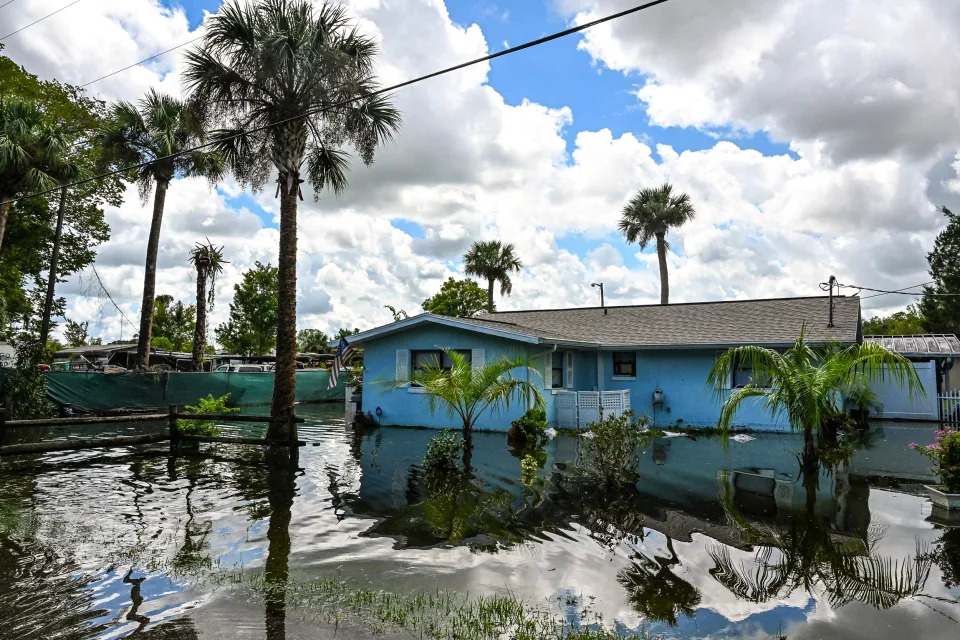
An unstilted home that came off its blocks sits partially submerged in a canal in Horseshoe Beach, Florida, on September 1, two days after Hurricane Idalia hit. - Rebecca Blackwell/AP
An unstilted home that came off its blocks sits partially submerged in a canal in Horseshoe Beach, Florida, on September 1, two days after Hurricane Idalia hit. – Rebecca Blackwell/AP

CNN teams reporting in Florida since Idalia hit haven’t observed any worker shortages.

But in recent months, Vilchez says he’s received multiple reports from managers who’ve showed up to construction sites expecting to see workers and instead found the worksites abandoned.

Soni, Resilience Force’s executive director, says he watched a similar scene unfold a week after the law passed.

“I remember being there one afternoon and talking to a worker at lunchtime. … And he, quite literally, while he was talking to me was packing his tools into his pickup truck and leaving with his crew.”

It was an early sign, Soni says, of harms caused by the immigration law.

“It’s really undermining the ability of Floridians to recover after a hurricane,” he says. “It’s upending the possibility of homes being rebuilt.”

‘I can’t lose my family just to earn a few more dollars’

For Josue, a 23-year-old from Honduras who lives in Texas and works in home remodeling, it’s been hard to watch news reports from Florida showing Hurricane Idalia’s aftermath.

“I feel powerless, seeing how all these people need help,” he says.

Josue, who asked to be identified only by his first name because he’s undocumented, says he knows how hard it is for families to clean up and move forward after disaster strikes.

“We’ve had hurricanes like this hit Honduras, and people have helped us,” he says. “And that’s one reason I want to help. We do it with all our hearts. We do it because we are all equal.”

Last year, he spent months in the Fort Myers area rebuilding homes “from top to bottom” – some still swamped with floodwaters, some with roofs ripped off.
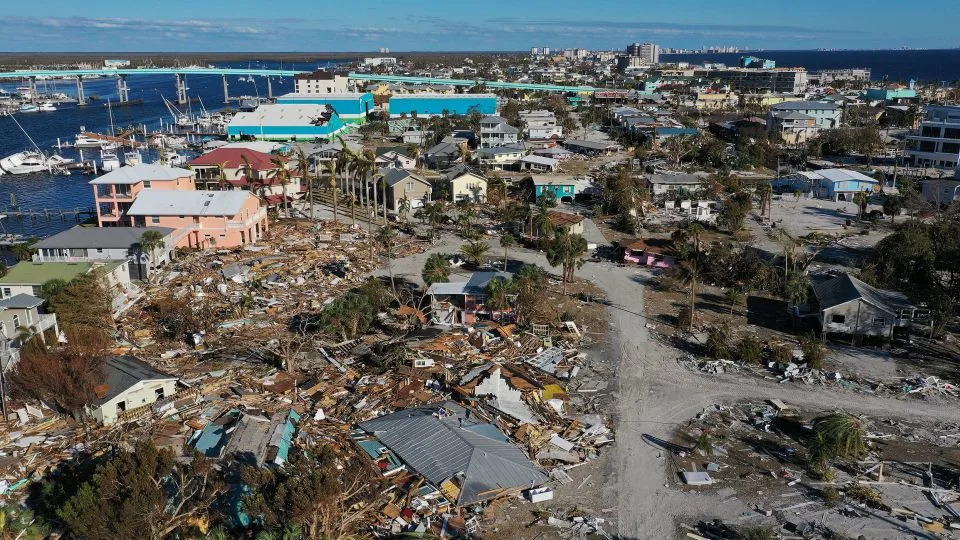
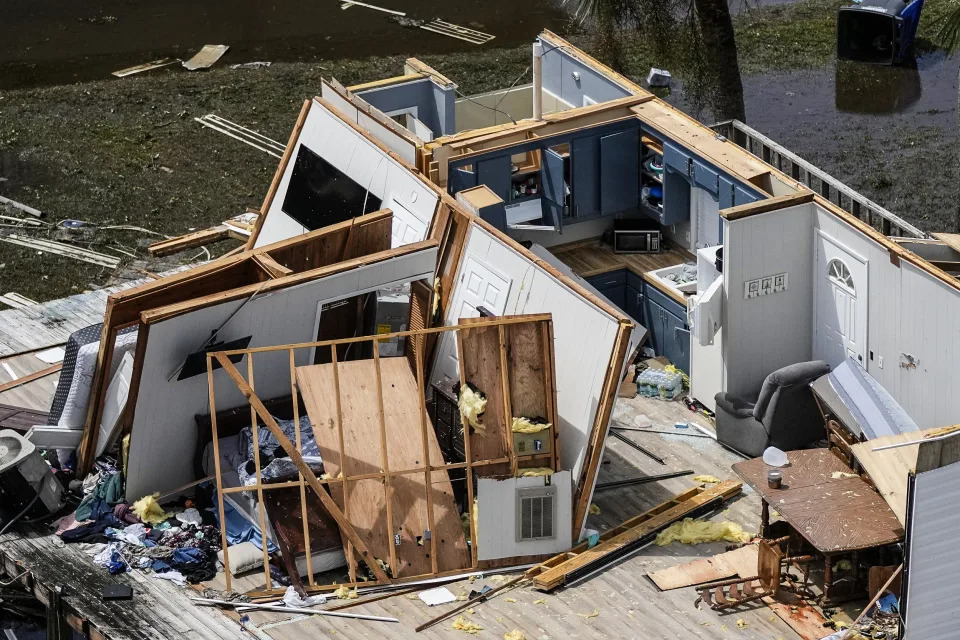
In this aerial view, destruction left in the wake of Hurricane Ian is shown in Fort Myers Beach, Florida, on October 2, 2022. - Win McNamee/Getty Images
In this aerial view, destruction left in the wake of Hurricane Ian is shown in Fort Myers Beach, Florida, on October 2, 2022. – Win McNamee/Getty Images

This year, he says he doesn’t feel safe returning to the state.

Neither does 30-year-old Javier, who lives in New Orleans and also asked to be identified only by his first name because he’s undocumented.

After a few months remodeling homes in Fort Myers after Hurricane Ian last year, Javier says he sensed the atmosphere in the community shifting. Rumors swirled of undocumented workers getting arrested. He fled to Louisiana after hearing that more raids were imminent.

“If it was like that then, imagine how it would be now, with this law,” he says.

He thinks of the many family members he’s supporting, like his 12-year-old daughter in Honduras, who wants to be a surgeon when she grows up. And he thinks of his two sons living in Louisiana.

“I can’t lose my freedom,” he says. “I can’t lose my family just to earn a few more dollars.”

He’s worried about damage from this hurricane – and the next one

Officials are still surveying the damage Hurricane Idalia left behind when the Category 3 storm made landfall last week in Florida’s Big Bend region.

So far, despite the storm’s intensity, experts say the damage appears to be less extensive than other major hurricanes, partly because Idalia made landfall in a less populated region.

Hurricane Idalia caused between $12 billion and $20 billion in damage and lost output, according to a preliminary cost estimate from Moody’s Analytics. Hurricane Ian caused an estimated $112.9 billion of total damage, according to the National Hurricane Center.

Saket Soni, executive director of Resilience Force, speaks to workers in a parking lot in LaPlace, Louisiana, on February 07, 2022. - Josh Brasted/Getty Images
Saket Soni, executive director of Resilience Force, speaks to workers in a parking lot in LaPlace, Louisiana, on February 07, 2022. – Josh Brasted/Getty Images

Even though the damage from this storm isn’t as extensive, Soni says his contacts in the state still report that significant help is needed.

“There’s pretty major devastation in rural areas. There’s a lot of fallen trees. There’s a lot of homeowners in rural areas trying to clean their yards, and an older population of homeowners that needs the help,” Soni says.

While worker shortages in the wake of Idalia haven’t been reported, Soni says that’s a very real possibility if another major storm strikes the state this hurricane season, which ends November 30.

Forecasters are currently eying Hurricane Lee in the Atlantic, although they say it’s too soon to know whether the storm will strike the mainland US.

“Thankfully this recent hurricane, Idalia, did not hit a major city, but the next hurricane could hit the day after tomorrow,” Soni says. “It could come for Jacksonville or Tampa or Tallahassee. And at that point the governor would have a massive rebuilding effort on his hands, and no workers to fuel it. That’s really the situation that I’m concerned about.”

That, too, would be a disaster, Soni says – but one that he says is man-made, and avoidable.

CNN’s Matt Egan, Gloria Pazmino, Bill Kirkos, Carlos Suarez, Denise Royal, Isabel Rosales, Laura Robinson and Elisabeth Buchwald contributed to this report.

We just had the hottest August on record. What does it mean?

Yahoo! News

We just had the hottest August on record. What does it mean?

Ben Adler, Senior Editor – September 6, 2023

A thermometer reads 45 degrees C in Toulouse, France
A thermometer reads 45 degrees Celsius (113 degrees Fahrenheit) on Aug. 23 in Toulouse, France. (Alain Pitton/NurPhoto via Getty Images)

Labor Day has passed, but cities including New York are still sweltering through a stretch of above 90-degree Fahrenheit temperatures this week, in what has been the world’s hottest summer on record. The Northeast, from northern Virginia to New England, is under a heat advisory, with Washington, D.C., expected to reach 100°F on Wednesday, according to Bloomberg News.

Wednesday also brought more evidence of global warming. Last month was the hottest August ever recorded and the second-hottest month ever measured, behind only July 2023, the World Meteorological Organization and the European Union’s Earth Observation Program, known as Copernicus, announced.

This June was also the hottest June ever recorded, and the last three months were by far the hottest three-month stretch in history, according to the WMO and Copernicus.

“The dog days of summer are not just barking, they are biting,” U.N. Secretary-General António Guterres said in a statement. “Climate breakdown has begun.”

Read more from Yahoo News: This summer was a global record breaker for the highest heat ever measured, meteorologists say, via Associated Press

A record-breaking summer
Salvation Army volunteer Francisca Corral, center, gives water to a man at a the organization's heat relief station in Phoenix
A Salvation Army volunteer gives water to a man at the organization’s heat relief station in Phoenix on July 11. (Matt York/AP)

“The three months that we’ve just had are the warmest in approximately 120,000 years, so effectively human history,” Samantha Burgess, deputy director of Copernicus, told AFP. Burgess is predicting that 2023 will end up being the hottest year to date.

Temperatures spiked before summer even officially began on June 21. June saw global average temperatures 1°F above those documented between 1991 and 2020 for the same month, easily breaking the previous record from 2019 of 0.7°F above average.

“Regionally, much of northwestern Europe also saw record temperatures, while parts of North America, Asia and eastern Australia saw temperatures considerably above average” this June, the Hill reported.

The first three weeks of July were so hot that the WMO and Copernicus were able to accurately predict that it would be the hottest month ever before it was even over. The heat was felt all over the United States, with as many as 150 million Americans under heat alerts at one time. During that month, Phoenix experienced a record-breaking 31 straight days of temperatures above 110°F, filling emergency rooms with victims of extreme-heat exposure.

August continued the trend. Like July, last month saw temperatures 2.7°F hotter than the average for the same month in the second half of the 19th century.

August temperatures were well above average in the Southern Hemisphere, where it is winter, including in Australia, several South American countries and much of Antarctica. In early August, parts of Argentina, Chile and Paraguay had temperatures in the high 80s Fahrenheit, way above their normal winter weather, which would be in the 40s.

The oceans also broke heat records last month. The warmest ocean temperature ever was recorded on Florida’s Gulf Coast, a Jacuzzi-esque 101.1°F. For the month as a whole, the global average ocean temperature of 69.8° F was also the hottest on record.

Read more from Yahoo News: Summer 2023 was hottest on record, scientists say, via Reuters

The reverberations
 Smoke and flames rise from the Smith River Complex Fire in Gasquet, Calif., on Aug. 16
Smoke and flames rise from the Smith River Complex Fire in Gasquet, Calif., on Aug. 16. (Caltrans via AP)

Extreme heat has direct consequences such as deaths from heatstroke, but also a number of indirect consequences that have been felt all over the country this summer.

High ocean temperatures can kill coral reefs, fish and shellfish, and sea grasses.

And higher air temperatures cause more water to evaporate, which both worsens droughts and makes rainfall heavier. Due to unusually dry conditions in Canada, the nation’s wildfire season started early and severely this year, causing wildfire smoke to billow across much of the Northern U.S. So far, an area larger than Greece has burned in Canada this year.

Warmer air and ocean temperatures also contributed to deadly wildfires on the Hawaiian island of Maui, torrential downpours that caused flooding in Vermont and upstate New York, and the first hurricane to make landfall in California in 84 years.

Read more from Yahoo News: 2023 likely to be hottest year on record, via AFP

The causes
A man walks through wildfire wreckage in Lahaina, Hawaii
A view of Lahaina, Hawaii, on Aug. 11 after the wildfires there. (Rick Bowmer/AP)

Scientists are virtually unanimous in saying that this year’s heat is driven primarily by global warming, which is caused by increased concentrations of heat-trapping gases, mostly from burning fossil fuels.

“Global warming continues because we have not stopped burning fossil fuels — it is that simple,” Friederike Otto, a climate scientist at Imperial College London, said in response to the announcement from the WMO and Copernicus.

This year is also especially warm because of El Niño, which is associated with a band of warm ocean water that develops in the Pacific Ocean.

Many experts say the rising temperatures and their deadly effects should spur governments to take more action to reduce greenhouse gas emissions.

“2023 is the year that climate records were not just broken but smashed,” Mark Maslin, a professor of climatology at University College London, told reporters. “Extreme weather events are now common and getting worse every year — this is a wake-up call to international leaders.”

Drivers squeezed as auto insurance costs soar across the U.S.

The Washington Post

Drivers squeezed as auto insurance costs soar across the U.S.

Eli Tan and Aaron Gregg – September 5, 2023

Louisiana resident Kalisa Hobbs said she has no choice but to accept auto insurance rate hikes. (Emily Kask for The Washington Post)

Car insurance is a growing burden for Kalisa Hobbs.

Hobbs, who lives near the northern shore of Louisiana’s Lake Pontchartrain, said the cost of her auto coverage jumped almost 30 percent this year when State Farm added hundreds of dollars to her annual premium, raising it to $1,806. “I’m not going to go hungry or homeless, but like everybody else I live on a budget, and when that budget gets interrupted, it’s difficult,” said Hobbs, 56, who works as a communications manager at a paper mill. “It’s just on my credit card, and I’ll pay it off when I can.”

Hobbs has been swept up in a larger trend affecting hundreds of thousands of American drivers: soaring car insurance rates, with some states seeing increases above 50 percent in the past year.

Premiums have kept climbing even as other types of inflation have cooled. According to the Bureau of Labor Statistics, car insurance for U.S. drivers in July was 16 percent more expensive than in July 2022, and 70 percent more expensive than in 2013.

“Car repair costs, body shop wages, and used car prices have all had significant increases,” said Frank Palmer, chief insurance officer at Root Insurance. “The entire industry has had to raise rates to keep up with these trends.”

Motor vehicle maintenance costs, for example, are up 13 percent from July of last year, according to the Bureau of Labor Statistics.

“It’s more expensive to diagnose newer vehicles,” said David Woodall, a mechanic at Metro Motor in Washington, D.C. “The parts aren’t a whole lot more expensive, but the frequency of repair on them is more than it used to be. If an air bag goes off, that’s thousands of dollars – a new car might have eight air bags in it.”

But the rate hikes are also an attempt by insurers to make up for big payouts driven by floods and natural disasters, which insurers categorize as “catastrophe losses.” States prone to climate disasters have seen some of the steepest auto-rate hikes.

In Colorado, car insurance premiums have increased 52 percent since last July as blizzards, tornadoes and hailstorms have led to an increased number of claims. And in Florida, premiums have soared 88 percent as insurers scramble to make up losses from hurricane-linked damage claims.

“Regular people are being priced out of the state,” says Inger Berg, a resident of Pensacola, Fla. She says Allstate recently hiked the policy on her Volkswagen Jetta by $85 a month.

The hikes follow a tough year for many insurers.

In 2022, State Farm reported $13.4 billion of underwriting loss in its auto insurance department. Allstate, which reported a $678 million loss in that sector in the first half of 2023, increased its auto insurance rates by 9.3 percent across 15 locations in May to make up for the losses, Allstate chief financial officer Jess Merten said last month.

State agencies have largely gone along with these hikes, executives said.

“We’re going to maximum file rates everywhere we can, and we’re not getting as much pushback from regulators because the numbers are pretty clear,” Allstate chief executive Tom Wilson said during the company’s most recent earnings call. “Like, it’s not like we’re making it up.”

No escape from higher premiums

Rising rates especially hurt those who rely on their vehicles to get to work or manage family life, experts said, with many drivers seeing their budgets stretched to the brink.

Car insurance is required by law ― “just another part of adulting,” as Hobbs put it ― and rates can go up or down based on factors that are out of any individual’s control, even with a clean driving record.

A driver’s auto bill can increase simply because of where they live, or because repair services they haven’t used are becoming more expensive.

That’s what happened to Hobbs when State Farm hiked her annual premium by $400. She was in one accident but didn’t file a claim because it wasn’t her fault, she said. She was told it was part of a statewide increase this year.

State Farm spokesman Justin Tomczak did not address Hobbs’s account specifically, but said car insurance premiums in Louisiana are expected to increase by about 17.7 percent in 2023, for both new and existing customers. Higher premiums in Louisiana and elsewhere are driven by inflationary pressures, supply chain issues and higher claim costs, he said.

“We continue to adjust to these trends to make sure we are matching price to risk,” Tomczak said in an email.

Although auto insurance rates in Louisiana actually fell 6 percent in 2022, the state’s average premium of $2,546 remains the second-highest behind Florida’s. Hobbs pays less than that, but she feels the sting of every increase in her total insurance bill, which she estimated at more than $22,000 a year across multiple providers for all forms of coverage, including property, medical and life insurance.

Consumer advocates point out that the auto insurance industry had a record year in 2020, when fewer cars were on the road but the rates were priced in from the previous year.

No matter how much control regulators have, insurers are allowed to set profitable rates, said David Forte, a policy adviser for the Office of the Insurance Commissioner in Washington state. Even in states with strict oversight, such as California and Washington, Forte said, insurers are allowed to price in an estimated profit of about 5 percent.

States with looser regulations are finding new ways to control costs. Last year, in Georgia, the state’s insurance commissioner said he was “angry and disappointed” in Allstate for raising rates 40 percent. In May, Gov. Brian Kemp (R) passed a law that gave state insurance regulators more control over prices.

But regulators have to tread a fine line between controlling costs and driving away insurers. Some insurance companies are abandoning parts of the Southeast, leaving drivers with few options. Farmers Insurance recently suspended new policies in California, Louisiana and Florida, for example.

“There’s one thing worse than rising rate hikes,” Georgia Deputy Insurance Commissioner Steve Manders told The Washington Post. “And that’s not having coverage at all.”

In southern Mississippi, student Andrew “AC” Bledsoe has been driving for Uber in the summer months, when his graduate stipend to study lighting and sound design isn’t paying the bills. In early 2022 he signed up with Root Insurance Company, which tracks policyholders through a cellphone app and promises cheaper rates for safe drivers.

Bledsoe said he was led to believe that good driving behavior would keep monthly insurance premiums low, but his rates kept climbing even though he retained a driver safety rating of 8 out of 10. His six-month insurance rate climbed from around $1,150 to nearly $1,800 ― growing larger than his car payment and not far from his monthly share of rent.

“It sounded like a great deal because I take pride in staying safe on the road,” Bledsoe said in an email.

“But,” he said later in an interview. “It wasn’t in my budget for the price to go up.”

Root’s Palmer said the company recognized industry-wide loss trends sooner than other insurers. He predicted that other competitors “will continue to take rate increases going forward” and said he sees Root’s good-driver discount as “still a useful tool to bring insurance costs down for good drivers.”

But it’s not useful enough, in Bledsoe’s view. He’s switching to State Farm, which he says offered him a cheaper rate.

Hitting low-income drivers hard

The higher costs of car insurance are being passed down to the country’s most financially vulnerable drivers, economists and consumer advocates say.

Lower- and middle-income households are already squeezed by the rising cost of shelter, KPMG chief economist Diane Swonk said, and car ownership is yet another cost that harms them disproportionately.

Federal rules allow insurers to consider socioeconomic factors when setting rates, leading to the worst increases being borne by the people least able to afford them, said Doug Heller, director of insurance at the Consumer Federation of America.

“If you have a blue-collar job, or if you only have a high school degree, a number of companies will charge you more than if you’re a white-collar professional,” Heller said. “Everybody’s facing rate hikes, but a greater share is borne by lower-income drivers.”

Families also often face a heavier financial burden, especially when all adults in a household, along with teenage children, need transportation to work. And recent immigrants can suffer a financial penalty if insurers won’t accept their out-of-country driving experience.

Refugee families living in the United States, for example, have increasingly been downgrading from multiple cars to just one, said Jon Vosper, an executive at the aid organization International Rescue Committee. Those refugees are struggling with higher premiums, which, along with rent, make it harder to live in America’s car-centric suburban areas, according to Fred Rabin, a financial education specialist with IRC in San Diego.

Rabin recalls one client, an Afghan refugee, who was quoted at nearly $550 per month because the insurance company wouldn’t count his previous driving experience. But Rabin says his clients have no choice.

“A car here is a need, not a want,” Rabin said. “If you don’t have a car, you can’t work, you can’t afford expenses.”

Some drivers are downgrading to “liability-only” policies that fulfill legal requirements but otherwise offer little, if any, coverage, Vosper said.

Driving without insurance is illegal and can lead to the suspension of a driver’s license – or even jail time in some states – but some drivers are taking the risk and dropping insurance altogether. A 2023 Policy Genius survey of nearly 3,000 drivers ages 17 to 34 found that in the past year, 17 percent of them opted to drive uninsured.

But Louisiana resident Hobbs doesn’t see that as an option. She’s sticking with State Farm for now despite her rate increase, assuming other providers would charge her similarly.

“I sucked it up and paid it, because what can I do?” she said. “I have to have insurance on my car.”

Amy Nakamura contributed to this report.

‘The Old Farmer’s Almanac’ Predicts That Winter Will Be Frigid and Snowy Everywhere But Here

Country Living

‘The Old Farmer’s Almanac’ Predicts That Winter Will Be Frigid and Snowy Everywhere But Here

Karla Walsh – September 1, 2023

‘The Old Farmer’s Almanac’ Predicts That Winter Will Be Frigid and Snowy Everywhere But Here


“Hearst Magazines and Yahoo may earn commission or revenue on some items through these links.”

Since 1792, when Robert B. Thomas founded his publication The Old Farmer’s Almanac, the brand has been releasing long-long-term seasonal forecasts.

These conjectures are based on a formula that combines old methods like solar science and the study of sunspots (magnetic storms on the sun’s surface, which were once thought to affect conditions on Earth), with new ones, such as climatology and the study of weather patterns, meteorology, and the atmosphere.

Admittedly, many meteorologists believe that you can’t reliably trust a forecast beyond 10 days. However, with a self-reported 80 percent accuracy average, there’s something tempting about taking a peek about the Almanac’s predictions to see if we can tell the meteorological future.

So what’s ahead for around the next solstice, December 21, 2023? The Old Farmer’s Almanac 2023-2024 Winter Forecast claims to have our answers. Apparently, it’s a wise idea to have your coat and mittens ready, because “the 2024 Old Farmer’s Almanac predicts snow, seasonable cold, and all of winter’s delights,” the authors explain. “This winter’s forecast is sure to excite snow bunnies and sweater lovers alike, promising a whole lot of cold and snow across North America!”

In nearly all snow-prone parts of the country, expect higher-than-usual rates of snowfall, with an early start and late end to flurry season. Alongside the frosty scenery, you can anticipate colder-than-common temps. Central and Eastern states might be blasted with another frigid polar vortex this winter. In fact, “only snowy New England and the Atlantic Corridor will enjoy winter temperatures which are milder than what’s typical for their regions,” the Almanac says.

<p><a href=
Shop NowThe 2024 Old Farmer’s Almanacamazon.com$8.22More

In the Deep South, Texas, and California, rain will prevail, and residents along the majority of the Eastern coastline may experience a mix of mild and cool temps. The Pacific Northwest is one region that’s expected to remain “relatively dry and cold throughout the season.”

If you’re curious about what the crystal ball says about your particular locale, check out this region-by-number map to determine where you land. Then check out your specific weather prediction below. (Psst…we’ve called out all the spots where you may be able to look forward to a white Christmas, in case sledding, snowball fights, or simply feeling like you’re sitting inside a snowglobe are treasured parts of your holiday traditions.)

  • Region 1: Northeast — “The snowiest stretches occur in mid-to late November, mid-December and early to mid-January,” the Almanac says. Overall, the temps appear to be tracking above normal, with chilly spurts in mid- to late November, early to mid-January, and early to mid-February.
  • Region 2: Atlantic Corridor — Snowfall is expected to be 2 to 3 inches above monthly averages, with the snowiest parts of the season at the tail end of December, late January, and mid-February. Temperatures should be above normal, except for a cold spell from late January to the middle of February.
  • Region 3: Appalachians — You may notice above-normal overall precipitation and snowfall, however. As far as the mercury levels, they are on track to be just below average.
  • Region 4: Southeast — While it’s unlikely to be a white Christmas, it might be a wet one, folks! Overall precipitation rates seem higher than usual, as do temps, which are expected to be mild and slightly above normal.
  • Region 5: Florida — Wet and mild rules the day for most of the state (except the dryer south). Snowbirds will be happy to hear that Florida’s winter temps are anticipated to be milder than usual this year.
  • Region 6: Lower Lakes — North of I-90, Santa might bring you a white Christmas! Beyond that, the snowy, colder-than-average periods are expected for late January through mid-February.
  • Region 7: Ohio Valley — With a wetter and colder than usual winter on the horizon, residents can look forward to a snowy week around Hanukkah and Christmas. “The coldest spells will occur in late December, early January, and late January through mid-February,” the authors say.
  • Region 8: Deep South — Get your rain boots ready; you’ll need them for much of the wet and mild yet colder-than-common season. The chilliest times are forecasted for late December, early and late January, as well as early February.
  • Region 9: Upper Midwest — Go ahead and start dreaming of a white Christmas, because the authors claim that this is one of the few regions that is expected to entirely be treated to a fluffy, white gift on December 25. Winter temps are anticipated to be below normal, especially during the second half of November, the majority of December, the start and end of January, and early February. Snowfall is also expected to be above normal rates.
  • Region 10: Heartland — Keep that scarf handy. The forecast for this region includes colder than normal climate. You can also anticipate a white Christmas, with winter’s snowy peak from late December to mid-January.
  • Region 11: Texas-Oklahoma — With just a bit more precipitation and temps leaning ever so colder in the north but warmer in the south, conditions are looking about on par for the course in these states.
  • Region 12: High Plains — Precipitation and snowfall will be a bit higher than most years, and “it will be extra cold,” the Almanac explains, with the glacial temps foreshadowed for late November, late December, and early to mid-January.
  • Region 13: Intermountain — Who’s ready for some soup? Temps are prophesied to be an estimated 4° F below average, and “we’re looking at above-normal snowfall. The snowiest periods will be in mid- to late November, early and late January, and mid-February,” the authors claim. “Expect a white Christmas!”
  • Region 14: Desert Southwest — In parts of this region that typically receive snow, folks can await more flakes than normal, with the snowiest times during the second half of January and mid-February. Temps will be cooler than usual, especially in late November, at the start and end of December, and throughout late January.
  • Region 15: Pacific Northwest — Although this region is known for its frequently dreary conditions, residents can look forward to a colder yet drier-than-normal winter. The coldest weeks will fall in mid-November, late December, and mid-January.
  • Region 16: Pacific Southwest — It’s going to be a wet, stormy, and cold season, with the most precip predicted during early and late January, early to mid-February, and mid-March.
  • Region 17: Alaska — With a white Christmas and snowier-than-usual season ahead, you may guess that it will also be a frigid season. But the Almanac claims that temps should be about 4° F above average.
  • Region 18: Hawaii — Rainy and mild is the M.O. for the islands, the Almanac predicts. “Expect the stormiest periods in early November in the east and early January and mid-February.”

Exxon Mobil Predicts Climate Efforts Will Fail

Futurism

Exxon Mobil Predicts Climate Efforts Will Fail

Maggie Harrison – September 1, 2023

Pexximist Mobil

According to Exxon Mobil, oil giant and one of the more prominent architects of our planet’s fossil fuel-laden doom, humanity is likely to fail its climate goals of halting a global temperature rise of two degrees Celsius by 2050.

As The Wall Street Journal reports, Exxon published its grim prediction in a Monday climate report, effectively arguing that while global climate change efforts have made some progress — CO2 emissions caused by world fossil fuel consumption, the company posits, will fall by 25 billion metric tons by 2050, which will mark a 26 percent decrease from this decade’s “peak of 34 billion,” according to the WSJ — it simply won’t be enough to curb that dreaded two-degree global temperature uptick.

“An energy transition is underway,” reads the Exxon report, according to Reuters, “but it is not yet happening at the scale or on the timetable required to achieve society’s net-zero ambitions.”

Very bleak! And yet, according to the WSJ, Exxon also, in the very same report, argued that fossil fuels are conveniently still necessary to power worldwide economic growth.

“Fossil fuels remain the most effective way,” said the oil producer, “to produce the massive amounts of energy needed to create and support the manufacturing, commercial transportation, and industrial sectors that drive modern economies.”

Great. Thanks for nothing.

Cigarette Marketing

We really can’t stress enough how ludicrous it is to receive such dismal climate projections from Exxon specifically. To back up for a second: in 2015, an investigation revealed that executives at Exxon were made aware of the threat of greenhouse gas-caused climate change back in 1977, long before the public knew anything about it. They chose to ignore the risk, even spending millions to launch a long series of climate misinformation campaigns. Today, as the WSJ notes, the company is currently embroiled in a number of lawsuits related to climate deception.

That’s all to say that this latest report feels much like the cigarette lobby publishing a memo declaring that people are still dying from lung cancer, before turning around and explaining why cigarettes are still super useful and necessary long-term for social progress, actually. (Indeed, there are a lot of similarities between the cigarette lobby and oil giants.) And in June of this year, it’s worth noting, Exxon and Chevron shareholders rejected a series of proposals aimed to further limit emissions.

To Exxon’s credit, it’s probably right. The Earth is in a very bad place — and as long as Exxon’s still making upwards of $56 billion in oil sales annually, hitting our 2050 emissions targets is unlikely.

Unrecognizable before-and-after photos show ‘zombie lake’ rising from the grave after years of droughts: ‘It’s been a wild year’

The Cool Down

Unrecognizable before-and-after photos show ‘zombie lake’ rising from the grave after years of droughts: ‘It’s been a wild year’

Jeremiah Budin – September 1, 2023

California has increasingly seen extreme weather in recent years — the state has experienced destructive wildfires as well as both severe droughts and floods.

However, there could be some good news from the wildly fluctuating weather in the Golden State. As a result of record levels of rain and snowpack this winter, some drought-stricken “zombie lakes” appear to have come back to life.

Lake Shasta and Lake Oroville, two of the largest reservoirs in the state, are 86% full, according to data compiled by the Los Angeles Times. That’s a drastic increase from late last year when they were only 35% full.

And if those numbers aren’t shocking enough, the pictures tell the story even better. Photos of Lake Shasta taken in September 2021 show what appears to be a bone-dry valley.

Pictures taken from the exact same spot in April 2023 show a vast landscape. The difference between the two images is so stark that you might not even realize they were the same location if it weren’t for the bridge running through the middle of both photos.

Similar images exist of Lake Oroville, with the difference between them being just as stark.

“It’s been a wild year,” Fresno County farmer David “Mas” Masumoto told The Washington Post. “We forget, November and December, it looked like another drought. We all braced for that and planned for that.”

Instead, farmers have actually been able to rely on canals and irrigation ditches for water instead of being forced to pump groundwater, further depleting resources.

Scientists predict, according to the Post, that this is simply the future of California’s climate — years of drought interspersed with extremely wet years like 2023. One of the state’s main challenges now is figuring out how to capture the maximum amount of rainwater when the wet seasons do come.

The weather changes in California align with the climate science maxim of “dry gets drier, wet gets wetter” that describes the phenomenon where all types of weather become more extreme as changes to our planet’s climates occur.

It is probably not the best plan to hope that climate change simply evens itself out, but at least for now, California has been given a reprieve from its years of devastating drought.

The Sunbelt was the retirement destination of choice. That was before climate change

CNN – Opinion:

The Sunbelt was the retirement destination of choice. That was before climate change

Deborah Carr, Ian Sue Wing and Giacomo Falchetta – September 1, 2023

Editor’s note: Deborah Carr is a professor of sociology at Boston University and director of its Center of Innovation in Social Science. She is the author of “Aging in America.” Ian Sue Wing is a professor of earth and environment at Boston University specializing in climate change economics and integrated assessment modeling. Giacomo Falchetta is a research scholar with the International Institute for Applied Systems Analysis in Italy. The views expressed in this commentary are their own. Read more opinion at CNN.

Retiree Jeanne Langan Burris, 61, a resident of Naples, Florida, often starts her daily tennis match at 7 a.m. Even at that early hour, however, she says she sometimes finds herself baking on the court in triple-digit temperatures.

The torrid heat is a far cry from Westport, Connecticut, where Burris and her husband raised their three children. It’s even further removed from Buffalo, New York — a city renowned for blizzards and brutally cold temperatures — where she grew up.

Deborah Carr - Courtesy Deborah Carr
Deborah Carr – Courtesy Deborah Carr

Burris still loves life in southwest Florida, where she moved a half-dozen years ago to be nearer her aging parents, but climate change has brought challenges. Naples is said to be one of the US cities most likely to suffer the loss of home and property because of rising sea levels. And because of the intense heat, Burris said, “I change two or three times a day,” she said.

Ian Sue Wing - Courtesy Ian Sue Wing
Ian Sue Wing – Courtesy Ian Sue Wing

The summer of 2023 continues to punish Naples – and huge swaths of the United States – with furnace-like weather. Triple-digit heat afflicted tens of millions of people across the center of the country this summer and may prove to be a permanent feature of life in the Sunbelt.

Giacomo Falchetta - Courtesy Giacomo Falchetta
Giacomo Falchetta – Courtesy Giacomo Falchetta

July and August, which saw the hottest summer on record in the US, were particularly brutal in the southern and southwestern states. And week upon week of blisteringly hot weather is especially worrisome for older adults, many of whom chose to relocate to Sunbelt regions in search of balmy winter weather – never counting on the dangerously elevated summer heat that has come with climate change.

Visions of ditching the wearying (and potentially dangerous) task of shoveling snow from their driveways have long attracted retirees to places like Florida, Arizona, North Carolina, Texas and South Carolina, which are the most popular retirement magnets. But older adults in the Sunbelt got warmer weather than they bargained for.

The record-breaking heat waves of summer 2023 (not to mention the already established pattern of temperature records tumbling summer after summer in recent years) has made these localities seem like “hell on earth,” in the words of one unhoused resident of Phoenix who found himself at the mercy of the unrelenting heat.

In Phoenix, 110-degree-plus temperatures continued for an astonishing 31 consecutive days. Arizona is not alone: El Paso, Texas, saw 44 consecutive days of triple-digit temperatures, and the heat index in Miami topped 100 degrees for 46 straight days. Many people find respite indoors in air conditioning of course, but part of the appeal of retirement is being able to stroll and do sports out-of-doors – something that this summer’s stifling heat has made all but impossible.

Organizations and professionals who help retirees plan their golden years have begun counseling that they toss out the old retirement playbook and consider retiring in places where the effects of global warming have so far been less pronounced.

We’re not just talking about personal comfort. Extreme heat is miserable for everyone, but can be particularly lethal for older adults. More than half of the two dozen people who died of heat-related causes in Maricopa County, Arizona, this summer were 65 or older. Heat stress is especially harmful to older people, worsening common health conditions like heart, lung and kidney disease, and even triggering delirium. Poor air quality makes it hard to breathe, especially for those who already struggle with shortness of breath. Even temperatures as low as 80 degrees can be dangerous for older people with underlying health problems.

Prescription medications make older people even more sensitive to heat: Anticholinergics — a class of drugs prescribed for gastrointestinal conditions, COPD and other ailments — reduce their capacity to sweat and cool down, while beta-blockers and diuretics can cause dehydration.

Meanwhile, being confined to an air-conditioned apartment for days on end can leave older adults depressed and isolated. High energy bills that go along with the air conditioning that makes life bearable in warmer climates can also be a significant burden for those living on a fixed income. And seniors with limited physical mobility may find it difficult to travel to a public cooling center — if they are lucky enough to have one nearby.

Will heat waves like the summer of 2023 scare away older adults from southern retirement destinations over the long haul? Or will retirees continue to flock to places like Florida and Arizona in the hope that the summer 2023 swelter is a fluke — and prioritize other enticements like recreational amenities and a low cost of living? The jury is still out, but we urge older adults to seriously factor climate issues into their relocation plans. Our research shows that Sunbelt heat extremes — a direct consequence of human-induced climate change — are here to stay.

If older adults continue to migrate to Arizona, Florida and desert regions of California, the dual forces of rising temperatures and aging populations will place unprecedented demands on cities, counties and states to meet older adults’ pressing health needs. That includes investing in conveniently located cooling centers and training first responders to work with adults who may be reluctant to leave their homes during a heat wave or other weather emergency.

One the other heand, should older adults living in cooler locales like New England, the Pacific Northwest and the upper Midwest stay put to avoid the heat extremes of the Sunbelt? Not necessarily. Northern climates may be cooler, but they are actually heating up faster. Chronic exposure of populations to heat, measured by an indicator called person-degree days, will triple nationwide by 2050 — but will increase by five times in the Mid-Atlantic and upper midwestern states like Michigan and Wisconsin, and a factor of six in New England.

Our research focused on heat exposure only, but climate change drives other extreme weather events, such as droughts, wildfires, hurricanes, flooding and intense blizzards. Resources like Climate Mapping for Resilience and Adaptation provides helpful weather-related information on potential retirement destinations.

Retirees also should research whether a potential future home state has a well-developed climate plan that considers older adults’ distinctive needs. Does your ideal destination have heat and/or weather advisory warning systems? Does your dream neighborhood have cooling (or warming) centers close by? Are there urban green spaces like parks that can protect against the urban “heat island” effect? Could you access supports like Low Income Home Energy Assistance Programs for hardening your home against weather extremes?

In the future, city planners and policymakers must prepare to face the twin challenges of climate change impacts and population aging by investing in knowledge, capacity and infrastructure for adaptation.

The climate system’s inertia means that warming is inevitable, with potential effects nationwide. Careful research and planning can help retirees find a home where they can live out their golden years in relative safety and comfort.

Florida’s insurance industry is in flux as Idalia cleanup begins

NBC News

Florida’s insurance industry is in flux as Idalia cleanup begins

Rob Wile, Gabe Gutierrez, Phil McCausland and Melissa Chan September 1, 2023 Growing concerns over Florida’s insurance rates after Hurricane IdaliaScroll back up to restore default view.
CEDAR KEY, Fla. — As cleanup begins in the aftermath of Hurricane Idalia, the storm has served as a stark reminder that Florida’s insurance industry remains in flux.

Idalia made landfall in Florida’s Big Bend just before 8 a.m. Wednesday as a Category 3 hurricane. It killed at least three people in Florida before it battered Georgia and other states on the East Coast as a downgraded tropical storm.

Idalia moved offshore Thursday morning, leaving around 330,000 customers without power in Florida, Georgia and South Carolina.

Powerful storms have regularly pummeled Florida’s coastal communities in recent years. The hurricanes have brought high winds, lashing rains and deadly storm surge. Idalia brought much of the same, and it has forced many homeowners to turn to their insurance policies in hope that repairing their homes and replacing their belongings might be covered.

But many of those homeowners face uncertainty amid the upheaval that has emerged in Florida’s insurance industry in recent years.

Image: Buddy Ellison, left, and his father Dan look through debris scattered across their property in Horseshoe Beach, Fla., on Aug. 31, 2023, one day after the passage of Hurricane Idalia.  (Rebecca Blackwell / AP)
Image: Buddy Ellison, left, and his father Dan look through debris scattered across their property in Horseshoe Beach, Fla., on Aug. 31, 2023, one day after the passage of Hurricane Idalia. (Rebecca Blackwell / AP)

A thinning insurance market that is beset by more regular hurricanes has caused insurance policy costs to skyrocket. An average home premium in Florida is about $6,000 per year, according to the Insurance Information Institute, an industry trade organization. The U.S. average is about $1,700.

The state’s insurance industry is preparing to lose four insurers since last year — among them: Farmers Insurance, Bankers Insurance and Lexington Insurance. Farmers Insurance announced just last month that it intends to leave Florida, affecting about 100,000 policy holders, and that it would not be writing new policies.

Still, it appears Florida is better-positioned to handle insurance claims than it was last year after the state’s insurers acquired adequate levels of reinsurance — a reimbursement system that insulates insurers from very high claims.

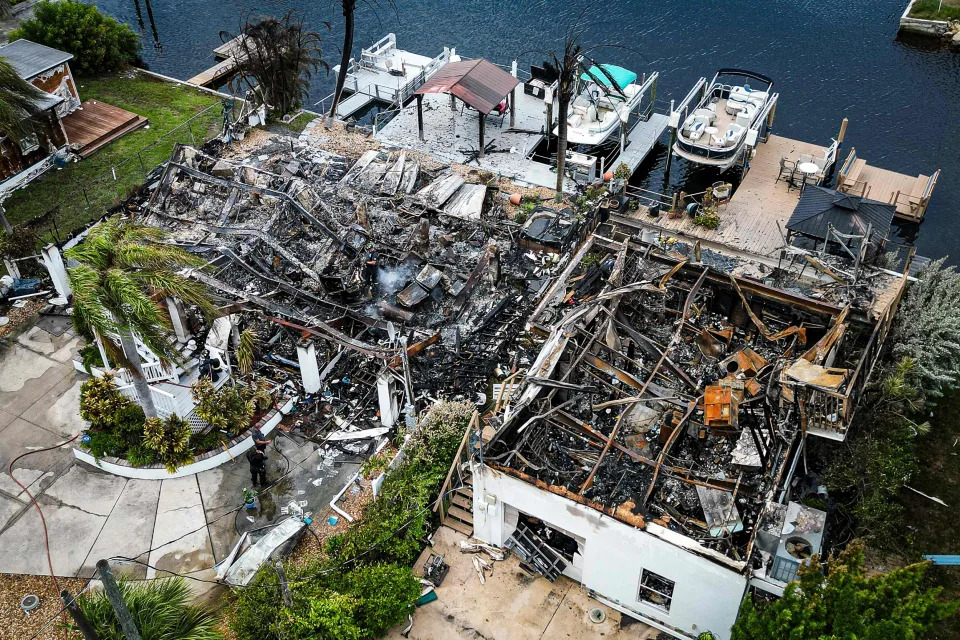
Image: Burned rubble where a house stood after a power transformer explosion in the community of Signal Cove in Hudson, Fla., on Aug. 30, 2023, after Hurricane Idalia made landfall. (Miguel J. Rodriguez Carrillo / AFP - Getty Images)
Image: Burned rubble where a house stood after a power transformer explosion in the community of Signal Cove in Hudson, Fla., on Aug. 30, 2023, after Hurricane Idalia made landfall. (Miguel J. Rodriguez Carrillo / AFP – Getty Images)

“With all the weather and hurricane events that have come through, the reinsurance market has hardened on the Florida insurance companies,” said Chris Draghi, who specializes in the state’s insurance market as an associate director at AM Best, a global credit agency. “That’s led to material increases and reinsurance costs, which, of course, then strain bottom line results to afford the same level of protections as in the past.”

That could mean that, as the costs for insurers rise further, Floridians’ premiums will be affected.

Gregory Buck, the president and owner of National Risk Experts Insurance, based in Florida, said that his company’s premiums last year were four times the national average but that those prices are largely based on reinsurers. He expects rates to increase further.

“If you look at year on year for the last three to five years, you’re probably talking about between 100 and 300% (in insurance cost increases) depending on where you are and obviously the age and the construction of the homes themselves” Buck said by email. “But absolutely, we are looking at more increases.”

Image: The remains of a destroyed home built atop a platform on piles are seen in Keaton Beach, Fla., during a flight provided by mediccorps.org, following the passage of Hurricane Idalia, on  Aug. 30, 2023. (Rebecca Blackwell / AP)
Image: The remains of a destroyed home built atop a platform on piles are seen in Keaton Beach, Fla., during a flight provided by mediccorps.org, following the passage of Hurricane Idalia, on Aug. 30, 2023. (Rebecca Blackwell / AP)

Homeowners in the state said they expect the cost to jump once again, which has led some to consider going without insurance because of the price.

Aimee Firestine stood outside her hotel, the Faraway Inn, in Cedar Key as she said her homeowners insurance rate doubled last year. She said it has left her “thinking about whether you can keep paying for that.”

“That’s one of the issues in Florida is Mother Nature does what it wants and we have to just rebuild and hope insurance can help us out with it,” Firestine said.

The cost of insurance policies could be a major contributing reason that as many as 15% of Florida homeowners are living without property insurance. That is the highest percentage in the country, according to the Insurance Information Institute.

In Florida, 16 severe storms or hurricanes since 2020 have caused $100 billion to $200 billion in damage. That has pushed many in the state to turn to Citizens Property Insurance Corp., the state-backed insurer of last resort, which has quickly become Florida’s fastest-growing insurer.

The company now has more than 1.4 million policies, centered largely in southeast Florida, up precipitously from 500,000 in 2019. It now covers roughly 1 in 8 Florida households.

It is a reflection of how private insurers have left the state as the storms walloping Florida grow in number and strength, said Amy Bach, the executive director of United Policyholders, a nonprofit consumer advocacy group. Because the agency is a state-run entity, it could also have an effect on taxpayer dollars.

“As they retreat and government is having an increasing role, that basically translates into taxpayers,” Bach said. “So really, we’re talking about a huge shift in risk-bearing from the private sector to the public, and it’s a big deal.”

Four new insurance companies will join the Florida market next year after legislative reforms designed to promote market stability were passed and signed into law, which could help address the problem. It is unclear, however, what market share the companies might be able to soak up or what their rates might be.

Image: A flooded house is seen in Crystal River, Fla., on Aug. 31, 2023, after Hurricane Idalia made landfall. (Chandan Khanna / AFP - Getty Images)
Image: A flooded house is seen in Crystal River, Fla., on Aug. 31, 2023, after Hurricane Idalia made landfall. (Chandan Khanna / AFP – Getty Images)

Aggravating the problem, 82% of Floridians do not have flood insurance, which is typically operated by the National Flood Insurance Program, a federal program run by the Federal Emergency Management Agency. Congress created the program in 1968 because of a similar issue — the lack of private insurers in flood-prone areas.

Analysts and experts said few people purchase flood insurance because many do not realize that most homeowners or hurricane policies do not cover flooding, even though hurricanes are a key threat to Florida’s low-lying areas.

Hundreds of thousands of Florida homes lie in flood-risk areas that are not designated as such by the federal government, leaving many homeowners vulnerable to massive out-of-pocket costs for damage after hurricanes.

More than 785,000 properties in the state face flood hazards but are not recognized as high risks in FEMA’s flood maps, according to data from the First Street Foundation, a nonprofit research group.

The First Street Foundation said that it factors in heavy rainfall, the impact of small waterways’ flooding and climate change and that it updates its models annually, while FEMA does not. On its website, FEMA said it “consistently releases new flood maps and data, giving communities across America access to helpful, authoritative data that they can use to make decisions about flood risk.”

Meanwhile, Mark Friedlander, a spokesman for the Insurance Information Institute, said Florida has major flood events year-round.

“We’re going to see very significant flood losses from the hurricane this week, and only a small percentage of homeowners have that coverage,” he said.

In Taylor County, where Idalia made landfall, for example, only 5.4% of homeowners have flood insurance, Friedlander said. The county, in the Big Bend area of Florida, is home to about 21,000 people, according to the latest census data.

“That entire community is under water,” Friedlander said.

Gabe Gutierrez reported from Cedar Key. Phil McCausland and Melissa Chan reported from New York City.

This community lost 5 million gallons of clean, drinkable water a day — all because of an abandoned golf course

The Cool Down

This community lost 5 million gallons of clean, drinkable water a day — all because of an abandoned golf course

Laurelle Stelle – August 31, 2023

Jackson, Mississippi, experienced frequent water shortages and contamination for years, all while a leaking water main poured five million gallons per day into a nearby stream until finally being repaired.

What happened?

According to The New York Times, the leak was located under a golf course at the Colonial Country Club and had been there since 2016. It affected one of the two main pipes carrying water from the local treatment plant to the rest of the city, where the pressure was so strong that water from the leak shot into the air like a geyser and carved a swimming pool-sized pit in the ground.

Not only did the country club leak lose enough to supply 50,000 people with water every day, but it was only one of many large leaks affecting Jackson’s aging water system. The New York Times reports that the city’s two water plants were built in the 1910s and 1980s, meaning that many of the pipes the city relies on are over 100 years old and could break at any time.

Why does it matter?

Jackson residents have been experiencing problems with their water for years, according to the Times. They receive frequent “boil notices” — warnings that the tap water is unsafe and should be boiled before use — and at times receive no tap water at all. Many residents stockpile bottled water to prepare for the next crisis. Being without clean drinking water is bad enough, but experiencing these shortages while clean water is being poured out on the ground is especially alarming.

As temperatures rise across the globe, Jackson isn’t the only part of the U.S. experiencing water shortages. California and other western states have been facing a years-long drought, while pollution has affected the water supply in towns like Dimock, Pennsylvania. These shortages lead to increased water costs and may have long-term effects on agriculture that could drive up food prices.

What is being done to fix it?

Until recently, poor management has prevented any real improvement in Jackson, which is why the Justice Department ordered the city to bring in an outside manager for the water department in 2022, the Times reports. Repairs are finally underway, starting with the Colonial Country Club leak and aided by a recent infusion of federal funds.

Tropical Storm Idalia is nearing Florida. Residents are being urged to wrap up their preparations

Associated Press

Tropical Storm Idalia is nearing Florida. Residents are being urged to wrap up their preparations

Laura Bargfeld – August 28, 2023

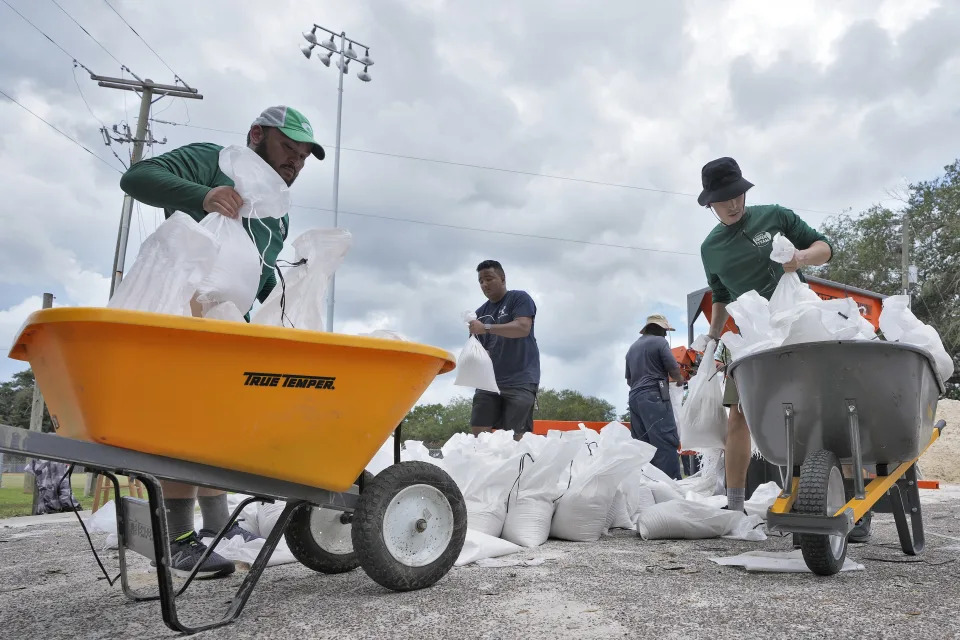
Members of the Tampa, Fla., Parks and Recreation Dept., help residents with sandbags Monday, Aug. 28, 2023, in Tampa, Fla. Residents along Florida's gulf coast are making preparations for the effects of Tropical Storm Idalia. (AP Photo/Chris O'Meara)
Members of the Tampa, Fla., Parks and Recreation Dept., help residents with sandbags Monday, Aug. 28, 2023, in Tampa, Fla. Residents along Florida’s gulf coast are making preparations for the effects of Tropical Storm Idalia. (AP Photo/Chris O’Meara)
Members of the Tampa, Fla., parks and Recreation Dept., help residents with sandbags Monday, Aug. 28, 2023, in Tampa, Fla. Residents along Florida's gulf coast are making preparations for the effects of Tropical Storm Idalia. (AP Photo/Chris O'Meara)
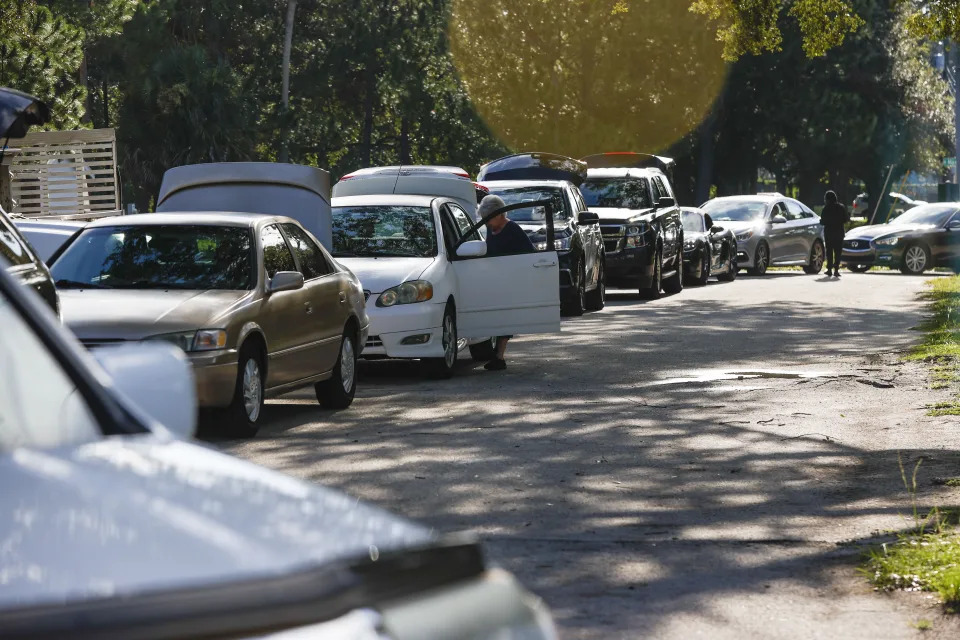
Motorists wait in line during sandbag distribution, ahead of Tropical Storm Idalia's arrival, at MacFarlane Park in Tampa, Fla., Monday, Aug. 28, 2023. (Ivy Ceballo/Tampa Bay Times via AP)
Motorists wait in line during sandbag distribution, ahead of Tropical Storm Idalia’s arrival, at MacFarlane Park in Tampa, Fla., Mon., Aug. 28, 2023. (Ivy Ceballo/Tampa Bay Times via AP)
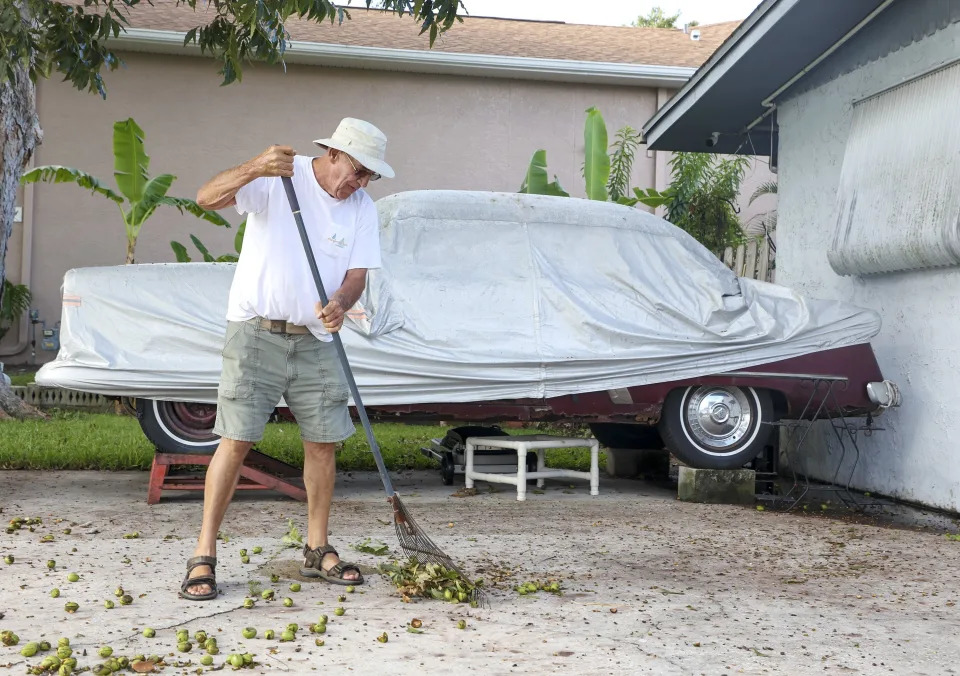
Garry Sears, 78, collects fallen pecans from his pecan tree on Monday, Aug 28, 2023, near his collectible 1953 Ford sedan which he has elevated to keep out of storm surge. Sears, who said he had four inches of water in his Florida room during Tropical Storm Eta, in November 2020, is anticipating as much surge from Tropical Storm Idalia which intensified early Monday and is expected to become a major hurricane before it reaches Florida's Gulf coast. (Douglas R. Clifford/Tampa Bay Times via AP)
Garry Sears, 78, collects fallen pecans from his pecan tree on Monday, Aug 28, 2023, near his collectible 1953 Ford sedan which he has elevated to keep out of storm surge. Sears, who said he had four inches of water in his Florida room during Tropical Storm Eta, in November 2020, is anticipating as much surge from Tropical Storm Idalia which intensified early Monday and is expected to become a major hurricane before it reaches Florida’s Gulf coast. (Douglas R. Clifford/Tampa Bay Times via AP)

TAMPA, Fla. (AP) — Florida residents loaded up on sandbags and evacuated from homes in low-lying areas along the Gulf Coast as Tropical Storm Idalia intensified Monday and forecasters predicted it would hit in days as a major hurricane with potentially life-threatening storm surges.

“You should be wrapping up your preparation for #TropicalStormIdalia tonight and Tues morning at the latest,” the National Weather Service in Tampa Bay said Monday on X, formerly known as Twitter.

As the state prepared, Idalia thrashed Cuba with heavy rain, especially in the westernmost part of the island, where the tobacco-producing province of Pinar del Rio is still recovering from the devastation caused by Hurricane Ian almost a year ago.

Authorities in the province issued a state of alert, and residents were evacuated to friends’ and relatives’ homes as authorities monitored the Cuyaguateje river for possible flooding. As much as 10 centimeters (4 inches) of rain fell in Cuba on Sunday, meteorological stations reported.

Idalia is expected to start affecting Florida with hurricane-force winds as soon as late Tuesday and arrive on the coast by Wednesday. It is the first storm to hit Florida this hurricane season and a potentially big blow to the state, which is also dealing with lingering damage from last year’s Hurricane Ian.

Idalia is also the latest in a summer of natural disasters, including wildfires in Hawaii, Canada and Greece; the first tropical storm to hit California in 84 years, and devastating flooding in Vermont.

“Just got to prepare for these things, hope for the best, and prepare for the worst and, you know, hunker down, as they say,” said Derek Hughes as he waited to load up his car with sandbags at a city park in Tampa.

Florida Gov. Ron DeSantis declared a state of emergency in 46 counties, a broad swath that stretches across the northern half of the state from the Gulf Coast to the Atlantic Coast. The state has mobilized 1,100 National Guard members, who have 2,400 high-water vehicles and 12 aircraft at their disposal for rescue and recovery efforts.

Tampa International Airport and St. Pete-Clearwater International Airport said they would close on Tuesday, and the Sunrail commuter rail service in Orlando was being suspended.

DeSantis warned of a “major impact” to the state, noting the potential for Idalia to become a Category 3 hurricane.

“The property — we can rebuild someone’s home,” DeSantis said during a news conference Monday. “You can’t unring the bell, though, if somebody stays in harm’s way and does battle with Mother Nature.”

DeSantis said the Florida Department of Transportation would waive tolls on highways in the Tampa area and the Big Bend starting at 4 a.m. Tuesday to help ease any burden on people in the path of the storm.

Large parts of the western coast of Florida are at risk for storm surges and floods. Evacuation notices have been issued in 21 counties with mandatory orders for some people in eight of those counties. Many of the notices were for people in low-lying and coastal areas, for those living in structures such as mobile and manufactured homes, recreational vehicles and boats, and for people who would be vulnerable in a power outage.

Pasco and Levy counties, located north of Tampa, both ordered mandatory evacuations for some residents. In Levy County, officials said residents of Cedar Key must be off the island by Tuesday evening because storm surges would make bridges impassable.

“Once the storm surge comes in, help may not be available to reach you,” the county said in a public advisory.

The National Hurricane Center in Miami issued a hurricane warning Monday from Longboat Key in the Sarasota area to the Holocene River, up past Tampa Bay.

Many school districts along the Gulf Coast said they would be closed Tuesday and Wednesday. Several colleges and universities said they would close their campuses on Tuesday, including the University of Florida in Gainesville.

“They told us that our dorm building, especially, is prone to flooding,” said Erin Amiss, a student at Eckerd College in St. Petersburg.

MacDill Air Force Base, located on Tampa Bay, is preparing to evacuate several aircraft and began a mandatory evacuation Monday morning for personnel who live in local counties, the Air Force said in a statement.

Tampa resident Grace Cruz, who has lived in the state for more than 40 years, put away patio furniture, filled her car up with gas and loaded up on sandbags. She worried about the tens of thousands of new residents to Florida who had never before experienced a hurricane, and she had some advice for them.

“If you’re planning to get away, you start ahead of time because of the traffic,” Cruz said. “No kidding. It’s horrible.”

As Gulf Coast residents packed up their cars or hauled out generators in case of power outages, state officials warned about potential fuel contamination at dozens of gas stations.

President Joe Biden spoke to DeSantis on Monday morning, telling the Florida governor that he had approved an emergency declaration for the state, the White House said in a news release. DeSantis is running for the Republican presidential nomination in 2024.

Southwest Florida is still recovering from Hurricane Ian, which was responsible last year for almost 150 deaths. The Category 5 hurricane damaged 52,000 structures, nearly 20,000 of which were destroyed or severely damaged.

At 11 p.m. EDT Monday, Tropical Storm Idalia was about 10 miles (16 kilometers) off the western tip of Cuba, with maximum sustained winds of 70 mph (110 kph), the hurricane center said. Idalia was moving north at 8 mph (13 kph). On Tuesday, it was expected to turn northeast at a faster pace, reaching Florida’s western coast as a dangerous major hurricane on Wednesday.

After moving across Florida, Idalia is forecast to blow through Georgia, South Carolina and North Carolina.

So far this year, the U.S. East Coast has been spared from cyclones. But in the West earlier this month, Tropical Storm Hilary caused widespread flooding, mudslides and road closures in Mexico, California, Nevada and points north.

The National Oceanic and Atmospheric Administration recently said the 2023 hurricane season would be far busier than initially forecast, partly because of extremely warm ocean temperatures. The season runs through Nov. 30, with August and September typically the peak.

Associated Press writers Sarah Brumfield in Silver Spring, Maryland; Cristiana Mesquita in Havana; Mike Schneider in St. Louis, Missouri; and Lisa Baumann in Bellingham, Washington, contributed to this report.