Guilty Trump’s press conference was a disaster. Republicans need to replace him – fast.

USA Today – Opinion

Guilty Trump’s press conference was a disaster. Republicans need to replace him – fast.

Rex Huppke – May 31, 2024

Felon Donald Trump arose glassy-eyed from his crypt of self-pity Friday morning to remind Americans he’s not just the first convicted criminal to run for president – he’s also a rambling, incoherent mess.

Speaking of his conviction on 34 felony counts of falsifying business records to cloak a hush-money payment to former adult-film star Stormy Daniels ahead of the 2016 election, Trump babbled at reporters who had gathered inside Trump Tower in Manhattan.

“Crimes crimes, they’s falsifying business records,” he said, looking exhausted and more half-crazed than usual. “That sounds so bad, to me it sounds very bad, You know it’s only a misdemeanor (FACT CHECK: These were felony counts) but to me it sounds so bad, when they say falsifying business records, that’s a bad thing for me, I’ve never had that before. Im falsifying … you know what falsifying business records is, in the first degree, they say falsifying business records, sounds so good, right?”

Uhhh … sure?

Trump’s post-conviction press conference was a babbling mess

The man some actually believe is qualified to be president of the United States also claimed witnesses in his trial were “literally crucified,” said President Joe Biden wants to “stop you from having cars” and said the judge who will sentence him on July 11 is “really a devil.”

Trump is now a convicted felon. Democrats, don’t let voters forget it.

Trump could have testified in his own defense but didn’t, and the excuse he offered was a random assortment of words that went nowhere then veered into an entirely different subject: “I would have loved to have testified, to this day I would’ve liked to have testified, but you would have said something out of whack like it was beautiful sunny day and it was actually raining out, and I very much appreciate the big crowd of people outside, that’s incredible what’s happening, the level of support has been incredible.”

People react moments after news that former President Donald Trump was found guilty in his trial on hush-money payments in Manhattan Criminal Court on May 30, 2024 in New York City. The former president was found guilty on all 34 felony counts of falsifying business records in the first of his criminal cases to go to trial.

Yes, incredible. Or as the Washington Post reported as Trump was speaking: “There are perhaps a few dozen supporters outside but no organized demonstration of any magnitude. It’s mostly gawkers and normal Fifth Avenue traffic in Manhattan.

Trump as ‘a steady hand’? Now THAT’S funny!

Look, I’m no political strategist, but I’m not sure putting the presidential candidate who was just convicted on 34 felony counts in front of cameras to ramble like the drunk at the end of the bar for more than 30 minutes was a fantastic idea. Trump’s disjointed gurgling delivered several “In-A-Gadda-Da-Vida”-length ads for Democrats to use in the months ahead.

Before Trump spoke, one of his Republican enablers, Rep. Wesley Hunt, let Fox News know what Americans would be hearing from the former president: “We’re going to hear a steady hand. We’re going to hear the voice of a father and a grandfather. We’re going to hear a voice of the future president of this country telling us that it’s going to be okay.”

HAH! Well that sure didn’t happen. We instead heard a dyspeptic chinchilla with anger issues hollering nonsensically.

Presidential polls are useless. Will Trump win? Will Biden? Nobody has a crystal ball.

Republicans really need to consider their options. Trump is a wreck.

Republicans are still adjusting to the new normal of having a convicted felon at the top of their ticket. They’re trying to rally around their twice-impeached, multi-indicted, found-liable-of-sexual-abuse, incapable-of-ever-shutting-up guy. But seeing Trump’s performance Friday and knowing his already erratic rhetoric has worsened with each visit from accountability, maybe it’s time Republican rethink the “presidential candidate” thing.

Off in a quiet corner somewhere sits Nikki Haley, a sane-by-comparison person who was a presidential candidate and would probably be happy to become one again. Perhaps a swap is in order?

Liberals keep saying Biden should be replaced, but what about Trump?

There are people on the left who look at poll numbers and scream, “WE MUST REPLACE JOE BIDEN ON THE PRESIDENTIAL TICKET BECAUSE WE NEED SOMEONE YOUNGER!”

Trump is a convicted felon who does nothing but angrily gripe about grievance after grievance in a way only the most loyal MAGA believers could possibly understand. He’s spiraling like a real-life Gollum from “Lord of the Rings,” obsessed with precious vengeance the way Gollum slimily hungered for the One Ring.

So where are the calls on the right to replace the 77-year-old felon who can’t talk straight with a newer, less legally encumbered version?

Face it, Republicans. The cheese has slid off Trump’s cracker, and it ain’t coming back. Friday was a preview of coming distractions for your party. Either get right or buckle up.

Fox News and right-wing media have already decided the Trump trial verdict

CNN

Fox News and right-wing media have already decided the Trump trial verdict

Analysis by Oliver Darcy, CNN – May 30, 2024

Charly Triballeau/Pool via AP

Editor’s Note: A version of this article first appeared in the “Reliable Sources” newsletter. 

The jury might still be deliberating, but Donald Trump’s media allies have already delivered a verdict to their audiences

Throughout the duration of the Manhattan hush-money trial, Fox News and the rest of MAGA Media have set the stage to absolve Trump in the historic case. Day after day, week after week, popular personalities such as Sean Hannity, Laura Ingraham, and Steve Bannon have lampooned the judicial system, portraying Trump as an innocent victim of political persecution.

Inside this alternate media universe, the actual facts of the case never penetrate the bubble that shields its audiences from detrimental developments for Trump. Instead, alternate dishonest storylines are disseminated as the gospel truth.

Not only is Trump entirely innocent of any and all wrongdoing in the MAGA Media world, but President Joe Biden is guilty of nefariously weaponizing government to wage “lawfare” on his political opponent. Audiences are told that Biden cannot win a fair fight with Trump, so he has resorted to illegal “election interference” by rigging the judicial system against Trump.

It goes without saying that these narratives are built on foundations of lies and innuendo that do not hold water. Biden does not control the judicial system. The hush-money case is taking place in New York state court with charges brought by the Manhattan district attorney. And it isn’t Trump’s left-wing enemies who have been making headlines testifying against the GOP candidate in the case, it’s his former allies, such as one-time fixer Michael Cohen and former National Enquirer boss David Pecker.

Nevertheless, millions consuming right-wing media have been fed these deceptive storylines, impacting how voters perceive current events and, more importantly, cast their ballots. In the Republican Party, voters absorb their information from outlets like Fox News, which has dishonestly run defense for Trump over the course of the trial.

“WHERE’S THE CRIME?” demanded a banner on Ingraham’s prime time show Wednesday along with a graphic showing images of Biden, Judge Juan Merchan, and Manhattan District Attorney Alvin Bragg “THE REAL FRAUDS.”

In the following hour, Jesse Watters accused Merchan in an on-screen graphic of “LEADING THE JURY” and intimated how “very fishy” it was that a “stop Trump” judge was selected to preside over the case.

The progressive Media Matters said in a study published this week that Fox News has leveled at least 200 attacks on Merchan alone since the trial commenced — a staggering number that does not include the attacks on others associated with the case. And the study only accounted for Fox News, not the host of other entities that make up the right-wing media universe.

It can be tempting to ignore the torrent of attacks Trump’s media allies are launching in their unrelenting efforts to undermine the case. But those forces are shaping how a large swath of the country understands the high-stakes and unprecedented trial taking place in lower Manhattan. And they’re a reminder that if Trump were to return to power, he has a powerful propaganda apparatus at his disposal that will do everything in its power to sanitize his actions — whatever they may be.

Who is Juan Merchan, the judge in Trump’s criminal hush-money trial?

The Guardian

Who is Juan Merchan, the judge in Trump’s criminal hush-money trial?

Victoria Bekiempis in New York – May 29, 2024

<span>Juan Merchan in his chambers in New York on 14 March 2024. </span><span>Photograph: Seth Wenig/AP</span>
Juan Merchan in his chambers in New York on 14 March 2024. Photograph: Seth Wenig/AP

When a verdict comes down in Donald Trump’s criminal hush-money trial, all eyes will be on the Manhattan judge Juan Merchan, who has presided over the historic case.

After all, Trump was the first US president, former or present, to face a criminal trial. And before Trump faced a jury in this case, Merchan oversaw other proceedings directly tied to the presumptive GOP presidential candidate.

Those cases included the tax-fraud trial against the Trump Organization and proceedings against the former company CFO Allen Weisselberg. Merchan also will preside over the case against Steve Bannon over allegations that the far-right Trump strategist cheated thousands who donated to build sections of a US-Mexico border wall, scheduled for trial in September.

Related: A ‘catch-and-kill’ scheme and Trump’s pyjamas: key moments from the hush-money trial

Merchan, who was born in Bogotá, Colombia, and immigrated to the US at age six, grew up in the New York City borough of Queens. The first in his family to attend college, he started working at nine and held a variety of jobs, such as hotel night manager, during his studies, according to the New York Times.

Merchan’s past high-profile cases have included proceedings against the “soccer-mom madam” Anna Gristina. He also presides over Manhattan mental health court, where participating defendants agree to undergo closely tracked treatment with the goal of having their cases dismissed, avoiding future encounters with the justice system and finding their footing, the Associated Press said.

While outside observers might think that Merchan is in a no-win position compared with his other cases, legal veterans have praised his handling of the proceedings, noting how he has fostered normality.

“His job is to [oversee] cases, criminal cases, civil cases, whatever cases that come before him, and to treat each one in an impartial manner and I think he’s just trying to do that,” said Shira Scheindlin, a former Manhattan federal court judge who presided over the watershed stop-and-frisk case and is now with the law firm Boies Schiller Flexner.

“It’s high-profile. It’s a little more stressful. I’m sure to have that, to have a former president sitting there in front of you every day, and all the people that former president was bringing with him – he’s been bringing congressmen and senators and governors and whatever, with him,” Scheindlin said.

“So, it’s a little more stressful to see all those people in your courtroom, but it’s not an impossible position. He’s a very experienced judge, and he’s been doing what he knows how to do for 18 years, which is to run a tight ship.”

“Judge Merchan works very hard to not have his courtroom bogged down in distractions and optics and antics … Merchan presided over this trial in the fairest, most efficient and least dramatic way possible,” said Ron Kuby, a veteran defense attorney with a focus on civil rights.

“With his opinions, he has always been a careful and thoughtful jurist, and in the Trump case, every time he had the time to consider a legal issue, he considered it thoroughly and usually wrote an opinion about it, explaining his reasoning and the law supporting the outcome.”

The extraordinary circumstances that Merchan has had to navigate with Trump’s trial have been intensified due to the ex-president’s behavior. Trump repeatedly railed against trial witnesses, prompting Merchan to impose a gag order barring him from doing so.

Merchan expanded the gag order to include court staffers’ families and jurors, as well as prosecutors in the case, after Trump went on the attack against the judge’s daughter. This order did not prohibit Trump from making comments about Merchan, nor the district attorney, Alvin Bragg.

Trump couldn’t help himself, however, and continued to slam trial witnesses and comment on jurors. Merchan held Trump in contempt 10 times, fining him $10,000, and threatened him with jail if he continued to run afoul of his ruling.

Merchan also had to go on the defensive against claims by Trump that had the potential to spur unrest; the candidate’s unsubstantiated allegations about Joe Biden stealing the 2021 election, for example, had prompted the deadly January 6 Capitol attack.

When Trump simply falsely claimed that Merchan had banned him from testifying in his own defense, the judge went on record to clarify this wasn’t the case. “I want to stress, Mr Trump, that you have an absolute right to testify at trial,” Merchan said. “The order prohibiting extrajudicial statements does not prevent you from testifying in any way.”

Neama Rahmani, president of West Coast Trial Lawyers and a former federal prosecutor, noted Merchan’s handling of the gag order in praising the judge.

“I thought he’s done a good job because it’s a very difficult case with a very difficult defendant,” Rahmani said. “I don’t think there was any way he was going to jail Donald Trump for the gag order but he had to try to get him in line – and ultimately, he was able to get him somewhat controlled.”

Trump has repeatedly cast Merchan as biased against him, saying as he left court on 21 May, for example, that “the judge hates Donald Trump. Just take a look. Take a look at him. Take a look at where he comes from. He can’t stand Donald Trump. He’s doing everything in his power.”

Trump also said in an 11-minute courthouse hallway rant: “They’re already cheating on the election with this. And you don’t know what’s happening because the judge is so biased, so corrupt. He’s so corrupt and he’s so conflicted that you never know how these things … a corrupt judge will far surpass a great case for us.”

Jeffrey Lichtman, a longtime criminal defense attorney whose high-profile clientele has included El Chapo, expressed mixed feelings on Merchan’s handling of the case. He spoke positively of Merchan allowing the defense to extensively question Michael Cohen, Trump’s former fixer-turned-top prosecution witness. But he also saw shortcomings.

“I thought that for the most part he was fair, more fair than I’d expected,” Lichtman said of allowing Cohen’s lengthy cross-examination. “I think that as a defense lawyer, you want to have a judge let you have your way with the main cooperator in the case without being stopped.

“With regard to the entire case, I thought that he’s been thin-skinned,” Lichtman said. He pointed to Merchan’s admonition of Robert Costello, an attorney and defense witness in Trump’s orbit, whose behavior the judge described as “contemptuous” in a closed proceeding: “I thought that his handling of Costello was, frankly, an embarrassment to the court.”

Lichtman did not agree that Trump was getting short shrift because he was Trump.

“What people don’t realize: they think that Donald Trump is being treated unfairly because he’s Donald Trump,” Lichtman said. “Every defendant in criminal cases in most courtrooms in New York, federal and state, get the short end of the stick in terms of fairness, in terms of trial rulings.”

The more high-profile the case, Lichtman said, the more this happens, saying: “We’re in a constant uphill battle to get anything we consider to be a fair break from the judge.”

Merchan’s handling of the media has also prompted criticism among the press, who have cited access issues. For several days, Merchan barred photographers from photographing Trump, with court officials alleging, without evidence, that one had taken a photo outside a designated area.

And, after Merchan started to address Costello’s outbursts, he ordered court officers to “clear the courtroom”, kicking out the press and refusing to give a media attorney an opportunity to address him about the access issue.

The US constitution, as well as New York state and common law, stipulates that there is a presumption of access in court proceedings, meaning they are supposed to be open to the press and public, save for extremely rare circumstances.

Merchan offered circular reasoning for his decision to clear the courtroom: that he had to clear the courtroom knowing that he would have trouble clearing the courtroom.

“The fact that I had to clear the courtroom and that the court officers, including the captain, had great difficulty clearing the courtroom, and that there was argument back and forth between the press and including counsel for the press, goes to why I had to clear the courtroom in the first place,” he said.

Ex-President, Felon and Candidate: 5 Takeaways From Trump’s Conviction

The New York Times

Ex-President, Felon and Candidate: 5 Takeaways From Trump’s Conviction

Donald J. Trump will live the life of a New York convict until he is sentenced on July 11. He faces as long as four years in prison.

By Jesse McKinley and Kate Chistobek  – May 30, 2024

Donald Trump, looking downward.
Donald J. Trump’s conviction, born in the heat of one presidential race, could have an impact on another.Credit…Pool photo by Justin Lane

It was an end like no other for a trial like no other: a former American president found guilty of 34 felonies.

The conviction of Donald Trump, read aloud shortly after 5 p.m. by the jury foreman as the former president sat just feet away, ended months of legal maneuvering, weeks of testimony, days of deliberation and several nervous minutes after the jury entered the Manhattan courtroom.

The former president and the presumptive Republican nominee was convicted of 34 counts of falsifying business records related to a scheme to cover up an extramarital tryst with a porn star, Stormy Daniels, in 2006. That encounter — which the former president denied — led to a $130,000 hush-money payment whose concealment gave rise to the 34 counts of falsifying business records that made Mr. Trump a felon.

Mr. Trump’s sentencing is scheduled for July 11; he has indicated he will appeal.

Here are five takeaways from the last day of Mr. Trump’s momentous trial.

Thursday, the second day of deliberations, seemed to be moving toward a quiet conclusion. Then, suddenly the word came from the judge, Juan M. Merchan: There was a verdict.

Less than an hour later, the headlines reading “guilty” began to be written.

The decision came just hours after the jury had asked to hear testimony involving the first witness — David Pecker, the former publisher of The National Enquirer — including his account of the now infamous 2015 meeting at Trump Tower where he agreed to publish positive stories and bury negative stories about Mr. Trump’s nascent candidacy.

They also wanted to hear testimony from Michael Cohen, whose account closely hewed to Mr. Pecker’s.

Those two witnesses may have spelled doom for Mr. Trump’s defense.

Mr. Trump, 77, was relatively subdued when the verdict was read, wearing a glum expression.

That sedate mask fell away. After he left the courtroom, he expressed disgust at the verdict in the hallway and suggested that voters would punish Democrats at the ballot box.

“The real verdict is going to be Nov. 5 by the people,” he said. “And they know what happened here.”

Allies chimed in. Charlie Kirk, the founder of Turning Point USA, a conservative group, suggested that Republican district attorneys should investigate Democrats. “How many Republican DAs or AG’s have stones?” he said in an online post, adding, “Indict the left, or lose America.”

Alvin L. Bragg, the Manhattan district attorney, had risked his reputation, reviving a prosecution that was derided by some as a “zombie case.” It was alive, then dead, then alive again.

Now, Mr. Bragg has cemented his place in history as the first prosecutor to convict a former president. That victory came after he had been viciously attacked, again and again, by Mr. Trump, who portrayed the case as politically motivated while sometimes personally insulting him.

In a news conference late Thursday afternoon, Mr. Bragg was restrained in his remarks, thanking the jury and calling their service the “cornerstone of our judicial system.” He also reiterated that “this type of white-collar prosecution is core to what we do at the Manhattan district attorney’s office.”

“I did my job,” he said.

Before his sentencing July 11, Mr. Trump will have the same experience as anyone else convicted of a felony in the New York court system.

The New York City probation department will conduct an interview and generate a sentencing recommendation for Justice Merchan. During the interview, a convict can “try to make a good impression and explain why he or she deserves a lighter punishment,” according to the New York State Unified Court System.

Justice Merchan, whom Mr. Trump has spent the last several months excoriating, could sentence the former president to up to four years in prison. Another option is probation, which would require Mr. Trump to regularly report to an officer.

Any punishment could be delayed when Mr. Trump appeals the conviction. It’s unlikely any appeal will get resolved before Election Day, and he could remain free until the appeal is resolved.

It’s too early to know how the verdict will affect the presidential campaign. Nothing in the Constitution prevents a felon from serving as president.

Both Mr. Trump and President Biden immediately tried to capitalize on the guilty verdict in fund-raising emails, including one from Mr. Trump declaring “JUSTICE IS DEAD IN AMERICA!” and calling himself “a political prisoner.”

Mr. Biden also posted a fund-raising appeal shortly after the verdict: “There’s only one way to keep Donald Trump out of the Oval Office: At the ballot box.”

Whether the conviction will resonate with voters in November is impossible to predict. One thing is certain: Mr. Trump’s conviction will test the American people, and the nation’s fealty to the rule of law.

The Secret Reasons Why You Should Always Tip In Cash

Delish

The Secret Reasons Why You Should Always Tip In Cash

Taylor Ann Spencer – May 30, 2024

dollar banknotes and coins, money tips
Why You Should Always Tip In Cashvinnstock – Getty Images

We live in an era of cash-free convenience. We buy most things by swiping or tapping credit cards or holding our phones up to a screen. We prefer to tip our servers, bartenders, and hair stylists the same way because it’s as simple as hitting a button.

But what if I told you that there are several practical reasons why we should all be tipping exclusively in cash? The fast is, cash tipping is the only way to ensure that your servers actually walk away with 100% of their tip money.

As a former NYC bartender and server, I have plenty of my own opinions, but I also talked to several former and current service industry workers to get their perspective. Here’s why you should consider bypassing the credit card tip screen and leaving cash instead.

The Server Gets the Tip Immediately

One of the biggest reasons to tip in cash is that the service worker will receive that money immediately. This is a big bonus on both a psychological and a practical level. According to Colton Trowbridge, a longtime server who has worked in both Kansas and NYC restaurants, cash tips are better because they provide immediate evidence of earning money: instant gratification.

“It feels a little bit more real when it’s in your hand,” he says. This might sound trivial, but when you’re in the middle of a crazy eight-hour brunch shift and your guaranteed hourly rate is only 50% of the legal minimum wage, tangible proof that you are actually earning decent money counts for a lot.

Cash tips are also important because they mean that the server will likely get to take the money home that night. They won’t need to wait two weeks to receive it with a paycheck. This is often true even if the server has to pool their cash tips with others at the end of the night. “I have worked in a pooled house where cash is divided up evenly and then it’s given to you,” Trowbridge shared. “In that case, I prefer it for sure.”

For some servers, this day-to-day cash flow might not be necessary. For others, it might be as critically important as allowing them to buy food for their families or pay the babysitter who watched their children while they were working. Of course this varies by the individual, and there’s no way customers can know a specific worker’s situation. Regardless, cash is always the better bet.

Cash Tips Leave Less Margin for Error

There’s significantly less margin for error when you tip in cash. Think about it: a $10 bill is $10, and when you give it to your server, they have it securely in their hand and its value is indisputable.

But when you tip on a credit card, there are many potential pitfalls. If you’re writing the tip on a printed slip, there’s the possibility for written errors. Maybe you put the period in the wrong place and ended up tipping way less (or way more!) than you intended. Maybe you forgot to sign the slip or, worse, took the signed slip with you by accident.

I have personally lost at least two or three sizable tips when customers erroneously walked out the door with those slips. In these cases, the restaurant’s payment has already been processed, but the only proof of the tip left on the credit card is that slip they scrawled on. Without it, the server is left empty-handed.

glass tip jar at checkout counter
Catherine McQueen – Getty Images
Businesses Can Deduct Credit Card Processing Fees From Tips

No, you didn’t misread that. In most states, it is 100% legal for businesses to pay their credit card processing fees from the tip money left for servers on credit cards.

This is clearly stated on the U.S. Department of Labor website under the Fair Labor Standards Act: “tips are charged on customers’ credit cards…the employer may pay the employee the tip, less that [credit card service fee] percentage.”

Only Maine, Massachusetts, and California have laws banning this. So, to be absolutely clear, if you have tipped a server on a credit card in any other state, there’s a high probability that the server (or the pooled house the server belonged to) didn’t receive the full tip you left them.

Most businesses do not necessarily tell their staff when they are removing the fees from the tip pool. Trowbridge shared that he has worked at one restaurant where he knew they were taking out the fees, but only because he asked them point-blank.

“It’s frustrating,” he said. “I don’t think that’s something that most people are aware of.” Since then, he has worked in several other spots where he and his fellow servers might have been losing out on credit card tip money because of processing fees, yet it was never really discussed. “It’s definitely not a big topic of conversation in the industry.”

In this age of contactless payment, it takes extra planning to make sure you have cash on hand for tipping. But all things considered, it’s definitely worth it. Next time you reach the optional tipping screen, hit “skip” and tell your server you’ll be leaving the tip in cash. They’ll appreciate that extra effort.

Trump criminal charges guidebook: Here are all 88 felony counts against the former president across 4 cases

Yahoo! News

Trump criminal charges guidebook: Here are all 88 felony counts against the former president across 4 cases

Yahoo News breaks down exactly what Trump is being charged with in each case as well as the judges, prosecutors, co-defendants and key dates.

Dylan Stableford and Ed Hornick – May 30, 2024

Donald Trump
Donald Trump at the Iowa State Fair in Des Moines on Aug. 12, 2023. (Brandon Bell/Getty Images) (Getty Images)

Ajury in Manhattan on Thursday found Donald Trump guilty on all 34 counts in his hush money trial.

Trump — the first former American president to be convicted of a crime — faces three other criminal cases.

Below is a breakdown of what Trump is being charged with along with the names of those prosecuting him, his co-defendants, judges overseeing them and key dates in each case:

➡️ Manhattan hush money case
Former US President and Republican presidential candidate Donald Trump walks to speak to the press after he was convicted in his criminal trial at Manhattan Criminal Court in New York City, on May 30, 2024. A New York jury convicted Donald Trump on all charges in his hush money case on May 30, 2024 in a seismic development barely five months ahead of the election where he seeks to recapture the White House. (Photo by JUSTIN LANE / POOL / AFP) (Photo by JUSTIN LANE/POOL/AFP via Getty Images)
Former US President and Republican presidential candidate Donald Trump walks to speak to the press after he was convicted in his criminal trial at Manhattan Criminal Court in New York City, on May 30, 2024. (Photo by JUSTIN LANE/POOL/AFP via Getty Images) (JUSTIN LANE via Getty Images)

VerdictGuilty on all 34 counts

What to know: Trump was indicted last March over his role in the so-called hush money payment to porn star Stormy Daniels, who said she’d had an affair with Trump, on the eve of the 2016 election. Michael Cohen — Trump’s longtime fixer who went to federal prison for orchestrating payments to Daniels and former Playboy model Karen McDougal (who also said she’d had an affair with Trump), as well as for lying to Congress — testified multiple times before the grand jury voted to indict the former president.

What is Trump charged with? 34 identical criminal counts of falsifying business records in the first degree.

[Click here to read the full indictment]

Lead prosecutor: Manhattan District Attorney Alvin Bragg

Attorneys representing Trump: Susan Necheles, Todd Blanche, Emil Bove

Judge presiding: Juan Manuel Merchan

➡️ Georgia election conspiracy case
Fulton County District Attorney Fani Willis
Fulton County District Attorney Fani Willis. (Christian Monterrosa/AFP via Getty Images) (CHRISTIAN MONTERROSA via Getty Images)

What to know: Trump and his allies were charged in a 41-count indictment stemming from a years-long investigation into their efforts to overturn Joe Biden’s victory in the 2020 presidential election in Georgia. Biden carried Georgia by just 11,779 votes. Three of the counts against Trump were later dismissed, though Fulton County District Attorney Fani Willis appealed their dismissal.

What is Trump charged with? 10 criminal counts, including:

• Violation of the Georgia RICO Act
• Conspiracy to commit impersonating a public officer
• Conspiracy to commit forgery in the first degree
• Conspiracy to commit false statements and writings
• Conspiracy to commit filing false documents
• False statements and writings
• Filing false documents

[Click here to read the full indictment]

Who else is being charged?

Eighteen of Trump’s allies, including former White House chief of staff Mark Meadowsattorneys Rudy Giuliani, Jenna Ellis, Sidney Powell, John Eastman, Ray Stallings Smith, Robert Cheeley and Kenneth Cheseboro; former Justice Department official Jeffrey Clark; Republican strategist Michael Roman; chairman of the Georgia GOP David Shafer; Georgia Republican state Sen. Shawn Still; police chaplain Stephen Lee; Blacks for Trump organizer Harrison Floyd; publicist Trevian Kutti; former Coffee County GOP chair Cathleen Latham; Fulton County GOP poll watcher Scott Hall; and Coffee County elections supervisor Misty Hampton.

Lead prosecutor: Fulton County District Attorney Fani Willis

Lawyers representing Trump: Steven Sadow

Judge presiding: Fulton County Superior Court Judge Scott McAfee

➡️ Jan. 6 case
Donald Trump
Trump arriving at Reagan National Airport following his arraignment in Washington on Aug. 3, 2023. (Tasos Katopodis/Getty Images) (Getty Images)

What to know: Last August, a federal grand jury voted to indict the former president over his efforts to hold on to power following his loss in the 2020 election, including his actions leading to the Jan. 6, 2021 insurrection at the Capitol.

What is Trump charged with? Four criminal counts:

• Conspiracy to defraud the United States
• Conspiracy to obstruct an official proceeding
• Obstruction of and attempt to obstruct an official proceeding
• Conspiracy against rights

[Click here to read the full indictment]

Who else is being charged?

The indictment lists six unnamed co-conspirators.

Lead prosecutor: Special counsel Jack Smith

Lead attorney representing Trump: John Lauro

Judge presiding: Judge Tanya Chutkan

➡️ Classified documents case
Boxes of records stored in a bathroom and shower at Trump's Mar-a-Lago estate
This image, contained in the indictment against Trump, shows boxes of records stored in a bathroom at Mar-a-Lago. (Justice Department via AP) (ASSOCIATED PRESS)

What to know: Trump was indicted last June on charges stemming from the Justice Department’s investigation into his handling of classified documents at his Mar-a-Lago estate in Palm Beach, Fla., after he left office as well as alleged efforts to obstruct the probe.

What is Trump charged with? 40 criminal counts in the classified documents case, including:

• Willful retention of national defense information
• Conspiracy to obstruct justice
• Withholding of a document or record
• Corruptly concealing a document or record
• Concealing a document in a federal investigation
• Scheme to conceal
• False statements and representations

[Read the full indictment]

Who else is being charged? Walt Nauta, Trump’s valet and personal aide; and Carlos De Oliveira, the property manager at Mar-a-Lago.

Lead prosecutor: Special counsel Jack Smith

Lead attorney representing Trump: Todd Blanche

Judge presiding: U.S. District Court Judge Aileen Cannon

Southern US city tops list of dirtiest in the nation, study says

Fox News

Southern US city tops list of dirtiest in the nation, study says

Pilar Arias – May 29, 2024

Southern US city tops list of dirtiest in the nation, study says

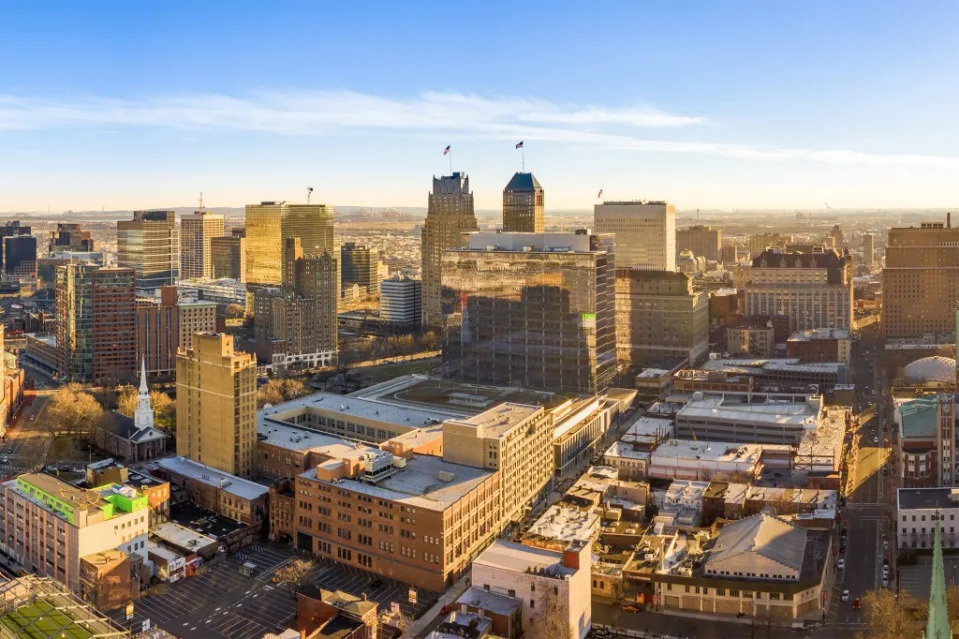
A recent survey named the “dirtiest” city in the U.S., and earning the top spot this year is none other than Houston, taking the crown from last year’s dirtiest, Newark, New Jersey.

Houston’s ranking in the study from LawnStarter came after a comparison of 152 U.S. cities in the categories of pollution, living conditions, infrastructure and customer satisfaction.

The study says Houston, also known as Space City, is the third most polluted of all the cities ranked, behind San Bernardino, California, and Peoria, Arizona. It cites another study that “found that the city’s petrochemical facilities severely violate EPA safety guidelines.”

LawnStarter data says Houston ranks “third worst in greenhouse gas emissions from large industrial facilities,” and the city has “the biggest cockroach problem, too.”

A spokesperson for the Houston Solid Waste Management Department — which is in charge of waste collection, disposal and recycling — did not immediately respond to a Fox News Digital request for comment.

ALLIGATOR DISCOVERED TAKING BITES OUT OF DEAD WOMAN IN HOUSTON

Last year’s reigning champion, Newark, slipped to the overall rank of No. 2.

Rounding up the top 10 are San Bernardino; Detroit; Jersey City, New Jersey; Bakersfield, California; San Antonio; Fresno, California; Oklahoma City; and Yonkers, New York. New York City came in at No. 12.

RESIDENTS IN TEXAS, OKLAHOMA SEEK SHELTER AS TORNADO DAMAGES HOMES, OVERTURNS TRUCKS

The Houston, Texas skyline
The Houston skyline and I-45 commuter traffic at dusk.

So why does any of this matter? LawnStarter said the study is meant to have people look beyond garbage, pests and poor waste management, saying the negative effects from living in dirty cities can be worse than people realize, citing health problems such as lung cancer, heart disease and stroke that can stem from air pollution.

“Here’s the bottom line: Dirty cities aren’t just an eyesore — they also damage our bodies and our wallets,” LawnStarter says.

NYC looting from TMX
New York City, where a store is seen after a looting in 2022, did not even make the top 10 list of dirtiest cities in the U.S.

LawnStarter provides lawn care providers to customers via its website and mobile application. The company used the survey as an opportunity to attract new business.

“Clean cities tend to have lots of tidy, healthy, green lawns,” they said.

Original article source: Southern US city tops list of dirtiest in the nation, study says

America’s dirtiest city is revealed — and it’s not NYC or anywhere near the north

New York Post

America’s dirtiest city is revealed — and it’s not NYC or anywhere near the north

Mary K. Jacob – May 28, 2024

The dirtiest city in America is not exactly what you would expect it to be.

Do you think New York’s filthy sidewalks, gross subway cars and rat infestations make it America’s dirtiest city? You’re in for quite a surprise.

A recent study by LawnStarter has crowned Houston, Texas, as the nation’s dirtiest city — bumping Newark, New Jersey from the top spot.

New York City, despite its notorious grime, didn’t even crack the top 10. It landed in 12th place. While the Big Apple dodged the title of dirtiest, it’s still grappling with its trash and pest problems.

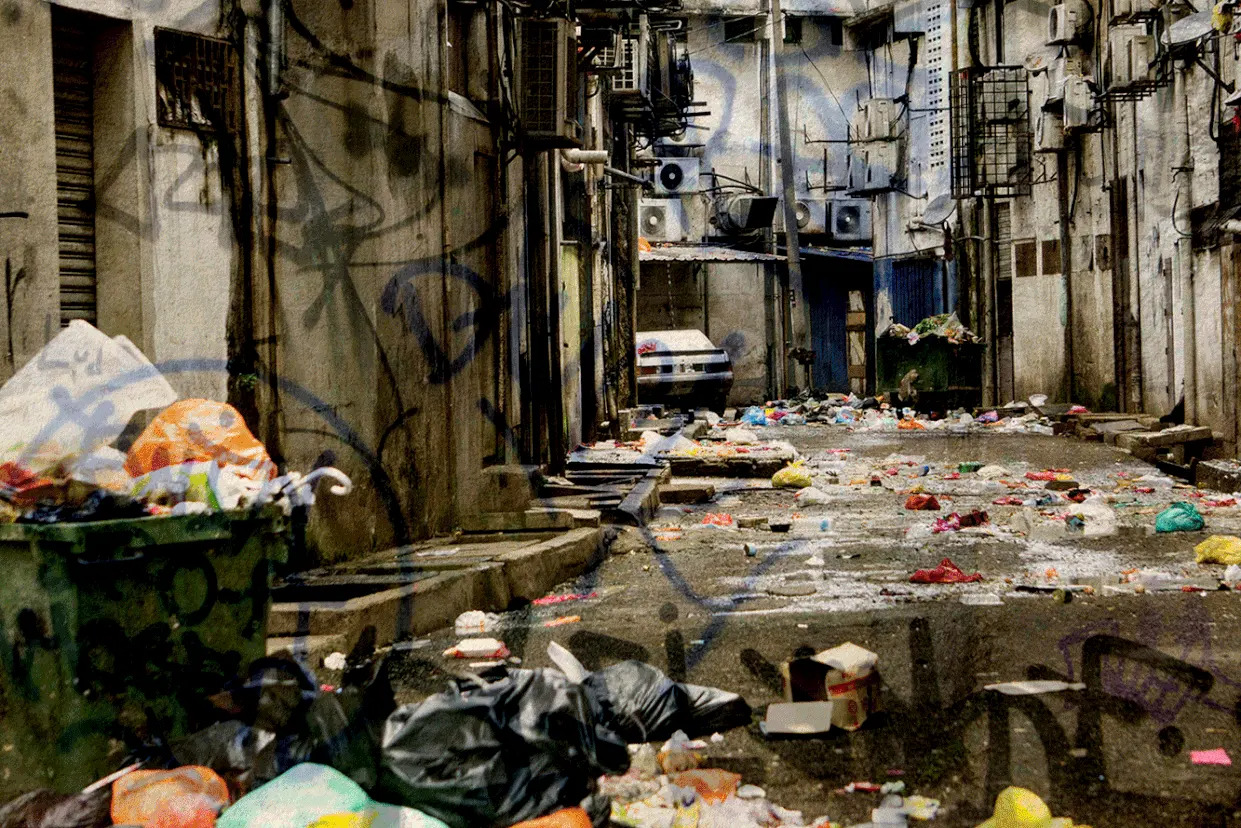
The dirtiest city in America is not exactly what you would expect it to be. NY Post composite
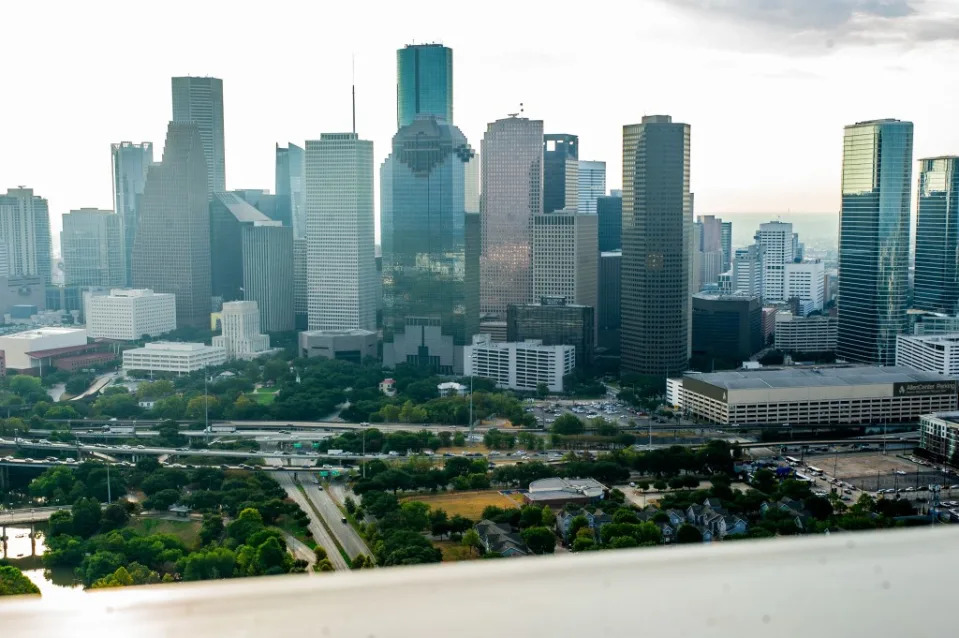
A recent study found that Houston currently stands as the dirtiest city in America. Houston Chronicle via Getty Images
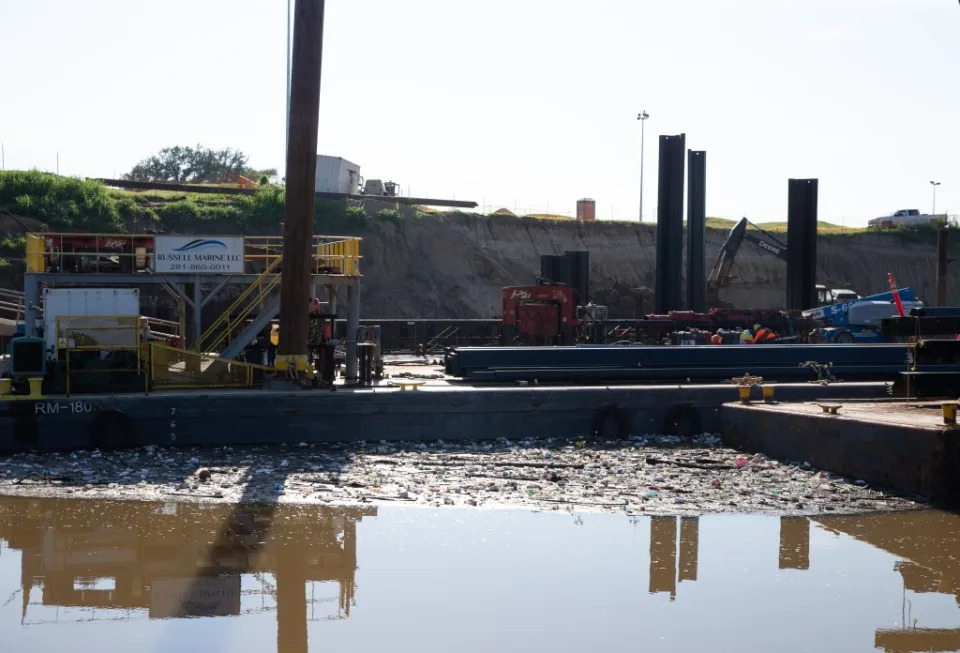
Trash floating around a construction barge at Buffalo Bayou in Houston. Houston Chronicle via Getty Imag

Houston’s new dubious honor stems from its terrible air quality, infrastructure woes and a staggering number of pests invading homes.

LawnStarter’s sister site PestGnome pulled data showing Houston has the worst cockroach problem, with the city crawling with the creepy critters.

It’s not just Houston; southern cities seem to be a haven for cockroaches. San Antonio, Texas and Tampa, Florida, join Houston in the top three for cockroach infestations.

If cockroaches aren’t your nightmare, steer clear of Boston, Philadelphia and Baltimore. These cities top the list for rodent-infested homes.

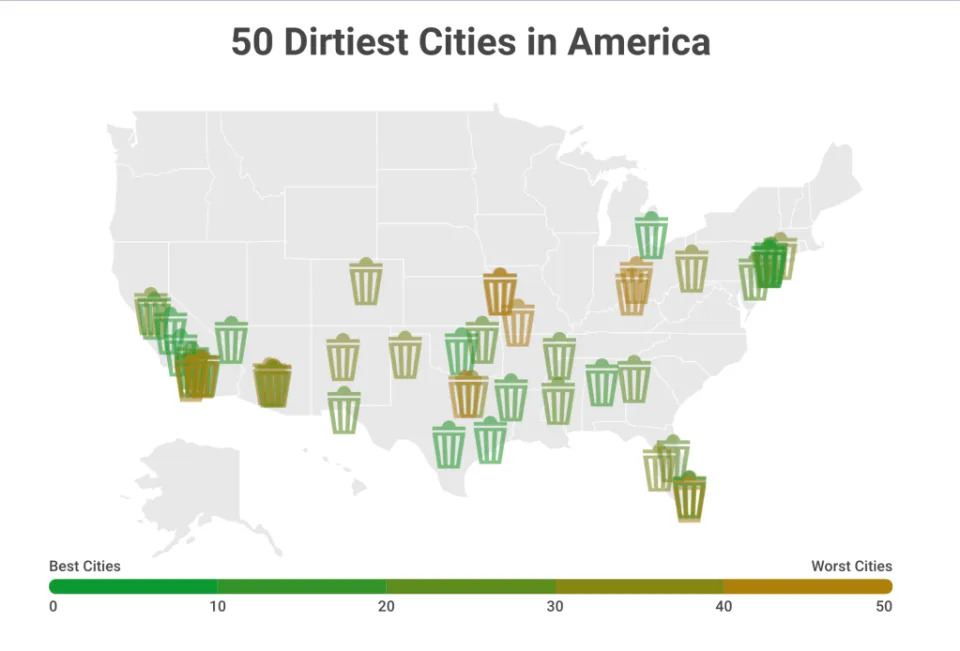
A chart showing the nation’s worst offenders. Lawn Starter

Despite California’s hefty spending on cleaning efforts, several of its cities still rank poorly. San Bernardino, notorious as the “armpit” of California, ranks fourth dirtiest due to atrocious air quality.

Riverside and Ontario, also in the LA metro area, share this dismal air status, now plagued by pollution-heavy warehouses that have replaced orange groves and vineyards.

San Francisco, however, shines as a cleaner gem in California. With a $72.5 million street cleaning spree in 2019 and an additional $16.7 million budget in 2023, it’s among the cleaner half of US cities.

Newark, New Jersey ranked second of the dirtiest cities in America. mandritoiu – stock.adobe.com

But this doesn’t account for the rising homeless and drug epidemic facing the city.

Dirty air isn’t the only issue — drinking water contamination is rampant in the southwest. Except for Salt Lake City, every major southwest city violated the Safe Drinking Water Act in 2020. Las Vegas, ranking 19th dirtiest overall, has the most unsafe water in the region.

Ohioans have a particular knack for littering cigarette butts. With five Ohio cities boasting the highest share of smokers, the state is battling an onslaught of discarded cigarettes, despite local campaigns urging residents to kick the habit.

Surprisingly, many of the cleanest cities are coastal, with Virginia Beach topping the list.

However, being near water isn’t a cleanliness guarantee — Fremont, California, and Winston-Salem, North Carolina, also rank among the most pristine cities despite their inland locations.

‘Just brutal’: Why America’s hottest city is seeing a surge in deaths

Politico

‘Just brutal’: Why America’s hottest city is seeing a surge in deaths

Ariel Wittenberg – May 28, 2024

Summer burns in Phoenix.

Scorching pavement blisters uncovered skin. Pus oozes from burned feet and bacteria-teeming wounds fester under sweat-soaked bandages for people living on the street.

They might be the lucky ones.

Relentless heat led to 645 deaths last year in Maricopa County, the most ever documented in Arizona’s biggest metropolitan area. The soaring number of heat mortalities — a 1,000 percent increase over 10 years — comes as temperatures reach new highs amid exploding eviction rates in the Phoenix area, leading to a collision of homelessness and record-setting heat waves.

The crisis has left local officials searching for answers in a region that regularly relies on churches more than the government to save people’s lives by offering them a cool place to hide from the desert air.

Almost half of the victims last year were homeless — 290 people. Twenty died at bus stops, others were in tents, and an unrecorded number of people were found on the pavement, prone as if on a baking stone. More than 250 other people — who tended to be older, ill or unlucky — died in uncooled homes, on bikes or just going for a walk.

“There’s no getting away from it,” said George Roberts, who goes by “Country” and lived on the streets of Phoenix until a year ago. “You just try to find some shade and hope it keeps you cool enough to live.”

Phoenix officials are trying to reduce this year’s death count — but their fleeting plans hinge on temporary funding. They’re using nearly $2 million in federal pandemic-relief funding to operate new cooling centers. Unlike previous efforts, the centers will remain open into the evening, or even overnight, in areas with high heat death rates.

The splurge of one-time funds marks the first time there has been a significant federal investment to keep people safe from heat in America’s hottest city. Strapped-for-cash municipalities are often left to fend for themselves during withering heat waves.

Nowhere is that more true than in Phoenix, which is facing a collection of crises all at once: crashing budgets, rising homelessness and the prospects of a super-hot summer turbocharged by climate change.

It’s unclear what will happen to the new cooling centers when the pandemic funds run out in two years.

“We are lucky this year we have funding, but we need to be able to maintain that,” said Maricopa County Medical Director Rebecca Sunenshine. “It’s critical for people’s survival.”

‘Dog and pony show’

Phoenix’s heat safety net is struggling to save people, leaving officials who oversee the program bewildered at the lack of money as deaths soar.

With no stable federal funding, the location of cooling centers and bottled water distribution points changes each year, depending on whether fleeting resources will be provided by the city, county or state. Churches and local charities supplement government aid with their own donations of water and cool spaces.

That’s ludicrous, said David Hondula, Phoenix’s director of heat response and mitigation.

“Every winter in New England, are the churches trying to raise money to buy the snow plow? And then that’s the only snow plow the community has? I’m guessing not,” Hondula said in an interview.

Though heat has killed hundreds of people in Maricopa County every summer for the past four years, the idea that heat can be deadly is newly shocking to many decision-makers, said Melissa Guardaro, an extreme heat researcher at Arizona State University.

“Every year, we do a dog and pony show to cobble together funding,” she said. “Heat kills people who aren’t in the social circle of those in charge. And the people in power need to understand that it is through no fault of these vulnerable people that they are at risk.”

Last summer, there were about 117 cooling centers at libraries, community centers and churches throughout Maricopa County. But none of the centers in Phoenix were open overnight, when temperatures often remained above 90 degrees. Of the 17 centers operated by the city, just one was open Sundays — and only from 1 p.m. to 5 p.m.

Many private and public centers don’t allow pets, a rule that pushed some people to stay in the stifling heat with their dogs, according to surveys conducted by the county.

That’s flabbergasting to Austin Davis, who works with the homeless and in previous years has received grant funding to turn his personal minivan into a mobile cooling center.

“It’s like five months of complete crisis and danger for hundreds of people who don’t deserve to be in danger,” he said. “They’re told, ‘Well, church rules say we can’t have this person because they want to bring their dog.’”

“Well, this person and their dog might die today, then.”

Temperatures peaked above 110 degrees and rarely dipped lower than 95 at night for nearly 30 days in a row last July.

“It was just brutal, and it’s frustrating,” said Mark Bueno, outreach medical director for Circle the City, a nonprofit that provides health care to the homeless. Last summer, his doctors treated heat-caused dehydration, organ damage, pavement burns and rhabdomyolysis, a process of muscular breakdown linked to methamphetamine use.

“There’s a limit to what we can do for them,” he said. “I can give some extra water or an IV Bag, but it’s not going to solve the issue. What they really need is a house.”

The County Medical Examiner recorded 645 heat-related deaths last summer. Nearly 400 of them occurred in Phoenix, where half of all deaths were among the unhoused. One-third of all heat-related 911 calls in the city occurred outside of “regular business hours,” when cooling centers were closed.

“The consequences of not having extended-hour and overnight capacity became apparent last year,” said Hondula, the city’s heat official.

Pushed over the edge

Phoenix’s population is booming, making it the second-fastest growing U.S. city from 2021 to 2022, according to the U.S. Census Bureau. That’s also when heat deaths started to surge, after the U.S. Supreme Court ended a pandemic-era eviction moratorium, pushing more people onto the streets.

Now, heat is the second-biggest killer of homeless people in the county, behind drug overdoses. About 23 percent of homeless deaths are from heat alone, and another 18 percent involve both heat and drugs.

“So many people were living near the edge and got pushed over it,” said Jeff Johnston, chief medical examiner for Maricopa County, in an interview. “We’re still seeing the effects of that.”

The number of unhoused people in Maricopa County has doubled since 2017, hovering at roughly 9,600 people in January 2023. Rising rents have made the problem particularly stark in Phoenix, where in 2022 the number of people living on the street was nearly double the capacity of city-run homeless shelters.

In downtown Phoenix, a single encampment grew to an estimated 1,000 people in 2022, earning it the nickname “The Zone.” That same year, the city was sued twice over its treatment of homeless people.

First, businesses surrounding The Zone alleged the city was enabling a health and safety hazard by refusing to dismantle it, imperiling economic stability. In another lawsuit, a number of unhoused people represented by the American Civil Liberties Union alleged that city police were so aggressive in dismantling other homeless camps that they destroyed important documents like state I.D. cards and “survival items” like tents and bottled water. Those allegations were later included in a Department of Justice probe into the Phoenix Police Department.

“Both lawsuits were right,” said Elizabeth Venable, a homelessness advocate and plaintiff in one of the cases. “The city created the blight of The Zone by not addressing the homeless population in any way whatsoever. They didn’t build shelters, and they didn’t enforce anything, and it attracted everyone over there.”

Courts agreed. In summer 2023, as temperatures started to rise, the city was under dueling court orders to simultaneously begin clearing out The Zone before a mid-July court date, and preventing the city from enforcing no-camping ordinances and public sleeping bans against people who had nowhere else to go.

Venable believes the lawsuits may have helped save lives last summer by requiring the city to offer services to those being removed from The Zone. She hopes the city will be more proactive in helping its most vulnerable residents escape the heat this year, if only because they see it as “a liability.”

“A lot of people, even if they don’t empathize with people who live on the street or don’t want them to be able to camp out, they don’t really want them to literally bake on the sidewalk,” she said.

‘Surprising’ number of deaths

Hondula, the Phoenix heat official, is hoping a combination of data and federal cash can save lives — even if the city’s elected officials aren’t sold on his plan.

His team spent the winter looking at data from heat deaths and 911 calls to pinpoint city “hot spots” that will host new cooling centers this year.

Phoenix will operate two overnight cooling centers in the downtown area. In addition, three libraries will have respite centers with 50 beds each that will be open until 10 p.m. All the sites will be open seven days a week from May through September. Visitors will be steered toward services such as energy assistance, mental health, homeless shelters and substance abuse treatment programs.

“We are surging resources to these locations in the hopes that it helps people get out of the heat, but also get out of unsheltered homelessness,” Hondula said. “We are trying to solve the upstream challenges in addition to the immediate lifesaving mission.”

Not everyone in city leadership appreciates that plan. Though the City Council recognizes heat as a danger to residents, some members have questioned using city resources to protect the homeless.

At a February meeting, multiple councilors noted that libraries and senior centers have seen budget cuts, and said it wasn’t fair to open them to homeless people.

Councilman Jim Waring expressed disbelief that the program would lead to homeless people getting treatment for addiction or mental heath issues. The cooling initiative was taking resources away from tax-paying families, he said.

“Do I really think some hard-core meth addict is going to walk into the backroom of one of our libraries and turn [their life] around? No I don’t. That doesn’t seem realistic to me in any way,” Waring said. “I appreciate you guys are trying, but at some point we are crowding out the people who are paying for all of this and making their facilities less inviting.”

He did not respond to requests for comment.

The debate over which city residents deserve heat protection is on hold, for now, thanks to the American Rescue Plan. The federal Covid relief package passed in 2021 is funding half of the $3.5 million cost of operating the city’s cooling centers this summer, and the city has also relied on the measure to fund a shelter building blitz, expanding its number of beds by roughly 800 by next year. Maricopa County is also getting cooling money from the program.

“This is really the first time that there is significant federal funding in the heat relief network,” said Sunenshine, the county’s medical director.

But she worries about what will happen when the money disappears in 2026.

The high death toll last summer prompted soul-searching at the state level, resulting in a 55-page “Extreme Heat Preparedness Plan.” Democratic Gov. Katie Hobbs hired a statewide cooling center coordinator and a chief heat officer.

“It was surprising to see the number of deaths in Maricopa County, which has the most resources,” said newly minted chief heat officer Eugene Livar, in an interview. “But with all those efforts in place there is always something more that can be done if we have resources for that expansion.”

Around the same time the pandemic funding runs out, the city will also lose $130 million in tax revenue due to a change in state law.

Hondula says he “can only hope” the city’s budget office will have found a solution by then.

CLARIFICATION: This story has been edited to use a more precise term to describe the effects of rhabdomyolysis.

Climate change caused 26 extra days of extreme heat in last year: report

AFP

Climate change caused 26 extra days of extreme heat in last year: report

AFP – May 28, 2024

Heat is the leading cause of climate-related death (Nhac NGUYEN)

The world experienced an average of 26 more days of extreme heat over the last 12 months that would probably not have occurred without climate change, a report said on Tuesday.

Heat is the leading cause of climate-related death and the report further points to the role of global warming in increasing the frequency and intensity of extreme weather around the world.

For this study, scientists used the years 1991 to 2020 to determine what temperatures counted as within the top 10 percent for each country over that period.

Next, they looked at the 12 months to May 15, 2024, to establish how many days over that period experienced temperatures within — or beyond — the previous range.

Then, using peer-reviewed methods, they examined the influence of climate change on each of these excessively hot days.

They concluded that “human-caused climate change added — on average, across all places in the world — 26 more days of extreme heat than there would have been without it”.

The report was published by the Red Cross Red Crescent Climate Centre, the World Weather Attribution scientific network and the nonprofit research organisation Climate Central.

2023 was the hottest year on record, according to the European Union’s climate monitor, Copernicus.

Already this year, extreme heatwaves have afflicted swathes of the globe from Mexico to Pakistan.

The report said that in the last 12 months some 6.3 billion people — roughly 80 percent of the global population — experienced at least 31 days of what is classed as extreme heat.

In total, 76 extreme heatwaves were registered in 90 different countries on every continent except Antarctica.

Five of the most affected nations were in Latin America.

The report said that without the influence of climate change, Suriname would have recorded an estimated 24 extreme heat days instead of 182; Ecuador 10 not 180; Guyana 33 not 174, El Salvador 15 not 163; and Panama 12 not 149.

“(Extreme heat) is known to have killed tens of thousands of people over the last 12 months but the real number is likely in the hundreds of thousands or even millions,” the Red Cross said in a statement.

“Flooding and hurricanes may capture the headlines but the impacts of extreme heat are equally deadly,” said Jagan Chapagain, secretary general of the International Federation of the Red Cross.