Trump and his family jump into crypto, which the FBI calls a hive of ‘pervasive’ criminality

Los Angeles Times

Column: Trump and his family jump into crypto, which the FBI calls a hive of ‘pervasive’ criminality

Michael Hiltzik – September 18, 2024

Republican presidential nominee former President Donald Trump speaks to reporters in the spin room after a presidential debate between Republican presidential nominee former President Donald Trump and Democratic presidential nominee Vice President Kamala Harris, Tuesday, Sept. 10, 2024, in Philadelphia. (AP Photo/Matt Rourke)
Donald Trump in the “spin room” after his Sept. 10 debate with Vice President Kamala Harris. (Matt Rourke / Associated Press)

There have been a couple of new developments in the crypto world over the last few days just begging to have their dots connected. Here they are:

On Sept. 9, the Federal Bureau of Investigation issued its annual report on cryptocurrency fraud. The FBI found that, in 2023, crypto-related fraud absolutely exploded, with $5.6 billion in losses suffered by Americans. That was a 45% increase over the year before.

“Criminal actors exploit cryptocurrencies in each scheme category” tracked by the agency’s Internet Crime Complaint Center,” Assistant FBI Director Michael D. Nordwall wrote in the report. Crime was “pervasive” in the field, he wrote, with the most common victims being investors; their losses accounted for nearly 71% of the total.

Since cryptocurrencies eliminate the need for financial intermediaries to validate and facilitate transactions, criminals can exploit these characteristics to support illicit activity such as thefts, fraud, and money laundering.

FBI, 2023 Cryptocurrency Fraud Report

That’s one. The second development was that Donald Trump and his family jumped whole hog into the crypto market.

Via a livestream Monday on the social media platform X and numerous X postings, Trump, his sons Donald Jr., Eric and Barron identified themselves or were identified as participants in the new venture. It’s known as World Liberty Financial, and evidently plans to market a crypto “stablecoin” — one with value linked directly to the U.S. dollar — to customers. No one has suggested that there’s anything criminal in the venture as it’s been laid out. There’s no indication that Trump’s ongoing criminal cases have anything to do with cryptocurrency.

“We’re embracing the future with crypto and leaving the slow and outdated big banks behind,” Trump declared last week in a pre-livestream tweet on X.

The idea that Trump — whose prior business ventures include Trump University, which was deemed “fraudulent” by New York authorities; six bankruptcies — five of his casinos and one bankrupty of New York’s Plaza Hotel — and the failed enterprises Trump Shuttle, Trump Vodka, Trump Steaks and Trump Mortgage — would now do a cannonball dive into this sea of documented criminality seems so perfect it’s almost preordained. (Trump didn’t admit wrongdoing in the legal settlement of the Trump University case, but paid $25 million in compensation to former students and in legal penalties.)

So let’s examine just how bad crypto has been for Americans, according to the FBI. Then we’ll turn to Trump crypto.

Cryptocurrency — think bitcoin and its offspring, legitimate and otherwise — has several features that make it “an attractive vehicle for criminals,” the FBI reported.

“The decentralized nature of cryptocurrency, the speed of irreversible transactions, and the ability to transfer value around the world,” the FBI said, create “challenges to recover stolen funds. Once an individual sends a payment, the recipient owns the cryptocurrency and often quickly transfers it into an account overseas for cash out purposes.”

Read more: Column: Most Americans have a negative view of crypto. So why are political campaigns rushing to embrace it?

It’s worth noting that some of these features are touted by crypto promoters, including the Trumps, as virtues — crypto’s decentralization, meaning that there are no intermediaries such as those “slow and outdated” banks to stand between buyers and sellers; its irreversibility, the speediness of the transactions.

Of course, to investors or consumers using cryptocurrencies as investment vehicles or means of payment, these may actually be drawbacks. If your investment manager absconds with your tokens, or a merchant fails to deliver what you bought with your bitcoin, you’re on your own.

“Since cryptocurrencies eliminate the need for financial intermediaries to validate and facilitate transactions,” the FBI said, “criminals can exploit these characteristics to support illicit activity such as thefts, fraud, and money laundering.”

According to the FBI, the U.S. is the world capital of crypto fraud. No other country comes close. Losses from complainants in the U.S. received by the FBI’s internet crime center in 2023 came to $4.8 billion; the second-ranked location of complainants was the Cayman Islands, with $195.7 million, followed by Mexico ($127 million) and Canada ($72.1 million).

The complaint roster showed that Californians lost the most in 2023, nearly $1.2 billion, followed by Texans ($412 million) and Floridians ($390 million). On a per capital basis, however, New Yorkers were the most seriously cheated, mulcted out of an average of $3,800 per 100,000 residents. Californians came in second, at $2,962.

Read more: Column: Sam Bankman-Fried’s seven guilty verdicts expose crypto as a swindle through and through

As for the specific pitfalls, investment scams accounted for 71% of all cryptocurrency losses for Americans. They were followed by call center frauds, including tech or customer support or government impersonation scams.

Ransomware scams cost American businesses $27.4 million in 2023, not counting the cost of lost business, time, wages, files, equipment, or the hiring of third-party services by the victims.

This is the environment that the Trumps have embraced. When I asked the Trump campaign to comment on questions that have been raised by commentators within and outside the crypto field, including questions about the family’s partners in World Liberty Financial and about whether Trump’s launch of a new business venture raises the potential for massive conflicts of interest if he becomes president, all I got from Brian Hughes, who is identified as a “senior advisor” to the campaign, was a bog-standard attack on Democratic candidate Kamala Harris.

“Crypto innovators and others in the technology sector are under attack from Kamala Harris and the Democrats,” Hughes wrote.

“Few, even in the crypto world, seem excited about this project,” observes Molly White, an indefatigable chronicler of the costly hijinks in the world of crypto and other fringe financial assets. “Many seem concerned that it could worsen crypto’s already grifty reputation.”

Why would that be? One of the reported advisors to the Trumps on World Liberty Financial is Chase Herro, who described himself in 2018 as a “dirtbag of the internet.” Herro can be seen in a YouTube video recorded that year delivering a profanity-heavy spiel for crypto and other weird assets: “You can literally sell s— in a can, wrapped in piss, covered in human skin for a billion dollars if the story’s right, because people will buy it.”

According to a World Liberty Financial white paper viewed by Coinbase, Herro was formerly associated with Dough Finance, a blockchain app that lost more than $2 million to hackers in July.

Read more: Column: Thinking of putting crypto in your 401(k)? Think twice

The white paper describes Herro as the data and strategies lead of World Liberty Financial, according to Coinbase. He and another partner, Zachary Folkman, were brought together with the Trumps by Steve Witkoff, a real estate developer close to Donald Trump.

Witkoff said during Monday’s X livestream that he had met Herro and Folkman through one of his sons. He described them as “exceptionally bright people.” He said, “They began talking to me about decentralized finance…. As I began to understand it, I said, who would understand this better than the Trump family?” The venture came together over a period of nine months.

World Liberty Financial didn’t respond to my requests for comments about Herro’s business record, the potential for conflicts of interest by Trump, the roles of his family members in the firm, or the FBI’s judgment about the criminality of crypto.

These questions all but ask themselves, however. Through this venture, Trump is setting himself up as an adversary of a banking and financial system that he would oversee as president, and as an advocate of an alternative financial system that has been the target of investigations and regulatory concerns raised by the Securities and Exchange Commission, the Department of the Treasury and other federal financial regulators.

Let’s not forget that Trump formerly condemned cryptocurrencies as a “scam” and “potentially a disaster waiting to happen.” By July, he had changed his tune. “Bitcoin is not just a marvel of technology,” he said in a keynote speech delivered at a major bitcoin conference. “It’s a miracle of cooperation and human achievement and a lot of relationships that are formed.”

Trump plainly smells money in this newfangled scheme. According to the white paper viewed by Coinbase, 70% of the crypto tokens to be marketed by World Liberty Financial — those carrying governance control over the project — will be reserved for founders and insiders such as himself. That’s an exceptionally high number, judging from other crypto ventures.

So what is World Liberty Financial but another Trump-branded get-rich-quick opportunity for himself? We all know how those others turned out. Why would this one end up any better?
Debtor Organizing Can Transform Our Individual Financial Struggles Into a Source of Collective Strength

In These Times – Departments

Debtor Organizing Can Transform Our Individual Financial Struggles Into a Source of Collective Strength

Alone, our debt is a liability. Together, it’s our leverage.

J. Patrick Patterson – September 16, 2024

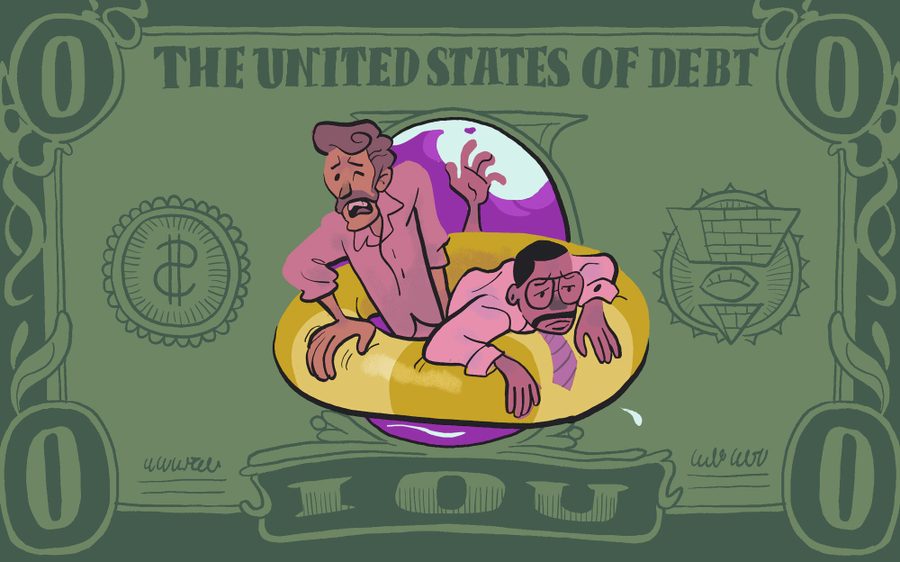
ILLUSTRATION BY KAZIMIR ISKANDER
debt•or pow•er

noun

  1. leverage that springs from an organized association of debtors, often in debt to shared creditors, to negotiate the terms and conditions of debt contracts, including the abolition of unjust debts
  2. the transformation of individual financial struggles into a source of collective strength by waging strategic campaigns of economic disobedience and debt refusal
  3. a tool to build reparative public goods using debt as leverage

Debtor organizing has the potential to bring millions of people who may never have the option of joining a traditional labor union into the struggle for economic justice. —Debt Collective, Can’t Pay, Won’t Pay: The Case for Economic Disobedience and Debt Abolition

Is this a new idea?

Collective debt resistance — if not debtors’ unions — has happened for centuries! Ancient Roman plebeians used strikes, demonstrations and periodic exoduses to win a range of concessions from the aristocratic class, including substantial political rights and the elimination of debt slavery. Today, just as organized renters have leverage over their landlords because they owe the same person, collectively withholding payments (or threatening to!) builds collective power to make demands.

But where does the power come from?

A debtors’ union is a newer concept that is still emerging. Debt Collective is in the throes of this experiment, but the provocation is simple: Just as workers have potential collective power over capital in the form of their employer, and tenants in the form of their landlord, debtors can also wield this kind of collective power when they organize against their creditors.

How can we use it once we build it?

Although debtors’ unions are a new, emerging front in the fight against racial capitalism, their potential holds across many types of debt. 

The millions of people being crushed by medical debt could organize locally to demand hospitals cancel their bills. Or they could start a national medical debt strike to advance the cause of universal healthcare. 

Credit card debtors could rally against usurious lending practices and advocate for a socially productive — as opposed to predatory — system of credit and debt. Student debtors could transform not only the predatory lending that has become synonymous with higher education, but also the landscape of who has access to that higher education in the first place. 

And people with debts in the criminal punishment system could organize to challenge fines, fees and other costs associated with incarceration, demanding the abolition of a system that extracts on so many levels. The possibilities for debt resistance campaigns are practically endless.

This is part of ​“The Big Idea,” a monthly series offering brief introductions to progressive theories, policies, tools and strategies that can help us envision a world beyond capitalism. For recent In These Times coverage of debtor power in action, see, ​“When transit riders refuse to just sit back,” ​“LGBT Workers Need Unions, Not Rainbow Capitalism and ​“What #MeToo Can Teach the Labor Movement.”

J. PATRICK PATTERSON is the Associate Editor at In These Times. He has previously worked as a politics editor, copy editor, fact-checker and reporter. His writing on economic policies and electoral politics has been published in numerous outlets.

Superbug crisis could get worse, killing nearly 40 million people by 2050, study estimates

CNN

Superbug crisis could get worse, killing nearly 40 million people by 2050, study estimates

Jacqueline Howard – September 16, 2024

The number of lives lost around the world due to infections that are resistant to the medications intended to treat them could increase nearly 70% by 2050, a new study projects, further showing the burden of theongoing superbug crisis.

Cumulatively, from 2025 to 2050, the world could see more than 39 million deaths that are directly attributable to antimicrobial resistance or AMR, according to the study, which was published Monday in the journal The Lancet.

Antimicrobial resistance happens when pathogens like bacteria and fungi develop the ability to evade the medications used to kill them.

The World Health Organization has called AMR “one of the top global public health and development threats,” driven by the misuse and overuse of antimicrobial medications in humans, animals and plants, which can help pathogens develop a resistance to them.

The new study reveals that when it comes to the prevalence of AMR and its effects, “we expect it to get worse,” said lead author Dr. Chris Murray, director of the Institute for Health Metrics and Evaluation at the University of Washington.

“We need appropriate attention on new antibiotics and antibiotic stewardship so that we can address what is really quite a large problem,” he said.

Older adults bear the burden

The researchers – from the Global Research on Antimicrobial Resistance Project, the Institute for Health Metrics and Evaluation and other institutions – estimated deaths and illnesses attributable to versus associated with antimicrobial resistance for 22 pathogens, 84 pathogen-drug combinations and 11 infections across 204 countries and territories from 1990 through 2021. A death attributable to antimicrobial resistance was directly caused by it, while a death associated with AMR may have another cause that was exacerbated by the antimicrobial resistance.

About 520 million individual records were part of the data to make those estimates.

The researchers found that from 1990 to 2021, deaths from AMR fell more than 50% among children younger than 5 but increased more than 80% among adults 70 and older – trends that are forecast to continue.

It was surprising to see those patterns emerge, Murray said.

“We had these two opposite trends going on: a decline in AMR deaths under age 15, mostly due to vaccination, water and sanitation programs, some treatment programs, and the success of those,” Murray said.

“And at the same time, there’s this steady increase in the number of deaths over age 50,” he said, as the world ages; older adults can be more susceptible to severe infection.

The researchers found that the pathogen-drug combination that had the largest increase in causing the most burden among all age groups was methicillin-resistant Staphylococcus aureus, or MRSA. For this combination – the antibiotic methicillin and the bacteria S. aureus – the number of attributable deaths nearly doubled from 57,200 in 1990 to 130,000 in 2021.

Using statistical modeling, the researchers also produced estimates of deaths and illnesses attributable to AMR by 2050 in three scenarios: if the current climate continues, if new potent antibiotic drugs are developed to target resistant pathogens, and if the world has improved quality of health care for infections and better access to antibiotics.

The forecasts show that deaths from antimicrobial resistance will increase by 2050 if measures are not in place to improve access to quality care, powerful antibiotics and other resources to reduce and treat infections.

The researchers estimated that, in 2050, the number of global deaths attributable to antimicrobial resistance could reach 1.9 million, and those associated with antimicrobial resistance could reach 8.2 million.

According to the data, the regions of the world most affected by AMR and attributable deaths are South Asia, Latin America and the Caribbean, and sub-Saharan Africa – and many of these regions don’t have equitable access to quality care, Murray said.

“There are still, unfortunately, a lot of places in low-resource settings where people who need antibiotics are just not getting them, and so that’s a big part of it. But it’s not just the antibiotics. It’s when you’re sick, either as a kid or an adult, and you get sent to hospital, and you get a package of care, essentially, that includes things like oxygen,” Murray said.

“In low-resource settings, even basics like oxygen are often not available. And then, if you are very sick and you need an intensive care unit, well, there’s big parts of the low-resource world – most of them, actually – where you wouldn’t get access to that sort of care,” he said. “So there’s a spectrum of supportive care, plus the antibiotics, that really make a difference.”

But in a scenario where the world has better health care, 92 million cumulative deaths could be averted between 2025 and 2050, the researchers forecast. And in a scenario where the world has new, more potent drugs, about 11 million cumulative deaths could be avoided.

‘There is possible hope on the horizon’

The “innovative and collaborative” approach to this study provides a “comprehensive assessment” of antimicrobial resistance and its potential burden on the world, Samuel Kariuki, of the Kenya Medical Research Institute, wrote in a commentary that accompanied the new study in The Lancet.

Yet he warned that the forecast models do not consider the emergence of new superbugs “and might lead to underestimation if new pathogens arise.”

Overall, “these data should drive investments and targeted action” toward addressing the growing challenge of antimicrobial resistance in all regions of the world, Kariuki wrote.

The new paper represents decades of research on the global burden of antimicrobial resistance, said Dr. Steffanie Strathdee, associate dean of global health sciences and distinguished professor at the University of California San Diego School of Medicine, who was not involved in the study.

Strathdee saw firsthand the effects that antimicrobial resistance can have on health when her husband nearly died from a superbug infection.

“I’m somebody who’s lived with antimicrobial resistance affecting my family for the last eight years. My husband nearly died from a superbug infection. It’s actually one of the infections that’s highlighted in this paper,” said Strathdee, who serves as co-director of the Center for Innovative Phage Applications and Therapeutics at UC San Diego.

During a Thanksgiving cruise on the Nile in 2015, Strathdee’s husband, Tom Patterson, suddenly developed severe stomach cramps. When a clinic in Egypt failed to help his worsening symptoms, Patterson was flown to Germany, where doctors discovered a grapefruit-size abdominal abscess filled with Acinetobacter baumannii, a virulent bacterium resistant to nearly all antibiotics.

The annual number of people dying from gram-negative bacteria, like A. baumannii, that are resistant to carbapenem – a class of last-resort antibiotics used to treat severe bacterial infections – rose 89,200 from 1990 to 2021, more than any antibiotic class over that period, according to the new study.

“That’s one of the urgent priority pathogens, which is one of these gram-negative bacteria,” Strathdee said. “And my husband, when he fell ill from this, he was 69. So he’s exactly at the age that this paper is highlighting, that older people are going to be affected by this more in the future, because our population is aging and people have comorbidities, like diabetes, like my husband has.”

Strathdee’s husband recovered after treatment with phages, viruses that selectively target and kill bacteria and that can be used as a treatment approach for antimicrobial-resistant bacterial infections.

“The most important alternative to antibiotics is phage therapy, or bacteriophage therapy, and that’s what saved my husband’s life,” Strathdee said. “Phage can be used very effectively with antibiotics, to reduce the amount of antibiotics that are needed, and they can even be used potentially in livestock and in farming.”

The new study gives Strathdee hope that the world can reduce the potential burden of antimicrobial resistance. That would require improving access to antibiotics and newer antimicrobial medications, vaccines, clean water and other aspects of quality health care around the world, she said, while reducing the use of antibiotics in livestock, food production and the environment, which can breed more resistance.

“There is possible hope on the horizon,” Strathdee said. “If we were to scale up these interventions, we could dramatically reduce the number of deaths in the future.”

CNN’s Sandee LaMotte contributed to this report.

Low-Wage Corporations Are Fleecing Their Workers to Massively Inflate CEO Pay

In These Times – Viewpoint

Low-Wage Corporations Are Fleecing Their Workers to Massively Inflate CEO Pay

Why don’t low wage workers earn more? Because their bosses plowed $522 million into manipulating their stock price—and CEO paychecks—instead.

Sarah Anderson – September 16, 2024

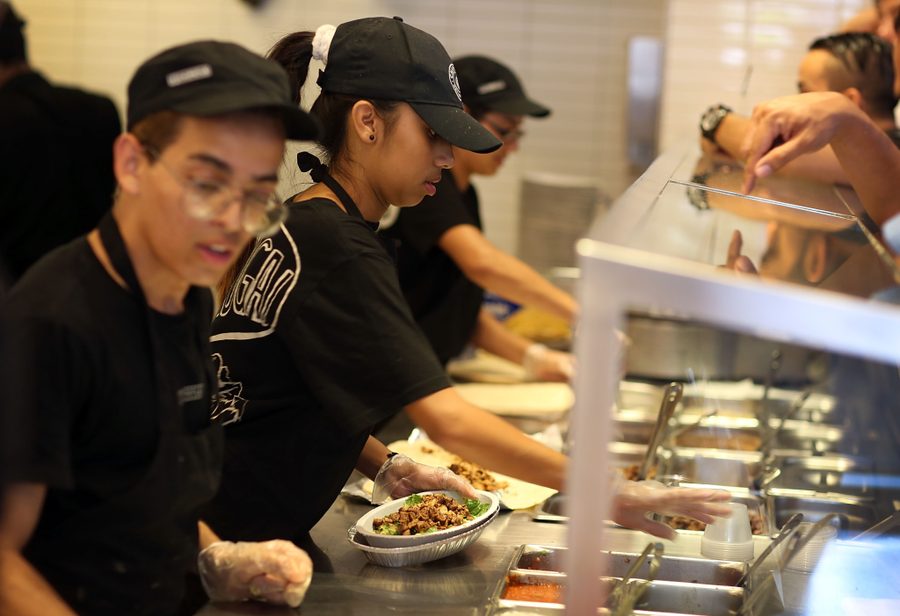
Chipotle restaurant workers fill orders for customers on April 27, 2015 in Miami, Florida.(PHOTO BY JOE RAEDLE/GETTY IMAGES)

Most people believe in fair pay for honest work. So why aren’t low-wage workers better paid?

After 30 years of research, I can tell you that it’s not because employers don’t have the cash — it’s because profitable corporations spend that money on their stock prices and CEOs instead.

Lowe’s, for example, spent $43 billion buying back its own stock over the past five years. With that sum, the chain could have given each of its 285,000 employees a $30,000 bonus every year. Instead, half of Lowe’s workers make less than $33,000. Meanwhile, CEO Marvin Ellison raked in $18 million in 2023.

The company also plowed nearly five times as much cash into buybacks as it invested in long-term capital expenditures like store improvements and technology upgrades over the past five years.

Lowe’s ranks as an extreme example, but pumping up CEO pay at the expense of workers and long-term investment is actually the norm among America’s leading low-wage corporations.

In my latest ​“Executive Excess” report for the Institute for Policy Studies, I found that the 100 S&P 500 firms with the lowest median wages — the ​“Low-Wage 100” — blew $522 billion on buybacks over the past five years. Nearly half of these companies spent more on this once-illegal maneuver than they spent investing in their long-term competitiveness.

This is a scam to inflate CEO pay, pure and simple.

When companies repurchase their own shares, they artificially boost share prices and the value of the stock-based compensation that makes up about 80% of CEO pay. The SEC found that CEOs regularly time the sale of their personal stock holdings to cash in on the price surge that typically follows a buyback announcement.

I also looked into what these corporations contribute to employee retirement — and found that it’s peanuts, compared to their buyback outlays. The 20 largest low-wage employers spent nine times more on buybacks than on worker retirement contributions over the past five years.

Many of these firms boast of their ​“generous” matching benefits, typically a dollar-for-dollar match of 401(k) contributions up to 4% of salary. But matching is meaningless for workers who earn so little they can’t afford to set anything aside.

Chipotle, for example, spent over $2 billion on stock buybacks over the past five years—48 times more than it contributed to employee retirement plans. Meanwhile, 92% of eligible Chipotle workers have zero balances in their 401(k)s. That’s hardly surprising, since the chain’s median annual pay is just $16,595.

The conclusion is unmistakable: CEOs are focused on short-term windfalls for themselves and wealthy shareholders rather than on long-term prosperity for their workers — or their companies.
“Corporate greed turns blue-collar blood, sweat, and tears into Wall Street stock buybacks and CEO jackpots.”

As United Auto Workers President Shawn Fain put it in his Democratic National Convention speech: ​“Corporate greed turns blue-collar blood, sweat, and tears into Wall Street stock buybacks and CEO jackpots.” Public outrage over CEO shakedowns helped the UAW win strong new contracts last year with the Big Three automakers.

Support for policy solutions is growing as well. The Democratic Party platform calls for quadrupling the 1% federal tax on stock buybacks. And a recent poll shows strong majority support among Democrats, Republicans, and Independents alike for proposed tax hikes on corporations with huge CEO-worker pay gaps.

Extreme inequality isn’t inevitable — and it can be reversed.

Forty years ago, CEO pay was only about 40 times higher than worker pay — not several hundreds of times higher, as is typical today. And just 20 years ago, most big companies spent very little on stock buybacks. At Lowe’s, for example, buyback outlays between 2000 and 2004 were exactly zero.

Corporate America’s perverse fixation on enriching those at the top is bad for workers and bad for the economy. With pressure from below, we can change that.

This op-ed was distributed by Oth​er​Words​.org.

SARAH ANDERSON directs the Global Economy Project and co-edits Inequal​i​ty​.org at the Institute for Policy Studies. 

RELATED STORIES:

The World’s Richest Just Got Extraordinarily More Wealthy—Taxing Them Doesn’t Go Nearly Far Enough. Lessening inequality isn’t the only reason to tax the super rich. We also need to decrease their political power while spending on social programs that benefit the working class. MAX B. SAWICKY

Corporations Have Very Good Reasons to Break Labor Laws and Bust Unions. Workers at companies like Apple and Starbucks face armies of union-busting lawyers advising employers to repeatedly violate labor laws. SONALI KOLHATKAR

The Landmark Ruling Against Chiquita Exposes the Failure of Voluntary “Corporate Social Responsibility.” Chiquita’s financing of a Colombian paramilitary group while claiming a reputation as a “responsible corporate citizen” shows the need for robust civil society institutions. MANPREET KAUR KALRA AND ANNA CANNING

After possible assassination attempt, Trump decries ‘rhetoric’? Spare me the sanctimony.

USA Today – Opinion

After possible assassination attempt, Trump decries ‘rhetoric’? Spare me the sanctimony.

Rex Huppke, USA TODAY – September 16, 2024

Former President Donald Trump wants you to believe that “rhetoric” from Democratic presidential nominee Kamala Harris and her campaign led to a possible assassination plot against him that the Secret Service foiled Sunday.

He wants you to believe that as he simultaneously hurls inflammatory rhetoric at Harris and while he sits idly by as Springfield, Ohio, suffers bomb threats and school evacuations over his outrageous and racist lies about legal Haitian immigrants.

Early Monday, Trump spoke with Fox News and decried statements from Democrats calling him “a threat to democracy.”

“Their rhetoric is causing me to be shot at, when I am the one who is going to save the country, and they are the ones that are destroying the country – both from the inside and out,” Trump said, referring to Harris and Democrats as “the enemy from within” and “the real threat.”

Republican presidential nominee Donald Trump addresses journalists at Trump National Golf Club Los Angeles on Sept. 13, 2024, in Rancho Palos Verdes, Calif.
Trump denounces political rhetoric while hurling inflammatory nonsense

The logic in Trump’s statements is twisted beyond comprehension. It’s schoolyard-level reasoning, effectively saying: “You called me a threat to democracy, and that’s a terrible thing to do. And besides, you’re the enemy and you’re destroying the country.”

Let’s start with the apparent assassination plan the Secret Service thankfully foiled. An advance agent spotted a rifle sticking through a fence several hundred yards away from where Trump was playing golf. The agent fired at the gunman, and the man, who didn’t fire any shots, was later apprehended.

The 58-year-old suspect appears to be, as one would expect, a nut whose politics are all over the place. NPR described him as a “vocal supporter-turned-critic of Trump who was passionate about defending Ukraine in its war with Russia.”

In the July assassination attempt on Trump in Pennsylvania, the gunman was a registered Republican, and his motive remains unclear.

There is zero evidence connecting either gunman to Democrats calling Trump “a threat to democracy.” More important, however, that label is not hyperbolic.

Trump is a threat to democracy. That’s a fact with ample evidence.

Trump is a threat to democracy. He has made that clear with his constant election denialism, the way he riled up the crowd before the attack on the U.S. Capitol on Jan. 6, 2021, his incessant lying about disproven claims of voter fraud, his vocal support for the convicted and imprisoned Jan. 6 domestic terrorists and even his comment about being a dictator for one day.

The idea that Harris or her campaign should stop talking about the threat Trump poses to our democracy is absurd. Democrats aren’t encouraging any form of violence against him or anyone else. They’re speaking a self-evident truth and asking voters to respond accordingly at the ballot box.

Republicans reject Trump: Former VP Dick Cheney picks Kamala Harris, giving conservatives a final path to save GOP from Trump

A number of high-profile Republicans, including former Vice President Dick Cheney and conservative legal scholar Judge J. Michael Luttig, have said the same thing about Trump.

Cheney said in a recent statement endorsing Harris that “there has never been an individual who is a greater threat to our republic than Donald Trump.”

Look at Trump’s recent rhetoric and note the stunning hypocrisy

Beyond that issue, the idea of Trump trying to condemn any form of rhetoric borders on satire:

  • On Friday, Trump called Harris “a radical left Marxist communist fascist.”
  • On Sunday, before the incident on the Florida golf course, Trump posted on social media: “The Democrats are DESTROYING OUR COUNTRY!”
  • On Monday morning, he posted on social media: “Because of this Communist Left Rhetoric, the bullets are flying, and it will only get worse! Allowing millions of people, from places unknown, to INVADE and take over our Country, is an unpardonable sin. OUR BORDERS MUST BE CLOSED, AND THE TERRORISTS, CRIMINALS, AND MENTALLY INSANE, IMMEDIATELY REMOVED FROM AMERICAN CITIES AND TOWNS, DEPORTED BACK TO THEIR COUNTIES OF ORIGIN.”
Trump’s racist lies have terrorized an Ohio town

That comes on the heels of a campaign of vile lies about Haitian immigrants in Springfield, Ohio ‒ lies that have led to repeated bomb threats and widespread fear among a community of hardworking, legal immigrants.

On Monday, two elementary schools in Springfield had to be evacuated due to threats, the third consecutive school day in which children in the community have been impacted.

On Friday – days after spouting nonsense about Haitian immigrants eating pets – Trump lied, saying: “In Springfield, Ohio, 20,000 illegal Haitian migrants have descended upon a town of 58,000 people destroying their way of life.”

Springfield City Manager Bryan Heck releases a statement in September 2024 saying there's no evidence of any cats or other pets being harmed or eaten by the Haitian immigrants. Springfield, a central Ohio city of 58,000 about 50 miles west of Columbus, is experiencing a "significant housing crisis," according to a letter from Heck. He says the city's Haitian population has increased to 15,000-20,000 in recent years.
Springfield City Manager Bryan Heck releases a statement in September 2024 saying there’s no evidence of any cats or other pets being harmed or eaten by the Haitian immigrants. Springfield, a central Ohio city of 58,000 about 50 miles west of Columbus, is experiencing a “significant housing crisis,” according to a letter from Heck. He says the city’s Haitian population has increased to 15,000-20,000 in recent years.More

On Sunday, Trump’s running mate, Sen. JD Vance, R-Ohio, effectively admitted that the campaign’s vicious lies about Haitians in Springfield were made up, and that he didn’t care: “If I have to create stories so that the American media actually pays attention to the suffering of the American people then that’s what I’m going to do.”

Except, according to the Republican governor of Ohio, Vance and Trump are also making up the part about the suffering. Springfield has had challenges with an influx of legal immigrants, but the city has not been “destroyed” in any way, shape or form.

Ohio Gov. Mike DeWine said: “These people are here legally. They came to work. They are looking for good people. These are hardworking people.”

Trump has based his entire political identity on inflammatory rhetoric

Trump has called his political opponents “vermin,” echoed Adolf Hitler in saying immigrants are “poisoning the blood of our country” and referred to himself as “a very proud election denier.”

JD Vance shrugs at school shooting: Vance says school shootings are ‘a fact of life.’ That’s cowardice, not leadership.

So spare me the sanctimony over anyone describing him as a threat to democracy. That’s what he is.

Democrats haven’t promoted violence – only voting

Political violence, on any side and of any sort, is abhorrent. Whatever the suspect arrested Sunday was plotting, I’m immensely glad it was stopped.

But whatever the plot was, it can’t be blamed on directly and factually highlighting the threat posed by a man who spews anti-democratic and racist lies without the slightest concern for others.

Trump and his campaign, through their dishonest rhetoric, are wreaking havoc on a Midwestern town. That’s a fact. Through his statements and actions past and present, he poses a threat to our democracy. That’s a demonstrable fact.

The only solution to those concerns, the only action being promoted by Harris and her campaign or people like me who care about America’s basic sense of decency, is simple: Vote.

Vote, and don’t be cowed into silence by a dishonest hypocrite.

Officials confirm first fatal case of mosquito-borne virus in nearly two decades: ‘A stark reminder’

The Cool Down

Officials confirm first fatal case of mosquito-borne virus in nearly two decades: ‘A stark reminder’

Juliana Marino – September 3, 2024

County officials in the Bay Area confirmed a death related to a mosquito-borne disease for the first time in nearly 20 years, according to a report published by the San Francisco Chronicle.

What’s happening?

Officials in Contra Costa County announced that a resident died from West Nile virus in July. It was the first death from West Nile in Contra Costa since 2006.

Mosquitoes can carry West Nile virus after feeding on an infected bird. Though many cases of West Nile virus do not lead to any symptoms, some patients experience a fever, headache, body aches, and vomiting.

“West Nile virus is the leading cause of mosquito-borne disease in the continental United States,” according to the Centers for Disease Control and Prevention.

While most cases of West Nile virus are not fatal, officials in Contra Costa viewed the death as a wake-up call.

“We are deeply saddened by the loss of a Contra Costa County resident to West Nile virus,” Contra Costa Mosquito and Vector Control District general manager Paula Macedo told the Chronicle. “This tragic event serves as a stark reminder of the importance of protecting ourselves from mosquito bites and supporting community efforts to control mosquito populations.”

Watch now: Mutual of Omaha brand leader shares details on resurrection of iconic TV show
Why is this concerning?

Increasing global temperatures have created more ideal conditions for disease-spreading mosquitoes. The tragic death of the Contra Costa resident is a reminder to take necessary precautions to prevent mosquito bites, especially during summer months.

Using insect repellent and wearing loose-fitting clothing that covers your arms and legs are ways you can protect yourself from bug bites.

What’s being done about West Nile in the Bay Area?

Moving toward a more sustainable future to keep the planet’s temperatures in balance not only helps protect the environment but also global health. Simple actions to reduce pollution causing Earth to warm at an accelerated rate include switching to LED light bulbs and unplugging appliances when they aren’t in use.

In Contra Costa, officials are still investigating the cause of the disease, per the Chronicle. While they have not provided updates on where the infection happened, they have detected additional cases of West Nile virus in a bird and five chickens, according to district spokesperson Nola Woods.

How long do we have until sea level rise swallows coastal cities? This fleet of ocean robots will help find out

CNN

How long do we have until sea level rise swallows coastal cities? This fleet of ocean robots will help find out

Laura Paddison, CNN – September 3, 2024

A team of NASA rocket scientists is developing autonomous underwater robots able to go where humans cannot, deep beneath Antarctica’s giant ice shelves. The robots’ task is to better understand how rapidly ice is melting — and how quickly that could cause catastrophic sea level rise.

In March, scientists from NASA’s Jet Propulsion Laboratory lowered a cylindrical robot into the icy waters of the Beaufort Sea north of Alaska to gather data at 100 feet deep. It was the first step in the “IceNode” project.

The ultimate aim is to release a fleet of these robots in Antarctica, which will latch on to the ice and capture data over long periods in one of the most inaccessible places on Earth.

There is an urgent need to better understand this remote, isolated continent; what happens here has global implications.

A slew of recent research suggests Antarctica’s ice may be melting in alarming new ways, meaning the sea level rise forecast might be vastly underestimated. If Antarctica’s ice sheet were to melt entirely, it would cause global sea level rise of around 200 feet — spelling complete catastrophe for coastal communities.

Scientists are particularly keen to understand what’s happening to Antarctica’s ice shelves, huge slabs of floating ice which jut out into the ocean and are an important defense against sea level rise, acting as a cork to hold back glaciers on land.

The “grounding line” — the point at which the glacier rises from the seabed and becomes an ice shelf — is where the most rapid melting may be happening, as warm ocean water eats away at the ice from underneath.

But getting a detailed look at the grounding line in the treacherous Antarctic landscape has been exceptionally difficult.

“We’ve been pondering how to surmount these technological and logistical challenges for years, and we think we’ve found a way,” said Ian Fenty, a climate scientist at JPL and IceNode’s science lead.

NASA’s plan to release around 10 IceNode robots, each around 8 feet long and 10 inches in diameter, into the water from a borehole in the ice or a ship off the coast. They have no propulsion but will ride ocean currents, directed by special software, to their Antarctic destination where they will activate their “landing gear” — three legs which spring out and attach to the ice.

Once in place, their sensors will monitor how fast the warmer, salty ocean water is melting the ice, as well as how quickly the cold meltwater is sinking.

The fleet could operate for up to a year, capturing data across the seasons, NASA said.

Once they have finished monitoring, the robots will detach themselves from the ice, drift to the surface of the ocean and transmit data by satellite. This data can then be fed into computer models to improve the accuracy of sea level rise projections.

“These robots are a platform to bring science instruments to the hardest-to-reach locations on Earth,” said Paul Glick, JPL robotics mechanical engineer and IceNode principal investigator.

The team is currently focused on developing the robots’ technical capabilities and there are more tests planned. There is currently no exact timeline for when they will be deployed in Antarctica, Glick told CNN, “but we’d ideally like it to be as soon as possible.”

An IceNode prototype beneath the frozen surface of Lake Superior, off Michigan's Upper Peninsula, during a field test in 2022. - NASA
An IceNode prototype beneath the frozen surface of Lake Superior, off Michigan’s Upper Peninsula, during a field test in 2022. – NASA

Robots have been used to look beneath Antarctica’s ice before. A recent research project used a torpedo-like robot called Icefin, a remotely operated vehicle which recorded information about ocean heat, saltiness and currents.

But where Icefin included a propulsion system and remained attached to a tether, through which it was controlled and could send back data, the IceNodes will be entirely autonomous.

Both systems complement each other, said Rob Larter, a marine geophysicist at the British Antarctic Survey, which was part of the research project using Icefin.

Where Icefin can release data in real time, deployments are limited by how long a borehole can be kept open before freezing over, usually a matter of days. IceNodes will be able to collect data over much longer periods but won’t transmit until its mission is over.

Deployment of both machines is challenging and involves substantial risk to sophisticated equipment, Larter told CNN, “but such innovative approaches and risk taking are necessary to find out more about the critical hidden world beneath ice shelves.”

Trump’s getting desperate: Now he turns to failing Moms for Liberty

Salon – Opinion

Trump’s getting desperate: Now he turns to failing Moms for Liberty

Amanda Marcotte – August 30, 2024

Donald Trump Michael M. Santiago/Getty Images

Donald Trump has a woman problem — and it’s not just his pending court cases regarding his sexual assault of journalist E. Jean Carroll. Polling shows a growing divergence between male and female voters that could become the largest election gender gap in history. A new CBS poll found that 56% of women say they plan to vote for Vice President Kamala Harris, while 54% of men say they’re backing Trump. The problem for Trump is that women historically vote more than men, and the percentage of the electorate that is female grows more each presidential election cycle.

It’s not hard to see why most women despise Trump, a man who bragged about sexually assaulting women on tape. On the policy front, of course, Trump is the single person most responsible for the overturn of Roe v. Wade. The published agenda for his second term, Project 2025, includes plans for a national abortion ban and restrictions on contraception. Not only does Trump not try to hide his misogyny, but his campaign makes it a selling point in a bid to win over bitter male voters. On Wednesday, Trump posted a sexually explicit comment about Harris to Truth Social, accusing her of selling sex because she dated other men before she met her husband. As Anderson Cooper noted on CNN, this is not “out of character” for Trump, who usually calls women “pigs,” “dogs” and “nasty” for showing anything but submission to him.

Trump’s campaign is in danger if he can’t get at least a few skeptical women to vote for him. So on Friday, Trump is scheduled to be the keynote speaker at the third annual Moms for Liberty summit in Washington, D.C. It’s another sign that his campaign has run out of ideas to appeal to women. Moms for Liberty’s fall from political grace has been as rapid as their rise to prominence. Associating with the group is more likely to hurt Trump with female voters than to help him.

Moms for Liberty was founded in January 2021. Initially, the group found success in helping Republicans claw back support from suburban women that had been lost during the Trump presidency. By channeling the frustrations parents felt over pandemic school closures, Moms for Liberty positioned itself as a moderate-seeming “parental rights” organization. In reality, the group was controlled by far-right activists with deep ties to Christian nationalism. When Moms for Liberty-linked school board members started taking actions like banning books and vilifying LGBTQ teachers, it provoked a nationwide backlash, with parents in affected communities coming together to kick Moms for Liberty members off their school boards.

It’s safe to say the “Moms for Liberty” brand is toxic now. One of its founders, Bridget Ziegler, got caught up in a sex scandal when a woman she and her husband were meeting for threesomes accused her husband, Christian Ziegler, of rape. (The case was eventually dropped after police claimed insufficient evidence.) With the pandemic over, all the group had left, issue-wise, was their zeal for book banning, which is a wildly unpopular position. In addition, they’re closely associated with Florida’s Republican governor, Ron DeSantis, who has become something of a punchline after spending $160 million in the GOP presidential primary only to be handed a humiliating defeat by Trump.

“DeSantis and MfL appear to have lost their juice,” journalist Kelly Weill wrote in her recent MomLeft newsletter. “In 2022, the group claimed to have elected approximately half of its 500-plus school board candidates,” reaching an 80% success rate in Florida. In 2023, however, the group only won 35% of its races, and that’s after dramatically scaling back the number of candidates they were running. This month, Moms for Liberty got another shellacking, as only 6 out of 23 candidates backed by DeSantis and Moms for Liberty in Florida even won a primary.

“Big losses across the state for candidates who advanced the group’s agenda, including efforts to ban library books and restrict lessons about race, sex and gender, pointed to mounting dissatisfaction with an organization that had quickly gained sway with powerful Republicans amid the anti-mask, parental rights politics of the pandemic,” reports the Tampa Bay Times.

Despite this, Politico reports, “Republicans show no signs of changing their strategy.” Last year, Trump’s speech before Moms for Liberty drew heavily on plans outlined in Project 2025 to gut public education altogether, starting with abolishing the Department of Education. This year, Moms for Liberty head Tiffany Justice said she hopes “to hear some more plans” regarding this, because “it’s a little more complicated than just waving a magic wand and making it go away.” Democrats no doubt agree they’d like to hear more about Trump’s plan to end the Department of Education, as 64% of Americans oppose the idea.

That Trump and Republicans are sticking with Moms of Liberty suggests they’re desperate. Polling shows that since Harris replaced President Joe Biden as the nominee, there’s been a major uptick in female support for the Democratic ticket. On Tuesday, Democratic research firm TargetSmart published a new report chronicling the surge of voter registrations since Harris joined the race, including a whopping 175% spike in registrations from Black women under 30.

Harris’ appeal is a huge part of this, but it’s also driven by women’s outrage over Trump and his running mate, Sen. JD Vance of Ohio. Vance can’t seem to pull his nose out of women’s uteruses. New quotes of Vance painting childless women as “miserable cat ladies” and “sociopathic” are released practically every day. Like Trump, he has a special zeal for attacking hardworking schoolteachers, claiming teachers who do not have biological children “disorient and really disturb” him.

In response, the head of the American Federation of Teachers, Randi Weingarten, said, “It sure seems like Vance lacks an empathy gene—thank goodness he’s not a teacher.”

This rhetoric seems like it will only further alienate female voters, especially mothers who tend to have close relationships with local teachers and know they don’t need to be parents to be skilled professionals. (For one thing, most start teaching full-time at age 22. That’s five years younger than the average age of a first-time parent, and 12 years younger than when Vance had his first child.) It just reinforces the accusation of the Harris campaign that Vance is “weird” and out of touch with how normal Americans live.

But it’s not like Trump and Vance have a lot of options for reaching out to female voters. Moms for Liberty’s brand is failing and their views are unpopular, but they do have “Moms” in their name and female leaders for Trump to be photographed with. If you squint hard enough, that could look like Trump playing nice with women. Moms for Liberty doesn’t offer much, but it’s the best the Trump campaign can do.

How California Became a New Center of Political Corruption

The New York Times

How California Became a New Center of Political Corruption

Ralph Vartabedian – August 29, 2024

Over the last 10 years, 576 public officials in California have been convicted on federal corruption charges, according to Justice Department reports, exceeding the number of cases in states better known for public corruption, including New York, New Jersey and Illinois. (Getty Images)More

LOS ANGELES — Jose Huizar’s downfall at Los Angeles City Hall was as stunning as his rise to success, a political tragedy that, like many in the land of dreams, has become a familiar one.

Born to a large family in rural Mexico and raised in poverty near the towering high-rises of downtown Los Angeles, he overcame enormous odds to graduate from the University of California, Berkeley, Princeton University and UCLA law school.

He returned to his old neighborhood in East Los Angeles to run for the school board and eventually the City Council, where he gained control of the influential committee that approves multimillion-dollar commercial development projects across the city.

His spectacular fall — after FBI agents caught him accepting $1.8 million worth of casino chips, luxury hotel stays, a liquor box full of cash and prostitutes from Chinese developers — was cast by federal prosecutors as an epic Hollywood tale. They persuaded a judge in January to sentence him to 13 years in prison on charges of tax evasion and racketeering.

“He was the King Kong of LA City Hall for many, many years,” Mack E. Jenkins, chief of the criminal division at the U.S. attorney’s office in Los Angeles, told the court. “And with his fall, a lot of devastation was left in his wake.”

This week, when Huizar is scheduled to report to prison, he will become the third recent Los Angeles City Council member to go down on charges of corruption, part of a much larger circle of staff aides, fundraisers, political consultants and real estate developers who have been charged in what federal authorities called an “extraordinary” recent wave of bribery and influence-peddling across California.

Two other members of the City Council, Mitchell Englander and Mark Ridley-Thomas, were convicted earlier on various corruption charges, as was the former head of the city’s Department of Water and Power. A fourth City Council member, Curren Price, is facing charges of embezzlement, perjury and conflict of interest.

Over the last 10 years, 576 public officials in California have been convicted on federal corruption charges, according to Justice Department reports, exceeding the number of cases in states better known for public corruption, including New York, New Jersey and Illinois.

California has a larger population than those states, but the recent wave of cases is attributable to much more than that, federal prosecutors say.

A heavy concentration of power at Los Angeles City Hall, the receding presence of local news media, a population that often tunes out local politics and a growing Democratic supermajority in state government have all helped insulate officeholders from damage, political analysts said.

In Los Angeles, Huizar’s influence was even greater than that of most other council members: Not only did his district include downtown Los Angeles, where billions of dollars of foreign investment was transforming the skyline, but he also controlled the Planning and Land Use Management Committee that approves major developments all over the city.

“When you have that kind of power, pay-to play schemes run amok,” said U.S. Attorney Martin Estrada, whose office has led many of the recent prosecutions in Los Angeles. “I wouldn’t call it ordinary what these folks did. It is extraordinary.”

Huizar, 55, pleaded guilty to racketeering, a charge often used in prosecuting organized crime or street-gang cases. The $1.8 million in bribes he received was twice the amount that recently convicted Sen. Bob Menendez of New Jersey was charged with accepting.

In March, a jury convicted Raymond Chan, a former Los Angeles deputy mayor whom prosecutors called the “architect” of the Huizar conspiracy, also on racketeering charges. In all, more than 50 key political figures and executives in Los Angeles and San Francisco have been convicted since 2019. Many more were investigated or resigned after allegations surfaced.

California also had cases of corruption in the days, now in the distant past, when Republicans held statewide office.

But political analysts say the Democrats’ present lock on political power leaves little opportunity for Republicans to effectively raise the issue of corruption as a campaign issue.

“When a political party enjoys that much uncontested power, there’s no penalty for stepping over ethical or legal lines,” said Dan Schnur, a former head of the state Fair Political Practices Commission and a former Republican who is now an independent.

A two-year-old reform effort to curb some of the extraordinary power conferred to individual council members in Los Angeles has foundered.

“When you talk about reducing individual council member discretion over land use, there is real pushback,” said Nithya Raman, a council member who sits on the city’s charter reform committee.

What happened in Los Angeles had been playing out on a smaller scale for years in the small industrial cities of Los Angeles County that have been described as a “corridor of corruption”: South Gate, Bell, Lynwood and Vernon, among others, where civic leaders were prosecuted for taking bribes or tapping into city funds.

“You have large immigrant populations, largely marginalized communities that do not have the resources to watch their politicians closely,” said Estrada, whose parents emigrated from Guatemala. “I think you have a pretty unique cauldron of factors in Los Angeles and the greater Los Angeles area that allow for these things to happen.”

The arrival of large-scale investments from China starting in 2011 heightened the risks.

Over the next half-dozen years, about $26 billion of direct investment from Chinese firms and their billionaire owners arrived in the state.

Downtown Los Angeles underwent a dramatic revival. New high-rise condos and hotels went up, abandoned warehouses were converted into loft apartments and galleries and expensive restaurants opened.

The 40-year-old Grand Hotel, a rundown eyesore used until recently by the city as a homeless shelter, was at the center of one investor’s grandiose plan.

The investor, Wei Huang, a billionaire owner of the development company Shen Zhen New World, bought the hotel in 2010 with plans to convert it into a 77-story tower, the highest in the western United States.

What he needed was help managing the byzantine political approval process. He found it, federal prosecutors said, with Huizar, who had been elected to the council in 2005.

Starting in 2013, federal prosecutors said, Huizar took the first of 20 all-expenses paid trips to Las Vegas with Huang, during which he was supplied with about $10,000 worth of casino chips each time.

Their involvement deepened just before a 2015 election, when Huizar faced allegations from his deputy chief of staff that he had sexually harassed her. Huang, prosecutors said, provided him with $600,000 of collateral for a loan to settle out of court.

But it was the free casino chips in Las Vegas that would ultimately unravel the arrangement. During one trip to the Cosmopolitan casino in 2016, its security chief, a former FBI agent, spotted Huizar playing a $16,000 pile of chips at a card table. When he asked his identity, he became flustered and walked away, leaving the chips.

“Who walks away from $16,000 of casino chips?” said Carlos Narro, who was then the chief of the FBI’s public corruption section in Los Angeles, who got a call from the security chief.

In short order, Narro had the casino’s video of the scene at the card table and flight records. With those, the FBI got court approval for wire taps and searches of Huizar’s text messages and emails.

Ultimately, the investigation found that Huang had paid roughly $1.8 million to Huizar, but that was only part of a much wider network of corruption, investigators found. The wide-ranging racketeering indictment to which Huizar pleaded guilty also targeted a City Hall aide, a deputy mayor, a lobbyist and a political fundraiser, all of whom were also convicted.

Huang was also indicted and is now a fugitive, believed to be in China. His company was fined $4 million.

Also included in the indictment were three other large development projects whose backers, prosecutors said, obtained Huizar’s help in exchange for bribes.

The scandal was almost inevitable, said Miguel Santana, the former top administrative officer of Los Angeles.

“The depth of power that a council member has around development in their own districts almost facilitates the level of corruption that took place,” Santana, now president of the California Community Foundation. “That level of power still exists today.”

San Francisco has had its own round of corruption cases, many of the recent ones surrounding the former Department of Public Works chief, Mohammed Nuru, who pleaded guilty in 2021 to accepting gifts, including a tractor for his ranch outside the city, a Rolex watch and millions of dollars, from various people with business before the city.

Florence Kong, the owner of a recycling company, pleaded guilty to offering some of the bribes in exchange for city contracts. Zhang Li, a Chinese developer also accused of offering bribes, signed a deferred prosecution agreement.

Now scheduled to surrender to prison by Saturday, Huizar made a public apology at his sentencing hearing, saying he had long been dedicated to his community. “Shiny things were dangled in front of me, and I could not resist the temptation,” he said in a letter to the judge asking for leniency. “The money, the fancy dinners, luxury flights. It was there for the taking, and I could not say no.”

Estrada, the U.S. attorney, said that Huizar’s corruption offended him as a Latino.

“It feels like a real betrayal,” Estrada said. “Because for those of us whose families came from Latin America, and know that system, there’s just rampant corruption there. You come to this country, you have more opportunities, you are offered to be part of a system that is theoretically supposed to operate cleanly.”

Where Does Biden’s Student Loan Debt Plan Stand? Here’s What to Know.

The New York Times

Where Does Biden’s Student Loan Debt Plan Stand? Here’s What to Know.

Zach Montague – August 29, 2024

President Joe Biden discusses his administration’s actions to cancel or reduce student loan debts, at the Julian Dixon Library in Culver City, Calif., Feb. 21, 2024. (Al Drago/The New York Times)

WASHINGTON — President Joe Biden’s latest effort to wipe out student loan debt for millions of Americans is in jeopardy.

The Supreme Court on Wednesday refused to allow a key component of the policy, known as the SAVE plan, to move forward after an emergency application by the Biden administration.

Until Republican-led states sued to block the plan over the summer, SAVE had been the main way for borrowers to apply for loan forgiveness. The program allowed people to make payments based on income and family size; some borrowers ended up having their remaining debt canceled altogether.

Other elements of Biden’s loan forgiveness plan remain in effect for now. And over the course of Biden’s presidency, his administration has canceled about $167 billion in loans for 4.75 million people, or roughly 1 in 10 federal loan holders.National & World NewsLatest U.S. and global stories

But Wednesday’s decision leaves millions of Americans in limbo.

Here is a look at what the ruling means for borrowers and what happens next:

Who was eligible for SAVE?

Most people with federal undergraduate or graduate loans could apply for forgiveness under SAVE, which stands for Saving on a Valuable Education.

But the amount of relief it provided varied depending on factors such as income and family size. More than 8 million people enrolled in the program during the roughly 10 months that it was available, and about 400,000 of them got some amount of debt canceled.

The plan has been on hold since July, when a federal appellate court issued a ruling temporarily blocking the program. The Supreme Court on Wednesday denied a request by the Biden administration to lift that injunction.

What happens next?

SAVE is on hold and interest on loans will not accrue while lower courts consider the merits of the legal challenges.

If those challenges succeed, millions of students will most likely be forced to revert to other plans with significantly higher monthly payments.

The Supreme Court said it expected a lower court to move quickly on the case and “render its decision with appropriate dispatch.” The Education Department has said it will provide regular updates for borrowers on its website.

Who can still apply for debt relief?

There are still pathways for people who want to apply for debt relief, including those who borrowed money to attend schools that misled or took advantage of them financially.

Another program is aimed at people working in public service — including teachers, firefighters and members of the military — who had been paying down loans for at least 10 years.

The Public Service Loan Forgiveness Program was established in 2007, but it had been plagued by years of bureaucratic delays and other problems.

A report by the Consumer Financial Protection Bureau in 2017 found that federal loan servicers routinely failed to inform borrowers about their eligibility for the program and systematically miscounted payments that could count toward forgiveness.

The Biden administration revived the program, which has led to debt relief for nearly 1 million people.

The administration has also approved $14.1 billion in forgiveness for about 548,000 borrowers with a total and permanent disability that prevents them from working, a group that includes many military veterans.

Why is this issue tangled up in the courts?

Surveys have consistently found that a majority of Americans support some form of debt relief. But Republican attorneys general and conservative groups have tried to block Biden’s plans in court, saying he is overstepping his authority.

Critics of the debt relief plan characterize it as a taxpayer-funded giveaway.

The legal challenges have steadily chipped away at Biden’s ambitions.

At the beginning of his presidency, Biden promised to wipe out more than $400 billion in student debt for more than 40 million borrowers. The Supreme Court struck that down in June 2023, ruling that his administration did not have the authority to do so.