What are the effects of climate change? How they disrupt our daily life, fuel disasters.

USA Today

What are the effects of climate change? How they disrupt our daily life, fuel disasters.

Dinah Voyles Pulver, USA TODAY – December 27, 2022

Climate change makes splashy headlines when protesters hurl soup at priceless paintings or devastating floods wash through communities, but the impacts of warmer temperatures are also increasingly disrupting daily life.

Take a walk or ride a bike. Book a ski trip or attend an outdoor sporting event. Visit a big city or a cottage in the country. Chances are increasing that no matter what choice you make, you’ll feel the effects of the warming climate.

Fall leaf peeping happens earlier. High school football teams take special precautions to keep kids cool. Inner cities set up chill zones to help protect citizens from heat waves.

Heat waves are becoming more intense and flooding rains occur more often. Here’s a summary:

Climate change is real

No matter what your relatives or friends say or post on social media, experts say the mountain of scientific evidence continues to build.

What to know about climate change: What is global warming? Definitions explained.

USA TODAY investigation: How a summer of extreme weather reveals a stunning shift in the way rain falls in America.

“It is virtually certain that human activities have increased atmospheric levels of carbon dioxide and other greenhouse gases,” a national panel of experts concluded in a draft of the 5th National Climate Assessment released in November. They see high confidence in forecasts for longer droughts, higher temperatures and increased flooding.
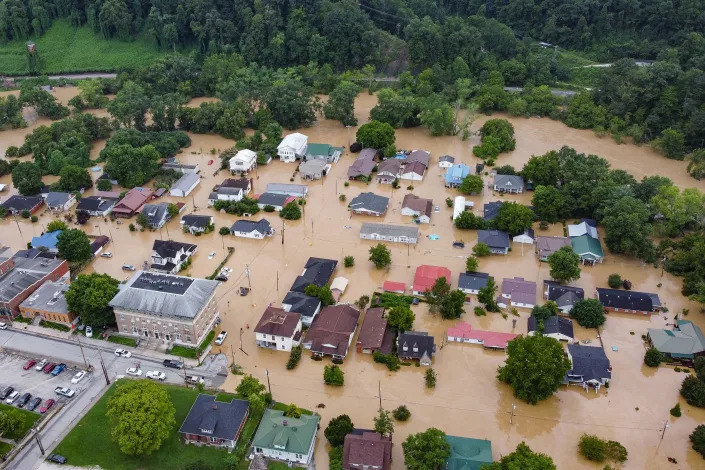
JULY 28, 2022: Aerial view of homes submerged under flood waters from the North Fork of the Kentucky River in Jackson, Kentucky. Flash flooding caused by torrential rains has killed at least eight people in eastern Kentucky and left some residents stranded on rooftops and in trees, the governor of the south-central US state said.

While global average temperatures continue rising around the world, the U.S. has experienced more warming than many other countries.

Extreme heat waves may be our new normal: Is the globe prepared?

Warming sea surface temperatures around the globe provide more fuel for tropical storms and exacerbate the melting of glaciers and ice sheets.

Why is climate change important?

“Every part of the U.S. is feeling the effects of climate change in some way,” said Allison Crimmins, director of that 5th National Climate Assessment. Representing the latest in climate research by a broad array of scientists, the final version of the assessment is expected in late 2023.

The U.S. East Coast is feeling the combined impacts of more intense storms and rising sea levels. Sunny day flooding is reaching record levels.

Sea levels are forecast to rise as much as 10-12 inches by 2050. Federal agencies say it’s a “clear and present risk.”

Homes at the beach face an increased threat of erosion and a rising number of homes are giving way to the sea, but it’s not just a coastal problem.

Disaster costs are rising, and scientists warn the window to further curtail fossil fuel emissions and put a lid on rising temperatures is closing rapidly.

Warmer waters: Rising seas could swamp $34B in US real estate in just 30 years, analysis finds

Is there a climate crisis?

Many scientists and officials worldwide agree: Yes. By the end of this century, projections show global average surface temperatures compared to pre-industrial times could increase by as much as 5.4 degrees.

Merriam-Webster defines “crisis” as a time of intense difficulty, trouble, or danger. A mix of warmer temperatures, extreme rainfall and rising sea levels often make naturally occurring disasters worse, while droughts become more intense and heat waves occur more often.

“The climate crisis is not a future threat, but something we must address today,” Richard Spinrad, administrator of National Oceanic and Atmospheric Administration, said in August 2022.

Earth sets new emissions record: Dire global warming milestone could come within a decade, report says

The term “climate crisis” has been used to describe these worsening impacts since at least 1986. Since the United Nations’ Intergovernmental Panel on Climate Change was organized in 1988, its reports steadily have grown more dire.

In April, U.N. Secretary-General António Guterres said broken climate promises “put us firmly on track toward an unlivable world.

The Fourth National Climate Assessment, released during the Trump administration,  warned natural, built and social systems were “increasingly vulnerable to cascading impacts that are often difficult to predict, threatening essential services.”

Climate extremes show: Global warming has ‘no sign of slowing’

Is climate change getting better?

Experts say the warming climate will have increasingly severe impacts on daily life, making it more difficult to access water and food, putting a strain on physical and mental health and challenging transportation and infrastructure.

“Every increased amount of warming will increase the risk of severe impacts, and so the more (rapidly) we can take strong action to reduce greenhouse gas emissions, the less severe the impacts will be,” Cornell University professor Rachel Bezner Kerr said after the release of one recent IPCC report.

Heat kills more humans each year than floods or hurricanes.

Studies warn the growth in wildfires in the West could mean an increase in dangerous air quality levels.

Warmer climates put animals on the move and increases the risk they’ll spread pathogens to other animals and to humans. A group of University of Hawaii researchers looked at how 376 human diseases and allergens such as malaria and asthma are affected by climate-related weather hazards and found nearly 60% have been aggravated by hazards, such as heat and floods.

Climate change also is displacing people in the U.S. and across the globe.

How does climate change affect us?

Agriculture, sports events and community festivals are feeling the heat.

Farmers are seeing more weather extremes and wilder swings between extreme drought and flooding.

Maple syrup producer Adam Parke has seen a 10-day shift forward in the maple sugar season on his Vermont farm over three decades.

Beef, citrus and cotton: Agriculture sees effects of ‘weirding weather’ from climate change

NASA reported in 2021 that decreases in global food supplies related to climate change could be apparent by 2030.

But agriculture also may be part of the solution to countering the increases in carbon dioxide and other greenhouse gases.

Billions set aside by the Inflation Reduction Act is earmarked to help support agriculture and reduce its emissions.

Changing climate: Uncertain future for Northeast maple trees, syrup season

Warmer spring temperatures have forced organizers to move historic flower festivals forward. 

To see further impacts, take a look at the time-honored Olympic tradition.

Two months after the 2022 winter games concluded in Beijing, a group of Olympians visited Washington to ask members of Congress to act on climate change, which they see as a threat to their sports.

The Summer 2024 Olympics are scheduled to kick off in July in France, where the country’s meteorological officials expect 2022 to be its hottest year since records began in 1900. Meanwhile, the International Olympic Committee has delayed choosing the location for the 2030 winter games, in part over climate concerns.

Olympic host city selection on hold: Why? It may not be cold enough.

Even fly fisherman see changes all around them. “Everyone knows if this keeps up, the places we can fish for trout are going to be limited,” said Tom Rosenbauer of Vermont, whose job title at sporting goods retailer Orvis is chief enthusiast.

How does climate change affect animals?

Warmer temperatures are forcing some animal species to move beyond their typical home ranges, increasing the risk that infectious viruses they carry could be transmitted to other species they haven’t encountered before. That poses a threat to human and animal health around the world.

Heat’s impact: Climate change could cause mass extinction of marine life in Earth’s oceans, study says

A roseate spoonbill stands bright against the green of a southeast Arkansas swamp. Jami Linder, an Arkansas photographer, documented the first spoonbill nest in the state in 2020.

“Climate change and pandemics are not separate things,” epidemiologist Colin Carlson, told USA TODAY. “We have to take that seriously as a real-time threat.”

Invasive species are expanding their ranges and even native animals are changing their habits. In South America and Africa, some primate species are leaving the treetops more often.

In the U.S., roseate spoonbills, a brilliant pink wading bird, are moving north as temperatures warm and they’re pushed out of native coastal habitats by rising sea levels.

Go deeper on climate change 

Thousands Will Live Here One Day (as Long as They Can Find Water)

The New York Times

Thousands Will Live Here One Day (as Long as They Can Find Water)

Keith Schneider – December 27, 2022

A golf cart on a path at Verrado, an 8,800-acre planned community, in Buckeye, Ariz., Dec. 19, 2022. (Adriana Zehbrauskas/The New York Times)

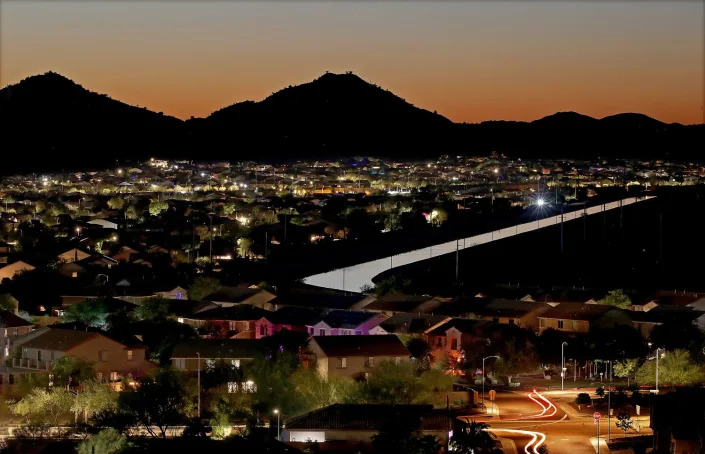
BUCKEYE, Ariz. — Surrounded by miles of creosote and ocotillo in the Sonoran Desert, state officials and business leaders gathered in October against the backdrop of the ragged peaks of the White Tank Mountains to applaud a plan to turn 37,000 acres of arid land west of Phoenix into the largest planned community ever proposed in Arizona.

The development, Teravalis, is expected to have 100,000 homes and 55 million square feet of commercial space. But to make it happen, the project’s developer, the Howard Hughes Corp., will need to gain access to enough water for its projected 300,000 residents and 450,000 workers.

Teravalis is seen by local and state leaders as a crowning achievement in a booming real estate market, but it also represents the intensifying challenge in Arizona and other fast-growing Southwestern states: to build huge mixed-use projects in an era of water scarcity.

“You can’t grow and grow on these far-flung lands and put industries anywhere you want,” said Kathleen Ferris, former director of the Arizona Department of Water Resources and a senior research fellow at the Kyl Center for Water Policy at Arizona State University. “You have to be smarter about where and how we grow.”

Persistent dry conditions are driving up the cost of water and prompting more resistance to new development. But the scarcity of water is also pushing developers to innovate with design and install expensive infrastructure to save fresh water and recycle more wastewater.

A deep drought has settled on the Southwest since 2000, exacerbated by climate change. Water flow has dropped precipitously in the Colorado River and other surface water supplies that serve Arizona and its neighboring states. That is putting more pressure to supply homes and businesses from finite water reserves held in aquifers.

The consequences are being felt across the West. A proposal for a new water pipeline to supply St. George, Utah, has become the focus of public opposition. Communities in Colorado and Utah have declared moratoriums on new developments. And water supply is one reason that rural residents are fighting a proposal to increase the density of homes in Washoe County, Nevada.

In Arizona, groundwater levels are falling so fast that thousands of residential wells all over the state are going dry. In 2021, the Arizona Department of Water Resources halted new-home construction in Pinal County, south of Phoenix, because groundwater pumping exceeded the supply.

In New Mexico, two proposals for big planned communities outside Albuquerque have languished because of concerns over water. At one project, Campbell Farming Corp. proposed building 4,000 homes, a commercial and retail center and two golf courses on 8,000 acres in the mountains east of the city more than two decades ago, according to planning documents, but it faced objections to groundwater use, which would total about 400 million to 500 million gallons annually. The Office of the State Engineer found that Campbell Ranch would not meet a New Mexico requirement for developers to demonstrate that their projects have a 70-year supply of water.

“It’s fundamental; you’re not doing that development without water,” said Kathy Freas, a co-founder of East Mountain Protection Action Coalition, a citizens’ group that opposed the plan.

Similar concerns are buffeting Santolina, a 13,700-acre planned development proposed in 2014 and still not under construction. Located between Albuquerque and the Rio Grande, Santolina is the focus of active public opposition because it would need 7.3 billion gallons of water a year to serve its projected 90,000 residents.

County officials may require Santolina’s developer, Western Albuquerque Land Holdings, to install expensive wastewater treatment and recycling infrastructure to reduce water use and waste. The company has submitted a plan that would convert hundreds of acres from housing to solar energy development, a change that would significantly reduce water consumption but could potentially require it to restart the planning process.

“In the West, water has always been an issue, right? People are just much more alert now,” said Enrico Gradi, deputy county manager for Bernalillo County, who is overseeing the review of the Santolina project.

Water scarcity is also changing the design of the Southwest’s planned communities, which no longer feature big lakes, irrigated lawns, golf courses or open drainage canals.

One example is Sterling Ranch near Littleton, Colorado, a development with roads and parks that are designed to collect and store stormwater for reuse. The 3,400-acre project will have a $350 million closed-loop water supply system that collects, treats and recycles wastewater for more than 12,500 residences, as well as commercial and retail spaces. The developers are also studying how to most efficiently collect and use rainwater from rooftops.

“Until there’s scarcity, most developers aren’t incentivized to conserve water,” said Brock Smethills, president of the site’s developer. “For us, the incentives were aligned on Day 1 to use less water and conserve as much as possible.”

Another example is Verrado, an 8,800-acre planned community in Buckeye, Arizona, that houses 16,000 residents. Along with 30,000 trees for shade and to slow evaporation, Verrado features a water recycling system that collects all of the wastewater from homes and businesses and directs it to a treatment plant capable of recycling 1.5 million gallons a day that is stored and used to irrigate two golf courses.

“Every responsible developer in Arizona knows water is a constraint,” said Dan T. Kelly, chief operating officer and general manager for DMB Associates, the company behind Verrado. “It’s the first question you deal with.”

The intensifying attention to water supply is especially relevant to the Teravalis project. Hughes Corp. paid $600 million to purchase the property from its previous owners, who had proposed to use 3,000 acres for a planned community that would rely on the Hassayampa Basin, an aquifer beneath the project, to supply water. In 2006, the Arizona Department of Water Resources issued two certificates to supply and build 7,000 homes.

Those certificates are still valid, but Hughes Corp. does not have access to supply water to the remaining 34,000 acres — more than 90% of its property. The Department of Water Resources has put the Hassayampa Basin off limits to new development while it studies how much water the underground reserve actually holds.

Water supply options for Teravalis include tapping another aquifer and delivering water by pipeline. It could also lease water from one of Arizona’s Native American tribes that have extensive water rights.

Developers also could buy rights to Colorado River water. Queen Creek, a Phoenix suburb, secured state permission and is preparing to spend $27 million to draw from the river nearly 750 million gallons for its 66,000 residents.

The adage in the West that “water runs uphill to money” applies. This year, Arizona lawmakers approved a $1 billion, three-year appropriation, essentially a down payment to secure stable water supplies.

“We’re at the very start of a new era of innovation and investment,” said Greg Vogel, founder and CEO of Land Advisors Organization, a national brokerage and development consultancy in Scottsdale, Arizona. “Teravalis will be in the making for 50 years, maybe 70 years, until build-out. They’ll have enough water.”

By no means, though, is that a consensus view.

The city of Buckeye, where Teravalis is, uses nearly 3.5 billion gallons annually for its 115,000 residents. Water consumption by Teravalis’ 300,000 residents could amount to three times as much.

In 1980, Arizona enacted a groundwater conservation law that requires developers in the Phoenix metropolitan region to assure buyers that their homes and businesses have a 100-year water supply. The law also requires developers to replenish aquifers with the same amount of water that they withdraw.

Bruce Babbitt, a former governor of Arizona who signed the 1980 groundwater law while in office, said that Teravalis would not meet either requirement. “My conclusion, based on a lot of analysis, is the project is not viable on the scale they are talking about,” he said.

Older and unappreciated: Workers over 50 face a rough time on the job

USA Today

Older and unappreciated: Workers over 50 face a rough time on the job

Katrin Park – December 26, 2022

Forget the Great Resignation. The shakeup of Generation Z workers, seeking fulfillment and treating their jobs like a game of musical chairs, will sort itself out over time. They have their whole lives ahead of them to find something that fits.

The larger crisis is what to do with all the older-than-50 workers searching for gainful employment. This is one of the worst times to be a worker in the twilight of a career. Only half of Americans are steadily employed throughout their 50s. Last year, more than a quarter of workers ages 55 to 59 were out of the workforce, which meant that they didn’t have jobs to retire from.

COVID-19 exacerbated this trend, as millions of older American workers disproportionately lost their jobs.

Across the globe, full-time, stable employment that culminated in pensions has become a relic of the pre-pandemic past. In the United States, an increasing number of workers can’t afford to retire, not with inflation and uncertain retirement savings. Now, a worker must wait to age 70 to collect maximum Social Security benefits, and Congress is expected to discuss raising the age for Social Security eligibility next year.

It makes sense that people should be able to work longer to boost their retirement accounts. But many of those who need to work longer are unable to do so because they lose their jobs long before they reach retirement age and can’t find another one. So they effectively retire.

Inflation harms retirement prospects: Retirement dreams become nightmares for many older Americans as inflation soars

Multiple factors create challenges for older workers

The disappearance of stable employment with a living wage and benefits – once the driver of upward mobility – has added to growing inequality. Global crises like COVID-19, changing business models and emerging technologies have led to the rise of low-quality, temporary jobs.

If workers have physically demanding jobs such as in retail or hospitality, poor health can force them to drop out. Many workers in their 50s also have caregiving responsibilities for older generations, which temporary gigs don’t accommodate. And of course there’s ageism.

Brookings Institution report found a strong relationship between holding steady employment in one’s 50s and working in their 60s and beyond. So interventions to support older workers must start earlier on, even in one’s 40s. This can be done by improving the quality of low-wage jobs – including through higher minimum wages, greater work schedule flexibility and paid leave – to reduce turnover. That will help people work longer.

South’s racist past still harm workers: Unions can help us build a new future

Likewise for firms, this is an opportunity to avoid productivity losses in the long run by maintaining a stable workforce. Firms that rely on disproportionately large numbers of hourly workers tend to have higher turnover rates. They are also less likely to invest in employee training and technologies.

Assisting older workers with developing skills that are in demand can help them get jobs again and meet businesses’ needs.

Such efforts are vital to maintain Social Security benefits, projected to be cut by more than 20% come 2034 unless Congress and the president intervene. Without action, monthly benefits would shrink by hundreds of dollars on average, and anyone 55 or younger would never get a full benefit.

And yet, unemployment statistics tend to leave out 50-something workers who are forced into early retirement. That happens because they are not part of the prime-age workforce, and they haven’t yet reached the benchmark ages associated with retirement, according to Beth Truesdale, a sociologist and author of the Brookings paper. Labor force policy and retirement policy should be considered as one system but are not, and these workers fall through the gap.

‘This has been traumatic’: One mom’s battles with homelessness, joblessness, inflation

Demographic changes threaten global economy

It’s a gap that’ll only get wider and harder to fill with the passage of time.

Which is alarming, given that an aging population, not a growing one, is the ticking time bomb.

The global population has just hit the 8 billion milestone, with life expectancy soaring and fertility rates dropping. Across the world, people 75 and older are the fastest-growing group in the labor force. Today, 40 million Americans are 65 and older, a figure expected to double over the next 40 years.

Opinion alerts: Get columns from your favorite columnists + expert analysis on top issues, delivered straight to your device through the USA TODAY app. Don’t have the app? Download it for free from your app store.

Not preparing for this inescapable demographic shift will result in a shrinking workforce that struggles to support a ballooning number of “retirees.”

To be sure, improving the working conditions of low-wage jobs or training programs alone will not solve the myriad challenges older workers face. Age discrimination persists.

IBM, for example, has forced out more than 20,000 workers older than 40 in the past five years, and it is facing legal action as a result.

Katrin Park is a freelance writer and a former director of communications with the International Food Policy Research Institute.

Unfortunately, among the more than 40 million Americans 50 and older in the labor force, according to a 2018 analysis by ProPublica and the Urban Institute, half of them are likely to be laid off or forced into retirement regardless of income, education level or geography.

Without stronger legal protection for older workers and changing business models so they value work experience as a competitive advantage necessary for greater productivity, older workers will face fewer opportunities, resulting in higher rates of poverty in old age.

The disappearance of 50-something workers should factor more prominently in future of work debates. Even if all the quirks of Gen Z work habits were resolved tomorrow, a massive demographic work crisis still looms.

Katrin Park is a freelance writer and a former director of communications with the International Food Policy Research Institute.

In Arizona, Colorado River crisis stokes worry over growth and groundwater depletion

Los Angeles Times

In Arizona, Colorado River crisis stokes worry over growth and groundwater depletion

Ian James – December 26, 2022

The Central Arizona Project Canal running through the desert in Arizona.
The Central Arizona Project Canal running through the desert in Arizona. (Albert Brave Tiger Lee / Los Angeles Times)

Kathleen Ferris stared across a desert valley dotted with creosote bushes, wondering where the water will come from to supply tens of thousands of new homes. In the distance, a construction truck rumbled along a dirt road, spewing dust.

This tract of open desert west of Phoenix is slated to be transformed into a sprawling development with up to 100,000 homes — a 37,000-acre property that the developers say will become Arizona’s largest master-planned community.

“It’s mind-boggling,” Ferris said. “I don’t think there is enough water here for all the growth that is planned.”

Water supplies are shrinking throughout the Southwest, from the Rocky Mountains to California, with the flow of the Colorado River declining and groundwater levels dropping in many areas. The mounting strains on the region’s water supplies are bringing new questions about the unrestrained growth of sprawling suburbs.

Ferris, a researcher at Arizona State University’s Kyl Center for Water Policy, is convinced that growth is surpassing the water limits in parts of Arizona, and she worries that the development boom is on a collision course with the aridification of the Southwest and the finite supply of groundwater that can be pumped from desert aquifers.

For decades, Arizona’s cities and suburbs have been among the fastest growing in the country. In most areas, water scarcity has yet to substantially slow the march of development.

But as drought, climate change and the chronic overuse of water drain the Colorado River’s reservoirs, federal authorities are demanding the largest reduction ever in water diversions in an effort to avoid “dead pool” — the point at which reservoir levels fall so low that water stops flowing downriver.

Already, Arizona is being forced to take 21% less water from the Colorado River, and larger cuts will be needed as the crisis deepens.

To deal with those reductions and access other supplies to serve growth, the state is turning more heavily to its underground aquifers. As new subdivisions continue to spring up, workers are busy drilling new wells.

Ferris and others warn, however, that allowing development reliant solely on groundwater is unsustainable, and that the solution should be to curb growth in areas without sufficient water.

“What we’re going to see is more and more pressure on groundwater,” Ferris said. “And what will happen to our groundwater then?”

Construction workers erect new homes in a dry landscape
Construction workers erect new homes in a residential development called Sun City Festival in Buckeye. Dwindling Colorado River water is delivered to central Arizona, one of the fastest growing metropolitan areas in the U.S., via the Central Arizona Project Canal. (Luis Sinco / Los Angeles Times)

One of the fastest-growing cities in the Phoenix area is Buckeye, which has plans to nearly triple its population by 2030. According to its 2020 water resources plan, 27 master-planned communities are proposed in Buckeye, which depends primarily on groundwater. If all the proposed developments are fully built, the city’s population, now 110,000, would skyrocket to about 872,000.

In the area Ferris visited, construction has begun on the giant development called Teravalis, where the developers plan to build the equivalent of a new city, complete with more than 1,200 acres of commercial development.

State water regulators have granted approvals to allow an initial portion of the project to move forward. But in other nearby areas of Buckeye, state officials have sent letters to builders putting some approvals on hold while they study whether there is enough groundwater for all the long-term demands.

sun sets behind cactuses
The sun sets on the vast desert landscape along Sun Valley Parkway in Buckeye, Ariz. (Luis Sinco/Los Angeles Times)

“It’s hard for me to imagine wall-to-wall homes out here,” Ferris said, standing on the gravel shoulder of the Sun Valley Parkway, which runs across miles of undeveloped land. “This is the epitome of irresponsible growth. It is growing on desert lands, raw desert lands, where there’s no other water supply except groundwater.”

Nearby, the Central Arizona Project snakes through the desert, filled with Colorado River water. The CAP Canal was built between 1973 and 1993, bringing water that has enabled growth. But its supply came with low-priority water rights that made it vulnerable to cuts in a shortage.

The Phoenix metropolitan area’s population has more than doubled since 1990, expanding from 2.2 million to about 4.9 million people. Subdivisions have been built on former farmlands as development has expanded across the Salt River Valley, also called the Valley of the Sun.

Ferris, a lawyer and former director of the Arizona Department of Water Resources, helped draft the state’s 1980 Groundwater Management Act, which was intended to address overpumping and has since regulated groundwater use in urban areas.

Water from the CAP Canal has enabled cities to pump less from wells. For years, they have banked some of the imported Colorado River water underground by routing it to basins where it percolates down to aquifers.

The Central Arizona Project Canal runs beside a community in the suburbs of North Phoenix.
The Central Arizona Project Canal runs beside a community in the suburbs of North Phoenix. Development projects envisioning thousands of new homes around Phoenix now are in question because of lack of water. (Luis Sinco / Los Angeles Times)

The state requires that new developments around Phoenix and other urban areas have a 100-year “assured water supply,” based on a calculation that allows for groundwater to be pumped down to a level 1,000 feet underground. Changes by the Legislature and regulators in the 1990s cleared the way for subdivisions to rely on groundwater as an assured water supply.

Since then, a groundwater replenishment district has been charged with securing water and using it to recharge aquifers, creating an accounting system. The problem with this system, Ferris said, is that groundwater has been overallocated, allowing for excessive pumping in some areas.

Ferris said she thinks the current rules are no longer adequate, especially with much less imported water available to recharge groundwater.

“We’ve got to learn to live within our means. Groundwater was always supposed to be a savings account, to be used only in times of shortages. Well, now those shortages look permanent,” Ferris said. “We ought to be saying, ‘How much growth can we really sustain?’ And put limits on how much water we’re going to use.”

The desert aquifers contain “fossil” water that has been underground for thousands of years.

“That water is not replenished. And so once it’s pumped, it’s pretty much gone,” Ferris said.

In recent years, Arizona has received about 36% of its water from the Colorado River. The river has long been severely overallocated, and its flows have shrunk dramatically during 23 years of megadrought intensified by global warming.

Overhead view of a green golf course surrounded by suburbs
One of a growing number of developments in Buckeye, Ariz., that depend on groundwater. (Albert Brave Tiger Lee / Los Angeles Times)

The river’s largest reservoirs, Lake Mead and Lake Powell, now sit nearly three-fourths empty. Federal officials have warned there is a real danger the reservoirs could drop so low by 2025 that water would no longer flow past Hoover Dam to Arizona, California and Mexico.

Ferris said Arizona now needs to plan for years with little or no Colorado River water. She said she feels sad and angry that federal and state water managers, despite warnings by scientists, failed to act sooner to address the shortage.

“The Colorado River is dying,” Ferris said. “It is dying from overallocation, overuse, aridification, mismanagement.”

In the same way that tough decisions about the Colorado River were neglected for years, she said, “we’re not managing our groundwater well.”

“Either we do something about this now or we pay the consequences later. And we’re paying the consequences now with the Colorado River, because we didn’t deal with those problems soon enough,” Ferris said. “If we fail to plan for the idea that our groundwater will no longer be sufficient, then shame on us.”

Alongside the river’s decline, the Southwest is undergoing a parallel crisis of groundwater depletion. Scientists found in a 2014 study, using measurements from NASA satellites, that pumping depleted more than 40 million acre-feet of groundwater in the Colorado River Basin over nine years, about 1.5 times the maximum capacity of Lake Mead.

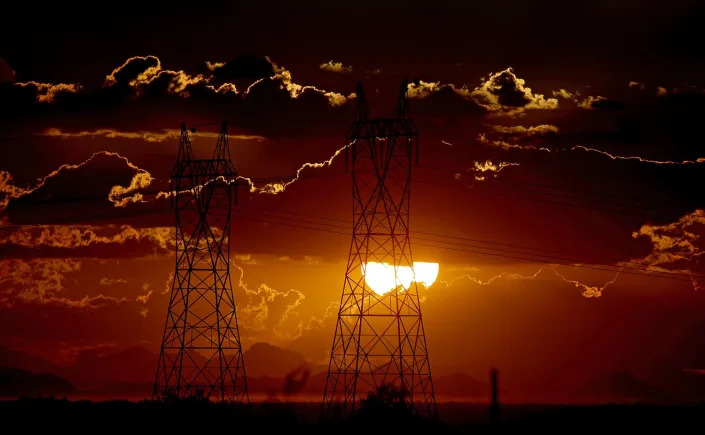
A sun setting behind power lines
The sun sets on the vast desert landscape along Sun Valley Parkway in Buckeye, Ariz. (Luis Sinco / Los Angeles Times)

“Our research has shown that the groundwater in the lower basin has been disappearing nearly seven times faster than the combined water losses from Lakes Powell and Mead,” said Jay Famiglietti, a hydrology professor and executive director of the University of Saskatchewan’s Global Institute for Water Security. “Groundwater losses of that magnitude are literally an existential threat to desert cities like Phoenix and Tucson.”

Next year, Arizona’s allocation of Colorado River water delivered through the CAP Canal will be cut by more than a third. Some Arizona farmers are losing their CAP supplies, while irrigation districts are drilling new state-funded wells.

Arizona’s cities have yet to see major reductions. But that could soon change.

Ferris said she thinks growth should happen in areas where sufficient water is available, and from multiple sources.

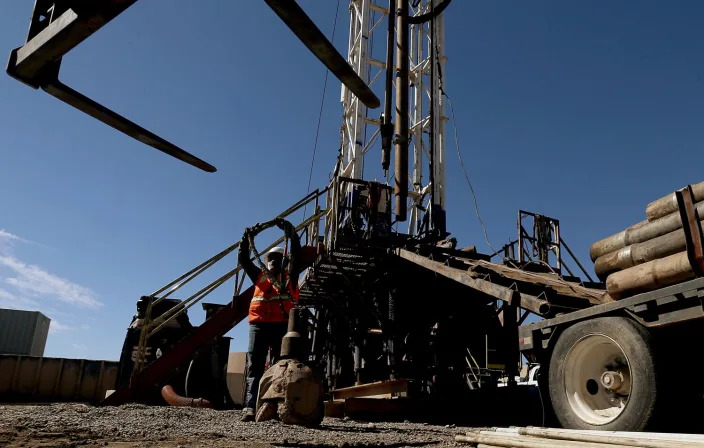
A workman prepares a rig to drill for water in the suburbs of Phoenix.
A workman prepares a rig to drill for water in the suburbs of Phoenix. Colorado River flows are at historic lows due to warmer and drier conditions caused by climate change. (Luis Sinco / Los Angeles Times)

The city of Peoria, northwest of Phoenix, is one example of an area with a variety of sources, including the Colorado River, the Salt and Verde rivers and recycled wastewater. Since 1996, the city has been banking water underground, storing treated wastewater effluent and a portion of its Colorado River water.

The city is now drilling wells to pump out some of those supplies.

“Even if the Colorado River went away completely, we expect to have enough water banked underground to last us for years,” said Cape Powers, Peoria’s water services director. “We’ll continue to prepare for whatever comes our way.”

Nearby, a drilling crew was preparing to bore one of eight new wells for the city.

“Every drill rig that my company has is spoken for until May or June of next year,” said Ralph Anderson, the owner of Arizona Beeman Drilling. “The business in the next 3 to 5 years is going to just go through the roof.”

Some cities are maneuvering in other ways, reaching outside the Phoenix area to secure water.

The growing Phoenix suburb of Queen Creek recently won approval for a controversial $22-million deal to buy water rights from an investment company that will leave farmland dry in the community of Cibola, next to the Colorado River.

Queen Creek has also signed a 100-year contract to pay landowners $30 million to leave farmland fallow in the rural Harquahala Valley west of Phoenix, allowing them to pump groundwater and ship it to the suburbs.

Other cities are also looking to pump groundwater in the Harquahala Valley and other areas where they would be allowed to transport the water by canal.

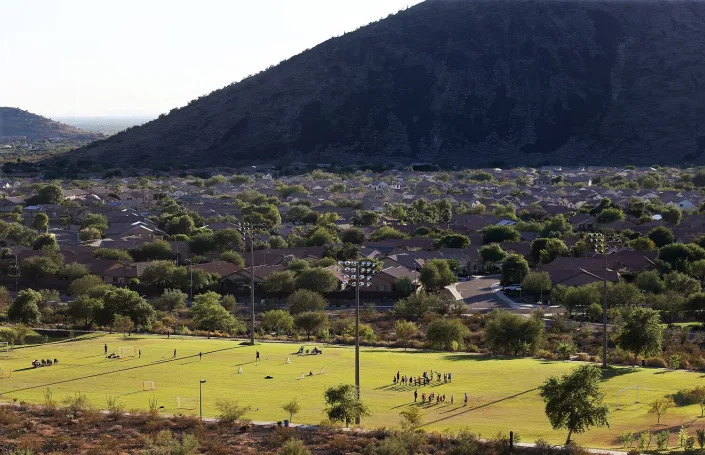
Overhead shot of a green outdoor athletic field surrounded by suburbs
Landscaped yards and green grassy playing fields typify the suburbs of North Phoenix. (Luis Sinco / Los Angeles Times)

Meanwhile, groundwater remains unregulated in most rural areas of Arizona, and large farming operations have been pumping heavily, drawing down water levels and leaving homeowners with dry wells. Around Kingman in western Arizona, where large new plantings of pistachio orchards have raised concerns among local officials, the state’s water regulators announced this month that they will limit the amount of land that may be irrigated in the Hualapai Valley.

Buckeye has a substantial amount of groundwater locally and plans to seek additional water that could be brought in from other areas, said Terry Lowe, the city’s director of water resources.

“It’s a hot market, the Phoenix metro area in general, and we’ve got to be able to have that water to meet that demand,” Lowe said. “And so we’re looking at working with others outside to find sources.”

For the planned 37,000-acre community Teravalis, the developers have two existing water approvals, called certificates of assured water supply, to build about 7,000 homes, and plan to seek additional approvals to build more. The developers plan to pump groundwater from the aquifer beneath the property, which lies in the Hassayampa River watershed.

“It’s one of the most plentiful aquifer basins in the state of Arizona. So we feel pretty good about that,” said Heath Melton, regional president for The Howard Hughes Corp. “We feel like we’re in a really good place.”

Melton said the community will conserve water by having low-water-use plants and fixtures, and will use recycled wastewater for outdoor irrigation and to recharge the aquifer.

Developers are also supporting the state government’s efforts to secure additional water from new sources.

a canal surrounded by shrubs runs into a basin
Colorado River water flows into the Agua Fria groundwater recharge basins (or groundwater recharge facilities) in Peoria, Ariz. (Albert Brave Tiger Lee / Los Angeles Times)

Legislation signed this year by Gov. Doug Ducey established a new Water Infrastructure Finance Authority that will have about $1.4 billion for conservation projects and to secure additional supplies, including possibly bringing in water from outside the state. Arizona officials have been looking into a possible deal with Mexico to desalinate seawater at the Sea of Cortez and exchange that water for some of Mexico’s Colorado River water.

In the Hassayampa watershed in Buckeye, state water regulators have been working on an updated analysis of the groundwater basin. In letters to some other developers in the area, they have warned that although their report is not yet complete, they have “information indicating that the proposed subdivision’s estimated groundwater demand for 100 years is likely not met when considered with other existing uses and approved demands in the area.”

The Arizona Department of Water Resources similarly announced in 2019 that projections showed insufficient groundwater available for all the planned developments in Pinal County, between Phoenix and Tucson.

“The amount of groundwater we can allocate for these purposes is finite,” said Tom Buschatzke, the department’s director. He said in the Hassayampa basin, all the proposed developments won’t be able to grow on groundwater alone.

“They’ve got to find a different way to do business than what they’ve historically done,” he said. “They’ve got to find different pathways, more likely more expensive pathways.”

Buschatzke said the area still has options, such as bringing in water from other areas or using recycled water.

Even as the supply of Colorado River water shrinks, some researchers are optimistic about the state’s ability to adapt.

“The whole state is at an inflection point where we have to take some definite actions toward making sure of water supplies to serve the populations that are here now and into the future,” said Sarah Porter, director of ASU’s Kyl Center for Water Policy. “Arizona has a long history of meeting these water challenges, and I think Arizona will do that again.”

Ferris said she feels more pessimistic.

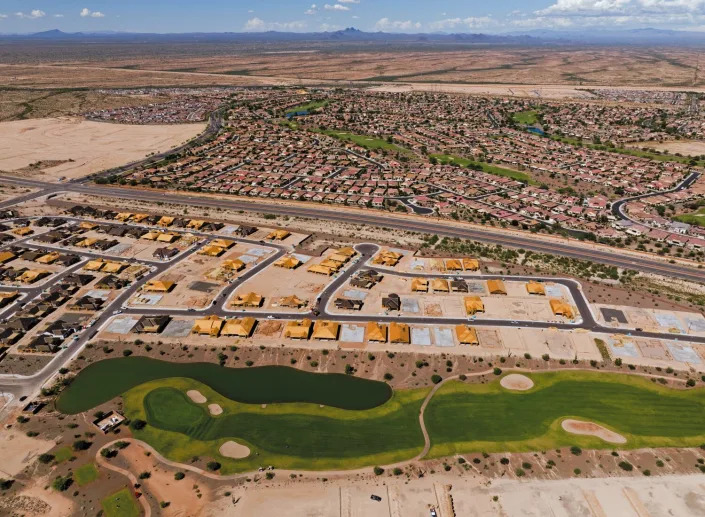
Overhead view of homes being build around a green golf course
Homes are being built in a new community in Buckeye, Ariz. (Albert Brave Tiger Lee / Los Angeles Times)

Visiting a new development in Buckeye, Ferris drove past an entrance with flowing fountains. She watched workers building homes beside a golf course with ponds.

Nearby, new homes stood beside the open desert. On empty lots, flattened patches of dirt lay ready for the foundations to be poured.

“We have to stop growing these giant developments on groundwater. It is unsustainable,” Ferris said. “We need to limit the growth.”

China is losing its place as the center of the world’s supply chains. Here are 5 places supply chains are going instead.

Business Insider

China is losing its place as the center of the world’s supply chains. Here are 5 places supply chains are going instead.

Huileng Tan – December 26, 2022

Chinese factory economy
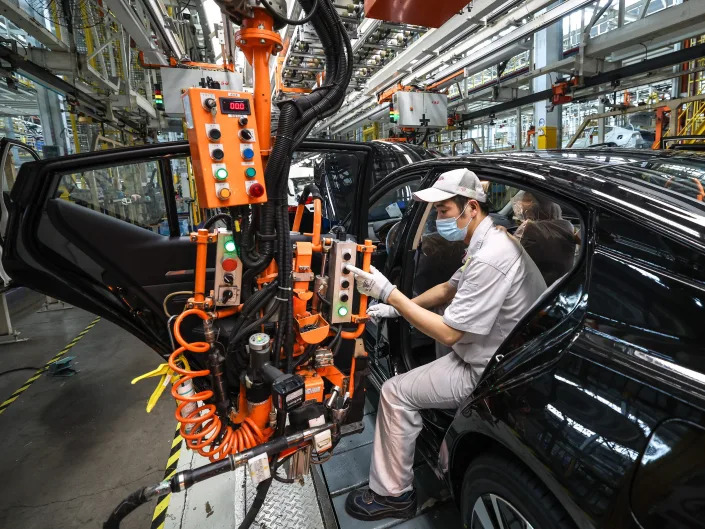
China is the factory of the world, but COVID-19 has shown the world needs more than China to keep supply chains robust.Visual China Group/Getty Images
  • China’s COVID-19 policies are pushing companies to diversify supply chains away from the country.
  • They had already begun moving out over geopolitical tensions and tariffs from the Trump era.
  • India, Vietnam, Thailand, Malaysia, and Bangladesh are stepping up to replace the world’s factory.

China has been the factory of the world for the past four decades. The pandemic triggered a reckoning of this status.

An employee works on the assembly line of electric bicycles at a workshop of Yadea Technology Group Co., Ltd.
China’s draconian COVID-19 restrictions have hit global supply chains.Chen Shichuan/VCG/Getty Images

China’s rise as the world’s factory spanned four decades and ushered in an era of globalization and integrated supply chains.

That facade started to crumble around 2018 after President Donald Trump launched a trade war against the East Asian giant. This, in turn, has prompted investors to reassess their geopolitical risks.

While some investors did move parts of their manufacturing facilities out of China at the time, it was the pandemic — and China’s zero-COVID policy — that drove home the importance of not depending on one country for manufacturing needs.

“The geopolitical tensions, in themselves, may not have resulted into this level of realignment of supply chains, but COVID certainly provided that extra vision, extra fillip, the extra fuel to the fire,” Ashutosh Sharma, a research director at the market-research firm Forrester, told Insider this month.

And the effects of the trade war linger. President Joe Biden hasn’t put the kibosh on the elevated tariffs Trump imposed on China — in fact, in October, he imposed export controls on shipping equipment to Chinese-owned factories making advanced logic chips. This further burdened a strained relationship.

To navigate this complicated web of US-China trade tensions, multinationals are, now more than ever, looking to hedge their business risks.

Here are five countries where China’s supply chains are moving to.

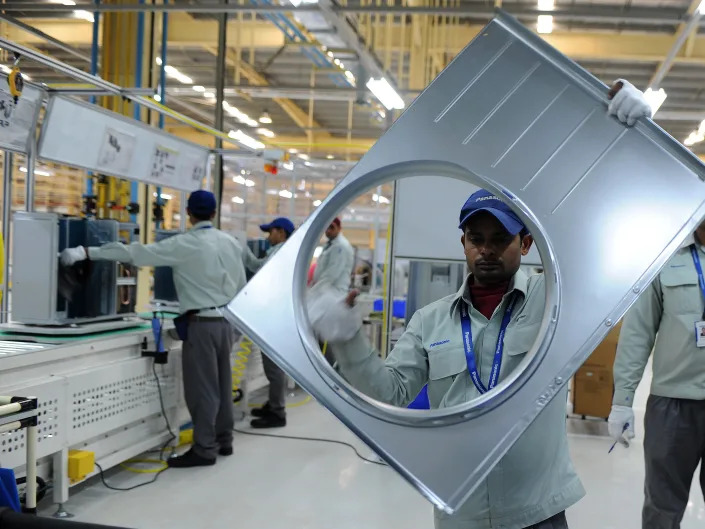
India is trying to unseat China in higher-end manufacturing, with the iPhone maker Apple and chipmakers eyeing its vast land and young population.

An Indian employee works on an air conditioning unit at the Panasonic 'eco ideas' factory at Jhajjar in Haryana on December 12, 2012.
India has vast land and a young population.Sajjad Hussain/AFP/Getty Images

With its vast land and large, young population, India is a logical alternative to China as the world’s factory.

India is set to surpass China in 2023 as the most populous country, the UN’s Department of Economic and Social Affairs said in a July report.

Apple has already moved some of its iPhone production to the Indian states of Tamil Nadu and Karnataka and is exploring moving its iPad manufacturing to the South Asian nation. JPMorgan analysts expect Apple to move 5% of its iPhone 14 production to India by the end of 2022, they wrote in a September note. They said they believed 1 in 4 iPhones would be made in India by 2025.

“India has a large labor pool, a long history of manufacturing, and government support for boosting industry and exports,” Julie Gerdeman, the CEO of Everstream, a platform for supply-chain risk management, told Insider. “Because of this, many are exploring whether Indian manufacturing is a viable alternative to China.”

The move is easier said than done.

Indian Prime Minister Narendra Modi has been working on attracting foreign direct investments since he took office in 2014, sending FDI to a record $83.6 billion in the past fiscal year, according to government data.

But significant hurdles still exist — even though the Indian government is boosting its appeal for foreign investments, it’s harder to do business in the country than in China, partly because of bureaucracy and multiple stakeholders that prolong decision-making.

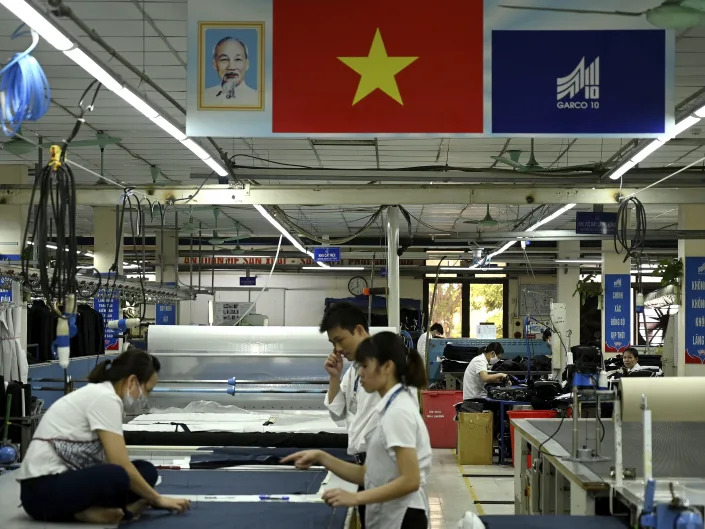
Vietnam has been undergoing rapid economic reform since 1986, which has yielded significant returns.

Garment factory workers working in a factory in Hanoi, Vietnam.
Garment-factory workers in Hanoi, Vietnam.Manan Vatsyayana / AFP

As a communist country, Vietnam — like China — has been undergoing rapid economic reform since 1986.

The reforms have yielded results, propelling Vietnam from “one of the world’s poorest nations to a middle-income economy in one generation,” The World Bank said in a November post.

In 2021, Vietnam attracted over $31.15 billion in foreign-direct-investment pledges — up more than 9% from the prior year, according to the country’s Ministry of Planning and Investment. About 60% of the investments went into the manufacturing-and-processing sector.

Vietnam’s key strengths are in the manufacturing of apparel, footwear, and electronics and electrical appliances.

Apple has already moved some iPhone manufacturing to Vietnam and is planning to move some of its MacBook production to the Southeast Asian nation.

Other companies that have shifted some of their production lines out of China to Vietnam are Nike, Adidas, and Samsung.

Thailand’s FDI rose threefold between 2020 and 2021.

Natawut Lorboon works at the production line of Dunan Metals Thailand Co., Ltd, in the Thai-Chinese Rayong industrial zone in Rayong Province, Thailand, Nov. 8, 2022.
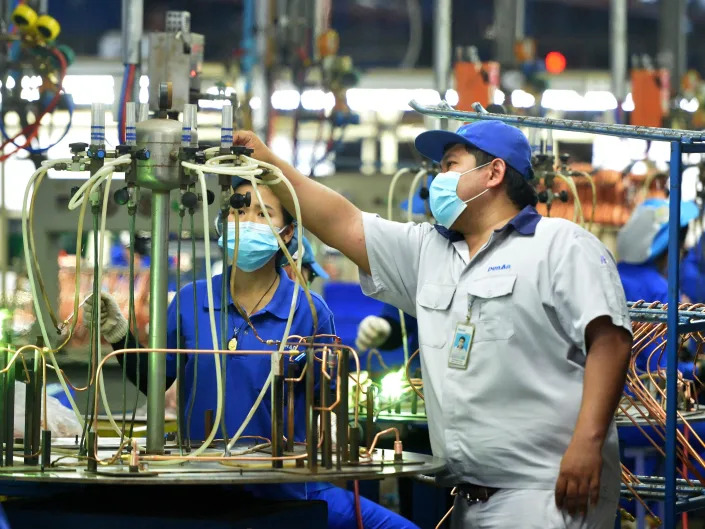
Thailand is a key auto and electronics manufacturing hub.Rachen Sageamsak/Xinhua/Getty Images

As Southeast Asia’s second-largest economy, Thailand has been moving up the value chain in manufacturing and is a production hub for car parts, vehicles, and electronics, with multinationals such as Sony and Sharp setting up shop there.

Sony said in 2019 it was closing its Beijing smartphone plant to cut costs and relocated some of the production to Thailand. Sharp said in the same year it was moving some of its printer production to Thailand because of the US-China trade war.

It’s not just international firms. Even Chinese companies have relocated parts of their supply chains to Thailand. Companies producing solar panels, such as Shanghai’s JinkoSolar, are moving their production to the island nation to take advantage of lower costs and avoid geopolitical tensions, the South China Morning Post reported in July.

“Setting up manufacturing plants abroad didn’t come from [the pursuit of] opportunities, it is more of a strategy to deal with challenges to gain market access,” Zhuang Yan, the president of Canadian Solar, said at an industry event in July, SCMP reported.

Foreign direct investments rose threefold to 455.3 billion Thai baht, or about $13.1 million, between 2020 to 2021, the Thailand Board of Investment announced in February.

Bangladesh is already a beneficiary of the supply-chain shift away from China. It now wants a bigger slice of the pie.

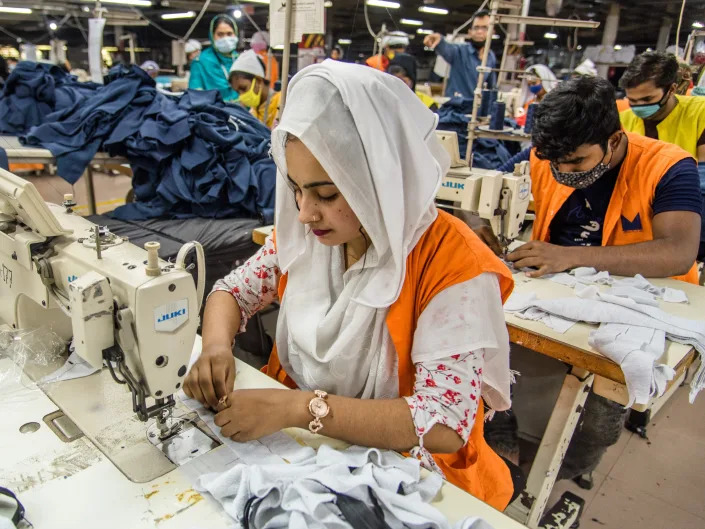
Women manufacturing clothes in Bangladesh.
Bangladesh is home to a huge garment-manufacturing sector.Mustasinur Rahman Alvi/Eyepix Group/Future Publishing via Getty Images

Even before the COVID-19 lockdowns crippled China’s manufacturing sector, Bangladesh was a rising star in the garment-manufacturing sector.

Bangladesh’s rise was primarily due to rising labor costs in China predating Trump’s presidency.

The cost difference is large — the average monthly salary of a worker in Bangladesh is $120, or less than one-fifth of the $670 a factory worker takes home in the southern-China manufacturing hub of Guangzhou, Mostafiz Uddin, the owner of the Bangladeshi apparel manufacturer Denim Expert, told Insider.

“Moreover, rising material costs is pushing apparel companies to look for alternative destinations like Bangladesh where production prices are comparatively low,” Uddin said.

Despite a high-profile building collapse that killed at least 1,132 people in April 2013 and dented Bangladesh’s work-safety reputation, its garment-manufacturing industry is a key pillar of its economy, accounting for nearly 85% of shipments, or over $42 billion of the country’s exports, in 2021. The country is also the world’s second-largest garments exporter, after China.

Bangladesh is now working to attract investments beyond the garment sector into others, including pharmaceuticals and agriculture processing.

Malaysia has for years been eyeing opportunities emerging from companies shifting away from China.

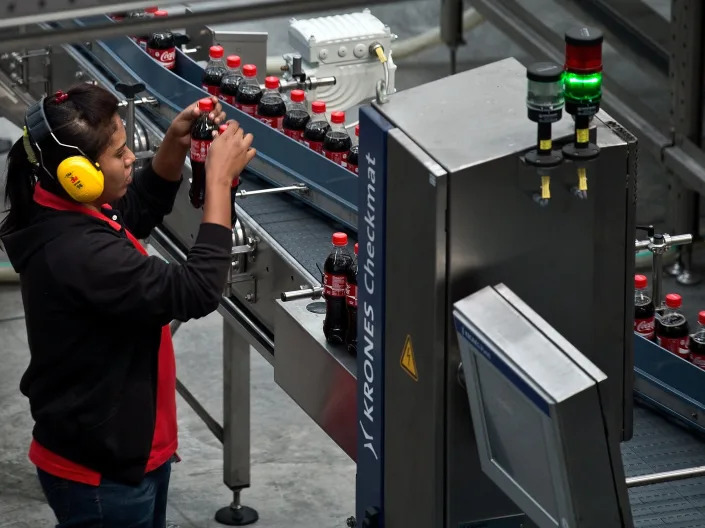
An attendant checks bottles on a production line at the Coca-Cola bottling plant in Nilai on the outskirts of Kuala Lumpur.
Malaysia’s FDI inflows hit a five-year high of $48.1 billion in 2021.Manan Vatsyayana/AFP/Getty Images

Malaysia has been eyeing opportunities from the manufacturing shift out of China for the past few years.

It has made some headway with the efforts, as it has attracted at least 32 projects that have relocated from China to Malaysia, the Malaysian Investment Development Authority said in July 2020. The authority didn’t provide details of the projects or of the companies that moved.

But even before the pandemic, tech investments into Malaysia had been rising because of lower labor costs and US-China trade tensions. Major deals over the past few years included a 1.5 billion Malaysian ringgit, or $339 million, investment by the US chip giant Micron over five years starting in 2018. Jabil, a US company that makes iPhone covers, has also expanded its operations in Malaysia.

“We knew quite a number that have expressed their intention to shift from China and we have engaged them. The only thing is timing,” Azman Mahmud, then the CEO of the Malaysian Investment Development Authority, told The Malaysian Reserve in 2020.

Malaysia’s FDI inflows hit a five-year high of $48.1 billion in 2021, with manufacturing of electronics and vehicles being the main contributor, according to official government information.

It could happen tomorrow’: Experts know disaster upon disaster looms for West Coast

USA Today

‘It could happen tomorrow’: Experts know disaster upon disaster looms for West Coast

Joel Shannon, USA TODAY – December 19, 2022

It’s the elevators that worry earthquake engineering expert Keith Porter the most.

Scientists say a massive quake could strike the San Francisco Bay Area at any moment. And when it does, the city can expect to be slammed with a force equal to hundreds of atomic bombs.

Porter said the shaking will quickly cut off power in many areas. That means unsuspecting people will be trapped between floors in elevators without backup power. At peak commute times, the number of those trapped could be in the thousands.

To escape, the survivors of the initial quake will need the help of firefighters with specialized training and tools.

But their rescuers won’t come – at least not right away. Firefighters will be battling infernos that could outnumber the region’s fire engines.

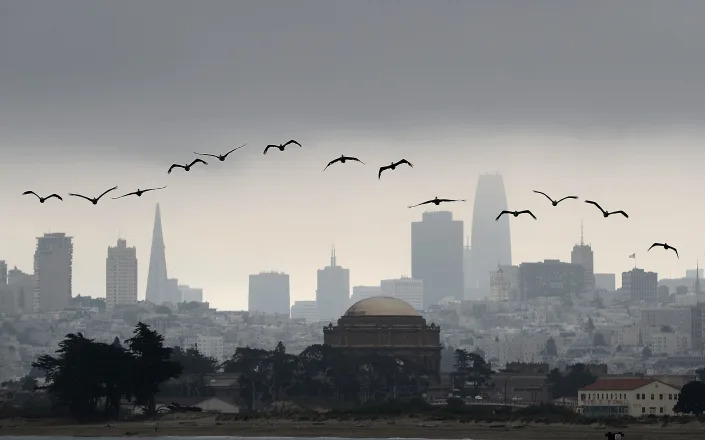
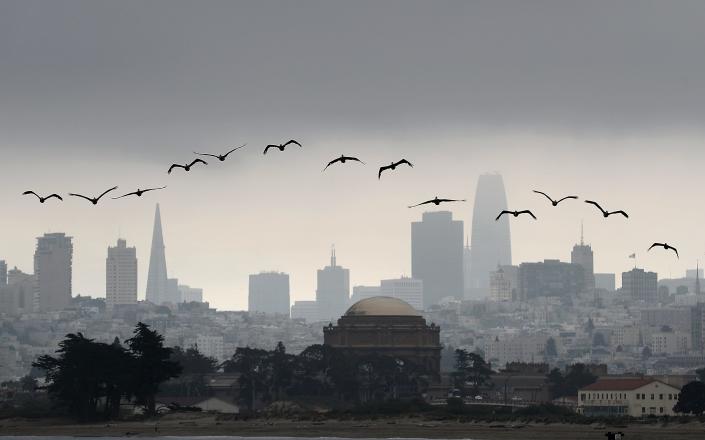
Brown pelicans fly in front of the San Francisco skyline Aug 17, 2018.

Running water will be in short supply. Cellphone service may not work at all. The aftershocks will keep coming.

And the electricity could remain off for weeks.

“That means people are dead in those elevators,” Porter said.

‘Problems on the horizon’

The situation Porter described comes from his work on the HayWired Scenario, a detailed look at the cascading calamities that will occur when a major earthquake strikes the Bay Area’s Hayward Fault, including the possibility of widespread power outages that will strand elevators.

The disaster remains theoretical for now. But the United States Geological Survey estimates a 51% chance that a quake as big as the one described in HayWired will occur in the region within three decades.

It’s one of several West Coast disasters so likely that researchers have prepared painstakingly detailed scenarios in an attempt to ready themselves.

‘SUPERIONIC’: Scientists discover the Earth’s inner core isn’t solid or liquid

The experts who worked on the projects are highly confident the West Coast could at any moment face disasters with the destructive power to kill hundreds or thousands of people and forever change the lives of millions more. They also say there’s more that can be done to keep individuals – and society – safer.

“We’re trying to have an earthquake without having one,” Anne Wein told USA TODAY. Wein is a USGS researcher who co-leads the HayWired earthquake scenario and has worked on several other similar projects.

Such disaster scenarios are massive undertakings that bring together experts from various fields who otherwise would have little reason to work together – seismologists, engineers, emergency responders and social scientists.

That’s important because “it’s difficult to make new relationships in a crisis,” Wein said.

Similar projects aimed at simulating a future disaster have turned out to be hauntingly accurate.

The Hurricane Pam scenario foretold many of the devastating consequences of a major hurricane striking New Orleans well before Hurricane Katrina hit the city.

More recently, in 2017, the authors of “The SPARS Pandemic” called their disaster scenario “futuristic.” But now the project now reads like a prophecy of COVID-19. Johns Hopkins University even issued a statement saying the 89-page document was not intended as a prediction of COVID-19.

“The SPARS Pandemic” imagined a future where a deadly novel coronavirus spread around the world, often without symptoms, as disinformation and vaccine hesitancy constantly confounded experts’ efforts to keep people safe.

The “SPARS scenario, which is fiction, was meant to give public health communicators a leg up … Think through problems on the horizon,” author Monica Schoch-Spana told USA TODAY.

At the time that SPARS was written, a global pandemic was thought of in much the same way experts currently describe the HayWired earthquake: an imminent catastrophe that could arrive at any time.

‘It could happen tomorrow’

Disaster scenario researchers each have their own way of describing how likely the apocalyptic futures they foresee are.

“The probability (of) this earthquake is 100%, if you give me enough time,” seismologist Lucy Jones will often say.

Earthquakes occurring along major faults are a certainty, but scientists can’t predict exactly when earthquakes will happen – the underground forces that create them are too random and chaotic. But researchers know a lot about what will happen once the earth begins to shake.

Earthquakes like HayWired are “worth planning for,” Porter said. Because “it could happen tomorrow.”

“We don’t know when,” Porter said. But “it will happen.”

Wein says we’re “overdue for preparedness.” You might say we’re also overdue for a major West Coast disaster.

The kind of earthquake described in HayWired historically occurs every 100-220 years. And it’s been more than 153 years since the last one.

Farther south in California, it’s difficult to pin down exactly how at risk Los Angeles is for The Big One – the infamous theoretical earthquake along the San Andreas fault that will devastate the city. But a massive magnitude 7.5 earthquake has about a 1 in 3 chance of striking the Los Angeles area in the next 30 years, the United States Geological Survey estimates.

A 2008 scenario said a magnitude 7.8 quake could cause nearly 2,000 deaths and more than $200 billion in economic losses. Big quakes in Los Angeles are particularly devastating because the soil holding up the city will turn into a “bowl of jelly,” according to a post published by catastrophe modeling company Temblor.

Another scenario warns that a stretch of coast in Oregon and Washington state is capable of producing an earthquake much more powerful than the ones California is bracing for. Parts of coastline would suddenly drop 6 feet, shattering critical bridges, destroying undersea communication cables and producing a tsunami.

Thousands are expected to die, but local leaders are considering projects that could give coastal residents a better chance at survival.

It too “could happen at any time,” the scenario says.

Earthquake scenarios often focus on major coastal cities, but West Coast residents farther inland also have yet another disaster to brace for.

Megastorms are California’s other Big One,” the ARkStorm scenario says. It warns of a statewide flood that will cause more than a million evacuations and devastate California’s agriculture.

Massive storms that dump rain on California for weeks on end historically happen every few hundred years. The last one hit around the time of the Civil War, when weeks of rain turned portions of the state “into an inland sea.”

‘Decades to rebuild’

Whether the next disaster to strike the West Coast is a flood, an earthquake or something else, scenario experts warn that the impacts will reverberate for years or longer.

“It takes decades to rebuild,” Wein said. “You have to think about a decade at least.”

A major West Coast earthquake isn’t just damaged buildings and cracked roads.

It’s weeks or months without running water in areas with millions of people. It’s mass migrations away from ruined communities. It’s thousands of uninhabitable homes.

Depending on the scenario, thousands of people are expected to die. Hundreds of thousands more could be left without shelter. And those impacts will be a disproportionately felt.

‘DYING ON THE STREETS’: Homelessness crisis is top issue in Los Angeles mayoral race

‘SURREAL’: Wildfire burning near iconic California coastal highway prompts evacuations

California already has a housing and homelessness crisis, and Nnenia Campbell said the next disaster is set to magnify inequalities. Campbell is the deputy director of the William Averette Anderson Fund, which works to mitigate disasters for minority communities.

Campbell doesn’t talk about “natural disasters” because there’s nothing natural about the way a major earthquake will harm vulnerable communities more than wealthy ones.

Human decisions such as redlining have led to many of the inequities in our society, she said. But humans can make decisions that will help make the response to the next disaster more equitable.

Many of those choices need to be made by local leaders and emergency management planners. Investing in infrastructure programs that will make homes in minority communities less vulnerable to earthquakes. Understanding how important a library is to unhoused people. Making sure all schools are built to withstand a disaster. Keeping public spaces open, even during an emergency.

But individuals can make a difference as well, Campbell said. You can complete training that will prepare you to help your community in the event of an emergency. Or you can join a mutual aid network, a group where community members work together to help each other.

Community support is a common theme among disaster experts: One of the best ways to prepare is to know and care about your neighbors.

If everyone only looks out for themselves in the next disaster, “we are going to have social breakdown,” Jones said.

What you can do

Experts acknowledge you’ll want to make sure you and your family are safe before being able to help others. Fortunately, many disaster preparedness precautions are inexpensive and will help in a wide range of emergency situations.

Be prepared to have your access to electricity or water cut off for days or weeks.

For electricity, you’ll at least want a flashlight and a way to charge your phone.

While cell service will be jammed immediately after a major earthquake, communications will likely slowly come back online faster than other services, Wein said. (And when trying to use your phone, text – don’t call. In a disaster, text messages are more reliable and strain cell networks less.)

To power your phone, you can cheaply buy a combination weather radio, flashlight and hand-crank charger to keep your cell running even without power for days.

A cash reserve is good to have, too, Jones said. You’ll want to be able to buy things, even if your credit card doesn’t work for a time.

Preparing for earthquakes specifically is important along the West Coast, too, experts said. Simple things like securing bookshelves can save lives. Downloading an early warning app can give you precious moments to protect yourself in the event of a big quake. Buying earthquake insurance can protect homeowners. And taking part in a yearly drill can help remind you about other easy steps you can take to prepare.

There’s even more you could do to ready yourself for a catastrophe, but many disaster experts are hesitant to rely on individuals’ ability to prepare themselves.

Just as health experts have begged Americans to use masks and vaccines to help keep others safe during the pandemic, disaster scenario experts believe community members will need to look out for one another when the next disaster strikes.

Telling people to prepare as if “nobody is coming to help you” is a self-fulfilling prophesy, Jones said.

For now, policymakers hold the real power in how prepared society will be for the next disaster. And there are many problems to fix, according to Porter, including upgrading city plumbing, because many aging and brittle water pipes will shatter in a major earthquake, cutting off water to communities for weeks or months.

“Shake it, and it breaks,” Porter said.

Getting ready for the next big earthquake means mundane improvements like even stricter building codesemergency water supply systems for firefighters and retrofitting elevators with emergency power.

The elevator change could prevent thousands of people from being trapped when the big San Francisco earthquake comes.

“A lot of that suffering can be avoided,” Porter said.

‘It could happen tomorrow’: Experts know disaster upon disaster looms for West Coast

USA Today

‘It could happen tomorrow’: Experts know disaster upon disaster looms for West Coast

Joel Shannon, USA TODAY – December 16, 2022

Brown pelicans fly in front of the San Francisco skyline Aug 17, 2018.

It’s the elevators that worry earthquake engineering expert Keith Porter the most.

Scientists say a massive quake could strike the San Francisco Bay Area at any moment. And when it does, the city can expect to be slammed with a force equal to hundreds of atomic bombs.

Porter said the shaking will quickly cut off power in many areas. That means unsuspecting people will be trapped between floors in elevators without backup power. At peak commute times, the number of those trapped could be in the thousands.

To escape, the survivors of the initial quake will need the help of firefighters with specialized training and tools.

But their rescuers won’t come – at least not right away. Firefighters will be battling infernos that could outnumber the region’s fire engines.

Running water will be in short supply. Cellphone service may not work at all. The aftershocks will keep coming.

And the electricity could remain off for weeks.

“That means people are dead in those elevators,” Porter said.

‘Problems on the horizon’

The situation Porter described comes from his work on the HayWired Scenario, a detailed look at the cascading calamities that will occur when a major earthquake strikes the Bay Area’s Hayward Fault, including the possibility of widespread power outages that will strand elevators.

The disaster remains theoretical for now. But the United States Geological Survey estimates a 51% chance that a quake as big as the one described in HayWired will occur in the region within three decades.

It’s one of several West Coast disasters so likely that researchers have prepared painstakingly detailed scenarios in an attempt to ready themselves.

‘SUPERIONIC’: Scientists discover the Earth’s inner core isn’t solid or liquid

The experts who worked on the projects are highly confident the West Coast could at any moment face disasters with the destructive power to kill hundreds or thousands of people and forever change the lives of millions more. They also say there’s more that can be done to keep individuals – and society – safer.

“We’re trying to have an earthquake without having one,” Anne Wein told USA TODAY. Wein is a USGS researcher who co-leads the HayWired earthquake scenario and has worked on several other similar projects.

Such disaster scenarios are massive undertakings that bring together experts from various fields who otherwise would have little reason to work together – seismologists, engineers, emergency responders and social scientists.

That’s important because “it’s difficult to make new relationships in a crisis,” Wein said.

Similar projects aimed at simulating a future disaster have turned out to be hauntingly accurate.

The Hurricane Pam scenario foretold many of the devastating consequences of a major hurricane striking New Orleans well before Hurricane Katrina hit the city.

More recently, in 2017, the authors of “The SPARS Pandemic” called their disaster scenario “futuristic.” But now the project now reads like a prophecy of COVID-19. Johns Hopkins University even issued a statement saying the 89-page document was not intended as a prediction of COVID-19.

“The SPARS Pandemic” imagined a future where a deadly novel coronavirus spread around the world, often without symptoms, as disinformation and vaccine hesitancy constantly confounded experts’ efforts to keep people safe.

The “SPARS scenario, which is fiction, was meant to give public health communicators a leg up … Think through problems on the horizon,” author Monica Schoch-Spana told USA TODAY.

At the time that SPARS was written, a global pandemic was thought of in much the same way experts currently describe the HayWired earthquake: an imminent catastrophe that could arrive at any time.

‘It could happen tomorrow’

Disaster scenario researchers each have their own way of describing how likely the apocalyptic futures they foresee are.

“The probability (of) this earthquake is 100%, if you give me enough time,” seismologist Lucy Jones will often say.

Earthquakes occurring along major faults are a certainty, but scientists can’t predict exactly when earthquakes will happen – the underground forces that create them are too random and chaotic. But researchers know a lot about what will happen once the earth begins to shake.

Earthquakes like HayWired are “worth planning for,” Porter said. Because “it could happen tomorrow.”

“We don’t know when,” Porter said. But “it will happen.”

Wein says we’re “overdue for preparedness.” You might say we’re also overdue for a major West Coast disaster.

The kind of earthquake described in HayWired historically occurs every 100-220 years. And it’s been more than 153 years since the last one.

Farther south in California, it’s difficult to pin down exactly how at risk Los Angeles is for The Big One – the infamous theoretical earthquake along the San Andreas fault that will devastate the city. But a massive magnitude 7.5 earthquake has about a 1 in 3 chance of striking the Los Angeles area in the next 30 years, the United States Geological Survey estimates.

A 2008 scenario said a magnitude 7.8 quake could cause nearly 2,000 deaths and more than $200 billion in economic losses. Big quakes in Los Angeles are particularly devastating because the soil holding up the city will turn into a “bowl of jelly,” according to a post published by catastrophe modeling company Temblor.

Another scenario warns that a stretch of coast in Oregon and Washington state is capable of producing an earthquake much more powerful than the ones California is bracing for. Parts of coastline would suddenly drop 6 feet, shattering critical bridges, destroying undersea communication cables and producing a tsunami.

Thousands are expected to die, but local leaders are considering projects that could give coastal residents a better chance at survival.

It too “could happen at any time,” the scenario says.

Earthquake scenarios often focus on major coastal cities, but West Coast residents farther inland also have yet another disaster to brace for.

Megastorms are California’s other Big One,” the ARkStorm scenario says. It warns of a statewide flood that will cause more than a million evacuations and devastate California’s agriculture.

Massive storms that dump rain on California for weeks on end historically happen every few hundred years. The last one hit around the time of the Civil War, when weeks of rain turned portions of the state “into an inland sea.”

‘Decades to rebuild’

Whether the next disaster to strike the West Coast is a flood, an earthquake or something else, scenario experts warn that the impacts will reverberate for years or longer.

“It takes decades to rebuild,” Wein said. “You have to think about a decade at least.”

A major West Coast earthquake isn’t just damaged buildings and cracked roads.

It’s weeks or months without running water in areas with millions of people. It’s mass migrations away from ruined communities. It’s thousands of uninhabitable homes.

Depending on the scenario, thousands of people are expected to die. Hundreds of thousands more could be left without shelter. And those impacts will be a disproportionately felt.

‘DYING ON THE STREETS’: Homelessness crisis is top issue in Los Angeles mayoral race

‘SURREAL’: Wildfire burning near iconic California coastal highway prompts evacuations

California already has a housing and homelessness crisis, and Nnenia Campbell said the next disaster is set to magnify inequalities. Campbell is the deputy director of the William Averette Anderson Fund, which works to mitigate disasters for minority communities.

Campbell doesn’t talk about “natural disasters” because there’s nothing natural about the way a major earthquake will harm vulnerable communities more than wealthy ones.

Human decisions such as redlining have led to many of the inequities in our society, she said. But humans can make decisions that will help make the response to the next disaster more equitable.

Many of those choices need to be made by local leaders and emergency management planners. Investing in infrastructure programs that will make homes in minority communities less vulnerable to earthquakes. Understanding how important a library is to unhoused people. Making sure all schools are built to withstand a disaster. Keeping public spaces open, even during an emergency.

But individuals can make a difference as well, Campbell said. You can complete training that will prepare you to help your community in the event of an emergency. Or you can join a mutual aid network, a group where community members work together to help each other.

Community support is a common theme among disaster experts: One of the best ways to prepare is to know and care about your neighbors.

If everyone only looks out for themselves in the next disaster, “we are going to have social breakdown,” Jones said.

What you can do

Experts acknowledge you’ll want to make sure you and your family are safe before being able to help others. Fortunately, many disaster preparedness precautions are inexpensive and will help in a wide range of emergency situations.

Be prepared to have your access to electricity or water cut off for days or weeks.

For electricity, you’ll at least want a flashlight and a way to charge your phone.

While cell service will be jammed immediately after a major earthquake, communications will likely slowly come back online faster than other services, Wein said. (And when trying to use your phone, text – don’t call. In a disaster, text messages are more reliable and strain cell networks less.)

To power your phone, you can cheaply buy a combination weather radio, flashlight and hand-crank charger to keep your cell running even without power for days.

A cash reserve is good to have, too, Jones said. You’ll want to be able to buy things, even if your credit card doesn’t work for a time.

Preparing for earthquakes specifically is important along the West Coast, too, experts said. Simple things like securing bookshelves can save lives. Downloading an early warning app can give you precious moments to protect yourself in the event of a big quake. Buying earthquake insurance can protect homeowners. And taking part in a yearly drill can help remind you about other easy steps you can take to prepare.

There’s even more you could do to ready yourself for a catastrophe, but many disaster experts are hesitant to rely on individuals’ ability to prepare themselves.

Just as health experts have begged Americans to use masks and vaccines to help keep others safe during the pandemic, disaster scenario experts believe community members will need to look out for one another when the next disaster strikes.

Telling people to prepare as if “nobody is coming to help you” is a self-fulfilling prophesy, Jones said.

For now, policymakers hold the real power in how prepared society will be for the next disaster. And there are many problems to fix, according to Porter, including upgrading city plumbing, because many aging and brittle water pipes will shatter in a major earthquake, cutting off water to communities for weeks or months.

“Shake it, and it breaks,” Porter said.

Getting ready for the next big earthquake means mundane improvements like even stricter building codesemergency water supply systems for firefighters and retrofitting elevators with emergency power.

The elevator change could prevent thousands of people from being trapped when the big San Francisco earthquake comes.

“A lot of that suffering can be avoided,” Porter said.

Drought emergency declared for all Southern California

Los Angeles Times

Drought emergency declared for all Southern California

Hayley Smith, Ian James – December 14, 2022

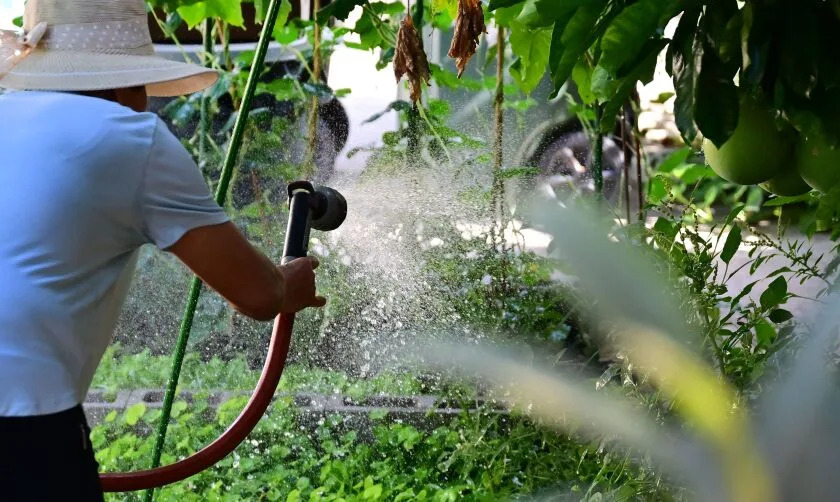
A woman waters her garden in Los Angeles on August 18, 2022. - Residents and businesses in Los Angeles County, and surrounding San Bernardino and Ventura Counties, have had to limit outdoor water usage since June 1 to one or two days a week due to ongoing drought water restrictions. (Photo by Frederic J. BROWN / AFP) (Photo by FREDERIC J. BROWN/AFP via Getty Images)
A woman waters her garden in Los Angeles in August. (Frederic J. Brown / AFP via Getty Images)

As California faces the prospect of a fourth consecutive dry year, officials with the Metropolitan Water District of Southern California have declared a regional drought emergency and called on water agencies to immediately reduce their use of all imported supplies.

The decision from the MWD’s board came about eight months after officials declared a similar emergency for 7 million people who are dependent on supplies from the State Water Project, a vast network of reservoirs, canals and dams that convey water from Northern California. Residents reliant on California’s other major supply — the Colorado River — had not been included in that emergency declaration.

“Conditions on the Colorado River are growing increasingly dire,” MWD Chairwoman Gloria Gray said in a statement. “We simply cannot continue turning to that source to make up the difference in our limited state supplies. In addition, three years of California drought are drawing down our local storage.”

Officials said the call for conservation in Colorado River-dependent areas could become mandatory if drought conditions persist in the coming months, which some experts say is likely. By April, the MWD will consider allocating supplies to all of its 26 member agencies, requiring them to either cut their use of imported water or face steep additional fees. The agencies together serve about 19 million people.

“Since this drought began, we have been steadily increasing our call for conservation. If we don’t have an extremely wet winter, we will need to elevate to our highest level — a water supply allocation for all of Southern California,” said MWD General Manager Adel Hagekhalil. “Substantial and immediate conservation now and in the coming months will help lessen the potential severity of such an allocation.”

MWD member agencies, which include the Los Angeles Department of Water and Power, the Municipal Water District of Orange County and the Inland Empire Utilities Agency, will implement voluntary and mandatory conservation measures at the local level based on their particular circumstances, officials said. Those with local supplies or other alternative options may be able to rely on them in the interim.

The DWP, which imports state and federal water as well as water from the Owens Valley via the Los Angeles Aqueduct, has been under Level 3 of its water shortage contingency plan since June, including two-day-a-week outdoor watering limitations.

During a board meeting Tuesday, DWP senior assistant general manager Anselmo Collins said MWD’s decision was “setting the stage” for the entire region to see similar rules should the Colorado order become mandatory.

“We already have a budget that’s been given to us, so to us [in Los Angeles] it’s probably not going to be any different,” he told the board. “It is going to be for the other 20 member agencies that are currently not under a water supply allocation. … They would too be put on some kind of volumetric budget, or one-day-a-week requirement.”

About half of the MWD’s imported water comes from the State Water Project and half from the Colorado River — both of which have become “extraordinarily stressed by prolonged drought exacerbated by climate change,” the agency said.

The Colorado River has fallen to such historic lows that Lake Mead and Lake Powell — the nation’s two largest reservoirs — could reach “dead pool”, or the point at which water no longer passes downstream from a dam. California and six other states that rely on the river have been under pressure from the federal government to drastically reduce their use.

In October, some California water agencies, including the MWD, pledged usage reductions of up to 400,000 acre-feet per year, or about 9% of the state’s total 4.4 million water allotment from the river, through 2026. Still, other states are demanding that California do more to cut usage.

The drought emergency declaration came as representatives of the MWD and other water districts gathered in Las Vegas with officials from all seven states, the federal government and tribes for the annual conference of the Colorado River Water Users Assn. Attendees are discussing various issues about how the river is managed, including measures to address the severe shortage.

“It’s a good step for sure,” conference attendee Daryl Vigil, water administrator of the Jicarilla Apache Nation in New Mexico, said of the MWD’s declaration.

The willingness of the district’s officials to “take part in mitigating the risk in terms of reduction in use is really big coming from California,” Vigil said. “And hopefully others will follow suit.”

Scott Houston, vice president of the West Basin Municipal Water District, a wholesale supplier for nearly 1 million people in 17 cities and unincorporated areas in Los Angeles County, said the move is necessary.

“We are in a critical time with the Colorado River,” Houston said. “This is a very serious situation, as we’ve seen the conditions escalate over the last few months. This is an all-hands-on-deck moment.”

The State Water Project has been under similar strain. The driest three water years on record in California resulted in record-low deliveries to Southern California, and earlier this month, state officials said they may allocate only 5% of requested supplies next year if drought conditions do not significantly improve.

Madelyn Glickfeld, co-director of the UCLA Water Resources Group, said the MWD’s decision was a “warning shot” for what could lie ahead — and a reminder of how important it is for communities to invest in alternative supplies such as recycled water and, in some cases, groundwater and desalination.

“We’ve been working hard toward this, but I don’t think anyone expected — or they didn’t look carefully enough — to expect that this was going to happen right now,” she said. “There were a lot of places where people could have taken the warning before now, but they have not.”

The MWD underscored that it has been making big investments in sustainable local supplies for the region, including the development of what could be one of the world’s largest recycled water facilities, Pure Water Southern California.

But many such projects are years if not decades away, and action is critical now, Glickfeld said. For the time being, conservation and “a complete transition in the way we do landscaping” are among the region’s best bets.

Indeed, many agencies, including the DWP and the West Basin Municipal District, have been offering rebates for residents to replace their grass with drought-resilient landscaping.

“One of the biggest areas where we use water is outdoor irrigation,” Houston said. “That’s really one of the best tools in our toolbox right now to reduce the need for some of that imported water.”

As officials continue to weigh their options for the Colorado River, the mandatory measures in State Water Project-dependent areas will continue through at least June and possibly longer, the MWD said.

“Some Southern Californians may have felt somewhat protected from these extreme conditions over the past few years,” Gray said. “They shouldn’t anymore. We are all affected.”

Nation’s largest water supplier declares drought emergency

Associated Press

Nation’s largest water supplier declares drought emergency

December 14, 2022

FILE – A sprinkler waters the lawn of a home on Wednesday, May 18, 2016, in Santa Ana, Calif. T On Tuesday, Dec. 13, 2022, the Metropolitan Water District declared a regional drought emergency for all of Southern California. (AP Photo/Jae C. Hong, File) (ASSOCIATED PRESS)

LOS ANGELES (AP) — The nation’s largest water supplier has declared a drought emergency for all of Southern California, clearing the way for potential mandatory water restrictions early next year that could impact 19 million people.

The Metropolitan Water District of Southern California provides water to 26 different agencies that supply major population centers like Los Angeles and San Diego counties.

It doesn’t rain much in Southern California, so the district imports about half of its water from the Colorado River and the northern Sierra Nevada via the State Water Project — a complex system of dams, canals and reservoirs that provides drinking water for much of the state.

It’s been so dry the past three years that those water deliveries have hit record lows. Earlier this year, the district declared a drought emergency for the agencies that mostly depend on the State Water Project, which covers about 7 million people.

On Tuesday, the board voted to extended that declaration to cover all Southern California water agencies. They called on agencies to immediately reduce how much water they import. By April, the board will decide whether to make those cuts mandatory if the drought continues.

“Some Southern Californians may have felt somewhat protected from these extreme conditions over the past few years. They shouldn’t anymore. We are all affected,” said Gloria D. Gray, chair of the Metropolitan Water District’s Board.

State officials recently announced that water agencies like Metropolitan will only get 5% of their requested supplies for the start of 2023 due to lower reservoir levels. Some agencies may get a little bit more if its necessary for drinking, sanitation or other health and safety concerns.

The drought declaration comes as Colorado River water managers are meeting in Las Vegas to discuss growing concerns about the river’s future after more than two decades of drought. Scientists say climate change has contributed to sustained warmer and drier weather in the West, threatening water supplies. The river’s two largest reservoirs — Lake Mead on the Nevada-Arizona state line and Lake Powell on the Arizona-Utah border — are each about one-quarter full.

In California, despite a recent run of storms that have dumped heavy rain and snow in the Sierra Nevada and Central Valley, reservoirs are all well below average for this time of year.

“I think Metropolitan is being very proactive in doing this,” said Dave Eggerton, executive director of the Association of California Water Agencies. “It’s really the right thing to do.”

Up to 75% of all water used in Southern California is for irrigating yards and gardens. Water agencies dependent upon imported water from the state have had restrictions for much of the year, including limiting outdoor watering to just one day per week.

Last year, California Gov. Gavin Newsom called for residents and businesses to cut their water use by 15%. But since then, residents have reduced water use by just 5.2%, according to the State Water Resources Control Board.

Meanwhile, the Metropolitan Water District is investing in what could become the world’s largest water recycling system. Known as Pure Water, the initiative would recycle wastewater instead of sending it out into the ocean.

Nuclear fusion breakthrough ‘an enormous game changer,’ Constellation Energy CEO says

Yahoo! Finance

Nuclear fusion breakthrough ‘an enormous game changer,’ Constellation Energy CEO says

Grace O’Donnell, Assistant Editor – December 13, 2022

The U.S. Department of Energy announced a breakthrough in nuclear fusion on Tuesday that puts the world one step closer to harnessing an abundant energy source free from carbon emissions and long-lived radioactive waste.

U.S. Energy Secretary Jennifer Granholm confirmed that scientists achieved a reaction that created more energy than was used — known as a net energy gain — at the federally-funded Lawrence Livermore National Laboratory in California.

“Last week at the Lawrence Livermore National Laboratory in California, scientists at the National Ignition Facility achieved fusion ignition,” Sec. Granholm said. “It’s the first time it’s ever been done. … Simply put, this is one of the most impressive scientific feats of the 21st century.”

Such a development carries broad implications for renewable energy and long-term solutions to replace fossil fuels, though the benefits are still decades away.

“It’d be an enormous game changer,” Constellation Energy CEO Joe Dominguez told Yahoo Finance Live on Monday (video above). “We’ve been chasing this for a long time. But the developments we saw out of Lawrence Livermore are, I think, the best developments on fusion energy that we’ve seen since the work at Princeton probably 30 years ago with the TFTR [Tokamak Fusion Test Reactor]. So it’s very exciting. It’s transformational.”

Nuclear fusion occurs when two atoms under extreme pressure and heat fuse into one atom, releasing a packet of energy. (Photo: National Ignition Facility at the Lawrence Livermore Laboratory)

A nuclear fusion reaction, which is what keeps the sun and other stars burning, occurs when the nuclei of two atoms fuse into one atomic nucleus. When that happens, the excess mass converts into energy. (The reverse process, nuclear fission, powers existing nuclear power plants and bombs.)

Scientists have been working to achieve sustained nuclear fusion since the Lawrence Livermore Laboratory was founded in the 1950s, but replicating the conditions found within the massive cores of stars in labs on earth has proven to be a seemingly intractable problem.

One difficulty has been in running the reaction long enough to ignite a chain of reactions. Another related challenge has been unleashing larger amounts of energy.

Experts say that nuclear fusion releases 4 million times more energy than burning oil or coal. Put another way, a pickup truck filled with nuclear fusion fuel has the equivalent energy of 2 million metric tons of coal or 10 million barrels of oil. And it produces that energy without the drawbacks of other sources, namely climate change causing carbon emissions and lasting hazardous waste.

Technicians use a service system lift to access the target chamber interior for inspection and maintenance at the National Ignition Facility (NIF), a laser-based inertial confinement fusion research device, at Lawrence Livermore National Laboratory federal research facility in Livermore, California, United States in 2008.  Philip Saltonstall/Lawrence Livermore National Laboratory/Handout via REUTERS    THIS IMAGE HAS BEEN SUPPLIED BY A THIRD PARTY.
Technicians use a service system lift to access the target chamber interior for inspection and maintenance at the National Ignition Facility (NIF) at Lawrence Livermore National Laboratory federal research facility in Livermore, California, United States in 2008. Philip Saltonstall/Lawrence Livermore National Laboratory/Handout via REUTERS

Recent years have shown more promising results, partly due to improved technology and a growing appetite for zero-carbon energy. Donut-shaped reactors using large magnets have been able to extend the time of the reaction. Earlier this year, one such reactor in China set a record for the longest sustained nuclear fusion reaction at 17 minutes. Other tests have claimed to reach a breakeven point, meaning the energy output equaled the energy put into the test.

The development at the Lawrence Livermore Laboratory has seemingly gone further. The National Ignition Facility (NIF) uses a different method of causing fusion by directing powerful lasers at a capsule of hydrogen atoms to generate the pressure and heat necessary.

According to The Financial Times, which first reported the news Sunday, preliminary results show ignition took place, producing 2.5 megajoules of energy, or 120% of the energy that was consumed by the lasers.

That marks a long-awaited advancement in what has been considered a moonshot technology for decades. However, there’s still a long runway ahead to move from small reactions in laboratory settings to commercial nuclear reactors.

Specifically, nuclear fusion won’t help the world reach its 2030 net-zero targets. It may start to come into play by 2050.

“I still think we’re decades away,” Dominguez said. “But this development, where we’re now getting more energy out of the reaction than we’re putting in to create the reaction, is a gigantic milestone.”

Grace O’Donnell is an editor for Yahoo Finance.