Solar-powered cars are challenging some of the most popular EV brands — and they can drive for weeks without charging

TCD

Solar-powered cars are challenging some of the most popular EV brands — and they can drive for weeks without charging

Abby Jackson – June 16, 2023

Auto manufacturers are racing to develop the latest and greatest cars. One trend we’re seeing is the rise of solar-powered cars, but how are these sun-powered machines different from other electric vehicles?

What are electric vehicles?

Electric vehicles (EVs) are battery-powered cars that use electric motors rather than an internal combustion engine for propulsion. When you charge an EV, the electricity gets stored in a large traction battery pack. This electricity gets used by an electric traction motor to drive the car’s wheels.

Gasoline vehicles have internal combustion engines that burn gasoline fuel to drive the wheels, releasing toxic fumes and harmful carbon pollution. These engines also produce noise pollution, or excessive noise and vibration.

Each year these gas-powered cars produce 3.3 billion tons of carbon pollution worldwide. Carbon air pollution traps heat from the sun within our atmosphere, causing the planet to overheat and extreme weather events like hurricanes to intensify.

It affects our health, too — fumes from car exhaust can cause or worsen asthma and other respiratory issues.

Since EVs only run on electricity, they don’t pollute the air. One study even found that having more EVs meant fewer emergency room visits for breathing problems. And compared to internal combustion engines, electric engines don’t produce nearly as much noise pollution.

A disadvantage of EVs is that we can’t always control where the electricity that charges these cars comes from — sometimes it means using dirty energy to drive a clean-energy car.

Why isn’t everyone adopting an EV?

EVs now make up 10% of all new car sales, but early adoption of new technology — like cars that don’t need to stop for gas — can be scary, though this technology isn’t very new anymore.

Today, there’s an abundance of EVs on the market at the lowest prices we’ve ever seen, and public charging infrastructure is expanding across the nation. This still isn’t enough for some drivers to trust the switch to electric cars.

One of the biggest hangups is range anxiety — defined as the fear an EV will run out of charge before reaching its destination and leaving its passengers stranded.

Though this is a bigger issue for long-distance travel rather than the majority of Americans that drive less than 30 miles a day, range anxiety is still enough to stop people from even considering the money-saving and electric alternatives to gas-powered cars.

Solar-powered cars, on the other hand, can practically erase these fears with the ability to get energy for free.

What are solar-powered cars?

Solar-powered cars (SPCs) are EVs completely or partially powered by direct solar energy. An array of photovoltaic cells converts sunlight into usable electric energy.

The panels on today’s SPCs can add between 15 and 45 additional miles in sunny conditions. When this free energy isn’t powering the car’s propulsion, it gets stored in the car’s battery.

SPCs have the same clean air and noise reduction benefits as other EVs but offer greater range independence.

California-based Aptera Motors and Dutch company Lightyear have led innovation by producing some of the first SPCs to hit the market. And there’s more to come. The 2024 Kia EV9 is partially powered by a solar panel built into the hood.

There have been a few setbacks for these solar car companies, and it will take some time before we start seeing SPCs in Super Bowl commercials.

“This is not like going from the flip phone technology to a smartphone, where they suddenly obsolete everything else,” AutoNation CEO Mike Jackson told CNBC. “This is a decadeslong journey from the internal combustion engine to electrification, but it’s here.”

In the meantime, there are a few solutions. One is to power charging stations with clean energy, like the English Shell station that converted to chargers equipped with solar panel awnings.

Another solution is to reduce EV charging anxiety — using electric vehicle apps to find charging points, ensuring your EV has a full charge before a long journey, and taking stops along your route as opportunities to charge.

To help other EV drivers, you can also call in any issues with a charging point to get them resolved.

Join our free newsletter for weekly updates on the coolest innovations improving our lives and saving our planet.
Three things to watch as US intelligence prepares for Covid ‘lab leak’ reveal

The Telegraph

Three things to watch as US intelligence prepares for Covid ‘lab leak’ reveal

Samuel Lovett – June 16, 2023

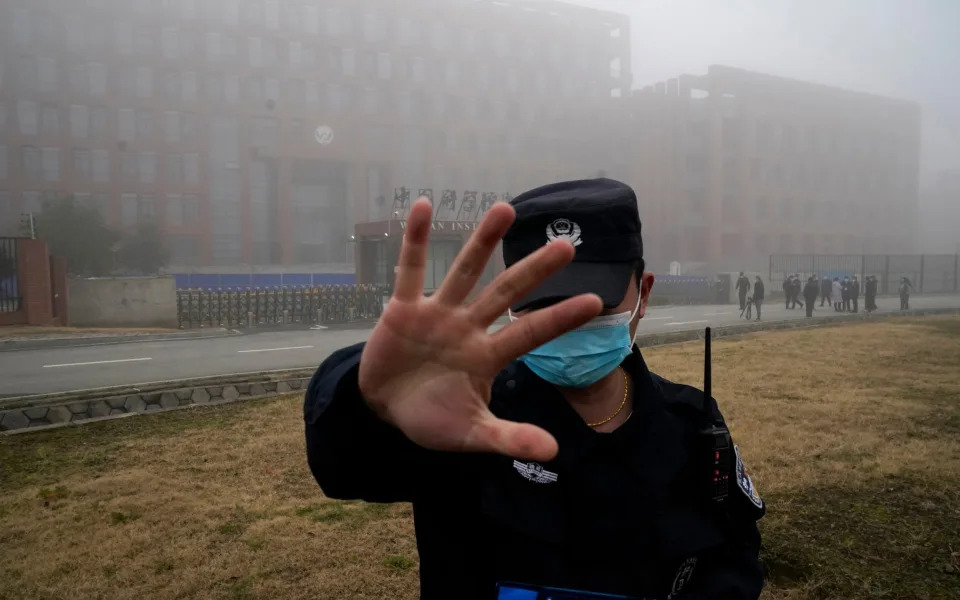
A security man moves journalists away from the Wuhan Institute of Virology - Ng Han Guan/AP
A security man moves journalists away from the Wuhan Institute of Virology – Ng Han Guan/AP

It’s showtime – and both lab leak enthusiasts and those who believe in natural origins (the ‘zoonati’) are nervous.

No later than Sunday, and perhaps sooner, America’s director of National Intelligence must, by law, “declassify” and make public all “information relating to the origins of Covid-19”.

It could be a huge moment, or a terrible anticlimax.

By the time the deadline is reached, it will have been 1,265 days since news of a “mystery pneumonia” first emerged from Wuhan – and for much of that time a small group of US intelligence officials have anonymously been briefing that the virus came from a lab.

It would not be the first time a pandemic had been caused by a laboratory-related accident: the 1977-1979 Russian Flu pandemic is widely thought to have been sparked by the accidental release of a virus used in a US flu vaccine that had not been fully deactivated.

Yet the off-the-record intelligence briefings have been characterised as unprofessional and unscientific by many, and in March this year, the US Congress unanimously passed a law demanding that all secret material the US holds on Covid’s origin be made public.

The P4 laboratory on the WIV campus. Opened in 2018, the P4 lab conducts research on the world's most dangerous diseases - HECTOR RETAMAL/AP
The P4 laboratory on the WIV campus. Opened in 2018, the P4 lab conducts research on the world’s most dangerous diseases – HECTOR RETAMAL/AP

Public Law Number 118-2, which was passed on March 20, is short at just 418 words but is to the point and gives the intelligence officials little, if any, wriggle room to hold things back.

It is one of the few things that those on either side of the Covid origins debate have come together to agree on, albeit for very different reasons.

Those who think the virus emerged naturally have dubbed it a “put up or shut up” law. Lab leakers, on the other hand, see it as a means to lift the lid on an episode they believe the US government itself is partly responsible for as it part-funded the high security lab in Wuhan.

As the deadline for the release of the US intelligence looms, we list the three key areas on which Law Number 118-2 demands full disclosure.

“Not later than 90 days after the date of the enactment of this Act, the Director of National Intelligence shall declassify any and all information relating to potential links between the Wuhan Institute of Virology and the origin of the Coronavirus Disease 2019 (Covid-19), including:

1. “…activities performed by the Wuhan Institute of Virology with or on behalf of the People’s Liberation Army.”

Issue: The background briefings have alleged that the Chinese People’s Liberation Army was involved with the Wuhan Institute of Virology (WIV) in creating a virus that leaked. As the Sunday Times reported, US intelligence sources believe the lab has engaged in “secret projects … on behalf of the Chinese military since at least 2017”.

Lab leakers rightly say this would be explosive if proven. In addition to the anonymous briefings, they point to already leaked – but heavily redacted – US cables, seemingly compiled by US analysts in Taiwan.

These make mention of “cyber evidence” of Chinese military involvement and “shadow labs” at the WIV. They also suggest China’s central government in Beijing knew of the outbreak of Covid-19 “earlier than they admit”.

The trouble with the cables is that they are so heavily redacted that only a few words and phrases are visible. Lab leakers will be hoping the full text bangs this virtual nail home.

The Zoonati say military links should not come as a surprise given there is hardly a high security lab anywhere in the world, including Porton Down in England, where the military do not have some involvement. They suspect the anonymous briefers have been “happily blurring shades of grey” in this respect and hope the unredacted evidence will bear this out.

2. Declassify any intelligence which shows “…coronavirus research or other related activities performed at the Wuhan Institute of Virology prior to the outbreak of Covid-19.”

Issue: The background briefings would suggest there is intelligence to show scientists at the WIV were conducting undeclared “gain-of-function” research in 2019 that sought to combine different coronaviruses and make them more infectious in humans. According to The Sunday Times, US spies also say there is evidence the lab was working on a vaccine before the pandemic started.

Lab leakers will alight on any hard evidence of any undeclared work on coronaviruses in China as a smoking gun. Some hypothesise that WIV scientists, working hand-in-hand with the military, created a mutant virus as part of a covert weapons programme which was highly effective at infecting people. That virus, now known as Sars-CoV-2, was then accidentally leaked and started spreading in Wuhan in the autumn of 2019, they say.

The Zoonati remain sceptical. They say a wrap-up of all the work the WIV conducted on coronaviruses, including a list of viruses, was submitted to Nature in October 2019 and that there was nothing unusual about the research. Further, they say, nothing “obviously nefarious or weird” happened during the submission and review process, which ran to August 2020, to suggest the Chinese were hiding secret projects.

Others say that even if declassification were to prove that WIV scientists were conducting dangerous undeclared research, this would not explain the outbreak itself. “I’d be very surprised if it was all true, but let’s pretend that it is – I think it’s still going to be really complicated trying to understand how that fits into this body of evidence that does point towards zoonotic origin,” argues Dr Angela Rasmussen, a virologist at the Vaccine and Infectious Disease Organization at the University of Saskatchewan, in Canada.

3. Declassify any intelligence which shows “…researchers at the Wuhan Institute of Virology who fell ill in autumn 2019, including for any such researcher: the researcher’s name; the researcher’s symptoms; the date of the onset of the researcher’s symptoms.”

Issue: Reports have long persisted that a group of scientists at the Wuhan lab fell with coronavirus-like symptoms and were hospitalised more than a month before the virus started to spread widely throughout Wuhan, the implication being they had become infected through a lab accident.

Lab leakers point to three scientists from the WIV who they say US intelligence believe fell ill and were hospitalised in October or November 2019. They are Yu Ping, Ben Hu and Yan Zhu, all of whom worked at the lab at the time. If US intelligence proves these researchers were struck down by a Covid-like disease and hospitalised in the October-November period it would provide compelling evidence of a lab accident, the leakers say.

The Zoonati don’t dispute that the trio worked at the lab but say they don’t believe they fell ill or were hospitalised. They say they know this because, among other things, they were working with them over the period in question and have talked to them since.

Dr Danielle Anderson, an Australian scientist, was on secondment at the Wuhan lab until November 2019, when Covid is thought to have started spreading in the city. At the time, none of her colleagues displayed any coronavirus-like symptoms, she says.

“We went to dinners together, lunches, we saw each other outside of the lab,” Dr Anderson told Bloomberg in an interview from 2021.

The virologist also confirmed to The Telegraph that she had attended a conference on the Nipah virus in Singapore, in December 2019, alongside Dr Zhengli Shi, the senior scientist at the Wuhan lab and “many other” researchers from the WIV. Colleagues say if there had been a leak and three of her juniors were ill she would not have been there.

“There was no chatter,” Dr Anderson said. “Scientists are gossipy and excited. There was nothing strange from my point of view going on at that point that would make you think something is going on here.”

The Nipah Virus International Conference 2019 - SingHealth
The Nipah Virus International Conference 2019 – SingHealth

As Trump is indicted again, Republican primary foes must answer: Will you pardon him?

USA Today – Opinion

As Trump is indicted again, Republican primary foes must answer: Will you pardon him?

Rex Huppke, USA TODAY – June 14, 2023

As Donald Trump was arraigned in a federal courthouse in Miami, his Republican presidential primary opponents were placed in a metaphorical box. From now until the first votes are cast, the GOP contest revolves around one question: If elected, will you pardon former President Trump?

On the Democratic side, President Joe Biden will have a simple response: “C’mon, man. Heck no!” But for Ron DeSantis, Nikki Haley, Mike Pence or any of the other Republican presidential candidates, there’s no good answer.

A “yes” may help in the primary, but it will be an anchor in the general election. Voters nationally have demonstrated – in the last presidential election and the most recent midterm elections – they’ve had it with Trump, and by 2024, we will have seen both additional evidence of his alleged crimes and, quite possibly, additional indictments.

Of course Trump may eventually be found not guilty and have no need for a pardon. But until that’s clear, the pardon question will be asked.

To pardon Trump or not to pardon Trump? That will be the question

A “no,” on the other hand, will enrage both Trump and his rabid base of supporters, likely dooming any candidate unwilling to pledge allegiance to the MAGA king.

Trump indictment isn’t witch hunt: Be honest. If you saw the evidence, you would have indicted Trump, too.

And in case you think only reporters will be asking it, here’s what GOP presidential candidate Vivek Ramaswamy said Tuesday outside the Miami courthouse: “This is my commitment, on Jan. 20, 2025, if I’m elected the next U.S. president, to pardon Donald J. Trump for these offenses in this federal case. And I have challenged, I have demanded, that every other candidate in this race, either sign this commitment to pardon on Jan. 20, 2025, or else to explain why they are not.”

Good luck with that, everyone!

Promising a pardon when other Trump indictments might be coming seems … unwise?

The first and most obvious peril of signing such a commitment or even answering the pardon question is that Trump will give any candidate who says “no” a devastatingly mean nickname, hammer them with scurrilous accusations that are either hyperbolic or simply fabricated, and sic his MAGA horde on the candidate, the candidate’s family and friends, and anyone the candidate has ever loved or cared about.

Former President Donald Trump arrives at the federal courthouse in Miami on June 13, 2023.

But there are other risks. Trump already carries the distinction of MOST INDICTED PRESIDENTIAL CANDIDATE EVER. He has been indicted twice as many times as he has been elected president. The first involves 34 New York state court counts of falsifying business records.

The second, the one that took center stage Tuesday, involves 37 federal charges ranging from willful retention of national defense information to conspiracy to obstruct justice, all stemming from classified documents he removed from the White House and refused to give back.

But there are two other serious investigations remaining. One involves possible election interference in Georgia, and the other is the federal special counsel investigation into the attack on the U.S. Capitol on Jan. 6, 2021.

GOP presidential hopefuls promising Trump a pardon may well be blindsided by evidence

As Trump was heading to court Tuesday, NBC News reported that “Nevada GOP Chair Michael McDonald, a close Trump political ally, as well as Jim DeGraffenreid, the state party’s vice chair, were spotted” at a federal courthouse in Washington, D.C., entering the room where the grand jury for the Jan. 6 investigation meets. So those wheels are turning.

Why Biden should pardon Trump: If Donald Trump is convicted, President Biden should pardon him. Really.

Candidates can follow Ramaswamy’s lead and promise Trump a pardon right now, but they’ll be doing so knowing two more rounds of indictments could be waiting in the wings.

And even if nothing comes from the other investigations, pledging to pardon Trump before seeing what evidence the prosecution has – in other words, waiting for the trial to unfold – is not just putting the wagon in front of the horse. It’s putting the wagon in front of the horse, giving the horse a powerful laxative then standing behind the horse.

Nobody will want to hear answers to the pardon question more than Trump

I imagine Trump himself will lean into the pardon demand, because why not? He’ll want to hear all the possible Trump replacements answer: Will you pardon the man who degrades you?

This is the bed Republicans made for themselves when they wrapped their arms around a con artist whose moral compass always points toward Trump. Supplicate, or be destroyed.

It’s well-deserved sticky wicket.

Trump Demands GOP Rivals Pledge to Pardon Him … or Else

Rolling Stone

Trump Demands GOP Rivals Pledge to Pardon Him … or Else

Adam Rawnsley and Asawin Suebsaeng – June 15, 2023

In the days since Donald Trump was indicted, his allies have had a unified demand of his GOP primary rivals: promise to pardon the Donald — or else.

It’s not an accident: In the days leading up to his arraignment, the former president worked the phones to vent about the case to his allies and discuss the way forward. According to a person familiar with the matter and another source briefed on it, Trump had one repeated request for his supporters: go on TV and social media and trash Ron DeSantis for refusing to commit to pardoning Trump.

Trump’s demand advances two goals: The first is to protect himself from legal consequences if he loses both the GOP primary and his federal court case. But given that Trump is telling allies he’ll trounce DeSantis and all other primary challengers, the demand for a pardon pledge appears to be more a political move. The question itself offers a trap for any Republican who tries to engage with it: either side with Trump and use the occasion to keep him in the campaign spotlight or share some uncomfortable real estate on the side of Joe Biden and the Justice Department.

“If you’re Ron, you find yourself really in a really tough situation, because if you blast the DOJ and you blast Jack Smith and Biden, you’re essentially defending Trump and admitting Trump was right,” one MAGA-aligned Republican strategist tells Rolling Stone. “If you condemn him, there’s no lane for you running on that. And then silence is an equally bad option because folks notice you not saying anything.”

The DeSantis campaign did not respond to Rolling Stone’s questions about the governor’s position on a potential pardon.

Reached for comment, Trump campaign spokesman Steven Cheung sent a lengthy statement accusing DeSantis of “hiding in a hole” during Trump’s Tuesday indictment and of running a campaign driven by consultants.

So far, DeSantis has tried to mix condemnation of the Justice Department with silence on the subject of a pardon. On the day news of the indictment broke, he blasted the Justice Department and pledged that a DeSantis administration would “bring accountability to the DOJ, excise political bias, and end weaponization once and for all.”

Special counsel Jack Smith charged Trump with 37 counts of retaining classified information and obstruction of justice in keeping at least 31 classified documents at his Mar-a-Lago residence and attempting to hide them from federal law enforcement. The indictment includes damning evidence, including the transcript of what appears to be a confession from Trump that he took war plans he could’ve declassified as president but didn’t.

That hasn’t stopped Trump’s allies from demanding he be pardoned. On Fox News, former George W. Bush spokesman turned Trumpist Ari Fleischer pressed the talking point, arguing that “Every wise Republican should make a pledge they would pardon Donald Trump.” Pro-Trump legal scholar Jonathan Turley also suggested Trump could “run on pardoning himself” and that “If any of these Republicans [running for president] were elected, they could pardon Trump.”

So far, however, Trump-friendly GOP presidential candidate Vivek Ramaswamy has been the loudest voice in the media pressing both DeSantis and the rest of the Republican field on legal absolution for the former president. On Tuesday, the former biotech and finance executive, who Trump has privately praised and joked about hiring in a second administration, held an impromptu press conference demanding every 2024 presidential candidate commit to pardoning Trump if elected.

In an interview with Rolling Stone, Ramaswamy says he’s not focused on DeSantis and has broadly “called on candidates in both parties, regardless of our political interests, to either stand against what I see as a politicized prosecution and say so and commit to a pardon or else explain why.”

But he said he found DeSantis’s attempts to hedge on Trump’s legal fate distasteful.

“I don’t think it’s good when politicians try to hide, try to talk out of both sides of their mouth,” Ramaswamy said. “It’s possible he’ll come out adopting my position later. I think that’s a trend we’ve seen throughout this campaign. If the last six months are any indication, my prediction is he’ll come around to my position.”

The pardon issue also put other Republican candidates who have flirted with criticism of Trump in an awkward position as they try to navigate a middle course.

Former South Carolina governor Nikki Haley initially hedged on the issue of Trump’s guilt. In a Fox News appearance, she said both that the Justice Department has “lost all credibility” but also that, if the event its allegations were true, Trump would have been “incredibly reckless with our national security.” In the days since, Haley has shifted further, saying that she would be “inclined in favor” of a pardon.

Trump’s former Vice President Mike Pence tried to walk a similarly narrow path during an appearance on the conservative Clay Travis & Buck Sexton show. Pence said Trump faces “serious charges” and that he “can’t defend what’s been alleged” but wouldn’t allow himself to be pinned down on the subject of pardons. “I just think it’s premature to have any conversations about that right now,” Pence said.

But those kinds of answers aren’t sitting well with Republicans, as the response from Travis to Pence’s hedging showed: “If you know that these are political charges, and you do, this is not a difficult decision.”

Which 2024 GOP candidates would pardon Trump if they won the presidency?

CBS News

Which 2024 GOP candidates would pardon Trump if they won the presidency?

Cristina Corujo – June 14, 2023

As former president Donald J. Trump was pleading not guilty to all 37 federal charges related to his alleged mishandling of classified documents Tuesday in Miami, some of his Republican rivals were asked about whether they would pardon Trump if he were convicted.

Who’s running for president in 2024? Meet the candidates – and likely candidates – vying for your voteVivek Ramaswamy

Hours before Trump’s arraignment, biotech executive Vivek Ramaswamy said he’d pardon the former president as soon as he’s sworn in.

“This is my commitment, on Jan. 20th 2025 if I’m elected the next U.S. president — to pardon Donald J. Trump for these offenses in this federal case,” Ramaswamy said.

Ramaswamy even went to the Miami federal courthouse where Trump was arraigned and held a press conference, during which he challenged his Republican opponents to sign an agreement committing to do the same if any of them win.

Nikki Haley

Nikki Haley, who served as ambassador to the U.N. in the Trump administration, said she would be “inclined” to pardon her former boss, although she added that “it’s really premature at this point, when he’s not even been convicted of anything.”

During a radio interview with Clay Travis, Haley, who is also the former governor of South Carolina, said that “if the claims in the indictment are true, Trump was incredibly reckless with our national security, and that’s not okay.”

Chris Christie

Former New Jersey Gov. Chris Christie said of Trump on “The Brian Kilmeade Show” Wednesday,  “I can’t imagine if he gets a fair trial that I would pardon him,” adding, “to accept a pardon, you have to admit your guilt.”

Christie also dismissed the idea that Trump could use the Presidential Records Act as a defense. “He’s dead wrong,” Christie said, and added, the Presidential Records Act “does not cover national security and national intelligence documents.

Christie, who was the first major Republican politician to endorse Trump in 2016 and a key adviser during Trump’s 2020 presidential campaign, now says he was “wrong” about Trump and called the evidence in the indictment “pretty damning” during Monday’s CNN town hall.

Asa Hutchinson

Former Arkansas Gov. Asa Hutchinson, who has also slammed Trump, and called on  him to drop out of the 2024 presidential race, said that a pardon “should have no place in the campaign.”

In an interview Wednesday with Scripps News, Hutchinson said that pardoning the former president would be a “misuse of the pardon power” and should have no place in the office of the president.

After Trump was indicted last week, Hutchinson called on him to drop out of the race, excoriating him for “his willful disregard for the Constitution” and “his disrespect for the rule of law.”

Larry Elder

Conservative talk radio host Larry Elder told Scripp News it’s “very likely” he would support pardoning Trump for the federal charges he is facing. But Elder, who supported Trump’s presidency, said that Trump’s electability is at stake, and he said that if he felt that the former president were “electable,” he “wouldn’t be running.”

Presidential candidates who have not weighed inRon DeSantis

Florida Gov. Ron DeSantis, Trump’s main political rival in the primary so far, has not said publicly whether he’d pardon Trump. DeSantis has criticized the Justice Department as “weaponized” in pursuing prosecutions “against factions it doesn’t like” but also said over the weekend, after Trump had been indicted, “As a naval officer, if I would have taken classified [documents] to my apartment, I would have been court-martialed in a New York minute.”

CBS News has reached out to DeSantis’ campaign to ask if he would pardon Trump if he were convicted in the documents case.

DeSantis has also been asked whether he’d pardon those convicted of crimes related to the Jan. 6, 2021, assault on the Capitol. He told conservative radio hosts Clay Travis & Buck Sexton if he’d consider pardoning defendants  convicted for their participation in the Jan. 6, 2021 Capitol riots. DeSantis said  his administration “will be aggressive at issuing pardons… on a case-by-case basis.”

Mike Pence

Former Vice President Mike Pence has not weighed in on a pardon for the former president, but in a conversation with the Wall Street Journal Editorial Board on Tuesday, the day Trump was indicted, Pence said he had read the indictment, and “these are very serious allegations.” He added, “I can’t defend what is alleged. But the President is entitled to his day in court, he’s entitled to bring a defense, and I want to reserve judgment until he has the opportunity to respond.”

But he expressed concern about “the suggestion that there were documents pertaining to the defense capabilities of the United States and our allies, our nuclear program, to potential vulnerabilities of the United States and our allies,” and added, “Even the inadvertent release of that kind of information could compromise our national security and the safety of our armed forces.”

Although he has not made clear if he would pardon Trump, Pence told radio hosts Travis and Baxton Wednesday afternoon that he took “the pardon authority very seriously.”

“It’s an enormously important power of someone in an executive position and I just think it’s premature to have any conversation about that right now,” Pence said.

Tim Scott

Asked whether he’d pardon Trump, the South Carolina Republican said he wouldn’t “get into hypotheticals,” but he added, “We are the city on the hill. We believe that we are innocent until proven guilty.”

Donald Trump

The former president has not publicly mentioned pardoning himself since he was indicted last week. If he were to win the presidency, his ability to pardon himself remains an open question. In 2018, when conditions were different — that is, while he still occupied the White House — Trump claimed he could.

“As has been stated by numerous legal scholars, I have the absolute right to PARDON myself, but why would I do that when I have done nothing wrong,” he tweeted in 2018.

Aaron Navarro contributed to this report.

Cardiologists Say People 50 and Older Should Do This One Thing Every Day To Support Their Heart

Parade

Cardiologists Say People 50 and Older Should Do This One Thing Every Day To Support Their Heart

Emily Laurence – June 15, 2023

This image has an empty alt attribute; its file name is 5cefebe7f0088219c3ea01890058acfe

When it comes to being proactive about preventing cardiovascular disease (and many other health maladies), it’s our daily habits that matter most. Having a smoothie for breakfast once a month or going to the gym for the first few weeks every January won’t undo the damage of living an unhealthy lifestyle the rest of the time. Ready to hear something encouraging? It’s never too late to start putting healthy habits in place.

If you are 50 or older, cardiologists say it’s not too late to start prioritizing heart health and putting habits in place that lower your risk of cardiovascular disease, which is the number one cause of death in the U.S. This is especially important because the risk of cardiovascular disease increases as we age. “If you have high cholesterol, LDL accumulates in blood vessels and causes plaque formation that increases the risk of heart attack and stroke,” says Dr. Norman Lepor, MD FACC FAHA FSCAI, cardiologist, Director of the National Heart Institute in Beverly Hills, Clinical Professor of Medicine at UCLA’s David Geffen School of Medicine, and Attending Cardiologist at Smidt Cedars-Sinai Heart Institute.

Dr. Lepor says the buildup of plaque is kind of like the accumulation of junk in a storage unit; over time, it piles up and eventually, it becomes a problem. But establishing healthy habits can prevent this—including if you’re over 50.

Related: Your Live-Well Guide To Maintaining Heart Health and Preventing Heart Disease

#1 Best Daily Habit for Heart Health for People Over 50, According to Cardiologists

Not sure where to start when it comes to building healthy heart habits? Dr. Christopher Davis, MD, an interventional cardiologist and founder of Reveal Vitality, says one great place to start is with stress management. “In a society filled with stress and anxiety, one of the most important habits I recommend to promote cardiovascular health is some type of breathwork or meditation practice to balance the autonomic nervous system,” he explains.

Dr. Davis emphasizes that experiencing prolonged amounts of high stress truly can have serious repercussions on the heart. He explains that high levels of anxiety and stress increase blood pressure and heart rate, increasing the risk of blood clots, which can be life-threatening.

Related: 92 Ways to Stress Less This Week

Scientific studies show a clear connection between experiencing high levels of stress and premature death. Stress increases the risk of premature death by as much as 43 percent—that’s pretty major.

As Dr. Davis mentioned, breathwork and meditation are effective ways to manage stress—shown to significantly lower blood pressure. Some places to find breathwork and meditation exercises include CalmHeadspace, and The Mindfulness App.

Dr. Lepor has his own daily habit in place for managing stress: jogging. Personally, he devotes 50 minutes a day to jogging, but science has shown that even 30 minutes of intense cardiovascular exercise (like jogging) five days a week can decrease the risk of cardiovascular disease.

The reason why jogging (and other aerobic activities) has such a powerful effect is because it literally makes the heart stronger. It gets the heart pumping, improving circulation. This lowers blood pressure and resting heart rate. Simultaneously, aerobic exercise reduces anxiety and depression. This combined effect is doubly good for the heart.

Related: The Science of Stress: What’s Going on in Our Bodies When We’re Stressed?

Other Ways To Support Your Heart Every Day

Finding one way to manage stress every day is a great first step in supporting your heart. Once that’s in place, you can start implementing another daily healthy habit, like exercising. Both cardiologists emphasize that diet is also hugely important when it comes to heart health. They recommend prioritizing foods that are minimally processed and nutrient-rich, such as following the Mediterranean diet, which numerous scientific studies have shown is beneficial for heart health. This way of eating prioritizes vegetables, fruit, whole grains, plant proteins, fish, nuts and olive oil.

In addition to eating well, Dr. Davis says that it’s important to consistently get good sleep. “If sleep is an issue, make sure to adhere to recommended sleep hygiene guidelines like lowering the temperature of the room, and avoiding computers, or other laptop-like devices prior to bedtime as the blue light emitted from these devices can cause issues with sleep,” he says.

Dr. Lepor says that it’s also important to get your blood pressure checked regularly, which can be done at the doctor’s office or even at home. Some people may not even realize that they have high blood pressure and are, therefore, at a higher risk of experiencing a heart attack or stroke. Sometimes, pharmaceuticals are necessary for lowering blood pressure and mitigating these risks.

Your heart health is largely in your hands. What we do every day impacts our cardiovascular health (and body as a whole) for better or worse. It’s never too late to start putting healthy habits in place. Making small, incremental changes like the ones the cardiologists shared here can have a major impact. In fact, they just might save your life.

Next up, see seven changes that can drastically improve your heart health.

Sources

Xi Jinping’s new world order is collapsing before our eyes

The Telegraph – Opinion

Xi Jinping’s new world order is collapsing before our eyes

Matthew Henderson – June 15, 2023

China's President Xi Jinping speaks during the introduction of members of the Chinese Communist Party's new Politburo Standing Committee - NOEL CELIS/AFP
China’s President Xi Jinping speaks during the introduction of members of the Chinese Communist Party’s new Politburo Standing Committee – NOEL CELIS/AFP

While the UK and US, each embroiled in democracy’s perverse consequences, struggle to thwart Putin’s mad ambitions in Ukraine, their respective China strategies face forceful challenge from Beijing. Xi Jinping is pushing brinkmanship to the edge in the Taiwan Straits and doubling down, as in Honduras, on its global efforts to isolate Taiwan.

Meanwhile, leading Western technology companies, alarmed by geopolitical uncertainty and facing hostile data “legislation,” are marching out of China in droves. Microsoft has already taken LinkedIn out and is moving an expert AI team to Canada to avoid local pressure on them.

Sub-par performance by the best-known Chinese stocks are compelling some seasoned Western asset managers to cut their exposure. Where is this debacle leading, and where might it end?

Risk has been defined as exposure to hostile intentions and capabilities. This dictum omits one vital issue: whether the party at risk is aware of what is going on. Arguably much of the “free” world is either ignorant, or in denial, about Xi Jinping’s policy drivers, intentions and capabilities.

This in itself is acutely risky. A tipping point in China Risk is rapidly approaching, and with it an opportunity to turn this to the West’s advantage.

Xi Jinping is forging ahead with plans for a revisionist New Era in which China becomes the sole super-power in an authoritarian, post-democratic world order. His immediate tactics include expedient alliances with other enemies of the West to defeat sanctions and other preemptive counter-measures short of military conflict.

He is striving to exploit Western political and economic division and disarray, not least through his tacit support for Putin’s illegal invasion of Ukraine. His spuriously neutral Ukraine peace initiative lacks substance – indeed, this may be deliberate – but it symbolises his ultimate aspiration to global authority.

However, Xi is still a long way from achieving this. Though propaganda trumpets China’s triumph over the Covid virus and prospects for renewed growth, part of Xi’s aggressive haste stems from the realisation that the Chinese Communist Party state remains riddled with vulnerabilities.

China rapidly globalised its economic influence by exploiting the West’s illusion that, once admitted to the World Trade Organisation (WTO), it would engage in trade according to WTO rules and norms. But from the outset it denied foreign businesses free and fair access to its domestic market and used massive state subsidies to capture market dominance for its own products and systems across the world.

From 2018, the US has led a de facto trade war against this, while remaining uncomfortably tied to the Chinese economy by enduring debt and supply-chain dependencies.

Subsequent geopolitical and economic tensions have progressively worsened due to China’s human rights abuses, political interference, cyber espionage and IP theft, mistrust and sourcing disruption caused by the pandemic, alignment with Russia, and threats to Taiwan.

This has led to an accelerating exodus of major Western companies from China to more reliable regional bases in South-East Asia, India and Bangladesh. The low cost of factory labour in China, formerly a major draw for FDI, no longer applies. Factory wages in South China are now around three times higher than in equivalent South Asian industries.

The Chinese economy has long been struggling under Xi Jinping’s Marxist ideological chokehold. Covid lockdown early in the pandemic was a kneejerk CCP crisis management response to potential social disturbance. Imposed disastrously late, it slowed transmission but failed to boost immunity.

“Zero Covid” proved powerless against the omicron variant but was not abandoned until the export-led national economy had been badly damaged by needlessly-prolonged coercive lockdowns.

Unsurprisingly, promised recovery has not been realised. Exports are depressed and the property market is in disarray, with more and more major players being delisted on the Shanghai stock exchange. The tech sector remains traumatised by Xi’s politically-motivated crackdown in 2021, which has wiped out many jobs for educated young workers at a time of serious youth unemployment.

Debt remains toxic, demographics are intractable (despite a huge surge in mortality among the under-immunised elderly soon after Zero Covid rules were abruptly relaxed). Environmental stresses, particularly water security, are worsening.

Seemingly ignoring these headwinds, Xi Jinping’s model for economic resurgence is a distinctly ideological formula called the Dual Cycle economy. The idea is to stimulate domestic technical innovation and production, leveraging this to give China a lead in global markets for cutting-edge technologies, while concurrently driving down dependency on technical cooperation with the West.

This construct ties in existing nationalist, anti-market measures and a protectionist, sanction-proofing subtext, sitting badly with claims that China is now open to the world for “business as usual”.  Recent use of arbitrary data-protection legislation to seize records, detain staff and freeze important ESG and other compliance work done by foreign consultancies in Shanghai and elsewhere also undermines this claim.

Xi is hoarding gold, securing energy supplies and building up China’s military capabilities, in particular those used to threaten Taiwan. To argue that he will not, for some time at least, invade Taiwan for fear of the economic consequences misses the real point.

Xi would prefer to annex Taiwan without a fight, but he needs to be able to flex enough military muscle to undermine US support to the point that the Taiwanese lose faith in it and accept the inevitable. But this will not pay for itself, and scaring off FDI won’t fill any coffers.

Xi shows little capacity to tackle the fundamental unsustainability of the Chinese economy.  Failure to do so could sweep away his dreams of a revisionist New Era. There has been much talk lately of “de-risking” from China. This is a two-way process; it should entail renewed, concerted economic pressure, including enhanced sanctions, against a regime that is already far more of a global threat than Russia.

As an Indian commentator has observed, the imperative is to reinforce national power and work in step with China’s sole global “balancer,” the US. The “Atlantic Declaration” is welcome; now it needs to grow some teeth.

Trump makes legal claims about classified documents, experts push back: Fact check

ABC News

Trump makes legal claims about classified documents, experts push back: Fact check

Alexandra Hutzler – June 15, 2023

Earlier this week, former President Donald Trump, speaking to supporters hours after his arraignment, outlined potential legal arguments as he defends himself against his second indictment.

Trump took the stage at his Bedminster, New Jersey, golf club just hours after his appearance in a Miami courtroom, where he pleaded not guilty to 37 felony counts in relation to his alleged mishandling of classified documents.

“This day will go down in infamy,” he said.

MORE: Following arraignment, Trump narrowing list of potential attorneys to join his legal team: Sources

Trump unloaded on the charges and in the process mischaracterized aspects of the Presidential Records Act and the Espionage Act, experts told ABC News.

Here’s a more in-depth look at the former president’s claims.

He cites the Presidential Records Act

“Under the Presidential Records Act, which is civil not criminal, I had every right to have these documents,” Trump said.

The 1978 law, not mentioned in the indictment, states just the opposite, as it requires records created by presidents and vice presidents be turned over to the National Archives and Records Administration (NARA) at the end of their administrations.

“On the contrary, the former President had absolutely no right to have taken any presidential records with him to Mar A Lago,” Jason R. Baron, former director of litigation at NARA, told ABC News in an email.

“Under the Presidential Records Act, the Archivist of the United States assumed legal custody of all Trump White House official records immediately upon President Biden’s swearing in as President,” Baron said. “Every piece of paper constituting an official document, whether it was classified or unclassified, should have been turned over to NARA. Moreover, when NARA staff asked for the return of the records improperly taken, the former President should have immediately given NARA every official document in his possession.”

PHOTO: Former President Donald Trump delivers remarks at Trump National Golf Club Bedminster in Bedminster, N. J., on June 13, 2023. (Ed Jones/AFP via Getty Images)

MORE: Explainer: DOJ probes draw attention to the Presidential Records Act

Among the documents found at his Florida estate, according to prosecutors, were ones marked “top secret” and some about the country’s nuclear programs.

“I think it is misleading because the Presidential Records Act just isn’t the statute at issue,” Margaret Kwoka, a law professor at Ohio State University, told ABC News of Trump’s remarks.

“There’s no reason to think that the Presidential Records Act somehow overrides the Espionage Act,” Kwoka added. “And so this is not, in my view, going to provide a very strong sort of basis for defense against the charges in the indictment.”

He alludes to a judge’s decision in a case involving former President Bill Clinton

“Judge Amy Berman Jackson’s decision states under the statutory scheme established by the Presidential Records Act, the decision to segregate personal materials from presidential records is made by the president during the president’s term and in the president’s sole discretion,” Trump said.

Trump has repeatedly pointed to a case involving former President Bill Clinton in the wake of the indictment.

In 2010, the conservative group Judicial Watch sued the National Archives and Records Administration, arguing audio tapes kept by Clinton for interviews he did with historian Taylor Branch during his years in office — and which he afterward allegedly kept in a sock drawer — were “presidential records” and should be made available to the public.

U.S. District Court Judge Amy Berman Jackson dismissed the case, and Trump and his allies have taken to quoting different parts of her opinion in their defense.

MORE: No, Donald Trump’s classified documents case is not like Joe Biden or Hillary Clinton cases

The Presidential Records Act does contain an exception for personal records, according to Baron, including items such as “diaries, journals, and other personal notes that were never used in the transaction of government business.”

“President Trump had the right to keep those types of records. But the argument being made by some that he had some kind of absolute authority while president to declare classified records or other official records about government business as his personal records is absurd in its face,” he said. “It is also contrary to law. The decision by Judge Jackson cited prior precedent from the D.C. Circuit that stands for the opposite proposition.”

That citation included in Jackson’s opinion reads, in part, that the Presidential Records Act “does not bestow on the president the power to assert sweeping authority over whatever materials he chooses to designate as presidential records without any possibility of judicial review.”

“Judge Jackson went on to speculate about the level of deference to be afforded a president making a categorical decision about whether records of his were personal, but she never ruled on that issue,” Baron said. “Instead, the case was dismissed on the grounds that plaintiff had no standing to compel the Archivist to seize materials not in the government’s possession.”

There are also significant differences between the materials in question in the two cases.

“In that case, the records were very different and really did seem arguably personal,” Kwoka said of the Clinton matter. “We’re just sort of nowhere near the situation that we’re discussing today with the records that President Trump kept.”

PHOTO: Former President Donald Trump delivers remarks at Trump National Golf Club Bedminster in Bedminster, N. J., on June 13, 2023. (Ed Jones/AFP via Getty Images)
He claims he was still negotiating with the National Archives and Records Administration (NARA)

“I was supposed to negotiate with NARA, which is exactly what I was doing until Mar-a-Lago was raided,” Trump said.

Trump continued to make an argument he and his team have been for months, asserting he’s allowed to negotiate with NARA over which documents are personal and what’s presidential after leaving office.

NARA, in a June 9 statement, said the law requires a president to separate personal and presidential documents “before leaving office.”

MORE: Trump federal indictment: How serious are obstruction charges?

“There is no history, practice, or provision in law for presidents to take official records with them when they leave office to sort through, such as for a two-year period as described in some reports,” NARA said.

He says he’s being treated like a spy

“The Espionage Act has been used to go after traitors and spies. It has nothing to do with a former president legally keeping his own documents,” he said.

Trump has been charged under 18 U.S.C. § 793(e) of the Espionage Act, which prohibits unauthorized retention and disclosure of national defense information, and does not require that information be classified or disseminated to a foreign government.

Neither did the indictment charge him with disseminating information with the intent to harm the U.S.

Still, Trump and his allies have repeatedly claimed he’s accused of being a spy.

“This is not an uncommon argument for defendants to make,” David Aaron, a senior counsel at Perkins Coie and former federal prosecutor with the Justice Department’s national security division, told ABC News. “The title Espionage Act is kind of a misnomer because it includes much more than espionage.”

“Espionage is a different section entirely of Title 18. He’s charged simply with willfully retaining national defense information,” Aaron said. “He’s not charged with disclosing classified information to foreign governments or to anyone else, although there are references in the current indictment to his alleged disclosure to unauthorized people.”

GOP Strategist Shreds Whatabouting Republicans With Her Own ‘What About?’ Questions

HuffPost

GOP Strategist Shreds Whatabouting Republicans With Her Own ‘What About?’ Questions

Lee Moran – June 15, 2023

CNN conservative commentator Alice Stewart ripped Republicans defending Donald Trump’s classified documents indictment by trying to spin it into attacks on his political rivals, including President Joe Biden and former Vice President Mike Pence.

“The difficulty is that many Republicans are consumed with espousing ’whataboutisms,’” Stewart, a former adviser to multiple GOP presidential candidates, wrote in an opinion piece published Wednesday.

“’What about Joe Biden? What about Hillary Clinton? What about Pence?’” Stewart imagined them saying, before adding her own “what about” questions:

“What about Donald Trump being responsible for his own actions? What about his absconding with intel secrets? What about the former president facing retribution for his lifetime of shameful and illegal behavior?”

Stewart also told supporters of the 2024 GOP front-runner Trump to “take your head out of the sand” about his chances of regaining the presidency.

“Take off your bedazzled rose-colored glasses and take a good hard look at the reality of this losing proposition,” she demanded, saying it was “time to turn the page on Trumpism.”

The US is now facing a third inflation wave, economist explains

Yahoo! Finance

The US is now facing a third inflation wave, economist explains

‘Greedflation’ comes when companies use the excuse of higher input costs to hike prices, but are really profit-led, UBS’s Paul Donovan said.

Brad Smith – Anchor – June 15, 2023

Although US consumer prices provided further signs of relief for consumers in April, there are still factors keeping inflation elevated — and corporations may be reaping the benefits of that.

“We’ve had a really unfortunate situation where we’ve had three very, very different inflation waves caused by very different things,” UBS Global Wealth Management Chief Economist Paul Donovan told Yahoo Finance (video above). “And they’ve just come one after the other. So it looks like you’ve had this continuous period of inflation.”

The first wave, primarily in consumer durable goods, “was demand-led,” Donovan explained. “That’s over. Durable goods prices in the States are falling. You’ve got outright deflation.”

That was followed by a second wave of supply-led inflation, he added, “and that was the energy shock coming out of the war in Ukraine.” And then “the third wave of inflation — the one we’re getting now — is this unusual profit-led inflation story.”

Sometimes called “excuseflation” or “greedflation,” profit-led inflation occurs when consumer-facing companies toward the end of the supply chain persuade shoppers to accept price hikes by pointing to plausible explanations (such as historically-elevated inflation). However, Donovan said, the true reason for these elevated prices could have more to do with expanding margins and keeping investor sentiment high than with increased input costs.

“It’s using excuses,” Donovan said. “It’s using a cover.”

A shopper, who lamented that groceries have recently become much more expensive, holds the receipt from his purchase at a discount supermarket on June 15, 2022, in Berlin, Germany. (Photo by Sean Gallup/Getty Images)
Why inflation remains sticky

The main drivers of higher prices are the costs of goods sold — which includes both material and labor costs — and corporate profits.THE TAKEAWAY

As supply and demand shocks begin to wane, economists look to another potential culprit of sticky inflation: corporate profit margins.

Fortunately for consumers, prices for materials have slid tremendously. The World Bank expects a 21% decline in commodity prices in 2023 relative to 2022 — which, it noted, would be the sharpest drop since the COVID-19 pandemic.

However, prices still hover well above average levels from 2015-2019. During the first quarter of 2023, certain companies continued to institute price increases even as they witnessed flat or declining comparable sales volumes.

“I think what you see going on as much as anything is, one, obviously we’ve taken some pricing to cover the inflation that we’ve been dealing with,” PepsiCo (PEP) CFO Hugh Johnston told Yahoo Finance. “As consumers move to smaller size packages, it affects volume a little bit as well. But overall, the demand for our products continues to be quite high.”

Elevated labor costs may be the larger quandary for an inflation-fighting Federal Reserve — and a viable explanation for businesses pushing through price increases.

“What I think will be the bigger story this year for the broader economy, especially for the Fed, will be these stickier labor costs,” Charles Schwab Senior Investment Strategist Kevin Gordon told Yahoo Finance.

“Look at unit labor-cost growth — it is still way above trend, pre-COVID trend — and the fact that you’re not really seeing an easing in productivity growth or lack thereof because it’s still deeply negative,” he said.

“So that convergence, I think, will be really important because companies can only stomach those higher labor costs for so long, especially if you’re not getting that revenue back and that revenue surge.”

However, corporate profits have also played a large role in price increases since the disruptions from the coronavirus pandemic took hold.

According to an analysis published by the Economic Policy Institute, corporate profits replaced unit labor costs as the largest contributor to unit price growth in the nonfinancial corporate sector from the second quarter of 2020 to the fourth quarter of 2021, when compared with historical averages from 1979-2019.

“[Corporations] sneak in a margin increase,” Donovan said. “And you can see this with, for example, the rise in retail profits as a share of GDP. That’s one instance where we’re seeing this expansion of margin under the cover of, ‘Oh, it’s a general inflation problem. We can’t help it.’ But actually, they’re expanding margin and just basically persuading consumers to accept that.”

How long before companies rethink ‘excuseflation’?

Another reason companies may feel comfortable raising prices has been the continued strength of consumers.

During the first quarter of 2023, a host of company executives said US consumers were “healthy” and their spending remained “resilient“, while also detailing price increases and profit preservation efforts to investors and equity analysts.

“After slowing in the back half of 2022 a bit, we saw the pace of payments picked back up in quarter one, especially in the latter parts of the quarter,” Bank of America (BAC) CEO Brian Moynihan said during the company’s Q1 earnings call. “Consumers’ financial position remains generally healthy. They’re employed with generally higher wages, continue to have strong account balances, and have good access to credit.”

In June, however, Moynihan acknowledged that spending has “slowed down” following a succession of Federal Reserve interest rate increases. There’s also evidence that higher prices are weighing on consumer confidence.

For instance, consumer sentiment slid 7% in May, “erasing nearly half of the gains achieved after the all-time historic low from last June,” Joanne Hsu, director of the University of Michigan’s Surveys, said in its most recent report. “That said, consumer views over their personal finances are little changed from April, with stable income expectations supporting consumer spending for the time being.”

People shop at Lincoln Market on June 12, 2023, in the Prospect Lefferts Gardens neighborhood in the Brooklyn borough of New York City. (Photo by Michael M. Santiago/Getty Images)

While profit-led inflation can help preserve near-term profits for a company, it could also be detrimental to a brand’s image if consumers see the reasons for raising prices as disingenuous — particularly as social media provides a new outlet for consumers to push back.

Donovan said that a company’s brand can be damaged if it’s accused of “profiteering” at a time when people are suffering.

“Remember, we’ve had two years of negative real-wage growth across the developed world — people are feeling the pain,” he said. “So I think that social media can help inflame profit-led inflation by creating excuses that companies can use. But it can also work by threatening brand values to cause companies to rethink some of their pricing strategies.”

Because of that, profit-led inflation won’t last forever, Donovan said.

“At some point, either governments or consumers realize that this is going on, and they say, ‘Hold on, that’s not fair,’ and then you start to damage brand values,” he said. “You’re seen as cheating or unfairly treating the consumer. And that’s exactly the point that we’re now starting to get to.”