Seniors are migrating to states that face America’s most extreme heat

The Washington Post

Seniors are migrating to states that face America’s most extreme heat

Joshua Partlow, Greg Morton, Scott Dance, Brianna Sacks – July 19, 2023

SUN CITY, Ariz. – It was 6:15 p.m., 110 degrees, the speakers were playing “Hot Blooded” by Foreigner and the seniors of suburban Phoenix were blissfully arm-pumping their way around the walking pool.

“Quite honestly, I’m good up to 110 now, you do acclimate,” said Bob Hirst, who decamped from northern Virginia two years ago with his wife, Vicky, to this 55-and-over community.

Despite the blistering evening, Ira Schneider was happily submerged in the hot tub, which was a relief of sorts at around 100 degrees. He’d lived in Phoenix for 22 years. To get him to return to his native New York, he said, “you’d have to scrape me off a cactus.”

Phoenix saw a record-breaking 19th consecutive day above 110 degrees on Tuesday. The extraordinary run of punishing heat poses a particular risk to the elderly, who are more likely to suffer from heart disease, diabetes and other health problems that make it harder to tolerate extreme heat. And while some retirees have the resources to cope with scorching temperatures, others remain much more vulnerable – even as demographic data shows that this group continues to gravitate to sunny and warm parts of the country that are in the crosshairs for extreme heat.

Phoenix first responders and medical personnel say they are worried about seniors who may be isolated and living without air-conditioning, or those who fall and can’t get up on days when the concrete and pavement can be so hot it’s deadly.

Many of the places that, in recent years, have become attractive destinations for seniors are among those most affected by the historic heat wave camped out over the southern United States, according to an analysis by The Washington Post of forecast data from the National Weather Service and migration data from the U.S. Census Bureau.

Between 2008 and 2021, Maricopa County, which includes Phoenix, has received more than 68,000 people age 65 or older – more elderly migrants than any county in the country, according to census data. For the past several weeks, Maricopa has also been one of the hottest counties in the United States. This weekend, its heat index – a measure of how hot it feels outside that includes temperature and humidity – averaged over 110 and is expected to climb as high as 117 this week.

Those trends converged in a particularly dangerous way on Sunday at an RV park for the elderly in Mesa, east of Phoenix. The power went out for dozens of homes at the Viewpoint RV and Golf Resort, according to residents, and stayed out for nearly 24 hours – a period when temperatures in the area reached 118 degrees.

Many who lost power moved to hotels or stayed with relatives as the temperatures inside their homes soared, residents said. Robert Steffen and his wife, Gretchen, took refuge at his son’s house in Chandler for the night. When they returned Monday morning, they said the temperature inside their home was in the mid-90s.

Some residents, including people in wheelchairs and with other health problems, spent the night in sweltering conditions, said Kathleen Noble, a homeowner in the community who is also a board member of the Arizona Association of Manufactured Home, RV & Park Model Owners.

“Park managers, especially for the elderly, need to have some kind of an emergency plan set up during these times of high heat,” she said.

The power came back on midday Monday, residents said. The park’s management office did not answer the phone and Equity LifeStyle Properties, which owns the RV park, did not respond to a request for comment.

The combination of rising electricity demand and surging heat could be disastrous. Recent research found that in a city such as Phoenix, blackouts during a heat wave could kill thousands of people.

Nationwide, extreme heat exposure among people age 69 and older could more than double by 2050, according to a study published in March. The research looked at the number of people who will experience heat waves as well as their frequency and intensity. It attributed the surge in exposure to a convergence of three factors: the population at large is aging; the population of older people is growing in the swath of southern states known as the Sun Belt; and average temperatures are increasing everywhere as Earth’s climate warms.

Those trends also mean many older people underestimate the threat of extreme heat, whether because they are new to a hotter region, or because heat is becoming more intense in parts of the country that have been traditionally cooler, said Deborah Carr, a sociology professor at Boston University and the study’s lead author.

Moreover, older people are more likely to have preexisting health conditions that make extreme heat harder to tolerate. Common medications for heart disease and high blood pressure are dehydrating and reduce the body’s ability to cool itself by sweating, something many people don’t take into account when considering their ability to withstand heat, Carr said.

“If someone has underlying conditions, it’s going to be worse,” she said.

Florida, another haven for snowbirds and seniors, is also broiling in the recent heat wave. Lee County, which includes Fort Myers, is home to more than 200,000 Americans 65 and older and is one of the most popular places for elderly migrants, recent census data shows. The heat index is expected to surpass 100 degrees this week in the county, driven in large part by extreme humidity.

Sitting barefoot in a chair with the front door of his motel room open on Saturday, Joseph Sull couldn’t ever remember being this hot. The 76-year-old has lived in southwest Florida for nearly 20 years, and is used to sweltering summers, but this year’s historic stretch of heavy humidity has been “brutal” and has prevented him from spending time outside, like he usually loves to do.

After Hurricane Ian totaled his mobile home last September, Sull has been living in a motel, along with a handful of other victims, most of whom are also elderly. For days on end, Sull has sat in his small, air-conditioned room, watching “nothing happening,” as he says.

This kind of oppressive heat has made his world much smaller, having made the few routines he has, like taking a walk, very uncomfortable to do.

“I can’t sit in here all day with the door closed. It drives me crazy,” he said. “I need the fresh air and want to look at something else besides these four walls. It’s hard.”

In Phoenix, doctors say they regularly see elderly patients who suffer from heat stroke and burns once temperatures surpass 100 degrees. Diabetic patients who suffer from neuropathy and can’t feel their feet sometimes walk out onto hot surfaces, suffering serious burns, they said. Nearly two-thirds of the 425 heat-associated deaths in Maricopa County last year were individuals age 50 or older.

Frank LoVecchio, an emergency medicine physician at Valleywise Health Medical Center in Phoenix, said he saw an elderly woman last week who had fallen from her wheelchair at her nursing home and couldn’t get off the hot patio.

“She was there for like five minutes maybe,” he said. “And she had third-degree burns.”

Phoenix firefighters who respond to heat distress cases say the elderly and the immunocompromised tend to be among the most vulnerable. They have responded to help elderly people whose homes get too hot because they won’t turn on air conditioning or don’t have any.

The health impacts of extreme heat are easier to discount than, say, the dangers of a tornado or hurricane because they aren’t as readily apparent, said Peter Howe, a professor at Utah State University. Authorities usually know soon after a storm how many injuries or deaths it caused, but it often takes much longer to determine the toll of a heat wave, he said.

“We can do retrospective studies several months to years later, but we don’t really have good real-time data,” Howe said.

Migration to the Sun Belt, which air conditioning helped enable over the past half century, is still increasing as people seek out milder winter weather, said Albert Saiz, director of MIT’s Urban Economics Lab. At the same time, high costs and housing scarcity are driving people away from the Northeast and other regions, he said.

“It’s both a pull and a push,” he said.

Scott Dudlicek, a claims manager for a technology company, left Chicago after 54 years and moved to Sun City outside Phoenix in the summer of 2019.

“I came down on a visit for a work conference and said, ‘I’m tired. I’m done with the snow and the cold,'” Dudlicek recalled. “It was 113 when we were down here. I loved it.”

When he returned to Chicago it was 90 percent humidity, he said, and he was soon drenched through his shirt.

He told his wife: “That’s it. We’re moving.”

“And we were down here a year later.”

Morton and Dance reported from Washington. Sacks reported from Iona, Fla. Caitlin O’Hara in Sun City contributed to this report.

Texas ranked worst state to live in the US, see where other states stand

USA Today

Texas ranked worst state to live in the US, see where other states stand

Amethyst Martinez and Isabelle Butera – July 19, 2023

How does life in your state compare to the rest of America?

CNBC released its rankings of the best and worst states to live in the United States last week.

Its rankings come from the network’s yearly research on the best states for business in 2023. One of the 10 criteria for the list is Life, Health & Inclusion, from which CNBC determines the best and worst states to live.

CNBC allots 350 possible points to each state, measuring categories such as per capita crime rates, environmental quality, health care and worker protections.

The research also examines anti-discrimination laws, voting rights and access to childcare. Surveys indicate a large percentage of women consider reproductive rights in deciding where they are willing to live and work, so CNBC includes abortion laws in this category.

In an aerial vies, buildings in the Dallas skyline are illuminated in blue Thursday, April 9, 2020. Cities and buildings across the nation were lighted in blue to show support for those fighting COVID-19. (Smiley N. Pool/The Dallas Morning News via AP) ORG XMIT: TXDAM321
Texas ranked the worst state to live in the US

Texas has received the number one spot on a not-so-pleasant list: The top 10 worst places in America to live and work in 2023.

While Texas landed at number six on CNBC’s yearly America’s Top States for Business study, the state scored significantly low in one category: Life, Health & Inclusion. Factors in this category include:

  • crime rates
  • environmental quality
  • health care
  • quality and availability of childcare
  • inclusiveness in state laws such as reproductive rights, protections against discrimination and voting rights.

Texas received 53 out of 350 points for its 2023 Life, Health & Inclusion score, giving it an F in its Top States grade and the lowest nationwide, securing its number one spot on the list.

CNBC did mention the boom in economic opportunity across the state. In the overall Top States for Business study, Texas received sixth place, with North Carolina taking the number one spot.

Top 10 worst states to live and work

The rest of the states that landed on the top 10 worst states to live and work for 2023 were:

  1. Texas
  2. Oklahoma
  3. Louisiana
  4. South Carolina and Alabama (tie)
  5. Missouri
  6. Indiana
  7. Tennessee
  8. Arkansas
  9. Florida
Vermont ranked the best state to live in the US

By contrast, Vermont won the acclaimed spot of the best place to live. Residents are statistically more stress-free and healthy. With the beautiful Green Mountains, Vermont offers the best air quality in the United States. The state provides the most accessible childcare, broad anti-discrimination protections and easy access to voting.

CNBC gave Vermont an A+ in Life, Health and Inclusion. The state’s largest weakness is worker protections, which are less stringent compared to some other states.

Top 10 best states to live and work
  1. Vermont
  2. Maine
  3. New Jersey
  4. Minnesota
  5. Hawaii
  6. Oregon
  7. Washington
  8. Massachusetts and  Colorado (tie)
  9. Connecticut
America’s top states for Business

CNBC examines on 86 metrics in 10 broad categories of business competitiveness when assigning its rankings. The research examines the workforce, infrastructure, cost of doing business, state laws and education, among other criteria.

Here is CNBC’s ranking for 2023.

  1. North Carolina
  2. Virginia
  3. Tennessee
  4. Georgia
  5. Minnesota
  6. Texas
  7. Washington
  8. Florida
  9. Utah
  10. Michigan

Heat wave hack: Cool your body in seconds using your pulse points

USA Today

Heat wave hack: Cool your body in seconds using your pulse points

 Maryal Miller Carter, USA TODAY – July 19, 2023

Hydration is essential for avoiding heat stress, but when summer fun hits, it can be easy to overheat despite our best efforts. Luckily, there’s a handy trick that can help quickly cool your body when the heat gets the best of you. The secret is applying something cold to pulse points. This simple technique can do wonders to lower body temperature quickly when you’re feeling overheated, have a fever, or experiencing a heat-related illness. These pulse points are your body’s “cooling spots” and they’re like little built-in air conditioners. In these areas, blood vessels are close to the surface of the skin. When cold is applied, the blood vessels constrict, reducing blood flow and providing instant relief from heat-related discomfort. Here’s a rundown of where to find those cooling spots and how to quickly cool down your body using pulse points.

Watch the video above to learn how to quickly cool down your body using pulse points.

How to cool body down using pulse points
  • Find a pulse point on your body. Your body’s pulse points include:
    • The carotid artery in the neck.
    • The radial artery on the thumb side of the wrist.
    • The popliteal artery behind the knee.
    • The femoral artery in the groin, just above the crease where the thigh meets the abdomen.
    • The brachial artery, inside the elbow where the bicep meets the forearm.
    • The temporal artery on the side of the head, just above the temple.
    • The dorsalis pedis artery on the top of the foot.
    • The posterior tibial artery on the inner ankle.
  • Apply a cold compress or ice pack to one or all of the pulse points for 10-15 minutes. For best results, apply the cold compress or ice pack directly to the skin. If applying directly to the skin is uncomfortably cold, wrap the cold compress or ice pack in a towel to protect the skin.
  • You can also run cool water over the pulse points or take a cool shower. If taking a cold shower, start with your feet and work your way up to your head. This allows you to gradually acclimate your body to the cold water, which can help to prevent a sudden drop in blood pressure.
    • Avoid taking a cold shower if you have a heart condition or high blood pressure. The cold water can constrict the blood vessels, which can lead to a decrease in blood flow to the heart.
  • If feeling lightheaded or dizzy, simply stop and rest.
Heat stroke prevention tips

To prevent heat-related illnesses like heat stroke, it’s important to know how to prepare your body for hot weather. Here are some additional tips to stay cool and avoid heat stroke when the weather’s hot.

  • Stay cool from the inside out and drink plenty of fluids, which could include electrolyte-rich beverages.
  • Make a DIY cooling mist by filling a spray bottle with water and a few drops of refreshing essential oil like peppermint or eucalyptus. Spritz it on your face or body for an instant cooling sensation.
  • Wear loose-fitting clothing.
  • Practice deep breathing exercises, like inhaling slowly through your nose and exhaling through your mouth, to activate your body’s natural cooling response.
  • When the weather’s hot, choose a cool, shaded, well-ventilated environment.
  • Limit physical activity.

DeSantis has boasted about people flocking to Florida, but the transplants have helped the state reach inflation levels that are twice as high as the national average

Insider

DeSantis has boasted about people flocking to Florida, but the transplants have helped the state reach inflation levels that are twice as high as the national average

Kelsey Vlamis – July 18, 2023

An aerial view of Coconut Grove, Florida.
Coconut Grove, a neighborhood in Miami, Florida.Demetrius Theune/Getty Images
  • Florida was the fastest-growing state in 2022, but inflation is also booming there.
  • Miami-Ft. Lauderdale-West Palm Beach had the highest inflation of any large metro area in April.
  • High inflation and home insurance prices are among the costs that transplants may not anticipate.

Florida is hot.

It’s currently experiencing the scorching heat impacting many US states and for years it’s been among the hottest places to move.

But it’s also become a hotspot for inflation.

Some areas of the Sunshine State face the highest inflation rates in the US, even more than twice as high as the national average, which hit 3% in June, the lowest since early 2021.

The Miami-Ft. Lauderdale-West Palm Beach metro area had a rate of 9% for the year that ended in April, according to the Consumer Price Index. It was the highest rate of any metro area with more than 2.5 million residents. The area’s inflation rate was also high for the year that ended in June, at 6.9%. Another Florida metro area, Tampa-St. Petersburg-Clearwater, had an inflation rate of 7.3% for the year that ended in May.

Florida Gov. Ron DeSantis has blasted President Joe Biden over inflation.

He has also bragged that leftist ideologies in other states have pushed people away and driven them to Florida, but the state in part has its recent transplants to thank for the rising prices.

Amanda Phalin, an economist at the University of Florida, told CBS Miami that the state’s growing population and increased demand for housing have driven up prices. “A lot of people are still coming to Florida because the economy is really strong, and many like the fact that we don’t have an income tax like in New York, for example,” she said.

Florida was the fastest-growing state in 2022, but residents moving for perceived economic benefits may not realize the impact of higher prices. There’s also another cost of moving to Florida that transplants may not anticipate: steep homeowners insurance.

The Guardian reported the state is facing a crisis thanks to skyrocketing premiums for hurricane coverage. A 68-year-old resident who has lived in Florida for 30 years told the outlet if her homeowner insurance premium rises any more she “may have to sell up and move to another state.”

Another Insurance Company Halts Florida Home Policies Amid Worsening Storms

HuffPost

Another Insurance Company Halts Florida Home Policies Amid Worsening Storms

Nina Golgowski – July 18, 2023

AAA has announced that it’s scaling back some of its homeowner’s insurance coverage in Florida, with the decision aligning with several other major insurance providers amid a rise in natural disasters.

“Unfortunately, Florida’s insurance market has become challenging in recent years,” the company said in a statement Tuesday.

“Last year’s catastrophic hurricane season contributed to an unprecedented rise in reinsurance rates, making it more costly for insurance companies to operate. Prior to that, the market was already strained by increased claims costs due to inflation and excessive litigation,” the statement continued.

Only “a very small percentage” of higher exposure homeowner’s policies are affected by the change, and those policyholders have been notified that their plan will not renew, the company said. A spokesperson declined to specify the number of policies or where in the state they are located.

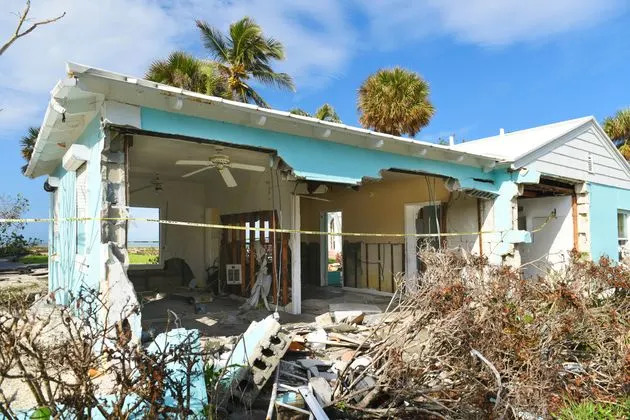
A collapsed home is seen in Naples, Florida, following Hurricane Ian in 2022. The Category 5 Atlantic hurricane was the third-costliest weather disaster on record.

A collapsed home is seen in Naples, Florida, following Hurricane Ian in 2022. The Category 5 Atlantic hurricane was the third-costliest weather disaster on record.

The announcement came a week after Farmers Insurance Group announced that it would no longer write any new policies or renew existing homeowner, auto and umbrella policies for people in Florida. Last year Bankers Insurance and Lexington Insurance, a subsidiary of AIG, also pulled out of the Florida homeowners market.

“This business decision was necessary to effectively manage risk exposure,” Farmers said in a statement released to the Tampa Bay Times.

Farmers in May similarly said it would no longer offer new home insurance policies in California due to more frequent and intense wildfires. The insurance company blamed its decision, in a previously released statement, on “historic increases in construction costs outpacing inflation, rapidly growing catastrophe exposure, and a challenging reinsurance market.”

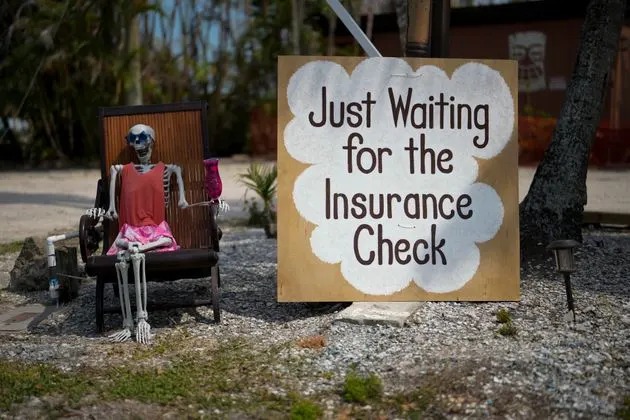
A skeleton in sunglasses sits beside a sign reading

A skeleton in sunglasses sits beside a sign reading “Just waiting for the insurance check,” on Florida’s Sanibel Island in May. The area was hit by Hurricane Ian in 2022.

It’s getting harder to live in the Sunshine State, with Floridians paying on average about $6,000 for their yearly home insurance premium, a 42% increase compared to last year, Mark Friedlander, spokesperson for the Insurance Information Institute, recently told USA Today. The average annual premium in the U.S., in comparison, costs $1,700.

Floridians have also had to deal with exceptionally high inflation rates and housing costs amid an ongoing flood of new residents from other parts of the country.

Forecasters have meanwhile given mixed predictions on this year’s hurricane season in the Atlantic, which started last month and will last through November.

The National Oceanic and Atmospheric Administration has predicted a near-normal hurricane activity season with 12 to 17 total named storms — one to four of which it said could become major hurricanes.

Colorado State University has meanwhile predicted that the season will be “above average, with 18 named storms — four of which they predict will become major hurricanes. CSU previously estimated that the season would be “near average” but updated its prediction due to record warm sea surface temperatures in most of the tropical and subtropical Atlantic.

Florida homeowners insurance prices are skyrocketing. Is self-insuring the answer?

Pensacola News Journal

Florida homeowners insurance prices are skyrocketing. Is self-insuring the answer?

Brandon Girod, Pensacola News Journal – July 18, 2023

Florida home insurance prices have skyrocketed over the years, outpacing the national average by nearly four times as homeowners still in the private market pay about $6,000 per year, which is quite a bit higher than the national average of $1,700.

Some homeowners have been able to find some reprieve through state-backed Citizens Property Insurance Corp., which was originally meant to serve as an insurer of last resort for homeowners unable to find insurance coverage in the private market. But it, too, is seeking to raise its rates by about 13.% to “depopulate” and shed some of the policies it has gained over the past three years.

Rising prices have led many Florida homeowners to question if purchasing home insurance is required and whether it’s cheaper to forego it completely — assuming their lender doesn’t require it.

SmartFinancial, a technology company that partners with some of the country’s top insurance companies to compare prices, recently laid out how much those out-of-pocket costs would run for the average homeowner.

Citizens eyes rate hike: Citizens Insurance seeks 13% rate hike as Florida reinsurance renewals see 30%+ increase

Do I need a home insurance policy in Florida?

There is technically no requirement that homeowners must carry property insurance that covers fire, flood, theft or storms. The caveat is that most mortgage lenders will require homeowners to carry home insurance, windstorm coverage and even flood insurance if the property is located in a designated flood zone.

Those who purchased their home outright or have paid their mortgage off may choose to “self-insure,” which is an informal way to describe the act of foregoing home insurance and opting to pay for potential repairs completely out of pocket.

Farmers Insurance pulls out of Florida: Farmers Insurance is the 4th major insurer to leave Florida, underlining insurance crisis

How much does self-insurance cost?

Out-of-pocket expenses for home repairs will always vary based on where you live, supply and demand, the nature of the repairs and the quality of materials needed to make the repairs. In a press release, SmartFinancial provided a rough estimate of how much those costs would be for the average homeowner.

  • Roof replacement cost: $5,000-$10,000
  • Roof repair cost: $40-$1,800
  • Sinking or settling foundation: $4,000-$10,000
  • Water damage: $1,000-$5,000
  • Mold removal: $1,000-$4,000
  • HVAC replacement: $7,000-$10,000
  • Electrical rewiring: $4,000-$12,000
  • Termite damage: $3,000
  • Repair or replace a water heater: $600-$1,700
  • New pipes: $600–$1,600 per fixture; $5,000 for a new sewer line
  • Septic system repair: $1,750-$6,000

My Safe Florida Home grant: DeSantis extends My Safe Florida Home hardening grant. How it can slash insurance premiums

Homeowners insurance claim statistics

In addition to those costs, SmartFinancial also included information about how likely it is for homeowners to file claims involving wind and hail, fire and lightning, water damage and more.

  • Wind and hail account for 45.5% of claims. This amounts to about 1 in 35 homes.
    • The average cost to insurers for claims related to wind and hail was $11,695.
  • Fire and lightning account for 23.8% of home insurance claims.
    • The average cost to insurers was $77,340 per claim
  • Water Damage and Freezing account for 19.9% of home insurance claims
    • The average cost to insurers was $11,650 per claim
  • Bodily injury and property damage claims for injuries or damage to others.
    • The average cost to insurers was $30,324 per claim
  • 1 in 525 homes file a theft-related claim each year. These incidents account for 0.6% of home claims.
    • The average cost to insurers was $4,415 per claim
How many Florida homeowners go without insurance?

More than in most places. According to the Miami Herald, the Insurance Information Institute estimated that 13% of all Florida homeowners are going without property insurance, almost double the national average of 7%.

Dad Shares The Honest Moment When He Realized He Didn’t Want To Raise His 4-Year-Old Daughter In America Anymore

Your Tango

Dad Shares The Honest Moment When He Realized He Didn’t Want To Raise His 4-Year-Old Daughter In America Anymore

Nia Tipton – July 18, 2023

Luna Ashley & husband

A dad candidly opened up about the moment he realized he didn’t want to stay in America and raise his child.

In a TikTok video, Luna Ashley filmed her husband’s opinion on how he felt about America after explaining that he had been hesitant to move abroad and leave their hometown in St. Louis, Missouri. However, after taking a trip to a European country, it didn’t take Ashley’s husband long to change his mind.

He shared that the lack of safety in America convinced him to raise his 4-year-old daughter out of the country.

In Ashley’s video, she explained that her husband had been on the fence about moving to Spain, while she had been expressing interest in moving out of the country for some time now. “He did not want to move abroad. What changed your mind?” Ashley asked her husband while the two sat in their car.

Before deciding to move to Spain, Ashley and her husband had taken a trip to the country to visit. While they were there, her husband witnessed something that immediately changed his perspective about living in America.

He recalled the two of them being at a crowded coffee shop in Spain, and originally being from St. Louis, her husband had been a bit nervous about the crowd. “There’s a ton of people walking around. Being from St. Louis, that’s not a very comfortable place for me to be in,” he said.

Probably sensing her husband’s nerves, he recalled Ashley turning toward him and telling him that no one in this crowd has any guns. “You turn to me and say, ‘Have you seen all these people?’ And you’re like, ‘None of them have guns.'”

As soon as he heard his wife say that, he instantly realized that the fear of gun violence in America was something that had weighed heavily on his chest as someone who had grown up in the country and was now raising his 4-year-old daughter in it too.

“I realized this weight that I had been carrying around my whole life wasn’t necessary. Like what we think is normal is not normal,” he continued.

The laws surrounding owning a firearm are vastly different in Spain compared to Missouri.

When it comes to citizens being able to own a gun, the laws in place are not similar in the slightest between Spain and St. Louis, Missouri.

Spain has some of the most restrictive gun ownership laws in the world and people in the country are only allowed to own a handgun if they are in verifiable danger. On top of that, the possession of machine guns, submachine guns, and any other kind of automatic weapons is strictly forbidden except for military personnel in Spain.

When it comes to Missouri, the state is a permitless carry state as well as a shall-issue state. There is no permit, background check, or firearms registration required when buying a handgun from a private individual.

There is also a growing number of people in America who feel unsafe in the country. According to data acquired by SafeWise, the United States’ rate of high daily concern about safety jumped three points in 2021 — from 47% to 50%.

Following suit, the percentage of Americans who feel safe in their state fell five points year over year, from 55% in 2020 to 50% in 2021.

In the comments section, many people shared the same opinion about feeling unsafe living in America.

“We lived in Japan for 3 years. Feeling safe in any neighborhood or at any time of day or night was amazing,” one TikTok user shared.

Another user added, “For real though! Now that my kid is starting kindergarten, I feel even more anxiety. I’m desperate to find a way out.”

“Been on a vacation in the UK for a month, and I’m convinced that even if I don’t move here right away, I will be moving here once I have kids,” a third user pointed out.

A fourth user chimed in, “We currently live in Germany and it took about a month to realize that that’s what felt better. Like just feeling safe is such a relief!”

Nia Tipton is a Chicago-based entertainment, news, and lifestyle writer whose work delves into modern-day issues and experiences.

Israel briefly lent the U.S. treasured antiquities in 2019. They’re now reportedly at Trump’s Mar-a-Lago.

The Week

Israel briefly lent the U.S. treasured antiquities in 2019. They’re now reportedly at Trump’s Mar-a-Lago.

Peter Weber, Senior editor – July 18, 2023

Donald Trump at White House Hanukkah event in 2019
Donald Trump at White House Hanukkah event in 2019 Alex Edelman / Bloomberg via Getty Images

Boxes full of classified U.S. government documents weren’t the only items that improperly wound up at former President Donald Trump’s Mar-a-Lago estate after he left office, Israel’s Haaretz newspaper reported Tuesday. Unlike with the government secrets, though, it isn’t clear how antiquities belonging to Israel ended up at Trump’s Florida club, or whether Trump even knows they are there. Efforts by senior Israeli officials to retrieve the national treasures have so far been unsuccessful.

The Israeli antiquities include ancient ceramic candles that were lent to the U.S. from Israel’s national treasures collection in 2019 for a Hanukkah candle-lighting event at the White House, Haaretz reported. Israel Hasson, director of the Israeli Antiquities Authority at the time, approved the loan on the condition they be returned within weeks.

Instead of shipping the fragile items, “we wanted our man to go and bring it back, but then Covid broke out, and everything got stuck,” Hasson told Haaretz. The Antiquities Authority asked Saul Fox, a major Jewish-American donor to the Antiquities Authority, to hold on to the items until they could be returned safely to Israel, but “several months ago, Israeli authorities learned that the antiquities eventually ended up at” Mar-a-Lago, “where they still remain,” Haaretz reported.

Hasson’s successor, Eli Eskozido, has asked the Israeli government and Trump’s former U.S. ambassador to Israel to help get the items back, but without success. One source, referring to photos of Trump’s document boxes stacked in unusual locations around Mar-a-Lago, told Haaretz he wouldn’t be surprised if “the items Israel seeks are also eventually found in some bathroom.” You can read more about the case of this missing candles at Haaretz.

Israel Struggling to Recover Ancient Artifacts Trump Took to Mar-a-Lago: Report

Rolling Stone

Israel Struggling to Recover Ancient Artifacts Trump Took to Mar-a-Lago: Report

Ryan Bort – July 18, 2023

Israel lent several antiquities to the White House in 2019, including ancient clay lamps for a White House Hanukkah event. Unfortunately, Donald Trump was president at the time, which means the artifacts are now at Mar-a-Lago, and Israel can’t figure out how to get them back, Haaretz reported on Tuesday.

The artifacts were only supposed to be in Washington, D.C., for a few weeks. Israel Hasson, then the director of the Israeli Antiquities Authority, told Haaretz that because they are so valuable, he wanted someone to pick them up instead of having them shipped overseas. The pandemic derailed these plans, and the artifacts remained in the White House. Israeli authorities learned several months ago that they wound up at Mar-a-Lago.

Eli Eskozido, who took over for Hasson at the Israeli Antiquities Authority, has solicited the help of the Israeli government and Trump’s former U.S. ambassador to the nation in his efforts to retrieve the artifacts — to no avail.

Somehow, the former president stealing ancient Israeli artifacts isn’t surprising. Trump all but ransacked the White House on his way out of office, most notably absconding with hundreds of classified documents. Trump was criminally indicted for his handling of the documents in June, and yet still thinks he’s entitled to the sensitive material. Rolling Stone reported late last month that he was demanding his lawyers figure out how to get “my documents” back after the government retrieved them, even as it became clear he would be indicted for hoarding them.

The Israeli Antiquities Authority is worried about getting the artifacts back, but also about where Trump might be storing them in his Palm Beach estate, given that he kept government secrets in boxes haphazardly stacked in ballrooms and bathrooms. One source told Haaretz they wouldn’t be surprised if “the items Israel seeks are also eventually found in some bathroom.”

It’s too bad Israel can’t call on Indiana Jones as a final recourse. These items clearly belong in a museum, and Mar-a-Lago a museum is not.

In DeSantis’ Florida, obsession with LGBTQ Floridians keeps hitting new lows

Orlando Sentinel – Opinion

Editorial: In DeSantis’ Florida, obsession with LGBTQ Floridians keeps hitting new lows

Orlando Sentinel Editorial Board – July 18, 2023

Joe Raedle/Orlando Sentinel/TNS

By now, most Floridians get it: The DeSantis administration is obsessed with targeting the LGBTQ community in Florida dishonestly, irrationally and repetitively across multiple venues.

The latest salvos will be fired on Wednesday, when the state Board of Education takes up a group of proposals that would once again drag Florida educators down the path of persecution. Sooner or later, local school boards — who are elected by, and accountable to, the voters of each county — must start pushing back against this ridiculous, ongoing assault.

The policies up for adoption at Wednesday’s meeting could be a good place to start — assuming they pass, which they likely will. “They’re just continuing the fear mongering from session,” says Jon Harris Maurer, public policy director for Equality Florida, describing 2023 legislative changes that fall squarely into the more-of-the-same-homophobic-nonsense category.

DeSantis support of anti-gay video called bad strategy, worse message

Among the rules set for discussion:

  • An expansion of the rules intended to force students to use bathrooms associated with their gender determination at birth. This is an offshoot of 2023’s ridiculous “potty purity” law (HB 1521) that attempts to keep transgender individuals out of bathrooms that correspond with their identity across multiple venues, including private businesses and government buildings. Lawmakers have consistently ignored the fact that by determining gender through at-birth assignment, the law is all but guaranteed to generate more uneasiness because it forces individuals to use restroom facilities that don’t match with their current appearance or names. Yet lawmakers seem intent on forcing these uncomfortable confrontations, and have combined the bathroom provision with another rule that threatens the licensure status of teachers who violate it. Yet in most polls taken over the past 10 years, fewer than 40% of voters think that bathroom use by transgender people should be so illogically dictated.
  • A provision that would extend the infamous “Don’t Say Gay” provisions to middle schools. Remember when DeSantis’ then-communications director put extensive effort into convincing Floridians that the prohibition on classroom discussion of gender and sexual protection was to protect very young children from too much sexy talk — which she used as cover for the ugly contention that anyone who lined up against that legislation was a “groomer?” Well, this rips that argument to shreds: Middle-school-aged children are certainly aware that same-sex relationships exist. Yet this rule also threatens teachers with misconduct charges for talking too much about that reality.
  • A new rule that seems to be aimed at “protecting” students from unexpected exposure to drag queens at any school-sponsored event or activity, because that’s something that apparently happens all the time. (Or not.) The rule is written so broadly and confusingly that it could apply to many situations that most people would describe as harmless, including performances of Shakespeare plays, showing of the Disney film “Mulan” or a review of some religious texts.
  • Finally, a rule that punishes teachers that talk too much about preferred pronouns, which could make life difficult for English teachers.

We say these measures are likely to pass, because the Board of Education is currently acting as the public-school arm of DeSantis’ political committee. Still, we laud the organization of human-rights groups including Equality Florida, who intend to mobilize for Wednesday’s meeting (scheduled to start at 9 a.m. Wednesday at the Rosen Shingle Creek resort on Universal Boulevard in Orlando).

Their continued vocal opposition provides an ongoing reminder that, no matter how many times DeSantis and his supporters attack, this will never be something that passes without comment — and that it runs counter to the sentiments of the vast majority of the American people, who have long ago adopted a live-and-let-live approach to gender identity and sexual orientation. In an August 2022 Quinnipiac University poll, fewer than one in four Americans still opposed same-sex marriage. Support for civil-rights protections for LGBTQ people are almost as strong.

We hope, however, that local school officials are also paying attention. Unlike DeSantis’ supporters, who largely hold themselves aloof from the sentiments of Florida voters, they have to face their supporters. Even in the most conservative counties, many school board members are starting to express anguish over the pain they’re being forced to inflict. A widespread rebellion against these cruel and illogical policies might bring retaliation, since DeSantis has become increasingly fond of removing anyone from public office who dares to disagree with him.

Pride Month ends tomorrow, but Floridians must stand up for love year-round

But it would be a noble sacrifice. Florida needs more public officials to find the courage to stand up to Florida’s self-designated emperor and say “Governor, for someone so focused on ‘Don’t Say Gay,’ you sure seem to bring it up a lot. Find someone else to execute your politicized cruelty. We’re done.”

The Orlando Sentinel Editorial Board consists of Opinion Editor Krys Fluker, Editor-in-Chief Julie Anderson and Viewpoints Editor Jay Reddick.