‘It’s a crisis’: Maternal health care disappears for millions

Politico

‘It’s a crisis’: Maternal health care disappears for millions

Alice Miranda Ollstein and Megan Messerly – August 1, 2023

Rogelio V. Solis/AP Photo

Access to maternal health care is evaporating in much of the country, as hospitals close and obstetricians become harder to find for millions of pregnant people.

New data from the nonpartisan health advocacy group March of Dimes shows that the U.S. — which already has the worst maternal mortality rate among developed nations — saw a 4 percent decline in hospitals with labor and delivery services between 2019 and 2020.

But the raw figure masks the inequities playing out across the country, according to the report. Alabama and Wyoming lost nearly one-quarter of their birthing hospitals in that time period, while Idaho, Indiana and West Virginia lost roughly 10 percent.

“It’s a crisis,” said Stacey Brayboy, the senior vice president of public policy and government affairs at March of Dimes. “Women are struggling to access care, and that’s before and during and after their pregnancies, and we’ve seen an increase in terms of maternal and infant deaths.”

Access to care is also likely to worsen in the coming years, according to several public health experts, as obstetrics units struggle to stay financially afloat, more people become uninsured and new anti-abortion laws limit the number of physicians willing to practice in several states.

Nationally, about 5.6 million women live in counties with no access to maternity care, according to March of Dimes. Far more, 32 million, are at risk of poor health outcomes because of a lack of care options nearby. March of Dimes considers more than a third of all U.S. counties maternal care deserts, with no access to reproductive health services. States with large rural populations — Alaska, Nebraska, North Dakota, Oklahoma and South Dakota — are especially prone to shortages.

The scarcity of maternal health care is particularly acute in areas with higher instances of underlying health problems that are risk factors for maternal mortality — such as hypertension and diabetes — and where states have not expanded Medicaid, leaving hundreds of thousands uninsured.

The declining access to maternal care is one reason maternal mortality rates in the U.S are so high and rising, Brayboy said.

In 2021, roughly 33 people died for every 100,000 live births in the U.S., according to the CDC, up 40 percent from 2020. That’s roughly 10 times the mortality rate of other industrialized nations such as Spain, Germany, Australia or Japan. The maternal mortality rate for non-Hispanic Black people was 69.9, two-and-a-half times the rate of non-Hispanic whites, according to the CDC.

The report relies on data from 2020 and 2021 — before the Supreme Court overturned Roe v. Wade — and the full impact of state abortion bans on maternal care has yet to be documented. But Tuesday’s report reveals most states that have restricted abortion access since then, or where the procedure remains in limbo pending a court ruling, have seen access to obstetric care decline in recent years.

“Abortion providers, OB-GYNs, nurse practitioners are being pushed out of certain parts of the country that do have these restrictive abortion laws. That’s having a spillover effect for those that want to continue their pregnancies,” said Jamila Taylor, president and CEO of the National WIC Association.

There isn’t, however, a clean red state-blue state divide in the data. A few states with near-total abortion bans saw an improvement in access to birthing hospitals in recent years — including Arkansas, North Dakota and Mississippi — and a few states where abortion remains legal saw access worsen, including California, Maryland, and Washington state.

The situation is particularly dire in Alabama, where the number of hospitals with labor and delivery services decreased by 24 percent between 2019 and 2020, and where many more could soon go out of business. The Alabama Hospital Association warned earlier this year that half of the state’s remaining hospitals are “operating in the red,” and are “likely on a collision course with disaster.”

“Many of them are just teetering on the edge, almost not able to cover payroll,” Farrell Turner, the president of the Alabama Rural Health Association, said in an interview. “There are at least seven more, according to my calculations, that are at very high risk of closing before the year is out.”

One factor fueling the obstetric unit closures across the country is the financial mismatch facing hospitals — maternal care is expensive to provide and reimbursements are low, particularly from Medicaid, which pays for more than 40 percent of births. That’s a particular challenge for rural hospitals, which have a higher proportion of patients on government-run health insurance than their urban counterparts.

March of Dimes found that nearly a third of women in Alabama already have no birthing hospital within a 30-minute drive and for some residents, the nearest hospital is more than 70 minutes away — factors the group said raised the risk for “maternal morbidity and adverse infant outcomes, such as stillbirth and NICU admission.” More than a third of the state is considered a maternal care desert, and more than 18 percent of people giving birth received inadequate prenatal care or none at all.

“People have to drive quite some distance in order to deliver, and to obtain prenatal care leading up to that time,” Turner said. “And many folks either lack transportation or can’t afford the gas to get to the care they need. There are some telehealth options out there, but a lot of people lack access to broadband, so the uptake and implementation has been slow.”

The problem is similar in Wyoming, where five of the state’s 23 counties are maternity care deserts and more than 15 percent of residents have no hospital with labor and delivery services within 30 minutes. The state’s vastness poses particular challenges to accessing care, with people living in counties with the highest travel times spending nearly 90 minutes on average to reach the nearest hospital with obstetric care.

Abortion remains legal in Wyoming because a judge temporarily blocked the state’s new pill ban in June, and the state’s trigger ban remains enjoined. But Dr. Giovannina Anthony, an OB-GYN in Jackson, Wyo., said those laws are already affecting access to maternal health care.

“Abortion bans just create one more deterrent to anyone who might want to practice obstetrics and gynecology in Wyoming,” Anthony said.

Even in North Carolina, which has fewer maternity care deserts than the national average, access to obstetric care is headed in the wrong direction. The number of hospitals with labor and delivery services in the state decreased by 1.9 percent between 2019 and 2020, and the March of Dimes report found that 13.4 percent of people in North Carolina had no birthing hospital within 30 minutes.

“These rural communities where the maternity care deserts are, these individuals tend to be sicker. They can have chronic hypertension. They can have diabetes,” said Karen Sheffield-Abdullah, a certified nurse-midwife who has a doctorate in nursing from the University of North Carolina at Chapel Hill. “These are individuals who are coming in with what we call these comorbidities, and yet there aren’t providers for an hour away? Absolutely maternal morbidity and mortality goes up.”

Sheffield-Abdullah said access to maternity care in the state is likely to worsen because of a new law banning abortion after the first trimester.

“If we look at the most recent ban, getting more restrictive in the types of care that we provide to perinatal individuals is not going to improve our outcomes,” she said. “It only makes it more difficult for minoritized populations to get the care that they need.”

Hospitals are also struggling to recruit and retain OB-GYNs and other maternal health providers. Two Idaho hospitals, for example, shut down their labor and delivery services earlier this year, citing staffing woes exacerbated by the state’s near-total abortion ban, which went into effect last summer.

Dr. Stacy Seyb, a maternal fetal medicine specialist who has practiced for 23 years in Idaho, told POLITICO that two of his colleagues have left the state in the last few months, with several more also considering a move, and applications for medical residencies have plummeted.

“It’s hurting our ability to find doctors for a state that’s already severely underserved,” he said of the state’s abortion ban, which threatens medical providers with felony charges if they perform an abortion or help someone obtain one. “It’s hard to take care of patients while looking over your shoulder. So residents and young doctors are saying: ‘Why would I go there and deal with that?’”

Idaho saw a 12.5 percent decrease in the number of birthing hospitals in the state between 2019 and 2020, and nearly 30 percent of the state is considered a maternal health desert, according to March of Dimes. More than 27 percent of counties have both a high rate of chronic health conditions and high rate of preterm births.

Idaho providers fear the situation will further deteriorate now that abortion is banned in the state, but warn the public might remain in the dark because officials dissolved the state’s maternal mortality review committee in July.

“It’s scary for sure,” said Dr. Kylie Cooper, a former leader of the state’s chapter of the American College of Obstetricians and Gynecologists who left Idaho after the abortion ban went into effect. “Most states have the ability to track data and trends for why people are dying in pregnancy and post-partum, but now I don’t know how that will be tracked at all in Idaho.”

Trump indictment: 3 bombshells from the latest charges undercut his ‘rigged’ election claims

Yahoo! News

Trump indictment: 3 bombshells from the latest charges undercut his ‘rigged’ election claims

 
David Knowles, Senior Editor – August 1, 2023

The 45-page Justice Department indictment of former President Donald Trump released Tuesday contains multiple bombshells, including quotes attributed to him that show he knew his statements about the 2020 election results were false.

Trump and six unnamed co-conspirators were charged by special counsel Jack Smith for their efforts to overturn the election and block the peaceful transfer of power following his loss to Joe Biden. Those efforts came to a head on Jan. 6, 2021, when Trump’s supporters descended on Washington and laid siege to the U.S. Capitol in an attempt to block the Electoral College certification of the election.

Donald Trump
Trump at the “Stop the Steal” rally in Washington, Jan. 6, 2021. (Jacquelyn Martin/AP)
‘Just say that the election was corrupt and leave the rest to me’

On Dec. 27, 2020, Trump called the then-acting Attorney General Jeffery Rosen and the then-acting Deputy Attorney General Richard Donoghue and “raised multiple false claims” about the election, according to the indictment.

“When the Acting Attorney General told the Defendant that the Justice Department could not and would not change the outcome of the election, the Defendant responded, ‘Just say that the election was corrupt and leave the rest to me and the Republican congressmen,’” the indictment states.

‘You’re too honest’
Mike Pence
Vice President Mike Pence finishes the work of the Electoral College after a mob loyal to Donald Trump stormed the Capitol in Washington and disrupted the process. (J. Scott Applewhite/AP)

According to the indictment, on Jan. 1, 2021, Trump called Pence to berate him for not going along with a plan to have him reject the certification of the Electoral College vote showing Joe Biden had won the election.

“The Vice President responded that he thought there was no constitutional basis for such authority and that it was improper,” the indictment states. “In response, the Defendant [Trump] told the Vice President, ‘you’re too honest.’”

‘Beamed down from the mothership’

By that time Trump had been told multiple times that his claims of fraud could not be backed up with actual evidence.

“As early as mid-November, for instance, the Senior Campaign Advisor had informed the Defendant that his claims of a large number of dead voters in Georgia were untrue,” the indictment reads.

In an email, that campaign adviser lamented, “you can see why we’re 0-32 on our [court] cases. I’ll obviously help on all fronts, but it’s tough to own any of this when it’s all just conspiracy shit beamed down from the mothership.”

While Trump again portrayed the charges against him as part of a series of “un-American witch hunts,” his former vice president issued a strikingly different assessment.

“Today’s indictment serves as an important reminder: Anyone who puts himself over the Constitution should never be President of the United States,” Pence said in a statement.

CDC issues leprosy warning for people making Florida travel plans

South Florida Sun Sentinel

CDC issues leprosy warning for people making Florida travel plans

Cindy Krischer Goodman, Sun Sentinel – August 1, 2023

Omar Havana/Getty Images North America/TNS

The U.S. Centers for Disease Control and Prevention is warning that cases of leprosy, also known as Hansen’s disease, are surging in Florida and should be considered when making travel plans.

The infectious disease primarily affects the skin and nervous system and can be easy to treat if caught early.

Leprosy has been historically uncommon in the United States, but has more than doubled in the South over the last 10 years. In a case report issued Monday, the Centers for Disease Control and Prevention said that Central Florida has accounted for 81% of reported cases in the state and almost one-fifth of reported cases nationwide.

Of the 159 new leprosy cases reported in the United States in 2020, Florida was among the top reporting states with nearly 30 cases. The Florida Department of Health reported 19 cases from July 2022 to July 2023, with one South Florida case in Palm Beach County.

The CDC said if untreated, the disease can progress to paralysis, blindness, the loss of one’s eyebrows, physical disfigurement, and even the crippling of hands and feet. Symptoms include loss of feeling in hands and feet, nasal congestion and possibly dry, stiff, sometimes painful skin.

The warning comes because of what health officials learned when examining patients diagnosed with leprosy.

“Whereas leprosy in the United States previously affected persons who had immigrated from leprosy-endemic areas, about 34% of new case-patients during 2015–2020 appeared to have locally acquired the disease,” the CDC report says. According to the World Health Organization, medical officials report more than 200,000 cases of leprosy every year in more than 120 countries. While the reason behind the rising cases in Florida is unclear, there is some support for the theory that international migration to Central Florida of people with leprosy is fueling the locally-acquired transmission.

“Prolonged person-to-person contact through respiratory droplets is the most widely recognized route of transmission,” the CDC report says.

When contact tracing cases in Central Florida, health officials found no associated risk factors, including travel, zoonotic exposure, occupational association, or personal contacts. “The absence of traditional risk factors in many recent cases of leprosy in Florida, coupled with the high proportion of residents who spend a great deal of time outdoors, supports the investigation into environmental reservoirs as a potential source of transmission,” the report says.

Because Florida, particularly Central Florida, may represent an endemic location for leprosy, the CDC recommends that physicians consider leprosy if patients who recently have traveled Florida show symptoms.

Ron DeSantis’ newest problem: The majority of likely Republican primary voters don’t want a candidate devoted to fighting ‘woke’

Insider

Ron DeSantis’ newest problem: The majority of likely Republican primary voters don’t want a candidate devoted to fighting ‘woke’

Madison Hall – July 31, 2023

Ron DeSantis
Rep. Ron DeSantis, R-Fla., listens during testimony by Department of Justice Inspector General Michael Horowitz during a joint House Committee on the Judiciary and House Committee on Oversight and Government Reform hearing examining Horowitz’s report of the FBI’s Clinton email probe, on Capitol Hill, Tuesday, June 19, 2018 in Washington.Jacquelyn Martin/APMore
  • GOP presidential candidate and Florida Gov. Ron DeSantis keeps hammering the idea that he’s fighting “wokeness.”
  • Likely Republican voters, however, told the New York Times they’d prefer the government stay away from limiting what corporations can support.
  • Despite this, DeSantis remains focused on attacking Bud Light for a short-lived and innocuous  campaign featuring a transgender woman.

He declared war on “woke” and made fighting “wokeness” one of the central points of his campaign. Now, it’s becoming increasingly evident that Florida Gov. Ron DeSantis’ presidential campaign is in hot water after a majority of likely Republican voters said they want the government to stay away from influencing what corporations can and can’t support.

According to a New York Times poll, which was conducted between July 23-27, 52 percent of Republicans who will likely vote in the GOP primary election said they’d support a candidate who thinks the “government should stay out of deciding what corporations can support” over one promising “to fight corporations that promote ‘woke’ left ideology.”

This isn’t ideal for the DeSantis campaign, whose biggest focus on the campaign trail has been how he plans to combat “wokeness” as president and the extent to which he’s done so in Florida through his “Stop WOKE Act,” which currently cannot be enforced in higher education due to a temporary injunction, along with other initiatives.

As he continues to double and triple-down on his anti-woke schtick, it doesn’t seem like it’s doing him many favors in the race to become the GOP presidential nominee.

According to the same New York Times poll, support to put DeSantis in the Oval Office came in 37 percentage points behind that of former President Donald Trump, who appears to be running off with the nomination as DeSantis and every other GOP candidate has failed to keep up.

But as his presidential campaign falters and likely GOP voters make it clear that fighting “wokeism” isn’t a priority, DeSantis keeps belaboring the point.

Three months after beer company Bud Light ran a short-lived marketing campaign featuring transgender content creator Dylan Mulvaney, the governor of Florida continues to think this is what voters are clamoring for, going as far as threatening Bud Light’s parent company, AB InBev, with legal action for breaching “legal duties owed to its shareholders.”

If DeSantis and his team don’t change their focus, he risks becoming part of the next iteration of presidential candidates like Sen. Marco Rubio who quickly got stuck repeating the same talking point again, and again, and again.

And those campaigns don’t tend to end up in the White House.

Leprosy could become endemic to Florida. Here is what to know.

USA Today

Leprosy could become endemic to Florida. Here is what to know.

Brandon Girod and Kinsey Crowley – July 31, 2023

Rising cases of leprosy in the Southeast U.S. point to the possibility of the disease becoming endemic to the region, and a high concentration of those cases were reported in central Florida.

In a recently published research letter, the Centers for Disease Control and Prevention (CDC) said that Florida is witnessing an increase in leprosy cases lacking traditional risk factors and recommending that travel to Florida be considered when conducting leprosy contact tracing in any state.

The number of reported leprosy cases across the country has doubled over the past decade, according to the CDC. Citing data from the National Hansen’s Disease Program, the CDC says there were 159 new cases reported in the U.S. in 2020. Nearly 70% of these new cases were reported in Florida, California, Louisiana, Hawaii, New York and Texas.

Leprosy, scientifically known as Hansen’s disease, has never been common in the U.S., with most cases previously involving people who immigrated from leprosy-endemic areas. But the new report shows that about 34% of the reported cases between 2015 and 2020 were locally acquired.

A 54-year-old man in central Florida was diagnosed with lepromatous leprosy in 2022.
About the Florida leprosy outbreak

According to the report, Florida may represent an endemic location for leprosy and recommends that physicians consider leprosy in the appropriate clinical context in patients who have traveled to the area, even in the absence of other risk factors. Here is why:

  • Florida is among the top reporting states for cases of leprosy.
  • 80% of cases in Florida were in central Florida.
  • Central Florida alone accounted for nearly 20% of the total number of cases reported nationally.
  • Several new-case patients in central Florida demonstrated no clear evidence of zoonotic exposure or traditionally known risk factors.
What is leprosy and where did it come from?

Leprosy is a chronic infectious disease caused by Mycobacterium leprae that primarily affects the skin and peripheral nervous system. It can sometimes infect other parts of the body like the lining in the airway passages of the nose, according to the Florida Department of Health. It has been around for thousands of years, with the earliest known records appearing in China and India around 600 B.C.

Despite its biblical description, the disease is not easily spread and about 95% of people have natural protective immunity, according to the FDOH. Leprosy can be easy to treat, especially if it’s addressed early. However, going without treatment can result in permanent nerve damage.

The Mycobacterium leprae bacteria is slow growing and it can often take years for signs and symptoms to develop following exposure to the bacteria. Once the first sign of infection appears, it can take anywhere between two weeks to months for it to progress.

Can leprosy be cured?

Yes, leprosy is a curable disease. Doctors prescribe antibiotics to patients with leprosy. Patients are typically no longer infectious after a few days of antibiotics, but the treatment lasts between one to two years due to the bacteria’s slow growth.

What are the signs and symptoms of leprosy?

Early signs of leprosy include pale or slightly red areas or rash on the body that is often associated with a loss of sensation in the affected area, according to the FDOH.

Other symptoms include:

  • Loss of feeling in hands and feet
  • Dry, stiff and sometimes painful skin in the affected area
  • Thinning of the eyebrows and eyelashes (if the face is involved)
  • Nasal congestion is sometimes reported

If the disease goes untreated, weakness in the muscles of the hands and feet can also occur.

Malaria in Florida: Though malaria cases are waning, you should still take precautions, Sarasota County says

How does leprosy get transmitted or contracted?

Leprosy is contagious and can be transmitted by untreated people infected with the disease, however, most people have natural protective immunity. Exposure to people infected with leprosy should still be avoided, especially among family members as protective immunity is genetic.

How leprosy is transmitted isn’t fully known due to how uncommon it is. Scientists do know it’s not spread through casual contact, sexual transmission or from mother to fetus. The prevailing theory is that high levels of the bacteria are developed in a person’s nose and are spread to others not immune through prolonged contact.

The CDC hopes that local physicians can help identify and reduce the spread of the disease through their efforts to report cases and their support in further research to assess routes of transmission.

Can you get leprosy from armadillos?

Yes. A genetic study conducted at the National Hansen’s Disease Program found that armadillos in the southern U.S. develop a high number of M. leprae, that bacteria that causes leprosy. Transmission between animals to humans is low, but the program advises that people still take proper precautions around armadillos.

If you feel better near salt water, you are not making it up. It’s called thalassotherapy.

Insider

If you feel better near salt water, you are not making it up. It’s called thalassotherapy.

Kelly Burch – July 31, 2023

One woman standing on the rock looking out the waves and the sea
Carol Yepes/Getty Images
  • Some people have said they feel physically better after spending time in salt water.
  • Being near the sea can have mental health benefits, too, doctors say.
  • Using salt water for healing is known as thalassotherapy.

When Reina Sultan spent time in Cape Cod, Massachusetts, earlier this summer, she noticed that she felt better than anticipated.

“Has anyone with POTS/hEDS noticed that going in the ocean makes them feel wildly better?,” she wrote on Twitter. “Like i get 2-3 days of feeling like i am not chronically ill when i swim in the ocean and idk if its the salt or the pressure or what but even my joints feel better.”

Postural orthostatic tachycardia syndrome (POTS) and hypermobile Ehlers-Danlos syndrome (HeDS) are neurological conditions that can cause joint pain, dizziness with movement, and fatigue. The Tweet took off, with many others with chronic illnesses saying that their symptoms feel better for days after they’ve been swimming in salt water.

Doctors say that Sultan is onto something — a phenomenon known as thalassotherapy, or using salt water for healing, that dates all the way back to the ancient Greeks.

Salt water has physical and mental health benefits

Anecdotal stories of feeling better in or near salt water — like Sultan’s experience — are common, says Stewart Parnacott, a personal trainer and nurse practitioner with Baylor College of Medicine.

“There is some scientific basis to support these claims,” Parnacott said.

A 2021 scientific review found evidence that thalassotherapy is associated with improved symptoms in patients. It’s particularly effective for people with certain skin conditions and inflammatory diseases, the review found.

“Saltwater contains various minerals and trace elements such as magnesium, potassium, and calcium, which are believed to have potential health benefits,” Parnacott said. “These minerals may promote relaxation, reduce inflammation, and support skin health when absorbed through the skin during activities like swimming or spending time at the beach.”

Being near the beach can have mental health benefits too

As anyone who enjoys a summer trip to the sea has probably realized, being near the ocean can also benefit mental health, says Dr. Elliot Dinetz, a functional medicine doctor and staff member at the University of Miami Miller School of Medicine.

“On the mental health front, being near the ocean, a phenomenon often referred to as the ‘blue space effect,’ has been linked to reduced stress levels and overall mental well-being,” Dinetz said.

A 2021 study that included more than 16,000 people in 18 countries found that spending time near blue spaces, including lakes, rivers, and oceans, was associated with improved well-being. Ocean sounds, like the crashing of waves, can also promote mental health and relaxation.

For the most benefit, get moving near water

While sitting on the beach or floating can be super relaxing, Dinetz says people often get the most benefit when they move their bodies.

“Activities such as swimming or walking on the beach increase these benefits by improving cardiovascular health and promoting the release of endorphins, the body’s natural mood boosters,” he said.

If you don’t live near an ocean or salt lake, don’t worry, Parnacott says. You can get many of the same benefits from visiting a lake or river — or even a pool in a pinch.

“Bodies of water, whether freshwater or saltwater, have inherent qualities that offer health benefits,” he said.

Low-impact exercises like swimming or water aerobics are beneficial for joint health and cardiovascular fitness, while the buoyancy of water reduces the impact on joints, making it an ideal option for individuals with certain musculoskeletal conditions, he says.

“Both freshwater and saltwater environments can offer unique benefits for physical and mental well-being,” Parnacott said. “Finding balance and taking time to unwind in nature can significantly contribute to a healthier and happier lifestyle.”

Is the Atlantic Ocean current system nearing collapse? Scientists weigh in

CBS News

Is the Atlantic Ocean current system nearing collapse? Scientists weigh in

Li Cohen – July 31, 2023

A study out this week raised a dire warning about the future of the planet and humanity, suggesting a system of currents in the Atlantic Ocean could totally collapse as early as 2025 — a frightening scenario that was the premise for the 2004 film “The Day After Tomorrow.”

But some scientists say that while a collapse is possible, it’s just one of many potential scenarios that could unfold and is unlikely to occur this century.

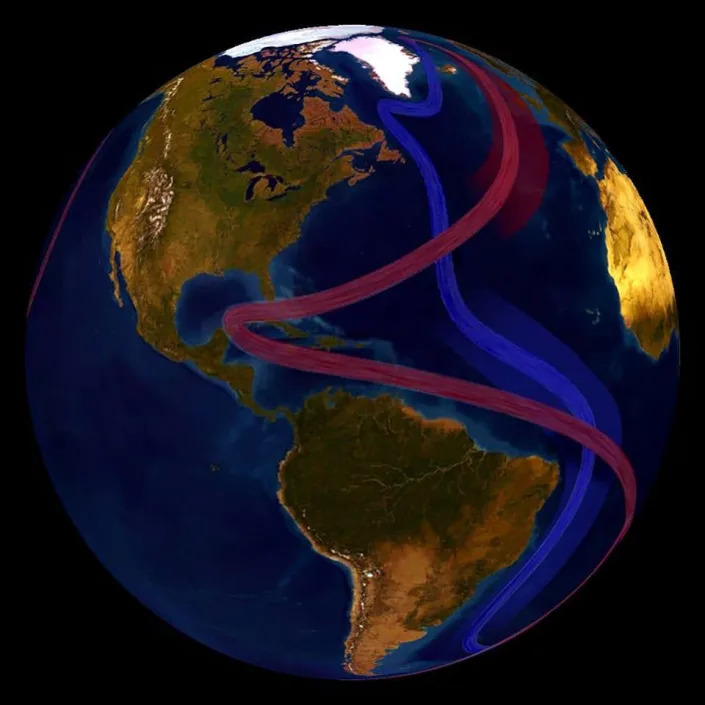
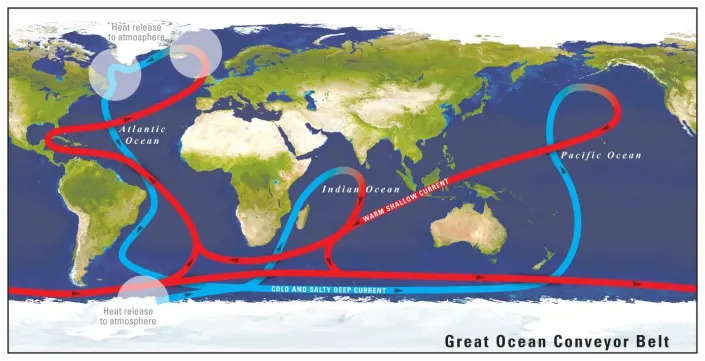
The study, published in Nature Communications, focuses on the Atlantic Meridional Overturning Circulation, or AMOC, a system of ocean currents in the Atlantic Ocean. This system is part of a global conveyor belt as it circulates water from north to south in the Atlantic, helping disperse warm waters. This system, along with other ocean currents, is crucial to helping maintain the Earth’s climate — and scientists believe it is being affected by climate change, as melting ice alters the balance in northern waters.

The AMOC “is a major tipping element in the climate system and a future collapse would have severe impacts on the climate in the North Atlantic region,” the study says, adding that there has been other research in recent years indicating that its circulation is weakening.

“We estimate a collapse of the AMOC to occur around mid-century under the current scenario of future [carbon] emissions,” it says.

Peter Ditlevsen, a professor at the University of Copenhagen’s Niels Bohr Institute and the lead author of the study, told CBS News he believes it’s “most likely” the system could collapse in about 30 years, around 2057. In the study, the range for a collapse was estimated to be anywhere between 2025 and 2095.

But, he says, there’s an “uncertainty”: “You cannot be completely sure.”

That’s because measurements of the AMOC only go back 20 years, providing a small amount of data to work into configurations. So his team looked at records of sea surface temperatures and climate model simulations to try to predict the fate of the current system.

The global conveyor belt, shown in part here, circulates cool subsurface water and warm surface water throughout the world / Credit: NOAA

“We know that there’s a tipping point out there in the future. And that when you approach that tipping point, they start to be unstable in a very specific way,” Ditlevsen said.

But Marlos Goes, a scientist at NOAA’s Atlantic Oceanographic and Meteorological Laboratory, said the likelihood of this study’s results coming to fruition within this century “is very small.” Such a timeframe, he said, is just “one scenario … out of hundreds.”

According to state-of-the-art climate models and the U.N.’s Intergovernmental Panel on Climate Change, a group that works to assess the science behind climate change, “it’s not going to collapse in the 21st century at all,” Goes said.

“It may in the following century. It depends on the [emissions] pathways,” he told CBS News. “If the emissions go unabated the way they are going right now … that could be a potential force for this collapse. But the probability of that single scenario that they analyzed in that study is very unlikely.”

What is the Atlantic Meridional Overturning Circulation?

The AMOC is a long current cycle in the Atlantic Ocean that transports warm water across the globe. It’s an incredibly slow-moving system that takes roughly 1,000 years to move any given cubic meter of water through its entirety, according to NOAA.

It is part of the global conveyor belt, a system of deep ocean currents driven by temperature, salinity and the wind on the ocean surface. The belt begins where warm water from the Gulf is thrust into a cold atmosphere of the Norwegian Sea. From there, the now much cooler water sinks lower into the ocean and is carried south. The conveyor belt takes that cold water all the way down to Antarctica.

 / Credit: USGS
/ Credit: USGS

Is the Gulf Stream going to collapse?

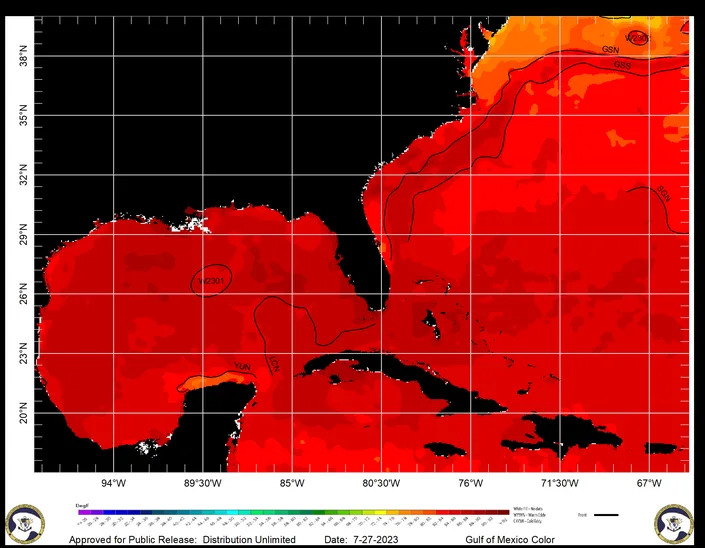
The Gulf Stream is a warm ocean current that runs from the coast of Florida and up to North Carolina, where it then diverts and goes across the Atlantic. It’s also part of the Atlantic Meridional Overturning Circulation. The latest study makes no mention of the Gulf Stream, specifically, but because it is part of this system, it would be impacted by such a collapse.

However, Goes told CBS News that wouldn’t disappear. The Gulf Stream is primarily driven by wind rather than temperature and salinity, as the AMOC as a whole is, meaning it would still function.

This image by NOAA's Ocean Prediction Center shows the temperature of the Gulf Stream along the U.S. East Coast. / Credit: NOAA Ocean Prediction Center
This image by NOAA’s Ocean Prediction Center shows the temperature of the Gulf Stream along the U.S. East Coast. / Credit: NOAA Ocean Prediction Center

“We would have a Gulf Stream just if we had the wind, if we didn’t have this formation in the North Atlantic,” Goes said. “…So even if the AMOC collapses, we’ll still have a Gulf Stream, but it would be much weaker.”

What would happen if the AMOC shut down?

A collapse of the system was the inspiration for the 2004 disaster film “The Day After Tomorrow.” In the movie, ocean current systems stopped because of global warming, triggering another Ice Age.

But Ditlevsen said, “That’s not gonna happen.” The principle of it, however, is the same, he said.

“You get colder Europe, northern Atlantic region, which is maybe not nice for us living in Scandinavia because it will be more similar to what’s going on in Alaska,” he said.

“But worse is that, the heat that’s not coming here stays in the tropics, heating them even more,” he continued. “The livelihood of people in the tropics can be severely threatened by this. … These are climate changes that are going to happen very fast.”

The AMOC won’t collapse just yet, some say — but it is slowing

Even though Goes says the chances of the AMOC collapsing within the next few decades are low, the current system is at risk. In 2021, another study found that the system is the weakest it’s been in at least 1,600 years. Researchers found that the current has slowed down an “unprecedented” amount — 15% since 1950.

Other research has found that it could be reduced up to 45% within the next 70 years or so.

Goes said that even just a slowdown of the currents, and not a total collapse, could impact people around the world.

“Generally, when the AMOC weakens or collapses, you have a cooling of the North Atlantic because this heat wouldn’t be carried further north, and there’s a warming of the South Atlantic. This would shift the precipitation patterns further south,” he said. “And that could influence all the sub-Sahara, the African and South American continents in the tropical bands. It would have influence on the storms in the North Atlantic, in Europe.”

But it would also release even more carbon dioxide into the atmosphere. The ocean absorbs 90% of the carbon dioxide from the atmosphere, and without the current, the ocean won’t be able to absorb as much, Goes said, a situation that would only add to the already rampant global warming the planet is facing. It would also increase sea levels along the U.S. coast.

Urgent action could stop a slowdown

A drastic change or shutdown of the AMOC wouldn’t necessarily be detectable right away, Goes said. In fact, it could take 40 to 50 years to emerge.

“By the time we detect that, it will be too late,” he said. “We really need to act now. This is one of the tipping points of the world.”

Once a tipping point such as a slowdown or shutdown of the AMOC is passed, it could cause a cascade of impacts that could cause “irreversible and severe changes in the climate system,” according to the Organization for Economic Co-operation and Development. Even though a full collapse of the AMOC within the next few decades isn’t probable, it is possible, Goes said, and it could come with high risk.

Scientists are continuing to monitor the system to learn what they can about its current state. But to help prevent a continued slowdown or a potential full shutdown, both Goes and Ditlevsen agreed that global emissions must be reduced drastically. Those emissions, largely from the burning of fossil fuels, are trapping heat in the atmosphere and causing sea ice to melt. When that ice melts, it adds fresh water to the AMOC, disrupting the salinity and temperature it relies on to move.

“If we stop our emissions, it will not collapse,” Ditlevsen said. “The disturbing part about this study is that we have to react much faster than we perhaps would like to do. … It’s yet another wake-up call or warning sign that we have to react faster than we do.”

Scientists Say Atlantic Current Collapse Could Lead to Extreme Cold in Europe and North America

Futurism

Scientists Say Atlantic Current Collapse Could Lead to Extreme Cold in Europe and North America

Victor Tangermann – July 31, 2023

Researchers are warning that the crucial ocean currents known as the Atlantic Meridional Overturning Circulation (AMOC) could collapse as soon as 2025 — an impending, climate change-fueled disaster that could usher in a new era of extreme temperature fluctuations.

It’s important to note that not every scientist is convinced by this assessment. And though the researchers say the collapse could take place as soon 2025, they also say it could take another 70 years.

That said, a team of researchers led by Peter Ditlevsen, professor and climate researcher at the University of Copenhagen in Denmark anticipate in a paper published in the journal Nature Communications that the currents could collapse anywhere between 2025 and 2095 — if we don’t cut global carbon emissions, that is.

If it were to collapse, much of the Western world could be plunged into an extended period of extreme cold — a counterintuitive result of climate change. Previous collapses, which have predominantly occurred during ice ages many thousands of years ago, have indeed led to temperatures going haywire.

“I think we should be very worried,” Ditlevsen told The Guardian. “This would be a very, very large change. The AMOC has not been shut off for 12,000 years.”

Back in 2021, researchers at the Potsdam Institute for Climate Impact Research in Germany warned in a separate paper that the AMOC is being driven to the brink of collapse due to climate change. In the short term, this collapse could cause temperatures to plunge in Europe and North America, resulting in prolonged periods of extreme cold.

And if the planet’s past history is anything to go by, the stakes are significant. 12,000 years ago, the melting of a massive glacial lake plunged Europe into an extreme cold spell for almost a millennium.

Now, by analyzing statistics from the last 150 years, Ditlevsen and his team say they’ve calculated with a 95 percent certainty that the AMOC will collapse between 2025 and 2095.

“Shutting down the AMOC can have very serious consequences for Earth’s climate, for example, by changing how heat and precipitation are distributed globally,” Ditlevsen said in a statement.

“While a cooling of Europe may seem less severe as the globe as a whole becomes warmer and heat waves occur more frequently, this shutdown will contribute to increased warming of the tropics, where rising temperatures have already given rise to challenging living conditions,” he added.

This change could be far more rapid than the incremental 1.5 degrees Celsius rise caused by climate change over a century. With a collapsed AMOC, we’d be looking at far more extreme changes in the ten to 15 degrees Celsius range over just a decade.

“Our result underscores the importance of reducing global greenhouse gas emissions as soon as possible,” Ditlevsen said.

But while researchers generally agree with this final conclusion, not everybody is convinced the AMOC is about to, well, run amok.

For one, the conclusion contradicts the latest findings of the United Nations’ Intergovernmental Panel on Climate Change (IPCC), which found in its most recent report that the current was unlikely to just collapse within this century.

“The work provides no reason to change the assessment of the [IPCC],” Jochem Marotzke of the Max-Planck-Institute for Meteorology in Hamburg, told Politico.

“We just don’t have the evidence to state that it has declined,” Penny Holliday, researcher at the UK’s National Oceanography Center, told the BBC. “We know that there is a possibility that AMOC could stop what it’s doing now at some point, but it’s really hard to have certainty about that.”

At the same time, while we may never get a 100 percent accurate prediction — after all, our planet’s climate systems are incredibly complex — we should still heed Ditlevsen and his colleagues’ warning.

“We do still have to take the idea seriously that there could be abrupt changes in the North Atlantic climate system,” University of Reading atmospheric scientist Jon Robson told the BBC. “But the exact predictions that it will happen — and within this time frame — you have to take that with some skepticism.”

DeSantis’s economic plan sounds like Biden’s

Yahoo! Finance

DeSantis’s economic plan sounds like Biden’s

Rick Newman, Senior Columnist – July 31, 2023

Who said it, Ron DeSantis or Joe Biden?

1. “We need a future that’s made in America. That means using products, parts, and materials built right here in the United States of America. It means bringing manufacturing back, jobs back, building the supply chains here at home, not outsourcing abroad.”

2. “We need to incentivize the repatriation of American capital and investment here in the United States so we can recapture our supply chains and build a strong durable industrial base.”

The first quote is President Biden, from a speech on his economic vision in January 2022. The second is Florida Gov. Ron DeSantis, who’s running for the Republican nomination for president, outlining his own economic agenda on July 31, 2023. DeSantis isn’t plagiarizing Biden, exactly, but it sure sounds like he’s borrowing ideas he’s heard before.

DeSantis, badly lagging Donald Trump in Republican polling for the 2024 race, is trying to establish himself as a conservative populist akin to Trump, but with a better reputation for competence and governing. To further the cause, he outlined a “Declaration of Economic Independence” during a July 31 campaign stop in New Hampshire, his first major effort to present an economic vision.

It’s surprisingly similar to Biden’s. Both men favor protectionism and a heavier government role than usual to steer the US economy toward future prosperity. Both vilify China and say the United States needs to end its reliance on the huge trade partner for key products. And they both bash big corporations for building massive amounts of wealth at the expense of ordinary workers.

The biggest difference between the two agendas, in fact, may be that Biden is already pursuing efforts to achieve many of those goals, while DeSantis is only talking about them as a candidate. There are other differences between the two, some largely rhetorical, others more substantive. But the unusual similarities between a center-left president and a far-right challenger indicate how much traditional political views have shifted as foreign threats have changed during the last decade and the global economy has transformed.

Like most challengers facing an incumbent, DeSantis argues that the current leadership has sent the nation into “decline.” Corporate fat cats and Beltway opportunists are lining their pockets while everybody else falls behind. This is a reprise of Bernie Sanders in 2020, Donald Trump in 2016, and even Barack Obama in 2008.

One big change between then and now is an increasingly aggressive China that seems bent on confrontation with the United States and the democratic West, rather than the trade symbiosis of 10 or 15 years ago. “We have to stop selling out this country’s future to China,” DeSantis demanded in his July 31 speech.

Well, Biden beat him to it. And Trump beat him to it before Biden.

Trump started by decrying the US trade deficit with China and slapping tariffs on hundreds of billions of dollars of Chinese imports each year to fix it. The tariffs raised the cost of US imports to the United States but did almost nothing to alter the trade balance. Then COVID hit in 2020, exposing extreme American dependence on China for medical supplies, electronics, minerals, and other crucial products.

Republican presidential candidate Florida Gov. Ron DeSantis gestures during a campaign event, Monday, July 31, 2023, in Rochester, N.H. (AP Photo/Charles Krupa)

After Biden took office in 2021, he left the Trump tariffs in place and went further. Biden began encouraging allies to join the United States in containing China’s expansionist policies, instead of going it alone the way Trump did. In 2022, Biden lobbied for and signed the CHIPS Act and the Inflation Reduction Act, a huge package of subsidies meant to boost US manufacturing of semiconductors, green energy components, and many other things — much as China subsidizes its own domestic manufacturing. A boom in US factory construction suggests those incentives are working.

Then last fall, Biden rolled out extensive restrictions on the exports of advanced US semiconductors and other high-end technology to China. In June, Biden told a private audience Xi Jinping was “a dictator,” which irked the Chinese president, even if it might be true. China called Biden’s quip needlessly provocative and said US-China relations were at the lowest point in more than 40 years.

So what might DeSantis do on top of all this? He called for an end to normal trade relations with China and said he would ban the import of Chinese products built with stolen technology. That’s not a big expansion of Biden policies and it might be little more than symbolic. China’s “normal” trade relationship with the United States is already undermined by the Trump tariffs and Biden sanctions, and who knows how the US government would assess which of the thousands of Chinese products coming to the United States include pirated technology.

Like Biden, DeSantis also wants to exert a government hand to boost certain parts of the manufacturing sector. He’d seek to repeal Biden’s green energy subsidies, however, and focus more on the domestic fossil fuel industry. If he were president, DeSantis could do a bit of that on his own through regulatory and executive action, but it would require Congress to undo hundreds of billions in green energy subsidies Congress passed last year, and replace them with subsidies directed elsewhere — no easy lift.

DeSantis distinguishes himself from Biden more clearly on cultural issues that have economic implications, such as diversity and inclusion policies and investing focused on environmental factors. DeSantis says he will “end the politicization of the economy” by discouraging or forbidding these kinds of policies in businesses, schools, and other organizations, but critics argue that DeSantis is the one politicizing the economy by focusing on these issues in the first place. Whatever the case, voters haven’t responded very enthusiastically to DeSantis’s “anti-woke” crusade, and DeSantis didn’t use his go-to word—”woke”— a single time in his July 31 speech. The dogs have not responded to this dog whistle. Maybe DeSantis decided to stop blowing it.

Here’s a fresh and interesting DeSantis idea: Hold universities accountable if students take on gobs of debt to get a degree and don’t earn enough once they graduate to pay it off. That does differ from Biden’s approach, which is to forgive a certain amount of debt, which would benefit the borrower but require nothing of the university. Mostly everybody agrees the cost of college in the United States is out of control and the current system of financing badly broken.

Finally, DeSantis finds a familiar bogeyman responsible for America’s economic woes in the Federal Reserve. He says the Fed should worry about inflation alone and stay out of extraneous matters such as saving the US economy during a financial crash or a pandemic. Except guess what: If DeSantis were president during such a crisis, he’d beg the Fed to ride to the rescue, because it’d be foolish to let a depression ruin lives if you had an alternative, and because President DeSantis’s own political survival would depend on a Fed bailout. Tough talk often ends the moment the election takes place.

Brain fog and other long COVID symptoms are the focus of new small treatment studies

Associated Press

Brain fog and other long COVID symptoms are the focus of new small treatment studies

Lauran Neergaard – July 31, 2023

FILE – This undated, colorized electron microscope image made available by the U.S. National Institutes of Health in February 2020 shows the Novel Coronavirus SARS-CoV-2, indicated in yellow, emerging from the surface of cells, indicated in blue/pink, cultured in a laboratory. The National Institutes of Health is opening a handful of studies to start testing possible treatments for long COVID, an anxiously awaited step in U.S. efforts against the mysterious condition. The announcement, Monday, July 31, 2023 comes amid frustration from patients who’ve struggled for months or years with sometimes disabling health problems. (NIAID-RML via AP, File) (ASSOCIATED PRESS)More

WASHINGTON (AP) — The National Institutes of Health is beginning a handful of studies to test possible treatments for long COVID, an anxiously awaited step in U.S. efforts against the mysterious condition that afflicts millions.

Monday’s announcement from the NIH’s $1.15 billion RECOVER project comes amid frustration from patients who’ve struggled for months or even years with sometimes-disabling health problems — with no proven treatments and only a smattering of rigorous studies to test potential ones.

“This is a year or two late and smaller in scope than one would hope but nevertheless it’s a step in the right direction,” said Dr. Ziyad Al-Aly of Washington University in St. Louis, who isn’t involved with NIH’s project but whose own research highlighted long COVID’s toll. Getting answers is critical, he added, because “there’s a lot of people out there exploiting patients’ vulnerability” with unproven therapies.

Scientists don’t yet know what causes long COVID, the catchall term for about 200 widely varying symptoms. Between 10% and 30% of people are estimated to have experienced some form of long COVID after recovering from a coronavirus infection, a risk that has dropped somewhat since early in the pandemic.

“If I get 10 people, I get 10 answers of what long COVID really is,” U.S. Health and Human Services Secretary Xavier Becerra said.

That’s why so far the RECOVER initiative has tracked 24,000 patients in observational studies to help define the most common and burdensome symptoms — findings that now are shaping multipronged treatment trials. The first two will look at:

— Whether taking up to 25 days of Pfizer’s antiviral drug Paxlovid could ease long COVID, because of a theory that some live coronavirus, or its remnants, may hide in the body and trigger the disorder. Normally Paxlovid is used when people first get COVID-19 and for just five days.

— Treatments for “brain fog” and other cognitive problems. They include Posit Science Corp.’s BrainHQ cognitive training program, another called PASC-Cognitive Recovery by New York City’s Mount Sinai Health System, and a Soterix Medical device that electrically stimulates brain circuits.

Two additional studies will open in the coming months. One will test treatments for sleep problems. The other will target problems with the autonomic nervous system — which controls unconscious functions like breathing and heartbeat — including the disorder called POTS.

A more controversial study of exercise intolerance and fatigue also is planned, with NIH seeking input from some patient groups worried that exercise may do more harm than good for certain long COVID sufferers.

The trials are enrolling 300 to 900 adult participants for now but have the potential to grow. Unlike typical experiments that test one treatment at a time, these more flexible “platform studies” will let NIH add additional potential therapies on a rolling basis.

“We can rapidly pivot,” Dr. Amy Patterson with the NIH explained. A failing treatment can be dropped without ending the entire trial and “if something promising comes on the horizon, we can plug it in.”

The flexibility could be key, according to Dr. Anthony Komaroff, a Harvard researcher who isn’t involved with the NIH program but has long studied a similarly mysterious disorder known as chronic fatigue syndrome or ME/CFS. For example, he said, the Paxlovid study “makes all sorts of sense,” but if a 25-day dose shows only hints of working, researchers could extend the test to a longer course instead of starting from scratch.

Komaroff also said that he understands people’s frustration over the wait for these treatment trials, but believes NIH appropriately waited “until some clues came in about the underlying biology,” adding: “You’ve got to have targets.”

The Associated Press Health and Science Department receives support from the Howard Hughes Medical Institute’s Science and Educational Media Group. The AP is solely responsible for all content.