‘This is my land, I stay’: These Ukrainian women are among thousands choosing to fight, not flee

USA Today

‘This is my land, I stay’: These Ukrainian women are among thousands choosing to fight, not flee

Gabriela Miranda, USA TODAY – March 25, 2022

Just last month, Olga Kovalenko moved into her first apartment in Kyiv, Ukraine, and got engaged to her longtime boyfriend. Now she spends mornings cleaning her rifles and pulling people out of bomb-stricken homes.

When Ukraine enacted martial law and banned men 18 to 60 years old from leaving the country after Russia’s Feb. 24 invasion, Kovalenko knew she’d never forgive herself if she left her homeland. She called her parents and volunteered to join Ukraine’s military forces.

“I wasn’t about to leave all the saving and defending to the men. I may be a woman, but I have no children, and I’m ready to fight,” Kovalenko told USA TODAY. “This is my land, I stay.”

Kovalenko is one of thousands of Ukrainian women refusing to flee as bombs have raged and cities have been bombarded, steadfast in their decision to defend their beloved home and extinguish Russian President Vladimir Putin’s hopes for a swift victory. Women make up about 15% of Ukraine’s army, according to the Ukrainian government.

WHERE ARE THEY GOING?: Millions of refugees are fleeing Ukraine.

Each day Kovalenko said her unit goes to different cities that have been hit by Russia’s relentless attacks. They evaluate the damage, help evacuate civilians and are ready to fend off Russian forces. Fortunately, Kovalenko hasn’t encountered a Russian soldier yet but said she would “do what’s necessary” to win the war.

STUDENTS FLEE UKRAINE: International students studying in Ukraine escape to safety

Kovalenko was born in Kyiv to a Ukrainian mother and Russian father – she said both her parents are proud. Her father even said he stands with Ukraine and is “disappointed” with the invasion.

“I’m different, I’m half of each side in this war, but I choose to do what’s right. I choose to risk my life for my country; it’s what my Ukrainian blood tells me to do,” Kovalenko said.

Alona Bushynska was born in Odessa, Ukraine, and has joined a civilian task force there that provides protection and medical supplies to local communities in the country during the war.
Makeup artist now wields weapons

Alona Bushynska, an Odessa native who was once a makeup artist for 17 years, has traded in her brushes for medical supplies and weapons. A few months ago, her biggest worry was scheduling her next client. Today it’s protecting her unit and partners in a civilians task force in Ukraine.

Bushynska said she decided to join the war effort while she watched neighborhoods near Kyiv destroyed by Russian forces. Each morning, the task force wakes up to the sounds of bombs and brings medical supplies to soldiers and civilians.

The task force operates in units of two: One person provides medical assistance while the other is armed and ready to defend as needed. The task force is filled with dozens of women who chose to fight, Bushynska said. Among them: former journalists, paramedics and teachers.

“We’re not professional warriors, we are just civilians who stayed because we want to protect our houses. We want there to be homes and buildings for people to come back to,” Bushynska told USA TODAY. “If I die, I die. But I want to stay.”

Ukraine has a long history of female fighters

Women such as Kovalenko and Bushynska are no different than the thousands of female Ukrainian soldiers who fought in World War I, in the Austro-Hungarian army, and in World War II, in the Red Army, Ukrainian veteran Kateryna Pryimak said.

During Russia’s 2014 invasion of eastern Ukraine, Pryimak enlisted in the Ukrainian army and fought on the front lines to protect the region. Now eight years later, she’s defending her country in a new way – with medical supplies and volunteers.
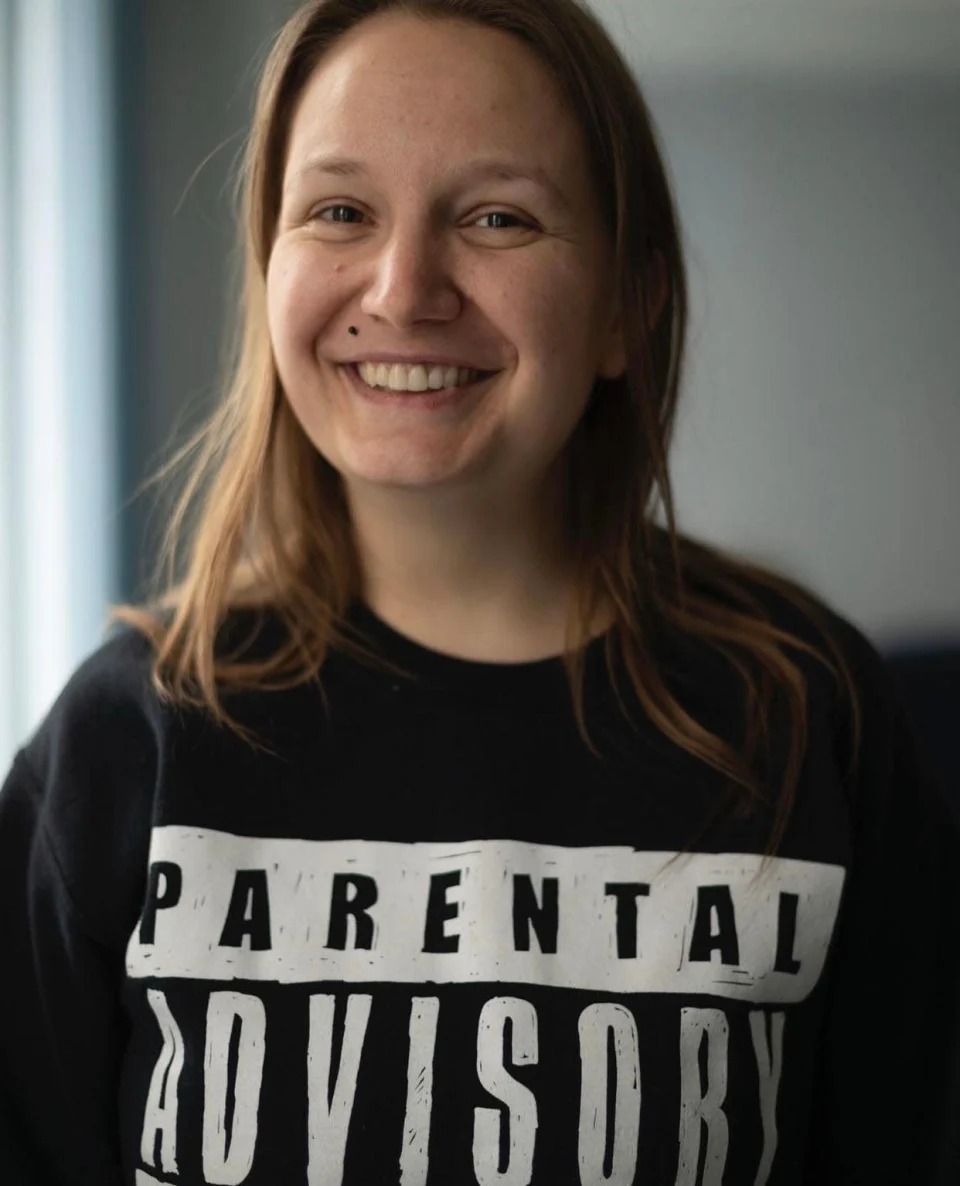
Kateryna Pryimak is the head of volunteer headquarters for the Women's Veteran Movement organization.
Kateryna Pryimak is the head of volunteer headquarters for the Women’s Veteran Movement organization.

Pryimak is the head of the Women’s Veteran Movement, an organization that provides support for veterans, and has set up a headquarters in Kyiv. Dozens of women, many like Pryimak, are paramedics. They provide food, clothes and medical resources.

“Guns are not the only thing needed. Food, medical attention and even a smile, that’s also what the women who have stayed behind provide to the soldiers and civilians,” Pryimak said.
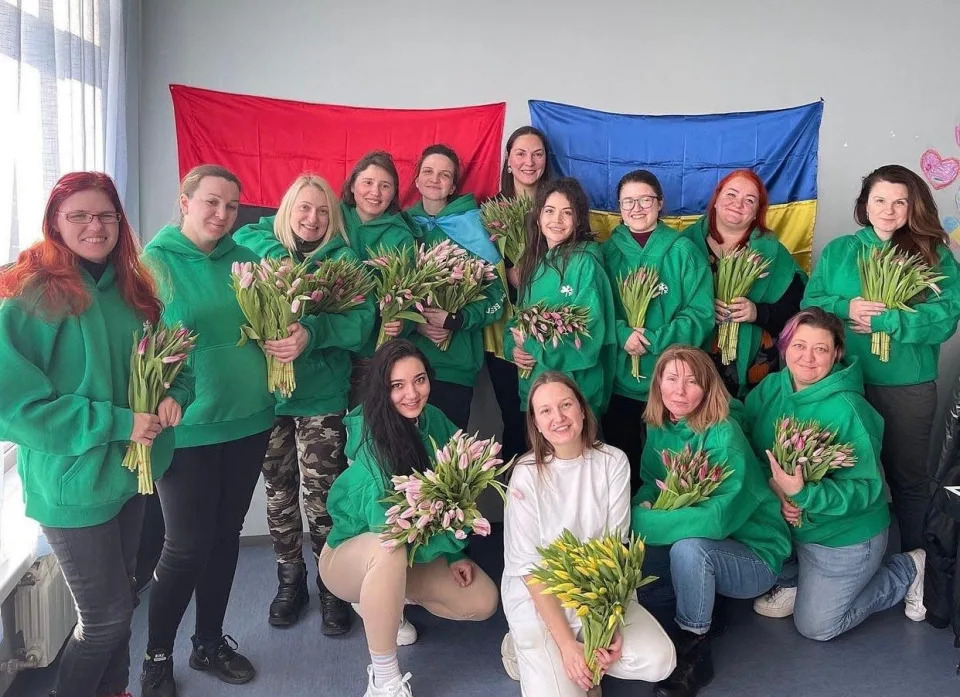
The Women's Veteran Movement organization is located in Kyiv, Ukraine and offers medical supplies and aid to local military forces in the city.
The Women’s Veteran Movement organization is located in Kyiv, Ukraine and offers medical supplies and aid to local military forces in the city.

She said she knows of thousands of women who have joined the fight against the Russian invasion – and she’s not surprised. Since 2014 and before, women have shown they are just as capable of bravery as their male counterparts, she said.

Bushynska said she will continue to fight with other civilians for as long as it takes. Kovalenko will defend Ukraine until her “last breaths.”

“Men don’t always have to fight and women don’t always have to sit at home and wait,” Kovalenko said. “We are here to help and we’ll stay here until the war is over, until my last breath if needed.”
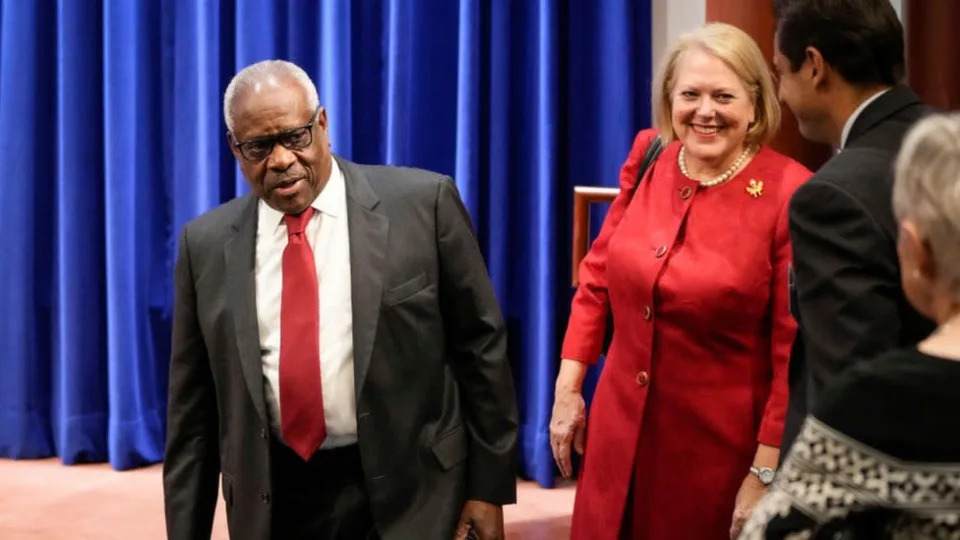
Texts reveal wife of Supreme Court judge urged 2020 election overturn

BBC News

Texts reveal wife of Supreme Court judge urged 2020 election overturn

March 25, 2022

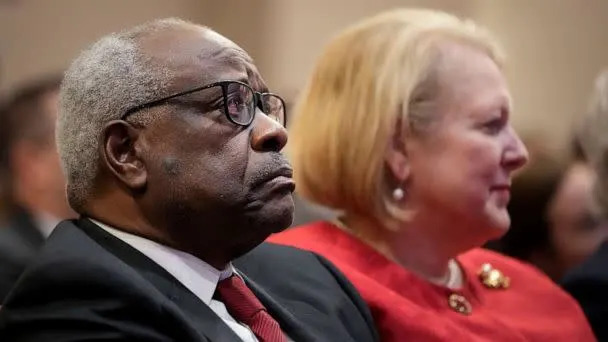
Virginia Thomas with her husband, Supreme Court Judge Clarence Thomas
Virginia Thomas with her husband, Supreme Court Judge Clarence Thomas (left)

The wife of a US Supreme Court judge repeatedly pressed Trump White House staff to overturn the 2020 presidential election, US media has reported.

Virginia Thomas, wife of Justice Clarence Thomas, reportedly sent 29 text messages to former adviser Mark Meadows, urging him not to concede.

Ms Thomas called Joe Biden’s victory “the greatest heist of our history”.

The texts are among 2,320 messages Mr Meadows provided to a committee investigating the US Capitol riot.

In the text messages, seen by CBS News and The Washington Post, she urged Mr Meadows, who was Donald Trump’s chief of staff, to “make a plan” in a bid to save his presidency.

“Do not concede. It takes time for the army who is gathering for his back”, she wrote on 6 November. It is unclear if Mr Meadows responded.

Ms Thomas also appeared to push QAnon conspiracy theories and urged Mr Meadows to appoint Sidney Powell, a conspiracy theorist and lawyer, to head up Mr Trump’s legal team.

“Sounds like Sidney and her team are getting inundated with evidence of fraud,” Ms Thomas wrote. “Release the Kraken and save us from the left taking America down.”

Mr Meadows told Ms Thomas that he intended to “stand firm” and said that he “will fight until there is no fight left”.

The Trump campaign later distanced itself from Ms Powell, after she made dramatic claims of voter fraud, without providing any evidence, at several media events.

Virginia Thomas – who goes by Ginni – is a prominent Republican fundraiser. She was formerly associated with the Tea Party wing of the party, a hard-line conservative movement to which Mr Meadows was also affiliated during his time in the House of Representatives.

She has been married to conservative-leaning Justice Clarence Thomas for 35 years, and has insisted her activist work has no influence on her husband’s work with the Supreme Court.

In 2010, she made headlines for asking Anita Hill to apologise for accusing Mr Thomas of harassment during his confirmation hearings in 1991.

Clarence Thomas is the longest-serving member of the US Supreme Court, having served since 1991, and is currently in hospital with “flu-like” symptoms.

He is considered extremely influential in American law, but for much of his career rarely spoke or asked questions in court until 2016 when he broke a 10-year silence.

Since the Covid pandemic began, however, Mr Thomas has become more vocal and participates in most oral arguments.

In February 2021 the Supreme Court rejected Donald Trump’s challenges to the elections result, however Mr Thomas dissented from the decision, calling it “baffling”.

Wife’s texts leave Justice Thomas in a difficult position

The revelation of Ginni Thomas’s conspiracy-minded text messages have prompted critics on the left to call for Clarence Thomas to be impeached and removed from his lifetime seat on the Supreme Court.

They point to his lone dissent from the Supreme Court decision ordering the release of White House documents to the congressional committee investigating the 6 January Capitol attack as evidence that he was secretly protecting his wife, who was closely involved in efforts to overturn Donald Trump’s election defeat.

Mr Thomas’s defenders counter that he should not be held responsible for the activities of his spouse and, in any regard, there are no ethical rules that apply to high court justices.

The impeachment process for Supreme Court justices is the same as those for US presidents – a majority vote in the House of Representatives and two-thirds to convict and remove in the US Senate. That’s an unreachable bar given the current partisan divide of the latter chamber.

In fact, only one US Supreme Court justice has been impeached by the House in US history. Samuel Chase was accused of political bias and misdeeds in 1804. He was acquitted in the Senate by a comfortable margin.  

Related:

Good Morning America

Ginni Thomas urged White House chief of staff to challenge election results, text messages show

Benjamin Siegel, Katherine Faulders, Joanthan Karl and Devin Dwyer

March 25, 2022

In the fall of 2020, after Joe Biden defeated Donald Trump in the presidential election, Virginia “Ginni” Thomas, the wife of Supreme Court Justice Clarence Thomas, repeatedly urged White House Chief of Staff Mark Meadows to attempt to overturn the election results, according to text messages obtained by congressional investigators.

“Help This Great President stand firm, Mark!!!” Thomas wrote to Meadows on Nov. 10 after the election was officially called for Biden. “You are the leader, with him, who is standing for America’s constitutional governance at the precipice. The majority knows Biden and the Left is attempting the greatest Heist of our History.”

Sources familiar with the text messages, which were obtained by the House select committee investigating the Jan. 6 Capitol attack, confirmed their authenticity to ABC News. The content of the messages was first reported by The Washington Post and CBS News.

Meadows, who did not respond to all of Thomas’ missives, texted in late November that Trump’s challenge of the election results was “a fight of good versus evil.”

MORE: Trump’s former chief of staff Mark Meadows fails to show for Jan. 6 committee deposition, prompting calls to hold him in contempt

“Evil always looks like the victor until the King of Kings triumphs,” he wrote. “Do not grow weary in well doing. The fight continues. I have staked my career on it. Well at least my time in DC on it.”

“Thank you!! Needed that! This plus a conversation with my best friend just now … I will try to keep holding on. America is worth it,” Thomas replied.

PHOTO:In this Oct. 21, 2020 file photo White House Chief of Staff Mark Meadows talks to reporters at the White House in Washington, D.C. (Tasos Katopodis/Getty Images, FILE)

The messages — more than two dozen between Thomas and Meadows in November of 2020, and one from Jan. 10 — were among the thousands of pages of text messages, emails and documents Meadows voluntarily turned over to the committee last year, before he reversed course and decided not to cooperate with the inquiry.

Thomas did not respond to a request for comment from ABC News. A spokesman for the committee declined to comment on the messages or their contents.

MORE: Ginni and Clarence Thomas draw questions about Supreme Court ethics

Thomas, a longtime conservative activist, told the Washington Free Beacon in March that she and her husband don’t talk to each other about their work.

“Like so many married couples, we share many of the same ideals, principles, and aspirations for America,” Thomas told the conservative news outlet. “But we have our own separate careers, and our own ideas and opinions too. Clarence doesn’t discuss his work with me, and I don’t involve him in my work.”

PHOTO: Associate Supreme Court Justice Clarence Thomas sits with his wife and Virginia Thomas while he waits to speak at the Heritage Foundation, Oct. 21, 2021, in Washington, D.C. (Drew Angerer/Getty Images, FILE)

Thomas said that she attended the “Stop the Steal” rally outside the White House on Jan. 6, but left early because it was cold. She said she had no role in planning the event.

Regarding the attack on the Capitol, Thomas told the Free Beacon she was “disappointed and frustrated that there was violence that happened following a peaceful gathering.”

Ethics experts have raised questions about Thomas’ work on major issues that come before the Supreme Court, on which her husband sits.

In January, the court declined to block the Jan. 6 committee from obtaining Trump White House records over the objection of only one justice: Clarence Thomas.

“There were some eyebrows raised when Justice Thomas was that lone vote,” said Kate Shaw, ABC News Supreme Court analyst and Cardozo Law professor. “But he did not explain himself, so we don’t actually know why he wished to take up the case.”

There are no explicit ethics guidelines that govern the activities of a justice’s spouse, experts say, but there are rules about justices avoiding conflicts of interest. Federal law requires that federal judges recuse themselves from cases whenever their “impartiality might reasonably be questioned.”

Clarence Thomas was the lone dissent in the Supreme Court’s January order rejecting Trump’s bid to withhold documents from the January 6 panel

Insider

Clarence Thomas was the lone dissent in the Supreme Court’s January order rejecting Trump’s bid to withhold documents from the January 6 panel

Erin Snodgrass – March 24, 2022

clarence thomas
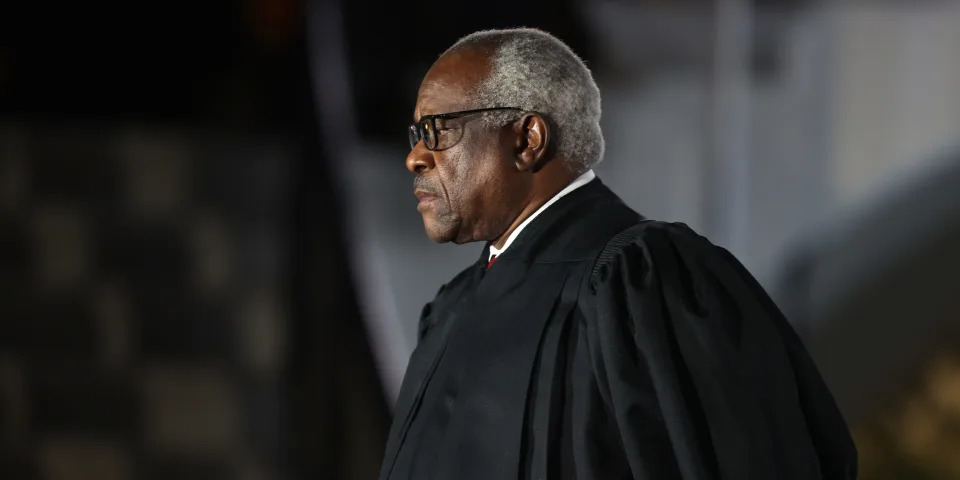
Supreme Court Associate Justice Clarence Thomas.Tasos Katopodis/Getty Images
  • Text messages reportedly show Ginni Thomas urging Mark Meadows to overturn the 2020 US election.
  • The news prompted scrutiny on Clarence Thomas’ lone dissent in a January 6-related case.
  • Ginni Thomas has long participated in partisan politics despite her husband’s role on the court.

In January, the Supreme Court rejected former President Donald Trump’s bid to block the release of some presidential records to the House committee investigating the Capitol riot.

Only one of the nine justices dissented: Clarence Thomas.

At the time, Thomas provided no explanation for why he would have approved Trump’s request — a standard omission when the top court addresses emergency motions.

But Thomas’ objection fell under scrutiny Thursday after several outlets reported that the justice’s wife, Virginia “Ginni” Thomas, sent text messages to Mark Meadows, then the White House chief of staff, urging him to try to overturn the 2020 presidential election in the aftermath of Trump’s loss to Joe Biden.

The Washington Post reported that in a message from November 6, 2020, Ginni Thomas told Meadows not to concede the election, saying “it takes time for the army who is gathering for his back.” In a message November 10, 2020, Ginni Thomas declared Biden’s win “the greatest Heist of our History.”

In total, Ginni Thomas and Meadows exchanged 29 texts from November 2020 to January 2021, the outlet reported, all of which are now part of the trove of evidence the January 6 panel is investigating.

Meadows and Ginni Thomas didn’t immediately respond to requests for comment from Insider.

CNN reported Thursday that the committee obtained the texts from Meadows. The former Trump official is believed to have turned over thousands of text messages before he stopped cooperating with the House panel late last year.

Ahead of the Supreme Court’s order on Trump’s White House documents, Meadows filed a supporting brief in favor of blocking the release of documents.

Ginni Thomas has come under scrutiny in recent months over her conservative advocacy given her husband’s position on the nation’s highest court. Earlier this month, she acknowledged attending the “Stop the Steal” rally that preceded the Capitol attack but said she got cold and left before Trump spoke.

She also denied having ties to the organizers of the rally after several news outlets reported that she was connected to January 6 rally organizers and served on the board of a conservative group that promoted overturning the 2020 election results.

Ginni Thomas has long been an active participant in partisan politics. In a recent interview with the Washington Free Beacon, she said she and her husband had their “own separate careers, and our own ideas and opinions too.”

“Clarence doesn’t discuss his work with me, and I don’t involve him in my work,” she said.

What Ginni Thomas and Vladimir Putin have in common

The Week

What Ginni Thomas and Vladimir Putin have in common

Joel Mathis, Contributing Writer – March 25, 2022

Ginni Thomas and Vladimir Putin.
Ginni Thomas and Vladimir Putin. Illustrated | Getty Images, iStock

You know what Ginni Thomas and Vladimir Putin have in common? They are both sealed inside information bubbles of their own making, to disastrous ends.

Let’s start with Putin. Russia’s invasion of Ukraine has gone badly, but why? Brian Klaas, a politics professor at University College London, says Putin blundered into the war because he didn’t have anyone around to tell him what he believed — that Ukrainians don’t really have their own national identity, that the invasion would be a cakewalk — might not actually be true. Klaas calls this the “dictator trap.”

“It’s what happens when authoritarian leaders make catastrophic short-term errors because they start to believe in the fake realities they’ve constructed around themselves,” Klaas said this week in an interview with Vox.

Maybe that sounds familiar. Echo chambers don’t just happen to dictators. Nowadays, thanks to social media and tailored TV channels, anyone can enjoy their own fake reality.

Take Thomas, a powerful conservative activist and wife of Supreme Court Justice Clarence Thomas. The Washington Post reported Thursday on texts she sent to Mark Meadows, Donald Trump’s chief of staff, around the time of the Jan. 6 insurrection, urging him to help Trump “stand firm” in efforts to overturn the 2020 election.

Strikingly, the texts suggest Thomas really believed some of the outlandish right-wing conspiracy theories pushed by Trump and his allies. Here’s a text she sent Meadows, quoting one of those theories:

Biden crime family & ballot fraud co-conspirators (elected officials, bureaucrats, social media censorship mongers, fake stream media reporters, etc) are being arrested & detained for ballot fraud right now & over coming days, & will be living in barges off GITMO to face military tribunals for sedition.

That obviously never happened. It’s not just wrong, it’s nutty. Ginni Thomas, with connections at the highest levels of government, should’ve known better. But like a lot of people who also attended the “Stop the Steal” rally on Jan. 6, it seems she bought whatever right-wing websites were selling, no matter how far from reality. Contradictory facts and ideas — the truth that Joe Biden won — were filtered out.

Klaas thinks democracies are less susceptible to the dictator trap. Trump, he notes, obsessively watched CNN and MSNBC to see what people were thinking about him. But I’m not so sure that’s right. After all, it’s not been so long since American news organizations of all stripes — Fox News and the New York Times — coalesced around the shoddy case for a disastrous war. The Thomas texts suggest that even in today’s more-fractured and diverse media environment, it’s pretty easy to avoid disfavored voices and facts. And whether the information bubble is contained to one man or a large group of people, it can still have nasty consquences.

The tendency to believe only the facts we want to believe is a longstanding human foible. Not even society’s elites are immune. You don’t need to be a dictator to fall into the dictator trap.

China and Solomon Islands Draft Secret Security Pact, Raising Alarm in the Pacific

The New York Times

China and Solomon Islands Draft Secret Security Pact, Raising Alarm in the Pacific

Damien Cave – March 25, 2022

Li Keqiang, left, the Chinese premier, and Prime Minister Manasseh Sogavare of the Solomon Islands reviewing an honor guard during a ceremony in Beijing in 2019. (AP)

SYDNEY — A leaked document has revealed that China and the Solomon Islands are close to signing a security agreement that could open the door to Chinese troops and naval warships flowing into a Pacific Island nation that played a pivotal role in World War II.

The agreement, kept secret until now, was shared online Thursday night by opponents of the deal and verified as legitimate by the Australian government. Although it is marked as a draft and cites a need for “social order” as a justification for sending Chinese forces, it has set off alarms throughout the Pacific, where concerns about China’s intentions have been growing for years.

“This is deeply problematic for the United States and a real cause of concern for our allies and partners,” Charles Edel, the inaugural Australia chair at the Center for Strategic and International Studies, said Friday. “The establishment of a base in the Solomon Islands by a strategic adversary would significantly degrade Australia and New Zealand’s security, increase the chances of local corruption and heighten the chances of resource exploitation.”

It is not clear which side initiated the agreement, but if signed, the deal would give Prime Minister Manasseh Sogavare of the Solomon Islands the ability to call on China for protection of his own government while granting China a base of operations between the United States and Australia that could be used to block shipping traffic across the South Pacific.

Five months ago, protesters unhappy with Beijing’s secretive influence attacked the prime minister’s residence, burned businesses in the capital’s Chinatown and left three people dead. Now the worst-case scenario some Solomon Islanders envision would be a breakdown of democracy before or during next year’s election, with more unrest and the threat of China moving in to maintain the status quo.

The leaked document states that “Solomon Islands may, according to its own needs, request China to send police, armed police, military personnel and other law enforcement and armed forces to Solomon Islands to assist in maintaining social order, protecting people’s lives and property.”

It allows China to provide “assistance on other tasks” and requires secrecy, noting, “Neither party shall disclose the cooperation information to a third party.”

Matthew Wale, leader of the opposition party in the Solomon Islands’ parliament, said he feared that the “very general, overarching, vague” agreement could be used for anything.

“The crux of it is that this is all about political survival for the prime minister,” he said. “It has nothing to do with the national security of Solomon Islands.”

For Beijing, the deal could offer its own potential reward. “China may, according to its own needs and with the consent of Solomon Islands, make ship visits to, carry out logistical replenishment in and have stopover and transition in the Solomon Islands,” the draft states.

It also says the Solomons will provide “all necessary facilities.”

The Chinese Embassy in the Solomon Islands did not immediately reply to an email seeking comment.

Australia, which has traditionally been the islands’ main security partner — also sending police officers to quell the unrest in November at the government’s request — responded swiftly to the leaked document.

“We would be concerned by any actions that destabilize the security of our region,” Australia’s Department of Foreign Affairs said in a statement. “Members of the Pacific family are best placed to respond to situations affecting Pacific regional security.”

Despite such affirmations, Australia has been losing influence in the Solomons for years. The larger country has a history of condescending to the region, downplaying its concerns about climate change and often describing it as its own “backyard.”

Sogavare has made no secret of his desire to draw China closer. In 2019, soon after he was elected, he announced that the island would end its 36-year diplomatic relationship with Taiwan, the self-governing island that China claims as its own, in order to establish official ties with Beijing. He argued that Beijing would deliver the infrastructure and support that the country needed.

The Sogavare government quickly signed agreements giving Chinese companies the right to build roads and bridges and to reopen one of the country’s gold mines. A Chinese company even tried to lease the entire island of Tulagi.

That deal was eventually deemed illegal, after critics rose up in anger. Residents of Tulagi and Malaita, an island province where local leaders expressed strong opposition to China, have said that bribes are constantly being paid by proxies of Beijing with bags of cash and promises of kickbacks for senior leaders often made during all-expenses-paid trips to China.

The violent protests in November in the Solomon Islands reflected those frustrations. They erupted on the island of Guadalcanal, in the capital, Honiara, where U.S. troops fought a brutal battle against the Japanese starting in 1942. And the clashes were sparked by anger over allegations of China-fueled corruption and a perceived unequal distribution of resources, which has left Malaita less developed despite having the country’s largest population.

Malaita’s premier, Daniel Suidani — who has banned Chinese companies from Malaita while accepting U.S. aid — said that the anger stemmed from “the national government’s leadership.”

“They are provoking the people to do something that is not good,” he said in November.

Wale said he has encouraged the prime minister to negotiate with Malaita, with little success.

“The political discourse over these things is nonexistent,” he said, adding that the proposed agreement with China would make the relationship more volatile.

Anna Powles, a senior lecturer at the Center for Defense and Security Studies at Massey University in New Zealand, said the recent upheaval and continued insecurity point to high levels of stress on the government over the pandemic, the economy and “long-standing concerns about the capturing of the state and political elites by foreign interests.”

“Some of the biggest implications here are about how strategic competition is disrupting local government,” Powles said.

U.S. officials have also become increasingly concerned. In interviews over the past few years, they have often cited the Solomons as a grave example of China’s approach throughout the Pacific, which involves cultivating decision-makers to open the door for Chinese businesses, migration and access to strategic resources and locations — most likely, the Americans believe, for civilian and military uses, at sea, and for satellite communications.

Many Pacific islands, including Kiribati and Fiji, have seen a sharp increase in Chinese diplomats, construction deals and Chinese migration over the past five years. Disputes and tensions have been growing over Beijing’s role in a region that has often either been ignored or been seen as little more than dots on the map for great powers to toy with.

Last month, during a visit to Fiji that focused heavily on competition with China, Secretary of State Antony Blinken announced that the United States would soon open an embassy in the Solomon Islands after closing one in the 1990s. It is still many months from being operational and on Friday, U.S. officials did not initially respond to requests for comment.

“They certainly can do more and faster,” Wale said. “They just seem to be dragging their feet.”

Scoop: Ukrainians flock to U.S.-Mexico border

Axios

Scoop: Ukrainians flock to U.S.-Mexico border

Stef W. Kight – March 25, 2022

Nearly 1,000 Ukrainians have shown up at the U.S.-Mexico border so far this month — a jump from the 272 encounters in February, according to Department of Homeland Security documents obtained by Axios.

Why it matters: The numbers are low compared to other nationalities arriving at the border in droves — such as the nearly 17,000 Cubans last month. But Russian and Ukrainian migrants present new challenges for border officials, and highlight the desperation of some fleeing Russia’s invasion.

Between the lines: Homeland Security Secretary Alejandro Mayorkas recently told reporters border officials have been instructed to consider using exemptions for Ukrainians rather than kicking them back to Mexico under a COVID-19-linked policy known as Title 42.

  • This would allow them to apply for asylum in the U.S. The documents indicate at least some Ukrainians have been allowed in to seek asylum.
  • The administration has already paused deportations to Ukraine and other countries in the region, as CBS News has reported.
  • Border officials under President Biden have used Title 42 — a Trump-era policy — to quickly expel migrants more than 1 million times.

What to watch: Recent documents reviewed by Axios highlight local concerns that Russians and Eastern European migrants may be forming a make-shift camp in Tijuana.

  • A similar camp in Del Rio, Texas, hosting mostly Haitian migrants drove national news in September, and forced the administration to quickly take action.
  • The number of Russians arriving at the U.S.-Mexico border has been declining from a high of more than 2,000 in December, to roughly 750 so far this month.
  • It’s still an unusual number, and reflects a broader shift in the demographics of people arriving at the southwest border. During the past year, there have been far more people from places outside of Mexico, Guatemala, Honduras and El Salvador — including such far-flung departure points as Turkey and India.

What they’re saying: “Consistent with the CDC Order, DHS continues to grant Title 42 exceptions to particularly vulnerable individuals of all nationalities for humanitarian reasons,” a DHS spokesperson told Axios.

  • ”All exceptions are made on a case-by-case basis.”
  • The order is still in place for single adults and family units, the spokesperson added.

The big picture: Russia’s invasion has now forced more than 3.7 million people to flee Ukraine, according to U.N. statistics.

  • There’s been growing pressure for the U.S. to do more to aid these refugees.
  • On Thursday, the government announced it would welcome up to 100,000 Ukrainians and others fleeing Russia’s aggression through various pathways.

Meanwhile, U.S. border officials are already struggling with overall large numbers of migrants arriving at the U.S.-Mexico border.

They’re on track to reach 200,000 encounters total for March, the Washington Post reported — the highest monthly total since August.

  • The administration has been preparing for the potential of a mass migration event this spring — especially if policies aimed at inhibiting the spread of the coronavirus are ended in the coming weeks.

German farmers in Ukraine press ahead in defiance of war

AFP

German farmers in Ukraine press ahead in defiance of war

Sophie Makris – March 25, 2022

  • German farmers Tim Nandelstädt (centre) and Torben Reelfs (right) push ahead with their crop planting in Ukraine despite Russia's invasion (AFP/Tim NANDELSTAEDT)German farmers Tim Nandelstädt (centre) and Torben Reelfs (right) push ahead with their crop planting in Ukraine despite Russia’s invasion (AFP/Tim NANDELSTAEDT)
  • War has come to Ukraine but German farmers Torben Reelfs and Tim Nandelstaedt are planting the first sugar beets of the season on their plot of land in western Ukraine (AFP/Tim NANDELSTAEDT)War has come to Ukraine but German farmers Torben Reelfs and Tim Nandelstaedt are planting the first sugar beets of the season on their plot of land in western Ukraine (AFP/Tim NANDELSTAEDT)

Every year in early spring, German farmers Torben Reelfs and Tim Nandelstaedt turn the soil and plant the first sugar beets of the season on their plot of land in western Ukraine.

But this year, the ritual has taken on a new meaning.

“It’s very symbolic. When the machine turns over the land, it’s a different feeling than in previous years,” said Reelfs, 41, speaking to AFP by phone from the farm about 60 kilometres (37 miles) from Lviv.

When Russian troops invaded Ukraine on February 24, Reelfs and Nandelstaedt immediately fled to Germany to “get away from the missiles, to be on the territory of the EU, of NATO”, according to Nandelstaedt, 43.

“At first I thought that Russia would get to the Polish border very quickly,” he said.

But three weeks later, both of them were back in Derzhiv, their adopted home for the last 10 years.

“What we are seeing here, the solidarity on a military and a humanitarian level, is inspiring and gives you hope,” said Reelfs.

– ‘Poker game’ –

With the west of Ukraine so far largely spared from the deadly fighting raging in the south and east, the two men decided to go ahead and start sowing their crops.

The pair had already managed to secure the fuel, fertiliser and seeds they needed.

They began by sowing the sugar beets, which will be followed by corn in around two weeks’ time and soybeans in around two months.

It’s too early to tell whether the crops will ever be harvested, but for now, Reelfs is sure it was “the right decision”.

He also feels “a certain responsibility” to “reduce the risk of catastrophic famines” around the world as a result of the war.

Before the Russian invasion, Ukraine was the world’s fourth largest exporter of corn and was on its way to becoming the third largest exporter of wheat behind Russia and the United States.

Corn, wheat and sunflower oil prices have already soared in recent weeks and the situation looks set to worsen if the “breadbasket of Europe” is unable to keep up with the usual supplies.

The two German farmers know that going ahead with the harvest is a huge risk — a “poker game”, according to Reelfs.

“What will happen in six months, when we harvest, I honestly have no idea,” said Nandelstaedt. “Some farms have already been hit by missiles or attacked by ground troops. Fields are burning. If that happens here, it will be over.”

– ‘Adventure’ –

Reelfs and Nandelstaedt have spent the last decade building up their farm in Ukraine, which covers 1,900 hectares of land and employs 25 people.

The business partners, who have been friends for over a decade, were among a wave of farmers who took up leases on land in Ukraine after the fall of the Soviet Union, attracted by the cheap prices and fertile soil.

They liked the idea of an “adventure” and the chance to build everything from scratch, according to Reelfs.

Between 2008 and 2009, “we visited almost 50 villages and there was still available land everywhere”, he said.

“When we started out, you could rent a hectare of land for 17 euros ($18.70) and could even pay in kind, with wheat or sugar. Today, we pay well over 100 euros here and it is more than 200 euros in many regions.”

It’s a sign of how much Ukraine has changed over the years, he said: “Corruption has greatly decreased… and the standard of living has got better and better.”

Reelfs believes it has been a surprise to the Russian forces to see that “people are not at all unhappy with their government, they want to support the army and defend their country”.

During their stay in Germany, Reelfs and Nandelstaedt collected 130,000 euros in donations for Ukraine and helped to arrange accommodation for around about 170 people in villages around Berlin.

“Even though they all feel welcome there, they want to return to Ukraine as soon as possible,” said Reelfs.

Rumors of ‘filtration camps’ and mass deportation in Ukraine raise old USSR fears

NBC News

Rumors of ‘filtration camps’ and mass deportation in Ukraine raise old USSR fears

Cassandra Vinograd – March 25, 2022

Rumors of ‘filtration camps’ and mass deportation in Ukraine raise old USSR fears

The reports have filtered out for days: Mass kidnappings, forced deportations, Ukrainians spirited across the border to Russia.

The Ukrainian foreign ministry said Thursday that 6,000 residents of the besieged city of Mariupol had been “forcibly deported” by Russian forces — stripped of their passports and identity documents — and taken to Russia as “hostages.”

Like much in this war, the claims have been impossible to independently verify. A statement from the foreign ministry Thursday echoed allegations and details released by Mariupol’s city council in recent days, stating that “several thousand” of its residents had been taken to “filtration camps” in Russia before being “redirected to remote cities.”

Russia, in turn, has cited the “evacuations” of more than 380,000 people from Ukraine to its territory.

Communications are sporadic or down, and no foreign journalists are left in the city. That’s meant relying on the rare videos that have emerged from the city — and on the testimony of those who’ve managed to escape.

Yet the language — “filtration camps” — and the imagery of mass deportations are particularly resonant, evoking a dark chapter in Russian history.

The trauma and memory of mass deportations inflicted by the then-Soviet Union are still fresh. An estimated 3 million people on the USSR’s borders were rounded up and forcibly deported to remote parts of Siberia and Central Asia between 1936 and 1952, according to the United Nations refugee agency. Some 60,000 were Poles and Ukrainians.

The echoes of history — and their power — have not been lost on Mariupol’s city council.

“What the occupiers are doing today is familiar to the older generation, who saw the horrific events of World War II, when the Nazis forcibly captured people,” it said in a statement March 19. “It is hard to imagine that in the 21st century people will be forcibly deported to another country.”

Some escapees from Mariupol have described Russian soldiers encouraging them to go to Russia “for their own safety.” Others have spoken of friends being interrogated by Russian forces, then disappearing.

Service members of pro-Russian troops are seen atop of an armoured vehicle (Alexander Ermochenko / Reuters)

With verifiable information limited and access to Mariupol impossible, the claims could be true. They also could be enhanced by the fog of war — or elements of a parallel information war, in which messaging is key to enforcing each side’s narrative.

Regardless, the reports have caught the attention of Ukraine’s supporters, humanitarians and even the White House. Department of State spokesman Ned Price said the United States was trying to corroborate the “very concerning” accounts, “which have in fact continued to mount.”

Ukrainian President Volodymyr Zelenskyy said Thursday that his government was trying to verify the exact number of citizens who had been forcibly deported, alleging that Russia was trying to forcibly conscript many into its army. That followed a March 22 statement from Ukraine’s defense minister stating that Russia was forcing men in occupied territories of Ukraine to conscript as “cannon fodder.”

On Thursday, Ukraine’s human rights ombudsman said prosecutors were investigating the “illegal deportation” of more than 2,000 children to Russia.

She said Ukrainians have been taken to different cities across Russia, citing the case of a family from the left bank of Mariupol who were taken out of a bomb shelter, loaded onto buses and taken to the Russian city of Taganrog. After being interrogated by Russian intelligence, she said, they were put on another train.

“They last got in touch with us on March 20,” she added.

Moscow ‘plotting to seal off Crimea’ to stop ‘panicking Russians’ from fleeing

Yahoo! News

Moscow ‘plotting to seal off Crimea’ to stop ‘panicking Russians’ from fleeing

Kate Buck – March 24, 2022

Russian President Vladimir Putin attends a concert marking the eighth anniversary of Russia's annexation of Crimea at the Luzhniki stadium in Moscow on March 18, 2022. (Photo by Sergei GUNEYEV / POOL / AFP) (Photo by SERGEI GUNEYEV/POOL/AFP via Getty Images)
Vladimir Putin is prepare to seal off Crimea and block the exit of Russias fleeing the invasion, Ukrainian intelligence officials have claimed. (Getty)

Ukrainian intelligence officials have claimed the Kremlin is preparing to seal off Crimea in order to block the exit of any “panicked” Russians trying to flee.

In 2014, Russia seized Ukraine’s southern peninsula of Crimea, an area of significant strategic importance in an invasion which marked what one Western intelligence official described as the “creeping militarisation” of the Black Sea.

While Nato and the international community deemed the annexation illegal, they failed to stop it and Moscow has since established two federal “subjects” in the area – the Republic of Crimea and the federal city of Sevastopol.

View on the globe zoomed on Ukraine(light blue)  and western part of Russia (red)
View on the globe zoomed on Ukraine(light blue) and western part of Russia (red)

Eight years on and Putin mounted a full scale invasion of Ukraine, in an apparent attempt to annex more land in the east of the country, specifically the territories of Donetsk and Luhansk.

However, Western officials believe the invasion is not going to plan, with Moscow frustrated by the lack of progress. The war has sparked numerous protests across Russia.

On Wednesday, the intelligence department of the Ukrainian Ministry of Defence claimed in a Facebook post that the Kremlin plans to block bridges, ferries and air connections from the mainland to Crimea in order to prevented panicking Russians from fleeing the region.

The post said Russia is now holding 600,000 Russian citizens “hostage” who are “illegally on the peninsula”.

The statement said: “Putin’s authorities are trying to react to panic moods among Russian citizens who illegally moved to Ukrainian Crimea after February 2014.

Read more: Russian Navy ship paraded in propaganda footage ‘destroyed by Ukraine’

TOPSHOT - This picture taken on March 22, 2022 shows debris in the mental hospital hit by the Russian shelling in Mykolaiv, southern Ukraine. - The southern city is a key obstacle for Russian forces trying to move west from Crimea to take Odessa, Ukraine's major port on the Black Sea. (Photo by BULENT KILIC / AFP) (Photo by BULENT KILIC/AFP via Getty Images)
A mental hospital hit by the Russian shelling in Mykolaiv, southern Ukraine (Getty)

“The occupants seek to stop the flow of refugees from the peninsula.”

It added that families of Russian officers and officials in Sevastopol have “urgently” sold real estate and are removing assets from the peninsula.

These claims have not been verified, however it is clear that there is some anger aimed at Putin’s invasion in the Russian homeland.

On 4 March, Moscow enacted two laws that criminalised independent war reporting and protesting the war, with penalties of up to 15 years in prison.

Three days after those laws came into force police reportedly detained more than 4,300 protesters in 56 different cities, according to the OVD-Info independent protest monitoring group.

Some Russian state-controlled media carried short reports about the protests but they did not feature high in news bulletins.

Russia’s RIA news agency said the Manezhnaya Square in Moscow, adjoining the Kremlin, had been “liberated” by police, who had arrested some participants of an unsanctioned protest against the military operation in Ukraine.

The last Russian protests with a similar number of arrests were in January 2021, when thousands demanded the release of opposition leader Alexei Navalny after he was arrested on returning from Germany where he had been recovering from a nerve agent poisoning.

In recent days, there has been mounting speculation as to the scale of Russian troop losses, with one Nato source estimating that up to 15,000 Russian troops have been killed in the past month.

The anonymous officer said that battlefield casualties suffered by Russia are thought to total between 30,000 and 40,000 since Putin launched his invasion on February 24.

On Thursday, British military intelligence said that “Russian forces have almost certainly suffered thousands of casualties during their invasion of Ukraine.”

In an effort to bolster their troops, Russia is likely looking at bringing reservists and conscription, further intelligence has suggested.

An update added: “Russia is likely now looking to mobilize its reservist and conscript manpower, as well as private military companies and foreign mercenaries, to replace these considerable losses.”

Putin’s ‘Achilles heel’ in Ukraine is Russians believing their ‘soldiers are dying unnecessarily,’

The Week

Putin’s ‘Achilles heel’ in Ukraine is Russians believing their ‘soldiers are dying unnecessarily,’ CNN says

Peter Weber, Senior editor – March 24, 2022

Soviet Russia finally pulled out of Afghanistan because fierce Afghan resistance, fueled by U.S.-provided Stinger missiles, was eating away at Russian forces, eventually resulting in 15,000 Russian deaths. “Today the death toll of Russian troops in Ukraine could already match those killed over 10 years in Afghanistan,” CNN’s Nic Robertson reported early Thursday, citing NATO estimates.

“Afghan parallels with today’s war in Ukraine are clear,” Robertson said. “Russia’s enemies, if not Russia, have learned the lessons of the Afghan war.”

“Across dozens of Russian cities, more than 15,000 people have been arrested for protesting the war,” Robertson said. “Recently, anxious parents of troops have begun showing up. Putin’s Achilles heel is the perception soldiers are dying unnecessarily. It’s why he’s tightened reporting laws and swamped Russia with Kremlin propaganda, and it’s why the Ukrainian military shows off battlefield gains — like knocking out Russian tanks or captured Russian soldiers — because they know bad press back home is what the Red Army out of Afghanistan.”

Thus far, Kremlin-friendly media has rarely strayed from the party line. So, for example, this drone footage of Mariupol after weeks of relentless Russian bombing and airstrikes is “shocking” proof on CNN of Russia’s scorched-earth campaign of punishing and killing Ukrainian civilians to achieve otherwise unattainable territorial gains.

On Russian state TV, it is portrayed as Ukrainian forces burning down their own house to thwart the Russians.

But there are signs of low morale among Russian forces in Ukraine, reported to be suffering from frostbite and hunger, not just stalemate and high casualties. And the morale problems aren’t just among Russian ground troops and field officers in Ukraine, CNN says, pointing to a report it obtained by U.S. military attachés in Moscow who “casually inquired” about a Russian major general’s Ukrainian family roots and were shocked when the general’s “stoic demeanor suddenly became flushed and agitated.”