Telecom workers in occupied parts of Ukraine destroyed software to avoid Russian control over data and communications
Britney Nguyen – June 22, 2022
Ukrtelecom is owned by Ukraine’s richest man, Rinat Akhmetov.Michael Gottschalk/Photothek/Getty Images
Ukrainian telecom employees destroyed equipment in Russian-occupied areas to avoid Russian control.
Ukrtelecom is the largest fixed-line operator in Ukraine, its CEO, Yuriy Kurmaz, told Bloomberg.
Some of the company’s facilities have been destroyed or damaged during Russia’s war in Ukraine.
In Ukraine’s occupied territories, workers at one of the country’s leading telecommunications providers destroyed equipment to avoid Russian control of internet and phone services.
In an interview with Bloomberg, Ukrtelecom’s chief executive officer, Yuriy Kurmaz, said employees at the company have experienced threats and some have been imprisoned by Russian forces throughout occupied territories in southern and eastern Ukraine.
As Russian forces try to take over parts of Ukraine, Kurmaz told Bloomberg they’ve tried taking over parts of Ukrtelecom’s network through hacking and cyberattacks, which the company has endured since March.
But instead of letting Russian forces take control of the network, employees at Ukrtelecom facilities in the occupied territories “decided to delete crucial files from computers,” Kurmaz told Bloomberg.
“They put pressure on our employees to obtain the technical details of our network infrastructure,” Kurmaz said about Russian personnel in the area. “But they failed.”
Kurmaz told Bloomberg that his employees “completely destroyed the software,” so the Russians couldn’t connect their own equipment to Ukrainian networks.
Since Russia’s invasion of Ukraine in late February, Russian forces have refocused their efforts to the eastern part of Ukraine since it failed to capture the capital city of Kyiv. Ukrainian President Volodymyr Zelenskyy has been asking the West for more weapons, while his senior adviser, Mykhailo Podolyak, told the BBC that the country was losing 100 to 200 soldiers each day.
Ukrtelecom is Ukraine’s largest fixed line operator, according to Kurmaz, and is used by the public, the Ukrainian military, and some Ukrainian government agencies.
During Russia’s war in Ukraine, Kurmaz told Bloomberg that more than 30 of Ukrtelecom’s facilities have been destroyed, and about 100 others have been damaged.But, Kurmaz said the company’s been able to continue serving customers in over 80% of localities where it operates.
In an interview with Ukrinform, a state information and news agency in Ukraine, Kurmaz said Ukrtelecom was able to restore its landline phone network in over 1,200 settlements, and more than 350,000 households have communication services.
Due to the war, Ukrinform reported that telecom service is not available in the Luhansk and Kherson regions of Ukraine.
Bloomberg reported that some smaller internet providers in occupied parts of Ukraine are operating under Russian control, but Ukrtelecom disconnected its networks in those parts of the country.
“Our strong position is we will never collaborate,” Kurmaz told Bloomberg.
John Mellencamp slams politicians for not doing more to prevent gun violence: ‘They don’t give a f*** about our children’
Suzy Byrne, Editor Yahoo Entertainment – June 22, 2022
John Mellencamp is slamming lawmakers for not doing more to stop school shootings.
The “Small Town” singer criticized politicians over their response to gun violence, saying they “don’t give a f*** about our children.”
“Only, in America, can 21 people be murdered and a week later be buried and forgotten, with a flimsy little thumbnail, a vague notion of some sort of gun control law laying on the senators’ desks,” the 70-year-old musician and painter wrote on Twitter Tuesday, referring to the Uvalde, Texas, school shooting on May 24.
“What kind of people are we who claim that we care about pro-life?” he continued. Just so you know, anyone that’s reading this… politicians don’t give a f*** about you, they don’t give a f*** about me, and they don’t give a f*** about our children.”
He concluded, “So, with that cheery thought in mind, have a happy summer, because it will be just a short time before it happens again.”
Mellencamp’s comments came on Tuesday as the Senate voted to advance a new bipartisan gun control bill. It would enhance background checks and give authorities up to 10 business days to review the juvenile and mental health records of gun purchasers under 21. Funding would also go to help states implement red flag laws as well as to expand mental health resources in communities and schools and boost school safety, among other things.
The Uvalde shooter legally purchased an AR-15-style rifle on May 17 — one day after he turned 18. Three days later, he purchased a second rifle, and in between bought 375 rounds of ammunition. On May 24, he killed19 fourth graders and two teachers at Robb Elementary. The gunman also shot his grandmother in the face.
Mellencamp has long spoken out against gun violence, joining 200 other artists and music execs in 2016 in calling for gun reform in the wake of the Orlando nightclub shooting. Following the Uvalde shooting, he said on MSNBC’s The Beat last week that news outlets should start showing the carnage of school shootings to open the eyes of those resisting reform.
“I don’t know if you’re old enough, but I remember when Vietnam first started, and it was a conversation on the news,” the father of five said. “But then, when they started showing dead teenagers, people did something about it, and the country united. I think that we need to start showing the carnage of these kids who have died in vain… If we don’t show it, then they’re dying in vain, because they’re just going to pass more bulls*** laws like they’re trying to get through now. Show us. Let the country see what a machine gun can do to a kid’s head.”
Lake Mead nears dead pool status as water levels hit another historic low
Denise Chow and Kathryn Prociv – June 22, 2022
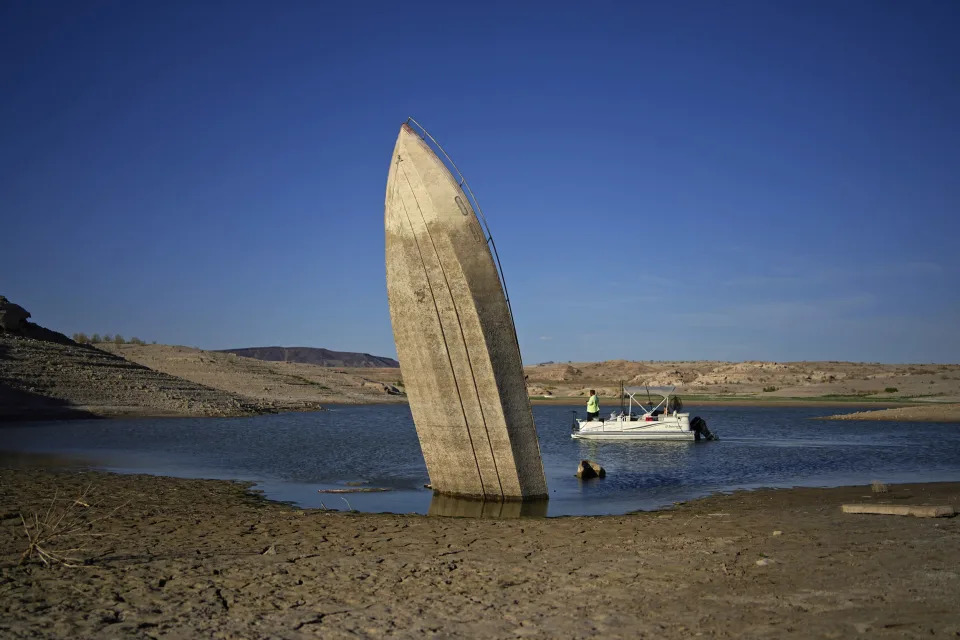
John Locher
Lake Mead’s water levels this week dropped to historic lows, bringing the nation’s largest reservoir less than 150 feet away from “dead pool” — when the reservoir is so low that water cannot flow downstream from the dam.
Lake Mead’s water level on Wednesday was measured at 1,044.03 feet, its lowest elevation since the lake was filled in the 1930s. If the reservoir dips below 895 feet — a possibility still years away — Lake Mead would reach dead pool, carrying enormous consequences for millions of people across Arizona, California, Nevada and parts of Mexico.
“This is deadly serious stuff,” said Robert Glennon, an emeritus professor at the University of Arizona who specializes in water law and policy.
Persistent drought conditions over the past two decades, exacerbated by climate change and increased water demands across the southwestern United States, have contributed to Lake Mead’s depletion. Though the reservoir is at risk of becoming a dead pool, it would most likely take several more years to reach that level, Glennon said.
In the meantime, the U.S. Bureau of Reclamation and water managers across the southwestern United States are making efforts to manage the flow of water into the Colorado River and regulate water use among states in the region. These measures are designed to help replenish Lake Mead, which was created on the Colorado River on the Arizona-Nevada border when the Hoover Dam was built in the early 1930s, and another severely depleted reservoir, Lake Powell, which was created along the border of Utah and Arizona.Scroll back up to restore default view.
Dead pool would not mean that there was no water left in the reservoir, but even before Lake Mead were to hit that point, there are concerns that water levels could fall so low that the production of hydroelectric power would be hindered.
“Electricity generation in our western reservoirs becomes a problem as the water level in the reservoirs goes down,” Glennon said.
As a reservoir is depleted, there is less water flowing through turbines and less liquid pressure to make them spin, which means the turbines produce less electricity, he added.
Glennon said water levels at Lake Mead have seen unexpectedly significant declines in recent years. At roughly this same time last year, Lake Mead’s elevation was measured at around 1,069 feet, according to the Bureau of Reclamation. In 2020, water levels at the end of June were around 1,087 feet.
Glennon said the situation at Lake Mead is forcing local officials to take “dramatic steps” to replenish the reservoir, particularly as climate change is expected to worsen drought conditions in the West and will continue to affect how much water flows into the Colorado River.
“This is the 23rd year of drought, and we don’t know if it’s a 23-year drought, a 50-year drought or maybe it’s a 100-year drought,” he said. “We just don’t know what’s going to turn this around.”
Ukraine becomes EU membership candidate as Donbas battles reach ‘fearsome climax’
Pavel Polityuk and Vitalii Hnidyi – June 22, 2022
KYIV (Reuters) -Ukraine became a candidate to join the European Union on Thursday, a bold geopolitical step triggered by Russia’s invasion that Kyiv and Brussels hailed as an “historic moment”.
Starting on the long path to EU membership will be a huge boost to morale in the embattled country, as Russian assaults on two cities in the eastern Donbas region move toward a “fearsome climax”, according to a Ukrainian government adviser.
“Ukraine’s future is in the EU,” President Volodymyr Zelenskiy wrote on Twitter after the official announcement.
“A historic moment,” European Council chief Charles Michel tweeted, adding: “Our future is together.”
The approval of the Kyiv government’s application by EU leaders meeting in Brussels will anger Russia as it struggles to impose its will on Ukraine. Moldova also became an official candidate on Thursday, signalling the bloc’s intention to reach deep into the former Soviet Union.
Friday will mark four months since Russian President Vladimir Putin sent troops across the border in what he calls a “special military operation” sparked in part by Western encroachment into what Russia considers its sphere of influence.
The conflict, which the West sees as an unjustified war of aggression by Russia, has killed thousands, displaced millions, and destroyed cities, while the curtailment of food and energy exports has affected countries across the world.
Russia has focused its campaign on southern and eastern Ukraine after its advance on the capital in the early stages of the conflict was thwarted by Ukrainian resistance.
The war of attrition in the Donbas – Ukraine’s industrial heartland – is most critical in the twin cities of Sievierodonetsk and Lysychansk, which sit on opposite banks of the Siverskyi Donets River in Luhansk province.
The battle there is “entering a sort of fearsome climax”, said Oleksiy Arestovych, an adviser to Zelenskiy.
HOT SUMMER
Russian forces were trying to encircle Ukrainian troops defending Lysychansk, senior Ukrainian defence official Oleksiy Gromov said in a briefing on Thursday.
Luhansk governor Serhiy Gaidai said separately that all Lysychansk was within reach of Russian fire and that Ukrainian troops there might retreat to new positions to avoid being trapped.
Russian-backed separatist forces said there was fierce fighting underway around Ukrainian positions in Hirske, which lies on the western side of the main north-south road to Lysychansk, and Zolote, another settlement to the south.
Ukrainian forces were defending Sievierodonetsk and nearby Zolote and Vovchoyrovka, Gaidai said, but Russian troops had captured Loskutivka and Rai-Oleksandrivka to the south. Hundreds of civilians are trapped in a chemical plant in Sievierodonetsk.
On the southern front, Russian forces struck Ukrainian army fuel tanks and military equipment near Mykolaiv with high-precision weapons, Russia’s defence ministry said, quoted by the Interfax news agency.
A river port and ship-building centre just off the Black Sea, Mykolaiv has been a bastion against Russian efforts to push West towards Ukraine’s main port city of Odesa.
Zelenskiy urged Ukraine’s allies to speed up shipments of heavy weapons to match Russia on the battlefield. “We must free our land and achieve victory, but more quickly, a lot more quickly,” he said in a video address early on Thursday.
Later, Ukrainian defence minister said HIMARS multiple rocket systems had arrived from the United States. With a range of 70 km (44 miles), the systems can challenge the Russian artillery batteries that have bludgeoned Ukrainian cities from afar.
The United States will provide an additional $450 million in security assistance to Ukraine, including more long-range rocket systems, U.S. officials said on Thursday.
SHIELD FOR THE EU
Russia has long opposed closer links between Ukraine, a fellow former Soviet republic, and Western groupings like the European Union and the NATO military alliance.
Diplomats say it will take Ukraine a decade or more to meet the criteria for joining the EU.
But European Commission President Ursula von der Leyen said she was convinced that Ukraine and Moldova will move as swiftly as possible to implement necessary reforms.
Their move to join the EU runs alongside applications by Sweden and Finland to enter NATO in the wake of the Russian invasion – indications that the Kremlin’s military actions have backfired on its geopolitical aims.
In Kyiv, where mass protests eight years ago ousted the then-president after he broke a promise to develop closer ties with the EU, 22-year-old serviceman Volodymyr Yanishan welcomed Ukraine’s candidate status.
“It means that people almost reached what we have been striving for since 2014, in a bloody fight which cost us much effort… I think the majority will be glad and it means changes for better.”
(Reporting by Reuters bureaux; writing by Angus MacSwan, Alexandra Hudson and Humeyra Pamuk; Editing by Mark Heinrich, Catherine Evans and Rosalba O’Brien)
200 Russian deserters wandering in woods in Kharkiv Oblast
June 21, 2022
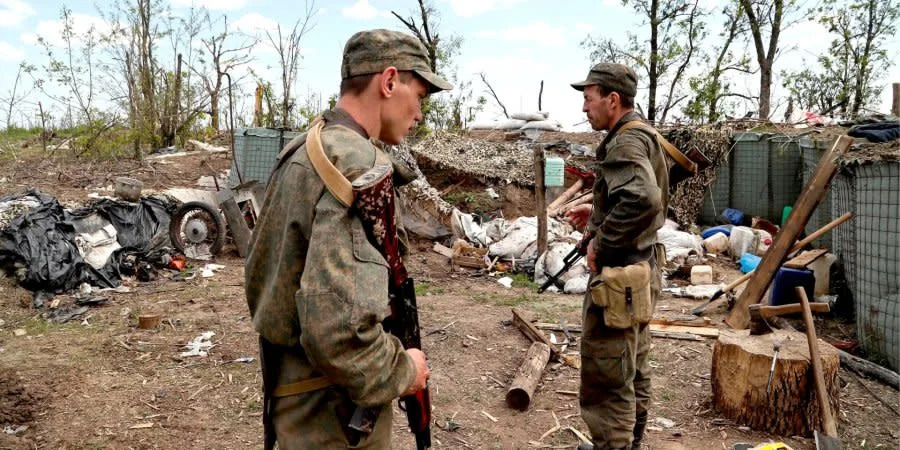
The occupiers deserted after the battle with the Armed Forces near Izyum (illustrative photo)
The Russian deserters were noticed by residents of Borova, a small town near the city of Izyum, close to Kharkiv. Borova community council in turn wrote about them on social media.
“They (the Russians) came back here – injured, covered with dirt, hungry, full of anger, with their equipment damaged,” an official with the council wrote.
“Then they found a place for refuge in our village to recover. We have information that approximately 200 Russians are now hiding in the woods close to our village. They’re being sought by their commanders.”
After suffering losses in another battle for control over Izyum, a group of Russian soldiers retreated to Gorohovatka, a small village on the outskirts of Borova.
Another group of Russian servicemen went into hiding in the local woods. While Borova is located on the eastern bank of Oskil river, Gorohovatka is located on the western bank. The two locations are connected by a bridge.
Vast areas in this part of the country are covered with woods. The closest Russia-controlled area is likely to be Severodonetsk in Luhansk Oblast, while the distance to Russia’s Belgorod Oblast is pretty much the same.
This week, the Ukrainian army destroyed the command and intelligence center of Russia’s 20th army, which was located in Kharkiv Oblast, leaving many Russian troops without tactical guidance.
In the northeast, the Russian army has been experiencing interruptions in logistics bringing supplies, including food and ammunition, since the beginning of the war.
Despite Western arms, Ukraine is outgunned in the east
Andrea Rosa and Jamey Keaten – June 20, 2022
Commander of an artillery unit of the Ukrainian army, Mykhailo Strebizh, center, inside a destroyed house due to shelling in a village near the frontline in the Donetsk oblast region, eastern Ukraine, Thursday, June 2, 2022. (AP Photo/Bernat Armangue, File) Ukrainian soldiers fire at Russian positions from a U.S.-supplied M777 howitzer in Ukraine’s eastern Donetsk region Saturday, June 18, 2022. (AP Photo/Efrem Lukatsky, File)A Ukrainian tank is in position during heavy fighting on the front line in Severodonetsk, the Luhansk region, Ukraine, Wednesday, June 8, 2022. (AP Photo/Oleksandr Ratushniak, File)
BAKHMUT, Ukraine (AP) — Holed up in a bombed-out house in eastern Ukraine, Ukrainian troops keep a careful accounting of their ammunition, using a door as a sort of ledger. Scrawled in chalk on the door are figures for mortar shells, smoke shells, shrapnel shells, flares.
Despite the heavy influx of weapons from the West, Ukrainian forces are outgunned by the Russians in the battle for the eastern Donbas region, where the fighting is largely being carried out by way of artillery exchanges.
While the Russians can keep up heavy, continuous fire for hours at a time, the defenders can’t match the enemy in either weapons or ammunition and must use their ammo more judiciously.
At the outpost in eastern Ukraine, dozens and dozens of mortar shells are stacked up. But the troops’ commander, Mykhailo Strebizh, who goes by the nom de guerre Gaiduk, lamented that if his fighters were to come under an intense artillery barrage, their cache would, at best, amount to only about four hours’ worth of return fire.
Ukrainian authorities say the West’s much-ballyhooed support for the country is not sufficient and is not arriving on the battlefield fast enough for this grinding and highly lethal phase of the war.
While Russia has kept quiet about its war casualties, Ukrainian authorities say up to 200 of their soldiers are dying each day. Russian forces are gaining ground slowly in the east, but experts say they are taking heavy losses.
The United States last week upped the ante with its largest pledge of aid for Ukrainian forces yet: an additional $1 billion in military assistance to help repel or reverse Russian advances.
But experts note that such aid deliveries haven’t kept pace with Ukraine’s needs, in part because defense industries aren’t turning out weaponry fast enough.
“We’re moving from peacetime to wartime,” said Francois Heisbourg, a senior adviser at the Paris-based Foundation for Strategic Research think tank. “Peacetime means low production rates, and ramping up the production rate means that you have to first build industrial facilities. … This is a defense-industrial challenge which is of a very great magnitude.”
The Kiel Institute for the World Economy in Germany last week reported that the U.S. has delivered about half of its pledged commitments in military support for Ukraine, and Germany about one-third. Poland and Britain have both come through on much of what they promised.
Many foot soldiers say they can’t even begin to match the Russians shot for shot, or shell for shell.
Earlier this month, Ukraine’s ambassador in Madrid, Serhii Phoreltsev, thanked Spain — which trumpeted a shipment of 200 tons of military aid in April — but said the ammunition included was enough for only about two hours of combat.
Ukrainian filmmaker-turned-fighter Volodymyr Demchenko tweeted a video expressing gratitude for guns sent by the Americans, saying, “It’s nice guns, and 120 bullets to each.” But he lamented: “It’s like 15 minutes of a fight.”
Part of the problem, too, is that the Ukrainian forces, whose country was once a member of the Soviet Union, are more familiar with Soviet-era weaponry and must first be trained on the NATO equipment they are getting.
An untold number of Ukrainians have traveled abroad to get training on the Western weapons.
Of the $1 billion pledge from the U.S., only slightly more than one-third of that will be rapid, off-the-shelf deliveries by the Pentagon, and the rest will be available over a longer term. The pledge, which includes 18 howitzers and 36,000 rounds of ammunition for them, addresses Ukraine’s plea for more longer-range weaponry.
That’s still far short of what the Ukrainians want — 1,000 155 mm howitzers, 300 multiple-launch rocket systems, 500 tanks, 2,000 armored vehicles and 1,000 drones — as President Volodymyr Zelenskyy’s adviser Mikhail Podolyak tweeted last week, before the latest big Western pledges.
“What the Ukrainians have got to do is conduct what military people tend to call a counter-battery operation” to respond to Russian artillery fire, said Ben Barry, a former director of the British Army Staff who is senior fellow for land warfare at the International Institute for Strategic Studies. “To do this, you need accurate weapons with a high rate of fire and a range that allows them to keep out of the way of the other side’s artillery.”
“The Ukrainians are saying they don’t have enough long-range rockets to adequately suppress Russian artillery,” he said. “I think they’re probably right.”
As it now stands, Ukrainian fighters often have to use “shoot and scoot” tactics — fire, then move before the Russians can zero in on them.
Better NATO hardware, even in small quantities, is often welcome.
On a nearby front on Saturday, a Ukrainian unit granted The Associated Press rare access to the firing of U.S.-supplied M777 howitzers — towable, 155 mm weapons — on Russian positions.
A lieutenant who goes by the call sign Wasp touted the M777’s precision, speed of fire, simplicity of use and the ease with which it is camouflaged, saying the new hardware “raises our spirits” and “demoralizes the enemy because they see what the consequences are.”
Denys Sharapov, Ukraine’s deputy minister of defense in charge of procurement, told a publication of the U.S.-based National Defense Industrial Association that the weapons systems that have been received cover only 10% to 15% of the country’s needs. He noted the breadth of the challenge — a front line with 1,000 kilometers (620 miles) of active combat.
Interviewed by National Defense magazine in an article published Wednesday, Sharapov said no single supplier could satisfy Ukraine’s needs alone.
“Quite unfortunately for us, we have become the biggest consumer of weapons and ammunition in the world,” he said.
Friends of Ukraine are digging in for the long haul.
Time may be on Ukraine’s side, the experts say. Ukrainian fighters are both motivated and mobilized — all men in the country of 40 million have been called to fight, whereas Russia has so far avoided a call-up of conscripts, which could vastly tilt the war in Russia’s favor but may not be popular domestically.
As for how long such fighting could last, analyst Heisbourg said a years-long war of attrition is “quite possible.”
Keaten reported from Geneva. Srdjan Nedeljkovic in Bakhmut, Ukraine, contributed to this report.
Russia is facing its worst recession in 30 years — and the ‘Putin Generation’ is paying the price
Huileng Tan – June 20, 2022
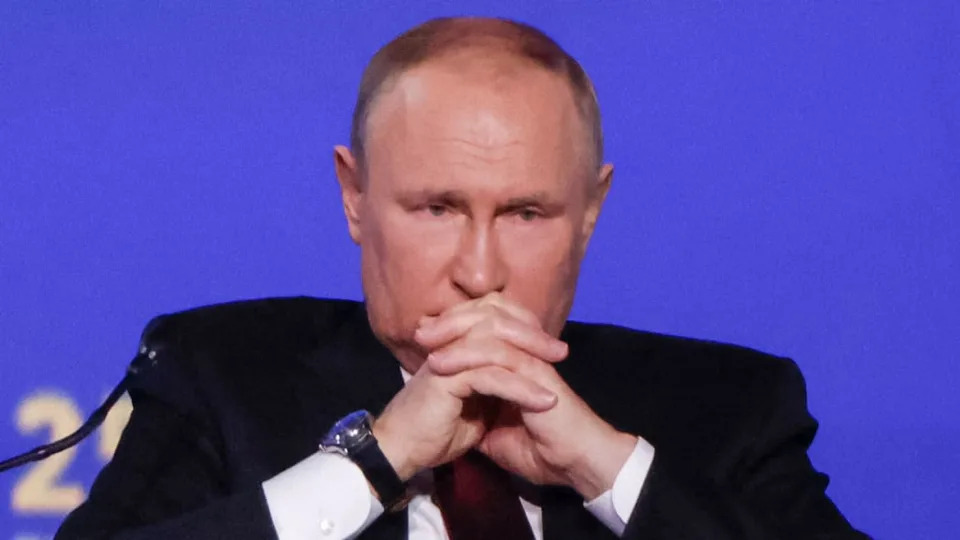
A generation of young people in Russia have grown up knowing only one leader — Vladimir Putin.Alexei Nikolsky/RIA-Novosti/Associated Press
Russian youths face shrinking professional opportunities as multinational firms exit the country.
Young Russians will also find it tougher to pursue higher education in Europe.
The Russian economy will contract 11.2% in 2022, per a World Bank forecast released in April.
Russian youths entering the job market and pursuing higher education are in for a rough ride.
Since Russia’s invasion of Ukraine, multinationals have left Russia in droves, while sanctions from major world economies are intensifying. Meanwhile, there are changes taking place at Russian universities that stand to make it difficult for the country’s students to pursue higher education elsewhere.
“We’re really entering a kind of uncharted territory in so many ways,” Hassan Malik, a senior sovereign analyst at Boston-based investment management consultancy Loomis Sayles, told Insider.
Experts told Insider it’s impossible, just months into the war, to quantify the impact of the war on Russian youths. But they also said the generation that grew up under the presidency of President Vladimir Putin — which started in 2012 — is now experiencing a very different Russia from the one it grew up in.
Loosely termed the “Putin Generation,” this group of young people grew up knowing only one president in its formative years and is between 17 and 25 years old, according to the Wilson Center. They grew up eating McDonald’s, watching the latest Hollywood films, and posting on Instagram — all of which are, in the wake of Russia’s invasion of Ukraine in late February, no longer available in Russia.
Two experts Insider spoke to broke down how much tougher it’ll be for young Russians at work and in school.
Multinationals are leaving en masse, limiting professional opportunities
Like in many countries, the value of a good education in Russia is that it opens up doors at not just homegrown employers, but also at multinational companies that present opportunities for employees to enter and leave the European job market freely. These windows are closing fast.
“A lot of multinational corporations had promised good stable careers, where one can advance on their merits in a kind of traditional Western capitalist model,” said Andrew Lohsen, a fellow in the Europe, Russia, and Eurasia Program at the Center for Strategic and International Studies. “Those opportunities are drying up as these companies leave Russia, and some of the industries that have promised high salaries are starting to be hamstrung by sanctions.”
Lohsen cited oil and gas and IT as some sectors where multinationals are departing in droves, leaving a future of uncertainty for those looking to enter these major industries. Earlier this month, American tech giants IBM and Microsoft laid off hundreds of employees in Russia as companies continued to pull out of the market.
Such exits are not just about the job market. They will also curtail training and professional networks for Russian professionals, Malik told Insider.
In April, the World Bank said the Russian economy is expected to contract 11.2% in 2022, marking its worst economic contraction in three decades since the collapse of the Soviet Union.
Russian universities and education will quash open debate, push for top-down thinking
The experts Insider spoke to also expressed concern about the future of Russia’s academic system, as the country looks to exit the Bologna Process in which European governments align education standards and qualifications.
“What that means is that Russians who are thinking about getting a higher education in Europe — especially a professional or doctoral degree — will find it much harder now to try to enter European universities,” Lohsen told Insider. Russia is planning to revert to the Soviet standard, which makes it very difficult for any sort of European University to verify their academic credentials, he added.
Europe’s academic community is especially concerned about the freedom for open debate in Russia after 700 rectors and university presidents from Russian universities signed a letter nine days into invasion endorsing the Kremlin’s version of events — namely, that Moscow is aiming for a “demilitarisation and denazification” of Ukraine, the Times Higher Education magazine reported, citing the letter, which has since been taken down.
“What we are seeing is the politicization of the education system, and that goes from the top to the bottom,” said Lohsen. “There’s a real sharp turn in the Russian education toward embracing the state narrative and excluding any sort of doubt or alternatives, and punishing those who step out of line.”
Malik said he had participated in conferences with Russian and international institutions in the past where there were dynamic exchanges of ideas. He now thinks this would now be extremely difficult, especially since Russia passed a law in March that would jail for up to 15 years those intentionally spreading “fake” news about the military.
A political upheaval is unlikely even if Russians are unhappy, experts say
While the situation looks grim, Moscow has been ramping up propaganda in recent years to promote a top-down structure with the state, the military, and the church at the core of Russian society, said Lohsen. Alongside a mass media environment that’s largely controlled by the state or linked to the Kremlin, such messages could distract the populace from impending economic hardship, he added.
Some young Russians who are unhappy with Putin’s rule fled the country after the war broke out. But there are everyday practicalities to consider for Russians who wish to start afresh outside of their home country — such as long-term visas, employment, and financial resources, all of which are now harder to come by due to sanctions over the war, Malik and Lohsen told Insider.
Inside Russia, support for the war remains. In late May, an independent Russian pollster called the Levada Center conducted a survey of 1,634 Russian people and found that 60% of 18- to 24-year-old Russians supported the war.
There’s little indication anything will change politically — even if there are pockets of dissent, said Malik.
“A revolution is more likely in an democracy than in an autocracy — because in a democracy, you can just have an election,” he told Insider. After all, the economic conditions in the former Soviet Union were worse than what they are now in Russia — but nothing changed for decades, he added.
“For discontent to translate into policy change, and let alone regime change in an autocracy is a very high bar,” he said.
Pence Says He’s Never Seen a President Lie as Much as … Biden
Ryan Bort – June 20, 2022
Former VP Pence Joins Brian Kemp At Rally On Eve Of Georgia Primary – Credit: Joe Raedle/Getty Images
Donald Trump knew his supporters were storming the Capitol last Jan. 6 when he tweeted that Mike Pence lacked “courage,” causing the rioters to “surge,” according to the Jan. 6 committee. The committee also revealed that the Proud Boys, the extremist militia Trump told to “stand back and stand by,” intended to kill Pence during the attack if they had the chance. Some in the crowd chanted for Pence to be hung for his failure to illegally stop the certification of the Electoral College. Upon hearing the news, Trump said Pence “deserved” it.
A violent mob calling for the vice president’s head is one of many terrifying consequences of the Big Lie that the 2020 election was rigged, which may be the most outlandish, traitorous fabrication in American history. Pence’s refusal to accept this fabrication when it mattered most all but destroyed his standing in the Republican Party, in addition to almost getting him killed.
Pence on Monday said he’s never seen a president who doles out so many falsehoods as … Joe Biden.
“Have you ever seen a president who refused to accept blame and commits so many falsehoods — I’m being very polite here calling it falsehoods — who on any given day is out there saying stuff that just isn’t true?” Larry Kudlow of Fox Business asked Pence of President Biden. “Have you ever seen anything like that?”
“Never in my lifetime,” Pence replied. “I said today that there has never been a time in my life when a president was more disconnected from the American people.”
Again, Kudlow and Pence are talking about Biden here.
The exchange is astonishing given everything the Jan. 6 committee has revealed over the course of its first three public hearings, the last of which focused on Trump’s pressured campaign to convince Pence to illegally block the certification of the election results. Trump allegedly called Pence a “pussy” as he refused to do so on the morning of the riot.
Pence’s refusal to acknowledge that he did the bidding of the most pathological liar anyone could have ever imagined would occupy the Oval Office may be astonishing, but it isn’t really that surprising, considering he clearly has designs on a future in Republican politics. If he’s going to win over the GOP before then — not to mention the Trump supporters who literally want to kill him — he’s going to have to paint Biden as the devil incarnate at every turn. If that means going easy on the man who said he deserved to be executed, so be it. It’s a small price to pay for having absolutely no chance at winning two years from now.
You’ll Never Guess the Lie Putin Has Come Up With Now
Julia Davis – June 20, 2022
MAXIM SHEMETOV
Russia’s flagship economic event, the St. Petersburg International Economic Forum (SPIEF, which ended over the weekend), served as another reflection of the country’s shifting place in the world. After Russia invaded Ukraine and was largely shunned by the international community, Western investors who had turned up at the event dubbed “the Russian Davos” in droves during previous years were conspicuously absent. Likewise, there would be no foreign moderator. This year’s SPIEF was moderated by Margarita Simonyan, editor-in-chief of the controversial media outlet RT (formerly known as Russia Today).
Earlier in June, discussing Simonyan being selected for the role, Putin’s spokesman Dmitry Peskov toldTASS: “The sanity of many prominent Western reporters is currently raising questions… all of them have simply gone nuts… Margarita [Simonyan] is a world class reporter and media manager. So for us, she leaves journalists in the dust internationally, that’s why it’s her who will be the moderator.”
Fresh from the event, Simonyan appeared on Sunday Evening With Vladimir Solovyov, gushing about her recent meetings with Putin and spouting a new fabulist tale about what Russia is supposedly doing in Ukraine. The host of the program, Vladimir Solovyov, asked Simonyan for details of her meetings with the Russian authoritarian before and after the forum. She grinned and coyly retorted: “Of course, I can’t tell all about it publicly, I’ll later whisper it into your ear.”
Solovyov hinted that Simonyan may have even given Putin some advice herself: “Based on recent observations, the president is open to receiving information that is coming from different levels… Our decision-making centers aren’t acting as Olympic Gods. They take information from everywhere: official sources, unofficial sources, war correspondents, people on location, which is very important.”
In the best traditions of Soviet and North Korean propagandists, the head of RT started her monologue by praising Putin’s great health, indefatigable stamina, unshakable confidence and cheerful disposition.
She claimed that the most frequently requested questions average Russians wanted her to ask the Russian president were simple: the first one was a message of implicit support and the second one reflected the everyday citizens’ urgent plea to strike the “decision-making centers” as soon as possible. Angrily clenching her fist, Simonyan exclaimed: “I also want to ask, why don’t we strike them? Where are those red lines?” She recounted Putin’s response: “I won’t say which red lines they are, but they know about them… I won’t name them due to the military tactics: why would we show them our cards in advance?”
Who is Vladimir Putin?
Vladimir Putin is the President of Russia and has been leading the country for more than 22 years. He was born on 7 October 1952 in what used to be Leningrad and is now St. Petersburg, Russia. He didn’t come from a rich background and was born into a working-class family. Putin’s academic results were not his strong point at school. He was reportedly very sporty when growing up and practiced judo and samba, which is a Russian combat sport. According to the Russian government, Putin wanted to work in intelligence even before he had finished high school. It wasn’t until he had graduated from college that he was then recruited by the KGB (former main security agency for the Soviet Union), and served with them for 15 years. In 1983, he married a flight attendant named Lyudmila, whom he had two children with. His political career began when he and his family moved to Moscow in 1996. In 2014, Putin was ranked the world’s most powerful person by Forbes. On 24 February 2022, the president ordered the invasion of Ukraine under the pretext of ‘demilitarisation’ and ‘denazification’. To find out more about the former intelligence officer, watch Yahoo UK’s explainer video.
Simonyan claimed that one of Putin’s reasons for not carrying out more intense bombings in major cities was a rather practical one: “He said, “Would we want to turn those cities into Stalingrad?” Indeed, our people are there! Those are our future cities! It’s obvious… This is our land and our people, we’ll later have to restore it.”
After her secretive meetings with Putin, Simonyan—who for years promoted the idea of Russia’s armed intervention in neighboring countries—emerged with a drastically different iteration of the events being witnessed by the rest of the world. She outright denied that Russia is waging either a war or even a special operation in Ukraine. Instead, Simonyan alleged, there is a civil war and Russia simply took the side of the Russians.
The head of RT did her best to sell an implausible story, laced with genocidal denial of Ukrainians as a people, and an outright dismissal of an idea they could possibly be fighting to defend their Motherland. Describing one of the videos of a Ukrainian POW she recently watched, Simonyan said: “A surrendered soldier of the Ukrainian Armed Forces was sitting down, his face is absolutely Russian, totally Russian. None of you could tell who he was, he’s Russian. Big blue eyes, blonde hair and beard. He said, “I was mobilized under mandatory enlistment.” We should understand, not all of them are there of their own free will.” Simonyan, who often claims that the Russian troops are in Ukraine fighting for their Motherland, absurdly denied that such a concept could ever apply to Ukrainians fighting on their own soil.
Recounting the video with a captive POW, Simonyan claimed: “He doesn’t even care where to live. He has no military-patriotic feelings that he’s defending his Motherland. He understands perfectly well that he isn’t defending any Motherland, but somebody else’s interests that have nothing to do with his own. He couldn’t care less where he ends up living: in Donetsk, Belgorod or his village near Kyiv, where he’s from.”
As for those fighting against the Russian troops or opposing Russian aggression, Simonyan noted: “There is a significant number of Nazis and indoctrinated people, with whom there isn’t much to be done, other than to have them shot under the laws of the DPR [the supposed Donetsk People’s Republic].”
In addition to advocating the murder of Ukrainians resisting Russia’s invasion, including POWs, Simonyan refused to acknowledge their very existence as a people in any context aside from being either Russian or anti-Russian. She said, “It’s obvious to any person that there is no war between Russia and Ukraine. This isn’t even a special operation against the Ukrainian Armed Forces. This is a civil war in Ukraine. Part of Ukrainians, who are Russophobes and are anti-Russian in the same sense fascists were antisemitic—absolutely the same way—is destroying another part of its own people. Russia is simply supporting one side of those warring parties. Why this particular side? That is obvious, because they are Russians. Those are our people. And over there, they are anti-Russians. That’s all.”
Realizing the impossibility of successfully selling this preposterous explanation to Western audiences, Simonyan speculated that in the event Russian state media abroad continued to operate unabated, Americans and Europeans would believe Russia’s alternative portrayal of its aggression and electoral chances of their leaders who support Ukraine “would tumble downward, from 20-30 percent approval rating all the way to zero.” Simonyan surmised, with a sigh: “From their point of view, I understand how smart it was for Europe and America to get rid of RT and Sputnik.”
Russia warns NATO-member Lithuania over Kaliningrad transit
June 20, 2022
LONDON (Reuters) -Russia warned NATO member Lithuania on Monday that unless the transit of goods to Russia’s Kaliningrad exclave on the Baltic Sea was swiftly restored then Moscow would take undisclosed measures to defend its national interests.
With east-west relations at a half-century low over Russia’s Feb. 24 invasion of Ukraine, Vilnius banned the transit of goods sanctioned by the European Union through Lithuanian territory to and from the exclave, citing EU sanction rules.
Russia’s foreign ministry summoned Lithuania’s top envoy in Moscow to deliver a protest while the Kremlin said the situation was beyond serious.
“The situation is more than serious,” Kremlin spokesperson Dmitry Peskov told reporters. “This decision is really unprecedented. It’s a violation of everything.”
Russia’s foreign ministry demanded Vilnius reverse what it cast as an “openly hostile” move immediately.
“If cargo transit between the Kaliningrad region and the rest of the Russian Federation via Lithuania is not fully restored in the near future, then Russia reserves the right to take actions to protect its national interests,” it said.
Kaliningrad, formerly the port of Koenigsberg, capital of East Prussia, was captured from Nazi Germany by the Red Army in April 1945 and ceded to the Soviet Union after World War Two. It is sandwiched between NATO members Poland and Lithuania.
Lithuania said it was merely implementing EU sanctions, part of a swathe of measures intended to punish President Vladimir Putin for the invasion of Ukraine.
“It’s not Lithuania doing anything: it’s European sanctions that started working from 17 of June,” Lithuanian Foreign Minister Gabrielius Landsbergis told reporters in Luxembourg.
“It was done with consultation from European Commission and under European Commission guidelines,” Landsbergis said.
Lithuania’s state-owned railway informed clients that from June 17 sanctioned goods such as steel and iron would not be permitted to cross Lithuania, Landsbergis said.
European Commission Vice President Valdis Dombrovskis said he had spoken to Lithuanian President Gitanas Nauseda who said that Vilnius was applying EU sanctions.
“Clearly we really need to gather all facts and implications, but as President Nauseda outlined, what Lithuania is doing they are applying EU sanctions,” Dombrovskis said.
“So in this case, indeed, if it is application of the EU sanctions, it’s clear that we need to be with our member states applying the sanctions.”
(Reporting by Reuters; Writing by Guy Faulconbridge; Editing by Alex Richardson and Philippa Fletcher)

 Scroll back up to restore default view.