In obituary for a vaccinated man, daughters share anger — and a plea

In obituary for a vaccinated man, daughters share anger — and a plea


Danielle Allen sifted through the files on her dad’s computer. She’d already gone through his eyeglasses, his printed-out jokes, his binder of Garfield clippings. She’d held the T-shirts he’d worn since they were kids. Her sister Nicole Allen-Gentile had packed up his scooter, which he’d used to visit a nature preserve during the long pandemic days. They knew he didn’t want a service. But in the packet titled “Stuff to Do Upon the Death of Clark Allen,” it became clear that an obituary mattered very much.

He left a draft. It began, Clark R. Allen of Delray Beach, Florida, passed away on ____ __, _____ at the age of __.

He’d moved last summer into assisted living, so his daughters changed the city to Lantana. They filled in July 22, 2021, and the age of 84.

The rest of their dad’s draft obituary outlined the proper nouns of his life: the jobs and boards and schools. What about the guy who kept a spreadsheet of every family pet’s birthday? They needed to say something, too, about the way he died. What they had witnessed in Florida.

Nicole emailed Danielle a furious start.

Clark died of Covid. <insert info about being vaccinated but an unvaxed person killing him>

At the Carlisle


Photo of The Carlisle Palm Beach - Lantana, FL, United States. Entrance

Clark Allen had taken the virus seriously. Nicole mailed him gloves and masks. He stayed close to home and paged through the New York Times and the Palm Beach Post. His damaged lungs from decades with chronic obstructive pulmonary disease had heightened COVID-19′s threat.

His expansive oceanside life as a Florida retiree — where the warmth let him umpire youth baseball year-round — shriveled into the confines of his apartment.

Clark began sitting around, cooking less. He let go of his careful bookkeeping. The plan had always been to move him up north, into assisted living near Nicole — eventually. But now, with his blessing, his family found a place along the familiar coast.

On the walls at the Carlisle Palm Beach, apartment 432, he hung framed photos of his seven kids and their weddings and travels. On the fridge, he tacked newspaper clippings, like highlights from Danielle’s ice hockey games. When the place wasn’t locked down, he found a bridge group and scooted across the street for Butterfingers to stock the freezer.

He wore a mask, he told his two youngest daughters, except in the dining room. He knew he was vulnerable, and he desperately wanted to see his grandkids again. In Oregon, 33-year-old Danielle, a massage therapist, scrolled the news and worried. In Connecticut, Nicole, now 38, and a public librarian, did the same — until Clark got the Pfizer vaccine this winter. Then worry coexisted with a huge dose of relief.

He emailed and called near-weekly as he always had, reluctant to talk about himself per usual, instead wanting family updates, happy to hear of his children’s vaccinations. If he ever went quiet, they knew his bad lungs were acting up.

In early July, he confessed to Danielle that he was having a hard week. And on July 8, Nicole got a call. Clark was in the hospital.

Sports and squirrels

Clark was born in Trenton, New Jersey in 1937, the son of Carroll and Edna Allen.

Danielle and Nicole left in the reference to his high school, where he had captained track and field. They kept his editorship of the Springfield College paper and yearbook, and the mention of the school radio station.

They kept the Marine Corps Platoon Leaders course and the EMT training and the stint covering sports for the Washington Post. As for his work, they trimmed until they wrote of “his life-long career in advertising and marketing for consumer packaged goods.”

He had been proud of his life. He’d provided. But Danielle and Nicole wanted to weave in a few things that had brought their dad joy.

Where he mentioned his “second career” as referee, his daughters wrote, Clark loved all things sports.

Where he mentioned his work clerking for Palm Beach County elections, they remembered his unfailing reminders of their civic duties. They wrote, Clark firmly believed in everyone’s right to vote and in the democratic process.

They thought of the way he had sent them photos of every creature to grace his porch. The lizards, he named Iggy, squirrels he called Homer or Gus, depending on their color.

Nicole wrote, It cannot go unmentioned how much Clark enjoyed animals.

Fighting for his life

At JFK Medical Center, Clark struggled for breath. A nurse told Danielle that Clark had tested positive for COVID-19 — their first breakthrough patient, the nurse said.

Nicole quickly called the Carlisle but didn’t hear back, so she emailed. “He is vaccinated, but I know the current data says you can still get and possibly transmit the disease. Please let me know if I should be alerting anyone else at the facility,” she wrote.

A staffer replied: “It could be a result of the vaccine itself. I hope he’s ok and I will let our wellness director and executive director know.”

Stunned, Nicole replied with a link to CDC evidence. “Vaccines cannot cause a positive test,” she wrote. “The facility should consider that the virus may be circulating among its staff and residents.”

The Carlisle employee said she was taking the situation “very seriously.”

A spokeswoman for the Carlisle’s ownership group, Senior Living, did not respond to questions from the Tampa Bay Times, like the vaccination rate of its staff. A statement instead mentioned the group’s “enhanced efforts” to fight the virus. “The health of and communication to our residents and team members are our greatest priority,” the spokeswoman said in an email.

At first, it seemed, even doctors were surprised that Clark had tested positive. JFK staff wondered if his pulmonary disease was to blame. Because Clark was vaccinated, a nurse said, he should recover. A few days later, the hospital released him.

“I really wish the hospital would keep him a bit longer,” Nicole wrote to her siblings.

Within 12 hours, Clark was back in the emergency room and fitted with a BiPap mask that pumped oxygen into his lungs. Nicole and Danielle booked flights, though their dad said he worried about Florida’s caseload.

At an Airbnb, Danielle and Nicole called the hospital. They couldn’t advocate for their dad in person, but they left voicemails for his doctor. Once, for something to do, they brought cookies for the nurses. A front desk worker, confused about where to send the treats, told them that the hospital had just expanded from one COVID unit to two.

Clark texted sometimes.

Haven’t seen M.D. since shortly after return.

On Remdesivir, just finished CT scan. I’m exhausted but breathing easier.

Trump’s sending gallon of Clorox.

Hungry. Can’t have food. Nothing since Monday morning pancake.

Eventually, his texts grew sparse.

One day, they caught their dad on FaceTime while they were going through his things at the Carlisle. He had the BiPap mask on. He waved. His daughters began to cry, and he cried, too. They told him they loved him. They watched him grow agitated, until a nurse ended the call.

Should they go there?

How much of his political life to include, they weren’t sure. In New Jersey, he had led the state’s Young Republicans, which he’d noted in his draft. He’d sat on national party boards. He mailed Danielle — decidedly not a Republican — repurposed GOP Christmas cards that thanked him for donations to President Bush.

In recent years, he’d begun to feel betrayed. President Trump did not speak to his values. And in conversations with his daughters, he lamented his party’s pandemic response. “Our great Governor, Trump’s buddy, just stammers when asked questions,” Clark wrote in an email as Florida prepared to roll out vaccines. “He has no clue.”

His daughters debated writing about his change of heart. In his files, Danielle found plenty of strongly worded emails to Republican politicians, as well as the occasional vacuum company, that suggested he was not shy about his views. He had even switched to No Party Affiliation.

But they didn’t want to further politicize the vaccine.

They let it go unsaid.

In the end

As the Florida days stretched out, Nicole and Danielle called siblings and called nurses.

They stopped talking about long-term care.

At the Carlisle, where they tended to his apartment, two residents came up to Danielle. Both knew Clark, but neither knew he’d tested positive for the virus nearly a week earlier.

Among staff and residents, masks appeared rare.

Danielle and Nicole had eaten up all of the headlines, like this from the AARP: Only 2 in 5 Florida Nursing Home Workers Vaccinated Against COVID-19.

They’d read emails from their dad about where he lived, describing his quest for pandemic-related information only to find absent nurses, scarce memos and a blank TV channel. A typical subject line: It would be funny if it were not so sad.

They’d heard the announcement that vaccinated people could also spread the disease, but they don’t believe that’s what happened in this case.

Was it a dining room server? A nurse?

The vaccine had given Clark a chance, but because of his health, it hadn’t caused a strong enough immune response, hospital nurses told them. And his lungs were too weak for a ventilator.

The ICU doctor said to think about hospice. The nurses told them of bad nights, of Clark ripping off IVs and his breathing machine. More than one nurse was near tears. The pulmonologist said it was time. Nurses said it was time. But then Nicole heard that Clark had sat up and drank ginger ale. She had to make the decision without being able to hold his hand.

Clark suffered, delirious, another night, while his daughters were caught in the mix of paperwork and permissions. Finally, on July 20, hospice took him in.

Nicole stood separated from him by a window. As he slept, she video called her siblings one by one, so they could say goodbye.

Choosing the right words

The obituary was something to do. The death certificate was slow to arrive from Florida, anyway, and while the family was making cremation plans, the funeral home director came down with the virus. Nicole emailed Danielle an early draft. Do not read if you are having a hard time, she wrote.

To Danielle, the first attempt read as too angry. She was angry. She’d just had to drop off her father’s glasses in a Walmart donation bin. She’d been crying in her car between massage clients, who couldn’t stop talking about the virus. And all of the stories emphasizing that vaccinated people rarely die of COVID-19 — which she knew was true — felt painful, like they erased her dad.

She knew he hadn’t had to die like this.

In early August, she received another draft from Nicole. Clark’s family urges everyone to get vaccinated to protect those who are still vulnerable.

Nicole proposed asking people to consider a donation to one of their dad’s favorite nonprofits, the American Society for the Prevention of Cruelty to Animals.

Danielle emailed back an addition to thank the nurses, like the one who had played Patsy Cline in his hospital room.

Her dad had believed in the common good. She and Nicole had heard him tell stories of the sacrifices his family had made during the Great Depression and World War II. He’d wanted to donate his body to science, but COVID victims are not accepted. Instead, his children will split his ashes into seven.

Danielle rewrote the intro.

He was infected by someone who chose not to get vaccinated and his death was preventable.

It had pained him to see people acting without concern for their neighbors. Danielle and Nicole had agreed: If one person got vaccinated after reading his obituary, they knew he would be proud.

Danielle wrote, It is the wish of his family that everyone get vaccinated in order to prevent further death, sickness and heartbreak.

She took out heartbreak, then put it back in.

• • •

To read Clark Allen’s obituary in full, visit the Palm Beach Post.

Arizona ‘bracing for impact’ of Trump-driven election report

Arizona ‘bracing for impact’ of Trump-driven election report

The controversial Arizona 2020 election review is almost over, but top officials in the state’s largest county and secretary of state’s office aren’t waiting for the conclusions, launching a pair of preemptive strikes against a report that could land as soon as next week.

Secretary of State Katie Hobbs, a Democrat, released a prebuttal laying out all of her office’s criticisms of the so-called election “audit.” She detailed the pre- and post-election testing election equipment underwent in Maricopa County and called the state Senate-led effort “secretive and disorganized” that routinely discarded best practices of an actual audit.

“All credible audits are characterized by controls, access, and transparency that allow for the processes and procedures to be replicated, if necessary,” Hobbs’ office wrote. “As this report has described, the review conducted by the Senate’s contractors has consistently lacked all three of these factors.”

And Stephen Richer, the Republican county recorder in Maricopa County, on Thursday issued a lengthy report of his own, in the form of an open letter to state Republicans, challenging the credentials of the reviewers and defending his own Republican bona fides.

“I will keep fighting for conservatism, and there are many things I would do for the Republican candidate for President, but I won’t lie about the election, and I will not unjustifiably turn my back on the employees of the Board of Supervisors, Recorder’s Office, and Elections Department — my colleagues and friends,” he wrote.

Since late April, contractors hired by the Republican-controlled state Senate have been reviewing all the ballots cast in Maricopa County, which President Joe Biden won en route to flipping the state, along with examining election equipment.

The process was initially supposed to take 60 days, but has stretched on well past that. Julie Fischer, a “deputy Senate liaison” for the effort, told POLITICO that the contractors’ report — the firm leading the effort is called Cyber Ninjas — is expected to be submitted to the state Senate on Monday, and a hearing will be scheduled after that.

Election officials in the state have opposed it nearly every step of the way, including Richer, Hobbs and the GOP-controlled Maricopa County Board of Supervisors.

“The only thing that has been consistent about this endeavor has been missed deadlines and having to walk back statements,” Richer said at a Thursday press briefing organized by the Center for Election Innovation and Research, a nonprofit, nonpartisan organization that works with election administrators. “Please look into it before taking whatever the Cyber Ninjas produce as gospel.”

The state Senate calls the Cyber Ninjas’ work an “audit,” a label almost universally rejected by election officials and experts because the Arizona effort has poorly defined processes and an embrace of conspiracy theories about the 2020 election.

From the jump, the review in Arizona has been plagued by disorganization and in-fighting. Cyber Ninjas’ owner is a supporter of former President Donald Trump and has promoted conspiracy theories about the election. Officials have said they were checking for bamboo fibers in ballots, a nod to a fringe theory that ballots were smuggled in from Asia. It has been funded by a nonprofit run by a correspondent for the far-right One America News Network and a former tech CEO who has poured millions into promoting Trump’s lies about the election.

Hobbs, who is also running for governor next year, was critical of the Cyber Ninjas-led effort in an interview earlier this week.

“This isn’t a real audit,” Hobbs said, noting that the schedule for the Arizona review has constantly shifted. “We’re sort of just bracing for impact” for the Cyber Ninjas’ conclusions.

In her prebuttal, her office wrote that “any ‘outcomes’ or ‘conclusions’ that are reported” from the state Senate’s process must be disregarded, and called on the state’s political leaders to “proclaim that the 2020 General Election was fair and accurate.”

Other election experts have previously torn into the Arizona review as unprofessionally run, including a report from former Kentucky Secretary of State Trey Grayson, a Republican, and Barry Burden, the director of the Elections Research Center at the University of Wisconsin–Madison.

“The Cyber Ninjas review suffers from a variety of maladies: uncompetitive contracting, a lack of impartiality and partisan balance, a faulty ballot review process, inconsistency in procedures, an unacceptably high level of error built into the process, and insufficient security,” Grayson and Burden wrote in their June report. “Because it lacks the essential elements of a bona fide post-election analysis, the review currently underway in Maricopa County will not produce findings that should be trusted.”

The Republican-controlled county board has also been engaged in a protracted battle with the state Senate. The board — and Dominion Voting Systems, the election vendor for the county — has refused to comply with recent subpoenas from the legislature, effectively daring the state Senate to find the board in contempt, with some Republicans in the closely-divided chamber saying they don’t support the Cyber Ninjas-led review.

The county board said this week it wants the state Senate to pay $2.8 million to replace voting machines the Senate subpoenaed. The county leased new machines after Hobbs said the old machines would be decertified because of chain of custody issues.

It also comes amid significant national pushback against the post-election audit movement. At a meeting of the nation’s secretaries of state last weekend, election officials overwhelmingly approved a set of guidelines for post-election audits.

Many of the guidelines read as implicit rebukes of the Arizona process, including definitive timelines and only allowing “a federally or a state accredited test lab to perform any audit of voting machine hardware or software.” The Justice Department also issued guidance late last month saying some post-election audits could run afoul of federal law.

Trump and his supporters have eagerly been awaiting the conclusion of the review in Arizona, and will likely use whatever the findings are to advance his baseless claims the election was stolen from him. During a July speech in the state, Trump said the process in the state would ultimately reveal that “we won by a lot,” and “this is only the beginning of the irregularities the Arizona audit is uncovering.” (There’s no legal process to transfer the state’s 11 electoral votes to his tally.)

Trump has encouraged his followers to try to export the Maricopa review to other states. Republican lawmakers in Pennsylvania and Wisconsin have tried to launch their own, but neither has gotten the traction of Arizona.

Ben Ginsberg, a prominent Republican elections lawyer who has spoken out about the efforts to undermine faith in American democracy following the 2020 election, said he hoped the Cyber Ninjas report would land without making much noise and could quell the movement. “Once they can’t be backed up, then that will be an object lesson to other states, not to go down that perilous path of basically losing your credibility,” he said at the briefing.

And Richer concurred: “The Cyber Ninjas have been out there in common parlance now for about four months, and we haven’t seen this in other states,” the county elections official responded, praising the work of Arizona journalists and election officials in the states. “If we can pat ourselves on the back a little bit here.”

At least one of those efforts outside of Arizona appears to be withering. Pennsylvania state Sen. Doug Mastriano, an ally of Trump who is considering a gubernatorial run next year, sought to launch his own investigation.

But on Thursday, Mastriano sounded discouraged about the effort on a since-deleted Facebook livestream, the Pennsylvania Capital-Star reported. “We’re not in a very good spot right now,” he said. “I put my name out there to get it done, and I’ve been stopped for the time being.”

Even so, some election security experts said this is likely not the end of questionable reviews of the 2020 election.

“I’m a little less sanguine about that, as I see ongoing efforts” across the country, said the Center for Election Innovation and Research’s David Becker. “I think we’re going to need to be continually vigilant.”

California’s Caldor Fire has grown 20 times bigger: ‘It’s devastation’

California’s Caldor Fire has grown 20 times bigger: ‘It’s devastation’


California’s Caldor Fire was more than 20 times bigger on Thursday than it was on Tuesday and has forced over 10,000 people to flee their homes, according to fire officials.

On Wednesday, dozens of fire engines and crews were called in from other fires to fight the Caldor fire, which exploded through heavy timber in steep terrain since erupting over the weekend southwest of Lake Tahoe in El Dorado County.

The fire, the cause of which is unknown, was 0% contained as of Thursday, Cal Fire said. It’s now at over 65,000 acres in size.

Increased humidity on Wednesday night into Thursday morning helped slow the fire’s progress, but fire officials expect fire behavior to increase Thursday afternoon when the inversion layer lifts, sparking new spot fires to the north and northeast of the fire area. A red flag warning is scheduled to continue through 11 a.m. Thursday.

More than 6,900 structures are threatened by the fire.

The number of those evacuated in El Dorado County jumped to 16,380 Wednesday, up from about 6,850 the day prior, the Governor’s Office of Emergency Services told CNN.

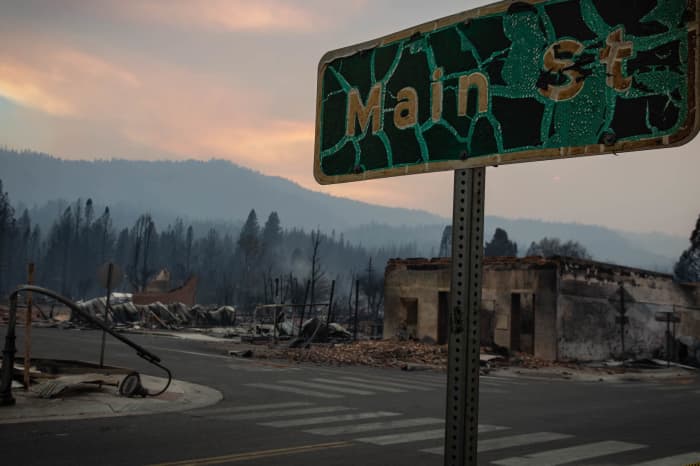
The fire has blackened nearly 220 square miles and on Tuesday ravaged Grizzly Flats, California, a small community of about 1,200 people.

Dozens of homes burned there. Grizzly Flats resident Chris Sheean said the dream home he bought six weeks ago went up in smoke. “It’s devastation. You know, there’s really no way to explain the feeling, the loss,” Sheean said. “Everything that we owned, everything that we’ve built is gone.”

A home burns on Jeters Road as the Dixie fire jumps Highway 395 south of Janesville, Calif., on Monday, Aug. 16, 2021. Critical fire weather throughout the region threatens to spread multiple wildfires burning in Northern California.


Cal Fire reported Wednesday that the blaze had “experienced unprecedented fire behavior and growth due to extremely dry fuels pushed by southwest winds.”

Fire agencies battling the blaze say that the extent of the damage is not yet entirely known as unsafe conditions continue to prevent structure assessment teams from entering the area.

At least 16,000 other homes remain threatened by California wildfires, which are among some 104 burning throughout mostly Western states, officials from the National Interagency Fire Center said Thursday.

California’s wildfires are on pace to exceed the amount of land burned last year – the most in modern history.

The massive Dixie Fire – the nation’s largest at more than 1,000 square miles, which is about two-thirds the size of Rhode Island – also continued to burn Thursday.

The fire has destroyed 1,217 structures, including 649 homes, according to Cal Fire.

The Dixie Fire is the first to have burned from east to west across the spine of California, where the Sierra Nevada and Cascade mountains meet.

No deaths have been reported despite the speed and damage of the blazes in California.

Contributing: The Associated Press; The Record, Stockton, Calif.; The Reno Gazette-Journal

Southern California officials declare water supply alert

Southern California officials declare water supply alert


LOS ANGELES (AP) — A major Southern California water agency has declared a water supply alert for the first time in seven years and is asking residents to voluntarily conserve.

The Los Angeles Times reports that the board of the Metropolitan Water District of Southern California took the step Tuesday, hoping to lessen the need for more severe actions such as reducing water supplies to member agencies.

The move comes a day after U.S. officials declared the first-ever water shortage on the Colorado River, a key water source for Southern California.

“This is a wake-up call for what lies ahead,” said Deven Upadhyay, chief operating officer for the district that supplies water to 19 million Californians.

“We cannot overstate the seriousness of this drought,” he said. “Conditions are getting worse, and more importantly, we don’t know how long it will last.”

California Gov. Gavin Newsom last month asked Californians to scale back water use and many of the state’s counties, mostly in Central and Northern California, are already under a state of drought emergency.

Concern about water supplies spread to the state’s heavily-populated southern region following a winter of low precipitation and shrinking reservoirs throughout the West.

Newsom on Tuesday said he may put mandatory water restrictions in place in the coming months, the East Bay Times reported.

“At the moment, we’re doing voluntary,” he said. “But if we enter into another year of drought — and as you know our water season starts Oct. 1 — we will have likely more to say by the end of September as we enter potentially the third year of this current drought.”

The Metropolitan Water District of Southern California receives about half its water from the Colorado River and State Water Project.

Water levels in Lake Mead, the largest reservoir on the Colorado River, were at about 35% of capacity on Tuesday. The State Water Project, which collects water from rivers and tributaries, has already reduced the Southern California district’s allocation to 5% and next year the amount could be zero, officials said.

Scientists say climate change has made the American West much warmer and drier in the past 30 years and will keep making weather more extreme.

Glen MacDonald, a University of California, Los Angeles distinguished professor of California and the American West, said even if precipitation returned it would not likely be enough to keep pace with the loss of water through evaporation due to rising temperatures.

That has the potential to not only turn California lawns brown but could also affect the nation’s food supply, which relies heavily on the state’s farmlands, MacDonald said.

“We are living in the perfect drought, right now,” he said. “It’s unfortunate, but we kind of have seen this coming.”

‘He Wanted The Taliban In Charge’: Trump’s Defense Sec. Explains How Trump Sabotaged Afghanistan

‘He Wanted The Taliban In Charge’: Trump’s Defense Sec. Explains How Trump Sabotaged Afghanistan

Carl Anthony                           August 19, 2021

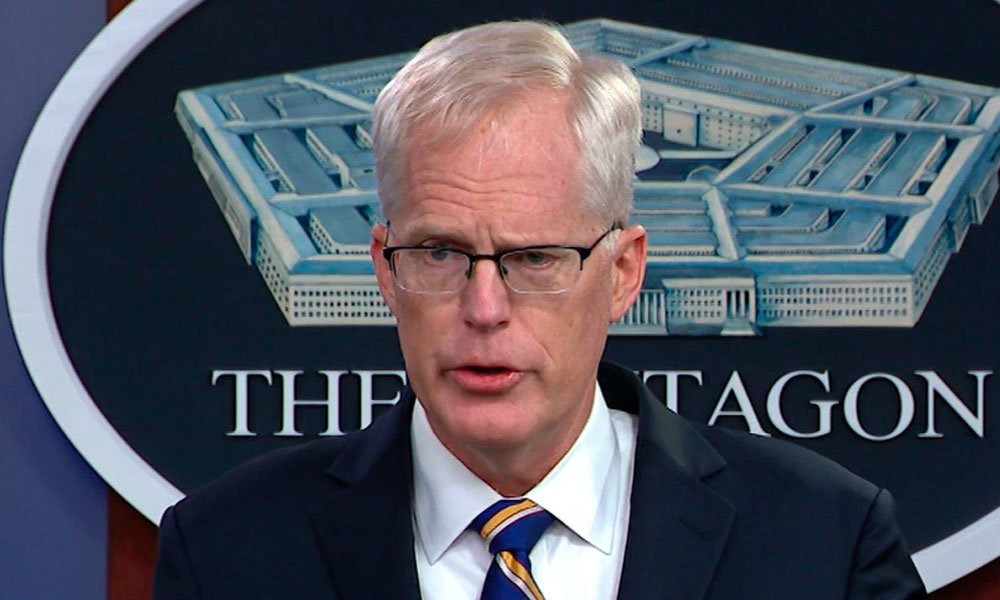
Chris Miller


Former Trump administration official Chris Miller, who served as the acting Defense Department secretary for the final months, said on Wednesday that “Trump’s public promise to finish withdrawing U.S. troops by May 1, as negotiated with the Taliban, was actually a ‘play’ that masked the Trump administration’s true intentions: to convince Afghan President Ashraf Ghani to quit,” leaving the Taliban in charge.

Miller’s comments came during an interview with DefenseOne. The former official also claimed that “many Trump administration officials expected that the United States would be able to broker a new shared government in Afghanistan composed primarily of Taliban officials. The new government would then permit U.S. forces to remain in the country to support the Afghan military and fight terrorist elements.”

But that’s not what happened, in large part because Trump spent the final months of his presidency trying to overturn the 2020 election after his defeat to Joe Biden.

The comments were similar to revelations from former Pentagon chief Mark Esper, who told CNN International on Tuesday that he warned Trump that the plan he was crafting wouldn’t end well.

Another former senior Trump administration official told DefenseOne that Trump’s efforts to oust Ghani were to appease the Taliban.

“That’s what the Taliban wanted. They wanted to get rid of the legitimate government,” said the official.

“The decision space was either: keep a small U.S. counterterrorism presence along with 7,000 to 8,000 NATO troops and kind of hold down the fort and protect our counterterrorism interests, or go to zero and cede the country to the Taliban,” the official said.

“The Taliban were never going to agree to let any U.S. forces stay in the country and if any U.S. official thought that was possible, I think they were a victim of wishful thinking,” the official said.

ICU Doc Shows What ‘Anxious and Scared’ Gov. Greg Abbott Did After COVID-19 News

ICU Doc Shows What ‘Anxious and Scared’ Gov. Greg Abbott Did After COVID-19 News


ICU doctor and NBC News analyst Vin Gupta is urging Texans to “take note” of the actions of Gov. Greg Abbott (R) after he tested positive for the coronavirus on Tuesday.

Abbott has actively thwarted efforts to contain the coronavirus pandemic by banning mask and vaccine mandates.

Yet once he was infected, he was given Regeneron’s monoclonal antibody treatment, despite being fully vaccinated and having no symptoms.

Gupta, a pulmonologist, tweeted:

COVID-19 cases have skyrocketed in Texas in recent weeks, from around 1,000 daily cases reported in early July to over 20,000 cases reported on Monday.

Despite those rising numbers, just 45% of the state is fully vaccinated, well below the U.S. average of 51%.

Abbott has also undermined efforts to slow the spread of the virus with his ban on mask mandates, and by going to court to uphold that ban.

NBC News reported on Tuesday that Abbott has told friends he has received a third dose of the vaccine.

Abbott’s positive test results came less than 24 hours after he attended a crowded GOP event and posted images online showing him at the largely mask-free gathering.


‘Please Don’t Leave Us Behind. We Will Be Great Americans.’

The Bulwark – Afghanistan

‘Please Don’t Leave Us Behind. We Will Be Great Americans.’

An interview with a U.S.-trained Afghan Air Force pilot, now hiding from the Taliban.
by The Editors                   August 16, 2021


‘Please Don’t Leave Us Behind. We Will Be Great Americans.’Afghan Air Force pilots land their UH-60 Blackhawks on a narrow landing strip during a resupply mission to an outpost in Ghazni Province,

Afghanistan, Sunday, May 9, 2021. The Afghan Air Force, which the U.S. and its partners has nurtured to the tune of $8.5 billion since 2010, is now the government’s spearhead in its fight against the Taliban. Since May 1, the original deadline for the U.S. withdrawal, the Taliban have overpowered government troops to take at least 23 districts to date, according to local media outlets. That has further denied Afghan security forces the use of roads, meaning all logistical support to the thousands of outposts and checkpoints including re-supplies of ammunition and food, medical evacuations or personnel rotation must be done by air. (MARCUS YAM / LOS ANGELES TIMES)


As the world watched the United States pull out from Afghanistan and Taliban forces take over the country, we spoke by text message with an Afghan Air Force pilot, now in hiding along with several other pilots and hoping to be evacuated.

Who are you? Can you tell us a little bit about your background?

I was born in Kunar, Afghanistan and joined the Afghan National Defense and Security Forces (ANDSF) in 2005. I’m married with seven beautiful children. Unfortunately, we are currently separated, because the Taliban took Kabul.

I’m at an undisclosed location with other Afghan Air Force (AAF) pilots, hiding from the Taliban. They are hunting us.

Actually, they’ve been hunting us for years, but this really increased over the last year. The AAF, along with the Afghan National Army Special Operations Corps (ANASOC), were the best fighters for the Afghan government. The AAF was very good. Because we were very good, the Taliban hunted us relentlessly over the last year. I lost many friends to Taliban assassins.

They’ve already executed a few pilots over the weekend.

What was your career with the Afghan Air Force like?

I was very proud to be an AAF pilot. I was a commander. I spent years in the United States, learning to speak English and going through undergraduate pilot training. I visited San Antonio, Fort Rucker, and a lot of other places, too. I like Texas the best. I thought the people were very friendly.

I started at the Defense Language Institute, then moved onto undergraduate pilot training, and then eventually more advanced pilot training for my aircraft. I have so many fond memories of my time in the United States. However, I loved working with my American Air Force advisors the most. They were incredible men and women. When they left [Afghanistan] in May, I was very scared that this day would come.

However, we fought for a long time, and it was the loss of the contractors that really hurt us. Although we have a lot of really good pilots, it takes a very long time to train maintainers. Although we had made great strides, especially with the Mi-17s, we weren’t ready to do it alone without the contractors. A lot of the American-made aircraft are very sophisticated and they take years of training to maintain them adequately.

What’s your current situation?

Like I said, I’m currently in hiding. We are hoping to get out. If we are not rescued, then the Taliban will execute us.

The AAF and the Afghan Special Operations Forces are not the same as regular rank-and-file soldiers. We are very well known. We were celebrated by the Afghan people, so everyone knows us. It’s a very big deal to be an Afghan pilot or a commando.

Anyway, we are hoping that the Americans will take us, and our families, to safety. We spent decades fighting alongside American forces.

Anything you want the American public to know?

Many Afghan soldiers died bravely. I’ve been fighting for over fifteen years. We did not all just give up and quit. Yes, some did. Once the Americans left, we weren’t ready to start doing all the logistics. The logistics, the maintenance, and corruption really hurt us.

I know people in the U.S. are upset that we didn’t fight longer. But we’ve been fighting for decades—and some of us, even longer. When the U.S. left, it really affected morale, especially how quickly it happened. We woke up one day, then Bagram was gone. Everyone got scared. It got out of control.

I’m mad at many of the senior leaders who lined their pockets and simply vanished from the country. However, thousands of Afghan officers were not responsible for that. We were simply doing the best we could.

There are a lot of Afghans who trusted the United States. Not just translators. Not just civil society activists, but also Afghan soldiers. We loved fighting alongside Americans.

Please don’t leave us behind. Please. We will be great Americans.

Biden Was Right

The Atlantic – Ideas

Biden Was Right

The president made a difficult but necessary choice.
By Daniel Silverberg                        August 17, 2021
Daniel Silverberg is a former Department of Defense official and, until recently, the national security adviser to the House majority leader.
 
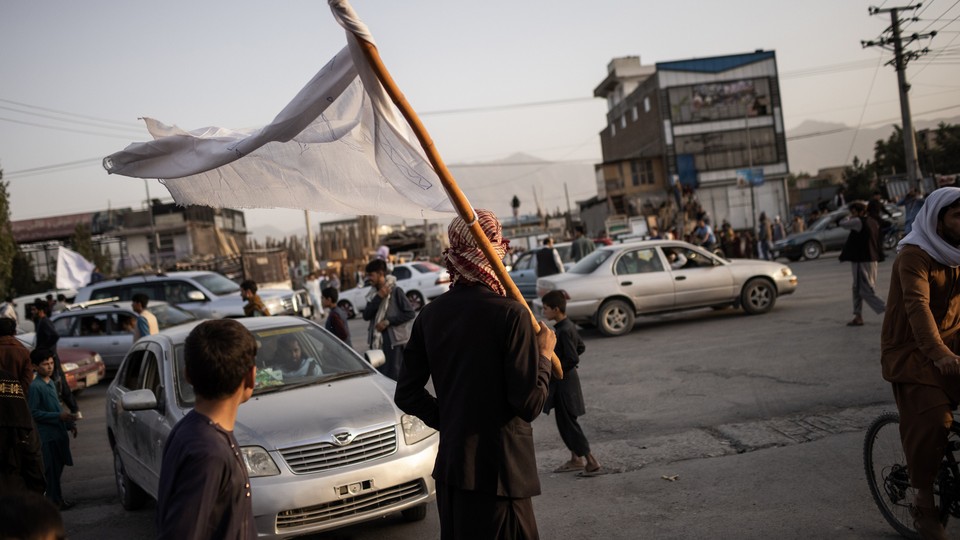
A Taliban member in Kabul, Afghanistan, on August 15, 2021
Jim Huylebroek / The New York Times / Redux

In 2017, I arrived at Kabul’s Hamid Karzai Airport as part of a congressional staff delegation. Even though the U.S. embassy stood a mere four miles away, safety concerns necessitated our helicoptering from a recently constructed multimillion-dollar transit facility instead of traveling by road. As we flew over Kabul, I realized that the Afghan security forces, backed by thousands of U.S. personnel, could not even secure the heart of Afghanistan’s capital.

Kabul was not lost yesterday; the United States and our Afghan partners never truly had control of the country, nor of its capital. Once the Taliban had secured an agreement that the United States would be pulling out and that forces would be reduced to minimal numbers before Joe Biden’s presidency began, they merely had to wait.

The dozens of congressional briefings I attended over 14 years of working on Capitol Hill underscored this dynamic. The intelligence community would commence each briefing with a stark assessment regarding the fragility of conditions in Afghanistan. Senior defense leaders would then provide a far more optimistic view, one that often gave a sense of progress, despite the Herculean challenge with which they had been tasked.

Various critics of President Biden are engaging in fantasies amid Kabul’s collapse: if only we’d used more force, demonstrated more will, stayed a few months longer, then the Taliban would have adopted a different strategy. John Allen, a retired Marine general and former commander of forces in Afghanistan, argued last week that Biden “should issue a public redline” and that “just this announcement will help the Afghan government and give the Taliban pause.” Ryan Crocker, a former ambassador to Afghanistan, was sharply critical of the withdrawal of the last 3,500 troops. Fred Kagan, of the American Enterprise Institute, argued that “keeping American military forces in Afghanistan indefinitely” would be “worth it.”

These criticisms ignore the developments of the past decade and downplay the impact of last May’s announcement. Even the Biden administration’s harshest detractors mostly concede that the United States would eventually have had to withdraw from Afghanistan. According to the U.S. military, the Taliban was stronger this year than it had been since 2001, while the Afghan defense forces were suffering from high rates of attrition. At some point, the attack on the Afghan government would have come, and U.S. troops would have been caught in the middle—leaving the U.S. to decide between surging thousands of troops or withdrawal.

Some critics also argue that the United States should have preserved a residual force in Afghanistan, much as we have in South Korea. There are any number of ungoverned spaces today, however, which pose as great a threat, if not greater, to U.S. security as Afghanistan, and few are calling for U.S. deployments to those areas. There is a cost—financial and military—to tying forces down in a project that was ultimately doomed to fail.

Finally, critics are lobbing the usual refrain that the withdrawal has damaged U.S. credibility. “Afghanistan’s Unraveling May Strike Another Blow to U.S. Credibility,” read a headline in The New York Times; “Afghanistan’s Collapse Leaves Allies Questioning U.S. Resolve on Other Fronts,” echoed The Washington Post. The United States has spent billions of taxpayer dollars, fought for more than 20 years, and suffered thousands of casualties in this war. If that sort of commitment lacks credibility, our allies will never believe we are doing enough. Critics likewise argued that withdrawal from Vietnam would hurt our credibility. In reality, Japan and other allies questioned our ability to protect them not because we withdrew from Vietnam, but because the United States was militarily overstretched. Withdrawal did not undermine our credibility; by consolidating our efforts, it might enhance it.

The United States had multiple opportunities over the past 20 years to pursue an end to its involvement in Afghanistan. Shortly after the initial invasion, the U.S. rejected a reported offer of surrender. In 2011, peace negotiations were suffocated in their infancy by political opponents and a wary Pentagon. President Biden has demonstrated courage in finding a path forward where others merely fought to preserve the status quo.

Now policy makers should focus on mitigating the fallout of this disaster. First, Congress—led by advocates such as Representatives Jason Crow and Seth Moulton—should redouble its efforts to allow for the immigration of vulnerable Afghans.

Second, Congress and the administration should revitalize engagement with Pakistan and our regional partners in order to contain the fallout from Afghanistan. Pakistani leaders rebuffed both the Bush and Obama administrations’ efforts to cooperate on counterterrorism and instead played a dangerous double game, providing succor to terror groups like the Haqqani Network while accepting billions as part of our counterterror effort. U.S. officials should approach Pakistan in a bluntly transactional manner by asking its leaders to assess the cost of preventing terror groups from using its borderlands as a refuge.

Finally, the United States should repurpose the international-coalition framework used during combat operations in Afghanistan, turning it into the basis of a sustained diplomatic mission. The coalition should keep eyes on the ground in Afghanistan, engaging with Taliban officials where appropriate. This will be challenging without military forces in the country, but it is not impossible, and even a minimal level of observation would be better than the neglect we chose after 1995. The coalition should also collaborate on measures to encourage the Taliban to prevent its territory from being used as a launching point for terrorist attacks. Last, the coalition should maintain UN-based sanctions on the Taliban to pressure the new government to preserve the rights of women and minorities, including the Shiite Hazara population.

Biden faced a set of bad options. He ultimately made the difficult but necessary choice to preserve American lives. That decision will have devastating consequences for Afghanistan, and we will learn more in the coming days regarding how the administration might have executed its plans better. But as I saw for myself in 2017, and as many others had also observed, the government we supported never truly controlled the country it governed. Biden did not decide to withdraw so much as he chose to acknowledge a long-festering reality, one accelerated by the previous administration’s withdrawal announcement.

Raging wildfires linked to thousands of COVID-19 cases and hundreds of deaths in 2020, study says

Raging wildfires linked to thousands of COVID-19 cases and hundreds of deaths in 2020, study says


The record-setting 2020 wildfire season scorched millions of acres, forcing the evacuation of hundreds of thousands of people and costing billions of dollars in insured losses.

But the damage didn’t stop there.

A study, published Friday in the peer-reviewed journal Science Advances, says thousands of COVID-19 cases and hundreds of deaths in California, Oregon and Washington state from March to December 2020 may be linked to wildfire smoke.

Researchers at Harvard T.H. Chan School of Public Health used a statistical model to measure the connection between high levels of fine particulate air pollution, or PM2.5, produced by the wildfires and the number of COVID-19 cases and deaths in 92 counties.

They found a daily increase of 10 micrograms in PM2.5 per cubic meter of air for 28 days was associated with an 11.7% increase in COVID-19 cases and an 8.4% increase in death. Across the three states studied, researchers determined nearly 19,700 COVID-19 cases and 750 deaths were attributable to daily increases in PM2.5 from wildfires.

“The year 2020 brought unimaginable challenges in public health, with the convergence of the COVID-19 pandemic and wildfires across the western United States,” said senior author Francesca Dominici, professor of biostatistics, population and data science at Harvard Chan School. “Climate change – which increases the frequency and the intensity of wildfires – and the pandemic are a disastrous combination.”

COVID-19 cases had the biggest increase in Sonoma County, California, and Whitman County, Washington – 65.3% and 71.6%, respectively – sites of the Glass Fire and Babb-Malden Fire.

The Glass Fire burned more than 67,000 acres in Napa and Sonoma counties in 2020, according to Cal Fire, the state’s firefighting agency. The Babb-Malden Fire burned more than 15,000 acres in Whitman County, KING-TV reported.

High levels of PM2.5 have been associated with a host of negative health outcomes, including premature death, asthma, chronic obstructive pulmonary diseases and other respiratory illnesses. Other studies have found a link between short- and long-term exposure to PM2.5 and COVID-19 cases and deaths.

“That small particle is small enough to burrow into the lung in a way that sets it up for any respiratory disease,” said Dr. Len Horovitz, a pulmonary specialist at Lenox Hill Hospital in New York City. “It can burrow past the epithelium and create inflammation. It’s a setting for any respiratory disease, including COVID, to exacerbate.”

Wildfire smoke affecting your area? Here’s how to improve your home’s air quality

Dry, hot, windy: Explosive wildfires in Northern California could burn until winter

Wildfire smoke can temporarily compromise the immune system, said Dr. Kari Nadeau, director of the Sean N. Parker Center for Allergy and Asthma at Stanford University.

“When you breathe in smoke, those particulates get into the lungs … they can get into your bloodstream, and they damage your immune system,” she said. “COVID affects your immune system, your lungs and your blood vessels. So you’re getting doubled up targeting of these organs in a very pathological way. It’s like a double hit.”

Although the damage is typically reversible, Nadeau said, it can become permanent in residents who have lived for decades where wildfires are common and have been repeatedly exposed to high levels of PM2.5.

It isn’t just western Americans affected by wildfire smoke. A satellite video published by the National Oceanic and Atmospheric Administration in July shows how smoke produced in the West blankets much of the USA and Canada.

This year’s fire season is on pace to race past 2020. As of Aug. 12, 6,272 fires in California have burned about 1,432 square miles, according to Cal Fire.

Health experts worry the wildfires may lead to another rise in coronavirus cases this year. Unvaccinated Americans make up more than 90% of COVID-19 hospitalizations, and if the body’s defenses are further weakened by smoke, they stand little chance against the highly contagious delta variant.

They urge Americans to not only protect themselves from COVID-19 but also from wildfire smoke by staying indoors and wearing N95 masks that help block PM2.5.

“We need to try to prevent the wildfires, and we need to prevent COVID, and luckily, we have that knowledge in our hands,” Nadeau said. “We just have to do something actionable about it.”

Contributing: David Benda and Mike Chapman, Redding Record Searchlight

Health and patient safety coverage at USA TODAY is made possible in part by a grant from the Masimo Foundation for Ethics, Innovation and Competition in Healthcare. The Masimo Foundation does not provide editorial input.

Insurance companies are bailing in risk areas—what to do if your homeowners policy isn’t renewed

MarketWatch – NerdWallet

Insurance companies are bailing in risk areas—what to do if your homeowners policy isn’t renewed

By Ben Moore                           August 16, 2021

Nonrenewals are on the rise—but there are alternatives
In July, fire swept through Greenville, Calif., destroying homes, historic buildings and forcing hundreds to evacuate. Getty Images


Homeowners insurance non-renewals are on the rise as private insurers steer clear of locations at high risk for natural disasters. The West Coast’s blazing wildfires are leaving some Californians scrambling to find coverage, while many Floridians are facing non-renewals during hurricane season.

In the midst of changing climate conditions and increasing weather-related catastrophes, it’s more crucial than ever to have insurance coverage for your home to have peace of mind. Here’s what to do if your homeowners insurance policy isn’t renewed.

1. Know your rights

An insurance company is usually required to provide a nonrenewal notice, typically at least 30 days prior to the end of coverage, unless you’ve missed a payment or committed fraud on your application. But you might get more time to find a new policy. For example, Florida homeowners could get up to 120 days’ notice, according to Stacey Giulianti, chief legal officer for Florida Peninsula Insurance Company.

If you believe you were wrongly dropped, you can contest the nonrenewal. You’ll likely need to prove that your home isn’t in a high-risk area, or that you’ve made efforts to mitigate that risk, like replacing the roof or removing flammable shrubs near your house.

2. Make home improvements

If your policy isn’t renewed because of a failed inspection, making the proper updates could help you maintain coverage, even if you’re in a high-risk area.

Inspections give homeowners the opportunity to fix problems, like leaky roofs or exposed electrical wiring, so they can keep an insurance policy, according to Michael Peltier, media relations manager for Citizens Property Insurance.

When making improvements, consider upgrading your home’s building materials. Newer materials may withstand weather catastrophes better than older ones while simultaneously lowering your insurance costs, Giulianti says. “The houses that are a hundred years old … aren’t going to withstand storms the same way as a brand-new concrete building.”

Building upgrades could include:

  • Replacing walls with ignition-resistant materials like stucco or fiber-cement siding to mitigate fire damage.
  • Switching to impact-resistant shingles to prevent roof damage.
  • Installing hurricane-resistant windows if you live on the coast.
3. Shop around for another policy

Your previous insurer may not be an option, but you should still shop around. “There’s almost always another company … that will pick you up,” Giulianti says.

An independent insurance agent can research home insurance quotes for companies in your area. You can also ask your real-estate agent, mortgage lender, home builder or previous owner for a list of companies, or call your state’s insurance department.

4. Turn to your state’s shared market option

If you still can’t find coverage, you may need a state-run shared market policy. Many states offer Fair Access to Insurance Requirements policies for high-risk homes, or beach and windstorm plans for coastal properties. Aptly named “last-resort” policies, FAIR policies offer limited coverage and are often more expensive than a standard home policy from a private insurer.

California’s FAIR Plan

The California FAIR Plan sells insurance for damage from fire, lightning, internal explosions and smoke, with optional coverage available at an additional cost. As wildfires worsen in the state, more customers are turning to the FAIR Plan for coverage, and this trend is expected to continue, Natalie Haskell, a spokesperson for the California FAIR Plan, wrote in an email.

But these policies don’t cover everything standard homeowners insurance policies do, like personal liability, your belongings or additional living expenses. For more extensive coverage, homeowners in California need to purchase a “difference in conditions” policy that complements FAIR Plan coverage to create a comprehensive home insurance policy.

Florida’s state-run insurer

Citizens Property Insurance, Florida’s insurer of last resort, has also seen an uptick in policy sales. But the reasons differ — worsening hurricane seasons combined with increasing litigation have driven up home insurance costs and non-renewals in the state.

Also see: Miami’s $6 billion sea wall won’t save the city from flooding — green hybrid designs make more sense

Citizens offers coverage similar to that of private insurers, including dwelling, personal property, other structures and additional living expense coverage, though limits may be lower. In some areas, the company also sells wind-only policies that cover damage from hurricanes and other wind-related catastrophes. Policies are available only through an independent agent.

See: A challenging hurricane season lies ahead for cities and states, new report warns

5. Consider surplus lines

If you’ve exhausted all other options, surplus lines insurance may be available. Provided by specialized insurers that are regulated differently from standard companies, surplus lines offer coverage for risky properties when other insurers won’t. Available companies may vary by state, so speak with an insurance agent about surplus lines once you’ve been rejected by at least three other insurers.