Zinke caught red-handed trying to sell off public lands
His plan included selling part of Grand Staircase-Escalante National Monument.
Mark Hand August 20, 2018
Environmental groups caught Ryan Zinke’s Department of the Interior trying to sell off public lands to private entities. Credit:Chip Somodevilla/Getty Images
Environmental groups caught the Department of the Interior trying to sell off part of the Grand Staircase-Escalante National Monument in Utah, despite a pledge by Secretary Ryan Zinke never to put public lands up for sale.
After massive backlash from environmental groups and the public, the Interior Department’s Bureau of Land Management (BLM) late Friday canceled all plans to sell off the land. The 1,610 acres of public lands that the BLM proposed selling to private interests had been part of the Grand Staircase national monument until President Donald Trump — in an extremely controversial move — radically shrunk the size of the monument last December.
“We believe the Department only walked it back because those who are closely reading the management plans brought this to light,” Nicole Croft, executive director of the Grand Staircase-Escalante Partners, said in a statement in response to the Interior Department changing its mind. Grand Staircase-Escalante Partners is a nonprofit group that works to protect the landscape and wildlife habitats the of the national monument
The environmental groups’ work “shows that diligence pays off and is likely an omen for what we’re going to uncover as we dive deeper into Secretary Zinke’s plans for leasing and decimating this national treasure,” Croft said.
Zinke has criticized environmental groups for accusing the Trump administration of wanting to steal public lands by rolling back monument protections.
The Interior secretary has pledged on several occasions that he opposes the sale or transfer of public lands to private entities. At his confirmation hearing in January 2017, Zinke said: “I am absolutely against transfer or sale of public land.”
In a March 3, 2017 speech, only days after getting sworn in as secretary, Zinke promised Interior staffers: “You can hear it from my lips. We will not sell or transfer public land.”
Just last December, Zinke reiterated this pledge. “There’s not one square inch, not one square inch, of land that is removed from federal protection,” Zinke told Fox Business.
But then last Wednesday, the Trump administration released its management plans for the much smaller Grand Staircase and Bears Ears national monuments — prepared by the BLM and the U.S. Forest Service — that placed a priority on energy development and included the plan to sell off the 1,610 acres of public lands.
The plans cover the 880,000 acres carved out by Trump from Grand Staircase and the 200,000 acres remaining in Bears Ears from its original 1.35 million acres.
Either Zinke had a change of heart about selling off public lands or does not have a clear understanding of what his agency is doing.
“Does Secretary Zinke have any idea what’s going on inside the Interior Department? He was caught red-handed trying to sell off our public lands to his political supporters,” Jennifer Rokala, executive director of the Center for Western Priorities, said Friday in a statement. “It’s only after two days of terrible news stories that he is now changing direction.”
In December, Trump announced the largest-ever reduction of a national monument in the nation’s history, shrinking Bears Ears by some 1.1 million acres, or nearly 85 percent. Trump also announced that he would be reducing Grand Staircase to nearly half its original size.
Interior Deputy Secretary David Bernhardt took the fall for the inclusion of the planned sale in the BLM’s management plan for Grand Staircase. He issued a statement late Friday taking responsibility for the oversight that led to the plan to sell the 1,600 acres of public lands in Utah. “The failure to capture this inconsistency stops with me,” Bernhardt said.
Environmental groups were not convinced that the planned sale of public lands in Utah was a mistake.
“The attempt was more than just Zinke’s dirty scheme to illegally sell off public lands, as some of the land slated for sale is adjacent to land owned by an avid Trump supporter and a current Republican lawmaker in Utah,” the Sierra Club said Friday in a statement.
One parcel of the public land that the BLM proposed selling was a 120-acre property that sits adjacent to 40 acres owned by Utah state Rep. Mike Noel (R) and which were removed from the monument.
Noel applauded Trump’s decision to shrink the size of the Grand Escalante monument. He unsuccessfully attempted to rename a Utah highway after Trump to thank the president for the executive order, HuffPost reported last week.
Gov. Inslee: Interior Sec. Zinke would sell his grandchildren for big oil
Joel Connelly, SeattlePI
Photos: Joshua Trujillo, SeattlePI.com
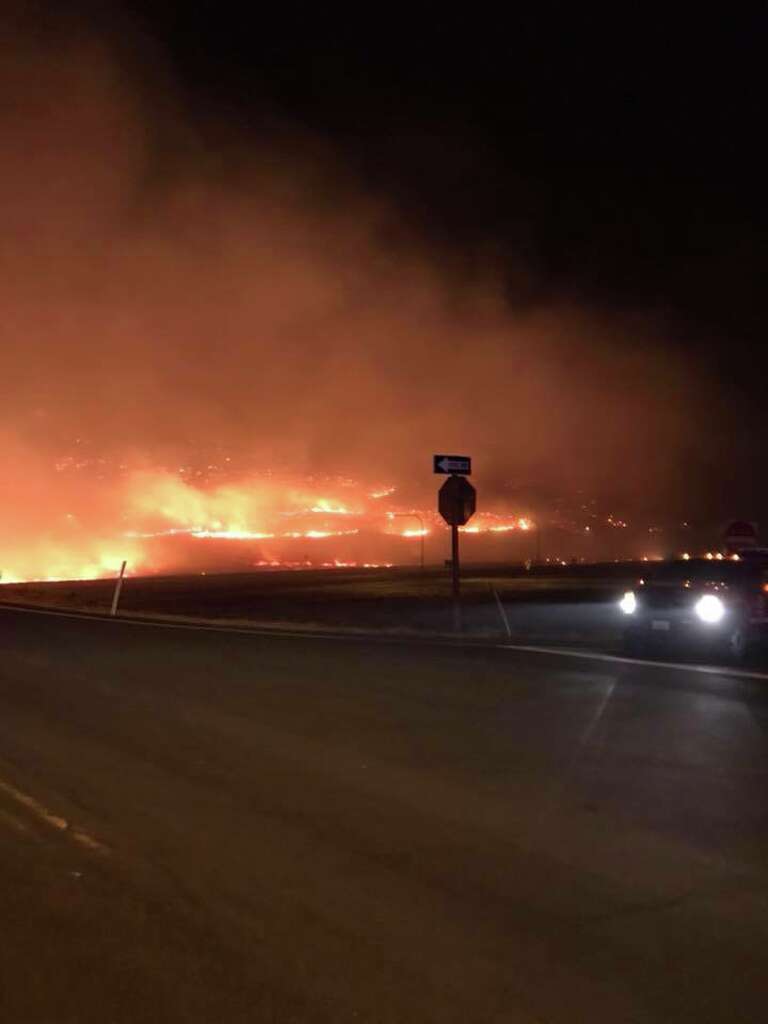
The Ryegrass Coulee wildfire burns along Interstate 90 near the Columbia River in central Washington on July 10, 2018. The fire triggered the closure of I-90 from just east of Ellensburg to the east side of the Columbia River as well as the evacuation of the town of Vantage.
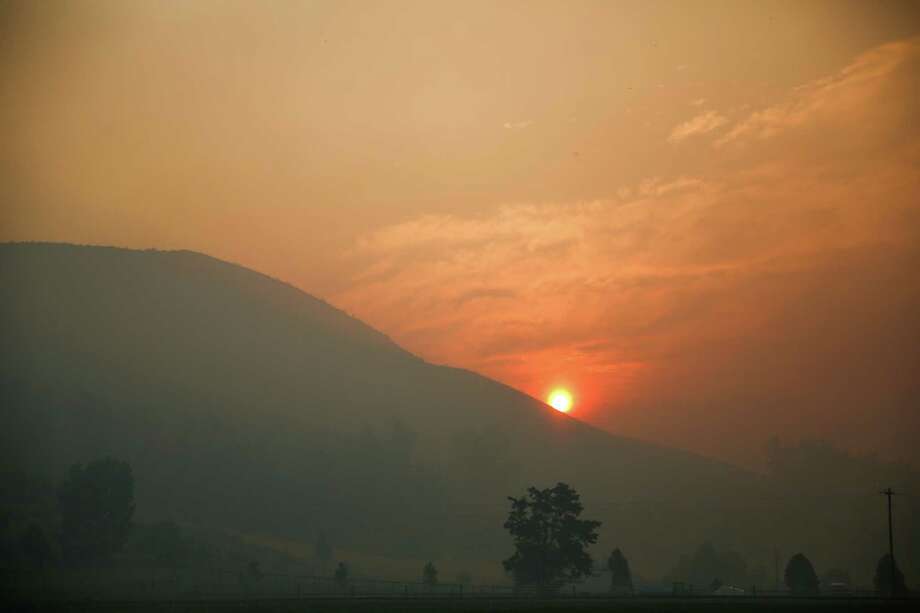
The sun rises over the Twisp River valley after a wildfire tore through the hills around Twisp, Wash. Three firefighters were killed in the inferno. Photographed on Thursday, August 20, 2015.
Climate change is fueling massive fires across the West with “hotter, drier” weather conditions, with scientists saying conflagrations will double, warned Washington Gov. Jay Inslee, who has dealt with four bad fire summers.
The Governor upbraided U.S. Interior Secretary Ryan Zinke, who declared at a California fire scene last weekend: “This has nothing to do with climate change.” Zinke blamed “extreme environmentalists” for blocking the thinning of forests.
Zinke is blowing smoke, said Inslee, surrounded by children at Lawton Elementary School, adding: “Interior Secretary Zinke would flunk any science test that these kids take.”
“With climate change you have a hotter, drier climate, Mr. Zinke. You have fires. What is there about this that you cannot comprehend . . . This man works for us. We do not pay him to give us fasle information. We get enough of that from the President.”
President Trump has claimed in a tweet that California fires have been fueled by “bad environmental laws which aren’t allowing massive amounts of readily available water” to be used in fire suppression.
The fire woes of Washington began four years ago with the 256,000 acre Carlton Complex Fire in north-central Washington.
The fire season in the summer of 2017 burned more than 400,000 acres of forests and grasslands across Washington state. The state experienced 800 fires which cost $130 million to fight.
Up north in British Columbia, Premier John Horgan is dealing with his second consecutive million-acre fire season. It’s still mid-season, but nearly 600 fires are burning and the B.C. government has called in firefighters from as far distant as New Zealand, Australia and Mexico.
Inslee was at the Lawton school to push for Initiative 1631, the climate change measure on Washington’s November ballot.
The first-in-nation measure would impose a carbon fee to combat climate change, charging polluters for the right to release carbon dioxide and other greenhouse gases. The fee would be $15 for every ton of CO2 emitted.
The revenue from the fee — an estimated $2 billion in the first five years — would be invested in energy efficiency, wind and solar energy, public transit, and protection of the state’s forests and streams.
The petroleum industry, using the argument of higher gas prices, is putting together a multimillion-dollar war chest to fight I-1631. The initiative is supported by a red-green coalition of labor, conservation groups, and activists from the minority community.
The Earth is currently experiencing its fourth-warmest year since recordkeeping began. The three hotter years were 2015, 2016 and 2017.
Fires have not just hit forests, but have burned over rangelands, and invaded populated areas such as Santa Rosa, California, the Napa Valley, and corners of Redding, California.
A huge fire in Alberta, two years ago, invaded and burned neighborhoods in the oil center of Fort McMurray, Alta. The town of Telegraph Creek, in northern British Columbia, has been partially burned by the latest round of fires.
The Trump administration has taken a different tack — blame the greens.
“We have been held hostage by these environmental terrorist groups that have not allowed public access, that have refused to allow harvest of timber,” Zinke told right-wing Breitbart News in an interview.
Inslee believes the administration is putting emphasis on protecting the carbon economy as firest burn and get worse.
“That man (Zinke) would sell his grandchildren for the oil industry,” said Inslee.
“We have just seen the beginning of the firestorm,” he added.
Vancouver and Seattle residents have spent the week breathing smoke from fires, at times so intense that people have been urged to stay indoors. “The situation has been much worse east of the mountains than in Seattle,” said Dr. Ken Lans, head of Washington Physicians for Social Responsibility, who appeared with Inslee.
The poor air quality has come as a reminder that human health and the health of the environment are closely related. Or as Inslee put it, “Our children deserve lungs that breathe clean Washington air rather than smoke from hundreds of fires.”
Will smoke in the air finally serve as a warning that impacts of climate change are being directly felt?
Inslee answered with a quip, but a serious quip. “I don’t believe Trump’s hot air will trump this smoke,” said the Governor..
SeattlePI.com columnist/blogger Joel Connelly can be reached at joelconnelly@seattlepi.com
Climate Change’s Long-Term Fix Has a Short-Term Cost
A carbon tax will have consequences for food security that need mitigating.
By Mark Buchanan August 19, 2018
A carbon tax would raise costs. Photographer: FETHI BELAID/AFP/Getty Images
Global warming is getting a little scary, as its consequences emerge more quickly than most scientists had expected, in soaring global temperatures, unprecedented wildfires and many other effects. This year is on target to be the fourth hottest ever, only just behind the three previous years. Meanwhile, humanity has made very little progress in taking action, with CO2 emissions higher now than ever before, having actually increased 60 percent over the past 25 years – all while we’ve been fully aware of the problem.
But hope for a simple fix – such as a carbon tax, the preferred option of most economists — is naive, even setting aside the formidable political challenges. Among other things, a new study suggests, a meaningful carbon tax could trigger food shortages by 2050 for many of the poorest people in the world, and even be worse than climate change continuing completely unabated.
In the research paper, published in Nature Climate Change, scientists compared estimates of how either climate change or a strong carbon tax would affect the global population at risk of hunger. The changing climate will directly hit agricultural productivity, while a carbon tax would raise energy prices, a key agricultural input. The study found that a stringent carbon tax would be likely by 2050 to have a greater negative impact on hunger than climate change, with problems worst in vulnerable regions such as sub-Saharan Africa and South Asia.
Of course, these are only estimates, and there’s plenty of uncertainty in this analysis. It rests on assumptions, for example, about how rising temperatures and other climate effects will influence food productivity, something we know little about. Indeed, other recent research concludes that rising temperatures could reduce GDP even in developed nations by as much as one-third by 2100. Uncertainties aside, the researchers’ best guess is that on the matter of food security, climate change would be bad, but a carbon tax big enough to reduce emissions significantly could actually be worse. That’s bad news.
Does this mean we shouldn’t address climate change? Hardly. It actually only points out why we’re going to have to be creative in finding ways to deal with the negative short-term consequences of the policies that will deliver long-term benefits. In addition to emissions reductions, we’re going to need wise agricultural policies, stronger social safety nets, and better international cooperation.
Policies designed to avoid climate disaster a century into the future and beyond might be expected to have some negative consequences over times as short as 30 years. By analogy, fire extinguishers have negative short-term consequences for the interiors of houses, but we generally think that using them is a good idea, because we can do other things to deal with those consequences and avoid having to rebuild the whole house.
Likewise, if governments implement a carbon tax – or take other serious actions on climate – they can also take further steps to handle adverse consequences stirred up as a result. Revenue from the tax could be used for food aid, for example, or to transfer more efficient production methods to food insecure regions, which might also further reduce CO2 emissions. The real message of the paper is that a useful carbon tax could cause serious problems, if put in place in the absence of any other policies to make agriculture more resilient or to come to the aid of those most at risk.
In this sense, the paper makes a useful if somewhat mundane point – that long term climate policy will stir up short term issues, like food security. It offers valuable information on where we ought to be thinking about what other policies we might put in place to counteract these problems, and so ensure a path forward not just for some, but for everyone.
Mark Buchanan, a physicist and science writer, is the author of the book “Forecast: What Physics, Meteorology and the Natural Sciences Can Teach Us About Economics.”
This column does not necessarily reflect the opinion of the editorial board or Bloomberg LP and its owners.
US says conserving oil is no longer an economic imperative
Ellen Knickmeyer, AP August 19, 2018
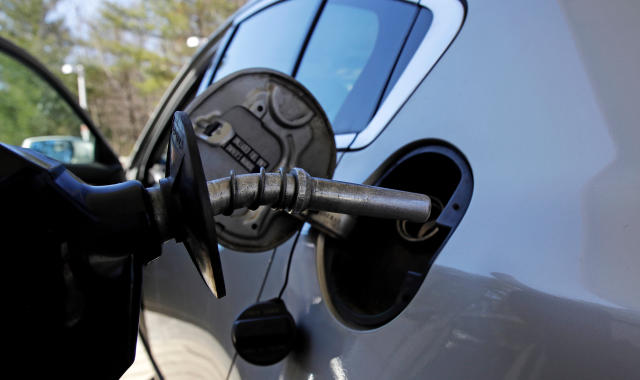
In this April 23, 2018, file photo a car is filled with gasoline at a station in Windham, N.H. Conserving oil is no longer an economic imperative for the U.S., the Trump administration declares in a major new policy statement that threatens to undermine decades of government campaigns for gas-thrifty cars and other conservation programs. (AP Photo/Charles Krupa, File)
WASHINGTON (AP) — Conserving oil is no longer an economic imperative for the U.S., the Trump administration declares in a major new policy statement that threatens to undermine decades of government campaigns for gas-thrifty cars and other conservation programs.
The position was outlined in a memo released last month in support of the administration’s proposal to relax fuel mileage standards. The government released the memo online this month without fanfare.
Growth of natural gas and other alternatives to petroleum has reduced the need for imported oil, which “in turn affects the need of the nation to conserve energy,” the Energy Department said. It also cites the now decade-old fracking revolution that has unlocked U.S. shale oil reserves, giving “the United States more flexibility than in the past to use our oil resources with less concern.”
With the memo, the administration is formally challenging old justifications for conservation — even congressionally prescribed ones, as with the mileage standards. The memo made no mention of climate change. Transportation is the single largest source of climate-changing emissions.
President Donald Trump has questioned the existence of climate change, embraced the notion of “energy dominance” as a national goal, and called for easing what he calls burdensome regulation of oil, gas and coal, including repealing the Obama Clean Power Plan.
Despite the increased oil supplies, the administration continues to believe in the need to “use energy wisely,” the Energy Department said, without elaboration. Department spokesmen did not respond Friday to questions about that statement.
Reaction was quick.
“It’s like saying, ‘I’m a big old fat guy, and food prices have dropped — it’s time to start eating again,'” said Tom Kloza, longtime oil analyst with the Maryland-based Oil Price Information Service.
“If you look at it from the other end, if you do believe that fossil fuels do some sort of damage to the atmosphere … you come up with a different viewpoint,” Kloza said. “There’s a downside to living large.”
Climate change is a “clear and present and increasing danger,” said Sean Donahue, a lawyer for the Environmental Defense Fund.
In a big way, the Energy Department statement just acknowledges the world’s vastly changed reality when it comes to oil.
Just 10 years ago, in summer 2008, oil prices were peaking at $147 a barrel and pummeling the global economy. The Organization of the Petroleum Exporting Countries was enjoying a massive transfer of wealth, from countries dependent on imported oil. Prices now are about $65.
Today, the U.S. is vying with Russia for the title of top world oil producer. U.S. oil production hit an all-time high this summer, aided by the technological leaps of horizontal drilling and hydraulic fracturing.
How much the U.S. economy is hooked up to the gas pump, and vice versa, plays into any number of policy considerations, not just economic or environmental ones, but military and geopolitical ones, said John Graham, a former official in the George W. Bush administration, now dean of the School of Public and Environmental Affairs at Indiana University.
“Our ability to play that role as a leader in the world is stronger when we are the strongest producer of oil and gas,” Graham said. “But there are still reasons to want to reduce the amount we consume.”
Current administration proposals include one that would freeze mileage standards for cars and light trucks after 2020, instead of continuing to make them tougher.
The proposal eventually would increase U.S. oil consumption by 500,000 barrels a day, the administration says. While Trump officials say the freeze would improve highway safety, documents released this month showed senior Environmental Protection Agency staffers calculate the administration’s move would actually increase highway deaths.
“American businesses, consumers and our environment are all the losers under his plan,” said Sen. Tom Carper, a Delaware Democrat. “The only clear winner is the oil industry. It’s not hard to see whose side President Trump is on.”
Administration support has been tepid to null on some other long-running government programs for alternatives to gas-powered cars.
Bill Wehrum, assistant administration of the EPA’s Office of Air and Radiation, spoke dismissively of electric cars — a young industry supported financially by the federal government and many states — this month in a call with reporters announcing the mileage freeze proposal.
“People just don’t want to buy them,” the EPA official said.
Oil and gas interests are campaigning for changes in government conservation efforts on mileage standards, biofuels and electric cars.
In June, for instance, the American Petroleum Institute and other industries wrote eight governors, promoting the dominance of the internal-combustion engine and questioning their states’ incentives to consumers for electric cars.
Surging U.S. and gas production has brought on “energy security and abundance,” Frank Macchiarola, a group director of the American Petroleum Institute trade association, told reporters this week, in a telephone call dedicated to urging scrapping or overhauling of one U.S. program for biofuels.
Fears of oil scarcity used to be a driver of U.S. energy policy, Macchiarola said.
Thanks partly to increased production, “that pillar has really been rendered essentially moot,” he said.
Scientists struggling to eradicate toxic ‘red tides’ from Florida’s coast
The latest outbreak has already killed thousands of marine animals.
By Andrew Tarantola August 17, 2018
Joe Raedle via Getty Images
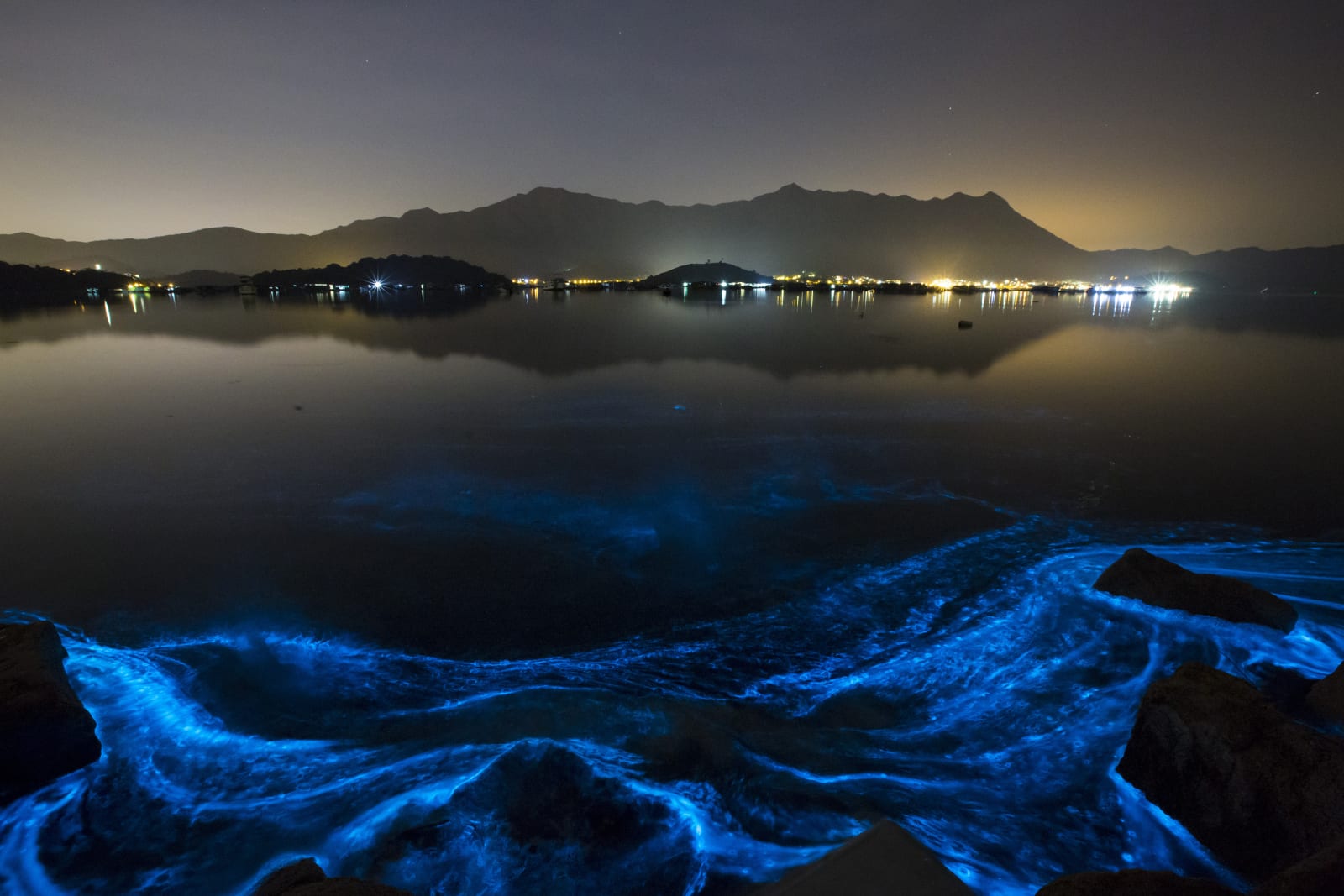
In 1793, Captain George Vancouver and his British surveying crew landed in a small cove and helped themselves to some of the nearby shellfish, despite the odd glow of the sea that day and despite the native peoples taboo against eating mussels during such occurrences. One of Vancouver’s crew subsequently became among the first people on record to die from paralytic shellfish poisoning (PSP) generated by the bioluminescent algal blooms of Alexandrium catenella. You’ll never guess what the inlet is named now.
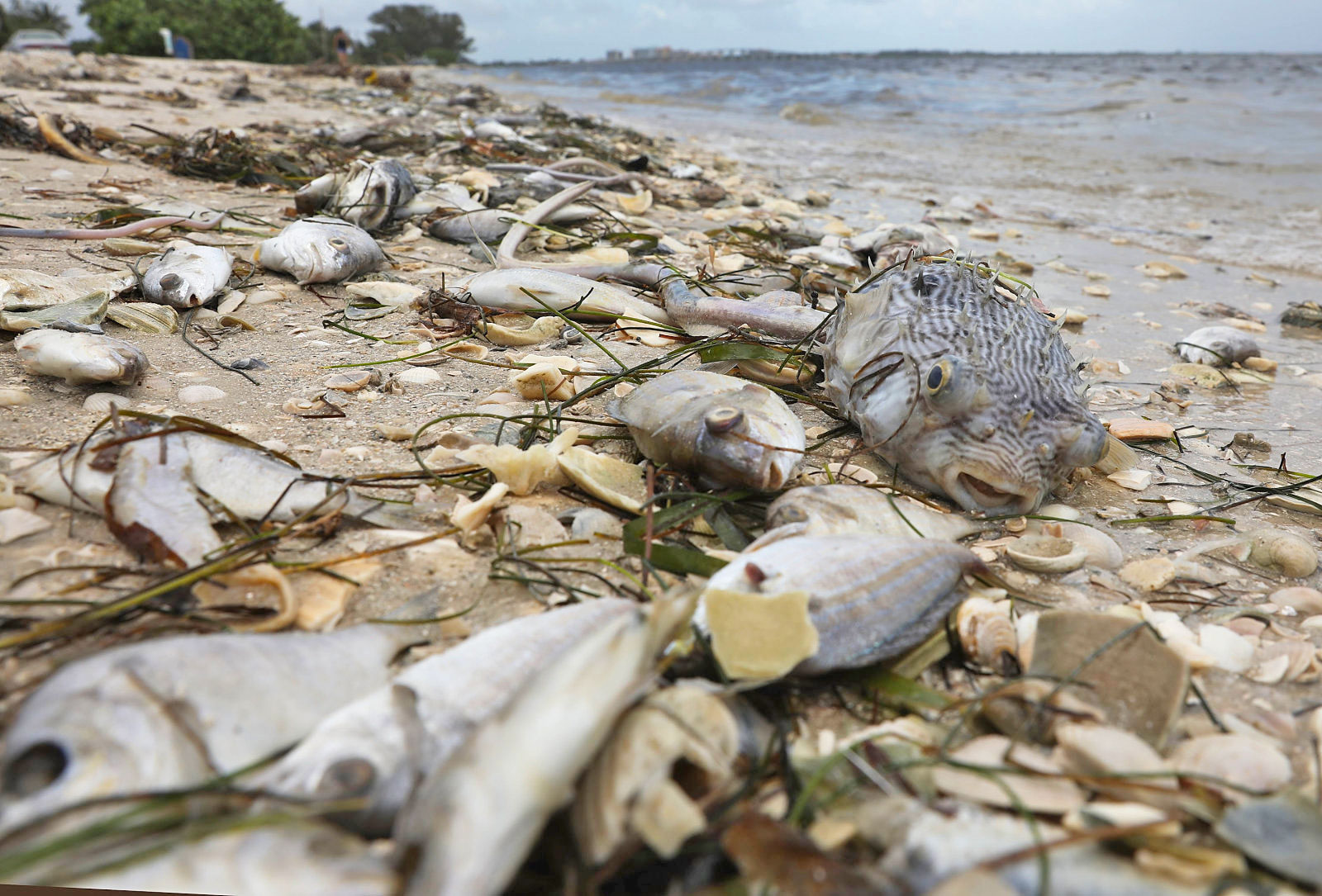
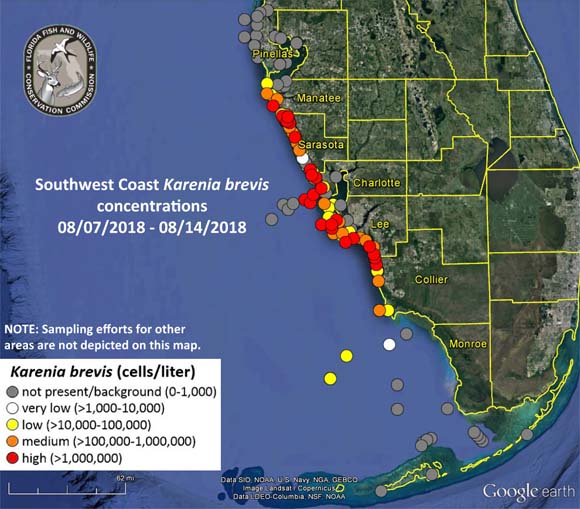
The Gulf Coast of Florida is currently suffering from a similar form of algae-induced poisoning, and has been for almost 10 months. Since October, 2017, the nearly 150 miles of state coastline — from Anna Maria Island near Bradenton down south to Naples — has been inundated with a Red Tide, specifically a massive bloom of the Karenia brevis species.
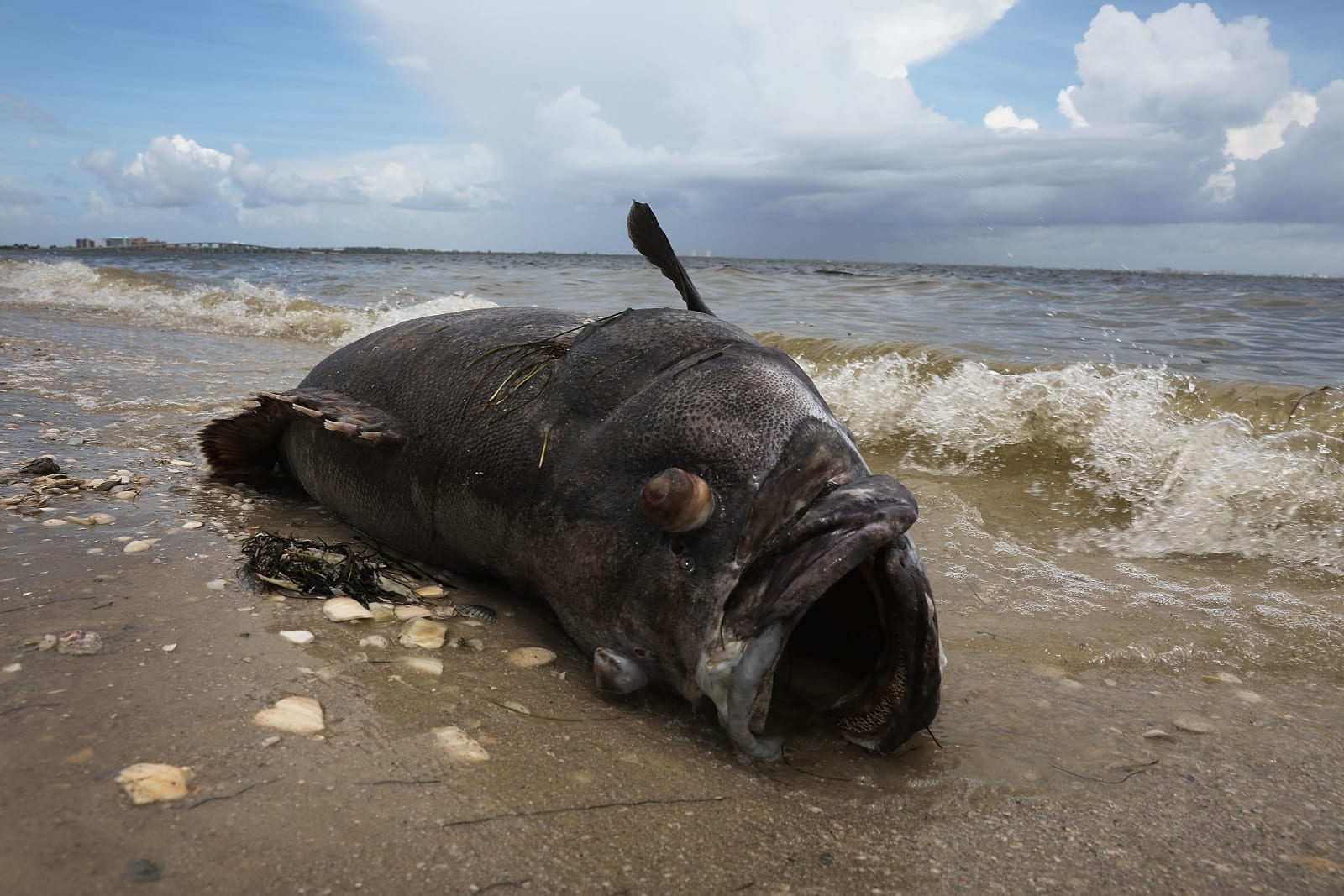
While this outbreak is not the longest on record (a bloom near Miami back in 2005-2006 ran for nearly a year and a half), this one has proven especially deadly for marine life. What makes K. brevis so dangerous is that the dinoflagellates produce potent neurotoxic substances such as brevetoxin. So far, this substance has been linked to the death of (literally) tons of fish, more than two dozen manatees a number of dolphins and even a 26-foot juvenile whale shark. Sea turtles, including the endangered Kemp’s ridley sea turtle, have been dying at triple the nominal annual rate throughout 2018. More than 300 have already died from ingesting the brevetoxin, according to the Florida Fish and Wildlife Conservation Commission.
No human deaths have been reported as of yet, though the toxin can become aerosolized when waves crash up onto the beach, causing or exacerbating breathing problems. As such, while you can technically go swimming during a Red Tide, health experts warn against it. However this bloom is hitting Florida’s tourism industry hard. Governor Rick Scott on Monday announced that he would be diverting half a million dollars to local communities and businesses impacted by the drop in tourist dollars during the outbreak as well as another $100,000 towards cleanup and mitigation efforts. The especially hard-hit Lee County is slated to receive additional $900,000 in emergency relief funds.
The unicellular algae that cause Red Tides are actually fairly common throughout the world’s oceans. Though many of these blooms are non-toxic — they cause more problems via the sheer girth of their biomass which can, for example, create anaerobic environments that suffocate other organisms (so-called “fish kills”) — around a dozen species are known to produce the deadly compounds.
Interestingly, we’re not really sure what purpose these toxins actually serve. They could be a feeding deterrent, Dr. Kathleen Rein of Florida International University’s Department of Chemistry and Biochemistry, told Engadget, or they could simply be a natural byproduct of the algae’s metabolic process.
“This organism uses a lot of energy to make these molecules,” she said. “I think there’s some other physiological, biochemical function for these molecules. But that is an area that really needs more research.”
We do, however, very much understand how they work. These toxins are designed to latch onto specific proteins embedded on the cell’s excitable membrane. This causes the cell’s ion channels to open, depolarizing the cell. After the affected cell exhausts the sodium at its immediate disposal, it stops transmitting electrical impulses. You only need picomolar (.001 mole) concentrations of these toxins in your system to begin feeling the effects.
“People who have been poisoned with this have had gastrointestinal problems, disorientation, dizziness, they describe their lips tingling,” Rein explained. There is also something called a temperature reversal sensation, where hot feels cold, and cold feels hot. You have to have a pretty high dose to get that, though.”
What’s worrisome is that many of these algae species (toxic or not) are spreading into formerly foreign environments and upsetting the local food web balance. Aureococcus anophagefferens, for example, used to only be found in the northeastern US and South Africa is now being pulled out of nuclear power plant cooling intakes in China. Aureoumbra lagunensis has spread from a single locale to expand along the entire Gulf Coast and recently migrated to Cuba. Most troubling is the spread of Ostreopsis, the toxic species thought to cause ciguatera fish poisoning. With a readily-aerosolable toxin, cases of respiratory distress have increased wherever Ostreopsis has flourished.
Frustratingly, researchers have yet to pin down why these blooms occur in the first place.
“We’ve tried and tried to look for the causes of red tide,” Richard Pierce, a senior scientist at Mote Marine Laboratory and Aquarium, told National Geographic. “And it just seems to be something that likes the coast of Florida.”
Dinoflagellates like K. brevis exist in the ocean at concentrations of around 1,000 cells per liter of seawater. In fact natural algae blooms have occurred regularly throughout history (as British Columbia’s indigenous peoples can tell you), often when there is a seasonal upwelling of nutrients from the deep ocean or when a major storm or hurricane churns up the currents. This brings nitrogen- and phosphorus-rich waters to the surface where the algae can feast and reproduce. The natural balance can be upset by human activity near the coast, especially when nutrient-packed agricultural runoff reaches the sea to further feed the blooms.
Rising surface water temperatures resulting from climate change have also been linked to the blooms. Climate change may also play an indirect role in the formation of Red Tides by contributing to increasingly powerful hurricanes. That record-length 17-month Red Tide that bloomed between 2005 and 2006 was preceded by a pair of intense hurricane years off the coast of Florida. Those storms scoured the coastline, pouring nutrients into the local waters. Hurricane Irma in 2017 did the same in 2017 and is suspected as having helped cause this latest algae outbreak.
“The hurricane that went through there last year would have flushed huge amounts of nutrients into the coastal waters.,” Dr. Don Anderson, Senior Scientist in the Biology Department of Woods Hole Oceanographic Institution, explained to Engadget. “And then, that was months ago, but still some people are speculating that that would’ve been the hurricane effect. That it would have been just flushing the land out and washing all this nitrogen, phosphorus, and other things in to the coastal ocean, where it’s been available to fuel these kind of blooms.”
What’s more, this strengthening trend may have been going on since the 1950s. A 2008 study out of the University of Miami examined data on K. brevis from the past half century, finding that there were 13 to 18 times as many blooms in the 8 year span between 1994 and 2002 than there were between 1954 and 1963. The study’s authors blame increased human activity in Florida where nutrient-laden water from Lake Okeechobee (which is currently struggling with an algae bloom of its own) is diverted towards communities on the Gulf Coast. When the freshwater runoff comes into contact with seawater, “Those freshwater algae die, release all those nutrients, and that just feeds right into the [K. brevis] algae,” study author and University of Miami researcher Larry Brand wrote in the report.
Researchers from the Mote Lab are working on methods to minimize the effects of these blooms and mitigate the damage they cause to local ecosystems. One such device, which is currently in testing, injects ozone molecules into the water, destroying all organic compounds (including brevetoxins) present while aerating the fluid. The team has already completed small-scale testing using a 25,000 gallon tank and will soon attempt the experiment in a local 600,000-gallon canal.
While hosting the 2008 Olympics, the Chinese government took a decidedly low-tech approach towards minimizing the appearance of red tides: clay. “Uou disperse into the water, and the clay particles aggregate with each other, and with all the cells that are there, and they sink to the bottom,” Anderson explained. “And you can clear the water that way.”
Drones and autonomous underwater vehicles are also playing an increasingly large role in monitoring and modelling Red Tides. The “Brevebuster” AUV operated by the Mote Marine Lab, for example, is loaded with optical sensors which can identify the presence of K. brevis in the field based on the light absorbing characteristics of its collected water samples. Additionally the Imaging FlowCytobot from McLane Labs at the Woods Hole Oceanographic institute, incorporates an underwater flow cytometer to automatically photograph, count and even identify the kinds of cells that it collects in samples.
“Conscientious pursuit of goals for pollution reductions, including excess nutrients, could well prevent HABs in some locations,” Anderson wrote in his 2012 paper. “Careful assessment and precaution against species introductions via ballast water and aquaculture-related activities also can be effective preventative strategies.” However such strategies, he concedes, are more long-term solutions as it will take time for the excess nutrients in sediment are slowly flushed out.
Rein points to a number of other studies geared towards keeping red tides under control, including “using maybe a virus that’s specific for dinoflagellates, or seeding the bloom with another phytoplankton species that could out-compete K. brevis. Or even a parasitic dinoflagellate that infects other dinoflagellates.”
However, despite some studies initial successes, they’re not likely to be deployed in the near future. “Scientists are really, really wary of tinkering with the delicate ecological balance in the ocean,” she continued. “Because you start doing that, and you could end up with something worse.”
Even if we can’t beat back algae blooms any further than the tides themselves, perhaps we can at least exploit them. In 2004, researchers at the National Institute of Environmental Health Science in Florida were working to develop a defense against the irritating toxins produced by red tide algae. The researchers came up with a pair of “anti-toxins” — the manmade b-Naphthoyl-brevetoxin compound and brevenal, which is produced by the algae itself.
Not only did these anti-toxins prove to successfully mitigate irritating effects of getting aerosolized brevetoxin in the eye, nose and throat, the researchers also noticed that these compounds worked much in the same way as the current class of drugs used to treat cystic fibrosis — just far more effectively.
Cystic fibrosis is the most common fatal genetic disease for white people. An estimated 12 million people carry the defective gene and 30,000 actively suffer from the disease, which causes the lungs and airway to become clogged with thick mucus which serves as an idea breeding ground for bacteria.
“These compounds are excellent candidates for the development of an entirely new class of drugs targeted for the treatment of mucociliary disease,” Dr. Kenneth Olden, director of the National Institute of Environmental Health Sciences, wrote in a statement at the time.
What’s more, they appear to be effective at doses magnitudes smaller — that is, you need a dose 1 million times lower — than what is currently required. “These agents can improve the clearance of mucus, and they may also work at concentrations that have no side effects,” Dr. William Abraham, pulmonary pharmacologist at Mount Sinai Medical Center and author of the study, said in the same statement.
These toxins are also being eyed for potential oncology applications as well. “One person’s toxin is the next person’s cancer drug,” Rein quipped.
No matter how we decide to tackle the red tide issue, we’re going to want to do it sooner than later. The Earth’s population is expected to hit 9 billion by the middle of the century and top 10 billion by the start of the next. With all those mouths to feed and thirsts to quench, humans will accelerate their exploitation of the planet’s shorelines while increasing the intensity of their agricultural efforts. Anderson estimates that we’ll need to boost food production by 30 percent by midcentury to keep up with humanity’s nutritional needs. That will be done, in the short term at least, through the liberal use of fertilizers, further complicating red tide mitigation efforts.
Images: Getty Images (bioluminescent waves, dead fish);Florida Fish and Wildlife Conservation Commission(map, algae cells); Getty Creative (lung X-ray)
Steve Lopez: Ignore the climate change deniers. California’s hellish summer really is a grave warning
By Steve Lopez August 11, 2018
Felipe Montiel fishes at Lake Elsinore as the Holy fire reflects across the water while burning in the Cleveland National Forest above homes in Lake Elsinore. (Allen J. Schaben / Los Angeles Times)
In the long, hot, smoky California summer of 2018, as we camp under ash-hued sunset skies, the scariest thought is that the future has arrived, and more intense weather extremes will continue to wreak havoc in years to come. Not just in summer, but with drought-deluge cycles and higher temperatures even in cooler months.
Last week, an 81-year-old Van Nuys resident told me that sure, summers have always been hot, but lately they seem to have been imported from Palm Springs.
Near Santa Cruz, a winery owner told me there are fewer foggy days and more high temperatures, shrinking what have long been prime grape-growing regions.
But not everyone is alarmed, it turns out, which I’ve discovered since my July 18 column on climate change. Reaction has fallen into the following categories:
There is no climate change, and I’m a stooge to have fallen for a hoax.
Global warming exists, but it’s not man-made.
Climate change is real, but it’s silly to believe California’s environmental zealotry can measurably improve a global problem.
And lastly, if climate change is real and it’s here, what can we do about it legislatively and individually?
So let’s take a look at each one, beginning with those who believe — as does the president of the United States and a number of his key advisors and members of Congress — that climate change is a figment of our imaginations, or that we’re overreacting to what might simply be natural variations.
“You see, Steve, what you call global warming, we call summer,” wrote a reader named Jim.
“They say the temps are the highest recorded in 130 years,” wrote Joe. “What was the excuse for the soaring temps 130 years ago when there were no cars and very, very little industrialization … here’s a clue — it’s a HOAX swallowed whole by the rush of lemmings who want to believe they are doing gooooooooooood things for the planet.”
I responded by telling Joe what several climate scientists have painstakingly explained to me in recent weeks:
Yes, unusually high temperatures have always existed, but scientists have now documented more frequent and intense heat waves of longer duration. Also, nighttime temperatures have increased, record highs now outnumber record lows by a 5-1 ratio and atmospheric carbon dioxide has increased from 250 parts per million to 400 parts per million, all of which has altered climates around the world.
Joe called this information “crap” that can’t stand up to “REAL SCIENTIFIC SCRUTINY.” He suggested I look up the writings of climate scientist Judith Curry, who has long attacked the views of many climate scientists as alarmist. Curry has not challenged the notion of global warming, but has questioned the causes, and whether there has been a rush to judgment.
Ben Santer, a climate scientist with the Lawrence Livermore National Laboratory, had this to say:
“Prof. Curry has argued (and continues to argue) that: 1) climate scientists routinely ignore important uncertainties in their efforts to quantify human influences on global climate; and 2) reality is too complex for us to comprehend; we will never understand the real-world climate system.”
Santer said he disagrees with Curry on both counts.
“In my line of research — climate fingerprinting — we routinely consider uncertainties in satellite temperature data, in model simulations of natural variability, and in model estimates of the climate response to human influences,” Santer said.
“Furthermore, we routinely look at other possible explanations for the observed changes in climate (such as changes in the Sun’s energy output and changes in volcanic activity). Uncertainty is an integral part of our work. We do not sweep it under the carpet, as Prof. Curry incorrectly asserts,” Santer said.
He added that despite imperfect observations, it is clear “beyond any reasonable doubt” that evidence points to a “human-caused warming signal” related to greenhouse gas increases. And if we wait for more perfect data before responding, Santer warned, “humanity is in trouble.”
California isn’t waiting. The state has long led the way on embracing renewable energysources and limiting greenhouse gas emissions. Then there’s the current legislation demanding better gas mileage in the near future, which is under attack by the Trump administration. But as a single state in a world of major polluters, can going green make a difference?
Alex Hall, a UCLA climate scientist, has no doubt.
“I think what’s happening in California is wonderful,” said Hall, who traded his gas-hungry car for a Chevy Bolt. “It’s a pathway forward.”
Environmentalism isn’t sacrifice, Hall said. It’s change. And in charting a course toward renewable energy and lower greenhouse gas emissions, California is setting an agenda.
“If you look at any transformation in history, it hasn’t happened all at once everywhere,” Hall said. “It’s been a small group of people committed to change. They’ve made change in their communities and it scaled up from there.”
Lynn Sosa of Mt. Washington emailed to say she wishes outdoor mall merchants would close their doors in the middle of summer, instead of throwing them open so shoppers might be lured in by air-conditioned blasts. Sosa and her husband, Jeffrey Parkin, suggested I visit Glendale’s Americana on Brand, and sure enough, more than half the shops had their doors open as the temperature hit 98 one afternoon.
The Apple store was one of them, and Tesla was another — a Tesla showroom with electric cars on display, along with a wall-mounted solar pitch: “Energy Security for Your Home.”
Maybe Tesla/Space X engineering guru Elon Musk has a plan to reverse global warming with air conditioning?
Actually, said the Tesla sales clerk, the AC was working so hard with the doors wide open, it had been on the fritz two or three times in recent weeks. He said that keeping the doors open was mall policy, but Americana owner Rick Caruso denied that and called it unacceptable, promising to look into it.
“We are adamant that we are environmentally sensitive,” Caruso said.
“Adaptation is survival, and we have to do it in our personal and professional lives,” said David Fink, a climate change policy consultant whose projects include updating the state’s Cal-Adapt.org website, which logs climate change data to aid in planning decisions.
We have to be smarter about how we get places, how much fuel we burn, where we clear brush and where we plant trees, where we allow new housing developments and what materials we use to build them, Fink said.
“Laying down black asphalt everywhere is one of the worst things we can be doing,” said Fink, who told me about light-colored coating materials that don’t retain as much heat.
The same concept is true, he added, for new roofing materials that reflect rather than absorb heat.
“A key to all of this is that a number of these things are either free or there are incentives or rebates available,” said Fink, who recommended going to LADWP.com and clicking on “rebates” for information.
There are, of course, ways to make an impact on a bigger scale, or to at least try. You can speak up for candidates who understand the threat to the planet, or you can scream about destructive environmental policy bought and paid for by fossil fuel barons.
As Santer said, one of the best things you can do is educate yourself. He suggested that I read “Climate Change Evidence & Causes,” a short summary that’s been neatly laid out by the Royal Society and the U.S. National Academy of Sciences.
I grew up in California, lived in the Bay Area for 30 years and in Southern California for 20 more, and yes, climate variations have always existed. I can recall many extremes of dry heat and steady rain.
But this looks and feels different. The hills are drier and more combustible, the heat is hotter and more stubborn, the fires are bigger and more frightening and I can only wonder what we’ll be passing on to my daughter and future generations.
However many naysayers there are, including a president who blames California’s catastrophe on everything but global warming, leading the way on educating, planning and adapting isn’t just possible, it’s a moral imperative.
Steve Lopez is a California native who has been an L.A. Times columnist since 2001. He has won more than a dozen national journalism awards for his reporting and column writing at seven newspapers and four news magazines, and is a three-time Pulitzer finalist for commentary – in 2012, for his columns on elder care; in 2016, for his columns on income inequality in California; and in 2018, for his columns on housing and homelessness. He is the author of three novels, two collections of columns and a non-fiction work called “The Soloist,” which was a Los Angeles Times and New York Times best-seller, winner of the PEN USA Literary Award for Non-Fiction, and the subject of a Dream Works movie by the same name. Lopez’s television reporting for public station KCET has won three local news Emmys, three Golden Mike awards and a share of the Columbia University DuPont Award.
Related:
L.A. Times
Climate change deniers aren’t worth any news coverage
Firefighters take care of hot spots from the Holy Fire near Lake Elsinore. (Los Angeles Times)
To the editor: Steve Lopez writes effectively about climate change. But I have a question: Why does he feel he must give any ink, screen space or time to the deniers? These people make no valid arguments; there is no need to counter them. It’s time just to stop covering them.
It’s clear the deniers have scientists over a barrel. Of course no ethical scientist will be able to say, “This particular event is a result of climate change.” They have to talk about trends over time. That’s not a powerful way to counter the deniers. But why feel any need, anymore, to counter them? It’s all too clear, and there’s close to unanimous agreement among the ethical scientists. Countering the deniers makes their arguments seem legitimate.
I agree that leading the way on educating, planning and adapting is a moral imperative. But I’m sad that Lopez doesn’t include the word “preventing.” Obviously we are already in it, and we can’t prevent some of the effects of climate change. But are we really ready to stop talking about preventing the worst effects? I say no.
Mary Byrd, Santa Barbara
To the editor: The climate change debate reminds me of my youth, when I did some technical rock climbing.
The decision to use a safety rope was not based on the likelihood of a fall, but instead on the consequences of a fall. If a fall would be a disaster, we would rope up, even though it was inconvenient and a fall was unlikely. It seems the same logic applies to climate change.
Even if there was a lack of scientific consensus, the consequences of failing to respond to climate change would still demand action. Reducing carbon dioxide emissions will also reduce other forms of pollution, leading to a large decrease in preventable premature deaths.
If our civilization lasts long enough, we will run out of economically viable fossil fuels. It may be decades or it may be centuries, but the earlier we transition to a low-carbon lifestyle, the greater the benefit to mankind.
Tom Hazelleaf, Seal Beach
To the editor: Isn’t it time we stop arguing about what is causing climate change and start figuring out ways to adapt? It’s here. It’s real.
Switching to cleaner, greener energy may slow the exponential speed with which this planet is warming, but it will not stop or reverse it. The time is now (if it’s not already too late) to figure out how to live in this new reality.
Do we just wait around for the next inevitable disaster and shake our heads and shrug our shoulders and say “this is the way it is”? Do we continue to argue about what is causing this? Or do we try to adapt and learn how to survive and live with this new reality?
Roselee Packham, Santa Monica
To the editor: Lopez is correct when he agrees there is indeed global warming. However, he is wrong to concentrate only on summer temperatures. In Southern California, the winters are also getting warmer.
“Winter chill” is the number of hours temperatures reach 45 degrees or lower. In my community adjacent to Agoura Hills and Thousand Oaks, we had 544 hours of winter chill in 2000-01; last winter, we had only 191 hours. Only the winter of 2013-14 was warmer, with 127 hours of chill.
This means my peach tree — a variety specially developed for the mild winters of southern California — produces only two peaches this year instead of a tree full. More important, commercial orchards of peaches, almonds and cherries are struggling because of a lack of winter chill.
Warm winters can be as damaging to food crops as torrid summers.
Fracking is destroying U.S. water supply, warns shocking new study
Toxic wastewater from fracking jumps 14-fold from 2011 to 2016 — and it may get 50 times bigger by 2030.
By Joe Romm August 17, 2018
THE MONTEREY SHALE FORMATION IN CALIFORNIA, WHERE FRACKING IS USED TO EXTRACT GAS AND OIL DURING ONE OF THE WORST DROUGHTS IN STATE HISTORY, MARCH 2014. CREDIT: DAVID MCNEW/GETTY IMAGES
An alarming new study reveals fracking is quite simply destroying America’s water supply.
That means we are losing potable water forever in many semi-arid regions of the country, while simultaneously producing more carbon pollution that in turn is driving ever-worsening droughts in those same regions, as fracking expert Anthony Ingraffea, a professor at Cornell University, explained to ThinkProgress.
The game-changing study from Duke University found that “from 2011 to 2016, the water use per well increased up to 770 percent.” In addition, the toxic wastewater produced in the first year of production jumped up to 1440 percent.
“After more than a decade of fracking operation, we now have more years of data to draw upon from multiple verifiable sources,” said Vengosh. The researchers looked at data on water used — and oil, gas, and wastewater produced — for over 12,000 wells from 2011 to 2016.
Ingraffea, who was not involved in the study, explained that while first generation wells used 3 to 5 millions gallons of water, current third generation wells use 10 to 30 million gallons. Ingraffea — who worked with the fossil fuel industry for three decades and has been co-editor-in-chief of the journal Engineering Fracture Mechanics since 2005 — noted that the federal government “forecasts a million more such wells in the next 20 years.”
That would mean trillions of gallons of water used.
The Duke study warns that the water footprint of fracking could jump as much as 50-fold in some areas by 2030, “raising concerns about its sustainability, particularly in arid or semi-arid regions in western states, or other areas where groundwater supplies are stressed.”
As their analysis shows, some of the fracking sites that are seeing the biggest jump in water footprint per well — like the Permian and Eagle Ford Basins — are also located in highly water-stressed areas (see chart below).
SOME OF THE BIGGEST FRACKING SITES — LIKE THE PERMIAN AND EAGLE FORD BASINS — ARE IN HIGHLY WATER STRESSED AREAS. CREDIT: DUKE UNIVERSITY.
One key point the study makes is that, unlike other energy sources, much of the water fracking uses is essentially lost to humanity. Either the water doesn’t escape the shale formation or, when it does come back to the surface, it “is highly saline, is difficult to treat, and is often disposed through deep injection wells.”
Therefore, even though other forms of energy have a higher intensity of water use, “the permanent loss of water use for hydraulic fracturing from the hydrosphere” may still be higher.
The study also points out that the world has seen “rapidly diminishing global water resources due to population growth and climate change.”
And so we have the tragic situation where we are using up one of our most precious non-renewable resources, water, to produce oil and gas, which worsens the stress on our water system.
As Ingraffea put it, “shale gas/oil is exchanging absurd volumes of water for absurd volumes of fossil fuels at a time where using the latter is jeopardizing the availability of the former.” At the same time, fracking “is exchanging precious volumes of water usable for drinking and farming for toxic volumes of wastewater most of which has to be transported and injected underground,” at grave risk to underground sources of drinking water. Finally, “most of what is not transported and injected stays underground, an exchange of H2O for CO2.” Therefore, almost all of what arrives at a well is forever lost to the water cycle.”

 Environmental groups caught Ryan Zinke’s Department of the Interior trying to sell off public lands to private entities. Credit:Chip Somodevilla/Getty Images

 The sun rises over the Twisp River valley after a wildfire tore through the hills around Twisp, Wash. Three firefighters were killed in the inferno. Photographed on Thursday, August 20, 2015.


 THE MONTEREY SHALE FORMATION IN CALIFORNIA, WHERE FRACKING IS USED TO EXTRACT GAS AND OIL DURING ONE OF THE WORST DROUGHTS IN STATE HISTORY, MARCH 2014. CREDIT: DAVID MCNEW/GETTY IMAGES
 SOME OF THE BIGGEST FRACKING SITES — LIKE THE PERMIAN AND EAGLE FORD BASINS — ARE IN HIGHLY WATER STRESSED AREAS. CREDIT: DUKE UNIVERSITY.